

Embrace God's truth with our new book, The Lies that Bind

This Military Wife Never Gave Up Faith That Her POW Husband Would Come Home

The new book Tap Code: The Epic Survival Tale of a Vietnam POW and the Secret Code That Changed Everything, chronicles Carlyle “Smitty” Harris’ seven years as a POW and the faith that prevented his wife, Louise, from giving up hope of his survival. In this excerpt, Louise shares how a meeting with a politician and other wives of POWs, along with a strong prayer routine, kept that faith alive.

It was September 1972 in Tupelo, Mississippi. My children were busy with their school activities, Scout meetings—of which I was the leader—church activities, piano lessons, and sports practices. I was busy trying to keep up with them, as well as to keep all things in order. Most days went smoothly. Most days we were joyful. Some days we were not.

Some days the reality of our situation—that my husband, Smitty, their father, had been a prisoner of war in Vietnam for over seven years—hit me like a blast of cold air, taking my breath away. During the daytime, I did not have time to think about our situation. I did think about Smitty, however.

I watched our son, Lyle, then seven years old, develop friendships with the neighborhood boys, learn to ride a bike, and diligently fold a piece of paper backward and forward until a replica of an airplane came forth. I would smile wistfully at him, happy in the knowledge that he was a contented little boy, and at the same time sad that Smitty was missing all of the ordinary moments that make up a lovely life. And sad that Lyle and my precious girls were missing the great influence that their father would have had on their lives simply by his presence.

I missed his wisdom, and I missed his wit. No one could make me laugh the way Smitty could.

At night, the wistful feeling turned to an acute, aching loneliness. But even as I allowed myself to feel it, I would not embrace it. I could not. I had too many responsibilities; too many little lives were counting on me. Once again, I reminded myself that if Smitty could do what he was doing, I could do what I must do.

Over the years, I had felt a strong responsibility and desire to keep Smitty’s presence alive in our children’s lives. By now, they did not know him at all. Yes, Robin may have had a few flashes of memory of her father, but Carolyn did not, and of course Lyle had never even met him, as I had been pregnant with him when Smitty was taken prisoner.

Yet each night we all knelt by the bed—me and my three little ones lined up side by side as good soldiers in a spiritual war. We were doing our part to defend Smitty and all the POWs. Our warfare was not carnal, but mighty for the pulling down of strongholds—as the Scriptures say. So each night, in prayer, we pulled down the strongholds of despair and destruction, and we prayed our Smitty home.

To the children, I talked as if Smitty were away on a long assignment. He had a very important job, and our nation was counting on him to do it. Since this was all they had ever really known, the children took this in stride and did their part by praying each night for their father.

One day, I received a phone call from my casualty officer in Washington. He invited me to travel to Washington with several other POW wives to participate in talks concerning a plan they had dubbed Operation Egress Recap. We called it Operation Homecoming.

By now, the reports of the war seemed to positively indicate that the POWs might be released in the coming months. How we each longed for that day. But having an inkling of what our men had endured meant that we must prepare carefully to ensure the healthiest and smoothest transition as they were filtered back into a society to which they were no longer accustomed.

The U.S. military leaders wanted our input for this Operation Egress Recap, and we were very glad to give it. Eight wives flew to Washington to participate in three days of meetings with various leaders of the military. As we walked down the Washington Mall, I was gripped once again with a patriotic force rising in my heart and mind.

On the last day of our time in Washington, our group was told that Admiral John McCain Jr. wanted to meet with us. We were overwhelmed. John Sidney “Jack” McCain Jr. was a very busy man. A second-generation admiral, he and his father, John McCain Sr., were the first father–son duo to achieve four-star rank. He had been stationed in Hawaii in the highest position of CINCPAC, Commander in Chief, Pacific Command, and was now back in Washington, working alongside Admiral Elmo R. Zumwalt Jr., who was Chief of Naval Operations.

We were invited to meet in an office in the Pentagon. As he entered the room, we were struck silent, knowing his position of authority. He was obviously very busy, highly focused, and full of energy, but for that hour, he focused totally on the eight wives sitting in that room. He was very interested in how we were faring, his sincere concern highlighting his eyes as he listened to each story. He knew our names and the names of our husbands. He wasn’t there to impress or to accomplish a publicity goal—in fact, no news outlet ever knew about this private meeting. He just wanted us to know that he cared and that he understood.

We all knew that he also grieved the situation in a personal way, as his own son, John McCain, was a POW with our husbands. He expressed concern for us in a way that only one who knew firsthand the emotions of this experience could do. And he humbly allowed us to express concern for him as well—concern not just for an admiral but for a father who longed for his son to come home.

“I want you to know that I fully believe our men will come out. I believe they will come out well and strong, and we will do anything to get them out,” he told us.

The experience was somber and serious, yet it was filled with hope and encouragement. His final words to us meant the most: “I pray for John and all the other POWs every day. And I pray for all of you—the families who are doing their part back home.”

Those words and those prayers were a great balm to each of us. We left this meeting feeling encouraged.

As I flew back to Tupelo and to my children, I carried a small souvenir for each of them. And for myself, I brought back renewed hope.

Excerpted from Tap Code: The Epic Survival Tale of a Vietnam POW and the Secret Code That Changed Everything by Col. Carlyle “Smitty” Harris (ret.) and Sara W. Berry. Copyright © 2019 by Col. Carlyle “Smitty” Harris (ret.) and Sara W. Berry. Used by permission of Zondervan.
This Maternity Wear Brand Mixes Faith, Family, and Fashion

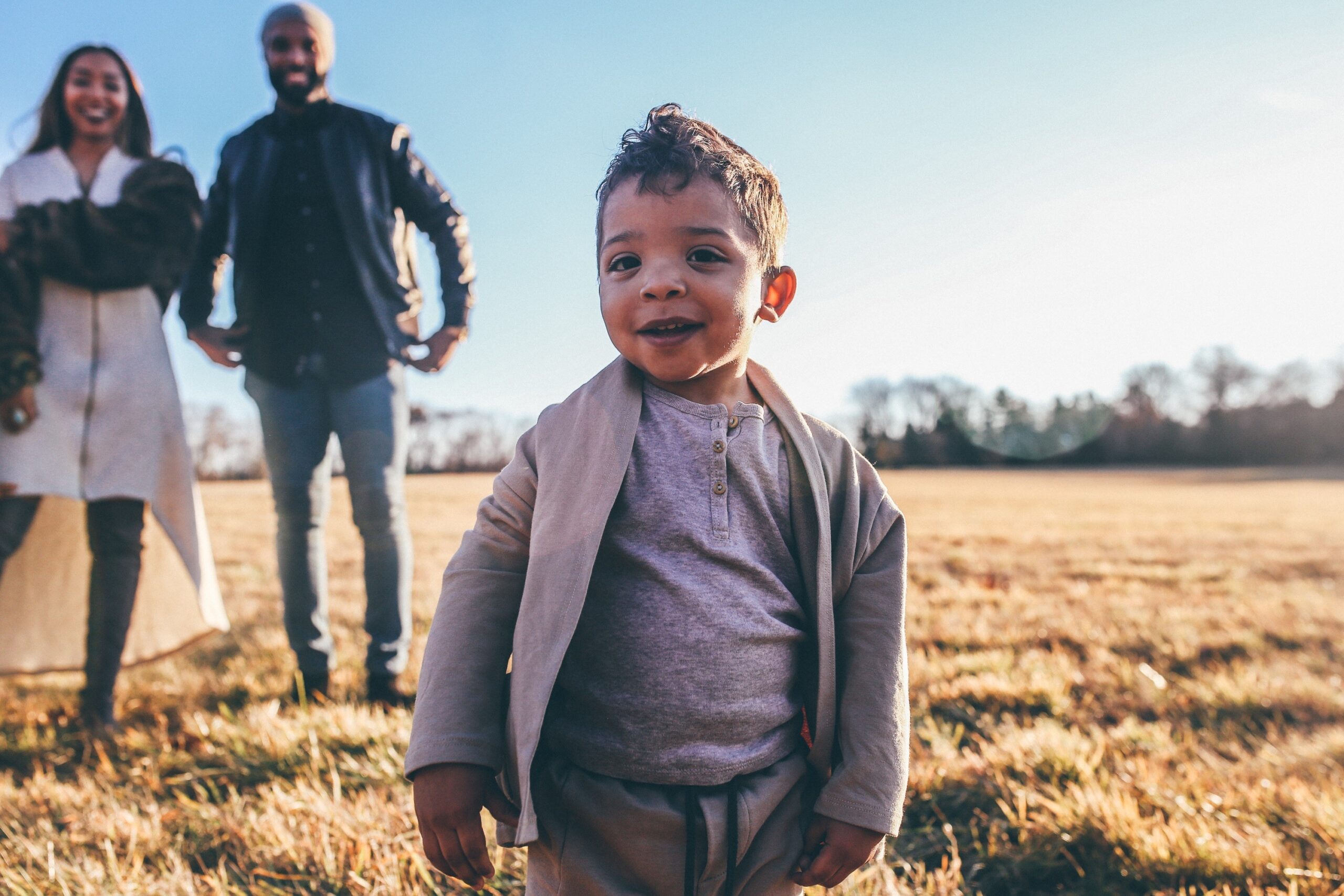
Fashion curator and mother of two Danielle Forte knew from experience how difficult it can be to be both a new mom and fashionable. Caring for the baby takes precedence over finding cute clothes that fit and maternity wear isn’t always fashion-forward.

“While I was pregnant I decided to nurse and I was struggling with finding clothes that I thought were actually cute on me,” Forte tells Guideposts.org.

“You have the clothes for the pre-mom stage when you can wear anything and you didn’t have to work as hard to look good, and then you have the, ‘Hey, you’re a mom, put sweats on’ [stage].”

Danielle wanted to change that.

The mom of two had already dipped her toe into the fashion world. She launched her first clothing line in 2015 before getting pregnant with her first child, a daughter named Nahla. It was her husband, New York Jets running back Matt Forte who encouraged her to really get her feet wet and branch out with 828 Clothing. The brand caters to that overlooked period in a woman’s life between being single, carefree, and daring in their fashion choices and taking care of the kids at the expense of themselves.

“It kind of just evolved as I’ve evolved as a mother,” she explains of her line which includes figure-flattering dresses, comfy cardigans, chic jumpers and stain resistant tops that stretch and move with you. “It was basically, ‘How can I make the things that I wear on a daily basis work as a mom?’” Danielle says of the collection. “How can I ensure that the fabric is soft enough for babies to lay on it; if they get dirty, I’m not upset about it because it’s going come out? Basically taking the things that we see every day that you loved to wear prior to babies or when your kids are older, and just making them work for this season in your life and beyond.”

While Danielle does the heavy lifting when it comes to creating these pieces – she’s in charge of fabric swatches, color choices, and design – Matt pitches in when it comes to naming each look. One of the line’s best-selling items, the Swiss Army Jacket, was coined by the running back thanks to its versatility.

“It’s one of the favorites right now,” Danielle says. “You can use it for nursing, you can change it up and wear it at least five different ways.”

The brand got its name from the couple’s favorite Bible verse, Romans 8:28: We know that all things work together for good for those who love God, who are called according to his purpose. It’s a reminder to moms (and dads) everywhere to remain calm and trust God when the stress of parenting begins to take its toll.

“As a parent, you go through different things and you have doubts and fears, you have highs and lows, so we know from the verse, at the end of the day, no matter what, everything’s going to work out the way it should,” she says.

Matt hopes the name of the line and the verse itself can encourage others facing hard times – something he’s had to do recently thanks to injury setbacks on the field.

“There are times when certain people aren’t used to adversity or seeing adversity all the way through to the other side, and when something tough happens or a trial happens in their life, they just fold,” Matt says. “But if you push through that stuff, if you have faith and continue to go through it and believe that you can, all things will work out in the end. So it’s just about empowering people.”

Matt and Danielle grew up in the church – Danielle’s father and Matt’s grandfather were both pastors – so spirituality is front and center in their day to day lives, which revolve around raising Nahla and baby Matt, playing football, and working on this new project together.

“Faith plays a huge part in our lives and in my career in football, because I’m in a locker room full of guys from all walks of life,” Matt explains. “The Bible says, ‘Make disciples of all nations,’ and that’s what I think this [clothing line] is geared towards. Through clothes and fashion and empowerment, [we’re] getting [a] message out there on the importance of faith.”

Matt also pushed Danielle to expand the line to include newborns and toddlers which eventually evolved into 828 Baby. The collection – which is mostly unisex – features a range of onesies, tees, hoodies, and leggings that are durable, sporty, and made for an active lifestyle.

Danielle hopes that the lines can reach the women and the families who need it – empowering moms everywhere to rediscover their pre-baby self, with clothes that are fashion-forward, comfortable, but most of all, timeless.

“I would love for it to be a household name for moms, for them to understand that it’s not just about maternity or not just about nursing. That it’s a brand that they can lean on forever.”

This Indiana Couple Rescues Small Rodents in Need of Care

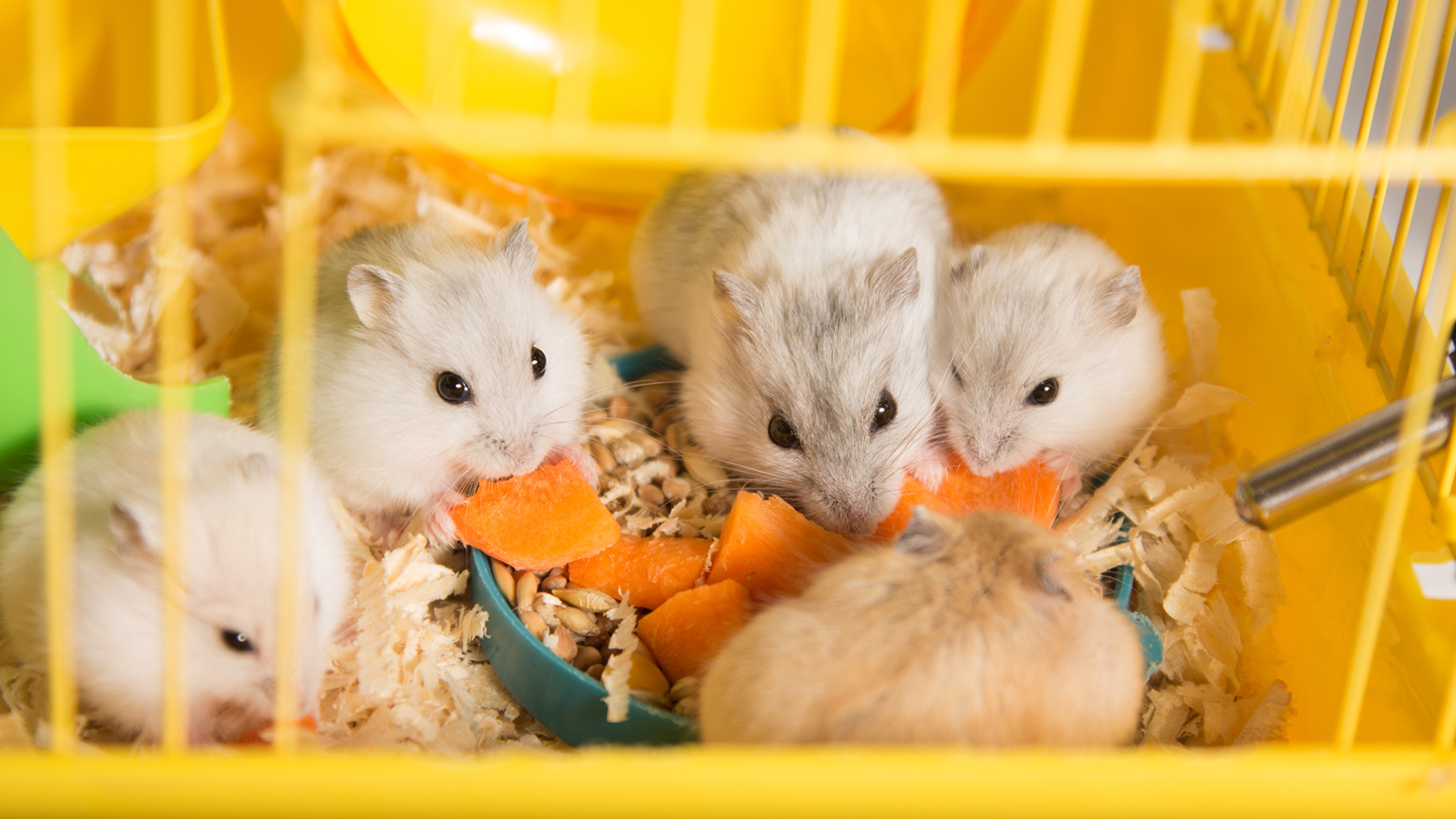
A Bloomington, Indiana couple is rescuing small animals in need of medical care and basic living needs. Alex Hernly and husband Jason Minstersinly have opened their door—and basement—to serve more than 100 small rodents and rabbits, with the goal of housing hundreds of creatures more.

The Pipsqueakery, the couple’s official nonprofit sanctuary, focuses on the care of animals with medical conditions, including paralysis, heart disease, diabetes, cancer, amputations, and dental disease. The current facility only has room to house 100 to 150 animals, although the couple is hoping to house hundreds more with a new formal building that’s in the works. The new space, which is located on a 15-acre-property not far from their home, is expected to hold 500 to 700 more animals. Having a larger facility will allow the pair to hold educational events for volunteers and community members.

“We try to provide access to education and tools to help people with their pet problems,” Minstersinly told Indiana Daily Student.

The idea behind the organization grew shortly after the couple’s own pet hamster, Pipsqueak, passed away in September 2012. Following Pipsqueak’s passing, they purchased three hamsters from a reptile show where they were destined to be feeders. They decided to continue their rescue mission in 2014, in honor of their beloved hamster.

According to IDS, the couple spends more than $100,000 a year caring for more than 100 pet rodents to cover food supplies, water, bedding, and vet care costs. The organization uses their Instagram account, which currently has over 80,000 followers, to not only raise awareness of hamsters in need, but to accept donations and sponsors.

The sanctuary has become a full-time commitment for the couple, with Minstersinly quitting his nursing job to tend to the small animals. Although the organization requires most of their time and attention, the couple is more than happy to offer rodents in need the comfort and care they wouldn’t receive elsewhere.

“We get a chance to take these animals who wouldn’t have a shot at life and watch them thrive,” Hernly added. “It’s very rewarding.”

This Former Trucker is Now Dedicated to Saving Farm Animals

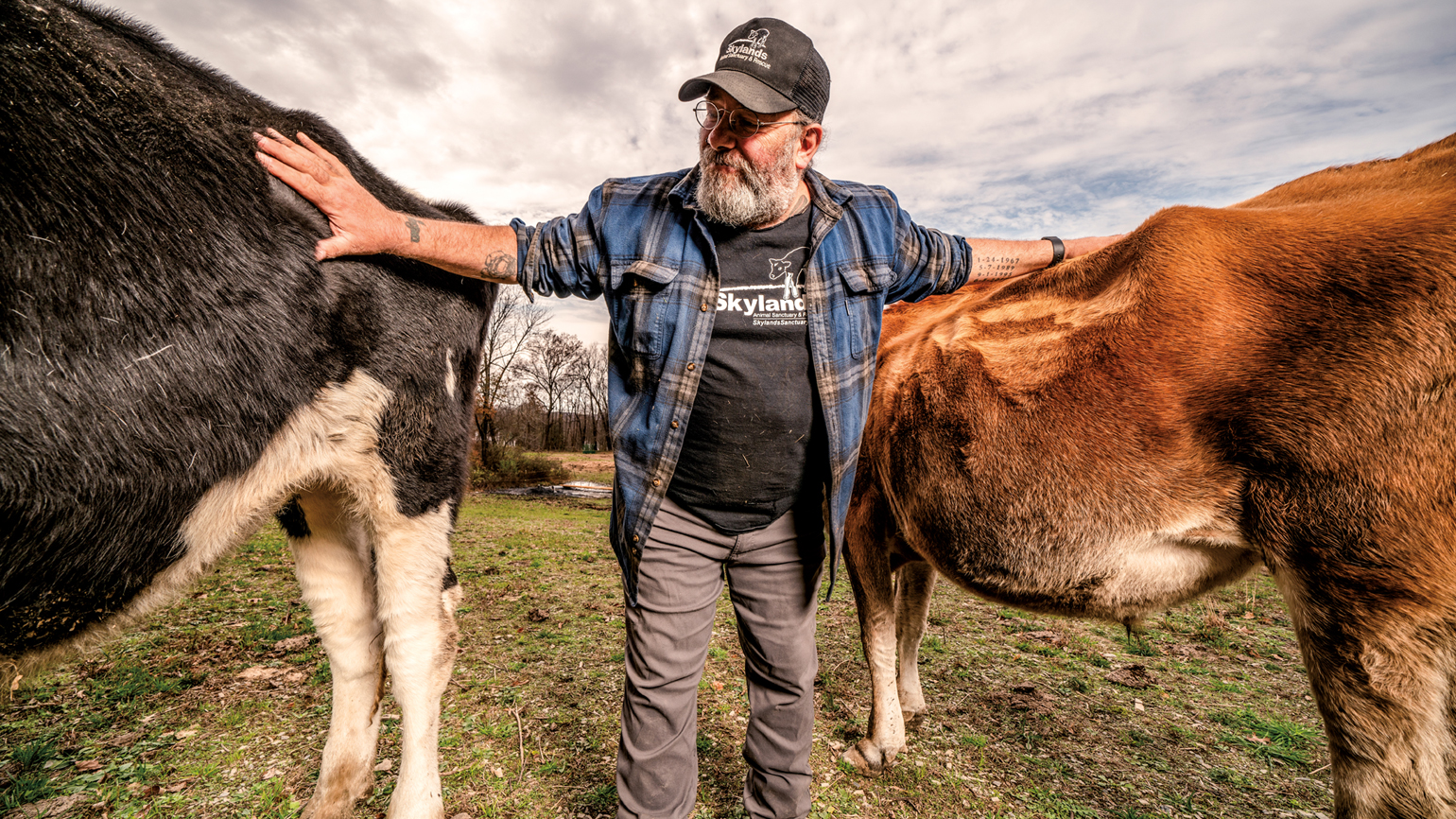
With his long shaggy hair, graying beard and muscle T-shirt, Mike Stura looks like a biker or a truck driver. Yes, he rides a motorcycle and drove trucks for years. But he’s also a vegan who runs an animal sanctuary and calls a cow, Jimmy, his best friend. His passion for saving animals takes him down new roads—and he’s not looking back.

Did you grow up with animals?

Community Newsletter

Get More Inspiration Delivered to Your Inbox


I grew up in the little town of Pompton Lakes, New Jersey. We had a bunch of dogs and other pets too, but we didn’t have farm animals. I’ve always loved being around animals, although I didn’t make them my job until later in life. I was a car mechanic and then spent 27 years as a truck driver.

When did you make the sharp turn from truck driver to animal advocate?

One day I was driving with a friend. He was a big guy—six feet six inches, 400 pounds. He said he planned to go home and cook steak he’d marinated. I pictured him chewing on a big hunk of meat, and it just seemed horrible. I wondered how many animals had died for him to be that big. After that day, I became a vegetarian for the next 15 years.

And then you took that commitment even further?

One day I was out on my bike and saw a flyer that read, “Come and meet a sheep.” I followed the directions to an animal sanctuary for the first time. I didn’t even know there was such a thing. I’d never known a vegan. But this visit changed me. I never ate anything from an animal again.

Your first sanctuary trip didn’t just change your diet though.

It changed my life. I went there and met chickens and ducks, and I learned facts about animal farming, like how cows are kept pregnant to make milk, but the baby doesn’t even get the milk. I thought, How did I go this long and not know that? I went home and started reading. That was in 2010. From then on, I was an advocate.

How did your animal advocacy work begin?

I started volunteering at a sanctuary on Saturdays and Sundays—gathering donations, helping with projects, fixing equipment and rescuing. I bought my own truck, trailer and van for rescues.

How did you come to open Skylands Animal Sanctuary & Rescue?

Helping other sanctuaries, I realized that I wanted to start doing things my way. But it was really a three-week-old steer, Jimmy, who motivated me to create this place. He was very sick. The folks at the animal hospital said treating him would be really expensive, but to me, he was my son. I found this place, but it wasn’t perfect. There were no automatic waterers and the fencing was sparse, but the mechanic in me knew I could fix anything. Jimmy did heal, and he was the first to enjoy those 232 acres.

When he passed away years later, I wanted to give up. But thinking about my best friend helped me push on. There’s not a day that goes by I don’t think of Jimmy. He’s on the sanctuary logo.

What have been your biggest challenges?

Ha! The challenges and surprises keep coming. There’s a feeling of isolation, of being unsure of what you’re doing, and that animals’ lives are depending on you. Things can often seem insurmountable. From sick animals to broken equipment, there’s a daily crisis. Some people thought I was crazy at first. But anyone who knows me knows that when my mind is set, it’s set. I had a lot of mixed emotions when I started, but knowing that the animals were safe and cared for helped me keep going each day. Seeing these creatures heal, recover and live happily pushes me to overcome whatever obstacles pop up.

You’ve taken in several escapees, haven’t you?

My first high-profile rescue was a bull. He was running down the streets of Paterson, New Jersey. After he was caught, a spokesperson for a slaughterhouse said he was going to a farm, but I got them to admit the truth. Luckily, I convinced the slaughterhouse to hand him over.

Freddy the steer escaped a slaughterhouse in Queens and was running around Jamaica Avenue. Once again, I convinced the slaughterhouse to give him to me.

Then there was Brianna, a dairy cow who jumped out of a truck headed to the slaughterhouse. We got her, and she was so skinny we didn’t realize she was pregnant. I was a midwife for the first time!

Who lives at Skylands now?

There are 78 cows, 34 sheep, 39 goats, 16 pigs, 7 turkeys, 3 miniature donkeys, Ted the goose, some ducks and chickens—240 animals total. We go through so much feed. Last winter we went through 18,000 bales of hay. It’s daunting.

How is the sanctuary funded?

It’s all from donations. I’ve always worked hard, so being dependent on others’ generosity was a real adjustment. If I get $10, I well up, because people work hard for their money, and they give it to us with hope. It’s a big responsibility.

Where do the animals come from?

Live markets, auctions, farms where they don’t think they’re abusing animals, but they are. People focus on factory farms that are treating animals terribly, but some of the worst cases I’ve seen have come from small family farms.

What was your craziest rescue?

I had rescued during Hurricane Harvey, so when Hurricane Florence hit North Carolina, I knew I had to go. I bought a boat and saved a cow that had been swimming all day. We tied a halter to her and pulled her a mile through the water to shore. She was pregnant, and now she has a calf.

What’s a typical day like?

Each morning, we start at eight, letting out the smaller animals, answering phone calls and emails, paying bills, talking to accountants, feeding, cleaning, fundraising, medicating, trimming hooves. If I get a call about a rescue, I’ll drop everything for it.

What have you learned about animals since you started this venture?

I’ve learned that birds have so much personality. Turkeys are awesome; they’re real characters. Cows are the coolest. When I call them by their names, they come running. All the animals are unique, and they’re all worth fighting for.

What are your hopes for the future of Skylands?

I hope it becomes unnecessary! I hope we’re a good home for animals for the rest of their lives. But I’d love it to be obsolete.

How has having this sanctuary enriched your life?

I give the animals a place where they can live and be healthy, and they give me a purpose. Every fiber of my being is invested in this. I’ll get this feeling, like a calling, that tells me to check out a farm or to help with hurricane rescues. I don’t fight it, because I know I’ll end up saving animals’ lives. And I wouldn’t have it any other way.

Did you enjoy this story? Subscribe to All Creatures magazine.

This Family Gives Thanks by Giving Back

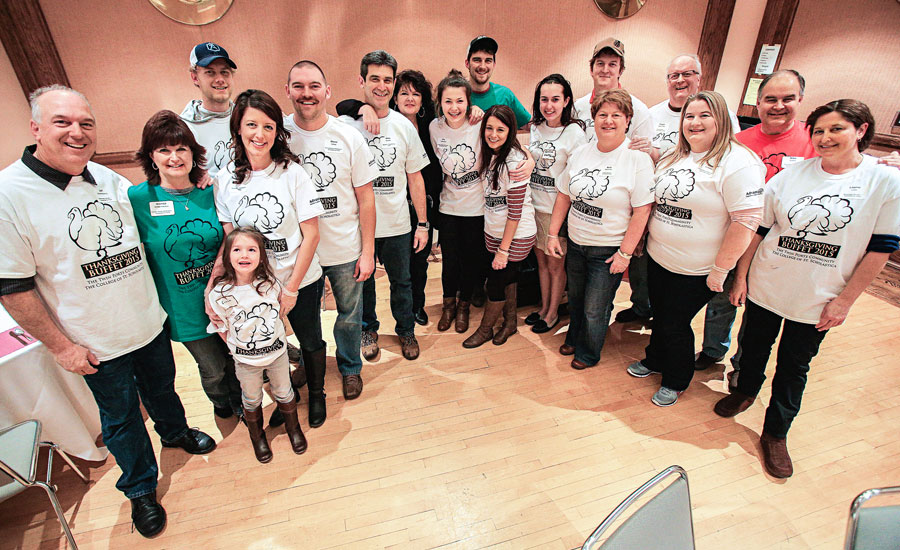
For Thanksgiving this year, my family is going to serve 2,600 pounds of turkey, 2,200 pounds of mashed potatoes and 150 gallons of gravy. That’s a lot of food, I know. Then again, we’re expecting 6,000 guests. That’s because we’ll be volunteering at the Twin Ports Region Thanksgiving Buffet here in Duluth, Minnesota.

Sponsored by the College of St. Scholastica, it’s a feast open to anyone in need of a warm meal and an even warmer community. For me, it’s become a family affair, with my kids and their aunts, uncles, cousins—18 of us all together—pitching in. Enough to staff an entire banquet on our own.

You might wonder why this is our Thanksgiving tradition. Well, it all started one November 12 years ago when I didn’t feel like there was anything to be celebrating, let alone be grateful for.

READ MORE: FALLING BACK ON FAMILY

My husband had left me that summer, our marriage of 15 years and our home broken. I felt broken myself. I wasn’t sure I knew what it meant to be a family anymore.

I definitely wasn’t excited about Thanksgiving dinner. My sister, Wanda, had offered to host our big family celebration at her place in Hibbing, an hour and a half away, but I said no. We’d always had Thanksgiving at my house. I wanted—needed—to preserve some sense of normalcy for my children.

Dom was 10. Mia was 5. They seemed so fragile. Every night before their bedtime prayers, I would hug them and tell them I loved them. That their dad loved them. That most of all, God loved them and was watching over them. Then we’d take turns saying something positive about our day. A moment at work. A compliment from Dom’s hockey coach. A friend’s puppy that Mia played with. I wanted them to have something good to hang on to every day.

But it wasn’t nearly enough to make them feel secure again after the divorce had shaken their world.

Mia, especially. She couldn’t fully grasp that her daddy wasn’t coming back to live with us. She’d grown fearful since he left, skittish around people she didn’t know well, afraid of the dark. “I’m scared,” I overheard her tell Dom one day. “Of what?” he asked, ready to be the big brother and protect her. Her answer broke my heart: “Everything.”

Dom tried his best to be the man of the house. If a light burned out he was right there to change it. When the knob to the front door fell off, he insisted he could fix it. I wanted to encourage him so I let him. An hour later, he proclaimed the job finished. But somehow he’d managed to lock the door from the inside. There was no way to get out. He was crestfallen.

READ MORE: A REMINDER TO FOCUS ON FAMILY

Thank goodness Dom had hockey. He threw himself into the sport like never before. And into his schoolwork. But in his own way I knew he was hurting as deeply as Mia. It felt as if he’d grown up five years in five months.

I didn’t have anyone who really understood what I was going through. No one I knew was divorced. My siblings were doing everything they could to help, and they were probably tired of hearing about my struggles. I talked to my sister often, but she couldn’t be on call for me 24 hours a day—she was busy with her own kids and her job as a teacher. My brother, Mike, and my brother-in-law, Jeff, stepped up and took Dom and Mia fishing and camping.

I’d started going to counseling to learn how to support my kids emotionally, how to get my confidence back. “It takes time to heal from divorce,” my counselor told me. “Try to get involved in some sort of outside activity. Volunteer. Help yourself by helping others.”

Between the kids and my job—I was a district manager for a food-distribution company—I barely had a minute to spare. I didn’t have time or energy for volunteer work.

A few days before Thanksgiving, I called Wanda. We chatted for a bit. Then she asked about the kids.

“I’m worried about them,” I said. “I feel like they’re not getting to live a normal life. This is so hard on them.”

For a long moment there was only silence.

Finally Wanda said, “Jean, do you understand how blessed your kids are? They have a mother who loves them and has a good job so she can take care of them. They have more than enough at every meal, a comfortable house, warm beds to sleep in. You should see the problems some of the kids in my classroom have to deal with.”

READ MORE: THE FAMILY THAT PRAYS TOGETHER

It wasn’t the first time she’d mentioned this, but never so directly.

The next day in the newspaper I came across an article on the Twin Ports Region Thanksgiving Buffet. It was open to anyone in the community, particularly those in need. Through my job, I knew a man who was involved in putting the dinner together. With my sister’s admonishment and my counselor’s advice ringing in my ears, I called him and asked if there was a way my kids and I could help.

“Absolutely,” he said. “We can always use servers. We’ll see you at the convention center a little before eleven.”

I wasn’t sure what my kids would think. We’d never done anything like this before. But they sounded excited.

“I’m really going to pass out the food?” Mia asked. “By myself? Cool!”

Thanksgiving morning at the convention center, we were each assigned chef’s hats and spots in the serving line. Mia stood behind a giant serving dish of corn. Dom had the wild rice. I was responsible for the mashed potatoes.

I kept checking on the kids at first. Was Mia nervous being around so many strangers? Was she able to reach people’s trays? Would she get tired? Our shift was from 11:00 to 12:30, a long time for a five-year-old. Yet Mia never once looked to me. She only had eyes for each person stopping in front of her, as if serving them was the most important responsibility of her young life.

Dom was even more deliberate than Mia. He made sure each guest got a healthy serving of wild rice, carefully ladled onto their plate. He was totally dialed in, as if this were a hockey game that had gone into overtime.

As the crowd snaked past, I began to focus more on the guests in front of me. It was clear from the way some of the people shuffled by, their eyes downcast, that they were struggling. But when they saw Mia and Dom, surprise, then delight, spread across their faces. Their spirits seemed to lift.

“Why, thank you, little lady,” people would say. “That looks delicious, young man. Have a happy Thanksgiving.”

READ MORE: AN ENCOUNTER WITH WELL-TENDED HOPE

Mia glowed. “I hope you like the food,” she sang out. “That’s my brother. And my mommy. We wanted to help.”

Dom nodded at the guests. “Happy Thanksgiving to you too, sir, ma’am,” he said to them. It had been months since I’d seen such a proud look on his face.

A guest paused in front of me—a woman with two children not much older than my own. Their coats were threadbare, and from the way the kids’ eyes widened, I knew it had been a while since they’d had such a big meal. Yet there was a quiet strength about this young mother. “Thank you,” she said. “God bless you.”

He already has, I thought, looking at my son and daughter. They were going to be okay. The three of us were finding our way as a family. I’d never felt so grateful, so cared for, so blessed.

At the end of our shift, I hugged my kids close and told them how proud I was of them. “Can we do this again next year?” Mia and Dom asked.

“Count on it,” I said.

READ MORE: CREATIVE PATCHWORK

That evening, my sister and brother and their families came over for our Thanksgiving dinner. We told them about our day. “Wow!” my brother said. “That sounds like a great way to celebrate.”

The following year, Mia, Dom and I again volunteered at the Thanksgiving buffet. And the year after that. Mia even wrote about it in second grade, for an essay on her favorite holiday. “I like being with my family,” she wrote, “and seeing people smile. It’s the best feeling ever.”

By then, my brother’s and sister’s families—the Fumias, the Boettchers and the Cimermancics—had joined us. This year 18 of us will be serving dinner, filling water glasses, busing tables, sitting and talking to our guests, learning about their lives. I can’t think of a better way for us to spend Thanksgiving. Being together, bringing good food to people’s plates and smiles to their faces…as Mia said, it’s the best, most blessed feeling ever.

Did you enjoy this story? Subscribe to Guideposts magazine.

This Differently Abled Rescue Dog Fit Her Family Perfectly

The girls never asked for much for Christmas. We were in the car; I was driving them to their weekly appointment with the therapist. I could see them in the backseat in the rearview mirror. “Mom,” Tianna said, “I want a dog for Christmas.”

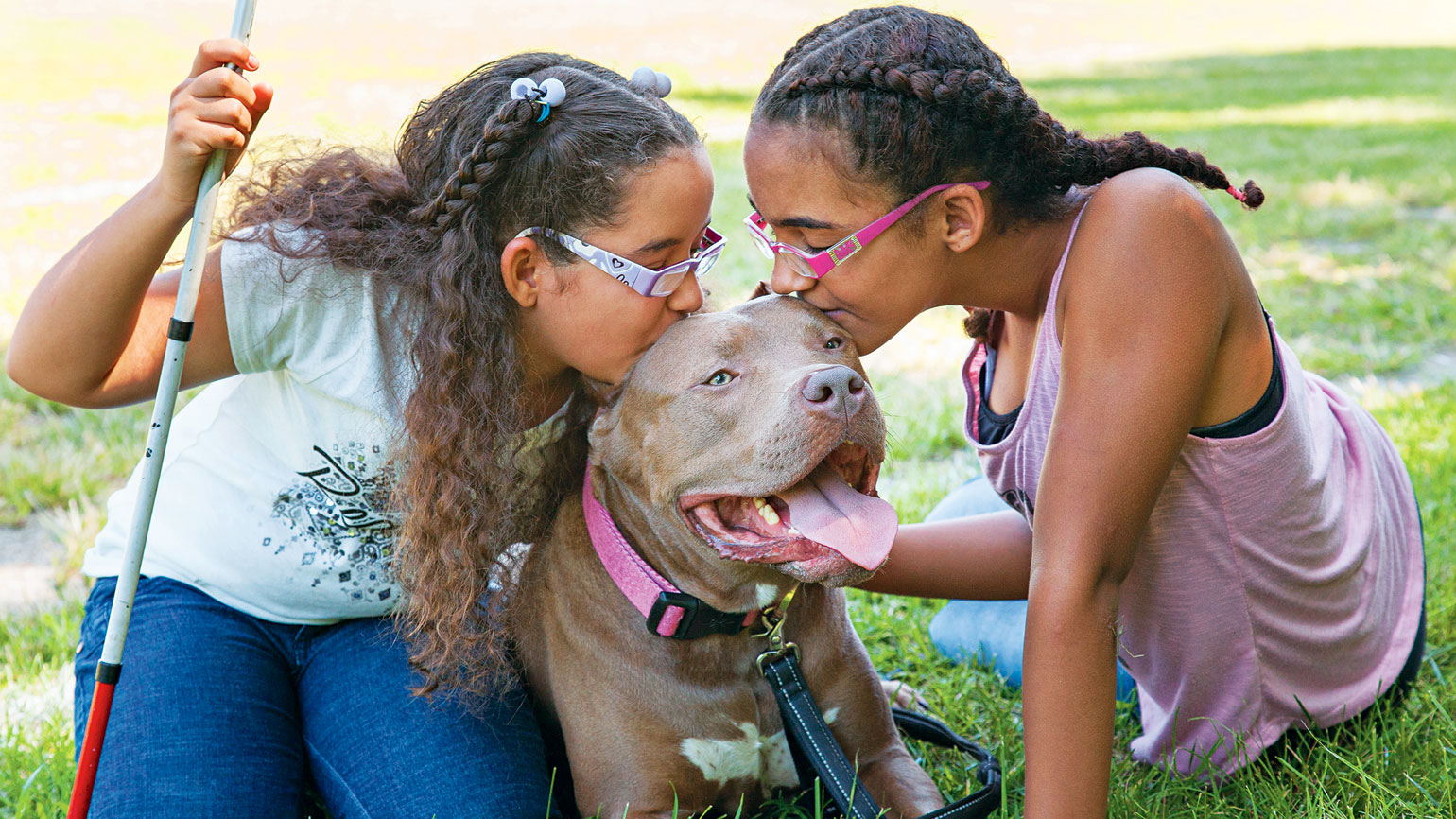
Tianna didn’t speak much. Like her 10-year-old twin sister, Gianna, she lives with multiple disabilities. Both of them are legally blind, Gianna is autistic and Tianna has selective mutism. Getting a word out of her could be difficult. She certainly never spoke to strangers, and sometimes, I worried, she wouldn’t even tell me what was on her mind. That’s why I had to pay attention to this dog request.

“But we already have four dogs,” I said. A couple of years back, the girls’ neurologist had suggested that a dog might help them with their communication skills and give them someone to bond with. We’d started out small with Skater, a mini fox terrier and Chihuahua mix, and the menagerie had grown from there to include two more Chihuahuas and a 100-pound pit bull named Chaos.

Like this story so far? Subscribe to All Creatures magazine!

That name proved accurate. Our household was usually in a chaos of water bowls, food dishes, leashes, crates, collars, treats, chew toys and balls. We had covers on all the furniture, paw prints were everywhere and nearly every unprotected surface had tooth marks.

But the doctor was right. It was worth it. The dogs drew the girls out, gave them added responsibilities, received their hugs and leaped to their call. Somehow everybody got along. But could we take on another?

“I want a dog that’s like me,” Tianna continued. “One that’s differently abled.”

“Me too,” Gianna chimed in. “For Christmas.”

“I have to walk with a cane at school and everybody looks at me,” Tianna said. “I want a dog who understands what it’s like to be different.”

Their request nearly blew me over. A “differently abled” dog? Where on earth would I find a pet like that? With Christmas only a few weeks away? Would a new dog even get along with the ones we already had?

“I’m not sure it makes sense,” I said, trying to sound every bit the loving but reasonable adult. I didn’t want to disappoint them. They had faced Herculean struggles ever since their birth. We all had—the doctors’ appointments, tests, therapy, cataract surgery. That they were doing as well as they were seemed miracle enough.

“It doesn’t have to make sense,” Tianna stated with the finality of a preteen who has made up her mind. I shook my head. Maybe God could make sense of this.

READ MORE: BEAR THE DOG TO THE RESCUE

For the first few years of their lives, I’d get on the computer every night after they went to bed, searching for answers to the many problems they had, tracking down every possible solution or treatment, most of them dead ends. In the end I was left with more worries than anything else. I didn’t want to be a mom like that, always worried. If I could only trust.

The day after the girls asked for a disabled dog, I had to take Skater to Sandy, the groomer. Sandy knows me well and takes good care of our pets. She loves dogs—in fact, her place is named Must Love Dogs—and if anybody could, she would understand my quandary.

“You’ll never guess what the girls want for Christmas,” I told her. “A differently abled dog. They want a pet that’s like them.”

“Sweet.”

“But Sandy, we don’t have room for any more dogs. We’re not a kennel, we have a house with a living room, stairs, a backyard.

You’re different. You’ve got a business here. You can rescue dogs and find a place for them. I can’t imagine what our four dogs would do if I brought in another one…” I looked around the store and my eye fell on a brown pit bull, even bigger than Chaos. “Like this one…”

“That’s Carmella,” Sandy said.

The dog’s ears pricked up at the sound of her name. She turned her head and looked at Sandy, got up and limped across the room, her spine arched, her legs bowed. She could hardly walk.

“What happened to her?” I asked.

“Don’t know for sure.” Sandy bent down to scratch Carmella behind the ears. “I had to rescue her from a kill shelter. She’d been kept in a cage that was too small for too long. Didn’t have any room to grow.”

READ MORE: RESCUED BY A FOUR-LEGGED ANGEL

“How horrible,” I said. I hated to think that someone would treat a dog like that, leaving her maimed. She wouldn’t even be alive if it hadn’t been for Sandy. Fat chance that anyone would want to adopt her. “She’s lucky you found her,” I said.

“Do you want her?” she asked.

“I told you, I don’t see how we can take on another pet. What would the others do? What would Chaos do? It’s too big a risk for me to trust it.”

“Try it out and see. She is differently abled. Just what you said you wanted. You can bring her back if it doesn’t work out.”

I brought Chaos into Must Love Dogs the next day. I was expecting—or, rather, fearing—a face-off with growling and snarling or worse. Lord, I prayed, let’s not let this get out of hand. The two animals walked around each other, sniffing. Then their tails started wagging. Soon they were playing. It was a scene out of the Peaceable Kingdom.

“A match made in heaven,” Sandy said. “Carmella is my Christmas present to you.”

A few days later, I brought Carmella home. “I have a surprise for you,” I told the girls. Carmella waddled into their bedroom and jumped up onto the bottom bunk bed. It wasn’t graceful in the least, her hind legs kicking at the air as she pulled herself forward. For a moment I thought she was going to fall right off. But her reward came with hugs from both sides. She was home.

I don’t want to pretend that life with three Chihuahuas, one large pit bull, one differently abled pit bull and two differently abled daughters isn’t hectic. There is always something, whether it’s a challenge or a disappointment the girls faced at school or an emergency trip to the vet or a mess somebody made in the backyard. But we’re happy. Very happy.

Get More Inspiring Dog Stories in Always By My Side

Not long ago, the girls and I were taking the dogs for a walk and someone stopped to ask about Carmella. I was about to explain what had happened to her and how we had found her. Instead it was Tianna who spoke up, not even hesitating to talk to a stranger. “We wanted a dog just like us,” she said. “It made sense.”

The girls aren’t the only ones who have grown. The other day we were in the backyard and Carmella hesitated at the bottom of the steps. Usually she went around to the front door, where there were no steps, but today she gazed at the stairs longingly.

“Come on, Carmella, you can do it,” the girls shouted. She looked around at us with her sweet eyes and then lunged forward. It was like her struggle to jump on that bunk bed the first day she joined us. One step at a time, she did it. When she reached the top we all hooted and hollered. “You did it!”

She just had to trust. Like me.

Did you enjoy this story? Subscribe to Guideposts magazine.

This Christmas Carol Brought Him Closer to His Grandfather

One of the first Christmas carols I learned by heart was “O Tannenbaum,” a beloved German folk song written in 1819 as a tribute to the enduring beauty of the country’s evergreen fir trees. The original German lyrics made no mention of Christmas, but I was too young to pay much attention to the words back then. What I found more satisfying was the joy I saw in my mother’s face every time I sang the old song. “That’s your grandfather’s favorite carol,” she’d say.

It didn’t surprise me that Grandfather Jurgen would like a song celebrating Germany’s towering trees. He was as strong and dependable as any one of them, and deeply proud of his heritage. He’d emigrated from Germany when he was a boy and worked on farms into adulthood. Robust and energetic, he hadn’t been sick a day in his life. He seemed forever unapproachable, especially to the sickly young boy I was. Sports and the like were forbidden to me. Instead, I spent my days in quiet pursuits, reading, singing (my favorite activity) and learning the piano. I was sure Grandfather Jurgen saw me as weak, though it was impossible to tell. He rarely showed any kind of emotion. I simply accepted that I’d never measure up to his expectations.

The one thing we did have in common was a love for music. When we visited my grandparents at their home three hours south of where we lived in Chicago, Grandma would play Chopin and Strauss on the piano while Grandfather looked on approvingly. I didn’t dare play for Grandfather myself and would never have dreamed of singing for him.

The spring of 1958, I’d just turned 11 and had regained my health. My parents rewarded me by sending me to a month-long boys’ camp in Wisconsin, three hours north of our home in Chicago. It was my first time away on my own, and I was thrilled at the promise of learning to swim, play ball and row on the lake. Camp activities even included music lessons! Two weeks in, I was over the moon. My insecurities were nearly forgotten, just in time for Visitors’ Day, when I’d show my mother all that I’d learned. My father would be, as ever, busy with work.

Outside the main lodge, I watched the families arrive. In the distance, I saw my mother. But who was beside her? Grandma! I couldn’t believe she had come all this way—a six-hour journey for her.

I raced to meet them. “Grandma! Mom!” I yelled gleefully. That’s when I noticed the man walking one step behind them. “Grandfather Jurgen?” I said. The words escaped my mouth in a kind of high-pitched gasp.

Mom and Grandma gave me warm hugs, while Grandfather stood straight as a soldier beside them. “Evan,” he said, stiffly extending his hand.

“Hello, Grandfather Jurgen.” I took his hand and shook it. Timorously. He frowned.

“Shake firmly, like a man,” he said, squeezing my hand in a vise-like grip.

“Yes, Grandfather,” I said.

Grandma rescued me from the handshake. “So, Evan,” she said, “won’t you show us around?”

I escorted them across the campgrounds, then into the main lodge, the cavernous building where most of our indoor activities took place, including meals. “Sunday worship too,” I said.

“This is where you pray?” Grandfather asked, his lips pursed. “It doesn’t look like a place of God.”

“But it can be,” I said. “Honest.” He nodded, somewhat askance. The modern world could be something of a challenge for a traditionalist like Grandfather. I shuddered to think of what he’d say about my friends and me listening to pop music, Elvis in particular. Not that Grandfather Jurgen would have known who Elvis was.

“My favorite part of camp is music class,” I announced. I led the group over to the piano, an old brown spinet. The music counselor was valiantly attempting to clean the keys, and I introduced her.

“Your young man has a really good voice,” Mrs. Linden said. “Possibly the best voice in the camp.” I sneaked a look to see Grandfather Jurgen’s reaction, but he stood there stoically.

“Evan,” Grandma said, “please sing something for us.”

Grandfather Jurgen raised his eyebrows in apparent expectation. I stood there paralyzed, but inside I shook like a leaf.

“You can sing anything you like,” Mom said a little anxiously.

My mind was blank. I couldn’t remember the words to a single song except “Hound Dog,” which I knew they’d hate.

“I have an idea. Do you mind if I play your piano?” Grandma asked Mrs. Linden.

“By all means,” she said. “But I’m afraid I’ll have to miss it. I’m needed at the picnic grounds to help serve supper.” I watched as she made her way across the lodge.

Grandma moved to the spinet’s bench and ran her fingers across the keys as if testing them. “Ready, Evan?” she asked.

I gulped. “Okay,” I choked out.

To my astonishment I heard the music to “O Tannenbaum” coming from the piano. Grandma looked to me and winked.

I closed my eyes and sang: “O, Tannenbaum, O, Tannenbaum, wie treu sind deine Blätter!” In English, “how faithfully you blossom.” My voice seemed to echo across the lodge as if carried on angels’ wings.

When I finished, Mom and Grandma clapped, loud and long. Then Grandfather Jurgen quietly spoke: “That was very pretty, Evan. You must sing that again for us at Christmastime.” His lips belied a faint smile, and he patted my back in a very manly kind of way. I extended my hand and shook his. Firmly. Looking him in the eye, I had the feeling we were really seeing one another for the first time.

Grandfather Jurgen cleared his throat. “You must be hungry,” he said. I was! “Well, then, we must go to supper.”

I led the way to the picnic grounds, feeling as tall as the highest fir tree in the forest. As we walked, Grandfather put his arm around my shoulders. “Yes,” he said softly, “that was very pretty, indeed.”

No later performance of “O Tannenbaum” could ever equal the joy I got from Grandfather’s reaction that day. Mom took even more delight in my singing the carol because she knew what Grandfather’s approval meant to me. All these years later, when I sing the words “how faithfully you blossom,” I remember the relationship I felt open up that day at camp. Never showy with affection, Grandfather Jurgen was comforting in his strong presence, like the tall fir trees he loved. ­

For more angelic stories, subscribe to Angels on Earth magazine.

This Artist Tells Us How The Dog Chapel Came to Be

Drums were beating somewhere, steady like my heart, and the melody of a flute drifted through my head. I opened my eyes. Time to feed the dogs, I thought. But the blanket over me was too heavy, and I couldn’t lift my arms or legs. What’s wrong with me? Men began chanting to the drumbeats, and I recognized my Indian music. But I knew I wasn’t home in Vermont.

Then I felt a warm touch and heard a whisper in my ear: “Steve…” Turning my head was impossible. I lowered my eyes to see my wife’s face. Gwen, I tried to say, but no words came out. For some reason I started to cry.

“You have had an accident,” Gwen said, touching my cheek. She was crying too. “You’ve been asleep for a while, but everything’s going to be okay.”

I remembered the accident. I’d been finishing a large wooden dog sculpture in the upstairs studio in our old house in St. Johnsbury. I did all my sanding on the first floor, so I picked up the dog and headed down the stairs. I stumbled and woke up in a pool of blood. Gwen got me to the hospital. I’d cracked my skull and broken three ribs.

“You fell into a coma,” Gwen explained. For two months I’d been in intensive care. “I’ve come every day to play your Indian CDs and talk to you about the dogs,” she said. “They searched everywhere, crying because they couldn’t find you. But soon you’ll be home.”

Home. When I was a boy in Massachusetts our house was surrounded by forest, and I would escape the noisy world of my seven brothers and sisters for the serenity of the trees. I was more at home there. With an old ax I spent hours chopping away at fallen branches, roughing out shapes that pleased me. I felt life in the pieces of wood. “All the world is God’s creation,” my great-great-grandmother assured me.

“The stars, the leaves on the trees, animals and humans alike. He is everywhere.” Great-great-grandma Huneck was 100 years old. She was a Native American, born in the early 1850s. She understood my attempts to carve the sticks I found in the forest. “Beauty from your hands honors God,” she said.

I grew up hoping to be an artist someday. At 17, I moved to Boston and put myself through the Massachusetts College of Art by working as a cab driver. I met Gwen at school. We married in 1978 and moved to a place among the trees of Vermont. I made a living restoring furniture. I felt at home again, a boy in the forest playing with wood. We started our family with a mutt named Max and a big black Lab called Sally.

One winter weekend in 1983 the snows came and didn’t stop. The drifts were so deep around the house, our dogs could barely get outside. We weren’t going anywhere. Soon I was pacing the floor, an idea buzzing in my brain.

I went to the basement, where I had saved a piece of first-growth pine. It was maybe 200 years old, beautiful, with no knots. I got out my woodworking tools and began chiseling away. I knew there was life in this piece of pine, and I could not quit until I found it. Gradually an image emerged from the wood: a strong figure graced with wings.

Days after the snow cleared I could still feel the exhilaration I’d experienced while carving the angel. It made me feel good to look at it, so I stood it on the seat of my pickup when I drove into town. Coming out of the general store I saw a man peering into my truck.

“Are you the artist?” he asked. No one had ever called me that before.

The man was a New York City art dealer. He bought my carving, and he kept calling me for more.

One evening I took Gwen for a walk in the woods. “I want to be an artist,” I said, not sure how she’d react. Then I saw it in Gwen’s eyes: She was with me.

The road was hard, but by 1994 I was earning a living as an artist. Sally the Lab, Dottie the dalmatian, Molly the golden retriever, and Bingo the cat made up our family. Much of my work featured drawings and carvings of dogs. I had planned a new series of woodcuts of Sally that morning I fell down the stairs.

I was finally transferred to a nursing residence. At 45, I had to learn to walk again, but for me there was something worse. I’d asked Gwen to bring me a favorite stick I’d found in the woods before the accident to use as a cane. I wanted to carve it, make it beautiful. But when I put my knife to the stick, the wood might as well have been stone. I was too weak to make even a scratch.

It took hours of making fists over and over again, stretching my fingers with a rubber-band gadget the doctors gave me. Hours of lifting my legs, inch by painful inch. After three grueling weeks of physical therapy, I could stand for a few seconds on my own.

Then one day I was able to drag myself up a flight of stairs, gripping the railing on each side with every ounce of strength I had. Afterward I collapsed, but the doctors said I’d made enough progress to finish my therapy at home.

Home! Sally, Molly, Dottie and Bingo greeted me with yips and yowls. I had to stay in bed for a while, and I grunted through my leg and hand exercises. A nurse came in during the day. In the evening Gwen was by my side. My round-the-clock caregivers were our dogs. They were my guides back to life.

The day I first used my walker, Gwen and I answered a newspaper ad and went to a farm to get Heidi, a six-week-old yellow Lab. She cuddled into me every night and did swim therapy with me. Eventually I was walking in the forest, the dogs pulling at my pant legs, playing with me like I was a puppy. “You can do it!” their barks seemed to say.

Doctors told me it would take a year for me to get my strength back. In the meantime I took up a mallet and chisel and began making woodcuts of Sally. It was gentle carving, the only thing I was able to do, but it felt good. The dogs stayed next to me, Sally growling her approval as her images took shape in the wood. God, I’m truly home, I thought. And I’m grateful.

A new idea started buzzing in my brain. “Beauty from your hands honors God,” my grandma had taught me. I wanted to honor God and the loving animals that had helped me heal. My Native American ancestors respected all the creatures of the forest, but they believed that dogs were the only ones who went to heaven. I wanted to carve out a place of serenity for dogs and humans, with their love for one another on display before the God who made us.

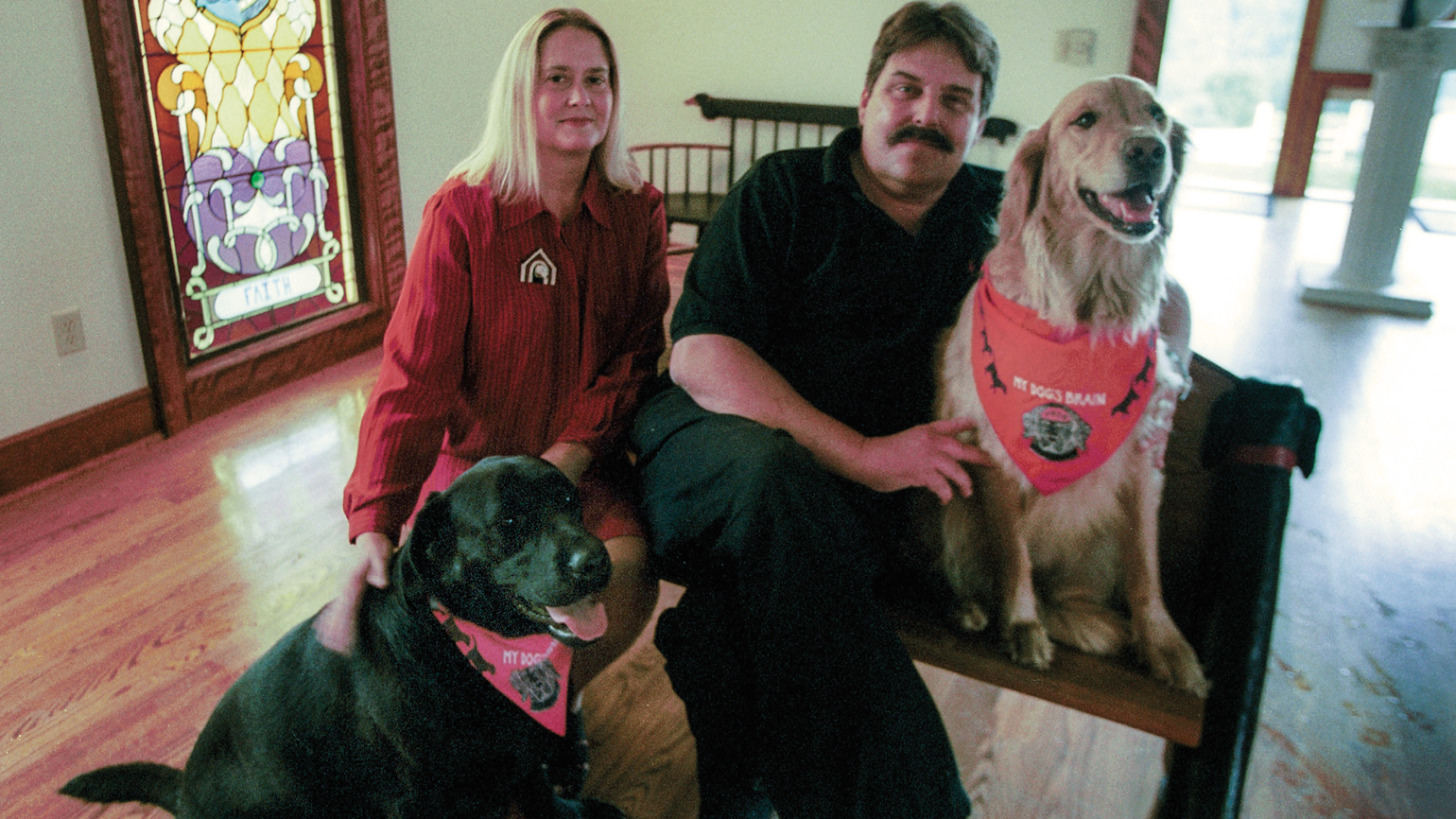
When the strength in my hands returned, I built a wooden chapel, small and white like the nineteenth-century churches that dot New England. There are benches for humans and plenty of room for their canine companions. The stained-glass windows start at the floor so dogs can sniff their images up close. Atop the steeple is the carved figure of a golden retriever with wings, honoring the messengers of healing that God sent me. Surrounded with trees and the green hills of Vermont, the chapel represents God’s gifts to all of us—the beauty of the natural world, the strength of human relationships, the love of faithful animals. It celebrates my ancestors’ belief about our home here on earth.

Did you enjoy this story? Subscribe to All Creatures magazine.

This Annual Cat Tour Brings a Minneapolis Neighborhood Together

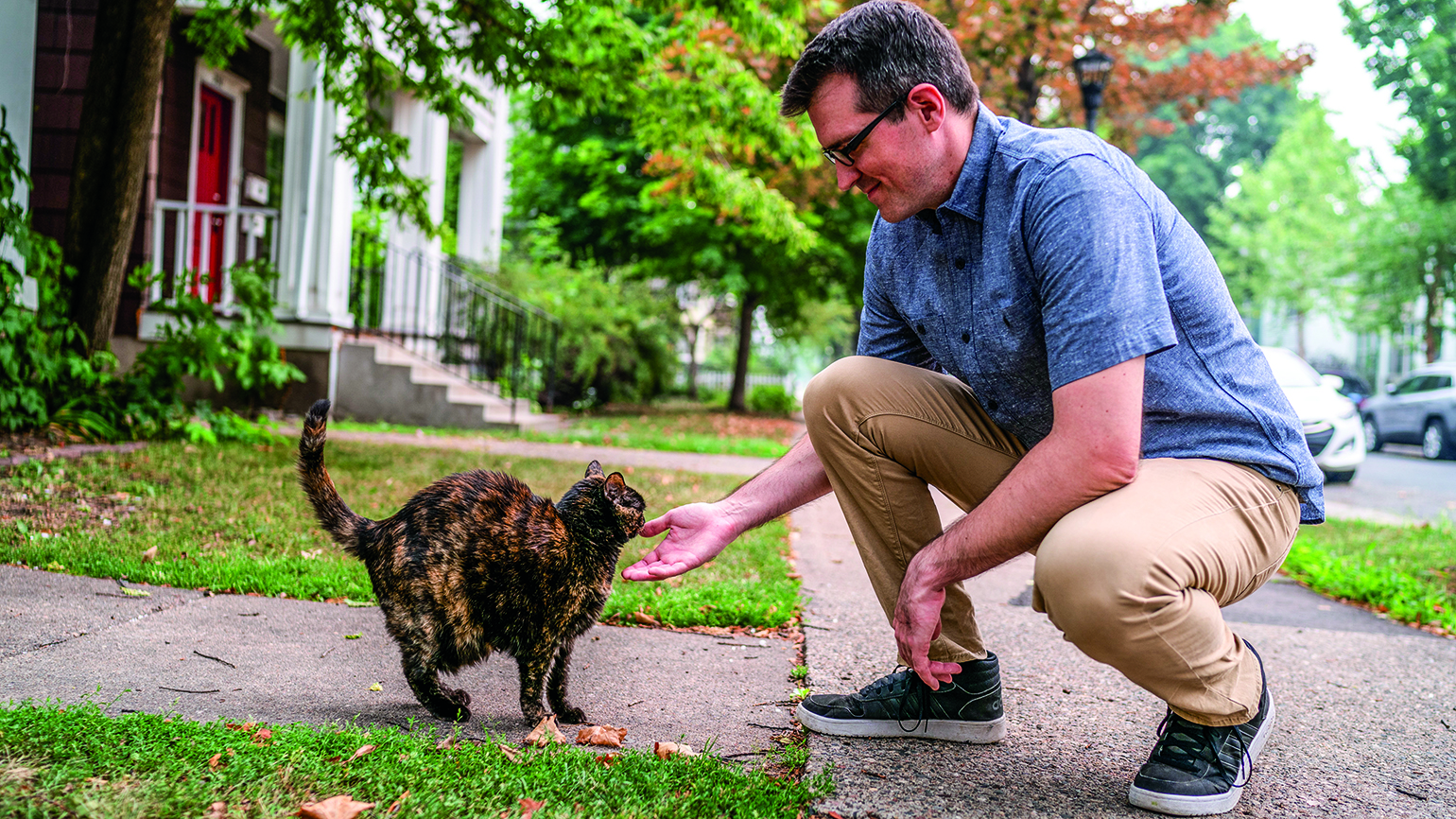
Excitedly, a tour member points up to a second-floor window, alerting the rest of the sidewalk parade that furry white Pickles has made an appearance. Later, someone else shouts that Bob the Siamese has emerged from behind the drapes. A few houses down, a friendly cat mom carries out her Maine Coon and the crowd, led by a man whose sign says, “Show Us Your Cat,” goes wild. This strange suburban safari plays out annually in a Minneapolis neighborhood called The Wedge (for its shape), thanks to tour founder and organizer John Edwards.

John moved from South Florida to Minneapolis in part because he wanted to live without a car. While walking and biking around his neighborhood, designated a historic district due to its many 100-year-old homes and apartment buildings, he noticed an extraordinary number of windows featuring cats.

Though John doesn’t have any pets himself, he began posting cat photos on the social media channels of a hyper-local news site he’d created called Wedge LIVE! John’s posts grew in popularity and an idea sprouted.

“Our neighborhood historic home tour is so popular,” he says, “and it made me think, What if we did a cat tour? It’ll be weird, it’ll be funny. Let’s just see what happens.”

The Wedge LIVE Cat Tour had a simple start five years ago. John promoted it on social media and mapped out a 90-minute route that included three dozen or so cats. About 30 people showed up and John was pleased with the turnout. A few years later, though, the event went viral, and a local TV station broadcast a story about the 300-person crowd who met to traipse around The Wedge and encounter cats. To create the most feline-filled route, John made a registration form for cat parents. John likes to keep the tour to 1.5 miles, though, so there are no guarantees that the parade will pass by everyone who registers.

What purring posers can one expect to admire along the way? “There are a lot of unusual cat names,” John says with a laugh. And unusual owners too, like the one who walked outside wearing a giant cat-head mask with markings identical to his cat’s. Some folks proudly carry their cats out to be admired, while others, knowing their cat is crowd-averse, just make sure their pet is window-visible. Though most felines perch on furniture, some lazily greet fans from a little hammock suction-cupped to the window. Others come out in strollers, on leashes or in their parents’ car. Then there’s a regular who holds his cat out for admiration from a balcony, like a scene from The Lion King.

One year the police rolled up, enforcing an ordinance requiring folks to stay on the sidewalk and not block traffic. “It stresses me out,” John admits about wrangling a huge crowd. “I also worry about making sure we have a large number of stops, and that people understand this tour is just about seeing ordinary cats. I don’t want anyone to be disappointed.”
Even in 2020, when the pandemic forced John to livestream the event, it showed him the sense of community that his quirky tour created. “It’s really a festival atmosphere,” says John. “It feels good that we’ve made this thing that brings people together. People thank me at the end of the tour like I did this great service. It’s weird! It’s cats!”

If you’re in Minneapolis this summer, follow facebook.com/WedgeLIVE for the next Wedge Cat Tour announcement.

For daily animal devotions, subscribe to All God’s Creatures magazine.

Learning to Let Go at Thanksgiving

Pumpkin pie, cherry-apple pie, broccoli casserole, our traditional stuffing, mashed potatoes mixed with sour cream. Thanksgiving was two weeks away but I was already planning the menu. We always had dinner at my house.

My youngest son lived 300 miles away, but I could always count on my son Bruce and his family who lived just an hour away.

I was going over the grocery list again in my head as the phone rang. It was Bruce’s wife, Elsa. She was calling to talk about Thanksgiving, but I couldn’t believe what she was saying.

“What do you mean you’re not coming?” I said. “Not coming on Thanksgiving?”

“We want you to be our guest this year,” Elsa said. “Eric will be home from college and Carlos is bringing his girlfriend and a few stray friends from his apartment building across town. Of course Alex can’t wait to see you. It’ll be fun.”

I was shocked, confused, and most of all hurt. A guest at Thanksgiving? Thanksgiving was always at my house.

“It’s too much work for you, Mom. You come down here and let us treat you,” Elsa said. “We’ll eat around four o’clock.”

I always served dinner at 2:00. “Four’s too late,” I said. “You know I can’t drive after dark.”

“You can spend the night.”

Obviously they didn’t want any part of my Thanksgiving. “I just won’t come,” I said, and hung up.

I tried to distract myself with housework, but it was no use. All I could think about was all the years I’d worked to make the perfect Thanksgiving for my family. I threw down my dust rag in frustration.

Over the river and through the woods to grandmother’s house we go… The old song ran through my head. But nobody wanted to go to grandmother’s house this year.

That night Bruce called. He sounded almost as angry as I was.

“You’re not being fair, Mom,” he said. “We want you here. You can help with the cooking. But it’s time we started some of our own traditions. Don’t spoil it for all of us.”

Much as I hated to admit it, my son had a point. I’d started my own Thanksgiving traditions when I got married. I couldn’t very well blame him for wanting to do the same. But I don’t have to enjoy it, I thought as I agreed to go. Just for one year, I told myself. That’s it. Next year everyone would be at my house where they should be.

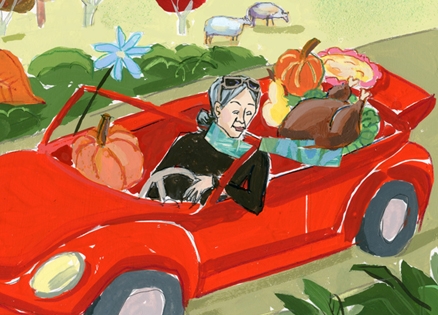
On Thanksgiving morning I packed up two freshly baked pumpkin pies, 24 deviled eggs, some cranberry relish and a flower centerpiece I’d made in a class at church.

With everything secure in my car, I started off to Bruce’s house. Anyone passing me on the road would probably think I was always just a guest at Thanksgiving. They didn’t know I’d been fired as the host.

At the house Elsa pulled me inside. “Mom’s here!” she called. Bruce came out of the kitchen full of the smell of baking turkey and ham.

“We’re sharing the cooking,” Elsa said, red-faced from a morning working at the stove. I knew all about that.

“When did you get so tall?” I said, giving my grandson Eric a hug.

His brother Alex ran up with a present for me—his school picture in a frame.

“I wanted you to have it,” he said. He pressed it into my hand.

Carlos arrived next and introduced his friends. “Hello, Mrs. Graham,” his girlfriend said. She’d brought me a gift, a pretty flower arrangement in a glass bowl. Elsa got one too.

How sweet, I thought.

The kids went into the living room to play some games. Elsa and Bruce turned to go back into the kitchen.

Guess there’s no place for me, I thought. I just didn’t belong.

Elsa grabbed my hand. “I’m so glad you’re here,” she said. “I need your help with that stuffing of yours. I wanted it to be perfect.”

I could see how much fun Bruce and Elsa were having cooking together. I couldn’t help but get carried along on their high spirits.

“What am I doing wrong with this brown sugar glaze?” Bruce asked, struggling with his ham. “The pineapples and cherries won’t stay on!”

I had to laugh. I helped him secure the fruit to the ham, slather it with glaze and put it back in the oven. Then all three of us went out into the living room where the kids were.

“We want to hear stories about Dad when he was little, Grandma,” Eric said. “You know the best ones.”

“Don’t you dare,” said Bruce, but I gave the audience what they wanted. Even Carlos’s friends hung on my every word.

I’d told these stories a hundred times, but somehow now they were funnier than ever. When everything was ready we gathered in the dining room for the holiday meal.

Elsa had set out the meal buffet style. What a good idea, I found myself thinking.

When our plates were full we sat around the table where Elsa’s silver candlesticks glowed beside my centerpiece. They looked beautiful together.

“Mom,” Bruce asked, “would you like to say grace?”

All eyes at the table turned to me, as if it were only natural that I should lead the blessing. I bowed my head.

“Thank you, God, for my family, and this wonderful meal. Thank you for my new young friends, who I would never have met if I hadn’t come here today. Thank you for every one of these angels around the table. Thank you for showing me that being a guest at Thanksgiving has an honor all its own.”

When Carlos and his friends left that night Elsa wrapped up a huge pan of leftovers for them to take along, just as I’d always done for her and Bruce all those years.

The next morning I got my own leftovers—enough to feed me for at least a week.

That was ten years ago and I haven’t hosted Thanksgiving since. I can no longer make the drive to Bruce’s myself, but someone always comes to get me.

It turns out you don’t need grandmother’s house for Thanksgiving. Thanksgiving is wherever Grandma goes.

Read more inspirational Thanksgiving stories.

Download your FREE ebook, Rediscover the Power of Positive Thinking, with Norman Vincent Peale.

‘The Zimzum of Love’: Rob Bell and Kristen Bell Speak on Christian Marriage

Rob Bell, founder of Mars Hill Bible Church in Michigan—once hailed as one of the fastest growing churches in America—has never been shy about offering his own, sometimes idiosyncratic, spin on some of the most important issues in Christian theology and practice. To understand where Bell is coming from when he does so, it’s essential to understand his views on the Bible and on God—and how we should relate to them.

The key point, Bell says in one of his best-selling books, What We Talk about When We Talk about God, is that the Bible must be interpreted and has been interpreted throughout history many different ways, with scholars considering the historical context as well as the etymology of the words being used in the original languages of the Bible, in order to get to the heart of what Scripture really means—important context that can get lost in translation. “I want us all to have faith big enough to handle whatever challenges come our way and open enough to celebrate whatever new discoveries we make in this world,” he says.

That idea of openness—of being planted firmly in faith, like a tree with deep roots that is able to bend instead of break when new information arises—is at the heart of his understanding of who God is. God, Bell says, is not, “behind [us], back there, in the past, endlessly trying to get us to return to how it used to be.” Instead, God “is ahead of us, pulling us forward… with a better, more inspiring vision for our future than we could ever imagine.”

In his latest book, The Zimzum of Love, written together with his wife Kristen, Bell applies this approach to a topic of much discussion in some parts of the Christian evangelical world today: specifically, the question of whether the Bible demands that wives submit to their husbands.

Though many evangelical Christians today take what is known as a “complementarian” view of marriage—that women exist as complements to their husbands and therefore should be submissive—the Bells take an egalitarian approach, inviting couples to “transcend those binaries, becoming aware of the divine presence in all life.”

To drive home the point that marriage ought to be an equal partnership, the Bells write The Zimzum like a conversation between the two of them, like dialogue in a play, with both of them responding to the topics each chapter addresses.

“We have heard that there’s a world of people still discussing how the woman submits to the man, which, to us, just seems completely insane. It’s 2014! What are you talking about?” Bell tells Guideposts.org. “So if this in any way can breathe fresh air to people who have known that’s an insane tale, that would be great.”

That the idea of women submitting to their husbands is even in question is relatively new, however. The Apostle Paul suggests in Ephesians that this is the norm, and Christian historian Mark Noll, Ph.D., explains to Guideposts.org that “female submission” was something taken for granted in Western (and non-Western) society until recently.

“As many have pointed out, the really radical thing about the New Testament is Paul’s urging that men actually love their wives, rather than treating them as reproduction machines,” Noll says. “In the context of the first century, the Ephesians 5 passages about women submitting to their husbands as the church to Christ would have been barely noticed; the injunctions moving the other way, with greater respect for women and the institution of marriage, were the unusual statements.”

It was not until the rise of the modern women’s rights movements that submission became an issue of interest, Dr. Noll explains.

But Bell breaks down the Ephesians 5 passage even further, saying, “The passage begins, ‘Submit to one another.’ It begins with a command for everyone. It means to put first the well-being of someone else. Then it says, ‘Wives, to your husbands, submit.’ Paul simply repeats himself, and ‘Husbands, love your wives like Christ,’ which means lay down your life for your wife. So to take the part about the woman’s duty and to extract it from the overall passage does such violence to the biblical text.”

“If you actually love each other like [Paul commands], the last thing you’re going to be doing is arguing about who’s in control. If you’re arguing about that, you have so lost the point of marriage.”

Christian historian Kate Bowler, Ph.D., tells Guideposts.org that what the Bells appear to be doing in their rejection of submission in The Zimzum is interesting, considering that even those proponents of submission in the evangelical community don’t often get specific about what submission should look like in individual marriages. And even as more women become church leaders and even co-pastors, they still often stand to the side of their husbands, the traditional “priests” of the household and of the church.

The Bells, on the contrary, champion marriages to be partnerships between equals, mirrored off of the zimzum, which is a Hebrew word that represents the space God created outside of Himself in order to make room for the universe. Their philosophy is that both partners should make a conscious decision to create space outside of themselves in order to make room for the other and to prioritize their life together.

In essence: You shrink yourself so that something greater than you—your marriage—can grow and thrive.

But while both partners must shrink, the Bells emphasize the importance of neither partner disappearing in the marriage and both being allowed to be individuals with their own God-given purposes, traveling and enjoying life as a team.

“I really hope that [this book] sets people free to find the joy in marriage,” says Mrs. Bell. “Marriage can be hard because the things that matter most in life take effort, but it can also be this joyful adventure that you’re on together. The two of you are creating something together.”

The Bells’ marriage manual, complete with discussion questions and further reading suggestions and activities, aims to help couples recognize that what they’re creating together is something energetic, light-filled and unknowably deep. When couples understand the profundity of marriage, that’s when “the love can flow all the more freely between you.”

That’s the zimzum.

They Were Meant to Be Together—After a Few Detours

Marci: In high school, I spent my summers in the foothills of the Sierras with my grandmother, in a little town near Yosemite National Park called Bass Lake. My freshman year, I went along with her church on a mission trip to Mexico. That’s how I met John. Sitting by the campfire, strumming our guitars, John made me laugh. Made me feel special. He was three years older than me, just weeks away from joining the Marines. I hated to see the week end.

A year later, I was at church in Bass Lake with my grandmother and John walked in. He looked so different with his military buzz cut. We spent the afternoon together and before he left, he gave me his address and hugged me so close I could feel both our hearts beating.

“Someday I will come back for you,” he whispered.

That night, I pulled out my prettiest stationery and wrote him a letter.

John: I didn’t expect a letter from Marci. Or anybody. Getting that envelope during mail call at Camp Pendleton was a shock. A lot of people only pretended to care, then forgot about you. Alcohol and my parents’ divorce had all but destroyed my family. That was a big reason why I joined the Marines, to escape, to do something I could be proud of and get some order in my life.

I tore the letter open. Slowly read every word about Marci’s life in high school, a movie she’d gone to, the song she was learning on the guitar. She had all these questions about the Marines.

I wrote her back as soon as I could. I didn’t want to rush it, though. I wanted the words to be perfect.

We wrote back and forth for the next three years, even when my unit was deployed to Korea and the Philippines. Someone back home was thinking about me. I liked that. But toward the end of my service, I began to dread the idea of returning to civilian life, where there was no plan, no orders to follow. All I could think about was the terrible reality I’d escaped.

I started drinking, just like my dad. I quit church. And I stopped writing to Marci. Her last letter stayed tucked in my rucksack. I couldn’t throw it away, but I couldn’t answer it, either. What could I write? A girl like that deserved someone better than a lost soul like me.

Marci: It was just some schoolgirl crush, I told myself. John obviously didn’t feel the same way I did. If he did, wouldn’t he have written back?

I was 19 by then and had graduated from high school. I was going to junior college, living with my parents near Sacramento. I moved on. Started dating a cute guy. He was nothing like John, but I liked him okay. He was a good distraction. My friends thought he was too clingy, too controlling, but I didn’t want to end up alone, right? He was so in love with me that he proposed after only a few months. It felt way too soon, but I said yes.

John: I got a job working for Eric, an old high school friend from Bass Lake, pouring concrete in the San Francisco Bay Area. We even roomed together, in San Ramon. Two guys living the bachelor life. Eric owned a twin-engine plane, so for fun we’d take it up for a ride. I was free from my family, ready for a fresh start.

One day—it was sometime in early December—Eric had an idea. “Remember that girl Marci who came to Bass Lake in the summertime? Her family’s in Sacramento. It would be cool to see her again. Let’s fly and meet her. I’ll give her a call.” All I could think about was how she must have thought I’d dropped off the face of the earth after her last letter. Why would she want to see me? But I couldn’t tell Eric that.

“Sure,” I said. “Sounds great.”

Marci: I barely recognized the guy who climbed out of the plane. He’d grown a beard and added some muscle. When our eyes met, I felt that flutter I’d felt when I was 15.

John came to my parents’ house near Sacramento for dinner. He had two helpings of spaghetti and kept my family on the edge of their seats with his stories. After supper, I got my guitar and we played for each other. It was with him on that long-ago mission trip.

I drove Eric and John back to the airstrip. John hugged me for a long time before saying goodbye. I watched as the plane taxied down the runway, then stared at the ring on my finger. How could I marry someone I didn’t love? Especially when I knew I was in love with someone else?

John: I looked out the window at the stars and thought about Marci all the way back to San Ramon. She hadn’t said one peep about my not writing to her. She wasn’t resentful at all. But she was taken. I’d tried not to stare at her diamond. I’d missed my chance. One more thing I’d messed up. Loser!

Marci: I needed to write John one last letter. I racked my brain for just the right words. But how do you say “I love you” without actually saying it? Without sounding too forward? After all, I was engaged.

My hand shook as I wrote, “Hi, John. I just wanted to drop a note in the mail to let you know I really enjoyed seeing you tonight. I would really like to see you again, sometime soon, maybe?” I wrote a couple more lines, then signed it, “With love, Marci.” Maybe that wasn’t enough. I added a P.S.: “I’ve missed you.”

That’s when I realized that I didn’t have John’s address. I didn’t have Eric’s phone number in San Ramon, either. This was pre-Google. I called directory assistance. They couldn’t find a listing for Eric. Finally I addressed the letter to Eric’s mother near Bass Lake. That’s all I could do.

The next day, I met up with my fiancé, ended our engagement and said a long shot of a prayer. You are the God of love above all else. If John is who I’m meant to be with, please make it come true.

John: Just before Christmas, I had the most out-of-control night of my life. I woke up the next morning and had no idea where I was. My head was pounding. The sunlight hurt my eyes. I was in my truck, and the front end was buried in a snowdrift. I stared out the windshield at a big tree just a few feet ahead of my bumper. I could have killed myself.

Maybe I should have.

I barely remembered having driven back to Bass Lake, where I was supposed to house-sit for Eric’s family over the holidays. Going home stirred up old demons. I’d met up with some friends the night before and gone drinking. I must have hopped behind the wheel, blacked out. Was my life really that worthless, that I’d throw it away?

I got out of the truck and fell to my knees in the snow. God, I can’t do this on my own. I know how to follow orders. Just tell me what I need to do. I got to my feet. After a while, I was able to flag down a passing car that took me into town, where I got a tow truck.

Marci: Three weeks had gone by since I wrote my letter. There was no word from John. What if he had never thought of me as anything more than a pen pal? I’d almost gotten married. Now I’d be alone forever.

John: I finally got to Eric’s mom’s house and apologized to her for being late. The first thing she did was hand me an envelope. From Marci? How did she know I’d be here? How had she found me? I opened the flap and pulled out the letter. She didn’t come out and say it, but I could read between the lines. P.S. I’ve missed you.

For once, I knew just what to do without being told.

Marci: I was coming home from church after attending Christmas Eve services with my family. There was something waiting on the doorstep—a dozen red roses. My heart leaped. I ran to the flowers and pulled out the card with them: “Looking forward to seeing you again. John.”

John: I quit drinking. Went back to church. Got my act together. For myself. In June the following year, I married the woman of my dreams: Marci.

That was 34 years ago. Today, when I look at my wife, our kids and the home and family we built together, I thank God that the snowdrift stopped me before the tree did. I never would have gotten Marci’s letter. Never would have bought her those roses. Never would have cleaned up my life and let go of my bitterness. And never would have found lasting happiness and love.

For more inspiring stories, subscribe to Guideposts magazine.