Embrace God's truth with our new book, The Lies that Bind

3 Values That Are Keys to Success in Life

Over the years, my wife, Elba, has done a great job of decorating our home. Each room has its own style and uniqueness. We have lots of nice furniture, great artwork and family photos. One piece of art that stands out to me is a white wooden sign that reads: Faith, Family and Friends. These three words represent our three main values; they are what my wife and I find most important in life and are the keys to the success of our marriage and home.

Elba and I come from Christian homes where our parents raised us to understand the importance of faith. In my home, both my parents were instrumental in passing the teachings and practices of their faith to my siblings and me. In Elba’s home, it was her mom who strongly lived out her faith and passed on her beliefs to her nine children. The faith our parents instilled has helped us endure difficult times and move forward with grace. Our faith is rooted deeply in the love we have for God, and we try to be humble, loving and persistent. And just like our parents, we worked hard to pass these values along to our children.

The Daily Bible Large Print relaunch with digital free gift in article ad

Family means the world to Elba and me. We were raised in loving families with limited resources, but there was always plenty of love, fun, faith and support. No family is perfect, but they are each a gift from God. Throughout our son and daughter’s childhoods, we lived in several states, dealt with illness, lost loved ones and faced shattered dreams. However, we were always there for one another and continue to be.

Though we are born or adopted into our families, friends are the family members we gain throughout life. Yes, there are the friends who come and go, but the ones we form a deep and lasting relationship with are the ones we most value. These are also the people we turn to for support when times are tough. God has blessed us with these relationships, and we work hard to maintain them.

Everyone has a set of values that guide their decisions, actions and thinking. When I look at the wooden sign in our house, I’m reminded that faith, family and friends are gifts from God and the most important things in my life. What are your key values in life?

3 Tips to Tackle Life’s Troubles

When troubles gang up on you, there are two possible attitudes to take. One is to become discouraged, even hopeless, and to give up.

This attitude is, of course, disastrous. For if you admit even to yourself that you do not have the ability to cope with things, your personal resources will not come into action.

New Every Morning Journal In Article Ad A

The key to surviving adversity is to develop resilience. Resilience is just another word for your rebound, your comeback power, your ability to stand up to adversity and handle it creatively.

Philippians 4:13 insists that you, through faith in Christ, possess the know-how, strength, and persistence necessary to meet any situation. In a word, you have the power to change your life in adversity. Put all of your problems into God’s hands and believe, positively, that you can solve them.

Why should you believe this? Because “God has not given us a spirit of fear, but of power and of love and of a sound mind” (2 Timothy 1:7).

Here are some techniques for how a resilient person—you!—handles adversity:

1. Organize an attack on your troubles.
You are stronger than all your troubles put together. But when many things are going wrong, the tendency is to be confused.

Have faith in your ability to think. Remember, the mind will not function when it is panicky. Only when it is calm and quiet will it produce those insights that are necessary to improve your circumstances.

Claim God’s promise: “My peace I give to you…Let not your heart be troubled, neither let it be afraid” (John 14:27). Get your mind into a state of quietness. Then start thinking spiritually.

Say something like this: “Lord, you know my troubles. I believe that, with your help, I can think my way through them. Guide my thinking and give me right answers. Help me do things your way.”

2. “Prayerize” your adversity.
That curious word is not original. It was suggested to me by a man who decided to put spiritual techniques into practice in a difficult business situation.

In his prayers, he said he received guidance to work out the following three principles: “Prayerize, visualize, actualize.” By this, he meant that through prayer he got a clear understanding of how his situation could be improved, with God’s help.

He then practiced visualizing his goal, sharpening that concept until he knew exactly where he wanted to go. He held the image of successful achievement firmly in mind, visualizing a good outcome.

He worked hard toward such realization, and what he sought became an actual accomplishment. The Psalmist tells us: “Delight yourself in the LORD, and he shall give you the desires of your heart” (Psalm 37:4).

3. Think in terms of opportunity.
Adopt a positive mental attitude, believing that with God’s help you will, out of your own intelligence, create a better state of affairs for yourself and others. In the midst of your disadvantages and troubles, look for an advantage. Study the situation until you find a ray of hope and light.

God is always on your side. Even in your darkest hour, never doubt it. God has promised, “Never will I leave you; never will I forsake you” (Hebrews 13:5). And with God there is always a new day!

Download your FREE ebook, Rediscover the Power of Positive Thinking, with Norman Vincent Peale

3 Tips to Recognize the Presence of God

The Psalmist sings, “Where can I go from your Spirit? Where can I flee from your presence? If I go up to the heavens, you are there; if I make my bed in the depths, you are there” (Psalm 139:7-8). Surely God inhabits every nook and cranny of our lives—except for the parts that we close against Him. When we don’t sense God is there, it’s not because He’s absent. It’s because we have not developed a deep awareness of His presence. It takes practice.

Nearly 600 years ago a priest in France compiled the sayings of a humble and holy lay brother named Lawrence. The resulting booklet, The Practice of the Presence of God, has helped Christians for centuries. It was one of John Wesley’s favorite books. Here are three pointers I’ve gleaned from this little gem:

GP In Article Desktop

1. Make love of God the aim of all our actions.
Brother Lawrence notes that the simplest—or hardest—task is transformed when we do it for love of God. We need to give Jesus everything: our aversions, our suffering and the minutiae of our days. Brother Lawrence says we must do this out of love, seeking no return, and “seek our satisfaction only in the fulfilling of His will, whether He lead us by suffering or by consolation.” The more of ourselves we give to God, the more we will know His presence. “Whether you eat or drink or whatever you do, do it all for the glory of God” (1 Corinthians 10:31).

2. Look for God’s goodness in all things.
Too often we fail to notice God’s presence in small things because we’re looking for big action. But God is as present in the simple as He is in the grand and great. Training our eyes to see little kindnesses as gifts from God helps us become more aware of the full spectrum of the ways in which He loves us. The Bible tells us, “Every good and perfect gift is from above, coming down from the Father…” (James 1:17). Every gift, whether it’s fireflies or fireworks.

3. Create stopping points in which to rest in God.
Presence can be temporal (I am present in church) or spiritual (my soul is present and attentive to God). You can guess which type God prefers! Our heavenly Father doesn’t find it at all difficult to be present to us, but we have to work at re-directing our hearts and minds to Him.

One way to start is to take pockets of time throughout the day to practice opening our hearts. A few months back I read that the average American spends two to three years of their life waiting, whether in line or on the phone. I decided that I was going to use that time to “Wait for the Lord” (Psalm 27:14). Now whenever I find myself stalled, I think of it as a reminder to place myself in God’s loving presence, breathe deeply and recall his loving care. I usually start with a simple prayer like, “I place myself completely in Your hands, Lord!” or “Father, I rest in You.”

The writer of Hebrews urges us to “draw near to God with a sincere heart and with the full assurance that faith brings, having our hearts sprinkled to cleanse us from a guilty conscience and having our bodies washed with pure water” (Hebrews 10:22). Draw near to God and He will draw near to you.

3 Stress-Relieving Techniques from Norman Vincent Peale

That’s what an email from my health insurance company informed me this morning. As if I weren’t already uncomfortably aware of my stress level, which is escalating the closer we get to tax day (can you tell I haven’t finished mine yet?).

But I know having a negative attitude isn’t going to ease my stress (or get my taxes done any faster). So I turned to these simple stress-relieving techniques from the foremost practitioner of the power of positive thinking, Dr. Norman Vincent Peale. Try one (or all) for yourself.

extraordinary women of the bible

Sit relaxed in a chair with both feet lightly on the floor. Think of your mind as the surface of a storm-tossed lake. Now picture the waves subsiding, the water becoming as smooth as glass.

Spend a few minutes reliving the most peaceful scenes you’ve ever beheld—a beach at sunset, a green valley in the hush of morning. They have a way of cleansing your mind of worries.

Repeat—slowly, bringing out the melody in each—a series of calming words. “Peace, tranquility, serenity, quietness …”

The last one is very similar to the relaxation response (you may have read about it in our article on 12 all-natural stress busters). Though popularized in the 1970s by pioneer in mind-body medicine Herbert Benson, it’s an age-old technique, as Dr. Benson himself points out, that people have used (and still do) in yoga, tai chi and prayer.

If tax day or something else has sent your stress level skyrocketing, evoke the relaxation response. Sit comfortably. Close your eyes and relax your muscles. Breathe naturally and repeat a word, phrase or prayer (like “peace,” “The Lord is my shepherd” or “shalom”) silently or aloud. When other thoughts come to mind, let them go and return to your repetition. Do this for 10 minutes or so.

Don’t you feel more relaxed? I know I do.

3 Steps to Turn Grumbles into Gratitude

Did you know you can find deep contentment without spending a dollar or changing one thing about your day, your family or your life? In addition to this inner peace, you’ll have more joy, more gratitude and be a better an example for your family and friends. How?

By stopping your grumbling. In my book, I’ve chronicled how change can happen even in the midst of a big, messy family. The Grumble Free Year is our large family’s story of learning to grumble less. Eleven of us took on this challenge, and we kept track of how we messed up and what we could do better.

extraordinary women of the bible

It’s easier to do than you think. Here are three ways to start.

1. Take control of your unrealistic expectations.

We grumble because we expect things to go one way and are thrown off when things don’t go as planned. Think about the next few hours. What do you hope will happen? What would be easy and comfortable to you? Now consider your response when something doesn’t go as planned. It doesn’t matter what happens, just think about how you’ll respond.

In my effort to stop grumbling, I thought about my unrealistic expectations that I could clean the house and it would stay clean. (We have eleven people living in our home after all!) I also considered how unrealistic it was that I could go through a day with my family and it would be conflict-free. There’s a lot of interacting happening with eleven people in the house …many of it brings strife.

Instead, I thought about how I’d respond when the house gets messy or the kids start to fight. Rather than being overwhelmed and grumbling, I considered how to help my family get back on track. Some days this meant pausing to do a 10-minute clean up, with all the kids helping. Other days, it meant pausing to help my children communicate with each other better, “How about we try that conversation again, this time with kind words?”

When we plan for our reactions, we handle situations better. We look beyond the problems and find solutions. We treat our family, friends and co-workers with respect, instead of just grumbling about what went wrong.

When we react with confidence, instead of feeling like a victim, we feel better about ourselves and others, too. We feel in control of our emotions. We believe that life is good, even though our day comes with bumps and struggles.

Taking control of our unrealistic exceptions, reacting positively and not grumbling is a great first step. But there’s a second step that leads toward deep contentment. After you stop your grumbling, you must replace it with gratitude.

2. Change your grumbling habit into gratitude.

We can control our reactions, but to truly get to deep contentment, we must replace our grumbling with gratitude.

When you feel like grumbling about something, instead take a deep breath and make a mental adjustment. Ask yourself, “I want to grumble about this, but how can I offer gratitude to God instead?”

When a car cuts you off on the freeway: “Thank you God for keeping me safe. Thank you for helping me be alert so I could avoid that accident.”

When your child dumps a laundry basket of clothes in front of the washer, just when you thought you were done: “Thank you God we have clothes to wear. Thank you, too, for the wisdom to help my kids learn how to care for their things and to be considerate of others.”

When you’re feeling overscheduled, overwhelmed and unappreciated: “Thank you God that you have given me a sound mind to make healthy changes in my life and the strength to be strong in the things I can’t change.”

The more we replace our grumbling with gratitude, the more we hard-wire better responses.

3. Hard-wire praise.

In my striving to stop grumbling (and to guide my family to do the same), my grandmother has been my greatest example. Grandma has dementia, and she lives with our family. A few years ago, Grandma fell and broke her back. Yet because of her dementia, each day she awoke with no memory of her injury. Instead of complaining, she’d thank me for taking care of her. She’d also thank God for how good He was to her. Throughout the day, I’d hear Grandma singing praises to God as she lay immobile on her bed.

Thankfully, over time, Grandma has gotten better, and she’s up and walking again with the use of a walker, but the lesson is one I won’t forget: when Grandma couldn’t even remember that her back was broken, she still remembered how to praise.

All those years of praising Jesus, instead of grumbling, had hard-wired praise into her soul. It was what she knew to do, even when things got hard. Now that is deep contentment.

Nothing I’ve suggested costs a dollar or requires you to change your day, your family or your life. Changing your expectations, changing your responses, and praising God in all things does bring change though … mostly to your heart.

Stopping grumbling is easier than you think. And contentment can come. The changes you make will impact you for a lifetime. Instead of investing your energy into negative emotions, you can turn your grumbles around to thank God for His goodness. Your family and friends will thank you for it, and you can be an example to prove that they can do the same. Isn’t that something to be thankful about?

3 Steps to a Wonderful New Year

Ralph Waldo Emerson suggested that one should write on his heart that every year can be the best year he ever lived. Therefore I’d like to give you a text for the New Year. It wouldn’t be a bad idea to write it down somewhere so you could consult it now and then. But it is so short that all you need to do is write it on your consciousness.

This will see you through the beginning of the year, the middle of the year, and the end of the year. It is the first four words with which the Bible begins: “In the beginning God . . .” (Genesis 1:1) Take Him at the start and you will have a wonderful time in the New Year. And then follow these steps.

extraordinary women of the bible

1. Practice the art of forgetting.
Man is what he remembers, but man is also what he forgets. One of the healthiest things a human being can do is to become a master of forgetting. Whatever you do, don’t lug your resentments, your hates, your frustrations, your disappointments, your regrets into the new year. Forge ahead! It is a great art to know how to forget. Drop it, skip it, let it go— whatever it is. Start anew.

2. Take hold of the new year and shake the life out of it.
Drop the ‘t’ off forget and forge ahead, on the basis of the text “In the beginning God . . .” Live a day at a time and take it as it comes. Have you seen a calendar for the new year? Well, you know something? In order to get to January 2nd you have to live through January 1st. Live a day at a time and live on the basis of easy does it. Don’t get too worked up about it. Just take it as it comes.

3. Expect great things and put your life in God’s hands.
Have high hopes, have great dreams, have great belief. See visions and believe in them. Believe that life is good and that it is going to be better and the best is yet to come. You know something? You are very likely to get just what you expect.

Our Heavenly Father, we thank You for life, for this precious wonder, with all its hopes, its dreams, and its opportunities. Help us to put our hands in Yours trustingly and help us to live by the text, “In the beginning God…” Through Jesus Christ our Lord. Amen.

3 Spiritual Reflections to Help You Find Meaning in Quarantine

Every Sunday I call my parents in New York. It is a joyful time of catching up and talking about the weekly online sermon I’ve given for my new church in Florida. In every call, Covid-19 and its impact is mentioned.

My 83-year-old dad misses his daily walk with his best friend Johnny to McDonalds for a cup of coffee. “I feel like I’m in prison in my own home,” he says. He is not alone in feeling isolated and confined in this time of quarantine and social distancing. But one thing these strange circumstances have offered is the opportunity to take a deeper look at our lives.

Pray A Word a Day - 2023 In article

Here are a few things the coronavirus is causing me to reflect on:

1) Explore the Past

Our past offers a window into our hearts, where our treasure is. If you’re struggling with social distancing, one thing I would suggest is to allow yourself to think about the past.

How did I live my life before the pandemic? What were my priorities? Who are the people that I love and miss today? 

What lessons can you learn from the things and people you are missing? Are there things that were in your life that you believe you should not go back to once the pandemic has passed? As someone wise once said: “The past is where you learned the lesson. The future is where you apply the lesson.” Looking back is about learning, not feeling guilty. 

2) Recognize and Admit Mistakes

There is no learning until we become aware of past missteps and missed opportunities. If you find yourself feeling bad, pause and say a prayer. Then let it go. It takes courage to look at ourselves in the mirror and admit our errors. “As water reflects the face, so one’s life reflects the heart,” states Proverbs 27:19. Now is a good time to closely examine all aspects of our lives, including the ways we have fallen short and can do better.

3) Move Forward with Hope

One of the most important things we can do during this crisis is to open ourselves to the prospect of a better future. Looking back to move forward with hope is the aim. Remain adaptable and flexible as you walk into the unknown, knowing you can create new and better experiences. People gain greater insight when they intentionally pause to reflect on where they have been and where they want to go. A promising outlook on life is possible even if life is turning out very different from what we thought it would be. 

These unprecedented times of isolation offer a great opportunity for personal growth when we choose to examine our lives with courage, truth and grace. Time alone, if used wisely, can help us become a better, caring and loving person.

3 Reasons to Renew Your Appreciation of Nature

“When one tugs at a single thing in nature,” wrote the naturalist John Muir, “he feels it attached to the rest of the world.”

Each year, there comes a time when we realize we are spending more time outdoors, and we’re always wise to take a moment to pause, look around and gratefully breathe in the freshness of the warm, growing season

Light for Life NASB Study Bible in Article

This year, the renewal of the natural world—and our place in it—is more poignant than ever as we continue to live with the coronavirus pandemic and its myriad implications for our daily lives.

For me, Muir’s words capture the moment perfectly. Even if it’s just a short walk or trip to the garden, nature makes me feel more grounded. Having spent so much time indoors—and continuing to physically distance despite the weather—I find that each “single thing” I encounter in nature takes on profound meaning. 

1) Nature Feeds Us

Lettuce and herb seeds I planted weeks ago are starting to look like actual, bona fide plants. I’ve grown vegetable gardens for years, but this year when those tender plants first peered up at the sunlight, I felt deeply moved by the gift of nourishment that can grow from such a tiny seed.

2) Nature Persists

My family is fortunate to live near a walking trail that is sparsely traveled. The sight of feathery, new pine trees greeted us on a recent walk and left us astonished and reassured as we recognized that they had grown from pine cones that had peppered the forest floor. Without any human hands, nature finds its way.

3) Nature Comforts Us

The pandemic leaves no one untouched, and each of us is grieving in some way—for a loved one who has died, for the pressures of financial strain, for the loss of routines and habits that used to define our daily lives. In times of grief, nature can be a comforting presence. Take a moment to look up at passing clouds, gaze at photos of awe-inspiring natural wonders, watch a nature documentary and find solace in the ever-present invitation nature offers us to connect to the beauty of both our inner lives and, as Muir suggests, “to the rest of the world.”

Are you appreciating nature in new ways during the coronavirus pandemic?

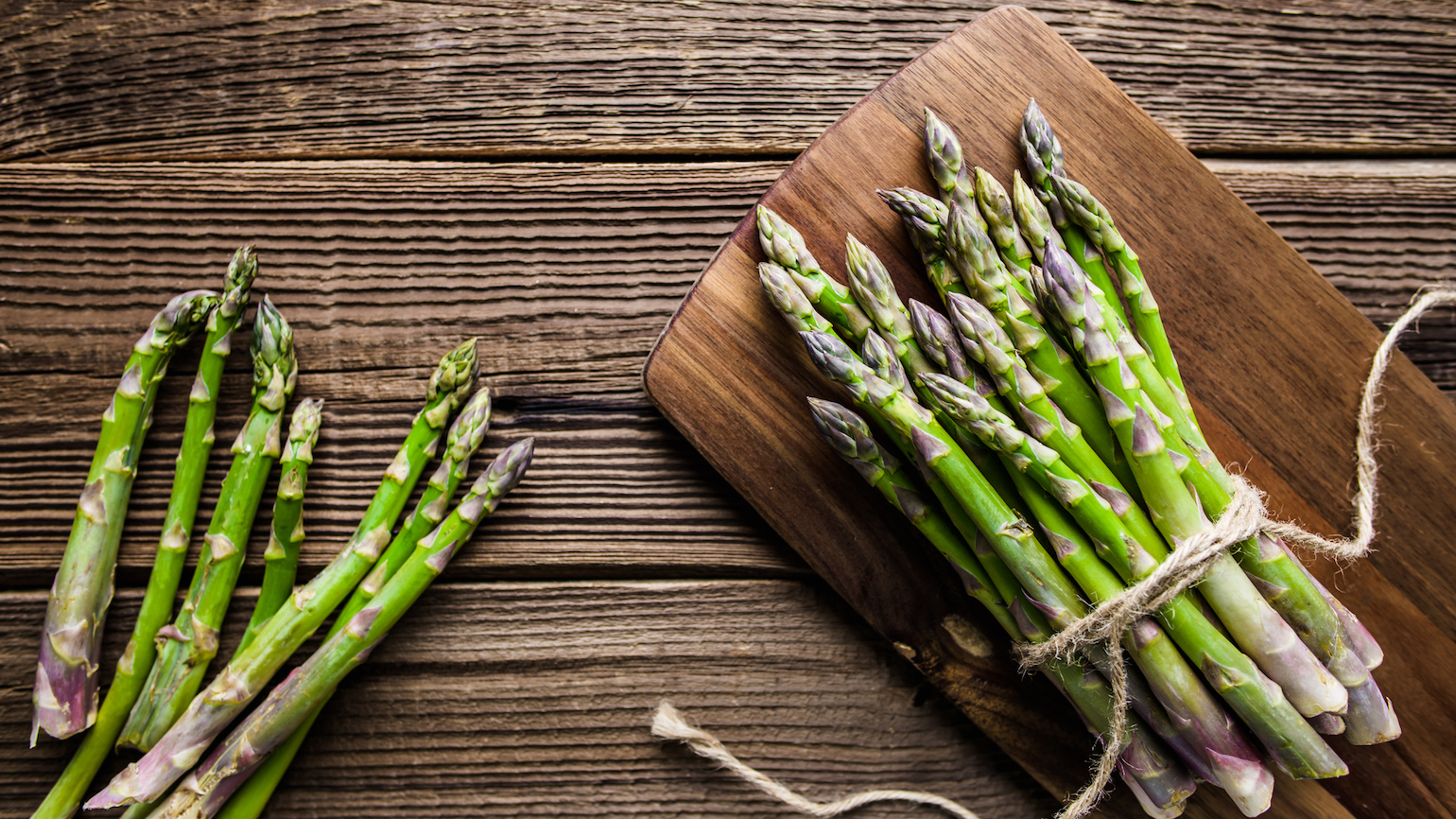
3 Reasons to Love (and Eat More) Asparagus

I’m feeling inspired to plant an asparagus crown this year in my garden—these starters are available at garden centers only in the early spring, so now is the time. As a plant, asparagus is a beautiful perennial, sending up spears each spring that look other-worldly and mysterious, followed by tall, frilly fronds that look lush and lovely in the garden.

But if the promise of a spring asparagus harvest is exciting from a gardening perspective, it’s downright delectable from a breakfast, lunch or dinner point of view. Whether tossed into an omelet, stirred into a salad, folded into a pasta or grain bowl, or grilled and eaten by the spear, asparagus is a fresh, vibrant spring delicacy. 

Faithful Paws and Purrs In Article Ad

If you need encouragement to add asparagus to your spring menu, keep these three benefits in mind.

1)  Nutrition Powerhouse
Fiber, folate and vitamins A, C, E and K are only some of the important nutrients asparagus boasts. The vegetable also contains high levels of antioxidants, compounds that reduce inflammation and offer anti-aging benefits, helps prevent cognitive decline and is believed to help prevent cancer. With few calories (and lots of flavor), asparagus gives you a lot of nutritional bang for your buck.

2)  Natural Diuretic
If you’re like me, eating asparagus is followed by a distinctive smell next time you head to the bathroom for Number 1. This phenomenon is utterly harmless. In fact, the aspargusic acid that causes the odor actually helps your body because it contains an amino acid that acts as a natural diuretic, drawing salts from your body and increasing your body’s output of urine. People with high blood pressure especially benefit from this property.

3)  Delicious!
Taking pleasure in what we eat is a health benefit in and of itself—and when a food is as nutritionally beneficial as asparagus, enjoying it plentifully is a win-win. Prepare asparagus by snapping off the woody end at the place where it naturally breaks. Then, toss it in olive oil, salt and pepper and roast in a hot oven or on a grill. Or, cut the spears into pieces and sauté or stir fry. Cooked asparagus is delicious either warm or cold and can brighten up salads, serve as a scrumptious side dish to meats or fish, or taste delicious alongside raw vegetables served with dip.

Do you think of spring as “asparagus season?” What’s your favorite way to enjoy it?

3 Quick Ways to Boost Your Confidence

Mom and I walked quickly across the parking lot at St. Mary’s Church in Glens Falls, New York, where we lived. I checked the announcement from the bulletin I held in my hand again. It announced the time and place of a new Bible study tonight. “I think I know right where the room is,” I said.

It was strange how the announcement had caught not only my eye but Mom’s too. I grew up at St. Mary’s, and there must have been dozens of Bible studies at our church over the years. We never went. But for whatever reason, we both wanted to go to this one.

Sweet Carolina Mysteries In Article Ad

We walked into the building and looked around. There was nobody but us in the entryway. I didn’t hear anyone. “I think it’s this way,” I said, leading Mom down the hall.

I was used to taking charge. I was a school principal, with a long teaching career. I taught my students to keep working until they solved a problem. And I would keep searching until I found this Bible study! Mom and I turned the corner and found…an empty room.

“Maybe it’s upstairs,” said Mom.

This time she led the way. I glanced at my watch. We still had several minutes before the class started, but I didn’t like feeling lost. It reminded me of my early days as a second-grade teacher here, back when I was just learning the ropes. I didn’t have much experience but I was eager to try new things. That first year I planned a big Christmas play. A class mother got us free elf hats from the Glens Falls National Bank, and I wrote a script about elves with a part for everyone.

The following year I decided to do a Nativity play. I based it on the classic picture book, The Littlest Angel, the story of a rambunctious boy-angel who finds it difficult to fit in with the ordered world of heaven.

I worked hard to create parts just right for every child in my class. Our best reader was the narrator. A girl who loved to sing got a solo. But there was one part I had to work extra hard to write. The part for a boy named David. I remembered that student like I had taught him yesterday.

“I don’t hear anybody,” said Mom, peering down another empty hallway. “Maybe we should have gone downstairs instead of up.”

“Let’s try this again,” I said.

Try again. How many times had I encouraged David to do that? He was a smart boy. He was always eager to please. He just had a hard time sitting still. Even for his age, David had a lot of excess energy. That came in handy when I needed someone to run an errand for Teacher, but it was also a problem when he needed to focus on math or reading. I had to think up just the right part for him in our play.

David put his whole heart into it. He wanted to do his best for the audience, for the rest of the cast, for me and for God. The day of the performance he was very nervous. “What if I forget what to do?” he said as I helped him into his costume and straightened his halo over his head.

“You don’t have to worry about that,” I said. “You’re an angel. You just run down from your spot in the chorus, right to the front of the stage. Pretend that you’re flying. Then you hold up your golden box—your gift for Baby Jesus.”

“What if I make a mistake?” he said. “Or do a bad job?”

“When you’re on stage,” I said, “remember this. You are not there alone. Your angels are with you. Rely on them and they’ll guide you. And your own guardian angel will be right by your side. He would never miss seeing you in a play about the birth of Jesus!” I could still see David’s big smile in response.

Down to the main level, and down another flight of stairs, Mom and I followed another long hallway. Here, at last, we saw signs of life. “Is this the Bible study?” I asked.

“You’re right on time,” said the teacher. “Take a seat.”

As we got settled I ran through David’s performance in my mind. He was the star of the Christmas play. He played his part perfectly, zooming out of his spot in the choir and holding up his golden box. I’d never doubted that David could do it, but watching him prove it to himself was something special.

David believed in guardian angels that night. I hoped that wherever he was he still believed in guardian angels now.

The year of The Littlest Angel was my last at Saint Mary’s. I went back to school for my master’s. The school where I next worked wasn’t far from Saint Mary’s, but I rarely had any reason to visit. I never forgot that first job, or the first children I taught. Not just David, but the other boys too, and the girls, their parents even . . .

My eye fell on another woman at the Bible study. She looked familiar. Was I seeing things, or was David’s mother sitting just a few feet away from me? I almost laughed out loud. What were the odds?

When the Bible study was over I re-introduced myself. “I taught your son David,” I said. “We put on a play . . .”

“The Littlest Angel!” she said. “I’ll never forget it. David was so proud when it was all over.”

I recalled for her how nervous David had been before the show, and how I’d tried to give him confidence. “I knew David would have angels with him on the stage,” I said. “By the time the night was over, David knew it too.”

For a moment David’s mom went quiet. I thought I might have said something wrong. Was David all right these days? What had become of him, I had no idea.

“David’s enlisted in the Army,” his mom said. “He leaves tomorrow. He’s been nervous about it. I’ve been worried about him too. Thanks for reminding me that he won’t be alone. His angels will be with him now just like they were then.”

I didn’t see David’s mother again after that night, and I’ve since moved to Ohio. But I’ve never worried about my young, energetic student again. I know that wherever he is, he has angels by his side.

Did you enjoy this story? Subscribe to Angels on Earth magazine.

3 Powerful Benefits of Gazing at the Stars

My favorite Broadway villain of all time is Javert, the foil to the heroic Jean Valjean in Les Miserables. Javert may be an uncompassionate man with a rigid sense of morality, but in a moving moment, he sings a song that inspires me every time I look upward at a clear night sky. 

He sings of “stars, in their multitude, scarce to be counted, filling the chaos with order and light.” Even this character, with his obsessive nature, knows that the stars in the sky are uncountable, yet organized, stable and ever-present.

In that, he shares an important lesson about the positive power of the night sky—their awe-inspiring vastness can serve as an instant corrective to feelings of narcissism, self-pity and so many other negative feelings. Who can honestly think that life is small and chaotic when looking at those myriad spots of light?

1)  It’s Awe-some (Literally)
Awe is an emotional state that psychologists know is healthy and positive. Contemplating something so vast and incomprehensible as a star-filled sky, we feel small in the best possible way, parts of a great and infinite whole.

2)  It’s Not All Dark
Stargazing is one of nature’s most concrete reminders that even at times of darkness, light persists. The inky blanket of the night sky is never uniform or monolithic. It is always changing, and it is always flecked with sparkling reminders that light can never be entirely extinguished.

3)  It Holds Our Gaze
Just as Javert recognized our inability to quantify the enormity of the night sky, scientists for millennia have engaged in an ever-expanding but never-complete quest to learn about the other planets, stars and galaxies that fill the universe. Looking up at the night sky is a constant reminder that exploring, questioning and searching for knowledge is as eternal as the cosmos itself.

What do you think when you look up at the night sky and contemplate what Javert calls “the sentinels…keeping watch in the night?”

3 Positive Aspects of Living Frugally

“Without frugality none can be rich,” wrote the 18th century poet Samuel Johnson, “and with it very few would be poor.” 

Of course, despite this inspiring message, not everyone who chooses to live frugally does so intentionally. Life circumstances can make frugality a necessity rather than an option. But whatever your reason for minimizing your spending, frugal living can be part of living a positive life.

Pray a Day Vol 2 In Article Ad

Here are three unexpected benefits of living a frugal life: 

1) Frugality Is Earth-Conscious
A frugal mindset leaves a smaller carbon footprint than one in which buying new is the go-to way to get needed items. From clothing to natural resources like water and electricity to home decor, making frugal choices gives us daily opportunities to protect our environment rather than endlessly asking it to provide for us.

2) Frugal Living Helps Us Set Priorities
Liz “Frugalwoods,” whose blog chronicles her family’s frugal lifestyle, says her frugality helps her discern what is most worthy of her time, attention and money. “There’s a whole lot that I don’t do and don’t spend money on simply because it doesn’t rise to the level of priority in my life,” she writes. “I know that my time and money are both limited so why fritter either away on stuff that doesn’t bring me happiness?” Frugal living can be a process of elimination of meaningless spending, as well as an investment in a satisfying, meaningful life.

3)  Frugality Is the Opposite of Perfectionism
Letting go of perfectionism is a challenge for many of us. If we’re prioritizing frugal living, though, we simply can’t expect perfection, because “perfect” so often means “new.” As Liz quips about her funky turquoise end table, claimed from an online swap group, “I love it! It doesn’t exactly match anything else, it’s kind of an odd shape, and I’m not sure why it’s on wheels, but none of this bothers me in the least…. Stuff is not a stand-in for human emotions, and it doesn’t exist to make you happy. It exists to serve a function. As a recovering perfectionist, I find it liberating to accept—at the outset—that things aren’t always going to work out quite right.”

How does frugal living help you cultivate a positive attitude?