

Embrace God's truth with our new book, The Lies that Bind

The Miraculous Giant Tomato

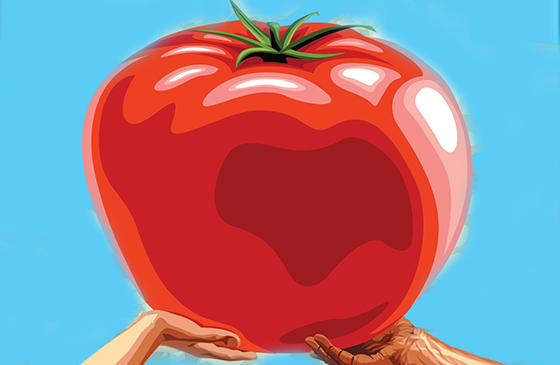
Everything’s bigger in Texas, right? But the giant Beefmaster tomato that appeared in my garden one summer day was like nothing I’d ever seen before. It was a real beauty–red, without a blemish. It bent the vine to the ground.

How had I missed it earlier? I checked my garden at least twice a day. This behemoth had seemingly appeared overnight.

I plucked my prize and brought it inside to weigh it. Two pounds! My mouth watered. I thought of making salsa or jam, or simply slicing it, with salt…

Suddenly, a thought took hold of me and wouldn’t let go. Give the tomato to Grandpa.

What? That seemed like a bad idea. Grandpa lived on a farm just a few miles away, but I hadn’t seen him since Grandma’s funeral. And for good reason. At the service more than one person commented, “That woman was a saint for putting up with him all those years.”

The dirt had barely settled on the coffin when he groused, “When are we eating? Ma’s buried, let’s get on with it.” He was offensive and insensitive. You never knew what would come out of his mouth, but you knew you wouldn’t like it.

I’d figured that out when I was a kid. The farm was paradise–100 acres of cornfields, cattle and, best of all, a huge vegetable garden. Grandma always greeted me at the door. “C’mon over here and let’s make some cookies,” she’d say, gently taking my hand and leading me to the kitchen.

We baked, hung laundry and cooked. Grandpa? He stayed out back, working the land. I knew, even then, that farming was incredibly demanding, and watching him fostered my own love of gardening. Still, I longed for a hello, a wink, a “thanks for coming.” Something. Then one day, I got it.

“How much was that?” he said with a scowl, pointing to my new car. “What do you need a brand-new vehicle for? Plenty of used ones out there!”

“Just ignore him, he doesn’t mean any harm,” Grandma said.

But his remarks hurt. Didn’t he even want to know me? I was his granddaughter, for crying out loud!

I only visited in order to stay close to Grandma. Now that she was gone there was no reason to go out there. It certainly didn’t matter to Grandpa. So why was I standing in my kitchen with an incredible urge to give him this amazing tomato? It didn’t make sense.

And yet I couldn’t bring myself to slice into it. I tried but I just couldn’t do it. I was so frustrated that I finally surrendered. I took the tomato, got in my car and drove to Grandpa’s farm.

When I arrived, Grandpa was on his four-wheeler, riding in from the fields. Under his hat his face was a weathered mask carved by the elements and by years of working in the Texas heat, but at 84, he was showing no signs of slowing down.

Must be that nasty temper of his that keeps him going, I thought. I got out of my car and stood there in the scorching summer sun, waiting for him to acknowledge my presence.

“What are you doing here?” he finally asked, cutting the engine. So much for a hello.

“Hi, Grandpa,” I said, trying to sound cheerful, or at least civil. “I just stopped by to see how you’ve been doing.”

“Well,” he said, stepping down from the four-wheeler, “now that Ma’s gone, I have to do all the cooking and cleaning. And I think someone has been stealing corn from the field…”

I wiped the sweat off my forehead and tried to tune out his complaining. I opened the passenger door and hauled out the tomato.

“Hey, Grandpa! Look at this guy!” I bragged, holding up my prized fruit.

He gave it a cursory glance and stared out into the fields. “So? I’ve got a whole garden full of those.”

“Of course,” I said, lowering the tomato to my side. “You grow great tomatoes.”

“I need to get to the cows. No time to visit,” he said.

He climbed back on the four-wheeler and sped off so quickly that gravel flew in every direction. I contemplated flinging my precious tomato after him.

Now it didn’t seem so impressive. More like a symbol of futility. I couldn’t wait to get rid of it. I ducked into Grandpa’s house, dropped the tomato on the counter and bolted. Maybe the old guy would eat it. Maybe not. I didn’t care. The next time I had a strange urge, I planned to ignore it.

A few days later, Grandpa’s number showed up on my caller ID. He’d never called me before. Never. I braced myself, thinking it would be horrible news from a friend or relative phoning from his house.

“Hello…” I said.

“How did you get that tomato so dang big? You use Miracle-Gro or somethin’?”

“Huh? Grandpa?”

“That giant tomato you brought? How the dickens did you get it so big?” he asked. “I ain’t never grown one nowhere near that big and I’ve been growing tomatoes for seventy years!”

His voice was gruff, but for the first time I detected a hint of friendliness, like he was trying. And maybe a little lonely without Grandma. I knew how that felt.

“Well, I always put a lot of manure in my garden,” I explained, maybe a little smugly. “I don’t like to use any chemicals.”

“I ate on that tomato for days. And it was good. Real good.”

Was that a compliment?

“Next time,” he said, “call first, so we can go in the house and talk for a while, spend some time.”

I almost dropped the phone. “Okay, I will,” I promised.

And I did. I called Grandpa regularly after that and visited him often. He was still a tough old Texas farmer, but on the inside, his heart seemed to have grown overnight. Just like the largest tomato I’d ever seen.

Download your FREE ebook, Mysterious Ways: 9 Inspiring Stories that Show Evidence of God's Love and God's Grace
The Making of Christmas Mother-Daughter Tradition

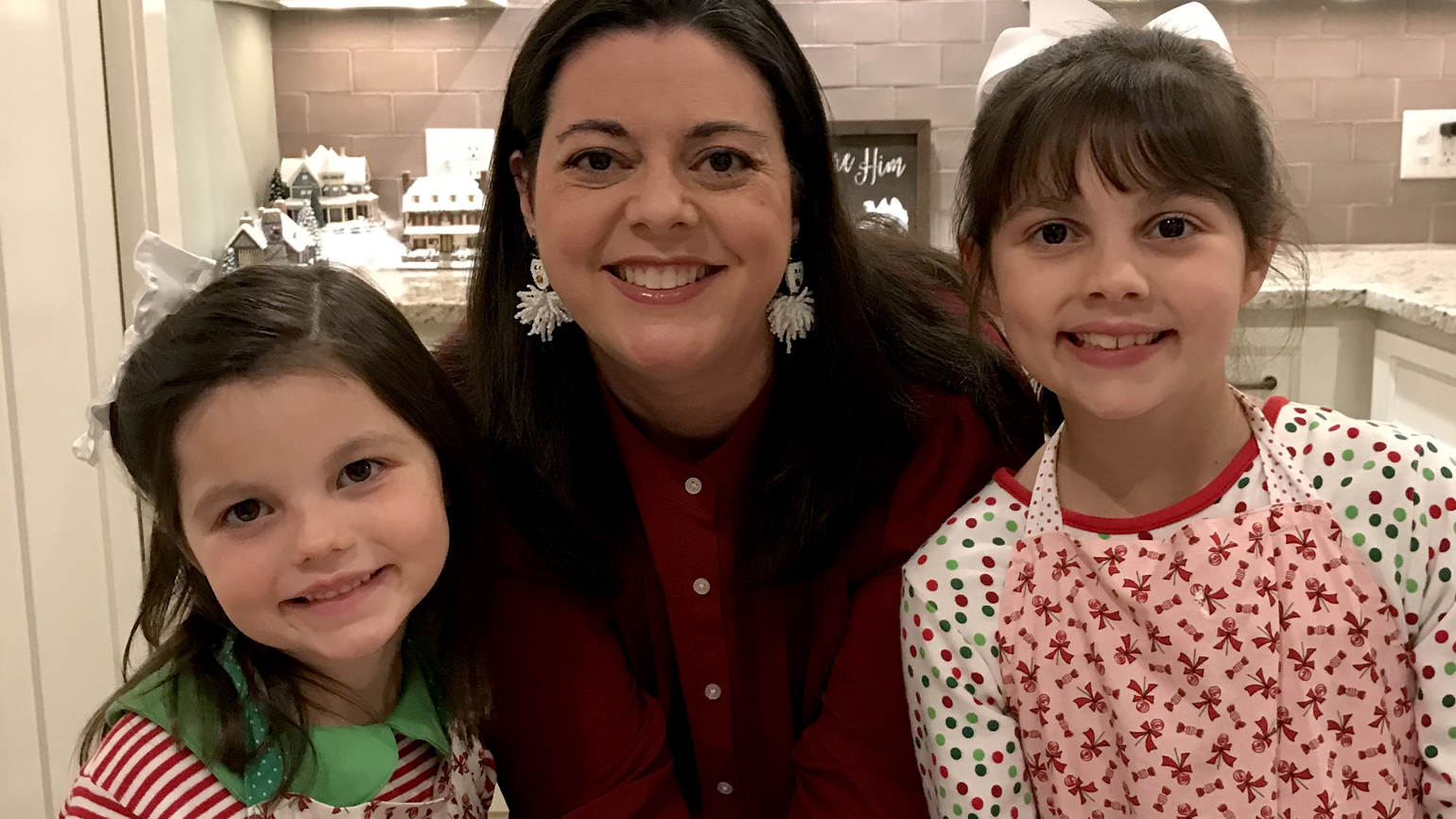
I thought I loved Christmas as much as anyone ever could, but when our daughter Elizabeth was born, my holiday cheer jumped to a new level. My husband, Wyman, and I hung her stocking between ours on the mantel and then we stuffed it to overflowing. Four years later we added a stocking for baby Abbey and spent evenings by the tree with cocoa and carols. It felt good to sit after full days of mothering a toddler and a newborn during the holiday rush.

But the Christmas before Abbey was born, Elizabeth, a “big girl” at three, wanted to help Mommy with all the preparations. Our tree wound up with the ornaments displayed in a clump on the bottom—an eye-catching focal point for our guests. Some of our ceramic Dickens’ Village characters literally lost their heads (or feet) in the process.

That year I also let Elizabeth put the stamps on the Christmas cards. What could go wrong? Every single stamp was placed—with care—at a different angle in a different spot, perhaps upside down and three inches from the edge or on the back side of the envelope entirely. I’m still not sure how many of those cards actually reached their intended recipients.

We moved on to wrapping presents, which Elizabeth did with flair, using socks and glitter under Wyman’s watchful eye. “This one needs another bow!” Where it might fit, with the others fighting for space, nobody knew, but she did make use of every bow in the house. Elizabeth’s personal style would have no equal on Pinterest.

I’d signed my name to the gift tags ahead of time with “with love from Katie and,” so Wyman could write the rest. But Elizabeth’s helpful hands were too fast for anyone to keep up with, and many of the artfully wrapped gifts waited under our tree to be handed out “with love from Katie and.”

After the wrapping was finished, it was time for “Katie and” to start the baking. I had the perfect recipe in mind for Elizabeth. So far, her kitchen duties had been limited to crushing crackers and putting them on top of a casserole before it went into the oven. A mess, sure, but a safe one. She was now ready to put the finishing touch on my mother’s famous date nut balls by rolling them in powdered sugar, just like I had done when I was her age.

I moved purposefully into the kitchen with my big pregnant belly. I chopped the nuts, Wyman stirred the candy mixture on the stove and Elizabeth waited patiently at the table for her turn to shine. Once the mixture was ready and cooled down enough to handle, it was Mommy and Daddy’s job to roll one dollop at a time between our palms and drop the balls on a plate. Wyman was a bit overzealous and instead of using a light rolling motion with his palms, he squeezed the mixture so hard that the butter escaped it and ran down his forearms. Elizabeth and I reassigned him to the role of documentary photographer, and the actual date balls became a mother-daughter thing, just the way they’d started out with my mom and me. By the time we were done, it looked like it had snowed in our kitchen. No matter. Elizabeth’s first batch of date balls was a raging success.

Now Abbey’s old enough to join our mother-daughters tradition. The girls finish off the job by licking their fingers. “What’s your favorite part of making date balls together?” I asked them recently. I just knew the answer would be the tasty powdered sugar, but it wasn’t. “We like to eat them!” they said.

You will too.

The Love and Grace of Christmas Joy

“Mama, come play a game of I Spy?”

It’s evening, and I’ve just returned from the grocery store. The kitchen is overflowing brown bags and boxes. My youngest son, Isaiah, calls from the dining room. My oldest son, Logan, home from college, had taken him Christmas shopping.

I step over a box brimming with produce and follow Isaiah’s voice. He’s stands near the table, green eyes bright. “I’ll go first and you guess!” he says. He scans the room and his tongue hooks the corner of his mouth. “I see something silver.”

I look to the buffet. To the cabinet in the corner. To the life-clutter on the table. “The candleholders,” I say.

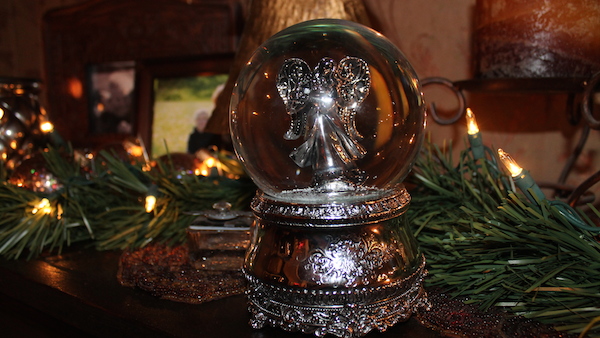
Isaiah’s eyes go round, and he dips his blond head toward the piano. After a second, I see there’s a new snow globe on top. It’s silvery and vintage. It’s beautiful. My breath catches and I hold the cool, round globe in an instant.

“It’s to make up for the one,” Isaiah says.

I’m puzzled. I bend my knees to kneel beside him.

“For the one I broke last year,” he explains. “Logan helped me buy this one to replace it.”

Logan smiles and nods, and I turn the key on the bottom of the globe. The quiet room goes full with dainty notes. I admire the angel through the glass dome. She holds a wreath under a silver-glitter shower.

Isaiah loops one arm around my neck and touches my cheek with his other hand. “Remember, how I dropped your snow globe? It broke and the music still played. The sparkly water ran into the gaps in the floor.” His face flushed and his eyes filled with tears. “It was so, so sad.”

Truth is, until this moment I didn’t remember the shattered snow globe. The brokenness had long been forgotten. But being here, in the dining room, music box singing and silver flakes falling and in precious proximity of tenderhearted boys, I remember, and I begin to understand that this forgetting, this removing of transgressions, is a bit like God’s love.

You know that he appeared to take away sin, and in him there is no sin. (I John 3:5, ESV)

When I trust in Jesus as Savior, my mistakes, my sin, my shame, are long forgotten. When the Lord looks at me, he sees them not. He sees the holy, white, clean, clear righteousness of His own son.

My Redeemer.

My Savior.

Jesus Christ. The amazing gift of Christmas.

My throat suddenly feels tight, and my spirit swells in my chest. My son knows just exactly when to press into my arms. Happiness, the redeemed kind that washes over spirit and soul and fills the heart to the deepest place, becomes mine anew.

“What do you think?” Isaiah asks.

“I’m grateful,” I say.

For the snow globe. But mostly for the love and grace that brings Christmas joy.

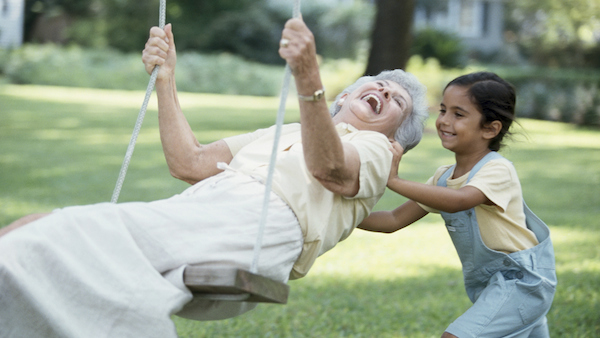
The Joys of Being a Grandparent

Before I had grandchildren, I listened to friends wax poetic about how wonderful it was to be a grandparent. I knew I’d enjoy it when my turn came, but I also wondered how it could possibly be as amazing as they said.

But then when I held my first granddaughter in my arms, it didn’t take long for me to realize that my heart was now firmly held in the palm of her tiny little hand. She owned me—and I was fine with that!

I felt the same way when the other five arrived, all of them precious and unique in their own ways. It’s unbelievable how such little people can bring so much happiness—but they do. And I discovered that it was even better than my friends had said.

Watch This: Lesley Stahl on Being a Grandmother

I’m grateful for all six of my grandbabies. I love their laughter, their smiles, the cute things they say, the times they call just to say, “I love you, Grandmama.”

I love watching Paul in his role as granddaddy. My big strong husband is like a marshmallow in their hands. It melts my heart to observe the love that is so evident between them, to watch them walk hand in hand, to see him with the little ones curled up on his lap, snuggled as close as they can get.

It truly doesn’t get much better. As my youngest son once told me in jest, “I think you had us just so you could have grandchildren.”

But the truth of the matter is that one of the reasons I enjoy these precious grandchildren so much is that I can look into their faces and see their daddies. It makes me smile to see mannerisms that bring back memories of the days when my three boys were still little guys.

Read More: A Grandfather’s Encouragement

I think back to hard times in my life, and realize I couldn’t have imagined this joy to come. It’s a good reminder to me that when things are tough, there may be unknown joys ahead.

Thank You, God, for the gift of being a grandparent. I think it’s one of Your best inventions ever!

The Joy of Cooking: A Four-Generation Family Tradition

If you’re making a turkey this year for Christmas, chances are you’re riffling through Joy of Cooking, the classic American cookbook that families have relied on for generations.

How do I know?

Because I use it too. Me, the great-grandson of Irma Rombauer, the woman who wrote Joy of Cooking in 1931. I ’ve learned to cook from her just like millions of other folks—measuring cup in hand, mixing bowl at the ready. Today my wife, Megan Scott, and I are the latest members of the Joy of Cooking family to work on an update of this beloved collection.

Megan and I have spent years recipe testing, outlining, researching and writing Joy (our shorthand for the book). It’s been a labor of love. Just as it was for Irma’s daughter, Marion, who helped her mom publish the first four editions and carried the next two on her own. Marion’s son (my father) Ethan Becker edited the 1997 and 2006 editions. It may seem like I was a natural to work on the next one, but I had other plans.

My parents divorced when I was a baby. Mom enrolled in nursing school and became an oncology nurse. I spent most of my Thanksgiving and Christmas dinners with her side of the family.

I remember Mom taking Joy of Cooking down from her dining room shelf for the turkey recipe every year. First she’d flip to the pages already marked with gravy drippings and batter stains, then go to the stuffings section for sausage dressing with apples and oyster bread dressing. But all year round, Joy of Cooking helped my working single mom get a good home-cooked meal on the table.

When I was 17 I investigated the book more thoroughly. How was there joy in cooking? I wondered. I had a few omelets and stir-fries under my belt, but caramelized onions was the first recipe I tried that made me feel like a real cook. The onions had to be sliced paper-thin, cooked over low heat for an hour or so, then browned, and finally deglazed. I remember making that initial batch—the waiting, the lazy stirring—and piling the result on a thick slice of bread. When I took a bite I felt a sense of pride and accomplishment.

I took that pride—and my copy of Joy—with me when I started at Boston University to study aerospace engineering. Following the recipes was enough for me.

My dorm at BU was an old converted apartment building. Each room had a tiny kitchen. After class one day I called some friends over for dinner.

I made bone-in chicken breasts in a lemon-herb-garlic marinade; steamed broccoli tossed with lots of butter; and a macaroni dish with minced garlic, Parmesan cheese and heavy cream, topped with extra Parm and a sprinkle of paprika and red pepper flakes. Pretty solid for freshman dorm cooking.

My friends saw the spread, the cookbook lying nearby and the Becker name on its cover. “Wait, is this your family’s cookbook?” one asked.

“Yeah,” I said. “But I never met my great-grandmother Irma or my grandmother Marion. I just follow the recipes like everyone else.”

They gobbled up my feast and divided up the leftovers. Who knew a homemade meal could bring so much happiness?

By the end of freshman year my dream of becoming an aerospace engineer was over. Turned out calculus and I just didn’t mix. I later enrolled at the University of North Carolina to study English literature.

After graduation I worked for a professor, helping him publish books on literary criticism—and as a barista at an Asheville coffeehouse called the Dripolator.

I felt lost. Was this what I’d do with the rest of my life?

One weekend on a visit to my father’s house in Tennessee, a book in his basement caught my eye. Tucked on a shelf was a volume of historical biographies called Contemporary Americans, with a section on my grandmother Marion. In it she talked about keeping Joy a “family affair,” calling it “an enterprise in which the authors owe no obligation to anyone but themselves— and you.”

No one in my family had ever explicitly encouraged me to work on Joy. But my grandmother’s phrasing made me feel as if I was being invited to continue a conversation with readers. What had once seemed like a monumental chore now seemed like an appealing challenge.

The fact that this biography appeared in a library-stacks volume of literary criticism—my field—made me see a connection between the family business and the researching, editing and writing I was doing already. I’d developed the skill set I needed to contribute to Joy just like my grandmother Marion had. It was her meticulously researched revision in 1963 that made Joy of Cooking the staple it is today. For the first time, I felt a real kinship with her, a connection to her book and a wave of relief. All my uncertainties about my life dissolved into a simple desire to devote myself to the task of breathing new life into Joy.

I returned to Asheville invigorated. I started researching each volume of Joy to see how I could update the book for the modern cook.

One day at the coffeehouse a woman with a sassy haircut came in for a latte. I’d seen her lots of times before. She worked down the street at the bakery and always had a book with her. We called her the cheddar-scallion biscuit girl—she liked to bring us some. This time we talked one-on-one and got to know each other. I learned Megan was intent on meeting me—she loved using my family’s cookbook. When we got married I realized it was Joy that had brought us together. And it’s become our life’s work.

The edition we just finished has been updated to reflect today’s kitchen, with more than 600 new recipes. We’ve included gluten-free breads and cakes, as well as instructions for fermenting your own kombucha, charring shishito peppers, curing bacon and making curry pastes from scratch. Of course, we have been faithful to Irma and Marion by keeping the tried-and-true classics that made Joy famous—improved or reworked when necessary, but always with a light hand.

The serving platters on our Thanksgiving table this year will hold turkey, green bean casserole, mashed potatoes, cranberry sauce and one of our favorite recipes we hope you’ll put on your table too: Becker’s Brussels Sprouts, a garlicky side dish browned in a skillet.

Through four generations, from our family to yours, the joy keeps on growing. And that’s something we are always thankful for.

Try John’s recipe for Becker’s Brussels Sprouts at home!

View our photo gallery: The Joy of Cooking Through the Years

Their Golf Cart Getaways Make for a Happy Marriage

The Christian camp where my husband, Frank, is operations director is open year-round. It’s a big job. Sometimes it takes all five of us—Frank, me and our three sons—to keep it going. We host all kinds of groups. Who wouldn’t want to spend time in a lake house, surrounded by 78 acres of rolling hills? It’s a relaxing getaway for our guests.

For Frank and me, it’s hard work. Especially during the summer, when we run our own children’s camp. In the evenings, we’re lucky if we manage an “I love you” before falling asleep.

Yet somehow, after 20 years, we’re as close as ever. How do we do it? The answer lies in six simple words: “Meet me at the golf cart.”

The golf cart came to us our very first summer at the camp. There was so much to do and so much to learn. There was barely time for a quick hug before we had to go off in different directions—sometimes miles away from each other. Frank and I were working together every day, yet I’d never felt so distant from him.

“Still, the grounds are so beautiful,” I told a good friend one day, when I’d slipped away for a quick phone call. “It’s worth it.”

“You don’t have to tell me,” my friend said. “I spent summers at that very camp. There’s just something so peaceful about it. It’s my absolute favorite place on earth.”

After a pause, my friend asked, “Tell me, how is your husband getting around such a big place?”

“Well, he has the camp’s old pickup,” I said with a laugh. “But that truck is not even roadworthy. He’s mostly getting around on foot.”

A few weeks later, my friend sent us the golf cart. Frank and I no longer had to walk miles every day. When we needed to see to something on the grounds, we just hopped in the cart and zipped off. We were still busy from morning till night, but at least we weren’t quite so exhausted.

One day, I went to Frank with a question about a food delivery. I wasn’t the only one who needed his attention. He was surrounded by campers and counselors. Even one of our sons had something to ask him. Frank and I would never get enough time to have an actual conversation. Then I got an idea. “Hey, babe,” I said, “let’s grab the golf cart.”

Frank smiled, immediately understanding my meaning.

“Sorry, guys,” he said, “but we need to run an errand.”

We climbed into the cart. “Where do we go?” he asked.

“Somewhere nobody will be waiting for us,” I said.

Frank drove us up to the top of a hill. By the time we got there, we’d already worked out the delivery question, so he and I just sat there quietly for a long moment and looked out at the grounds.

“There really is something so peaceful about this place,” I said. “When you get a chance to enjoy it, that is.”

“From now on,” Frank said, “this spot will be our place. Just for you and me. Whenever one of us needs it, just say the word and we’ll get in the golf cart and go.”

A few minutes later, we drove down the hill and back to our busy lives. But those few minutes changed everything. It wasn’t just the beautiful view. It was knowing that, no matter how busy we got, we could find a minute for each other.

All I had to do was lean over and whisper in Frank’s ear, “Meet me at the golf cart.”

For more inspiring stories, subscribe to Guideposts magazine.

Their Beloved Hen Finally Became a Mother

‘‘That chicken just growled,” my husband said, surprised and amused.

“I think she’s broody,” I said.

“How long does that last?” Ron asked.

I didn’t have an answer. A hen goes broody when she wants to hatch eggs. She will sit on them for days, weeks, even months. During this time, her maternal instinct kicks in and she can be sensitive and defensive, protecting her soon-to-be babies.

Our hen was one of 17 beautiful Rhode Island Reds on our farm. We hadn’t named them, but she stood out for her behavior and affectionately became known as Broody Hen.

Each evening, when my husband or I would collect eggs from the coop, Broody Hen would growl and peck, upset that we were taking hers again. We didn’t have a rooster yet, so her eggs weren’t fertilized and would never hatch. We had to find a way to help her move on.

One night, Ron came in from the coop excitedly. “I figured out she really likes grapes! I traded them for eggs!” Broody Hen had gobbled up the grapes, raised herself up and let him take all her eggs. No fussing.

Over many nights of this same routine, we got to know Broody Hen and fell in love with her. She would let us pet her and sit with her. She was actually very sweet.

We spoiled her with grapes for about a month until she finally gave up her quest to be a mama. Truthfully, I was a little sad. I knew what it was like to long for a baby. After having my first child, I had tried for years to have another and it just wasn’t happening. I had given up too. Then, by some miracle, I got pregnant. I wanted that joy for our Broody Hen.

We got a rooster and over the years had several other hens go broody and become mamas. But never our dear Broody Hen.

Last summer we had two hens go broody. One had babies she was caring for, and the second hen was due to hatch an egg or two soon. We had also invested in an incubator. Inside sat 11 eggs, preparing to hatch.

Because it’s easier and healthier if a mama hen raises chicks, we had planned for the second broody hen to take our incubator babies, along with her own, under her wing.

Then something strange happened. Broody Hen went broody again, for the first time in four years. She sat on the biggest clutch of eggs she could find (yes, she stole other hens’ eggs), growling at everyone. I couldn’t believe she was back at it after all this time, trying to be a mama.

The problem was, she had just gone broody, and the incubator chicks were due to hatch at any minute. Without going through the process of sitting on eggs for a while, it was unlikely she would accept babies that suddenly appeared.

“Maybe we should stick to our plan and give the babies to the second hen,” I said to my husband.

“I think you’re right. But it’s too bad Broody Hen won’t get to be a mama.”

The first incubator egg hatched. While the second hen slept, we snuck one of her eggs out from under her and replaced it with the baby. She would wake up, think her egg hatched and adopt the baby.

In the morning, I checked on the mama and new baby. The tiny chick was out of the nest, crying. The mama had rejected it.

“We should give her one more chance,” Ron said.

“I don’t know. I heard if they reject the baby, they reject it,” I said. Still, we decided to try again, placing the incubator chick back with the mama.

An hour later I returned. The baby was dead. Not only did we lose that beautiful chick, we weren’t going to have a mama for our incubator hatch. Unless…

Unless Broody Hen could do it.

Soon, all of the babies had hatched in the incubator. That night, we put them in a basket and carried them to our garage, where we had Broody Hen nesting in a crate. I was scared. What if we lost more chicks to rejection?

One by one, we took an egg from under Broody Hen and replaced it with a little bundle of cheeping fluff . Broody Hen stirred but didn’t fully wake. All we could do was pray that our plan would work.

The next morning, I got up very early and hurried to the garage. If there were any signs of rejection, I would pull the babies and raise them myself.

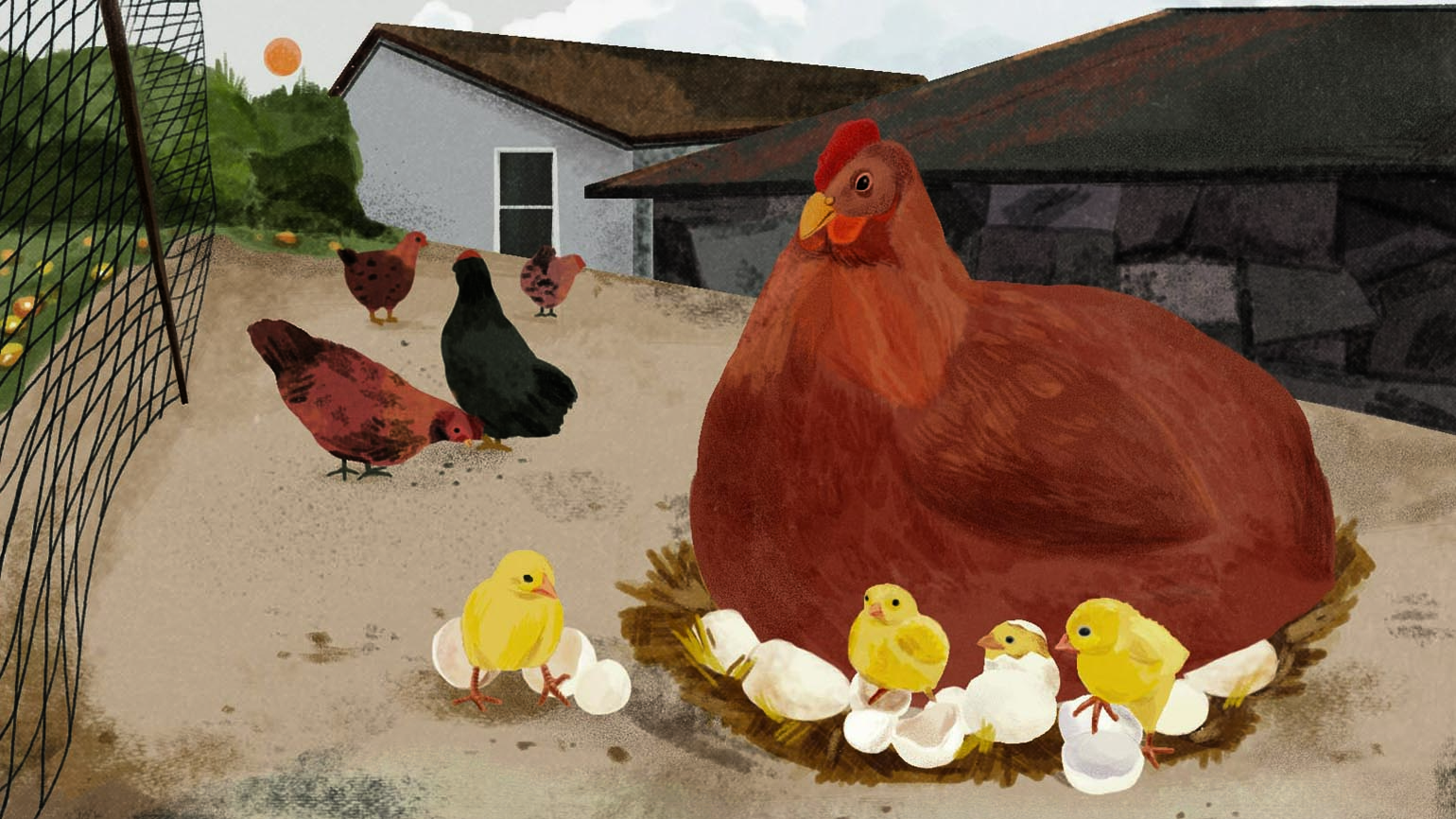
There was Broody Hen, with babies hopping all over her, cooing and purring in utter contentment. She looked so proud. At last her miracle had happened, just as mine had.

Every one of those chicks grew up happy and healthy, thanks to Broody Hen—our little hen who finally got to be the mama she was meant to be.

Did you enjoy this story? Subscribe to All Creatures magazine.

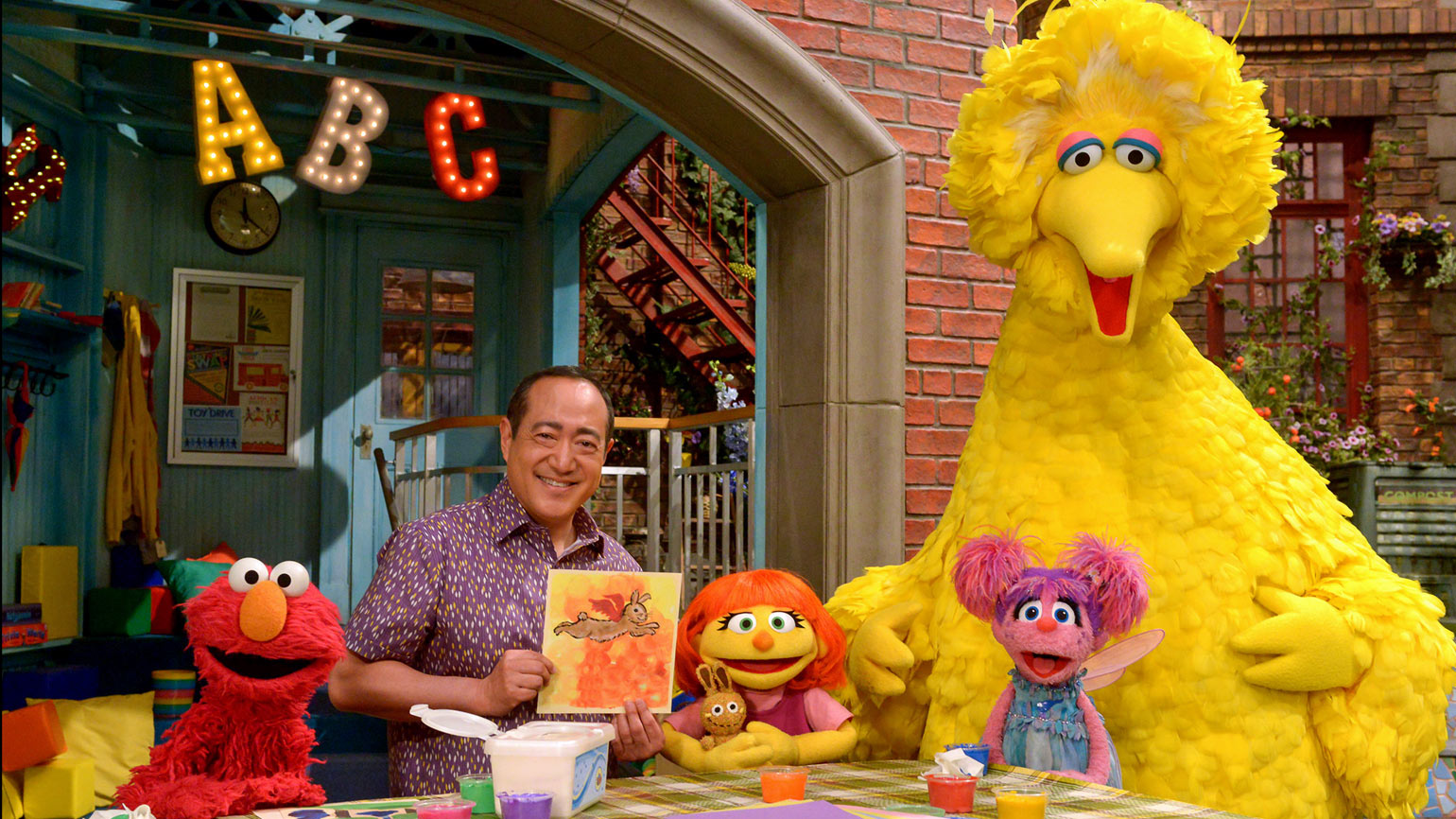
The Inspiring Story of Julia, Sesame Street’s First Puppet With Autism

There’s a new puppet coming to Sesame Street! On April 10, Julia, a a 4-year-old girl who is autistic, will join Elmo and the gang, giving more TV representation to children on the autism spectrum.

Julia was first seen a year and a half ago as part of the program’s “See Amazing In All Children” initiative, where she appeared as an animated character in eBooks and online.

“The response from the autism community to Julia was so overwhelming that we decided we would bring her to life on the show as well,” Sherrie Westin, the Executive Vice President of Global Impact & Philanthropy for Sesame Street tells Guideposts.org.

The show saw a need that wasn’t being met on TV and decided to do something about it.

“When we first set out to address the issue of autism, we had two goals,” Westin says. “One was to create tools and resources to help families with children with autism make every day moments easier. The other was to destigmatize autism and raise awareness and understanding.”

Writers and producers of the show worked with experts and advisers within the autism community to make sure they got Julia right, even going so far as specifically choosing to make her a girl to combat harmful stereotypes.

“We know that more often, boys are diagnosed on the spectrum than girls but because of that, we learned that a lot of people don’t think that girls can have autism. This was yet another opportunity to debunk the myths surrounding autism,” Westin explains.

When it was time to find the puppeteer who would bring Julia to life on the show, they found Stacey Gordon, an experienced puppeteer working with the Great Arizona Puppet Theater.

“I was in utter shock,” Gordon says of learning she would voice Julia just one year ago. “I was alone in my studio and had to call my husband and tell him but I had to calm down before I did so that I’d be able to dial our phone number.”

She grew up around puppets – her grandfather carved marionette dolls and her grandmother made her her first puppet when she was still a toddler – but she never expected to find herself on the PBS program.

“The funny thing is my parents always said, ‘When is Sesame Street calling?’ And I was doing my own thing in Arizona and I was like, ‘Mom, Sesame Street doesn’t call. They don’t know me,’” Gordon says. “Turns out, they email.”

Gordon felt a responsibility to get Julia right from the get go. Her own experience as the mother of a 14-year-old autistic son informed how she approached the character.

“Eye contact was a big thing,” Gordon explains. “In puppetry, not making eye contact is considered bad puppetry so it’s been a challenge to try to figure out how we walk that fine line between good puppetry and not making eye contact. One thing we’ve done is that we’ve given Julia a focal point and that’s her bunny, Fluffster, so that she can pay attention to her little friend.”

Julia also requires several assists – puppeteers who help Gordon move her arms and legs.

“There’s a whole team going into her,” Gordons says. “She’s already had so many people put their heart into her. I just got to add mine.”

Gordon hopes Julia can shed some light on an issue that rarely gets talked about, especially on TV. Her own child has experienced bullying and exclusion at school, mainly because his classmates and others don’t understand autism and how it presents.

“The saying is ‘If you’ve met one kid with autism, you’ve met one kid with autism,’” Gordon says. “It’s so true. Every single kid I know, autism presents differently for them. I think that Abby and Elmo and Big Bird and Julia and all of the characters on the show model acceptance. When kids see behavior modeled, they repeat that behavior.”

Gordon hopes Julia can present an opportunity for children to learn more about autism, for autistic children to see themselves represented in the media and for parents to start having needed conversations with their kids.

“I really hope that she can help destigmatize autism and can teach an entire generation of kids and families that autism is just another way of thinking,” Gordon says. “Kids with autism will enrich your life. They’re valuable people to have in your life. Include them because they are, not because you should. Include them because you will get so much from a relationship with them.”

For Westin, being able to provide awareness about autism to the children who watch the show is so important, especially as talk of defunding and government budget cuts loom.

“What’s very important to us is to reach all children,” Westin says. “Without PBS we would not be able to reach children who are less affluent, who can’t afford satellite or cable or other means. The fact that there are PBS stations in every part of the country is hugely important. Without PBS we wouldn’t be able to deliver on our mission which is to help all children grow smarter, stronger and kinder.”

The Inspiring Friendship Behind ‘Same Kind of Different as Me’

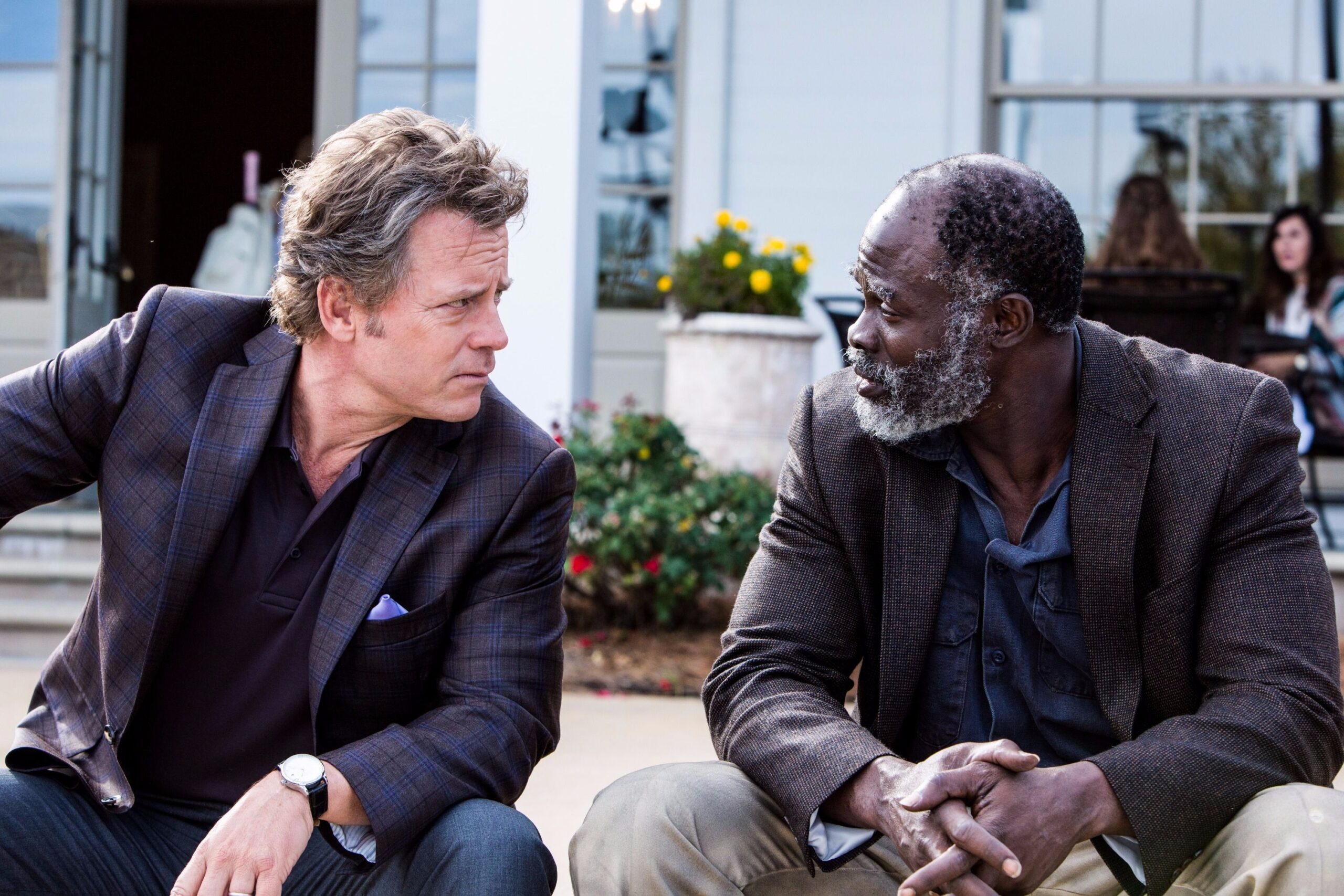
The upcoming drama, Same Kind of Different as Me, starring Greg Kinnear and Oscar-winner Renee Zellweger, tells the story of a wealthy art dealer who befriends a homeless Black man and has his life changed forever.

For author Ron Hall, that story just happens to be true.

Hall, whose real-life transformation serves as the foundation for the new film, traded “success for significance” after he struck up a friendship with Denver Moore, a poor African American man living on the streets in Dallas, Texas. The two met at a mission after Hall’s wife, Debbie, urged him to go and aid the community. She’d had a dream that the experience would change their lives.

Debbie died nearly 20 years ago after a tough battle with cancer, but her dream came true. Hall and Moore forged bond after her death that lasted over a decade before Moore passed away in 2012 and the pair’s friendship is now inspiring people around the world.

Hall spoke with Guideposts.org about the new film, his life-changing revelation, and what he hopes people can learn from his story.

GUIDEPOSTS: What were your initial thoughts when producers came to you about making this film?

RON HALL: Well, I’d be lying if I said I wasn’t excited and flattered. We had a hard time getting traction with our book. In fact, we got turned down so many times, I self-published before one of those copies got in the hands of a well know author and he put us in touch with his agent. However, that initial excitement about the film offer was followed by several years of frustrations and disappointments until God breathed new life into it in April 2014.

GUIDEPOSTS: What was the most important thing you wanted this film to portray?

RH: Faith in action is the most important thing I want this film to portray. I want [people] to understand this is not about a rich white [man] saving a poor African American. It’s about two reluctant, polar opposite men with hardened hearts thrown together to save each other.

GUIDEPOSTS: How did your relationship with Denver grow and evolve over time?

RH: It took months of pursuing Denver at Debbie’s insistence until I finally got him in my car and took him to breakfast one morning. I found his story fascinating though tragic. His wisdom was beyond belief though he was totally illiterate. After several months, he became my professor and I his very willing student.

GUIDEPOSTS: Is there a moment in your friendship with him that really stands out to you?

RH: It was the catch and release moment when in response to me asking him to be my friend he told me there was something about white folks that really bothered him. It had to do with fishing. He could not accept the fact that when white men went fishing, they would catch and release. So he told me if I was a white man fishing for a friend and I was going to catch and release, then he had no interest in being my friend.

GUIDEPOSTS: How did being Denver’s friend change you as a person, your view of the world and what you wanted to accomplish in life?

RH: A few months into our friendship, I realized I was losing interest in my art business as God was stirring my soul to move from success to significance.

GUIDEPOSTS: What are Denverisms?

RH: Denver had his own language that was based on his combination of homegrown and God-given wisdom. They were unique sayings of his that I have tried to preserve in a new book coming out on the twelve years we lived together after Debbie went to heaven. My favorites are ‘We are all homeless, just workin’ our way home’ and ‘If the devil ain’t messin with you, he’s already got you.’

GUIDEPOSTS: How do you hope this film can affect people who watch it?

RH: I believe our film illustrates beautifully that it’s not the color of our skin that divides us, it’s the condition of our hearts. Hopefully, people will see the homeless through the lens of God and want to make a difference in their community. After Debbie died, Denver moved into my home with nothing and gave me everything. I once was wealthy, but Denver made my life rich.

The Inspiration Behind ‘The Art of Racing in the Rain’

There is something about the dog Enzo in the book The Art of Racing in the Rain, that makes us think. After all, Enzo is a philosophical dog. He is loyal, sensitive and he desperately wants to figure out the world around him. And although we meet Enzo on his last day on earth—as a dog, at least—bestselling author Garth Stein illuminates something about love and loss that is at the very core of our bond with animals.

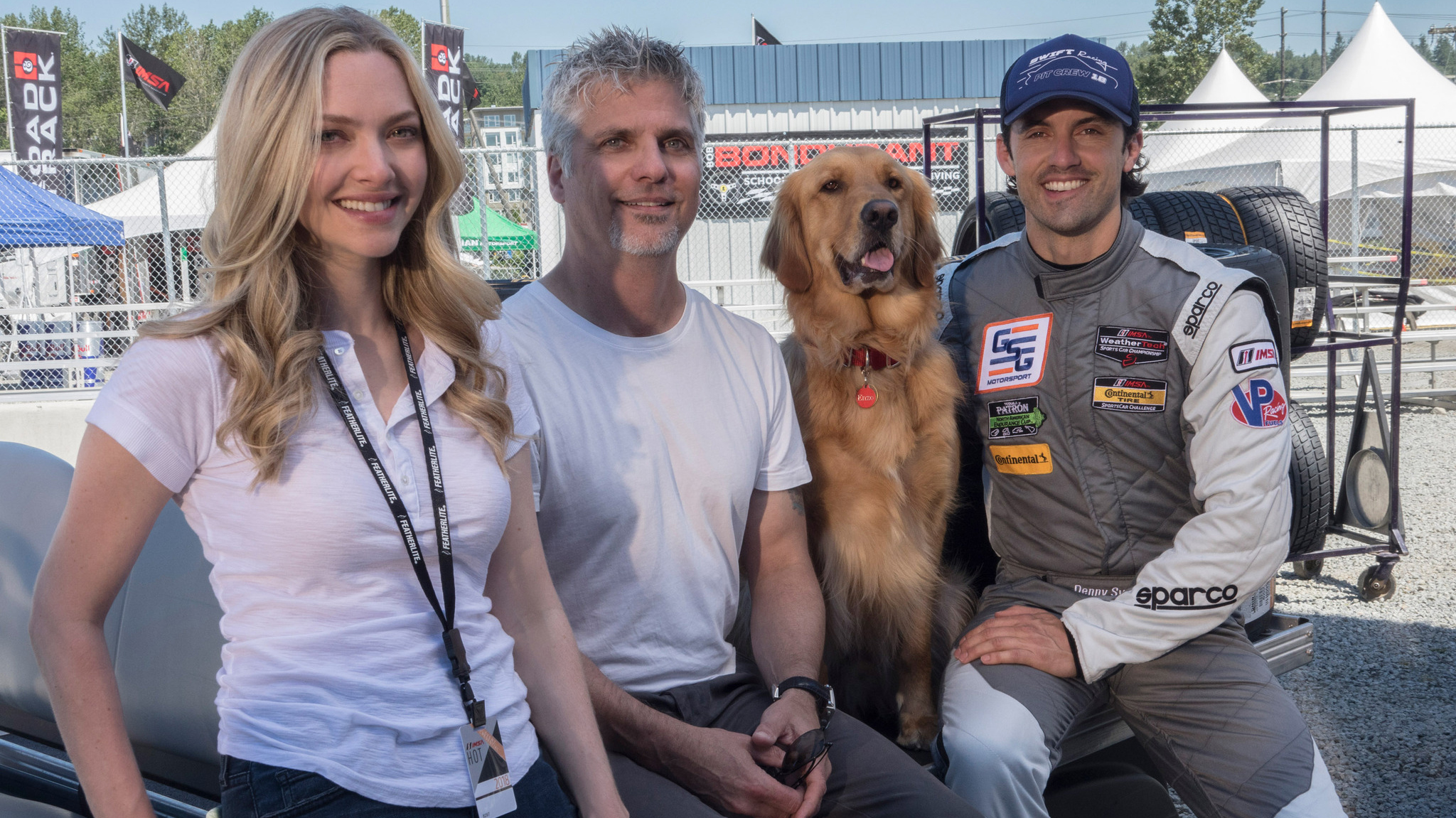
Stein’s novel was adapted into a movie starring Milo Ventimiglia as Denny, a race car driver who adopts a very special pup named Enzo (voiced by Kevin Costner). The movie follows Denny and Enzo as Denny falls in love, becomes a father and struggles to hold his family and career together in the wake of devastating loss.

I spoke with Garth about his lifelong love of dogs and what it was like to see his book transformed into a movie.

Peggy Frezon: Have you always been an animal lover?

Garth Stein: Yes, I’m primarily a dog person. I’m not one who has a whole house full of dogs. Usually we have one dog at a time.

PF: Did you grow up with a dog? And do you have a dog now?

GS: The book is dedicated to my childhood dog, Muggs, an Airedale who was influential in my upbringing. We recently lost our labradoodle, Comet. Right now the only animal in our home is a bearded dragon.

PF: How did the story for The Art of Racing in the Rain come about?

GS: It didn’t come about from any one place. One of the inspirations for the book came when I saw a documentary film called State of Dogs which was set in Mongolia. Their belief was that the next incarnation for a dog would be as a person. I thought that was interesting, how could I use that? But I didn’t know exactly how I could work it into a story. Years later I heard [poet] Billy Collins read a poem, The Revenant, he had written from a dog’s point of view. And I thought, that’s how I could write this story, from a dog’s point of view. And gradually it all came together.

PF: I’m a big fan of your book and I love the movie. What was it like to have your book turned into a movie?

GS: Kind of cool, you know! There’s something fun about Hollywood. Of course, it’s an adaptation, and with an adaptation everything isn’t going to be exactly the same. You’ve got a 360 page book and a 93 minute movie—something [was] going to change. I think Simon Curtis, the director, made great choices. My concern was that they get the heart of the book right, and I think they did get the heart of the book right. Also, for a guy like me who basically spends his time alone in front of his computer, it’s cool to get out on the set. I saw Kevin Costner [the voice of Enzo] standing there and he’s such a big name in the movie industry that even other actors are afraid to talk to him! But I thought, what the heck, I’m a writer, I’ll go talk to him. And I did, and he was as nice as you could imagine.

PF: What is it about Enzo that draws us all in?

GS: Enzo’s voice is so earnest. He’s trying to figure things out, just like we all are trying to figure things out in life, right? He’s dedicated to his version of the truth, even if he doesn’t get everything right.

PF: Who played Enzo in the movie?

GS: In the book, Enzo was a mixed breed. I did that on purpose because I knew that people would want to populate the book with their own dogs. For the movie, because things had to move fast, they used an already-trained golden retriever. Parker was the main dog, he’s two years old. He was great, he had some great looks, and nods of his head. Butler played the older, more mature Enzo. And Orbit was the barking dog—Parker didn’t like to bark.

PF: My husband and I rescue senior dogs, so we’ve developed a sensibility about losing them—it only hurts so much, because it’s so good while we were together. What do you say to people who don’t want to read a book, or see a movie, where the dog dies in the end?

GS: I constructed the book deliberately to address that issue. In the first chapter, we know that the dog is going to die. We’re prepared for that. We have this unconditional love for dogs and it’s so good, yet we know that life has highs and lows. To appreciate laughter, you have to shed a few tears. We know it’s going to be hard in the end. Having a bond with a dog is wonderful, and we’re willing to pay for that with a little bit of grief.

The Art of Racing in the Rain is available now on Digital, Blu-ray and DVD.

The Incredible Power of Simply Being Present for a Friend

There are times in life when we don’t have the energy or faith to get through our problems. We can’t find the words to pray or the strength to push ahead. That’s when our friends carry us. When we are voiceless, they become our voice. When we are weak, they become our strength. When we are down, they lift us up.

Friends remind us through their actions that we are not alone—they stand with, pray and comfort us. Even when some friends don’t always know how best to help, they want to be there for us.

Author Parker J. Palmer in his book, Let Your Life Speak, shares about the time he was batting depression. He recalls that some people who visited him tried to cheer him up. “It’s a beautiful day. Why don’t you go out and soak up some sunshine and look at the flowers?” Although he understood their intention, it made him more depressed. Others reminded him that he was a teacher and writer who had helped so many people. “Try to remember all the good you’ve done and surely you’ll feel better.” That advice, too, left him depressed.

Then there were those who had the courage to stand with him in simple and healing ways. One was a guy named Bill who asked Parker’s permission to drop by his house in the afternoons. Bill would sit Parker in the chair, kneel in front of him, remove his shoes and socks and for a half an hour, massage his feet. Bill had found the only place in Parker’s body where he could still experience feelings and reconnect with the human race. Bill would simply do this and say very little. When he talked, he would not give advice but mirror Parker’s feelings. This simple act of care was what helped Parker get through his dark time.

We are thankful for the friends God sends our way, who sit with us in uncomplicated and healing ways. And we are thankful for the opportunity to be that friend, to offer our presence to those who are hurting, sick, battling depression, grieving and more. May the pathways of love, patience and kindness lead us to friends who are suffering. And once there, even if we are unsure of what to do, we can simply pray. And be present.

The Incredible Bond She Formed with an Unexpected Pet

‘‘I’m too old for a puppy,” I told my friend Julie. Her beautiful border collie–miniature Australian shepherd was pregnant and she’d offered me one of the pups. But I wasn’t going there. No way.

She looked at me, surprised. “I just thought that with you losing your old dog…and you said Tuck is lonely.”

I opened the door to my 4Runner, signaling my border collie, Tuck, to load. “I might consider an older dog sometime in the future. But no puppy. I’m serious.”

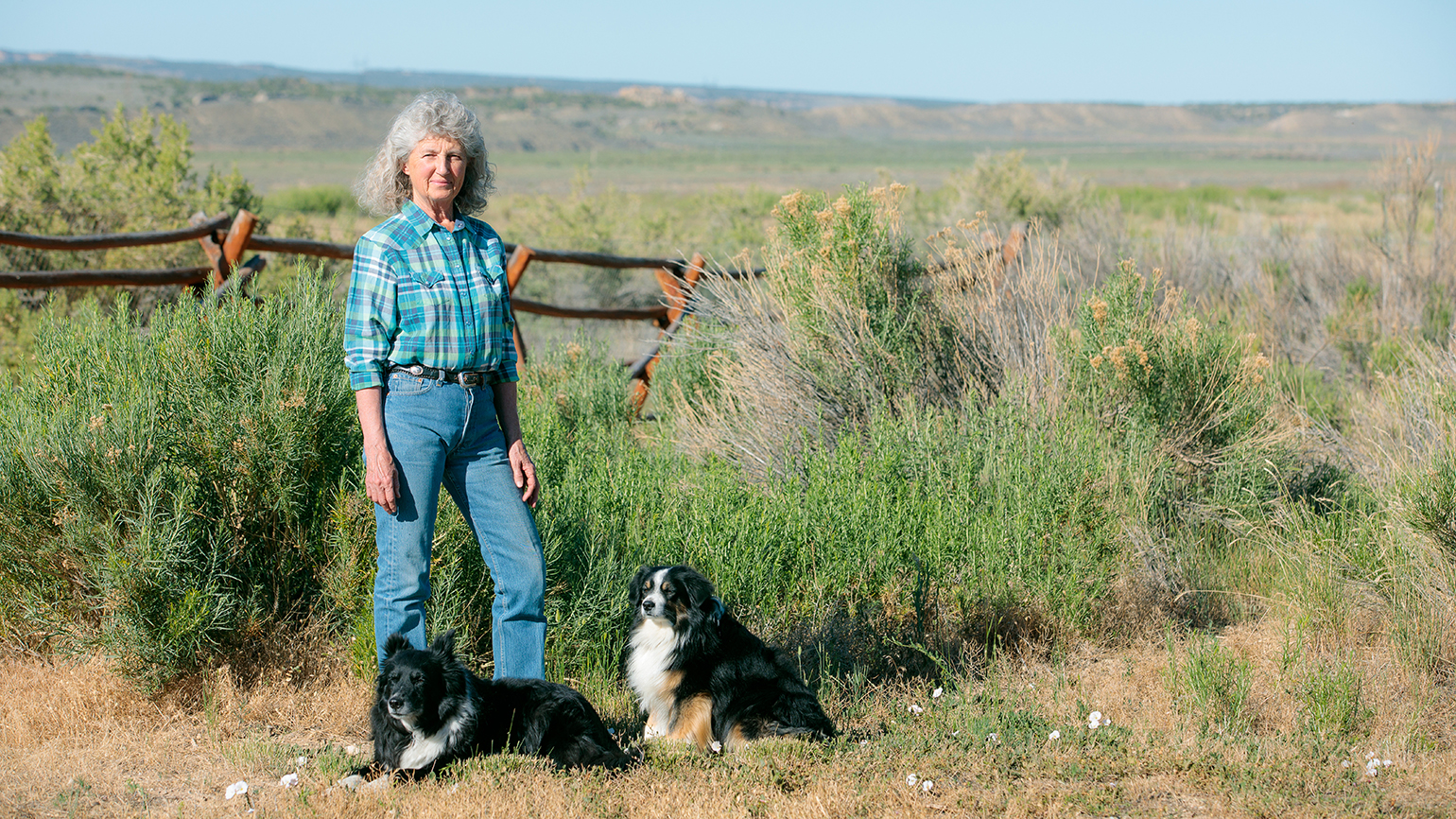
Julie waved goodbye as I drove down the dusty road that led from her place. The truth was, Tuck wasn’t the only one in need of company. In the northwest Colorado high desert where I live, there are more elk and deer than people. My family lived hundreds of miles away. Sometimes the days felt monotonous and I worried about growing older out here alone. When Julie and her husband rented a place nearby, it felt like an answered prayer.

Like me, Julie was a hiker, and soon we were bumping down dirt trails into the foothills. We brought our dogs with us and became fast friends. One day we’d come across a shed elk antler. Julie was thrilled.

“How many of these are around?” she asked.

“This time of the year you can find a bunch of them if you have the time to look,” I said, explaining that elk shed their antlers every spring. “There are people who will pay good money for them too.” Soon we were going out every day with our dogs, talking while we searched for sheds. I’d told her about losing my older dog, Keeper, and how much she’d meant to me. That’s when Julie told me she was “expecting” puppies and wanted me to have one.

I knew the joy of owning a puppy. I’d been around dogs all my life. My childhood dog, Shorty, had been the runt of his litter, and I’d loved him beyond words. The two of us were inseparable. But at almost 70, I wasn’t looking for an untrained pup who needed constant attention. All that jumping about? No thank you.

That was my steadfast answer every time Julie mentioned giving me one of her puppies. One day my phone rang first thing in the morning. “There’s three of them!” Julie said. “You have to come see!”

I drove over within the hour. Julie was grinning like a proud grandma. She reached for a puppy and laid a tiny black beauty in my hands. “He’s the size of a stick of butter,” she said.

“You didn’t tell me one of them was a runt,” I said.

“The vet said there’s a chance that he won’t make it,” Julie said, “but he seems pretty determined to eat. He could be yours.…”

Because of Shorty, I had a soft spot for runts. “I’m too old for a puppy,” I said, settling the little guy back with his mama. But the words didn’t come out above a whisper.

Watching the pups grow over the next few weeks and seeing that runt hold his own with his two bigger brothers, I knew there was something special about him. Still, I struggled daily with the idea of taking him, reminding myself I would soon be 70 years old. Lord, I finally prayed, help me make the right decision.

That night I dreamed of a little tri-colored puppy snuggled up close to my neck. His smell was sweet and his breath warm. I awoke with a yearning and called Julie. “His name will be Dell,” I said. “And he will be my last puppy.”

Julie moved away by the following spring. I missed our hikes and antler hunting so much that I cried when shed-hunting season opened. But the energetic new member of my family wouldn’t let me stay home and mope. He loved to hike. At six months old, Dell learned his basic commands after only two sessions. He was extremely attentive and eager to learn. I taught him to play fetch, and I could tell he was ready for a bigger challenge, like finding elk antlers.

I began by dropping smaller deer antlers around the yard, telling him, “Find the horns.” He caught on quickly. I taught him to “talk” each time he found one. I’d put him in the house, go outside and hide a few horns, then open the door.

“Find the horns,” I’d tell him. He’d give a low growl, his stubby tail flashing with excitement.

I knew that finding something on my acre wasn’t the same as finding it out on the vast acreage of public land where we hiked. But just a few weeks after I began the antler training, Tuck, Dell and I were hiking north of my place up on Blue Mountain when Dell began to bark. He’d found his first deer antler with no prompting from me! In that moment, I knew he was exceptional.

This year, at three years old, Dell helped me find six hundred dollars’ worth of elk and deer antlers. Now, when I put on my backpack, he quivers with anticipation. He loves the challenge. I’ve had several folks offer to buy him. I just smile. “He’s not for sale,” I say.

The days are far from dull with Dell around. He makes sure Tuck and I stay active and have fun. Too old for a puppy? It’s a good thing that the Lord—and my determined friend Julie—knew better.

For more inspiring animal stories, subscribe to All Creatures magazine.