Embrace God's truth with our new book, The Lies that Bind

Happiness Is Kindness

A V.A. hospital is a big place. I should know, I work in one.

But that morning it wasn’t big enough. Not with my newly ex-husband and fellow nurse, Mark, roaming the halls. I’d managed to avoid him for a few weeks since our divorce had become final, but now, there he was, dressed in his scrubs, escorting a patient to the radiology room.

Pause & Pray In Article Ad

He saw me and smiled. At least I thought it was a smile.

“Just thirty-six more days until retirement!” he announced blithely. My blood ran cold. I’d almost forgotten. When we’d married 25 years ago, we’d planned to retire and travel around the world right about now.

I guessed that was still Mark’s plan, but thanks to him, it couldn’t be mine anymore. No way could I afford retirement.

I tried to be civil. “So, still planning to do some traveling?” I asked.

“Moving to Alaska,” he said. “Maybe do a little consulting, but for the most part, I’ll just fly and live the good life.”

“Fly?”

“Didn’t I tell you? I bought that vintage airplane I always wanted.”

No. He didn’t tell me. Now my blood was boiling. Even the knowledge he’d be thousands of miles away didn’t soothe me. He was going to live it up while I spent the next five years or more digging out from the financial mess he’d left me in. I stormed off before I made a scene.

The words from the Bible that Mark and I had pledged to each other on our wedding day came to mind: “Whither thou goest I will go; where thou lodgest, I will lodge.” How meaningless those words had been to Mark! Maybe he could go on like nothing happened, but I couldn’t!

Since I was a teenager, I’d suffered health problems that could cause debilitating pain and other complications. Stress made it worse, and living with Mark didn’t help. At first, he’d made me laugh with his crazy brand of humor. He’d stood by me through all the doctor’s appointments and treatments.

I put almost every cent I earned into paying off our house and making it beautiful. It was even featured in a few home magazines. I pictured us growing old there, together. But instead, we grew apart.

Things changed. Mark’s good qualities gave way to the bad ones. He had a miserable temper, and could fly into rages over the littlest things. Bad feelings built up between us.

For eight years I’d worked an extra job to get us by while he’d gone back to school for an advanced degree. Then when I mentioned that my boss urged me to consider going on disability during one of my more severe health flare-ups, Mark flew off the handle.

“Wait one minute!” he yelled. “I didn’t sign up for this. You’re not going to up and quit your job and expect me to pick up the slack.”

That was the last straw. After all I’d put up with, when I needed him the most, he turned his back. I’d never forgive him for that.

Mark stayed in our house while we worked out the details of the divorce. I moved to a ramshackle log cabin. I thought I could fix it up to start anew.

I tried to put a good spin on things to my friends, laughing about how I called my new home The Leaning Log because everywhere I stood in it, the uneven floor made me lean. “I’m so sorry, Roberta,” they’d say. “He just treated you awful.”

“No,” I’d say, “we just needed to go our separate ways.”

What I couldn’t bear to bring up was how little I got in the divorce settlement, how the lawyers’ fees and the low sale price we’d taken on our house didn’t leave nearly enough to fix up the cabin. I didn’t know how I’d manage. I wondered how Mark could afford his retirement. It wasn’t fair!

At a checkup, my doctor said, “Your blood pressure’s up, Roberta. Anything bothering you?” I started to say I was fine when all at once it came out, all the anger I’d been storing up.

I told him how Mark had left me with almost nothing in the divorce, how I still had to see him at work, how it seemed he was rubbing it in my face with his quips about retirement, doing all the stuff we’d dreamed about.

Dr. Brownfield shook his head. “Stress can aggravate your condition. You know that. Take care of yourself. Eat right. Get rest. You’ve got to find a way to let this go.”

Let it go? How? I knew the doctor was right. But I wasn’t done being angry.

For a solid week afterward, I couldn’t sleep. I felt myself getting more and more sick. By the weekend, I didn’t know if I’d have the energy to go in to work the following Monday. I collapsed on my bed. I did the only thing I knew to do. I prayed.

Not for the first time, of course, not by a long shot. But with a desperation I’d never experienced. “Lord, I know I need to let go of this,” I cried out. “But how? Even when he’s gone, every day at work will just remind me I have no one and he’s out having the time of his life.”

I knew what God’s answer was. Forgive Mark. Focus on the future, not the past. But I simply didn’t know how to forgive Mark. I tried. I couldn’t.

The next day at work, I could barely function. “You okay?” asked Sandy, one of the other nurses. She’d recently lost her husband. If she was asking me if I was okay, I must have looked in really bad shape.

“I’m fine,” I insisted.

Sandy sat down with one of our long-term patients, Mr. Lansing. He’d once told me how seeing her was the best part of his day. I’d meant to tell Sandy that but had let it slip my mind. At my desk I spied a box of pansy-patterned cards a student I’d once mentored had given me. An inspiration struck. 

I pulled one out and wrote, “Dear Sandy, you make the biggest difference in your patients’ lives. I see it every day. Especially this afternoon with Mr. Lansing. He told me that he watches the clock for 8:00 a.m. when your shift begins. Thank you for caring so much about our veteran patients.”

I gave Sandy the card. “You don’t know how much this means,” she said, grasping my hands tight. Seeing her smile meant a lot to me. Being thankful for a person and letting her know felt so much better than being resentful.

I decided to write “Caught in the Act of Caring” notes whenever I saw someone doing a good job or when someone brightened my day. Every time I wrote a note, it seemed my eyes were opened to new people I could give a kind word to. People I’d overlooked because I was so focused on my misery.

Giving kindness was like the antidote to the poison of my resentment toward Mark. I felt energized when I came home. Enough to work on my garden at the Leaning Log, which was looking nicer every day.

I potted some red geraniums and gave them out to coworkers. The day Mark left the hospital for good, I barely took note. He’s moving on with his life. I’m moving on with mine.

“Has your diet changed?” Dr. Brownfield asked at my next appointment. My blood pressure had dropped 20 points.

“No, just my attitude,” I said.

One night, home at the Leaning Log, sorting through some boxes, I came across an old anniversary card from Mark. Slowly, I opened it up. It was sweet, funny—the Mark I’d fallen in love with. At least those moments I’d always be thankful for.

Thankful for Mark? A few weeks ago, I probably would have ripped up the card. But I wasn’t in the same place anymore. All my caring notes had moved me to a different place. A place of forgiveness and letting go. I didn’t want resentment to rule my life anymore.

“Lord,” I said, “wherever Mark is right now, I forgive him. Forgiveness is how I show my love for you in return for the unending love you give me.”

It was strange, but the last bit of weight that seemed to sit on my shoulders lifted away.

I’ve heard from friends that Mark’s doing well in Alaska. He’s enjoying life. And it doesn’t make me unhappy. Anger and resentment did. Mark can’t hurt me anymore. As soon as I stopped counting my grievances, I could see my blessings. I could let go of the pain and embrace the future.

My log cabin is paid in full and renovations are progressing well. My health is stable. I love my job more than ever, and my life too, free of the past.

 

Guideposts Gatherings

Greetings from sunny (well, semi) Southern California where I am still catching my breath after an intense couple of days, which started back in New York with a pilgrimage to the new Yankee Stadium Wednesday night to watch the home team wrap up the World Series in six games (don’t hate me Yankee haters, my loyalties were mixed: I was born in Philly but have lived more years in New York than anywhere). 

I guess it was about the seventh inning when I lost my voice, not a good thing because I have to give a talk today here at Dana Point. Of course I had to stay around and watch the victory celebration on the field, and feel a part of it (all true fans feel that they are a part of the winning effort).  

Inspiration from the Garden in article ad

It was 1:30 a.m. before I got home Thursday morning. I hadn’t packed yet, the car was coming to take me to the airport in four hours, and Millie wanted to go for a walk. That left no time for sleep.

But I made it out here and I wouldn’t have missed it for the world. We’re having a GUIDEPOSTS Gathering, an annual celebration with some of the most loyal and generous supporters of GUIDEPOSTS and its activities. GUIDEPOSTS is a not-for-profit company and we depend not just on our subscribers for their support but on the generosity of all the people who donate to our outreach programs. We distribute free nearly 10 million books, magazines and other literature annually to people in need, from hospitals and shelters to the military and their families here and overseas (right now we are sending booklets to our chaplain partners at Fort Hood). OurPrayer, our prayer outreach, answers a million prayers requests annually by name and need through a global network of prayer vounteers.

One thing I regret, though, is having to skip our refresher workshop being held in Rye, New York, this weekend for graduates of our Writers Workshop program. The workshoppers are the editorial lifeblood of our magazines, telling their own stories in our pages as well as helping us find other powerful stories of hope and inspiration throughout the country.  

It’s fitting, I guess, that these two events are happening at the same time. Inspiring content and financial support are what makes GUIDEPOSTS go. Thanks to all of you who give.

Now if only my voice would come back! 

Edward Grinnan is Editor-in-Chief and Vice President of GUIDEPOSTS Publications.

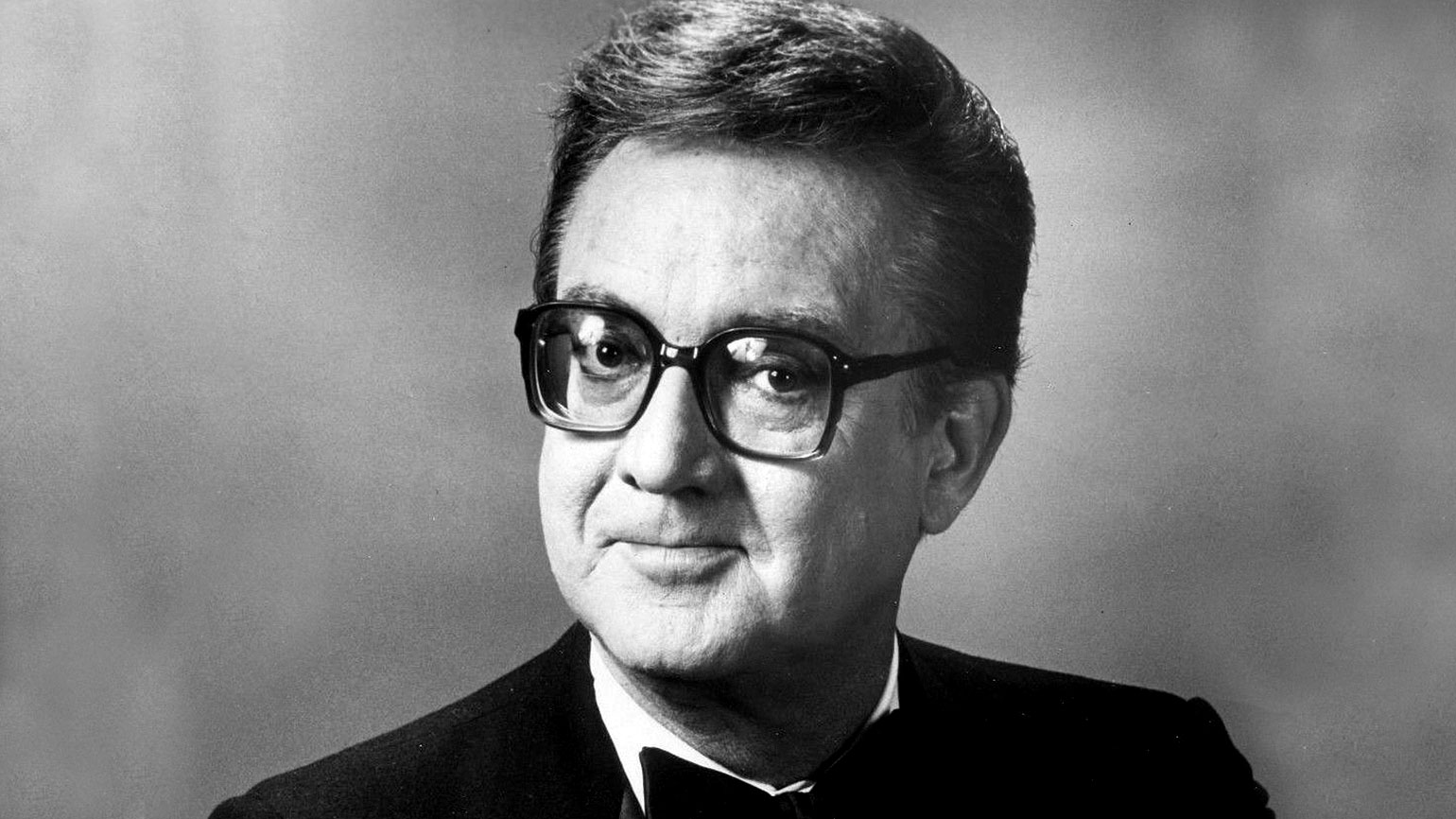
Guideposts Classics: Steve Allen on the Value of Thankfulness

To many people the phrase “giving thanks” conjures up visions of a family comfortably gathered at a holiday dinner table. But it reminds me of two especially meaningful incidents in my life–one when I was alone and ravenously hungry, the other a desperate drive down a mountain.

The time I was so hungry was when, at age 16, I had run away from home in Chicago and bummed around the country for a while. After a week, I had no more money; consequently I had no more food.

NIVFLB Inarticle ad

In Houston one morning I was walking along keeping my eye on the curb. I was hoping to find a coin in the gutter, which would mean buying a loaf of bread, a bottle of milk or even a candy bar and thus blunting the hunger pains.

I must have looked pretty pathetic, because a passerby felt sorry for me and took me into a dim, musty chili joint. I stared eagerly at the giant coffee maker that gleamed and hissed against the wall, and at the rows of steaming frankfurters that lay in open trays behind the bar.

Be inspired each day with Daily Guideposts 2019​

“Just a coffee for me,” said my host.

Not wanting to appear greedy, I asked for coffee and a hot dog. When the counterman placed the hot roll in my hand, I felt a thrill of animal satisfaction. It was almost as if I were able at once to absorb nourishment through the pores of my hand.

For a brief moment before eating. I stared at the honey-colored roll, the brilliant yellow mustard, the juicy, salty-looking meat. I can see it still.

Wolfing it down, I closed my eyes and leaned back against the bar, feeling the wooden railing firm against my tired back. The coffee curled warmly along the lining of my stomach. The frankfurter meat was of poor quality, but I have never enjoyed filet mignon more.

I forced myself to take smaller bites as I neared the end. When it was gone, I felt a deep and powerful wave of gratitude sweep over me.

I thanked my benefactor, of course. But my gratitude extended far beyond him. And though I don’t remember putting it into words, it was, in its own way, a strong and heartfelt prayer of thanksgiving.

On the second occasion, I know I prayed. It began at a church camp up in the central California mountains. My young son Bill and I had come alone, as my wife Jayne had gone to a Los Angeles hospital for a checkup.

“Don’t worry.” she laughed when I said I was sorry to be going without her. “It will be a chance for me to get a good rest. And,” she added, “if they let me out soon enough, I’ll come up and join you and Bill.”

We hadn’t been at the camp more than three days when my usual evening phone call to Jayne turned my world upside down.

Her voice was strained but brave as she explained that, according to her doctors, she had cancer. She had been told it was a particularly virulent type that did not leave her much time to live.

I don’t remember much else about that night except for going to our pastor, Don Moomaw of the Bel Air Presbyterian Church, and telling him that I had to leave camp immediately for the hospital.

I broke down in tears, and Don comforted and prayed with me. I stopped to see little Bill, who was already in bed. His face was puzzled as he sat up.

Discover how to cultivate hope and joy in our free ebooks.

“Something important has come up, son,” I said. “I hate to miss these next few days here, but I have to go back to town now and help Mom with something.”

Then I took off down the mountain in our family camper. As I wrestled the big van down the twisting road, I prayed for Jayne. Dark walls of thick pines flew past the headlights as I thought about our 14 years together. With each turn of the road, I felt worse. I couldn’t believe our life together was ending like this.

Dawn grayed the treetops, and by the time I parked the camper in the UCLA hospital lot, it was midday. I rushed up the walk into the big building.

Hurrying down quiet hails, I finally found Jayne’s room. My throat tight, I stepped around the door.

Jayne was sitting up in bed, her face glowing.

“I’m going to be all right, Steve,” she smiled. Dumbfounded, I could hardly talk.

Two young doctors, new to her case, had carefully reexamined her. And between my phone call and arrival she had received the wonderful news. The cancer diagnosis was in error. Jayne was suffering from an intestinal disorder but one that could be successfully treated.

As I held my wife in my arms, sobbing in joy, once again a deep and powerful wave of gratitude swept over me.

I believe that in the days before theology the first prayer offered by primitive man must have been one of gratitude. And all of us today have moments when we experience the same powerful emotion in one way or another.

But just experiencing it isn’t enough. Like love and affection, gratitude may mean nothing to others unless it is expressed. When it is expressed, the effects can be miraculous.

From all the television shows that I’ve produced–whether comedy or the Meeting of Minds series–what I remember best are letters of thanks from people I have never known nor will ever meet. Each letter brought warmth and courage; each strengthened and helped me more than the sender ever knew.

Man’s hunger for a just amount of appreciation is so deep that it is even reflected in the reaction of Jesus after He met the 10 lepers who pleaded for healing.

After He cured their affliction, only one returned to thank Him. And we can all sense the poignancy of the moment when Jesus looked about an empty road and asked: “Were there not ten cleansed? Where are the nine?”

So feeling gratitude, and expressing it, can be a powerful therapy. What you give often comes back to you.

I remember Sister Seraphia who taught me in seventh and eighth grades at St. Thomas the Apostle school in Chicago.

This merry-eyed woman of God improved my self-image by encouraging my early literary ambitions. So years later when I wrote my autobiography, Mark It and Strike It, I dedicated it to her in gratitude for the support she had given me.

Though decades had gone by, her sparkling good humor had not dimmed a bit. In response she wrote: “Your dedication thrilled me so much, Steve, that I forgot to look for all the grammatical errors.”

And that’s another thing I thank God for–that there are so many people with a good sense of humor. Their wit and laughter lighten the load of responsibilities most of us carry. For me, at least, it’s one more thing to be grateful for: the leavening that makes life worthwhile.

For more inspiring stories, subscribe to Guideposts magazine.

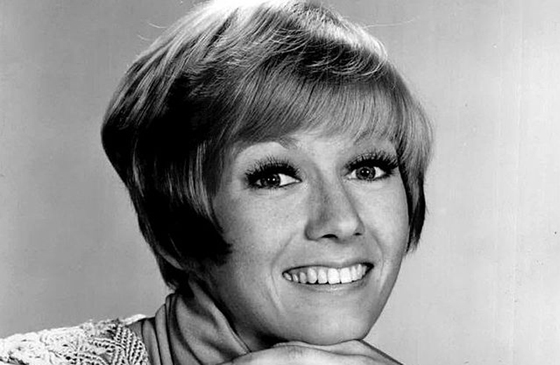
Guideposts Classics: Sandy Duncan on Learning from Pain

Last year when I went back to visit my family in the old home town–Tyler, Texas–I went to a party at which someone came up to me and said, “Sandy, you probably don’t remember me, but…”

Peggy Boocock. Peggy Boocock from my class in Hogg Junior High. Because I’d been away from Tyler a long time, she figured I had forgotten.

Sugarcreek Amish Mysteries In-Article Ad 2023

But how could I forget, forget Peggy or Josie Caldwell or Alice Lee Swapp or Phyllis Semple or any of those girls who were a more important part of my life than they knew?

I remember Peggy best from the spring when I was 15 years old and life was more packed and more frantic and more normal than probably it will ever be again.

I remember the closing weeks of our eighth-grade year when most of my energy and seemingly all of my hopes were centered on one important goal: I wanted to be one of the six girls selected as cheerleader for the next football season.

Of course, now it seems amusing to think that this could have been the most important thing in the world to me, but at the time there was nothing amusing about it. Everybody at school took it seriously. Football was important. What happened to our Razorbacks was of prime importance.

If I won the competition, I would go away to a special summer clinic for cheerleaders where we would be taught the finer points of whipping a crowd into a frenzy of enthusiasm, and in the fall I’d go to all the games and be in on all the parties and pep rallies.

Furthermore, being a cheerleader meant that you’d hit the top. It guaranteed you popularity in your class, in your crowd.

To tell the truth, I really didn’t have a crowd. I think I was not exactly unpopular, but in the lunch room I always seemed to be sitting with an “un-in” group, often a group of two.

In those days my “best friend” was probably my grandfather, Jeff Scott. Jeff–I always called him that –was my one strong ally, and in anything as important as becoming a cheerleader, you needed all the encouragement you could get.

At home my parents watched my feverish pursuits with varying enthusiasms. Dad, who still operates a gas station there in Tyler, was a solid man–he’s part Cherokee Indian–with a great sense of humor, and it made him smile, I think, to see me twirling about the house shaking my pompons.

Mom’s temperament was different from Dad’s. She was the artistic one. I think she was afraid I wouldn’t make the most of any creative talent I might possess, so it was Mom who was behind my debut in a dance recital when I was five.

It was Mom who watched me at my ballet lessons in the American Legion hall where we’d use the edge of a poker table for a practice bar. It was Mom, even though she herself had been a drum majorette in one of her schools, who had quiet doubts about my being a cheerleader.

“But I can win it,” I’d tell her. “I have timing and rhythm. I can jump higher than the other girls.”

“Maybe I’m just a little afraid of that,” Mom would say. I knew what she was referring to. My ballet teacher, Utah Ground, had warned that I might misuse some of the leg muscles so specifically trained for dancing.

And so it was that more and more I’d seek out Jeff. He was a lovable man, blond and slender, little like me, with a pied-piper personality. At that time he had the night watch at an oil field outside Overton.

I’d go out to see him and we’d sit together in a work shack called the “dog house” and he’d whittle on a stick and we’d talk until he had to go out and do something about one of the pumps.

Jeff loved politics, and to tell stories, and though he was amazingly well-read, he was always jumbling up his quotes. “As the Bible says,” he’d tell me, “‘To thine own self be true.’” Or, “Ralph Waldo Emerson said a mouthful when he declared that ‘God is our refuge and strength.’”

He may have mixed up the name tags but the product was always solid. “You’ll get no junk from Jeff,” he used to say to me, and he was right.

Some 40 girls were trying out for cheerleader. On the morning of the competition, the bleachers of the school gym were filled, not just with students, but with parents as well. It was a big event.

One by one we were announced, and then each girl had to run out into the center of the gym and give a solo performance.

“Sandra Duncan!” the announcer boomed, and I bounded out, bursting with personality, showing all my dancer’s tricks, whirling and swaying and shouting:

“Gimme an ‘H’

Gimme an ‘O’

Gimme a ‘G’…”

And then a fantastic jump, coming down to a dazzling split at the end.

I knew I was good, and the applause verified it. Then we had to go back to our home rooms to wait interminably for the decisions. Finally, the public address system crackled and I sat frozen at my desk while the six outgoing cheerleaders began to speak.

“Hi, this is Alva Bloomquist. The girl who is taking my place as cheerleader next year is Peggy Boocock!”

“Hi … and the girl who’s taking my place is … Phyllis Semple.” Phyllis was in my home room, and she whooped and jumped up and the kids applauded while she ran out of the room to claim her victory.

Alice Lee Swapp … Josie Caldwell … Jane Brandt.

They said later I placed seventh. It didn’t matter; that didn’t make me a cheerleader. I was dazed. Out in the hall between classes, Tom Stokes was waiting for me. Tom and I were going together. We were barely in the hand-holding stage but he was my boyfriend. Tom squeezed my hand. “Sandy, I’m sorry.”

“It doesn’t matter,” I said. “It just doesn’t matter.” Then I hurried off to class. But it did matter. The rest of the day was a torture and when I left school that afternoon I wanted never to go back there again.

At home Mom was gentle with me and Dad said that the important thing was that I had done my best. But it was Jeff whom I wanted to see. I found him at dusk in the dog house, the thick smell of petroleum and the churning sound of machinery all around us.

“Oh Jeff,” I said, burying my head in his chest and letting the tears flow. “I worked so hard and I wanted it so much. Why didn’t I win?”

You would have thought that Jeff himself had been out there in the gym trying to be a cheerleader, that he too had lost out. We were two of a kind and as for why we had failed, there was no answer between us. “But it hurts, doesn’t it,” he asked.

I nodded. “The awful thing is it’s probably going to hurt for a long time, maybe always.”

I was horrified to think that I might have to endure what I was feeling then for the rest of my life. But Jeff wasn’t giving me any junk, and I knew it.

“Listen, honey,” he said, “I know a proverb you ought to be thinking about. It’s just four words, but I’ve tested these four words in my own life, and I can tell you they’re true.”

Curious, I lifted my head from his lap and looked into his serious face. Then, as though it were a secret for my ears alone, he told me the four words that sounded too simple and too cute to be profound.

“No pains, no gains.”

Hogg Junior High is a good many years in the past now, and though I smile a little, I still hurt a little when I think about not making cheerleader. Yet over the years I’ve done some testing of my own with Jeff’s four words, and he’s right, of course–they’re true.

Easy living doesn’t strengthen us, our muscles don’t develop without the soreness from stretching them, and pain seems to be part of God’s design for our lives from childbirth to growing pains to all the hurts that find us, though we don’t know why.

I haven’t liked the recent shock of my television show’s sudden closing notice, or the misery of a failing first marriage or the unbelievable pain of the tumor that took the sight of my left eye a year ago. But I do not believe that these things have come without reason.

I have come to respect the anguish of mind and body. Today I’m more aware of living than I ever was, and more grateful. I think I’m more aware of other people and what they are feeling, and I know that when I’m thinking of them, I worry less about myself.

If Jeff were here today (he’s not; he died ten years ago while out in the woods reaching up for some branches to whittle on), I’d tell him about a proverb that I, his own little granddaughter, discovered along the way: “There’s nothing evil about pain, unless it conquers you.”

Read more Guideposts Classics!

Rachael Ray’s 7 Tips for Great Cooking—and Personal Happiness

There are two things I can’t do in the kitchen: bake or make coffee. You laugh, but it’s the truth. So how did I end up with two popular shows on the Food Network? Well, it’s like they say, you’ve got to work with what you’ve got. With what you’ve been given. It’s true in cooking. It’s true in life.

Here are seven lessons I learned about both along the way.

Mys of Blackberry Valley In Article Ad

1. Keep it simple.
Baking, to me, is like conducting a science experiment. All those precise measurements and exact times and temperatures. I don’t have the patience for it. I don’t even own a set of measuring cups. Not being able to bake doesn’t bother me. (Besides, my sister is a fantastic baker, so if I want some apple and cinnamon cake, I know where to go.) But coffee? I break out in a sweat at the mere thought of making a pot. Is it two spoonfuls or one? Table or teaspoon? Per cup or per pot? I can never remember. I make the lousiest coffee in North America!

All that coffee-making trauma has taught me something. What might be a breeze for one person can send someone else into a panic. So I try to stick to the basics when I’m writing a recipe. I want to make sure even an inexperienced cook can pull it off. See a way to save time? I’ll put in a tip. Catch myself including too many ingredients? I’ll pare down the list. Don’t overload your brain. Keep it simple. Focus on the essentials and you’ll get results, in and out of the kitchen.

2. Choose happiness.
My grampa Emmanuel always said, “You can laugh or you can cry. Just be sure to choose what you’re going to cry about carefully.” Grampa didn’t cry about much, though he didn’t have the easiest life. He grew up in Sicily, one of 14 children. They all worked in a pottery yard. Then one of his brothers was killed on the job. Grampa came to America and became a stonemason. He settled down in Cape Cod.

Grampa’s real passions were gardening and cooking. Every Sunday he’d pick fruits and vegetables and cook up a storm for the family. There were too many of us to fit in the house, so he set up a big table outside. Pasta, meat, salad, melon, ice cream. Oh, what a feast! Grampa’s dinner table was where I first saw—I guess I should say, tasted—the power of cooking. It can fill you up. With food and with contentment. Think of how you feel after a good dinner. Is there any more peaceful feeling?

That’s why I think one great way to happiness is cooking. Say you’re worn out from a long day at the office, frazzled from juggling your kids’ activities. Sure, it’s easy to hit the drive-through or get takeout. But you’ve got another choice. How about putting on some music and making dinner? Nothing complicated. Just good fresh food. Try that one night. I think you’ll be surprised at how satisfying it is.

3. Be real.
My mom, Elsa, is only 4 feet 10. But don’t let that fool you. She has a big personality. Everything I know about cooking I learned from her. She’s a brilliant businesswoman too. At one point she ran nine restaurants simultaneously. Whenever she talked to employees, she’d stand in front of them on a milk crate. Why? So she could look them straight in the eye, really connect with them.

These days my mom is my business manager, my researcher, my morale officer and so much more. Sure, we fight sometimes. Besides, my family is Italian and Cajun—not exactly the quietest people. I think it’s terrific to be open and honest and let things out. If you have the senses God gave you, then you’re going to have opinions and, of course, they’re not always going to agree with everyone else’s.

One day a woman named Vicky was helping me prepare caponata, an Italian eggplant dish, for a cooking class. “You forgot the sugar and vinegar,” Vicky pointed out. They’re ingredients in most caponata recipes, so I explained, “In my family, we don’t add sugar and vinegar to our caponata.” She said, “We do in my family. And our caponata is good.” “Yeah? Well, ours is great!” I shot back. Back and forth we went. 

We both got so worked up we burst into tears. What are you doing? I asked myself. You’re practically coming to blows over a recipe! Shouldn’t you be happy that Vicky feels as passionate about food and family as you do? I grabbed Vicky and threw my arms around her. She hugged me right back. We’ve been best friends ever since. If we’d been stingy with our words or our emotions, we would’ve missed out on a wonderful friendship.

Be real. Make connections with people. Look them in the eye. Tell them how you feel. Don’t be afraid to say what you mean. When you let go of the stuff you hold inside, you’ll be amazed at what comes back to you.

4. Savor life.
Okay, no one really likes school cafeteria food. Me, I couldn’t stand it. I cried at having to eat it. I was brought up on squid and sardines and anchovies and garlic. All those good Italian things. To me, school food had no taste. So Grampa made me a sack lunch. The smell of it cleared the cafeteria. But I didn’t care. I was too busy savoring every bite.

I think we’re born with our minds open to everything the world has to offer. Too bad sometimes we learn to close them. One day I was doing a cooking demonstration in a grocery store. A Cajun specialty. That time jambalaya. A woman pushed her shopping cart past me. A little boy was sitting in the seat. “What’s she cooking, Mom?” he asked. “Can I have some?” They came back and stopped in front of me. “It smells yummy, Mom.” The woman peeked into the pot and crinkled her nose. “No, you don’t like that,” she told her son, and wheeled him away. She wouldn’t even let him have a taste, I thought. And he really wanted to. It made me sad.

5. Try new things.
Not just foods, but experiences. Travel to that faraway country even if you’re scared of flying. Take a different route home from work. Stop to talk to your neighbor. Don’t waste time worrying about what you might be getting yourself into. God has packed life full of interesting flavors, ideas, people. Savor it all!

6. A little goes a long way.
That goes for lots of things. Spices. Success. Think you’re not up to the task, whatever it might be? There’s a way you can knock those feelings of inadequacy right out of your head. How? Make dinner. Really! It’s the greatest therapy I know. Just give it a shot. Cooking is easier than you think. Plus, it gives you an incredible payoff.

You take a pile of raw ingredients and—presto, chango—turn them into something that appeals to your senses. Oh, that looks good, you’ll tell yourself the first time you make a nice dinner. And then you’ll be like, Wow! I did that. What else can I do? That’s how I felt the first time I helped my mom make lasagna. There’s nothing we can’t do if we set our minds to it. Well, except maybe make coffee. Which gets me back to where I started.

7. Work with what you’ve been given.
I grew up in restaurants—Mom would hold me in one arm and stir the pot with the other—but I didn’t set out to be in the food business. My majors were literature and communications. After college I took a job managing a candy counter at the marketplace in Macy’s. Not because I had a great love for candy. I needed to pay the rent, and it isn’t cheap to live in New York City. Then the guy in charge of the fresh foods department got fired. “Can you sit in?” I was asked. “It’ll only be for a little while, till we find someone qualified.” The manager of the marketplace took a liking to me. He taught me all about cheese, pâté, imported this and exported that. I took to it like a fish to water. They let me keep the job. A job I was supposedly unqualified for.

I left Macy’s to become a buyer for a gourmet supermarket uptown. But I missed Mom and home. I moved to the Adirondacks and—wouldn’t you know it?—kind of fell into a job at a supermarket. The store did a good business in prepared foods, but regular groceries just weren’t moving. The manager came up with an idea: Give cooking classes using fresh produce and meat. People would buy more if they knew what to do with it.

Great idea, but every chef we talked to demanded an outrageous salary. I could do this myself, I thought. Why not? That’s where my 30-minute meals got their start. A local news report landed me on the Today show, and that led to my own show on the Food Network.

I really believe there’s no such thing as accidents, only opportunities. God gives everyone the ingredients to a good happy life. It’s up to us to make the most of them. So, tell me, what do you put in your caponata?

Try Rachael’s Pecan-Crusted Chicken Tenders at home!

For more inspiring stories, subscribe to Guideposts magazine.

Guideposts Classics: Patty Duke on Trusting in God

For 18 months I had been coached and drilled to act deaf, mute and blind to audition for the role of 10-year-old Helen Keller in the Broadway play, The Miracle Worker, which opened October 19, 1959, and enjoyed a run of 719 performances.

When they told me I had got the part, at first I was overjoyed. But the next day when I thought about it, I became afraid. How could I tell anyone that practicing to play a blind girl on the stage somehow had made me deathly afraid of being blind.

God's Constant Presence In Article Ad

Part of the fear was because of the big fight scene in the play. It was full of violence. The blind Helen is like a wild little savage. She does everything to oppose the efforts of her teacher, Annie Sullivan.

Celebrating Guideposts' 75th Anniversary

ENJOYING THIS STORY? SUBSCRIBE TO GUIDEPOSTS MAGAZINE!

In the fight scene at the breakfast table, plates, cups, saucers, silverware, even a chair and a pitcher full of water are thrown about.

During the early rehearsals I choked on the food, cut my hand, chipped a tooth and had my head banged against the door jamb. It could have been worse. I fought down my fear as best I could.

One night after the play had opened, I was in my usual place backstage, waiting for my cue. The stage manager had just called, “Places, please!”

In a few minutes the curtain would go up. I would hear the words for my entrance, and then for the next two and a half hours I would be groping, falling, and stumbling about the stage, acting the part of a blind, deaf mute.

As I concentrated on the feeling of being sightless one of the four blind girls in the cast came by. She greeted me with her usual cheerful, “Hello.”

I looked up to return her greeting, and I felt a sudden twist inside me. There was a welt on her forehead, one of her cheeks was bruised and the other cut just below the eye.

“What happened?” I stammered.

She reached out for me, grasped my hand, and laughed. “Nothing, Patty, really. I had a battle with a clothes hook in our dressing room, and I lost.”

I tried to think of something to say, but couldn’t. I felt numb.

“Your cue, Patty,” she said quickly.

READ MORE: LORETTA YOUNG ON THE POWER OF LOVE

I pressed her hand very hard once, and shuffled on stage. My arms were outstretched before me and my hands “feeling” my way. For now, I too was “blind.” But it chilled me.

How could anyone want to go on living with blindness?

It became almost impossible to erase these thoughts from my mind. I began to wonder, more and more, about a world where such tragedies could happen. I wondered and I was drawn more and more to the four blind children in the cast.

One night I asked my mother about blindness. She said not to worry about it because sometimes God takes something away with one hand, then He gives with the other. The blind often see things more clearly than people with perfect eyes.

But I really didn’t understand what she meant.

I found myself joining more and more in the games with the four blind girls. Jumping rope was one of them. Two of the blind girls would turn the rope and when I yelled, “Now!” a third would hop in and begin to jump.

As the rope turned faster and faster, their yells and laughter became louder and louder. But somehow I could not laugh.

“Would you like to play ball with us?” they asked me one day.

Play ball! I couldn’t believe my ears. But here’s the way they did it: they used a fairly large rubber ball. A blind child would stand at bat, facing the pitcher. The pitcher would get direction from the voice of the batter.

The batter would listen for the sound of the ball bouncing, and the “assistant batter,” who was sighted, would yell “Swing” just as the ball came over the plate. If the ball was hit, the assistant would grab the batter’s hand and lead her running around the bases.

On the day before Easter an egg hunt was held in the theater. Eggs were hidden around the stage, backstage and about the wardrobe room. To make it fair, the sighted children were blindfolded.

When the game started, we had to go down a flight of stairs, and with my blindfold on I held back. “Too fast,” I shouted. All I got in reply was laughter. The blind children took my hand and led me!

Through narrow passages, over wire and cables, under low-hanging pipes, my blind friends led me. It was like being in the scary black darkness of a “Fun House” in an amusement park, where you don’t know what terrifying thing might happen to you next. I was scared—and ashamed of it.

After the performance that night, Mr. and Mrs. John Ross, who have coached and managed me in the theater since I was eight and have been like second parents, asked why I was so quiet.

“Anything wrong?” Mrs. Ross inquired.

“No,” I answered, “nothing except in the middle of the fight scene I threw one of the spoons too hard and it bounced off the wall and hit me on the face,” I answered. “It came pretty close to my eye.”

“What’s really bothering you, Patty?” Mr. Ross asked.

Mrs. Ross took my hand.

I blurted it out, all about my blind friend and the bruises on her face and everything that happened in the games and the egg hunt and how I wouldn’t want to live if I ever became blind.

“That certainly would not be the answer,” Mrs. Ross said.

“Then what is the answer?”

“What did Helen Keller do?” Mr. Ross asked.

I shook my head. “But I’m not Helen Keller.”

“You’re not,” Mr. Ross said. “But to play her you must get inside her, you almost must become her.

“You’ve done that with the wild young Helen Keller, but you must know how the child grew to be one of the world’s great women by mastering her handicaps and fears. Try thinking of yourself in this role too.”

“But how did she get rid of her fears?”

“She put herself in God’s hands,” Mr. Ross said simply.

“Why should she?” I asked.

“Because she knew that she was helpless to help herself. Helen Keller was desperately afraid, too, but she knew that if God, who created her, was a loving Father, He was surely going to help her if she asked Him to. And when she put herself in His care she found new strength.”

I sat silent; Mrs. Ross went on:

“When Helen Keller grew up and became a famous woman, she wrote that she made the most wonderful discovery of her life when she was 16. These are her words:

“’We are never happy unless our hearts are filled with the sun which never dissolves into gloom. God is that sun, and if our faith in Him is strong, whether we are blind or seeing, He will somehow reveal our powers and brighten the darkest days with His divine beams.’”

I took all that to bed with me to think about. And the more I thought, the clearer it became. The blind children in the cast were without fear because they trusted God.

Little by little I discovered that when I forgot myself and trusted a God who loves me then I was not nearly as afraid as before.

And I learned what my mother meant when she said the blind often see more clearly than people with good eyes. It’s because they don’t wait until the last minute to put themselves in His hands.

For more inspiring stories, subscribe to Guideposts magazine.

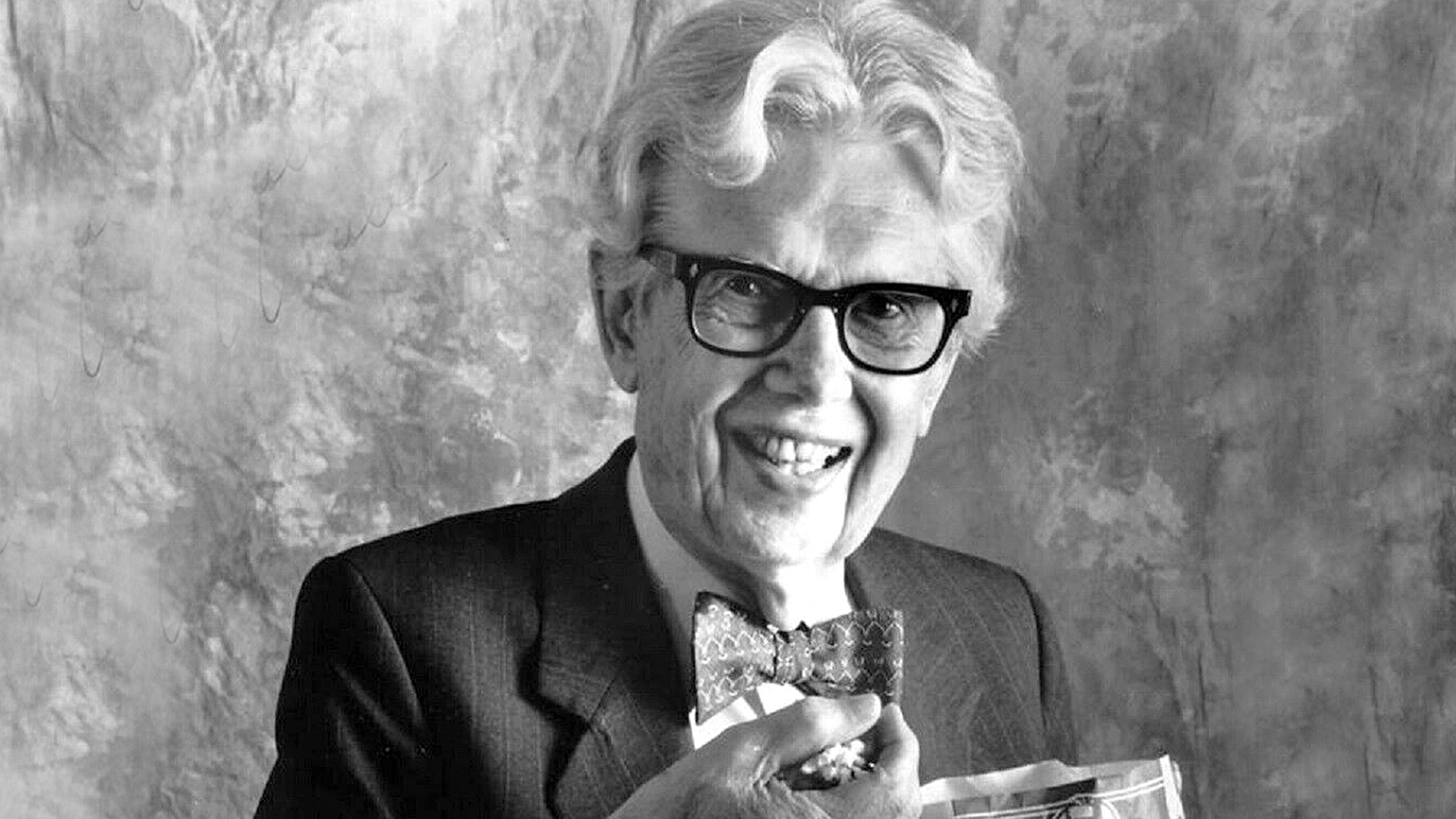
Guideposts Classics: Orville Redenbacher on Wise Counsel

The man behind the desk listened to my sales pitch with that look people get when they think you’re trying to sell them stock in a phony gold mine.

Pushing my sample jar of Red Bow popcorn back at me, he smiled politely. “I don’t care how good you say this is, Orville. Popcorn is popcorn. Folks aren’t going to pay more for yours.”

“But…” I started to explain, then ruefully shook my head, picked up my sample and trudged out of the regional food processor’s office. I knew it was useless to talk any further. He was the umpteenth prospect to turn down the new, improved popcorn that had taken me years to develop. No one seemed to want it.

READ MORE GUIDEPOSTS CLASSICS: COLONEL SANDERS ON LIFE AFTER 65

I got into my car and gloomily drove through the Indiana countryside toward my office in Valparaiso. Was I, at the age of 63, pursuing a foolish dream?

My eye caught a roadside stand, bringing memories of the time I sold fresh produce door-to-door as a farm boy in Indiana. Back then, to help make ends meet, I would traipse 15 miles from our farm near the town of Brazil to Term Haute twice a week to sell our fruit, vegetables, eggs and dressed chickens. But even then, peddling popping corn was my main interest.

I grew an acre of it as a 4-H project in which I tried year after year to come up with a better variety.

Maybe I liked popcorn so much because every night Dad would pop a batch in a long-handled wire popper in the fireplace or on the potbellied stove; I loved its warm homey aroma. In those days, especially during World War I, when schoolmates made fun of my German-sounding last name, I found solace in my family, who gathered together in front of the fire each evening.

I smiled to myself. As a kid I wasn’t a bad salesman, selling my popping corn in Brazil and Terre Haute, where grocery stores would display it in bushel baskets on their wooden floors. But why couldn’t I sell it now, in 1970, after all these years of perfecting it?

I turned into the driveway of Chester Hybrids, the firm I owned with Charlie Bowman. Both of us had gone to Purdue University (where I majored in agronomy, played the sousaphone in the marching band and won a letter in track).

I had teamed up with Charlie in 1952. Before that, I had been a county agricultural agent, then manager of the 12,000-acre Princeton Farms, where I worked with liquid nitrogen and started breeding hybrid popcorn seed.

Charlie concentrated on the engineering end of our business, such as grain storage and drying, and irrigation systems. I spent most of my time on fertilizers and continuing the hybridizing of a better popping corn. This was a new concept, for popping corn hadn’t really changed much in 5,000 years.

READ MORE GUIDEPOSTS CLASSICS: EDDIE RICKENBACKER ON HELPING OTHERS

Even the popcorn the Iroquois Indians introduced to the colonists wasn’t much different from what was on grocery store shelves. Finally, with the help of breeding expert Carl Hartman, plus 40 generations of crossbred popcorn, we came up with a superior Snowflake variety that, when popped, was lighter and fluffier.

The Indians thought popcorn popped because a demon lived inside the kernel; when heated, the demon became irate and exploded in anger. Actually, moisture inside turns to steam and literally blasts the kernel apart.

Our secret was to dry the corn carefully and slowly to maintain an exact moisture level—13.25 percent—in each kernel, making for nearly 100 percent popability. This helped eliminate the tooth-crunching unpopped grains I call shy ones.

Selling Red Bow popcorn, however, was another story. For four years I wore out car tires and shoe leather going from farmer to processor to retailer. Farmers didn’t want it as seed corn because it yielded less per acre. Every processor had the same negative reaction as the one I had just visited.

And the retailers? “There are over eighty different brands of popcorn on the market,” snorted one chain-store buyer. “We don’t have room for another, especially when it costs two and a half times as much.”

That night in 1970 I didn’t even feel like popping my usual treat. Ten years down the drain. Maybe I had better stick to seed and fertilizer, I thought. Although I’d been successful in developing my new popping corn, now I evidently had no talent for selling it.

Talent. I thought about that for a long time—and what I had done with my abilities since I was young. Mom had talked about talents. When I’d practice my cornet at home as a youngster, she would wince at my bleating. “God gave you your share of talents, son, but playing the cornet is not one of them.”

Yes, God had given me talents. I believed they were from Him. I’d even taught about talents as a Sunday-school teacher. Something from Sunday-school teaching tickled my memory, something about seeking advisers.

I picked up our Bible and riffled through its pages. Yes, there it was, Proverbs 24:6: “For by wise guidance you can wage your war, and in abundance of counselors there is victory” (Revised Standard Version).

Of course. Charlie and I were farmers. We ran a good local business. But what did we know about the ins and outs of big-time marketing? I decided it was time to get my ego out of the way and admit someone else might be of help.

I began to ask around for the name of a good marketing company. A few days later I traveled to Chicago to seek guidance from my chosen counselors, the advertising and marketing firm of Gerson, Howe and Johnson, then in the Wrigley Building. I found myself at a table with two young copywriters, a retailing expert and Mr. Gerson, the president.

“Talk to us about popcorn,” he said.

I talked on for about three hours, feeling foolish while they just listened.

“Come back next week,” they said, “and we’ll have something for you.”

The following week I returned wondering what great marketing scheme they had come up with.

“We think you should call it Orville Redenbacher’s Gourmet Popping Corn.”

I stared at them, dumbfounded.

READ MORE GUIDEPOSTS CLASSICS: PAUL HARVEY ON SUBMITTING TO GOD

“Golly, no,” I gasped. “Redenbacher is such a…a funny name.” I remembered those kids giggling back in Indiana.

“That’s the point. People will love it.”

I drove back to Valparaiso wryly thinking we had paid $13,000 for someone to come up with the same name my mother had come up with when I was born.

Our marketing counselors also recommended we put my picture on the label, which I thought was another mistake. That proverb had better be right, I thought, beginning to question the wisdom of counselors. If people had balked at the price before, what would they say about a funny name and funny face?

There was one way to fund out. I would package some as the counselors had recommended and then test-market it.

On my own, I decided to approach the biggest retailer in the area, Marshall Field’s in Chicago. I found out the name of the manager of their seventh-floor gourmet food department and sent a case of our newly labeled product to his home, but I did not enclose a note or return address. A month later I phoned him. “Did you like it?” I asked.

“Like it?” he answered. “We want to stock it!”

It was a sizable order. I loaded it into our pickup truck and drove it in to Chicago as the sun was coming up over Lake Michigan. There I delivered it to Marshall Field’s big State and Randolph Street store’s loading dock. As an extra gimmick, I offered to autograph jars.

Marshall Field’s took the idea and ran with it. They published newspaper ads, and I was there three days getting writer’s cramp. Eyewitness News came over and ran coverage on their evening programs. That started the bail rolling with more news elsewhere.

In track I was told, “when you’re out in front, you’d better keep running.” So I ran the wheels off that pickup driving up to Byerly’s around Minneapolis, one of those super groceries with carpets all over, and then out to Churchill’s in Toledo. In a way I felt like I was peddling my popcorn back in Terre Haute, only this time I was filling warehouse shelves, not bushel baskets.

When folks discovered it truly was an improved popping corn, we could hardly keep up with orders. Today Orville Redenbacher’s Gourmet Popping Corn is a product of Hunt-Wesson Foods. Part of the deal was that I would still help them sell it by appearing on TV commercials.

Well, I’m grateful for the “wise guidance” of an “abundance of counselors,” as the Bible puts it, though I’m still befuddled. What do I, at age 82, know about selling popcorn on television? I’m just a funny-looking farmer with a funny-sounding name. But I still think my popping corn is the best.

For more inspiring stories, subscribe to Guideposts magazine.

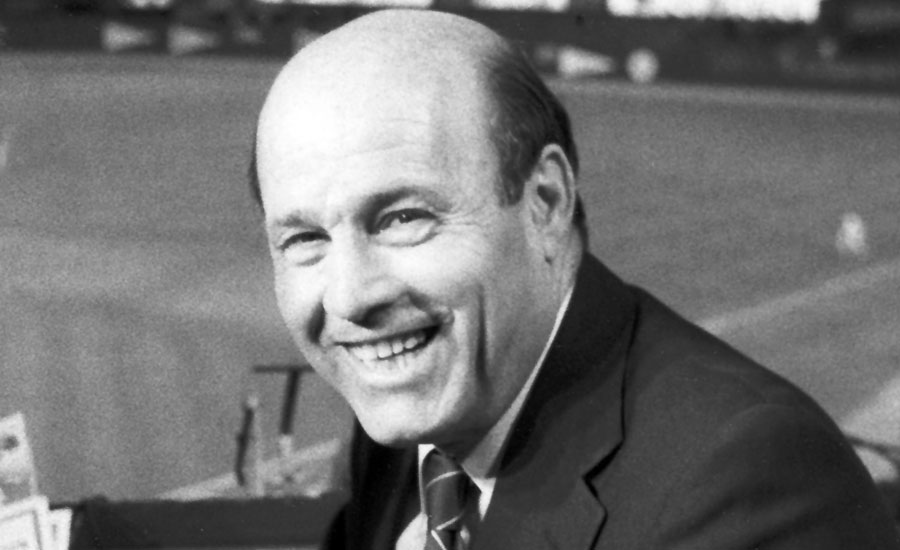
Guideposts Classics: Joe Garagiola on the Blessing of Laughter

One day shortly after I retired from baseball I was asked to help out at a luncheon honoring Stan Musial. My duty would be to introduce a lot of big names in St. Louis—athletes, businessmen, politicians. I was kind of scared. Most of my public speaking had been limited to hollering at umpires.

So I prayed about it. “Look, God,” I said, “I’m going to need Your help to keep the fear in my belly and off my tongue.”

Pause & Pray In Article Ad

And sure enough He helped me—helped me use a bit of humor when bringing on the famous guests. The light approach seemed to loosen everyone up, including me.

ENJOYING THIS STORY? SUBSCRIBE TO GUIDEPOSTS MAGAZINE!

Prayer and laughter. I learned both by example from my parents. My father and mother came to America from Italy and neither one ever really learned to speak English. Papa was a bricklayer who worked long, backbreaking hours to provide for his wife and two sons.

In the best of times this wouldn’t have been easy, but those were the Depression years when building jobs were hard to come by.

But though I grew up right in the middle of this period, I never knew what the word “depression” meant. In our home there was faith in God and a smile for every situation—faith to banish fear and a joke to take the growl out of an empty stomach.

That doesn’t mean my brother and I didn’t have to do without a lot of things. I remember how long it took me to convince Papa that I needed a pair of spiked baseball shoes. Papa couldn’t understand why anyone would buy a new pair of shoes that he couldn’t wear to church.

On the Hill, a section of St. Louis that is predominantly Italian, life centered around the church, as it does in most Italian neighborhoods. Saturday was take-a-bath, get-to-church-for-confession, help-mama-fill-out-the-collection-envelope day.

Mass the next morning was the high point of every week. It was a joyful occasion, not a solemn one. Church was where you met your friends, where the guys hung out.

READ MORE: JOE GARAGIOLA’S AMAZING SHEEPSKIN DREAM COAT

This kind of natural-as-breathing religion was all the more important when I entered major league baseball. When a ballplayer hits .300 for the season, which means he gets three hits every ten times he comes to bat, everybody says he’s had a great year. But this also means he’s failed seven times out of ten. In a job where success means failing most of the time, you better have a faith that sees things in perspective.

And you’d better learn to laugh at yourself. I always liked Ernie Fazio’s answer when someone asked him why he’d switched from a 34-ounce bat to a 29-ounce bat. “Because it’s lighter to carry back to the bench when I strike out.”

I remember one close ball game when the other team had a runner on every base. Tension was building and I went out to the mound. There was a big hush over the field and then all at once I heard someone shout from the other team’s dugout, “Hey, Joe, the only thing you know about pitching is that it’s hard to hit.”

Suddenly my own importance and the spot we were in were cut down to size.

In baseball failure isn’t only built into the game. There are personal setbacks and disappointments too. One year I got off to a good start only to break my shoulder in May and miss almost all of the rest of the season. The next year I was traded.

After growing up in St. Louis and playing for the Cardinals in a World Series, it had just never occurred to me that I might have to leave them. Worse yet, it meant moving from a winning ball club to the Pittsburgh Pirates which had clinched last place that year on the opening day of spring training.

It’s easy to laugh about that trade now, but believe me, at the time it would have been far easier to cry. I think the person who helped me most to keep my sense of humor then, and during the trades that followed, was my wife Audrie. “Dad’s modeling uniforms,” she’d explain to the kids each time I changed clubs.

Like laughter, prayer works better too when you have someone to do it with you. I never went in much for “professional” praying—asking God to help my team win or to let me get a base hit. I’d always think, What if the pitcher out there is praying for a strike-out while I’m asking for a home run?

READ MORE: YOGI BERRA ON OVERCOMING NEGATIVITY

My boyhood pal Yogi Berra put it well once in a game between the Yankees and the Red Sox. Jimmy Piersall came to the plate and made the sign of the cross before stepping into the batter’s box. Yogi watched from his catcher’s crouch, then said, “Why don’t you let God just watch the ball game?”

Audrie’s and my prayers are more often for strength in daily life, for joy and love in our family, for others in need, for God’s gift of a merry heart. If you can smile and pray, you’re part way there. If you have someone to pray with, and share that smile with, you’ve reached home plate.

Did you enjoy this story? Subscribe to Guideposts magazine.

Guideposts Classics: Corrie ten Boom on Forgiveness

It was in a church in Munich that I saw him, a balding heavyset man in a gray overcoat, a brown felt hat clutched between his hands. People were filing out of the basement room where I had just spoken, moving along the rows of wooden chairs to the door at the rear.

It was 1947 and I had come from Holland to defeated Germany with the message that God forgives.

Sweet Carolina Mysteries In Article Ad

It was the truth they needed most to hear in that bitter, bombed-out land, and I gave them my favorite mental picture. Maybe because the sea is never far from a Hollander’s mind, I liked to think that that’s where forgiven sins were thrown.

“When we confess our sins,” I said, “God casts them into the deepest ocean, gone forever.”

READ MORE: PAUL HARVEY ON SUBMITTING TO GOD

The solemn faces stared back at me, not quite daring to believe. There were never questions after a talk in Germany in 1947. People stood up in silence, in silence collected their wraps, in silence left the room.

And that’s when I saw him, working his way forward against the others. One moment I saw the overcoat and the brown hat; the next, a blue uniform and a visored cap with its skull and crossbones.

It came back with a rush: the huge room with its harsh overhead lights, the pathetic pile of dresses and shoes in the center of the floor, the shame of walking naked past this man. I could see my sister’s frail form ahead of me, ribs sharp beneath the parchment skin. Betsie, how thin you were!

Betsie and I had been arrested for concealing Jews in our home during the Nazi occupation of Holland; this man had been a guard at Ravensbrück concentration camp where we were sent.

Now he was in front of me, hand thrust out: “A fine message, fräulein! How good it is to know that, as you say, all our sins are at the bottom of the sea!”

And I, who had spoken so glibly of forgiveness, fumbled in my pocketbook rather than take that hand. He would not remember me, of course–how could he remember one prisoner among those thousands of women?

But I remembered him and the leather crop swinging from his belt. It was the first time since my release that I had been face to face with one of my captors and my blood seemed to freeze.

“You mentioned Ravensbrück in your talk,” he was saying. “I was a guard in there.” No, he did not remember me.

“But since that time,” he went on, “I have become a Christian. I know that God has forgiven me for the cruel things I did there, but I would like to hear it from your lips as well. Fräulein”–again the hand came out–“will you forgive me?”

And I stood there–I whose sins had every day to be forgiven–and could not. Betsie had died in that place–could he erase her slow terrible death simply for the asking?

It could not have been many seconds that he stood there, hand held out, but to me it seemed hours as I wrestled with the most difficult thing I had ever had to do.

For I had to do it–I knew that. The message that God forgives has a prior condition: that we forgive those who have injured us. “If you do not forgive men their trespasses,” Jesus says, “neither will your Father in heaven forgive your trespasses.”

I knew it not only as a commandment of God, but as a daily experience. Since the end of the war I had had a home in Holland for victims of Nazi brutality.

Those who were able to forgive their former enemies were able also to return to the outside world and rebuild their lives, no matter what the physical scars. Those who nursed their bitterness remained invalids. It was as simple and as horrible as that.

And still I stood there with the coldness clutching my heart. But forgiveness is not an emotion–I knew that too. Forgiveness is an act of the will, and the will can function regardless of the temperature of the heart.

“Jesus, help me!” I prayed silently. “I can lift my hand. I can do that much. You supply the feeling.”

And so woodenly, mechanically, I thrust my hand into the one stretched out to me. And as I did, an incredible thing took place. The current started in my shoulder, raced down my arm, sprang into our joined hands. And then this healing warmth seemed to flood my whole being, bringing tears to my eyes.

“I forgive you, brother!” I cried. “With all my heart!”

READ MORE: ROBERT FROST AND FORGIVENESS

For a long moment we grasped each other’s hands, the former guard and the former prisoner. I had never known God’s love so intensely as I did then.

And having thus learned to forgive in this hardest of situations, I never again had difficulty in forgiving: I wish I could say it! I wish I could say that merciful and charitable thoughts just naturally flowed from me from then on. But they didn’t.

If there’s one thing I’ve learned at 80 years of age, it’s that I can’t store up good feelings and behavior–but only draw them fresh from God each day.

Maybe I’m glad it’s that way. For every time I go to Him, He teaches me something else. I recall the time, some 15 years ago, when some Christian friends whom I loved and trusted did something which hurt me.

You would have thought that, having forgiven the Nazi guard, this would have been child’s play. It wasn’t. For weeks I seethed inside. But at last I asked God again to work His miracle in me. And again it happened: first the cold-blooded decision, then the flood of joy and peace.

I had forgiven my friends; I was restored to my Father.

Then, why was I suddenly awake in the middle of the night, hashing over the whole affair again? My friends! I thought. People I loved! If it had been strangers, I wouldn’t have minded so.

I sat up and switched on the light. “Father, I though it was all forgiven! Please help me do it!”

But the next night I woke up again. They’d talked so sweetly too! Never a hint of what they were planning. “Father!” I cried in alarm. “Help me!”

His help came in the form of a kindly Lutheran pastor to whom I confessed my failure after two sleepless weeks.

“Up in that church tower,” he said, nodding out the window, “is a bell which is rung by pulling on a rope. But you know what? After the sexton lets go of the rope, the bell keeps on swinging. First ding then dong. Slower and slower until there’s a final dong and it stops.

“I believe the same thing is true of forgiveness. When we forgive someone, we take our hand off the rope. But if we’ve been tugging at our grievances for a long time, we mustn’t be surprised if the old angry thoughts keep coming for a while. They’re just the ding-dongs of the old bell slowing down.”

And so it proved to be. There were a few more midnight reverberations, a couple of dings when the subject came up in my conversation. But the force–which was my willingness in the matter–had gone out of them. They came less and less often and at last stopped altogether.

And so I discovered another secret of forgiveness: that we can trust God not only above our emotions, but also above our thoughts.

And still He had more to teach me, even in this single episode. Because many years later, in 1970, an American with whom I had shared the ding-dong principle came to visit me in Holland and met the people involved. “Aren’t those the friends who let you down?” he asked as they left my apartment.

“Yes,” I said a little smugly. “You can see it’s all forgiven.”

“By you, yes,” he said. “But what about them? Have they accepted your forgiveness?”

“They say there’s nothing to forgive! They deny it ever happened. But I can prove it!” I went eagerly to my desk. “I have it in black and white! I saved all their letters and I can show you where–”

“Corrie!” My friend slipped his arm through mine and gently closed the drawer. “Aren’t you the one whose sins are at the bottom of the sea? And are the sins of your friends etched in black and white?”

READ MORE: HUGH DOWNS ON OVERCOMING CYNICISM

For an anguishing moment I could not find my voice. “Lord Jesus,” I whispered at last, “who takes all my sins away, forgive me for preserving all these years the evidence against others! Give me grace to burn all the blacks and whites as a sweet-smelling sacrifice to Your glory.”

I did not go to sleep that night until I had gone through my desk and pulled out those letters–curling now with age–and fed them all into my little coal-burning grate. As the flames leaped and glowed, so did my heart.

“Forgive us our trespasses,” Jesus taught us to pray, “as we forgive those who trespass against us.” In the ashes of those letters I was seeing yet another facet of His mercy. What more He would teach me about forgiveness in the days ahead I didn’t know, but tonight’s was good news enough.

When we bring our sins to Jesus, He not only forgives them, He makes them as if they had never been.

Did you enjoy this story? Subscribe to Guideposts magazine.

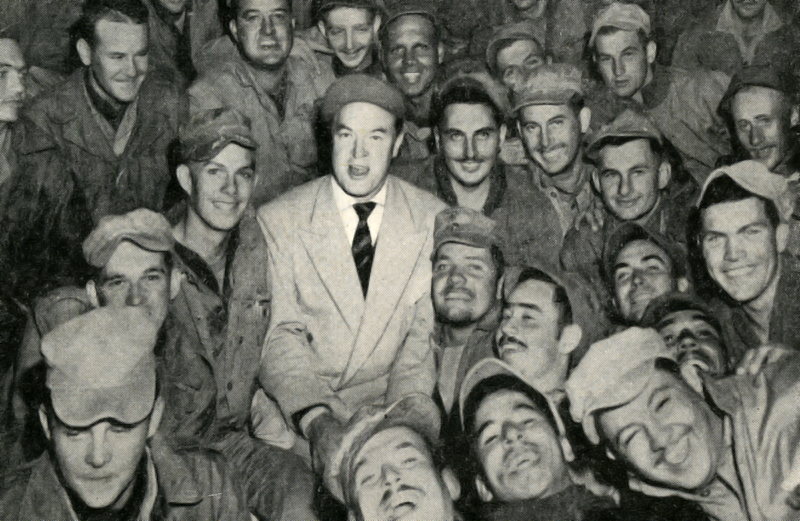
Guideposts Classics: Bob Hope on the Power of Laughter

Once when I was in Shreveport, Louisiana, a minister offered me his pulpit for a sermon on “God and Hollywood.”

Hastily I explained that in my business, success was measured by “yocks” versus “boffs.” When that just confused him I said, “You know, yocks … little laughs … and boffs … great big ones. And if I got up there in your church I might still, unconsciously, be trying for those boffs.”

New Every Morning Journal In Article Ad A

We let the matter drop. But afterward, during a nightmare, I found myself in a pulpit and the laughs were rolling down the aisle shaking the dignified old rafters. I told a friend of this dream.

“And what would be so wrong about that?” he wanted to know. “Laughter has a spiritual value. An Englishman named John Donne had that pegged over 400 years ago. He said, ‘Religion is not a melancholy, the spirit of God is not a dampe’.”

He had a point. Certainly I knew that laughter has a constructive power. I have seen what a laugh can do. It can transform almost unbearable tears into something bearable, even hopeful.

Overseas in 1944 with USO Camp Shows Frances Langford and I saw it lift a whole ward at the service hospital in Pearl Harbor. We were working our way up a long aisle when a nurse touched my arm.

“That boy near the end in the very high bed. They pulled him out of a B-17. Herbert hasn’t spoken a word for weeks. If there’s anything you can do…”

As we got to that end of the ward I winked at Frances. “Okay, boys,” I said. “Frances Langford is going to sing you a song … and Herbert,” I pointed to the bed where we could just see a white face, bandages covering, the eyes, “Herbert, this is for you.”

Frances approached the bed slowly, beginning her song… “Embrace me, my sweet embraceable you.” An unnatural stillness settled over the entire ward. One of those that doesn’t feel right, too hushed and breathless. All you could hear was Frances’ low plaintive song, “Embrace me, you irreplaceable you…”

And then, just as she reached him, her voice broke off.

In two steps I was beside her looking down at Herbert. Where his arms had been there were only short stumps.

For several seconds we all just stood there stunned. No one moved. But the part of the mind where habit and involuntary reaction holds sway provided me with a diversion.

A couple of guys laughed, bless ‘em. On I rushed trying to build that chain of laughter while Frances regained her composure. But the miracle was Herbert. Herbert spoke, for the first time in weeks.

“It’s all right, Miss Langford,” he said. “Don’t worry about it.”

Laughter binds men together in a kind of secret free masonry.

Hear it sometime travel around a circle … then notice that, however large that circle may be, it is a closed one.

For a brief few hours in 1944 I met 15,000 Marines of the 21st Division at Pavuvu. They were on their way to the invasion of Peleliu. We were doing a routine series of camp shows on the Pacific Islands.

When an officer suggested the unscheduled stop he said, “We’ll have to fly you over, a few at a time in small planes, and land you on a road. There’s no airport. But it’ll be worth it to them.”

As we circled for our landing such a shout arose from 15,000 throats that we could actually feel it like a cushion of sound under our wings. We were from home! We were the promise of laughter … today. Tomorrow, and they knew it, they were staging a little show of their own and 40% wouldn’t come back.

We laughed and clowned as we landed. But looking at those faces I knew how Charles Lamb must have felt when he “jested that he might not weep.”

Later back in the States, my wife and I at the dedication of Oak Knoll Hospital, walked into a ward to be greeted with that same laughter. One of those explosions that happen between old friends.

Voices kept yelling, “Pavuvu! Pavuvu!” Dolores was a bewildered outsider. But I was in. It was the 1st Marines… or what was left of them.

Laughter can sometimes appeal beyond reason, prejudice and cynicism.

In a jungle I heard the jokes of padres lift G.I.’s spirits into wanting the fearlessness and gaiety of the men of God, where no amount of solemn approach would have inspired them.

And I have heard a minister devastate a profane agnostic with quiet wit.

It happened at a very swank club one night. After a pointless and slightly blasphemous story the comedian noticed that all eyes were suddenly fastened on the collar insignia of a big, silent man at the end of the table.

“F’r crissakes,” blustered the story-teller. “Are you a chaplain?”

With a light smile and deliberate emphasis the chaplain replied. “Yes, for Christ’s sake, I am.”

Laughter can return a sense of proportion to a troubled mind, for it erases self pity, self justification, self importance.

But perhaps the most important thing laughter can do is to bring back the will to live—and, when the time comes, give us the courage to go with good cheer.

I’ve seen the ones who aren’t going to make it—American boys smiling their way right up to St. Peter’s gate, and I’ve got a hunch they’re holding a sure pass. Like one youngster who was stretched out on the ground getting a blood transfusion. “I see they’re giving you the old raspberry, son,” I said.

“It sure feels good,” he laughed. “The guy who gave this must have been tax exempt or raised his own beef. It’s strong stuff.”

Before I had gotten 20 yards he had gone his way, smiling.

My young brother Sydney passed on 5 years ago and, for quite a while, he knew he was going. Someone with a very long face and a “religion of melancholy” had urged him to “prepare to meet his Maker” … to “petition Providence to provide for his poor little orphans.”

It took the whole family and his five kids to convince him that “the spirit of God is not a dampe,” here or hereafter, except for those who choose to have it so.

Every gay thing, every joyous or humorous or good thing that came to our attention we offered to my brother as proof of the infinite wisdom and kindness of God. When he went, he went smiling—and trusting. And, we had done such a good job for him that we had healed ourselves of much of our grief.

A comedian can’t take much credit either, because people insist they are funny. You become a habit—a laugh habit. Sometimes people laugh at me before I open my mouth—even when they can’t see me.

Mention the arrival of someone they’ve laughed at before and they relax. They drop their strain. They expect to laugh and so they do.

They depend, too, on the laugh-maker to stay the same. They want new jokes but not too much change. I don’t think they’ve ever forgiven Charlie Chaplin for abandoning his big shoes, cane and derby hat.

When I go into a service hospital they expect me to louse up the joint. To go on being me. No sympathy. They want me to walk into a ward filled with guys harnessed to torturous contraptions and say, “Don’t get up fellows.”

When I come to a Christmas party if I notice the lone star atop a pathetic Christmas tree I’m supposed to say, “Don’t tell me a Brigadier General is running this show too.”

So I say it. And when people wonder how a guy can go on and on like that … well, the answer is that the results themselves keep you up. You can’t possibly not do it. The power works both ways. You are sustained by their laughter.

Nor does the power belong exclusively to the professional funnyman. There is a kind of geniality that brings mirth, and confidence. Bing Crosby has that. If there are two kinds of people, people who lift and people who lean, Bing is a lifter. Geniality might be defined as strength to spare.

The power of laughter lies in its ability to lift the spirit. For laughter cannot exist with clipped wings. It cannot be dictated to. It must be spontaneous and free as the air you breathe. Thus it is a special property of free men in a free land who are able to laugh at anything … or anyone … especially themselves.

Read more Guideposts Classics!

Guideposts Classics: Barbara Mandrell on Forgiveness

All of us who try hard to be Christians know about those times when we seem to be failing, when we seem to be losing our way on His way.

Well, it happens to country singers, too. Let me tell you about one of those times in my life. But first I must explain what can happen at a typical recording session because it so well illustrates the lesson I learned.

A Journey of Faith In Article Ad - Avail Now

Picture a working studio in Nashville. The singer is doing a tracking session, the first phase of recording a song. Later in the overdubbing they will add the background things like hand claps, horns and choir. Then the performer will come back to sing the vocal again, after which the engineers will combine it all into one finished recording.

READ MORE: MEL TILLIS ON THE SERENITY PRAYER

The singer, who could be me, is in the little vocal booth while the eight musicians in blue-jean-and-tee-shirt work clothes—guitarists, fiddler. French harpist, pianist and drummer—get ready to run down a song. Eighteen microphones scattered among the group glisten under the studio’s blue-green mood lights.

The engineer is ready in his glassed-in control room: the producer (in my case, Tom Collins) gives the signal to start the song. But then, no recording session ever goes from start to finish without a hitch.

It’s just like life—there’s always some unexpected problem—and in this case the band delivers the intro and the singer is just ready to come in, when cree-yowl!—an electronic amplifier breaks into a howling squall.

The trouble seems to be with one of the guitars. As the guitarist begins checking his equipment, the singer sits back on the tall stool in her booth and waits, and waits. The guitar player huddles with an engineer in his rack of outboard sound equipment. Then the engineer calls: “I found it. Should be fixed in no time.”

He holds up a small section of sound transmission wire leading from the guitar to its amplifier. Pointing to where bright copper gleams through frayed black rubber insulation, he explains that the exposed wire had touched metal, causing a short. “That’s what blocked the sound from coming through,” he says. They quickly switch to a new cord. “It’s fixed!” he says, and the session continues.

Such a little thing, but little interruptions like that can happen in recording sessions no matter how sophisticated the equipment.

READ MORE: JIMMY DEAN ON LEARNING TO FORGIVE

And no matter how well along the path we think we may be as Christians. there are those times when we, too, suffer a break in communication with God.

I point this out because I experienced such a break a few years ago. For several weeks something had been bothering me, and I couldn’t seem to pin down what it was. or why. I had prayed time and again asking God to take away the uneasiness I was feeling, but nothing seemed to happen.

One night after rehearsal I had come home feeling particularly depressed. It had not been a good day at all. I found myself snapping at my husband Ken and being generally fretful. At bedtime I had given our baby daughter Jamie a perfunctory kiss and hardly listened to six-year-old Matthew say his prayers. Then I lay in bed unable to sleep, staring into the dark.

Again I prayed, trying to listen to Him. to feel His Holy Spirit comforting and assuring me. “Oh, Lord,” I pleaded, “please give me a handle on what’s bothering me.”

And slowly, almost as if some invisible engineer had checked out the intricate strands of my life and suddenly called out. “I found the trouble.” it came to me. It had been there all along, the resentment that had been burning within me the past weeks—the trouble with “X.”

There’s no point in telling you who “X” was, but she was someone whose friendship I’d valued and who’d said some things about me that hurt. Hurt a lot. And I was bitter.

But now, just like a spring wind blowing dark clouds away from the sun, it became clear; just as a frayed wire can cause trouble in a sound recording studio, so had my smoldering resentment against “X” been short-circuiting my prayers.

As a serious, struggling Christian. I knew what the problem was. After all, very clearly Jesus had told us: “And whenever you stand praying, forgive, if you have anything against any one; so that your Father also Who is in Heaven may forgive you your trespasses.” (Mark 11:25.26, RSV )

Of course! I had no right to ask for peace from the One Who had forgiven me so much when I would not forgive others.

“Father,” I breathed. “forgive me for resenting her.” And then I prayed for her well-being. I visualized her happy and smiling. And, lying there in bed, I felt at last the peace I had been seeking.

Only a few days later I saw “X” again. And do you know what? I ran up and hugged her. The amazing thing was, she hugged me back. And I’m sure she was sincere about that hug. Why? Because I had forgiven her and somehow she had sensed this extraordinary change in me. And let me tell you, the power of forgiveness is mystifying but real!

The whole incident was such a little thing, really, a small moment so far as my life as a whole is concerned. But all of us who are trying hard to be Christians know that even little things can grow into big troubles. But when you face up to a problem and seriously take it to the Lord. there will come that wonderful time when you know “It’s fixed!” and you can go on with the adventure of living.

Did you enjoy this story? Subscribe to Guideposts magazine.

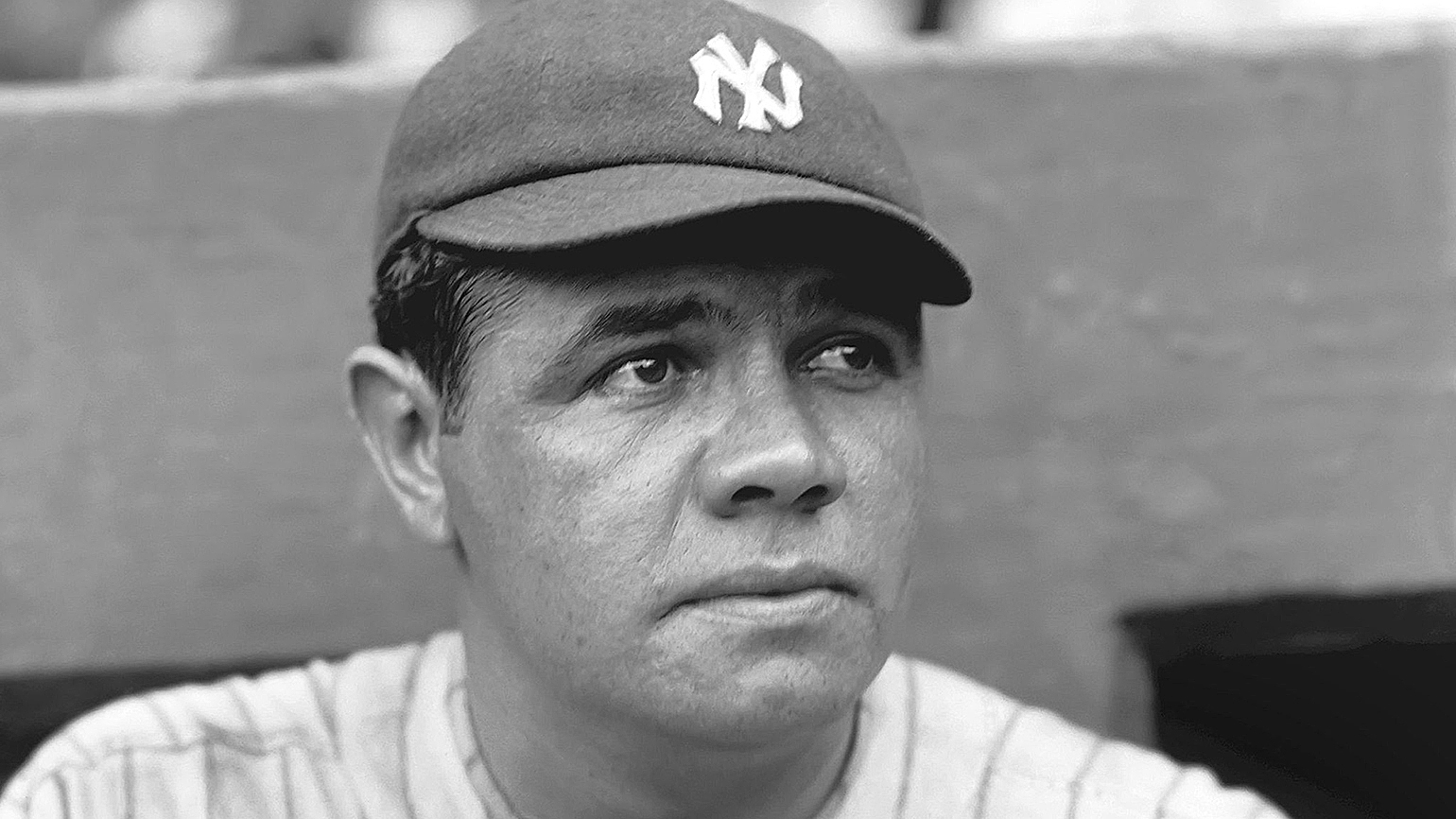
Guideposts Classics: Babe Ruth on the Foundation of Faith

This is Babe Ruth’s last message. It was written with the help of friends Joe L. Brown (of the MGM Studios which produced The Babe Ruth Story), Paul Carey, and Melvyn G. Lowenstein not long before the Babe died. The Guideposts office received it on the fatal day–August 16, 1948.

We bring it to our readers as a notable guidepost to the solution of the serious problem of juvenile delinquency, it is the simple, honest story of a man who relearned what faith meant, and who says so humbly and proudly, knowing it was his most valuable legacy to his fellow man.

The Daily Bible Large Print relaunch with digital free gift in article ad

Bad boy Ruth–that was me.

Don’t get the idea that I’m proud of my harum-scarum youth. I’m not. I simply had a rotten start in life, and it took me a long time to get my bearings.

Looking back to my youth, I honestly don’t think I knew the difference between right and wrong. I spent much of my early boyhood living over my father’s saloon, in Baltimore–and when I wasn’t living over it, I was in it, soaking up the atmosphere. I hardly knew my parents.

St. Mary’s Industrial School in Baltimore, where I was finally taken, has been called an orphanage and a reform school. It was, in fact, a training school for orphans, incorrigibles, delinquents and runaways picked up on the streets of the city.

I was listed as an incorrigible. I guess I was. Perhaps I would always have been but for Brother Matthias, the greatest man I have ever known, and for the religious training I received there which has since been so important to me.

I doubt if any appeal could have straightened me out except a Power over and above man–the appeal of God. Iron-rod discipline couldn’t have done it. Nor all the punishment and reward systems that could have been devised. God had an eye out for me, just as He has for you, and He was pulling for me to make the grade.

As I look back now, I realize that knowledge of God was a big crossroads with me. I got one thing straight (and I wish all kids did)–that God was Boss. He was not only my Boss but Boss of all my bosses.

Up till then, like all bad kids, I hated most of the people who had control over me and could punish me. I began to see that I had a higher Person to reckon with who never changed, whereas my earthly authorities changed from year to year.

Those who bossed me had the same self-battles–they, like me, had to account to God. I also realized that God was not only just, but merciful. He knew we were weak and that we all found it easier to be stinkers than good sons of God, not only as kids but all through our lives.

That clear picture, I’m sure, would be important to any kid who hates a teacher, or resents a person in charge. This picture of my relationship to man and God was what helped relieve me of bitterness and rancor and a desire to get even.

I’ve seen a great number of “he-men” in my baseball career, but never one equal to Brother Matthias. He stood six feet six and weighed 250 pounds. It was all muscle. He could have been successful at anything he wanted to in life–and he chose the church.

It was he who introduced me to baseball. Very early he noticed that I had some natural talent for throwing and catching. He used to back me in a corner of the big yard at St. Mary’s and bunt a ball to me by the hour, correcting the mistakes I made with my hands and feet.

I never forget the first time I saw him hit a ball. The baseball in 1902 was a lump of mush, but Brother Matthias would stand at the end of the yard, throw the ball up with his left hand, and give it a terrific belt with the bat he held in his right hand.

The ball would carry 350 feet, a tremendous knock in those days. I would watch him bug-eyed.

Thanks to Brother Matthias I was able to leave St. Mary’s in 1914 and begin my professional career with the famous Baltimore Orioles. Out on my own … free from the rigid rules of a religious school … boy, did it go to my head. I began really to cut capers.

I strayed from the church, but don’t think I forgot my religious training. I just overlooked it. I prayed often and hard, but like many irrespressible young fellows, the swift tempo of living shoved religion into the background.

So what good was all the hard work and ceaseless interest of the Brothers, people would argue? You can’t make kids religious, they say, because it just won’t take. Send kids to Sunday School and they too often end up hating it and the church.

Don’t you believe it. As far as I’m concerned, and I think as far as most kids go, once religion sinks in, it stays there–deep down. The lads who get religious training, get it where it counts–in the roots. They may fail it, but it never fails them.

When the score is against them, or they get a bum pitch, that unfailing Something inside will be there to draw on.

I’ve seen it with kids. I know from the letters they write me.

The more I think of it, the more important I feel it is to give kids “the works” as far as religion is concerned. They’ll never want to be holy–they’ll act like tough monkeys in contrast, but somewhere inside will be a solid little chapel.

It may get dusty from neglect, but the time will come when the door will be opened with much relief. But the kids can’t take it, if we don’t give it to them.

I’ve been criticized as often as I’ve been praised for my activities with kids on the grounds that what I did was for publicity. Well, criticism doesn’t matter. I never forgot where I came from. Every dirty-faced kid I see is another useful citizen.

No one knew better than I what it meant not to have your own home, a backyard, your own kitchen and ice box. That’s why all through the years, even when the big money was rolling in, I’d never forget St. Mary’s, Brother Matthias and the boys I left behind. I kept going back.

As I look back those moments when I let the kids down–they were my worst. I guess I was so anxious to enjoy life to the fullest that I forgot the rules or ignored them. Once in a while you can get away with it, but not for long. When I broke training, the effects were felt by myself and by the ball team–and even by the fans.

While I drifted away from the church, I did have my own “altar,” a big window of my New York apartment overlooking the city lights. Often I would kneel before that window and say my prayers.

I would feel quite humble then. I’d ask God to help me not make such a big fool of myself and pray that I’d measure up to what He expected of me.

In December, 1946, I was in French Hospital, New York, facing a serious operation. Paul Carey, one of my oldest and closest friends, was by my bed one night.

“They’re going to operate in the morning, Babe,” Paul said. “Don’t you think you ought to put your house in order?”

I didn’t dodge the long, challenging look in his eyes. I knew what he meant. For the first time I realized that death might strike me out. I nodded, and Paul got up, called in a Chaplain, and I made a full confession.

“I’ll return in the morning and give you Holy Communion,” the chaplain said, “But you don’t have to fast.”

“I’ll fast,” I said. I didn’t have even a drop of water.

As I lay in bed that evening I thought to myself what a comforting feeling to be free from fear and worries. I now could simply turn them over to God. Later on, my wife brought in a letter from a little kid in Jersey City.

“Dear Babe”, he wrote, “Everybody in the seventh grade class is pulling and praying for you. I am enclosing a medal which if you wear will make you better. Your pal–Mike Quinlan.

P.S. I know this will be your 61st homer. You’ll hit it.”

I asked them to pin the Miraculous Medal to my pajama coat. I’ve worn the medal constantly ever since. I’ll wear it to my grave.

For more inspiring stories, subscribe to Guideposts magazine.