Embrace God's truth with our new book, The Lies that Bind

The Blessings of Family Time

We just spent some time with a large rodent. Yes, our family just returned home from a week at Disney World. Eighteen of us. In one house. With six children aged six to 20 months. It was so much fun and I ended the week with dozens of new memories to store in my heart.

Friends, life is hectic—and if we don’t watch it, we get caught up in responsibilities and miss the blessings of family time. All my adult children also have busy lives, and we’ve discovered we have to be intentional about making those times together happen. Here are a few things we’ve learned:

  • Someone has to get the ball rolling.
  • Start planning way ahead of time, before schedules get overloaded.
  • Share the responsibilities, but plan the trip together. That’s part of the fun and will provide extra memories and bonding time.

Our Disney trip was special on many levels. There was the excitement of seeing the characters, awesome shows, rides, parades and fireworks. There were oh-so-yummy foods and somebody saying “I want a bite” whenever we bought a croissant, donut or some other delicious treat. There were priceless times of young cousins and adult siblings spending time together.

One moment in particular stuck in my heart while we were at the Festival of the Lion King show. The little ones watched the action with awe as the cast in monkey suits tumbled and somersaulted across the platform.

And I watched the show in front of me, love overwhelming me as I looked at those precious little faces. And, then, as I saw the sweet expressions on the faces of my sons and daughters-in-law, I bit back tears as I watched them watching their children.

So many memories flooded my mind. Wasn’t it just yesterday that Paul and I took our three little boys to Disney World? Wasn’t it just a few years before then that my daddy took me to Orlando to see Mickey and Minnie?

In the midst of all the laughter and acrobatics, I whispered a prayer thanking God for the blessing of family time, for the sweet memories that bind all of us together.

Yes, it’s a lot of work getting ready for a trip like this, and it’s sometimes a sacrifice to come up with the money, but there are so many benefits from trips together as a family.

It’s fun. Family time provides wonderful photos that can be pulled out and enjoyed for years. It makes memories together that only your family will have.

And it provides a unique bonding time that won’t be experienced in any other way. One of my favorite parts of the trip occurred in the mornings when all the grandbabies piled onto my bed to snuggle and talk with me. Moments like that are precious beyond words.

Make time to enjoy the blessings of family. The memories will be like super-glue for all of you, priceless moments that are truly a gift from God.

The Bible’s Most Famous Friendships

Every year, around February 14, I find myself bombarded with mes­sages about soul mates. It pops up everywhere, from TV commercials to social media. And the takeaway is unavoidable: Soul mates are the main reason to celebrate love.

I’ve never really believed in the whole soul mates thing—that there’s one person we’re destined to meet, fall madly in love with and obsess over for all eternity. What I have found are soul connections, friends who just seem to get you on an almost mo­lecular level. Like my friend Sarah.

We met in the seventh grade…and it was dislike at first sight. We were polar opposites. She was open, ear­nest and outgoing. I was guarded, rational and reserved. And yet, somehow, we became the best of friends. Nowadays, she lives in California and I live in New York. But we’re so in tune with each other that I still feel connected to her, even thousands of miles apart. When I’m blue, she’ll just happen to call. When she goes through a hard time, I feel the pain as if it were my own. Our link makes me wonder: Could it be we’re not put on this earth simply to find “the one,” but rather several people we’re divinely connected to? Not soul mates but soul friends?

Curious, I took my questions to Rabbi Deborah Bravo, who’s written about spirituality and friendship. Ac­cording to Rabbi Bravo, God doesn’t just want us to have friends. God made us specifically to be in relationships with other human beings.

“From the very beginning, in the creation story, we learn that we are designed to be in partnership,” she says. “The root of the Hebrew word for friendship is actually chaver, which means ‘to connect.’ And friendship is all about connection.”

There’s a mystical benefit to friendship, Rabbi Bravo says. It aids our spiritual development.

“An ancient Rabbinic text advises people to ‘acquire yourself a companion,’” Rabbi Bravo says. “God created us with the purpose of interacting with others. We need these relationships to lift ourselves to a higher plane spiritually.”

There are several notable friend­ships in the New Testament, from Jesus and Lazarus to Paul and Tim­othy. Scripture also says that David and Jonathan were so close, it was as if their souls were knit together. Other religious traditions stress the spiritual importance of friendship. In the Muslim tradition, a good friend is someone “whose appearance reminds you of God, and whose speech increases you in knowl­edge, and whose actions remind you of the hereafter.”

Friendship isn’t just good for the soul, though. It’s good for your health. Dr. William Chopik, an assis­tant professor of psychology at Michigan State University, recently published a study that showed friends can be more important to physical health and longevity than family. And, in 2005, research from Flinders University found that people with a large network of friends lived 22 percent longer than those with­out such a network.

There’s even a correlation between friendship and increased pain toler­ance, according to the science journal Nature. When faced with a challenging task, study participants with a strong group of friends released more endorphins, those chemicals in the brain that make you happy and reduce pain.

Friend intuition also appears to be very much a thing. In 2013, re­searchers at the University of Virgin­ia found that the bond between friends can be so strong that when one friend is threatened, the other’s brain reacts as if under duress. It’s true. When Sarah went through a particularly rough breakup, I felt my anxiety mounting even though ev­erything else in my life was fine.

But what about those aspects of friendship that can’t necessarily be quantified? Can friends really be like platonic soul mates?

Yes, says Stephen Cope, a psy­chotherapist and author of Soul Friends: The Transforming Power of Deep Human Connection. Cope be­came interested in the idea of friend­ship on a more spiritual plane eight years ago. He’d just moved to a new city and didn’t know a soul. He met a man named Brian in a meditation class. Although they had nothing in common, the two quickly became friends. Their connection is what Cope calls a soul friendship.

“A soul friend becomes critical to determining who we become as a person,” Cope says. “They’re people we form deep connections with. Connections that transform us.”

According to Cope, these types of friendships can take a few key forms. Twinship, for instance, occurs when we recognize an essential likeness in another and bond over shared similarities. Mystical friend­ships happen when we feel an almost otherworldly connection to someone. Meanwhile, mirrors are those people who see us as we truly are and reflect essential truths about our­selves back to us.

“Soul friends evoke, sustain, affirm and unify us,” Cope says. “We rec­ognize something in them; they rec­ognize something in us. With soul mates, we’d call it chemistry. There’s something similar, in an unromantic sense, going on with soul friends.”

Cope’s categories of soul friends confirmed a hunch I’d had for some time. The notion that marriage isn’t the only important intimate relation­ship that adults have.

“Soul friends call us forth,” Cope says. “They draw out the person in us that we want to be. It’s almost as if an invisible bond of energy connects us with these people.”

That’s how I felt about Sarah. We called forth the best versions of each other. That unique tie called to mind something Rabbi Bravo had told me about—the Judaic concept of bash­ert, which means “destiny” or some­thing that comes directly from God. The Yiddish word is most commonly used to describe soul mates, but that’s actually an in­complete definition, Rabbi Bravo says.

“The concept of a person’s bashert is really about the people you’re des­tined to be with in relationships, typically a romantic one,” she says. “But it can also describe what is ‘meant to be’ in life. People can have many bashert encounters, relationships or friendships.”

I thought about the many times I’ve felt inexplicably led or connected to the friends in my life. Like when my friend Bekah and I showed up to an event wearing the same exact outfit. Or the night my roommate and I stayed up talking until 2 a.m., even though we both had early mornings. Or the letter from Sarah that arrived at the very moment I was missing home the most. For the first time, I recognized those friendships for what they really were. Bashert. Destiny.

Read More: The Bible’s Most Famous Friendships

The Best Christmas Present Ever

I was sitting in the kitchen, counting heads for Christmas Eve dinner. What broke my heart was thinking about the one person who wouldn’t be there. My oldest brother, Tim.

We’d had a disagreement, a silly misunderstanding. I wasn’t even sure what had started it, but for three years running we hadn’t spoken to each other, hadn’t sent so much as an e-mail. How could I spend another Christmas Eve without Tim?

He was my protector, my idol, my best friend. There were four of us kids, two boys, two girls, only five years separating the old­est from the youngest. We almost looked like two sets of twins.

In one of Dad’s old home movies Mom is bringing in her lat­est and last bundle from the hospital—me. Everybody squints at the glare of the 16 millimeter camera’s light, but nobody seems prouder to hold me than big brother Tim.

Other boys might have scorned a little sister’s company, but Tim let me tag along everywhere—to the schoolyard, to the pool on the Navy base where our father was stationed, to the hobby shop where Tim bought slot cars.

When he did experiments with his chemistry set, I was his assistant, watching the beakers and test tubes. Catch­ing fireflies in the yard, he helped me put mine in a jar to make a lamp.

On Christmas morning we huddled at the top of the stairs, playing jacks and pick-up sticks, waiting for the light on Dad’s camera to warm up. Then Tim led the four of us in a dash down the steps to the pres­ents that Santa had brought.

Our father was a chief petty officer and could be deployed for months at a time. One special holiday we went to a Christmas party for the Navy kids on his ship. Dressed in our Sunday best, we went up the long ramp and crossed a scary plank to the deck.

The ship was festooned in colored lights. A band played carols. We ate cookies, played games, danced the hokey-pokey and did the bunny hop. Every child sat on Santa’s lap to say what he or she wanted.

When I was in sixth grade and Dad was deployed I missed him so much I wrote a long letter saying that when he came home I expected him to retire from the Navy. That year I’d asked Santa for a three-speed bike, but Christmas morning I was so upset, miss­ing Dad and his camera, that I hardly no­ticed the missing bike.

I opened my presents, then sat beneath the tree and cried. “Judy,” Tim said, leading me by the hand, “come to the kitchen.” I couldn’t believe my eyes. There was my three-speed bike. Tim was raising the kickstand and rolling it toward me. I was sure that Tim had as much to do with me getting that bike as Santa himself did.

Dad did retire from the Navy, and took a job in the civil service. Because he could get paid double on Christmas Day, we moved the family celebration to Christmas Eve. When he retired from that job, we only had him for another two years.

His death was a terrible loss, one I’d barely recovered from, and dealing with the loss of Tim’s compan­ionship was like mourning all over again.

I looked once more at the list for Christmas Eve. Tim’s grown daughter Katie was coming, as usual, and his son T.J. They hadn’t gotten caught up in our silent war. Why couldn’t Tim and I put an end to it? We were family, after all.

I’d tried writing a letter, to no avail. I’d prayed over and over, God, I forgive Tim. Help him forgive me. We both love each other, you know that.

Tim and his wife, Janea, had provided moral support when my marriage failed. Every Friday I joined them at their house for “pizza and video” nights. Then, when I remarried, it was because Tim had intro­duced me to the perfect man.

Tim was our daughter’s godfather. His and Janea’s ab­sence from our home and from our table just couldn’t go on any longer.

Sitting in the kitchen, I prayed for the umpteenth time, Lord, let us all be together this Christmas. Just like old times.

I was startled when the phone rang. It was my niece Katie, a lilt in her voice.

“I was just thinking about you,” I said. “Counting noses and thinking about who will be here.” She must have known what was on my mind, but I wasn’t going to bring it up. I didn’t want to put her in an awkward position. Things were awkward enough.

“You won’t believe it, Aunt Judy! I just got off the phone with Dad. He wanted to know what time to go to your house for Christmas Eve!”

I put down the phone in wonder. Tim was coming!

The adults in our family didn’t normally exchange Christmas gifts, but this was different. I wanted to find some way to show Tim that my feelings hadn’t changed one jot since we were kids.

I dashed to Mom’s cedar chest. I rum­maged through Dad’s old things. Finally I found it. A framed black-and-white picture of the four of us kids at the Christmas party on Dad’s ship.

Would Tim remember how afraid I was to sit on Santa’s lap and when we crossed the plank, the water visible below us between the cracks? Would he re­member dancing the hokey-pokey with me and doing the bunny hop?

I wrapped the picture up and put it un­der the tree. I could hardly wait to see Tim’s face when he opened it.

Christmas Eve was just like old times. No, it was better. What was lost was found again. Tim and I hugged each other the minute he walked in the door. Then we seemed to pick up just where we had left off. Tim was surprised when I handed him the present.

“Hey, you’re not supposed to do that, sis,” he said, laughing. And then he held out a wrapped gift. It had my name on it.

We stared at each other for a moment. It was as though we were both trying to say, Forgive me. Life’s too short. I can’t do it without you.

“You go first,” I said. All my images of him over the years scrolled through my mind’s eye. Did he know how much he figured in every key scene of my child­hood? Did he still remember the bike and the firefly lamp and holding my hand on the ship?

He took off the tissue paper and looked at the old photo in its frame, then hung his head. Tears were in his eyes.

“I’ll go ahead,” I said, my heart beating wildly. I untied the ribbon, lifted the top off the box, dug through the tissue paper and took out an old photo, exactly like the one I’d just given Tim. Now I was crying too. “I can’t believe we both thought of the same thing.”

I’ve had other Christmas surprises since then but nothing quite like that. The best Christmas present I ever received was having my brother back.

The Apple Pie That Almost Ruined Thanksgiving

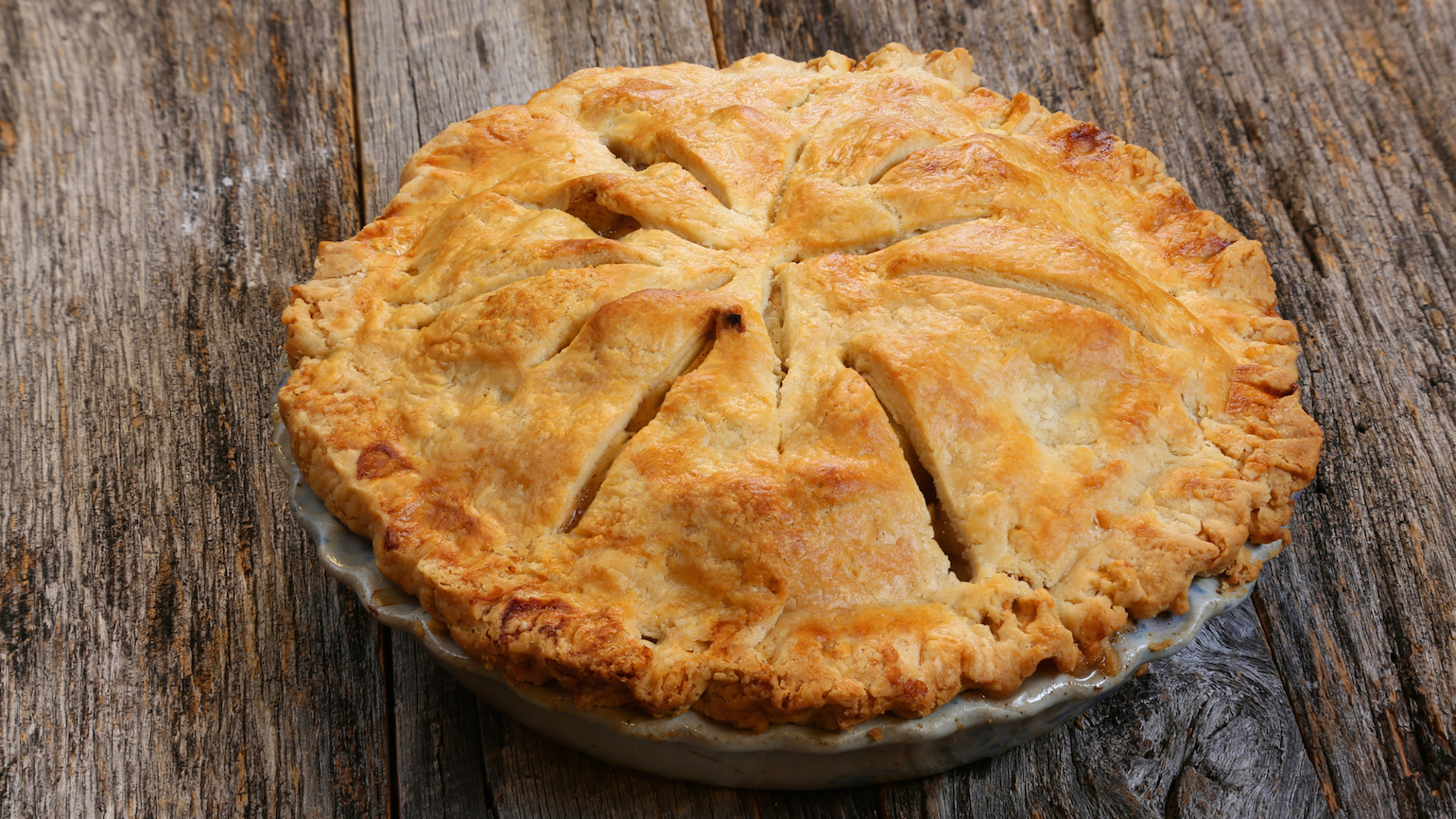
Every November, as Thanksgiving Day approaches, one memory comes to mind. One that always makes me smile. The time my cousin Johnny brought an apple pie to Thanksgiving.

First, some backstory. At my big Turkish family’s holiday get-togethers, baklava is the norm at the dessert table. There’s rolled baklava, square-shaped baklava, diamond-shaped baklava, haystack-esq baklava, walnut-filled baklava, pistachio-filled baklava, chocolate-dipped baklava…well, you get the idea.

Read More: The Great Baklava Challenge

One year, though, back when I was in high school, my 20-something cousin Johnny decided to change things up a bit. He showed up at my parents’ house for Thanksgiving with two items that had never before graced our table–apple pie and a can of whipped cream.

Those two items caused one of the biggest controversies in Aydin family history. It was even more dramatic than the time my mom “forgot” to make baklava for Christmas. I distinctly remember my mom and aunts discussing the incident in the kitchen in hushed tones.

“Apple pie?” one of my aunts said. “What are we supposed to do with this?”

I can still recall my mom’s bewildered expression at it all. If there’s one thing is this world my mom distrusts it’s fruit-filled desserts, a no-no in our culture’s cuisine. “Why would you bake fruits into a dessert when you can eat them fresh?” she often says. (For real, she says that about once every two months!)

The whipped cream only made things worse. They would’ve been less shocked if Johnny had showed up to dinner dressed as a turkey. Still, my mom didn’t want to hurt Johnny’s feelings. In a true act of love, she put the pie out on the dining room table, accompanied by the whipped cream. It went mostly untouched.

Read More: Finding the Lord’s Words Halfway Around the World

Nowadays, things are different. We actually have pie at Thanksgiving–my sister Kristin regularly makes pecan pie (the fear of fruit-filled sweets persists, but desserts topped with fruits or nuts have been given the okay). We still laugh about the drama caused by Johnny’s apple pie. I’ll never forget it. It wasn’t just about the pie for me.

Growing up, I sometimes felt like an outsider because of my culture. That Thanksgiving, though, was one of the first times I realized that my family’s peculiarities were actually a good thing (even if we tended to overreact about pie!). It’s what made us, well, us. And one of the many reasons I’m so crazy about them.

What about you? Which Thanksgiving sticks out as your most memorable?

The American Preacher at the Royal Wedding

Who to get to preach at your wedding? Probably whoever is performing the ceremony. But what if you’re Prince Harry and Meghan Markle, and you’ve got the world at your feet? (Not to mention millions clamoring for any gossip about a royal wedding.)

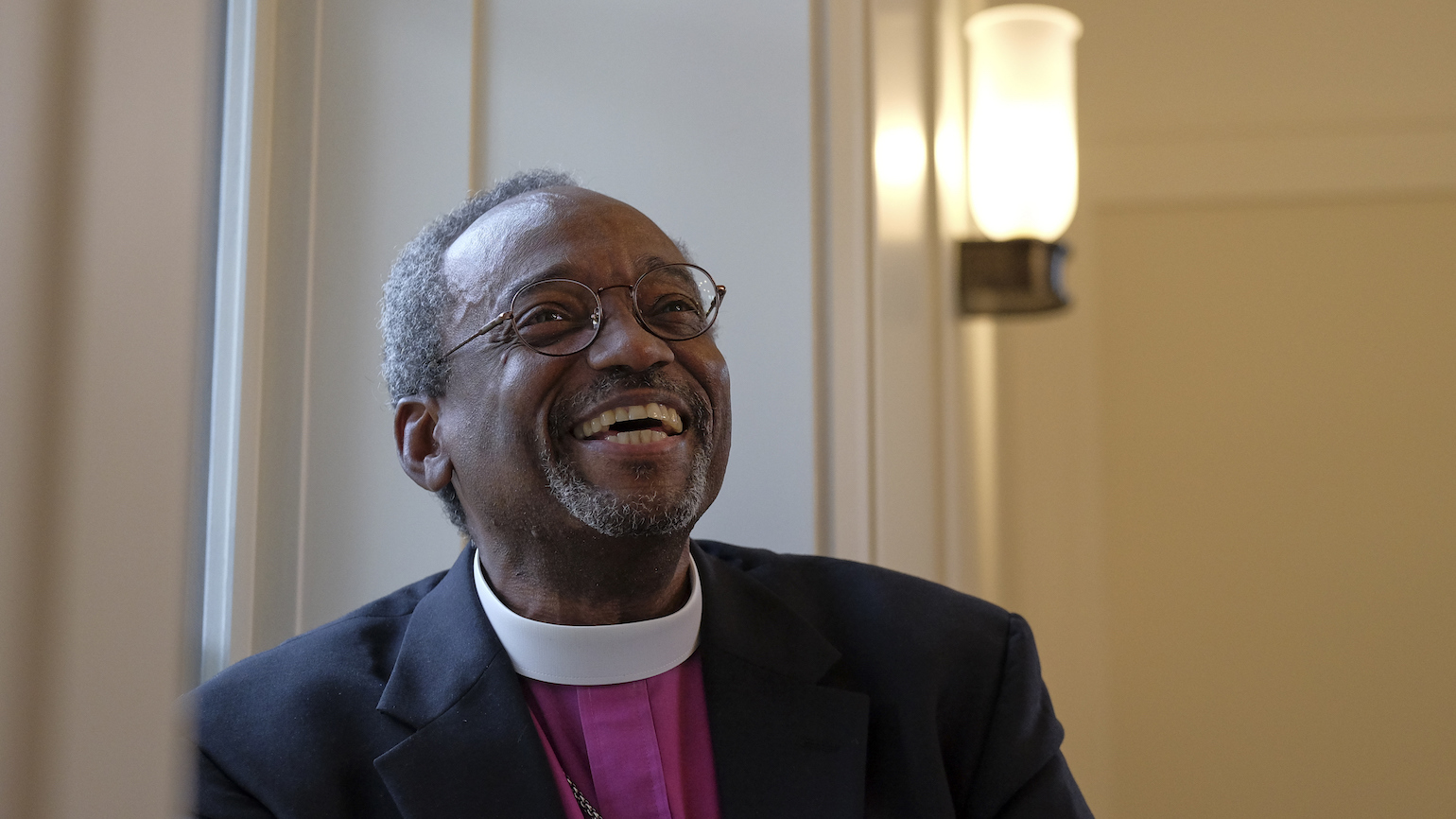
In an inspired choice, they’ve asked an American (like Meghan), the head of the Episcopal Church, Bishop Michael Curry.

No, he won’t be doing the ceremony. He’ll be doing something even more important. Reminding the wedded couple what true love is about.

Bishop Curry hinted at his sermon topic in a statement. “The love that has brought and will bind Prince Harry and Ms. Meghan Markle together has its source and origin in God,” he said, “and is the key to life and happiness.”

Usually the minister to speak at such a ceremony would be an English prelate. Not with this couple. Although the Episcopal Church is part of the Anglican Communion, headed by the Archbishop of Canterbury, it is decidedly American, owing its origins to those post-Revolutionary days.

Michael Curry is the first African-American leader of the denomination, elected in 2015. He is a thrilling preacher and charismatic leader. “Someone with a great gift for sharing the good news of Jesus Christ” is how Justin Welby, the current Archbishop of Canterbury put it.

What I love about Michael Curry is that he’s a truth teller. He doesn’t just stand on ceremony, even when he’s decked out in the heavy brocaded robes of his position. Take this, a quote from his book Crazy Christians: A Call to Follow Jesus:

“Being a Christian is not essentially about joining a church or being a nice person, but about following in the footsteps of Jesus, taking his teaching seriously, letting his Spirit take the lead in our lives, and in so doing helping to change the world from our nightmare into God’s dream.”

I’ll be tuning in to listen to inspired preaching like that. Even if it is 5 a.m. on a Saturday.

Watch Bishop Curry’s sermon at the royal wedding:

Thankful for My Friend

Let the word of Christ dwell in you richly, teaching and admonishing one another in all wisdom, singing psalms and hymns and spiritual songs, with thankfulness in your hearts to God. (Colossians 3:16)

“Where do I go?” Samuel asks. His swim goggles are strapped to his forehead and his green eyes are anxious.

“I’m not sure,” I say.

We’re at Samuel’s debut swim meet. He’s our third son but the first to swim with a team. Lonny, the brothers and I have come to cheer for Sam, but we’re all confused. The indoor pool is fringed with a mass of people carrying bags and folding chairs. Swimmers weave through the crowd, but we don’t see anyone from Sam’s club. A couple of teams are in the water for practice strokes, and I wonder if Sam has missed his warm-up time.

My stress is heavy as the air.

That’s when I feel a tug on my handbag.

I turn around, expecting that one of the little guys has to use the restroom, but instead I look into the sweet face of my friend.

“Karen,” I say. “You came!”

Karen smiles and I’m immediately comforted by the kindness in her warm, brown eyes.

“Yes,” she says. “These swim meets can be tough at first. I came to help.” She rubs Samuel’s shoulder. “Besides, I want to cheer for Sam.”

Karen’s now-grown children were swimmers in high school. She knows the ropes and this is invaluable to me. She directs Samuel to the locker room, where he finds his coach. She introduces us to something called a heat sheet, which holds the information we need for this important day. She even helps us find a few feet of space so that we can open our folding chairs. We settle into our seats just as Samuel dives into the water, taking practice time with his team.

I’m grateful for this help today, but when I think about it, navigating a swim meet isn’t the only thing Karen teaches me. I learn from her, daily, in the spiritual way, too. She’s been walking with the Lord just a little longer than I have. She holds wisdom and knowledge and life experience that I have yet to attain. And she’s generous to share. Watching her apply God’s Word to her life, gleaning and gathering behind her, makes my relationship with the Lord more personal and rich and deep.

I lean over and give Karen a hug. We sit for a few minutes and she visits with Lonny and the boys. Soon I look up and Samuel is sloshing our way. The meet is about to begin.

“Thank you,” I say. “I’m glad you’re here.”

“You’re welcome,” she says. And she smiles.

I think she understands that I’m not only speaking about this swim meet.

Lord, thank you for friends who help me to walk in your truth. Let me be that sort of friend to someone, too. Amen.

Teen Guys versus Teen Girls

When people find out that I’m a mom of four grown sons, three grandsons and one husband, they’re puzzled at the fact that I’m surrounded by guys but I have a ministry for teen girls and women.

I’m always asked, “Why do you focus on teen girls and not teen guys?” My answer is simple, because I was once a teen girl and understand the struggles and issues that girls and women face.

Teen guys and men on the other hand, well, are just different. They think differently. They respond differently. They act differently. Or do they?

I’ll never forget the evening when my son had a bunch of teen guys at our home for a sleepover. This meant an all-nighter of playing videos, emptying the pantry of every last ounce of food, and a pile of stinky sneakers that required you to hold your breath when you entered the family room.

Everything was going great until I heard the front door open at 2 a.m. I made a mad dash to the door and on the porch step sat one of the boys.

He was upset at his friends for teasing him and waiting for his dad to pick him up. He was going home. After I received an earful from his father about the teasing of his son, the rest of the teen guys upstairs received an earful from one disappointed mother. The next day, they were all friends again.

Teen guys and teen girls are different, but they do have similarities.

1) Teen guys need their friends. It wasn’t unusual for my son to hang out with his group of friends every weekend. If they weren’t at our home, they were hanging out at another parent’s home.

Be the parent that invites all the friends over. You may go through a couple of gallons of milk and an empty cupboard by the end of the evening, but this gives you the opportunity to know who your teen son’s friends are and what they are doing.

2) Teen guys have feelings. We raise our sons to be tough and not to cry over hurt feelings, but they are sensitive too. Talk to them about their feelings and their struggles. They need you even when they are tough.

3) Show affection. Take time to hug your son. Guys love attention, and they need to know they are loved. My sons are all grown now and out on their own but every time they visit, I still give them hugs, kisses and a few head rubs.

Be strong and courageous. Do not fear or be in dread of them, for it is the Lord your God who goes with you. He will not leave you or forsake you. (Deuteronomy 31:6, ESV)

Teaching Our Children Important Lessons

Years ago when my son, Jeremy was 3, he looked up at me with excitement as we walked through the parking lot to our car. “Look, Mama!” He was clutching a tube of lip balm in his little hand. I knew I hadn’t given it to him and that I didn’t have any in my purse, so I asked, “Where did you get that?” He pointed behind him to the pharmacy we’d just exited. “I picked it up in there.” Yeah, in there where we hadn’t paid for it.

We walked on to the car, but instead of putting Jeremy in his car seat in the back, I sat him in the front seat next to me without starting the motor, so the two of us could talk. I had a gazillion things to do that day, but taking advantage of this moment to teach character to my young son had just moved to the top of my to-do list.

I explained to Jeremy that we couldn’t just take things from stores without paying for them. Tears welled in his eyes when he realized he’d done wrong. I looked at my precious boy and I said, “Here’s what we have to do. We have to take that back in the store. Mama’s going to ask for the manager, and I want you to tell him that you took it, and you’re sorry.”

We walked back to the store, and I asked for the manager. “My son has something to tell you,” I told him.

Jeremy held out the lip balm and said, “I took this, and I’m sorry.” The manager handled it beautifully, and a little boy learned an important lesson.

My son is now 40, with children of his own, but he still clearly remembers that day. And, now, as I watch him stand in the pulpit preaching the gospel, I’m so grateful that those character traits I tried to teach him took root in his heart and life, and that he’s now teaching them to my beloved grandchildren.

Family is the cornerstone of our society. We can impact our world by instilling character in our children—and by being examples of men and women of character.

Dear Lord, remind me that little eyes are watching and little ears are listening as I go about my day. Help me to be a person with stellar character—for them, and even more importantly, for you. Help me to instill those traits in these precious little ones you’ve loaned to me. Amen. 

Teaching Honesty to a Teen

One of my kids recently told another adult an elaborate lie. It was a lie born in an instant, in the hope of avoiding the natural consequences of following through on a commitment. I only found out about it because the other adult looped me into her response, so I would know how she was addressing what she (erroneously) believed was the problem.

I reminded myself before I headed in to talk to my teen that we are all a work in progress. Kids lie. One of the roles of parents is to teach them that truth is a better path.

I steeled myself for the confrontation, trying hard to speak simply, without anger. I was quite angry, but my feelings took a back seat because I needed my kid to respond to my words instead of my feelings.

The gist of my words was that the teen would need to correct the lie and own up to the true situation. That didn’t fly. “Trust is only broken if the other person knows about it!” my teen snarled.

It took superhuman effort to walk away; this was not a belief I had taught my children.

Day one ended in a standoff: my teen refused to apologize, and I refused to be complicit in a lie. Sending up a quick prayer to the Holy Spirit to give me the words I needed to say, I made it clear my child’s choice was how the truth would be revealed, not whether it would come out or not. We were not going to hide in lies.

Day two dawned, and my teen headed pseudo-cheerfully off to school. I grieved and prayed the Lord would reveal to her a way out. This particular kid goes into a shame spiral when called out, and we’ve had self-harm and even a suicide attempt in the past in similar situations. It’s truly hard to stand firm when the possibility of danger exists. But that is exactly when we need to stand firm in what is right and true.

Around 4 p.m. I received a text at work from my teen, who said, “I want to apologize but don’t know how.”

Hallelujah! Through the safe distance of texting, where there is a merciful pause built in so I could pray before hitting send, I coached my kid. The tutorial went well. I even got a thank-you for helping. This was both mindboggling and encouraging.

“I’m very proud of you for doing the right thing,” I texted, once the email had been sent (and I’d been copied, to ensure honesty), “It’s hard sometimes to take the better path. But being honest is, in the long run much easier. Humility is way easier than shame.”

‘It is,” my teen replied, “But I don’t know humility well. I am learning.”

Thank you, Lord.

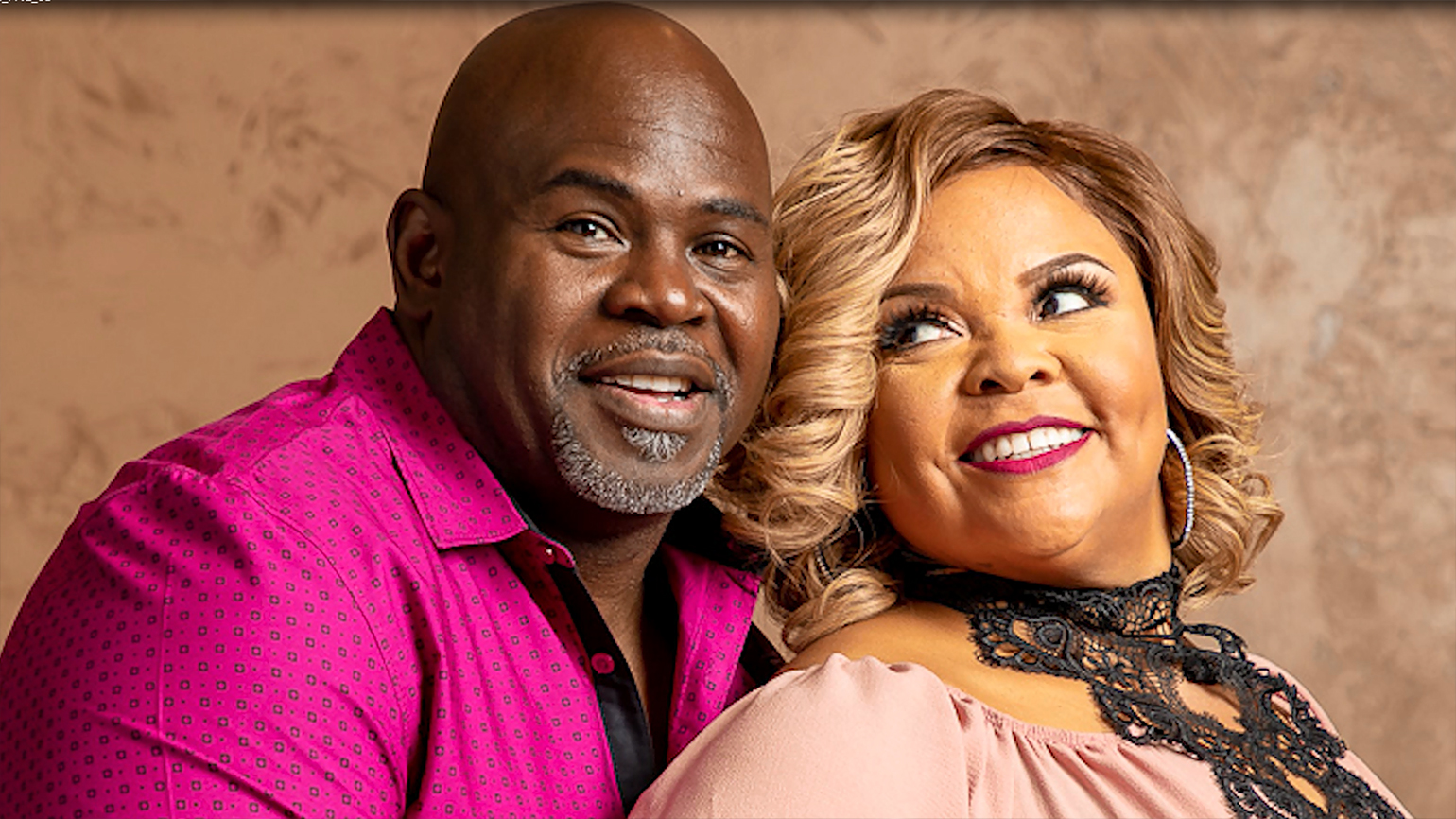
Tamela Mann’s 5 Tips for a Successful Marriage

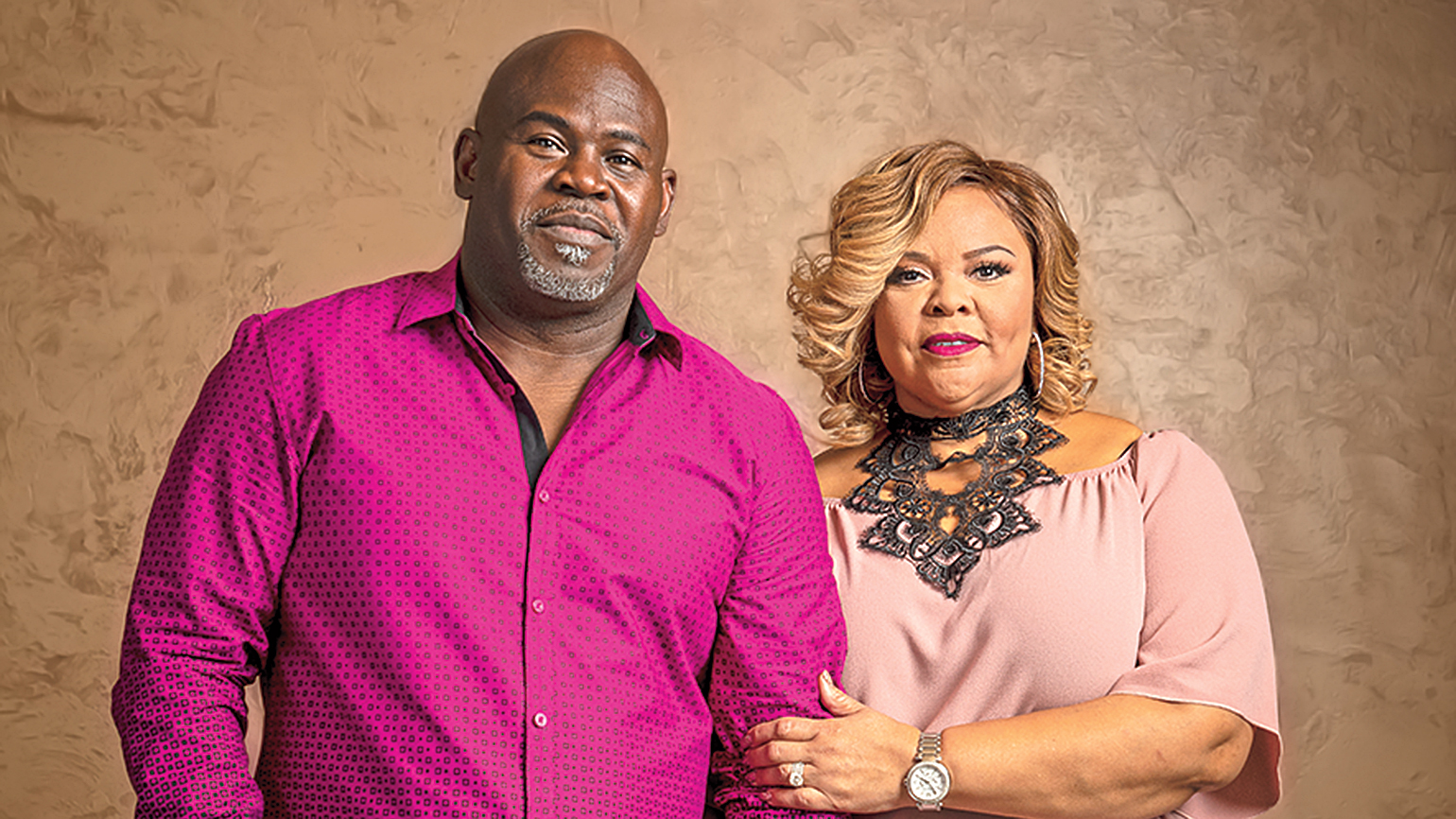
All our lives as a couple—David and I have been married 30-plus years—we’d planned for a family. We planned to buy our first home, with room for all our kids. We planned every birthday and graduation together. But we didn’t plan for the day our kids wouldn’t live with us anymore. We never planned to be empty nesters.

With our careers as singers and actors, we’re on the road a lot (you might have seen us in a Tyler Perry movie or two). Then one day we came home to an empty house. Peace and quiet. It was eerie. I didn’t know how to live in a house without noise.

Both David and I grew up in big families. From almost the moment we said “I do,” we had children around. There was my niece Sonya, whom we took in when her mom died, and David’s daughter Porcia from a previous relationship. Next came Tiffany, the greatest surprise our family has ever received. (I’ll get to that later.) Soon I had David Jr., followed by Tia. Our lives were noisy and busy. If the babies weren’t crying, the television was blasting. If the phone wasn’t ringing, then somebody was burning something in the kitchen. Then we looked up and our kids had grown and gone.

Admittedly we had to hasten the two younger girls along. Every strong family needs to have rules, and one rule I was strict about was that the kids had to keep their rooms clean. Tiffany and Tia, well into their twenties, found that impossible. I told them once; I told them twice. Finally I laid down the law: “Girls, if I walk back in this house and your rooms are a mess, you will be asked to leave.”

They didn’t believe me. The next time I saw their rooms looking like an explosion of clothes, makeup and hair products, I was done. I asked David to tape a notice to their doors: “Evicted effective today. Please vacate the premises immediately.” That did it. Tiffany and Tia left. Now they have their own apartments.

With some marriages, couples get so caught up taking care of the kids that when they leave, the marriage leaves with them. Not David and me. Sure, when our nest first emptied, it felt strange for both of us. David asked, “Who are we going to take care of now?” My answer was, “We’re going to take care of each other.” Because our marriage has always been our priority. Before kids and after kids. Like I said, it comes down to following a few rules.

Teamwork makes the dream work. I learned the meaning behind that motto one rainy night in Arlington, Texas, 26 years ago. We were driving back from a visit with David’s mother, and it was pouring. Our windshield wipers weren’t working, and we didn’t have money to fix them. David was driving and couldn’t see a thing. He pulled over.

“Grab two clothes hangers out of the trunk,” I told him. He dashed out into the downpour and brought me two hangers. I untwisted the wires. I handed one to David and took one for myself. He hooked his to the wiper on the driver’s side, and I hooked mine to the wiper on the passenger’s side. Driving slowly, David pulled his wiper to the left while I pushed mine to the left. Then I pulled to the right, and he pushed to the right. We had to catch our breath at each traffic light, but we made it home, our arms sopping wet.

These days we sometimes have to accept performing engagements apart from each other. Most times we travel together, work together, prepare together. Pray together. If we start as a team, we finish as a team.

LOL together. One summer day early in our marriage, when I was pregnant with our son, we were driving and David stopped at a 7-Eleven to get something cold to drink. He knew I liked fruity flavors, but he didn’t actually know my favorite drink. So he came out with two Big Gulps, one for each of us.

I took one sip and almost spit it out. “What is this?” I asked.

“It’s got a little bit of everything.”

“That’s not what I wanted,” I said. Not very gracious, but I was hot, pregnant and thirsty. The next thing I knew, David took my drink and threw it out the window. So I took his drink and threw it out the window.

The only thing was, my window was still rolled up. The cup bounced off the glass and the Big Gulp splashed all over my face, my hair, my clothes.

We had two choices: Keep fighting or start laughing. We laughed till the tears rolled down our faces. And we haven’t stopped laughing. Be playful in your marriage. Have fun. There’s always something to laugh about.

Love keeps no record of wrongdoing. I can’t speak for all ladies, but many of us are guilty of quietly tabulating how many times our husbands didn’t keep their word. Sometimes we even fall into the trap of guilting our husbands for the things we said we’d forgiven them for. But I’ve learned to stop keeping score. If anything, I would rather keep score of all the good things David does instead of rehashing the bad ones. If God can forgive all the wrongs we’ve done to him, surely I can do the same for my husband.

One winter night when David Jr. was only a few months old, we came home and flipped on the lights. Nothing happened. David acted as if a power outage had hit the neighborhood. He couldn’t admit that he hadn’t paid the electric bill. I could have ranted. But I knew David was already feeling defeated. Why make matters worse? So I said, “We can go to your mom’s or just go to bed. We don’t need lights to have a good night’s sleep.” I wrapped my arms around him and said, “We’ll fix it tomorrow.”

When we got married, I vowed to be with David through it all, thick and thin, and support him during his low points as well as high points. He vowed to do the same for me. Thirty years later, David makes sure we have plenty of lights in the house—way too many, if you ask me, but I know he wants me to feel taken care of.

Trust in God and each other. There’s a great gospel song that says, “Turn your pressure into praise!” That’s what David and I try to do in our family—let pain push us into purpose. One of the hardest moments in our marriage came when we faced some unexpected news. It turned out, he’d had another daughter besides Porcia before we married, one he’d known nothing about. Tiffany was five years old when we found out about her. David and I trusted that God’s purpose was for us to be together and to parent the children he brought us, so we embraced Tiffany fully.

We are as blended a family as you can get. But you will never hear any of us use the word step to describe our relationships. Right from the start, I wanted to give Tiffany all the love she deserved. She hadn’t asked to be put in this position. She was innocent. Funny, talented and beautiful.

Not long ago, the two of us were in an elevator and a lady said to me, “Your daughter looks just like you.” Tiffany and I got a chuckle out of that. We don’t look anything alike, but what the woman saw was the real connection between us. The love in our eyes. The bond that couldn’t be broken. I think that reflects the bond of love and trust between David and me as her parents.

Learn to know your spouse, and let your spouse know you. Don’t stop learning about each other once the kids are gone. David knows me through and through. He knows what pleases me and what gets on my nerves. He knows all my quirks and exactly what I love to eat and drink (no more Big Gulps!).

Two years ago, we were at the Grammy Awards. I’d been nominated for best gospel song/performance. I was decked out in a designer dress and heels. People kept asking, “What are you going to say if you win?” I didn’t know. I didn’t think I’d win anyway. I sat way in the back of the auditorium, wondering.

At last my category came up. I heard the names of the nominees announced and closed my eyes. I was so busy thanking God for what the other nominees had brought to gospel, I almost didn’t hear my name called. I had to jog all the way to the front. David was supposed to be capturing the moment with his phone, but he was crying too hard. I started my speech at the bottom of the steps to the stage, trying to hold back my own tears and not fall in my high heels. I kept saying, “Thank you, Lord. Hallelujah.”

At the end of the night, I said to David, “I want to go to IHOP.” That’s right. International House of Pancakes. All I wanted was pancakes. And that’s what David gave me, even though he would’ve liked to put my name in lights.

Pouring syrup on that stack of pancakes, I was happier than a kid on Christmas morning. Because of David, who knows the importance of celebrating me the way I want to be celebrated, who knows everything about me, good and bad, faults and foibles. For the gift of my husband, I’m still saying, “Thank you, Lord. Hallelujah.”

For more inspiring stories, subscribe to Guideposts magazine.

Tamela and David Mann: 30 Years of Love and Laughter

Tamela Mann: Hello Guideposts. I’m Tamela Mann. I’m a Christian artist, gospel artist. I have a Grammy award, Dove awards. Most of all, I’m a servant. I’m a grandmother, a wife, mother.

David Mann: Hello Guideposts. And I’m David Mann, comedian, actor, producer, director, singer—most of all, husband, father, grandfather. We’re going to take you on our 30-year journey, the ups, the downs, the good, the bad, the ugly, and everything in between.

TM: When we first met, actually, we were teenagers. We were in high school.

DM: 19, young and tender.

TM: My classmate had a class with David and introduced us, wanted me to come sing for them because he was singing in a group. We kind of start running into each other. And then, eventually, it wasn’t long after I started singing with him and the guys.

DM: But, you know, that started our journey of friendship, and which our whole relationship and our whole foundation of everything that we are as a couple is based on our friendship.

TM: Yes.

DM: And the reason that that was so important for us is because that base helped us get through a lot of the ups and downs in our marriage. And I always tell—as we were writing the book, I told her, “If we hadn’t been friends, we probably wouldn’t have…”

TM: You don’t think we would have made it?

DM: I don’t think we would have been together. We’ve learned to laugh at some of the dumb stuff, as I would call it. I mean, some stuff is just really not worth it, especially we talk about the art of arguing in the book is we stick with the issue. That there’s times when you can get going with an argument, and it just becomes—you’re arguing about one thing, and next thing you know, it’s about 10 different things. And those are rules that we set in our marriage like, look, let’s just stick with the issue.

TM: Right.

DM: And know that there’s some unresolved stuff. We’ll get to those later. But right now in the heat of t this argument, we have to stick with this issues.

TM: It’s not that you’re just arguing, but when you do have a disagreement, you want to get an understanding about what it is that maybe is causing a problem. Maybe I’m coming at you the wrong way and not saying it. Because a lot of times, it’s not…

DM: You would never come at me the wrong way. [chuckles]

TM: It’s probably not what we’re saying, but it’s how we’re saying it to each other.

DM: But our faith and our foundation is what has gotten us through, like, everything in life.

TM: We pray together, but not on a daily basis. I usually say a daily prayer where I’m just…

DM: Or a daily devotional.

TM: Especially, like, work or whatever we’re doing, we always ask the Lord if that’s our steps that we need to be taking, if our steps are being ordered by him, if this is the…

DM: Place that we need to be.

TM: Or business that we need to engage in or the personal we need to work with. It’s like the Lord is always in everything.

DM: So we have a full 30 years of…

TM: Our journey.

DM: Love, life, laughter, family, our blended family. And we wanted to put it in a book. So we wrote the book Us Against the World.

TM: Us Against the World: Our Secrets to Love, Marriage, and Family. It’s all about families staying together and no matter what, not quit and give up on each other. That’s our goal is to reach and to help and encourage other families. That’s what it’s all about.

It’s not about fame and fortune for us, but for other people to be just as happy as we are in our relationship with theirs and their families.

I finally got David in the studio to sing with me after all these years of singing with us together as a couple. And it was a lot of fun. But these songs are talking about each other and our journey, our love for each other. And again, just nice, good, clean love music.

Our single now is entitled Good Love, and it’s talking about that you have to communicate and listen to one another.

DM: And sometimes, we want to—oh, you wanted to sing.

TM: You want to sing something?

DM: Go.

[singing together) Good love, good love, sometimes we get stuck on our own outlook. Good love, to have it this way you must listen, communicate and listen to one another.

DM: And so that’s Good Love. And it just talk about your communication.

TM: So you can download that as well at any digital outlets. But it’s really been a blessing, the 30 years, how we’ve built our careers together. And it’s all been by the help of the Lord and our faith in God and us being faithful to God. God has been faithful to us. And that’s really all I can say, that if it happened for us, it can happen for you.

Surprises from the Pulpit

My husband and I have made an unexpected discovery now that our sons are grown and two of them are in ministry: We’ve become sermon illustrations. As one can imagine, that can be a little disconcerting at times.

When the story begins with “My mom…” or, “My dad…,” Paul and I have been known to sink a little lower into our seats until we see what’s about to come out of their mouths. But most of the stories are humorous, and they’re often directed at themselves.

In a few of their stories about us, our sons have shared something we told them—and often we don’t even remember telling them those things. However, it seems we did actually give them some good advice along the way.

But in a recent message by our youngest son, one of those “my mom” stories made me cry. As he preached, Jason told about a Family Circus cartoon I’d clipped and hung on the refrigerator many years before. The message of the cartoon had been that none of our problems are small to God, that He cares about all of them.

That cartoon had blessed me, and I’d posted it on the refrigerator as a reminder to me—but I’d never even thought about the fact that it would impact the heart of one of my children. Or that he’d remember it 15 or 20 years later…but he did.

I can’t tell you how that touched me the day my son talked about that in his sermon. You see, we never know what God will use to reach our children. And that’s a powerful reminder for all of us as parents and grandchildren. Our children might listen to what we say, but just as much (or perhaps even more so) they also notice those unexpected lessons from the little moments—from how we live our lives each day.

Lord, help me to be faithful in the little moments. Help my children and grandchildren to see You in me. Remind me that how I go about my daily life preaches a powerful lesson for those I love. Please keep me from disappointing them or You. Amen.