

Embrace God's truth with our new book, The Lies that Bind

Sharing Food and Faith During This Difficult Holiday Season

This year’s holiday season is going to be a memorable one for all of us, if for nothing else because of the pandemic. The question is, will we remember it as a joyous season or one tinged with grief and sadness? I’m hoping that with care and intention, with empathy and understanding, we can keep it special.

In trying times like these, I find the Serenity Prayer especially useful. This heartfelt plea to God to grant us serenity, courage and wisdom was written by American theologian Reinhold Niebuhr, who was also my grandfather.

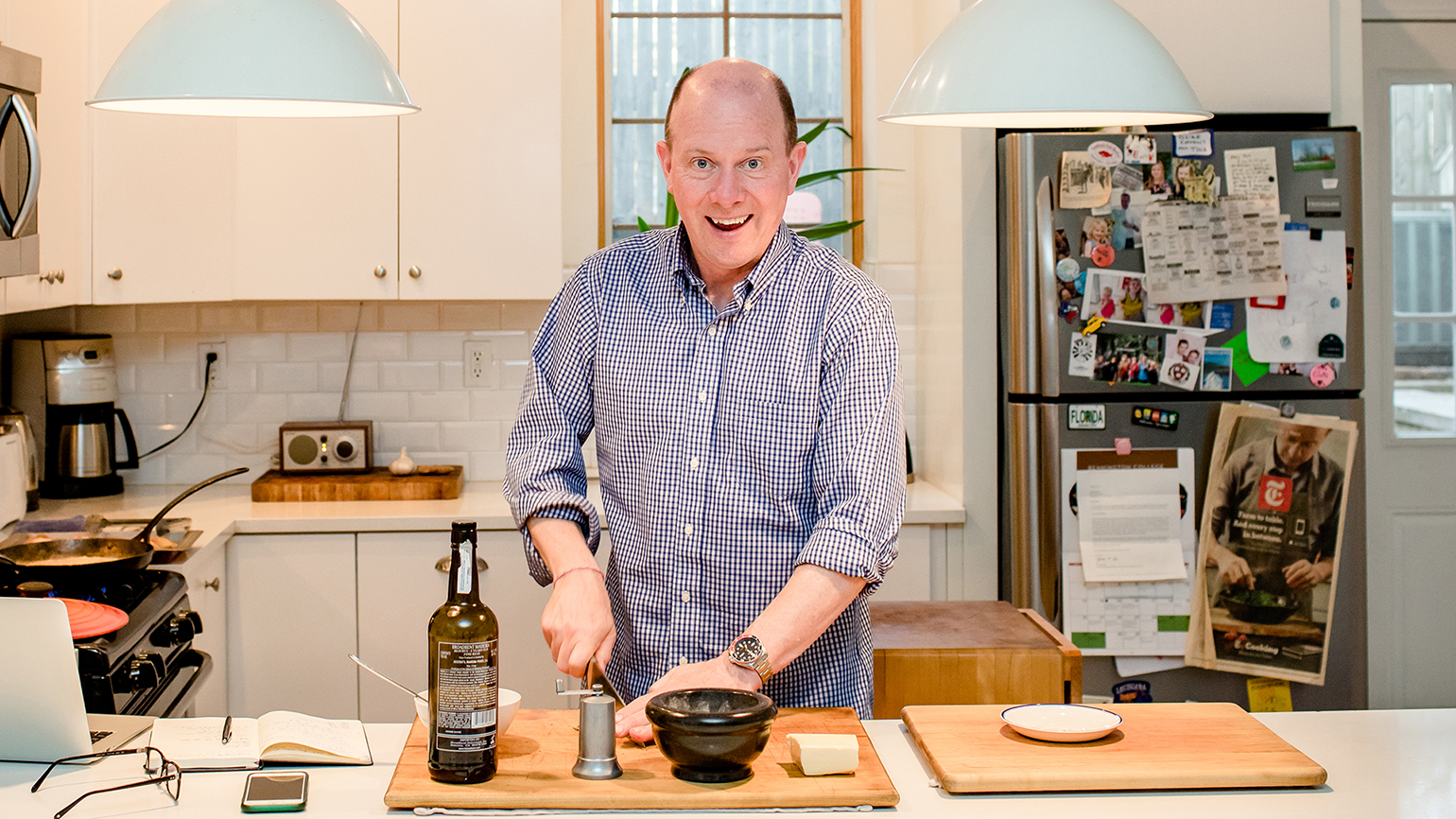
For me, cooking is a kind of service—to others, to community, to family. For years, I cooked Sunday suppers for my church in Brooklyn, big pots of pasta or stews for friends and strangers, a tradition that inspired my recent book, See You on Sunday.

The Christian church is built around the sacrament of the Eucharist, a commemoration of the Last Supper. In every religion, food is central: communion, Shabbos dinner, the feast after Ramadan. People are lonely, now more than ever, and they yearn to be part of something meaningful. Here’s how making and sharing food can make life better over the holidays.

Try Sam’s recipe for Pan-Roasted Chicken with Mint Sauce

Adapt your traditions. Is your family going to be scattered this year? There are still ways you can celebrate together. Technology will play a key role. Over Zoom or Skype, you and your loved ones can not only share the meal but cook it together, making the same dishes—stirring, chopping, roasting, baking as a group.

Pay particular attention to keeping family traditions alive, whether that’s trimming the tree, opening presents or baking Grandma’s apple pie. Watch the ball drop together and ring in the New Year with a virtual toast that 2021 will be a better year for everyone.

Deck the halls. Even if you find yourself having to celebrate alone, you should have a Christmas tree—and I don’t mean a sad little Charlie Brown tree. Go big: Hang wreaths, arrange lights and greenery, set up a crèche. And turn up the music! I find it difficult to be morose as I listen to Christmas carols while I’m cooking, even if I’m just cooking for myself.

Focus on flavor. I’ve heard from many readers of The New York Times, where I’m among other things the food editor and a former restaurant critic, how much confidence they’ve gained in the kitchen from having to cook at home for several months now. People who never used to bake are telling me, “I can make a pie crust from scratch now.”

At my house, we usually have a lot of people over for Christmas dinner—like, a lot. This year it will be just me, my wife and our two teenagers. But you know what? I’m going to lean into that and glory in turning out a wonderful meal for just the four of us.

Try Sam’s recipe for Roasted Potatoes with Onions and Rosemary

The trick is to concentrate on the flavors we associate with the season, then scale everything down. Instead of cooking a whole bird, I might bread and fry turkey cutlets. Serve them with mashed potatoes, a simple pan gravy, green beans and a bit of cranberry sauce.

You don’t have to whip up the usual vats of mashed potatoes; take four potatoes, cook them up, then mash them with butter, milk, salt and pepper—and you’re done. If you still want to tackle a large turkey, cook the thighs or breasts and freeze what you don’t cook for later.

Set the table with intention. People get nervous when I say that. They think I’m being fancy, but I’m not. It doesn’t matter if you bring out the good china and glassware—or even if you have good china and glassware; what matters is that everything is neat and looks as if it’s in the right place, even if things don’t match. If you can manage a cloth napkin and a nice tablecloth, that’s a great way of indicating that this is a meal unlike others.

There’s a ritual to setting the table that I love, and I think real magic lies in creating and maintaining these types of rituals. The most important thing is to never set your holiday table as an afterthought. Set it thoughtfully because you care about what will happen at it. It’s not just about eating. You’re sharing love and connection and fellowship.

Flowers and candles are great as long as they’re set low so they don’t get in the way of the food or people’s sight lines. And the best and most overlooked practice of holiday meal-making? Warming the plates. Warm plates are not fancy. They’re sensible. It makes all the difference. If you pour hot gravy on a cold plate, it just congeals.

You can put the plates in the oven on the lowest setting or on top of the stove near the heat escape vent, and turn them a couple times. Some dishwashers even have a simple warming function.

Count your blessings. A holiday rule of mine is to always offer thanks to one and all for being present and for helping out. When it comes to the official blessing, though, I wing it every time. It’s important to take a moment to reflect on what you’re thankful for and whatever truths you wish to acknowledge.

It’s always tough at the holidays to be missing lost loved ones, and Covid will make it even tougher for many this year. This is only my second Christmas without my mom. She was a very good cook. I will be cooking with her over my shoulder this year, giving me helpful notes.

I have faith in food and in the belief that we can all make this holiday a meaningful and joyous one, where we come together to celebrate the miracle of Christmas with the people we love. The world may be on fire, but we have each other. You say the blessing, I’ll carve, and we’ll get started.

Try Sam’s recipe for Honey-Roasted Sweet Potatoes With Yogurt Sauce

For more inspiring stories, subscribe to Guideposts magazine.
Seven Ways a Pet Can Bless Your Life

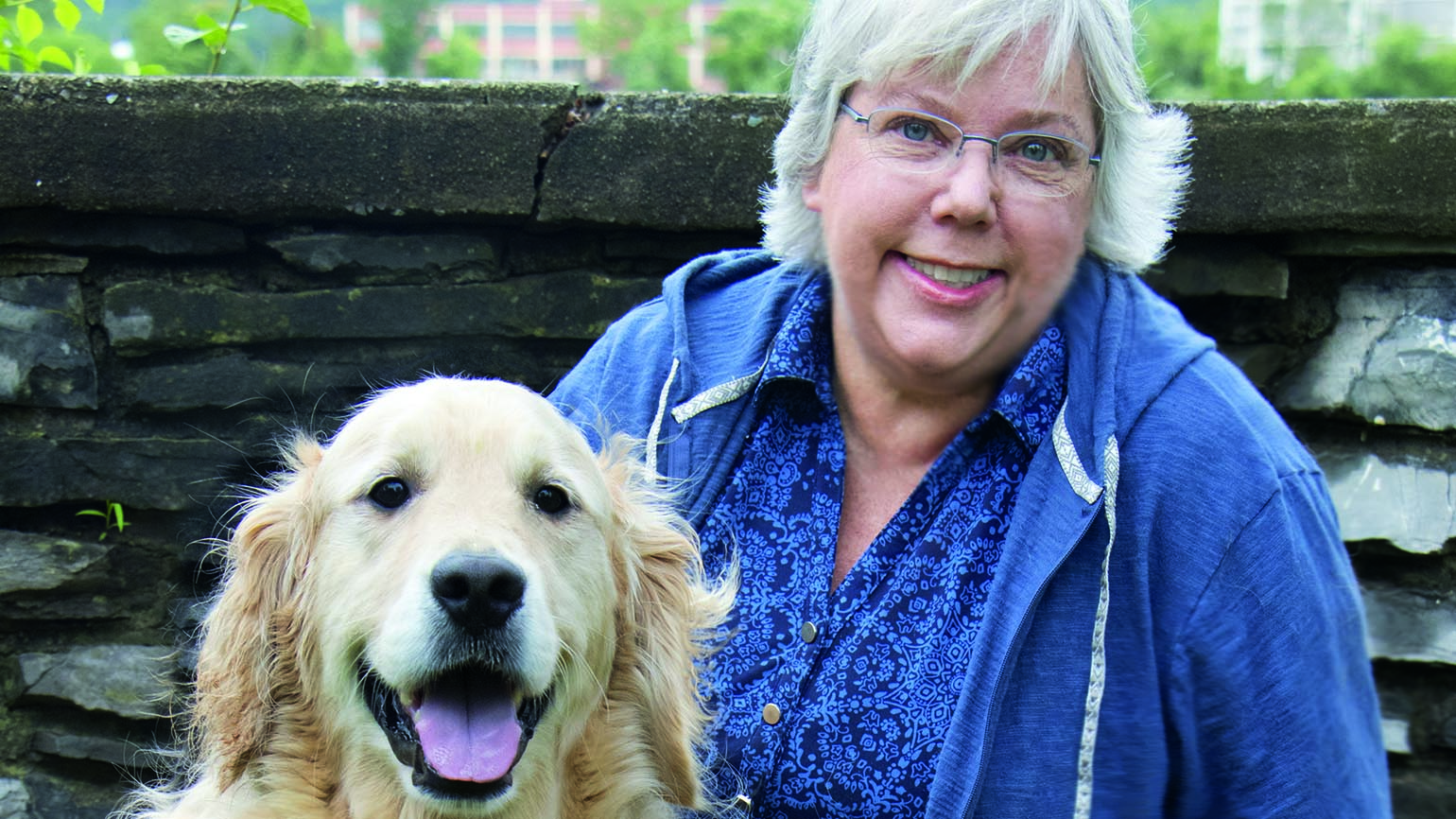
’Tis the season to count our blessings—including our pets that provide companionship and improve our quality of life. Over the years I’ve had many different pets, including dogs, cats, rabbits, guinea pigs, gerbils, goldfish, turtles and a hermit crab. I’ve learned something wonderful from each one. We currently share our home with two golden retrievers—Ernest, 13, and Petey, 4. When it comes to reasons to be grateful, they are surely near the top of my list. Here’s why:

1. They’re the best welcoming committee.

I love coming home to someone who’s so happy to see me. We have a large window in our front door, and from the moment my dogs hear my footsteps on the porch, they are waiting there, jumping and wagging their tails like it’s the best moment of their day. Ernest always pushes past his brother to receive the first pat from me while Petey waits with a shoe (or two!) in his mouth. Even if I’ve only stepped out for a few minutes, they greet me with unbridled enthusiasm.

2. They keep me amused.

If laughter is good medicine, my dogs keep me extra healthy. Ernest, our senior, has a habit of sleeping in funny places—including on top of the coffee table. Youngster Petey enjoys collecting and relocating shoes. (I often have trouble finding two that match.) I may not be the best dog trainer—instead of correcting these behaviors, I find them hilarious!

3. I have a buddy for any activity.

My dogs are up for joining me in anything I do. It’s nice to have them resting by my desk as I’m working from home, even if they occasionally interrupt a Zoom call. They are good company while I’m outside gardening, and it’s always better to take a walk accompanied by my dogs. Praying in my big green chair, with a dog snuggled on each side, warms my spirit. I’ll never be lonely with dogs.

4. They protect me.

One thing most dogs take seriously is barking like crazy to alert us when someone approaches the house. Their barking is not just for possible intruders. It also goes for visitors. Neighbors. Delivery people. Squirrels. A blowing leaf. Sometimes their early warning systems malfunction, but that’s okay. I like knowing they’re on duty.

5. They inspire me to be my best.

I have a T-shirt that says, “Be the person your dog already thinks you are.” I love this saying. It’s true. My dogs don’t care if I’m too tired to play, brooding over some complicated work problem or throwing myself a pity party because I gained a few pounds. From the moment I wake up in the morning until I lay my head on the pillow, my dogs want nothing more than to be with me. Because of this, I never want to let them down. I can be the person they already think I am!

6. They comfort me when life gets ruff.

Sometimes I think my dogs know I’m upset even before I know it. They press in close. They nudge my arm. They lick my face. They somehow sense that I need comforting. The best part? They don’t scold or offer unsolicited advice. They’re just there for me.

7. They point me toward God’s love.

Who else never judges me? Who rejoices when I come to them and wants to be with me always? Who loves me even though I don’t necessarily deserve it? It’s no mistake that dog is God spelled backwards.

Our pets are our friends. Our family. Our companions, confidants and counselors. What are some reasons you are grateful for yours?

For daily animal devotions, subscribe to All God’s Creatures magazine.

Seeing God in a Beloved Dog’s Eyes

A friend called to share a heart-stopping experience she had three weeks ago. Grace is 94 years young, feisty, loving and honest. Her husband died many years ago under hospice care; my friend Jackie and I were his nurses.

Grace was always grateful for the care we gave him, but to be honest, we enjoyed ourselves immensely when we visited them. To be with them was like being part of The George Burns and Gracie Allen Show. They were hilarious.

Life has been challenging for Grace since her husband died, followed by her son—who was much too young to die—and with the additional heartache of her only daughter not being fully well. But she could still find humor, laughter and joy in many things and continued to play bridge and have lunch with friends.

Her greatest blessing for the past 14 years has been her beloved dog, Gretchen. They were constant companions, from getting up in the morning until slipping back into bed at the end of the day. They did everything together all day long, including falling all over each other many more times than either of them would admit.

But then, three weeks ago, Grace had to make a decision. Gretchen wasn’t eating anymore and she no longer had the energy to bark. She was sluggish, tired all the time, could no longer jump into Grace’s lap and Grace could not bend over to pick her up and comfort her. They visited her very kind veterinarian; after blood work and X-rays, he delivered the news that Gretchen had cancer in her lungs, brain and many other parts of her body. It was devastating, and the decision was made to put her to sleep. Grace asked to be alone with Gretchen for a while and for her doctor to place her in her lap for the last time.

The vet closed the door and they were alone. Grace looked down into Gretchen’s eyes, and Gretchen looked back at Grace. What passed wordlessly between them was a deeply moving and spiritual experience. Grace was looking into the eyes of love—pure and simple love. Grace said it was so beautiful, love expressed without words yet felt so deeply. Best friends acknowledging in an instant all that had gone on between them, all they meant to each other, their gratitude for the love and loyalty they shared for 14 years.

When scripture tells us that God abides where love is, this is what is meant. God enables us to experience him in even the littlest of his creatures, and when we do, we know it.

The very loving doctor and his staff allowed Grace to hold Gretchen when she was given her last shot. Gretchen went off into the gentlest sleep knowing she was loved well her whole life and understanding too that she had fulfilled her destiny to love Grace well. She died in the arms of her very best friend. God is so good all the time; he had allowed Grace to see him in Gretchen’s eyes. It was the best it could possibly be!

Saying Goodbye to Her Beloved Beagle

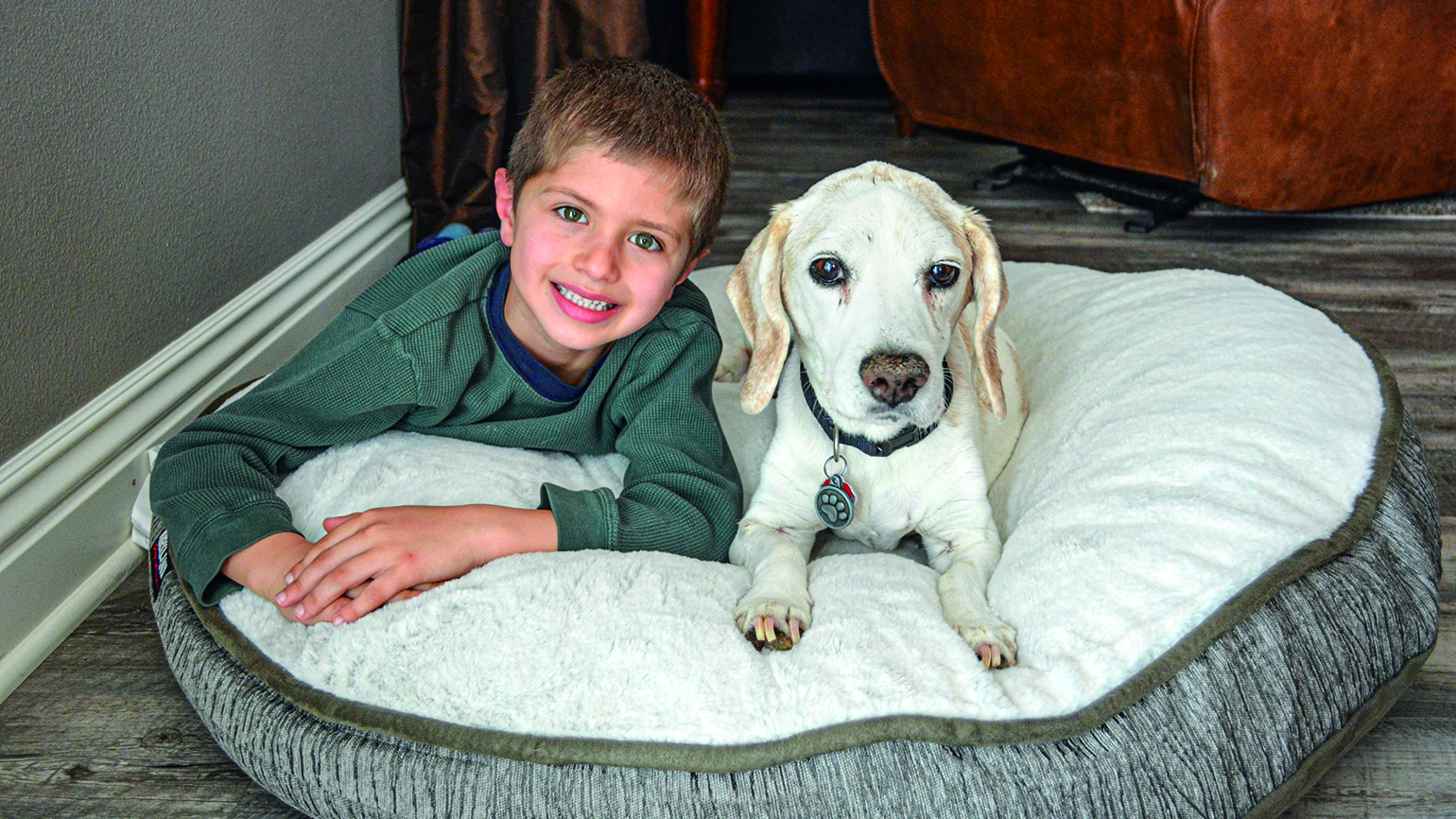
Charlie wasn’t my dog. I was just his caretaker by default. He belonged to my husband, Brandon. Really, his heart belonged to Brandon’s first wife, Sherise, who had died in a car accident. Still, when I realized our time with Charlie was coming to an end, it hit me hard.

At nearly 15, Charlie was old for a beagle. He had been declining for months, the cancer spreading inside him. There was no ignoring his hacking cough and the way he dragged himself across the floor. Watching him night after night, unable to ease his torment, I couldn’t help but think about all that he’d given Brandon and me. As well as the debt I owed to a woman I would never know.

I’d met Brandon online a dozen years earlier. He was a widower and had a freezer stocked with Hot Pockets.

Still, I was drawn to him. He dropped movie-worthy lines at just the right moment, charmed me with thoughtful gifts and knew how to make me belly laugh.

The first time Brandon invited me to his house, two-year-old Charlie rushed to the front door to greet me. Then he whipped around the living room like something out of a Tom and Jerry cartoon.

“He seems to like you,” Brandon said.

Just my luck, I thought. I wasn’t a dog person. I didn’t like the shedding. The barking. The licking.

Brandon had given the beagle to Sherise on her thirty-third birthday, before they were married. Charlie and Sherise had bonded deeply, but eight months later, she was gone. “Charlie camped out at the front door for three weeks, waiting for her to come home,” Brandon said.

He told me Charlie had carried him through the darkest time of his life. He and Sherise had just bought a house, a house they’d planned to fill with children, when she died. Brandon had drowned his sorrows in beer for the better part of a year, and Charlie had been right there, grieving with him.

I met them two years after Sherise’s death. Brandon and I fell for each other and eventually married. Every morning after Brandon left for work, Charlie cried, worried that, like Sherise, Brandon would never return. I didn’t blame him. But I also couldn’t stand the whining, so I made an effort to spend time with him. Slowly we warmed up to each other. I took him for runs and cuddled with him.

Brandon and I had three sons. Charlie always wanted to be part of the action, lapping up spilled milk, traversing rooms littered with Legos and plopping on top of board games in midplay. If the kids’ antics took a toll on him, he didn’t show it, even as he developed cancer at 10, lost his left hind leg at 12 and had surgery for a bleeding growth at 14.

This dog I’d never wanted…he’d taught me so much about perseverance, acceptance and love. He’d captured my heart. Charlie had become a dear friend. He was my dog, even though it didn’t start off that way. Despite all of that, I knew that part of him still belonged to Sherise.

Charlie couldn’t communicate his last wishes, but as he neared the end, it became clear to me what we needed to do.

One night, after settling into bed, I turned to Brandon. “We have to give Charlie back to her.”

“What?” he said, confused.

“We should scatter some of his ashes at Sherise’s grave,” I said.

Brandon nodded, smiling softly.

I looked into options and decided to hire a mobile veterinarian who would come to our house, deliver an injection and help Charlie make his journey to the big dog park in the sky. The crematory would split his ashes for us. Half would stay in an urn on our dresser; the other half would be laid to rest with Sherise. We talked to the boys, and they agreed with the plan.

Two weeks later, almost 14 years to the day of Sherise’s funeral, I packed lunch, Brandon put Charlie’s ashes in our van’s cupholder and we set out to reunite our dog with his first love.

We stopped for flowers. Roses for Sherise; sunflowers for Charlie. The boys brought drawings with them. Our six-year-old, Jack, drew Charlie next to a rainbow bridge with the word giddyap. Eight-year-old Max’s piece showcased an angel welcoming Charlie to heaven. Brian, his twin, drew Charlie as an angel beside an old-style telephone. The caption read: “This is what you can use to call us.”

I laid out a blanket next to Sherise’s plot, and we ate our peanut butter and jelly sandwiches while sharing memories of Charlie. The time Brandon replanted all of the flower beds and Charlie sunned himself on top of the freshly turned soil, smashing the pansies. The time he couldn’t find his way out from under the duvet cover. And the time he tried swimming but sank like a stone.

Then Brandon pulled out the bag of Charlie’s ashes. I suggested we sprinkle them beneath the vase on Sherise’s headstone, closest to her. Brandon removed the vase and each of us took a turn scattering the ashes into the earth.
The boys arranged their drawings by her headstone. Brandon stood back, his eyes teary.

“If someone had told me 15 years ago that I would get married, my wife would die six months later and I would visit her grave with my second wife and our three sons to scatter her beagle’s ashes, I never would have believed it,” he said.

We stood back from the grave, our boys sitting beside the headstone, and Brandon put his arm around me. In his inimitable way, Charlie had been a gift to Sherise. Then Brandon. Then me. And our boys. Here we all were, connected by the true gift—our dog’s boundless love.

For inspiring animal-themed devotions, subscribe to All God’s Creatures magazine.

Say Hello, Wave Goodbye

My two-year-old asked about death the other day. Well, not death, but sort of.

“Why does Grandma have to leave?” Frances asked as I put her to bed. She meant my mom, Robin, who’s staying with us for two weeks while Frances’ daycare takes a summer break.

My mom visits several times a year and each time she and Frances hit it off. My mom has an excellent way with children, straightforward and matter-of-fact. She and Frances walk to the park, play Play-Doh, build Legos, read books, bake cookies and eat popsicles.

In the end, though, Grandma has to leave. She lives in Los Angeles, we live in New York. When she goes Frances doesn’t like it. Frances cries and for awhile she seems listless and irritable. “Are you sad Grandma Robin left?” I ask. “Yeah,” she says.

This visit Frances is old enough to know the departure is coming. In fact she asked why Grandma has to leave the very night after she arrived. My mom will be with us till the end of the month but already Frances is dreading the day she says goodbye.

Like father, like daughter. My wife Kate says I never really get to enjoy vacations because I’m always mourning their inevitable conclusion before we even make it out the door. That’s not entirely true, but—well, okay, it’s pretty much true. I hate it when things end. Our old family friend Barbara used say there’s no present without a future and I agree. Knowing something is finite seems to rob it of joy.

Which is strange when you think about it since everything is finite. At least everything human is. People die, things they build fall apart, words they write fade from memory. The answer to Frances’ question, indeed the answer to anyone wondering why nothing lasts is—well, nothing lasts. Everything dies.

Of course the trite faith response to this rather grim scenario runs something like, Now, don’t you worry, dearie, the world changes but not God, and besides, you’ll see your loved ones again in heaven. That may be true—how can anyone know for sure?—but regardless I think it’s a bit of a copout. For one thing it’s too abstract to be anything more than cold comfort. More importantly, I think it only tells part of the story.

In Christianity, anyway, death is not entirely a villain. Yes, St. Paul celebrates Jesus’ resurrection by proclaiming, “Death, where is thy sting?” But that’s not all Paul has to say about death. In the same chapter of his first letter to the Corinthians (chapter 15), he describes the weird, thrilling and ultimately mysterious promise implied by Jesus’ life and death. “I tell you a mystery,” he says. “We shall not all sleep, but we shall all be changed.”

Changed. That’s different from you’ll see your loved ones again in heaven. That means Christians believe something profound happens after death, something wiping away what was old in our lives and replacing it with something new. Paul takes a stab at describing that new thing, but basically for him as for all of us language breaks down at this point and he’s left promising that after we die we will have a closer, more abundant and delightful relationship with God than we ever managed while alive.

It’s not quite true to say death causes this transformation, or even that death is necessary for it. But it’s clear Paul believes death is part of new life, a stage on the journey to God. Maybe even a crucial stage.

C. S. Lewis once wrote, “A thing will not really live unless it first dies.” That sounds harsh, but think about it. How else can you become that radiant, rejoicing person you yearn to become except by leaving behind—putting to death—all of the selfishness, control and do-it-my-way instinct that drives you?

Indeed, can you truly love anything without letting go—again, putting to death—at least some of your own self-regard? In some mysterious way, like a seed falling, lying dormant and sprouting, life exists in embrace with death. My belief is that life ultimately cancels death. But death has its role.

Lucky for Frances even the little separation of Grandma going home is a ways away. Lots of time left for Play-Doh and Legos and books. She’ll be sad when Grandma does go. But we’ll be able to tell her exactly when the two of them will see each other again. My mom is coming in November to help out after Frances’ little sibling is born.

Love, departure, new life. I don’t pretend to understand it all. But I like to hope it works that way for a reason.

—–

More inspiring stories and videos about grandparents!

Jim Hinch is a senior editor at GUIDEPOSTS. Reach him at jhinch@guideposts.org.

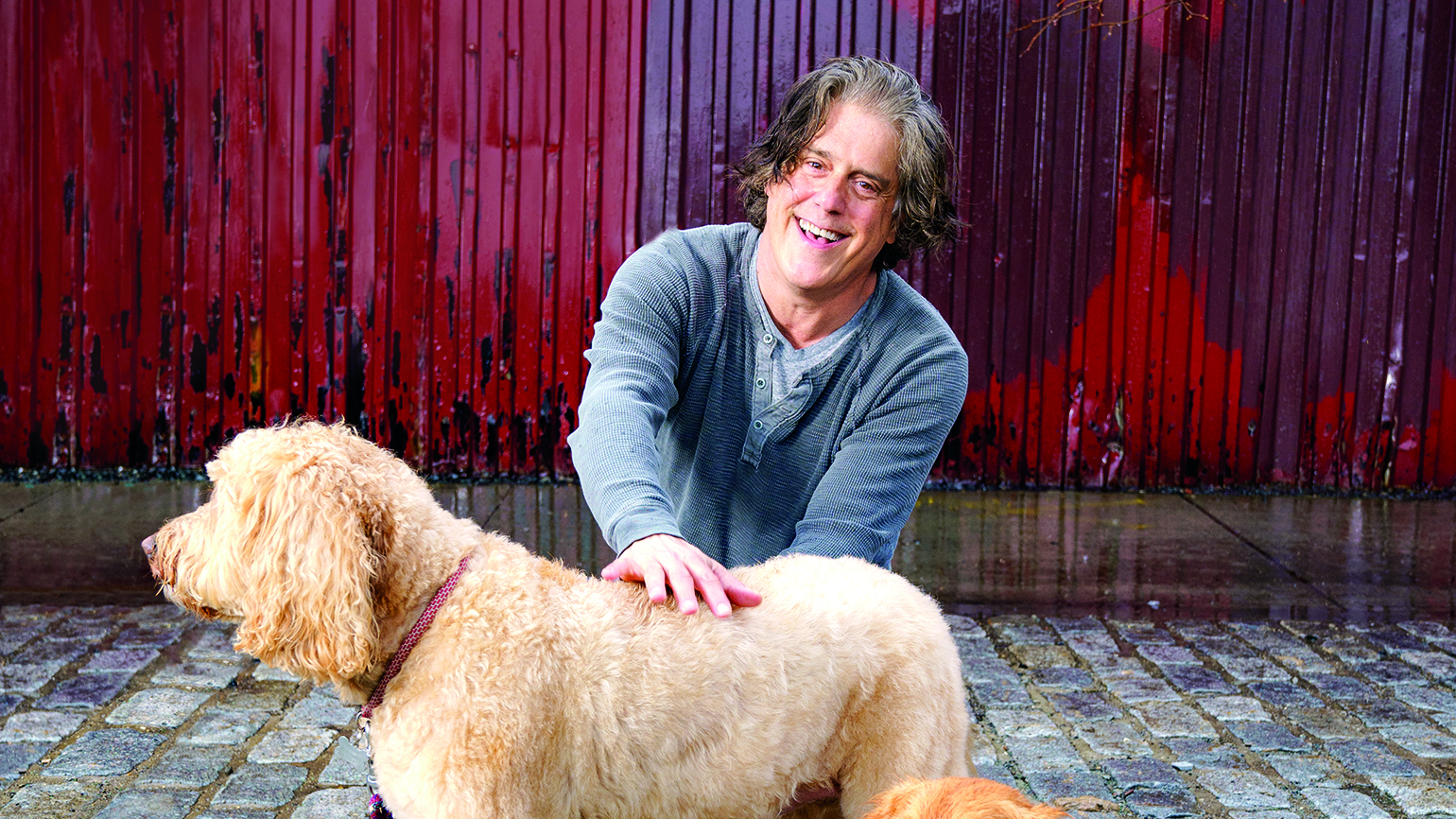
Saturday Night Live’s Ken MacLeod: From Set Designer to Dog Trainer

As a set designer for Saturday Night Live, New Jersey-based Ken MacLeod was all too familiar with working under pressure. So, when pandemic puppy mania turned Ken’s dog training side gig into a demanding business, he was ready.

Did you have pets growing up?

My family had cats. It wasn’t until I met my fiancée, Kim, 14 years ago that I completely fell in love with dogs. She had a Parson Russell Terrier named Mac.

When did you become interested in set designing?

In college, I originally set out to be a business major. I soon realized that I was unable to express my creativity in the accounting world and needed to make a change. I had always been captivated by film sets and the process behind designing them, so it felt natural to go into film design.

How did you get the job at Saturday Night Live?

Ten years ago, the commercial industry—where I had spent most of my career—began to change. As a result, I found myself looking for other opportunities within the film industry and began doing work in episodic television. At the time, Kim was working at SNL as a set decorator and mentioned that there was an opening for a set designer within one of the three film units. I applied immediately and have been working there for the past seven seasons.

Are the rumors true about how intense the work is at SNL?

Oh, yeah. We work long nights, but it is incredibly rewarding when you see the show air that weekend. Pre-pandemic, we would often shoot in different locations (like supermarkets or high schools), but now we are working in a studio in Brooklyn, designing and building these environments from scratch. The typical schedule starts on Wednesday evening when we get the script and hop on a Zoom call with producers, directors and crew. That night, I start to design the sets, and the next two days are filled with prop shopping, lighting, painting and more.

How did Scooter come into your life?

When Mac passed, Kim and I were devastated. After a few months, we decided it was time to bring a new puppy into our home. We began searching with the intention of making them a therapy dog. Those few months without Mac made me realize the huge role dogs play in our lives and the joy that was missing in mine as a result. It was only right to train our new puppy to be this positive influence for other people in the same way that Mac was for us. In January 2017, we brought Scooter home from Chicago. Scooter was the smallest and most precious dog I had ever seen. But it took only a few weeks to realize that Scooter’s temperament was different from Mac’s and would require different training and attention.

How was he different?

When Scooter was four months old and we began to take him for walks outside, we immediately noticed his fearful nature. For fearful dogs, it’s either fight or flight, and Scooter had no intention of flying. He barked and lunged at other dogs and had difficulty interacting with people as well. After our first few walks, I realized I wanted to be a certified dog trainer to better understand and grapple with Scooter’s needs as a reactive dog.

Why did you choose the Karen Pryor Academy?

After researching several training programs, I was most impressed with Karen Pryor Academy’s force-free positive training method. You had to prove that you and your dog had done the work in order to become certified. I wanted to be taught and tested, so this program was perfect for me. It was intense—four workshops over six months in Binghamton, New York. We had homework—reading and writing, as well as physical work. One was targeting, where you teach your dog to touch something with his nose. You had to show that your dog could do the behavior.

How did Scooter react to the training?

Our first weekend, Scooter had a difficult time adjusting to a classroom environment—and the other dogs in the room didn’t help. It took until the third class for Scooter to be fully comfortable and embrace the different learning techniques we were practicing. I was so proud of how far he had come but nervous for the final exam, as it was off leash and in front of everyone else in the class. The exam consisted of demonstrating a series of behaviors, such as sit, leg weave, stand, spin, paw and target. When the time came, I took off his leash and said, “This is it, buddy.” He nailed it.

Can you share some of the methods you learned and use?

The most effective method I have learned is positive reinforcement. It’s all about rewarding the good behaviors. Like people, dogs are more likely to fully embrace both the learning and you as a trainer through praise. I like to encourage dogs in their good behaviors rather than express frustration when they do not understand what I am asking in a language they don’t speak.

What made you take it a step further and start a training business?

I jumped in right away after I got my certification. Knowing that there were so many other reactive dogs like Scooter, I wanted to help as many families as possible. The business began small, helping my neighbors, friends and family, and has grown into what it is today.

How did the pandemic change your business?

When lockdown first occurred in March 2020, I shifted my main focus from set designing to dog training. All over, families were adopting dogs, increasing the demand for dog training. My Positive Pup transitioned from a small neighborhood business to an almost full-time position. I had the pleasure of working with a variety of families from Vermont to New Jersey, imbuing each family with a sense of positive reinforcement.

There are some 52,000 people in Hoboken, where I live, and there must be 60,000 dogs now! Training became easier, especially for fearful and reactive dogs, because we’ve had far fewer triggers on the streets, like cars, bikes, other dogs and people. If there is any silver lining to 2020, reactive dogs have been introduced to society with more ease than before.

Set design and dog training seem so different. Are there any commonalities?
There’s definitely a correlation between working on SNL and dog training. I started with a handful of stagehands who were excellent team players but new to the world of working on location. I realized that the best way of teaching them the ins and outs of this role was complimenting them on their achievements. They were excited to come to work every day and were eager to learn more. This goes for any training. When you reward with praise and kindness, it results in a positive environment where the trainee’s enthusiasm shines through.

What do people misunderstand about dog training?

Dog training should be about fun and growth. Reward and praise. It’s about the difference between having a dog who is living and a dog who is living engaged. Bringing a dog into your family is a lot of responsibility, but with great love and care it is one of the greatest gifts you can ever experience.

For daily animal devotions, subscribe to All God’s Creatures magazine.

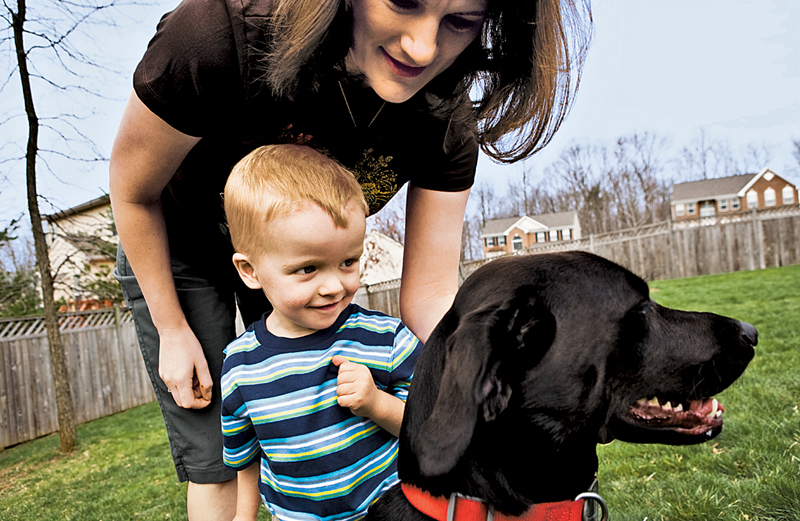
Rosie, Dog of Hope

“We’re getting a dog! We’re getting a dog!” the kids chanted from the back of our car on the way to Pennsylvania to pick up Rosie, our new Lab, from her foster home.

I glanced back at my teenager, Aaron; his younger sister, Rachael, seven; and brother Joshua, five, who hadn’t stopped talking about Rosie since we’d pulled out of our driveway in Virginia an hour before. Only my two-year-old, Michael, was silent.

He was just as excited, but he couldn’t join in with the chatter of his siblings. I felt a familiar ache in my chest, knowing how badly Michael wanted to join in, and knowing it was impossible. It was a pain I felt often, ever since we found out about Michael’s condition.

I knew something was different about Michael at six months old. Josh and Rachael walked and talked early. But our otherwise healthy-looking baby boy had trouble even crawling; Michael couldn’t roll over and he couldn’t sit up without toppling.

Even more troubling, he never developed baby talk. I wondered if he’d ever speak. His brother Aaron has cerebral palsy, and I feared Michael might have a disability too. In fact, Michael was diagnosed with dyspraxia, a developmental disorder that makes it difficult to perform complex movements.

Michael’s trouble with speaking was part of that disorder, called Childhood Apraxia of Speech. He wanted to speak, but his mind just wouldn’t let him.

Even now, at two years and three months, he still couldn’t say much more than “mama” or “dada” when he wanted us for something. And often, we couldn’t understand what he wanted.

His speech therapist helped us teach him some basic sign language. Even that was hard for him. A few days earlier, Michael tried to ask me for something, but he couldn’t form the signs. Instead, he began gesturing wildly.

“I’m sorry, Michael. I don’t understand,” I told him. His face turned a deep shade of red; he went into a tantrum, letting out a high-pitched scream. I felt so helpless. My baby was hurting—and I couldn’t do anything for him.

I looked in the rearview mirror back at Michael, who was staring out the window. This dog, I hoped, would be something he could enjoy. My husband, Doug, and I had done our research. We looked for a Labrador, a breed known to be good with kids. A young dog, so it could grow up with our children.

We found Rosie on the website for a Lab rescue agency. A 14-month-old chocolate Lab, with experience around babies, children and cats. All of our “dream dog” qualities. But would she be right for our family? Was I wrong to hope? Finally we pulled up to Rosie’s foster home.

I silently prayed, Please, God, let Rosie be right for our kids…especially Michael, but don’t let me hope for too much.

Doug lifted Michael out of his car seat while I went to the door with the other kids. “You must be here to see Rosie,” the woman said. And there Rosie was, standing in the foyer, tongue hanging out, her tail wagging wildly. Aaron, Rachael and Joshua ran up to her.

“Rosie, you’re so beautiful,” Rachael said, ruffling her smooth fur.

“Hi, Rosie,” said Aaron, scratching her behind the ears. Love at first sight, I thought.

But what about my two-year-old? Michael ambled over. He patted her gently on the head. Rosie nuzzled against him. I breathed a sigh of relief.

I was about to follow the woman into the other room to talk to her about the dog when I heard a voice, an unfamiliar voice. “Rosie,” the voice said, strong and clear. “Rosie!”

It was Michael.

I looked at Doug, my mouth agape. “Rosie!” he said again, nuzzling against the dog. Now, Doug and I were the speechless ones.

Rosie sat in the back with the kids on the way home. “You’re going to love our house, Rosie Pops,” I said. The kids loved the nickname. The whole ride back, that’s what we called her. We were about halfway home when Michael spoke again. “Rosie Pops,” he said.

One word was amazing enough, but two words together? In one day? Doug and I chalked it up to Michael’s excitement. Don’t get your hopes up, I reminded myself. How often had I seen progress when there was none? God, I prayed once more, make this dog a good fit for our family.

A few days later I was folding laundry, watching the kids play with Rosie. Michael stood next to her, petting her as she rubbed up against him. Then, without warning, she jumped, and Michael lost his balance. I watched in horror as he fell over. I dropped everything and rushed to him.

But I calmed down when I saw Michael laughing. He pushed off the carpet and stood, following Rosie again as she raced around the room. I watched more closely.

Rosie wasn’t being reckless. Every time she nudged Michael, she did it gently, almost as if she were testing him. And each time he fell, she waited by his side, studying him until he rose to his feet. It was a little game they were playing. A game Rosie was using to learn things about Michael.

The next night, at dinner, Michael shocked everyone when he said “juice.” Right out of the blue! A day later, he said “dog.” It’s hard to describe the astonishment that took over our house.

Over the next few weeks, he added more words: candy, cookie, car. He was also becoming less clumsy—rarely stumbling. His speech therapist was baffled. “Kids with apraxia don’t progress like this,” she told me.

I was baffled too. I went on an apraxia website and e-mailed for information. “Is there anything about dogs helping kids with apraxia?” I asked. Yes, as it turned out. Studies found the stimulation a dog brings can awaken muscles necessary for speech and other bodily movements.

Each time Michael laughed, fell and got back up again, his brain was busily connecting the dots between his muscles and his actions. Now I knew why he was improving.

I went up to tuck Michael into bed. He was exhausted from playing with Rosie all day. I pulled the blanket up to his chest and gave him a kiss. Michael moved his lips.

“Luv vu,” he said. Did he say that? Michael spoke again. “Luv vu,” he said.

I wrapped my arms around him. “I love you, Michael,” I whispered through my tears. “I love you too.” I shut off his light and headed to the living room. Rosie lay curled up by the TV. I stroked behind her ears and told her what a good girl she was. She was teaching Michael so much—and me as well.

God answers prayers in many ways. This time he chose a dog to answer ours. Hope comes in many forms, and I must never forsake it.

Riding on Coattails of Love and Lessons

As a child, I remember first hearing the expression, riding on someone’s coattails. That sounded so funny to me back then. But as an adult looking back over my life, I’ve ridden a lot of coattails.

There were the dedicated teachers from whom I learned discipline, commitment and character as well as reading, writing and arithmetic. I’m grateful for their influence and wonderful memories of time spent in their classrooms.

I’ve ridden the coattails of family members who came before me, people I’ve traced back to the earliest days of our country. There’s the Civil War grandfather on my husband’s side of the family who died from his wounds in battle, but before he died, wrote a letter telling his wife to raise their children for the Lord. Because of their faithfulness, my children have had a wonderful, godly dad.

There’s my maternal great-great-grandmother. Family members tell how as she was dying, she was praying for her children, grandchildren and future generations. I wonder how many times I’ve ridden on the coattails from that sweet woman’s prayers? It brings tears to my eyes as I think about this and look at my sons. Two of them are in ministry today preaching the gospel. The other is active in his church’s music ministry. They’re still riding on her coattails, on her prayers that have reached through the generations.

I’ve ridden the coattails of my daddy, uncles and aunt who served in the military—and thousands more just like them. Because of their sacrifice, we have the priceless gift of being free. We can sleep at night in peace and safety. And we can celebrate the 4th of July with family, fireworks and picnics of hot dogs and hamburgers, watermelon and homemade ice cream.

I’m grateful for all of these coattails—for all who’ve touched my life—but as I sit here writing today, it makes me consider the coattails that I, in turn, will leave behind.

Please, God, let future generations remember a woman who loved You, her family, country and others. Help them know that I prayed for them and that I was faithful to serve You. If others grasp my coattails, help me to lead them toward You. Amen.

Restoring a Broken Relationship

Every relationship faces its own challenges, whether it’s a marriage or a friendship. Sometimes obstacles are for the good, causing a relationship to strengthen, while other times they are for the worst. When a relationship is strong, both parties are able to work together to get thorough anything. For example, a strong marriage consists of a husband and wife who together learn to master the challenges of working, running a household and raising children.

While some relationships are able to navigate their way through changes easily, others are not. Some suffer drastically as a result. When this happens, it’s critical that both parties acknowledge that there is a problem and work to resolve it. It may even be necessary to get help from an outside party such as a counselor to assist in the healing journey.

Working things out takes time, patience and honesty. It also takes prayer, placing the relationship in God’s hands. This doesn’t mean that you don’t need to put in the hard work required, but prayer opens the way for the much needed wisdom and guidance in managing a relationship during hardships. When you pray, don’t ask God to change the other person. Ask God to change you both—and to show gradually, how each of you can improve the relationship for the better. Focus your prayers on the changes you need to strengthen and enhance the relationship.

Strive for sacrificial love—love in which each person places the needs of the other above his or hers. That doesn’t mean being a doormat or putting up with abusive behavior. It means putting ourselves in the other person’s shoes and seeking first to understand instead of being understood. The main goal is to establish a positive and healthy relationship. What has helped you restore a relationship? Please share with us.

Lord, show me the way to restore my relationship with love, respect and dignity.

Renewing Your Vows at Every Wedding

My wife, the lovely Robin, and I recently celebrated our 38th wedding anniversary. While our marriage hasn’t been without a struggle here or there (all my fault; that’s my story and I’m sticking to it), our love has survived and thrived through all the changes and challenges of those years.

When I am asked (which happens often) how Robin has managed to stay married to me all these years—besides her being supernaturally patient and forgiving—I often respond with a single word: “Prayer.”

It sounds pious, I know. But it’s true. She prays, I pray, we pray together. We pray often not only for each other but also for our marriage. And one of the ways we do that is by renewing our vows.

On our 35th anniversary, we renewed our vows behind a waterfall in Great Smoky Mountain National Park. That was fun and wonderful. But we do much the same thing at every wedding we attend.

READ MORE: THE WEDDING BAND PRAYER

Most years, we attend (and sometimes officiate at) numerous weddings—especially during the summer months. We ooh and ahh over the beautiful bride and handsome groom. We tear up during musical selections and unity ceremonies.

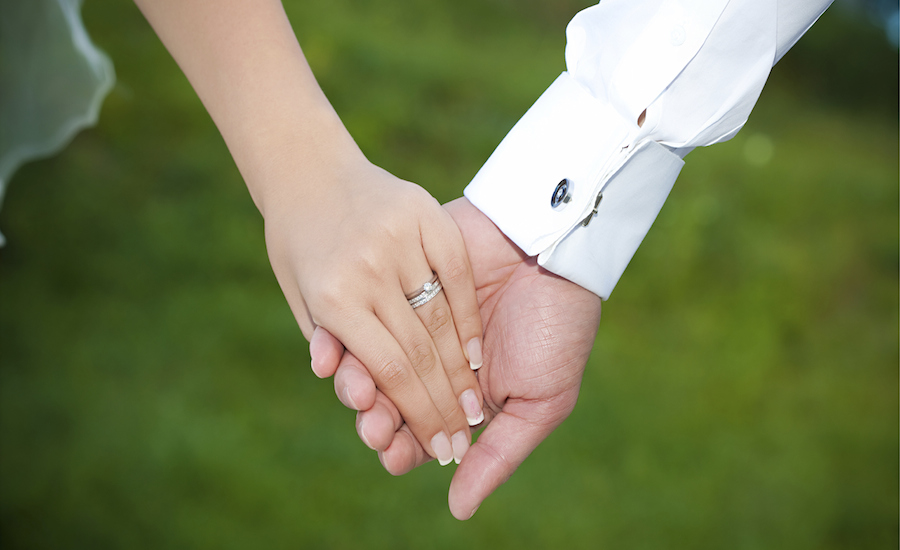
But the most meaningful and purposeful moments for us is when the couple exchanges vows. At that moment in a wedding, I will invariably reach out for my beloved’s hand (if we’re not already holding hands, which is often the case).

As the minister intones, “repeat after me,” I will give my wife’s hand a squeeze, a signal we both understand. Because, whether the couple exchange traditional or original vows, we spend those moments not only exulting with them but also renewing our vows and praying for God’s continued blessing on our marriage.

It adds a deeper dimension to an already-special occasion. It reminds us of that whirlwind day many years ago when we said “I do.” And, with every year that goes by and every wedding we attend, it keeps our commitment, gratitude and wonder even fresher than the bride’s bouquet.

Renaissance: The Horse That Helped Her Embrace Middle Age

The miniature black horse with a white nose and a flowing mane trotted into a room in Nashville’s Monroe Carell Jr. Children’s Hospital at Vanderbilt. Some of the kids were in wheelchairs, some wore masks, some were hooked up to IVs, but they all squealed with excitement. “I can’t believe there’s a horse in the hospital!” a boy said. On this day, instead of undergoing challenging medical tests and procedures, these kids got to have fun with Magic the miniature mare.

Magic is a member of Gentle Carousel Miniature Therapy Horses, an all-volunteer charity, based in Gainesville, Florida, and run by Debbie Garcia-Bengochea and her husband, Jorge. Teams of therapy horses work with families who have experienced traumatic events. Each year, the animals interact with more than 25,000 people of all ages in hospitals, hospice programs, schools, libraries and mentoring programs. They also visit education resource centers in high-crime neighborhoods and attend literacy events.

This diminutive mare has a special way of knowing who needs her the most. She trots over and gently puts her head on their shoulder. She’s won numerous awards for her work, including being named one of Newsweek’s10 Most Heroic Animals of 2010 and one of Time’s 10 Most Heroic Animals. Last year, Magic celebrated 10 years of service. Here are some of the highlights of her career so far.

Sandy Hook Elementary School Shooting: Newtown, Connecticut

The December 14, 2012, shooting at Sandy Hook Elementary School shocked the close-knit Connecticut community and the world. Debbie answered her phone the day after the tragedy. “Could you come?” a town administrator asked.

Debbie didn’t hesitate. “We’ll be there.” Magic had never traveled so far before. She and two other horses would make the long trip. Debbie and Jorge gathered blankets and provisions to keep the horses warm—they were used to sunny Florida, not snowy Connecticut in winter. A professional horse-transportation service donated its time, and on December 18 the team set out on the more-than-1,000-mile journey.

A few days later, Magic waited to greet children in the Newtown library. No one knew what to expect. “Even if there’s only one child, we’re here to comfort him,” Debbie said.

That day the library room filled, and the line kept growing. By the end of the day, more than 600 people had shown up—not only kids, but entire families. As they each took their turn, Magic nuzzled close and at times felt their tears on her neck. They needed healing, and Magic was there to help. The horses stayed in Newtown for two weeks, spending time with Sandy Hook students and their families and first responders.

Tornados: Moore, Oklahoma

On May 20, 2013, a powerful EF5 tornado ravaged Moore, a suburb of Oklahoma City. With winds gusting to more than 200 miles per hour, it killed 24 people and obliterated homes and schools.

Magic and the team arrived in Moore on May 25. They visited with a group of children who had been trapped in their school during the terrifying storm. On May 31, Magic was scheduled to meet with a little girl who was faced with the heartbreaking ordeal of attending her best friend’s funeral.

The horses were loaded into the trailer, ready to go meet the girl. Jorge and Debbie ran into the hotel to grab something. The lobby was eerily quiet. Everyone was staring at the television. Warnings flashed across the screen—another tornado was coming their way. There was no safe place for Debbie, Jorge and the horses.

Debbie and Jorge jumped into the truck and took off down the highway, trying to outrun the storm. Roaring wind chased after them. Debbie looked up at a monitor on the dashboard, which allowed her to view the horses in the trailer. They were casually munching hay. Their training had taught them to be calm, even during a tornado.

At last Debbie and Jorge pulled into a truck stop to wait out the storm. When it passed, they had the same thought on their minds. “We have to go back,” Debbie said. A little girl was counting on them.

Back in Moore, they stared out the truck window, shocked at the devastation. The tornado was the widest in U.S. history, and its path of destruction stretched more than 16 miles. The hotel they’d been staying in was damaged and uninhabitable. Still, they met with the girl and her family in the best place they could find, a nearby parking lot. Magic trotted right up and put her head in the girl’s lap. She hugged the horse tightly. Debbie hoped that somehow Magic would give the girl the strength she needed to get through the difficult days ahead.

Gold Star Families Event: Ocala, Florida

Magic visits veterans in hospitals, assisted-living facilities and hospices. Another way she serves veterans is by participating in events for Gold Star families—immediate relatives of members of the U.S. armed forces who have been killed in action.

Last May, Magic attended an event for Gold Star families at a park in Ocala, Florida. Debbie paid special attention to the children. One seven-year-old girl sat by herself, quiet and withdrawn because of the loss of her father. “Would you like to take Magic for a walk?” Debbie asked.

The girl took one of the leads attached to Magic’s harness, while Jorge held firmly onto another. They walked around a grassy area. Debbie and Jorge attempted to fade into the background and let Magic do her work. Something about walking with the horse often helps people open up.

Eventually the young girl started talking to Magic about her father. “He took me to the movies,” she said. “We ate ice cream together.” They moved slowly down a path. “He got me some Barbie dolls for Christmas.” The girl put her face close to Magic’s and whispered, “He said he would come back.”

Debbie reached over and squeezed the girl’s shoulder. “He would have if he could,” she said. The girl looked up, her eyes wide, and nodded. At the end of their walk, she hugged Magic—a tender start to a long journey of healing.

With her uniquely empathetic personality, Magic is the one the volunteers count on to reach people in the most difficult situations, whether they are children with life-threatening illnesses or first responders haunted by a mass shooting. Her presence not only comforts, it heals. Couldn’t we all use a little Magic in our lives?

Did you enjoy this story? Subscribe to All Creatures magazine.

Remembering the Love of a Pet

It has been a month since our beloved Millie died, and I think I am ready to tell you this story. We had done all we could for our eight-and-half year old golden retriever, but the cancer had progressed too far. Dr. Maddie came to the house at 11. A few minutes before, I logged onto the Guideposts system with my password to tell a few people what we had finally decided for Millie and to ask for prayers.

Millicent Johanna was her registered name, and Julee and I often called her MillieJo for fun or Millicent when we wanted her undivided attention. We would miss her terribly by any name.

Right after she had breathed her last gentle breath, with Julee and me stroking her head, I went back inside to log on again and let people know. Access denied. My password had suddenly expired without notice. Now my tears were tears of fury. I could not reset the password remotely. I was locked out. I fired off a livid email to our IT team via my private account. How could they do something like this? How?

All day I veered between grief and rage. I am not a complete fool. I knew the two overpowering emotions were intertwined, like a roiling riptide just below the surface of consciousness. But these were emotions beyond my mortal control.

READ MORE: 5 WAYS TO HEAL AFTER THE LOSS OF A PET

That night I tried desperately to log on once more, typing my password carefully so I wouldn’t get totally locked out: MILLICENT. Millicent. Millie. Maybe I am a fool, but at last it struck me. The password had mysteriously expired at virtually the same moment my beloved dog had. It wasn’t a dumb mistake by the IT guys. It wasn’t an accident. It was a message: Don’t be angry. Let go. Remember the love. Move on.

I’ve tried, and I’ve prayed. I still wake up in the morning and step carefully over the spot where Millie slept, still afraid I might tromp on her. But it’s getting better because I have had a little help. Here is a picture of that help. As I’ve said before, Julee and I can’t live without a dog to love. By the way, we named her Grace.