Embrace God's truth with our new book, The Lies that Bind

No Solutions, Please; Just Listen

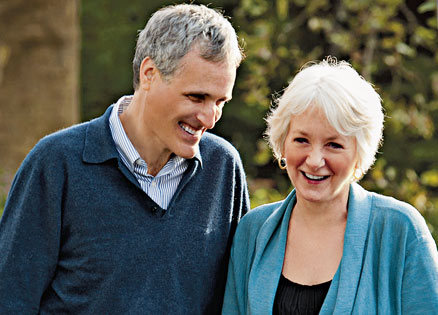
My wife, Carol Wallace, and I were on vacation in California this past summer, lounging at the beach, when her cell rang. She plucked it out of her bag, looked to see who it was, then answered. She walked off to the water’s edge, talking, listening. The call was important.

Ten minutes later she returned, dropped her phone in her bag and went back to the water without a word. She kicked the sand and shook her head.

My wife and I both work with words. If you ask me, she has the far tougher job. I work for Guideposts, finding and editing stories for the magazine and writing for our website.

Carol works at home, writing books. She’s had over 20 books published, but still hits rough patches and has dealt with disappointments.

I waited a moment then went to Carol.

“The book’s not doing well,” she said. This was her latest novel, Leaving Van Gogh, about the artist Vincent van Gogh and the doctor who cared for him. A project she’d put her heart and soul into. “It’s only been out a couple of months,” I said. “You’ve gotten some great reviews. Isn’t it too soon to tell?”

“Not for the publisher. Remember the publicist who told me that a book has just six weeks to find its readers?”

“But, but…” I sputtered. I wanted to protect her and at the same time argue her out of her despair. Make her see the bright side, even if it was pretty dim. I wanted to help. “Books last a long time. People can still buy it online. Strangers have sent you e-mails. Readers love it!”

“Apparently not enough of them.” She turned to me, too angry to cry. “I got fooled by this book. I shouldn’t have hoped so much. I hate hoping. What a waste of energy and time.”

I wanted to say more. She couldn’t give up hoping! But something, maybe a little lesson gleaned from 28 years of marriage, told me to keep silent. I hugged her and she headed down the shore, grieving. I returned to our summer rental, hatching plans.

I opened my laptop and started compiling a list of how to fix things. Isn’t that what husbands do? I knew how publishing worked. Some of Carol’s books had sold hundreds of thousands of copies, some had dropped off the map, but that was no reason to give up.

I thought of one of her first books, To Marry an English Lord, about American heiresses at the turn of the last century who married into British aristocracy. It hadn’t been a best seller, yet 20 years later it was still in print.

“Thirty Surefire Ways to Promote Leaving Van Gogh,” I typed.

“1. Launch new publicity campaign.

“2. Create Facebook identity for Leaving Van Gogh with paintings on wall.

“3. Tweet Van Gogh quotes three times a day & link to website.

“4. Forward reviews to additional press.”

Late afternoon, brimming with ideas, I put on my running shoes and jogged out on the boardwalk, following the curve of the bay. Mentally I added to the list: Contact libraries for a potential book talk… Visit local Barnes & Noble and offer to sign inventory…

The sun dipped lower on the horizon. Move Carol to the top of your prayer list. Of course. She was feeling down. If she’d follow my suggestions, just half of them, books would start moving.

I turned around and headed back, my feet pounding along the boardwalk. What else could I do to help Carol?

Carol had spent four years on this book. She took a huge risk. No publisher had asked her for it. She’d done it on faith, trusting she’d been given the inspiration for the story because she was meant to write it. She’d labored over every page.

The first few agents she sent it to didn’t respond to her e-mails. When she finally sold the manuscript, it was like sending our firstborn off to kindergarten.

She quoted Van Gogh at the front, “It is my constant hope that I am not working for myself alone,” but the epigraph could have been hers too. And now she felt like she’d failed. I felt her pain.

I stopped running and focused on a sudden thought: Rick, keep that list to yourself. It’s not what Carol needs. Don’t try to fix things. Just listen and sympathize.

Our vacation ended and we went back to New York. Carol had a few talks scheduled. Friends asked her to speak to their book groups. She got another rave review and more positive comments on Amazon. I wanted to say, “See, good books do find their readers,” but I refrained.

We were anxious about money with our younger son in college, but when Carol asked, “Who will ever buy a book of mine again?” I knew it wasn’t a question to answer out of anxiety.

It takes as much faith to write a book as it does to trust in God’s provision. That was what we needed to do. But Carol was inconsolable.

Then something amazing happened. That September we got hooked on a British TV series called Downton Abbey, about a British earl and his American heiress wife. It was fictional, but the details were familiar to Carol from her earlier book—the grand English manor, the rituals, the upstairs-downstairs tensions.

The DVDs from Netflix couldn’t come fast enough. “The screenwriter, Julian Fellowes, is working on the sequel already,” Carol said.

One night I came home from work to find a clipping from the UK Daily Telegraph on the bed. It was an article about how Julian Fellowes had come up with the concept for Downton Abbey. He was searching for ideas for a new screenplay when he happened to read To Marry an English Lord.

“Wow,” I said. “Your book inspired Downton Abbey!” “I know. Isn’t that great?” Hoping again, I thought. Good books find their readers. Especially when they’re written with passion and faith. It is for writers to trust themselves and their gifts.

I couldn’t have said it better. But I didn’t have to. All I had to do was be there for Carol and listen. That was what she needed most.

Download your FREE ebook, Paths to Happiness: 7 Real Life Stories of Personal Growth, Self-Improvement and Positive Change

Norman Vincent Peale: Keep Christmas Calm

Last year a mother in Pennsylvania wrote me a sad letter about Christmas in her home. “It had all started out so well,” she said. “My daughter and her husband traveled more than a thousand miles to be with us. The house was full of children and aunts, and on the morning of the 24th we all joined together to wrap the presents we give to a local home for indigents every year. That was about the last happy thing we did together.

“As the day went on, the tension and crowdedness began to work on us. Disagreements developed into emotional explosions. By Christmas morning our holiday was a shambles.”

That letter probably sounds familiar to thousands of families who recognize the paradox that Christmas brings. The season of love can turn into a time of anger when, tired from travel, from shopping, from all the pressures, we are ready to explode.

How do you prevent such explosions? Families have to work at it.

I recall a friend telling me that Christmas at his home was always more serene when there were nonfamily guests in the house. The family, he said, acquired company manners for the occasion.

This idea of a special guest at Christmas has so impressed me that I’m going to make a suggestion to you if you feel a storm brewing in your home this Christmas: Try making the holiday guest in your house Jesus Christ.

Anybody who sets his mind to it can think of ways to include Him in the family gathering. One man I know says that the first thing his family does on Christmas morning is read the story of Jesus’s birth as Luke tells it. This seems to me a logical and lovely way to evoke His presence in the home.

Then, what guest at Christmas does not have a present waiting for him under the tree? I think of the mother in Pennsylvania who wrote about family gifts for the poor. A similar family project, dedicated to Him, would be a perfect gift, and a vivid reminder of His presence.

Perhaps the best conscious way of making Jesus a guest is at the dinner table. Try setting a place for Him at your table, and be aware of the meaning of the chair set aside for Him. When you say grace, join hands around the table and let the warmth of your love for one another flow from hand to hand.

In your prayer to God, thank Him for the coming of His Son. Pray that the Guest at your table will become a permanent resident in your hearts. I guarantee that Christmas will be a happier family occasion if you do.

Did you enjoy this story? Subscribe to Guideposts magazine.

Norman Vincent Peale: Father’s Day Memories

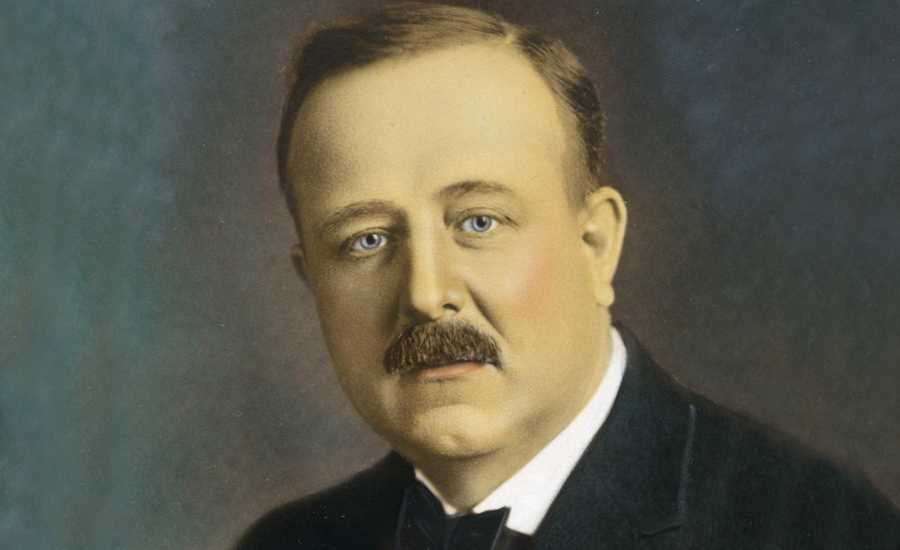
Norman Vincent Peale touched millions of lives with his inspiring message of hope and faith; in turn, Dr. Peale was influenced by his father, a man of courage, conviction, and compassion. Here are six of Dr. Peale’s fondest memories of the Reverend Dr. Charles Clifford Peale.

* * *

Keep It Simple
My father was one of those men who had ideas that were old-fashioned, but nevertheless right up to date. He was full of wisdom. Some of his statements were too old-fashioned to be understood by his generation. He lived much in agricultural communities and many of his allusions were agricultural and had to do with horses and buggies and all that sort of thing. But there are certain ideas that are timeless.

I remember one time I was telling my father about something I wanted to accomplish and he asked, “Just what is it you want to do?” And I started giving him a long speech and he said, “You weary me. You have talked for ten minutes and I haven’t the slightest idea what you want to accomplish. What do you want to accomplish? Put it down in one word on a piece of paper.”

Well, I had a hard time putting it down in one word, but I finally got it down. Then things began to happen—when I had got it down to one word. My father used to say, “You must know what you want to accomplish. Then you ask the Lord to help you. Then, if you have some faith, and if you work your head off, you will bring it to pass.”

GET THESE BOOKS FOR THE FATHERS YOU LOVE

Once he gave me the illustration of when he first met my mother. He had been away from his home town, a little town in southern Ohio, for a number of years attending college and medical school. My father was a doctor before he became a minister. Finally he got back home on a vacation. My grandfather—his father—ran a general store where he sold everything from coffee to reapers, one of the typical rural general stores. “Peale Brothers” it was called.

My father, coming back from the city, was well dressed—had a city hat, you know, and that sort of thing. One day, as he was standing by the front window of the store, he looked down the street and saw this vision of loveliness—a beautiful girl with lovely complexion, blue eyes and golden hair, walking along with the graceful carriage which was to characterize her even as an older lady.

My father had never seen this girl before. He didn’t know who she was. He turned to my grandfather and addressed him as “Pa.” In those days a person’s father was called Pa. After they started calling him Dad. Now it has degenerated to Pop. But in those days it was Pa. My father turned and said, “Pa, see that girl?” Pa said, yes he saw her. My father said, “I don’t know who she is, but I am going to marry that girl before the year is out.”

Sometimes we don’t think of our parents as being romantic, but if they hadn’t been romantic we might not be here. When my mother-to-be later heard of what young Peale had said she told him, “Don’t think you are so smart that you can get me that easily.” But in October he did marry her.

They lived together for nearly fifty years and the day she left us was, I know, the saddest day in my father’s life. He had loved her from the minute he saw her on that street. He told us, “I saw her in the center of my future and I put it up to God and I got her.”

* * *

A Life Reclaimed
When I was a very young boy my father was a preacher in Ohio, and in those days, in the wintertime when the farmers had little else to do, the little village and country churches used to have revival meetings that would go on for two weeks, three weeks, maybe even a month. Sometimes they would bring in a visiting evangelist, but more often the local preacher would preach every night.

And the preachers weren’t fooling around. They weren’t discussing ethical refinements; they weren’t discussing the international situation. They were trying to burrow into human lives, reach individuals, change them from wicked people into good people and get them to commit themselves to Jesus Christ. It was just that simple and uncomplicated.

My father was the kind of preacher who, as they say now, laid it on the line. He talked in plain United States English, with none of the pious loftiness that sometimes gets into the pulpit. It was plain, straight talk. He really used to lay it on the line. My mother, a gentle soul, used to remonstrate with him afterwards at Sunday dinner, “Clifford, why don’t you be a little more polite in the way you talk?”

But he would say, “I’m not impolite. I want them to know what I mean.”

In our community there was a man by the name of Dave who was known all up and down that countryside as one of the meanest and most vicious of men. He was an enormous fellow, tall, broad, and he had a hand like a great sledge hammer. Also he had a terrible temper. If anybody crossed him he was likely to knock the man down and nearly kill him. He was a heavy drinker, he was dishonest and he was foul-mouthed.

Yet he was potentially a good man underneath all this. And each time they had these revival meetings he would come around. People used to laugh about it, saying, “Old Dave goes and gets converted and he stays converted for about a week and then he’s off again.” But it wasn’t funny. Dave was struggling for something. He couldn’t quite get through to it, but he wanted it.

Well, I was sitting in the second pew one night just a small boy when my father was preaching and gave the invitation to come forward and kneel at the altar. And here came old Dave. The floor shook when he walked. He came and knelt at the altar. And my father came down to pray with him.

My father and Dave were chips from the same block in this respect: they were both strong men. They were he-men, both of them. And this time my father said, “Dave, I’m not going to let you go this time until you come all the way. Jesus Christ can change you right now.” And he prayed with him.

Then after a few minutes Dave got up (I can see it to this day) and turned and faced the congregation and said, “Praise God! He has done it now!” And his face was beautiful to behold.

Dave lived for many more years in that same community and came to be known far and wide as a saint. When he grew old his hair was white and his face looked like a granite cliff, but a granite cliff against which the sun was shining. He was a marvelous man.

When I heard that he was on his deathbed, I made a special trip to Salina, Ohio, to see him. I stood by his bed and looked into his blue eyes shining against the white pillow and I asked, “Dave, do you remember my father and mother?”

“I’ll meet them,” he said.

I looked at his frail white blue-veined hand and I asked, “Dave, will you please put your hand on my head and bless me?” And I’ll never forget the prayer that old man offered for me.

10 Things to Know about Norman Vincent Peale

* * *

Doing Unto Othersbr />One Christmas Eve when I was very young, I was out with my father doing some late Christmas shopping in our home town of Cincinnati. My father had as big a heart of love as any man I ever knew. It made no difference who a person was, he loved and talked with them all. And he was a happy man.

On this occasion I was loaded down with packages and thinking how good it would be to get home when a bleary-eyed, dirty old man came up to me, touched my hand with his and asked for money. Impatiently I brushed him aside.

“You shouldn’t treat a man that way, Norman,” said my father as soon as we were out of earshot.

“Dad, he’s nothing but a bum.”

“Bum?” he said. “There is no such thing as a bum, my boy. Maybe he hasn’t made the most of himself but he is a child of God, nonetheless. We must always look upon a man with esteem. Now, I want you to go and give him this.”

My father handed me a dollar. “Now do exactly the way I tell you. Go up to him, hand him this dollar and speak to him with respect. Tell him you are giving him this dollar in the name of Christ.”

“Oh, I don’t want to say that.”

“Go and do as I tell you.”

So I ran after the old man, caught up with him and said, “Excuse me, sir. I give you this dollar in the name of Christ.”

The old man looked at me in absolute surprise. Then a wonderful smile spread over his face. A smile that made me forget he was dirty and unshaven. His essential nobility came out. Graciously, with a sort of bow, he said, “I thank you, young sir, in the name of Christ.”

Suddenly I was happy, deeply happy. The very street seemed beautiful. In fact, I believe that in the moment I held that man in full and complete esteem, I came very close to Christ Himself. And that is one of the most joyful experiences any person can have.

* * *

Making Something of Myself
I was a boy of 12 in 1910, and we were living then in the Norwood section of Cincinnati, where some citizens were swept into a fright by the fireball that was Halley’s Comet. I’m glad to say, though, that no such fear buffeted the Peale household, and I have my father to thank.

My father, the Reverend Doctor Charles Clifford Peale, welcomed the coming of Halley’s Comet. He was an avid reader of astronomy and knew this comet wasn’t a burst of celestial chaos. Far from it. To him, its predictable return was vivid proof of divine order.

My father, mother, brother Bob and I did our comet-watching on a pleasant evening in May 1910. We went down the steps of our home and into Spencer Avenue, now dark and quiet. Our neighbors were also out, talking softly under the elms, and among them may have been a few ballplayers from the Cincinnati Reds. The club’s treasurer, Mr. Bancroft, lived next door to us, and Reds players often came to pay respectful visits to his pretty daughter, June.

Soon, right above our house, the sky brightened. And then there it was, the famous comet, so clear and distinct, so incredibly fast and yet perfectly silent. The blazing orb and its glowing tail.

We were all in awe, speechless, except for my father, who was always ready to turn any event into a spiritual lesson. “God is the greatest scientist Who ever lived,” he said. “Seventy-five point six years from now that comet will come right back to where you see it at this moment.”

To my father the comet told time on a scale that only God could command. Trillions upon trillions of miles this comet would travel in the coming decades, and yet still it would return in 1985 at its divinely appointed hour.

“Seventy-five years,” I said, mulling over my father’s words. “What do you know. Do you suppose, Dad, that I’ll be here when the comet comes back?”

To this my father replied, “That isn’t important, Norman. What’s important is that you amount to something before it comes back.”

These words, ringing with wisdom, were illuminated by the heavens, and I’ve spent 75 years trying to heed them.

* * *

Love and Forgiveness
My father was a physician in his early life. At one time he was health commissioner for the city of Milwaukee. Later, he became a preacher, and he always carried in his ministry the two elements of medicine and the Gospel. He felt that the two together had the power to heal.

He was a man who loved everybody. You might find him sitting on a doorstep with a man commonly referred to as a bum, but nobody was a bum to my father. Everyone was a child of God. He had a heart full of love.

One night—it was near Christmas and the streets were decorated with Christmas trees and there was the sound of carols—my father received a call very late from what was referred to in those days as a house of ill repute to come to minister to a young woman who was at death’s door. My father took me with him.

“Norman, you may learn something,” he said. “I don’t want you shielded. I want you to know that there is a lot of sin, wickedness and despair in human life. And the sooner you get acquainted with it, the better.” We were ushered into a bedroom, and there lay this girl, white as chalk. I can remember yet the hacking coughs which came from her thin, emaciated little body.

Her lily white arms, with frail little hands, almost like a child’s hands, lay on the coverlet. She had tuberculosis, probably, or some disease which now might yield to antibiotics; but she was at death’s door. My father knew the signs, and he said aside to me. “This girl hasn’t long on this earth.”

She took hold of my father’s hand. He had a big, kindly hand. He put his other hand on hers. She said to him, “Dr. Peale, my mother was a good Christian and so was my father. We were brought up in a Christian home. What was there in me, doctor, which made me take this road? I hate it. I’m a bad girl. There is no good in me. Oh, what will I do? I know I’m going to die.”

I sat there listening. I didn’t know what to say. Would you? But my father did. He said to her, “Listen, honey, there is no such thing as a bad girl. Sometimes there are good girls who act badly, but there are no bad girls—nor bad boys either—because God made them. He makes all things good. Do you believe in Jesus?”

She said that she did. My father continued, “Just tell me. Let me hear you say: ‘Dear Jesus, forgive me for my sins.’” She repeated those words. “Now,” he said, “God loves you, His child who has strayed, and He has forgiven you. Now you must forgive yourself. Your soul is now pure, and He will take you to your heavenly home.”

Read a tribute from Norman Vincent Peale’s granddaughter to her great-grandfather, Charles Clifford Peale!

That night I first saw the glory, power and wonderment of the ministry, the ineffable privilege of being helpful to another human soul. More than that, I saw on my father’s face and in that poor little girl’s face the love of God. The women standing near had tears on their cheeks. There was beauty in that place of evil; the law of Bethlehem, of the Saviour, was showing itself on a dark and dismal street in Cincinnati, Ohio. Jesus walked those streets.

“Behold, I bring you good tidings…unto you is born this day…a Saviour, which is Christ the Lord.” Everybody needs love. Young people need love to be nurtured well and mature. Older people need love. There is an eternal kindness to offset the harsh vicissitudes of human existence. Whittier terms it “the everlasting mercy.” This is what Christmas teaches us: love.

* * *

A Comforting Final Visit
My father, who died at 85 after a distinguished career as a physician and minister, had struggled against a very real fear of death. But after his funeral, my stepmother dreamed that he came to her and said, “Don’t ever worry about dying. There’s nothing to it!” The dream was so vivid that she woke up, astounded. And I believe that he did come to reassure her, because that is precisely the phrase I had heard him use a thousand times to dismiss something as unimportant.

Years before, when news reached me that my mother had died, I was alone in my office, numb with grief. There was a Bible on my desk, and I put my hand on it, staring blindly out the window. As I did so, I felt a pair of hands touch my head, gently, lovingly, unmistakably. Was it an illusion? A hallucination? I don’t think so. I think my mother was permitted to reach across the gulf of death to touch and reassure me.

Once when I was preaching at a big church convocation in Georgia, I had the most startling experience of all. At the end, the presiding bishop asked all the ministers in the audience to come forward and sing a hymn.

Watching them come down the aisles, I suddenly saw my father among them. I saw him as plainly as when he was alive. He seemed about 40, vital and handsome, singing with the others. When he smiled at me and put up his hand in an old familiar gesture, for several unforgettable seconds it was as if my father and I were alone in that big auditorium. Then he was gone. But he was there, and I know that someday, somewhere I’ll meet him again.

Did you enjoy this story? Subscribe to Guideposts magazine.

* * *

No One Left Behind

Carry each other’s burdens, and in this way you will fulfill the law of Christ. (Galatians 6:2, NIV)

I learned a lot of lessons while our son was in the military. Some didn’t surprise me, like developing a deeper understanding of patriotism and sacrifice. Others, like truly understanding the expression no man left behind, caught me by surprise.

It has become a phrase that we’ve all heard. But when our son first enlisted, it was primarily used in the military.

He introduced us to its concept when he was about to leave for his first deployment. I was agonizing over the fact that he’d be in combat with no one to look out for him. Our son had an answer for that. “There’s a foundational value within our ranks,” he told me. “No man left behind.

That knowledge brought me peace.

And in the military, the wider meaning of no one left behind doesn’t end in combat. It permeates every aspect of military life.

Read More: Giving Our Troops the Power of Hope

I saw it in operation after our son returned home and had to acclimate to life back in the States. I also saw it when he was about to be discharged and had to learn to navigate the VA system. Over the years, I’ve continued to watch him receive help and give help to others.

Watching this value in action has been one of the most beautiful examples of Scripture I’ve ever seen lived out. And it’s something I’ve tried to incorporate in my own life; it’s changed my entire way of thinking about personal responsibility. Now, no matter the circumstance, I’m keenly aware that God expects us to make sure no one is left out or left behind under any circumstances.

How can you make someone gets a helping hand?

No Cats on the Table? What, This Table?

We have a very, very strict rule in the Ruffing household: No cats on the dining room table. Ever.

Of course, I should mention that these three cats are spoiled. They are allowed to sit on the couch and lounge on the ottoman and sleep in the bed, even wander around the bathtub whenever the mood strikes them. So these cats are not living a life encumbered by a whole lot of rules.

Just recently, I decorated the house for Thanksgiving. I spread my special Thanksgiving tablecloth out on the table and set out my floating candle centerpiece. Nice.

Next thing I knew, there was Catillac, lounging directly on the table. On my tablecloth!

“Catillac, get down!” I said sternly. Plop. To the floor she jumped.

An hour later, I spotted her big orange body on the table—again!

“Catillac, no cats on the table!” I reminded her, scooping her up and putting her on the floor.

Later that morning, there was Catillac, lounging on the table a third time.

“Catillac,” I said, in that tone of voice that implies, Haven’t we talked about this?

She looked up at me, her big green eyes sparkling, those wide, pleading eyes that have talked me out of many a can of tuna…and I realized what was going on.

Now that the seasons have changed, the dining room only gets sunlight in the morning—and it spills right through the window, right across my table. Catillac had been sneaking into that patch all morning because it was the only one in the house. To her, basking in its luxurious heat was way more important than some silly rule the humans made up.

I stroked her sun-warmed fur, and she gave me a little prrrmow in return. So I have to wash the tablecloth and wipe down the table…is that SUCH a big deal? As always, her wide-eyed stare convinced me.

“Okay,” I said. “Just for today….”

What rules do you have for your cats…that they ignore? Comment below!

—Allison Ruffing

We want to hear all about your cats! Email us at lovedemcats@guideposts.org

New Life at Easter

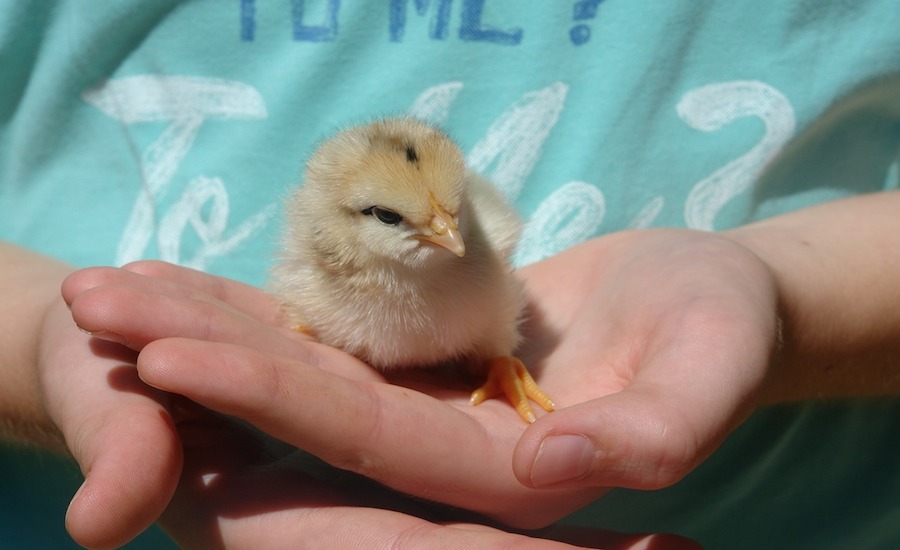
I was eight or nine. The fresh green aroma of hay filled the barn as I stood peering into a wooden nesting box beneath a glowing heat lamp. Growing up in Vermont, I had many opportunities to spend with farm animals. This was my first time witnessing the wonder of a baby chick hatching.

I still go through the same emotions as I did when I was a young girl, thinking about this miraculous event. First, there’s anticipation. The tiny beak within pecks at the shell. It makes such a tiny crack. It seems to take forever. The chick pecks then rests, regrouping to peck again. The crack widens.

Then, amazement. The chicken finally emerges from the egg. So much effort to start its new little life!

Next, a bit of disappointment. The newborn chick is not what I expect. Wet feathers stick to bare, pink flesh. Dark patches encircle closed eyes. It collapses at an awkward angle, and I worry.

Now, joy. It moves! It’s alive! It lifts its head. Soon the chick is standing, the feathers are drying. There is hope in this new life, and the beauty ahead.

We may go through the same emotions in our relationship with the Lord:

Anticipation–what is ahead? Will our path be rocky or smooth? How will He work in our life?

Amazement–He is there for us! He brings things together in powerful ways! Our prayers are answered!

Disappointment—what’s going on? This isn’t what I wanted. Life is difficult.

Joy—in everything, there is hope. In the good and the bad, there is God. We can do all things, because of Him.

Every Easter when I see a newborn chick (or bunny, or lamb), I still get the same feelings of awe and joy. This is a brand new life, a miracle of God’s creation!

And through this mushy, heart-melting love of springtime baby animals, I am reminded of the promise of new life through Him.

New Friends

I was about to turn 40, and I was dreading it. Not just because of all the baggage that goes with that dubious milestone, but because Michael and I had lived in our new town only for a few months. It wouldn’t be so bad if I had my real friends around me, I sulked. I didn’t feel a part of things here. At our new church, around our neighborhood and at the school our kids attended, everyone else seemed to belong. I didn’t fit in; I would never build the rich friendships I’d left behind in Chattanooga.

One morning, Marie, a neighbor, asked me, “Can you come to a surprise birthday lunch next week for Ann?”

I hesitated. I didn’t really know Ann. Then again, I didn’t really know anyone here. It seemed easier to say yes to Marie than no.

I gave it no more thought until the morning of the lunch, when suddenly I realized I didn’t have a gift. I had no idea what Ann might want, so I hastily whipped up a batch of blueberry muffins, shoved them in a bag with a green bow and set out for the unfamiliar restaurant, my hair still damp from the shower. I was embarrassed that I was running late, and in the car I thought, If these were old friends, I wouldn’t feel so uptight.

I slid some coins into a parking meter and hurried inside only to find myself speechless before the hostess. I didn’t know Ann’s last name! “Have some women shown up for a surprise party for Ann…Ann something?” The young woman double-checked her list.

“No, no one by the name Ann,” she said.

Now what? Had I got the time wrong? The day? The restaurant? The hostess must have sensed my confusion because suddenly she smiled sweetly and took my arm. “Come with me,” she said.

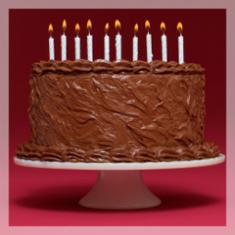
I followed. Then, as we turned a corner, I froze. There at a big round table sat Marie and some women from my church prayer group. In the middle was a homemade chocolate cake with pink frosted roses and “Happy Birthday, B. J.” emblazoned on it. “Surprise!” they chorused.

A slow smile spread across my face. Marie handed her camera to a waitress who snapped a picture of us. In that brief instant as the flash went off, I was filled with a gentle warmth. And I thought, Don’t all old friends start out as new?

National Answer Your Cat’s Questions Day

Cats have many questions. Perhaps that’s why they’re such wonderful companions. Curiosity doesn’t kill anything but boredom. Thankfully, a special day has been set aside to respond to your kitty’s queries: January 22 is National Answer Your Cat’s Questions Day! Here are some possible exchanges between you and Boots.

1. Why are you disturbing my nap? Could you please keep it down?
Answer: Excuse me. Of course, I should be more sensitive to your schedule.

2. What is that you’re eating? Can I have some?
Answer: Not everything we eat is good for you. You already had your dinner. You have a nice bowl of cat food. Oh, okay, here try some.

3. Why did God make me so adorable?
Answer: This is to make up for the times when you get into mischief. Like the time you un-decorated the Christmas tree. Or when you went through the screen door to chase that blue jay. Or when you unraveled my favorite sweater.

4. Why do you waste your time talking into that talky-box contraption when you could be paying attention to me?
Answer: Yes, I understand by your yowls and meows that you wish to distract me from my phone conversations. But sometimes they can’t be avoided. Don’t you know that I’ll always snuggle with you when I’m done?

5. What is outside the window/in this box/on the other side of this door? I must know!
Answer: I know you cats are curious, but I have a question for you. Do you have to crawl inside/pounce on/bat at everything you see? Well yes, I admit…that’s what makes you so endearing.

What questions do you think your cats are asking you?

My Valentine’s Day Resolution

At Marland Heights Elementary School in Weirton, West Virginia, Valentine’s Day appeared as a counterpoint to the gloom and slush of winter. My classmates and I decorated our second-grade room with Cupid cutouts and paper doilies, and the teacher covered a big box with shiny scarlet paper.

We dropped in envelopes marked with the names of our friends. When February 14 arrived, the homeroom mothers handed out pink-icing cupcakes and each of us was given a basket filled with candied hearts that said Be Mine, Have a Hug, and Love Always.

Then came the big moment. The teacher passed out the valentines. I ripped mine open eagerly. There was a touch of velvety flocking on the card from Karen Sue Amos, a gleam of satin on the one from Nancy Moore.

And there was always the chance someone would give me a card showing a puppy or kitten with a valentine heart in its mouth. Those were my favorites.

Then, in fourth grade, it occurred to me the number of valentines you received could be seen as a barometer of your popularity. As the teacher passed out the cards that year—and the stack on the desk of the pretty, popular girl in front of me grew—I prayed anxiously that I’d have an acceptable showing of my own.

Out of the corner of my eye I caught sight of a nearly empty desktop. Behind it sat Emily, the new girl, gawky and shy. Hardly anyone had sent her a card. I hadn’t even thought of it. Suddenly I felt like crying.

Be Mine, the valentines said. A valentine meant you were somehow chosen. But was it right that some people got lots of attention while others were virtually ignored? What kind of holiday was this?

Romance muddled the day even more when I became a teenager. Mid-February meant dances or parties or presents—from your boyfriend. Even the encyclopedia said it was a day for lovers. What happened to people just telling each other they cared?

Freshman year at Wooster College in Ohio, I felt completely left out on Valentine’s Day when the boys gathered in the courtyard behind Holden Hall to serenade the girls. The co-eds watched expectantly from their dormitory windows. Who would be next to be “pinned?” No chance for me—I didn’t have a boyfriend. I closed my window and rifled through my mail.

What was in the package from my 12-year-old sister, Jeannie? I unwrapped the small box from the Stone & Thomas store in Weirton. Inside was a pretty choker of costume-jewelry pearls, nestled in an array of hearts cut from red construction paper. On the biggest heart was written: To M.A., I love you, Jeannie. I held the necklace to my cheek. Who cared if I wasn’t having dinner with the captain of the football team that night? My little sister loved me.

Despite this lesson, as the years passed and I moved to New York City, my enthusiasm for Valentine’s Day waxed and waned. There were times when long-stemmed red roses arrived at my desk at work and I was ecstatic. There were other times (depending on the man in question) when the attention felt forced. By the time I was in my late forties, cynicism had triumphed. I had written off Valentine’s Day as a trumped-up sham whose only purpose was to make cash registers ring.

One icy gray morning in mid-February a few years ago, I opened my apartment door to retrieve my newspaper from the hall and saw the elevator operator delivering a vase of tulips and freesias to a woman who lived on my floor. “I knew my boyfriend wouldn’t forget Valentine’s Day!” she cried. Envy shot through me, and a flash of bittersweet regret. I shut my door, alternately annoyed by such a stupid holiday and swept up by self-pity. Valentine’s Day. Bah, humbug!

Stomping into my bedroom, I yanked clothes from the closet for work. I pulled on a dark dress (resolutely not red) and then fumbled around for my shoes. Above me on the top closet shelf, a dangle of silk caught my eye—a dark scarf thrust among boxes.

I gave the scarf a tug. It stayed put—but a shower of red paper hearts fluttered down on me, like confetti at a ticker-tape parade. At once I was transported back to the February fourteenth of my freshman year in college. I’d saved the hearts from my sister all these years. Out of my hair I plucked the one with handwritten words: To M.A., I love you, Jeannie.

Thirty years later the power of that simple sentiment still reached me. If there was a point to Valentine’s Day it was to tell people you love that you cared about them, just as my sister had done. I’d gotten sidetracked by the importance of receiving valentines. But those gestures of love could be sent, as sure as Cupid’s arrow, from my hands—to family, friends, co-workers or even acquaintances who needed a word of encouragement.

As I picked up the paper hearts, one by one, people I cared about came to mind. Today I’d get cards in the mail—no matter if they arrived late. I’d use this holiday to reach out to people who were having a hard time, or folks I’d just lost touch with without meaning to.

Valentine’s Day has come full circle for me. In December I’m usually too rushed or frazzled to send out Christmas cards, so February 14 is a chance to let people know I’m grateful for their presence in my life—even if I don’t get a chance to say so very often.

Sometimes with my valentines I’ll include a personal “newsletter” like the ones I enjoy receiving at Christmas. I’ll write some simple words to let people know I’m thinking of them, and say a prayer for each person as I sign, seal and stamp. It’s a rite that does wonders to counteract winter doldrums.

So Valentine’s Day is for lovers? Well, yes, I agree. Particularly since those you love and who need your love are all around you. And these days that’s what makes February 14 a real sweetheart of a holiday for me.

Mysterious Ways: On the Lonely Road

Our car’s highbeams cut through the darkness of Maryland’s rural Route 50, heading westbound toward home. It was only 9 PM, but no other cars were around. Trees lining both sides of the road blocked out the moonlight, and the area was so sparsely populated, not even a streetlamp could be seen.

What a spooky stretch this route could be this late in the year, when the crowds no longer flocked to the beach. We should have left earlier, I thought. We would have had time to visit our friend in the nursing home and could have taken the interstate back from there, instead of this lonely road.

Community Newsletter

Get More Inspiration Delivered to Your Inbox


We were returning from our beach house in Ocean City, about three-and-a-half hours from our home. Now that we’re retired, my husband, Charles, likes to check on it every couple of weeks, making sure the gutters are clear, the roof is not leaking, the patio is clean and the yard and the cherry trees are well cared for.

Even in the fall, we love to go down and watch the crashing waves. But we’d gotten too caught up. Before I knew it, the sun was setting. “It’s too late to visit the nursing home,” I lamented. A missed opportunity to see a friend.

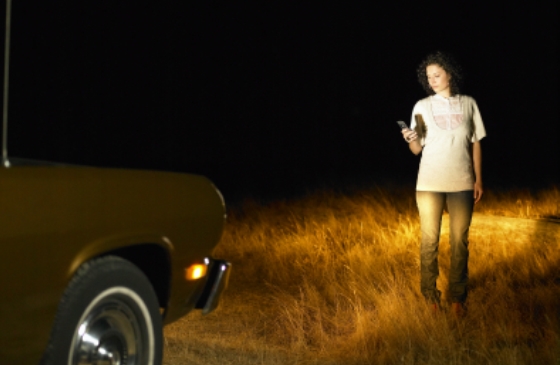
Up ahead, our headlights lit up a figure walking alone along the road. Who would be out here in the dark? As we got closer, I saw it was a young woman, approaching a car parked haphazardly on the right shoulder. We zoomed past. “She may need help,” Charles said. “You make the call—should we go back?”

“Let’s do it.” We circled back and pulled over. I got out and tapped on the woman’s car window. “Do you need help?” I asked.

“My battery died,” she answered. “I called my husband. He’ll be here in 20 minutes or so. I’ll… I’ll be fine.”

I didn’t believe her. Anyone would be scared alone out here in the dark. We didn’t have any cables to give her a jump, but we could keep her company. “I’m Roxy,” I said. “We’re on our way to Silver Spring.”

“I’m Sarah,” she said. “I used to live in Aspen Hill.” That was five minutes away from us. “Maybe you know my grandmother, Elsie?”

Elsie? When she said the last name, memories rushed back. Elsie and I had been friends two decades ago, worked and attended church together. I’d even met Sarah—when she was ten. But Elsie had moved away and we’d lost touch.

“I’ll give you her number,” Sarah said.

We stayed with Sarah until her husband got close. I called Elsie immediately. Yes, getting caught up at the beach house had made us too late to visit a friend. But we’d been right on time to catch up with another.

Mysteriously, Miraculously Evergreen

That Christmas season, Christmas 2002, our tree was absolutely perfect. A white spruce with lush, green needles, and branches that arched upward, as if to heaven. My husband, Al, and our daughters, Corinne and Louise, spent the evening decorating it.

We hung Lord knows how many ornaments, some of them heirlooms that told our family history. Beneath the tree was a pile of beautifully wrapped presents— and a few not-so-beautifully wrapped ones, in baggy, black plastic bags.

To me, those gifts were the most precious, sent by my son, Ephraim. Looking around our festive living room, I thought of that famous line from the film Field of Dreams: “If you build it, he will come.”

I hoped by some miracle that Ephraim would come home for Christmas, even though I knew it wasn’t going to happen. A member of the Delaware Army National Guard Military Police Unit, he was stationed overseas with the U.S. Air Force in Riyadh, Saudi Arabia.

He and his team were tasked with the job of base security. Ephraim had been there since August and was not scheduled to return home until the following March.

I prayed every day for my son’s safety. If there was even the slightest chance that he would be back for Christmas, I wanted him to come home to the perfect celebration.

Then came the phone call.

“Mom?” said Ephraim. The line crackled with static. Just from the way he said that one word, I knew something was wrong.

“What is it?” I asked.

“Things are pretty edgy over here,” he said. “It’s even worse than what you’re seeing on the news.”

And what we were seeing was bad enough. Terrorist attacks were escalating. The situation was devolving into chaos.

“You’re definitely not coming home for Christmas, are you?” I asked, trying to mask the fear in my voice.

“Still hoping for March,” Ephraim sighed. “It was never a real possibility I’d be home for Christmas.”

I didn’t know what to say. I was afraid my worries would infect him. He had enough to be concerned about. I didn’t want him to know how scared I was.

“Hey,” he said, breaking the silence, “did you get the presents?”

“Yes, they came the other day, tied with a ribbon. Who helped you with the wrapping?” We shared a laugh.

Then a sudden urgency crept into his voice. “Mom, I’ve got to run. Probably won’t get to talk to you until after the holidays, so please tell everyone merry Christmas from me. I’ll e-mail when I can.”

The phone went click. Ephraim was gone.

Christmas Day arrived, but Al, the girls and I didn’t feel much like celebrating. How could we, with Ephraim so far away?

Suddenly, I had an idea. “What if we wait until Ephraim returns home to have Christmas?” I said. “We’ll leave the presents unopened, even if we have to wait until March.”

“And what about the tree?” Louise asked. “It won’t last till then.”

“We’ll water it,” I said, “and hope that its needles stay green. We’ll leave it up as long as possible. For Ephraim.”

January arrived with no word from my son. Still, I held out hope that we would be able to celebrate with him soon. I watered the tree faithfully, and so far it looked as fresh as the day we brought it home.

By the end of the month, though, it was clear that the trunk had dried out. It no longer soaked up the water. I removed the water pan beneath it and sprayed the branches themselves.

I knew it was a lost cause. It was only a matter of days before the needles would turn brown, the branches would sag and we would have to throw it out.

My heart sank. I feared for my son. I thought that he’d be home by now, Lord. Was he, too, running out of time?

A week passed. Then another. Yet somehow, the tree’s branches remained robust, its needles green.

One cold February night, Corinne and Louise tied yellow ribbons and bows to the branches in honor of their brother.

Lord, bring Ephraim home, before the needles on the tree begin to fall, I prayed.

On March 1, I tidied Ephraim’s room, imagining the moment that he would walk through the front door. Finally!

And then we got the news. News that made me fear even more for my son. A new wave of violence had broken out. Terrorists blew up a Riyadh hotel, killing a number of Americans.

Ephraim’s unit was ordered to remove the bodies, and then remain on high alert. That meant serving 14-hour shifts patrolling the base, dressed in full battle gear in 120- degree heat. His return was put on hold indefinitely.

How could I wait any longer? I wondered. How could I get through even one more day without seeing my son?

Standing in the living room, I looked at that tree we had left up for Ephraim. Still green. Still holding on. Strong and faithful. Like it’s waiting for him, I thought.

If this tree could hold on for my son, maybe I could too.

No one from Ephraim’s unit returned home in March. No one returned home in April. But every time my faith flagged, I turned to that tree, still somehow alive. God, I hear you, I prayed. I won’t give up hope.

Ephraim called in early May. Again, a scratchy connection. But his joy was clear. “Mom,” he said, “I’m coming home!”

On May 10, he finally walked through our front door. Our hugs and tears—both his and ours—seemed like they would last forever.

Finally, he stepped through the foyer into the living room. “Oh, my Lord!” he cried.

The tree, with its ornaments and yellow ribbons, stood tall and proud, as robust and green as the day we decorated it. Corinne threw the switch and lit the lights.

“We weren’t the only ones waiting for you,” I said. “Christmas did too.”

“Amazing!” Ephraim exclaimed. “But where’d you get a perfect Christmas tree in May?”

We told him the story that evening, after opening presents and feasting on a holiday meal. Only then did we notice that the branches were suddenly turning. We took down the tree and put it outside.

Overnight its color changed, from green to a sickly orange-brown. When I touched the tree the next morning, the needles fell in cascades to the ground. How had it lasted this long?

It had survived just long enough. To teach me not to quit believing. In hope. In God. In his saving power that never fails, never withers. It’s evergreen.

Download your FREE ebook, Mysterious Ways: 9 Inspiring Stories that Show Evidence of God's Love and God's Grace

My Promise to Dad

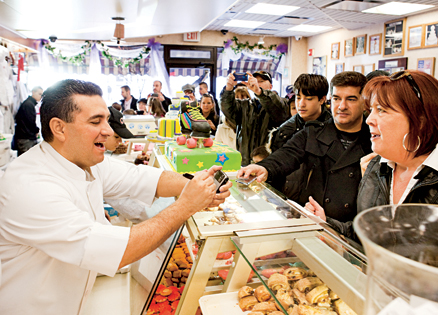
They call me the boss. Cake Boss, that is.

Maybe you’ve seen my show of the same name on TLC—it’s a slice of life straight from my family’s historic bakery, Carlo’s Bake Shop in Hoboken, New Jersey.

But it was really lobster that got me started—yes, I’ll explain—and an unforgettable dream I had weeks after my father, the true Cake Boss, died, a time in my life of great doubt and grief and confusion.

Carlo’s Bake Shop is a family affair if ever there was one, and a second home for my wife, Lisa, and me and our four children. I work with my four older sisters (Mama just retired after 40 years), two brothers-in-law, cousins and plenty of nonrelatives too.

I consider them all my family—or mia famiglia, as I like to say.

Sure, we get on each other’s nerves sometimes (what family doesn’t?), but we also have a lot of fun.

Together we’ve made everything from a six-foot-high replica of the Empire State Building to a life-sized racecar for NASCAR built from 24,000 cakes (that one took a few years off my life!) and we bake thousands of Italian pastries, cupcakes and wedding cakes each week.

I thank God that we’re so busy and that I get to do what I love. But even though I’m a fourth-generation baker I didn’t always think I had the gift.

There’s a saying about the men in our family, that our hands are blessed by God to do this work. My grandfather and great-grandfather were bread bakers back in Italy.

My father, Buddy, Sr. (Bartolo was his given name, but everyone called him “Buddy”), came to America and he worked in bakeries too, only his specialty was pastries. When he was 25 he bought Carlo’s after the owner retired. A year later he married my mom, Mary.

Together they ran the bakery and went on to have four daughters. Just when they thought they were done, guess who came along? Me.

It wasn’t until I was six I got my first taste of what my father did for a living. One day I stared up at him putting on his crisp white baker’s uniform and announced, “Daddy, I want to come to work with you.” That day he brought me to Carlo’s.

I loved the sweet intoxicating aroma, the whirr of the machines, machines like I’d never seen before! Dad folded up an apron to fit around my waist and propped me up on a bucket so I could watch.

In his hands pastry dough came alive. It hopped up on the rolling pin, unspooled, then lay flat like it was sleeping. It was like magic. I was in awe.

The older I got, the more I went to the bakery with Dad. Not because I thought I was going to become a baker though. In fact, I thought I would not be taking it up. With a few strokes of a pencil, Dad could sketch out the most intricate, beautiful decorations for a wedding cake.

Me? I had no artistic ability. Zero. My school art projects were disasters. (Thank God for today’s computer imaging systems at Carlo’s—if we relied on my sketches to sell our cakes we’d have gone out of business years ago!)

Besides, Dad didn’t want me following in his footsteps. “You are not going to do this for a living,” he’d say in his husky Italian accent. “You are going to college.”

Still, he wanted me to learn responsibility. So he put me to work—and not in the back of the bakery where the action was. No, my job was to scrub floors and clean the bathroom, hard labor for a 12-year-old.

Eventually he let me help with food prep—cracking eggs, even decorating cookies. One day he had me put the cherries on top of our popular sugar cookies.

“Why are you doing it with one hand?” Dad asked. “God gave you two hands, do two at once!” Every task was a chance to teach me how to do things right and then do them better.

Even if I wasn’t planning on being a baker, I loved watching Dad work. His fantastic cakes were legendary in Hoboken: multitiered wedding cakes, sheet cakes, specialty cakes, you name it.

Customers would come in, see what he’d made and throw their arms around him. “Buddy! You’re the greatest! Thank you!” I thought it was pretty neat to do something that made so many people happy.

No matter how successful the bakery was, though, Dad always wanted to take it to the next level. We’d pass a newsstand and he’d blurt out, “Buddy, just imagine what it would do for our business if we got into one of those bridal magazines!” Dad was as much a dreamer as he was a worker.

Oh, yeah. The lobsters. I haven’t forgotten. We’ll get to that.

Dad taught me how to make a few things, just for fun—tea biscuits, éclairs, napoleons. “Watch my hands, Buddy,” he’d say. I picked things up pretty quickly. When I was just 16, Dad actually entrusted me to decorate wedding cakes.

I couldn’t put my design on paper, but I’d take one look at the cake in front of me and go into a zone—a place where my hands took over. It would just come. I’d step back and the cake would look great.

“Your son is unbelievable,” people told Dad. “He’s just like you!” Dad was proud but he insisted, “Buddy will do better than me. He’ll go to college.”

I mastered taralles, fondant icing, pasticiotti, all the special­ties people come to Carlo’s for. Well///except for one thing. One impossible thing.

No matter how hard I tried—and I tried and tried and tried—I could not make sfogliatelle, also known as lobster tails—delicious, flaky, cream-filled pastries that are a signature item at Carlo’s.

Learning to massage the dough and form it into layers as thin and delicate as parchment is like getting your Ph.D. in baking. Old school Italians rhapsodized about how feathery and light my father’s sfogliatelle were, how no others compared here or in the old country.

Yet time and time again my lobster tails failed. But I kept hope. With Dad as my teacher, I’d get it. There was plenty of time for me to learn.

Only there wasn’t. Dad got lung cancer. It was my seventeenth birthday and I was standing by his hospital bedside with Mama when he told us the diagnosis. We were all in a state of shock. Beyond shock. Then Mama whispered, “What are we going to do?”

I knew the answer. It was the only answer as far as I was concerned. I looked Dad in the eye. “I’m gonna work full-time at the bakery,” I said. “I’m going to make Carlo’s a household name, like you always dreamed, I promise. I’m going to make you proud, Dad. Just get better.”

Tears trickled down Dad’s cheeks. “Buddy, I want you to graduate.”

“No, I want to run the bakery. We have to keep it going,” I said. That afternoon Mama drove me to school and we filled out the paperwork for me to officially leave high school. Three weeks later Dad died. He was only 54.

No matter how hard I worked—and I had to with Dad gone—I couldn’t escape my grief. Almost every night I’d demand of God, How could you take away my father? How can you expect me to go on without him? How?

The Carlo’s team and I kept up with orders. Except for one thing—lobster tails, and customers kept asking for them. One night, maybe three months after Dad’s death, I couldn’t take it anymore. I had to figure it out.

I made a huge batch of the dough, rolled it out till it was thin enough it was almost translucent (that’s how it needs to be to achieve that light-as-air effect). But when I stretched it, it ripped. Other spots bunched up.

My uncle Dominic stood over me, shaking his head. “You should be able to do this,” he said. “You’re Buddy’s son.”

True, I had my father’s name and now his bakery. But maybe I didn’t have his hands. Maybe I wasn’t blessed. Maybe I’d never keep my promise to Dad.

That night I begged God for an answer. Did you really mean for me to be a baker? Am I just being a fool? I fell into an exhausted sleep and dreamed I was back in the basement at Carlo’s, only my father was there!

He looked vibrant and healthy. Strong. I threw my arms around him like I would never let go.

“Dad! I miss you,” I said.

He gently removed my arms and fixed me with a look. A serious look. “Listen,” he said, “I’m not here to play around. I’m here to show you how to make lobster tails one more time.”

I nodded. We moved to the work table. “Now watch,” he said.

We worked side by side, me mimicking his every move like always. He pulled the dough; I pulled it. He stretched it; I stretched it. Then something shifted—Dad was gone and there were two of me working the dough side by side.

All of a sudden those two Buddys came together. My hands and my father’s hands had become one and the same. A perfect roll of lobster tail dough stretched out before me.

I could still picture it when I woke up the next morning. I rushed to the bakery and told Mama about the dream. “Oh, Buddy! God must’ve sent you that dream,” she said, her eyes welling up.

Then I got right to work. I shoveled flour, gallons of water and some salt into the mixer and waited for the dough to form. It was the longest 15 minutes of my life! I paced around that mixer. My family stole glances at me. They probably thought I’d lost my mind.

Finally, the dough was ready. I rolled it out on the counter and let my hands do their thing. Pull, stretch. No rips, no bunched up spots. I was in a zone. Soon a perfect roll of lobster tail dough stretched before me. Just like in my dream.

Those lobster tails came out of the oven looking like Dad’s. I picked one up and took a bite—light enough to float away! I’d mastered the lobster tail! Mama, Uncle Dominic, my sisters, everyone burst into applause.

From then on it was like Dad was an angel on my shoulder helping to guide me. In 1999 we made our first bridal mag­azine, and more followed, along with appearances on TV shows like Food Network Challenge and Today. Two years ago, Cake Boss was born.

Every day when I walk through those bakery doors, I’m reminded of Dad, the real Cake Boss. I like to think he’d be proud of me, of our family, and proud that with hard work and a lot of faith, I’ve made good on my promise to him.

Take a video tour of the Cake Boss' bakery and get the Cake Boss' top baking tips!