Embrace God's truth with our new book, The Lies that Bind

Joel Osteen: On Prayer

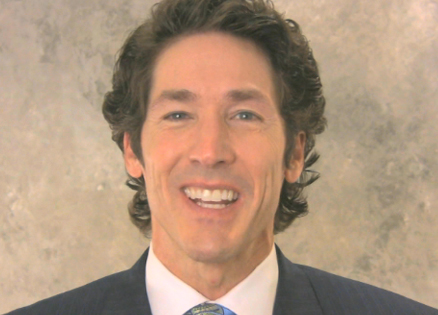
Hi. I’m Joel Osteen. I’m the author of Every Day a Friday

You know, a lot of people talk to me about how they don’t know how to pray. They weren’t raised in an environment like mine, and they think we have to do these formal prayers of these and thous. But I always encourage people, praying is just talking to God, like you’d talk to your good friend. And I don’t think you have to do this deep theological language. I think you can just say, “God, I’m asking you to help me today. Help me to make good decisions. I’m asking you to protect my family.” I think all through the day you can pray. The scripture says to pray without ceasing, and I think that just means, under your breath you can say, “God, help me to do good in this interview. Help me to do good in this business meeting, or God, give me the wisdom to make good decisions.” 

New Every Morning Journal In Article Ad A

So I’ll just encourage you, God will be as close to you as you want Him to be. You can put Him in a Sunday morning box or a Christmas box, and talk to Him once a year, or you can talk to Him every day. And I believe, when you show honor to God, when you value and acknowledge Him, the scripture says, one place says, He’ll crown your efforts with success. And so, I think it’s important to get up in the morning and say, “God, thank you for another day. Thank you that I’m alive and healthy. Help me to do good today.” I think when you acknowledge God like that, I mean, that’s praying. That’s when God will help your day to go better. 

How to Let Go and Let God, One Day at a Time

It sounds like such a straightforward statement: let go and let God. Easy to say but not so easy to do. Right? People who say that don’t necessarily have your life with its stress, worries, fears and problems. Or maybe it’s just me thinking this way?

So “let go and let God” may seem simple, but it’s not. Still, that doesn’t mean it can’t be done. It doesn’t even mean that it has to be hard. It’s possible, if—and sure, that’s a fairly big “if”—you sincerely and prayerfully follow steps such as these:

Faithful Paws and Purrs In Article Ad

1) Identify what you can control—and what you can’t.

My wife is a professional counselor. She and I often remind each other of our shared definition of mental and spiritual health: controlling what you can—not what you can’t.

Much of our inability to “let go and let God” stems from our failure to recognize that often the things that stress us and worry us are things we can’t control.

2) Address what you can control.

Another key to mental health is action. In fact, very often inactivity breeds worry, even depression. One antidote to worry and stress is action. So, instead of brooding over your situation, take action on the things you can control (which almost exclusively pertain to you and your attitudes; funny how that works).

3) Surrender what you can’t control.

In the words of the late theologian E. Stanley Jones, “Surrender the thing you fear into the hands of God. Turn it right over to God and ask Him to solve it with you. Fear is keeping things in your own hands; faith is turning them over into the hands of God—and leaving them there.”

4) Meditate on the promises of your faithful God.

 The psalmist sang, “I remember the days of long ago; I meditate on all Your works and consider what Your hands have done” (Psalm 143:5, NIV).

Replace your frantic thoughts with calming thoughts, based on God’s promises such as, “Never will I leave you; never will I forsake you.” (Hebrews 13:5, NIV).

5) Choose a “letting go” motto. 

Select a memorable verse or phrase that you can repeat to yourself throughout the day to keep your mind and spirit from descending into worry.

For example, “in quietness and in confidence shall be your strength” (Isaiah 30:15, KJV) or “It is well with my soul.” You might even choose a new one every day or every week.

6) Resolve not to act on fear but on faith.

To quote E. Stanley Jones again, “Never act on a fear, for fears are usually false…. Don’t build your life according to any pattern shown to you in the valley of fear. Wait till you get to the mount of faith and then build your life plans.”

7) Focus your mind and heart on trusting God today. 

Jesus said, “Do not worry about tomorrow, for tomorrow will worry about itself. Each day has enough trouble of its own” (Matthew 6:34, NIV).

He didn’t suggest that we won’t have trouble; far from it. He did say, however, that we should focus our minds and hearts on this day and its challenges. That’s plenty. The same God who is with us and empowers us to meet today will be there tomorrow.

So maybe “let go and let God” isn’t expecting too much. If, that is, we do it one day at a time.

Ready to stress less and find peace? Download Abide and add powerful Christian mindfulness meditations into your wellness routine.

READ MORE: 6 Prayers to Let Go and Let God

How to Give Each Moment to God

Every once in a while a book on my bookshelf will seem to scream for some attention. “Hey Rick, here I am. Read me! Read me now! I’m going to give you an important lesson on prayer.” Such was the case with Abandonment to Divine Providence by Jean-Pierre de Caussade.

What? You’ve never heard of such a volume? No surprise. I hadn’t either. But someone must have given me this copy, and I shelved it and there it sat. For years.

Inspiration from the Garden in article ad

De Caussade was a Jesuit who lived in France 300 years ago. Born in 1675, he died in 1751, and nobody would have heard any more of him. Except for a series of letters as a spiritual advisor.

Fortunately many of the letters were saved and over a hundred years after his death someone gathered the letters and put them in a slim volume. And then more letters were gathered and included. The result: Abandonment to Divine Providence.

De Caussade’s advice is so simple and so valuable. Instead of constantly beseeching God with all our requests, he says, the most valuable prayer we can make is one of abandonment. Giving ourselves over to God’s will, accepting it. Letting go of our own selfish desires.

What God has in mind for us can be so much greater than what we think we can do or should do or want to do.

“The designs of God and his will give life to the soul in whatever guise they appear,” de Caussade writes, “nourishing and developing it by giving it what is best for it. This happy state is not brought about by any special happening, but by what God has willed for each moment.”

How to live in the moment? Simply by relinquishing all our greatest secret plans and going for a greater plan. Moment by moment by moment.

“If we carefully fulfill the duties imposed on us by our state of life, if we quietly follow any impulse coming from God, if we peacefully submit to the influence of grace, we are making an act of total abandonment,” he writes.

De Caussade’s little book has been a Godsend for me in past few weeks. I suspect all of us have books on our shelves that we haven’t looked at for years or maybe never finished. Watch out. Listen carefully. One of them might be calling to you! 

How Does Your Spiritual Garden Grow?

The Lord will guide you continually, giving you water when you are dry and restoring your strength. You will be like a well-watered garden, like an ever-flowing spring. Isaiah 58:11 (NLT)

For years I had dreamed about lush flower gardens, and even filled a notebook with pictures of beautiful flowers and various styles of gardens. Each time I found a new idea online or in a garden magazine, I’d show my husband. I knew gardening was my passion, not his, so I tried to be careful not to pressure him. I never thought my dreams would become reality.

A Journey of Faith In Article Ad - Avail Now

But a few years ago he actually suggested we draw up some ideas for a perennial garden. I was in garden heaven, creating, planning, choosing—and then planting several garden areas. They were not as exquisite as the ones in my idea notebook, but they were beautiful to me.

I soon discovered, however, that what I enjoyed was not gardening, but gardens. Gardening requires maintenance: watering, fertilizing, mulching, and yes, pulling weeds. At times, the work is overwhelming just to keep the garden growing and beautiful. Maintenance was low on my “enjoyable” list. But, oh, the joy of sitting in my garden among the fragrant flowers! It is well worth the work.

The Christian life is sometimes like that. We fall in love with Jesus, with His Word, with becoming more Christlike. Everything looks beautiful. Until the maintenance comes. The discipline of faithfulness challenges us; temptation distracts us; and difficulties threaten to overwhelm us. Growth requires intentionality. To keep the garden of our heart beautiful and well-watered, we must cooperate with Jesus, the Master Gardener. Sometimes, that work costs us time, comfort, pain. But a well-watered, maintained garden—whether a physical one or a spiritual one—will proclaim His beauty. Jesus makes all the work worthwhile.

FAITH STEP: Do you enjoy gardens or gardening? Ask Jesus to make you like a beautiful “well-watered garden.” Cooperate with Him today by including a spiritual discipline such as time in His Word, prayer, or Bible study.

How Does Personality Affect Your Prayer?

A way of understanding human personality has gained wide popularity in recent years. It is called the Enneagram. Its origins are a subject of debate and some people view the concept suspiciously or dismissively. To others, however, it is a helpful way to describe and understand human personality. 

The “Enneagram” outlines nine personality types that are commonly identified by numbers. Each personality (1-9) is characterized by a dominant strength or virtue and a dominant weakness or vice (which tends to be that person’s default position when under stress). There is much more to it than that, and some enneagram enthusiasts can talk and talk about each type and its “wings” and so on. 

New Every Morning Journal In Article Ad A

But discovering and understanding your personality can be an aid to prayer. For example, a “1” in enneagram terms is a “reformer”—a person who longs to be good, “right,” or even perfect, but is also tempted to become critical and judgmental. If you’re a “1,” you probably take yourself and your spirituality very seriously. So how does that personality affect your prayer life? You probably tend to have high expectations. You may beat yourself up if you think your prayer life is lacking. So, you may find it helpful to follow the ancient practice of fixed-hour prayer that is explained in such books as Phyllis Tickle’s The Divine Hours. Or you may want to relax your prayer habit, perhaps by taking prayer walks or injecting some form of play (such as coloring or painting) into your prayer life.

If you’ve never taken an enneagram assessment, you may want to start there (this can be done online). If you know your enneagram, however, here is a brief overview of the types, and possible corresponding prayer practices that each type may find beneficial (some because they match a person’s strengths, and others because they counter a person’s weaknesses): 

1.  The Reformer
Strength: Being “good” or perfect
Weakness: Criticism, anger
Prayer Practices: Fixed hour prayer, using prayer books, prayer walks, employing “play” in prayer 

2.  The Helper
Strength: Caring, generous
Weakness: Pride, burnout
Prayer Practices: Solitude, prayer walks, “soaking prayer” (spending time in God’s presence without expectations or demands)

3.  The Achiever
Strength: Success-oriented, rule-following
Weakness: Deceit, concern for appearances
Prayer Practices: Silence, solitude, learning to “be” in prayer (as opposed to accomplishing tasks)

4.  The Individualist
Strength: Sensitive, introspective
Weakness: Envy, melancholy
Prayer Practices: Silence, solitude, journaling, expressions of trust and gratitude

5.  The Investigator
Strength: Learning, thinking
Weakness: Secretiveness, isolation
Prayer Practices: Reading prayer-related books, conversational prayer, praying aloud, praying with others

6.  The Loyalist
Strength: Faith, believing
Weakness: Doubt, indecision
Prayer Practices: Praying affirmations, praying aloud, memorization, prayer journaling 

7.  The Enthusiast
Strength: Wisdom, planning
Weakness: Dissatisfaction, impatience
Prayer Practices: A regular prayer routine, using prayer aids, prayer journaling—especially prayers of praise and gratitude 

8.  The Challenger
Strength: High regard for truth, unafraid of conflict
Weakness: Self-sufficiency
Prayer Practices: Praying affirmations, praying aloud, prayers of submission, trust, and abandonment 

9.  The Peacemaker
Strength: Loving
Weakness: Avoiding conflict
Prayer Practices: Singing, listening to music, praying the Psalms, praying with others 

The above is, of course, an over-simplification, and a case could be made that human personality is so complex that a person should try virtually everything in prayer in order to find a combination that “fits.” I certainly agree with that view. But you may be helped by thinking about how your personality influences your prayer life, and how your prayer life can be enriched by cultivating those practices that take advantage of your personality strengths and counter your weaknesses.

Guideposts Hosts Good Friday Day of Prayer Online

Guideposts has held its popular Good Friday Day of Prayer event for almost fifty years. But this year, for the first time, the event will be online only, due to the lifestyle adjustments—mainly social distancing—that people around the world are making due to the coronavirus pandemic.

“Now, more than ever, people need prayer,” says Ty’Ann Brown, VP of Ministries for Guideposts Outreach Division. “And while this event will be different than previous ones, the music, the messages and the prayer will still uplift and inspire people from around the globe on this Holy Day.”

The Lies That Bind In Article Ad

The event will be held at 1:00 pm ET on the OurPrayer Facebook page.  

Celebrating the passion and death of Jesus, who took on all the suffering and sin of the world, is particularly poignant this year because of all the suffering the rapidly-spreading Coronavirus has caused around the world. “Fear is running at an all time high” says Brown. “People are hurting.  It’s hard not to be able to go to your church during Holy Week. But for one hour we can come together in prayer and celebration of the sacrifices that Jesus made for us.

Previous Good Friday Day of Prayer events were held at the Peale Center in Pawling, NY. Visitors—some who stayed for many hours—could attend a chapel service, take part in the Nail it to the Cross Station and Tour the Dr. Norman Vincent Peale History Center filled with inspiring memorabilia about the Guideposts founder. They also prayed over thousands of hand-written prayer requests that had come in from all over the country.

But this year Guideposts is joining thousands of other organizations and churches around the world that, forced to close their physical buildings due to the worldwide health crisis, have started offering church services online.  “There is power in coming together in person,” says Brown. “But live-streaming a service on Facebook also allows us to bring Christ’s message of hope to more people around the world.”

Please share your prayer requests by clicking here. Our caring community will come together to raise your concerns to the Lord.

God Works in the Wilderness

The Old Testament story of the Jewish people’s liberation from slavery in Egypt is one of the great spiritual journeys of all time. When Pharaoh finally let the Israelites go, we read that, “God led the people in a roundabout way through the wilderness. 

Reflecting on their exodus in her book, A Spiritual Guide for the 2015 Lenten Season, Sister Carol Perry writes: “There is no shortcut on this journey. There is the tedium of the desert where this people will have to learn both to trust God and to become a community. Both of these require time.”

Pause & Pray In Article Ad

Sister Perry invites us to ponder, “Are there times when it seems as if we too are on a spiritual journey that is far too long?”

Her question prompted me to consider my spiritual journey. What was my own desert? While I was there, what had I learned? There was a time when I moved to California with my family to take on a new ministry position in a faith-based organization.

At first it seemed like paradise. Every day was a sunny blue sky day. But three months into the job things weren’t going as promised. I became discouraged and disillusioned. Spiritually I was challenged with feelings of anger, resentment and distrust.

I found myself needing to learn to wait on God, to trust in God and do ministry in spite of my feelings. Elba, my wife, would tell me, “Stay focused.” “Focused on what?” I asked. “On God! And your work at hand,” was the reply that encouraged me to persevere.

Looking back, I thought God had brought me to a new place to do a new job. Little did I know that He had placed me in the wilderness to do a new thing in me. God had my complete attention. My eyes were fixed on God. 

My conversations with God grew longer, and I turned to Scripture and spiritual readings more earnestly for a word of hope. I had become a new person. I learned to endure all things through Christ who strengthened me. (Philippians 4:13)

Are there times when your spiritual journey seems too difficult? When you question what God is doing? Share what you have learned in your personal desert.

Prayer: Lord, thank you for our faith journey and Your presence with us through our spiritual wilderness, especially when they seemed too long.    

God Is Bigger Than Our Problems

One of the great truths in life is that you are bigger than anything that can happen to you—as long as you know it and act accordingly. Every challenge and crisis that comes your way provides the opportunity for you to ask God to release the creative ingenuity, wisdom and strength that lie within you. The Psalmist knew this when he declared, “It is God who arms me with strength and keeps my way secure” (Psalm 18:32).

How do you tap into your inner strength? First, pray to God and place your entire situation in his hands. Say, “God, I commit my challenges to you. Show me the way through them. Give me eyes to see your solutions and strength to act on them.” God wants to help you solve your problems—and who could be a better counselor? “I am the LORD, the God of all mankind. Is anything too hard for me?” (Jeremiah 32:27).

Pray a Day Vol 2 In Article Ad

Next, sit down and lay out your entire problem, perhaps on a piece of paper. Sketch out possible solutions and pray over them, asking God to show you which one is right. When you feel you have an idea of how to proceed, move forward resolutely, praying all the time for the power to succeed. Affirm that you can do anything through the strength that Christ gives you (Philippians 4:13).

If doubts creep in, set them firmly aside with a quick prayer: “God, rid me of these fears and give me your strength.” God will answer that prayer, and, step by step, you will find yourself drawing upon an inner power you perhaps never knew you had. In Jeremiah 33:3, God promises, “Call to me and I will answer you and tell you great and unsearchable things you do not know.”

You can face your difficulties by the presence of Christ, for He is stronger than all of them; He is the antidote to discouragement and fear. Draw upon his power. Walk tall. Stand up to your situation!

God Is Always Ready to Listen

The Lord is nigh unto all them that call upon him. . . . Psalm 145:18

I had just read a passage in a book about prayer, explaining how God was always waiting to hear from us, that He longed for us to call, that He was always ready to listen. Something slightly cynical in me bridled at the notion.

Journey With Jesus in article ad

As ready as I usually am to yammer on about things, I couldn’t quite see how God would be so ready and willing to listen to me. Then in the middle of my morning, when I had a meeting in a half hour, tons of e-mails to be answered and a huge impatience with any interruptions, the phone rang. “Hello,” I answered quickly, making sure my tone said, “I’m busy. Make it brisk.”

“Hey, Dad.” It was William, 7:30 in the morning his time of day. He was on his Blue Tooth commuting to work. All at once my tone changed. “William, how are you?”

He told me about the job he was on right now and how he found it frustrating. He talked about a good friend who had gotten a job in the Bay Area and was moving to his neighborhood. He described a dinner party a group of young women had thrown that Wednesday. I was able to ask him about the job interview, the final round he was going for on Friday afternoon. “At this point, if they offer me something, I’m really tempted to take it,” he said. “Gotta go.”

“Me too,” I said.

Ten minutes was all, but they were the heart of my day. I’d connected with my son; he’d connected with me. For those ten minutes, even though I was intensely busy, I had all the time in the world.

Later I went back to that passage about prayer. I got it, or at least got why God is often compared to a father: He hangs on every word, and He’s always ready to listen.

Our Father, Who art in heaven—glad You’re listening.

Give Us This Day Our Daily Bread

Some prayers you say so often you can skate over the depths of their meaning without much cause for reflection. How often have you said “The Lord’s Prayer?” I’m sure I’ve prayed it thousands of times. It’s a beautiful prayer, covering all bases. No wonder Christ gave it to us to pray. But I can forget how profound it is sometimes. And I need to step out of my comfort zone every once in a while to hear the wisdom of its prayerful words. For instance, that phrase, “Give us this day our daily bread.” I will pray it a little differently after my recent Fourth of July.

Daily bread on the Fourth? That would normally be, for me, burgers, corn, hot dogs, and yes, some blueberries and raspberries on my ice cream to make it red, white and blue. But this past Fourth, before the pre-requisite barbecue, my son, Tim, and I served at our church’s soup kitchen.

Pray a Day Vol 2 In Article Ad

Tim is a regular. He cooks every Friday for the guests and then serves up their meal on Saturdays. I confess I haven’t helped out at the Saturday kitchen in decades; haven’t met with the good people who need the hot meal every week.

READ MORE: GRATITUDE IS A PRAYER

“Dad, we’re going to be a little short of volunteers this Saturday,” Tim said. “Okay,” I said. “I’ll join you.”

I got up early–or at least earlier than I normally get up on a holiday Saturday–and we headed to church. “What should I do?” I asked as soon as we arrived. Marilyn, the woman in charge, put me to work cutting up desserts and then when the guests arrived, she had me spooning out salad for them. Salad for 200.

Give us this day our daily bread? Us, not just me, not just you, but all of us. I got to meet, my tongs in hand, the good people who live in New York, who depend on this hearty meal. This is their daily bread.

“Would you like some salad?” I asked. Yes, said most people. No, said some. Others wanted lots of tomatoes. “Could you give me more tomatoes?” I heard often enough.

“Be generous,” Marilyn had urged, and I was happy to pile salad on their plates, on top of the franks and beans and mounds of rice. We even got to give them seconds until there was nothing left.

My feet were tired from all that standing. My fingers were cramped from wielding the tongs. But I was glad to give someone else their daily bread, glad that God gives me mine.

Tim and I cleaned up in the kitchen, sang “God bless America” (Happy Fourth!) in the kitchen, then we headed to our barbecue, grateful, very grateful.

Give us this day our daily bread? I find myself praying it, thinking of those for whom their daily bread is not to be taken for granted. It’s not just me and mind, it’s ours. How wonderful to have the chance to work hand-in-hand with a church, with all those volunteers, with those donors, to give someone else their daily bread.

Focus, Pray, Repeat

Among my most frequent prayers is the “Kyrie,” or “Kyrie Eléison”: “Lord, have mercy; Christ, have mercy; Lord, have mercy.” Sometimes, I will pray “Lord, have mercy,” repeatedly for a particular person or situation.

I also pray the Lord’s Prayer (“Our Father”) at least once a day, sometimes more. My evening prayers often include other “set” prayers.

For example, I have prayed the general confession (“Lord God Almighty, I confess that I have sinned against you,” etc.) and Nunc Dimittis (“Lord, now you let your servant go in peace,” etc.) hundreds of times. 

And on at least one occasion, I prayed, “My help is in the name of the Lord, the Maker of heaven and earth,” repeatedly, lying face down on the floor, for about a half hour (it was a tough time).

Become an OurPrayer Volunteer and Change the World One Prayer at a Time

Some people might frown upon such prayers, particularly in light of Jesus’ words in Matthew 6:7 (NKJV): “And when you pray, do not use vain repetitions as the heathen do. For they think that they will be heard for their many words.”

When Jesus said those words in his “Sermon on the Mount,” He described two ways not to pray before giving His followers a model prayer (“The Lord’s Prayer”).

He said not to show off in prayer, like the Pharisees of His day, and not to use “vain repetitions,” like “the heathen.” It was probably a reference to prayers offered in pagan temples, but I happen to think it was also intended to mirror Elijah’s contest with the prophets of Baal in ancient Israel.

That’s when the pagan prophets “called on the name of Baal from morning even till noon, saying, ‘O Baal, hear us!’ But there was no voice; no one answered. Then they leaped about the altar which they had made …. And when midday was past, they prophesied until the time of the offering of the evening sacrifice. But there was no voice; no one answered, no one paid attention” (1 Kings 18:26, 29, NKJV).

They thought an answer would be more likely if they spoke long and loud enough, but their “repetitions” were in vain.

Jesus said, “Therefore do not be like them. For your Father knows the things you have need of before you ask Him” (Matthew 6:8, NKJV). And then He told them to pray simply and straightforwardly, “Our Father,” etc. 

The difference between “vain repetitions” and–let’s call them–“good refrains” in prayer has little, if anything, to do with how often a word or phrase is spoken but rather the faith and purpose that drives the prayer.

Read More: Praying with Compassion for Others

Jesus said your Father knows your needs before you pray, so it is vain to repeat yourself in order to get His attention or twist His arm. 

But if repeating a word or phrase helps you to focus your thoughts or even awaken your faith, it may be a helpful practice.  

If repeating a prayer helps you to say things from the heart you couldn’t otherwise express with your mind (or tongue), it can be immensely beneficial.

And, as happened on that occasion when I repeated the biblical phrase face down on the floor for 30 minutes, if repeating a prayer takes you to a new place of concentration, trust or conviction, it can actually be a turning point in your relationship with God. 

I’m sure there are times when I have engaged in “vain repetitions,” when I thought my words were impressing God or when my mind and heart disengaged from my tongue, but more often I have found help, comfort, structure, expression and focus in repeating prayers—not vainly, but purposefully.

Five Classic Christian Prayers

Not for nothing are these five prayers considered classics. They’ve been sung, prayed, memorized, memorialized, anthologized, read, pondered over and treasured for centuries.

The newest is the Serenity Prayer (here’s a great video of it) but even in its relatively short life, it has given us priceless words for relinquishment. Our deepest prayers often don’t have words, but how wonderful it is to find words that express those feelings. “God be in my head and in my understanding.” “Lord, make me an instrument of thy peace.” “May God hold you in the palm of his hand.” These are phrases to mold a soul.

Pray A Word a Day - 2023 In article

Irish Blessing

May the road rise to meet you,
May the wind be always at your back,
May the sun shine warm upon your face,
The rains fall soft upon your fields and
Until we meet again,
May God hold you in the palm of his hand.

Prayer of a Confederate Soldier

I asked God for strength that I might achieve,
I was made weak that I might learn humbly to obey.
I asked for health that I might do great things.
I was given infirmity that I might do better things.
I asked for riches that I might be happy.
I was given poverty that I might be wise.
I asked for power that I might that I might have the praise of men.
I was given weakness that I might feel the need of God.
I asked for all things that I might enjoy life. I was given life that I might enjoy all things.
I got nothing that I asked for—but everything that I had hoped for.
Almost despite myself, my unspoken prayers were answered.
I am, among all men, most richly blessed.

Old Sarum Prayer

God be in head and in my understanding;
God be in my eyes and in my looking;
God be in my mouth and in my speaking;
God be in my heart and in my thinking;
God be at my end and at my departing.

The Prayer of St. Francis

Lord, make me an instrument of your peace.
Where there is hatred, let me sow love;
Where there is injury, pardon;
Where there is doubt, faith;
Where there is despair, hope;
Where there is darkness, light;
Where there is sadness, joy.
O Divine Master, grant that I may not so much seek
To be consoled as to console;
To be understood as to understand;
To be loved as to love.
For it is in giving that we receive;
It is in pardoning that we are pardoned;
And it is in dying that we are born to eternal life.

The Serenity Prayer

God grant me the serenity
To accept the things I cannot change;
Courage to change the things I can;
And wisdom to know the difference.

Living one day at a time;
Enjoying one moment at a time;
Accepting hardships as the pathway to peace;
Taking, as he did, this sinful world as it is, not as I would have it;
Trusting that he will make all things right if I surrender to his will;
That I may be reasonably happy in this life
And supremely happy with him forever in the next.
—Reinhold Niebuhr

Do you have a favorite prayer? Comment below!