Embrace God's truth with our new book, The Lies that Bind

Ever Feel Like Giving Up on Prayer?

Simon Peter answered him, Lord, to whom shall we go? Thou hast the words of eternal life. John 6:68

Those of us who have been praying for many years can relate to having so many confusing things about life and faith thrown at us that we feel like giving up on prayer. We get weary. We get dragged down by rejection. We get depressed. We suffer through bad, unjust situations in our workplaces, our homes and our communities. We struggle to understand why all of this has happened and where God could possibly be in any of this.

Walking with Jesus L&E evergreen_in article ad

Is the way of suffering, sacrifice and hard labor really God’s way? We begin to feel it’s time for God to send us some sort of sign that He’s there. It wouldn’t hurt to have a miracle to prove that prayer still works. After a while we even stop praying regularly, asking ourselves, “Is it really doing any good?”

Life often brings us to a point where circumstances ask us the same question Jesus posed to His disciples, “Do you want to leave Jesus and prayer behind because of how hard this is?” It’s not an easy question to grapple with, but it can be potentially redemptive if we don’t ignore or run away from it.

The question asks us to imagine what life would be like without prayer. Where on earth could we possibly go to find the same spiritual grace as prayer? What alternative things would we be doing instead? Throwing pennies into wishing wells? Sacrificing bulls? Putting plates of food in front of statues? Drinking magic potions? The question is good because the answer is clear: Prayer is our only true lifeline, the only way to remain in fellowship with Jesus, the only way to be perfectly content because we trust in the One we are talking with Who is the Giver of Life, the One Who Feeds Us with bread that truly satisfies.

What are the alternatives to prayer? There really are none.

Encountering God In Daily Living

How do you encounter God in your daily routines?

So much of our daily life entails doing ordinary things that need to get done. Living can easily become a series of just doing stuff unless we see it differently. Can a daily task open the way to encounter God?   

Sugarcreek Amish Mysteries In-Article Ad 2023

Author Craig Barnes, writes, “We have classes to attend, sales to make, reports to write, floors to clean, children to tend, planes to catch and one more customer to satisfy. If all that this is just stuff we’ve got to do, our lives are rather profane.

“But if we are looking for God’s presence in the midst of it,” he adds, “then all of life becomes an opportunity to encounter the sacred.” 

I recalled one evening feeling frustrated about washing the dishes as our dinner guests were in the midst of great conversations.

I couldn’t see the value in the task. There was nothing sacred about washing the dishes. Under my breath I complained until the last dish was clean and dried.

Life has a way of teaching us. I am still doing the dishes or piling them into the dishwasher but with a different perspective. Somewhere along the journey I discovered what my grandmother and mother knew, God is present in the daily chores.

They learned to tend their souls while doing daily activities. I would find them singing hymns, praying or meditating while they washed dishes, tended kids, prepared meals and cared for the sick.

Today the drive in the car is much more than a ride. On some days, I pray quietly or talk out loud to God. Other days, I listen to sermons, and God speaks to me. 

The visit to the hospital with my parents is much more than a doctor’s appointment. It is my way to give back to a couple who gave me so much. It is also serving and living out the Word, honor thy parents.

It is amazing what happens when we seek God and encounter Him in the everyday tasks of life. It changes our attitude…it changes us. We do things differently. The work at hand takes on new meaning. The New Testament teaches us to worship and glorify God in all the things we do…in everything give thanks.

Have you encountered God in your daily schedule? I would like to hear about your experiences at your work or the gym, while tending your children or caring for your elderly parents or any other daily task?

Prayer: Lord, help me to seek, and find You in my daily tasks. 

Do You Give Thanks After You Eat?

Our kids’ youth pastor had joined us for dinner one evening. As always, we had joined hands and prayed before diving into the meal. But when we had finished eating and joined hands again to “return thanks,” as we called the prayer-after-eating, Mike looked surprised.

After “amen,” he asked why we prayed before the meal (like practically everyone else) as well as after eating. I explained that we did it that way for several reasons.

A Journey of Faith In Article Ad - Avail Now

First, I said, “there’s the command.”

“Command? What command?”

I smiled and told him that our Jewish friends and neighbors typically give thanks after they eat, because the Torah says, “When you have eaten and are satisfied, praise the Lord your God for the good land he has given you.” (Deuteronomy 8:10, NIV)

He admitted he’d never noticed that verse about praying after you “have eaten and are satisfied.”

“Plus,” I added, “I once heard or read someone say, ‘It’s one thing to be grateful when you are hungry, and food is placed before you, but it’s something else entirely to remember to express gratitude when your belly is full and your needs are met.” I said that I wanted both forms of “grace” to be present and visible in my life, and in my children’s lives.

He seemed appropriately impressed, though I’ve never asked him since (he’s now the pastor of a large church in a distant land) if he emulated our practice.

I recommend it, though—both “saying grace” before a meal and “returning thanks” after eating (of course, I’m aware that many people use the phrase “returning thanks” to refer to prayer before meals, but somewhere along the line I adopted the phrase to signify the second “grace”).

Because whoever it was I quoted to Mike (I long ago forgot the source of that nugget of wisdom), I think he or she is right. And most of us—almost certainly you, if you’re reading this post—have ample cause to give thanks both when we are hungry and when we are satisfied.

Don’t Waste Time. Pray!

The effectual fervent prayer of a righteous man availeth much. James 5:16

Have you ever sat fuming in a doctor’s waiting room long past your appointment time? Or looked in vain for a tardy friend in a restaurant? Or paced the floor in an airport waiting for a flight, hours overdue? On such occasions, I’m sure one exasperated phrase keeps running through your mind: “What a waste of time!”

Daily Strength for Women in Article ad

But what if I told you that we never have to waste time like that again?

I had a friend named Frank Laubach, one of the saintliest men I ever met. Frank was a missionary who became famous for his success in teaching illiterate people to read. But he also was a man who took literally the line in the Bible that says “pray without ceasing” (1 Thessalonians 5:17), and accomplished this by using what he called “fractional prayers.”

By that he meant that every day he used little blocks of time, which could have been frittered away otherwise, as prayer periods. While waiting for a bus, for example, instead of standing aimlessly at the bus stop, he filled those moments with prayer. He prayed for others gathered at the bus stop. He prayed that the purpose of the forthcoming bus ride might be blessed. In a taxi, slowly making its way through traffic, he spent the time thanking God for as many things as he could think of.

Frank estimated that his “fractional prayers” added up to a total of two or three hours daily. And when I made up my mind to follow his example, I found that the total duration of the short prayers that I offer during a day was quite similar.

What an easy and satisfactory way to keep from wasting time! I started this prayer practice by setting aside one day in the week to try it. I can assure you that I found it so good that I have never wanted to stop!

Keep me aware of all the little blocks of free time during my day, Lord, and let me learn to fill them with thoughts of You.

Discovering the Nature of Prayer

Something magical happens when we pray that I certainly cannot explain. I am happy enough to stand in awe of the divine and to celebrate its presence on earth every single day. But I do know that prayer creates miracles. I know that prayer transforms lives and changes the world. And I know, not because of blind faith, but because I have witnessed it at work, over and over again.

Theologians around the world and through time have filled pages on the nature of prayer. I will give you my own very simple definition here:

GP In Article Desktop

Prayer is our means of celebrating God while reinforcing our connection to the divine and our destinies to create a world on earth as it is in heaven.

When we pray, we reinforce our faith. We put our energy toward God and goodness and helping others. That can only bring about positive results. When we pray for someone other than ourselves, we increase that power exponentially. While Shane was in intensive care, there were groups all over the world, from all denominations, praying for him. I don’t just believe that those prayers impacted his healing—I am certain of it. I have seen the miracles wrought by “prayer circles” on many occasions. For a number of years I hosted a spiritual discussion forum online with about six hundred members. An impromptu “prayer group” arose out of that community. When anyone had a specific worry or ailment—some life-threatening, others less dire, but all important to the individual requesting aid—we would agree to pray for that person. Time and again in the microcosm of my little online world, we saw the powerful and positive impact of these group prayers. I could write books about all the miracles I have witnessed and never run out of material.

The power at work here, the force behind all prayer, is love: love for each other and love for God, which is what Jesus repeatedly emphasized as the two greatest of all commandments.

THY WILL, NOT MINE, BE DONE
Note that my definition does not say that prayer is a place where we ask God to give us things. I’m not saying that you can’t or shouldn’t ask God for what you need. I’m saying that this shouldn’t be the only time that you pray! Many people pray only when they want something. Prayer is a way for us to get closer to God, to celebrate God’s Presence in our lives. We should pray every day for the sheer joy of it. When it is a regular practice, your prayer requests will be that much more powerful when you do make them.

We are not closer to God when we are blindly asking for something. We are closer to God when our prayer is made in the spirit of thy will, not mine, be done. This is why Jesus tells us exactly how to pray in Matthew and Luke. He wants us to understand how it must be done to be effective. The true secret to creating miracles through a successful prayer practice is constant alignment to your highest source, your reason for being here on earth, your service to God’s higher good for the planet and its people.

God is many things, but one of these is Divine Intelligence, which is infinite and therefore unfathomable to the human mind. We can contemplate infinity, but we cannot know it. An aspect of faith is realizing that God is much more than we can possibly imagine, and accepting that greatness without challenging it. Every time I think of the synchronicities that occur on a daily basis to get us where we need to be, of the divine orchestration at play in our lives that ensures we meet the right people at the right time, I am in awe.

I was just listening to an atheist comedian on television ridiculing the power of prayer. He asked, “How is it possible that one being can listen to billions of people mumbling prayers and actually differentiate between all of them? Or care about what they are asking, much less act on it?”

I have to admit that our disbelieving comic has a point for those who are still in a place of questioning. Because there is a legitimate question here to be explored, even for the faithful.

Here is how I have come to answer this question. God listens, hears, and responds to all prayer—as long as you are praying in the proper spirit. To put it most simply: you must speak the right language. When you are praying in a manner that is in harmony with the divine mind, you are heard and your prayers are fulfilled. The miracles flow naturally to you from the unlimited source, which is God.

Anything that is inharmonious to God—ego-driven, greedy, or otherwise “sinfully” motivated—goes unheard and unfulfilled. This type of false prayer falls into the category that Jesus described as “babbling.”

So how do you assure that you are praying in the proper spirit? By following the instructions laid out for you by Jesus. Pray for the healing of others often and freely, as you will be instructed, and when you pray for yourself, always finish the prayer with some version of “in a manner that is in harmony with your divine will” or the phrase I use, “Thy will, not mine, be done.” If you pray in the spirit of surrender, in the clear understanding that you are here to create heaven on earth, you will be heard by the divine mind.

LORD, TEACH US TO PRAY
Jesus had a lot to say about the nature of prayer, particularly while delivering the Sermon on the Mount to his followers in Galilee, which is where the Lord’s Prayer was first introduced. The sermon itself represents the summation of all Jesus’ teachings. Within it, he taught the secrets of life in a pure and simple form. But it is the Lord’s Prayer that stands out as the single most important lesson of Jesus’ ministry.

Jesus gives us very specific instructions about prayer in the Gospel of Matthew, chapter 6, verses 5–15:

“And when you pray, do not be like the hypocrites, for they love to pray…on the street corners to be seen by men…But when you pray, go into your room, close the door and pray to your Father…Then your Father, who sees what is done in secret, will reward you. And when you pray, do not keep on babbling…for your Father knows what you need before you ask him. This, then, is how you should pray:

‘Our father in heaven,
may your name be hallowed,
may your kingdom come,
may your will be done,
as in heaven, so upon earth.
Give us today our sufficient bread,
and forgive us our debts,
as we also have forgiven our debtors.
And do not bring us into temptation,
but deliver us from evil.’ “

It is important to note that different translations substitute the word trespasses and sometimes sin in place of debt. Equally interesting is that Jesus ends the prayer with this powerful spiritual reminder about forgiveness that is usually left off and forgotten in the context of teaching the Lord’s Prayer.

“For if you forgive men when they sin against you, your heavenly Father will also forgive you. But if you do not forgive men their sins, your Father will not forgive your sins.”

Later, in the Gospel of Luke, Jesus is asked by one of his disciples, “Lord, teach us to pray.” He responds again very specifically, with the Lord’s Prayer. So we see in scripture that when Jesus teaches us to pray, it is always with these words.

The prayer is perfect. It is our greatest spiritual gift, from the great spiritual giver.

There is no mystery here, no secret. Jesus literally shouted from a mountaintop the only magic words we will ever need to live a life of perfect joy and unlimited abundance!

Two thousand years later, isn’t it finally time that we listened?

Discover the real secret to happiness and abundance with The Source of Miracles.

Download your FREE ebook, A Prayer for Every Need, by Dr. Norman Vincent Peale

Cover Yourself in Prayer

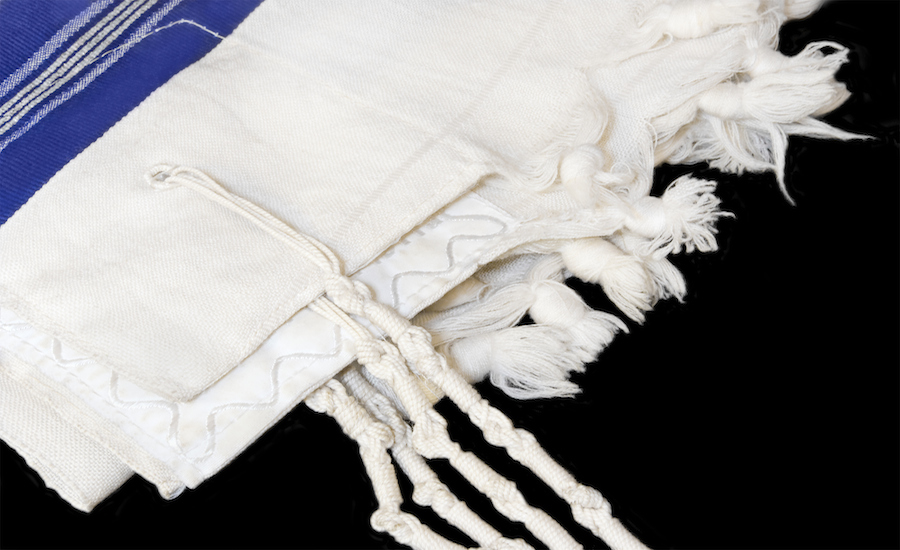
I bought my first tallit, or prayer shawl, on a visit to Jerusalem. I had known for a long time of the Jewish practice of wearing a tallit, especially during morning prayers and during all prayers on Yom Kippur. The tallit has special twined and knotted fringes known as tzitzit attached to its four corners. I had even—on a couple previous occasions—joined a crowd of men in tallit to pray at the Western Wall, or Kotel, the holy site where the Jerusalem Temple once stood. And I knew that Jesus himself wore one, from several stories in the Gospels.

But it was only on my return from Israel that I began occasionally donning a tallit in my prayer times.

Faithful Paws and Purrs In Article Ad

The word tallit or talith comes from the Hebrew word tal, meaning “tent”; the ending it or ith denotes “little.” It functions as a personal tabernacle, a little tent that observant Jews can wear everywhere, constantly, and so—no matter where they might be—enter into a prayer closet.

So in his mishnah (the collection of a rabbi’s main teachings), Jesus said:

“And when you pray, do not be like the hypocrites, for they love to pray standing in the synagogues and on the street corners to be seen by men. I tell you the truth, they have received their reward in full. But when you pray, go into your room, close the door and pray to your Father, who is unseen.” (Matthew 6:5-6, NIV)

I picture him as he says that last sentence pulling his tallit up, covering his head and drawing it closed in front of his face to form a private prayer tent, an always-available prayer room.

I think it’s a beautiful picture. And it is one that has informed and transformed my prayer life. Sometimes, when I drape the tallit over my head and shoulders and pull it close, I experience a focus and intensity in prayer that often escapes me at other times. It covers me—physically and symbolically—in prayer.

In fact, though most of the time my tallit stays at my prayer chair in my home office, I have decided to explore other ways of “covering” myself in prayer.

Donning a favorite hat might prompt a short “presence prayer” as I leave the house. As I put on a special sweater or jacket I might ask for the grace to put on the full armor of God, too (Ephesians 6:10-18).

Pulling up a hood on a garment might prompt me to pray a prayer based on Psalm 91:4: “He will cover you with His pinions, and under His wings you will find refuge; hHs faithfulness is a shield and buckler” (ESV).

Using one of these triggers—or devising one or more of your own—can be a means of regularly covering yourself in prayer. Of reminding yourself that God is there. And hiding in the safety of His presence.

Chuck Colson Was Born Again

Charles W. “Chuck” Colson, who died this weekend, wrote an outrageously good book more than 35 years ago called Born Again. All the ink obituary writers have been spilling about his involvement in Watergate and then his heroic work reaching out to the incarcerated with Prison Fellowship make him sound at best like a second Paul, a man who switched sides. But his autobiographical account of that change shows what an honest spiritual renewal it was.

“Having seen through Watergate how vulnerable man can be, I no longer believe I am master of my destiny,” he wrote in the book’s introduction. “I need God; I need friends with whom I can honestly share my failures and feelings of inadequacy.” He struggled in prayer about what to put down and how to say it. “Out of prayer has come the help needed from experienced editors and publishing specialists.”

God's Constant Presence In Article Ad

One of those specialists was longtime Guideposts contributor Elizabeth Sherrill. Tibby, as she’s known, tells a funny story about being asked to look at Colson’s manuscript and being brutally frank about its failings. Not sympathetic to his political views at all, she marked it up with one stinging critique after another. To her surprise, the editor passed along the inked-up manuscript directly to Colson.

Colson proved to be very grateful and in the end he and Tibby became the most unlikely friends.

Here is how he put it in the book’s acknowledgements: “Tibby had been one of those who marched outside the White House in an anti-Vietnam protest back in 1971 while I sat inside, seething with resentment against all demonstrators. In the secular world a Tibby Sherrill could not stomach a Colson manuscript; nor would a Colson let a Tibby Sherrill within a hundred yards of his book. But because we now share a commitment to Christ we could work together with common purpose, our opposite political viewpoints often producing new insights and more clarity in the manuscript.”

Of all the messages in Colson’s remarkable book, this one feels especially pertinent today. Would that all people of faith could listen to each other as carefully as these two, and learn from each other.

Jesus told us to love our enemies. Tibby Sherrill, well in her eighties today, would still not hesitate to march against any war, but her love of this man who was so different from her is unvarnished and her prayers for him undiminished. That’s what comes of being Born Again.

Bless Yourself with These 9 Bible Prayers

You pray—probably daily—for other people to be “blessed,” right? Blessed with health, strength, happiness and more. In fact, I do so often, using the blessings found throughout the Bible. Until recently, it had never occurred to me to bless myself in prayer. But I’ve found that changing just a few words in biblical blessings helps me to pray God’s Word—and my own desires—for myself. Here are a few examples of the blessings I’ve been praying for myself, straight from the Bible (starting with my favorite, the Aaronic blessing):

1)  “Lord, bless me and keep me; smile on me and be gracious to me; look my way and give me peace” (based on the author’s paraphrase of Numbers 6:24-26).

Rejoice in All Things in article ad

2)  “God, be gracious to me and bless me and make Your face shine upon me” (based on Psalm 67:1, NIV).

3)  “God, bless me abundantly, so that in all things at all times, having all that I need, I will abound in every good work” (based on 2 Corinthians 9:8, NIV).

4)  “Let me experience the love of Christ, though it is so great I will never fully understand it and let me be filled with the fulness of life and power that comes from You” (based on Ephesians 3:16, NLT).

5)  “Let my love abound more and more in knowledge and depth of insight, so that I may be able to discern what is best and may be pure and blameless for the day of Christ, filled with the fruit of righteousness that comes through Jesus Christ—to the glory and praise of God” (based on Philippians 1:9-11, NIV).

6)  “Let me be strengthened with all power, according to God’s glorious might” (based on Colossians 1:11a, NLT).

7)  “Let me be filled with joy” (based on Colossians 1:11b, NLT).

8)  “Master, pour out Your love so it fills my life and splashes over on everyone around me” (based on 1 Thessalonians 3:12, The Message).

9)  “Let the Lord of peace Himself give me peace at all times and in every way” (based on 2 Thessalonians 3:16, NIV).

Love, peace, knowledge and insight, strength, joy, grace, purity, the fruit of righteousness, every good work and the smile of God—who doesn’t want those things? For those we love, yes, but also for ourselves. So try it; bless yourself in prayer and wait to see how God answers.

Be Still with God

The Lord is in his holy temple: let all the earth keep silence before him. Habakkuk 2:20

There are days when I open my Bible to read and fall into the middle of a desert. This morning I was standing outside the walls of Jerusalem with the fiery prophet Jeremiah, lambasting the callous high priest. The biblical scene, set in an ancient world six hundred years before the birth of Christ, seemed foreign and irrelevant to my life and needs. I nearly stopped reading. I did not want to stroll through the arid dust of history.

extraordinary women of the bible

When I finished my Bible reading and began to write in my jour­nal, I found these words flowing across the page: “Sometimes I read the Bible and there is nothing there. Only silence. Yet, even in that still silence I am strengthened; I am drawn to a holy presence. It’s like two good friends who sit quietly alone, content in each other’s company.”

God is such a friend. He is often silent. He does not speak at my demand. But as I grow older, I find I need less of His voice and more of His presence. Just to know that He is with me is enough. Perhaps that’s why the ancient Psalmist wrote in his journal, “Be still and know that I am God” (Psalm 46:10).

Dear Father, may I be still with You today.

Become an OurPrayer Volunteer

Each year, for more than 40 years now, Guideposts, through its outreach ministry OurPrayer, hosts a Good Friday Day of Prayer in Pawling, New York. All are welcome to come and read prayer requests from people around the world.

I remember attending Good Friday Day of Prayer with my parents and siblings and then as a young adult on my own. I feel fortunate to live close enough to Pawling that I can now bring my children to read prayer requests too.

Daily Strength for Women in Article ad

Become an OurPrayer volunteer. Photo: Medioimages/Photodisc, Thinkstock.“I pray to be healed, restored, renewed and blessed mentally, emotionally, spiritually, physically and financially. As I am now in pain, sick and tired and useless. May God richly bless all you prayer warriors. Thank you so much,” read a prayer request last Good Friday.

I brought this one home with me, as I do with one request each year, to keep on my desk so I can continue praying for that person throughout the year.

OurPrayer is a community of faith that has been comforting people through the power of prayer for more than 60 years. OurPrayer offers confidential, free prayer support, 24 hours a day, seven days a week.

Volunteers pray by name and need for each request, bringing the personalized attention and focus that each prayer deserves.

Volunteers pray for people they might never meet in person, yet they are able to make a connection with each individual, giving those in need the reassurance that they are being heard and cared for.

As we all know, this connectedness can provide hope in times of hurt and despair, as well as celebration in times of joy and gratitude.

Do you want to help others in their time of need? Volunteer to be a prayer partner. It takes just one hour a week, from your own home or office.

You can pray online, or write prayers online. I’ve met a number of volunteers, and they consistently say that one hour each week has enriched their spiritual lives by giving them an opportunity to focus on prayer, on others and on God and the faith and hope He provides.

My Grandmother Peale believed deeply in the power of prayer. OurPrayer was a hope (and a very large prayer!) of hers that became a reality. I know how proud she would be of the millions of lives touched through this ministry, both the lives of those prayed for and those doing the praying.

Thank you to all the OurPrayer Volunteers. Each of you is a blessing.

A Scene You Won’t See in ‘Hamilton’

Lin-Manuel Miranda’s record-breaking, Tony Award-winning hip-hop musical Hamilton is indeed as good as everybody says it is, if not better. I saw it last year before it moved to Broadway and was stunned by its originality and its take on some of our nation’s founders. But there is one scene from the life or rather the death of Alexander Hamilton that you won’t see in the musical.

As any winner of Trivial Pursuit knows, Hamilton was mortally wounded in a duel with his political adversary Aaron Burr. The duel took place on July 11, 1804, in Weehawken, New Jersey, across the river from New York City because dueling was against the law in New York.

Pray A Word a Day - 2023 In article

Both men fired once and Hamilton was hit in the abdomen, just above his right hip. He was rowed back to New York to the house of a friend on what is now Jane Street in Greenwich Village. While he lay dying, the rector of Trinity Church, Bishop Benjamin Moore, was sent for to administer Holy Communion.

Read More: Mornings with Jesus Devotional

(If that last name Moore rings a bell, it might be because his son, Clement Clarke Moore, a professor of ancient languages at General Seminary, and like Alexander Hamilton an alum of Columbia University, was the author of the famous poem that begins, “Twas the night before Christmas…”)

According to his account, Bishop Moore hesitated, “being desirous to afford time for serious reflection,” and had to be called a second time that day before he actually made it to Hamilton’s bedside.

The language Bishop Moore uses to describe the conversation he had with Alexander Hamilton sounds outrageously stilted and formal, considering the circumstances–not at all like Lin Manuel Miranda’s riveting lyrics. But no doubt they indicate Hamilton’s intention.

“My dear sir, you perceive my unfortunate situation,” Hamilton is supposed to have said, “and no doubt have been made acquainted with the circumstances which led to it. It is my desire to receive the communion at your hands.”

Moore records the questions he would have had to ask: “Do you sincerely repent of your sins past? Have you a lively faith in God’s mercy through Christ, with a thankful remembrance of the death of Christ? And are you disposed to live in love and charity with all men?”

But the most bizarre request he makes of the dying man is a promise to never engage in a duel again. “Should it please God to restore you to health, sir, will you never be again engaged in a similar transaction?”

How could Hamilton have not agreed?

After receiving communion, Hamilton lingered all day and into the next when Moore was called again to his bedside, “when with his last faltering words he expressed a strong confidence in the mercy of God through the intercession of the Redeemer.” He died that day, July 12, 1804, “without a struggle and almost without a groan…”

Read More: Stumped by a Game Show Question

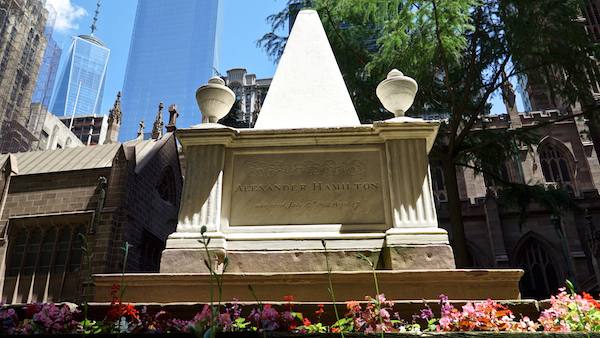
Hamilton’s grave lies within a few blocks of the Guideposts editorial offices in the Trinity Church cemetery. These days you’re as likely as not to see a few Hamilton fans lingering to take a selfie.

Every time I see one of them, I want to tell them about the communion he received on his last day, and the promise a minister extracted from the dying man.

To read more, check out this blog from the Trinity Church archivist.

A Prayer for God’s Blessings

Our spirits rise when we learn how to receive the abundance of good things God wants to give us.

The secret to prosperity and answered prayer is in these two Bible verses: So I say to you, ask, and it will be given to you; seek, and you will find; knock, and it will be opened to you. For everyone who asks receives, and he who seeks finds, and to him who knocks it will be opened. Luke 11:9-10

extraordinary women of the bible

READ MORE: LIVE A LIFE OF ABUNDANCE

Note that the word ask is immediately followed by the words will be given; that directly after the word seek are the words you will find; and that quickly after the word knock is assurance that it will be opened. It is to emphasize that everyone who seeks finds, and to all who knock the storehouse is opened.

Therefore, confidently ask in prayer and immediately visualize yourself as receiving; seek, then affirm that you have found; knock, then believe that God’s storehouse is opened. Practice receiving. Believe that you have been given. Then feel your spirits lift as you realize that God’s blessings are actually showered upon you.

Make Luke 11:9–10 part of your daily prayer time and train your thoughts to truly believe God will answer your prayers.

Pray: Our Heavenly Father, we ask for Your blessing upon us; we thank You that we have this great power, this wonderful wisdom, this deep insight, this flow of abundance surging through our lives, blessing us in every way and, through us, helping and serving mankind. Through Jesus Christ, Our Lord. Amen.