Embrace God's truth with our new book, The Lies that Bind

Birthday Blessings

Today is my birthday and even though it’s the start of a new year for me, it’s also a time to look back. As I celebrate with family and friends, I think of the people in my life. The parents who raised me; the children, now grown, who fill my life with joy; the grandchildren who own my heart; the friends who make me laugh or hold my hand during difficult days.

I also think about the times I’ve survived—days when I was so sick I thought I would die. The car wreck that could have taken my life. For some us, maybe it’s the job loss that seemed like certain destruction but turned out to be a blessing in disguise. The engagements that fell apart and broke hearts—but were actually God’s protection from something worse. The days when big dreams fizzled only to discover that God had something much better planned. All of those things are reminders of a faithful God.

Looking ahead—having reached an age that I deemed “old” as a teen—I understand how years go by so quickly. I no longer tuck my little boys into bed after nighttime prayers. I can no longer do physically-demanding things without my body talking back to me.

Most importantly, my days to serve God are going by just as quickly. There’s an increased urgency to spend my remaining days in ways that will please Him, in ways that will leave behind a heritage of faith for my loved ones.

So this year, I’m grateful for another birthday so that I can make a difference for God. So I can love more. Do more. And tell others more about Him. I hope I’ve finally gained the good judgment from Psalm 90:12, “So teach us to number our days that we may apply our hearts unto wisdom.”

“B” Inspired

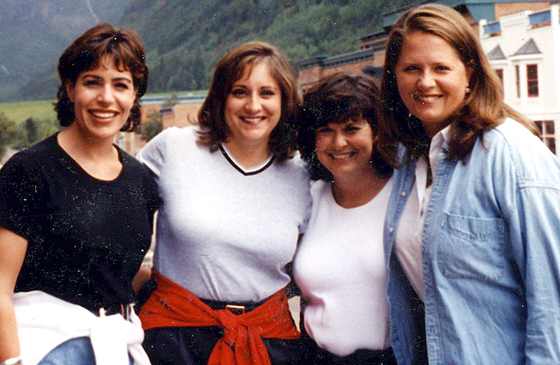
Your attention, please. Flight one-ten, nonstop service to Phoenix, will begin boarding in five minutes.” My best friends, Laura and Kathy, and I looked at each other.

“That’s us,” Laura said. Kathy and I nodded, but none of us could bring ourselves to get up from our seats by the gate. I’d hoped this trip to Phoenix with “the Girls” would lift our spirits, but now I wondered if we’d be better off just staying home. Something was missing. Someone.

Brandi.

If we’d been the four directions on a compass, she would’ve been our true north. She was the glue of our group. The nurturer. The one who kept tabs on everyone. B–that’s what we called her–made sure we had the best time together.

It had been five years since we lost B to breast cancer, and things still felt off. Like they’d lost their meaning without her.

We’d met more than 20 years earlier, when we were working as admissions counselors for competing colleges across Iowa and Nebraska. One recruiting fair took place in a high school gym so small our booths were practically on top of each other.

Maybe it was the close quarters, but Kathy, Laura, Brandi and I bonded right away. We were all fresh out of college and had lots to talk about.

That season we kept running into each other on the college-fair circuit. We’d grab lunch together, making jokes about the rivalries between our schools. Soon we were hanging out on weekends too. We were more than just colleagues–we were friends for life, the Girls.

One by one, though, we moved on with our careers. We settled in different places around the country and met our husbands. I stayed in Iowa, Laura moved to Missouri, Kathy to Ohio, and B all the way out to California.

But we always made time for the Girls. We joked that it was written into our wedding vows: Our hubbies had to grant us two trips per year.

“Let’s go to England!” we said one year. Then it was Canada and Mexico. Once we had kids, we chose destinations a little closer to home: Kansas City, Missouri; Defiance, Ohio; and Des Moines, Iowa.

I kept the scrapbook of our trips–we’d done more than 25 of them–with photos and notes about our sometimes luxurious, usually frugal travel habits.

The first thing we did when we heard about B’s diagnosis was visit her. Kathy, Laura and I flew out to California and did everything in our power to support her. B fought hard, trying every treatment available, but after five years we had what we all knew would be our last meeting.

“I want you all to keep going on trips,” B said. “Our friendship is forever.”

If only that were true. By then Kathy and Laura had moved back to Iowa to raise their families, so getting together was easier, but take away any one of us and the group just wasn’t the same.

“Flight one-ten to Phoenix is now boarding!” the announcement blared. I looked at Kathy and Laura and tried to think of something to break the gloom that had settled over us.

I noticed Kathy’s shoes–soft brown suede, simple yet elegant. “Nice shoes, Kathy,” I said.

“Thanks,” Kathy said. She crossed her legs. “I got them at–”

What was that? There was something on the sole of her shoe. Something colorful. A piece of gum? A candy wrapper?

“What’s on the bottom of your shoe, Kathy?” I asked.

She swiveled her foot and peeled something off. A yellow sticker. She went to crumple it up, then froze. She turned the sticker in her hand so Laura and I could see what was on it.

A single character. The letter B.

Download your FREE ebook, Messages from the Hereafter: 5 Inspiring Stories Offering Proof of the Afterlife.

Big Hair, Big Heart

“Make yourself at home!” Mary Frances said. She dropped my suitcase by the shoe rack and waited for me to step inside.

Home? I thought. I’ll never feel at home. I tiptoed through the double doors into the living room. Sunlight streamed through the windows, reflecting off the glass tabletops and polished lamps. Everything was so neat, so organized, so normal. Not like where I was coming from.

My family never opened the windows–they covered them with blinds and curtains. They had secrets they didn’t want the world to know, like their addiction to drinking and prescription pills. It was the seventies, and the inside of our house looked like some kind of lifestyle experiment gone bad.

When I was in sixth grade, my older brothers and I became wards of the state. I went to live in Vidor, Texas, with a foster family–Jimmy, Debbie and their two young daughters.

They did their best to make me comfortable, but I spent most of my weekends babysitting the girls rather than getting to know my sixth-grade classmates. It was a hectic existence for an 11-year-old kid like me.

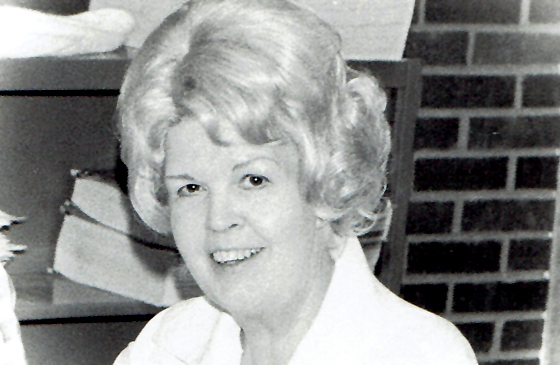
Then one day a shiny tan Cadillac pulled into the driveway and out stepped Mary Frances, Jimmy’s mother. She had driven almost four hours from Austin to visit her granddaughters, but she still looked fresh in her tailored tan pantsuit, her white-blonde hair fashioned into a puffy bouffant.

Man, I thought, she has style. I mean, a suit that matched her car?

“You must be Carolyn,” she said, looking me square in the eyes. Her fabulous bouffant bounced as she bent toward me. That day, she offered to take me to live with her at her condo for the summer.

Why is a woman like Mary Frances interested in an awkward kid like me? I wondered. Was my foster family just passing me along? Getting rid of me or something?

“Well?” Mary Frances asked. “Would you like that? We’ll have a real good time, I swear.”

I looked at her and her bouffant and nodded.

Now I wondered what I had gotten myself into. There wasn’t a speck of dust in Mary Frances’s condo, no clutter anywhere. I’d never lived in a place like that before.

In my bedroom there was a big bed covered with a fluffy white blanket. An oak dresser fit neatly by the window. I opened one of the drawers: paper-lined and lavender-scented.

“This will be your bathroom, dear,” Mary Frances said. She pointed to a door inside the bedroom.

My own bathroom? I peeked in at the sunken bathtub, marble sink and white shag rug. What if I trailed dirt on the carpet? Or left toothpaste on the counter? Would I be sent away?

That night on the big white bed, I kept my body stiff as a board. I didn’t want to mess anything up. I could hear Mary Frances fussing around in her room. Fitfully I drifted off to sleep.

The next morning, Mary Frances offered to take me on a mini shopping spree at Dillard’s.

“You don’t have to, ma’am,” I protested. I didn’t want to take advantage.

“I know that, honey,” she said. “But you could use a few new things. Come on.”

At the store, Mary Frances asked a saleslady to help us, like our own personal shopping assistant. I didn’t know you could do that!

I’d been to department stores before. But this was totally different. I actually got to pick stuff out. I actually got to try stuff on. I found a linen summer dress dotted with pink and blue daisies.

“Now find something else you like,” Mary Frances instructed. She was dauntless.

Something else? I marveled. The choices overwhelmed me–everything from hot pants to bell-bottoms. I settled on a tan pantsuit, just like Mary Frances’s. The clerk showed me to a fitting room. I tried on the summer dress first–a perfect fit–and emerged, twirling tentatively.

“Well!” Mary Frances exclaimed. “Who’s that pretty young lady?” The clerk nodded in approval.

Before we checked out, Mary Frances added a nightgown, a peach-colored two-piece bathing suit and a leather-fringed purse–not to mention my first adult undergarments. Finally, someone had noticed I was growing up! I couldn’t wait to fold my new clothes in the dresser drawers back at the condo.

Little by little, Mary Frances put me at ease. I started to trust her because she trusted me. She let me pick out whatever I wanted to eat for dinner and gave me lessons in etiquette–which fork to use when, the proper way to cut with a knife, the straight-backed posture she said was appropriate for a young lady.

She took me swimming and brought me to the library, where she volunteered. Mary Frances was like the grandmother I never had. And she had that personal style–both unique and traditional. I’d never met anyone like her.

“I’ve got a surprise for you,” Mary Frances said one day. We drove in her Caddy and I tried not to squirm in suspense. She pulled into the movie theater.

Spelled out in backlit letters on the marquee was Star Wars, the movie I’d been dying to see all summer! My secret crush was Luke Skywalker, the main character in the Star Wars novelization I’d read about five times by then.

Sitting in the movie theater next to Mary Frances, a bucket of popcorn between us as we traveled to a galaxy far, far away, was the closest I’d ever come to heaven on earth. It was one of those moments you wanted to live in forever.

Normally, I didn’t intrude on Mary Frances, but that night I felt so happy I poked my head into her room to say goodnight. What I saw horrified me.

“Mary Frances!” I gasped.

She sat before her bedroom mirror, applying night cream to her face–but what had happened to her beautiful blonde hair? She was completely bald!

She looked up and saw she had forgotten to pull the door shut. A moment passed that was as awkward as the other one had been perfect.

“I was sick, dear,” she said softly. “I had a brain tumor.”

I could see the long, ugly scar. Her wig rested on a foam head. I knew it was impolite to stare, but I couldn’t look away. How could something so terrible happen to a person as perfect as Mary Frances?

“It was a rough illness, Carolyn, but I survived it,” she said. “Just as you will survive what’s happened in your life. God will help you. He helped me. I wouldn’t be here otherwise.”

She pulled me into a hug. I let myself go, leaning on her shoulder, and let loose all my tears.

After that summer, I went back to live at my foster parents’ house. But they got separated, and I went to live in a different home. Over time I lost track of Mary Frances.

But not really. You never really lose a person you trust and love, and who loves you back. I remember so much about Mary Frances–her pantsuits, her perfectly polished furniture, her big tan Caddy.

What I remember most, though, is that beautiful bouffant resting on its wig stand while the two of us in our nightgowns hugged for what seemed like forever.

Download your FREE ebook, Rediscover the Power of Positive Thinking, with Norman Vincent Peale

Best Friends Forever

Allyson Pimentil and I met freshman year at Baylor University 28 years ago. She was a Houston girl; I was from small-town Lubbock. But right away, I knew she was my kind of person.

She had big hair too (hey, it was the eighties) and was an amazing listener. She had the most beautiful dorm room, with a few Bible verses strategically posted on the walls. “I do the same thing,” I said.

She grinned. “Good reminder that God’s with us in all things, right?” We roomed together our last two years, our fridge and mirrors covered with inspiring passages.

After graduation, Allyson went back to Houston. I moved to D.C. Phone calls kept us connected. We were bridesmaids for each other, flew to help with new babies. Still, I wished we could see each other more often.

In 2007, my husband, Dave, landed an interview for a senior pastor position in Houston. We flew down and I visited my old Baylor roomie.

While our kids played (we have seven between us) we talked about everything in our lives–except the possibility of my family moving to Houston. But Allyson heard the hopes I didn’t dare to voice, and prayed for them to come true.

Dave got the job. Every Thursday now, Allyson and I meet halfway between our houses for lunch. We share, we laugh, we cry. Most of all, we give thanks for a friendship that, unlike our big hair, has stood the test of time.

Download your FREE ebook, True Inspirational Stories: 9 Real Life Stories of Hope & Faith.

Being a Godparent

It all happened so fast. My best friend Sandy telephoned from Florida to ask if I would consider being godmother to her second child, a son.

Godmother! I was honored. I was flattered. I’d never been asked to be a godmother before.

“Sure,” I replied easily.

“You don’t have to answer right away,” Sandy said. “Being a godparent is a serious responsibility. Maybe you’d like to think it over for a few days, maybe even pray about it.”

“Don’t be silly,” I laughed. “I’d love to be Josh’s godmother.”

With some unease I sensed that through one simple phone call, my identity had taken on a new, uncertain dimension. As mother of two, I was familiar with plain old garden-variety motherhood. But godmother—this was different. This was…

And then it hit me. I hadn’t the foggiest idea what being a godparent meant. What was it Sandy had said about god-parenting being a “serious responsibility?” They way she talked, her request had more to do with Josh than with honoring me. Clearly her expectations were high. But what exactly did she expect?

I thought of my own godmother, my mother’s best friend from her college days. Growing up, our families lived a thousand miles apart. On the few occasions our paths crossed, I remembered her as a warm and friendly woman.

When I was very young she sent me Christmas presents—sometimes a doll, sometimes a book. Still, I couldn’t recall that she had ever done anything that set her apart as a godmother.

Well, there was no turning back now. For better or worse, I’d impulsively said yes to Sandy’s request.

I said a simple prayer: Father, please teach me what it means to be a godparent.

Over the next several weeks I set out to discover everything I could about god-parenting. I’m an Anglican, my friend Sandy is Roman Catholic, so I talked to a number of pastors and priests. Books on the subject are surprisingly hard to find. I also talked to friends, godparents and godchildren alike, to learn from their experiences. And what I discovered was fascinating.

The tradition of god-parenting among Christians is an ancient one going back to the days of the early church, when believers were persecuted—and when life expectancies in general were much shorter than they are today.

While modern-day believers in America are not persecuted as the early church once was, it could be said that the healthy growth and development of our children’s faith is threatened as never before by the cumulative effect of society’s ills: widespread divorce; broken homes; rampant materialism; both parents working out of economic necessity rather than choice; lack of parental supervision; parental mental illness; alcohol and drug abuse; parental physical, sexual and emotional abuse; and the desensitization of our children to violence and sex via unsupervised viewing of inappropriate television, videos, movies and the internet.

In other words, kids today need all the help they can get! Over and over I was astonished to hear from clergy and laypeople alike that good god-parenting could make a powerful difference.

In the New Testament, in the Book of Acts, I read about whole households being baptized into faith, including infants, children and servants. Traditionally, the godparent acts as a steward of faith for the newly baptized child, serving as an added assurance (in addition to the parents’ efforts) that the child will be raised to understand fully his or her relationship to God and involvement in the church.

Today many godparents work to achieve this same blessed goal. Unfortunately, others still wrongly perceive the role as a purely social convention, a way for new parents to honor a family member or friend.

With that viewpoint, they lose the extra spiritual dimension to the relationship that grants a godparent license to reach out and be something more to the child than an aunt, uncle or “Mom’s best friend.” In fact, I learned of several cases in which it was the godparent who made the difference in a child’s coming to faith.

As a godmother, I learned that it would be my right (and responsibility!) over the years to pray for Josh, to introduce him to Christian concepts and to encourage any questions he might have about our faith. When a person becomes a godparent at a child’s baptism, many churches provide a certificate that includes helpful suggestions and prayers.

Much of this is very basic: Pray for your godchild daily; remember your godchild with a gift on his birthday, and—even more important—on the anniversary of his baptism; see that your godchild attends Sunday school and owns an age-appropriate Bible, and so on.

But it was the stories that people shared about their personal experiences as godchildren and godparents that really got to the heart of the task at hand.

One couple, over the course of two decades, had become something of experts when it came to gift-giving to their two godchildren, a boy and girl. Seeking to emphasize the unique spiritual dimension of their relationship to the children, they made a special effort to select gifts that had a specifically religious or inspirational content.

Bible storybooks and Noah’s ark toys gave way to tiny gold-cross jewelry and the classic children’s books by C.S. Lewis. When the children entered their teens they received diary-like prayer journals, faith-based rock and pop music CDs and video games.

Another friend, who was musical, had a grand time singing hymns and playing the piano with his godson.

Another woman stressed the importance of not only praying for but with her goddaughter. The first time she did this she admitted she felt a little bit embarrassed and shy. But she persisted, convinced that the simple act of praying—or as she put it, “talking to God”—had a profound effect.

It demonstrated that praying is something that she, a grown-up, did, and something that the child could do too. Later she was deeply moved when one afternoon the goddaughter, now grown and in the midst of grave marital problems, called her on the phone. “Oh, Nana,” the troubled girl said, “will you pray with me? I need someone to pray with, and I knew you would understand.”

Faith… prayer… comfort… make a difference… I kept hearing those words again and again. Being a godparent really was a serious responsibility, as Sandy had said. And yes, now I definitely wanted to do it.

Did you enjoy this story? Subscribe to Guideposts magazine.

Bearing Each Other’s Burdens

“I’m watching for palm trees,” Isaiah said. He and two of his brothers had been in the backseat of the van for hours as we drove down Illinois, across Kentucky and through Tennessee and Georgia on our way to Florida. I was going to attend a Guideposts workshop in Florida, and my husband Lonny and the boys were going to the ocean to play.

We weren’t far into Florida when we saw them. The first palm trees stood along the interstate in a straight line. They were slender-tall and reached toward a sun-streaked sky.

“The trunks look like lattice!” Samuel said.

“No,” Isaiah said. “It’s like armor. Criss-crossed armor and shields.” My Midwest boys were captivated by the beauty of warm-climate trees.

But I noticed something else: Each tree was encircled by a ring of wooden slats to hold them steady against high winds and strong storms.

As we drove along, I thought, what a beautiful reminder of how we’re called to support one another as believers in Christ. After all, we’re dear to the Lord. Made in His very own image. But like these beautiful trees, even as God’s most prized creation, people sometimes need to withstand trials. We also need to be girded against life’s storms.

And sometimes there are burdens that are too much for a single soul.

READ MORE: FAITH AND NEW BEGINNINGS

It reminded me of how a few weeks ago, when Lonny and I were working through a tough issue, my sweet friend instinctively sent me a text at midnight to say, “I’m up tonight. I know you are, too. I’m taking over the prayer shift. You go to bed.”

My dear sister in the Lord was willing to shoulder my burden, just as the Lord commands: “Bear one another’s burdens, and so fulfill the law of Christ,” Galatians 6:2.

Every single one of us is precious in God’s sight. So when we carry each other’s life-weight, we’re even closer to the heart of Christ.

Bart Millard Opens up about His Experience with Chronic Illness

In two decades, Grammy-nominated Christian music band MercyMe has had 28 songs reach the top of the Billboard charts. The band has crafted a musical legacy that revolves around their willingness to get personal with their fans, and their latest single, “Even If,” off the band’s ninth studio album Lifer, is no exception.

Lead singer Bart Millard says that the song emerged from his journey caring for his 15-year-old son, Sam, who was diagnosed with Type 1 Diabetes at two years old. The opening lyrics of the tune — I’ve stood on this stage night after night/ Reminding the broken it’ll be alright/ But right now, oh right now I just can’t — encapsulate the helplessness he felt caring for a child with a chronic illness.

“It was one of those days,” Millard tells Guideposts.org of why he wrote “Even If.”“We had his six month checkup and the checkup may have gone fine, I don’t remember. I just know that it’s like going to the principal’s office, it’s never really good,” Millard says. “It’s just a harsh reminder that our life revolves around this… disease.”

He and his wife recently calculated how many insulin shots they’ve given their son: “Over 37,000 shots in his life so far,” Millard says. “Whenever food goes in his mouth, a shot goes in his arm or his leg. We call it the new normal.”

Though the family has developed a routine over the past 13 years, Millard says that as a parent, managing a child’s chronic illness can lead to feelings of guilt and shame.

“[Sam’s] had it since he was two, so he doesn’t really remember anything other than this. This is all he’s known, and for the most part, he’s felt great, but as a mom and a dad, it’s crucifying us daily,” he says.

“You always have the enemy saying, ‘You’re not a good enough parent. You could’ve done something better,” Millard explains. He started the non-profit organization Imagine A Cure when his son was first diagnosed to help combat juvenile diabetes— and those feelings.

“When you first find out, part of that is what gets you through — you want to fight back and you want to put your effort into a worthy cause,” Millard says. “I remember when we were diagnosed, we were like, ‘We’re going to find a cure, we’re going to find a cure.’”

After talking with his son, however, Millard reevaluated the need for a charity with his son as the focus.

“After years, you’re like, ‘You know what? I do not doubt there’ll be a cure, but I realize that we’re going to enjoy every second of life and make our kid feel normal.’ Sam didn’t want to be a poster child, he didn’t want to be an agenda, and it really hit me as a dad, it was, ‘You know what? Then we’re not going to do it anymore.’ We’re just going to be parents; you’re going to be our son.”

Instead, Millard decided to use his platform to do something just as important as raising money and creating awareness for the disease.

“When I say get the message out, it’s not to create awareness of diabetes,” Millard says. “If you don’t know what diabetes is, or some form of it, you’ve been under a rock. But what we’ve learned is that God’s given us a voice to help people who have kids or have diabetes have this sense of not being alone. With a chronic illness, sometimes there’s nothing that makes you feel more alone than thinking you’re the only one wrestling with this.”

Millard insists on sharing the journey with fans because of all the advice and support people have given to him over the years, including his friend and fellow Christian artist, Tim Timmons.

Timmons was diagnosed with a terminal form of cancer over 15 years ago and Millard sought out his advice.

“I ended up unloading on him like, ‘Man, I’m done with this. I can’t play this ‘God is good all the time’ crap anymore, honestly, because I don’t feel like that right now,’” Millard recalls. “I mean, I don’t know what the thorn in Paul’s side was, but mine is believing that God can heal my son but won’t. So it was just a tough day.”

Timmons was able to give Millard some words of wisdom from his own experience.

“I was going off like, ‘You don’t even know what it’s like to have a chronic illness!’ and he’s just grinning at me. He’s like playing piano like he’s Liberace over there, like a lounge singer. I thought he was mocking me,” Millard says.

After Millard left the singer’s house, Timmons sent him what would become the base of the first verse in “Even If.” He had been writing down everything Millard told him and crafting it into a song. He also shared two lines that would become the chorus — I know you’re able/ I know you can – words Timmons had written when he was coming to terms with his own illness years ago.
Millard knew he had to use it to sing about his own journey and he wanted the song to have a hopeful vibe – regardless of how defeated he was feeling.

“It’s got a theme of victory,” Millard says. Despite still having hard days, it’s that sense of optimism and faith that’s helped him accept and embrace his son’s illness and he hopes his music will lift up others going through their own dark days.

“The good news is my relationship with Christ is not based on how I feel,” Millard says. “He’s got really broad shoulders, so I have this amazing ability to cling to him and gripe the whole way sometimes. With songs like Even If,’ we’ve had so many people say, ‘I’ve got an uncle, I’ve got a son, I’ve got a parent,’ whatever. Anytime you find community and a chance to relate and just kind of let it roll off your chest a little bit, it’s a good thing. That’s the way we’ve gotten through is community. It’s what the body of Christ is supposed to do.”

A Veteran with PTSD Rescues Adorable 30-Pound Cat

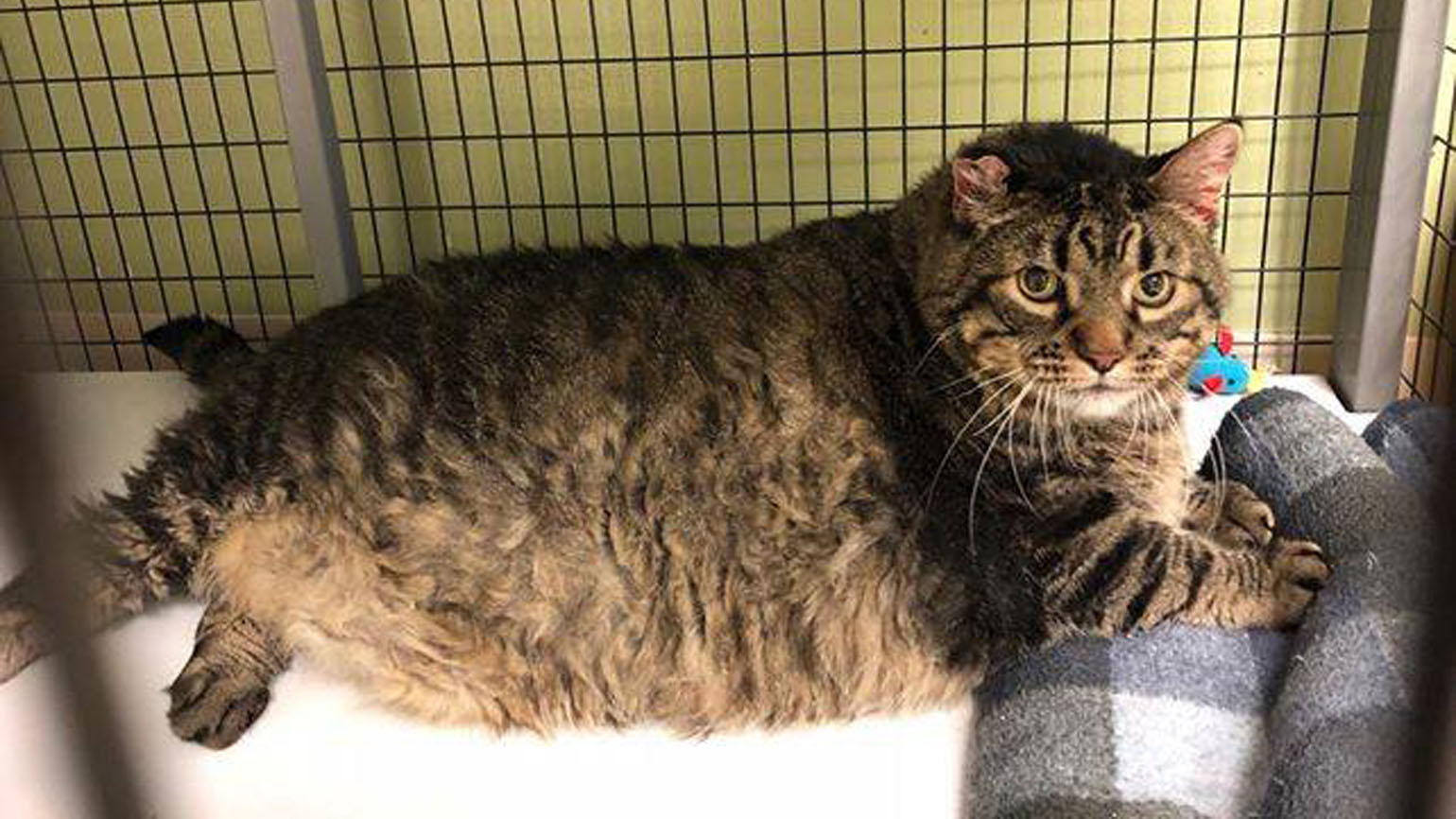
When military veteran Steve Gusman was looking for a therapy animal to help him with his PTSD, he never thought he’d find just what he needed in a 30-pound rescue cat named Meatloaf.

Meatloaf was given to King’s Harvest Animal Shelter in Davenport, Iowa after his previous owners became unable to care for him. Workers at the shelter were shocked by his weight—he clocked in at more than 20 pounds over the average cat’s weight. It was even more surprising given that he was twelve years old, and cats typically lose weight as they age.

“He’s a majesty just to look at. If you were here and you could see him, it’s wonderful,” Rochelle Dougall, assistant director of the shelter told The Des Moines Register. “It’s kind of wild and crazy—how did he get to 30 pounds in the first place?”

The shelter posted a picture of Meatloaf on Facebook and the cat became a viral sensation. The Des Moines Register reports that the shelter was inundated with calls and visits—but no one was the right fit. Meatloaf loves humans, but doesn’t get along well with other cats and dogs. He needed a calm, pet and child-free environment.

Enter Gusman. He needed an animal that was calm and wouldn’t startle him by dashing to and fro. An older cat like Meatloaf, who needed physical activity, but wasn’t hyperactive, seemed like a perfect fit.

Gusman saw a news story about Meatloaf and felt a connection, so he decided to meet the cat in person.

“They got along perfectly well,” Mary Armstrong, Gusman’s fiancé, told KWQC. “They both just sat on the floor and paid attention to each other.”

Gusman’s application for adoption was accepted, and he took Meatloaf home in a dog carrier.

The vet isn’t the only one to benefit from Meatloaf’s adoption. Visits to the shelter increased while he was there and employees are hopeful even more animals will be adopted because of this cuddly cat.

A Tribute to His Late Nature-Loving Mother

Dear Mom…

It’s been three years, Mom, and your old neighbors still don’t understand your garden in Greenville: lush southern magnolia; evergreen gordonia; dirt brimming with native pollinators, snakes and bees. You made it an Eden. I’ve done my best to care for the plants and animals you left behind, but folks here think it’s overgrown, too wild. Then again, I’ve always felt safe in wild places.

When I was a boy growing up in the house Dad built in the Blue Ridge Mountains, we’d hike through the deep woods together. You’d say, “Look, a robin’s nest,” or “Robert, up there! That’s a Carolina wren.” You knew everything about the outdoors—which birds called to one another through the trees, how to turn creeping vines into baskets. You were a country girl, through and through.

Your family—Swedish immigrants who’d learned to coax wheat stalks from the earth—learned everything they could about South Carolina, but even to them, you were peculiar. Maybe because you always believed that nature didn’t just serve us, but was part of us.

From you, I learned to never take more than I needed. You’d take an umbrella and hang ornaments on it before you’d cut down a healthy pine in December. I like to think that at four foot eleven, closer to the earth than most of us, you felt things that we didn’t.

Remember that New York transplant, the former college athlete who bought the house next door? I still laugh about how you caught him clinging to the lowest branch of a tree, pointing in horror at a snake. You pulled white opera gloves over your elbows—your thick gardening gloves had gone missing—and carried the snake to your yard. “This snake is welcome in my garden,” you said to our new neighbor. He clearly didn’t know the difference between a venomous cottonmouth and a harmless kingsnake. “He’ll be useful in recycling my moles and voles.”

Young Robert Boggs holds Crisco the groundhog
Robert holds Crisco

Animals knew they could trust you, like the injured chipmunk you rescued and all the stray and feral cats that would follow you out of the woods and into our home. I shouldn’t have been surprised when you saved Crisco the groundhog from a pack of dogs in our yard, back when we lived in the mountains, clanging pots until they dispersed. He knew you were on his side—even when he gobbled up all the lettuce you’d grown to make Swedish soup.

You tended to everyone, Mom, but especially Dad and me. When Dad lost his mobility and had trouble moving around the house in the mountains, you convinced him to move to Greenville. Were you heartbroken to leave those woods? You didn’t show it. You woke up every morning at five to tend to your new garden. Your faith held you steady, wherever you were, God always present as you watered your plants. “He talks to me,” you’d say.

You know I’ve led a winding life. Boarding school to college to graduate school in Massachusetts. I was a banker, a Methodist minister and now a university professor. You never made me feel as if I had to know exactly what I wanted to do. You wanted me to be free, to explore what was out there—much like your animal companions.

Melree Boggs and her rescue, Josie
Melree Boggs and Josie

Then Dad died, my marriage ended and my dog died, all within six months. You didn’t tell me to move on but let me grieve, remaining close in case I needed you. Just like Josie, our rescue mix, did for you when your dementia took over.

You were ninety-nine and three months when you passed into the next world. Perhaps the earth held onto you for so long because you understood each other.

I couldn’t bring myself to sell the Greenville house and have made it my job to care for the property, throwing myself into the cycle of nature. Every autumn, I’m reminded of how you’d delight in the changing colors and all the birds that come and go. I sit and watch them build their nests and smile to myself thinking about how you’d look out for the mama birds returning to their babies.

I miss you, Mom. But in a way, you return to me through the moles and voles, snakes and groundhogs. I’ve been caring for them all, observing and celebrating the beauty and purpose of all God’s creatures. And, of course, tending your misunderstood garden.

Love, Robert.

Did you enjoy this story? Subscribe to All Creatures magazine.

A Therapy Dog Named Gabriel

In the November 2014 issue of Guideposts, I wrote about my husband’s serious hospitalization. So serious, the doctors weren’t sure he was going to make it.

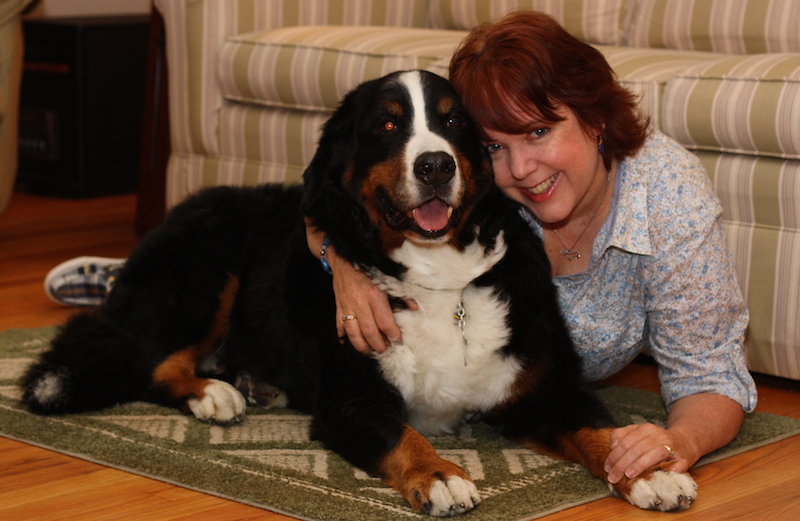
One thing I didn’t mention in that article was as I was sitting in the darkened ICU, praying for Mike to survive–and for me to survive–I heard the patter of paws down the tile hallway. There in the doorway stood the largest, fluffiest dog you’d ever want to see.

Gabriel the therapy dog and Peggy.Gabriel.

I threw my arms around him and buried my face in his fur. Then I went to my husband’s bedside, lowered the rail and helped guide Mike’s hand to Gabriel’s soft neck. Gabriel sat still, head resting lightly on the mattress. I’m convinced Gabriel knew what he was there for. I could feel the power of his gentle spirit.

I want to tell you the rest of Gabriel’s story. He lives with his human mom and handler, a wonderful woman named Sally. God had prepared Sally for the experience, long before Gabriel was even born!

Several years earlier, Sally had lost her beloved German shepherd, and after some time felt ready to find a new dog to join the family. As she was searching, she felt a quiet whisper on her heart. Bernese Mountain dog.

“Oh no,” Sally argued. “I want a German shepherd.”

Bernese Mountain dog.

Sally didn’t even know what a Bernese Mountain dog was. She had to go look it up. “Oh no, that dog is all wrong. Too big. Too furry. I want a German Shepherd.”

Shortly thereafter, a repairman came to do some work. As they chatted, before long, the subject got around to dogs. “What kind of dogs do you have?” Sally asked.

“Oh, I doubt you’ve even heard of them,” the repairman laughed. “I’ve got Bernese Mountain Dogs.”

There it was again! Having a hard time ignoring it, Sally did a little research and discovered that a Bernese Mountain dog could be the right match for her. So, she began searching for a breeder. At the same time, the name of her new puppy formed in her mind. Gabriel. His name would be Gabriel.

Finding a Bernese Mountain dog puppy isn’t exactly easy. When Sally found a breeder with a female dog named Angel, everything seemed meant-to-be. She called the breeder. “When Angel has a litter, I’d like one of her puppies.”

“Oh, I’m sorry,” the woman on the phone replied. “We’ve tried to breed Angel for years. It just hasn’t worked.”

Sally hung up, disappointed. She kept searching, but no puppies turned up. Then, the next spring the phone rang. It was the same breeder. “Are you still looking for a puppy?” she asked. “Angel’s pregnant!”

So, that’s how Sally and Gabriel came together. Gabriel wears a cross medallion attached to his collar. When patients ask about it, they open a door for Sally to share a little about God. Sometimes they ask her to pray for them.

Sally and I, and Gabriel, are now friends. Gabriel has ministered to me through two of Mike’s surgeries, and the loss of our beloved golden retriever, Brooks. That’s because before he was even born, Gabriel was destined to be an angel dog, sent to comfort and care for those who are hurting.

A Thanksgiving Prayer, Answered

Jesus increased in wisdom and in stature and in favor with God and man. —Luke 2:52 (ESV)

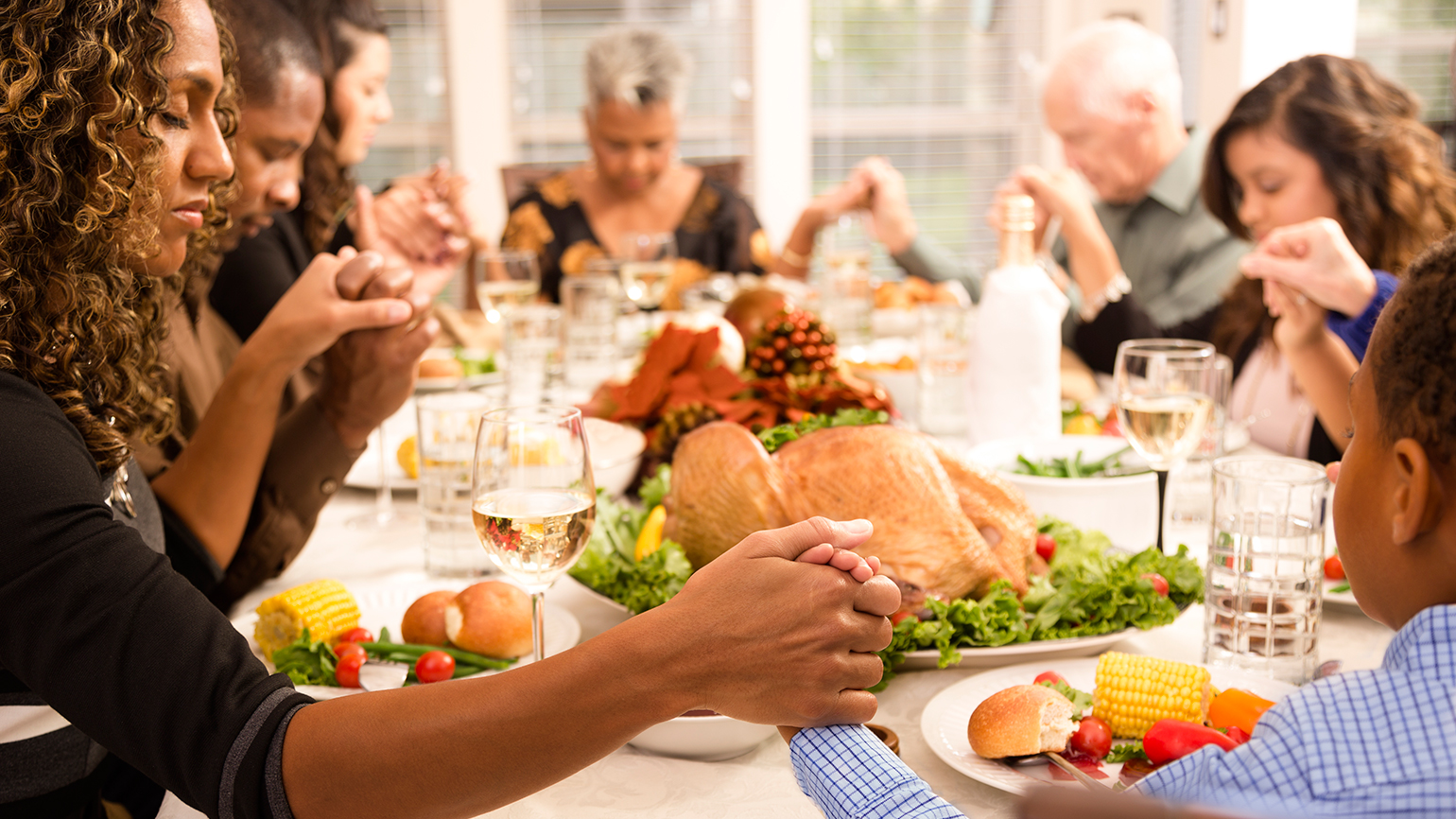
As a lifelong cook, I’ve always loved Thanksgiving. At age 12, I proudly took over from Dad the cooking of our meal: turkey with bread stuffing, mashed potatoes, giblet gravy, cranberry-orangeapple-walnut relish, a gratin of little onions, marshmallow yams, rolls and pies.

My Thanksgiving prayer is one I pray all year—that my girls will grow up to love others and God.

Cooking bored the girls as kids, but when they turned 12, I gave them each a task: Charlotte the stuffing and Lulu the cranberry relish. As they got older, they took charge of the pies, first deciding what kinds but eventually weaving dough lattices and making leaf-shaped decorations gritty with sugar sparkles. We even bought half-size pans so the girls could make six different pies and not have any of them go uneaten.

One year, only Lulu came home. Charlotte had gotten a puppy and immediately arranged her days around Milo’s nap times and meals. In mid-November, she texted she couldn’t leave Milo, so she wasn’t coming home.

Thanksgiving with just Lulu was enjoyable but not the same. Lulu made her cranberry relish—opting for less sugar, a good move—but I made everything else. This is how it will be now, I lamented. The girls off somewhere, cooking their own Thanksgiving meals.

Then I realized that too would answer my Thanksgiving prayer: my girls grown up, nurturing others.

Thank you, Father, for making us in your image, so we can grow, love and become more like you.

Walking in Grace (formerly Daily Guideposts) is a book of uplifting devotions. To order the 2024 edition, visit shopguideposts.org/wig24, write to Guideposts, P.O. Box 5815, Harlan, IA 51593-1315 or call (800) 932-2145. The book is available in a hardcover version for $16.95 or in a softcover large-print version for $17.95, plus shipping and processing.

A Teacher Shares Lessons Her Students Have Taught Her

“What is this class anyway?”  The question came from a freshman on the third day of a new school year.  The class was Beginning Journalism, as I patiently explained to him while other students snickered. Some other teachers might be insulted, but I thought, “At least he’s asking questions!”

“I think I’m supposed to be in Phys. Ed.,” he said, so I sent him on his way to the counselor for a schedule change, and that was that. I wish I could remember his name.  I’d like to know where life has led him.

You see, one of my favorite pursuits over the last 20 years has been reconnecting with hundreds of former students and hearing of their memories, accomplishments and even their disappointments.  I search Facebook and other social media looking for familiar names and making an effort to track former students down.

READ MORE: A CINDERELLA STORY

I began teaching high school English in 1964 and then taught journalism while advising the school newspaper and yearbook. I left teaching in 1979 to continue a career in publishing, but I never lost my love of teaching nor my fondness for my “kids,” some of whom are now grandparents.

Most summers find me attending several class reunions, in an effort to catch up with former students.

There are those who have achieved significant careers—a prominent staff member of The New York Times; the first female anchorwoman for a TV station in Oklahoma City; a justice on the Oklahoma State Supreme Court, the former mayor of Tulsa, the owner of a well-known musical venue, a TV newsman in Dallas—while there are others whose stories might not seem as impressive…except to me.

Guiding a student through the process of writing a story for the school newspaper and seeing his or her name in print for the first time was fulfilling, but hearing, years later, of that same student’s courage in the aftermath of a serious auto accident or her battle to overcome a life-threatening disease is more than just fulfilling—it’s heartwarming and inspiring. And in discussing the paths their lives have followed, many of these former students—now my friends—share their faith journeys with me.

READ MORE: NO SUBSTITUTE FOR INSPIRATION

I’m grateful to have had the opportunity to share some important lessons with my students, but they have taught me some valuable things, too:

  • Don’t judge anything by your first impression. Some students who were “stars” in high school have not had it so easy as adults, and others, who were just beginning to find out who they were, have risen to unexpected heights in their chosen professions.
  • You won’t always know the impact what you say and do might have.  Occasionally I am surprised at what my students remember.  One girl said to me, “I’ll never forget how you hugged all of us on the morning that one of our cheerleaders was killed in an auto accident on the way to school.”  I hope that my words and my actions were more often kind than not.
  • It’s invigorating to have friends of another generation.  Having contact with my “kids” helps keep me engaged with life. When they share the lessons life has taught them across the lunch table, I’m even more thankful to have them in my life.
  • Hard work is worth it.  Most teachers don’t teach for the money but for the rewards that come from having a positive impact on others. I’m sure my students grew tired at times of having me nag them about meeting deadlines, but they tell me that it was a valuable experience that they’ve used later in life.
  • It’s worth growing your prayer life.  I have a prayer list from my church and my own family for whom I pray regularly, but I also have a much larger family in my former students.  I’ve shared times of grief and times of great joy with them, and when they ask me to pray for them, I am honored.

I’m grateful that the sharing of lessons with my students has been a two-way street. And even though I can’t remember that young freshman’s name who was flummoxed to find himself in a journalism class, I still think of him occasionally, as I do all my former students. I hope that his life has taken him to good places.

Did you enjoy this story? Subscribe to Guideposts magazine.