

Embrace God's truth with our new book, The Lies that Bind

A Marine Dad’s Most Important Duty

I’d been on plenty of marches in my time as a Marine, but never anything like this. My platoon today was undisciplined, stopping to kick at twigs, talking and laughing as we hiked through the woods, no one paying attention to the sound of rushing water ahead.

Then again, I expected that from a bunch of 10-year-olds.

I was about as far from the battlefield as I could get, accompanying my son, Patrick, and his fifth-grade class on a three-day field trip at Camp Classen in the Arbuckle Mountains of southern Oklahoma.

I looked down at Patrick, sitting in the three-wheel jogger I pushed in front of me. My son has cerebral palsy and 10 years ago doctors didn’t think someone with his brain damage would live, much less be hitting the trail with his classmates.

Before Patrick, the biggest challenge I had was achieving my dream: becoming a Marine officer. My dad was a Navy man, and I knew I wanted to serve in the military. In college at The Citadel, I chose the Marines. To me there was no greater honor than leading the most elite fighting force on earth.

First, I had to go through officer candidate school—two six-week courses of the most grueling physical and mental tests I’d ever faced, including the Confidence Course, a race through 11 obstacles with names like “Slide for Life” and “Jacob’s Ladder.”

I scaled tall barriers and swung from monkey bars high above the ground. Our commanders urged us on. Nothing was beyond our capabilities, they said.

In 10 years I rose through the ranks, becoming company commander. I served in Operation Desert Storm, then led my men in Somalia. Our mission was humanitarian: get food to starving people, rebuild roads and disarm the warring local factions.

But we came under fire. When times got tough, I prayed. God always saw me through. At the end of my six-month deployment cycle, I returned home to Camp Pendleton in California. I’d have six months to spend with my wife, Nancy, just in time for the birth of our first child.

Nancy was a Marine too. We planned to alternate deployments so we could raise our child and maintain our military commitments. I was convinced that being a career Marine—a lifer—wasn’t just my plan but God’s plan too.

My knees buckled when I saw our son, Patrick, for the first time. I was love-struck. I tore myself away from the hospital around midnight two days after his birth to get some rest.

The ringing phone jarred me awake at 4:00 a.m. Patrick was sick. Meningitis. I rushed to the hospital. He’d gone into septic shock.

“We’re taking him to the NICU in San Diego,” the doctor said. “He may not have long.”

The Camp Pendleton community rallied around us. The base chaplain baptized Patrick. I prayed, harder than I had even under fire in Somalia. Patrick clung to life like a little warrior and after a month in the hospital, he was discharged.

The doctors couldn’t give us a solid prognosis, but a sonogram showed anomalies. His motor skills and learning ability could be impaired, perhaps severely. We’d have to closely observe his behavior.

At the base daycare center, we noticed differences. Other babies moved more, rolling over and lifting their heads. Patrick was often still, and couldn’t keep his head up. Nancy set him in an Exersaucer and needed to put a pillow in to keep him upright.

After five months, it was clear Patrick lagged behind his peers. I put my finger in his right hand and he gripped it tight, but when I tried his left, Patrick’s hand and arm hung limp. Nancy read up on the symptoms. Everything pointed to cerebral palsy.

One afternoon I tucked Patrick in his crib for a nap. I went to the window to lower the blinds. Outside, a group of Marines ran by in tight formation, getting ready for deployment. My time home was almost over, and the process had begun for my promotion to Major, which would bring new responsibilities.

It was my dream…but it wasn’t possible anymore. Nancy was medically discharged after suffering a mild stroke after Patrick’s birth, and she couldn’t care for him alone. I have to quit too, I thought.

I turned back toward Patrick. He looked peaceful, already asleep. I was terrified. Get it together, Marine. After Iraq, Somalia, how could this shake me? But war I knew. Raising a son with disabilities? I hope you have a plan, Lord, because I sure don’t.

We left Camp Pendleton and Nancy and I found jobs in Texas, where her family is located. We worked opposite shifts so one of us could be there for Patrick.

We settled into a routine. Nancy put Patrick to bed at a sitter’s house and went to her night-shift job at a snack food company while I got some rack time. I’d pick Patrick up in the morning, get him dressed and spend the day with him.

I tucked Patrick in his crib for his afternoon nap and went to my second-shift job managing the processing line at a hot dog plant. Nancy had the evening shift. Our time with him was exhausting. I needed to hold him the whole time he played, retrieve every toy he wanted.

Other kids display some independence after a year, but Patrick couldn’t do anything by himself. One night, before I dropped off in an exhausted sleep, I turned on the news and saw a report of Marines being deployed.

That could have been me. I missed the camaraderie, the 170 men in my unit, all looking to me for answers. My life was all about Patrick now, and I didn’t have any answers.

Our neurologist finally diagnosed Patrick with cerebral palsy, and entered him in early intervention therapy. Physical, occupational and speech therapists came to our house. The stretching and balance exercises reminded me of the training I’d gone through at Marine OCS—for Patrick, they were just as grueling.

The occupational therapist put a hairbrush in 14-month-old Patrick’s hand, and I expected him just to hold it. Instead, he started brushing Nancy’s hair!

Patrick started speaking little by little. And after three years of intensive physical therapy, I watched him take his first, slow, unsteady steps with the aid of a walker. He’d still need a wheelchair for longer distances, but…he’s standing on his own!

We had two daughters, Katie and Nicole. We didn’t hold back on family activities for Patrick. He loved our trips to the lake, where he’d sit in a tube while I towed him in our boat. He sang along with the girls to any song on the radio.

When Patrick was six, we found a program that allowed him to be mainstreamed into some classes and activities. One day I took Patrick with me to the supermarket. In the checkout line, I saw a little girl, standing with her mom, staring at him.

“Why are you in a wheelchair?” the girl blurted. The mom’s face turned red. “I’m so sorry,” she said.

“It’s all right,” I said. Patrick needed to learn to deal with situations like this. “Let him answer.”

Patrick did…but he didn’t stop there. “You want a ride?” he said. The two of them spun around the checkout area, laughing and squealing. If I were still in the Corps, I would have missed this.

Then Patrick reached fifth grade. “Guess what?” he said after school one day. “I’m going to be in the talent show!” He was still behind his peers academically and he needed a walker for balance if he was on his feet for long. Had I given him too much confidence? I didn’t want to set him up for failure.

I thought about a song Patrick and I loved to sing together: “The Greatest” by Kenny Rogers, about a boy who dreams of being a baseball player. The song’s message was perfect for Patrick: Be proud of what you can do. Could he sing it?

Every day after school I played the song and helped Patrick memorize the words. Nancy and I rehearsed his routine with him. The day of the show, he wheeled to center stage wearing a baseball cap, carrying a bat and ball.

While he sang, he threw a ball in the air with his right hand, his bat across his lap. I waited for the end of the song, anxious. Patrick beamed and sang the last verse in a full, loud voice, “I am the greatest, that’s a fact, but even I didn’t know I could pitch like that!” The auditorium erupted.

Patrick came offstage and into my arms. I hugged him tight. I may not have been leading 170 men anymore…but I was leading the one who mattered most to me. He’d come to me for an answer, and he paid me back with love. That was better than any “Sir, yes, sir.”

Now, on the trail at Camp Classen, I ruffled Patrick’s hair. We emerged from the woods and reached the water. I stopped cold. We were at a dam holding back a lake. A rush of water fell six feet to the river below.

The only way across was a row of round cement pillars spaced out along the edge of the falls. No way could I wheel Patrick across. “We didn’t know there wasn’t a bridge,” his teacher apologized.

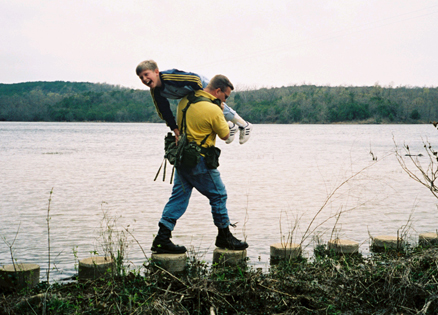
I stared again at the pillars. They reminded me of something I’d seen a long time ago. The Confidence Course. “No one stays behind!” I yelled. I hoisted Patrick onto my back. “Hold still,” I said, stepping onto the first pillar.

Halfway across, he started laughing. His laughter echoed across the lake, a sweeter sound than I could ever have imagined. Maybe God did have a plan for me all along. The Marines were just a part of it, training for the most important duty of my life: being Patrick’s father.
Al Roker on How Parenting a Child with Special Needs Inspires Him

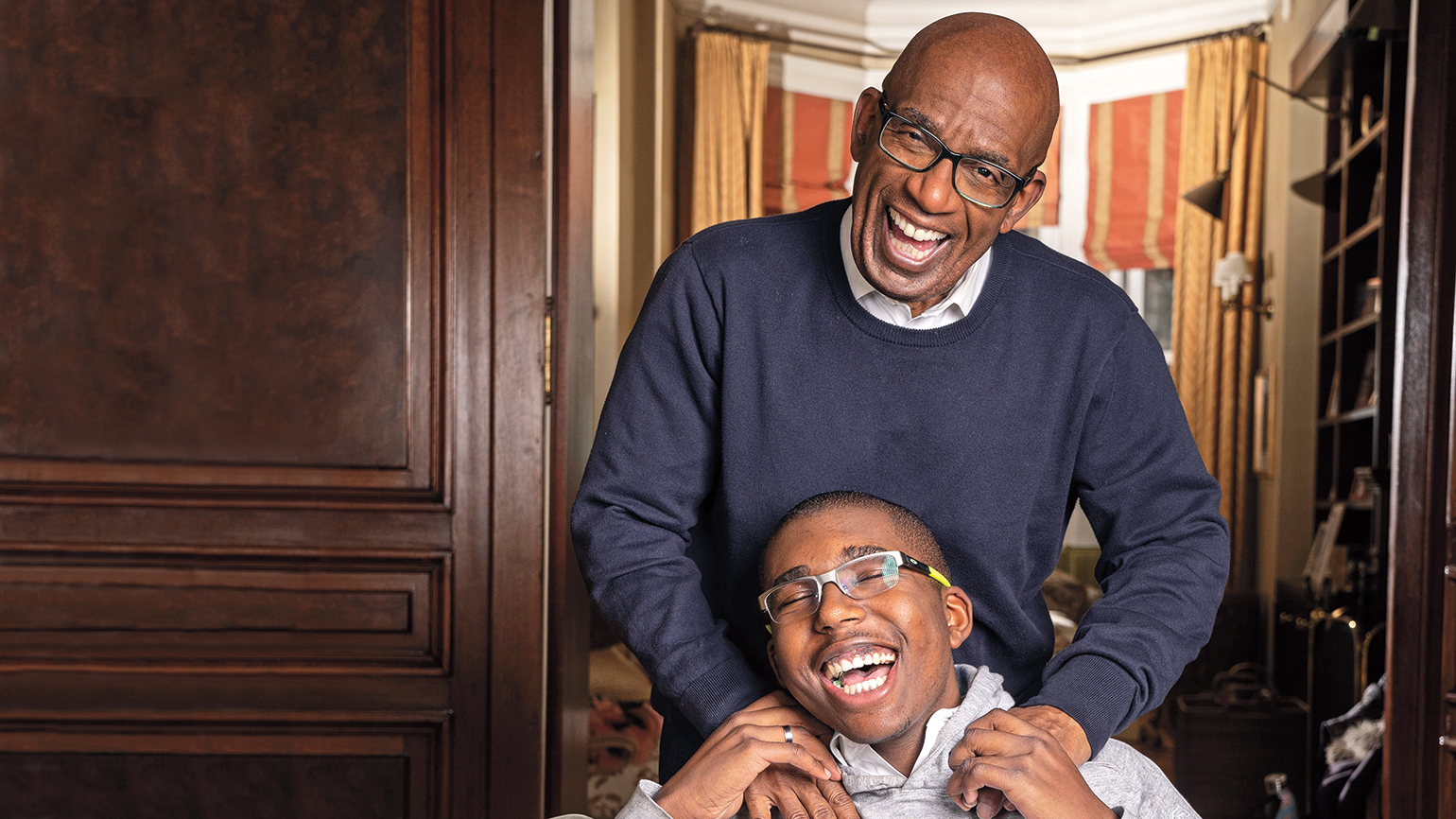
We’d spent the weekend at our house upstate, my teenage son, Nick, and me. My wife, Deborah Roberts, is a senior correspondent for ABC News. Nick’s sister Leila is at college, and his oldest sister, Courtney, is grown. Sometimes it’s good for just the two of us guys to get away. That drive up and back is some of the best time we have one-on-one. You know, when you have your teenager in a car with you, it’s a good chance to connect—if Nick doesn’t spend too much time distracted by his iPad or phone. Focus and conversation can be a problem for my son, more so than most kids, as he is a kid with special needs.

Al Roker on the cover of the May 2019 Guideposts
     As seen on the cover of the May 2019
issue of Guideposts magazine

It was a Sunday and we had gotten up early—not my usual 3:45 a.m. wakeup for the Today show but still pretty early. We were driving back to Manhattan and hoped to make it in time for the morning worship service because back home, at St. James Episcopal Church, Nick is a crucial part of the worship team and he takes his responsibilities very seriously.

It’s not something Deborah or I would have expected. To see Nick process down the center aisle at the beginning of the service, carrying the cross, his eyes on the altar, our pastor and the other ministers following behind, the organist pulling out all the stops, the choir and congregation singing their hearts out, the other acolytes following his lead as the principal cross bearer. Nick is focused, dignified, reverent, the brass cross shimmering in the candlelight. “You must be proud of your son,” someone will say.

Yes, I am. More than they’ll ever know. The obstacles in this kid’s way were things that might have tripped up many others. Not Nick, not even with the disabilities he was born with.

That morning, driving into town, I looked at the dashboard clock and considered the traffic—where was everybody going so early in the morning? But I was determined we would make it. I know it’s important to him. Recently, explaining to Deborah why being at church was a priority for him, Nick told her, matter-of-factly, “Mom, I’m a churchgoing guy.” Not your average teenager at all.

I went to church when I was growing up in Queens, but in those days, everybody did. It was expected. Mom and Dad took us to worship every weekend, but in so many other ways my dad was not your typical 1950s dad. For one, he was really in touch with his emotions. He cried easily, laughed hard and hugged and kissed us kids a lot. I remember going off to college, to SUNY Oswego, in upstate New York, getting my first taste of freedom. That day I left, Mom put on a brave face. Dad was a puddle of tears.

Read More: Lauren Daigle: God Showed Me My Future

The comfort he had with his emotions was a good model for me when I entered parenthood. Children can test your patience. Even an even-tempered guy like me can raise his voice. But I always knew I was loved. Dad’s hugs and kisses said as much. I try to do the same. I don’t always succeed, but with Deborah’s help and cajoling, I try.

When Deborah and I got married, we knew we wanted children. My older girl, Courtney, was adopted during my previous marriage, but we wanted to add to our family. When we first found out we were pregnant, we were over the moon. The miscarriage that followed broke our hearts. We ended up doing in vitro fertilization, and after a few attempts, we welcomed Leila into this world. I told that story in Guideposts in 2003. “Science may have helped us on our path to pregnancy,” I wrote back then, “but it couldn’t get us all the way to the end. The only thing that could do that was the power and grace of God.”

Leila was a walking miracle. We wanted to tell the world. We were just as thrilled when her brother, Nick, was born, four years later. He too was an answer to prayer—like all children—but we knew right from the beginning that he would be up against a whole different set of challenges. He wasn’t developing as fast as he should have, not holding our fingers as tightly, not always meeting our gaze, not as quick to crawl. At three, he hardly talked and could barely walk.

Doctors and specialists put him through a slew of tests. Was it cerebral palsy? Autism? Maybe it was a processing disorder. Now that he’s 17, I can tell you that, yes, he’s somewhere on the spectrum and maybe obsessive-compulsive. But those labels can be frustrating; they don’t begin to describe who Nick really is.

He started working with speech, behavioral and occupational therapists, developing strength, conversational skills and mobility. We enrolled him in a program at a school to suit his needs, watched him make friends, signed him up for tae kwon do—at his insistence—and took him to Sunday school. I had my doubts about the tae kwon do.

Read More: ‘This Is Us’ Star Chrissy Metz on Resilience

Nick blossomed, far more than Deborah or I could have ever expected, given his original iffy prognosis. In tae kwon do, you have to master systematic sequences of moves to progress to the next level. Turned out that all those repetitive drills were just the thing for Nick. Where his OCD nature can be a drawback in some situations, it was a strength here. And he proved to be very competitive. “I’m going to get my black belt,” he told us.

“Don’t push it,” I wanted to say, “You don’t have to aim so high.” You hate to see your kid disappointed. But who were we to hold back our son? His sister Leila was doing tae kwon do too, and maybe he wanted to prove something to her—and to himself.

He did earn his black belt—Leila got her red belt, one notch below. Deborah and I were pleased for both of them. After that, though, Nick decided he’d achieved his goal and was ready for other challenges. Since then he’s been taking swimming, chess and basketball lessons. And then there is church.

St. James does a good job of getting kids involved. There are sermons for kids, children’s choirs, Sunday school, playgroups, a Christmas pageant with parts for everybody as well as that corps of acolytes. On Sundays when I was feeling really down about Nick—wondering where our son would find his place in this world—I found it a comfort to note that some of the acolytes also had special needs. One performed his duties in a wheelchair; another had Down syndrome.

Nick watched and wanted to join them. And the folks who oversaw the acolytes were happy to have him.

I have seen how kids’ minds seem to wander during worship—I’ll admit mine does too sometimes. Truth be told, Deborah is really the spiritual shepherd of our family flock. I tend to bolt after church to do grocery shopping while Deb mingles with our congregation.

But ever since he’s become an acolyte, Nick has the clearest focus, Sunday after Sunday. Those qualities that you might think would hold him back are exactly the ones that drive him forward. If I thought tae kwon do was all about form and purpose, so is this. Lighting the candles, carrying a torch, holding up the Bible for the lesson to be read and marching down the center aisle with the cross, concentrating on that altar. On Sundays he serves the Lord.

Read More: ESPN’s Maria Taylor Relies on Faith to Guide Her Career and Life Decisions

Nick is a hard worker; he’s got a great sense of humor; he’s outgoing and a good swimmer; he’s developing a pretty good top-of-the-key basketball shot. He takes chess lessons a couple times a week, and he does okay. He’s also very affectionate—like his grandfather—and full of love to share.

Do I get frustrated with my son sometimes? You bet. But then I remember my dad, how understanding he was. And Deborah reminds me that I have to show my son not only that I love him but that I like him as well. More than that, I admire him.

But let’s be clear about something: When you parent a kid, it’s not just the two of you; there’s a third party helping. I can’t begin to take credit for who Nick is and who he might become. All sorts of specialists can tell you about limitations for this and that. Nick never got that message.

Last year, he went on a mission trip to Haiti with teens from church, helping out at an orphanage, reading to the kids, playing games with them, doing chores. When we picked him up at the airport, the first thing he said in the car was “I can’t wait to go back.”

Until then I have to make sure we get to church on time—no matter what. After all, my son is a churchgoing guy.

For more hope and inspiration, follow us on Instagram: @guidepostsmagazine

For more inspiring stories, subscribe to Guideposts magazine.

A Love Connection Thanks to the Farm Animals

You know it’s a match when the bride and groom agree on an all-animal wedding party.

It all began in 2011, when Ryan Phillips switched to a vegan lifestyle to improve his health and developed a passion for ending the suffering of animals farmed as food. Then a family asked if he could take in a breeder pig, and he couldn’t say no, despite living on the second floor of a Williamsburg, Virginia, condo with a no-pets policy. Within a few years, Ryan was caring for pigs Pumpkin, Charlotte and Millie; Tesla the rabbit; Emmie the Yorkie; and Beatrice the chicken—all in the condo.

Fast forward to October 2018, when Ryan bought land 10 minutes down the road and established Life With Pigs Farm Animal Sanctuary. He saved his first dairy cow the following month. She had a twin brother, and a heifer with a bull twin will most likely be infertile and unable to produce milk. The farmer had marked her to be killed, but his daughter begged him to let Ryan pick her up. Her dad agreed. Ryan named the three-day-old calf Jenna in honor of the farmer’s daughter and called his sanctuary friends for advice on keeping this scrawny but determined calf alive.

Jenna asking to play

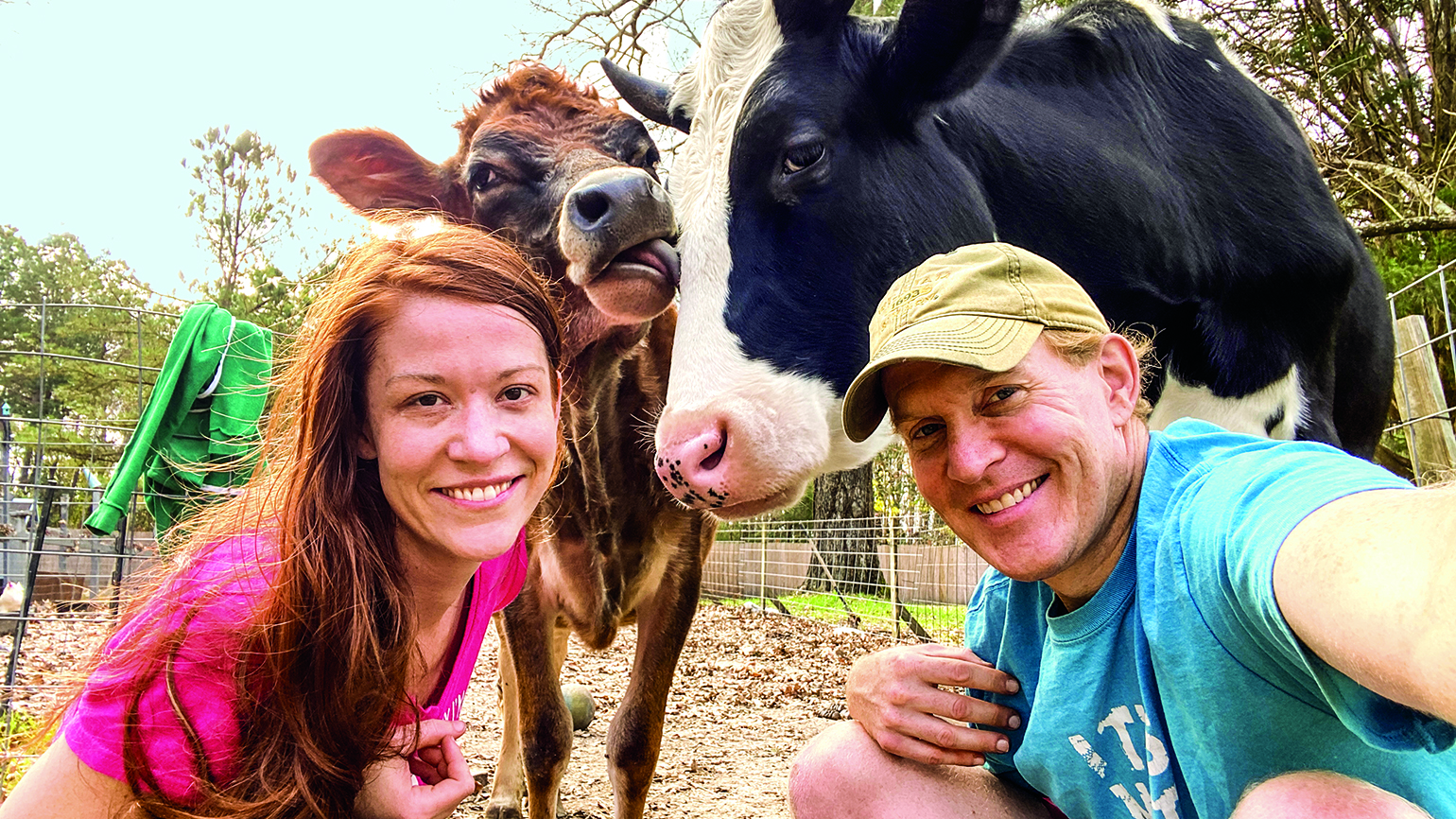
Meanwhile, more than 2,000 miles west, in Arizona, another animal-lover named Mallory had been following Ryan’s journey on social media. She loved seeing photos of Ryan snuggling with Jenna. It was clear that this cow considered Ryan, who slept in the barn with her during her tentative early days, to be her dad. In 2019, Ryan posted about wanting to save a local cow from abuse, and Mallory jumped in to help. She spent weeks coordinating the rescue with Ryan by phone. Eventually, Mallory flew east to meet the animals at Life With Pigs—and, of course, Ryan, whom she quickly fell for.

With her human-like behavior and goofy nature—sticking her giant head in every window until someone came out to play, for example—Jenna charmed Mallory further. Soon Mallory, who’d lived in Arizona her entire life, decided to stay in Virginia with Ryan and his growing animal sanctuary for good.

“I had a crush on a guy I saw on the internet hugging his cow,” she says on the Life With Pigs website. “I never imagined I’d end up spending my life with him.”

Ryan popped the question in the cow barn, with Jenna nudging his leg to remind him to get down on one knee. The couple traded cow rings in a farm ceremony as “best cow” Jenna and “cow of honor” Maisie led a wedding party of three dogs, three pigs and a gaggle of chickens and turkeys. “Jenna played such an important part in our meeting that we agreed she had to be front and center,” Ryan says.

Though she adores Mallory, Jenna still demands attention from her dad. “She’ll put her two horns on my waist and push her head up against me while I hug her neck,” says Ryan. “She can tell when you’re sad and will rub against you. The pigs will too. One of the biggest things I’ve learned is all animals have their own personalities, and they all know how to give and receive love.”

These days, Ryan and Mallory are busy caring for the 25 animals at Life With Pigs as they continue their mission of educating the public on animal agriculture. Their newest family member is Annie, a blind cow, who relies on Jenna for support. We’re sure Jenna’s up for the job—as long as Ryan is close by.

For daily animal devotions, subscribe to All God’s Creatures magazine.

A Long-Distance Friendship Forged from 9/11 Events

Maria Barreto-Mojica, a resident of New York City, lost her fiancé, a lieutenant with the New York Fire Department, to the tragic events of September 11, 2001. She found hope, solace and a new friend when Charlene Klein, from Wisconsin, mailed her a “big, cozy robe.”

Alone on Thanksgiving

Our family went on vacation many years ago, and while we were there, we ended up adopting some grandparents. Let me set the stage for you…

Hilton Head Island is like a second home to us. We’ve spent our family vacations there for more than 27 years, with many of those times during the week of Thanksgiving.

Community Newsletter

Get More Inspiration Delivered to Your Inbox


Michelle's adopted grandparentsOn this particular occasion, we had gone out to eat for lunch on Thanksgiving Day. Our sons, daughters-in-law and friends gathered around a large table with us that day as we enjoyed plates heaped high with turkey, cranberry sauce and all the trimmings.
In the midst of all the conversations and laughter, I noticed an older couple seated several tables away from us. They were adorable, she with her soft white curls and sweet smile, and he with an old-school charm as he spoke to her. I noticed they were holding hands across the table. I mentioned them to my family, and we talked about how cute they were.

But what bothered me was that they were alone. On Thanksgiving.

They finished their meal long before we did, and as they got up to leave the restaurant, they unexpectedly stopped at our table. “Excuse us for disturbing you,” she said, “but my husband and I were sitting over there watching you while we ate, and we were admiring your beautiful family.”

I told her we’d been watching them as well, talking about how cute they were together. I said, “Would you like to sit down and join us while we finish our meal?”

We pulled some chairs up to the table, and they told us that they had lived on the island for many years and that their son was too far away to travel in for both Thanksgiving and Christmas. We enjoyed their company so much that we stood outside talking for a while after lunch. And then they invited us to their home that evening for ice cream.

We had a great time listening to their stories about their trips to exotic locations and were fascinated as he told about his work on the Manhattan Project many years before. As we hugged them good-bye that evening I said, “You’re welcome to join us for meals whenever we’re here–and especially at Thanksgiving.”

And they did. We had many wonderful meals together through the years, and until his health declined too much to eat with us, they were never by themselves again on Thanksgiving.

Will someone you know be alone at Thanksgiving (or Christmas) this year? Why not invite them to join your family? You might start out planning to be a blessing to them, but I think you’ll discover what we did–you’ll be the ones who will really be blessed.

Be not forgetful to entertain strangers: for thereby some have entertained angels unawares. (Hebrews 13:2)

All God’s Creatures, a New Devotional from Guideposts

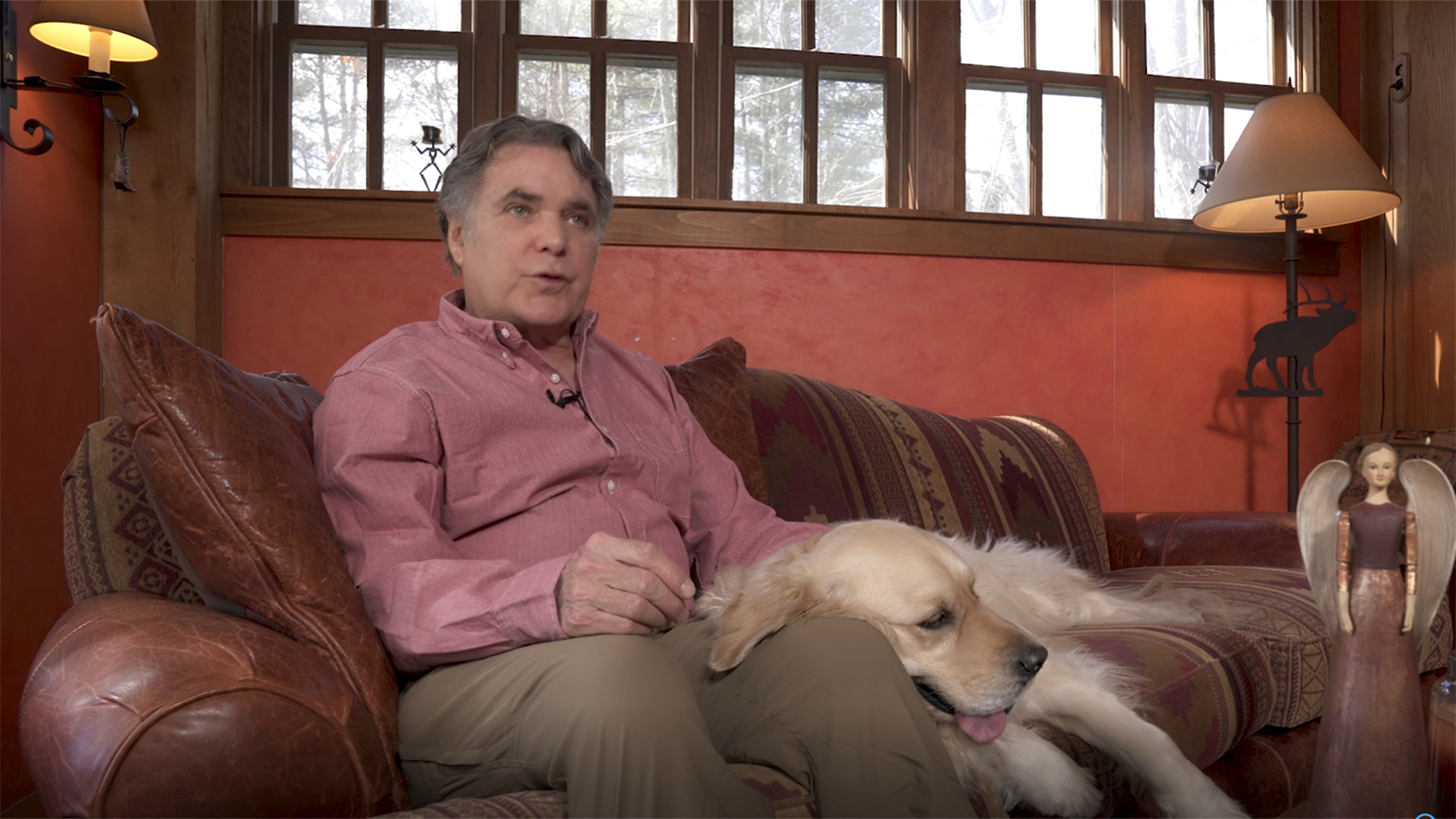
Hi, everyone. I’m Edward Drennan, Editor-In-Chief of Guideposts here with my pup, Gracie.

There’s something so special about seeing animals in nature. They have a remarkable power to connect us back to God. Many times God has used Gracie and the dogs that came before her to bring me lessons of faith, trust, forgiveness, acceptance, and love—unconditional love.

One cold, snowy night when we were up here in the Berkshires, a warm front covered the hills in a velvety fog. I had to let Gracie out for her evening patrol of the yard, when she suddenly started barking. It was a deep, assertive bark—not frightened—sure to scare off any potential intruders into our yard.

As I watched Gracie, standing in that fog, Gracie probably couldn’t see anything. And yet she was still going to ring out with that bark no matter what. And I wondered about my own fogs in life—the spiritual fog that sometimes descends on me and obscures my spiritual visibility—and it’s at those moments, like Gracie, I have to stand in the middle of that darkness and proclaim my faith no matter what I can or cannot see in my life.

Animals have a remarkable way to draws closer to God. That’s why Guideposts created All God’s Creatures, a brand new devotional that begins in May when the earth is bursting to life of the sweet vibrations of spring. Day by day, season by season you’ll take heart in stories of animals that appear at just the right moment. Each unforgettable true story will inspire, comfort, and encourage you. You’ll meet animals who demonstrate the patience forgiveness and wisdom we all need and who serve as reminders that God has a plan for each of us.

Devotionals are awe-inspiring. You won’t be disappointed with All God’s Creatures. It’s a blessing to me, and I know it will be the same for you. All God’s Creatures will touch your soul and draw you closer to the God who created us all.

All About Pets

I never knew how much I’d miss my dog until she was gone. Casey was a beautiful Golden Labrador Retriever, with patches of white here and there and unforgettable eyes.

She lived a good 13 years, full of antics and games, fun and play. One of the things I’ll remember most was the way she nudged herself right up against me if she wanted to be rubbed, or if she knew I was feeling sad or sick. I still think about how she used to sneak her way up to the front seat of the car, shake uncontrollably during a thunderstorm and roll down our hilly front yard on her back.

Her favorite treat was peanut butter, and when she was a puppy she used to steal my socks and chew on the bottom of our kitchen chairs.

And even though she was a Labrador, she was afraid of water (her baths were quite the spectacle!).

But aside from her fears and unique habits, Casey was a friend. A family member. She was always there. She didn’t care if I yelled or cried or didn’t speak at all. She didn’t care what my hair looked like or what color my nail polish was. She was just there, panting and smiling and giving her full attention to the people she loved.

We always took good care of her, just like I know you pet lovers out there do for your furry friends. That’s why I decided to do an episode for Spirited Products just for them. Check it out!

And don’t forget to read our story from the August issue on how Petfinder.com came to be.

Hemp Cat Collars from The Good Dog Company
What Is It: Made from soft, lightweight Hemp and certified organic cotton, these cat collars are comfy, stylish and good to the environment.

How to Buy It: Choose from a selection of colors and order online at thegooddogcompany.com!

Bumper Beds from Urban Leash & Treat
What Is It: Filled with 100% recycled fiber fill, these bumper beds are comfy and colorful. You can build your own on the site before ordering!

How to Buy It: Build and purchase it online at urbanleashandtreat.com.

Cat Dreams and Dog Dreams from Good Dog Goods
What Is It: An inspirational CD series that will relax your pet and may even help heal sick animals with its motivational melodies.

How to Buy It: Order them online from gooddoggoods.com.

Fetch’erz Ballz from NuHemp
What Is It: Healthy treats made of Hemp, grains and flax that promote digestion and provide a rich source of protein.

How to Buy It: Go to nuhemp.com to order an array of treats!

“Think Good Thoughts” Pet Bowl from Cafe Press
What Is It: A water or food bowl with an inspirational saying on the front.

How to Buy It: You can find this bowl and other similar styles at pets.cafepress.com.

“Pray for Inspiration” Dog T-shirt
What Is It: A shirt to keep your dog stylish and warm with an inspirational saying on the back.

How to Buy It: You can find this shirt and other styles at pets.cafepress.com.

—–

View this video in a bigger player.

Plus, find more Spirited Products!

Would you like us to pray for your pet? Check out our new pet prayers page.

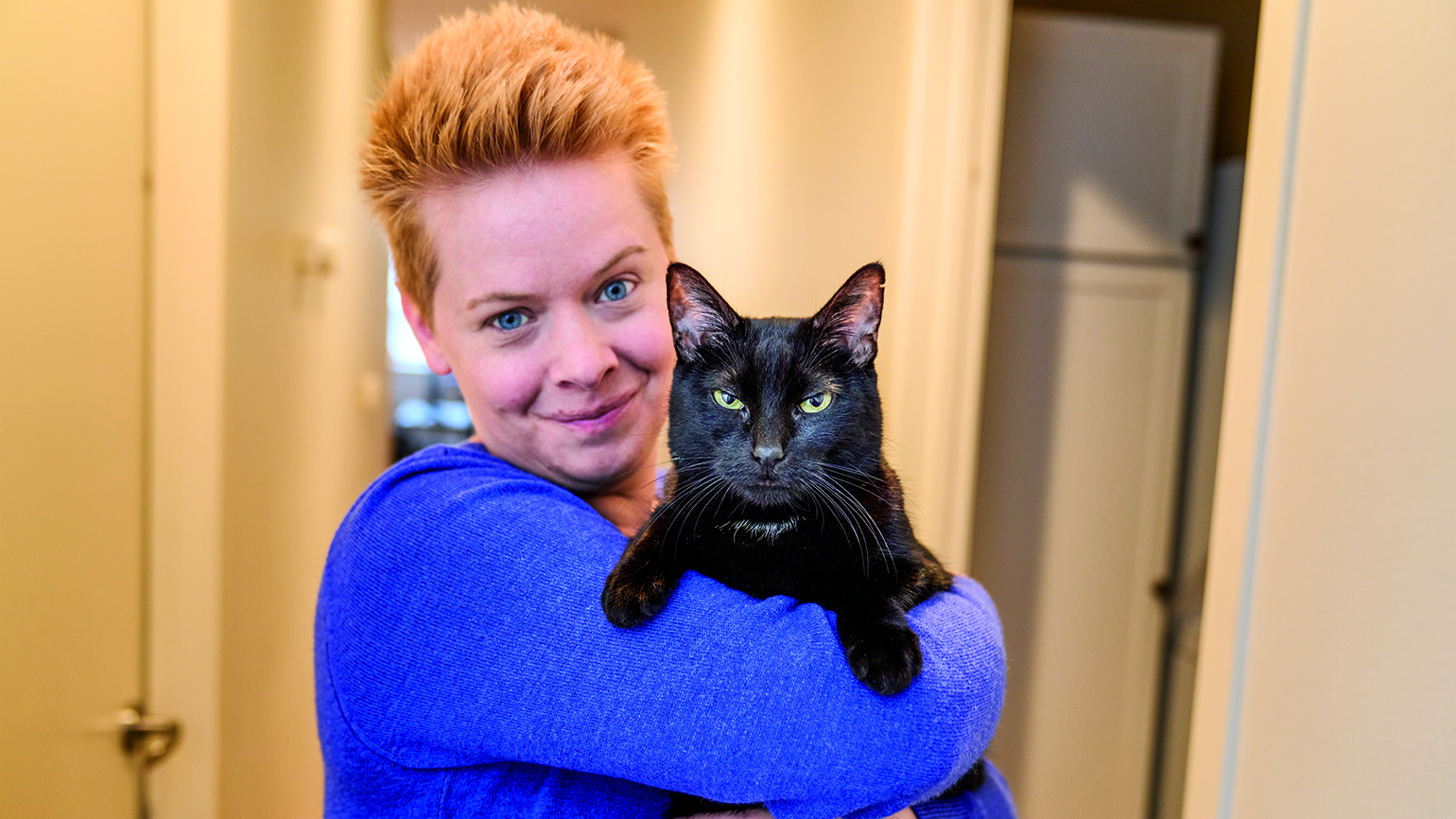
A Little Black Cat Showed Her the True Meaning of Love

‘‘You don’t want that one,” the shelter volunteer said. “He’s broken.”

“Broken?” I asked. Had I heard her correctly? I looked down at the black cat sitting on my foot. He trilled softly. The minute I’d walked into the animal shelter’s cat room, he’d been one step behind me, my shadow. I wasn’t an expert, but this cat seemed friendly.

“He’s been a stray since birth,” the volunteer explained. “He doesn’t like anyone—not other cats, not dogs, not people. Sometimes they’re out there way too long. He’s already three years old. At a certain point, it’s nearly impossible for them to be fully domesticated.”

“I want to adopt him,” I said.

“Really?” she asked. There were several other cats up for adoption, cats that were socialized and would be easier for a first-time owner. “Why?”

“Because he needs a home,” I said. Then under my breath, “And because I’m broken too.”

It was 2017. I’d been in therapy for a while, but it was only recently that my therapist suggested I get an animal companion—preferably something low-maintenance, like a cat. It would be good for me. Maybe even help me form connections with people. I didn’t know if I believed that. But I went to my local shelter.

I don’t know what it was about that little black cat, but I immediately felt a kinship with him. Two abandoned peas in a pod, I guess. I filled out the paperwork and left with him that afternoon.

At home I let him out of the carrier so he could explore. I watched as this little panther smelled every inch of the house. Eventually, his curiosity sated, he settled in my lap. I reached out a hesitant hand to pet him. He purred.

“Look, I’m going to be honest with you,” I said. “I’ve only been able to love two people in my entire life, and I’m thirty-three. I love my brother and one friend—that’s it. I could do without everyone else.” The cat didn’t move. “I have what the professionals call developmental trauma, which causes me to have serious attachment issues.

”Though he wasn’t looking at me, the cat’s ears were pointed in my direction. I knew he was listening. “My mom checked out when I was seven years old—emotionally, I mean. She’s not a bad person,” I said. “She just wasn’t capable of being a mom anymore. Kind of like how your mom wasn’t able to take care of you. I guess you had to figure it out on your own too, huh?”

“Chirp!” the cat replied.

My mom never healed from the trauma she experienced as a child. She went through the motions of parenting, providing shelter and food, but eventually her developmental trauma caught up with her, and she stopped showing me affection, talking to me, encouraging me. Does she love me? I wondered. A lot of times I don’t think she even noticed I was there. She was lost in her own thoughts, her own troubles. My dad, though physically present, was even more absent. I’d accepted his detachment, but I couldn’t let go of wanting a relationship with my mom.

The lack of closeness with my mom affected my interactions with others. I had a couple friends at school, but I didn’t share much of myself with them. What if they decide to shut me out too? I thought.

The cat looked at me. “It’s not like one bad thing happened to me. It’s more about what didn’t happen,” I said. He lowered his head and closed his eyes, his body growing heavy. “I’m telling you this because you shouldn’t expect too much from me. Don’t expect me to love you. I don’t know how.” He drifted off to sleep.

It took me a week to come up with a name for him. I finally settled on Mr. Bojangles, after the song about a homeless man who, even after being arrested, remained happy and upbeat. He spread joy and laughter by dancing for his fellow prisoners. The name fit this cat. Even when he was “behind bars” at the shelter, Mr. Bojangles had been chirping and trilling, like he was trying to cheer me up.
As he adjusted to life with me, he got more talkative. More often than not, I found myself talking back:

“Chirp!”

“Hello, there.”

“Chirp!”

“Yes, I’m home.”

“Chirp. Chirp!”

“I see you’ve moved the kitchen sponge to the living room floor. Hunting?”

“Chirp!”

“It looks dead. Good job.”

By the time a year passed, we’d settled into a routine. When I woke up in the morning, Bo—that’s what I called him for short—would demand that I hold him, so he could rub his face against mine. Then it was breakfast for us both before I headed to work. When I got home in the evenings, Bo would meow until I picked him up. I’d put on music and sway with him in my arms. We danced to the many recordings of “Mr. Bojangles,” his favorite being Sammy Davis Jr.’s rendition. “I knew a man, Bojangles,” I’d sing along, “and he danced for you in worn-out shoes…”

Bo was great company, a good conversationalist and a divine dancer. He’d made my life better. Still, I hesitated to call it love. Just the word itself seemed too big for such a small creature—until the day I came home and collapsed into bed, sobbing.

When you’re recovering from trauma, some days are better than others. That day was one of the worst. Part of me had always held out hope that my mother and I would reconcile. That someday she’d call me and we would talk. But she was already 65 years old. If she hadn’t changed by now, it was unlikely she ever would. A hard truth, one that hit me like a ton of bricks that day. Twenty-seven years after she checked out, I had to face it: My mother was truly gone. Letting go of that hope was devastating.

I felt the bed dip and then the softness of Bo’s fur. He curled up by my head. I shifted to give him more space. But space wasn’t what Bo wanted. He got up and repositioned himself, so his back pressed against my face—a solid and deliberate presence.

He stayed with me the whole night. Eventually, I cried myself to sleep. And, when I woke the next morning, my face puffy, Bo was still beside me, purring gently. In that moment, my heart was so full, I was finally able to say it: “I love you, Bo.”

“Chirp!”

Translation: “I know.”

Love isn’t always easy. I know that better than most. It’s a dance, one that involves give-and-take. Many are taught from a young age. They have people who embrace them, teach them the steps and help them keep the rhythm. Some of us learn this dance later in life when we find the right partners. Others may never learn it. I feel for those people. I thought I was one of them.

Then Mr. Bojangles chose me. He led me out onto the dance floor. He’d been abandoned, but he wasn’t afraid to love and be loved. In time, I danced with new friends and, eventually, a partner who knew when to take things slow. One who I was able to tell “I love you,” because of a little black cat who showed me the meaning of those words.

For daily animal devotions, subscribe to All God’s Creatures magazine.

A Lesson Learned During a Family Trip to a Hobbit House

Fifteen years. That’s a big anniversary. I wanted to surprise Jim with the best trip ever.

Anniversary trips were a tradition nearly as old as our marriage. Each year, we took turns planning a secret trip for the other. We’d stayed in a historic train car in Livingston, the Ghost Rails Inn in Alberton, Montana, and Chena Hot Springs in Fairbanks, Alaska. But this anniversary required someplace special. Somewhere completely unexpected. After 15 years, could we still surprise each other?

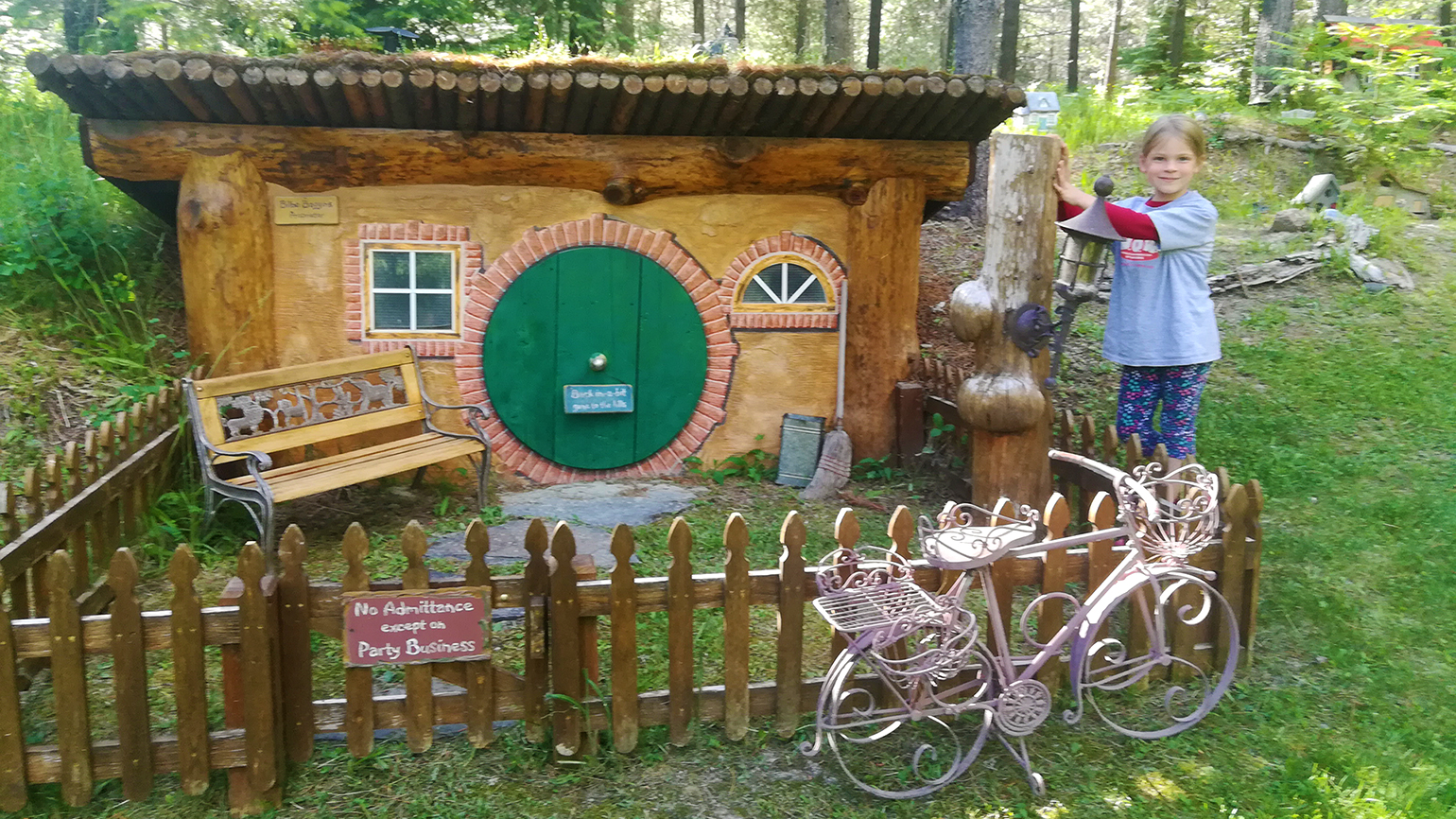
The pressure was on—and I found the perfect spot: The Shire of Montana. It was a J.R.R. Tolkien–inspired guest home, a “hobbit house” built into a hillside near the small town of Trout Creek, a seven-hour drive from our place in Roundup. Jim and I had often talked about how fun it would be to build a hobbit house, so I knew he’d be impressed. And our six-year-old daughter, Aurora, would love it.

Whimsical structures dotted the grounds—a troll mine, a wishing well, houses for elves and dwarves and fairies. What child wouldn’t be fascinated by a village made for child-size hobbits? This is going to be the best trip yet, I thought as I clicked on the website to make our reservation.

Jim inadvertently started our surprise trip tradition with a getaway for our first anniversary. When I asked where we were going, he playfully refused to tell me. “It’s within a day’s drive of Roundup,” he said. “That’s all I’m saying for now. But make sure you pack something nice for dinner.”

Our destination? The landmark Grand Union Hotel in Fort Benton. I was blown away. The surprise made it even more fun. I called dibs on Year No. 2 and planned a trip to Valier’s Stone School Inn. After Aurora was born, she came on our adventures too.

She might love The Shire even more than we do, I thought, glancing at our daughter, her little blonde head bowed over her latest painting-in-progress.

I was about to book our reservation when I saw a note on The Shire’s website: No kids allowed.

That ruins everything! We couldn’t leave Aurora behind, and I had no Plan B. A year without an anniversary adventure was unthinkable.

There was an email address on the site. Dare I ask if an exception might be possible? It couldn’t hurt.

A reply wasn’t long in coming. “The rule exists because previous children destroyed large parts of the Elven Village,” wrote Mr. Michaels, the owner. “But if you give me your word that your daughter is responsible and will not touch, she can come.” I gulped, glancing again at Aurora. She was a good kid. Thoughtful. Well-behaved. This would be okay. Right?

I wrote back, pledging nonstop close supervision, and filled out the reservation form.

Over the next couple weeks, I received several emails from Mr. Michaels about our upcoming visit, each one addressed to “Erin, Jim and the well-behaved six-year-old.” Mr. Michaels wasn’t missing a single chance to remind me of my promise. Each time, I felt a prickle of concern. Aurora was so young. What if she made an innocent mistake?

What if it was me who’d made the mistake? Our annual trip was supposed to be a fun adventure. How much fun would we have if I was hovering over Aurora, scolding her if she put a foot—or hand, in this case—wrong? The last word I wanted to associate with an anniversary trip was no.

The day finally arrived. We piled into the car for the drive to western Montana. I couldn’t help but be excited, imagining Jim and Aurora’s reactions. Still, turning onto Hobbit Lane, I felt a pang of anxiety.

God, please let this be a good experience for Aurora. For all of us.

We passed a hand-carved wooden sign that read, “the adventure begins….” Jim looked at me curiously.

“You’ll see.” I pulled into The Shire, tucked into a grassy hillside surrounded by tall ponderosa pines. Jim’s and Aurora’s jaws dropped.

Now came the hard part. As soon as we got out of the car, I pulled Aurora aside. “Children aren’t usually allowed here,” I said. “So you have to be very, very careful. You can look at everything, but don’t touch.” I explained the reason for the rule and how terrible it would be to damage anything.

Aurora’s eyes widened at my no-nonsense tone. “I promise, Mama,” she said solemnly. I tried not to wince. Had I just destroyed any illusion of wonderland? Nothing could kill joy faster than a stern “Don’t touch!”

We pushed open Bag End’s front door and walked in. The interior did not disappoint. Every detail had been carefully thought out. From the cozy fire crackling in the wood stove and the furry extra-large hobbit slippers (hobbits have big hairy feet) to the character-specific hats, Shire-themed lampshades and hobbit-height peephole in the door. There was even a golden ring on a delicate chain—just like the one in the novels—hanging from a rustic railing near the ceiling.

Aurora took everything in, keeping her hands pressed to her sides.

Outside brought more wonders. Murals depicted the rest of the village. A massive tree stump out front served as a troll house. There was a hobbit honeymoon suite with a large round door, and even a hobbit firehouse, with a real bell, red door and fire extinguisher.

“Remember, no touching,” I reminded Aurora, feeling like a scold.

She nodded and wrapped her arms tightly around herself.

Had I scared Aurora so much about touching that she couldn’t think about anything else? What fun is that? I thought.

As darkness fell, one by one, little colored lights winked on, scattered throughout the woods. We stepped onto the wooden footbridge that spanned the stream gurgling down the hill. Aurora walked beside us, hands clasped behind her back.

“It wouldn’t take long for a careless kid to wreak havoc here,” Jim whispered to me.

“I think Aurora understands,” I whispered back. “Everything is so carefully made. It’s beautiful but fragile.”

Halfway across the bridge, a whizzing sound overhead almost made us duck. Were those fairies zooming by? Aurora stopped, looking skyward. “Where’d they go?” she wondered out loud.

I took a second look with her, clasping my hands behind my back too. Flying fairies no longer seemed impossible.

We spent several days at the Shire. Aurora delighted in each discovery but never disturbed a thing, not even the miniature bicycle and fairy clothes in the Fern Grotto that begged to be played with. She took her responsibility to protect Mr. Michaels’s work seriously. Respecting boundaries didn’t take away the beauty and wonder; it allowed The Shire to remain beautiful and wonderful into the future.

Not so different from a marriage, I thought. Now I understood why God had brought us to this place to celebrate our fifteenth anniversary. Jim and I moved through life side by side as a couple, but we’d learned to accept each other’s individuality and boundaries as well. Marriage was full of surprises, challenges and adventure. The key to making it work was respecting each other.

Like The Shire of Montana, our marriage was a labor of love. One worth protecting. If we treated it with care, it would last a lifetime.

For more inspiring stories, subscribe to Guideposts magazine.

A Lawyer Finds Stress Relief in Art—and Surprising Success

I liked structure, things going according to plan—my plans. But lately there had been so much upheaval that I hardly recognized my life, or myself, anymore. I was going through a divorce. My dad had a terminal illness. I couldn’t focus on my job as a labor and employment lawyer, and hard work was something I prided myself on. (Even in law school I’d worked a side job as a cheerleader in the NBA and NFL.) I put on a smile for my daughters—Gabby, four, and Gigi, two—but I cried in the shower. I woke up in the middle of the night, every night, my mind racing. I didn’t know it was possible to feel this miserable.

When I refused to take sleeping pills—I didn’t want to be out of it if my girls needed me—my doctor ordered me to take a leave of absence from my job. Part of me was relieved to have a break. Another part of me was freaking out. What was I going to do without having a schedule to stick to? How would I fill the hours Gabby and Gigi were at day care?

What I ended up doing was going for walks on the beach. Something I’d been too busy to do before, even though we lived in a townhouse just a few blocks away. As I strolled along the water’s edge, gazing at the cool blue expanse of sky and sea, the chaos inside me seemed to subside. And in the quiet, I talked to God, asking him to help me find peace and joy again.

One morning i took off my shoes and plopped down on the beach. I wiggled my toes in the sand and breathed in the salty air. You should paint. I laughed out loud. It seemed like such a cliché—get divorced, take up painting.

“Lord, you have got to be kidding,” I said. “I’m a lawyer, not an artist!” I wasn’t the free-spirited, artistic type at all. Doodling in my notebooks during law school lectures—that was about the extent of my artistic abilities. I put my shoes back on and went home, shaking my head at the absurdity of the idea.

Yet it wouldn’t go away. You should paint. The thought popped into my head when I was running errands. When I was on the phone with my family back east. When I walked on the beach. When I read to the girls at bedtime.

Fine, I decided one day, I’ll go to an arts and crafts store. I drove to Michaels. I grabbed a shopping cart and headed to the art supplies section. There was an entire aisle just for paint. Acrylic, tempera, gouache, oil, watercolor…I had no idea there were so many kinds of paint, let alone what they were used for. What the heck was I doing? There was no way painting fit into my life plan. I should just lay this silly idea to rest.

I turned my empty cart around. I was four steps from the door when a young man in a red Michaels shirt said, “Do you need help with something, ma’am?”

I wanted to say no and get out of there. Instead I blurted, “I would like to paint, but I don’t know what to buy.” I was so embarrassed, I couldn’t look him in the eye.

“No problem,” the young man said. “My dad’s an artist. I can show you everything you need.”

And that’s exactly what he did. He picked out a set of acrylic paints, explaining that I could use them to paint on anything—paper, cards, canvas. He recommended brushes. A palette, for mixing colors. Canvases in different sizes. An easel.

“Have fun!” he said, after ringing up my purchases. “I expect you to show me a painting the next time you come in here.”

I smiled weakly. Not likely, I thought. That night, after Gabby and Gigi went to sleep, I set up the easel in the dining room and took out the paints, the palette and a brush. I put a canvas on the easel and stared at the blank white surface. What should I paint? I closed my eyes.

Suddenly I could imagine it. The blueness of the sky blending into the deeper, darker shades of the sea. The incredible nearness of God I felt there. I squeezed some blue paint onto the palette, dipped my brush and touched it to the canvas, not sure what I was doing but knowing somehow that I needed to do it.

I kept painting the next few weeks. When I woke in the night and couldn’t go back to sleep, I went to the dining room and painted. When I wanted to cry, I painted. It was healing. I could forget all my troubles and immerse myself in the beauty and colors of God’s world. I used my phone to take pictures of my paintings, so I could carry that feeling of peace with me.

I ran out of canvases and returned to Michaels to get some more. When I did, the young man who’d helped me before recognized me. “You’re back!” he said. “Can I take a look at some of your paintings?”

I showed him the photos on my phone. He studied them, not saying a word. I hoped my humiliation didn’t show on my face. Then he looked up and said, “Wow, are you sure you haven’t taken any classes?”

Maybe painting hadn’t been such a crazy idea after all. My leave ended, and I went back to work. Life still had its challenges—my father’s death, the finalization of my divorce, a schedule that got even busier as the girls took up dance and karate—but I wasn’t overwhelmed by them anymore. I felt strong enough to cope, as long as I was painting.

My paintings grew in number—the walls leading to the second level of my townhouse were covered—and in size. One took up almost an entire wall on its own. It depicted people of different ethnicities, all walking into the water to be baptized, painted as if I’d been standing on a beach watching them, like the beach where God had broken through to me. I filled the bottom half of the canvas with dots, thousands of them to show the variegated hues of the ocean. I titled that painting Take Me to the Water.

Gabby and Gigi would get up in the morning and run to see what I’d created. “We want to paint, Mommy!” Gabby said one day. “We want to do what you do.” I bought them easels and we painted together. Then we started drawing together. Pictures of everyone in our family, pictures of the girls doing their favorite things—ballet, karate, making cupcakes, building sandcastles.

The dining room turned into an art studio; we would sit on the sofa and eat our dinner off TV tray tables. Two years after I first picked up a paintbrush, there was no more free wall space left in our townhouse. What was I going to do with all of my artwork? I couldn’t figure out a plan that made sense.

Finally, I got so frustrated that I threw my arms up and said, “Lord, I surrender! Whatever you want me to do, I’ll do it.” I went to a café one day to brainstorm with another artist, but she didn’t show up. On my way back to my car, I passed an art gallery.

Go ask.

Immediately questions crowded my mind. Just walk in there as an unknown artist? Really? Do you think they’re going to take you seriously? Then I caught myself. Hadn’t I promised to listen to the Lord, to trust him to lead me?

I opened the gallery door and went inside. “Can I help you?” a man asked. “I’m a painter,” I said, introducing myself. “Who should I talk to about showing some of my work?”

“You asked the right person,” the man said. “I’m one of the owners of this gallery. Do you have any of your paintings with you?” I showed him the pictures on my phone. The next thing I knew, I was walking out of the gallery with a solo exhibit scheduled. Then another idea came to me. Or I should say, was given to me. Do a children’s book.

Again, my first response was Really? Maybe it’s because I’m a lawyer and trained to question everything. I didn’t realize that I already had the answers. What did I know about children’s books? The girls and I were frequent visitors at the library. I knew there weren’t many books on the shelves that featured children who looked like they did. And I knew my daughters would love to read a book about kids living lives just like their own. What would my book be about? That’s when God reminded me that I had plenty of inspiration for a book: those sketches the girls and I came up with at our dining room table.

My latest work is Meet Gabby and Gigi, a children’s book about two sisters who live by the ocean. It’s filled with illustrations of the girls doing so many of the activities they love— including cheerleading with pom-poms and painting at their easels. I hope you can feel their joy on every page.

It’s the joy I live my life with. I’ve discovered that I thrive on things going according to plan—a plan that’s sometimes surprising and always bigger and brighter than anything I could have imagined on my own.

Living through a divorce and her father’s illness, Phnesha Marchette took a walk on the beach and asked God for peace. The answer she got made her laugh. It also changed her life.

Did you enjoy this story? Subscribe to Guideposts magazine.

A Voice Told Her to Take Up Painting, and She Heeded the Call

A Kitten Became Her Daughter’s Perfect Companion

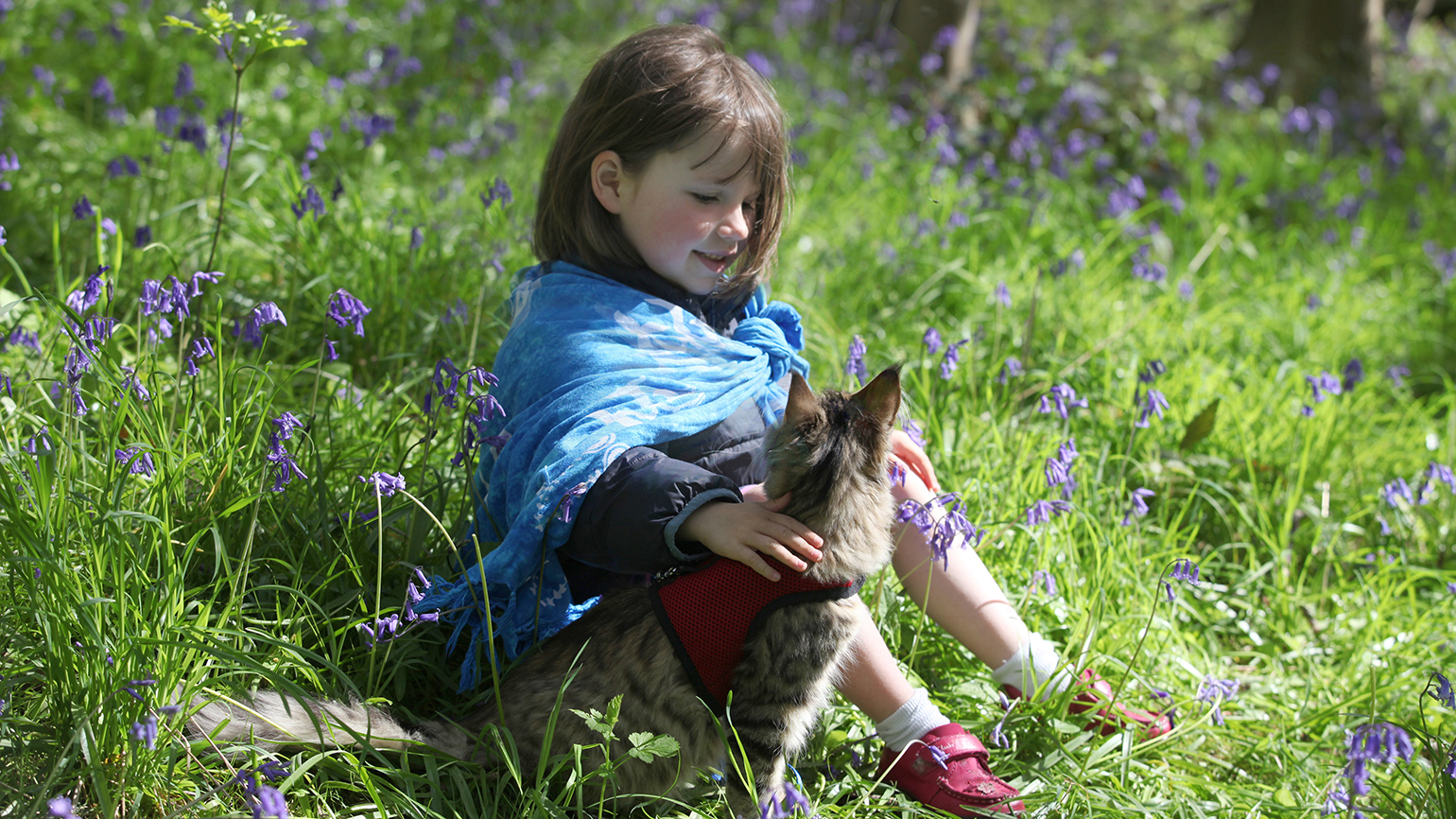
Mornings in our household start with breakfast—for everyone. The gerbils, rabbits, goats, ponies, horse, chickens included. It’s a big job, but it goes quickly when you have help. My 10-year-old daughter, Iris, loves feeding the animals. She comes with me from pen to pen, her cat, Thula, at her heels.

Thula likes to perch on the fence and watch, though she’s a little too interested in chicks that have just hatched. But the large fluffy Maine coon cat is easy to keep an eye on, because she’s never far from Iris’s side. No matter how many animals join our family, I’ll always have a special place in my heart for Thula.

Iris Grace was born in 2009 and was, in my opinion, the most beautiful baby. Ten delicate fingers, ten tiny toes and the widest blue eyes. But those eyes always seemed to be looking elsewhere, never at me or my husband. Iris was there—but she wasn’t. It was as if she lived in her own world, separate from ours. When she turned two, we took her to a developmental specialist. It didn’t take long for the doctor to give us a diagnosis. Iris had severe autism.

The simplest things were a struggle. Iris had trouble speaking and could say only a few words. Doctors told us it was possible that she would never say more. She shied away from human contact. She hated wearing clothes because of the texture of the fabric. She didn’t like being in the car. She had trouble sleeping at night.

Bath time was the worst of all. Iris couldn’t stand water—the sound of it, the feel of it on her skin. She would scream when I washed her hair, flailing her arms and trying to climb out of the tub. It was heartbreaking and exhausting. I would lie awake in the middle of the night and cry. Will Iris stay locked in her own world? I’d wonder. What if she never connects with anyone, never knows joy and love? I didn’t want such a lonely life for my daughter.

The only thing that Iris seemed to take pleasure in was art. School was such an ordeal for her that we pulled her out of pre-K. I taught her at home instead. I tried to replicate as many school activities as I could. I even set up our own little art class, and Iris took to painting. She would spend hours, brush in hand, engrossed in her work. But even that was something she did alone.

I’d read that therapy animals can help children with autism. I loved horses and hoped to share that passion with my daughter. But they terrified her. Dogs weren’t any better. Even the calmest ones intruded on Iris’s personal space, upsetting her. I was losing hope that our little girl would ever interact with others.

Then came Christmas of 2014. We cared for my brother’s cat, an old tabby, over the holidays. The cat wasn’t loud. He didn’t jump on Iris or lick her. He just quietly shared his space with her—the perfect companion. When my brother took him back, I started the search for a cat of our own.

I had a few requirements. I wasn’t interested in a cat that would sleep all day and ignore Iris. I wanted to find a breed that was sociable, friendly and curious. I stumbled across Maine coons—an American breed known for its gentle nature, intelligence… and love of water. Bath time was such a struggle in our house. A water-loving cat seemed a little too good to be true. But a local Maine coon breeder I contacted assured me that that was the case. “These cats love to swim,” she said. She had a female kitten she thought would be right for Iris.

The day I brought the kitten home, I sat Iris down in the living room and said I had a surprise for her. Then I brought in the cat carrier. As soon as I opened the door, the kitten poked her head out. She was gorgeous, with fluffy brown striped fur and long tapered ears. She scanned the room with her intelligent green eyes, then made a beeline for Iris. I held my breath. The kitten crawled into my daughter’s lap. Iris smiled, delighted. Their connection was instant. Magical. From that moment on, the two were inseparable.

Though never trained as a service animal, it was as if Thula knew she had a job to do. And she took it seriously. Wherever Iris went, there was Thula. She watched as Iris painted, and she curled up by my daughter’s side when she read her picture books. Thula would sense when Iris was getting overwhelmed and soothe her. Thula even came along on bicycle and car rides. From the first night, she slept in Iris’s arms, as if she belonged there. I kept checking on them, but Iris slept peacefully through the night.

And, yes, our Maine coon loved water. The first time I filled up the bathtub after we got Thula, she jumped right in. Iris was worked up as usual, but seeing how much her cat liked the bath, she calmed down a bit. It took a few tries, but soon Iris was taking regular baths, Thula right in the water with her.

Thula never demanded anything from our little girl. She was simply there, offering love, comfort and acceptance. Iris started to open up and communicate. We’d had Thula for only a few months when one day I heard Iris say, “Sit, cat.” She patted the space on the couch next to her. And Thula sat. I heard more and more words. Iris even started expressing herself to me and my husband. I wanted to jump for joy when she told us that she was hungry or that she wanted to play outside.

It’s been six years since Thula joined us, and our lives look very different now. While they’re still the best of friends, Iris is able to go places without Thula. My daughter can make connections—with other animals and even children her own age. It’s as if Thula was a stepping stone in her development. And now, our Maine coon is helping other children with autism through the Little Explorers Activity Club. In 2018, I opened the nonprofit playgroup as a place for children on the autism spectrum to spend time with one another in a calming, nurturing environment. We have since expanded into an animal-therapy program, complete with staff and furry “counselors.”

On our property in Leicestershire, England, we offer animal-assisted therapy and animal-assisted learning. Thula is the ultimate therapy cat. There are games and activities, such as crafts and horseback riding, but there are also quiet areas and rooms where the children can go to relax if it all gets to be too much.

Watching Iris feed our pony Casper, I’m still amazed, because it’s a scene I wouldn’t have been able to imagine when she received her diagnosis. The change in my daughter is nothing short of a miracle, a miracle that began with a Maine coon cat named Thula.

Did you enjoy this story? Subscribe to All Creatures magazine.

A Kid’s Best Friend

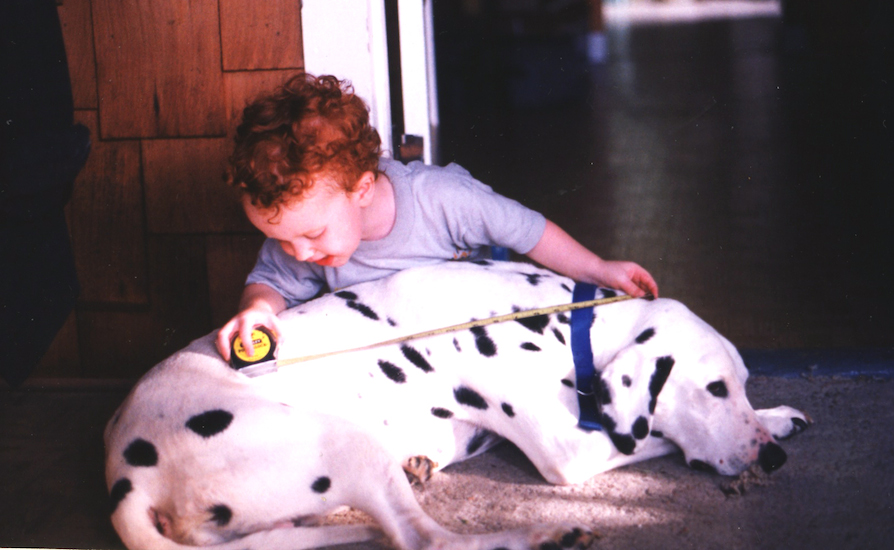
This is one of my favorite photos of my son when he was young, with our Dalmatian, Schuyler. My son was curiously exploring his world, and in a measuring phase. Even Schuyler couldn’t escape my son’s computations. The gentle dog never minded though. He put up with it just as he put up with our daughter’s dressing him in hats and sunglasses—because he loved them.

The relationship between a child and a pet is special. Children who grow up with pets tend to be more nurturing and compassionate than those who don’t. Pets help children learn responsibility. Pets may even help a child be healthier–there is evidence that having a pet in the home during a child’s first year of life may help reduce the child’s risk of developing allergies.

READ MORE: PRACTICING PATIENCE

The family dog or cat is many a kid’s first friend. They learn that pets accept them just the way they are. Sadly, children may also experience their first loss with a pet. But this can also help prepare them for other losses in life.

Recently, there was a photograph going around Facebook that caused a great stir–a young boy was sweetly kissing the family Rottweiler on the cheek, while the dog’s lips were curled and teeth bared. The boy’s parents felt that the dog was displaying a “cute smile” while many commenters believed that the dog was stressed and showing warning signs of an impending bite.

Whether this was a bite waiting to happen or not, I leave that to the parents. It’s always important to note, however, that even the gentlest dog or cat may react when a little one gets too close to their face, pulls their tail, roughhouses or even squeals suddenly. So it’s wise to always supervise a pet and young child together.

Make an effort to nurture the loving connection between children, grandchildren, neighbor kids and your pets. Teach them to be respectful of all animals, and the bonds will be forever strong.