Embrace God's truth with our new book, The Lies that Bind

Today, Reflect on Your Blessings

Since ancient times no one has heard, no ear has perceived, no eye has seen any God besides you, who acts on behalf of those who wait for Him. Isaiah 64:4

One of my favorite things about Thanksgiving is reflecting over my last year, but sometimes the truest Thanksgiving comes when I look farther back.

Witnessing Heaven In Article Ad 827x123

I love digging out my old prayer journals. This is part of a prayer from 1999:

Dear Jesus, I thank You for this new morning. I thank You that you desire to meet with me as much as I desire to meet with You—even more. I have yet to see how my life can be transformed by being solely committed to You, living a life without reservation, instead of trusting, listening and obeying in all things. Whose lives would be affected? Whom would I touch? How would eternity be forever changed?

I love looking back more than a year because so much has happened. I’ve celebrated 23 years of marriage, raised three amazing kids, led three mission trips, helped open a pregnancy center, started two teen mom support groups, started a blog, wrote numerous books, moved to Arkansas for ministry, started a radio podcast, and adopted three children! Those are the highlights.

There have been many hard moments—painful moments—too. As James 1:12 says, “Blessed is the one who perseveres under trial because, having stood the test, that person will receive the crown of life that the Lord has promised to those who love him.” Jesus acts on those who wait for Him. He helps us persevere, and He promises a crown of life at the end of our journey. That’s something to be thankful for!

Faith Step: This Thanksgiving don’t just take time to look over the past year and share things you are thankful for. Instead, look back over the last five or ten years…maybe even more. Share ways you’ve persevered. Share accomplishments you’ve achieved through and for Jesus. Finally, share how Jesus has acted as you’ve waited for Him.

The Prayer That Makes Every Day a Success

Some days are better than others. 

Everyone knows that, right? Some days are good, and other days are not-so-good. But there is an easy and effective way to make every day a success. All it takes is a simple morning ritual. 

Light for Life NASB Study Bible in Article

You probably already have morning rituals—you hit the “snooze” button on your alarm on a daily basis. You brush your teeth. Comb your hair. Make your bed. Brew a pot of coffee, perhaps. 

But there’s just one daily ritual that can ensure a successful day, no matter what else may come your way: a prayer of surrender.  

Many people throughout history have made a habit of morning prayer. The psalmist David intoned, “In the morning, Lord, You hear my voice; in the morning I lay my requests before You and wait expectantly” (Psalm 5:3, NIV). The prophet Daniel opened his windows and prayed every morning facing Jerusalem. Jesus was known to rise before the sun to find some quietude. Martin Luther started each day with the same prayer. Likewise, Therese of Lisieux. George Washington wrote a prayer for each morning in his journal. And the list goes on.

It doesn’t take much. Dr. Martin Luther King, Jr., often prayed only a sentence or two but his prayers were as powerful and effective than if he had spoken longer. 

What you pray is up to you, but taking a few moments every morning to surrender to God and invite His controlrather than exerting our own, which tends to add frustration without producing the desired resultscan set your course for the day. It can guarantee that whatever comes your way is greeted with alacrity and responded to with what I like to call “sanctified flexibility.” 

Here’s one example of a daily prayer of surrender: 

Lord God, my Sovereign, I offer You this day and all that will come to me in it. I surrender to You and ask You to sanctify every moment, every breath I take, every decision I make and all I think, say, or do. Let the words of my mouth, the work of my hands, and every meditation of my heart be pleasing to You, whatever may come, in Jesus’ name, amen. 

Try it. Or pray in your own words. And, as you begin every day with such a prayer, watch how God works in and around you to honor your daily surrender. 

Press Forward With Perseverance

My friend Rafael was one of 50,000 runners in the New York City Marathon–the largest race in the world.

When most of us were trying to get an extra hour of sleep, he posted on Facebook: “Getting on the Staten Island Ferry now with all the other runners to go over to the start area!!! See you at the finish line.”

Inspiration from the Garden in article ad

After many months of training, the time had come to run the 26.2-mile race through the five boroughs.

The personal stories of the runners are inspiring. Some overcame cancer, tragedy and lost. Others are running for charities dear to their hearts or in honor of someone. These stories of commitment, faith, hope and determination lift our spirits.

I was inspired by the 91-year-old woman who when she was 64, was told that she had to quit smoking. She stopped, started running and is still going strong.

In the New Testament, the faith journey is compared to running a race. It speaks to the topic in different ways. In 1 Corinthians 9:24-26, it makes note that everyone runs, but only one gets the prize… that eventually fades away. But those who run the faith race win an external prize.

In another passage, the Apostle Paul knows the time of his death is near and states, “I have finished the race, and I have remained faithful.”  Finally in Hebrews 12:1, we are encouraged by the following words, “Let us run with the endurance the race God has set before us.”

In the faith journey, it is about being faithful, persevering and enduring until we cross the finish line. We can all be winners of the eternal prize. Does it take endurance? Yes! Do you need to keep your eyes on the prize? Absolutely! Is it worth it? Indeed.

Do you believe that with God’s help you will cross the finish line? How do you remain faithful?

My prayer:  God, help us to persevere and remain focused upon us until we cross the finish line.

Praying with Pencil in Hand

I'd never known our friend David Manuel to be so emphatic. My wife, Tib, and I had climbed the steps up to his lighthouse studio overlooking Cape Cod Bay. But David, we quickly learned, hadn't invited us up there for the spectacular view.

"I want to show you something new," he said, pointing us to chairs and handing each of us a pencil and a legal-size yellow pad. "A new way to pray. Imagine yourself climbing the Mount of Olives. You come to a clearing—and there is Jesus, alone, seated on a bench.

Walking with Jesus L&E evergreen_in article ad

"He motions you to join him, invites you to talk to him about anything that's on your mind or in your heart. Write down what you say to him. Listen to his response. Record the whole conversation on your yellow pad."

We are journalists, Tib and I. We have interviewed hundreds if not thousands of people. But this was the most unusual conversation either of us had ever been asked to record.

For an hour we experimented with this technique so unlike our usual inside-our-heads prayer approach.

Back home next morning I got up early, took coffee, pencil and pad out to our porch and, as David instructed, imagined Jesus waiting there for me.

Away from David's lighthouse, however, doubts and questions assailed me. What tone was appropriate? Formal and worshipful, or casual and everyday?

Finally I just plunged ahead. "Well, Lord, here I am," I wrote on the first ruled line. "If you want to know what is really on my mind, it's not very spiritual. I'm worrying about our old car breaking down on our trip south."

I waited and listened, then wrote down what I thought I heard.

That worry is masking a bigger concern. Your own aging. Your own health breaking down.

What? I was feeling great! Well, a few aches and pains maybe, but I wasn't the kind of guy who went running to the doctor with every little complaint. "All right, Lord," I wrote. "You must be right. I'm almost 82 and I'm afraid I won't be able to keep up our travel schedule."

Back and forth the dialogue went—other subjects, other insights, corrections, encouragements. Was I really hearing from God? Or were these just my own thoughts?

In David's lighthouse, I'd jotted down two of his yardsticks for measuring anything I heard: Were the responses in keeping with the personality of Jesus? Were they consistent with Scripture?

Against these standards I found this dialogue acceptable. If it was something important and I had doubts, David also advised, I should check with a trusted and experienced Christian friend.

I put my yellow pad aside, astonished to find that 40 minutes had sped by. I returned to my porch rendezvous every morning for a month. Then Tib and I set out on that editorial trip through the south.

It was our second week on the road, a Thursday in Louisiana, when one of my upper left molars began to throb. Root canal trouble, I thought. The next day the pain spread to the lower jaw.

I phoned my endodontist back in New York. "He says it doesn't sound like a tooth problem," I reported to Tib. By bedtime I was wincing with an earache too.

All night I tossed on the motel bed. The whole left half of my face felt as if it were on fire. By morning it was spotted with red lesions the size of nickels. A little boy saw me in the breakfast room and ran screaming to his mother.

Tib had been on the phone trying to locate a doctor. Naturally it was a Saturday (when else do health crises occur?). I put on dark glasses, pulled my hat down to cover as much of my face as possible and let Tib drive me to the nearest hospital emergency room.

We waited for three hours until the frazzled young physician on duty could see me.

He did a quick examination, took some samples and informed me that I had a bacterial infection. "This should clear it up," he said, writing out a prescription for an antibiotic. "Stop and see another doctor if it doesn't get better."

It didn't. Monday we reached Lindale, Texas, where Tib had a teaching commitment. Lindale was just big enough to support a one-physician clinic. We made an appointment with Dr. Anthony Davis.

He listened to my report of the ER physician's diagnosis and took notes. "This is a textbook case of shingles!" he exploded. I didn't much like the diagnosis. But I liked the confidence in his voice.

Dr. Davis had recognized my problem the minute I walked in. The telltale sign? The lesions on just one side of the face. "I don't see how any…." He stopped himself, but the rest of the sentence hung in the air—how could even an overworked ER doctor have missed something so obvious?

"Shingles is a virus, not a bacterium; antibiotics don't help," he went on. Apparently the disease can appear in anyone who's had chickenpox. The virus lies dormant in the body—in my case for more than 70 years—until some agent reactivates it. "Have you been under stress lately?" Dr. Davis asked.

Of course, I'm under stress, I thought. Who isn't these days? There was the stress of traveling and worrying about our kids and grandkids, and okay, maybe worrying about my health. If stress could trigger shingles, I didn't see how anyone could escape getting the virus.

"Unfortunately," Dr. Davis said, "you've missed the critical window of time." If shingles is treated within 72 hours, he said, you could usually prevent the serious pain which so often persists long after the initial attack.

Dr. Davis gave me a prescription, "just in case we're not too late." As I left, he added the advice doctors are so fond of giving: "Avoid stress."

How was I supposed to do that?

The trip stretched on and so did the pain. The tension made me grind my teeth even in the daytime. I was miserable, and miserable to be with, no doubt. Surly. Snappish. Impatient. One day, as I caught myself with a tight-clenched jaw, I seemed to hear, John, have you forgotten our morning conversations?

Though I'd intended to keep up my prayer-with-a-pencil discipline on the trip, my morning routine was broken and it was easy to forget. Now the horrible pain forced me into action. Sitting in the lobby of a motel in Arkansas the next day, I drew out my pencil and yellow pad.

You're angry, I heard.

"Angry, Lord?" I wrote. "At whom?"

At the doctor who didn't spot shingles.

I knew at once that this was the truth, though I hadn't wanted to admit it. "How can I help it? I have a right to be angry."

Write a letter.

My pencil moved furiously. To whom should I write? The director of the hospital? Threaten them with a malpractice suit? These things would certainly discharge my anger, but…were they consistent with the personality of Jesus?

Somehow I could not imagine him initiating a legal battle. Nor damaging a man's reputation with his employer. However, I could envisage Jesus addressing a poorly performing individual directly—honestly and firmly, yet with understanding.

When Tib and I got home, I wrote the ER doctor. So far I have not heard back. But I've stopped grinding my teeth. Maybe all I needed to do was write that letter.

I've seen six doctors since the onset of shingles, including the head of the pain management clinic at New York Presbyterian. I have lived on Motrin and Neurontin and a cornucopia of other medications.

Four months into this ordeal, the discomfort is finally diminishing, though I still frighten visitors at the front door with the Lidoderm patches I wear for 12 hours a day in strips across the nerve pathways on my face.

Do I still dialogue in the early morning? Yes, indeed. I pray with my pencil. My sessions now extend beyond strictly personal matters—pain and anger have a way of dominating the horizon—to include daily thanksgivings and intercessions, and pleas for simple guidance.

And never before in my life have I felt so close, so connected to God in prayer. That it took a bout with shingles is a price I'm willing to accept.

The doctors' best guess is that it will take another four months before I am pain-free. So I'm on the mend, which is good news. The better news is the new way Tib and I discovered to pray. With pencil in hand.

Download your FREE ebook, A Prayer for Every Need, by Dr. Norman Vincent Peale

Praying ‘Thy Will Be Done’

Each phrase of the Lord’s Prayer is worthy of a book, but the one that catches me, the hardest to live by and accept is “Thy will be done.” For me, it only comes after a battle of wills, that point of surrender. You can’t really be helped by anyone unless you acknowledge your need. I can get so defensive when I hear criticism that I’m unable to listen to the good in the critique.

Same thing happens spiritually. If God knows what I need better than I know myself, why put up so much resistance? The old adage (not to be found anywhere in the Bible) “God helps those who help themselves” is true…until it’s not true.

Daily Strength for Women in Article ad

We can sail through a dozen trials until we hit a wall. God’s right there to lend a hand but usually we’re so stubborn—or at least I am—that we’re not willing to reach out and grasp it. We get so used to punching the wall, our hands balled into fists, that we don’t know how to relax and accept the helping hand. Have you ever watched someone parallel park?

I can look out from my bedroom window down to the street below, a God’s-eye view. I’ll see a car pull out, a car behind waiting to take its place. The driver will check to see if there’s enough room. “You’ve got at least a foot at either end,” I want to shout. I watch the driver pull forward and back up, turning the steering wheel. Some drivers are great at it. Others are miserable even with plenty of extra space, rolling up over the curb, bumping the car in front. From my exalted position I can see exactly what they need to do. “Turn now!” I’ve been known to say. If they’d only listen. If they’d only hear.

I suspect I’m often like those hapless drivers. “It’s good to remember that not even the Master Shepherd can lead if the sheep have not this trust and insist on running ahead of him or taking side paths or just stubbornly refusing to follow him,” wrote Catherine Marshall in her Guideposts story “The Prayer of Relinquishment.”

So when do we say “Thy will be done?” When to relinquish? Apparently all the time. At least if we follow the guidance of the Lord’s Prayer. It’s there up towards the front of the prayer: “Thy kingdom come, Thy will be done, on earth as it is in heaven.”
 

Praying Through Your Doubts

Have you ever had doubts about your faith as of a result of tragedy, unanswered prayer, or disillusionment with the church?

Author Philip Yancey in his book, Reaching for the Invisible God, writes, “Doubt is the skeleton in the closet of faith, and I know no better way to treat a skeleton than to bring it into the open and expose it for what it is: not something to hide or fear, but a hard structure on which living tissues may grow.”

Mys of Blackberry Valley In Article Ad

It is only human to doubt and grapple with the invisible, non-tangible matters of faith. Yancey states, “Doubt always coexists with faith, for in the presence of certainty who would need faith at all?”

Sometimes our faith is unshakable while other times it is on shaky ground. If you are old enough you might remember playing on a see-saw. One minute you were up and the next one down. Our journey of faith can feel like this at times.

Life impacts our faith. We are excited about the new job then tragedy hits home. We joyfully anticipate the birth of our newborn then we learn the baby is ill.

We make plans for retirement then discover that our spouse has terminal cancer. Many times our faith dangles on a pendulum that swings from belief to unbelief, back to belief.

What do we do in times of doubt and unbelief? Pray! In the gospel story (Mark 9:17-25) the father who brought his tormented son to Jesus for healing, prayed, “I do believe, but help me overcome my unbelief.”

Jesus didn’t judge the man; he saw his faith, understood his doubt and healed his son. God’s grace is sufficient in times of doubt.

When in doubt, what is your prayer? Have you ever prayed? “I do believe, but help me overcome my unbelief.” I like to hear how you get through your seasons of doubt. Your story can help build the faith of others.

Prayer: Lord, I do believe, but help me overcome my unbelief.

Praying for Strangers

The Nashville bus terminal was packed. It was the first week in January 2009, and my husband, Owen, and I were bidding farewell to my mother-in-law.

Somehow my gaze was drawn to a woman waiting at the ticket counter. Tell her you’ll pray for her, a voice inside me said. Remember your New Year’s resolution: Pray for a stranger every day. I’d been trying to ignore it.

Inspiration from the Garden in article ad

Don’t get me wrong. I pray. Often. But I’m an introvert. A say-my-prayers-in-private kind of person. Besides, I had much bigger things on my mind than worrying about random strangers.

Both of my sons, Chris and Nick, had been deployed right after the holidays. One to Iraq, one to Afghanistan. They’d be gone for a year. I’m proud of my military boys, but I was a total wreck.

What if this turned out to be our last Christmas together? The last time I saw them together? Fear flooded my mind. How could I pray for people I didn’t know when I was the one who needed prayer? And a whole lot of it.

Yet here I was, staring at the woman at the ticket counter and I couldn’t ignore that voice inside any longer. I’d promised to do this and she was my stranger. I mustered up my nerve and walked up to her. She’s going to think I’m crazy.

“Hi, my name is River,” I said. “And… I have this resolution to pray for a stranger every day, and today you’re my stranger so I’ll be thinking about you and saying special prayers for you.”

“Oh, honey! My name is Annie. This is unbelievable! Do you know what I was saying to God just this morning?”

“No, ma’am…”

“I was saying my prayers when I asked God, ‘Is there anybody in this whole wide world who is praying for me?’”

This was unbelievable! “Well, it looks like I am,” I said.

Maybe there were other people out there who needed to know someone—even a stranger—was praying for them. From that day forward I tried to be that someone. I prayed for a stranger every day.

I can’t say I chose them exactly. I didn’t have any particular system. Sometimes it seemed like they were chosen for me. I’d turn the corner and a person would come into view and it was like an inexplicable urging: This is the one. It might be a cashier, a man on his lawnmower or a lady at the grocery.

That was Estelle. She was in front of the supermarket collecting contributions for a kids’ ministry. When I told her I’d pray for her she asked my name.

“I’m gonna pray for you too,” she said. “Matter of fact, I’m gonna pray for you right now!” She pulled me close to her. I wanted to say, “No, don’t pray for me here, in public. Pray later, like I do!” Then I felt the balm of her words rush over me, asking for goodness in my life. Pray on, Estelle! I thought. Pray on.

“I’ll pray for you again when God brings you to mind,” she told me. “I won’t even need to remember your name. I’ll see your face and I’ll know.” I knew just what she meant.

That encounter with Estelle boosted my confidence. If she could pray for me so boldly, surely I could do the same for another.

A few days later I met a woman whose son had died. I wrapped my arms around her and prayed fervently. I couldn’t tell you what words I uttered, only that I prayed them out loud with all my might. From one mama to another.

Sometimes I thought I’d chosen the wrong stranger. Take Trisha. I met her at a restaurant. She was young, gorgeous, wearing killer shoes and an artfully tied scarf. Not exactly a “please pray for me” poster child. More like Little Miss Perfect.

Turns out she was a victim of this tough economy, out of work and anxious about finding a job. “Thank you for the prayers,” she said. “I feel better already.” Everyone needs prayer, even beautiful young women wearing designer shoes. Lesson learned.

Other than telling Owen, I kept my resolution from my family and friends, even from the boys. We’d send letters and packages, and have all-too-infrequent video chats on the computer, but I let Chris and Nick do most of the talking. I missed them something fierce!

Knowing I had a stranger to pray for forced me to get out there—to walk through the world with my eyes open and see other people’s needs and troubles, not just my own.

Still, some strangers were there at the right time to help me. Like a man I met in October at the deli. He had red hair and a beard and was sitting with a notepad and pencil. Something about him seemed otherworldly.

I was having a hard time quieting my worries about my boys that day, but I followed my urge to go over and talk to him.

“My name is Edward,” he said. “You have no idea how much I needed to hear that you’re praying for me.”

Edward didn’t get into specifics, but for some reason, I found myself pouring my heart out to him.

“Oh, Edward, this means so much to me,” I said. “My two sons are deployed overseas and this resolution, I think, has been saving my life. It pushes me to get out and not get swallowed up by my worries. I just thought you should know.”

Thinking I’d said too much, I walked away from the table.

“River, come back,” he said. “You listen to me. Your sons are going to be all right. They’ll be coming home soon.”

I don’t know if it was the assurance in his voice, but I believed him. Maybe he was an angel. A slightly shabby, It’s a Wonderful Life kind of angel. Or maybe he was an ordinary redheaded man who had an amazingly good word for me.

Annie, Estelle, Trisha, Edward—each one left an indelible impression on me. All 365 of my strangers did. From the college freshman who asked for prayers for her bipolar mother to the elderly man who’d lost his wife to the woman who simply asked me to pray for her to have a good life.

Some days I prayed for more than one person. Like Gus and Pearl, a couple I met in the doctor’s waiting room or the time I prayed for a children’s clinic in Georgia.

No one asked for material things—only for blessings, for family, for love, for health. Just one person turned me away. I prayed for her anyway.

That December my boys came home safe and sound. Now two years later, that resolution I’d resisted is a vital part of my life. I still pray for a stranger every day. And every day I’m reminded of the power of prayer. That it’s not only a connection to God; it connects us to each other.


Download your FREE ebook, True Inspirational Stories: 9 Real Life Stories of Hope & Faith.

Praying for Healing

When facing an illness, our minds become cluttered with fear, and we turn to prayer, not only our prayer, but the prayers of our friends, family and others. For instance, my father was recently in the hospital with a bleeding ulcer, but with prayer and good medical care, he has made a full recovery.

Though prayer is a powerful tool, not all are healed. Some must live with their illness and make necessary adjustments, and others are called home to be with the Lord. While this may be the case, we must not give up on our prayers.

Go For It In Article Ad

As a young boy, I lost most of my hearing in my right ear due to an illness. I wanted very badly to be healed so I prayed for a miracle. At church the guest speakers would invite people forward for healing, and I couldn’t tell you the number of times I participated, but I was never healed. Was I disappointed? Yes! However, I did discover emotional and spiritual healing. Later on in life, I witnessed the healing of my son who was born with a life-threatening illness. We almost lost him, but it was the prayers of our loved ones who saved him.

Read More: Join Us for a Healing Day of Prayer

After all that my family and I have been through, I still believe that God can heal people. I know that it takes faith, but we must accept that some are healed while others are not, but there is always a reason. Some are healed in mysterious ways just like in the Bible. For example, we can look to the story of when Jesus spits on the ground, makes mud and touches the blind man’s eyes, and he is healed. These biblical and present day stories of healings remind us that God is able. How and when is out of our control.

While not all are physically and mentally healed, it doesn’t mean that God can’t or won’t. If we continue to pray for healing…big and small miracles will happen. If you are in need of healing or know someone who is, please join us on Healing Day of Prayer, please click here to submit your prayer. Have you been healed spiritually, emotionally or physically? Please share with us.

Lord, help us not to lose faith in your power to heal and in praying for healing for ourselves and others.

Pray for the Spirit of Collaboration

God has given each of you a gift from his great variety of spiritual gifts. Use them well to serve one another. (1 Peter 4:10)

I have worked and served with many gifted people. When people are mission-minded, there is a spirit of collaboration. When there is true collaboration, people bring their gifts, lives are changed and God is pleased.

I was invited by a colleague and friend to attend a meeting with a group of spiritual leaders whose sole purpose is to alleviate suffering and bring hope to the people Jesus talks about in Matthew 25: the hungry, the naked, the orphans. Jesus said when we visit and care for “the least of these,” it is like visiting and caring for him.

This group of collaborators wanted to pool resources to bring the hope of Jesus to both children and adults through music, prayer, inspiring booklets, movies, Bible curriculums and comedy. We heard testimonies of people whose lives have been transformed because others were willing to share their gifts.

When I left the meeting to return home, I couldn’t help but cry out to God and ask him to show me how prayer can serve others in a greater way. My prayer point is for all of us to pray and ask God to give us the spirit of collaboration—that is, to see how your gift can be used to do more with others than you can do alone. Also ask God to help you get over the fear of not being recognized individually and be content knowing that you have contributed to the whole. Are you up for the challenge?

God bless you!

Pray for Personal Growth

Being confident of this very thing, that He who has begun a good work in you will complete it until the day of Jesus Christ. (Philippians 1:6)

Recently I had a meeting with the staff of OurPrayer, who work day in and day out training volunteers for all of the prayer requests that we receive. As a team, we work together to provide the best possible service to those who look to us for prayer. We give special attention to posting on Facebook and requesting prayer and seeking further engagement with fans and volunteers.

A Journey of Faith In Article Ad - Avail Now

As a result, our volunteers have prayed for more than 1 million people. That is amazing and we thank God for this great opportunity. We have reached a milestone. It is easy to get comfortable and rest in what we have accomplished, but we choose not to see that as an option.

With the idea of always getting better, I decided to ask the staff to think about their own personal growth. How are they planning to challenge themselves over the next year? What do they want to accomplish? I found some inspiring and motivating team-building quotes that seem to resonate. I asked each member of the team to choose one that would help them grow. They each rose to the challenge and chose a quote that seemed to spark a new fire in them, and we had great discussions around their personal growth goals.

Personal growth allows us to expand our knowledge, skills and relationships with others. It is goal-oriented. It is not something that others require of us, but what we require of ourselves. It is looking at where we are currently and deciding where we want to be one year from now or five years from now. God has begun something good in us, but it is not complete. We must continue working each day and each year to reach higher.

Do you have a personal growth goal? A spiritual goal, a relationship goal or a financial goal? Maybe it is to increase your prayer time with God. Whatever it may be, prayer will help you achieve it.

God bless you!

Pray for Blessings from Disappointment

This summer has been an eventful one for my family—and not in a good way. A ruptured water line. Unexpected (and unwelcome) expenses. Delayed income. Goodbyes. Sickness. Even death. 

On the upside, the run of bad news has given me an opportunity to revive a prayer practice I had neglected. I call it “turnaround” praying.

Most of us, when misfortune occurs, pray for relief or deliverance. That is natural, and it’s a good way to pray. 

After all, the psalmist David prayed, “Please, God, rescue me! Come quickly, Lord, and help me” (Psalm 70:1, NLT). And “Please, Lord, rescue me! Come quickly, Lord, and help me” (Psalm 40:13, NLT).


Strengthen Your Faith with Free eBooks on Prayer, Bible Study and More

I pray those kinds of prayers a lot. But sometimes I have the presence of mind—and the faith—to pray differently. 

I may start with prayers like those, but I continue in my praying to say something like, “God, turn this whole situation around. Where there is now confusion, bring understanding. Where now there is only pain and suffering, turn it into an occasion for amazement and joy and bring glory to Your name!”

At such times, I remember the patriarch Joseph, who was sold into slavery by his own brothers—a hopeless situation if there ever was one (see Genesis 37). But God turned things around and made Joseph the means by which many lives—including his brothers’ lives—were saved.

I remember Moses, whose murderous rage sent him into exile (see Exodus 2). But there he found not only a wife and family, but also a calling, one that turned him from a fugitive into a deliverer of his people.

I remember also Mary and Martha, whose brother Lazarus fell ill and died—a situation that must have seemed pretty final (see John 11). But they appealed to Jesus, who turned things around for them in a dramatic way, calling Lazarus out of his own tomb and back into his sisters’ arms. 

“Turnaround” prayers do more than ask God to fix something, they ask Him to turn a situation on its head and bring beauty from ashes, blessing from disappointment, glory from gloom. 

So try it. Don’t just ask God to heal you, ask Him to turn your affliction around and make it an occasion for rejoicing. Don’t simply request relief, ask for a 180-degree reversal of the situation, one that will bring glory to God.

Don’t merely pray for a solution to a problem, pray for a story to tell your grandchildren. Pray “turnaround prayers” and see if your faith and God’s faithfulness combine to do something special in answer to your prayers. 

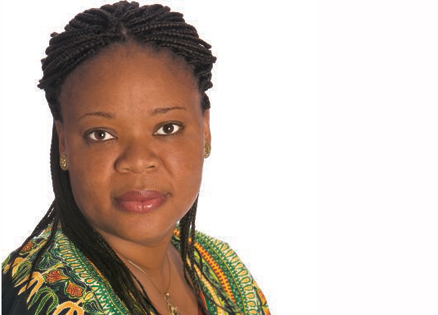
Prayer Warrior

I felt like God had abandoned me.

I was hundreds of miles away from my home, the West African nation of Liberia. I was camped outside a hotel with a few other Liberian women in Accra, the capital city of Ghana, a luxury hotel where we Liberians could never afford to stay.

You Got This In Article Ad

Inside were polished tile floors, columned entryways, a crystal-clear swimming pool and—this was why we were there—a plush conference hall hosting peace talks between Liberia’s military dictatorship and the armed rebels who, for 14 years, had turned my country into a bloody battleground.

You’d think the prospect of peace would fill me and all Liberians with hope. But that morning, a hot July day in 2003, I’d run out of hope. The peace talks were failing. Liberia was in flames. Did God care what was happening to my country? I did not think so. I felt worse than hopeless if that is possible.

Together with the women outside the hotel, plus thousands more back in Liberia, I was part of the reason these peace talks were even happening. I was the head of an activist movement called Women of Liberia Mass Action for Peace.

We had started small several years ago, almost by accident. And yet we grew large and strong because the women of Liberia were tired of being terrorized by soldiers and watching their children conscripted into rebel armies. They were tired of the fear that had gripped our country ever since a military strongman named Charles Taylor started his armed rebellion in 1989, setting off a deadly civil war. More than 200,000 Liberians were dead. More than one million were in refugee camps.

The women of Liberia began protesting this war, gathering on the grounds of a fish market in our capital city of Monrovia to pray and sing for peace and wave signs at Taylor’s motorcade as it passed on its way to the presidential palace. Taylor ignored us for many weeks.

Eventually, however, our numbers grew too great and he was forced to grant us an audience. We demanded he enter peace talks. To our astonishment he agreed. We raised money and a few of us followed him to Ghana, where the international community hosted the talks on neutral ground. We thought we had won a great victory.

We were wrong. And that terrible morning, almost eight weeks after the talks began, I felt like giving up. I had awakened earlier in the tiny two-bedroom house where I was staying with seven other women from Monrovia, along with my four children, my mother, my brother, my sister and her daughter—all accompanying me because Liberia was so dangerous. I was tired of living in this cramped poverty while I knew those rebel warlords were waking up in luxury rooms with views of the ocean.

I felt like a fool. The peace talks dragged on not because the issues were complex, as I at first assumed. No, these strongmen never intended to make peace.

One day after the talks began, Charles Taylor was indicted for war crimes by an international tribunal. He fled back to Liberia, leaving his henchmen to negotiate for him. Sensing weakness, the rebels ordered their forces to attack the Liberian capital, hoping to overthrow Taylor before any peace agreement could be imposed. Each day these hypocrites pretended to negotiate for peace even as they phoned their commanders back in Liberia to order more attacks.

That morning I did not put on my white T-shirt with our movement’s logo, our uniform. White was for peace, and I knew peace was not coming. I avoided our picket line outside the hotel and headed to the office of a peace organi­zation in Accra to check e-mail and read news headlines on a computer.

“Toothless bulldogs,” I’d heard one journalist call us. Perhaps he was right. The rebels certainly didn’t take us seriously. We couldn’t even get along ourselves.

Our women, worn out from waiting, were dividing along ethnic lines just like the men inside the negotiating hall. Some had even begun meeting with rebel leaders they favored, pushing for their tribal group to dominate when Taylor’s government collapsed. The movement was falling apart.

I sat in front of the computer feeling sick. How could I have been so wrong about all of this? Years earlier I had felt what I thought was an overwhelming call from God to quit my job as a church social worker in Monrovia to start a women’s peace movement.

I had been involved with peace activists already, in part because some of the people I counseled were young—not even teenagers!—child soldiers from the civil war. Now looking back, I suddenly saw how foolish I had been to think a handful of women could stop a civil war by praying, wearing
white T-shirts, singing songs and holding signs. I’d actually believed those passages in the Bible about the last being first, blessed are the meek.

You fooled me, God, I thought bitterly as I clicked to the Yahoo! news website. All the work we had done, forging a partnership with Liberia’s large Muslim community, fanning out to churches and mosques all over the country to recruit women, slowly growing our protests and suddenly standing—actually, sitting on the floor since we refused their offer of chairs—at the presidential palace, demanding peace from Charles Taylor himself. All for nothing.

Why had I worked myself up giving statements to journalists? Been shuttled back and forth between these rebels here in Ghana? Befriended the head of negotiations, a for­mer army general and pres­ident of Nigeria named Abdusalami Abubakar? Did I flatter myself that we were becoming important?

My thoughts stopped. A headline leapt out: “Mortar Bombs Hit U.S. Embassy in Liberia.” I clicked. A video showed total chaos, smoke and flames, men running with dead children in their arms. More than 60 people just outside the embassy compound killed. I stared at the video. And I felt my anger rise. It rose until it was all I could feel. I leaped up and ran straight to our picket line.

“Gather as many women as you can,” I told a fellow leader, a woman named Sugars. She and the others looked at me strangely—maybe because I hadn’t been there that morning. Or because my anger burned hotter than fire.

“We’re going inside now.” I put on a white T-shirt and marched into the hotel. The others followed, unsure what was happening. We reached the corridor outside the negotiating hall.

“We are sitting right here.” I sat down on the polished tile floor. The others sat in a row beside me, a few dozen, blocking the doors to the hall. More women came, lining one wall, then another. The hall grew hot and crowded. We made a sea of white T-shirts. It looked like more than 100 women. Still more came.

Suddenly a voice sounded on the public address system. “Distinguished ladies and gentlemen, the peace hall has been seized by General Leymah and her troops!” Immediately, security guards rushed into the corridor.

“Who is the leader of this group?” one of them called out.

“Here am I,” I said, rising to my feet.

“You are obstructing justice.” Behind me the door to the negotiating hall flew open and a crowd of men peered out.

I opened my mouth to reply—but I couldn’t. Had that guard really said justice? Was he—was any man in this hotel—lecturing the women of Liberia about justice? I unwound my head wrap and said in a low voice, “I will make it very easy for you to arrest me.”

In West Africa it is a curse for a man to see a mother naked. I began to remove my shirt. “Madame, no!” It was Abdusalami Abubakar, standing at the door to the hall. “Leymah, do not do this.”

“General Abubakar, these women and I are not moving one inch until those men in there promise to take these peace talks seriously,” I said.

There was commotion behind the general. One of the warlords pushed forward to step over the women blocking his way. The women pushed him back. He grew enraged and lifted his leg to kick them.

“I dare you,” said General Abubakar. There was a moment of silence. “If you were a real man,” the general said, “you wouldn’t be killing your people. But because you are not a real man, that is why these women will treat you like boys. I dare you to leave this hall until we have negotiated a peace with these women.”

I grew so emotional at that moment I cannot tell you exactly how the rest of that day unfolded. The men did return to the negotiating table. We women did finally unblock the corridor. And two weeks later, those warlords signed a comprehensive peace treaty that pushed Charles Taylor from power and established a transitional government with the promise of free elections two years later.

What I most remember from that day were the general’s words: These women will treat you like boys. Suddenly I understood why I had lost hope. And I knew what strengthened me to storm that hotel corridor was not simply anger.

It was faith—faith I’d lost the moment I doubted that God really, truly is on the side of the weak. It took the general’s words to remind me why our movement would succeed.

As women, as refugees, as survivors of war, our weakness was our strength. Who is stronger than a mother protecting her children? Who knows better than a wife when her husband is behaving like a child? What man, what gun, can withstand a prayerful woman who is ready to stand up—or should I say, sit down—for what she believes in?

You might like to know who was elected president of Liberia in November 2005: a Harvard-educated economist and former United Nations official. Her name is Ellen Johnson-Sirleaf, the first-ever female head of state in Africa. Also the first mother. And the first grandmother. She has done a terrific job so far. As you can guess, I am not surprised.

Download your FREE ebook, A Prayer for Every Need, by Dr. Norman Vincent Peale