Embrace God's truth with our new book, The Lies that Bind

Inspirational Prayer on I-70

Traffic on I-70 wasn’t too bad. I should have been enjoying myself that day last October, sitting up in the cab of my 18-wheeler, cruising through the Pennsylvania hills.

Thirty-six years as a trucker, and I still got a kick out of my rig. Bass Transportation bought this 600-horsepower tractor in 2000. I was the only one who drove it, and although I’d logged almost 400,000 miles, the cab was still so clean you could eat off the floor. If traffic held steady, I would make my usual run right on schedule, hauling a tanker of building compound from Ohio to Delaware, then deadheading back to my home in Ludlow, Kentucky.

Faithful Paws and Purrs In Article Ad

But I didn’t make the run on time that day, for the same reason I wasn’t enjoying the trip. The Beltway sniper. The words hammered in my head. Eight dead and two wounded already and it didn’t look like there’d be an end to it. At any truck stop in the D.C. area, all we talked about was the white van the police were looking for. Schools were closed, people too scared to leave their homes. It weighed on me that this guy was out there getting ready to kill again. I knew what it was like to lose someone you love. Five years earlier my wife, Ruth, and I had lost our only son, Ron, to multiple sclerosis.

It was a pretty October day just like this one when he died. I knew when I got to the nursing home that something was up because there was a lot of hollering down the hall. “What’s going on?” I asked.

“It’s your son, Mr. Lantz,” a nurse said.

I hurried to Ron’s room. There was our boy sitting on the edge of his bed, hands raised over his head, praising the Lord. For more than a year he hadn’t been able to sit up on his own.

“I’m leaving here,” Ron said. “Someone’s coming through that door tonight to take me home.” Then he looked at me real hard. “Dad, I don’t want to be up in heaven waiting for you and you don’t make it.”

It wasn’t the first time he’d brought up the subject. Ron was a real committed Christian. My parents raised me in the faith, but somehow I’d drifted away. “I want you to go over to my church right now,” Ron went on. “Find my pastor and give your life to the Lord.”

Well, that’s exactly what I did. Afterward I went back to the nursing home and told Ron. I’m glad I had the chance, because somebody did come for my boy that night to take him home.

My life turned around. I got active in church. I headed the men’s fellowship, led retreats, was on the Sunday school board. I’d never start a run without kneeling by my bed at the rear of the cab and asking God to watch over Ruth.

After the sniper shot his first victims, I’d been praying about that too—that someone would stop this killing spree. It had gone on for 12 days already. Around 7:00 p.m., when I was about an hour and a half out of Wilmington, Delaware, the usual report came on the radio. Nothing new on the sniper. All they knew was that a white van might be involved.

I got to thinking about what I’d learned at church, how a bunch of people praying together can be more powerful than a person praying alone. What if I get on my CB, see if a few drivers want to pull off the road with me and pray about this?

I pressed the button on my microphone and said that if anyone wanted to pray about the sniper, he could meet me in half an hour at the eastbound 66-mile-marker rest area. A trucker answered right away. Then another and another. They’d be there. I hadn’t gone five miles before a line of trucks formed, some coming up from behind, others up ahead slowing down to join us. The line stretched for miles.

It was getting dark when we pulled into the rest area. There must have been 50 rigs there. We all got out of our cabs and stood in a circle, holding hands, 60 or 70 of us, including some wives and children. “Let’s pray,” I said. “Anyone who feels like it can start.” Well, the first one to speak up was a kid maybe 10 years old, standing just to my left. The boy bowed his head: “Our Father, who art in heaven…”

We went around the circle, some folks using their own words, others using phrases from the “Lord’s Prayer.” It seemed to me there was a special meaning where it says…deliver us from evil….”

The last person finished. We had prayed for 59 minutes. All those truckers adding an hour to their busy schedules!

Ten days later, October 23, I was making my Ohio-to-Delaware run again. There had been another killing and the sniper was no nearer to being caught.

Right from the start there was something different about my trip. In the first place, it was a Wednesday. I normally made my runs Tuesdays and Thursdays. But there was a delay at the loading dock so I told my pastor I’d have to miss our Wednesday night prayer meeting. “We’ll be praying for you,” he said.

The second thing that happened: I was stopped by the cops. Once was rare for me. This trip I was pulled over three times. Not for very long—they were just checking papers—but it made me late getting into Wilmington.

The next strange thing: Instead of catching a few hours of sleep, I headed back west as soon as my cargo was offloaded around 11:00 p.m. That wasn’t like me at all. I knew too many sad stories when a driver didn’t get enough sleep. It was like I had an appointment, like I couldn’t sleep even if I tried.

At midnight the Truckin’ Bozo show came on the air, a music and call-in program a lot of truckers listen to. There was news in the sniper case. There were two snipers, not one, and police now believed the guys were driving a blue 1990 Chevrolet Caprice with New Jersey plates, license number NDA-21Z. Not the white van we had all been looking for.

I wrote down the tag number. Just before 1:00 a.m., I reached the rest stop at the 39-mile-marker near Myersville, Maryland, only a few miles from where so many of us had made a circle and prayed. Westbound on I-70, this was the only rest area between Baltimore and Breezewood with a men’s room. I wasn’t going to pass that by.

And here was the last weird thing about that trip. The truck aisles were full. I’d never seen so many rigs at that stop, drivers asleep. Only thing I could do was swing around to the car section. I wouldn’t be long. Climbing down from my cab, I noticed a car in the No Parking zone. The light over the men’s room door was shining right on it. A blue Chevrolet Caprice.

There must be hundreds of blue Caprices out there. I looked closer: two men, one slumped over the wheel, asleep. Beyond the men’s room was a row of bushes. I crept behind them and squinted to make out the license number. Jersey plates. N…DA2…1…Z.

Quiet as I could, I climbed back in my rig. Better not use the CB in case those guys have one. I punched 911 on my cell phone. “I’m at the Myersville rest stop. There’s a blue Chevrolet Caprice here, Jersey license NDA-21Z.”

The operator asked me to hold. In a minute she came back with instructions. Wait there. Don’t let them see you. Block the exit with your truck if you can.

If an 18-wheeler can tiptoe, that’s what mine did. I blocked as much of the exit ramp as I could, but there was still room for a car to get by. Five minutes passed. Only one other driver was ready to roll. Soon as I told him what was happening, he pulled his rig alongside mine, sealing off the exit. I sat in my cab, looking out the side mirrors at that blue Caprice, expecting a shootout, thinking I ought to be scared and wondering why I wasn’t.

Five more minutes passed. I was afraid another truck or a car would drive up and honk for us to move it, waking the suspects, but no one stirred. The cops slid up so quiet I didn’t know they were there until suddenly it was like the Fourth of July with flash-grenades lighting up the night to stun the two men. FBI agents, state troopers, officers from the sheriff’s department swarmed the rest stop. Searchlights. Breaking glass. Shouts. The thump of helicopters, SWAT teams in night-vision goggles, running low, crouching, guns drawn.

Next thing I knew the two men were being led away. The police took down names and addresses of everyone who had been at the rest area. It was two and a half hours before we were free to go. Since I’d been blocking the exit, I was the first one out.

Five miles down the road I started shaking so bad I could hardly hold the wheel. Then I got to thinking about all the unusual things that had to happen for me to be at that place at that time and about my friends at church praying for me that same evening. And I couldn’t help thinking about my son, Ron, who’d led me to that church.

I looked in my rearview mirror at the line of trucks behind me and remembered leading another line of semis 10 days earlier. I remembered the circle of truckers and their families, holding hands, voices joined together to pray…deliver us from evil.”

How to Keep Fear at Bay

Kids come up with the funniest stuff. I was reminded of that by a Facebook message recently from an old family friend, Jeremiah Shelton (usually known as Bub). Bub hung out at our house with our sons when they were growing up. He calls me “Mom,” and we call Bub our fourth son.

Here’s what he sent me about his little boy, Jeremy, who is about six years old:

extraordinary women of the bible

“I just wanted to share an interesting story with you. Jeremy just recently learned about coyotes. He is slightly scared of them and is always looking to make sure there are none around.

READ MORE: HOW TO PRAY HEALING PRAYERS

“The other night when the wind was blowing hard, he came and got me and said he heard a coyote in the gutter outside his window. His window is about 25 feet off the ground. I tried to explain to him that coyotes cannot climb up the side of the house, and they would not do so in order to just play in the gutter.

“I tried for about ten minutes to assure him that there were no coyotes on our roof or in our gutters. He was still very upset and came back to me several times saying he was positive there was a coyote in the gutter.

“That night at bedtime he did something that immediately made me think of you. When he was saying his blessing, he prayed and asked God to protect us from the coyotes and to not let them get into our gutters. He prayed that God would keep them from climbing the gutter and jumping through the window.

“He then stopped praying and said that he wanted to make sure the doors were locked so the coyotes couldn’t get in because He thought he heard one turning the handle.

“I then lost it.”

Well, I lost it, laughing with Bub when I read that. But as I thought about it throughout the day, I realized that little boy has a powerful lesson to teach us. Even as a little guy, he knows where to go when afraid. He knows his daddy loves him and protects him, but he also knows to take his fears to God. And it in the case of the coyotes, it wasn’t just a generic prayer. Jeremy prayed about specifics.

We may not be afraid that coyotes are in our gutters—or turning our door handles to get in—but we have many other fears that consume us. Maybe instead of worrying until we have ulcers, we should do what Jeremy did—get on our knees and go to the One who can soothe our hearts, provide wisdom, fix our problems, and, yes, even keep the coyotes away from the door.

God says it best in Psalm 56:3, “What time I am afraid, I will trust in thee.”

Faith Opens the Door to Miracles

Matthew 13 records what I believe is one of the saddest verses in the Bible. Jesus had spent a frustrating few days in his hometown of Nazareth, and “he did not do many miracles there because of their lack of faith” (v. 58). There is an obvious relationship between faith and God’s willingness to work miraculously.

The verse doesn’t say that Jesus couldn’t do miracles in Nazareth; it says he didn’t do miracles there. It seems that God doesn’t feel obligated to work where his power is doubted.

Sweet Carolina Mysteries In Article Ad

Enjoying this excerpt from Pray Big for Your Life? Buy the book here.

Faith is the key that unlocks the treasury of God’s unlimited resources. It paves the way for the presence and anointing of God. The relationship between faith and God’s power is simple: if one is not there, you won’t find the other either. But the reverse is true as well.

God is ready and willing to work in miraculous ways wherever faith resides. Had the people of Nazareth not doubted Christ, the verse could just as easily have read, “Jesus did many miracles there because of their great faith.” What a difference faith makes! If you want your life to be a place where God’s power resides, then you want him to find faith residing in you.

Pray for great faith. Pray that your belief in the presence and power of God would be a conduit for his supernatural work in and through you.

Dr. Billy Graham: A Purposeful Life, An Indelible Legacy

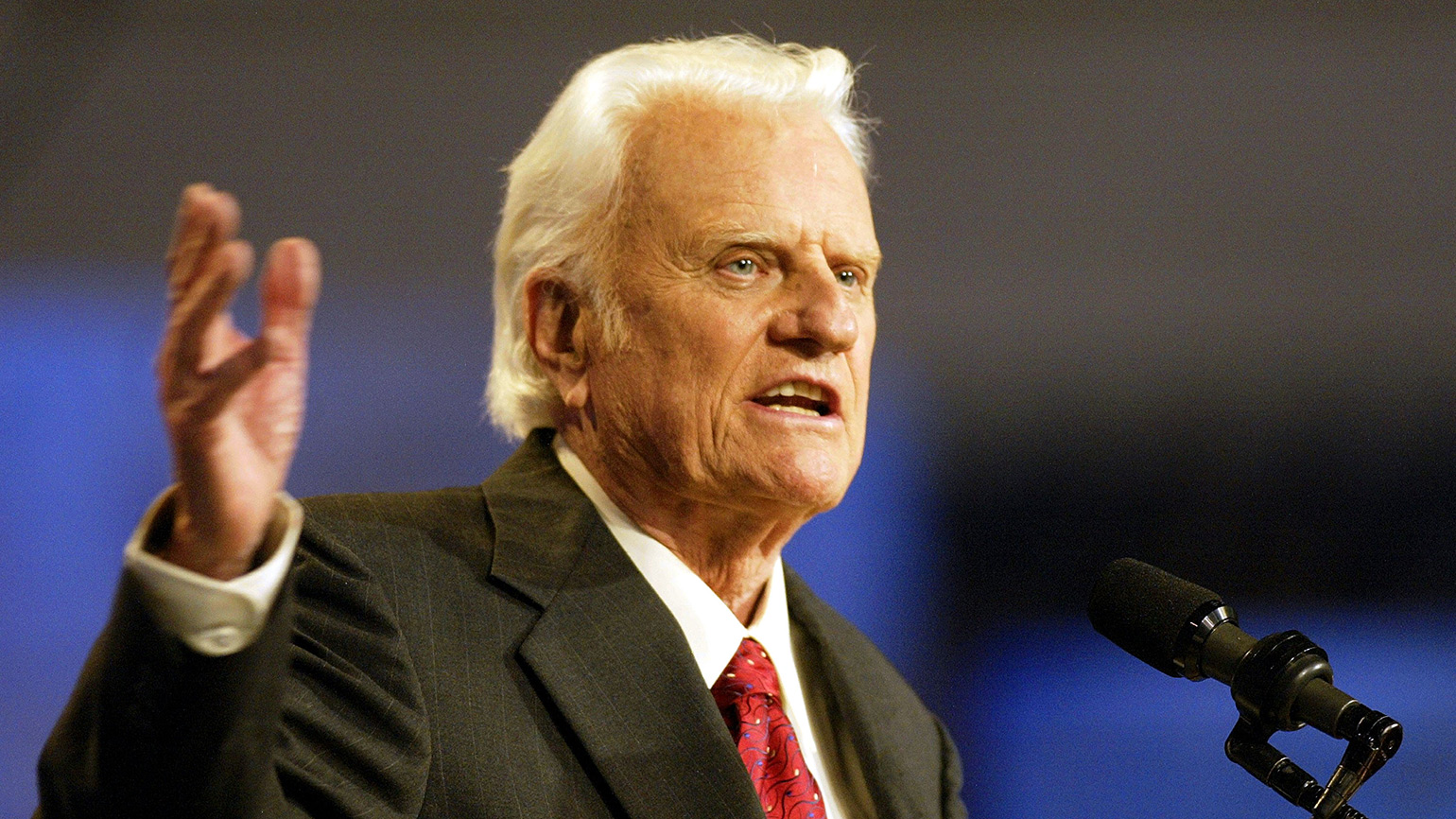
In 1937, Billy Graham, 18, was attending a Bible camp run by the evangelist Bob Jones. Graham and a friend had been pulled in on an infraction, according to Graham’s biographer William Martin, and were duly chastised. Then Jones turned to Graham, his tone changing. “You have a voice that draws,” he observed. “Some people’s voices repel.  God can use that voice of yours. He can use it mightily.”

Jones was right.  Graham, who died Feb. 21, 2018, at age 99,  had a voice—and a style, an appearance, a personality, and an utter religious commitment—that in combination, were unmatched in the 20th century. And God used them mightily. Not just to bring souls to Christ, although Graham was undoubtedly one of the greatest preachers in the history of Christianity, one of the elite handful stretching back the Apostle Paul. But against what were initially high odds, he spent at least 50 years as one of the giants of American culture. Even nicknames like “the Protestant Pope” or even “America’s Pastor” fail to do Graham justice. He was, simply, the most influential American Christian figure of his age.

The Lies That Bind In Article Ad

William Franklin Graham, Jr., was born on November 7, 1918, on his family’s successful dairy farm outside of Columbus, N.C. The Grahams were Presbyterians. At age 15, he accepted Christ as his Lord and savior; at 20 he was ordained into the ministry as a Southern Baptist. Much later, his wife would recall, “I’d never heard anybody pray like that.” After attending college and becoming a leader in a flashy new movement of young pulpiteers (thin ties, Day-Glo gabardine suits, green suede shoes), Graham attempted a solo tent revival in Los Angeles in 1949. One fateful morning a gaggle of national reporters and photographers met him as he arrived; the newspaper magnate William Randolph Hearst had released a terse all-points bulletin: “Puff Graham.” Writes Martin, “Billy became a truly national figure almost overnight.”

Graham had a perfect profile, piercing blue eyes and wavy blond hair. He was an outrageously magnetic preacher: pacing the stage like a restless panther; hands slashing down to carve out cadence, his pointed finger seemingly as concrete as Gibraltar; and that voice, declaring “The Bible says…”—all moving his listeners inexorably toward the climax: the exhortation to a decision for Christ. Right now.

Graham’s theology, writes historian Grant Wacker, never diverged that much from the basics: Biblical authority, human sinfulness, divine grace, heaven and hell, Christ’s anticipated return and the obligation to evangelize.  But his version differed from that of fundamentalists like Jones in that it looked outward and forward rather than inward and backward. He preached the full laundry list of worldly woes, but his dominant note was the joy and triumph of a decision for Christ. In time he would say that belief in Christ was more important than the Bible.

This enraged some Christian elders. Graham famously replied “the one badge of discipleship is not orthodoxy but love.”  Meanwhile, he took the larger world by storm. After Los Angeles came New York, followed by London.  Over 55 years, The Billy Graham Evangelistic Association estimates he preached to “nearly 215 million people in more than 185 countries and territories,” and “led hundreds of thousands of individuals to make decisions” for Christ.

And that does not address his cultural reach. Graham’s long-running radio program, Hour of Decision, his various television shows, and innumerable non-preaching appearances and interviews impressed those who never attended a Crusade, making him one of the country’s most trusted names in mid-century, and into the next. In 2015, the Gallup organization listed him time as one of the year’s 10 most admired men in America. For the 59th time. At age 97. His last Crusade was a full decade earlier.

Graham avoided his vocation’s classic snares: There was never a whisper of sexual impropriety; in the one instance when his finances were questioned, he helped found the Evangelical Council for Financial Accountability. Graham had what Martin calls an “abhorrence for disorder… and a trust in authority.”  Thus he supported civil rights—courageously, given his core constituency—but when Martin Luther King was imprisoned in the Birmingham jail, Graham advised him publically to “put on the brakes a little.” He loved the company of Presidents, meeting each from Truman through Obama, He was especially close with Richard Nixon, and was deeply embarrassed by Watergate. Nevertheless he continued to extend praise just short of endorsement to Republican candidates, as when, at age 93, he told Mitt Romney in 2012, “I’ll do all I can to help you. And you can quote me on that.”

Many of Graham’s acts, like Jesus’ bit of yeast, yielded huge returns. Without Graham, it is impossible to imagine the seeker-friendly tone and suburban presence of the mega-church; without him, the shape of Christianity internationally would be entirely different. Without a beachside walk with Graham, George W. Bush would never have been born again. Without the Evangelicalism that Graham helped to foster, Bush would never have been elected—twice. And let us not forget those hundreds of thousands of decisions to come to Jesus.

Some of Graham’s gifts, like that voice that pulled, were non-transferable. But others, like a certain kind of optimism, flowed so naturally into the larger stream of American thought that it is almost impossible to tell where they imperceptibly shifted or accelerated certain currents. Wacker argues that Graham’s “achievement for all Americans… lay in the offer of a second chance.” This, of course, has been hard-wired into us since the Pilgrims. But like everything else in our nature, it is contradicted and counterbalanced by similarly powerful impulses. While Evangelicalism had always featured a born-again experience, the historian says, it had often incorporated a sharper “edge. You either are in or out, either on the bus or off the bus.” And Graham, he writes, played it differently: “The new birth served less as a way of telling some people that they were off the bus than a persuasive way of inviting ‘all aboard.’ Everyone.” These days, in Christianity and in the country at large, that is assumed far more widely than before the gangly young preacher arrived on the scene.

In 1952, after his first few years of national exposure, Billy Graham had a rare low-watt moment. “I’ve always thought my life would be a short one,” he told reporters. “I don’t think my ministry will be long. I think God allowed me to come for a moment and the moment will be over soon.”

His moment lasted another 66 years. Had he been right, think what we would have missed.

Read More: Billy Graham: An Inspiring Life in Photographs

Declutter with Prayer

Pride goes before destruction…— Proverbs 16:18 (NAS)

The recession was continuing to take its toll. When more of the decorating magazines I’d worked for ceased publication, I took another good, hard look around my cabin. In the twenty years I’d styled homes for photography, I’d seriously blurred the boundaries between work and home. Besides the countless props I owned, my shelves were lined with hundreds of books on interior design and my basement served as a library of photographs of clients’ homes and published articles.

Sweet Carolina Mysteries In Article Ad

Somewhere along the way, I’d lost my sense of priorities. Worst of all, the clutter—all necessary for the job I’d held—drained my physical, mental and creative energy. I learned that clutter makes everything more complicated. It also makes you disorganized, lowers your self-esteem, robs your peace, takes a toll on your most precious relationships and leaves little room for new ones.

The first step in reclaiming my cabin meant relinquishing my pride. For two decades I’d prided myself on having any reference an editor or client requested. When a call came to style a home, I could do it with props I single-handedly owned. I also prided myself on being a perfectionist.

But now all that stuff simply defeated me. Making decisions as to what to keep and what to throw away, sell or give away is hard work. In my struggle to rid myself of meaningless materials, the fear of not “doing it right” immobilized me.

Then a wiser Voice broke through my prideful confusion: If you can begin it, you can do it, Roberta. Don’t sabotage yourself before you even start. By taking that first, tentative step, I was energized to take another, and then another.

I give my pride to You, Lord Jesus. Help me to strive for excellence, not perfection.

Download your FREE ebook, Daily Devotionals: 7 Days of Bible Devotions to Strengthen Your Faith

Celebrating the Light

It’s a classic warm-weather evening. The air is thick with Midwest balm. The sky’s a deep, dark canvas of mid-summer night. And my youngest boys are in the yard chasing fireflies.

“They’re so cool,” Zay says. He’s moving across the yard, and he’s still small enough to skip.

Pray a Day Vol 2 In Article Ad

“Over there,” Sam says. His toes are past the sweet line of little-boyhood, but even he is drawn into this simple fun. He points to a place near the blue green hostas where several flying-wonders congregate–a collection of alluring light.

Gabe shoots around the yard, too, following yellow-green blips that hover low and then drift high.

And Lonny and I sit in the swing and watch. There’s something compelling about this scene.

There’s precious beauty in this display of light.

Makes me think of Jesus, my Savior, and source of true illumination, life, and light.

In him was life, and that life was the light of men. (Matthew 1:4 NIV)

“I am the light of the world. Whoever follows me will never walk in darkness, but will have the light of life.” (John 8:12 NIV)

For God, who said, “Let light shine out of the darkness,” made his light shine in our hearts to give us the light of the knowledge of the glory of God in the face of Christ. (2 Corinthians 4:6 NIV)

It hurts my heart to think of where I’d be without it. Lost in the darkness of sin. Groping for peace but only pulling fistfuls of hopelessness. Void of life-changing, life-transforming light.

I am so thankful for Jesus–for the hope and light and life He’s given me.

The boys charge around for another half-hour. Lonny and I sit back and let them run.

There’s joy.

And peace.

And gladness.

It’s deeply fulfilling–this seeking light.

Thank you, Jesus. You are light of the world. Amen.

Be Like Jesus–Pray for Others

“You’re never more like Jesus than when you pray for others,” Max Lucado says in his new book Before Amen. When I read those words I thought, “Wow,” then paused and asked, “Do I really feel like Jesus when I pray for others?”

Of course it’s good to pray for others. If you’re known as a praying person, people will ask you to pray. 

You Got This In Article Ad

I’ll scribble a name down on a Post It note or print out an email from someone who’s suffering from illness, loss, depression, financial troubles.

Pray like Jesus. Photo Zoonar RF, Thinkstock.When I get too wrapped up in my own problems, it’s a relief to pray for someone else. 
Just logging on to OurPrayer and reading through a dozen requests is helpful. It gives me perspective.  “God,” I’ll pray, “you’ve really got to help this person because their needs are huge, so much bigger than my own.”

But how is this like Jesus? I tried to think of the times Jesus prayed for others.

The first occasion that came to mind was when He was on the cross, dying. Didn’t He pray for the criminal next to Him, saying, “I assure you that today you will be with Me in paradise?” (Luke 23:43)

And I recalled in the Sermon on the Mount how he gives us that enormous challenge, not just to love our enemies but to “pray for those who harass you.” (Matthew 5:44) 

Wasn’t that exactly what He did when He prayed, “Father, forgive them, for they don’t know what they’re doing?” (Luke 23:34) He was praying for His enemies. 

Or take the Lord’s Prayer. It’s not just “me, me, me”; it’s all “us, us, us.” It’s “Give us this day our daily bread…Forgive us…Lead us not into temptation but deliver us from evil…”  (Matthew 6: 9) To pray it is to pray for others.

He also prayed to heal others, like the woman who had been bleeding for 12 years and touched His robe. “Daughter, your faith has healed you; go in peace,” He told her (Mark 5:34).

And then there is that extraordinary prayer He says in the Gospel of John that takes up all of chapter seven, one long prayer for His disciples and all who believe because of them, which would be us.

“I’m in them and You are in Me so that they will be made perfectly one,” He says. “Then the world will know that You sent Me and that You have loved them just as You loved Me.” (John 17:23)

It made me realize how prayer is at the heart of his ministry. I can’t preach like Jesus. I can’t heal like Him. I can’t teach like Him. But I can do this. I can pray for others.

Join OurPrayer's team of dedicated prayer volunteers.

A Rifle and a Soldier’s Prayer

I was barely six years old when the conversation around our dining room table began to revolve around a man named Adolf Hitler.

Dinner came in the middle of the day, and there were always 15 to 20 people present, including workmen from the water-powered flour mill that had been in our family for six generations. I can see them now, troop-hag in from work, still white with flour even after a scrubbing.

extraordinary women of the bible

The talk about Hitler didn’t start right away: Fast came Scripture reading and prayer. But when the Bible was put on the sideboard and the covers came off the steaming tureens, the excited discussions would begin.

Tunes had been hard in Germany for many years. But Hitler was going to change all that, the grown-ups said. His latest radio address would be discussed point by point.

Papa noted that when Hitler talked about his plans, he would always add, “… insofar as the Almighty will help us.” It was always the Almighty, never God, but still… “He sounds like a believer,” Mama agreed.

Later, of course, Hitler’s true colors came out. He began an unstated campaign against any loyalty other than to himself—especially among the young. At the age of 10 I had to start attending Jungvolk meetings; these “happened” to be scheduled on Sunday mornings, right at church time. At 14 I graduated to the Hitler Youth. Sunday after Sunday I’d put on my brown shirt and get on my bike and pedal off to march and sing and swear undying allegiance to the Führer.

My parents said little to me about their misgivings—to do so would put us all in danger. Occasionally, though, their feelings would show through.

By this time every business letter had to close with the words Heil Hitler. One day my father and I were alone in the mill office as he went through his mail. “In this family,” he burst out suddenly, “we don’t say, ‘Heil Hitler!’ We say, ‘Heil Jesus!’”

But though they seldom put their feelings into words, my parents’ actions spoke for them. Every Sunday evening a group met for worship in our home.

One day the police arrived to enforce a new law closing such independent churches and confiscating their property. They carted away the hymn books, the portable pulpit, the banner saying “Jesus is Lord,” even the broom Mama used to get the room ready for the meeting.

“The Führer is not against religion,” the police chief read from the new regulations, “You may continue to meet, but never in groups of more than three.”

My father and mother did not hesitate. They shifted the now-illegal worship services to the mill, where the roar of the water and the clank of machinery drowned out the songs and prayers.

I was 15 years old now and tall for my age, blond and blue-eyed, the very type Hitler associated with his fantasies of a “master race”—and the kind he wanted for his elite SS. Sure enough, one day an SS team arrived in our small town of Plüderhausen, seeking recruits.

A dozen of us boys were driven to a nearby castle, where we were met by an SS officer, splendid in gleaming boots, braided epaulettes and soft-crowned cap. He set our pulses pounding as he described the glorious exploits of his unit in the liberation of neighboring lands.

Stressing the honor being done us, he urged us to enlist then and there.

However, I did not understand the resistance rising within me. To a youngster of 15 brought up on Nazi doctrine, as sensitive to peer pressure as any teenager, everything this dashing hero-figure said seemed undeniable. Yet I felt a need for caution.

Was it my parents’ prayers? Again they said little—but I knew they prayed for me every day. And in the secret church meeting in the mill, we sang that “prayer removes mountains.”

I refused to volunteer. The officer told me I did not love my country and called me a coward. I knew the first was not true and I hoped the second was not true. But still I would not join the SS.

Two years passed, years of growing loneliness. I was 17, enrolled in millers school, when in the spring of 1944, along with other teenagers and men too infirm to have been called up before, I was drafted into the army.

The fact that the military was making do with such unpromising material would have alerted wiser heads to the fact that Hitler’s 1,000-Year Reich was in trouble. But our radio and newspapers carried only accounts of victory.

My first night in basic-training camp, the other draftees rode me when I brought out my Bible. “You’re crazy,” one boy mocked. “That’s just the Jews’ book of lies. In a few years no one will read it anymore. We’ll all be reading Mein Kampf.”

From then, on, when I wanted to talk to God, I’d go out into the fields, or find an empty storeroom, or pull the blanket over my head at night. Maybe the SS officer had been right when he called me a coward.

At the camp, we were taught to shoot. Our rifles, the sergeant told us, would be everything to us. He warned us never, never to lose the ones we were about to be issued. Anyone who did would be court-martialed.

Only after this speech did he hand out our rifles, writing down the serial number in the Soldbuch that every soldier had to carry.

To my great surprise I turned out to be an excellent shot. When the instructor collected the paper targets from the firing range, mine would always have the highest score. I was tremendously proud.

It wasn’t until one night during my prayer time that I began to think about the purpose of all this practice. Suppose that were not a piece of paper in the sights of my rifle, but a man…

I thought about my father and mother and their remnant church—mostly women and old men now—meeting three times a week in the noisy mill, risking arrest, which had already happened to some of our Christian friends.

“Lord Jesus,” I prayed beneath my blanket, “let me never kill a man for a government that makes people hide to worship You.”

In May 1944, after a mere two weeks of training, we raw recruits were sent to the French coast to help man Hitler’s “impregnable” Atlantic wall. My unit was assigned to a bunker in Normandy, just east of the River Seine.

We had been told that our air force would support us if the Allies were so foolish as to attempt an invasion. But although Allied planes flew overhead often, we saw no German ones.

In early June the Allied bombing raids increased. On the night of June 5 the sky throbbed with more planes than I dreamed existed. Toward morning we saw shell flashes in the distance and realized there must be ships offshore.

By daylight the rumors were confirmed: The “impossible” invasion had begun.

Our sector was not hit in the initial assault, and our confidence remained high. Each night we climbed out of the bunker and stood scanning the sides. Surely this was the time when the Führer would launch his Secret Weapon!

In mid-June we left the coast and began a tactical maneuver back up the Seine. Not a retreat, our officers stressed—a strategic repositioning for the counter-offensive the Führer would soon be mounting.

Now that we were billeted on French farms rather than in fortified bunkers, our wariness over our rifles increased. Each night we placed them beneath the straw we used for beds—each man sleeping on top of his weapon.

Although the din of battle was all around us, our unit had so far done no fighting. Across the Seine, as we moved upriver, we occasionally caught sight of a gray-green tank with a white star on the side. Americans.

Once we saw German soldiers struggling toward us across the river, some paddling inflated rafts, others swimming, weapons abandoned. Why didn’t Hitler unloose the Secret Weapon?

And then one day tanks opened fire at us from across the river. We scrambled into the fields. I crouched in some waist-high wheat, ran through an apple orchard, stumbled past an area marked Land Mines and ran some more.

That night, I joined a unit made up of men from other scattered companies. From then on I moved with such makeshift groups, stopping at a farmhouse for a night or a week, sleeping on my rifle.

Although I had now been fired at a number of times, no unit that I’d been with had yet been in a position to return the fire. Was God answering my prayer that I never shoot at a human being?

One night we bedded down in a great stone barn with sentries posted outside. I shaped a pallet of straw, placed my rifle beneath it as usual, and lay down, as always, right on top.

Next morning when the corporal roused us we groped under the straw to retrieve our rifles, then lined up stiffly for inspection.

Except me. I was still on hands and knees sifting through my little heap of straw.

“On your feet, soldier!” the corporal barked. “With your rifle!” he snapped as I obeyed.

“I—it—” I stammered. “It’s not here!”

“What do you mean, ‘not here’?”

I gestured helplessly at the scattered straw. “It was there last night, right underneath me. Only—now it’s not.”

The entire unit searched that barn from end to end. Those who’d slept nearest me confirmed that I’d placed the weapon where I said. The corporal checked every rifle in the barn against the number in my Soldbuch.

No other soldier had taken it—and no one from outside could have got in past the guards. How could a rifle disappear into thin air?

The corporal was fuming. Our orders were to march out, and I’d delayed us all! Nor was there a spare rifle to give me. Our troops were short of everything—ammunition, weapons, medicine.

All that day we marched, followed by our horse-drawn supply cart, while I saw myself standing in front of a firing squad, my parents getting the news…

Late that same afternoon we engaged in our first exchange of fire. The Allies were on the other side of a small valley. Our squad took cover and began firing.

Except me. With no rifle to shoot, I was put in charge of the terrified horse. As bullets whined around us I tried to calm the panicky animal, though I was easily as frightened as he.

It wasn’t until that night, reading my Bible in a solitary corner of yet another barn, that I realized what had happened. That day, for the first time, the order had come to shoot. That day, for the first time, I had been unable to obey.

For the next several days I marched and bivouacked and carried equipment, but I never fired a weapon because I did not have one. The threat of court-martial hung heavy over me, but we were regrouping too often for official procedures to be followed through.

One morning in July my current unit was approaching a bridge when two Canadians armed with submachine guns jumped up on either side of the road.

“Halt! Hands up!”

Our lieutenant had an automatic pistol, which he let drop as he raised his hands. The rest of us threw our rifles clattering to the ground. All, of course, except me.

The mystery of the missing rifle was never solved. I spent the final 10 months of the war as a prisoner in England, working on a farm owned by a family that reminded me a lot of my own.

I worried about my parents, of course, as the Allied forces pushed on into Germany and the fighting drew near to Plüderhausen. All I could do was pray that they be kept safe (and they were!), as they had prayed for me.

Praying was a lot, though. That was a truth I’d learned at age 17, groping about in some straw on a stone floor. Prayer could indeed remove mountains—and rifles too.

A Prayer Upon Turning 60

Dear God, every year always counts, but it feels they count even more now. Let me live every moment with love, kindness, understanding and your peace.

I promise to give others more room, to see them as you see them, not as their crotchety selves (like my crotchety self), but full of unexpected goodness. 

Mys of Blackberry Valley In Article Ad

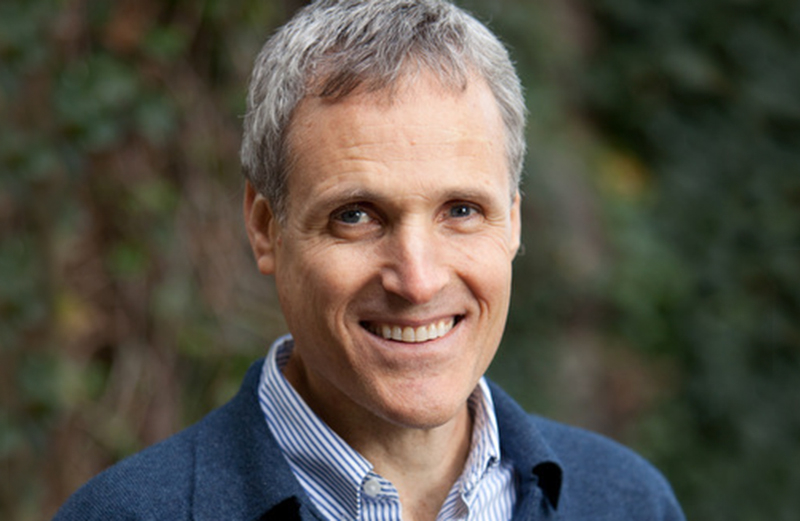
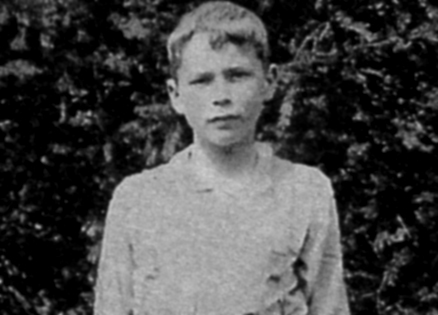
 A young Rick Hamlin, around age 10.“Give them the benefit of the doubt,” shall be my prayer. After all, as Henry James, in his least complicated vein urged, “Be kind, be kind, be kind.”

Let me waste unimagined hours listening. Just because I think I know more, thanks to the wisdom of the passing years, should be a reminder to listen harder and speak less. You God, in your wisdom, gave us two ears and one mouth. Would that I did better than that proportion in using them.

It is so easy to look back but let me look ahead. Hope is an avenue of infinite worth, stretching out into an unimagined future. Let me travel on that highway. The sun is always rising somewhere in this world and in the next.

Enough of judgments, Lord. All those refined perceptions that lead to negativity are really a waste of time. Sheep and goats? Why should I know? You know better. I’ll leave the sorting to you.

It occurs to me that 60 is an opportunity to become a true eccentric. I can become outrageous and people will give me ample rope, but might not that rope be more than enough to hang myself or at least to tie myself up in knots?

(Note to self: Be eccentric on the side of love. That would be enough.)

Let there always be room in my life for what is new: new friends, new challenges, new places, new books, new understanding of your word, new messages, new opportunities. 

There will surely be more wrinkles and white hairs, and I welcome them. I gladly look my age while still welcoming the flattering comment, “You don’t look a day over 58.” 

No need to complain about the occasional ache or creek of joint. Yes, I suspect there will more time spent in doctors’ offices and maybe a procedure or two. Been there, done that. But the body isn’t everything.  

I’m grateful for joys of life. A young heart is its own gift. I thank you for that.

A Prayer for Today

As editor of 60 Days of Prayer Magazine, I am always on the look-out for uplifting prayers to feature each month.  While in the Guideposts archive, I came across this beautiful prayer with historical significance.  Over fifty years ago, as astronaut Frank Borman soared around the moon in Apollo 8, he spoke these words which were transmitted to earth and heard by millions around the globe on Christmas Eve, 1968. Its sentiment still holds true today. May we pray for peace and unity on earth.

Give us, o God, the vision
which can see Thy love
in the world
in spite of human failure.

Whistle Stop Cafe In Article Ad May 2023

Give us the faith
to trust Thy goodness
in spite of our ignorance
and weakness.

Give us the knowledge
that we may continue to pray
with understanding hearts

And show us what each one of us
can do to set forward
the coming of the day
of universal peace.
 

A Prayer for the Streets

We called it Black Thursday.

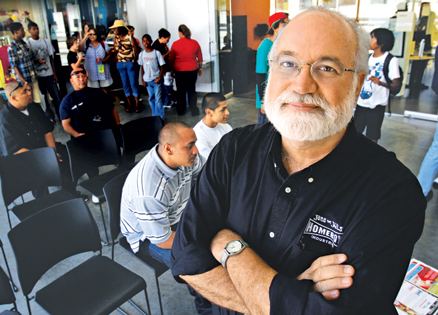
A group of us gathered in my office on a warm spring morning last year at Homeboy Industries, a gang-intervention program started nearly two decades ago in a tiny East Los Angeles church.

Community Newsletter

Get More Inspiration Delivered to Your Inbox


Crowding the walls was evidence of our work—photos of gang members who’d turned their lives around, drawings and paintings by kids from the projects, even a proclamation from one of East L.A.’s most notorious street gangs thanking us for our “efforts to make our lives and our community better.” Outside my office we saw gang members coming off the street for job training, counseling, maybe to apply to work in the bakery and café we run, or to have their tattoos removed by volunteer doctors.

The street was desolate, a neglected corner next to a bus storage depot less than half a mile from the Los Angeles Men’s Central Jail. Inside, though, everything hummed with life, with prayers and warm greetings, sometimes with tears of joy.

Except today we were meeting to practically shut the whole operation down. The recession had hit hard and much of our funding had dried up. We’d cobbled together the payroll money for the past few months but now the well was dry. We had more than 300 employees, most of them former gang members, counseling addicts, answering phones and teaching classes. They’d all have to go. The senior staff would be laid off. I would be laid off, and I’d helped found the place. We talked all morning about what to do.

We were desperate for another solution but there seemed to be only one course of action.

Finally we stopped for lunch. “We’ll break the bad news this afternoon,” I said. Silently I gave one last frantic prayer for help.

When I returned, word had already spread. The parking lot, sidewalk and lobby were mobbed. Huge guys covered in tattoos were sobbing. Homeboy Industries is the largest gang-intervention program in the country and the only operation of its kind in Los Angeles, America’s gang capital. For these guys it was a lifeline. And I was taking it away.

Worse, I blamed myself. We’d recently built a new headquarters that let us bring all of our programs under one roof. It was paid for but I hadn’t anticipated the increase in costs our expansion would generate. The number of gang members, or “homies,” as they call themselves, coming to us had quadrupled to 12,000 per year. (There are an estimated 100,000 gang members in the L.A. area.) I walked through that swarm of homies in a miserable daze.

I thought about all the kids who’d come to us over the years broken down and brokenhearted. That’s the real reason kids join gangs. They’re not natural-born criminals. They’re just out of options—no jobs in sight, dysfunctional schools and families, no sense of belonging in society. Yet these kids had taught me so much—more, it sometimes seemed, than I’d ever taught them.

I remembered one year in particular, when I was as depressed and anxious as I was that Black Thursday afternoon. It was 1992, six years after I’d been assigned as pastor of Delores Mission Church in East Los Angeles. Delores Mission was the poorest parish in all of L.A., basically two sprawling public-housing projects right next door to each other. The projects were home to eight different warring gangs.

Even though I was a middle-class white guy who spoke little Spanish, dealing with those gangs became a major part of my ministry. Mothers and grandmothers in my parish were distraught at the constant shootings, stabbings and drug dealing going on every day right outside their doors. They hated the violence but they loved their children. Maybe, they reasoned, if we made our church a place of love and refuge and helped these kids find jobs and mentors they’d leave the gang life. By fits and starts we put together a program that placed kids in local jobs and taught them basic life skills. We even bought them suits for interviews. We started our own businesses and we hired homies to run them.

I wasn’t smart enough to let it all take its own time. Instead I tried to solve the gang problem single-handedly. I never slept. Late at night I’d get on my bicycle and pedal through the projects. If I saw homies with guns drawn I confronted them. I escorted kids to their doors. I pleaded with gang members to leave the life and come to us for counseling. I shooed away drug dealers and even tried to broker truces between rival gangs. The truces were worse than useless. Gangs never fight about anything real. It’s all turf and posturing and desperate efforts to mask despair and fear.

As a Jesuit I was mandated to take a long retreat that year. I spent 30 days in silent prayer and realized that all of my efforts had come to little. The housing projects were more torn up by violence than ever. I was burned out. I returned wondering if I’d ever find a way to make a difference.

That’s when I met Pedro, a young guy addicted to crack. Every time I saw him in the projects I offered to get him into rehab. “I’m okay, G,” he’d say and slink off. (The homies call me “Father G” or just “G.”) One day, to my total surprise, Pedro said yes.

I drove him to a rehab center north of L.A. A month later his younger brother, Jovan, also a gang member, committed suicide. I picked Pedro up from rehab for the funeral. I had no idea what to say but Pedro launched into conversation the minute he got in the car. “It’s a trip, G,” he said. “I had this dream last night and you were in it.”

Pedro said he and I were standing in a large, empty, pitch-black room when suddenly I lifted up a flashlight and turned it on, illuminating a light switch on the wall. I didn’t speak, didn’t move, just held the beam steady. “All of a sudden,” said Pedro, “I realized I was the only one who could flip that switch. You couldn’t do it. I had to do it. So I walked over there and I took a breath and I flipped it on. And the room got light.” He paused and I saw he was crying. “And, G,” he choked out, “I realized that the light…is better…than the darkness.”

That was all. We didn’t say much more. After the funeral Pedro returned to rehab. His story, though, flipped a switch in my own mind. I realized what I’d been doing wrong—I’d been going around trying to turn on lights for everyone in the projects when in fact all I could do was aim the flashlight. I couldn’t save those kids. Only God could save them. My job was simply to point the way.

My work changed after that. No more bike patrols. No more brokering truces. I focused more on Homeboy Industries and made it clear to kids that I was ready to work with them only when they were ready to work with us. We sometimes joke that our motto (“Nothing stops a bullet like a job”) should be changed to “You just can’t disappoint us enough.” But that doesn’t mean we let kids off the hook. If they slack off or drift back into the life, we send them packing. We pray hard they’ll come back. But in the end that’s their decision.

The day after the layoffs I arrived at the office to find the place as noisy and busy as ever. “We’re still working,” the staff told me. “Maybe you’ll be able to pay us someday.” Pretty much everyone showed up, including Pedro, who’s a case manager.

Homies went to Dodger Stadium to collect donations from fans lining up for games. They took to the streets to sell copies of a book I’d recently written. They called newspapers and television stations and soon the place was swarming with reporters. “Your terrific press person, Melissa, called us,” a television cameraman told me. He meant a homegirl who works in the tattoo-removal clinic and had never spoken to the media before in her life.

Donations trickled in, then snowballed. In a few months we’d raised $3.5 million. Los Angeles County gave us $1.3 million to serve kids on probation. It’s still not enough. Our businesses, staffed almost entirely by homies, are self-sustaining. But the rest of what we do is slow, expensive work. So far we’ve managed to put about a hundred people back on the payroll.

I have no idea what we’ll do come June, when the county contract runs out. Still, I don’t despair. God brought us this far and he’ll carry us along. I may be shining the flashlight and the homies may be flipping the switch. But it’s God who provides the illumination. On Black Thursday and every day.

Download your FREE ebook, A Prayer for Every Need, by Norman Vincent Peale.

A Prayer for Lost Things

Do you ever lose things? In the last week or so I seem to have become the absent-minded professor with a specialty in missing objects.

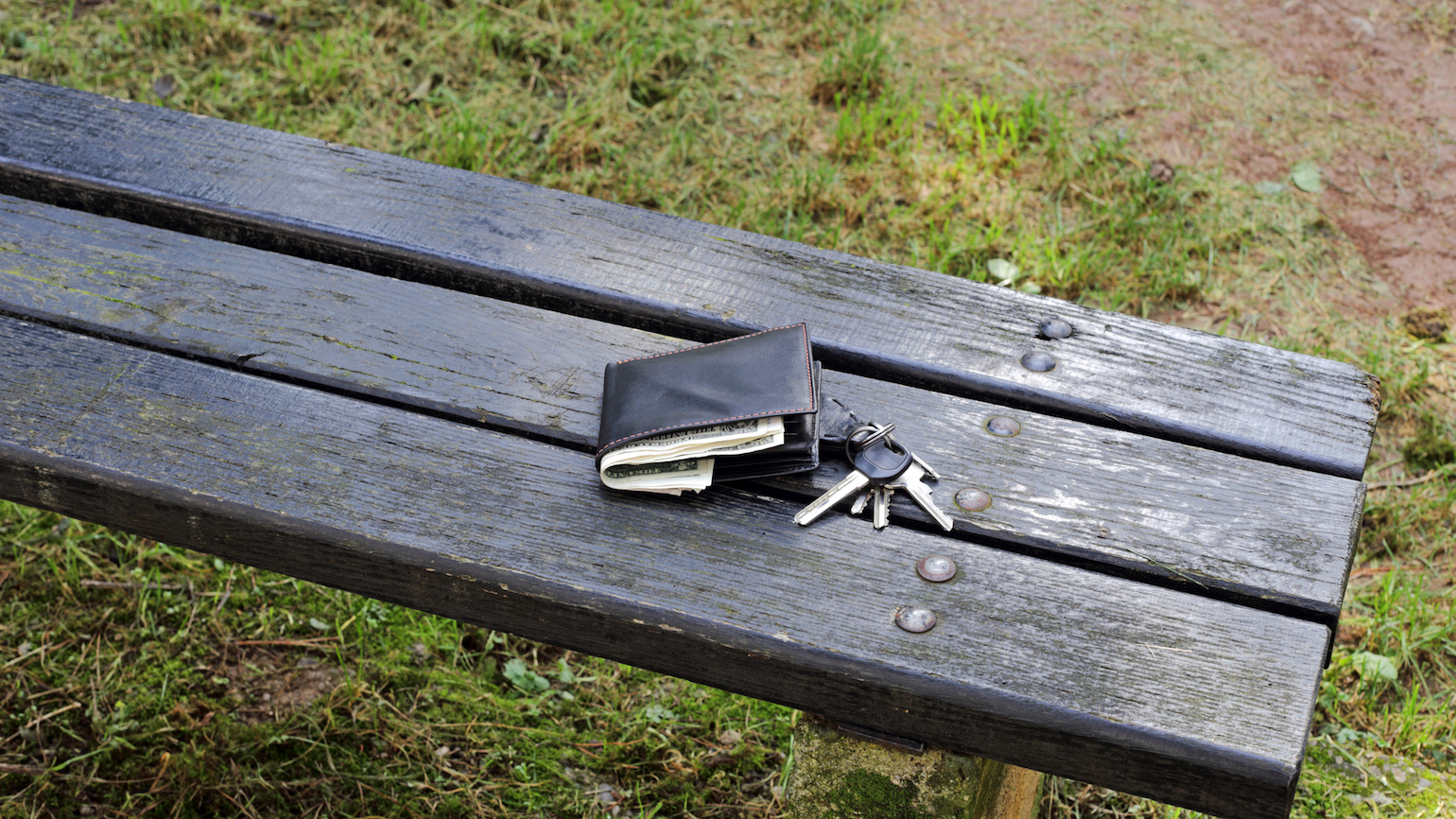
At first it was my passkey to the gym, then it was my money clip, then it was the keys to our home. “Do you think we’ll have get our locks changed?” I asked my wife.

Go For It In Article Ad

“They’ll show up,” she said confidently.

“But I’ve checked EVERYWHERE,” I said. “I’ve gone through all my pockets. Checked through all my drawers.” Guess what? Turned out they were in the one drawer I didn’t check. 

As for the money clip and the missing money…that really baffled me. Had someone stolen it from me? Had I been pick-pocketed? Had it fallen out somewhere?

It was only when I was doing the laundry and taking my pants out of the washing machine that I noticed a lump in the front right pocket. I put my hand in. Ah-ha. The missing clip with the three twenties.

“I would have never suspected you of money laundering,” said a lawyer friend wryly.

I’ve now given myself three tips for dealing with Lost Things:

1)  Take a breather and a good look. Ask yourself, “Where was I today?” Search high and low. But also do a search in your head. Then…

2)  Trust. Like my wife says, lost things have a way of turning up. Just wait and trust. Heck that’s good advice for lots of things.

3)  Rejoice. Remember Jesus’s parable about the woman and the lost coin? She looked everywhere for it. When she found it she invited all her friends over to celebrate. What was lost was found.

Let me add my prayers to yours for anything that’s lost. And a few prayers for rejoicing over all that is found, including any absent-minded-professor types discovering they’re not losing their minds.

Just their keys.