Embrace God's truth with our new book, The Lies that Bind

What It Really Means to Pray ‘Hallowed Be Thy Name’

When Jesus taught His first followers to pray, He told them to pray (in the words of the King James Version), “Hallowed by Thy Name.” 

Say what?

God's Constant Presence In Article Ad

It’s the first request in The Lord’s Prayer, but what are we really saying when we pray those words? It’s a phrase that is as important to understand as it is easy to misunderstand, not least because various Bible translations and versions express it differently:

“Uphold the holiness of Your name.” (Common English Bible)

“Let Your name be kept holy.” (God’s Word Translation)

“May Your name be honored.” (J. B. Phillips translation)

“May Your name always be kept holy.” (New Century Version)

It’s possible that Jesus was echoing the Kedushat HaShem, an ancient prayer that has been passed down through the centuries as the third blessing of the Amidah, the daily blessings recited by observant Jews. Early in their evening prayers, Jews will say, “You are holy, and Your Name is holy, and Your holy ones praise You every day. Blessed are You, Adonai, the God who is holy.”

If that’s the case, though, Jesus rendered the affirmation of the Kedushat HaShem as a petition. He changed “You are holy, and Your Name is holy” to “May Your Name be kept holy.” 

According to author Philip Keller:

What we would say in modern idiom is something like this: “May You be honored, revered and respected because of who You are. May Your reputation, name, person and character be untarnished, uncontaminated, unsullied. May nothing be done to debase or defame Your record.

So, in saying “hallowed be Thy name”—if we are sincere—we agree to guard God’s reputation and protect the integrity and holiness of “HaShem,” the Name. To “hallow” God’s name, then, means at least three things:

1) Trusting
Once, when God’s people were wandering in the Sinai wilderness after their deliverance from slavery in Egypt, they complained because of a lack of water. So God told Moses to speak to the face of a cliff where they had camped, promising that water would flow from the rock. Rather than speaking to the rock, however, Moses struck it with his staff— which had played a part in several miracles back in Egypt.

God later said to Moses and Aaron, “Because you did not believe in Me, to uphold Me as holy in the eyes of the people of Israel, therefore you shall not bring this assembly into the land that I have given them” (Numbers 20:12, ESV). Believing God— trusting Him and taking Him at His word—“hallows” His name and upholds His reputation.

2) Obeying
When God gave His commandments to His people, He told them, “So you shall keep My commandments and do them: I am the Lord. And you shall not profane My holy name, that I may be sanctified among the people of Israel” (Leviticus 22:31–32, ESV). In other words, a lifestyle of submission and obedience to God “hallows” His name—not a legalistic Puritanism but a winsome, day-by-day pursuit of God and His ways.

3) Rejoicing
When David’s second attempt to return the ark of the covenant—the symbol of God’s presence with His people—to Jerusalem was successful, he was so overcome with joy that he threw off his kingly robes and danced with abandon in the holy procession. His wife, Michal, however, berated her husband because, she said, “he exposed himself like a fool in the sight of the servant women of his officials!” But David answered, “I was dancing to honor the Lord, who chose me instead of your father and his family to make me the leader of His people Israel. And I will go on dancing to honor the Lord” (2 Samuel 6:20–22, GNT). Joy—in worship, in trial, in the details of daily life—honors God. When our lives exude “the joy of the Lord” (Nehemiah 8:10), God’s name is hallowed.

“Hallowed be Thy name” is a request and an attitude like that of a friend of mine, who would send her children to school every morning with the admonition, “Remember who you are,” repeating the family name and making it clear that they were expected to bring honor, not shame, to that name. That’s what we’re saying when we pray, “Hallowed be Thy name.”

(Adapted from The Red Letter Prayer Life, by Bob Hostetler.)

What It Really Means to Pray ‘Deliver Us from Evil’

When Jesus taught His followers to pray, He told them to say, “Deliver us from evil.” It is, in all its simplicity, a three-fold acknowledgment.

1)  “Deliver us from evil” acknowledges the existence of evil. 
Jesus doesn’t pretend that evil is a mere state of mind. On the contrary, Jesus says we live in a fallen world—a world in which people steal from others, lie to others, hurt others, hate others and even try to kill one another. 

Rejoice in All Things in article ad

2)  “Deliver us from evil” acknowledges that we need deliverance. 
We don’t need to deny the evil that surrounds and threatens (and sometimes overwhelms) us or detach ourselves from it. We need deliverance from it. We need to avoid it and escape it, to be shielded from it or through it. 

3)  “Deliver us from evil” acknowledges that we can be delivered. 
When Jesus included the phrase, “Deliver us from evil” in His model prayer, He clearly wanted His followers to understand that deliverance was possible. It is obtainable. It is available. “Pray then like this,” Jesus said: “Deliver us from evil.” 

That’s a lot of meaning in just four words. But there’s even more in that short prayer, if we pray like this:

Pray, “deliver us” from doing evil ourselves
Our first instinct when praying The Lord’s Prayer and saying, “Deliver us from evil,” is to envision the evil that exists all around us—drunk drivers, corrupt officials, angry mobs. But, as Russian novelist and historian Aleksandr Solzhenitsyn famously pointed out, “the line dividing good and evil cuts through the heart of every human being.” The most dangerous evil most of us face is that which hides inside. So, when you pray, “Deliver us from evil,” pray for deliverance from doing evil. Pray for deliverance from the evil that “lies close at hand” (Romans 7:21, ESV). Pray for the righteousness of Christ to triumph over the wretchedness of your all-too-human heart.

Pray, “deliver us” from evil done to us
Rabbi Judah ben Tema is said to have prayed, “Let it be thy good pleasure to deliver us from impudent men, and from impudence: from an evil man and an evil chance; from an evil affection, an evil companion, and an evil neighbor: from Satan the destroyer, from a hard judgment, and a hard adversary.” So, when you pray “deliver us from evil,” it’s a prayer to be delivered from armed robbery, from debt and bankruptcy, from crop failure, from liars, gossips and thieves, from evil affections, evil companions and evil neighbors. From every trick and technique of your enemy, the devil, who “prowls around like a roaring lion looking for someone to devour” (1 Peter 5:8, NIV).

Pray, “deliver us” from the evil surrounding us
The final petition Jesus gave His followers in what we call The Lord’s Prayer contains the plural pronoun, “us.” It’s a corporate prayer, one I must pray not only for myself but also for others. We are surrounded by people who need deliverance from evil: an overworked teacher who faces discouragement on a daily basis, pastors who bear heavy burdens and try to meet great demands while also maintaining healthy marriages and families, friends who face unemployment, neighbors who are trying to cope with illness, and more.

It’s a simple prayer, but one that is rich in purpose and power. Pray it daily, fervently, for yourself and for others. Pray it in faith, believing that Jesus would not have taught His followers to pray it if it were not a prayer that would be answered.

What It Really Means to Pray ‘Bless This Food’

Saying “grace” before a meal is a common practice, even for people who seldom attend worship services or who rarely pray at other times. Some repeat a traditional prayer such as, “Bless us, O Lord, and these Thy gifts, which we are about to receive from Thy bounty, through Jesus Christ, our Lord, amen.” Others intone, “Come Lord Jesus, be our guest, and let these gifts to us be blest. Amen.” Or, “God is great, God is good. Let us thank Him for our food. By His hand, we all are fed, Give us, Lord, our daily bread. Amen.”

Most table graces include a request for God to “bless” the food. But have you ever stopped to think, What do we mean when we say “bless this food”? Didn’t God already bless it when He sent the rain to grow the corn and the sun to ripen the fruit? Are we asking Him to make the food tastier or more nutritious than the food our pagan neighbors are eating? Are we requesting protection against the ill effects of a cook’s poor skills?

extraordinary women of the bible

It’s true that, in many respects, God has already blessed the food by the time we sit down to say grace—in most cases, anyway. In my case, He blesses it again through the expert work of my wife, whose skillful and loving efforts keep me roughly 20 pounds overweight.

But I still pray “bless this food” at times. Why? What do I mean? I can’t speak for anyone else, but I say it as an acknowledgment that it comes from God and that even after He has blessed it with sun, rain, soil and loving preparations, He can bless it further as I eat it with gratitude, good manners and possibly a little bit of moderation.

He can “bless this food” with the company and conversation that accompanies its consumption. He can bless it to me by helping me to stop eating when I’ve had enough and save what’s left for later instead of gorging myself or throwing it away. He can bless it still further if I find ways to reuse it or to share it with others.

He can even bless it by reminding me that I don’t eat only for the enjoyment of tasty food but also for the nutrition that keeps me alive and supplies energy and health. And, as long as I don’t over-indulge, He blesses the food by using it to fuel activity—such as work, exercise or playing with a grandchild—that honors Him and helps others.

What about you? What do you really mean when you pray, “Bless this food?”

What It Means to Pray, ‘Your Will Be Done on Earth as It Is in Heaven’

For two millennia, faithful followers of Jesus have prayed the words that He taught His disciples: “May Your will be done, on earth as it is in heaven.” But have we paused to think through what it really means?

We tend to attach that phrase “on earth as it is in heaven” only to the third petition of the Lord’s Prayer, “May Your will be done.” But it’s possible—linguistically and theologically— that Jesus intended that phrase to modify all three petitions that precede it. 

God's Constant Presence In Article Ad

In other words, He may have taught us to pray, “May Your name be kept holy on earth as it is in heaven, may Your kingdom come on earth as it is in heaven, and may Your will be done on earth as it is in heaven.” 

After all, God’s name is hallowed perfectly and thoroughly by every inhabitant of heaven: “Holy, holy, holy,” they cry, “throwing down their golden crowns beside the crystal sea.” 

And His kingdom is undisputed and untrammeled in heaven, where the Lamb who was slain receives all the “power and wealth and wisdom and strength and honor and glory and praise” (Revelation 5:12 NIV) that are His due. And of course, the host of heaven does God’s will instantly, constantly, completely and worshipfully.

That’s what I pray when I say, “on earth as it is in heaven.” I pray for God’s will to be done instantly—that there will be no delay in His will being accomplished. 

I pray for God’s will to be done constantly—that there will be no cessation or vacation from the will of God being accomplished.

I pray for God’s will to be done completely—that there will be no half measures in the accomplishing of His will. 

And, finally, I pray for God’s will to be done worshipfully—that, like the angels of heaven, who happily, vocally and brilliantly speed to do God’s bidding, His name may be glorified, His kingdom may come, and His will may be accomplished here on earth. 

Of course, implicit in the prayer for God’s will to be done “on earth as it is in heaven” is the praying soul’s own submission to God’s will. It makes no sense to pray for these things to be accomplished everywhere but in me. Thus, “May Your will be done, on earth as it is in heaven” means “I will do what You say.”

So, for me, praying “on earth as it is in heaven” is a daily act of surrender, willingness and eager, obedient intention. It is a renewed commitment of my life to the cause of Jesus Christ. And it’s a happy reminder of the privilege I enjoy in serving the Almighty God of the universe in all that He wants to do on earth.

What Is Reformation Day?

Can you imagine wishing someone “Happy Reformation Day!” on October 31? That other holiday– the one with pumpkins, trick-or-treating, witches and candy–seems to take pride of place.

And yet, if I had to choose one of the two holidays for its life-changing importance, its transforming effect on how people worship, pray and look at Scripture, well, Reformation Day wins hands down.

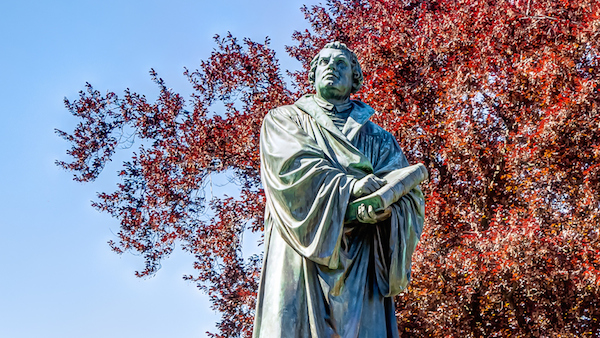
Maybe I should dress up as Martin Luther this year, wear a monk’s habit, and sing one of his landmark hymns, like “A Mighty Fortress Is Our God.” Exactly 499 years ago on October 31, he changed the world.

If the two holidays have anything in common I would propose it’s ghosts–or at least something frightening–and a door, although not quite like the door your average trick-or-treater knocks on.

Read More: A Student of Hope

First the fright. The young Martin Luther, son of a prosperous German businessman, had attended university and was just beginning his study of the law in 1505, when he was caught on horseback in a terrifying thunderstorm, a bolt of lightning barely missing him.

Luther prayed that if he was delivered from the storm, he would become a monk. He survived and true to his word, within two weeks he entered a monastery.

Now for the door. By this time, in 1517, Martin Luther was not only a monk but a learned scholar in Wittenberg, a professor with considerable command of the Bible and theology. What bothered him at the time was the selling of indulgences by the Church.

Selling indulgences was a relatively new practice of raising money by promising salvation. As the monk sent to Germany claimed in a rather aggressive marketing campaign, “As soon as the coin in the coffer rings, the soul from purgatory springs.”

Martin Luther objected. Strenuously. On theological grounds and also on political grounds. Why should good Germans give their money to help the pope rebuild St. Peter’s in Rome?

He wrote up his now famous 95 theses, or rather his objections, and posted them on the door of All Saints Church in Wittenberg.

It all might have ended there. A religious squabble in a backwater town. But those objections of his, eloquently put, spread like wildfire across Germany and the rest of Europe.

Read More: Prayer Partners, Best Friends

Martin Luther ended up leaving the monastery, defending his beliefs, getting married, translating the Bible out of Latin and into the vernacular so that people could read it. Without totally intending it, he started a new branch of Christianity.

It all started on October 31.

A lot of negative things could be said about him–his anti-Semitic writings would be used and misused in horrible and tragic ways. But no doubt about it, he was a brilliant man who changed the world…I might not be reading Scripture in my own language were it not for him. I certainly wouldn’t be singing magnificent hymns like “A Mighty Fortress Is Our God.”

Halloween or Reformation Day? Maybe we’ll find a way to celebrate the two together. In the meanwhile, I’ll be singing those words about that “bulwark never failing, our helper he amid the flood…”

Happy Reformation Day.

PS: Some scholars argue that the 95 theses were never posted on the church door. No matter. There is no doubt about their author or their effect.

What if Your Mind Wanders in Prayer?

I hear this question all the time, “What do I do when my mind wanders while I pray?” I found a great answer in a book written hundreds of years ago.

The authorship of The Cloud of Unknowing is a mystery. Maybe he was a monk, maybe a priest, writing in English—Middle English—sometime in the late 14th century. Giving a younger friend advice on prayer.

New Every Morning Journal In Article Ad A

I depend on a translation by Carmen Acevedo Butcher to penetrate the depths of The Cloud’s practical wisdom. As Butcher points out, the author wished to remain anonymous for a reason. The light was to be shone on God, not him.

To buy a copy of Rick’s latest book, Prayer Works, click here.

“God’s not asking for your help,” Anonymous writes. “He wants you to lock your eyes on Him and leave Him alone to work in you. Your part is to protect the door and windows, keeping out intruders and flies.”

Those intruders and flies? Our interrupting, unwelcome thoughts. In my prayer practice, when I sit on my sofa and close my eyes, inevitably I’ll start thinking of something I need to do at work, an email I should send, a question I need to ask. Intruders and flies indeed.

Then I do something Anonymous suggests, which is to use a single word to pull me back to my intent. “The shorter the word, the more it helps the work of the spirit,” he writes. “God or love works well. Pick one of these or any other word you like, as long as it is one syllable.”

Why only one syllable? Maybe it’s so we don’t get caught up with anything too complicated, too stuck in our minds. As he says, “Nobody’s mind is powerful enough to grasp who God is. We can only know Him by experiencing His love.”

Prayer is a chance to sit and savor God’s love, to remember how important it is. “We can’t think our way to God,” the author writes. But we can meet the Lord in prayer. 

“That’s why I’m willing to abandon everything I know,” he writes, “to love the one thing I cannot think. He can be loved, but not by thought.”

Lost in prayer? Good for you. Lost in meandering, distracting thoughts? Try this: focus on a single short powerful word, say it quietly to yourself, and go back to your prayer.

You’ll be doing something believers have done for hundreds of years.

Ways to Practice the Golden Rule When You Pray

Everyone knows the Golden Rule, right? It’s the command Jesus gave to His followers, as recorded in Matthew 7:12 and Luke 6:31: “Do to others as you would have them do to you.”

Something interesting (to me, at least) happened as I encountered those memorable words in my evening Bible reading. Because I not only read the Bible regularly, but try also to pray as I read, it dawned on me that the Golden Rule applies to the way I pray as well. That may not seem surprising to you—after all, the Golden Rule applies to all of life, right? Thoughts, words and actions. But it was a revelation to me.

I pondered whether I sometimes break the Golden Rule when I pray for others. Or don’t pray for them. So, in my prayers that night, I had a little talk with God. It went something like this:

Me:  Lord, do I pray for others as I would have others pray for me?

God:  How do you want others to pray for you? (He often answers my questions with questions). 

Me:  Well, I want people to pray regularly for me. Especially when I’m in some kind of crisis or special need.

God:  So, do you think that’s how you should pray?

Me:  Yes, of course. And when I ask for prayer, I hope they don’t just say “I’ll pray for you,” and then forget about it.

God:  So, you should be faithful to pray when you say you will?

Me:  Yes. Although I do forget sometimes.

God:  So, should you pray immediately, whenever possible? And do whatever you can to remind yourself of those who’ve asked for prayer?

Me:  Yes.

God:  How else do you want others to pray for you?

Me:  I think I want them to ask for more information, so they can pray more specifically for me.

God:  So, is that how you might pray for others?

Me:  Yes.

God:  Anything else?

Me:  I want people to pray good things for me.

God:  Of course you do.

Me:  But sometimes I feel like people are judging or criticizing me when they pray. You know, a sort of, “God, make him a better person.”

God:  You don’t want to be a better person?

Me:  You know I do. I just don’t like it when others’ prayers feel like gossip or criticism.

God:  So you’re saying you shouldn’t do that when you pray for others?

Me:  Right.

God:  Keep that in mind, then.

Me:  I will. And thank you.

God:  Anytime.

That’s not an exact transcription, of course. And I should stress that my side of the conversation was mostly audible, but God’s wasn’t. Still, it was, as I said, a revelation for me to contemplate praying for others as I would have others pray for me. I’m sure God isn’t done refining me in that area (among many others), but it’s already having an effect.  

A New Name for a Favorite Devotional

Not long ago, our younger son, Tim, and I were talking about being a dad, a relatively new role for him. “I used to get so mad at you kids when you were little,” I said to him. “Yelling so loud I was afraid the neighbors heard.”

“You never yelled at us,” Tim said.

Rejoice in All Things in article ad

“What?” I paused and looked at him. And then knew that God’s grace had stepped in, allowing him to forget what I remembered painfully. Once again, we were walking in grace.

Walking in GraceIt’s the new title for an annual book of devotionals that I’ve been contributing to even before Tim and his older brother Will were born. A new title? Perhaps. But the concept is as familiar as God’s daily walk with us. Here’s a sneak preview of this upcoming book:

As a father has compassion for his children, so the Lord has compassion for those who fear him. —Psalm 103:13 (NRSV)

I needed something to wear to the gym and grabbed a colorful old T-shirt from the bottom of a drawer. “Super Dad,” it said in cartoon script, and “Man of the Hour,” along with a list of all the qualities a Super Dad should have: “Faster than a speeding lawn mower, more powerful than the lid of a pickle jar, able to diet without losing a single pound…it’s a repair man…it’s a cash machine…it’s Super Dad.” A long-ago present from my boys. Must have been for my birthday or Father’s Day.

“Looks just like you,” some friend said, checking out the shirt. I’d already forgotten I had it on. I looked in the mirror while lifting some weights—not hugely heavy ones, mind you. I’m not that super. I could see the big “D” in reverse. How did I measure up as a dad?

I’ve never driven a lawn mower. I’m lousy at repair jobs. I couldn’t open most tightly wound pickle lids without help from a jar opener, and heck, I’ve never been one to attempt any sort of diet. But as far as cash machine goes, well, I would take my own father as example. Even when we were grown—especially as we were launching out in our careers—he’d dip his hand into his pocket and pull out a couple of twenties and say, “You should take these. I’m sure you have a need for it.” We did.

The thing is when any of us look in the mirror, or at a selfie for that matter, we don’t really see ourselves. That picture can best be found in the eyes of those we love. We are as super as they think. Clearly, I’d kept that funny old T-shirt for a reason.

May those I love see me with love as we mirror God’s love.

Two Words to Avoid When You Pray

I’m a firm believer in praying what you really feel. In my prayers, I’ve cried in frustration, complained of ill treatment and told God what I think of certain people. I’ve even expressed my anger at God. Yet, for all my (possibly foolish) honesty, there’s one kind of prayer I’ve been careful to avoid, prayer after prayer, year after year. I call it the “no way” prayer.

Simon Peter, one of Jesus’ first and closest followers, uttered the most well-known example of this prayer. On that occasion, Jesus told His disciples that he would eventually suffer and die in Jerusalem and on the third day be raised to life. Peter answered, “Never, Lord! …This shall never happen to you!” (Matthew 16:22 NIV).

A Journey of Faith In Article Ad - Avail Now

His “no way” prayer elicited such a strong rebuke from Jesus that it makes me cringe: “Get behind me, Satan! You are a stumbling block to me; you do not have in mind the concerns of God, but merely human concerns” (Matthew 16:23 NIV).

Ouch. Jesus tolerated a lot from Peter, but his “no way” prayer was apparently beyond the pale.

You might think that hearing “Get behind me, Satan” from Jesus would have prompted Peter to strike “no way” from his prayer repertoire…but you’d be wrong.

On the night of Jesus’ betrayal and arrest, when Jesus predicted that Peter would deny Him, Peter issued another “no way” prayer: “I will never say that I don’t know you! I will even die with you!” (Matthew 26:35 NCV). This time, however, when Jesus’ other disciples heard the exchange, they made the same claim. On this occasion, Peter’s “no way” prayer presaged his most devastating failure.

Ouch again. You might think that Peter’s second “no way” prayer, which preceded such humiliating defeat, would’ve been his last…but you’d be wrong.

After Jesus’ death and resurrection, Peter became a different man. He spoke publicly and courageously of his risen Savior. He suffered arrest and imprisonment for his preaching. But one day, while praying in the seaside town of Joppa, Peter had a vision:

“He became hungry and wanted something to eat, and while the meal was being prepared, he fell into a trance. He saw heaven opened and something like a large sheet being let down to earth by its four corners. It contained all kinds of four-footed animals, as well as reptiles and birds. Then a voice told him, ‘Get up, Peter. Kill and eat’” (Acts 10:10-13 NIV).

Peter recognized the voice; it was the Lord’s. But the voice had told him to eat food that was forbidden to Jews like Peter, so he answered in much the same way as he had twice before: “‘Surely not, Lord!’ Peter replied. ‘I have never eaten anything impure or unclean’” (Acts 10:14 NIV).

In other words, “no way.” As my mother used to say of me, “Some people never learn.” 

The voice spoke again, saying, “Do not call anything impure that God has made clean” (Acts 10:15 NIV). It was a message that immediately resulted in the Gospel of Jesus Christ being taken to, shared with and accepted by non-Jews.

Peter’s “no way” prayers—and the rebukes or corrections they elicited—have stuck with me and taught me over the years. I’ve learned from Peter’s example to avoid the “no way” prayer. Not that I don’t sometimes object to—even argue with—God; I do. But even when I think I’m being “righteous,” as Peter did, I stop short of “no way.” I may demur or delay for a while when God seems to be asking or telling me something I don’t like, but I avoid saying “no way.” 

I know the Lord was beautifully gracious to Peter, even hosting a lakeside breakfast to overcome the guilt and shame of Peter’s worst failure. He’s been similarly patient and forgiving toward me, always. But I still do my best to avoid saying “never” or “not so” or “no way” to Jesus. 

Instead, I wait until my heart and head reach a point of surrender and submission that allows me to replace “no way” with the Jesus prayer: “not my will, but yours, be done.”

[[nid:98039]

Two Simple Words to Draw Closer to God

Christians have developed many kinds of spiritual habits to draw closer to God, including prayer, fasting, studying Scripture, silent retreats, serving others, confession, repenting and more. 

These practices help us grow our faith and deepen our relationship with God. But to achieve maximum results, we must understand and fully commit ourselves to two simple words: “I surrender.” 

Daily Strength for Women in Article ad

Do you ever feel torn between wanting to give your all to God and wanting to do things your way? The Apostle Paul wrote, “I do not understand what I do. For what I want to do, I do not do, but what I hate, I do.” This is a constant battle we must all face. We must make the choice daily to surrender our pride, self-centeredness, love of money and hunger for power to God.

The statement “I surrender” is not a one time declaration, but must be uttered daily in prayer. These words represent total submission of mind, body and spirit to the One who loves us most and wants the best for us. In the same way we ask God for our daily bread and forgiveness, we too need to pray “I surrender to You, God” and name the things that hold us back. 

As a daily reminder, I find it helpful to write these two words on a piece of paper and place it where I can see it each day—the dashboard of my car, computer monitor or bathroom mirror. 

Some days we will come up short, but each time we pray those two words, we will draw closer to God.

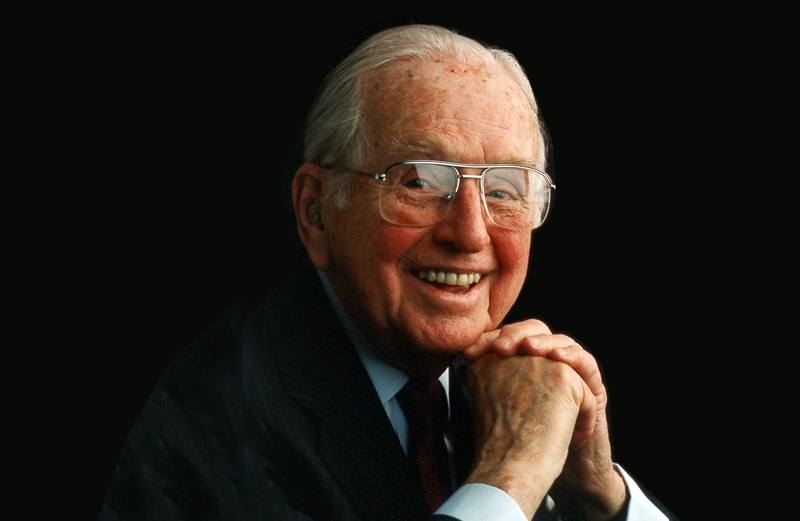
Norman Vincent Peale: How to Pray and Get Results

The secret of prayer is to find the process that will most effectively open your mind humbly to God.  Any method through which you can stimulate the power of God to flow into your mind is legitimate.

An illustration of a scientific use of prayer is the experience of a man who opened a small business—as he characterized it, “a little hole in the wall” in New York City—years ago. He had one employee. In a few years they moved into a larger room and then into extensive quarters. It became a very successful operation. This man’s method of business as he described it was “to fill the little hole in the wall with optimistic prayers and thoughts.”

Pray A Word a Day - 2023 In article

He declared that hard work, positive thinking, fair dealing, right treatment of people and the proper kind of praying always get results. This man worked out his own simple formula for solving his problems through prayer power. The formula is: Prayerize, Picturize, Actualize. By “prayerize” my friend meant a daily system of creative prayer.

When a problem arose, he talked it over with God simply and directly in prayer. Moreover, he conceived of God as being with him in his office, in his home, on the street, in his automobile, always nearby as a partner. He took seriously the Biblical injunction to “pray without ceasing.”

He interpreted it as meaning that he should go about every day discussing with God in a natural, normal manner the questions that had to be dealt with. He did not often kneel to offer his prayers but would, for example, say to God, “What will I do about this, Lord?” or “Give me a fresh insight on this, Lord.”

The second point in his formula of creative prayer is to “picturize.” The basic factor in physics is force. The basic factor in psychology is the realizable wish. When either failure or success is picturized it strongly tends to actualize in terms equivalent to the mental image pictured. Continue to surrender the picture to God’s will— that is to say, put the matter in God’s hands—and follow God’s guidance. Work hard and intelligently, thus doing your part to achieve success.

Practice believing and continue to hold the picture in your thoughts. Do this and you will be astonished at the strange ways in which the picture comes to pass. In this manner the picture “actualizes.” That which you have “prayerized” and “picturized” “actualizes” according to the pattern of your basic realizable wish when conditioned by invoking God’s power upon it, and if, moreover, you give fully of yourself to its realization.

I have practiced this prayer method and find great power in it. I have known many other people who have successfully applied this technique. When sincerely and intelligently brought into situations, this has produced such excellent results that it must be regarded as an extraordinarily efficient method of prayer. People who take this method seriously and actually use it get astonishing results.

Try a New Prayer Practice for the New Year

Ever wonder why they call it the “practice of prayer”? I think it’s because we’re all amateurs at it, doing it for the love of it. You don’t practice prayer the way a concert pianist practices a Chopin étude, getting it perfect for a performance.

You practice prayer because it’s a tool for life. You don’t expect an audience (beyond the heavenly one). I like the word “practice” because it gets rid of the performance anxiety. Trying to pray is praying. Practice is perfect.

Whistle Stop Cafe In Article Ad May 2023

Here for the New Year are some prayer practices you might want to try. Some might work for you, some might not, but remember: However you pray, you can’t fail. However you’re doing it, you’re doing it just right.

Flash prayers for a busy day.
Years ago a friend of mine who was in the movie business (talk about tense work) introduced me to this concept. She described being in tough meetings that would sometimes get contentious. “I would zap a prayer across the table at someone, mentally reminding them how much they were loved … Sometimes I could feel the tension go out of the room.” That checkout girl at the supermarket who is taking forever and never smiles? Why not zap her? It’s certainly better than getting steamed up about her.

Breathe in the love of God.
Recovering from surgery several years ago, I had terrible problems falling asleep. Sure, there were painkillers to take, but I hated the side effects, and it wasn’t the physical pain as much as the psychic pain that kept me up. I would do something my friend Jim recommended when he got too stressed out in his job search. With each breath I would remind myself, “You are loved by God.” Breathe in God’s love, breathe out God’s love. I could actually hear my heartbeat slow and feel my body relax. Did I fall asleep immediately? No, but I became more calm.

Use one prayer.
I’ve used the Jesus Prayer ever since my minister friend Arthur Caliandro introduced it to me 20 years ago. “Jesus Christ, have mercy upon me. Make haste to help me. Rescue me and save me. Let thy will be done in my life.” It’s an ancient practice. The advantage of learning one prayer and using it frequently is that you don’t have to concentrate. You can pray with the spirit. I feel like my body settles down when it hears the familiar words and I become more open to the life of the spirit. Take any short prayer, part of a Psalm or the Lord’s Prayer, and let it live in you.

Give it five minutes a day.
Is that so much to ask? Five minutes a day in a quiet place with your eyes closed and no interruptions. Want to do more? That’s fine, but don’t give yourself an impossible goal to follow. The trainers at the gym wisely stress that a reasonable workout is much better than an ambitious one that has you giving up in frustration after a week or two. Five minutes will give you a lot, especially if you do it in the same place every day. All those external stimuli—the feel of the chair you’re sitting in, the sound of the birds outside—will be your own personal call to worship.

Pray for others.
Create a mental list of the people who need help. The list will change constantly. When people discover that you’re a praying person, they’ll give you requests. The list will get long, but don’t be weary. You’re being given an incredible opportunity to grow in compassion. You can write the names down, but I prefer to keep them in my head. Pulling up each name, remembering a face, thinking of a need, it keeps me in a prayerful place. Sometimes it feels like a big party, all those people in my head, but there’s no mess to clean up afterward. Just the welcome reminder—and it will come—that a prayer has been answered.