Embrace God's truth with our new book, The Lies that Bind

Teresa of Avila’s Castle of the Soul

The New York City subway system is a veritable cacophony. Train brakes hissing and wheels squealing. Performing panhandlers. Distorted music leaking from the headphones of soon-to-be-deaf straphangers. I shut most of it out. I’ve got my eyes closed, praying, as is my practice every morning. I’m sitting on a hard plastic seat with my briefcase on my lap, but my mind is someplace else: a castle discovered by a sixteenth-century Spanish nun.

Not a castle of stone and brick, but a beautiful metaphor envisioned and described intimately by the passionate, neurasthenic, self-effacing, witty, demanding, practical Teresa of Avila. Her defining work, El Castillo Interior, about the “interior castle,” is a must-read for anyone who is interested in the deepest levels of prayer. When I set out to write my own book on the subject, I’d often marvel over something Teresa said: “Christ has no body now on earth but yours, no hands but yours, no feet but yours….” Or “It is foolish to think that we will enter heaven without entering into ourselves.” For Teresa, prayer was more than just words said to God. So much more. It was a state of being, often an otherworldly state.

Witnessing Heaven In Article Ad 827x123

Born in 1515 to a noble family, from an early age Teresa showed no interest in an ordinary life. At seven years old, she tried to run off to Africa with her brother to “fight the infidels” at war with Spain. Ready to die a martyr’s death, she only got as far as the outer walls of Avila before being caught and reprimanded. With few real options for the adventure she craved, Teresa entered a local convent as a teen. Ironically, the convent offered greater freedom in that patriarchal society. Within its walls, she discovered a different kind of journey. She meditated for long periods and often fell into trances. At other times she experienced such rapture that both pain and joy transfigured her face.

One of her most famous visions, immortalized by the great Italian sculptor Bernini in his Ecstasy of Saint Teresa, was her union with God in prayer. “On my left an angel appeared in human form,” she wrote. “He was not tall but short, and very beautiful, and his face was so aflame that he seemed to be one of those superior angels who look like they are completely on fire. In his hands I saw a large golden spear, and at its iron tip there seemed to be a point of fire. I felt as if he lunged this into my heart several times.” A wild story? You bet. But Teresa described the experience in such precise and convincing detail, Bernini found it easy to recreate.

Teresa wasn’t afraid to claim a personal relationship with Jesus, one in which she often challenged him—a relationship she believed everyone should have. In one oft-repeated story, she was traveling by mule and fell off the beast, landing in the mud. “Lord,” she cried out, “you couldn’t have picked a worse time.” He spoke back to her: “This is how I treat my friends.” Never at a loss for words, she responded, “And that is why you have so few of them!”

Teresa did much to reform her order of nuns and went on to found other monasteries. Her fame spread, inviting the dark scrutiny of the Inquisition, and yet she had her defenders too, in particular the king, Phillip II.

Her confessor persuaded her that she should write a book to help her nuns in prayer. At first she objected, “I have neither the health nor the wits for it.” But soon another vision came to her. She saw a beautiful crystal globe made in the shape of a castle, containing seven mansions. In the seventh and innermost was God, illuminating them all.

Quickly she put down what she saw, never rewriting, filling hundreds of pages with a practical guide to the otherworldly journey of the soul. The entry to the castle is through meditation. If you let go of worry and fear, opening your heart to God, your soul finds its true home. “Considering how little you have to entertain you, my sisters . . . I think you will find consolation and delight in this interior castle,” she wrote, “where you will be able to go inside and walk around whenever you want.”

The Interior Castle was written for nuns, but it’s a journey anyone can take. Even on a crowded subway, I can slip away for a while, wandering those inner rooms Teresa describes, drawing close to the heavenly light that abides there, seeking the God within.


Teacher’s Daily Prayer

6:04 p.m. I settled into my seat at the front of the classroom and looked at the roster. Thirty students. I counted just 10 in their seats. “Anderson,” I said. No response. “Applegate.” Silence.

I wasn’t new to teaching, but I was new to this university, and to the students it served—adults with families and jobs, single moms, ex-military, all of whom wanted to become teachers.

Community Newsletter

Get More Inspiration Delivered to Your Inbox


I stood up and printed the course title across the whiteboard in black marker: Teaching Students Who Speak English as a Second Language (ESL)—a required course for education majors.

The heavy door at the back of the room slammed with a thud. I turned around. A middle-aged man with faded tattoos on his forearms, tattered jeans and a five o’clock shadow swaggered in. “What’s your name?” I asked.

“Mike,” he said gruffly.

After Mike came Rose a few minutes later, then Felix a minute later, followed by Melissa, Marta and Arthur. No apologies, no explanations. “Punctuality is expected,” I finally announced.

“Whatever,” someone muttered. In the harsh glare of the room’s fluorescent lights, I felt so exposed. Keep it together, Joyce, I told myself, and moved on to the syllabus.

I started to describe the papers and research projects. Perhaps because I was nervous, I ran through the material more quickly than I should have.

“Wait,” interrupted Cassie, a 30-something with freckles and curly red hair. “I didn’t pay good money to come to an institution where the professor doesn’t explain things clearly.”

“I’ll give directions for each assignment as we get closer to the deadline,” I answered. Cassie didn’t look satisfied. I tried to smile, but I was reeling. In all my years of teaching, I’d never had a class like this.

Teaching is my passion and I love educating future teachers about students who are learning ESL. Didn’t these people share my passion? Wasn’t that why we were here?

Not tonight. The students didn’t seem to want to be there. They sat slumped in their blue molded-plastic chairs, staring out the window, checking their cell phones. Things will get better, I told myself and began the first lesson.

I hadn’t uttered four sentences about the challenges ESL students face when Belinda, a petite blonde, shook her head. “I don’t see why we have to make all of these accommodations for them,” she blurted out. “Shouldn’t they just learn English before they come here?”

I shifted from foot to foot on the gray industrial carpeting and scanned the room to see if anyone would contradict Belinda’s provocative statement. I only saw blank expressions. Lord, give me patience and wisdom, I prayed silently. I took a deep breath.

“We’ll spend the next few weeks discovering why that isn’t the case,” I said. “Be sure to read the assigned chapters before we meet next week.” It was only 7:00 p.m.

Two hours until class ended, but I couldn’t go any further. What were they getting out of it? What was I? They might as well go home and study. “That’s all for tonight,” I announced, gathered my papers and headed for the door.

“How’d it go?” my husband, Giorgio, called out as soon as he heard me come in. Once he saw my face, he knew. I went straight to bed.

The next week I got to school early as usual to copy the handouts and write the outline of my lecture on the whiteboard. I always enjoyed the calm of an empty classroom before students arrived. Not this time. The students’ belligerent comments echoed, and I could picture their blank stares.

Give me patience, God, I prayed. I always entrusted my teaching to a higher power but I couldn’t remember ever praying so much about a class.

This time the students showed up on time, but they were still hostile. At one point during my lecture, Belinda blurted out, “You’re wrong, Dr. Nutta!” My chest tightened. Before I could respond, Mike was quick to agree. “I’m with Belinda,” he said. I stuck it out for three hours.

Half the students didn’t take notes. They acted as if they were sitting there to meet a requirement. But that was my challenge as a teacher. Why couldn’t I reach them?

My cheeks were drenched with tears when I got home. Giorgio gave me a big hug. “I can’t get through to them!” I said.

Giorgio’s warm brown eyes fixed on mine. “I know you want the best for them.”

“Of course I do,” I said quietly.

“Then pray,” he said.

“I’ve been praying. Constantly! For patience. For wisdom…”

“No, no.” He shook his head. “Pray for them. Pray for each and every student, envisioning them being happy and successful.”

Hmm, I thought. Happy and successful? Them?! “Try it,” Giorgio assured me as we turned in that night.

The next day, I tried it at home, picturing each student. I could see their rolling eyes. No, see them happy. Successful. I pictured them listening, taking notes, raising their hands. Learning.

Then at school, before switching on the lights, I set my materials down on the podium and planted myself at the front of the room. It was dark and still. I imagined each student doing his or her best, feeling happy and focused.

My gaze moved from chair to chair. I thought about how hard they worked during the day, studying late into the night or whenever they had a spare moment.

Cassie fit in her classes between waitressing shifts. Mike worked all day as a carpenter. Belinda was a single mom, holding down a job and going to school. Lord, I prayed, let them know how exciting it is to become a teacher…not a chore, but a joy.

Things started to change that night. Cassie’s frown softened. During the break, she even volunteered to help me set up my materials. Belinda stayed focused, quietly taking notes. I posed a difficult question about teaching methodology.

I expected to wait a while for the answer, but a hand immediately shot up. Mike. I braced myself for a complaint and called on him. In a confident voice, he answered the question. “Yes! That’s absolutely right,” I cheered. His fist punched the air.

I was exhilarated when I got home. “That’s more like it,” Giorgio said.

“It’s working!” I told him. “Praying for them. Imagining them happy and successful. I’ve seen an amazing change.” I continued to pray. Each week they showed more enthusiasm. And I was seeing them differently too, through new eyes. Prayer had changed me as much as my students.

At our last class Mike handed me an oversized thank-you card signed by every student. One comment stood out: “It took me a while, but I found I enjoyed learning to teach ESL students more than I did ‘regular’ students. Nothing could take away the joy I got from my experience in ESL. Thank you, Belinda.” My eyes filled with tears. I couldn’t believe what I was reading. Was this the same Belinda who, just months earlier, said ESL students were lazy? I looked up from the card. My students surrounded me in a circle.

Learning, I’ve found, changes you. From the looks of things we had all learned quite a bit.

Download your FREE ebook, A Prayer for Every Need, by Dr. Norman Vincent Peale

Tapping—Another Helpful Way to Pray

In a recent post I mentioned the tapping technique (also known as Emotional Freedom Technqiue or EFT) as a way of calming one’s mind and entering into prayer. I wrote:

Believe it or not, studies have shown that tapping decreases cortisol (the stress hormone). “Tapping?” you say. Yes, tapping. It may sound strange, but gently tapping your temple, chin or collarbone can decrease your stress and slow down your racing mind and heart to the speed of quiet.

You Got This In Article Ad

Some readers reacted to that brief description, expressing agreement or interest in learning more. Though the tapping technique didn’t originate as a prayer practice, it (or something like it) can be adapted in ways that help us focus in prayer. 

It came to my attention through my wife, a gifted mental health professional who has helped people relieve stress and anxiety or increase focus by using the tapping technique. I make no claims to being a mental health practitioner (quite the opposite, in fact), but I think of the technique, when employed by a praying Christian, as a way of focusing one’s mind (or quieting distracting or “anxious thoughts,” like those mentioned by the psalmist in Psalm 139:23).

Because I’m always looking for new ways to pray, I decided to try a prayer experiment incorporating tapping to help me pray through some anxiety I’m feeling about an upcoming cross-country trip.

I chose five “tap” points, though others are often recommended. I chose to pray in two stages, first speaking to myself, admitting my anxiety, and then praying a single affirmation to God in the second round of taps. Obviously, these techniques can be adjusted in many ways; this is just how I tried it on this occasion. 

As I gently tapped each spot on my body rhythmically (maybe 10 times or so), I spoke aloud. It went like this: 

1)  Top of head—Even though I’m stressed about my upcoming trip, I can be calm.

2)  Temple—Even though I haven’t worked out all the details, I give myself permission to relax.

3)  Between nose and upper lip (inhaling slowly through my nose, exhaling through my mouth)—Even though many things are out of my control, I am slowing my breathing.

4)  Chin—Even though it may be expensive, I feel my heartbeat slowing.

5)  Clavicle—Even though I wish I didn’t have to go, I choose to face it calmly.

After those taps, which took about a minute, I started the tapping process over. This time I simply prayed, “My help is in the name of the Lord, the maker of heaven and earth” (Psalm 124:8). It has often been a calming and centering prayer for me. 

But I could have also prayed: 

“When I am afraid, I will trust in you.” (Psalm 51:3)

“The Lord is my light and my salvation—whom shall I fear?” (Psalm 27:1)

“Let the peace of God, which surpasses all understanding, guard my heart and mind in Christ Jesus.” (Philippians 4:7)

It was a short exercise and not a conclusive study by any means, but I experienced more measured breathing and a slower heart rate as I prayed. When I finished I thought it had been valuable enough to write about. So “when my heart is overwhelmed,” this practice of tapping and praying may help to “lead me to the rock that is higher than I” (Psalm 61:2 KJV). 

Why not try it? In times of stress or anxiety—or anytime—it could be one more helpful way to pray.

Take a 3-Minute Retreat

For years now, I have taken an annual (sometimes twice-a-year) prayer retreat at a silent monastery just a few hours from my home. It always refreshes me and rejuvenates my prayer life.

But not everyone can do that (though I think everyone should at least give it a try, perhaps by trying a “half-day” retreat at first, as this post suggests).

The Lies That Bind In Article Ad

Take a 3-minute retreat. Photo by Garsya, Thinkstock.But those aren’t the only options. Did you know you can take a 3-minute retreat? At your desk or via your laptop, even?
Loyola Press, a ministry of the Jesuits, offers “3-Minute Retreats” on their website, in English and Spanish.

With a click of your mouse, you can take a short, self-guided retreat on a number of themes. You have control over the pace of the retreat.

While soothing music plays, a screen appears with instructions or thoughts for meditation. On each screen, a “continue” button appears, allowing you to stay as long as you choose or continue whenever you choose.

Some of the available themes are:

Some of the 3-minute retreats reflect Catholic beliefs and sensibilities (which of course you would expect from a Jesuit site!), but most are thoroughly ecumenical in tone and extremely helpful in drawing you closer to God.

Try it. And then come back to this page and leave a comment about what your 3-minute retreat was like, and what it did for you.

Summer—A Great Time to Take a Prayer Walk

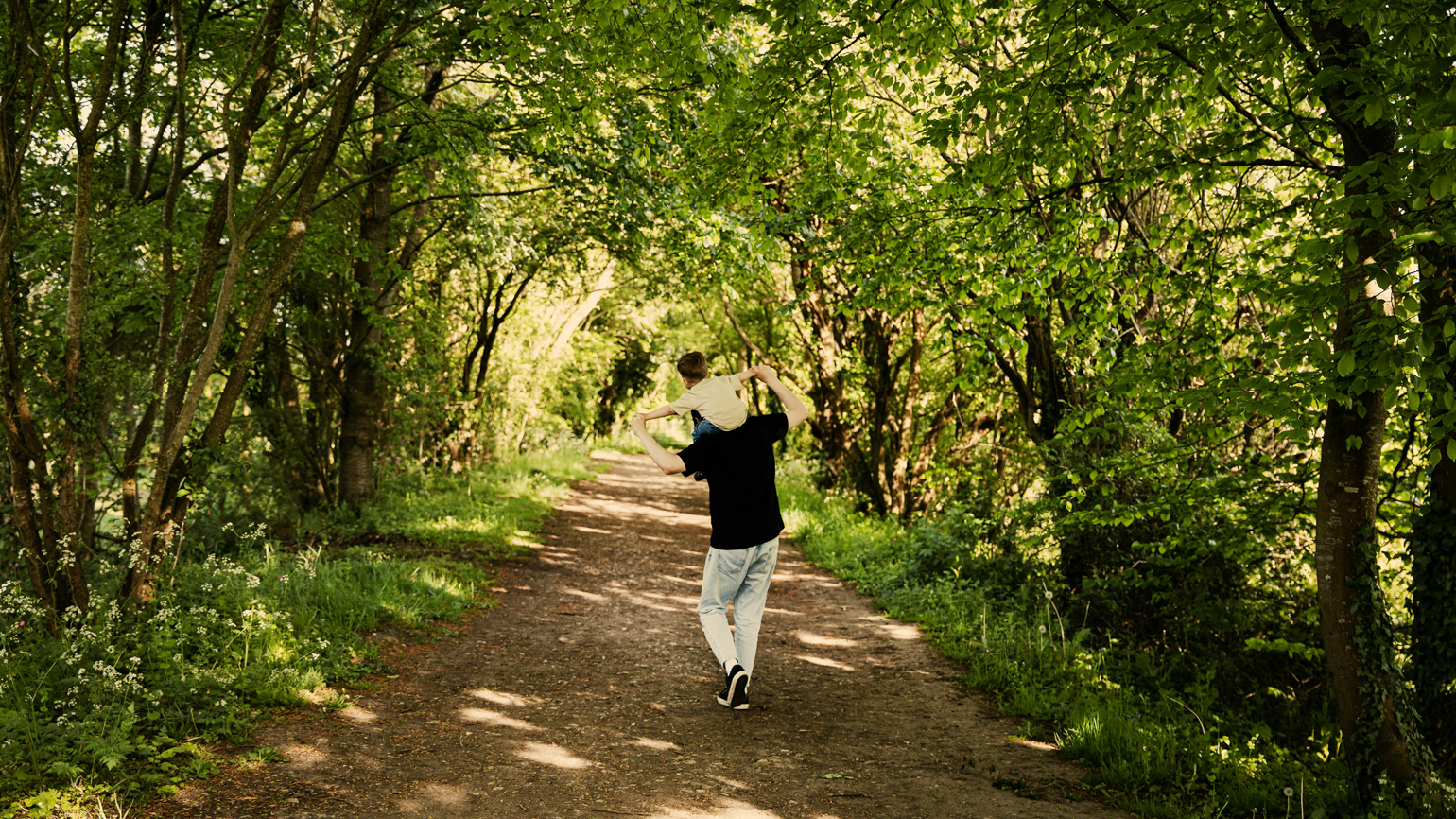
Summer’s here. Time to go for a prayer walk. Savor the marvels of nature as you get in touch with the Creator. Walk and pray? Yes, indeed, you can do both. Good for the body and the soul. Here are a few pointers.

No talking. Sure, you can talk to God. But no talking to anyone else. This is not a time to take phone calls or talk with a friend. It might be nice to go on that prayer walk with someone else, but no talking. The silence will help you focus on your prayers, and a companion can add to that. Shared silence.

Go For It In Article Ad

Take a look at what’s around you. If you’re like me, you often take the same route, along familiar paths. No problem. In fact, in some ways that adds to the pleasure because you see and discover new things in the everyday. Small things. That crack in a rock, that dandelion pushing up, those dahlias just ready to burst into bloom. Give God the praise. Nature can be the Lord’s picture book, every image an illustration of God’s presence.

Take a deep breath. Take more than one, take several. God breathed the breath of life in human beings at the beginning. Every breath we take can be a reminder of that. Feel the air move through you and around you. Stop and stretch. Raise your hands, if you wish. Praise the Lord with every breath.

Smell the smells. There are always surprising smells to note. The faint fragrance of a flower or crushed leaves. Someone barbecuing outside, someone fixing dinner, someone picnicking on the lawn. Without distractions you’ll discover new smells…and notice what they remind you of. Eucalyptus leaves always take me back to a park of my childhood. God is in the air.

Listen to the Creation. The sound of the wind blowing through the trees, the birds chirping in the air, a jet passing overhead, a family station wagon driving by, distant music on the radio, your footsteps in the dirt or on the sidewalk as you walk. You might even want to hum or sing a hymn or praise song as you walk. It’s God’s music.

Remember others in prayer. In your solitude you will think of friends and family members who need your prayers. Remember their situations. Imagine them being there with you. Just because you’re alone doesn’t mean you’re truly alone. They’re with you as is God. The rhythm of your walk will help you keep them in your prayers.

Come back. You will return to your home with renewed energy and strength, the worries of the moment released. I live in a huge teeming city, and when I go out, there will be people passing me on my way to the park. I smile, I wave, sometimes I stop and chat. But then I move on. It’s my God time. Walking in prayer.

Stop Everything and Talk with God

Sometimes prayer gets the least amount of our attention. We spend hours a day scrolling on our phones, texting, emailing, listening to music, watching TV, talking to others. But too many daily distractions rob us of precious time with God—time when we can share our deepest thoughts and concerns or thank Him for blessings we received (without even asking) or acknowledge answered prayers.

Having a conversation with God through prayer draws us closer to His presence and love. It opens our hearts and minds to new possibilities or simply guides us on our spiritual paths—especially when we are troubled. A few minutes of sharing our pain and brokenness with Him instills calmness and peace. 

extraordinary women of the bible

There isn’t a day that if I don’t intentionally stop all activities to pray, then it doesn’t happen. And, yes, somedays I pray on the run. But when too many days go by without intentionally setting aside time with Him, I feel something is missing. That’s when I know I need to return to the discipline and joy of prayer. 

I recently read a devotion in Walking in Grace about a man who, at the request of his wife, went to a hot yoga class. It was much harder than he anticipated. He looked around and saw ladies and, yes, some men stretching in a room heated to 90 degrees. All he could do was pray and ask God to get him through the class. And it worked! He continued to take the class but also to use his stretching time for prayer. So how and when we set aside time to pray is different for each of us. For me, I find that taking a walk is a good time to pray.

So if you find yourself distracted and busy with little time to pray, you are not alone. But instead of feeling guilty, just start praying again. Commit to a time in your schedule. Stop everything and talk with God, even if it’s just for a few minutes. The day will begin to improve, feeling sweeter and better, full of more hope and calm. Prayer is a daily gift for the taking.

Ruth Graham: Prayer Without Ceasing

[GENTLE PERCUSSIVE MUSIC] [LAUGHTER] 

Praying without ceasing is a verse, of course, that Paul writes. And I think it’s Paul. 

Mm-hmm. 

And my mother used to say, “It’s praying on the hoof.” In other words, don’t stop what you’re doing in order to pray. You can pray all daylong while you’re doing things, while you’re in meetings, while you’re driving the car, while you’re cooking the meals. And my mother did that. 

And my father’s prayer was very simple. He was in New York at the crusade in 2004. And they asked him, you know, what was his favorite prayer, and he said the prayer that he prayed the most was, “Lord help me.” Simple. Not fancy. He doesn’t have to get down on his knees or some particular posture. No fancy words. Just, “Lord help me.” 

And I remember asking him, “Daddy, when you get ready to go to Oxford and Cambridge and Harvard and Princeton– all these really fine, intellectual schools– how do you prepare?” Because my father is an intellectual but not like that. And he said, “I pray.” 

So I went to bed that night. I thought, OK, he prayed. And then I began to think, what did he pray? What– what– you know? Is there some formula? 

So the next morning I had coffee with him, and I said, “Daddy, what did you pray?” And he said, I prayed, “Lord help me.” Same prayer. And then he said, “Often I would pray for hours at a time, ‘Holy Spirit, fill me. Holy Spirit, fill me.’” 

And so, again, we make prayer complicated, and it doesn’t have to be. It doesn’t have to be. 

[GENTLE PERCUSSIVE MUSIC] 

Rules for Prayer: Be in Awe

From PRAYER: Experiencing Awe and Intimacy with God by Timothy Keller. Reprinted by arrangement with Penguin Books, an imprint of Penguin Publishing Group, a division of Penguin Random House LLC. Copyright © 2016 by Timothy Keller

A “master class” on prayer is found in John Calvin’s Institutes of the Christian Religion. Perhaps the most distinct part of Calvin’s treatment is what he calls “the rules for prayer.”

Whistle Stop Cafe In Article Ad May 2023

Calvin’s first rule for prayer is the principle of reverence or the “fear of God.” Calvin calls Christians first of all to have a due sense of the seriousness and magnitude of what prayer is. It is a personal audience and conversation with the Almighty God of the universe. There is nothing worse than to be “devoid of awe.” We must instead come to prayer “so moved by God’s majesty” that we are “freed from earthly cares and affections.” Here, Calvin is touching on one of the most misunderstood yet important concepts in the Bible—the “fear of God.” The fear of God obviously means to be afraid, but afraid of what—and why?

It is natural to think that the fear of God means to be afraid He is going to punish us. 1 John 4:18, however, tells us that “perfect love drives out fear” and adds that the kind of fear it drives out has “to do with punishment.” Romans 8:1 teaches that there is no condemnation for those who are in Christ Jesus. From this we conclude that a Christian’s fear of God can’t mean we are constantly afraid of being spiritually lost if we don’t live just right. Other texts, like the surprising Psalm 130:4, says that the experience of forgiveness actually increases the fear of God.

READ MORE: RICK HAMLIN REVIEWS TIM KELLER’S ‘PRAYER’

What, then, should a Christian be afraid of regarding God? Think of it like this. Imagine that you suddenly are introduced to some person you have always admired enormously—perhaps someone you have hero-worshipped. You reach out to shake her hand and suddenly it hits you. You can’t believe you are actually meeting her. You discover to your embarrassment that you are trembling and sweating, and when you try to speak, you are out of breath. What is going on? You are not afraid of being hurt, or punished. Rather, you are genuinely afraid of doing something stupid or saying something that is inappropriate to the person and the occasion. Your joyful admiration has a fearful aspect to it. You are in awe, and therefore you don’t want to mess up.

That is something we experience even in the presence of an admirable human being. How much more is this a proper response to God.  

We could say that fear of punishment is a self-absorbed kind of fear. It happens to people wrapped up in themselves. Those who believe the gospel—who believe that they are the recipients of undeserved but unshakable grace—grow in a paradoxically loving yet joyful fear. Because of unutterable love and joy in God, we tremble with the privilege of being in his presence and with an intense longing to honor him when we are there. We are deeply afraid of grieving him. To put it another way—you would be quite afraid if someone put a beautiful, priceless, ancient Ming dynasty vase in your hands. You wouldn’t be trembling with fear about the vase hurting you but about your hurting it. Of course, we can’t really harm God, but a Christian should be concerned not to grieve or dishonor the One who is so glorious and who did so much for us.

Calvin says that this sense of awe is a crucial part of prayer. Prayer both requires it and produces it. The very fact that we have access to God’s attention and presence should concentrate the thoughts and elevate the heart. 

Room to Pray

Last fall we lost our power because of a freak snowstorm and had to stay at my daughter’s house for a couple of days. One of those evenings I got home from work early. The house was empty. I ducked into a closet to pray. There’s biblical precedence for praying in a closet (check Matthew 6:6), but mostly I do it because it’s a quiet place free of distractions. With my cell phone off, my Bible open in my lap, I can let go of the busyness of the day.

That evening I must have been pretty focused on my prayers because I didn’t hear my son-in-law Tris come home. I had just closed my Bible and stood up when Tris opened the closet door. We both shouted and then burst out laughing. My family knows I will go to any lengths, even going into hiding, to seek God in prayer.

The Daily Bible Large Print relaunch with digital free gift in article ad

Here at Guideposts I’m in charge of our prayer ministry. We receive thousands of requests each week, and it’s my job to make sure every person is prayed for. We have a staff and volunteers in every time zone who do just that. Before I went to seminary I worked at IBM. Both backgrounds have proved useful. I’m something of a systems manager overseeing all those requests that come by phone, mail or online. At the same time I am a pastor to some 3,000 prayer volunteers.

There’s something I always stress in their training—this gets back to my closet (you knew I’d bring that up again, didn’t you?). They must be sure to take care of themselves spiritually as they take on the responsibility of caring for others.

Every volunteer is trained to listen closely to what people are saying. Each agrees to pray for at least an hour a week. Many of them have great needs themselves. All of them say that praying for others is enormously gratifying.

Want to become a prayer volunteer yourself? Contact us at (203) 749-0420. For prayer requests, you can write to Prayer Fellowship, P.O. Box 5813, Harlan, IA 51593-1313, call us at (203) 778-8063 or post a request online at ourprayer.org.

And if you’re like me and pray best in a closet, you might want to put a warning sign on the door!

Reading Is Praying

Years ago I was interviewing a doctor and asking, as I often do, about his prayer life. “I’m not very good at meditative prayer,” he said to me, “but I like to read a lot and for me, reading is a way I pray.”

Reading as praying? I liked the idea and immediately started to look for examples: how when you read you end up talking to God about what you’re reading or how the very act of reading puts you in a meditative mood.

Whistle Stop Cafe In Article Ad May 2023

I’m part of a reading family. My kids learned the pleasure of reading from the days we first read to them aloud. (I can’t look at some of those books, like Goodnight Moon or the Chronicles of Narnia without wanting to snuggle back on the couch and read them over again.) I get so focused on my reading that I’ll read a book while walking down the busy New York sidewalks. At least I look up from the text when I cross the street! And I can tell what kind of mood my wife is in by what she’s reading.

Reading is not at all a lonely thing to do. You do it alone, but it connects you. To others who are reading the same thing, to writers who have the prose to transport you to another world, to God who connects us all.

Not long ago I was reading a new book by a friend, Will Schwalbe’s poignant The End of Your Life Book Club. Feeling helpless after his mother was diagnosed with cancer, Will struggled to come up with something he could do. In those last two years of her life, he and his mother started reading the same books together, sometimes while actually sitting together when she was getting chemotherapy. It was literally a way to stay on the same page at one of the hardest times of his life.

Of course, reading feels like praying when you read Scripture or devotional books—but isn’t it also praying when it gives you a link to the holiest part of yourself? Isn’t that why all of us readers feel so drawn to the stirring opening passages of the gospel of John about Jesus, “…And the Word became flesh and dwelt among us, full of grace and truth”? How else do you connect to the Word except by reading?

It’s also important to be careful what you read. If I read too much news first thing in the morning, it puts me in a grumpy mood; I can only think of what’s going wrong in the world. But if I read a psalm or two, I start focusing on what can go right.

Reading is prayer, and an avenue to prayer. In the average day we’re surrounded by thousands of words, but I hope you can do some reading today that feels just like prayer.

Pray Your Values

I was talking on the phone with my adult son, who lives in California (I live in Ohio). He was describing a difficult decision he was facing, and as we discussed it I found myself saying, “Why don’t you pray your values regarding this decision?”

“Do what?” he asked.

extraordinary women of the bible

“Pray your values.” I had never quite thought of it in those terms before but found the idea taking shape even as I spoke the words out loud. “You know, we usually pray things like ‘Help me get this job’ or ‘Make the pain go away.’ And those are totally fine ways to pray. But maybe in this area it might help a little more if you pray your values.”

“Like what?”

“I’m not sure, but maybe a prayer like, ‘God, you know how important my marriage and family are to me; bring about a solution that strengthens those relationships.’ Or, ‘Father, I’m not sure which direction you want me to go in this decision, but I’d like nothing better than to be a man of integrity through it all.’”

“Okay,” my son said. “I see what you’re saying. That means I need to define my values in order to pray them.”

“Yeah, that would make sense, wouldn’t it?”

Praying your values will require you to identify and articulate what matters most to you in a given situation, rather than impulsively telling God what you want Him to do. For example, you may pray for your friend to be healed . . . but you may more highly value an awakening of faith in her.

Or you may really want your supervisor at work to get off your back . . . but if you stop to think through your values, you may end up praying for a more constructive and peaceful work environment altogether.

Praying your values doesn’t have to take a long time but it does require at least a moment or two of reflection: What are truly my values? What do I value most in this situation? And are my values Godly values?  

Sometimes praying your values will lead you somewhere you didn’t expect to go . . . but it can often be the means God uses to reveal and fulfill the desires of your heart (Psalm 37:4).

Ask OurPrayer to pray for you!

Pray Your Legacy

A few days ago I attended a memorial service for an old friend. As is usually the case, many of his family and friends spoke movingly of his life and legacy. As they did, I found myself praying…that some of the qualities others extolled in him (family, acceptance, grace, kindness, etc.) would be shown in me and said of me at my funeral, too.

And that got me thinking…and praying. In fact, I decided to make a regular habit of praying my obituary. After all, I long ago planned my funeral service (so my wife or children wouldn’t have to do it when the time comes); why not also write and pray my own obituary? It is still in process, but here is the obituary I’m currently praying for God to fulfill in my life:

The Lies That Bind In Article Ad

Bob Hostetler died yesterday, just one day before his life insurance policy was due to expire, and one day after he gave away the last volume from his library of thousands of books he bestowed on people he thought would appreciate and enjoy them.

He is survived by his wife, the lovely Robin (the most youthful and beautiful widow in history and therefore sure to be contacted soon by every man who hears of Bob’s passing), his daughter and son-in-law (Aubrey and Kevin McCane), his son and daughter-in-law (Aaron and Nina Hostetler), and his five grandchildren, Avery, Calleigh, Ryder, Mia and Miles. His two brothers, Don and Larry, and their families also survive him, displaying signs of advancing age Bob will never know.

Bob’s greatest loves were for his God, his wife, and his family. He never declined an invitation to spend time with any of them. He never balked at any sacrifice for them or service to them. He taught them to love God, work hard, spend less than they earned, give generously, laugh often, be grateful, avoid waste, cultivate order and never stop learning.

His grandchildren will always remember the stories he read to them, the games they played together, the hugs they shared and the unwavering acceptance, grace, encouragement and support he gave them. As a friend, he was unfailingly humble, patient, kind and loyal.

He was a man of prayer, who began and ended most days in God’s presence. He was known also as a man of the Word, who read, studied and taught the Bible with memorable insight and sensitivity. He was also a man of words, whose blog posts, articles and books changed and improved many people’s lives.

He loved juicy steaks, fried potatoes, Krispy Kremes, chocolate chip cookies and watermelon, but learned to achieve and maintain a svelte appearance until his last hours, when he ate all those things without reserve or regret.

He loved the music of James Taylor, who on his most recent concert in Cincinnati invited Bob to sing backup. He was also a lifetime Cincinnati Reds fan and was thrilled to be asked to ride with the recent World Series champs in their parade through Cincinnati.

In lieu of flowers, the family asks for donations to The Salvation Army (from which Bob learned much and in whose ranks he served) and the Cystic Fibrosis Foundation, whose research contributed to the complete healing of his grandchildren, Calleigh and Ryder, some years ago.

It may seem strange to write your own obituary, let alone to pray through it. But it’s never too soon or too late to pray for the things you want God to do in and through your life, things for which you want to be remembered. So why not give it a try?