Embrace God's truth with our new book, The Lies that Bind

5 Incredible Stories of Near-Death Experiences

What awaits us after life on earth? Is heaven real? Can near-death experience stories give us the answer?

Those who have had near-death experiences say that heaven is unequivocally real—and it is full of unimaginable wonder. Below are accounts of heaven from people who have been there and back. These NDE stories shed light on the incredible peace, glory, and love that we can look forward to in the afterlife. You can watch videos of these firsthand accounts of heaven, and more, on Guideposts’ Witnessing Heaven YouTube channel. Don’t forget to like and subscribe to stay up-to-date on the latest videos.

Here are 5 incredible and true near-death experience stories:

Don Piper’s Heavenly Experience

Don Piper, a minister, was driving home to Alvin, Texas from a convention when he got into a terrible head-on collision with an 18-wheeler. First responders at the scene couldn’t find a pulse, and he was declared dead. But upon impact, Don had been transported somewhere else. He’d been driving one minute, and the next, he was standing in heaven. Joy pulsed through him as he became aware of a large group of his loved ones who had passed on before him, standing in front of an ornate gate. He walked towards the gate. He had no idea what lay ahead, but he felt that with each step, heaven would grow more wondrous. Read and watch Don Piper’s full account of his 90 minutes in heaven.

Bubba Bay’s Miraculous Encounter

While on a walk one night, Jim “Bubba” Bay slipped and fell 14 feet into a concrete culvert. His skull was cracked, and his shoulder blade, 11 ribs, and 10 vertebrae were broken. He was in absolutely excruciating pain, until a blinding light appeared, illuminating his surroundings and washing away his suffering. From the light walked a man with a kind weathered face and a long beard. He held in his arms two children… Read and watch Bubba’s transformative encounter with God.

Laurie Lambert’s Conversation with Angels

Navy technician Laurie Lambert was on a team-building experience kayaking through rapids, when she capsized and was flung into the freezing river. She gasped, and her lungs filled with water. She was being pushed down and couldn’t get to the surface. She was drowning. Oh God, please help me! She thought. Then she was zooming through a tunnel of pure white. She came out on the other side in an otherworldly room. Three beings stood before her, made of giant, shimmering crystal. They radiated pure love. Laurie’s fears subsided and she felt calm and comforted in their presence. The middle being said, “Before you go back, we are going to show you some things,” and opened a book of moving images. Watch Laurie’s story and find out what she saw.

Who Mike Olsen Thanked in Heaven

During a double lung transplant, Mike Olsen’s surgeon released a clamp too soon, causing him to bleed out. He recounts being aware that he was on the operating table, with medical personnel scrambling to save him, and then being transported in a sudden burst of energy to a place of blinding white light that surrounded him and stretched on endlessly. It filled him with peace and joy. Then he saw a figure walking towards him. It was Jesus! And alongside him, someone else…Watch Mike recount what he witnessed in heaven.

Yvonne Nachtigal’s Comfort on the Wings of an Angel

During a surgery to remove a brain tumor, Yvonne Nachtigal left her body and found herself in another realm. She was surrounded by warm, beautiful colors. While taking everything in, she realized that she had died, and was in the spiritual realm. She wasn’t upset or afraid. She was comforted by the feeling of being held by an enormous wing—the wing of an angel. She felt utterly surrounded by love. Watch Yvonne’s full account of all the wonders of heaven. 

5 Heartwarming Stories of Valentine Angels

Dinner for Two by Sharon Farmer from Sun City, Arizona 

I stood in the kitchen, preparing a dinner of meatloaf and loaded baked potatoes for my husband, Nick, and me. I’d loved cooking ever since I took home the Crisco Home Economics award in high school and had enjoyed making hearty meals throughout 50 years of marriage. Well, almost 50 years. Our wedding anniversary was coming up, just a few days after Valentine’s Day. I’d been excited to plan a delicious meal for our romantic evening, but now I wasn’t even feeling the joy of cooking a meatloaf.

A few days before, I’d seen a talk show segment about calculating how many dinners one had made. After subtracting the weekly night Nick cooked, takeout meals and dinners out, I had my number: 17,000! The number left me feeling exhausted and not in the mindset to be in the kitchen.

The oven timer dinged, and I tested the meatloaf. It was saltier than I liked. I sighed and turned to prepare the condiments for the loaded baked potatoes. I opened the new carton of sour cream and stopped. There on the top of the cream was a perfectly raised heart. Or was it the shape of angel wings?

I returned to cooking with renewed energy. And sure enough, Nick proclaimed that meatloaf one of my best. Just wait till he tasted the anniversary dinner I had in mind for us valentines. My angel sous-chef and I had big plans.

Why I Love Mondays by Pat LoPresti from Summerville, South Carolina

I walked into Trident Medical Center in Charleston, South Carolina, where I’d volunteered every Thursday for the past 15 years. We’d been furloughed because of the pandemic, but today the hospital welcomed all us volunteers back with a party. It was so good to see familiar faces as well as the people who’d worked on other days.

I met a man named Ron, who took a shift on Wednesdays after his wife passed away. I’d lost my husband of 56 years, so I understood Ron’s pain. With all the volunteers returning, the hospital created new schedules. Ron and I both got assigned to Mondays—Ron in the morning and me in the afternoon—so we shared lunch between our shifts. One afternoon, Ron asked for my phone number. He took me to one of the nicest restaurants in town.

Is this a date? I wondered.

At the end of the evening, both of us shy, we shook hands at my front door. I went inside, thinking dinner was a one-time gift. But Ron called again, and we started spending much more time together outside of those Monday lunches.

Eventually we traveled, checking off destinations from both our bucket lists. When Ron proposed, the hospital threw another party—this one on Valentine’s Day, to celebrate us finding each other. A lot of people complain about Mondays, but for Ron and me, it’s the best day of the week.

Definitely Dreamy by Jennifer Wilder from Mableton, Georgia 

My dream had seemed so real: A young, handsome man sat at the foot of my bed surrounded by gifts wrapped in bright paper with fuchsia ribbons—gifts for me. He looked very familiar, but I couldn’t place him. “Who are you?” I asked. He stood up and hugged me, and I woke up.

I’d prayed for help getting over my ex-boyfriend. At 34, I feared I’d be single forever. Did the man in the dream mean something? Over the next few days, I couldn’t stop thinking about him. I was sure I knew him somehow. Slowly, my mental picture of him became more detailed. Then it hit me. Nathan. I was friends with his cousins in high school. I’d had such a crush on him back then! But I couldn’t even remember his last name. I racked my brain. Finally, it came to me—Wilder.

I searched on Facebook. No luck, but I did find his cousin Kim and sent a message to reconnect. “It’s been so long!” she responded. “Why don’t we have lunch?”

Guess who she brought along? Her cousin, Nathan, who was blessedly single. We hit it off, and four years later, the last name I took so long to remember became mine.

The Doctor Is In…by Kaylin Kaupish, Editor

William Stewart Halsted, M.D., a late-nineteenth-century American surgeon, is often called the Father of Modern Surgery. Known for his strict adherence to sterile conditions, Halsted introduced the practice of wearing surgical gloves in the operating room as a way to stop the spread of germs that could cause infections.

But that wasn’t the good doctor’s goal initially. His scrub nurse, Caroline Hampton, had suffered a painful skin reaction to the caustic disinfectants he demanded be used before entering his operating room. Halsted wrote about this in the Journal of the American Medical Association: “In the winter of 1889…the nurse in charge of my operating room complained that the solutions of mercuric chloride produced a dermatitis of her arms and hands. As she was an unusually efficient woman, I gave the matter my consideration….”

When the nurse said she might have to quit due to her sensitive skin, Halsted leaped into action. He made a plaster cast of her hands and had the Goodyear Rubber Company create thin, arm-length rubber gloves to fit. Halsted’s invention successfully met his nurse’s needs and more. The wearing of gloves was adopted by other nurses and assistants in the operating room, and eventually by the surgeons themselves. A medical breakthrough.

Yet there may have been something else inspiring Halsted to deeply consider his nurse’s dermatitis. You see, the two married in 1890. Perhaps the world was forever changed by a man in love.

Wedding Bells and Flutes by Mary Neese from Evansville, Indiana

Chuck and I were getting married in a few days, and I’d seen a lot of wedding gift deliveries. But one—with a return address I didn’t recognize—came with instructions on top: “Please open BEFORE wedding day.”

I waited for Chuck so we could open the gift together. Inside was a letter. “We kindly wish that you accept these champagne glasses that once belonged to our late parents, Chuck and Mary Felker of La Crosse, Wisconsin, married for 62 years.” The two delicate flutes were engraved with the words, “Let me dance with you forever, Mary & Chuck.”

The Felkers’ seven adult children—Marcia, Mark, Mike, Marion, Monica, Marty and Meg—had found our wedding registry through an online search. They’d wanted to honor their parents by sending the glasses to an engaged couple who shared their parents’ first names. The Felker kids hoped we would be blessed with many years of happiness, much like the flutes’ previous owners.

I reached out to Meg Felker on Facebook to thank her and invite all seven Felkers to the wedding. They couldn’t make it, but I sent photos of us toasting with the glasses to a legacy of love.

For more angelic stories, subscribe to Angels on Earth magazine.

5 Earth Angels Made His Trip Back to New York Possible

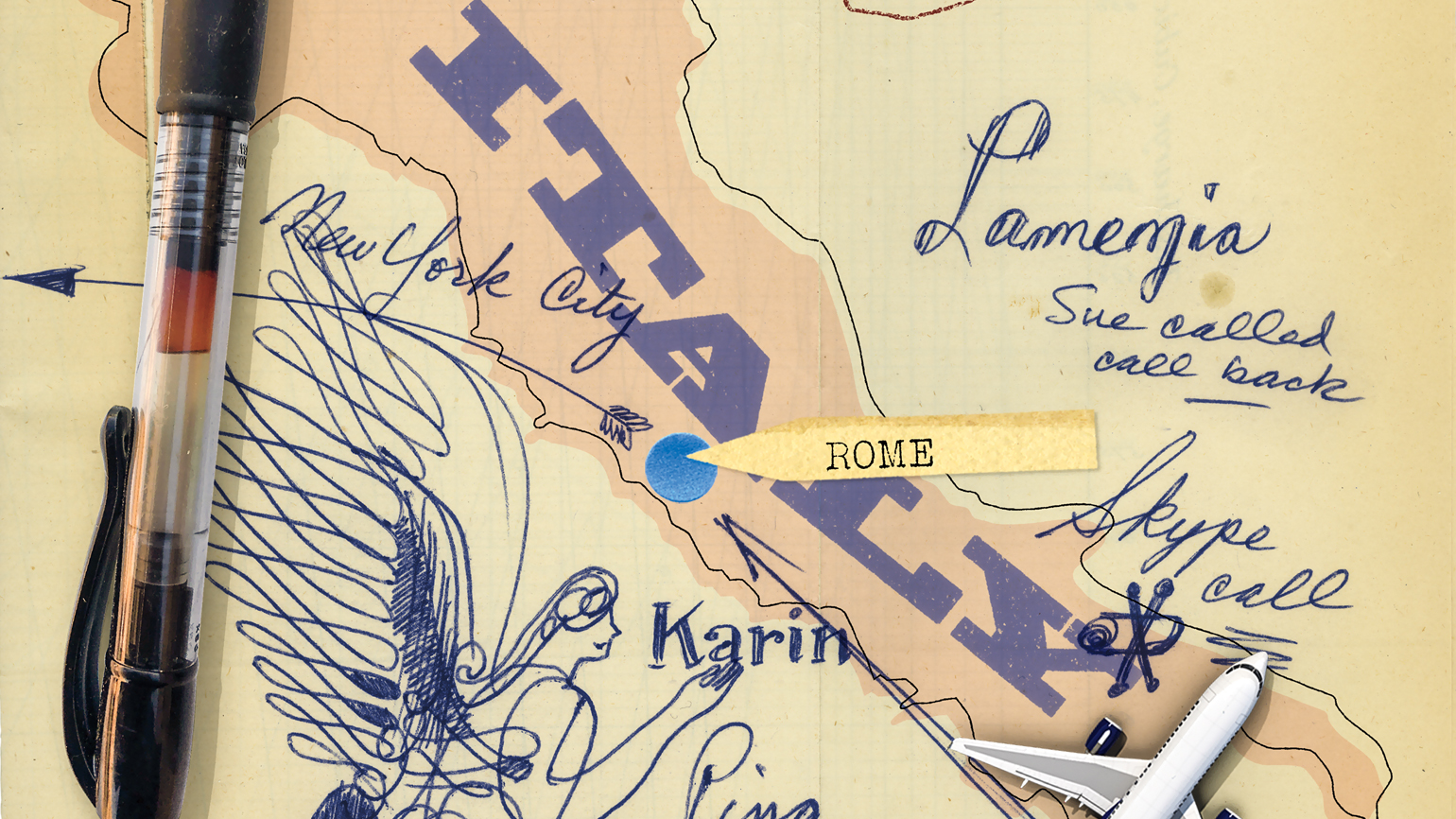
”Dad, we want you to come home.” Even through the poor Skype connection I could see the tightness of Karin’s face, hear the stress in her voice.

“I can’t do it, sweetheart. Everything’s closed. Flights are canceled. The whole country is shut down. Don’t worry. I’m fine.”

“But we’re anxious and wish you were back in the States, at least in the same time zone.”

I had planned to sit out the crisis right where I was—in southern Italy, near Calabria, where I lived and worked as a yacht captain for half the year. But if my family needed me, I had to get back to Connecticut. My work here had dried up anyway.

“I’ll do my best,” I promised Karin.

Angel #1

I tried to find a flight online but had no luck, then called a travel agent friend, Sue. “Don’t get your hopes up,” she said.

Meanwhile I managed to cobble together a pair of flights that would get me to New York in mid-April, almost a month away. It would cost a fortune—more than $1,000—and could be canceled at any minute, but what choice did I have? I entered my credit card information. The website didn’t accept it. I tried another. Same problem. What on earth? I thought. None of my cards work!

I held for the online help desk and gave up when Sue called back. “Can you leave on Saturday?” she asked. It was Thursday.

“Yes!” I replied quickly. Sue had found a Saturday flight on Alitalia from Lamezia Terme International Airport, in Calabria, to Rome.

“You’ll have a one-hour layover in Rome,” Sue said, “and then take a KLM flight from Rome to JFK in New York—all for only $400.”

It sounded too good to be true—and it was. Why had I given up on the online help desk? “Lamezia Terme is closed,” I said. “They just announced it.”

“Closed except for a flight for medical personnel and equipment. I pulled strings and got you a seat. The flight leaves Saturday at 11 A.M.”

I had one day to figure out how to get to the airport in Calabria. That wouldn’t be easy. Under Italy’s nationwide lockdown, a form had to be completed every time you left the house, even for the grocery or the pharmacy. Driving out of town entailed a whole new layer of regulations, including stamped and certified permission from police headquarters, which was manned only two days a week, neither of them Thursday or Friday.

It was time to call Pina.

Angel #2

Pina was my go-to person for anything I needed in Italy. She made photocopies, laminated documents, helped with taxes and generally assisted in navigating the labyrinth of Italian bureaucracy. “It’s impossible,” she said when I explained my situation. That eased my mind. Whenever Pina said something was impossible, she was determined to figure out a way. “Call me back in two hours.” I considered it a done deal.

Two hours later I arranged to meet Pina at her office by 9:30 Saturday morning. From there she would drive me to the airport.

Angels #3 and #4

We arrived early Saturday morning at Lamezia Terme airport. The place was deserted but for two policemen blocking the main entrance. One of them, judging from his gold insignia, was in charge. “Where are you going?” he said, as I struggled up the entrance ramp with my heavy backpack, wheeling my suitcase behind me.

“I have a flight,” I replied, waving my reservation printout.

“The airport is closed. All flights have been canceled.”

“Not this one.” I handed over the reservation to the policeman in charge. He looked perplexed and conferred in whispers with his partner.

“Are you a doctor?” he said finally.

“No, but I’m on the medical flight.”

The policemen didn’t seem happy about it, but they let me in. I wandered through the empty airport and sat down in the departures lounge, my flight still two long hours away. After a while, I was directed to a booth where my passport was checked, my flight confirmed, my hold luggage collected. I went through security, which was represented by a couple of bemused policemen. I was the only passenger in sight. Where are all the medical personnel? I wondered.

Looking out the windows of the gate lounge, I could see one jet, not at the gate, but on the tarmac 100 yards away. As I watched, a luggage cart approached the plane with a suitcase—mine. Cool, I thought. I’ve never watched my luggage loaded before.

An hour and a half to go, I opened my book.

“What are you doing here?” It was my policeman friend, looming over me.

“Do we have to go through this again? I’m waiting for my flight.”

“Is that it?”

I looked up. There was another airplane outside—a twin-engine turboprop parked a few yards from the jet. The last of a line of whitegowned, masked, obviously medical personnel was marching from the small plane into the larger one. Before my eyes, the jet door closed and the mobile boarding platform slowly backed away. “But it’s still an hour to boarding!” I said.

The policeman grabbed my arm, I grabbed my backpack. I was frogmarched through a door and down a flight of steps to a desk that guarded the door opening to the tarmac. No one was at the desk. The door was locked. “Ferma l’aereo!” the policeman barked into his radio. The jet engines began winding up. A woman in an airline uniform appeared. She and the policeman engaged in a rapid-fire conversation, most of which went over my head. The little I could understand wasn’t good. A tow cart approached the airplane.

“My luggage is aboard that airplane,” I hollered. “And it’s early! That plane cannot leave without me!”

The policeman and the uniformed woman looked at me in surprise. I’d surprised myself. I’d spoken perfect Italian! The woman picked up the phone. After a few moments the mobile boarding ramp nuzzled the airplane again, the front door opened and I was beckoned ahead. I lurched across the tarmac, looking back to say, “Grazie mille, i miei angeli. Thank you so much, my angels.”

Angel #5

You could roll balls of pasta dough through the gargantuan main arrival lounge of Rome’s Fiumicino Airport and not hit anyone—it was that empty. Massive flight announcement boards pulsated overhead with red FLIGHT CANCELED announcements. Hidden among the garish roseate bursts was the rare line of green text. I found my flight to JFK. As planned, I had an hour to clear customs, and then I would be home free.

I hurried through the maze of crowd-control aisles—the crowd was me—and approached the customs kiosk. The officer swiped my passport and looked closely at his screen.

“May I see your soggiorno, please?” he asked through his face mask.

The soggiorno is the residency permit that foreigners who work in Italy must have. I had one—packed in my luggage on the airplane. “I’ve only ever had to show a passport in order to fly.”

The officer looked down at the screen again, then back at me. “You were asked for it on another occasion and failed to show it. And now you do not have it again. Have you been working without a soggiorno?”

Then I remembered. Last month my boat had been boarded by the Italian Coast Guard—a routine boarding. The officer scanned my passport, which I always carried, but I had left the soggiorno behind. I faxed a copy as soon as I made port, but that information didn’t seem to have made it into the system.

“Listen, my flight is boarding in just a few minutes. If I miss it, I don’t know when I’ll be able to get home. I have the soggiorno. I swear it. I’ll mail you a copy as soon as I get to the States.”

He shook his head. “I’m sorry. We’ll have to wait for my supervisor.” My path home to Karin and the kids was fast disappearing, and I was so close.

“I see that you fly into Milan often,” the customs officer said, looking at his screen. “Do you have relatives living there?”

“No,” I said distractedly. “I take the train from Milan to Bologna, where I lived for a few years and still visit good friends.”

His head lifted. “Bologna? My mother lives in Bologna.”

Poor guy, I thought. Bologna had been hit hard by Covid-19. He must be worried. “Is she well?”

His eyes watered above his mask. “Yes, so far. But she’s alone. Her neighbors, her friends—they all look in on her.”

I thought of all the people sick and dying, the anxiety we all felt being separated from our loved ones, even if we were healthy. Everyone I’d come across in my odyssey to get home was in the same boat. It really wasn’t all about me. “I hope your mother stays well and that God looks out for her,” I said, thinking for a moment only of his situation.

The customs officer gave me a long look. “From your lips to God’s ear,” he said as he stamped my passport and sent me on my way.

I got back to the U.S., back to my family, quarantining together. It was still hard to believe that I’d made it. And I knew I never would have without many angels clearing my path along the way.

Did you enjoy this story? Subscribe to Angels on Earth magazine.

3 Miraculous Birthday Gifts from Above

Glenna McKelvie from Montgomery, Texas

I was at my mother’s house, sorting I through her things. It was my birthday, but I was too sad to celebrate. Plus, there was so much to do. Mom had passed just two days earlier.

I felt the loss deeply, even though Mom and I had had a complicated relationship. I was the youngest of nine. She’d told me she thought she was done having children when she got pregnant with me, and she’d hoped for a boy. Sometimes I wondered if I’d been a disappointment.

Just keep cleaning, I told myself. I was going through the drawers of Mom’s nightstand when I found a white envelope with my name on it. I opened it. A birthday card! It was decorated with yellow tulips, my favorite flower. “To My Daughter on Her Birthday,” it read. The hair on the back of my neck stood up.

The printed message inside was simple. “Have a wonderful day and a great year!” And below it, in Mom’s slanted cursive, the card was signed, “Love you always, Mom.” On my birthday, I’d been given the exact message I needed to hear.

Kaylin Kaupish Editor

I sat in my living room, scrolling on I my phone. My twenty-ninth birthday was in three days. I’d wanted to mark the final birthday of my twenties with an unforgettable celebration. I’d planned a party with all of my closest friends. My family was even going to travel from Virginia to join the festivities. But then Covid-19 hit and we had to cancel.

I would be spending my twenty-ninth birthday at home. Alone. I was trying to make the most of it. I was going to cook a nice dinner, watch my favorite movie—Ding! A message notification popped up on my screen. It was my coworker, Megan. We used to sit next to each other in the office. I loved the days when she brought her five-year-old son, David, into work. I opened the message. “I don’t know why, but David asked me to send you this,” she wrote.

The words were accompanied by a video. I clicked on it. David was sitting on their couch. “What did you want to tell Kaylin?” Megan asked. David beamed. “Happy birthday!” he said. How in the world did he know?

I texted Megan back immediately. She had no idea my birthday was in three days or how David could have guessed. I wasn’t sure either, but now, thanks to his sweet and unexpected message, this birthday would be one I’d never forget.

Roberta Messner from Huntington, West Virginia

Standing outside the airport in Los Angeles, I waited for the driver who would transport me to a conference. I was feeling a bit down. My birthday had been a few days before, on September 24, and it had gone by without much celebration.

My car pulled up to the curb. I settled into the backseat and introduced myself to Phil, the driver. We hit it off right away. “Say!” Phil said. “Have you ever just ‘lost’ your birthday?” He explained that his had recently passed without much notice.

I asked him when his birthday was.

“The twenty-fourth,” he said.

“Wait, that’s my birthday too!”

Phil was over the moon. “All these years I’ve had passengers with birthdays on September 23 or 25, but never have I driven someone with my birthday!”

Right then, I remembered I had a gift card in my wallet. “If you have time, we can swing by Starbucks for a celebratory treat,” I said. Phil was touched. I bought us coffees, and we sat down together and chatted away. When he dropped me off at the conference center, we exchanged numbers. Now we text each other every year on our shared birthday. God had given me the something small I’d been yearning for—plus a new friend.

5 Flourishing Stories of Angels in Bloom

The Replanting by Kaylin Kaupish, Editor

My spider plant sat on the windowsill in my new apartment, its leaves wilted and yellow. It had been doing great in my old place, growing so big I had to change it to a bigger pot. After that, my once-healthy spider plant took a turn for the worse. I knew how it felt.

I was still unpacking boxes from my move, and everything felt unsettled. I had lived in my previous apartment for five years and missed its quiet coziness. But the rent increase had been a deal breaker. I didn’t like the layout of the new apartment, and the neighbors were noisy.

Will this place ever feel like a home? I wondered.

After making a good dent in my unpacking, I sat on the couch with my laptop. I searched for ways to bring my spider plant back to life. I found a good plant-care website and clicked on the tab for repotting. Apparently, it was very common for plants to wilt after being moved to a new pot. It was a tough transition, and they just needed to get used to their new environment. I guess it just takes time, I thought.

The weeks passed and I got more comfortable in my new space. I organized my stuff, decorated, and the neighbors thankfully quieted down. One morning I woke up, made a fresh pot of coffee, and wandered my new home, feeling surprisingly at peace. I went to the windowsill and found my spider plant looking healthier than ever. Its leaves were green and full of life. We’d both just needed a little time to flourish.

Dandelion Sign by Chris Silton from Aiken, South Carolina

”Dandelion blossoms, like freckles on a field of green.” It was a line I’d read in a magazine many years ago. To me, it meant that even when beauty is right in front of us, we can’t always see it. I struggled to see it myself sometimes when I looked in the mirror, having battled my weight for years. Finally I’d joined a weight-loss program at the invitation of a friend. The program worked wonders for me. I lost 50 pounds and had 53 more to go to reach my goal weight.

Recently, though, I’d come under a lot of stress. I’d let my good eating habits go. As I got ready for my next meeting, I hoped that I hadn’t gained back as much as I feared. Lord, no matter what happens, I prayed on the way over, may I still be able to see dandelion blossoms on a field of green.

I parked my old green Pontiac, ready to go in and face the truth. I went behind the privacy screen and stepped onto the scale. The balance moved, then settled. So much progress, wiped out just as I feared. “You need to buckle down and work the program,” said the meeting’s leader.

I felt like a total failure and bolted out to the parking lot. I was almost to the car when I stopped in my tracks. Dozens of yellow dandelion blossoms had been carefully arranged on the hood of my Pontiac. Dandelion freckles on a field of green, no matter what.

Loving Lilacs by Debra Mann from Grapevine, Texas

I stepped out onto the covered patio of my family’s home in Independence, Missouri. I was back in town during a cold and rainy April for another family funeral, after we’d buried my father only three months before. Dad and I had spent a lot of time sitting out on this patio talking, and our daily conversations continued over the phone when I moved away to Texas.

My favorite call of the year was always followed up with a picture: the June blooming of the lilac bush my brother and I had given Dad one Father’s Day. “It’s got the most incredible scent, Deb,” he’d say. “I wish you could smell it.”

I couldn’t bear the thought of not getting that phone call from Dad come June.

The rain was only making me feel more lonely for him, and I turned to go back inside. A distinct floral scent stopped me. The smell of roses with a hint of vanilla. I followed the scent around to the side of the house. I would never have thought to check, but Dad’s lilacs were already in full bloom. Angels had made Dad’s wish come true and brought me Father’s Day comfort in April.

A Dahlia in Winter by Kelly Lee-Creel from Seattle, Washington

My year started with a plan. I was finally going to garden. I’d done the research, bought all the supplies and cleared away a spot in my yard. In my journal, I recorded my gardening goals. By summer, I hoped to have a garden full of flowers to give away to friends. I was most excited to see the café au lait dahlias bloom with their pale-pink ruffled petals.

All spring I ran myself ragged. I carted around slug bait and buckets of water. But despite all my hard work, my poor plants were hardly surviving. I watched as my neighbors’ gardens erupted with flowers growing tall and sturdy. By summer’s end, all I’d managed to grow were a few sad and sickly plants. The café au lait dahlia never flowered. That fall, an early frost wiped out my plants for good. I stared at the dead stalks. I can’t believe I have nothing to show for all my hard work. It seemed like a sign that the hobby wasn’t for me. God, should I just give up on gardening?

In November, we got our first snowfall of the year. It wasn’t much, but it coated the yard in a soft powder. It covered up my would-be garden as well. Except… I looked out the window and spotted a subtle dash of color within the white blanket. Was it possible? I grabbed my coat and ran outside. There, on the café au lait dahlia plant, was a beautiful pale flower bloom.

I would try gardening again next year, in a sunnier spot. God’s dahlia told me anything was possible.

Mom’s Yellow Sunflower by Luanna Cheney from Northfield, Minnesota

The phone rang. I picked it up to hear my brother on the other end. “It’s Mom,” he said. “She died, Luanna.” Mom had given her all in a long, brave fight with cancer, but knowing she was finally at peace didn’t bring the comfort I’d hoped for. Grief overwhelmed me.

I went out for a walk, despite the cloudy day. The sky was such a contrast to my mom’s cheerful personality. I didn’t know of anyone else whose favorite color was bright yellow. She loved summer and sunshine and flowers. Yellow sunflowers in particular. I headed for a familiar house a few blocks away, one with a big, beautiful garden in the front yard. I passed by it often because it always reminded me of Mom. The garden was just what I needed on a gloomy day like this.

I arrived to find the house under construction, the garden demolished. My heart sank. There’s nothing for me here today, I thought. As if in answer, the clouds broke. A beam of sunlight landed like a spotlight on the one flower that was still intact—a big, bright sunflower, its yellow petals gleaming. “Luanna, don’t mourn for me,” I heard clearly. “I am happy here.” Mom had found a way to cheer me even now.

For more angelic stories, subscribe to Angels on Earth magazine.

Therapy Brings Healing and an Answered Prayer

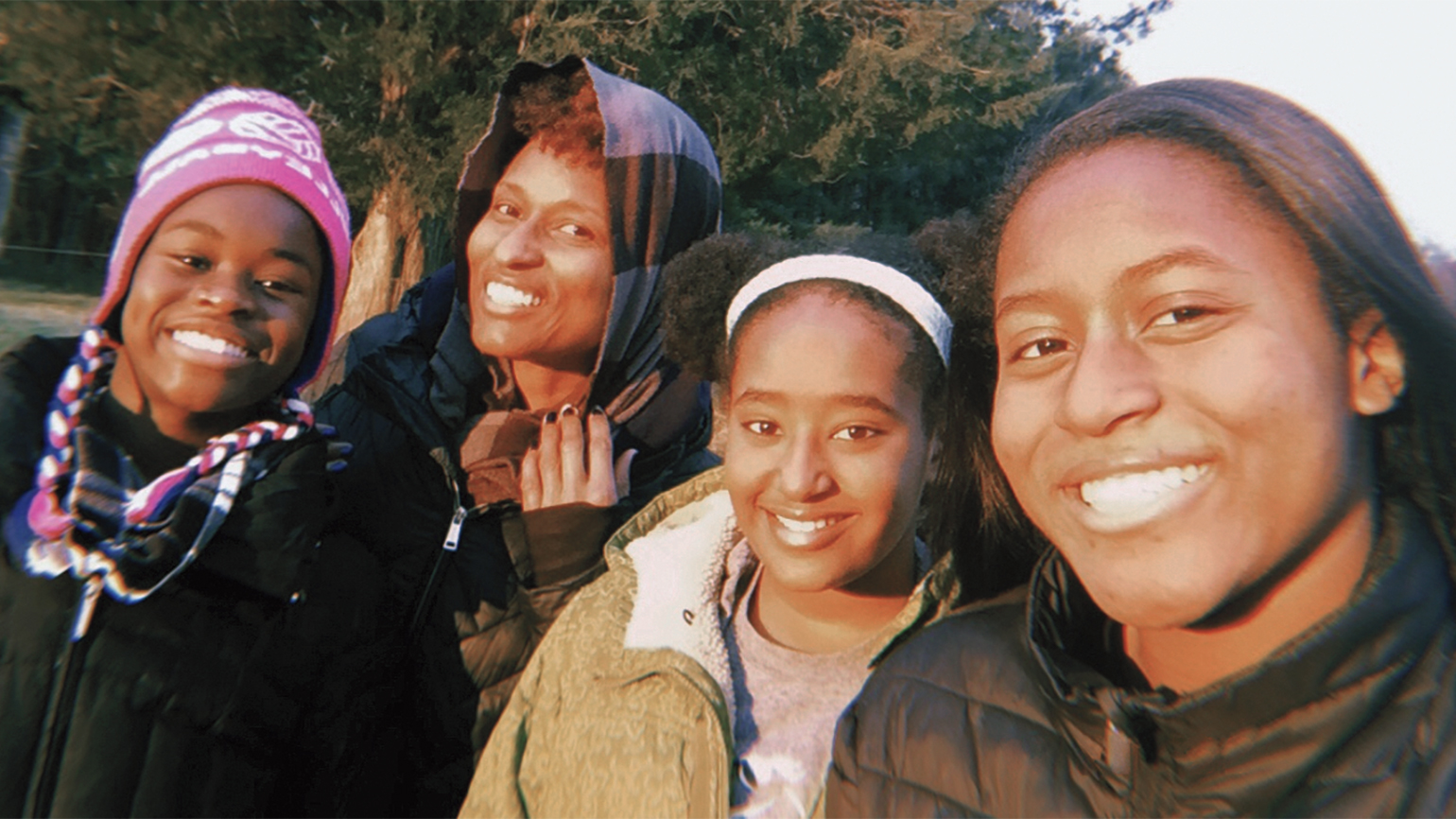
I sat in my car at the school bus stop, waiting for my 14-year-old daughter, my heart racing with anxiety. “God, please let Kennedi be on that bus,” I whispered.

That morning, when I dropped her off at the bus stop, she stormed out of the car, shouting tearfully, “I hate my life, and you just don’t understand! I’m not coming home after school!”

It had been like that for weeks. All of a sudden, my considerate and high-achieving daughter was talking back to my husband, Kenny, and me. Being dishonest. Telling me she hated her life and thought I was a terrible mom.

The changes started after Christmas break, when volleyball season was over and she fell in with a new group of friends. Seemingly overnight, my 14 years of hard work as a parent went out the window. I prayed. Doubled down on rules. Begged Kennedi to tell me what was going on.

“You don’t understand anything about me!” she shouted during one of our many confrontations.

She was right about that.

I had worked so hard to be a perfect parent. Even before Kennedi was born, I was reading parenting books and thinking ahead. Rocking her to sleep one evening when she was a baby, I had felt her little back arch as she yawned and stretched out her arm toward me.

“I love you, my sweet girl,” I’d said, kissing her forehead. I wanted the best for my daughter, whatever it took.

I’d felt the same love three years later, when Kennedi’s little sister, Kassadi, was born. Kenny and I were intentional about everything. What our family ate. How much sleep and exercise the girls got.

We took them to church, read stories from their children’s Bible and taught them how to pray. We took the book of Proverbs seriously: “Train up a child in the way he should go, and when he is old he will not depart from it.”

By the time Kennedi was in middle school, I thought we were a model family. Our girls earned good grades, won medals at track meets and were growing in their faith.

Granted, I did a lot of nagging and fussing behind closed doors. But there was nothing wrong with having high standards and presenting your best self to the world. I took the same approach in my corporate career.

The summer before high school, Kennedi had suffered a serious running injury and had to quit track. She was depressed, but I thought she’d bounced back after joining the school volleyball team in the fall.

Obviously, I was wrong. I didn’t know where to turn. When I was growing up, mental health and behavioral issues simply weren’t talked about. They were considered a sign of weakness and swept under the rug.

I had no intention of taking Kennedi to see a therapist. I didn’t need everyone knowing about my family’s problems. Besides, weren’t prayer and adherence to discipline enough?

“God, I need a solution,” I whispered at the bus stop.

Kennedi came home that day, looking as miserable as ever. She didn’t say a word to me on the drive home.

It was the same thing every day. My anxiety was going through the roof. And Kennedi wasn’t the only one stressing me out.

Nearly a year earlier, before Kennedi’s track injury and any hint of trouble, Kenny and I had offered to help some acquaintances who’d adopted a child named Naomi from Ethiopia. Naomi, who was now 13, had endured a difficult upbringing and was having trouble acclimating to life in the United States.

Kenny and I had said Naomi could live with our family until she felt ready to return to her adoptive parents. We thought being in a stable, church-going African American family might help her bridge the gap with her new environment.

It didn’t take long for me to realize how unprepared I was for the ramifications of our altruistic gesture. Naomi had serious mental health issues. She was being helped by a social worker, a therapist and a psychiatrist. Before she even arrived at our house, we’d received a thick file with her mental health records, including a list of medications and all sorts of other things to coordinate.

Naomi moved in just a few weeks after Kennedi started acting out. I had to find a therapist and psychiatrist for Naomi; we lived two hours from her previous providers. A therapist who attended our church gave me recommendations.

One, an art therapist, bonded with Naomi right away. I was amazed at how quickly this woman was able to draw Naomi out of her shell with art projects and gentle, compassionate conversation.

After more research, I also made an appointment with a psychiatrist at a children’s hospital in Philadelphia. I was nervous the day of the appointment as Naomi and I stepped from the elevator and approached the behavioral health unit. I envisioned a chaotic place full of uncontrollable children.

We stepped into a quiet, pleasant waiting room with magazines on a table and parents and teens checking their phones or reading. I felt guilty about my expectations. Typical mental health stereotypes. What other misconceptions did I have?

As with the art therapist, I was floored by the psychiatrist’s ability to get Naomi talking. She probed deeper in a half hour than Naomi had gone the entire time I’d known her.

I didn’t always sit in on Naomi’s appointments, so I didn’t know everything her providers said. Still, Naomi invariably emerged from her sessions a little calmer and more grounded. I wished I could have the same effect on Kennedi.

A month after Naomi arrived, I got a phone call from Kennedi’s school. She had violated the school’s code of conduct. She was suspended, and I had to come pick her up.

Kennedi holed up in her room. I sat with my head in my hands, at a loss for what to do. Kenny was away at a game with the high school basketball team he coaches. I was on my own.

Should I storm in and read Kennedi the riot act? Ground her? Try to unlock the dark feelings behind her behavior?

I thought about Naomi’s therapists. What would they recommend? And why hadn’t I sought help like that for Kennedi already? I realized my prejudices against therapy were totally unfounded. Naomi’s providers were no different from the doctors who had treated Kennedi’s running injury.

I knew what I had to do.

After talking everything through with Kenny, I took out the list of therapists I’d assembled for Naomi, found one that accepted our insurance and made an appointment.

Kenny, Kennedi and I attended that first appointment together. Just as with Naomi, the therapist seemed to know exactly how to talk to Kennedi. Within a few minutes, deep emotions were pouring out of our daughter.

“I feel depressed, Mom and Dad.”

“You’re so strict.”“

You make it seem like I have to be perfect all the time.”

“I have no freedom compared to everyone else.”

More came out. Kennedi was still devastated about her running injury. Sports had been a huge part of her identity. The injury was still affecting her when she joined the volleyball team, so she got no playing time that first season. She’d fallen for a boy, but the relationship—her first time dating—had ended abruptly.

“Sometimes I don’t even want to live,” she said. She confessed she’d cut herself a few times.

Kenny and I sat there in the therapist’s office in shock. Our daughter had been struggling, and I’d been too blinded by my perfectionism to offer genuine help. I was transported back to those evenings when I’d rocked Kennedi to sleep as a baby. All I wanted to do was gather her in my arms and say, “I love you, my sweet girl.”

The therapist gave us some tips for having more productive conversations at home and said she would see us the following week.

It took time, but things improved. I made a serious effort to stop preaching to my daughter and worked on cultivating my own fruits of the spirit, especially patience and self-control.

I learned that when Kennedi seemed moody or standoffish, the right question was “How are you feeling?” Not “Why are you talking to me like that?”

I paid attention to my daughter’s steps forward and commended her for working hard. I didn’t focus on her shortcomings and stopped obsessing over what people would think about our family.

For a while, our schedule seemed to be one therapy appointment after another. Following the death of my brother from Covid, we even found a therapist for Kassadi. She had been close to him, and grief had hit her hard.

Naomi’s mental health gradually improved until, three years after arriving at our house, she felt ready to return to her adoptive parents.

It was hard to say goodbye. I reassured myself that she was only two hours away and we could visit often. Her mother texted regularly with updates. Naomi joined her new school’s cross-country team, earned good grades and found a circle of friends.

Each time a photo of Naomi’s smiling face arrived on my phone, I responded with my own smile and a whispered “Thank you.”

Naomi’s arrival sure hadn’t felt like an answer to my desperate prayers. God, of course, knew better.

Turns out, we all had a lot to learn, me especially. I know now that caring for a child’s mental health is an important part of “training her up in the way she should go.”

Kennedi graduated high school with honors and now studies public health in college. She’s a mental health advocate. She shares her experiences and encourages others to seek help when they need it. I do the same with parents I meet. I hope I can spare others the shame and helplessness I felt.

Kennedi, Kassadi and Naomi continue to meet with therapists regularly to stay on top of their mental health. It’s not quite how I envisioned things all those years ago when I planned out a perfect future for my girls.

Yet I want the best for them, and that means seeking help when needed, whether from pastors, doctors or therapists. And God, of course. Like all parents, I don’t always know what’s best for my daughters. But God does. The more I trust him, the more I become the mom I always wanted to be.

For more inspiring stories, subscribe to Guideposts magazine.