Embrace God's truth with our new book, The Lies that Bind

How to Listen to God

We often come barreling into prayer with our lists and plans and agendas as if the purpose of prayer is to get the things WE want accomplished.

“Lord, bless me,”

God's Constant Presence In Article Ad

“Lord, give me,”

“Lord, help me,”

“Lord, do this,”

“Lord, do that.”

For most of us, prayer is overwhelmingly a one-way street, a monologue instead of a dialogue.

But the key to true prayer—deep, sweet prayer—is the same as the secret of dancing well: one person leads, and one person follows. Guess which one is you?

That’s why the prayer of reflection is such a wonderful way to pray. It is the practice of listening to the Shepherd’s voice. It’s obeying the command of Scripture as we enter the presence of God:

Guard your steps… Go near to listen rather than to offer the sacrifice of fools, who do not know that they do wrong.

Do not be quick with your mouth, do not be hasty in your heart to utter anything before God. (Ecclesiastes 5:1-2, NIV)

If we do not cultivate the discipline of reflection, we do ourselves–and God–a great disservice. As one writer has said, “Prayer is a dialogue, not a monologue recited by men in God’s presence” (Hans Urs von Balthasar, Prayer, trans. by A. V. Littledale, Geoffrey Chapman, Ltd., 1961, p. 12).

And Robert Benson agrees. He says,

I need to listen, listen for the prayer of God that is rising in my heart, perhaps for the prayer that I should be praying rather than the one that I am praying (Robert Benson, Living Prayer, p. 134).

I think that is a large part of what it means to pray “in the name of Jesus”: to think God’s thoughts after Him.

But it doesn’t happen by accident, or even on the way to anyplace else. It happens in the silent moments. After reading, sometimes. Or while listening to birdsong. Or brooksong.

To an onlooker, the prayer of reflection may look suspiciously like a daze, or like daydreaming or even napping. But author Avery Brooke expressed it well:

Deeper, wordless contemplation is something that we may experience either in church, in those blessed pauses between words, or in quiet times alone when we cease our words of prayer, put down our Bibles, and realize that God is both very near and familiar and yet beyond all knowing. We feel that we would like to know God so well that we could sit still for an hour in silent companionship, as with an old friend. (“What is Contemplation?” Weavings, July/August 1992, p. 9)

If you’ve experienced the prayer of reflection, you know what she means. If not, you are in for a wonderful treat, a sublime discovery…if you will take the time, enter the quiet place of your own heart and mind, and sit with God for a few minutes, praying the prayer of reflection.

How to Keep Your Mind on Your Prayers

Does your mind wander when you’re praying? Do you close your eyes, ready to talk to God and instead of spiritual peace, you find yourself thinking about the cute cat photo you saw on Facebook, the check you need to deposit, the noisy muffler on the car outside, the milk you forgot to buy at the grocery store? Does your prayer time become an open market for a thousand and one interruptions? 

Sure it does. Happens to the best of us. My brain goes hither and yon during prayer. It’s like a dog that jumped a fence and has a mind to wander all over the neighborhood, poking into everybody else’s yard. Here are some pointers for when your mind wanders in prayer.

Pause & Pray In Article Ad

1) Go where your mind goes. 
Don’t fight it. Hear the thought. Notice it. If I fight a thought when I’m trying to pray, it only gets bigger and simply more distracting. Better to acknowledge it. Some days my thoughts are noisier than others, my head a chatterbox. All the more reason I should be giving myself this quiet one-on-one time with God, because here’s my chance to do something with those thoughts…

2)  Give the thought back to God. 
Turn it into a prayer. “Thanks, God, for Facebook and the cute photos our friends post. Lord, keep an eye on our finances and the checks that we deposit–you know our needs. Forgive me for complaining about my neighbor’s noisy car. May it get her to and from her work. ” Maybe the distraction is something you needed to pray about.

3)  Throw an anchor to windward. 
Have a sacred phrase to keep pulling you back to prayer. It can just be one word–Abba, Father, Lord, Jesus, Christ, Divine Master–to remind you just Who you’re addressing or a sentence from the Lord’s prayer or the Jesus prayer, “Jesus  Christ, have mercy upon me.” Each “Abba” or “Father” pulls you back to the work of giving yourself over to God.

4)  Write the prayers down. 
Keep a prayer journal. Pray on a page. The people I know who do this regularly say that writing down prayers by hand is better than typing them. It’s more tactile. My handwriting is so bad that I can’t imagine God being able to read any of my scrawl, but then, doesn’t God know what my thoughts are anyway? Which leads me to the last point:

5)  The intention is what counts. 
God knows what you want to say better than you know yourself. As Paul said, “We don’t know what we should pray, but the Spirit itself pleads our case…” (Romans 8:26). That you have given yourself a set time of prayer, that you yearn to be in God’s presence, that you have needs only God can fill, that’s what matters. The thoughts will come and go, the distractions wax or wane, but your desires will be heard.

How to Help Others with a 10-Second Prayer

Years ago, my friend Steve introduced me to the practice of offering 10-second prayers. A pastor who had built numerous churches by focusing on outreach, Steve discovered that asking someone—especially a stranger—“may I pray with you?” almost always resulted in a “no, thank you.” But when he offered to pray a 10-second prayer, a “yes” was much more common. The promise of a brief prayer seemed to disarm people and assuage their fears that the prayer might put them in an awkward situation.

Encouraged by Steve’s example, I tried it. It worked. I can’t boast a 100% success rate, but I did discover that people welcomed and appreciated a short, purposeful prayer, even in public settings.

Faithful Paws and Purrs In Article Ad

On one occasion, my church was presenting a concert in a public park, and people stopped to watch and listen. I saw a woman standing alone by a nearby lamppost, tears streaming down her face. I approached and asked if there was anything I could help with. She shook her head and started to turn away. I asked if she’d like me to pray a 10-second prayer for her.

“What’s that?” she asked.

“It’s just a short prayer for God to bless you.”

She nodded and started to tell me more about her situation, as if I would need to know of her health struggles and financial needs in order to pray. I listened, and then asked her if she’d be more comfortable if we kept our eyes open while I prayed. She nodded. I said something like, “God, You heard everything she just told me. I know You love her. Please help her and bless her, amen.”

I don’t know that I ever saw her after that day. I don’t think she ever came to my church. But I believe that our 10-second prayer together had some effect. Maybe it lightened her load that day. Maybe it brought a ray of hope. Maybe that short prayer was answered in amazing ways.

I’ve prayed more 10-second prayers since then. With a pair of female hikers who’d lost their way on the trail. With a recovering addict who’d invited his girlfriend to church and was hoping she’d show up. With an aspiring writer who was feeling overwhelmed and insecure at a conference.

Over the years I’ve often been surprised at how readily people agree to them—and how even people with no religious affiliation (or even interest) say yes. I think the offer has been accepted more often than not. And even when my offer is declined, the other person usually seems appreciative.

Why not try it yourself? If you see someone who’s hurting or seems lonely, offer them a 10-second prayer. If someone shares a tale of woe, ask if they’d like you to pray a 10-second prayer. If that person is a stranger, say something like, “I know you don’t know me, but may I pray a 10-second prayer for you?” If they agree, of course, stick to your promise and keep the prayer short. And, as you part, you might also pledge to keep praying, silently, as you go on your way. I hope your 10-second prayers will open many doors—and hearts.

How to Give Yourself Some Precious Time to Hear God

When I was a kid, one of four rowdy kids, my mom used to say to us in exasperation, “Listen to me. You’ve got to get quiet to listen to me.” We had to get quiet. We couldn’t hear what she was saying to us if we were running around and shouting all the time.

It’s a noisy world out there. Seems noisier now than it did back then. We’ve got our phones buzzing in our pockets, emails to answer, texts to respond to. And then it’s pretty noisy inside of my head, too. How to listen to God with all the racket around?

Pause & Pray In Article Ad

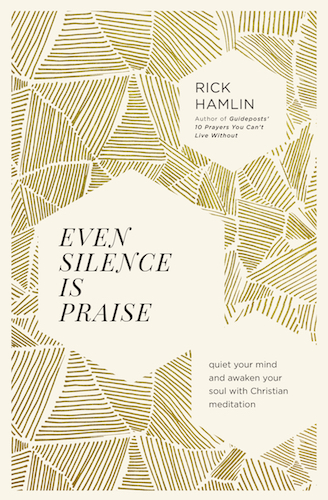
Even Silence Is PraiseGet silent. Get quiet. That’s what I do every morning, sitting in the corner of our old lumpy sofa, listening for God. Here’s some advice that I repeat in my book Even Silence Is Praise. A short, condensed version!

Find a time and a place. Find not just a time but a place you can go back to again and again. Even if it’s only five minutes, make sure you do it every day. It will become a habit. Like brushing your teeth. Twenty or thirty minutes. 

And that place will say to you, “This is my prayer place.” All the external stimuli—the comfortable pillow, your feet on the floor—will become internal stimuli for your spirit. You go to your desk or your computer to work. You come here to pray.

Pick a few words of Scripture. It doesn’t have to be a long passage. A verse or even part of a verse will do. Like those words from the Psalms in the Common English Bible: “God of Zion, to You even silence is praise.” (Psalms 65:1)

Now, with your eyes closed, you can hold on to that piece of Scripture to stay connected to the Spirit as you check out to check in.

Notice what’s going on in your mind. You’ll hear a noise outside or something inside. You’ll remember an email you need to respond to or a phone call you have to make or a friend who’s sick. Distractions. You wish you could block them out.

Don’t. Anytime I ignore a distraction it only gets bigger. Take that thought and turn it into your prayer. The email, the check you need to write, the worry about the sick friend. Let them be your prayers as you empty your mind.

Let it all go to God. God knows what we need better than we know ourselves. Now that you’ve gotten silent, you can feel it in your heart. The release of tension, of worries. Peace coming into the soul.

“Peace I leave with you; my peace I give to you,” Jesus said. “I do not give to you as the world gives. Do not let your hearts be troubled and do not let them be afraid.” (John 14:27)

Can’t you hear it? Yes, day after day. Because you’ve put yourself in a place and given yourself some precious time to listen to God.

How to Develop a Daily Prayer Practice

The most challenging aspect of prayer is praying on a consistent basis. Like everything else in life, unless we discipline ourselves and intentionally devote a time to pray, it either happens randomly, or not at all. To avoid this issue, we can easily implement a prayer practice, which will enrich our prayer life. Although there are different practices that we can incorporate, each person should create one that fits into their schedule and aligns with their style, personality and spiritual tradition.

I have found that unless I create a prayer routine, I pray sporadically. Yet, implementing a prayer routine helps me to engage in daily prayer. I personally find early morning is my best time for prayer. Then throughout the day I tend to have conversations with God. Some nights before going to sleep, I try to give thanks for the day. Everyone’s prayer routine will look differently; there isn’t only one way to pray.

Inspiration from the Garden in article ad

Routine, schedules and patterns aren’t intended to confine our prayer life or make us feel guilty when we don’t follow our original plan. They are created to connect us to God, develop a deeper relationship with Him and enrich our faith on a daily basis. When we miss a day or two, it’s not the end of the world, but it does make a difference as to how we start the day.

In Prayer: Experiencing Awe and Intimacy with God, author and pastor, Timothy Keller, provides an example of a daily pattern for Morning Prayer:

1) Approach God
Ask God for His presence as you read and pray. Choose a Scriptural passage (i.e. Psalm 103:1-2) to begin your prayer time.

2) Read the Bible and Meditate
Choose your Scriptural reading and do one of the following: read it three to four times; or list anything it tells you about yourself or examples to follow, commands to obey or promises to claim. Once you do one of the above, choose the verse and truth that is most striking to you.

3) Structure Your Prayer
Offer adoration, confession, petition and thanksgiving for what Jesus has done for your life. Pray for your needs and pressing concerns. Take time to enjoy God’s presence.

How long you spend in prayer is truly up to you. If you take 15-25 minutes for this daily pattern, it will not only bless your life but become embedded in your daily life. Again, everyone must decide what daily prayer practice works best for them. What prayer patterns work best for you? Please share, we want to learn.

Lord, help us to develop the spiritual discipline of prayer and experience Your presence.

How the Prayer of Confession Can Transform Us

One of the most powerful elements of worship at our church is the unison prayer of confession. As a community of faith we confess our sins, shortcomings and inability to fulfill our spiritual commitment to the Lord and others.

In one voice we acknowledge that we failed to live up to the commandment to love God with all our heart, mind and strength and to love our neighbor. The unison prayer of confession levels the spiritual playing field. We are all in the same place, in need of forgiveness and wholeness. We stand united before God and accountable for our actions and need for restoration.

Many times we move through life without stopping to think, reflect and measure how we have failed to live out our faith in ways that are pleasing to God and good for others. 

The prayer of confession is the pause button that allows us to review actions and words that miss the mark in how we live our faith. Saying “I am sorry” is one of the hardest admissions to make, even to God. Yet when we do, we heal, restore and renew our soul and mind. There is truth in the axiom “confession is good for the soul.” 

Author bell hooks in All About Love notes this about confession: 

“It allows us to be bear witness to our own trespasses, to those we miss the mark (a definition of the meaning of sinfulness). It is only as we recognize and confront the circumstances of our spiritual forgetfulness that we assume accountability.”

I like the way hooks uses “spiritual forgetfulness” to describe how our actions can miss the mark. Personal or collective prayer time offers a way to remember and consider that, to bring it to our attention.

She also mentions that in recognizing and confronting our “spiritual forgetfulness,” we assume accountability—a very important aspect of confession. We take responsibility for our “spiritual forgetfulness” in looking back but also in moving forward in grace. 

She adds, “In communion with the divine we can claim the space of accountability and renew our commitment to that transformation of spirit that opens the heart and prepares us to love.”

Yes, the prayer of confession is the work of God’s spirit in our hearts. It lays the foundation for each of us to grow in love toward God and others. After our confession the Spirit assures us that our sins are forgiven, and we are filled with peace.

Although the unison prayer of confession is not part of everyone’s worship experience, we can all incorporate a personal prayer of confession into our daily spiritual discipline. When we do, we will experience transformation and healing.

How the Bible Can Inspire You to Exercise

I do a three-mile run five days a week. But don’t let that fool you. I’m no jock. I’m the slow old dude huffing and puffing up those hills. Sometimes I wonder how I’m going to make it. Truth be told, I wouldn’t make it—or do it—without my faith. Here some Bible verses I turn to for inspiration when exercising. Whether you’re doing a workout video at home, or running around the neighborhood, I hope they inspire you as well.

1) Love the Lord your God with all your heart and with all your soul and with all your strength and with all your mind. (Luke 10:27). 

God wants us to be strong and gives us that strength so we can give it back

We exercise our spirit through prayer and Bible reading and worship. No reason we can’t do the same with our physical beings. 

2) Therefore, I urge you, brothers and sisters, in view of God’s mercy, to offer your bodies as a living sacrifice, holy and pleasing to God. (Romans 12:1) 

Research has shown that getting exercise is essential for our health. Even something as simple as getting out there and taking a walk can make a huge difference.

When I’m outside running in the park, no matter how much huffing and puffing I do, I savor God’s creation. The trees, the flowers, the grass, the squirrels, the birds. I also remind myself of how lucky I am to have a body that can exercise.

3) I can do all this through Him who gives me strength. (Philippians 4:13)

Hold on to a Bible verse while you’re doing that workout. I’ve been known to take a copy of a psalm and hold it in my hand while I run, planting a verse or two in my head, something to meditate on (and release me from the tedium).

God can give us the strength, but it’s a two-way street. We’ve got to call on Him.

4) Do you not know that in a race all the runners run, but only one gets the prize? Run in such a way as to get the prize. (1 Corinthians 9:24)

The Apostle Paul often uses athletic imagery when talking about the spirit. I don’t think he’s telling us that we all have to be runners as much as saying it’s important to give yourself challenges. To reach higher goals.

Recently I’ve been trying to see how many push-ups I can do at once. No, I’m not going to tell you how many I’m up to. Nor am I going to tell you how many psalms I try to read a day. But the challenge is important—and dare I say, it’s fun (at least when I’ve finished that last push up).

5) But those who hope in the Lord will renew their strength. They will soar on wings like eagles; they will run and not grow weary…(Isaiah 40:31)

Exercise is not an end to itself, but when combined with the spirit it does give us a chance to soar

This verse is one my mom asked to be read to her in the hospital on what turned out to be the last day of her life. In her younger days she’d been an avid tennis player. She hadn’t played in years. And yet I like to think that the image of the eagle’s wings helped her spirit soar. 

6) I praise you because I am fearfully and wonderfully made…(Psalm 139:14)

We are all wonderfully made. That’s reason to celebrate. On a walk, a run, a jumping jack, a push up. They can all be opportunities to give praise.

How the Bible Can Help When You’re Having a Down Day

I usually turn to the Bible to read it, forgetting how it can also be prayed.

On a day when I’m feeling gloomy, I find myself picking out something from Paul’s first letter to the Thessalonian. Let me take it—and pray it—phrase by phrase:

Rejoice in All Things in article ad

Rejoice always (1Thessalonians 5:6). Always? Yes, always. In good times and bad times. When Covid-19 seemed to be waning and now on days when its menace feels never-ending. 

Paul is asking me to rejoice, and I have to look hard. I rejoice in my family, the richness of good friends and most importantly the never-ending love of God. God’s love is here always and that’s cause for rejoicing. Would that I could sing it out loud. Maybe I will.

Pray without ceasing. At first, that sounds like an incalculable burden. When would I find the time? And how could I possibly pray without ceasing? There’s too much going on in my life.

Unless I added prayer to whatever was and is going on in my life. Like last night, washing the dishes. I noticed a glint of light on one of the spoons and the bloom of some suds. I listened to the water coming out of the tap, watched it wash away the soap. The way God washes away all those failings that burden me so. 

Gone down the drain.

There it was. Praying without ceasing. Without even knowing I was doing it. Prayer is simply acknowledging God in your world. What joy to do that all the time.

Give thanks in all circumstances; for this is the will of God in Christ Jesus for you. All circumstances? Isn’t that a stretch? 

Then I remember reading something someone says—I’ve even said it myself—about writing down the things you’re grateful for. I think of how my friend Debbie Macomber keeps a gratitude journal and puts down five things in it. Everyday. Five things to be grateful for.

I’ve done that before. And then got out of the habit. Maybe I need to do it now.

I found the small notebook and started reading. Oh, my goodness, there were almost 150 things I’d put down (okay, sometimes the same thing twice). A TV show we like to watch. The oatmeal I have for breakfast. The gift of email and how easy it is to get in touch with people all over the world. The pleasure of blogging.

Not only does it feel good to write those things down, it’s fun to look back and see what I’ve written. Double the thanks in that. Triple the thanks.

Our circumstances change from day to day, sometimes from hour to hour. What doesn’t change? God’s enduring love.

Let me put that down. Right now.

Feeling gloomy? Having a down day? Turn to a Bible verse. Let it speak to you. Let it guide how you live.

How Prayers of Gratitude Can Help You Fight Depression

It had been coming for months. I was in a strange, dark place. For the first time in my life, I was depressed. Not merely sad, but depressed. Clinically, it turned out. 

It seemed to last forever, but it didn’t. God eventually lifted me out of depression; it was an answer to prayer as well as the fruit of weekly sessions with a good counselor. And some overdue changes in diet and exercise, as well as an adrenal fatigue supplement. But I’m convinced the biggest contributor to my recovery was prayer.

Sugarcreek Amish Mysteries In-Article Ad 2023

God is my salvation from depression, and prayer was a daily means of grace to me. I honestly can’t recall if my counselor suggested it or if I came up with the idea. It was probably me; let’s go with that. But at some point in my battle with depression, I determined never to lay my head on my pillow for the night without recording in my daily journal at least three prayers of thanks.

Sometimes I gave thanks for simple things: “for the hummingbird I watched just moments ago and for the sparrow that nearly sat on my lap. Thank You for the beauty and functionality of Your creation.”

Sometimes (just across the page from that last prayer) I wrote out thanks on special occasions: “THANK YOU! for my wife of 31 years, and this day on which we celebrate our anniversary. Thank You for all You’ve given me through her, all You’ve taught me through her, all the ways You’ve changed me through her and all the blessings that are mine because of her, chief among them being, of course, herself.”

And some were for fairly ordinary blessings: “for a day of health and work and time with family” or “Thank You that I get to sleep in comfort tonight.”

Day by day, however, by giving thanks for just three things—and many days, of course, I exceeded the minimum I had set for myself—I found my focus shifting from all the things that seemed to be wrong in my life to the many more things that were right and good and even wonderful.

I want to be careful not to minimize the reality and seriousness of depression. It can be debilitating and even life-threatening, and I’m not suggesting that “cheer up” is a meaningful prescription for overcoming it. Remember, my recovery included counseling, diet, exercise and more. But I believe nonetheless that prayers of gratitude were tremendously influential in overcoming my depression.

In my life, gratitude has been both vaccine and antidote to depression, discouragement, bitterness and resentment. Maybe it can help someone else too.

How Prayer Can Be Like Playing Jazz

Though I’ve played trombone, tuba and baritone in public, I don’t consider myself a musician. I am, however, a music lover, and among the many forms I enjoy is jazz.

Some people suppose that jazz musicians just make up whatever comes into their heads at a particular moment in a song. Not so. Jazz is a form, like other music styles, and it relies on each musician or vocalist knowing what’s going on and what his or her place is in the whole. Yes, improvisation happens, but it’s possible only within a structure or pattern where everyone participates. It’s a form that fuels the fires of creativity.

Pause & Pray In Article Ad

Prayer can be like that.

My prayer life is fed and fueled by various structures that provide a pattern in which I can play and improvise. For example, I learned as a child the words of the Lord’s Prayer, as clear and complete a prayer as I can imagine. I often pray those words exactly as I learned them in childhood. 

At other times I pray like jazz, using the Lord’s Prayer. I might start: “Our Father, who art in heaven…how I thank You that You’re still in heaven, that You remain King and Sovereign over all the earth,” and so on. 

I might go on, later, to say: “Forgive us our trespasses—especially the things I said to my wife this afternoon—as we forgive those who trespass against us.” Though The Lord’s Prayer is a mere 58 words (in Luke’s Gospel, Matthew’s version is 68 words long), when I pray like jazz, it expands considerably. 

I also pray like jazz in my compline or bedtime prayers. Among the standard features of the compline liturgy that has become precious to me is a prayer attributed to St. Augustine:

“Keep watch, O Lord, with those who wake or watch or weep tonight, and give your angels charge over those who sleep. Tend your sick ones, Lord Christ; rest your weary ones; bless your dying ones; soothe your suffering ones; pity your afflicted ones; shield your joyous ones; and all for your love’s sake.”

Sometimes I pray it just like that, word for word, but at other times I verbalize the needs that come to mind, like this: “Keep watch, O Lord, with those who wake or watch or weep tonight—especially Fred as he grieves his loss—and give your angels charge over those who sleep. Tend your sick ones, Lord Christ, including Norm and Deb; rest your weary ones, especially Rhonda,” and so on. 

The Psalms—because I’ve read and prayed them many times over the years—also shape the structure of many of my prayers, providing a form while allowing ample room to improvise and specify.

When I’m feeling low, I might recall the words of Psalm 5: “Give ear to my words, O Lord; consider my meditation. Hearken unto the voice of my cry, my King and my God.” Then move on from there to pray: “You read my thoughts; You know how low I’m feeling,” etc.

Or when I’ve stumbled and sinned, I begin as David did in Psalm 51: “Have mercy on me, O God, according to your unfailing love; according to your great compassion blot out my transgressions” (Psalm 51:1 NIV).

Then I begin naming the wrong things I’ve done, eventually finding my way back to the psalm with, “Create in me a pure heart, O God, and renew a steadfast spirit within me” (Psalm 51:10 NIV).

Like a jazz musician who can soar to new musical heights with improvised riffs in the midst of an existing piece of music, my prayers are constantly refreshed and enriched by the ability to add my humble “riffs” amid the forms and cadences of Scripture and liturgy.

Praying like jazz may not be everyone’s style. It’s not even the only style in my prayer repertoire. But it’s become such a natural and beneficial part of my prayer life, I’m immensely grateful that I fumbled my way into it.

How Philippians 4:8 Can Empower Your Prayers

One of the most valuable—and easiest—skills I ever learned was that of “praying the Bible.” I’ve experienced great joy and effectiveness in not only reading God’s Word but also in praying His words back to Him. For decades, I’ve prayed a daily verse for my children and (now) grandchildren. I pray the Psalms. (Pray the psalms) I pray the Bible in the morning and in the evening.

Among my favorite places in the Bible to turn to when I pray is Philippians 4:8. Paul, the great first-century church planter and letter writer, told the church in Philippi: 

New Every Morning Journal In Article Ad A

Finally, brothers and sisters, whatever is true, whatever is noble, whatever is right, whatever is pure, whatever is lovely, whatever is admirable—if anything is excellent or praiseworthy—think about such things (Philippians 4:8, NIV).

Thinking about such things naturally turns my mind to praying for those I love, those I meet and especially those I don’t know much about.  

How does it work? Easy. For example, I might pray for my daughter, “Lord, today let her be guided by the truth of Your Word. Let her actions be noble and right. Keep her motives pure. Enhance her natural loveliness with the beauty of Your presence. Make every choice she makes an admirable one, let her work today be characterized by excellence and her conduct in everything be praiseworthy.” 

Or I might pray for myself: “Gracious God, open my eyes today to whatever is true, whatever is noble, whatever is right, whatever is pure, whatever is lovely, whatever is admirable—if anything is excellent or praiseworthy—give me eyes to see and the grace to give You thanks for it all.”  

I might see a post on social media asking for prayer without offering any details, so I’ll pray, “Father, I don’t know this person’s need of the moment, but whatever it is, let whatever is true, noble, right, pure, lovely, admirable—and excellent or praiseworthy—flood into his situation and meet his need.” 

The simple words of Philippians 4:8 provide a powerful, purposeful and positive pattern for every kind of situation. It’s worth memorizing the verse (if you haven’t already) so you can pray it in private or public whenever a need arises. Try it, and let the truth and beauty of this rich Bible verse enhance and empower your prayers.

How Jesus Prayed When He Was Overwhelmed

Life can be overwhelming. There are so many things to remember, choices to make, challenges to overcome. Sometimes it’s as if we’re just one phone call or email away from complete disaster. It’s a horrible way to feel and an unsustainable way to live. When we’re on emotional overload, it can be hard to pray—though at such times we need to more than ever. 

How do we do it? How do we pray when we’re overwhelmed? For the answer, we might look to Jesus when He was overwhelmed with His coming path to Calvary and found strength in the Garden of Gethsemane. In fact, His example might show us seven ways to pray when it feels impossible:

NIVFLB Inarticle ad

1)  Get Away to Rest and Focus
After His last meal with His closest friends in the upper room, the Gospel account tells us, “Then Jesus went with His disciples to a place called Gethsemane” (Matthew 26:36 NIV). 

Even when we have only a few moments to spare, it can be helpful to get away for a time of rest, focus, solitude—even a temporary collapse! 

2)  Enlist Prayer Support
On entering the place called Gethsemane, Jesus “took Peter and the two sons of Zebedee along with Him, and He began to be sorrowful and troubled. Then He said to them, ‘My soul is overwhelmed with sorrow to the point of death. Stay here and keep watch with Me’” (Matthew 26:37-38 NIV). 

Jesus didn’t have to share His feelings with His followers; He chose to invite their support. Sometimes sharing our feelings of being “overwhelmed with sorrow” relieves some of the burden, and asking others for prayer can make a difference.  

3)  Tell God What You Want
If anyone could’ve expected the Father to know His thoughts and understand His needs, Jesus could; He and the Father were one (see John 10:30). But He expressed Himself to His Father, falling with His face to the ground and praying, “My Father, if it is possible, may this cup be taken from Me” (Matthew 26:39a NIV). 

That’s a good example to follow. Yes, God knows what you need, but the very act of praying and your Father’s readiness to answer can ease your pain and lighten your load.

4)  Find a Place of Surrender
Though Jesus made His desires known to the Father, He also managed to make the Garden of Gethsemane a place of surrender, saying, “Yet not as I will, but as You will” (Matthew 26:39b NIV). 

Often the heaviest burdens we carry are the result of insisting on having things our way; when we find a place of surrender, we may experience a new sense of freedom in the awareness that we are in God’s wise and loving will. 

5)  Stay in Touch with Your Prayer Partners
After His first prayer session in Gethsemane, Jesus returned to Peter, James and John, though He found them sleeping (Matthew 26:40-41 NIV). 

Still, He checked in with them and renewed His plea for prayer. It’s a good practice—and often of great encouragement both to you and your friends—to keep them informed after asking them to pray and offering whatever updates or revisions are warranted. 

6)  Renew Your Prayers Often
Jesus’ prayers weren’t just a “one-and-done” situation. “He went away a second time and prayed, ‘My Father, if it is not possible for this cup to be taken away unless I drink it, may Your will be done.’ When He came back, He again found them sleeping, because their eyes were heavy. So He left them and went away once more and prayed the third time, saying the same thing” (Matthew 26:42-44 NIV). 

Jesus’ example reminds us not to stop praying, whether we see results from our prayers or not. Renew your prayers as often as you can.

7)  Put One Foot in Front of the Other
The Gethsemane account concludes, “Then He returned to the disciples and said to them, ‘Are you still sleeping and resting? Look, the hour has come, and the Son of Man is delivered into the hands of sinners. Rise! Let us go! Here comes My betrayer!’” (Matthew 26:45 NIV). 

Apparently, the Father didn’t take the cup from Jesus, but Jesus’ resolute words to His followers suggest a fresh supply of strength and courage to keep going—a resource that sustained Him the rest of the way. So it may be with us if we pray like Jesus. We may know deliverance from the things that overwhelm us. But even if we don’t, we can find the strength and courage to put one foot in front of the other and persevere until a change comes in our outward circumstances.