Embrace God's truth with our new book, The Lies that Bind

How Can We Use Our Bodies When We Pray?

Some do, some don’t.

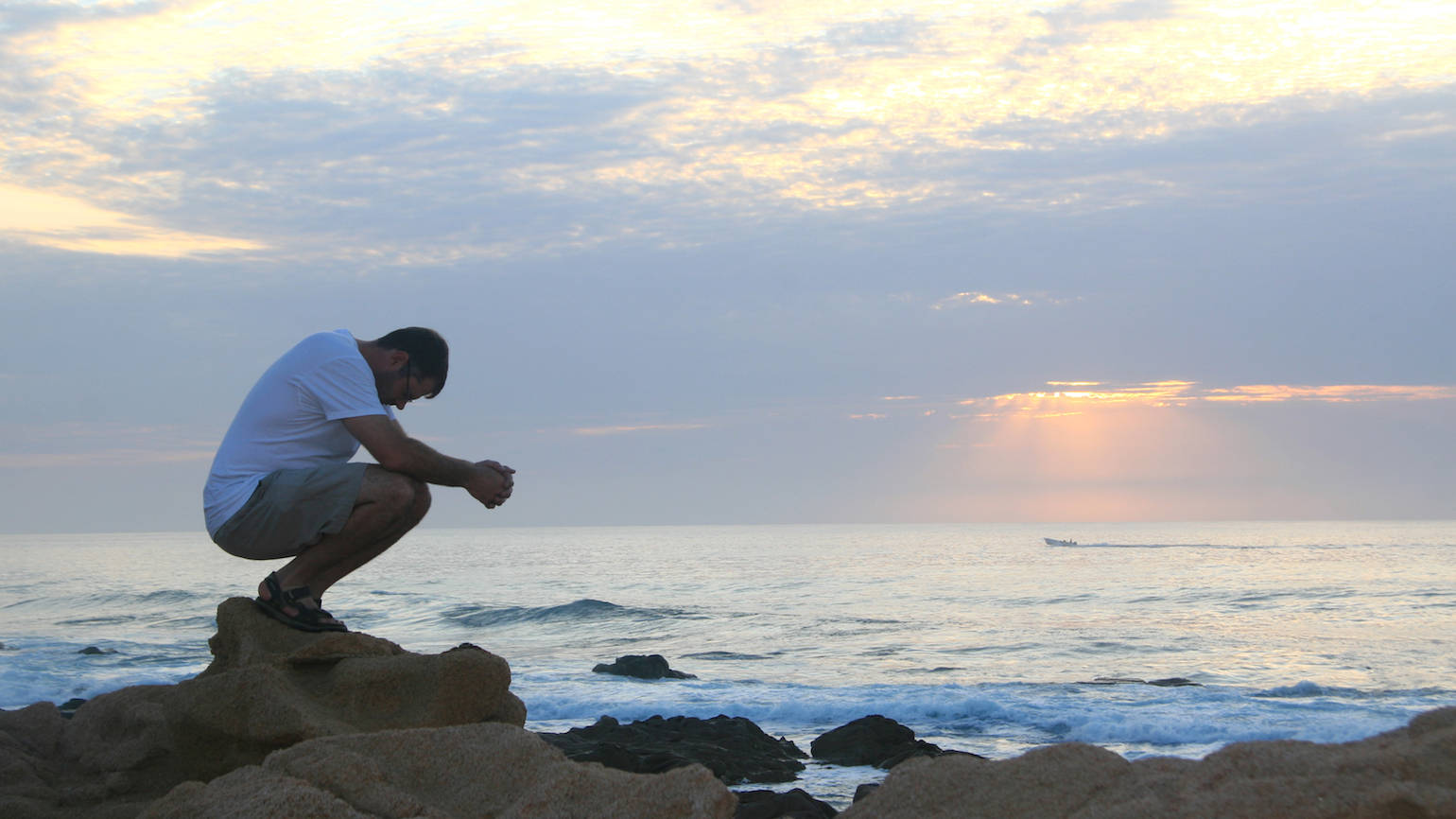
That is, some people, when they pray, do so more “physically” than others. They kneel. They bow. They make the sign of the cross. 

You Got This In Article Ad

For the first few decades of my life, I used my mind, heart, soul and voice when I prayed—but the rest of my body? Not so much. 

But I remember C. S. Lewis, in his classic, The Screwtape Letters, portraying the words of Screwtape, a senior demon, advising his apprentice in tempting his human subject. Screwtape said to urge his victim to channel his efforts at prayer in ways that are “entirely spontaneous, inward, informal and unregularized [so as] to produce in himself a vaguely devotional mood.” 

Screwtape goes on to say, “At the very least, they can be persuaded that the bodily position makes no difference to their prayers; for they constantly forget, what you must always remember, that … whatever their bodies do affects their souls.”

Since reading those words, I’ve come to appreciate the physicality of prayer. It’s a little easier when I worship in more liturgical expressions of the Christian faith—with my “high church” friends or on my annual retreat at a Trappist monastery. I kneel and bow with the rest and experience great reward in those varied postures of prayer. 

But from day to day, my private and corporate worship takes place in more “spontaneous, inward, informal and unregularized” settings. So, I’ve adopted a few practices that help me to remember that whatever my body does affects my soul.

For example, when I’m reading a Bible passage that refers to God as king or mentions His holiness, I’ll bow as often as that word occurs. I do the same when singing hymns or worship songs in public. (Some songs give me a really good workout).

In both private and public worship, I’ll often cup my hands in an expression of receptiveness to God or lift my hands heavenward in a gesture of praise. In more intimate moments, I’ll pat my chest or cup my hands over my heart as a prayer for God to touch me, fill me or work in me. And sometimes I’ll clap with enthusiasm and joy over what God is saying or how He is moving in my heart and mind.

I admit, I kneel less often. But since I worship in a congregation that employs an altar or “mercy seat” in the front of the chapel, I’ll sometimes respond to an altar call or seek out that place when the chapel is empty. (I’ve even lain face down in that empty chapel, asking God for answers to my desperate prayers—and He did answer!)

Whether or not you pray “spontaneous, inward, informal and unregularized” prayers or not, your bodily position and action do make a difference. How does your praying reflect that?

How a Chair Can Help You Pray

There are a thousand ways to pray. I’ve used numerous aids to prayer in my lifetime, from prayer books to beads to music and more. Some endure, some helped for a season. One enduring prayer aid is a chair.

My prayer chair sits in the corner of my home office, and it has seen many hours of prayer, both glorious and gritty. But that’s not the chair I mean. I’m talking about the other chair that sits beside my prayer chair. That chair is an aid to prayer that I drew from Brennan Manning’s book, Abba’s Child

The Lies That Bind In Article Ad

Manning tells the story of an old man who was dying of cancer. The man’s daughter asked the local priest to come and pray with her father. When the priest arrived, he found the man lying in bed with his head propped up on two pillows, and there was an empty chair beside his bed. The priest supposed that the man had been expecting him and had set the chair there for him.

The bedridden man asked the priest to close the door. “I’ve never told anyone this, not even my daughter, but all my life I have never known how to pray.” In fact, he said, he had long abandoned prayer until one day, about four years earlier, when his best friend said, “Joe, prayer is just a simple matter of having a conversation with Jesus. Here’s what I suggest. Sit down on a chair, place an empty chair in front of you, and in faith see Jesus on the chair. It’s not spooky, because He promised, ‘I’ll be with you all days.’ Then just speak to Him, and listen in the same way you’re doing with me right now.”

So he tried it, and said it worked so well that he prayed that way for a couple of hours every day, being careful not to let his daughter see him talking to an empty chair, because she would think he’d lost his mind.

The priest was deeply moved by the story and encouraged the old guy to continue praying that way. Two nights later, the daughter called to tell the priest that her father had died that afternoon.

“Did he seem to die in peace?” he asked.

“Yes,” she said. She had gone to the store and came back to find him dead. And then she paused, as if unsure whether she should go on. Then she said, “But there was something strange—in fact, beyond strange, kind of weird. . . . It has to do with how I found him.”

“How you found him?”

She hesitated again before telling the priest that she found him leaning over, resting his head on the chair beside his bed.

I remember that story often when I sit in my prayer chair and see the chair I’ve set next to it. Sometimes I close my eyes and imagine Jesus sitting there. Sometimes His presence is so near and so real that I reach over to touch Him. And sometimes it seems that I do.

It may not be everyone’s cup of tea, so to speak. But if you haven’t tried it, I recommend a chair as an aid to prayer, placed close enough so that you can experience the simple matter of having a conversation with Jesus, speaking to Him, listening as you would with any friend. And maybe even—sometimes—laying your head on His lap.   

Have You Reached a Milestone? There’s a Prayer for That!

When meaningful events happen in our lives, we can acknowledge the occasion with prayer (and speak to future generations) with just a little effort and mindfulness.

When the people of Israel crossed the river Jordan (which parted for them, as the Red Sea had a generation earlier) and entered their “promised land,” God told Joshua, their leader, “Choose twelve men from among the people, one from each tribe, and tell them to take up twelve stones from the middle of the Jordan, from right where the priests are standing, and carry them over with you and put them down at the place where you stay tonight” (Joshua 4:2-3, NIV). 

Go For It In Article Ad

So, they did just that, and that cairn of stones stood for generations, reminding those who saw it “that the flow of the Jordan was cut off before the ark of the covenant of the Lord” (Joshua 4:7, NIV).

Perhaps we don’t mark such milestone moments the way that long-ago (and perhaps not-so-long-ago) people did. But maybe we should. 

What are the meaningful moments you can mark with a milestone prayer? Here are several suggestions: 

Birthdays
The next time a birthday is celebrated in your family, before the candles are blown out, take a moment for prayer (and maybe even place your hands on the birthday person’s head). In your prayer, give thanks for the preceding years and ask for specific blessings to visit that person in the coming year (you may even want to place one or more of the candles somewhere as a reminder of your prayer).

Anniversaries
Occasions such as wedding anniversaries and job anniversaries are usually celebrated with a meal, maybe a card. But for you and those who are important to you? Why not mark the moment with prayer, perhaps also giving a symbolic memento to the celebrants? 

Graduations
Sure, buy a gift for that high school or college graduate. But you might also (or instead) write a prayer, make a bookmark of your prayer, or find some other way to prayerfully bless the graduate and commemorate his or her accomplishment and commencement of a new phase in life.    

Healings
We get sick, and (we hope) get better, too. Whether the healing is miraculous or with the help of modern medicine (or some combination of the two), maybe it’s a good idea to prayerfully mark those moments of healing and recovery. Like an AA sobriety coin. Or a hospital bracelet. Or a pressed flower from a “get well” arrangement. Something that makes us pause and say, “We remember. Thank you.”

Transitions
A friend of mine once courageously left a solid, well-paying career to accept a ministry position. At his ordination, I gave him five smooth stones I had selected (like those the boy David collected before facing Goliath, 1 Samuel 17:40). Each stone represented a prayer of mine for him and his ministry—for integrity, initiative, industry, investment and indomitability. I think he still has them; but either way, I’ve seen those prayers answered.

There’s no better way to mark your milestones than with prayer, and with symbols that will repeatedly prompt prayer. And it’s never too late to start.  

Guideposts Classics: June Lockhart on Where She Prays

Actress June Lockhart, who early in her career worked at Guideposts’ NYC office, celebrated her 96th birthday on June 25, 2021.

I was about four years old when my mother and father took me for a walk one morning along a rutted country lane in Canada. “Exploring,” we called it. A rugged split rail fence bordered the lane, and to our right was a blue lake surrounded by silver birch trees.

Mys of Blackberry Valley In Article Ad

While we were walking, some birds began to warble in a tree above us, and my father looked up. Suddenly, as if the act of looking up had recalled it to mind, he lifted me onto one of the old weathered fenceposts and said:

“Junie, I’d like to teach you a special prayer.”

Then Daddy began to speak the words that I have since repeated so often. “Hail Mary,” he said, and paused. “Hail Mary, full of grace, the Lord is with thee…”

READ MORE: CAROL BURNETT ON SECRET KINDNESS

Right then and there Daddy had me memorize the prayer that meant so much to him. So it was that the first prayer I ever memorized was taught me while I was perched on a fencepost beside a rutted country lane in the middle of Canada.

Because of that childhood experience, I have always felt a naturalness about praying anywhere—even sitting on a fencepost. And I know a great many people who feel the same way: a prayer can be offered anywhere.

A doctor friend told me once that he had developed the habit of uttering quick prayers wherever he may be. He prays as he rides up an elevator to see a patient, he prays at a party for a troubled person he may talk to, he prays while waiting in his car for the light to change.

I know a cowboy actor who prays in the sawdust of a rodeo ring. He begins each performance with the silent words: “Jesus, be on my mind, on my lips and in my heart.” Consequently he dedicates his performance to Christ, though he is standing before thousands of people.

READ MORE: GENE LOCKHART ON GOD’S PRESENCE

A newspaper man once told me that some of his most earnest prayers are said amid clattering typewriters. “Whenever I have trouble getting a story underway,” he says, “I ask God’s help. Most often it happens that I am sitting in the middle of the City Room.” His prayer is for calmness and harmony.

An actress I know never begins a performance without saying a prayer and blessing herself; she stands in the wings of the stage and thanks God for a chance to do the work she likes.

So it’s obvious that people can—and do—pray wherever they find themselves. But I don’t feel that all places are really equal as places of prayer. There are some where prayer has always seemed to me more necessary and important: the home, for example.

When I was growing up, it seemed to me that our home was built of prayer. Whenever I read of children going bad, I wonder if they ever had the advantage of family prayer in their homes.

Did they say a blessing before meals? Were they taught to thank God for what they had, as well as to ask for what they wanted? Did they go to bed with prayer and wake up with it again in the morning?

These were all such an important part of our family life that I cannot imagine what it would be like to be without them.

READ MORE: AGNES MOOREHEAD ON THE BIBLE

Prayer in the home is an important stabilizer, ready to sustain us in times of difficulty, but also ready to steady us in times of good fortune.

I shall never forget a family I used to know at Lake Arrowhead, California. They seemed to derive so much enjoyment out of swimming, water skiing, speedboat racing and such that I found myself drawn to them.

One day I was invited to their home for lunch. I was quite impressed by the natural way everyone bowed his head and said grace. I discovered that the family belonged to the Seventh Day Adventist church, and that family devotions were a natural part of their family life, morning and evening.

Was anyone in this family ever likely to become a delinquent? I doubt it. I think I have never known youngsters to have a better time, and at the same time I think I’ve never known youngsters to be better behaved.

But important as the home is as a setting for prayer, I was still a child when I began to notice that there is another place so special, so set apart as a center of prayer that it stands in a class all by itself.

And that place is church.

While I was growing up I observed that many of the people I admired were not quite satisfied with their prayer lives unless they included regular prayers in a church.

A neighbor of ours, a housewife, used to put in a long day cleaning, sewing, cooking and doing dishes. When her dinner chores were through, I’m sure she’d have liked nothing better than to sit down and relax for a while.

Instead, several nights a week, she put on a clean dress, combed her hair, and took the crosstown bus over to church to attend a prayer meeting.

A business friend of mine—a successful advertising executive—spends part of his lunch hour every day getting to and from a place where he can pray. No matter how pressing his appointments, he takes the time to walk five blocks to his synagogue so that he can be inside a house of worship when he prays.

I was curious to know why these people felt it was so important to be in a special place when they prayed.

Then one day I learned that my own father felt this way, too. Even when he was in the middle of a picture, though tired and hungry and anxious to see his family at the end of a day, he always drove by our church on his way home, stopped, and went inside to pray.

Daddy would admit it was quite an inconvenience; he’d admit that he could stay in his car and say the same prayers while dodging automobiles.

“But I don’t,” he said, “because I feel my prayers are more meaningful if I pray in church.” When I asked him why, he said, “Because prayer, my dear, is a religious act.”

Surprised that he should make such an obvious statement, I asked him what he meant.

“There are a lot of people who think of prayer as something apart from God,” he said. “They think of it as a kind of mental energy; I feel that prayer and God are inseparable, and that’s why I go to God’s house when I pray.”

I have come to feel exactly the same way. There is something special about a prayer offered in a sanctified place. I think one of the most beautiful stories I’ve ever heard illustrates this point.

READ MORE: DONNA REED ON FAITH DURING HARD TIMES

Several years ago while I was visiting Lake Arrowhead, the baby of some dear friends of ours was rushed to the hospital, desperately ill with a lung infection.

Everyone in the community felt a deep sense of concern, especially plump, bespectacled Marie. Marie was the housekeeper for the local parish.

When neighbors brought word to Marie that the doctors had given up hope, she burst into tears. “If only Father Luke were here,” she said, “he could do something.”

But Father Luke had recently died. For many years the pastor of the little church of Our Lady of the Lake, Father Luke had been greatly loved because of his deep concern for the needs of people. And particularly for the way he used his strong, sensitive hands to bring God’s healing power into sickness cases.

In fact, his saintliness still permeated the little church—and the community itself. So it was natural that Marie should think longingly of the priest at a time of illness.

Marie had been praying for the baby regularly at the parish house ever since he took ill. But now she felt she had to do something more—she had to go down to the church.

So Marie slipped out, walked across the lawn from the parish house to the little church. She opened the door and stepped in. Candles burned and a faint odor of incense lingered in the air. Marie saw that she was alone.

She knelt at the altar railing, and prayed for a long time. Suddenly in the deep concentration of her prayer came the visualization of a pair of hands, strong and sensitive, and cradled in the hands was a baby.

She saw it for only an instant, and then it was gone. Marie was mystified, and saddened. It seemed to her that the baby had died and that she had seen it being borne to heaven. She hurried out of the church to the house of the baby’s parents, as she wanted to offer any help that was needed.

But when Marie arrived, she was greeted not with tears, but with joyous words:

“Marie! The doctor just telephoned from the hospital. The baby’s going to he all right!”

For a moment, Marie was startled. And then a mental picture flashed through her mind…of course…the loving hands meant healing.

Why was Marie’s experience with prayer in church so much stronger than anything she had felt at home? Wasn’t it because the prayers of so many people guided by a saintly man had turned a simple building into a house of prayer?

That is what I feel, whenever I enter a church. I feel the hush of thousands of prayers steal over me. I feel the impact of the words of Christ. It is written, He said long ago, My house shall be called the house of prayer (Matthew 21:13).

For more inspiring stories, subscribe to Guideposts magazine.

Going Back to Basics with the Lord’s Prayer

My kids are back to school, and I find I’m going back to basics, myself. I’ve only recently realized that despite all the thousands of times I have prayed the Lord’s Prayer, I’ve never thought about it as a model for the priorities in my petitions. 

It would be a completely different prayer if the lines were re-ordered according to my natural inclinations. For one thing, it would start off with the “gimme”–the daily bread (though probably adjusted to a monthly shipment). Then it would loop through the convenience issues (please get rid of what’s tempting me so that my life is easier) before arriving at the request to forgive me. Finally, I’d tack on a “Thy will be done” or a “thanks.” Needless to say, this is entirely backwards.

Go For It In Article Ad

When Jesus said, “This, then, is how you should pray” (Matthew 6:9) His priorities for me were:

1)  Make God’s name holy and acknowledge Him as the creator of the universe.

2)  Place His kingdom and His will first in my life, ahead of my desires and plans.

3)  Ask for what I need today. Think in terms of manna and trust. 

4)  Ask Him to forgive me in direct proportion to the forgiveness I have offered to others.

5)  Ask Him to spare me from tests and temptations, and to preserve my soul from evil.

Using the Lord’s Prayer as a blueprint for how to pray has an interesting but predictable effect: The theme of my petitions becomes more centered on God than on me. Which is as it should be.

For a Fresh Way to Pray, Try the ‘I Am’ Sayings of Jesus

It’s easy to get stuck in a prayer rut—praying the same things in the same way over and over. God still hears us, but we can experience delight and reward in exploring new prayer paths. For me, one has been praying the “I Am” statements of Jesus.

John’s Gospel, the fourth account of Jesus’ life in the Bible, relates seven clear and concise word pictures Jesus used to refer to Himself, each starting with the ancient “name” God gave Moses at the burning bush: “I Am.” Each statement is rich in meaning. Each can usher the reader or listener into a deeper understanding of Jesus. And each suggests a new path for us to take in prayer.

NIVFLB Inarticle ad

1)  I Am the Bread of Life (John 6:35)
In the ancient world, bread was a common and critical feature of people’s daily diets. It was a key to survival and often, literally, the difference between life and death. Pray to Jesus as “the Bread of Life,” the One who gave you life and Who sustains and nourishes you.    

2)  I Am the Light of the World (John 8:12)
Just as bread held daily importance to people in Jesus’ time, so did light. Whether it was the light of a torch, oil lamp or sunrise, light brought safety, clarity and health. Turn to Jesus as “the Light of the World”—your Light—to seek those blessings. 

3)  I Am the Door of the Sheep (John 10:7, 9)
When Jesus said this, He evoked a familiar rural scene: a sheep pen enclosed by a gate or the reclining body of the shepherd himself. The “door” kept the flock safe from attacks and accidents. Your prayers to Jesus as “the Door of the Sheep” can appeal to His care and keeping, enabling you to rest secure in the knowledge that He guards you. 

4)  I Am the Good Shepherd (John 10:11, 14)
Jesus expanded on this theme by enlarging the analogy from the shepherd who guards to the shepherd who guides. He knows His sheep, calling each one by name. He leads them “in the paths of righteousness for his name’s sake” (Psalm 23:3 KJV). Pray to your “Good Shepherd,” who knows you, calls you by name and guides you in the right direction, day to day and moment to moment.

5)  I Am the Resurrection and the Life (John 11:25)
It was a bold thing for Jesus to claim—at a funeral—that He is “the resurrection and the life.” But He proved it by calling Lazarus out of the grave. He still proves His power today by giving new life to dead hopes, shattered dreams and broken lives. Call on Him as “the Resurrection and the Life.” Let His resurrection power “make all things new” for you (see Revelation 21:5 KJV). 

6)  I Am the Way, the Truth and the Life (John 14:6)
This is perhaps the most well-known “I Am” statement of Jesus. Calling on Him as “the Way, the Truth and the Life” is a wonderful way to pray, especially if you crave direction, need wisdom or feel deflated or depleted. 

7)  I Am the True Vine (John 15:1)
Everyone in Jesus’ day would have understood this revelation as vineyards proliferated (and still do) in the land of Israel. He went on to explain the meaning of the metaphor, which is the absolute necessity of constant connection with Him (“abiding”) in order to produce the kind of fruit our lives need. So, pray to your “True Vine,” asking Him to help you keep that connection alive and productive.

As you regularly pray the “I Am” statements, Jesus will come closer and His true nature will become clearer. And, as He answers your prayers, “God will take care of all your needs with the wonderful blessings that come from Christ Jesus!” (Philippians 4:19 CEV).

Everyday Joy: Bible Verses for Appreciating Sunsets

Every evening since we’ve been at home—mostly sheltering-in-place—we take a walk to see the sun set. Gosh, there are so many tragic things happening to people in this time, but then I also find myself giving thanks for the joys of each day.

Like the sunset. Who knew how beautiful it could be? We live in New York City on the island of Manhattan, in the middle of millions of people, but not far from our apartment we can gaze out at the Hudson River and watch the sun.

extraordinary women of the bible

Here are five Bible Verses to match five different sunsets seen over the last few days. Don’t they make you want to give thanks, too? And gaze at your own view of the sun setting.

Dr. Norman Vincent Peale and the Power of Positive Praying

Dr. Norman Vincent Peale, the father of positive thinking (and Guideposts, as it happens) once wrote about a man he met who was disheartened because he wanted his daughter to have a college education, but he presumed he could never afford to pay for her tuition. 

Peale asked, “Do you believe in God?”

NIVFLB Inarticle ad

The man said he did; in fact, he attended church every week.

“Then,” Peale continued, “haven’t you heard that you are a child of God, and that all things are possible for you?”

The man said yes but confessed that he must not have listened to that message. 

“Listen now,” Peale said, and proceeded to raise the man’s vision. “The years have passed. It’s springtime. It’s commencement at Cornell University. Graduating students are lined up to receive their diplomas. And there, accepting her diploma from the president of the university, is your daughter! Isn’t that great?”

“Oh, I wish!” the man answered. 

“Instead of wishing for it,” Peale said, hope for it. Believe in it.”

Years later, that father contacted Dr. Peale. After his daughter had earned her degree. 

That’s how I want to live, and it’s why I pray. I’ve learned to incorporate hopeful vision and faith-filled imagery into my prayers. When I ask God to heal my two grandchildren who cope daily with the challenges of cystic fibrosis, I often picture them clearing away their medications and medical equipment, once and for all. 

I pray for an upcoming flight and envision myself landing safely—and early—at my destination. 

As I remember my children and grandchildren before God’s throne each night, I actually “see” them lying safely and happily in their beds, and sometimes fast forward to the morning when I imagine them rising and energetically heading off to work or school. 

This positive praying habit has served me and mine well for many years and through some dark times. Through it all, I put into mental pictures far more than what I could put into words, and I believe the Holy Spirit translated those images into answered heart prayers.

So why not try it? Is there a river you think is uncrossable? A tunnel you’re sure you can’t tunnel through? As the Gospel hymn said, “God specializes in things thought impossible, and He can do what no other power can do.”

Do You Only Pray for People You Know?

If you only pray for the people you know and love, you might inject new vibrancy into your prayer life by praying for people you haven’t even met…yet. 

My wife started doing this when she was a young teen. She prayed for her future husband, not only that he would be incredibly handsome, smart and sensitive but also that he would be a man who loved God and followed Jesus.  

Faithful Paws and Purrs In Article Ad

I wasn’t nearly so wise and forward-looking. But then we got married, and she amazed me. She not only prayed for our children before we had them, but she also prayed for the people they would eventually date and marry (who were also yet to be born). 

Who does that? 

Turns out, a very wise and spiritual person. So, I joined her. I started praying for our children and their spouses. And, when they were born and began growing into actual people, we both prayed for the friends they would make, the teachers who would influence them and more—long before we met those people

And, while we’re still waiting for some of my wife’s prayers for her husband to be answered (though she would say they have been), many of our other prayers for people we had yet to meet have been abundantly answered. It’s been a thrill to meet people we’ve long prayed for, and sometimes be able to tell them we’ve been praying for them since before we knew them (such as our daughter-in-law and son-in-law at their weddings). 

It may sound crazy, but sometimes “crazy” leads to unexpected blessings. So, why not try praying for people you haven’t met yet? Here’s a list of possibilities. 

Children and grandchildren yet unborn 

The future husbands and wives of loved ones

Future friends and neighbors

Future pastors, teachers, coaches

Local, state and national leaders of the future

Future employers and employees

And that’s just a start. You may, of course, feel free to add to the list as you think of those whose paths will cross yours in the future. Or those who eat what you’ve cooked or baked, read what you’ve written or use what you’ve created or improved. 

And some day, you may have the blessing of meeting someone new and saying, “Oh, I’ve been praying for you!”

Dishwashing Prayers

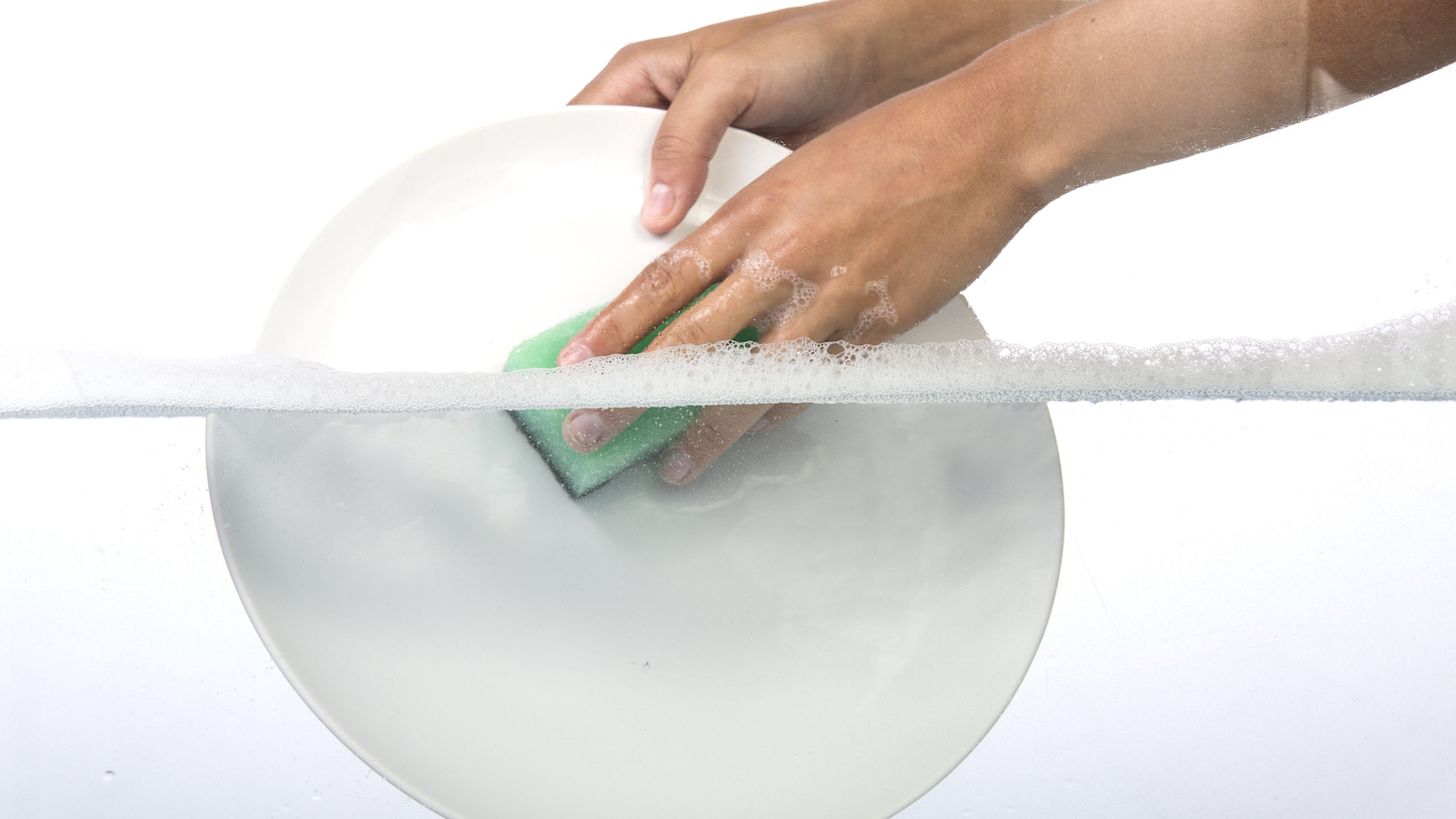
My wife Carol is the cook in our family and a very fine cook she is. But I am delighted to have a crucial role in the kitchen and in our division of labor: I wash the dishes.

“Delighted” did you hear me say? Actually yes. I like washing dishes. It’s one of those rare jobs where you can actually see progress.

GP In Article Desktop

You step into the kitchen after a big holiday dinner and the place looks like a tornado hit it. Dirty plates stacked left and right, pots and pans in the sink, some filled with silverware, some soaking in water. Napkins tossed about, gravy droppings painting the counter, a half-carved turkey carcass that will need to be stripped for soup.

I take it all in, while Carol brings more detritus in from the battlefield (i.e. the dining room table) and I mutter some prayer like, “All this bounty is a sign of your goodness, Lord. Help me clean the mess up.”

There’s the soothing sound of the water pouring over the dishes and the scrapping they get before they’re slotted in the dishwasher.

The silverware clinks in my hands like a glockenspiel, the pans bang against each other like tambourines. I am my own percussion section. I scrub an ornery spot of gravy off a chafing dish and the sponge squeaks at me in a soprano key.

Read More: 9 Ways to Give That Lead to Happiness

Carol puts away leftovers in the fridge, more bounty to be grateful for, and I dry some of the pots I’ve washed until the damp towel needs to be replaced. I love the way nature dries too. I put some of the newly cleaned pans in the dish rack where warm currents of air will dry them.

I’ve heard spiritual mentors say that to garner the full benefits of such work you should stay in the moment–with the water, the scrubbing, the drying. But I also find myself recalling things people said at dinner, relishing the blessings to be found in family and friends.

Oftentimes I hear the complaint: “I never have time to pray.” Maybe it’s that when we have to do mundane chores, like cleaning the sink, vacuuming the rug or washing the dishes we’re being given a chance to pray.

When that last bit of dirty water goes down the drain and I dump those last shards of garbage into the composting bin, I feel like I’m cleaning up my act, the way God wipes away all our sins and mistakes, forgiving us in a process that’s even quicker than cleaning up the dishes.

I give one last look at the now mostly clean kitchen before I turn out the light. What once was a mess is now no more. A clean slate and time well spent. Until I have to do the chore again.

Claim God’s Promises with ‘You Said’ Prayers

I learned to pray at an early age from my parents and church leaders. I’ve since learned new things about prayer from many sources: authors, monks, pastors and friends. I’ve even learned a valuable prayer skill from Ethan the Ezrahite. 

“Who?” you may ask. I’m glad you did.

Light for Life NASB Study Bible in Article

Ethan the Ezrahite was apparently a very wise man (see 1 Kings 4:31, where he was mentioned as a standard of wisdom) who is credited with having written Psalm 89, the one that begins:  

I will sing of the Lord’s great love forever;
    with my mouth I will make your faithfulness known
    through all generations (Psalm 89:1 NIV).

In that psalm, Ethan models a way of praying that helps me to pray more confidently and faith-fully. In one quatrain, he prays: 

You said, “I have made a covenant with my chosen one,
    I have sworn to David my servant,
‘I will establish your line forever
    and make your throne firm through all generations’” (Psalm 89:3-4 NIV).

Later in the psalm, he addresses God: 

Once you spoke in a vision,
    to your faithful people you said:
“I have bestowed strength on a warrior;
    I have raised up a young man from among the people.
I have found David my servant;
    with my sacred oil I have anointed him.
My hand will sustain him;
    surely my arm will strengthen him” (Psalm 89:19-21 NIV).

That second summary of what God said goes on for 16 more verses before Ethan says, “But you have rejected, you have spurned, you have been very angry with your anointed one” (Psalm 89:38 NIV). He points out numerous ways God has apparently—emphasis on apparently—failed to keep His word before calling on Him to fulfill His promises. 

Wow. Bold move, right? But Ethan the Ezrahite’s example teaches us that “you said” prayers are a valid and powerful way to pray. Not that God needs reminding, but we do. And “you said” prayers like the following can help us to pray more confidently than we might otherwise do: 

“God, you said those who hope in you ‘will renew their strength. They will soar on wings like eagles; they will run and not grow weary, they will walk and not be faint’ (Isaiah 40:31 NIV). Renew my strength, according to your word.”

“Heavenly Father, you said ‘If any of you lacks wisdom, you should ask God, who gives generously to all without finding fault, and it will be given to you’ (James 1:5 NIV). So I’m asking. Please give me wisdom in this decision.”

“Lord, you said you would be with us always, even to the ends of the age (Matthew 28:20 NIV). Be with me here. Be with me now.” 

Those are just examples, of course, but there are many similar “you said” prayers that can recall to our minds and hearts the enduring promises of God and call to Him to fulfill His words in our current circumstances.

Bob Hostetler’s Tips for One-Word Prayers

Hi Guideposts. My name is Bob Hostetler. I’m a blogger and author and literary agent and preacher.

I am asked every once in a while how I come up with my ideas in writing about prayer and especially when it comes to one-word prayers, and that’s been a process, I think.

Daily Strength for Women in Article ad

I haven’t always been a praying man, but then over the years, I came to cultivate prayer as an ongoing conversation, not something with strict parameters and boundaries and timelines and that sort of thing, and that opened up all new possibilities to me. And when that happened, then I began to pray short prayers throughout the day, spurred often by events.

I would see somebody and I would say, “Lord, help,” or I would come across a situation that would cause me to cry out in my heart, sometimes with my voice, “Lord, have mercy.” And over time I realized that sometimes one word was sufficient to point my heart toward God and to open that avenue of prayer.

Sometimes one word is all I could muster, and so I would pray, just one word, sometimes “comfort,” sometimes “come,” sometimes “peace,” “shalom.” And that has been a real blessing and exercise for me in realizing God is always ever-present and He’s always waiting to hear and answer prayer.

And so just a word or two sometimes is enough not only to to make that connection—certainly, He’s always waiting for that connection—but it’s my mind that must make that connection and call out to Him, and very often, one word does it.

And so that’s, as best as I can recall, how this came about as an ongoing, as a constant part of my prayer practice is to pray those short prayers constantly throughout the day. Just one word turns my heart toward God, reminds me that He is there and reminds me that He’s always ready to help.