Embrace God's truth with our new book, The Lies that Bind

6 Inviting Places to Pray

The Bible describes Jesus frequently withdrawing to “lonely” or “solitary” places to pray (Mark 1:35, Luke 5:16).

Surely He could have prayed at home or in the synagogue, right? He was Jesus, after all. You’d think He could have prayed anywhere. And He probably did, but He also probably knew a little more about prayer than most of us do. Maybe this: 

Sugarcreek Amish Mysteries In-Article Ad 2023

A change of scenery can enhance your prayer life.

I’ve certainly found this to be the case. In fact, I have often found new energy and sweetness in prayer in one of these seven cool and inviting places to pray:

1.  Churches
“Well, of course,” you might say. But I mean empty (or largely empty) churches. Many churches (particularly in urban areas) open their doors for prayer during the week. Some even have tiny chapels set aside for private prayer.

2.  Parks
Maybe this is too obvious, but among my favorite places to pray are the trails and benches in the municipal and state parks near where I live.

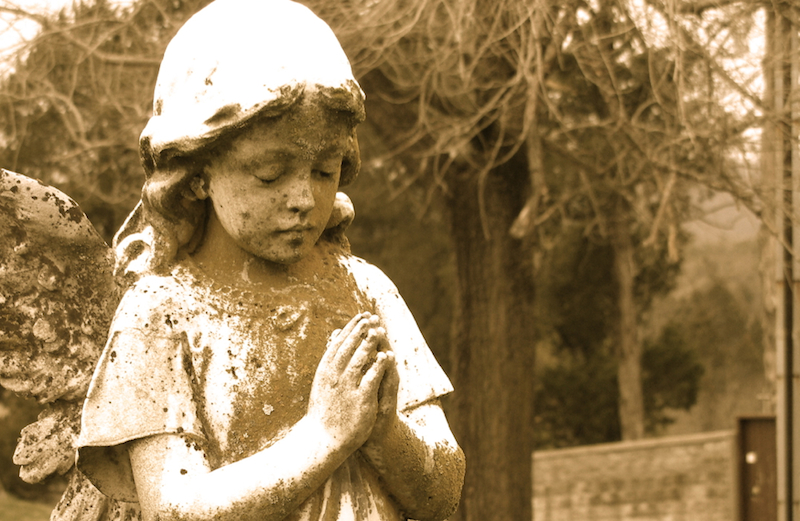
A cemetery angel prays. Where are your favorite places to pray?3.  Cemeteries
Sure, some cemeteries are depressing places. But many are breathtakingly beautiful and inspiring. Whether you walk the grounds or rest on a bench, praying in a cemetery can underscore the shortness of this life and the imminence of eternity like few other places.

4.  Hotels and Airports
Did you know that many airports have interfaith chapels for prayer and meditation? So do most hospitals. I’ve prayed often in these quiet, usually out-of-the-way spots, and have seldom (if ever) encountered anyone else there.

5.  Gardens
Is there a botanical garden or arboretum near your home? You might be surprised; there are probably more than you think. Some charge an admission fee, but many are free to enjoy. And they make great places to pray.

6.  Outdoors at Night
Have you ever prayed while lying on your back in a field (or your back yard) while gazing up at the stars? It is a memorable and beautiful way, as Wendell Berry said, to “coordinate our human celebration with the great liturgy of the heavens.”

Have you prayed in any of these places? Have you tried other prayer places? What was your experience like?

7 Bible Prayers for Our Nation—and the World

Every year I get excited as the 4th of July holiday approaches. The freedoms Americans enjoy are worth celebrating, even as we remember and pray for those who don’t enjoy those same freedoms.

This year, why not make one or more of these prayers, drawn from the Bible, a part of your celebration, perhaps printing them and kicking off your cookout by taking turns reading through them? You might even make them an annual Independence Day tradition.

The Lies That Bind In Article Ad

1)  Psalm 113:4, KJV
Lord God, Your Word says that You are “high above all nations, and [Your] glory above the heavens.” We live in a nation of many different creeds and convictions, ethnicities and backgrounds, but we know that You love and reign over us all.

Please let the ways we exercise our freedoms reflect Your holiness and Your compassion, “that your ways may be known on earth, your salvation among all nations” (Psalm 67:2, NIV).

2)  Psalm 67:1-5, NIV
God, “be gracious to us and bless us and make [Your] face shine on us” as a nation. Make us strong but peaceful. Make us just and also merciful. Make us prosperous and generous. Make us a beacon of freedom and righteousness in a needy world.

3)  Psalm 122:6-8, NIV
Heavenly Father, like the psalmist’s plea, we pray for Jerusalem while praying also for our nation and region and all those who face threats to their safety and security: “May those who love you be secure. May there be peace within your walls and security within your citadels.” For the sake of those souls You love and the world for which Jesus died, I will say, “Peace be within them all.”

4)  Psalm 133:1-3, NIV
As Your Word says, Lord, “How good and pleasant it is” when people live together in unity—how refreshing and how cleansing. And how much sadness and suffering results when a nation and a people are divided.

Please pour on us a spirit of unity and cooperation like “precious oil,” like “the dew of Hermon,” washing away bitterness and guiding us into mutual respect and shared hope.

5)  Psalm 146:6-8, NIV
Lord God, Maker of heaven and earth, the sea and everything in them—You remain faithful forever. On this day when we celebrate our freedoms, we remember those in different circumstances.

We ask You, as Your Word says, to uphold the cause of the oppressed and give food to the hungry. Set prisoners free, give sight to the blind, lift up those who are bowed down, wherever they are, whatever language they speak, whatever nationality they claim, that they too may soon possess the kinds of benefits we enjoy today.

6)  John 8:3, NIV
Jesus, while You walked this earth, You proclaimed, “If the Son sets you free, you will be free indeed.” Thank You for all of our freedoms, including those we often overlook or take for granted, foremost among them freedom from condemnation and punishment.

Please let the freedom found in Christ be known not only to us but to those who haven’t yet experienced Your great love whether they live in our community, state, nation or in other nations from one end of the earth to the other.

7)  Revelation 5:9, NIV
Lamb of God, saints and angels in heaven are right in singing, “You are worthy to take the scroll and to open its seals, because you were slain, and with your blood you purchased for God persons from every tribe and language and people and nation.”

Let Your kingdom come to every tribe and language and people and nation. Deliver us from the bigotry and hatred that divide us. Help us to rejoice instead in the great diversity of Your Creation, to find and focus on the humanity we share and the freedoms we treasure.

7 Benefits of Prayer—No Matter the Outcome

In the Bible, Hannah prayed for a child, and later gave birth to Samuel. Elijah prayed for rain, and rain came. Daniel prayed for insight to interpret dreams, and God answered. 

On the other hand, Jesus prayed for the “cup” of His looming torture and crucifixion to pass from Him; it didn’t happen. Paul prayed for deliverance from the “thorn” in his side, and instead was given grace to endure it. 

The Lies That Bind In Article Ad

I’ve prayed many prayers over the years. Some were answered in the way I hoped. Many were not. But I’ve learned that no matter the answer, I still gain. In fact, getting the answer I want is almost never the best fruit, the greatest benefit, of prayer. As I reflect on the time and energy I’ve spent in praying, I see seven ways I’ve gained, regardless of the outcome: 

1)  Silence. Sometimes it feels like I’m surrounded—assaulted, even—by noise. But prayer brings into my life periods of quiet that have been a boon to my soul. In prayer, I have often “calmed and quieted myself, I am like a weaned child with its mother” (Psalm 131:2 NIV).

2)  Stillness. Similarly, my prayer times become an oasis amid an ever-racing heart, mind and body. I can’t know the extent to which prayer has prevented or delivered me from stress, anxiety, high blood pressure and more. But I’m confident it has.

3)  Presence. Some people live their whole lives without experiencing (or acknowledging) the presence of God. How impoverished I would be if I didn’t turn to prayer and experience the joy of His presence (see Psalm 16:11).

4)  Perspective. I don’t always get the answers I want when I pray, but I almost always gain a new perspective. My problems seem smaller. My priorities are sorted. The path ahead seems clearer. Even God seems larger than before.  

5)  Balance. I can say with the psalmist, “as for me, my feet had almost slipped; I had nearly lost my foothold” (Psalm 73:2 NIV). It’s so easy to get off-kilter and out of whack, reacting to external stimuli and teetering on the emotional edge. But prayer re-orients me—“uprights” me. In prayer, I take God’s hand and regain my balance, saying, “as for me, it is good to be near God” (Psalm 73:28 NIV).

6)  Peace. It’s hard to express or quantify the cumulative effect of the silence, stillness, presence, perspective and balance that prayer brings into my life. But I can say that the more I pray, the more I experience the promise of Isaiah 26:3: “You will keep in perfect peace all who trust in you, all whose thoughts are fixed on you!” (NLT). 

7)  Hope. Because I pray often and regularly, I’m never without hope. The hope of healing, deliverance, blessing and goodness perches in my soul and perseveres through every storm. And, even when the hoped-for outcome doesn’t come, my heart and soul are buoyed by the awareness that my good God is working, always working, and somehow planning something better.

6 Ways You Can Pray Like a Bible Hero

Have you ever watched a child do something exactly like one of his or her parents? Some physical features and mannerisms are genetic, of course, but others can only have been acquired through observation and imitation. For example, I recently watched, amazed, as my grandson cut the sandwich he made for his school lunch while it was in a plastic baggie. He didn’t pull that practice out of thin air; he said it’s how his mom does it, to make clean-up easier.

What if we can do something similar by paying a little attention to the prayer habits of Bible heroes?

Witnessing Heaven In Article Ad 827x123

1) Hide Your Face

Take Moses, for example. On encountering the burning bush in the wilderness, God instructed Moses, “Take off your sandals, for the place where you are standing is holy ground” (Exodus 3:5, NIV). After God identified Himself as “the God of your father, the God of Abraham, the God of Isaac and the God of Jacob,” Moses “hid his face, because he was afraid to look at God” (Exodus 3:6, NIV). Do you ever pray that way? Do you ever cover your face with your hands as you pray? Or even bow down with your face to the ground?

2) Raise Your Arms

On a much later occasion, God’s people were under attack, so Moses went up on a hill overlooking the battle. He lifted his hands—perhaps in a gesture of prayer or blessing. While his arms were raised, the Israelite army prevailed. So Aaron and Hur positioned themselves on either side of Moses to help him keep his hands aloft until the battle was won (see Exodus 17:8-16). Why not try lifting your hands in prayer, raising them toward heaven? Or perhaps cupping your hands as if to receive from God?

3) Ask Boldly

The prophet Elijah seemed to boldly ask God for big answers to prayer. He asked for no rain for three and a half years. Then he asked for it to rain again (1 Kings 17–18). On Mt. Carmel, Elijah challenged the prophets of Baal to a contest and, after they failed, stepped out and prayed, “Lord, the God of Abraham, Isaac and Israel, let it be known today that You are God in Israel and that I am Your servant and have done all these things at Your command. Answer me, Lord, answer me, so these people will know that You, Lord, are God, and that You are turning their hearts back again” (1 Kings 18:36-38, NIV). God answered Elijah’s prayer that day with literal fire from heaven. How boldly do you pray? Do you shy away from asking God for “big” things? Or do you pray like Elijah?

4) Sing Your Prayers

Many of David’s prayers have been preserved to this day because he didn’t just “say them,” he sang them. “I will sing the Lord’s praise, for He has been good to me,” he vowed (Psalm 13:6, NIV). He even sang about singing his prayers to God: “I will sing a new song to You, my God; on the ten-stringed lyre I will make music to You” (Psalm 144:9, NIV). So why not try praying like David? Sing a hymn to God. You can also make up your own tune to one of David’s psalms. Or just put the prayer of your heart into a melody.

5) Pray Three Times a Day

Though a royal decree had recently made his action illegal, “Three times a day [Daniel] got down on his knees and prayed, giving thanks to his God, just as he had done before” (Daniel 6:11, NIV). His practice sent him to the lion’s den, but also contributed to victory over the lions—and the royal decree. Do you pray that way? Three times a day? Perhaps a pattern of morning, noon and evening prayer (see Psalm 55:17) will prepare you for some lion-taming victories of your own.   

6) Pray on Your Roof

Acts 10:9 describes a prayer practice of the Apostle Peter: “About noon the following day… Peter went up on the roof to pray” (NIV). Houses in that time and place often had flat roofs that provided cooler and calmer surroundings than the house below (where food was cooked, business conducted and even animals were kept). Do you have a special place of prayer? A quiet place? Why not try praying like Peter and find a spot that encourages focus and fervency in prayer?

These are just six simple prayer habits of some heroes of the Christian faith. We can learn much not only by imitating them but also by paying attention to the practices of others who pray often and well.

What prayer habits have you learned from others? 

6 Ways to Use a Prayer Book

Many years ago, my prayers were all spontaneous. I had a prayer list, of course, as many people do, but the prayers I uttered were all off the cuff, so to speak.

That eventually changed, and for a couple decades now, a large proportion of my prayers come from a book. The book itself changes from time to time, from The Psalms in the Bible to The Book of Common Prayer to Phyllis Tickle’s The Divine Hours to Robert Benson’s Venite and more. 

Sugarcreek Amish Mysteries In-Article Ad 2023

When I talk to others about using a prayer book, some people wrinkle their noses. They think (and sometimes say) that prayers-you-read are rote or insincere or even “vain repetitions” (Matthew 6:7, KJV). And I suppose they are, for some people. But not for me. My prayers are richer and often more meaningful and heartfelt because I use a prayer book—not mindlessly or carelessly but with great focus and reward. Here are 7 ways I pray using a prayer book: 

1)  I usually stand, and often pace, with the book in my hands
Being on my feet seems to focus my mind and heart in a way that sitting (or even kneeling) does not. 

2)  I speak (or chant) the prayers aloud
Speaking or chanting the written prayers tends to slow me down and prevent me from rushing through or thinking of something else while I’m praying (I use a few simple Gregorian melodies, and change the melody each day; if you’re unfamiliar with using chant in prayer, there are many online resources that explain or can get you started in the practice).

3)  I sometimes adapt the prayer book’s wording to me and my circumstances
I might change “thees” and “thines” of some prayers or hymns to “you” and “yours.” I may also change corporate language (“our” and “us”) to singular (“my” and “me”), as well as personalizing in other ways. 

4)  If a hymn appears in the prayer book and I know the melody, I may sing it—or not
For example, a vespers reading may include verses of the hymn, “Abide with Me”: 

Abide with me, fast falls the eventide 
The darkness deepens; Lord, with me abide.
When other helpers fail and comforts flee,
Help of the helpless, oh, abide with me.

Sometimes, singing helps my concentration and expression. At other times, however, I find it more helpful to turn the hymn into a spoken prayer.

5)  I freely amplify or meditate on specific lines or words in the prayers
I love the familiar phrases of the call to prayer (“O God, come to my assistance; O Lord, make haste to help me”) or opening phrase of Compline (“May the Lord Almighty grant me and those I love a peaceful night and a perfect end”). 

But I might start the call to prayer, “O God, come to my assistance; I need you, Lord. I need you now. I need you here,” etc. Or the petition from compline—“Watch, O Lord, with those who wake or watch or weep tonight, and give Your angels charge over those who sleep. Tend Your sick ones, O Lord Christ,” etc.—may become “Watch, O Lord, with those who wake (such as Kevin who is working late tonight and will be very tired on the drive home) or watch (such as Marsha at her husband’s hospital bedside) or weep tonight (especially Bill who still mourns the loss of his father.)” And so on. 

6)  I sometimes stop to listen, make notes or write in my journal
I keep a pen and journal nearby so that when a prayer or portion of scripture prompts a thought, I can put a bookmark in the prayer book and write away. I may also fold the book on my lap and just stand, pace or sit in God’s presence for a while. After all, the process is about the journey—and my Companion—not about reaching a destination. 

My practices may not appeal to everyone, and I often change parts or all of my routine. Some days (or months, even) my prayers are still very unscripted and spontaneous. But I have found great pleasure and reward in using various prayer books, so I find it easy to imagine that others may too. 

6 Ways to ‘Pray Without Ceasing’

It’s there in the letter Paul wrote to the Thessalonians, that intimidating phrase, “pray without ceasing” or “pray continually.” I read it and wonder, “Is that really possible?” If so, how? Here are a few ways I try.

1)  Love God with all your heart, mind and soul. When Jesus emphasized the importance of this commandment, it’s about priorities. What matters most in my life? How do I measure success? Where do I seek and find happiness?

Love is so much bigger in God’s world than it is in our mundane lives. We’re supposed to do it all the time, and this feels to me like praying. Continually. Living a life that puts our love of God—and loving our neighbor as ourselves—first. Every action, every reflection, every thought has the potential to be part of this BIG prayer.

2)  Don’t limit your notions of prayer. Prayer is conversation with God. And mind you, silence is certainly an enriching part of any conversation—think of how we use that phrase “a comfortable silence” to describe the quiet between two people who know each other well.

When we’re with our loved ones we communicate so much without words. A sigh, a shrug, an embrace, a willingness to help. “Here, let me do that,” we say. Or we simply do it. By all means, use verbal prayer in your communication with the Lord. But don’t forget how much can be said without any words at all. Continually.

3)  Give yourself moments of silence. Sit for a moment. Close your eyes. Listen to your breath. Breathe in God’s love…and breathe out some of the distractions that can so easily get in the way of a loving relationship. With God and those “neighbors” of ours.

Once again, silence doesn’t mean you’re saying nothing. It’s keeping the focus in the right place.

4)  Use your body in prayer. I think of the old high school football cheer we used to say, “Lean to the left, lean to the right, come on team, fight, fight, fight.” We moved in the bleachers as we said it. Life is full of movement—we walk, we climb stairs, we sit, we stand, we lean, we bend. As you feel your body moving, feel the Creator work through you. 

Sitting there in front of the computer. Pause and put your hands on the opposite shoulders or around your waist. Give yourself a hug. From God.

5)  Give thanks. That very verse in Thessalonians is followed by the lovely admonishment: “give thanks in all circumstances…” It’s that “all” that often causes us to stumble. But think of the trials and setbacks Paul himself suffered. If he could give thanks in all things, can’t I?

The most thankful people are not necessarily the ones you expect. Volunteering at our church’s soup kitchen, I’ve gotten to know some of our regular guests. I can’t begin to fathom the misfortunes and losses they’ve suffered. And yet, they are the most grateful people I’ve ever met. As one of them said to me recently, “God is here.” Thankful without ceasing.

6)  Let go. Living a life of constant prayer means living the Lord’s Prayer, backwards and forwards, especially that challenge of “Thy will be done.” Acceptance. Seeing that God’s will—greater than we might imagine is at work. Pray that without ceasing.

6 Ways to Pray While Shopping

During the recent holiday season I had many opportunities—I use the term reservedly—to shop with my lovely wife. She and I approach shopping differently. That is to say, she shops; I suffer. It doesn’t matter if we’re buying groceries, gifts or gadgets, the process of shopping (as opposed to walking straight to the item you intend to buy and taking it to the checkout lane as quickly as possible) is an agonizing experience for me.

But at some point in our recent crowded-store adventures, it dawned on me that praying might be a better use of my time and energy than pouting and protesting. Lo and behold, it was! It transformed the experience for me. So I offer here the fruits of my discovery in the hope that it may help someone else who isn’t totally engaged in the delights of shopping with a spouse:

extraordinary women of the bible

1)  Give thanks for the ability to shop.
How often do we shop and buy without a thought about how fortunate we are to be able to do so? Even a shopping curmudgeon like me ought to be grateful for the ability to shop, while many of our elderly and shut-in neighbors would love a trip to a store or mall, and many with much more limited resources would love to have just a portion of what we spend on groceries or gifts. So take a few moments as you shop to say “thank you” for the means and ability to go shopping.

2)  Pray for those who lack the resources you enjoy.
While you’re at it, why not pray for God to comfort and bless those who lack the resources to buy a cartload of groceries or clothes or gifts? Take a moment to remember in prayer people who seldom get out of the house or must rely on others for transportation. Pray also for those who live in remote places, far from the shopping outlets you take for granted.

READ MORE: 4 TURNING POINTS IN MY PRAYER LIFE

3)  Ask for the wisdom to be a good steward.
Every time you shop you have the opportunity to exercise wisdom. Will you buy things just because you can, “that you may spend what you get on your pleasures” (James 4:3, NIV)? Or will you shop according to God’s values, taking into account not only your desires but also the effects of your purchases on yourself, your family and others? So ask God to help you spend wisely.

4)  Pray for those who grew or made the items you see.
Another way to pray while you shop (or your spouse does) is to ask God to help and bless the farmer who grew your vegetables or coffee beans and the laborers and manufacturer who made the shoes or toys you buy.

5)  Pray for those who will receive and enjoy the things you buy.
It can also be a meaningful exercise to think about and pray for the people who will consume the groceries you buy (even if it’s just you) or the other items you purchase. For example, you don’t have to wait to ask God to “bless” the food at your table; you can ask it in the grocery store aisle.

6)  Pray for those who serve you in the store.
Finally, send up a prayer for the employees who surround you in the mall or store where you shop. Pray for the person you ask for directions. Ask God to bless the pharmacist who fills your prescription. Intercede for the cashier who totals your purchase and the person who gathers the grocery carts in the parking lot. And when you have the chance, say something to them that might help to answer your own prayer.

You might not be as grumpy as me when it comes to shopping, but the above ideas can transform every trip nonetheless, even while they expand and enrich your own soul with more prayer. And who doesn’t need that?

6 Ways to Pray the Hymnal

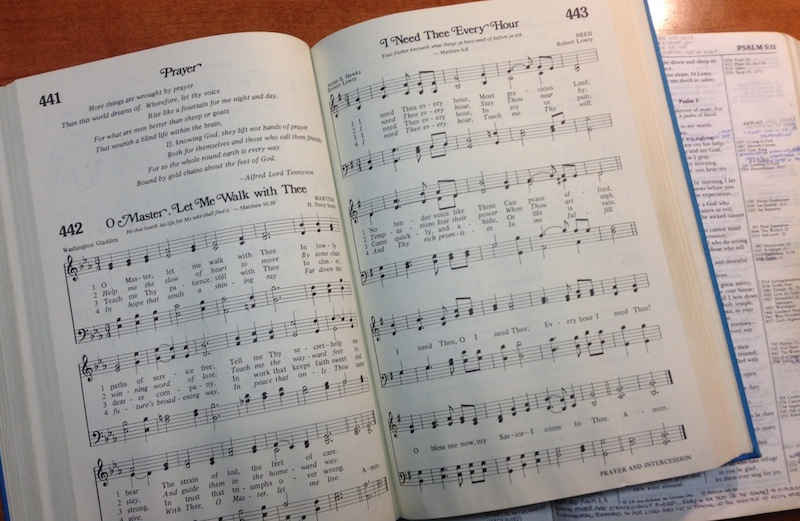
Hymns and hymnals are disappearing from many churches nowadays. But hymns will always be an integral, daily part of my life due to my habit of using the hymnal as an aid to prayer.

Praying the hymnal is simple. It takes no practice and little preparation, yet it’s a singularly enriching practice. It will help you pray when you don’t know what to pray. It will help you express the deepest and highest longings of your heart in ways you may never have experienced otherwise.

Sugarcreek Amish Mysteries In-Article Ad 2023

It will fill your praying with rich phrases and stunning verses until, eventually, your memory will overflow with the lofty lyrics of history’s finest poets even when you’re not reading from the printed page.

Just a few simple suggestions will get you started in the practice of praying the hymnal:

1.  Speak the hymn instead of singing it, especially at first.
Resist the temptation to sing. It may be hard at first if you know the hymn, but speaking it helps it become more of a prayer than a piece of music. And many fine hymns you’ve never sung can be added to your prayer repertoire, since not knowing the melody may actually be an advantage.

2.  Choose hymns that are prayers themselves, hymns that speak directly to God.
Not all hymns are prayers, of course. Some teach, some testify, some inspire. But hymns that are written as prayers (“Have Thine Own Way,” “O Love That Wilt Not Let Me Go” and “Take My Life and Let It Be”) need no revision or adaptation.

3.  Adapt the hymn’s wording to make it more personal or applicable to you.
Change the “thees” and “thines” of some hymns to “you” and “yours,” and (maybe) corporate language (“our” and “us”) to singular (“my” and “me”).

4.  Focus your heart and mind on what the hymn is saying.
Some people struggle to sincerely pray written words because they have trouble turning words on a page into the prayer of their hearts. It does take concentration but forget the line breaks and rhymes and focus on what the words are saying.

5.  Feel free to amplify or meditate on specific lines or words in the hymn.
Praying a hymn can be just the beginning of prayer if you give yourself permission to dig deeper into the sentiment the hymn has helped you express. 

6.  Pay special attention to hymns that rephrase Scripture.
Many hymns are based on Scripture, but some are Scripture in verse: “The King of Love My Shepherd Is” (Psalm 23), “As Pants the Hart for Cooling Streams” (Psalm 42), and “Bless the Lord, O My Soul” (Psalm 103:1), to name a few.

Add your own flourishes to these suggestions and your praying will soon be music to God’s ears.

6 Ways to Pray on the Run

We all want to pray more. We want to make prayer a priority in our lives. We want to spend more time worshiping God and enjoying His presence.

We want to be more faithful in praying for others. But in spite of our desires and resolutions, most of us find there are just not enough hours in the day.

Faithful Paws and Purrs In Article Ad

But what if I told you it is possible to enlarge your prayer life–considerably–without changing your schedule? What if I said you can increase the time you spend praying each day by a half-hour or more with just a few minor adjustments to the things you already do in a given day?

Not only is it possible, it’s fairly easy–if you learn to pray on the run:

1. Pray while you wait.
I have always hated to wait in line–especially at the grocery store. I would tap my fingers, count the items of the person ahead of me in the express checkout lane, browse any magazine or tabloid that happened to be at hand. But not anymore.

Now I use time spent waiting–in bank lines, traffic jams, airport terminals, or doctor’s offices–to pray.

2. Pray in the car.
Once upon a time, music, talk radio, or audiobooks were my constant companions in the car; now God is. I make it a priority to use car trips–whether I’m running a short errand or driving between cities–to draw closer to God and stay faithful in intercession for others.

In fact, on one cross-state road trip, I surprised myself by praying and worshiping for nearly four hours! Not only did the time pass quickly, my prayer life received a major workout.

Man put on hold. Photo by Blend Images, Thinkstock.3. Pray on the phone.
As a small businessman, I spend more time “on hold” and talking to voicemail than I like. Until a routine phone call to the office of a friend changed my prayer life; while on “hold,” I remembered that I had earlier promised to pray for the friend for whom I was waiting.

So I did, and by the time his voice came on the line, I had not only passed the time purposefully, I was also able to tell him that I had fulfilled my promise to pray for him.

4. Pray during commercials.
I’ve heard preachers propose that I shouldn’t be watching television if I’m not “all prayed up.” Well, that’s just fine, except I guess I’m not that disciplined.

But I have developed the occasional habit of muting the television during commercial breaks to pray–sometimes for whomever’s on my heart at that moment, sometimes for friends and family members who may be watching the same show and sometimes even for people I don’t know (such as that show’s actors, writers, and viewers).

5. Pray while exercising.
If you maintain a regular exercise regimen, why not merge it with prayer? You might even consider dividing your workout into prayer periods; for example, you may decide to praise while stretching, confess while warming up, intercede while working out, and give thanks and praise while cooling down.

After all, “physical training is of some value, but godliness has value for all things, holding promise for both the present life and the life to come.” (1 Timothy 4:8, NIV)

6. Pray what you see and hear.
I’ve also tried to cultivate the habit of infusing prayer into as many waking moments as possible, by praying short prayers in response to the world around me. When I hear an ambulance siren, I may utter a brief prayer for the victim.

When I see a funeral procession, I pray for the bereaved. When I open a card from a friend, I sometimes pray for the sender.

There are times, of course, when I don’t know what to pray, but I’ll still say something like “Lord, help,” or “Lord, have mercy,” and let the Holy Spirit fill in the blanks (Romans 8:26).

As you try to squeeze more prayer into the odd and mundane moments of your life, you may discover that prayer starts to take over. And soon, perhaps, instead of trying to fit prayer into your life, your prayers will fit more and more God…into your life.

6 Ways to Pray Like the Patriarchs

Perhaps you learned to pray while still on your mother’s knee. Or maybe you followed the example of a pastor or Sunday school teacher. You may have adopted the prayer practices of a friend or mentor. Maybe you even learned to pray in church!

In any case, there are so many avenues and examples of prayer to enlarge and enrich our practice that even the most prayerful among us are still learning–and probably always will be.

Sweet Carolina Mysteries In Article Ad

And among the lessons we can learn from are the prayers of the patriarchs, those people of God whose stories are recorded in the first book of the Bible: Abraham, Isaac, Jacob, and Joseph.

They prayed like few people do these days. Here are six ways you can learn from them and pray like them:

Pray like the patriarchs. Photo by Vitanovski, Thinkstock.1.  Pray prayers of invitation.
In Genesis 18:1, the Bible says “The Lord appeared to Abraham near the great trees of Mamre.” Abraham was sitting at the entrance of his tent when he saw three men and invited them to stay. Abraham may not have immediately recognized the Lord, but his invitation is a great model for prayer.

He said, “If I have found favor in your eyes, my Lord, do not pass your servant by” (Genesis 18:3, NIV). It can be a prayer of invitation for anywhere, anytime: when entering church, when heading to work, when going to bed, etc.

2.  Pray persistent prayers.
Many of Abraham’s encounters with God portray a keen Middle Eastern sensibility in which haggling and bargaining are strong values. It was apparent in the account of God’s covenant with Abraham (Genesis 15) and again when Abraham pleaded for Sodom and Gomorrah (Genesis 18:16-33).

Abraham’s tactic can be a helpful model, particularly when you are praying (as he did) based on what you know of God’s character and will: “Now that I have been so bold as to speak to the Lord, though I am nothing but dust and ashes, what if…?” (Genesis 18:27-28, NIV).

3.  Pray generous prayers.
You probably know the story of how Jacob stole his brother Esau’s blessing. But did you know that part of that blessing was this wonderful prayer of Isaac: “May God give you heaven’s dew and earth’s richness” (Genesis 27:28, NIV)?

That is a prayer you can pray for your own children…or for anyone (it is one of a dozen or so prayers I often append to emails, praying as I press “send”).

4.  Pray outrageous prayers.
Jacob was trembling in fear the night before he expected to meet his brother Esau, whom he had defrauded. So he prayed, “Save me, I pray, from the hand of my brother Esau” (Genesis 32:11, NIV). And God answered him, not with tender caresses but with a wrestling match.

But Jacob didn’t give up. In fact, even after being crippled by his Opponent, he demanded a blessing! He said, “I will not let you go unless you bless me” (Genesis 32:26, NIV).

Outrageous! Though he apparently knew that he could have been killed (see Genesis 32:30), he refused to be denied. Try it sometime (but make sure you mean it): “I will not let you go unless….”

5.  Pray the prayer of availability.
When you read the book of Genesis, it is nearly impossible to escape the sensation that the patriarchs were much more accustomed to dialogue with God than we are. God is repeatedly portrayed as speaking to them in plain and straightforward language.

Maybe it was different back then. Or maybe it was because they weren’t glued to their smartphones all the time.

In any case, Jacob’s prayer of availability, in Genesis 46:2, is a great prayer to pray every day, throughout the day: “Here I am,” he said. It only takes a second, and the more you pray it–“here I am”–the more likely you are to hear from God and see him move.

6.  Pray for your heritage.
When Jacob (or Israel, as he was also called) was taking his final breaths, he bequeathed a prayer to his sons:

May the God before whom my fathers

    Abraham and Isaac walked faithfully,

the God who has been my shepherd

    all my life to this day,

the Angel who has delivered me from all harm

    –may he bless these boys.

May they be called by my name

    and the names of my fathers Abraham and Isaac,

and may they increase greatly

    on the earth (Genesis 48:15-16, NIV). 

It is a prayer I pray often–adapting and expanding it liberally–for my children and grandchildren. I have prayed it in dedicating newborn babies in church. It is a marvelous thing to pray this 3500-year-old prayer for 21st century people.

Amazing, isn’t it, how utterly current and helpful these patriarchal prayers are? Which do you plan to incorporate into your prayer habits? Are there any you’ve already prayed? With what result? 

6 Ways to Pray Like Abraham Lincoln

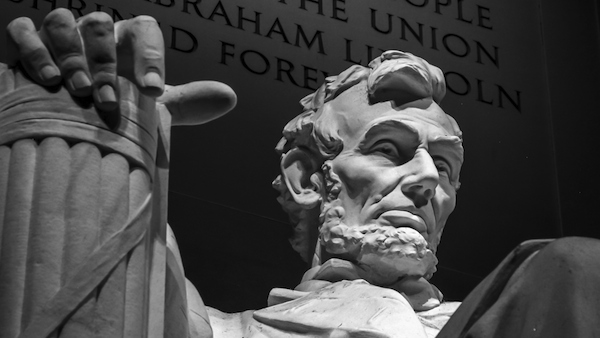
Abraham Lincoln, whose birthday is February 12, may have been the most eloquent president in American history. His speeches—particularly the Gettysburg Address and his Second Inaugural Address—are among the finest ever delivered. And multiple historical sources (including Lincoln himself) characterize him as a man of frequent and often desperate prayer. So it is surprising that we have no surviving text of any vocal prayer uttered by the 16th president.

That doesn’t mean, however, that we have no insight into how Abraham Lincoln prayed. We do. And there is much benefit we can derive from praying like Abe, in these six ways at least:

1)  Pray privately.
During his presidency, Lincoln often attended a weekly prayer meeting held at the New York Avenue Presbyterian Church near the White House. When doing so, however, he chose to sit alone in the pastor’s study with the door to the chapel ajar. He was there not for show but (as he told the pastor, Dr. Phineas D. Gurley) because he was able to pray without distraction and without anyone trying to impress him.

2)  Pray in writing.
His most famous letter is one he wrote to Mrs. Lydia Bixby, whom he was told had lost five sons in the war between the states. He wrote, “I pray that our Heavenly Father may assuage the anguish of your bereavement, and leave you only the cherished memory of the loved and lost, and the solemn pride that must be yours, to have laid so costly a sacrifice upon the altar of Freedom.” Writing your prayers—whether to others or in a journal no one else will ever see—can marvelously focus your thoughts and prayers.

3)  Make time for prayer.
Though he was elected twice, Lincoln was president for a mere 49 months. In that time he issued nine formal calls for the American public to fast and pray—an average frequency of one proclamation every five-and-a-half months. He clearly believed in making time for focused, united, purposeful prayer.

4)  Be specific in prayer.
In his first “National Fast Day,” President Lincoln’s words reveal the careful reason and specific thought he gave to prayer:

“And whereas when our own beloved Country, once, by blessing of God, united, prosperous, and happy, is now afflicted with factions and civil war, it is peculiarly fit for us to recognize the hand of God in this terrible visitation, and in sorrowful remembrance of our own faults and crimes as a nation and as individuals, to humble ourselves before Him, and to pray for His mercy, to pray that we may be spared further punishment, though most justly deserved; that our arms may be blessed and made effectual for the re-establishment of law, order and peace, through the wide extent of our country; and that the inestimable boon of civil and religious liberty, earned under His guidance and blessing, by the labors and sufferings of our fathers, may be restored in all its original excellence.”

5)  Pray with hope and humility.
In his Second Inaugural Address, Lincoln’s prayerful words were characterized by both hope and humility: “Fondly do we hope, fervently do we pray, that this mighty scourge of war may speedily pass away. Yet if God wills that it continues…until every drop of blood drawn with the lash shall be paid another drawn with the sword…so still it must be said that the judgments of the Lord are true and righteous altogether.”

6)  Pray fervently.
Perhaps Lincoln’s most famous words on the subject of prayer reflect an awareness of his great responsibility, personal inadequacy and fervency: “I have been driven many times upon my knees,” he once confided in an associate, “by the overwhelming conviction that I had no where else to go.”

SUBMIT YOUR PRAYER REQUEST HERE

6 Ways to Prayer Journal

Some people think only writers or “deep thinkers” keep a journal. But you don’t have to be either to use journaling as a way to deepen and broaden your prayer life. 

I have kept a prayer journal for a couple of decades now, but I haven’t done it the same way all that time. I find it helpful to try new things in prayer and in journaling, so every once in a while I will switch things around and follow a new practice. Here are several of the ways I have journaled my prayers:

Community Newsletter

Get More Inspiration Delivered to Your Inbox


1.  Journal and pray.
For some time I kept a separate journal and prayer journal—two different books. Then one year as I began a fresh new book, I decided to journal everything in the same volume, just using a different color for my prayers. This was easier than switching back and forth between two books, and also made it easier to take my journal with me when I traveled. It also helped me  pray more conversationally, as I would often find myself praying as I wrote without switching pens.

START A PRAYER JOURNAL IN YOUR DAILY GUIDEPOSTS PLANNER

2.  Journal your thanks.
Some years ago during a battle with depression (and related problems sleeping), my counselor suggested that I journal at least three prayers of thanks every evening before I went to bed. Doing so made a difference; I found it hard to be grateful and depressed at the same time. I liked it so much that I continued the practice after the depression abated and have renewed it every so often over the years since.

3.  Journal your praise.
During another period of prayer journaling, I focused most of my written prayers on praising (especially since praise is usually the form of prayer I most neglect). Most of the time, I simply started my prayers, “Today, God, I praise you for . . .” Since I did that journaling in the mornings, the practice sharpened my awareness of God and His wonderful works throughout the day.

4.  Journal your questions.
It didn’t last more than a few weeks, but during one stretch of my prayer journal I asked at least one question a day of God, like the psalmists (“Why do the nations rage?” “Why do the wicked prosper?” etc.). My questions were often more selfish (such as, “Why can’t I get along with Brad?” or “What am I not seeing in this situation?”), but they did help me to express myself honestly to God.

5.  Journal your dreams.
As I look back over my journals, I see that I used those pages frequently to place my dreams before God—for a grandchild’s healing, for a writing opportunity, for reconciliation or recovery. For some reason, I find it easier to dream on the written page, perhaps because the act of writing helps me to focus my thoughts.

6.  Journal your answered prayers.
One of the great benefits of a prayer journal is the ability it affords to remember and record answered prayers. Sometimes I have written prayers of thanks for answered prayer every evening for a stretch. At other times I placed an asterisk or a cross in the margin beside every answered prayer; as a result some pages in my prayer journal are vivid affirmations that God is a prayer-answering God.

These are just six ideas for prayer journaling, just scratching the surface. But if it is a help in getting anyone started—or helping anyone continue—then I’ll count that as yet another answer to prayer.