Embrace God's truth with our new book, The Lies that Bind

Use Your God-Given Power

We use words rather loosely because we repeat them so frequently. One such word is “power.” I decided to consult the dictionary on the subject.

The Latin word from which “power” derives is the equivalent of the Greek word dynamis, a word used all through the New Testament. And from dynamis is derived the English word dynamite.

Inspiration from the Garden in article ad

The Bible is filled with the most powerful ideas in this world. By substituting the word “dynamite” for the word “power,” you can begin to understand the greatness of it.

Take this verse, for instance. “When Jesus had called the Twelve together, he gave them power (dynamite) and authority to drive out all demons and to cure diseases” (Luke 9:1). And, in praying for his followers, Jesus asks, “Holy Father, protect them by the power of your name” (John 17:11).

Imagine how powerful God’s name is!

When you are up against a tough situation, the first essential is to stand up to it. Face it, think about it, study it, pray about it; then hit it and keep after it. You have within you enough force, put there by Almighty God, to overcome situations that seem overwhelming.

Acts 1:8 promises, “The Holy Spirit will come upon you and give you power.” When the Holy Spirit comes upon you, you will experience an explosion that will change your whole life and, through you, help to change the world. It’s really tremendous.

If you practice faith constantly, if you keep in His spirit, if you stay in tune with Him, you can bring the necessary power into play against all difficulties. Don’t ever think you’re weak. Don’t ever say you’re weak. Don’t ever believe you’re weak. You’re not weak.

“For the Spirit God gave us does not make us timid, but gives us power, love and self-discipline” (2 Timothy 1:7). You are filled with a God-given power that you can bring into play against difficulties and overcome them. And that’s a dynamite truth!

Two Very Special Bible Verses for Advent

Advent’s coming. The very word means “coming.” No sooner have we finished off the turkey leftovers and stuffing than we celebrate this miraculous coming. 

In my childhood we had an Advent calendar and opened a window every day until we came to the last BIG window which showed Mary and Joseph and the baby in the manger.

Pause & Pray In Article Ad

With each window there was a Bible verse, 24 of them in all. This year for Advent I’ve decided to hold just two very special verses in my heart and head.

1)  You should love the Lord your God with all your heart, and with all your soul, and with all your mind, and with all your strength (Mark 12:30). Don’t you love how Jesus breaks it down into four special arenas of love. I’m almost tempted to gesture to each of them.

My heart. He’s not just talking about that vital organ that circulates my blood and keeps me alive with every beat. It’s also the symbolic home of my affections, passions, cares, concerns, values, everything that makes me wake up in morning, ready to start my day.

My soul. How do you gesture to the soul? It seems even bigger than the body or any part of it. It’s that part of us that existed before we were born and outlasts us. Beyond time. To love God with my soul means embracing the God and the God I see in everyone else. 

My mind. Yes, our minds. Our intellect, our knowledge, our cognitive abilities. To love God, we don’t leave our minds at the door. We use them. We expand them. We celebrate them. We read, we go to Bible studies, we listen, we learn, we grow. Constantly. 

My strength. Faith can seem like it’s just an airy, heady thing. Not at all. Jesus reminds us that we have strength inside and out. I go to the gym. I lift weights. I go for a jog. And I turn to God to keep strong in my commitments and loyalties. The sole source of strength. 

2)  You shall love your neighbor as yourself (Mark 12:31). The “as yourself” is the part that’s easy to forget. Thinking about others is great for the mindless muddle of self-absorption. Not just caring but doing. I get into trouble though when I’m so busy doing, turning myself into a sacrificial lamb—with an element of self-congratulation—that I forget to do for myself.

Advent offers us opportunities for both. We shop for others. We buy gifts. We think of that perfect thing they’d never think of for themselves. We decorate the house. We set up a crèche. We put out the figures around it. We listen to carols and sing them.

And we remember the love that sets all of this in motion. The love of God that enables us to love ourselves and others. See what’s coming and has come. Welcome it yourself. Happy Advent.

Turn to the Bible for Prayers About Peace

Among the many prayers in the Bible are numerous prayers for peace. One example are the verses ascribed to King David, probably written around 3,000 years ago:

Pray for the peace of Jerusalem:
“May those who love you be secure.
May there be peace within your walls
and security within your citadels.”
For the sake of my family and friends,
I will say, “Peace be within you” (Psalm 122:6-8 NIV).

NIVFLB Inarticle ad

I regularly pray those words, just as they are recorded in our Bibles, praying for peace in Jerusalem (the very name of which includes the Hebrew word for peace: “shalom”). But I also apply those lines more broadly, adapting and applying them to contemporary situations, along with numerous other biblical prayers and admonitions to promote peace. Here are seven prayers for peace, drawn from the Bible:

1)  Prayer for perfect peace in your heart and soul
Lord, the prophet Isaiah said to You, “You will keep in perfect peace those whose minds are steadfast, because they trust in You” (Isaiah 26:3 NIV). And Jesus, You said, “Peace I leave with you; my peace I give you. I do not give to you as the world gives. Do not let your hearts be troubled and do not be afraid” (John 14:27 NIV). So, I pray for that perfect peace of Christ (Colossians 3:15) to rule in my heart and soul.

2)  Prayer for peaceful sleep
Heavenly Father, as the psalmist sang, “In peace I will lie down and sleep, for You alone, Lord, make me dwell in safety” (Psalm 4:8 NIV).

3)  Prayer for peace in the church 
God, Your word says, “The Lord gives strength to His people; the Lord blesses His people with peace” (Psalm 29:11 NIV). Help me and Your whole church to “Make every effort to keep the unity of the Spirit through the bond of peace” (Ephesians 4:3 NIV).

4)  Prayer to be a peacemaker
Jesus, You said, “Blessed are the peacemakers, for they will be called children of God” (Matthew 5:9 NIV). I want to be blessed; I choose to be a peacemaker, knowing that “Peacemakers who sow in peace reap a harvest of righteousness” (James 3:18 NIV).

5)  Prayer for the peace that passes understanding
Prince of Peace, I ask for You to fulfill in me the promise of Your word that “the peace of God, which transcends all understanding, will guard your hearts and your minds in Christ Jesus” (Philippians 4:7 NIV).

6)  Prayer to live in peace with all
God, since Your word says, “If it is possible, as far as it depends on you, live at peace with everyone” (Romans 12:18 NIV), I ask You to help me “make every effort to do what leads to peace” (Romans 14:19 NIV), that I and those around me “may live peaceful and quiet lives in all godliness and holiness” (1 Timothy 2:2 NIV).

7)  Prayer for the peace of a city, region or home
God, I pray for the peace of __________:
“May those who love you be secure.
May there be peace within your walls
and security within your boundaries.
For the sake of everyone within,
I will say, ‘Peace be within you’”(based on Psalm 122:6-8 NIV).

That last prayer, from Psalm 122, is a great one to pray while on a walk around your neighborhood or city. It can also work as a house blessing for any home you enter. And all of those prayers above can help to cultivate and spread the “shalom” of God, a fruit of His Spirit (see Galatians 5:22).

Tired? Tap into Divine Energy

How we think we feel has a definite effect on how we actually feel physically. If your mind tells you that you are tired, the body mechanism, the nerves and the muscles accept that fact. But if your mind is intensely interested, you can keep on at an activity indefinitely.

The Bible tells us that everything we are—our ability to think and reason and act—come to us as a gift from God. “In Him we live and move and have our being” (Acts 17:28). God is not only the source of our life, He is also the source of the energy we need to live that life.

Mys of Blackberry Valley In Article Ad

Religion functions through our thoughts; in fact, it is a system of thought discipline. By supplying attitudes of faith to the mind, religion can actually increase your energy.

“I can do all things through Christ who strengthens me” (Philippians 4:13). Your belief in God helps you accomplish all you need to do (and more!) by communicating to your body that you have ample support and resources of power.

The supreme overall word of the Bible is life, and life means vitality—to be filled with energy. Jesus said, “I am come that they might have life, and that they might have it more abundantly” (John 10:10).

This doesn’t mean your life will be free of pain or suffering or difficulty. But it does mean that if you practice abiding in God and listening to his voice, you can live with power and energy. Every day. “Never will I leave you; never will I forsake you” (Hebrews 13:5).

God is the source of all energy in the universe—atomic energy, electrical energy and spiritual energy. When we are in spiritual contact with God, the Divine energy flows through our personality, automatically renewing both our minds and bodies.

So the next time you’re feeling tired and overwhelmed, don’t reach for an energy drink. Instead, sit quietly. Open your Bible to the Psalms. Meditate on the power and presence of God in your life. Be energized!

Three Things the Bible Says About Prayer

I’ve been reading Biblical scholar T.J. Wray’s new book, What the Bible Really Tells Us. She has a gift for taking in a lot of information and summarizing it in a helpful way, especially when talking about prayer. In my prayer life I can get lost in the details. She helps me see the big picture. Here’s her take on what the Bible says about prayer:

1. We should pray a lot.
Three times a day is the amount often mentioned in the Hebrew Scriptures. “Evening and morning and at noon I utter my complaint and moan,” says the Psalmist. But even that’s not enough. “I will bless the Lord at all times; his praise shall continually be in my mouth.” Then there is Paul’s oft-quoted injunction to “pray without ceasing.” I’ve always felt that was a real challenge. Am I supposed to stop everything to pray all the time? Then I look at Paul’s busy life. He was always writing, traveling, preaching, getting out of tight spots like prison and a shipwreck. Obviously he prayed while he did.

2. Prayer comes in many different shapes.
Like most people, I’m prone to pray when I want something. I ask God for health, wellbeing, peace, patience and freedom from worry, and not just for myself. This is called “petition,” and there are plenty of examples of it. Just start with the Lord’s Prayer. But I often forget the other opportunities for prayer. Like praise: “Praise the Lord, all you nations! Extol him, all you peoples!” Or thanksgiving: “O give thanks to the Lord for he is good, for his steadfast love endures forever.” Or just telling God I’m sorry: “Have mercy on me, O God, according to your steadfast love.”

3. We can ask God for anything.
People in the Bible ask God for healing from a physical illness, from emotional distress, for deliverance from their foes. King Solomon asked for wisdom, Christ asked for strength. It’s important to ask and trust. “Ask and it will be given to you; search and you will find; knock and the door will be open for you,” Jesus said. He also said, “So I tell you, whatever you ask for in prayer, believe that you have received it, and it will be yours.” Now, isn’t that comforting?

Hopefully, these tips will help you to learn how to pray more effectively.

The Ultimate Bible App

It was a German printer named Johannes Gutenberg who made the breakthrough. We call it innovation today.

For centuries the Bible had been laboriously hand-copied by scribes and monks in medieval towers. A king or queen might have an exquisite illuminated prayer book or collection of the Psalms, but few others did. Not many could read anyway.

A Journey of Faith In Article Ad - Avail Now

Then, in 1455, Gutenberg, pioneering the use of movable type, printed a complete Latin Bible. A revolution had begun. God’s Word became more accessible, and people could experience a more personal relationship with God.

Martin Luther translated the Bible into everyday German; then William Tyndale did one in English, claiming, “Before very long I shall cause a ploughboy to know the Scriptures.” The monumental King James Version, produced in 1611, could soon be found in nearly every English-speaking home.

I’m not Gutenberg, I’m a pastor, but I am passionate about getting Scripture into people’s hands. Not long ago, my church came up with a way of doing that, something we believe can be as revolutionary as Gutenberg’s Bible.

Much like the early popularizers of the printed Bible, we struggled to get it right. In fact, I felt like the last person God would pick for this work. But that’s God for you.

Picture a college frat boy who had never been interested in the Bible. I wasn’t the wildest one by any means, but my sophomore year my fraternity was at risk of being kicked off campus. I thought, as sort of a PR move, we should show the fraternity council that we weren’t such bad guys.

“Let’s have a Bible study at the house,” I said. “Anybody can come.” We needed to let people know that our place wasn’t just for wild parties.

Even though some of my fraternity brothers laughed at the idea, we decided to do it. We handed out flyers all over campus, put up posters and called everybody we knew.

The day of the Bible study came and I was feeling pretty proud of myself. In the middle of class, it dawned on me that I didn’t own a Bible. It was too late to buy one, let alone read it. If there ever was a foxhole moment this was it. God, I need a Bible, I half-muttered. NOW.

When class was dismissed, I dashed outside, hoping one of my buddies might have an extra Bible lying around. I almost ran into an older gentleman in a coat and tie. His name tag said he was from Gideon International, whatever that was.

He was handing out small green books with faux-leather trim. Bibles. “Do you want one, young man?”

“Sure.” I took out my wallet. I would have given him a hundred bucks if I had it. “How much?”

“Nothing. They’re free.”

A God I wasn’t even sure I believed in had hand-delivered a Bible. I took it and thumbed through it on the way back to the fraternity: Matthew, Mark, Luke, John….

What I hadn’t realized was that he had given me a copy of the New Testament. So when we gathered in a circle in the den, the place still reeking of beer and cigarettes, I announced, “We’ll start at the beginning, Matthew.…”

“Mine says, ‘Genesis: In the beginning God created the heavens and the earth,’” one of my frat brothers said.

“Mine doesn’t,” I said. “Let’s start with Matthew.”

And we did. I was hooked. I whizzed through the Gospels and devoured Paul’s letters. One night, when I read about God’s grace in Ephesians, I became so desperate for a conversation with this savior I barely knew that I climbed out the window to escape the crowded frat house.

I wandered to the softball field, knelt on the damp grass, offered myself up to God, and stood up a different person.

To my surprise, a buddy from the fraternity made the same decision that night. “Let’s celebrate,” we said. We were so green in our faith that we did the only thing frat boys knew to do when something good happened. “Let’s get a beer.”

Eventually I found a Bible complete with Old and New Testament. I joined a church, went to seminary and became a pastor. That free Bible changed my life. I wanted to help other people connect to it.

I started a church which by the grace of God grew by leaps and bounds. Yet I was discouraged with how little people knew about Scripture. I could hardly blame them, given my past.

We held meetings to come up with ways to bring the Bible into people’s everyday lives. We brainstormed, tried different things. One day, Bobby Gruenewald, one of our pastors, was waiting in a slow security line at the airport, heading back to Oklahoma, staring at his new smart phone.

He wondered, What if we create a website where people can share Scripture and upload videos? By the time he reached his gate he had registered the domain name, YouVersion.com.

His concept seemed solid–so we ran with it. As excited as we were on launch week, our new idea didn’t catch on. Most of our users were staff members, and even they didn’t love using the site.

After a few months, I realized that if we couldn’t find a way to turn things around, attract more traffic and get our numbers up, we’d have to take the website down.

Knowing that Apple was about to launch the world’s first app store, Bobby had another idea. He asked, “What if we created a Bible app? We can modify what we’ve already built and offer different translations, Bible studies, reading plans.” Bingo. That was it.

Everyone thought we should charge for the app. Certainly 99 cents would be reasonable–a bargain, really. After all, it would help us cover the massive expense of developing the app.

Then I thought of that frat boy in a panic, desperate for a Bible. “No,” I said. “Someone once gave me a Bible for free. Let’s do the same.”

I knew it sounded nuts. How was our church going to afford an app that gives the Bible to people for free? And yet, it just felt right.

We worked around the clock, doing things by the seat of our pants. Our one dedicated YouVersion employee was a 19-year-old college kid. We reached out to Bible publishers to get the rights to offer their versions for free.

Even knowing this could potentially hurt their sales, publisher after publisher generously agreed. We sent out e-mails to our congregation and friends. Then we went live. We figured we’d be lucky if we got a few thousand downloads in the first month.

We had 81,000 downloads on the first weekend!

The numbers have continued to astound us. We’re up to 150 million downloads and over a billion hours of Bible reading. We offer 747 versions of the Bible in 476 languages.

We have hundreds of Bible studies from legendary pastors like Billy Graham and Joel and Victoria Osteen, and the numbers continue to climb. You can download it to your phone, tablet or computer; you can listen, you can watch videos. We’ve even launched a Bible app for kids.

I used to put tabs in my old Bible so I could find the different books. No need to on my phone. I just type in the book, chapter and verse and go right to it.

I’ve noticed too how our Bible study discussions have been enhanced. On YouVersion, you can stay on the same verse and switch to a dozen different translations. It’s also easy to bounce around to different parts; and it levels the playing field.

“Let’s read from the first chapter of First Thessalonians,” someone will say. It used to be only the well-versed Bible students who could immediately turn to the right page. Now everybody can do it.

Today we have a staff of 30 who work on YouVersion and hundreds of volunteers around the world. After English, Portuguese is the most popular language, followed by Korean and Spanish.

The project is entirely supported by our church, by donations and by the passion of people who want to share Scripture with virtually everyone on the planet.

Did Bobby have any idea what he happened upon in that airport security line? No way. He was just grasping for a new approach and wondering how technology could help.

The truth is, God uses our inventions, from the printing press to the Internet, to spread his Word, not the other way around. Talk about an Innovator.

Download your free eBook, Let These Bible Verses Help You: 12 Psalms and Bible Passages to Deepen Your Joy, Happiness, Hope and Faith..

The Serenity Prayer Ignited His Spiritual Awakening

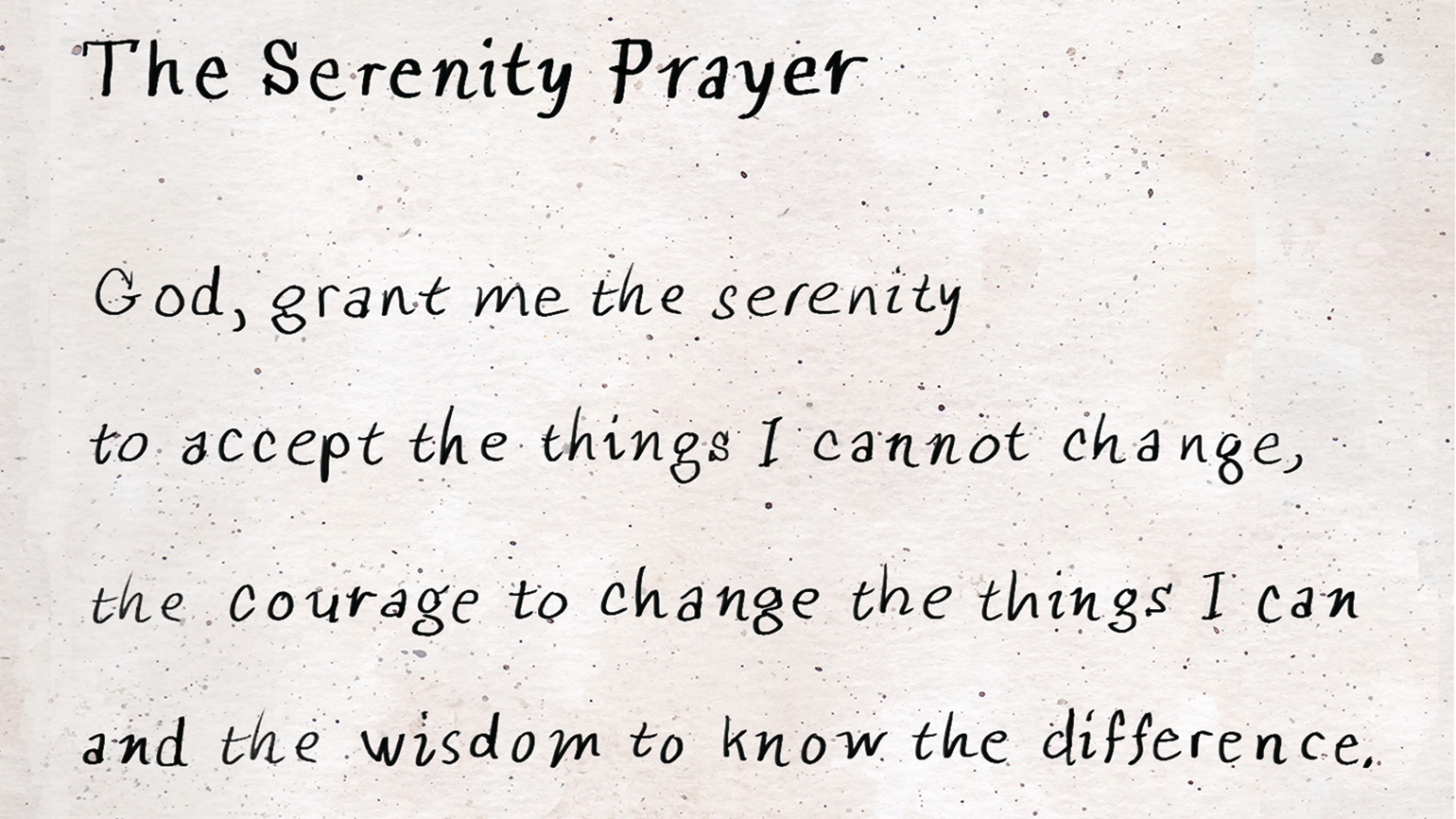
If only Carlene Schaaf’s dad had discovered the Serenity Prayer and the organization it is most closely associated with, Alcoholics Anonymous, whose members often recite it in unison at the end of meetings. I was one of the fortunate ones, though I didn’t know it at first. I wanted to stop drinking but wanted nothing to do with a God I didn’t care to believe in. That gave me a problem with the prayer.

“Then don’t say ‘God,’” my sponsor said dismissively. “He’s not going to be offended.” I took the advice and omitted his name when I stood at the conclusion of a meeting, grasping hands with the persons on either side of me. I didn’t let myself think too hard about whom I was beseeching for serenity, just so long as I didn’t give in to the G word. I even practiced outside the meetings so I wouldn’t slip up.

Go For It In Article Ad

So why did this prayer seem to keep me out of trouble? It centered me in situations where I’d normally reach for a mood changer. I wondered if maybe it would work even better if I added “God.” I experimented, and that was the beginning of my spiritual awakening.

AA founder Bill Wilson said about the Serenity Prayer, “Never have we seen so much AA packed into so few words.” And I might add, never has so much God been packed into so few words.

The Roads That Lead to God

For many of us, the beginning of a new year offers a time to think about the future, a time to plan for positive changes in our lives. But as you probably know, making New Year’s resolutions is a lot easier than carrying them out!

Even the great Apostle Paul confessed, “For the good that I will to do, I do not do; but the evil I will not to do, that I practice…. O wretched man that I am! Who will deliver me from this body of death?” (Romans 7:19, 24).

Community Newsletter

Get More Inspiration Delivered to Your Inbox


Fortunately, Paul found an answer to his question. In the next verses he writes, “I thank God–through Jesus Christ our Lord! For the law of the Spirit of life in Christ Jesus has made me free from the law of sin and death” (7:25, 8:2).

And at another time the Apostle wrote, “I can do all things through Christ who strengthens me” (Philippians 4:13).

God has given us the ability to change things, and ourselves, for the better. All through history, from Noah and Abraham to Edison and Lincoln and Billy Graham and my own parents, God has enabled men and women to do exciting, seemingly impossible things, proving that we can be “workers together with Him” (2 Corinthians 6:1).

How can we harness His divine power to transform ourselves–and our world–for the better? We only need travel the right roads.

1. Travel the road of total trust.
It is God’s will that we trust Him completely. Turn all your plans and panic and problems over to Him. Believe that God is in charge, that He has a plan and will work for your good in all things (Romans 8:28). When something terrible happens (as it does at times to all of us), trust God to bring good out of it.

2. Travel the road of positive affirmation.
Positive affirmations work! Every day feed your mind hopeful, positive statements. Begin with these:

But seek first the kingdom of God and His righteousness, and all these things [that you need] shall be added to you (Matthew 6:33).

In due season we shall reap if we do not lose heart (Galatians 6:9).

I can do all things through Christ who strengthens me (Philippians 4:13).

3. Travel the road of the forward look.
The Apostle Paul knew the importance of forward thinking. “But one thing I do, forgetting those things which are behind and reaching forward to those things which are ahead…” (Philippians 3:13). The important thing to do about the past is to extract whatever know-how or wisdom it may contain–then forget it.

Look ahead, never back. Make sure you have a clearly-defined goal. Hold it in the conscious mind until it sinks into the unconscious. Then you will be well on your way to the success you imagine.

May the roads you travel this year bring you closer to the Savior and to your own personal best.

The Relationship of Faith and Suffering

Suffering hurts. It isolates. It cripples. Yet the Bible makes it clear that suffering is part of the call to faith. “Take up your cross and follow me,” Jesus said (Mark 8:34). We’re not even supposed to be “surprised at the painful trial you are suffering, as though something strange were happening to you,” but are commanded to “rejoice that you participate in the sufferings of Christ, so that you may be overjoyed when his glory is revealed”(1 Peter 4:12-13).

How can this be? Suffering knocks us to our knees—but if we pray while we’re there, that’s a good thing. One of the hidden benefits of suffering is that it can draw us closer to God—if we are willing to move in that direction. We can reach for a deeper connection with God and learn things we’ve bypassed in times of comfort and pleasure. Suffering teaches us humility and opens our hearts. Jesus did not come to explain away suffering or remove it; He came to fill it with His Presence.

Daily Strength for Women in Article ad

But how, exactly, do we get through our suffering? Often we begin by saying something as simple as, “Father, You have allowed this suffering to come to me, and I accept it in the name of Christ. I ask You to unite my suffering to His, so that through it I may become more like Him in every way.” And remember, we need to concentrate on what we are being asked to endure today (Matthew 6:34).

Of course, there’s nothing wrong with praying for relief from suffering, but we also need to prepare our hearts for whatever God’s will may be. My father used to advise people to put pain in God’s hands, and leave it to Him. “If it is His will that you are to bear it,” Dad said, “God will fortify you with sufficient understanding and strength to endure it.” He knew firsthand that prayer can remove suffering; he also knew that prayer was needed in order to “be joyful in hope, patient in affliction, faithful in prayer” (Romans 12:12).

When we do suffer, we are called to do so patiently. Why? “Because Christ suffered for you, leaving you an example, that you should follow His steps” (1 Peter 2:20-22). Keeping a positive attitude and concentrating on better days ahead is important to surviving our difficult times. We must resist the temptation to become bitter and, instead, join the Apostle Paul in saying, “I consider that our present sufferings are not worth comparing with the glory that will be revealed in us” (Romans 8:18).

The Reformation: 5 Things You Should Know But Probably Don’t

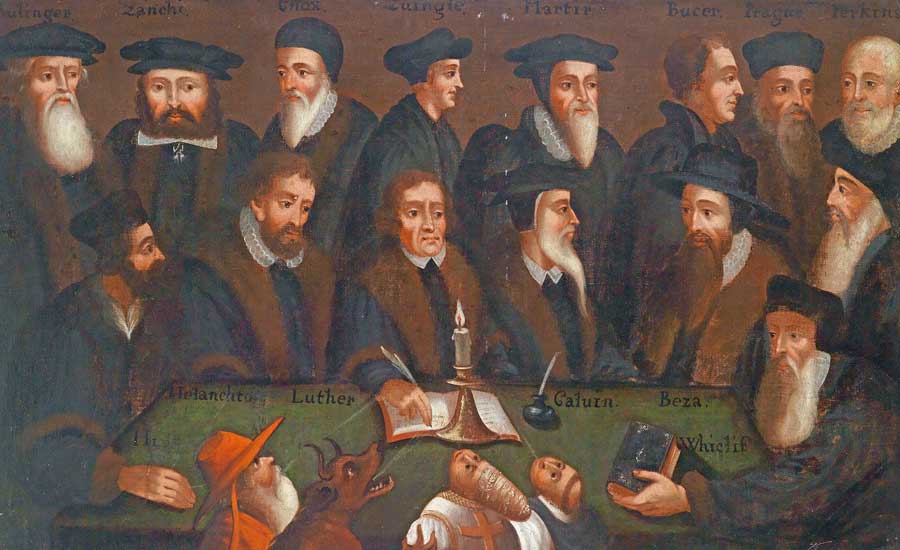
Many people have heard about Henry VIII and his wives or Martin Luther nailing long lists on church doors.  Others may have learned about a famous printer who printed Bibles or studied the battles that pitted Catholics versus Protestants in one of longest conflicts in European history. 

These are just some of the facts about The Reformation, the religious movement that caused the schism in Western Christianity and created, to an extent, the Catholic and Protestant traditions of Christianity.  Of course, there is more to the story. How much do you really know about the Reformation? Discover five things you need to know—a couple of them may surprise you.

GP In Article Desktop

1.    There is no such thing as “The Reformation” 

This is not as contradictory as it may seem. Many may think  of “The Reformation” as a singular moment in history when really, it is a movement that involved many key players, several different regions and a spanned a few decades. The Reformation started in Europe but spread throughout the region and into Latin America, North America, Africa and Asia. And its key players were not just Martin Luther but Luther, John Calvin, Henry VIII, and others. Lastly Martin Luther’s 95 Theses, which was posted on October 31, 1517, was the beginning of a nearly 40 year process of reformation for the Christian church.

2.    The printing press effect 

In the 1450s, Johannes Gutenberg invented the printing press, making him the first European to use movable type printing. As the story goes, he was interested in turning a profit and discovered that printing the Bible—his Gutenberg Bible was one of the first big books in the West to use movable type—was a good way to do it. But, he also discovered that printing indulgences—the remission of the punishment due to sin—was also financially  lucrative. How did this pertain to the Reformation? 

The printing press allowed reformers such as Martin Luther to distribute his 95 Theses and aided in the spread of German Bibles. But, it was also a reminder of the issue of indulgences, which Luther was against. His anti-indulgence stance was the catalyst for the 95 Theses, which is also known as the “Disputation on the Power and Efficacy of Indulgences.”

3.    The nail in the door

The verdict is still out on whether he literally nailed his 95 Theses to the door at Wittenberg on October 31, 1517. The 95 Theses, which outlined Luther’s dispute against clerical abuses is considered the initial catalyst for the Protestant Reformation. Popular accounts of history describe Luther aggressively nailing the theses to the door, which, of course, seems quite powerful. Yet it is arguable whether he actually did that since accounts are varied and some are from people, such as Phillip Melancthon, who wasn’t eyewitnesses to the event. 

4.    Women in the Reformation

It is often said that, “History is written by the victors,” and in the case of such writers on the Reformation, they usually leave women out of the story. Yet, women played a number of roles instrumental to the Reformation. They were nuns, wives of key players, royalty, scholars and much more. One such woman was Marie Dentiere who was part of an Augustinian monastery but soon left to join the reformers. Dentiere was a strong proponent of the reform in Geneva, often speaking out in public places and writing a pamphlet to the Genevans about God’s intentions for the city. Because of her work Geneva became a Protestant republic. 

5.    Wars and rumors of wars

One of the most significant battles waged as a result of the Reformation was the Thirty Years War, which is considered the longest and most destructive war in European history. The war started because of fragmenting of the Holy Roman Empire inherent in the new Protestant and Catholic structure, but it turned into a political feud concentrating on the France–Habsburg rivalry for European political pre-eminence.


The Power of Kindness

Who are the kindest people you know? Isn’t being in their presence like sitting in sunshine? Kind people make you glad to be alive; they help you see beyond the fog of worry or discontent. “Anxiety weighs down the heart, but a kind word cheers it up” (Proverbs 12:25).

Jesus’ commandment to us to “Love one another, as I have loved you” (John 13:34) was an instruction to be kind, always and to everyone. Our Lord exemplified kindness–healing the sick, pouring Himself out for the crowds who gathered to touch Him or hear Him. He was human; it must have been exhausting.

Whistle Stop Cafe In Article Ad May 2023

Yet, “Very early in the morning, while it was still dark, Jesus got up, left the house and went off to a solitary place, where he prayed” (Mark 1:35). He replenished His strength with prayer and solitude. We can do the same.

What does living a life of kindness mean?  It means curbing our impulse to speak sharply. It means praying every day: “Let the words of my mouth and the meditation of my heart be acceptable in Your sight, O Lord, my strength and my Redeemer” (Psalm 19:14). If a harsh word escapes us in a moment of stress, kindness motivates us to make a sincere apology.

It means telling the hard but necessary truth in a way that builds the recipient up, rather than tears her down. (Jesus could call the Pharisees “brood of vipers” and “hypocrites” because He was God and had the Godlike right to judge, but we must not presume to have such power. We will often be totally wrong in our assessment.) We are to live our lives being “kindly affectionate to one another” (Romans 12:10).

Sometimes kindness means shading the stark truth: “You’re looking so much better” to a friend going through a hard time and showing it. “I believe in you completely” to someone you care about who is struggling to get his footing in life or on the job. In this way we help to “bear one another’s burdens, and so fulfill the law of Christ” (Galatians 6:2).

Kindness means refraining from complaining or gossiping, letting the other driver go first, putting your cart into the cart corral at the grocery store rather than leaving it in the next parking space. It means sending a note or card, making a hospital visit, bringing a meal to a shut-in.

It means giving to the needy a substantial part of what we are blessed to have. It means being patient with those who try that patience. And it means forgiving, with no strings attached. “Be kind and compassionate to one another, forgiving each other, just as in Christ God forgave you”(Ephesians 4:32).

True kindness means being gentle in our inner, private thoughts–catching ourselves forming critical, negative judgments and nipping them in the bud. A surefire way to do that is to turn a negative thought into a prayer for that person. The Apostle James encourages us, as Christian brothers and sisters, to “pray for one another” (James 5:16).

The best thing about kindness is that it comes with a double blessing. The person who offers a kindness gets as much or more out of the deed as the recipient. Proverbs tells us, “Those who are kind benefit themselves” (11:17).

So make a conscious effort today to be kind to everyone you meet. It will make them–and you–feel better!

The Power of God’s Love

Thinking and faith are closely intertwined when it comes to the Christian life. Actually, faith is thinking positively instead of negatively, hopefully instead of cynically and lovingly instead of suspiciously. Three of the most important elements in Christianity are faith, hope and love. The Bible tells us “the greatest of these is love” (I Corinthians 13:13).

God’s love is fatherly.
God is called “Father” in the Old Testament as well as the new; Psalms 68:5 and 89:26, Isaiah 9:06 and 64:8 and Malachi 2:10 are examples of this. And of course this is his name throughout the New Testament. Jesus taught his disciples to begin their prayers with, “Our Father in heaven…” (Matthew 6:9).

Whistle Stop Cafe In Article Ad May 2023

To realize what that name “father” means, look at what Jesus said in Matthew 7:9-11. “Which of you, if your son asks for bread, will give him a stone? Or if he asks for a fish, will give him a snake? If you, then, though you are evil, know how to give good gifts to your children, how much more will your Father in heaven give good gifts to those who ask him!”

God’s love is forgiving.
God forgives and forgets the sins we confess to him. How wonderful it is that he promises that when we turn to him, “I will forgive their iniquity, and their sin I will remember no more” (Jeremiah 31:34). And, “As far as the east is from the west, so far has he [God] removed our transgressions from us” (Psalm 103:12).

God’s love is unchanging.
Just as a child may not understand what his parent is doing, so we may not always be able to make sense of what’s happening in our own lives. Our loving Father in Heaven may have a purpose beyond our limited human comprehension when he permits family tragedies, health crises or financial setbacks to attack us. God promises, “I will be with you; I will never leave you nor forsake you” (Joshua 1:5) and “all things work together for good to them that love God” (Romans 8:28).

No wonder that John, in his letter to believers, tells us, “God is love” (I John 4:8)!

RELATED: KNOW THE GOD OF THE IMPOSSIBLE