


Embrace God's truth with our new book, The Lies that Bind

Holding God’s Hand

On the wall of my mother-in-law’s bedroom in Louisville, Kentucky, hung a framed quotation in Gothic script:

I said to the man who stood at the gate of the year: “Give me a light that I may tread safely into the unknown.” And he replied: “Go out into the darkness and put your hand into the hand of God. That shall be to you better than light and safer than a known way.”

When I first went to Louisville to meet my new in-laws, I would step into that room, read these lines by the poet Minnie Louise Haskins, and puzzle over them.

Although my father’s father had been a Unitarian minister, my parents never went to church, or even talked about religion. The only one in the family who did was Daddy’s sister Helen, who attended the austere red-brick Unitarian church on East 35th Street in Manhattan, where I often went with her.

I was only a visitor at Aunt Helen’s church, but whenever I had to fill in a blank under Religion, I would write “Unitarian.”

The words in that frame seemed to me the embodiment of everything Unitarians rejected. An anthropomorphic deity (how could anyone hold the “hand” of God!). Blind faith (why should being led around in the dark be better than stepping out in the clear light of reason?).

Such outmoded religious notions, Aunt Helen had assured me, were believed only by ignorant people.

My mother-in-law, Helen Sherrill, however, was not ignorant. An author and authority on early childhood development, she must have thought this enigmatic quote important to hang it where her eyes would light on it first thing each morning.

Later, when Mother and Dad Sherrill moved to New York City, the Haskins quotation hung on the wall of their bedroom there. It hangs today in my bedroom.

In the years since I first read those words, I’ve become an adherent of that “outmoded” religion. And I’ve come to see in Haskins’s prose-poem the traveler’s guide to heaven.

Our hand in his is, of course, a poet’s way of expressing trust. And why should dark be better for our journey than daylight? Because, I’ve come to feel, holding our hand is God’s delight.

Oh, there are practical reasons too, why he cannot banish the darkness here and now. Light–his Light– would show us too much. In 1991, an operation was performed on a blind man named Virgil. For 45 years, neurologist Oliver Sacks reported, Virgil had functioned effectively as a sightless person.

Suddenly able to see, he was overwhelmed by a torrent of impressions bombarding a brain that could not process them. He became disoriented, listless, miserable. When an illness destroyed his new-won vision, Virgil welcomed the return of blindness.

“Now, at last,” wrote Dr. Sacks, “Virgil is allowed to not see.”

Allowed to not see…If we were suddenly able to see as God sees–the entire past, the entire future, the ultimate consequence of each thing we do, each word we speak–perhaps we too would be unable to cope. Perhaps in his compassion God must keep us in the dark.

But I think his hand-holding goes far beyond mere necessity. When our kids were teenagers, a Beatles song throbbed through our house: “I want to hold your h-a-a-a-nd.” I believe God sings the same refrain. I think he longs to keep us company, to walk at our side, hand in hand.

I think he doesn’t reveal the future to us not only because we couldn’t handle it, but because if he did we’d drop his hand and race ahead alone. “Thanks! I see how to get there now!”

Getting there, even to some noble goal, is not as important to God, I suspect, as the journey in companionship with him. It’s relationship, not achievement, that he wants.
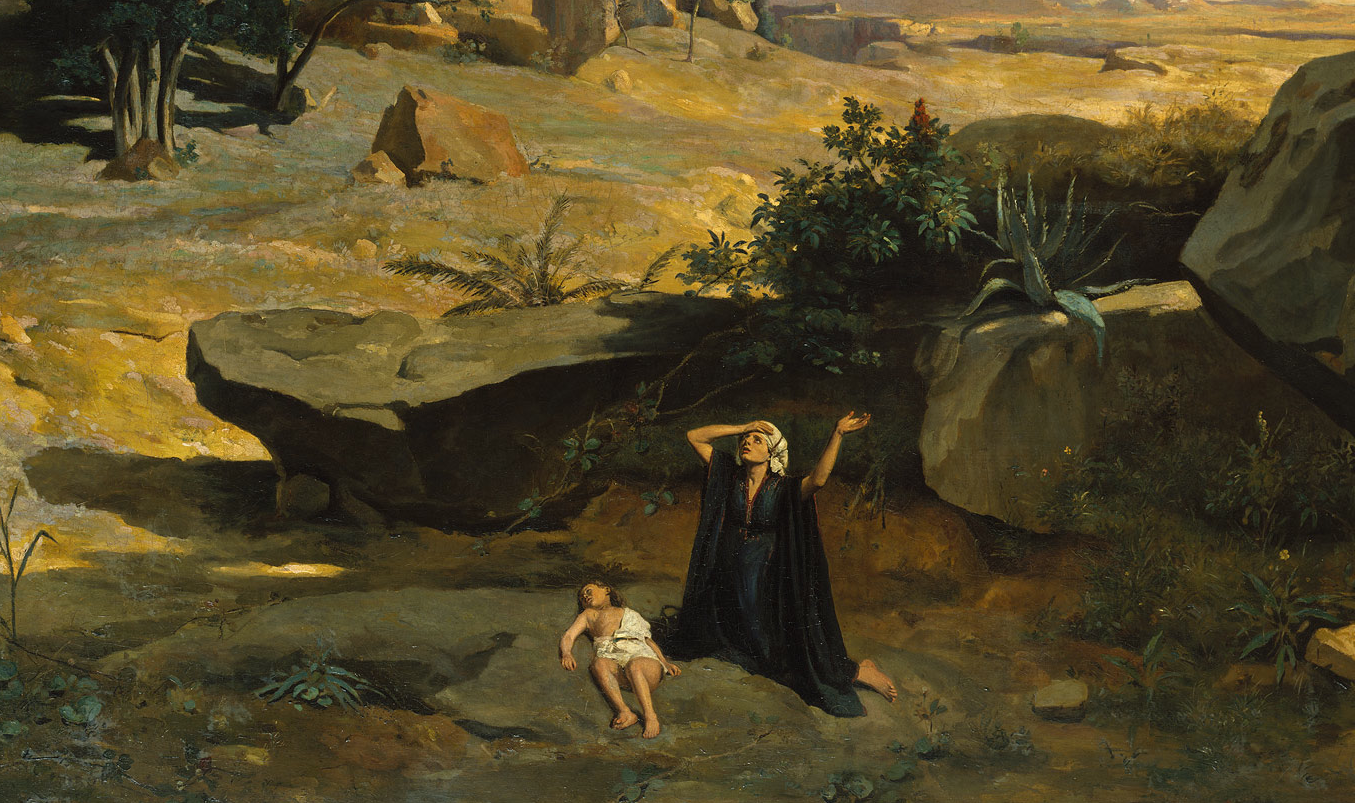

Hagar: God Sees and Hears

Hagar worked as a servant for Abraham and his wife Sarah. Sarah was unable to have children, and as was a common practice of the time, Sarah offered her servant, Hagar, to Abraham in hopes she would conceive. Hagar became pregnant, but Sarah grew jealous and upset about the situation and threw her out of their home. Hagar was alone in the desert when an angel appeared and promised a blessing on her child, naming him Ishmael, which means “God hears.” Hagar responded with, “You are the One who sees me.”

Fourteen years later, Hagar returned to Abraham and Sarah gave birth to her own son. Once again, Sarah forced Hagar and Ishmael to leave. Once again they fled to the desert. Abraham had given them a bottle of water, but soon it was all gone. They were both near death when God again heard their cries and an angel called to Hagar: “Do not be afraid. God has heard the boy crying.” The angel reminded Hagar of God’s blessing and provided a spring of water. Hagar and Ishmael survived and prospered. Ishmael sired a great nation. Genesis 25:12-18 lists his many descendants that were divided into twelve tribes, and, as God had earlier revealed, “They lived in hostility toward all the tribes related to them” (Genesis 25:18).

Here is Hagar’s life story in the Bible:

• Hagar was Sarah’s Egyptian servant
Now Sarai, Abram’s wife, had borne him no children. But she had an Egyptian slave named Hagar. (Genesis 16:1, NIV)

• Hagar was a surrogate for Abraham’s promised son because Sarah could not have children.
So after Abram had been living in Canaan ten years, Sarai his wife took her Egyptian slave Hagar and gave her to her husband to be his wife. He slept with Hagar, and she conceived. When she knew she was pregnant, she began to despise her mistress. (Genesis 16:3-4, NIV)

• She was the mother of Ishmael
So Hagar bore Abram a son, and Abram gave the name Ishmael to the son she had borne. (Genesis 16:15, NIV)

• She was sent away by Sarah into the desert
“Your slave is in your hands,” Abram said. “Do with her whatever you think best.” Then Sarai mistreated Hagar; so she fled from her.

The angel of the Lord found Hagar near a spring in the desert; it was the spring that is beside the road to Shur. (Genesis 16:6-7, NIV)

• She was promised that she would be the mother of a great nation, paralleling God’s promise to Abraham.
The angel added, “I will increase your descendants so much that they will be too numerous to count.” ( Genesis 16:10, NIV)

• She was sent away again by Sarah
Early the next morning Abraham took some food and a skin of water and gave them to Hagar. He set them on her shoulders and then sent her off with the boy. She went on her way and wandered in the Desert of Beersheba. (Genesis 21:14, NIV)

• God provided for her and her son; they settled in the wilderness
God was with the boy as he grew up. He lived in the desert and became an archer. (Genesis 21:20, NIV).

• Hagar found an Egyptian wife for Ishmael
While he was living in the Desert of Paran, his mother got a wife for him from Egypt. (Genesis 21:21, NIV)

Read 10 Remarkable Women of the Bible.

Growing in Devotion by Tithing Your Time

Human beings are masters of self-deception. We say we’re too busy to fit more time with God into our days, and yet the simple math of TV + Facebook + texting + surfing the web = a number to which we don’t want to admit.

Here’s one way to make progress: Tithe your entertainment time. Carve out 10% of it to dedicate to God every day. Abandon one television show for the sake of your relationship with your maker. Set a timer when you go online, and dedicate the 20 minutes after it rings to scripture study. Set a rule for yourself that you’ll spend one minute in prayer for each text you send. Leave a Bible open next to your computer, so it nags at you.

There are dozens of little tricks we can use to limit our tendency to waste time. All of them have one thing in common: They start being effective when we decide to dedicate more time to strengthening our relationship with God.

God’s Peace Can Be Yours

Let me give you one of the most beautiful statements ever uttered: “Peace I leave with you; my peace I give you. I do not give to you as the world gives. Do not let your hearts be troubled and do not be afraid.”

There is music in these words, spoken by Jesus in John 14. They fall upon the mind like light, with a benediction in their touch.

Peace I leave with you…let not your heart be troubled. Marvelous words which speak clearly their message of hope!

We ought to use such words more and more, for our life consists of that with which we fill our minds. There is remarkable therapeutic value in great words, particularly words from the Scriptures. Store your mind with these words, bring them out as needed, let them sink deeply into the consciousness until they dominate your thoughts. That is the way to get the peace of God in your very fiber.

There is peace in watching the sea come rolling in, then drawing back, the surge of great enormous power against the rocks roaring in, then sucking out again with tremendous force. Peace is felt on a soft summer day in hearing water lapping softly on shores of sand, or the light whisper of the wind in the tall and ancient pine trees or the buzzing of bees in a meadow in deep summer.

All of these bring peace to the soul. But how do you get the kind of peace that is deep, inexhaustible and lasting? Merely wishing for it or thinking about it will not bring it.

God’s peace. God’s peace can be yours, but to attain it you have to start practicing it. Perhaps one reason why you are high-strung or lacking in control is because for a long time you have been practicing nervousness and tension—not consciously or willfully, of course. In spiritual values as well as in other skills, you only get proficiency by practice.

Read More: Bible Verses for Peace

You cannot play the piano without practice; you cannot play golf without practice; neither can you become skillful in the spiritual life without practice. We are told to practice the presence of God. We must also practice the peace of God.

Begin today to diligently practice the peace of God, and after a while the peace of God will become an automatic process in you. How do you practice the peace of God? Condition your mind to live in high areas of peace.  Set out in the morning saying, “I am going to attempt for as many minutes as possible during this day to keep God in my thoughts.”

Also, to calm nerves we must practice God’s peace in the body. The relationship of the body—to mental states and even to spiritual states—is a widely accepted fact. Get the body into a quiet state, and presently the mind and the soul tend to become quiet and calm, too. Practice breathing in the peace of God and breathing out all tension and worry. Try that six times a minute, deeply and prayerfully, while at the same time conceiving of yourself as taking in God’s peace.

Then there is this final thing. What is it that causes people’s nerves to become so severely agitated that life seems all bustle and burden? It is not the confusion of this life; it is not the noise and tumult in the world. It is, rather, the evil things that men do. It is the guilt they have in their natures, the wrong that they continually commit. Therefore, in order to have God’s peace, you may have to quit something.

Is something jeopardizing your spiritual well-being and also putting your physical health at risk? It is a strange thing—guilt in your mind sends out a disturbance and manifests itself in the nerves and in the heart and in the blood pressure. To have calmness, get rid of the impediments in your mind and ask God to transform you by His healing touch.

When Almighty God touches the secret place of the soul and cleanses it, you will know what He means when He says, “Peace I leave with you; my peace I give you. Do not let your hearts be troubled and do not be afraid.” Your whole being will be soothed by the balm of His perfect peace.

God’s Cure for Weariness

Weariness isn’t something new. It’s been around as long as work and frustration, as long as difficulty and daylight. Jesus, more than 2,000 years ago, said, “Come to me, all you who are weary and burdened, and I will give you rest” (Matthew 11:28).

But weariness is more than simply being tired. It’s a lethargy that worms its way into our souls. We become worn down in a way that isn’t eradicated by the usual prescription of rest and recreating. It’s more than something physical. It’s spiritual. Where does weariness come from? What can we do about it?

Staying focused on our faith and on what God asks us to do is the best prevention for weariness. Here are some simple precautions that help us along the way:

1. Don’t do unnecessary things.
Focus your heart on doing what God puts right in front of you today before you pay attention to anything else on your to-do list. His work doesn’t have to be outwardly grand or glorious; it may be something very simple (and easy to overlook). “Always give yourselves fully to the work of the Lord, because you know that your labor in the Lord is not in vain” (1 Corinthians 15:58).

2. Stay connected.
We are made for companionship and community, and living in isolation is tiring to the soul. If no one is reaching out to you, take the initiative and reach out to others! For “whoever refreshes others will be refreshed” (Proverbs 11:25).

3. Confess your sins regularly.
“Repent, then, and turn to God, so that your sins may be wiped out, that times of refreshing may come from the Lord” (Acts 3:19). If God can be worn down by our trespasses, so can we! Carrying around a guilt-laden soul is sure to weary us.

4. Seek revitalization instead of numbness.
When we’re tired, the easiest course of action is often to do something mindless. But it is the Lord who “refreshes my soul. He guides me along the right paths for his name’s sake” (Psalm 23:3). Turning to Him works far better than turning on the television.

5. Know what brings you joy.
When we are weary, we often cannot even remember what lifts our hearts. Keep a list of your blessings handy, to help you re-focus on what really matters.

God Is with You When Things Go Wrong

The Bible is filled with wonderful promises of hope and salvation. It is also full of stories of tragedy and misfortune. Turns out the people in its pages are not so very different from you and me! So take a lesson from them and remember:

You may never know why tragedy strikes.
Job was “perfect and upright.” He feared God and turned from evil (Job 1:1). Yet disaster struck; he lost his wealth, his children and even his health. Although Job kept asking God why, his misfortune never received the divine explanation Job was hoping for.

Job’s friends were sure Job must have brought his misfortunes on himself by sinning (Job 4:8), but they were wrong. God condemned their simplistic condemnation of his servant (Job 42:7). One thing is certain: “Man is born unto trouble, as the sparks fly upward” (Job 5:7). Do not be quick to blame yourself or others when something seems to go wrong. Often there are no easy answers.

God is able to bring good out of every situation.
Stephen was one of the outstanding figures in the early church, “full of faith and the Holy Ghost” (Acts 6:5,8). Yet he was stoned to death because of his Christian witness. A leader of his persecution was a young man named Saul (Acts 7:58; 8:1-3), who soon afterward was confronted by the risen Christ and became known as the great Apostle Paul (Acts 9:1-6, 22).

Evidently, Stephen’s courageous death was the catalyst that challenged Paul’s outlook and prepared the way for his conversion.

God’s hand is in all that happens.
Joseph was mistreated by his brothers and sold into slavery (Genesis 37). Years later, when famine forced them to come to Egypt for grain, they found their own brother in charge of everything. Joseph told them, “You intended to harm me, but God intended it for good to accomplish what is now being done, the saving of many lives” (Genesis 50:20).

Although “wicked hands” crucified Christ, it was part of God’s plan for infinite good (Acts 2:23). You can be certain that “All things work together for good to them that love God” (Romans 8:28).

Be confident that, with God’s help, you can handle any problem.
God made you in his own image. You have the intelligence and skills and mental, physical and spiritual resources either to solve your problem or to endure it while it lasts. You can say with the Apostle Paul, “I can do all things through Christ who gives me strength” (Philippians 4:13).

Did you enjoy this story? Subscribe to Guideposts magazine.

Getting and Staying Spiritually Fit

Spiritual health brings satisfaction and happiness, just as physical health does. But you can’t get healthy spiritually by joining a spin class or running a marathon. Spiritual health requires spiritual exercises.

In a letter to his young assistant Timothy, the Apostle Paul wrote: “Exercise yourself toward godliness” (1 Timothy 4:7). The Apostle compared physical fitness with spiritual fitness. “Take time and trouble to keep yourself spiritually fit. Bodily fitness has a certain value, but spiritual fitness is essential, both for this present life and for the life to come” (1 Timothy 4:8).

For spiritual growth, nothing can take the place of prayer–simply spending time with God, thanking him for his gifts to you, praising him, asking for guidance, admitting your sins and asking forgiveness and help.

You will grow as you set a good example–“in speech and behavior, in your love and faith and sincerity” (1 Timothy 4:12). And “keep a critical eye on yourself” (verse 16). From time to time, ask yourself how you are doing spiritually–and take the steps necessary to continue growing.

Here’s how you can check your own spiritual health:

1. A spiritually healthy person has a definite goal.
Abraham’s goal was to reach the land God had in store for him. Paul’s goal was to reach the whole known world for Christ. What is your goal for this month? This day? Think big–God will help you!

2. A spiritually healthy person is realistically humble.
Paul, probably the greatest saint of all time, called himself “less than the least of all saints” (Ephesians 3:8). He reminds us not to feel self-important with the question “What do you have that you did not receive?” (1 Corinthians 4:7). St. Teresa called herself “a pencil in the hand of God.”

3. A spiritually healthy person is confident.
“I can do all things through Christ who strengthens me” (Philippians 4:13).

4. A spiritually healthy person is optimistic.
They believe God is on their side and all will be well. “And we know that in all things God works for the good of those who love him, who have been called according to his purpose” (Romans 8:28).

Take steps today to become more spiritually fit!

Read More: 10 “Breath Prayers” to Pray

Get Into the Prayer Habit: Start With Our 30 Days of Prayer

Prayer is a habit. It’s a little like running, like going to bed at a reasonable hour, like eating decently, like remembering to write a thank you note, like saying something kind when that wasn’t really your first thought.

It’s funny, when we talk about habit-forming stuff, we usually mention the bad things—bad habits like cigarette-smoking, driving too fast, chewing with your mouth open, interrupting people, swearing. But the easiest way for me to get rid of one of those is to inculcate a good habit. Like prayer.

How do you do that? Pick a time and place everyday when you can get prayerful. For me it happens to be my morning commute on the New York subway. I read a few verses of a psalm and then close my eyes, the noise of the train on the tracks drowning out any other. But surely you can find something even better that works for you.


Here’s a way to start. This month of September we’re launching a 30-day prayer program. You can sign up and get a short inspiring thought everyday. Try it.

The point about developing a good habit is that you don’t have to think about it. You just do it. Some mornings I don’t feel like praying, but I open my pocket Bible, the train takes off, it rumbles down the tunnel and my soul takes off too.

Good habits need reinforcing. That’s why I’ve signed up for the 30-Day Prayer program. There are more than a few bad habits I need to work on.

Favorite Bible Verses During Military Deployment

Take the helmet of salvation, and the sword of the Spirit, which is God’s word. (Ephesians 6:17)

A military family facing a holiday deployment needs to make extra preparation. The first reaction is often to treat the upcoming months like a siege–batten down the hatches for the long haul and treat this as a defensive maneuver. Truthfully though, that’s the worst thing to do.

This is actually when we need to go on the offensive. We need to reach out to those around us. But more than that, we need to look up and fix our eyes on God. I found, through experience as a military mom, that by arming myself with the Word of God, I was able to battle all the things that came my way while our son was serving in a war zone.

I stockpiled verses, recording them in my deployment journal and marking them in my Bible. Having them close at hand made it easier to fight the emotions that threatened to overwhelm me.

These are some of my favorite verses for deployment, and I found myself returning to them again and again.

First, there’s Psalm 91 (also known as the Warrior’s Psalm) as well as Psalm 3 and 11. And here are other verses throughout the Bible:

When We’re Afraid

  • Isaiah 41:10
  • Psalm 34:4
  • Philippians 4:6
  • Psalm 56:3-4
  • Exodus 14:14

When We’re Lonely

  • Joshua 1:5
  • Matthew 28:20
  • Romans 8:35-39
  • Deuteronomy 31:8
  • Psalm 145:18

When We Need Hope

  • Romans 15:13
  • Isaiah 40:31
  • Jeremiah 17:7
  • Hebrews 11:1
  • Luke 1:37

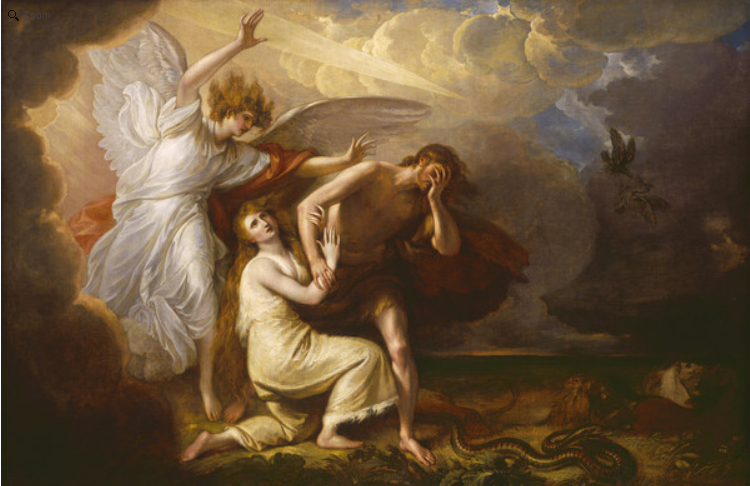
Eve: The Mother of All the Living

Eve is the first woman, first wife and first mother of the Bible. Created by God in His image, Eve became Adam’s wife and mother of Cain, Abel, Seth and “other sons and daughters.” Eve was the first to encounter Satan and was tempted by him to disobey God’s command and eat from the Tree of Knowledge of Good and Evil. She and Adam were evicted from the Garden of Eden. Although shamed, Eve kept her hope alive and persevered in faith. God’s grace allowed Eve to avoid complete destruction and bear children. She rejoiced because of God’s compassion and forgiveness. Eventually, her descendants included, Jesus, the Savior of the world

Here is Eve’s life story from the Bible:

• The first woman created by God
Then the Lord God made a woman from the rib[a] he had taken out of the man, and he brought her to the man. (Genesis 2:22)

• Eve is Adam’s wife
The man said, “This is now bone of my bones and flesh of my flesh; she shall be called ‘woman,’ for she was taken out of man.” (Genesis 2:23, NIV)

• Eve lived with Adam in the garden of Eden
Now the Lord God had planted a garden in the east, in Eden; and there he put the man he had formed. (Genesis 2:8, NIV)

• Eve was deceived by Satan and disobeyed God
“You will not certainly die,” the serpent said to the woman. “For God knows that when you eat from it your eyes will be opened, and you will be like God, knowing good and evil.” When the woman saw that the fruit of the tree was good for food and pleasing to the eye, and also desirable for gaining wisdom, she took some and ate it. She also gave some to her husband, who was with her, and he ate it. (Genesis 3:4-6, NIV)

• Eve immediately took responsibility for her sin
Then the Lord God said to the woman, “What is this you have done?” The woman said, “The serpent deceived me, and I ate.” (Genesis 3:13, NIV)

• Eve suffered painful consequences for her actions
To the woman he said, “I will make your pains in childbearing very severe; with painful labor you will give birth to children. Your desire will be for your husband, and he will rule over you.” (Genesis 3:16, NIV)

• Eve and Adam are banished from the garden
So the Lord God banished him from the Garden of Eden to work the ground from which he had been taken. 24 After he drove the man out, he placed on the east side[a] of the Garden of Eden cherubim and a flaming sword flashing back and forth to guard the way to the tree of life. (Genesis 3:23-24, NIV)

• Adam and Eve experienced God’s grace
The Lord God made garments of skin for Adam and his wife and clothed them. (Genesis 3:31, NIV)

• Eve is hopeful for the future after the birth of her son Cain
Adam made love to his wife Eve, and she became pregnant and gave birth to Cain. She said, “With the help of the Lord I have brought forth man.” (Genesis 4:1, NIV)

• Eve gave birth to Abel
Later she gave birth to his brother Abel. Now Abel kept flocks, and Cain worked the soil. (Genesis 4:2, NIV)

Read 10 Remarkable Women of the Bible.

Esther: The Woman Who Saved a Nation

Esther was a beautiful young woman who was chosen by King Ahasuerus to be queen. King Ahasuerus did not know that Esther was Jewish. The Jews had been driven out of Israel, about 70 years earlier and exiled in Persia. Esther’s stepfather, Mordecai refused to bow down to Haman, an advisor and high official of the king. Because of this lack of respect, Haman plotted to destroy all the Jews. When Esther found out that this was to happen she wanted intercede, but feared doing so because anyone who entered the king’s throne room without permission could be put to death. She prayed and fasted for three days and found the courage to approach her husband, the king. She told him of her Jewish ancestry and pleaded for her people. Ahasuerus was persuaded by his love for Esther and ordered Haman to be hanged on the very gallows he had prepared for Mordecai.

Read Esther’s life story in Bible verses:

• Esther is a beautiful, orphaned Jewish girl
Then the king’s personal attendants proposed, “Let a search be made for beautiful young virgins for the king. (Esther 2:2, NIV)

• She is the adopted daughter of her cousin Mordecai
Mordecai had a cousin named Hadassah, whom he had brought up because she had neither father nor mother. This young woman, who was also known as Esther, had a lovely figure and was beautiful. Mordecai had taken her as his own daughter when her father and mother died. (Esther 2:7, NIV)

• Esther is a God-fearing woman living in a pagan court
She was taken to King Xerxes in the royal residence in the tenth month, the month of Tebeth, in the seventh year of his reign. Now the king was attracted to Esther more than to any of the other women, and she won his favor and approval more than any of the other virgins. So he set a royal crown on her head and made her queen instead of Vashti. And the king gave a great banquet, Esther’s banquet, for all his nobles and officials. He proclaimed a holiday throughout the provinces and distributed gifts with royal liberality. When the virgins were assembled a second time, Mordecai was sitting at the king’s gate. But Esther had kept secret her family background and nationality just as Mordecai had told her to do, for she continued to follow Mordecai’s instructions as she had done when he was bringing her up. (Esther 2:16-20, NIV)

• Esther was chosen by King Ahasuerus to be queen
Now the king was attracted to Esther more than to any of the other women, and she won his favor and approval more than any of the other virgins. So he set a royal crown on her head and made her queen instead of Vashti. (Esther 2:17, NIV)

• Esther finds out that the Jews were to be executed by Haman
But Mordecai found out about the plot and told Queen Esther, who in turn reported it to the king, giving credit to Mordecai. (Esther 2:22)

• She fasts and prays for three days and then risked death by approaching the king
Then she instructed him to say to Mordecai, “All the king’s officials and the people of the royal provinces know that for any man or woman who approaches the king in the inner court without being summoned the king has but one law: that they be put to death unless the king extends the gold scepter to them and spares their lives. But thirty days have passed since I was called to go to the king.” (Esther 4:10-11, NIV)

On the third day Esther put on her royal robes and stood in the inner court of the palace, in front of the king’s hall. The king was sitting on his royal throne in the hall, facing the entrance. When he saw Queen Esther standing in the court, he was pleased with her and held out to her the gold scepter that was in his hand. So Esther approached and touched the tip of the scepter. (Esther 5:2, NIV)

• She prepared a banquet for the king and Haman
“If it pleases the king,” replied Esther, “let the king, together with Haman, come today to a banquet I have prepared for him.” (Esther 5:4, NIV)

• She asked the king for a new edict
“If it pleases the king,” she said, “and if he regards me with favor and thinks it the right thing to do, and if he is pleased with me, let an order be written overruling the dispatches that Haman son of Hammedatha, the Agagite, devised and wrote to destroy the Jews in all the king’s provinces. (Esther 8:5, NIV)

• Esther’s delivery of God’s people is still celebrated by Jews during Purim
Esther’s decree confirmed these regulations about Purim, and it was written down in the records. (Esther 9:32, NIV)

For more on Purim, read: The Hidden Miracles of Purim

Read 10 Remarkable Women of the Bible.

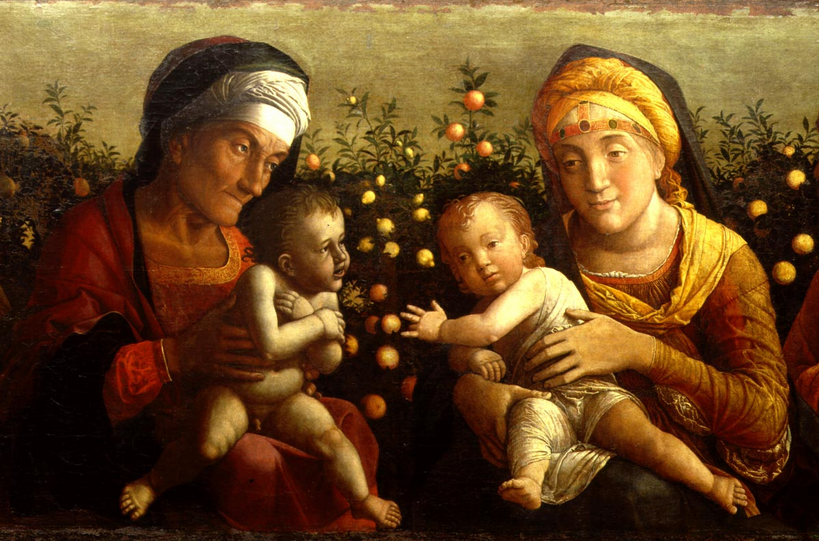
Elizabeth: Mother of John the Baptist

Elizabeth was the wife of Zechariah, cousin of Mary and mother of John Baptist. Elizabeth was unable to have children and was well beyond child bearing years when amazingly she conceived a son. Her husband, Zechariah, was visited by the Angel Gabriel and given the blessed news in the temple. Unable to fully believe what he was hearing, Zechariah was made mute. While Elizabeth was pregnant, she was visited by Mary, the expectant mother of Jesus. Upon hearing Mary speak, the baby in Elizabeth’s womb leapt for joy. Elizabeth gave birth to a son who they named John as the Angel Gabriel had commanded and Zechariah’s ability to speak returned. Their son John became John the Baptist, the prophet who foretold the coming of Jesus.

Here is Elizabeth’s remarkable life story from the Bible:

• Elizabeth was the childless wife of Zechariah
In the time of Herod king of Judea there was a priest named Zechariah, who belonged to the priestly division of Abijah; his wife Elizabeth was also a descendant of Aaron. Both of them were righteous in the sight of God, observing all the Lord’s commands and decrees blamelessly. But they were childless because Elizabeth was not able to conceive, and they were both very old. (Luke 1:5-7, NIV

• An angel appeared to Zechariah while serving in the temple, saying their prayers would be answered and they would have a son
Then an angel of the Lord appeared to him, standing at the right side of the altar of incense. When Zechariah saw him, he was startled and was gripped with fear. But the angel said to him: “Do not be afraid, Zechariah; your prayer has been heard. Your wife Elizabeth will bear you a son, and you are to call him John. He will be a joy and delight to you, and many will rejoice because of his birth, for he will be great in the sight of the Lord. He is never to take wine or other fermented drink, and he will be filled with the Holy Spirit even before he is born. 16 He will bring back many of the people of Israel to the Lord their God. 17 And he will go on before the Lord, in the spirit and power of Elijah, to turn the hearts of the parents to their children and the disobedient to the wisdom of the righteous—to make ready a people prepared for the Lord.” Luke 1:11-17)

• Elizabeth conceived and was in seclusion for five months
After this his wife Elizabeth became pregnant and for five months remained in seclusion.(Luke 1:24, NIV)

• Elizabeth was visited by her cousin Mary who was pregnant with Jesus
At that time Mary got ready and hurried to a town in the hill country of Judea, where she entered Zechariah’s home and greeted Elizabeth. (Luke 1:39-40, NIV)

• Elizabeth and her unborn child recognized Jesus in Mary’s womb
When Elizabeth heard Mary’s greeting, the baby leaped in her womb, and Elizabeth was filled with the Holy Spirit. In a loud voice she exclaimed: “Blessed are you among women, and blessed is the child you will bear! But why am I so favored, that the mother of my Lord should come to me? As soon as the sound of your greeting reached my ears, the baby in my womb leaped for joy. Blessed is she who has believed that the Lord would fulfill his promises to her!” (Luke 1:41-45, NIV)

• Elizabeth gave birth to John the Baptist, whom Jesus called the greatest of all men
Truly I tell you, among those born of women there has not risen anyone greater than John the Baptist; yet whoever is least in the kingdom of heaven is greater than he. (Matthew 11:11, NIV)

Read 10 Remarkable Women of the Bible.