Embrace God's truth with our new book, The Lies that Bind

Get Into the Prayer Habit: Start With Our 30 Days of Prayer

Prayer is a habit. It’s a little like running, like going to bed at a reasonable hour, like eating decently, like remembering to write a thank you note, like saying something kind when that wasn’t really your first thought.

It’s funny, when we talk about habit-forming stuff, we usually mention the bad things—bad habits like cigarette-smoking, driving too fast, chewing with your mouth open, interrupting people, swearing. But the easiest way for me to get rid of one of those is to inculcate a good habit. Like prayer.

Daily Strength for Women in Article ad

How do you do that? Pick a time and place everyday when you can get prayerful. For me it happens to be my morning commute on the New York subway. I read a few verses of a psalm and then close my eyes, the noise of the train on the tracks drowning out any other. But surely you can find something even better that works for you.

Here’s a way to start. This month of September we’re launching a 30-day prayer program. You can sign up and get a short inspiring thought everyday. Try it.

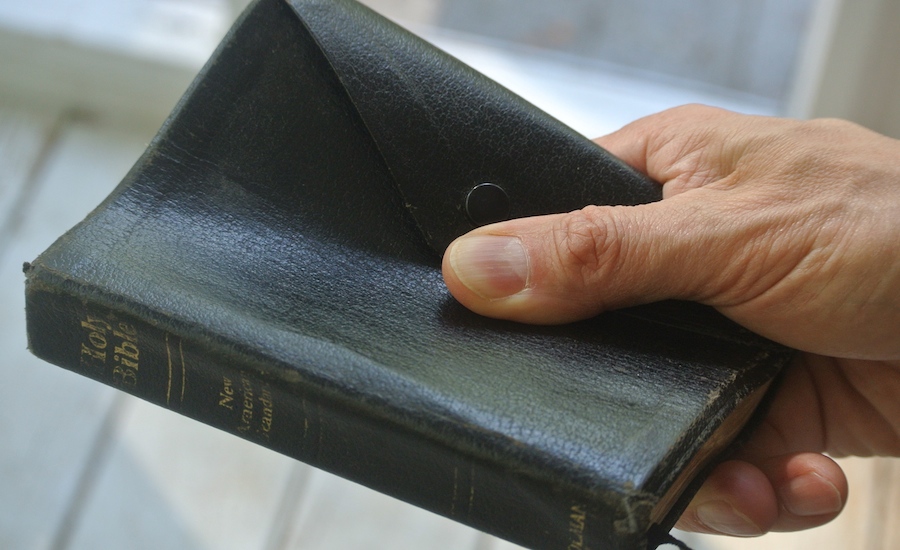
The point about developing a good habit is that you don’t have to think about it. You just do it. Some mornings I don’t feel like praying, but I open my pocket Bible, the train takes off, it rumbles down the tunnel and my soul takes off too.

Good habits need reinforcing. That’s why I’ve signed up for the 30-Day Prayer program. There are more than a few bad habits I need to work on.

Favorite Bible Verses During Military Deployment

Take the helmet of salvation, and the sword of the Spirit, which is God’s word. (Ephesians 6:17)

A military family facing a holiday deployment needs to make extra preparation. The first reaction is often to treat the upcoming months like a siege–batten down the hatches for the long haul and treat this as a defensive maneuver. Truthfully though, that’s the worst thing to do.

Light for Life NASB Study Bible in Article

This is actually when we need to go on the offensive. We need to reach out to those around us. But more than that, we need to look up and fix our eyes on God. I found, through experience as a military mom, that by arming myself with the Word of God, I was able to battle all the things that came my way while our son was serving in a war zone.

I stockpiled verses, recording them in my deployment journal and marking them in my Bible. Having them close at hand made it easier to fight the emotions that threatened to overwhelm me.

These are some of my favorite verses for deployment, and I found myself returning to them again and again.

First, there’s Psalm 91 (also known as the Warrior’s Psalm) as well as Psalm 3 and 11. And here are other verses throughout the Bible:

When We’re Afraid

  • Isaiah 41:10
  • Psalm 34:4
  • Philippians 4:6
  • Psalm 56:3-4
  • Exodus 14:14

When We’re Lonely

  • Joshua 1:5
  • Matthew 28:20
  • Romans 8:35-39
  • Deuteronomy 31:8
  • Psalm 145:18

When We Need Hope

  • Romans 15:13
  • Isaiah 40:31
  • Jeremiah 17:7
  • Hebrews 11:1
  • Luke 1:37

Eve: The Mother of All the Living

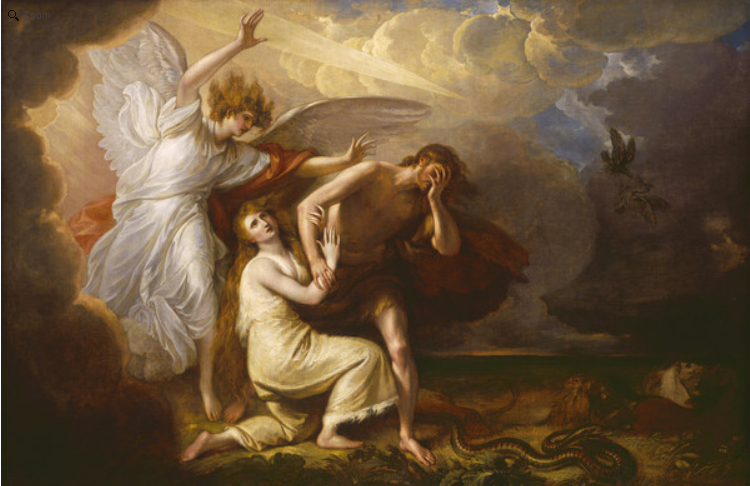
Eve is the first woman, first wife and first mother of the Bible. Created by God in His image, Eve became Adam’s wife and mother of Cain, Abel, Seth and “other sons and daughters.”  Eve was the first to encounter Satan and was tempted by him to disobey God’s command  and eat from the Tree of Knowledge of Good and Evil. She and Adam were evicted from the Garden of Eden. Although shamed, Eve kept her hope alive and persevered in faith. God’s grace allowed Eve to avoid complete destruction and bear children. She rejoiced because of God’s compassion and forgiveness. Eventually, her descendants included, Jesus, the Savior of the world

Here is Eve’s life story from the Bible:

Pray A Word a Day - 2023 In article

• The first woman created by God
Then the Lord God made a woman from the rib[a] he had taken out of the man, and he brought her to the man. (Genesis 2:22)

• Eve is Adam’s wife
 The man said, “This is now bone of my bones and flesh of my flesh; she shall be called ‘woman,’ for she was taken out of man.” (Genesis 2:23, NIV)

• Eve lived with Adam in the garden of Eden
Now the Lord God had planted a garden in the east, in Eden; and there he put the man he had formed. (Genesis 2:8, NIV)

• Eve was deceived by Satan and disobeyed God
“You will not certainly die,” the serpent said to the woman. “For God knows that when you eat from it your eyes will be opened, and you will be like God, knowing good and evil.” When the woman saw that the fruit of the tree was good for food and pleasing to the eye, and also desirable for gaining wisdom, she took some and ate it. She also gave some to her husband, who was with her, and he ate it. (Genesis 3:4-6, NIV)

• Eve immediately took responsibility for her sin
Then the Lord God said to the woman, “What is this you have done?” The woman said, “The serpent deceived me, and I ate.” (Genesis 3:13, NIV)

• Eve suffered painful consequences for her actions
To the woman he said, “I will make your pains in childbearing very severe;  with painful labor you will give birth to children. Your desire will be for your husband,  and he will rule over you.” (Genesis 3:16, NIV)

• Eve and Adam are banished from the garden
So the Lord God banished him from the Garden of Eden to work the ground from which he had been taken. 24 After he drove the man out, he placed on the east side[a] of the Garden of Eden cherubim and a flaming sword flashing back and forth to guard the way to the tree of life. (Genesis 3:23-24, NIV)

• Adam and Eve experienced God’s grace
The Lord God made garments of skin for Adam and his wife and clothed them. (Genesis 3:31, NIV)

• Eve is hopeful for the future after the birth of her son Cain
Adam made love to his wife Eve, and she became pregnant and gave birth to Cain. She said, “With the help of the Lord I have brought forth man.” (Genesis 4:1, NIV)

• Eve gave birth to Abel
Later she gave birth to his brother Abel. Now Abel kept flocks, and Cain worked the soil. (Genesis 4:2, NIV)

Read 10 Remarkable Women of the Bible.

Esther: The Woman Who Saved a Nation

Esther was a beautiful young woman who was chosen by King Ahasuerus to be queen. King Ahasuerus did not know that Esther was Jewish. The Jews had been driven out of Israel, about 70 years earlier and exiled in Persia.  Esther’s stepfather, Mordecai refused to bow down to Haman, an advisor and high official of the king. Because of this lack of respect, Haman plotted to destroy all the Jews. When Esther found out that this was to happen she wanted intercede, but  feared doing so because anyone who entered the king’s throne room without permission could be put to death. She prayed and fasted for three days and found the courage to approach her husband, the king.  She told him of her Jewish ancestry and pleaded for her people. Ahasuerus was persuaded by his love for Esther and ordered Haman to be hanged on the very gallows he had prepared for Mordecai.

Read Esther’s life story in Bible verses:

• Esther is a beautiful, orphaned Jewish girl
Then the king’s personal attendants proposed, “Let a search be made for beautiful young virgins for the king. (Esther 2:2, NIV)

• She is the adopted daughter of her cousin Mordecai
Mordecai had a cousin named Hadassah, whom he had brought up because she had neither father nor mother. This young woman, who was also known as Esther, had a lovely figure and was beautiful. Mordecai had taken her as his own daughter when her father and mother died. (Esther 2:7, NIV)

• Esther is a God-fearing woman living in a pagan court
She was taken to King Xerxes in the royal residence in the tenth month, the month of Tebeth, in the seventh year of his reign.  Now the king was attracted to Esther more than to any of the other women, and she won his favor and approval more than any of the other virgins. So he set a royal crown on her head and made her queen instead of Vashti. And the king gave a great banquet, Esther’s banquet, for all his nobles and officials. He proclaimed a holiday throughout the provinces and distributed gifts with royal liberality. When the virgins were assembled a second time, Mordecai was sitting at the king’s gate. But Esther had kept secret her family background and nationality just as Mordecai had told her to do, for she continued to follow Mordecai’s instructions as she had done when he was bringing her up. (Esther 2:16-20, NIV)

• Esther was chosen by King Ahasuerus to be queen
 Now the king was attracted to Esther more than to any of the other women, and she won his favor and approval more than any of the other virgins. So he set a royal crown on her head and made her queen instead of Vashti. (Esther 2:17, NIV)

• Esther finds out that the Jews were to be executed by Haman
But Mordecai found out about the plot and told Queen Esther, who in turn reported it to the king, giving credit to Mordecai. (Esther 2:22)

• She fasts and prays for three days and then risked death by approaching the king
Then she instructed him to say to Mordecai, “All the king’s officials and the people of the royal provinces know that for any man or woman who approaches the king in the inner court without being summoned the king has but one law: that they be put to death unless the king extends the gold scepter to them and spares their lives. But thirty days have passed since I was called to go to the king.” (Esther 4:10-11, NIV)

On the third day Esther put on her royal robes and stood in the inner court of the palace, in front of the king’s hall. The king was sitting on his royal throne in the hall, facing the entrance.  When he saw Queen Esther standing in the court, he was pleased with her and held out to her the gold scepter that was in his hand. So Esther approached and touched the tip of the scepter.  (Esther 5:2, NIV)

• She prepared a banquet for the king and Haman
 “If it pleases the king,” replied Esther, “let the king, together with Haman, come today to a banquet I have prepared for him.” (Esther 5:4, NIV)

• She asked the king for a new edict
“If it pleases the king,” she said, “and if he regards me with favor and thinks it the right thing to do, and if he is pleased with me, let an order be written overruling the dispatches that Haman son of Hammedatha, the Agagite, devised and wrote to destroy the Jews in all the king’s provinces. (Esther 8:5, NIV)

•  Esther’s delivery of God’s people is still celebrated by Jews during Purim
Esther’s decree confirmed these regulations about Purim, and it was written down in the records. (Esther 9:32, NIV)

For more on Purim, read: The Hidden Miracles of Purim

Read 10 Remarkable Women of the Bible.

Elizabeth: Mother of John the Baptist

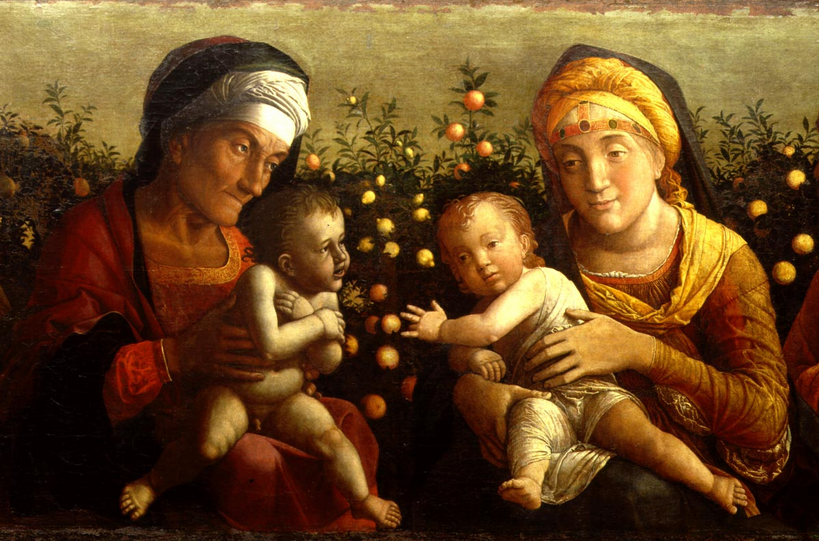
Elizabeth was the wife of Zechariah, cousin of Mary and mother of John Baptist. Elizabeth was unable to have children and was well beyond child bearing years when amazingly she conceived a son. Her husband, Zechariah, was visited by the Angel Gabriel and given the blessed news in the temple. Unable to fully believe what he was hearing, Zechariah was made mute. While Elizabeth was pregnant, she was visited by Mary, the expectant mother of Jesus. Upon hearing Mary speak, the baby in Elizabeth’s womb leapt for joy. Elizabeth gave birth to a son who they named John as the Angel Gabriel had commanded and Zechariah’s  ability to speak returned.  Their son John became John the Baptist, the prophet who foretold the coming of Jesus.

Here is Elizabeth’s remarkable life story from the Bible:

Whistle Stop Cafe In Article Ad May 2023

• Elizabeth was the childless wife of Zechariah
In the time of Herod king of Judea there was a priest named Zechariah, who belonged to the priestly division of Abijah; his wife Elizabeth was also a descendant of Aaron. Both of them were righteous in the sight of God, observing all the Lord’s commands and decrees blamelessly. But they were childless because Elizabeth was not able to conceive, and they were both very old. (Luke 1:5-7, NIV

• An angel appeared to Zechariah while serving in the temple, saying their prayers would be answered and they would have a son
Then an angel of the Lord appeared to him, standing at the right side of the altar of incense. When Zechariah saw him, he was startled and was gripped with fear. But the angel said to him: “Do not be afraid, Zechariah; your prayer has been heard. Your wife Elizabeth will bear you a son, and you are to call him John. He will be a joy and delight to you, and many will rejoice because of his birth,  for he will be great in the sight of the Lord. He is never to take wine or other fermented drink, and he will be filled with the Holy Spirit even before he is born. 16 He will bring back many of the people of Israel to the Lord their God. 17 And he will go on before the Lord, in the spirit and power of Elijah, to turn the hearts of the parents to their children and the disobedient to the wisdom of the righteous—to make ready a people prepared for the Lord.” Luke 1:11-17)

• Elizabeth conceived and was in seclusion for five months
After this his wife Elizabeth became pregnant and for five months remained in seclusion.(Luke 1:24, NIV)

• Elizabeth was visited by her cousin Mary who was pregnant with Jesus
At that time Mary got ready and hurried to a town in the hill country of Judea, where she entered Zechariah’s home and greeted Elizabeth. (Luke 1:39-40, NIV)

• Elizabeth and her unborn child recognized Jesus in Mary’s womb
When Elizabeth heard Mary’s greeting, the baby leaped in her womb, and Elizabeth was filled with the Holy Spirit. In a loud voice she exclaimed: “Blessed are you among women, and blessed is the child you will bear!  But why am I so favored, that the mother of my Lord should come to me?  As soon as the sound of your greeting reached my ears, the baby in my womb leaped for joy.  Blessed is she who has believed that the Lord would fulfill his promises to her!” (Luke 1:41-45, NIV)

• Elizabeth gave birth to John the Baptist, whom Jesus called the greatest of all men
Truly I tell you, among those born of women there has not risen anyone greater than John the Baptist; yet whoever is least in the kingdom of heaven is greater than he. (Matthew 11:11, NIV)

Read 10 Remarkable Women of the Bible.
Don’t Worry, Be Happy!

Many people are vaguely unhappy. But really they don’t need to be. One can awaken every morning with a thrill, looking forward with anticipation to the day. You can imagine having the time of your life all day long and actually regret having to go to bed for fear of missing something exciting.

Three verses will help you cast off unhappiness and show you how to live joyously. We suggest that you say the first one out loud every day:

Mys of Blackberry Valley In Article Ad

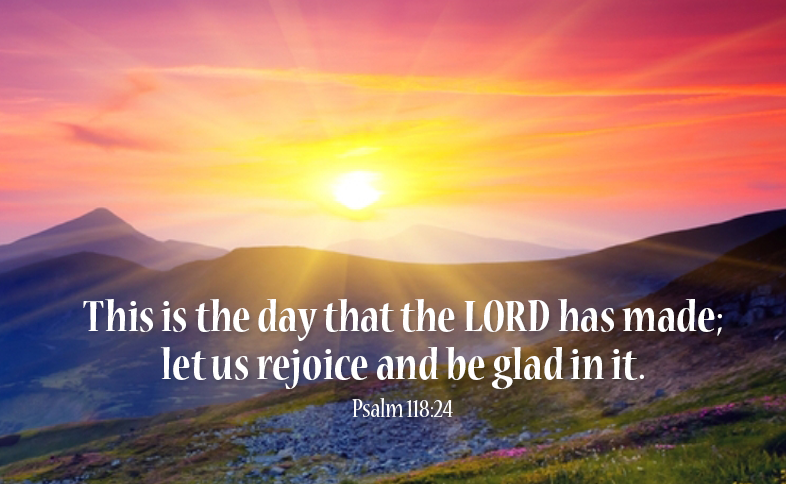
1. “This is the day which the Lord hath made; let us rejoice and be glad in it” (Psalm 118:24).
Those words are a stimulating mental and spiritual tonic with which to begin the day. Upon awakening, say these dynamic words out loud. You have a new day crammed with opportunity to build a better and happier life. As you go to work, repeat the verse and, if you begin to run down in spirit during the day, say it again. This is one of the greatest of all strength producing thoughts. Possibly no method is more effective for driving off unhappiness than to saturate the mind with these powerful words.

2. “Rejoice in the Lord always again I will say, Rejoice” (Philippians 4:4).
You can make yourself unhappy by habitually thinking unhappy thoughts.  Instead, start thinking joyfully. It is that simple. Practice rejoicing, not vaguely,  but specifically rejoicing in the Lord. Think of every wonderful thing the  Lord has done for you, the most important being that He is always with you.  When you consider the implications of that fact, there is every reason to rejoice and be happy, for it means that nothing can ever defeat you.

3. “These things I have spoken to you … that your joy might be full” (John 15:11).
Real, in-depth Christians are always happy people. Of course,  that does not mean that they are free from pain and suffering,  but they have the power to conquer it. They are filled with joyous exultation, for they have the priceless experience of victory over misery. To be happy, try to follow the “things” Jesus teaches. You will experience joy in its fullest form.

Do Great Things for God

Light. It’s something we can’t live without, yet something we often take for granted. Psalm 119 tells us, “Your word is a lamp for my feet, a light on my path” (Psalm 119:105). In modern America, where electricity illuminates all things brightly, we tend to assume this means that God will make the path clear and easy to see. But the amount of light shed by an oil lamp—the kind the Psalmist sung about—was far less than we’d be comfortable with today.

Imagine walking through the streets of a village in 500 B.C. at midnight, with only the stars above and the flicker of a lamp the size of your palm for guidance. Your eyes would be intently fixed on the faint illumination of your path, to avoid tripping. You would be able to see only a few feet ahead and to the side. You would be keenly aware of the intense darkness surrounding you.  

God's Constant Presence In Article Ad

Sometimes we overlook obvious turns in the path because we’re expecting a flashing neon sign to tell us which way to go. We’re waiting for God to shake our hearts up with an earthquake like the one in Exodus 19:18. We want Him to announce Himself with a thunderous voice (John 12:29). However, it’s just as likely—perhaps more likely—He will communicate His will to us in a gentle whisper (1 Kings 19:12). And it’s very, very likely that what He asks of us will be something small and manageable.

When in doubt about what God wants you to do, work on what you can see needs to be done. Do that hated chore. Finish the project you’ve been avoiding. Call and make the medical appointment you’re afraid to make. Do every one of the things that is already visible in the little circle of light that’s illuminating your path before you complain that you can’t see where to go. God has often already shown us the answer to the question we’re asking.

Jesus said, “Whoever can be trusted with very little can also be trusted with much, and whoever is dishonest with very little will also be dishonest with much” (Luke 16:10).  There is nothing shameful about being asked to work on little things. Often they’re exactly what we need to prepare our hearts to spread the light of Christ in the way that God desires.

Brother Lawrence was an illiterate lay brother who lived in 17th century France. His holiness was so well-known that, although his work consisted of simple tasks like peeling potatoes, he was asked to dictate his thoughts for the benefit of others. “We ought not to be weary of doing little things for the love of God, who regards not the greatness of the work, but the love with which it is performed,” he said in The Practice of the Presence of God.

When we go out to do great things for God, we mustn’t forget that we can do great things by doing little things with love. You can “let your light shine before others, that they may see your good deeds and glorify your Father in heaven” (Matthew 5:16), whether your deeds are as bright as a street light or as gentle as a clay oil lamp.

READ MORE: JESUS, THE LIGHT OF THE WORLD

Does Your Life Reflect God’s Word?

Everyone loves a good story. This is why we read books and go to movies and listen to each other tell their personal experiences. “Let the redeemed of the Lord tell their story—those he redeemed from the hand of the foe,” Psalm 107:2 proclaims. Our lives are wrapped up in God’s story—and while that’s wonderful, it’s also a bit scary. Our words and actions tell others not only about ourselves, but about our Maker and Master.

Long ago I heard a missionary talk about working in Africa, where he asked how the local people went about evangelization. “Oh, that’s easy,” the leader of the village explained. “We ask one of our Christian families to move to the next village. When everyone sees how they live their lives, they want to be like that, too. So then they want to know about Jesus Christ.”

Mys of Blackberry Valley In Article Ad

That’s the kind of plot I want for my life—one in which I’m living my faith so fully that, even if I don’t say a word about what I believe, people will long to taste and see that the Lord is good…” (Psalm 34:8).

Each thing we do or say has meaning and significance. “But I tell you that everyone will have to give account on the day of judgment for every empty word they have spoken,” warns Jesus in Matthew 12:36, and “Very truly I tell you, whoever believes in me will do the works I have been doing” (John 14:12). Becoming a believer means taking on an active role as a Christian.

One characteristic of a good story is that it bears repeating. Most of us need to hear things many times to absorb them; like the stiff-necked Israelites wandering in the wilderness, we don’t always grasp God’s majesty the first time we learn of it. Perhaps this is why the story of the exodus from Egypt is mentioned in 24 books of the Bible. And perhaps it explains why the feeding of the five thousand is present in all four Gospels, the curing of the boy with fits in three and the healing of the blind man in two.

When Jesus said, “Whoever has ears to hear, let them hear,” (Mark 4:9) he knew that becoming a good listener is a prerequisite to becoming a good storyteller. We have to know the story by heart — and know it deep in our hearts — to be able to tell it well.

Paul tells us, “Consequently, faith comes from hearing the message, and the message is heard through the word about Christ” (Romans 10:17).

How can we become better listeners?

1. Pray for a true attentiveness to the Word of God.
“Lord, open my ears!” is a humble plea worthy of the deaf and mute man whose story is found in Mark, chapter 7. “Be opened!” Jesus commanded (verse 34). And that will be His answer to us, too, when we pray for ears open to God’s voice.

2. Don’t interrupt.
Listening isn’t the same as having a conversation. Absorb first; respond later.

3. Fend off negative thoughts.
Don’t let yourself get dragged down in ‘But…’ and ‘I can’t….’ If God is behind what you’re hearing, He will show you how you can live His will.

Our life stories have to wordlessly echo the story of redemption—and make it easier for others to live that same tale. Thank goodness God is always ready to help us improve our story-telling techniques (and to rewrite those places where we fail)!

Dealing with Disappointment? Try These Bible Verses and Faith Tips

Disappointment is a vicious and debilitating enemy. It can cause you to be so emotionally disturbed that you will be unable to think effectively. As a result, you cut off the creative forces that are ready to help you. Disappointment can strike you at almost any time, so it’s important that you learn to deal with it.

First and foremost, don’t let disappointment shake your belief in the goodness of God. “Do not throw away your confidence, which has a great reward” (Hebrews 10:35). When disappointment strikes, hold tightly to your faith. Say, “I am still confident. I still believe.” It will require mental and spiritual effort to maintain this confidence in God and in yourself, but it is your road to better things.

Thank God every day; there’s always a reason to do so. “Bless the Lord, O my soul, and forget not all his benefits” (Psalm 103:2). Start thanking the Lord for all the blessings he has given you. Do this instead of mentally—and perhaps vocally—harping on what has been denied you. You’ll be amazed how much better your life will look when you saturate it with thanksgiving!

God wants you to be happy where you are with what you’ve got. “Be content with what you have; for he has said, ‘I will never fail you nor forsake you’” (Hebrews 13:5). The word “contentment” derives from two Latin words, con and tenere, meaning “to hold together.” When you have faith in God, your mind will “hold together” so efficiently that you can recover from disappointment. If you always remember that God is on your side, you can be content with whatever comes your way. And out of such contentment great things can happen.

When you don’t understand why things are happening the way they are, cling to this promise: “We know that in everything God works for good with those who love him, who are called according to his purpose” (Romans 8:28).

When you are disappointed, examine yourself to make certain you are thinking and living in harmony with God’s purpose. It could be that you have wandered off the Godly path. Instead of dwelling upon the word “disappointment,” think of it as “God-appointment.” What you regard as a disappointment may actually be a wonderful new plan for your life—namely, His plan.

Comforting Bible Verses: Praying Scripture for My Soldier

So will My word be which goes forth from My mouth; it will not return to Me empty, without accomplishing what I desire, and without succeeding in the matter for which I sent it. (Isaiah 55:11)

One of the things that brought me the most comfort while our son was on deployment as a frontline infantry Marine was the time I spent in prayer. It didn’t start out that way. For a while, I really struggled to find the words to pray. I worried that maybe my words wouldn’t be powerful enough or be said in just the right way to do any good.

God's Constant Presence In Article Ad

Then, one night that changed.

Click here to learn more about Veterans Awareness Month and what you can do to help.

I had awakened from another terrible nightmare and made my way downstairs to curl up in the recliner. As I sat wordless, with my Bible resting in my hands, a memory wormed its way to forefront of my mind. Somewhere, years before, I had read that a good way to find the right words to pray was to pray Scripture.

It only took me a minute to turn to the book of Psalms in my Bible. I’d read through that book almost daily because of the comfort it brought. The authors of those words could articulate the things I was feeling and the fears I couldn’t voice.

I turned to Psalm 27 and found the comfort and the peace that had alluded me for so long. Below is an example of how I turned the first three verses into a prayer for my son. The words in italics are the ones I changed:

The Lord is my son’s light and salvation;
Whom shall he fear?
The Lord is the defense of my son’s life;
Whom shall he dread?

When evildoers came upon my son to devour his flesh,
My son’s adversaries and enemies, they stumbled and fell.

Though a host encamp against my son,
My heart will not fear and neither shall my son’s;
Though war arise against my son,
In spite of this I, and my son, shall be confident.

There is so much power in just these three short verses. I encourage you to read the rest of the Psalm, plugging in the name of your own soldier. But don’t stop here. There are so many verses in the Bible that we can pray for those we love.

After that night, I never again lacked the words when I wanted to pray for my son. No matter what situation you find yourself facing, remember that the Bible isn’t just inspiration, it’s also full of practical application. 

Click here to donate gift subscriptions to Guideposts Military Subscription Program.

Biblical Wisdom for a Prosperous Life

Recently at church, I heard a pastor preach on how the book of Proverbs offers wisdom for prosperous living. Typically, when there is discussion of prosperous living it’s associated with the Prosperity Gospel, a belief among some Christians that financial blessings and physical well-being are always the will of God and that faith, positive speech and contributions to religious causes will increase one’s material wealth. However, this was not the case.

The pastor’s message was how the wise sayings in Proverbs, when applied, can enrich our relationships, faith, finances and physical and spiritual health. The Scripture for his sermon was from Proverbs chapter three:  

The Daily Bible Large Print relaunch with digital free gift in article ad

“Trust in the Lord with all your heart and lean not on your own understanding; in all your ways submit to him, and he will make your paths straight. Do not be wise in your own eyes; fear the Lord and shun evil. This will bring health to your body and nourishment to your bones. Honor the Lord with your wealth, with the first fruits of all your crops; then your barns will be filled to overflowing and your vats will brim over with new wine.”

From this passage, the key message is to trust, honor and fear the Lord. In doing so, we are able to navigate the challenges and opportunities of life thus drawing us closer to God. When referring to the passage, trust means not to lean on our understanding, but to seek the guidance and wisdom of God. Our hearts and mind can fail or deceive us, but He never will. This is not to say that we shouldn’t think things through and come to conclusions, but when council is needed, we should turn to God through Scripture and prayer.

For believers, having a fear of God doesn’t mean to be afraid of Him but to have a healthy understanding of God in all that we do, to not neglect His presence and to always have reverence for Him.

Lastly everything we have is a blessing from God, so we must honor Him with our wealth and resources. When we trust, honor and fear God, we can live prosperously even if our prayers are unanswered, our health is not perfect and we continue to face financial hardships. What does living prosperously means to you? Please share with us.

Lord, teach us to trust, honor and fear You all the days of our lives.