Embrace God's truth with our new book, The Lies that Bind

A One-Word Christmas Prayer for Inner Peace

The sounds of Christmas are ringing bells, joyful carols, and ho-ho-hoing Santas. But another, softer, sound can become a one-word prayer, an ushering in of inner calm and “peace on earth” for you this season.

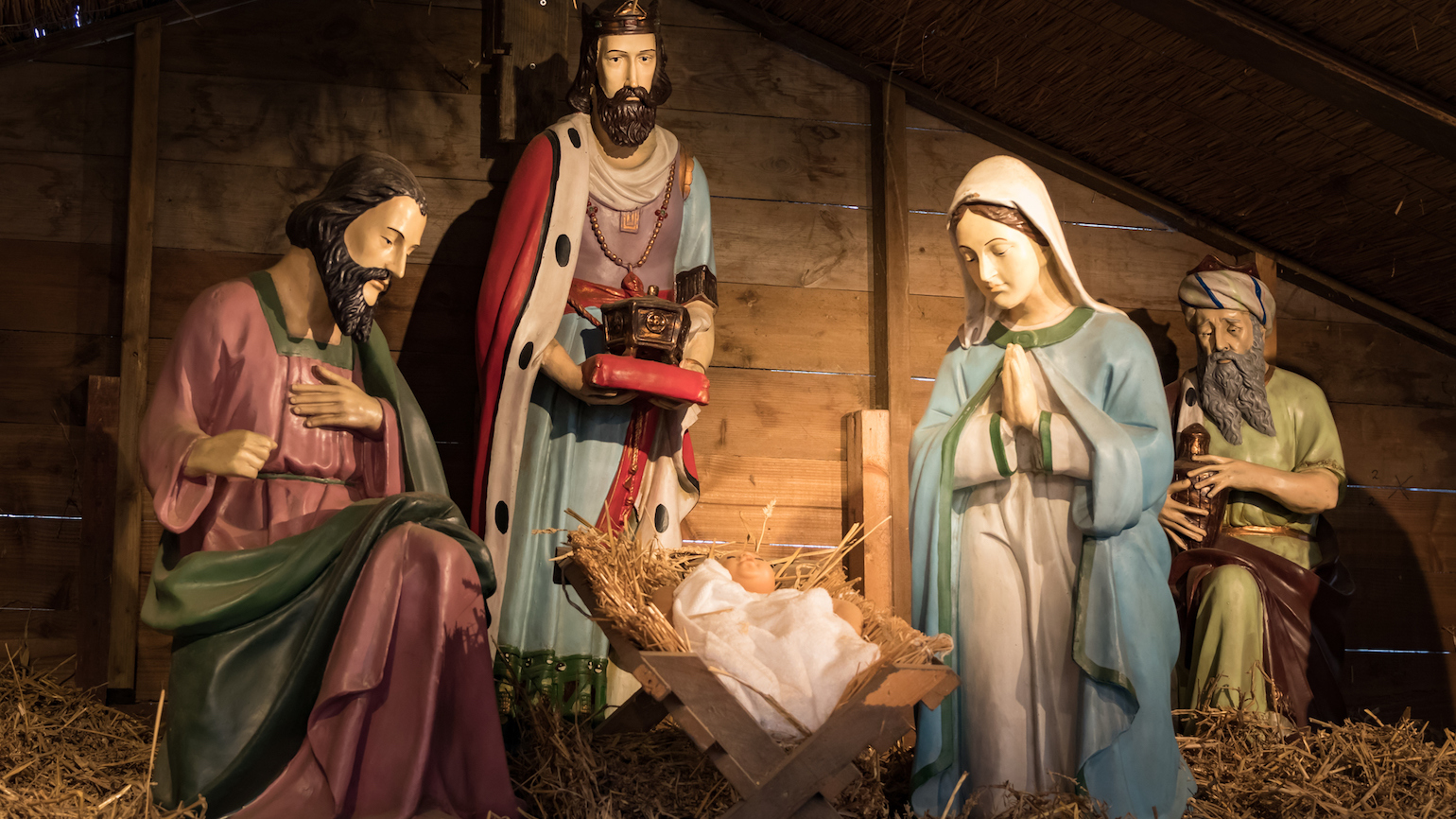
It may have been one of the first sounds the infant Jesus heard from Mary or Joseph on that Christmas night as they “wrapped him in cloths and placed him in a manger” (Luke 2:7 NIV). After all, how many mothers in every language, land, and time have soothed their baby’s cries with a low and comforting one-word prayer of “shhhh”?

The Lord’s First Hours

How often did the Lord’s parents cradle Him with a long, soft “shhhh” in the first hours of His life? As they showed Him off to the visiting shepherds? When they trekked into Jerusalem eight days later to present their child in the Temple and name Him as they’d been instructed? Did Simeon pacify Jesus’ cries with that single syllable of a one-word prayer? Did Anna?

Shop Guideposts: Pray a Word a Day

We can’t know, of course, but it’s easy to imagine. And it’s easy to turn it into a simple one-word prayer especially when stress mounts. It can be a balm amid all the tumult. Or a prayer to God, a plea for the tranquility of Christ to rule in your heart (see Colossians 3:15). It can even be a gentle stop sign of sorts, a spiritual hand to hold up against the noise, a way of saying, “Peace, be still” (Mark 4:39 KJV).

‘Shhhh’ Throughout Your Day

Try quietly uttering this one-word prayer as you enter God’s house for worship. When you lay your head on your pillow after a long, hard day. As you let the phone call go to voicemail because you…just…can’t.

You may even try using this prayer during your daily routine, as you walk the dog or drop into your favorite chair and open your Bible. Let it subdue your racing mind, steady your breathing, slow your heartbeat. Offer it to all the distractions that tend to crowd out the beauty of the season and the presence of the Lord. Shhhh.

An Advent Practice: Pray Your Way to the Manger

In my hometown of Cincinnati, Ohio, there is a church atop a hill called Mt. Adams. For more than 160 years, Good Friday worshipers have slowly ascended 85 steps from the neighborhood below to the church’s front doors, pausing to kneel and pray on each step. It’s a practice they’ve repeated year after year, decade after decade, step after step, as a way of kneeling their way to the cross of Jesus. But here’s a way to make that an Advent practice.

For centuries, followers of Jesus have “knelt” and prayed their way to the manger in the week before Christmas. They do it by means of a series of songs, or chants, called “The O Antiphons or Great Advent Antiphons.

Many Christians know them as a part of vespers or evensong services on each of the last seven days of Advent. Others have encountered them (though they may not have known the connection to the ancient antiphons) as the verses of the Advent hymn, “O Come, O Come, Emmanuel.”

So, what if during these final days leading up to Christmas, you incorporated this as a new Advent practice? And you “knelt” your way to Christmas Eve by singing or praying a different verse of that hymn? The following could serve as a helpful guide:

December 17 (“O Wisdom”)

O come, O Wisdom from on high,
who ordered all things mightily;
to us the path of knowledge show
and teach us in its ways to go.
Rejoice! Rejoice! Immanuel shall come to thee, O Israel.

December 18 (“O Adonai”)

O come, O come, great Lord of might,
who to your tribes on Sinai’s height
in ancient times did give the law
in cloud and majesty and awe.
Rejoice! Rejoice! Immanuel shall come to thee, O Israel.

December 19 (“O Root of Jesse”)

O come, O Branch of Jesse’s stem,
unto your own and rescue them!
From depths of hell your people save,
and give them victory o’er the grave.
Rejoice! Rejoice! Immanuel shall come to thee, O Israel.

December 20 (“O Key of David”)

O come, O Key of David, come
and open wide our heavenly home.
Make safe for us the heavenward road
and bar the way to death’s abode.
Rejoice! Rejoice! Immanuel shall come to thee, O Israel.

December 21 (“O Dayspring”)

O come, O Bright and Morning Star,
and bring us comfort from afar!
Dispel the shadows of the night
and turn our darkness into light.
Rejoice! Rejoice! Immanuel shall come to thee, O Israel.

December 22 (“O King of Nations”)

O come, O King of nations, bind
in one the hearts of all mankind.
Bid all our sad divisions cease
and be yourself our King of Peace.
Rejoice! Rejoice! Immanuel shall come to thee, O Israel.

December 23 (“O Emmanuel”)

O come, O come, Emmanuel
And ransom captive Israel
That mourns in lonely exile here
Until the Son of God appear.
Rejoice! Rejoice! Immanuel shall come to thee, O Israel.

By singing or speaking these lines with your family and friends—and with worshiping Christians around the world—we can, in this Advent practice, kneel together and pray our way to the manger this Christmas.

A Morning Prayer for New Mothers

New mothers are often so exhausted that they can barely keep their eyes open, let alone find time to pray. But prayer is essential for both the mother and child. If you’re a new mother, this morning prayer will help renew your strength and give you the energy you need to care for your little one.

Dear Lord,

I am so tired. I feel like I can barely keep my eyes open, let alone take care of a new baby. But I know that You are with me and will give me the strength I need.

Help me to be patient when my baby is fussy and crying, and everything seems to be going wrong. Help me to cherish this time, even though if I’m sometimes exhausted.

I know being a mother is one of the most important jobs in the world. Help me to do it well and with love.

Amen.

A Christmas Prayer for Those Who Are Lonely and Forgotten

It’s always a good time to remember people who feel forgotten and neglected. But a Christmas prayer for the lonely is especially important during a season of gatherings and get-togethers.

The Lonely and Overlooked in the Bible

The Christmas story in Matthew’s and Luke’s Gospels suggests that God pays special attention to lonely and overlooked people. Here are some examples:

  • Though Mary and Joseph probably called on family upon their arrival in Bethlehem, apparently no one saved a place for them.
  • Until the angel’s announcement, the night-shift shepherds (who occupied one of the lowest social and economic statuses at the time) had to work while others visited and celebrated.
  • When the shepherds arrived at the place of Jesus’ birth, they “found Mary and Joseph, and the baby” (Luke 2:16 NIV)—apparently without family or friends present to celebrate with them.
  • After the birth of Jesus, His parents took Him to the Jerusalem Temple. There they encountered aged Simeon and the widow, Anna, two people who had long outlived friends and loved ones.
  • Later, a courtly caravan of travelers who had traveled long and far from home found the holy family and brought gifts to Jesus.
  • Still later, Joseph—having been warned in a dream—packed up his young family and took to the road. They then became refugees in a foreign land as they waited for circumstances in their homeland to change.

A Christmas Prayer for Today’s Lonely and Overlooked

We might say the key participants in the first Christmas were The Forgotten. The Lower Class. The Lonely. The Overlooked. The Wayfarers. The Refugees. So, what better time of year to pray for their present-day equivalent than during this special season, with a short litany like the following:

Lord God, in this special season, I come to You on behalf of those whose holidays are mournful reminders of loss or lack in their lives.

I pray for those who, perhaps like Mary and Joseph upon their arrival in Bethlehem, feel forgotten or excluded over the holidays.

I pray for those who, perhaps like the shepherds, are required to work while others sleep or celebrate.

I pray for those who, perhaps like Simeon and Anna, have outlived many friends and loved ones.

I pray for those who, like the magi, are traveling or far from home over the holidays.

I pray for those who, like the holy family who escaped to Egypt, are refugees in foreign lands.

I pray also for prisoners, patients, or invalids, along with those who are stranded or sidelined during this blessed season.

I cry out to You who “is close to the brokenhearted” (Psalm 34:18 NIV). I ask You to be close to and shower Your favor on all of the above, in the name of Jesus, Your beloved and only-begotten Son, amen.

May God bless you richly as you offer a Christmas prayer for the needs of others. Remember those who experience loneliness and sorrow while others are celebrating with family and friends.

8 Meaningful Ways to Observe Lent with Your Family

It’s the countdown to Easter. Find a way to mark the days. Just as you might have lit the candles on an Advent wreath at Christmas, you can do things together to honor Lent and the coming of Easter. Try these ways to observe Lent with your family:

1)  A Coinbox

In Sunday school, when I was a kid, we were given a little church out of cardboard on Ash Wednesday, and for the rest of Lent we were to put our change into it. Pennies, quarters, a whole dime (when that seemed like a lot), hearing all the coins gathered there when you shook it like a piggybank. On Easter, we brought it to church. Our offering. It made us conscious of the season back before we even knew the meaning of Lent.

READ MORE: 5 More Fun, Easy and Faith-Filled Ideas for Lent

2)  A Charity

I have some of my favorites—I’m sure you do, too. There’s that kid in a faraway land whom you’ve sponsored to help. Or those goats on a farm in Africa you donated for. Or that shelter not so far from your home that could use some help. Put a picture up on your refrigerator door. Have a few pictures there on your kitchen table for when you gather to eat. The awareness of those in need—and the awareness of your own blessings—becomes part of your prayers.

READ MORE: Create an Action Plan to Do Great Things This Lent

3)  A Devotional

Turning the pages in a book as you turn to the pages in your own life. As a contributor to Walking in Grace I’m acutely aware, as are the other writers, of the changing seasons. Each Bible verse, each devotional story and message, each prayer is meant to enhance your faith. “Make each day your masterpiece,” said the legendary college basketball coach John Wooden. You can read a daily devotional out loud to your kids or your spouse. Sharing the faith.

4)  A Prayer List

I tend to scribble on Post-it notes those names of people who’ve asked for prayer or the specific needs they have. To pray for someone is to open up your heart to what they ask for. To seek understanding. To grow in compassion. Feeling someone else’s need, knowing how it links up to some of your own needs, that’s the start of prayer. You offer it up to a greater power.

READ MORE: 10 Inspiring Prayers for Lent and Fasting

5)  A Thanksgiving List

Write down the things you are thankful for. Add to the list every day for Lent. Share your list with your family members. Or come up with a list together. Your Lenten list. It is so helpful, especially on a day when you think nothing has gone right, to be able to see how much has gone more than right. How much you have to be grateful for. How much God has blessed you.

READ MORE: 3 Biblical Prayers for Gratitude

6)  A Bible Passage

We’re so used to reading the printed Bible we forget that for most of its existence, Scripture was largely heard, not read. The words were so precious and when Bibles couldn’t be printed in mass like they are today or when many fewer people could read, there was special community in hearing the Scripture. At the dinner table, at bedtime, even over breakfast, read through a biblical book just a few verses at a time. Share it aloud.

READ MORE: 20 Lent Bible Verses for Reflection and Guidance

7)  A Fast

A fast is something you don’t have to do alone. It’s not something to brag about or talk about with a lot of other people—as Jesus reminds us. But there can be power in sharing a practice with another family member or maybe with the whole family. Fasting also has many spiritual benefits. If everybody gives up something for Lent, like chocolate, think how much that chocolate Easter egg will be savored. At last.

READ MORE: 15 Inspiring Bible Verses for Fasting

8)  A Hug

Pass along a hug for Lent. The season is meant as a reminder of God’s eternal love in our lives. A hug before bedtime. A hug before dashing out of the house in a busy day. A chance to hold tight to what God has given us and what we can give right back.

READ MORE ABOUT LENT:

7 Ways to Start Developing the Habit of a Daily Devotional

If you’re looking for a spiritual practice and positive habit that will bring you closer to the Lord, turn the page on something helpful…like a daily devotional habit.

A book isn’t going to give you everything, but it’ll keep you grounded and connected to your best self. As Jesus says, “Love the Lord your God with all your heart and with all your soul and with all your strength and with all your mind…” (Luke 10:27).

This is not something you do just once or overnight. You do it day by day by day. It becomes a daily devotional habit.

1) Pick a time of day.

Start your daily devotional habit during a time when you won’t be distracted. What works best for you? For me, it’s first thing in the morning because my mind is freshest. And I like setting the spiritual course of the day before sheer busyness—and noise—take over.

2) Pick a place.

This might seem like a stretch, but it helps to go back to the same place each day. You are more likely to keep your habit of reading a daily devotional if you have a comfortable spot to return to. The external stimuli of the setting become your internal stimuli, whether it’s the rumble of the radiator, the hum of the air conditioner or the birds chirping outside. They all say to you, “This is my time. This is my place.

3) Pick a book.

Of course, you could develop your daily devotional habit online through an app, but I find there’s something helpful—no matter how old-fashioned—about having a printed text in hand. A page a day works nicely. You read, you meditate on the passage, you pray, you might even want to scribble a note or two in the margins or underline something helpful. Use a book marker and see how it tracks your spiritual journey over the year.

4) Look for some Scripture.

If you pick a book, maybe it’s the Bible. I like reading through a few Psalms every day, working my way along. But if you’re using a devotional, such as Guideposts’ Walking in Grace (which features some of my prose), notice how it amplifies a biblical text. An everyday example can bring a Bible passage to light.

5) Settle in community.

When you read a devotional day by day, you discover that you’re sharing that same world and that same moment with people all over the world. When I pray in the morning, I know I’m not alone. There are millions of people—although I can’t see them or Zoom with them—here with me as we’re here with God.

6) Keep it up.

Sure, some days the schedule gets crazy. You miss practicing your daily devotional habit. Fret not. You might have forgotten God for a moment, but God has never forgotten you. Each day offers a new opportunity to work on that key relationship in your life—you and God. Together.

7) Give thanks.

Developing a daily devotional habit is not always easy, so celebrate when you accomplish it. What a joy that you can do this. Give thanks for it. And I’m there with you, giving thanks for you as well.

READ MORE ABOUT POSITIVE HABITS:

7 Ways to ‘Gaze on the Beauty of the Lord’

The Bible’s book of Psalms is filled with beautiful and evocative phrases. “My cup runneth over.” “Under the shadow of the Almighty.” “Teach us to number our days.”

One of my favorites is from Psalm 27:4 (NIV):

One thing I ask from the Lord,
this only do I seek:
that I may dwell in the house of the Lord
all the days of my life,
to gaze on the beauty of the Lord
and to seek him in his temple.

It’s a lovely passage attributed to David, the shepherd king of Israel who never realized his dream of building a Jerusalem temple for God; that honor went to his son, Solomon. In David’s lifetime, “the house of the Lord” was the tabernacle, a dwelling of cloth and skins. Yet David experienced God there and apparently gazed on the beauty of the Lord.

How can we “gaze on the beauty of the Lord” in our day and age? How to seek—and find—His face? Here are some ideas that have worked for me as a way of “gazing on the beauty of the Lord”:

  1. Watch a sunrise or sunset (perhaps while singing a morning hymn such as “When morning gilds the skies” or an evening hymn such as “Abide with me”).
  2. Stop in a church that has stained glass windows and spend time meditating on the depictions of the Father, Son, and Holy Spirit.
  3. Close your eyes and recite Psalm 27:8 (“My heart says of you, ‘Seek his face!’ Your face, Lord, I will seek”). Ask God to show you His beauty throughout the day or as you go to sleep at night.
  4. Walk in a garden. Touch and smell the fragrant flowers and marvel at the Creator’s craftsmanship.
  5. Find a sunlit bench in a park or spread a blanket in a meadow and gaze up at the sky, letting the sun warm your face. Close your eyes and visualize your Father, God, in all His beauty.
  6. Place a reproduction of a favorite painting or etching of Jesus in your Bible and pull it out from time to time—not for a fleeting glance but to trace it with your finger, to contemplate and consider what it means to you.
  7. Enter church earlier than usual and sit where you can unobtrusively observe others. Notice smiles and tears, the compassion and love with which your fellow worshipers greet each other. Look for reflections of God’s beauty in His servants.

Try a few of these ideas this week. You might even make one or two into a habit, as you discover His exquisite beauty.

7 One-Word Prayers for Lent

Very early in the life of the church, followers of Jesus began observing a season we now call Lent, a 40-day season of spiritual preparation for the holiest of days in the Christian calendar: Maundy Thursday, Good Friday, Silent Saturday, and Easter Sunday. Lent often involves spiritual discipline and practices such as fasting, meditating, or giving something up. It is a time of intentional, focused prayer and contemplation. Could using one-word prayers for Lent be helpful?

In the clamor and frenzy of our daily lives, it’s difficult to mark this season of confession, repentance, and humility as we’d like. But it’s not impossible if we have a Lent plan. One way is to select one-word prayers for Lent. Use one each, starting on Ash Wednesday and ending just before Maundy Thursday.

Lent one-word prayers can be offered silently or whispered during daily activities—while dropping kids at school or waiting on hold. They can offer a prayerful respite in the most mundane moments. All it takes is a little intention, a momentary awareness, and sometimes a helpful trigger or reminder. Maybe before opening the mail. Or after hearing a car horn or barking dog.

So, here are seven one-word prayers for Lent I suggest for praying throughout the days and weeks leading up to this year’s observance of Christ’s Passion. Let them bring meaning to the Lenten season.

Week 1 of Lent: Confess

In the first week of Lent, cultivate a heightened awareness of your own frailties and shortcomings by regularly praying “I confess…”

Week 2 of Lent: Silence

The next week, speak this word into the busyness and noise of your life. Make it a prayer for quietness. Use it as a reminder to calm your own mind and heart. Let it be a request for more moments of silence during this holy season.

Week 3 of Lent: Surrender

In the third week of Lent, take every opportunity to say “Surrender,” submitting to God in humility, obedience, and worship. Let it remind you of Gethsemane, where Jesus prayed, “Not my will, but yours be done.”

Week 4 of Lent: Mercy

Let this word make your fourth week of Lent a continual cry for mercy, for yourself and for others.

Week 5 of Lent: Break

As you pray into the fifth Lenten week, you may have become more aware of your sins and shortcomings, habits and tendencies that aren’t helpful to you or pleasing to God. Speak the word “break” often in the course of your days, asking the Lord to break up those patterns and proclivities.

Week 6 of Lent: Need

Among the blessings of Lent is a deeper and broader awareness of how much we need the powerful presence of Jesus in our lives. Repeating the word “need” as often as possible can become a petition for God to “meet all your needs according to the riches of his glory in Christ Jesus” (Philippians 4:19 NIV).

READ MORE: Is Lent in the Bible?

Week 7 of Lent: Jesus

In the final week of Lent, as you prepare for the events of Holy Week, speak the name of Jesus, invoking His presence, praising His beauty, and asking for His blessing and working in your life and in the lives of those around you.

Try it. Sprinkle each of these seven one-word prayers for Lent through your days, hours, and minutes between now and the annual observance of Christ’s Passion. Then you may be more ready than ever for the glorious celebration of Resurrection Sunday.

READ MORE ABOUT HOW TO DO LENT:

20 Lent Bible Verses for Reflection and Guidance


Lent is a season of reflection and spiritual growth, of sacrifice or contribution. These uplifting Bible verses can help guide you through the 40 days of Lent and lead you to contemplate the meaning of this sacred season as you incorporate the Bible’s teachings into your life.

READ MORE: Is Lent in the Bible?

Popular Lent Bible Verses

Woman reading Lent bible verses outside

1) Matthew 6:16-18 – Keep a Secret

“And when you fast, do not look gloomy like the hypocrites…But when you fast, anoint your head and wash your face, that your fasting may not be seen by others but by your Father who is in secret. And your Father who sees in secret will reward you. (Matthew 6:16-18)

No need to tell everybody what you’ve given up for Lent–if you’ve given up anything. Keep it in secret. It’s a secret between you and God. What could be more powerful than a secret like that?

Lent Bible verses stating Humble yourselves, therefore, under the mighty hand of God so that at the proper time he may exalt you.

2) 1 Peter 5:6 – Reveal Your Struggle

Humble yourselves, therefore, under the mighty hand of God so that at the proper time he may exalt you. (1 Peter 5:6)

Humility gets a bad rap in our culture. After all, aren’t you supposed to let the world know how great you are so that you get some credit for all the good stuff you’re doing? What if you actually revealed how much you struggle, even in your faith? Be guided by this Lent Bible verse. God can help us when we let God know how helpless we are.

3) Isaiah 58:6-7 – Take on Something

Is this not the fast that I choose: to loose the bonds of wickedness, to undo the straps of the yoke, to let the oppressed go free, and to break every yoke? Is it not to share your bread with the hungry and bring the homeless poor into your house…” (Isaiah 58:6-7)

Giving up something to celebrate Lent? You could also do as these verses suggest: take on something. Volunteer at that soup kitchen. Make a donation to your favorite charity. Donate some clothing or food for the poor. Giving can be another way of doing a Lenten fast. Taking on as you give up.

4) Mark 1:12-13 – Find Your Wilderness

At once the Spirit sent him out into the wilderness, and he was in the wilderness forty days, being tempted by Satan. He was with the wild animals, and angels attended him.” (Mark 1:12-13)

The gospel of Mark is so succinct. In two verses the writer describes all that happened to Jesus for those 40 days. We often get fixated on how Jesus went without food but notice here how the wilderness part of the experience was also crucial. To be alone. To be tested. To be with the wild animals and the angels. Before Jesus could begin His ministry, He needed that wilderness time. Can we not find a way to do the same as we look to grow in faith? Look for a Lenten retreat in your community.

READ MORE: How to Observe Lent in a Different Way This Year

5) Colossians 2:16-17 – Honor Your Choice

Therefore let no one pass judgment on you in questions of food and drink, or with regard to a festival or a new moon or a Sabbath. These are a shadow of the things to come, but the substance belongs to Christ. (Colossians 2:16-17)

Okay, so maybe you gave up desserts for Lent, and now Easter is coming, and you can’t wait to gorge on some jellybeans or chocolate eggs. There’s always going to be some worthy soul out there who will say, “Shouldn’t you just give up those things anyway, all year round?” You can respond with this Lent Bible verse. It’s not about what’s healthy or not. It’s about Christ. You made that choice for Lent to remember God. And to honor God.

Lent Bible verses stating Then I turned my face to the Lord God, seeking him by prayer and pleas for mercy with fasting and sackcloth and ashes.

6) Daniel 9:3 – Seek Inward Things

Then I turned my face to the Lord God, seeking him by prayer and pleas for mercy with fasting and sackcloth and ashes. (Daniel 9:3)

All these outward things we do for Lent, the fasting, the time of silence and stillness, even wearing some different clothes, they are simply ways to help us do the inward things. That is to seek God in Lenten prayers, asking for God’s mercy.

READ MORE: 20 Beautiful Lent Quotes to Inspire You

Lent Bible verses For God so loved the world, that he gave his only Son, that whoever believes in him should not perish but have eternal life.

7) John 3:16 – Remember His Sacrifice

For God so loved the world, that he gave his only Son, that whoever believes in him should not perish but have eternal life. (John 3:16)

This was what came out of Jesus’s wilderness experience. This was what all those trials gave Him the inner strength to share with the world, even as He knew what suffering would be ahead. A timeless message, always, for Lent.

More Lent Bible Verses to Reflect On

Woman's hands holding a coffee cup while she reads lent bible verses

8) As the deer pants for streams of water, so my soul pants for you, my God. My soul thirsts for God, for the living God. When can I go and meet with God? (Psalms 42:1-2)

9) Is not this the kind of fasting I have chosen: to loose the chains of injustice and untie the cords of the yoke, to set the oppressed free and break every yoke? (Isaiah 58:6)

10) In this world you will have trouble. But take heart! I have overcome the world. (John 16:33)

11) Guide me in your truth and teach me, for you are God my Savior, and my hope is in you all day long. (Psalm 25:5)

Lent Bible verses The Lord is good to those whose hope is in him, to the one who seeks him; it is good to wait quietly for the salvation of the Lord.

12) The Lord is good to those whose hope is in him, to the one who seeks him; it is good to wait quietly for the salvation of the Lord. (Lamentations 3:25-16)

13) Praise be to the God and Father of our Lord Jesus Christ! In his great mercy he has given us new birth into a living hope through the resurrection of Jesus Christ from the dead… (1 Peter 1:3)

14) Yes, my soul, find rest in God; my hope comes from him. (Psalm 62:5)

15) Therefore I tell you, do not worry about your life, what you will eat or drink; or about your body, what you will wear. Is not life more than food, and the body more than clothes? (Matthew 6:25)

Lent Bible verses stating For the Spirit God gave us does not make us timid, but gives us power, love and self-discipline.

16) For the Spirit God gave us does not make us timid, but gives us power, love and self-discipline. (2 Timothy 1:7)

17) But you must return to your God; maintain love and justice, and wait for your God always. (Hosea 12:6)

18) But seek first his kingdom and his righteousness, and all these things will be given to you as well. (Matthew 6:33)

19) Be joyful in hope, patient in affliction, faithful in prayer. (Romans 12:12)

20) “For I know the plans I have for you,” declares the Lord, “plans to prosper you and not to harm you, plans to give you hope and a future.” (Jeremiah 29:11)

READ MORE ABOUT LENT AND BIBLE VERSES:

7 Favorite Hymns for Lent

We don’t necessarily think of Lent—a season of reflection, prayer and often fasting—as a time to sing. Don’t we have to wait for all those “Alleluias” of Easter? No, we don’t. There are so many hymns of Lent that can carry us through this lovely, spiritually rich season. They can show us the true meaning of Lent. Here is musical inspiration for this transformative time. Try one of these beautiful Lent hymns:

Young people at a church singing lent hymns together

1)  “Come Thou Fount of Every Blessing”

What great reminder that God’s grace is there to carry us through whatever trials we face. The verse that always moves me the most:

Let thy goodness like a fetter
Bind my wandering heart to thee.

That powerful imagery of being chained to God’s own goodness pulling me back from my wanderings. May I be the Lord’s prisoner forever.

people singing lent hymn holding sheet music

2)  “Forty Days and Forty Nights”

Just that title alone says “Lent.” We’re being called in this season to remember the Lord’s suffering and to share the journey with Jesus:

Shall not we your sorrow share
And from worldly joys abstain,
Fasting with unceasing prayer,
Strong with you to suffer pain?

Whatever fasting we undertake, whatever we decide to give up for Lent, we do it with prayer and grow stronger in the process as we face our own struggles.

Children and music teacher singing lent hymns together

3)  “Dear Lord and Father of Mankind”

The lyrics are by the great American poet John Greenleaf Whittier, a Quaker of deep faith. He understood how necessary it is to turn to God, asking for forgiveness, for God to “reclothe us in our rightful mind.” Prayer is at the heart of that process. My favorite verse:

Drop thy still dews of quietness,
Till all our strivings cease…
And let our ordered lives confess
The beauty of Thy peace.

What a perfect prayer for Lent.

Lent hymn sheet music wrapped into a heart shape

4)  “Take My Life, and Let it Be”

There’s an old saying (I remember seeing it posted in our choir room as a kid): “When you sing you pray twice.” The words of a Lent hymn, like this one, stick in your soul. If you just said the words, that’d be one thing. But singing them resonates with your heart, body and soul. Like Jesus said, “You shall love the Lord your God with all your heart, with all your soul and with all your mind” (Matthew 22:37). When I sing “Take my life…” the promise is rich and deep.

Man with his eyes closed listening to a podcast about how to do lent
Getty Images

5)  “Be Still, My Soul”

Lent is a great time to practice contemplative prayer. Choose a time for day—first thing in the morning works best for me—when you can be quiet, be still, to listen to God. Our minds can be noisy with distractions. But when we give all those worries and concerns over to the Lord, we can be still:

Be still my soul thy best, thy heavenly friend
Through thorny ways leads to a joyful end.

Amen.

Group of young people singing lent hymns with a piano and drum set

6)  “’Take Up, Thy Cross’ The Savior Said”

These words come straight from the Lord’s mouth: “If any man will come after me, let him deny himself, and take up his cross, and follow me” (Matthew 16:24). How wonderful to have a Lent hymn to help us claim that. Often sung in community. All the more powerful to make that pledge with others. That last verse:

Nor think till death to lay it down;
For only those who bear the cross
May hope to wear a golden crown.

The glory of it.

Close up on sheet music for the lent hymn amazing grace

7)  “Amazing Grace”

Everybody’s favorite hymn. For good reason. During our Lenten journey, it feels especially appropriate, as we call on the free gift of grace that we’re all offered:

Through many dangers, toils and snares,
I have already come.
Tis grace that brought me safe thus far,
And grace that will lead me home.

Those toils that Jesus endured in the wilderness, that we honor at Lent, can only be endured through God’s grace. May it be with you.

READ MORE ABOUT THE LENTEN SEASON:

7 Bible Verses to Pray First Thing in the Morning

I make a practice of meeting God in the morning. When my mind is clear, when the day has yet to begin, when the to-do list has yet to be done, when first things can be sure of coming first. When I turn to the Bible, first thing, the meaning of morning comes up again and again. Here are a few verses I like to read and pray.

1) O Lord, in the morning you hear my voice; in the morning I plead my case to you and watch (Psalm 5:3). God hears our voices at any time of day, but in the morning, we can hear our hearts’ yearning before the distractions of a busy day loom. Speak up. Plead your case. Then watch and wait with the morning.

2) Let us know, let us press on to know the Lord; his appearing is as sure as the dawn…(Hosea 6:3). The rising of the sun changes with the seasons. Sometimes, it seems to come too early (“Not yet, God,” I’m tempted to say); sometimes too late. But its appearance is as certain as the Lord’s. To look is to know God, as certain as the rising sun.

3) O God, you are my God I seek you, my soul thirst for you…as in a dry and weary land where there is no water (Psalm 63:1). As the Psalmist reminds us, our prayers often come when we are worried, full of doubts, at a loss, parched. We seek comfort, reassurance. We need to go back to the Source and drink up.

4) Let me hear of your steadfast love in the morning, for in you I put my trust…(Psalm 143:8). The bad news is always there, screaming out from my phone, all those scary headlines in the press. All the more reason to look for what I can trust, God’s good news of love eternal.

5) The path of the righteous is like the light of dawn, which shines brighter and brighter until full day (Proverbs 4:18). My prayer life is continually inspired by and supported by others, the righteous, whose commitment is unswerving. I might be physically alone in my room when praying but I’m never alone spiritually. Many others are right there with me.

6) In the morning sow your seed, and at evening do not let your hands be idle…(Ecclesiastes 11:6). Mornings are my most creative hours. Time to start a new project, time to write an article—like this one. Time to call on the Spirit, planting a new seed. The gift of a new day can never be wasted.

7) Weeping may linger for the night, but joy comes with the morning (Psalm 30:6). Haven’t we all had nights where we were kept awake or woke up filled with anxiety, worries, or sorrow? We call upon God then, giving up our tears, letting them go. Making us ready to discover the joy that comes with the morning. Always there.

7 Bible Verses for the New Year

As December comes to an end, most people reflect on the past, anticipate the New Year ahead and consider how it will differ from this year. We may feel mixed emotions. While some had to say goodbye to loved ones, others said hello to newborns. Some felt they accomplished a lot, while others felt a sense of disappointment. With all that happened throughout the year, the chance to begin fresh in the New Year can be exciting. If we pray, work hard and keep our faith, we can accomplish many things.

Without a strong and positive mindset, reaching our New Year’s goals and facing life’s obstacles can be more difficult than need be. Life has a way of throwing things our way that we often can’t anticipate. As we prepare for the New Year, let us focus on the Word to sustain us through life’s ups and downs. The Word increases our faith and gives us spiritual strength. Here are seven biblical verses for the coming year:

1) “…but those who hope in the LORD will renew their strength. They will soar on wings like eagles; they will run and not grow weary, they will walk and not be faint.” (Isaiah 40:31)

2) “For I know the plans I have for you,” declares the LORD, “plans to prosper you and not to harm you, plans to give you hope and a future.” (Jeremiah 29:11)

3) “Trust in the LORD with all your heart and lean not on your own understanding; in all your ways submit to him, and he will make your paths straight.” (Proverbs 3:5-6)

4) “I have told you these things, so that in me you may have peace. In this world you will have trouble. But take heart! I have overcome the world.” (John 16:33)

5) “Do not be anxious about anything, but in every situation, by prayer and petition, with thanksgiving, present your requests to God.” (Philippians 4:6)

6) “But the fruit of the Spirit is love, joy, peace, forbearance, kindness, goodness, faithfulness, gentleness and self-control. Against such things there is no law.” (Galatians 5:22-23)

7) “I can do all this through him who gives me strength.” (Philippians 4:13)

As we close one year and begin another, let us move forward with confidence as God is always with us. And let us turn to scripture in good and bad times to help us maintain a positive faith-filled mindset. As the psalmist said, “Your word is a lamp for my feet, a light on my path” (Psalm 119:105). What is your Scripture for the New Year? Please share with us.

Lord, let Your word light our path in the New Year.