Embrace God's truth with our new book, The Lies that Bind

Why Fall Is the Most Positive Season

The romantic poet William Cullen Bryant called autumn “the year’s last, loveliest smile.” And on one of the many perfectly crisp, cool, brilliant fall days most of us are lucky enough to enjoy, with leaves crunching underfoot and cinnamon smells wafting from our ovens, the fall is just that—lovely.

There’s wistfulness in the mention of “last” in Bryant’s quote, an acknowledgement that the lush natural beauty that sprouted in springtime and burst into fruition in the summer is quieting down, headed toward the chill of the winter ahead.

But there’s also a sense of peace in the ending that autumn represents. Because the fall is such an elegant transition, such a colorful and beautiful ending that reminds us to marvel at the cycles of the natural world, I consider it to be the most positive season.

The natural changes of autumn—the spectacular show of changing leaves on display in deep forests and neighborhoods alike—mirror changes we experience in our own lives. Our routines change in the fall, whether you’re in a “back to school” season of life, easing back into a work routine after your summer vacations, or preparing to snowbird to warmer climes.

Navigating change is a challenge, but in the fall, our senses are flooded with cues to remind us that change can also be beautiful, worth pausing to savor, filled with pleasing moments that can sustain us through whatever the coming winter has in store.

The joys of fall truly saturate every sense. Our eyes take in the vibrant reds, oranges, yellows and waning greens of the trees. Our noses inhale the clean, fresh air mixed with the scents of newly-lit fireplaces and warming foods. Our bodies feel the soft comfort of longer pants, tops, loose scarves and shoes. The flavors of fall both excite and soothe our taste buds. And in addition to the much-anticipated sound of crunching leaves, our ears take in the voices of friends and family members who are back from summer adventures and ready to reconnect and reunite.

So autumn may be the “last” of the sunny seasons, but it is indeed something to smile about—something quite lovely.

For more inspiring stories, subscribe to Guideposts magazine.

Related Video

When Love Is On the Line

Mom and I turned off University Avenue and pulled into the potholed parking lot outside a large, rustic building. The neon sign blazed out the name Wild E. Coyote. It was September 1992, and line dancing was the big thing in Cedar Falls, Iowa. Mom had been after me to go with her for weeks. “It’ll do you good to get out. A lot of your friends will be there,” she said. “Some folks from church. And who knows, maybe you’ll even meet someone.”

Yeah, right. It was fine by me if I never dated another man in my life. I was done with love. Still, I liked to dance and Mom wouldn’t quit asking, so I agreed to go. The place was packed with people in their Wranglers and cowboy boots, and country music was blaring. I’m not ready for this, I thought. But the more I twirled and stomped along with everyone else, the more I got into it. I had to admit, line dancing was the most fun I’d had in a long time. So I went back to the Wild E. Coyote. Mom and Dad were more than happy to watch Zak and Jesse.

One night in October I noticed this tall guy with feathered-back hair. He looked young, despite his scruffy attempt at a beard. He had on a plain button-down shirt with baggy jeans and sneakers. Whenever I saw him at the Wild E. I found myself watching him. He was always at the center of a group of friends. A few times I caught him glancing back at me. Then one night there was a barn dance. You took your partner and danced in a big circle, switching partners every eight beats or so. Right when the song ended, I was standing in front of the guy. “Want to keep dancing?” he asked.

“Sure.” He wasn’t a bad dancer.

He told me his name was Kurt Warner. We danced together till closing time. He walked me out to my car. I could tell he wasn’t ready to say good night.

I didn’t want to hurt his feelings, but better his now than mine later. “I want you to know I’m a divorced mother of two,” I said. “So if I never see you again, I’ll understand.”

Kurt was quiet for a second, then shrugged and said, “Hey, thanks for the dances.”

I got into my car thinking, That’s the end of that. Fine. I don’t need more heartache. I’d already had my share, and then some. I’d had to take a hardship discharge from the Marines to take care of my son, Zachary, after he was brain-damaged in an accident. Then my husband told me there was another woman. The divorce went through just a month after I gave birth to our second child, our daughter, Jesse. The kids and I moved back to my folks’ house. Men? Forget about it. My parents and the Good Lord, they were the only ones I could count on, or needed to. It’s just you and me now, Lord, I’d say in my prayers. And I trust you.

The next morning there was a knock at the door. I answered it with Jesse in my arms. Kurt stood there with a rose in his hand, smiling sheepishly. I was still in my bathrobe and hadn’t put on any makeup. “How did you find me?” I demanded.

He mentioned a mutual friend who’d told him where I lived. “I’d like to meet your kids,” he said.

A thousand things ran through my head, but what came out of my mouth was, “Okay, come on in.”

Kurt walked into the living room. Right away Zachary crawled over and grabbed his hand. Kurt barely paid attention to me. Instead he got down on his knees and tickled Zak. Soon the two of them were wrestling around and giggling. Zak looked sad when Kurt finally left a couple of hours later, with a quick “See you line dancing” to me.

I realized I’d never gotten to tell him what was wrong with Zak. In fact, it seemed like it didn’t matter to him. He was as happy playing with Zak as he had been at Wild E. Coyote surrounded by his friends. What was with this guy?

Kurt played football at the University of Northern Iowa. I had less than no interest in sports, but I did like spending time with him. People started teasing me about how I danced only with Kurt, and I reluctantly admitted that we were dating. At first I wondered why all our outings were at the Wild E. But then I realized neither of us had any money. He was just a college student and I was in nursing school. “Why don’t you come over to my parents’ house?” I asked one night. “We can microwave some popcorn and watch a movie with the kids.”

“Sounds great,” Kurt said.

That’s how we really got to know each other, all those movie nights in my parents’ living room. After I put the kids to bed Kurt and I would stay up and talk. If he had a game coming up, he’d get all excited and ramble on about plays and stuff. “You know I don’t care about sports,” I’d say. “I’ll pray you play your best, and I’ll even come to the game, but don’t expect me to understand what’s going on on that field.”

We talked a lot about faith. That and family. I found out Kurt’s parents got divorced when he was four. Late one movie night Kurt glanced at the floor, where some of Zak’s toys were strewn. “You’ve got great kids, you know. Think they miss having a daddy?”

“I can take care of them just fine, thanks,” I told him, maybe a little defensively. Zak and Jesse liked Kurt an awful lot. My mom liked Kurt too. So did I. But that’s all. He was just a real nice guy.

We had been seeing each other for about a year when I walked into the living room one day and found Kurt sitting on the floor playing with Zak. Watching them, I felt a surge of warmth. I caught myself thinking, Kurt’s so good with the kids. I bet he would be a great father someday. He had Zak’s magnetic writing board on his lap. Zak was just learning to walk. He picked up the board and tottered over to me. I took it and saw Kurt had written “I love Momma” for Zak. Underneath that he’d added, “I do too.”

Strange that the word love would make me feel such panic. I erased the board quickly and wrote, “I love my momma too.” There, that would keep things from going too far. I just wasn’t ready. I doubted I ever would be.

Kurt graduated in 1994 and went to the Green Bay Packers as a free agent. He didn’t make the cut. He came back to Cedar Falls with nowhere to live. So he moved into my parents’ basement. He got a job as a stock boy at the Hy-Vee grocery, making minimum wage. It was a tough time for him, for us both, but Kurt wasn’t about to give up.

About a year later he was picked up by the Iowa Barnstormers, an arena football team in Des Moines. It wasn’t the NFL, but it was pro football. I thought I would be okay with his leaving. I was tough; I’d been in the Marines after all. But one day when I went to visit Kurt, I found myself thinking, He loves me so much, Lord. I wish I could love him like that. Where had that thought come from?

Later that year my dad retired and my parents moved to Arkansas. I’d finished nursing school, passed my boards and gotten a job so the kids and I could afford our own place. Finally, I was making it on my own.

On Sunday night, April 14, 1996, my sister called. “I can’t talk long,” I told her. “You know Mom calls me every week, right after the Sunday night movie’s done.”

“Brenda—” There was a long pause. “Mom and Dad were killed tonight.”

I grabbed for something to hold onto and tried to absorb my sister’s words. Mom and Dad were killed tonight. A freak tornado had struck their house.

All I wanted to do was yell at God. I’d believed in him, trusted him. People said things like, “God needed your parents in heaven,” and I’d think, I needed them here!

No one really understood what I was going through. I would rant, “Why did you have to take them? Why did this happen after everything else that’s gone on in my life? It’s not fair! I can’t even trust you now, God!” Kurt just held my hand and listened. It was the only thing that helped.

I should have known from the moment he showed up at my front door, but I’d resisted. The kids fell for him. So did my parents. I guess I did too. I just couldn’t let myself trust that feeling—until after one of my tirades, when Kurt pulled me into his arms and held me for the longest time. I drew back and looked him in the eye. No one else on earth would stand by me like this. It was then I finally felt sure. Lord, you sent this man. You want me to trust you by trusting him. I’d loved Kurt for a long time. Now, at last, I was ready to accept it, to accept the man the Lord had brought to me.

On September 18 we closed on a new house in Des Moines. Kurt was doing well with the team, and he took the kids and me out to celebrate. He went whole hog: a limo, appetizers and dessert. He’s going to pop the question, I thought.

Kurt didn’t say much on the way over to the new place. I was the one who opened the front door. The floor was strewn with rose petals. I followed the path of petals out back to the dark patio. Kurt was right behind me. He stooped and turned on some music, then popped up with a rose in his hand, just like that morning he’d turned up on my doorstep. Strings of lights on the back fence flickered. Kurt reached into the rose and pulled out a ring. He got down on one knee and said the words that the lights on the fence spelled out: “Will you marry me?”

“Yes,” I said to Kurt. And to the love God gives, which I can trust in no matter what. Jesse and Zachary cheered. Then Kurt took me in his arms, and we danced out there under the stars.

When Failure Is a Good Thing

Most people view failure as something that should be avoided at all costs. As humans, we tend to connect failure with a bad experience we had as a child. It may have been an “F” we received on a paper or the high expectations our parents placed upon our shoulders that stopped us from trying.

Award-winning psychologist and author, Ron Friedman, tells the story of how Sara Blakely, founder of Spanx, revolutionized the women’s underwear industry and became a billionaire in his book, The Best Place To Work: The Art and Science of Creating an Extraordinary Workplace.

Early on, Sara overcame a series of obstacles: zero experience in the hosiery industry, lack of a an education in business and only $5,000 to invest. When asked where she found the courage, she gave all credit to her dad. While most parents ask their kids, “How was your day?” when sitting down for dinner, Sara’s parents asked her and her brother, “What did you fail at today?” each and every night.

When interviewed by CNN’s Anderson Cooper, Sara said, “Instead of failure being the outcome, failure became not trying. It forced me at a young age to want to push myself so much further out of my comfort zone.” In reality, Sara’s father had re-defined failure; it became more about learning and less about a personal weakness.

If we view failure as weakness, we avoid stepping out of our comfort zone. Instead we must remind ourselves that failure is an action, it does not define us, but instead matures us. I’m sure that there are many risks we would all take in our personal, professional and spiritual lives if we could get past a fear of failure.

What has been the greatest lesson you have learned when taking a chance? Please share with us.

Lord, give me the courage and faith to step out of my comfort zone; help me to overcome my fears and grow from my failures.

When Daddy Decided to Splurge

A friend was going to look after my dog, Muffin, while I went into the hospital for some surgery. On the way to her house I stopped to see my mom and dad, Muffin trotting in after me as though she were a regular member of the family. A Benji look-alike, she’d been my soul mate for seven years. From the first time I’d spotted the wiry-haired stray hiding in the briers by a chain-link fence, we’d been inseparable. I’d always tried to give her the best life I could.

“Muffin will be just fine while you’re gone,” Mom assured me.

“I can’t believe you’re not putting that mongrel up at the Hilton,” Dad commented. “The way you spoil her! Giving her that fancy-dancy stocking full of dog biscuits at Christmastime and taking her everywhere.”

I steeled myself against his words. That I spent too much money on Muffin was an old issue. That I should be saving for a rainy day was an even older argument.

“I’ve always told myself,” Dad went on, “that I’d be better off if I were Roberta’s dog.”

I just hugged Muffin a little harder and tried to ignore Dad’s remarks. But even after I left, they stung. I dropped Muffin off at my friend’s and drove on to the hospital, still thinking of what Dad had said. Why did his criticism hurt so much? I was a grown woman with a successful career as a nurse. Why did his approval matter? It was as though I were a little girl again, trying to make my daddy proud.

A child of the Depression, Dad had had to be careful with money. He’d worked as a telegraph operator on the railroad and supplemented his earnings selling old pocket watches at flea markets. A horse trader, people called him. When I was barely out of diapers, I picked up his jargon. He loved to tell about the time he tugged on my pigtails and asked if I’d take a five-dollar bill for my Tiny Tears doll. I took a long look at her pink bottle and packet of tissues and shot back, “I want more, this here’s a rare one!”

By the time I was 10 years old, I was doing odd jobs in the neighborhood, hoping to match Dad’s industry. I hosed off porch furniture, waxed floors and starched the curtains in a neighbor’s guest bedroom.

With the first dollar I earned, I put aside 10 percent for church, but the next 10 cents I took straight to Broughton’s Dairy. There I bought a double-dip cone of lime sherbet, Daddy’s favorite, and climbed the steep iron stairs of the telegraph tower where he worked.

I tapped on the screen door and hollered, “Surprise!” I just knew he’d be pleased. “I bought this for you with the money I’ve been making.” Lime-green sherbet dripped down my fingers as Daddy tapped out a Morse code message.

Finally he looked up and smiled. But as he took a lick of soupy sherbet, he cautioned, “Don’t be squandering all your hard-earned money on ice cream now. You should be putting something away for the future.”

All the way home I fought back tears. Wasn’t there anything I could do to make him happy? When I was a little older I took up the violin so I could join in when he pulled out his fiddle. Then I studied piano. My first recital, I knew how proud he’d be of the way I played “The Londonderry Air.” But at the last minute Daddy couldn’t come. He had to work overtime. We needed the money. For a rainy day.

After I studied nursing and pursued my RN career, I became something of a horse trader myself, going to flea markets, collecting antiques. No matter what I bought, Dad was able to take the wind out of my sails when I told him the deal I’d made or how much I’d managed to save.

With Muffin, though, I never cut corners. She deserved the very best. In the hospital after my surgery, I kept thinking of how happy I’d be to see her again.

It was then that I received word Muffin had jumped the fence in my friend’s backyard and raced off. No one could find her. Lying in my hospital bed, I prayed that whatever happened, she would be safe. Still, when no news came, I was frantic.

The morning my mother drove me home from the hospital, all I saw were dogs. Dogs playing, dogs barking, dogs running to greet their masters. But no wagging tail awaited me when I got home.

“I’m so sorry, Roberta,” Mom said, tucking a blanket around me on the sofa. “Your father is worried too.”

Yeah, right, I thought, scrunching miserably into the pillow. Later, I got up to make a cup of tea, and the phone rang. The caller said she’d seen the ad about Muffin and wanted me to know she’d just lost her little pooch and knew exactly how I felt.

The ad? I wondered groggily before stumbling back to rest.

The next night I got more calls. One man who worked at the Waffle House asked for a better description of Muffin. Before hanging up he added, “Your dad must think the world of you to go to all this trouble.” Why did he say that? Another caller said, “The dog your father described to me is here, I’m sure of it.” What were they talking about?

The following day a coworker drove me around to check on the leads I’d received. None of the shaggy mutts people had found were Muffin. One was 100 miles away, but I knew how Muffin loved to jump into any open car door, so I felt compelled to investigate. Alas, the “female dog with matted hair” turned out to be a male cat. “I felt so bad for you I guess I got carried away,” the stranger admitted.

Then my sister called. “I found Muffin at the pound!” I was beside myself with relief as I went with her to investigate. But I knew at once when I approached the cage that the thin, mangy dog wasn’t my Muffin.

“Just call her name,” my sister urged. “Maybe she’s lost weight.”

“Muffin!” I cried. And from the saddest corridor in the animal world, 56 dogs of every description howled in unison.

With that my heart just broke. All those animals longing for a home expressed my own longing for my dog. It was as though my loneliness had found a voice.

That night another stranger called. She wanted me to know she was praying for me. “I don’t know why this had to happen to you, honey,” she said, “but God knows how you feel. Trust him with your sadness.”

By then I had given up, but when one more person called, absolutely certain he had my dog, I allowed myself to hope one more time. A friend drove me to the end of a muddy hollow, where a man stood with a yelping, stubby-tailed orange dog much bigger than Muffin. “She just has to be yours,” he insisted as the huge dog pawed my skirt.

“I don’t think so,” I said sadly.

The man looked at me woefully. “Lady,” he said, “I’ve already promised my grandkids a trip to Disney World with all that reward money your father’s giving.”

I was stunned. “Reward?” From the man who always accused me of squandering money on Muffin? The thrifty father who wanted me to save for a rainy day?

“I got the ad right here.” He pulled out the beat-up newspaper he had jammed in his back pocket. “See, this one.” He held out the want ads and pointed to an item he’d circled.

I took the paper, read it once, then twice, blinking hard to clear the tears that blurred my vision. The ad was clear and to the point. “Please help me find my baby girl’s lost dog,” it said. “$1,000 reward.”

“Thank you anyway,” I said in a wobbly voice. “Do you mind if I keep this newspaper?”

Mom and Dad visited me that night. “Daddy,” I said, “you and I have some things to talk about.”

That’s when Mom spilled the beans: “He’s been looking everywhere for Muffin. He gets in the car and drives all over, calling out the window. And he’s been telling people to call and to pray for you.”

I couldn’t believe my ears. Now I had to ask him about the biggest surprise of all. “Daddy,” I said, “what about the reward money?”

He shuffled his feet. “Well,” he said, “I figured it was the only way that dog could be found.”

“But a thousand dollars? Daddy, that’s so much money! You’ve never splurged like that. What about always saving for a rainy day?”

Daddy fixed his eyes on a crack in his brown leather shoe. “Sweetheart,” he said, “the day you lost your little Muffin I felt the biggest downpour of my life. You were so sad, I would have given anything to get your dog back for you. I’m sorry she hasn’t come home.”

I thought of all the scrimping and saving Dad must have done to put away a thousand dollars and how quick he was now to give it up for me. The years suddenly faded, and I was once more the girl who had learned bargaining from the best horse trader in the business. You can’t put a dollar figure on love, but Dad had come up with “a rare one” of his own. Nothing was too much for my happiness.

“Thank you, Dad,” I said, my voice breaking.

This story has a bittersweet ending. Muffin never turned up, but my prayers that she was okay did a lot to comfort me. Eventually, Dad took me back to the pound, and I brought home one of those howling mutts that was yearning for a home. It wasn’t a replacement for my lost dog—nothing could take the place of Muffin—but this was a new dog to spoil to my heart’s content. I named her Cleo, and we had many happy years together. And from that point on, Dad and I had an understanding. He can complain all he wants about the money I spend, and I can spoil my dog as much as I want.

Love can express itself in many different ways. I realize that when I was young, Daddy worked hard to be a good provider, saving for a rainy day. Then, as now, he was sheltering his baby girl, and giving me love the best way he knew how.

What Stands Between You and God?

Make sure nothing’s standing between you and the power of God.

When our boys were young, we began having an issue with the electricity in our home. Periodically, the lights would dim and flicker, seemingly for no reason at all. We’d be going along fine with our routine and then bam, the electricity slowed or stopped flowing altogether. This seemed to happen more often when the electric load in the house was higher.

My husband’s degree is in electrical engineering and discovering the source of this issue became a point of pride. But no matter what he tried, nothing work. We were at a loss.

Finally, we stumbled onto the problem. We had planned a weekend upgrade to our middle son’s room, complete with new furniture and paint. We hauled out all the old stuff and began prepping the walls. This involved taking off outlet and switch covers.

I worked my way around the empty room and began unscrewing the outlet cover on the wall where his bed had been. There was the problem. At one point, our curious son, had poked a penny into the socket. My husband immediately cut the power to that outlet and removed the scorched penny. That had been the source of our problem all these long months.

As I stared at that small penny it struck me that sometimes I do the same thing in my spiritual life. I let something into my life that comes between me and God. Then, when I need His Spirit to flow freely through me, He’s inhibited.

I had to remove a lot of pennies while our son was deployed. I needed every ounce of strength from God that I could get. So no matter where you are, I encourage you to make sure there’s nothing coming between you and the power that only God can provide.

What’s in a Name?

Every time I am at an event signing my children’s books, I am always amazed at the different names I encounter: Selah, Ryker, Hadley, Presleigh, Beckley, Dason, Apple, Jamoira, Dulce and more.

I often have to ask the parents to spell their child’s name so that I won’t mess up on my inscription. And, if the name is extremely unique, I simply have to ask if there is a story behind it.

Often, there is.

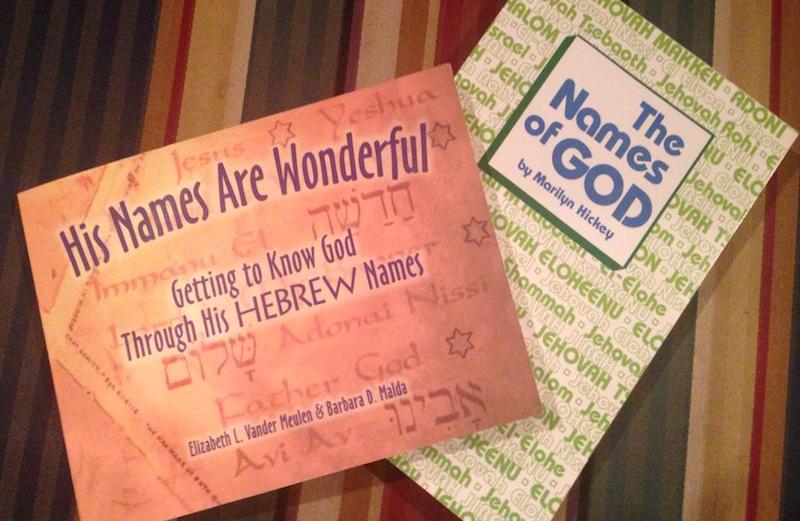
Books about the names of God.When we choose names for our children, sometimes we choose the first name of a beloved relative or a sound biblical name such as Matthew, Paul, Mary or Mark.
Other times, we select a name that flows well with our last name, which is what we did when we chose “Abby” and “Allyson” for our daughters’ names. “Abby Adams” and “Ally Adams” just rolled off the tongue beautifully.

Still, other parents name their children after favorite sports figures or celebrities or even seasons. When my sister had her youngest daughter on the last day of autumn, she decided to name her “Autumn” to signify that special day for all eternity.

Though names are important in today’s world, they don’t hold the same significance as they did in the Bible. You see, names in those times were often chosen to reveal something specific about that person.

Remember when God changed Abram’s name to Abraham because it meant, “Father of Many Nations?” That name was given to Abraham to remind him and everyone who called him “Abraham” that he would one day be the father of many nations.

It meant something.

When Moses asked God, “What is your name?” in Exodus 3, Moses didn’t just want to know how to address God, he wanted a revelation of God’s character.

That’s exactly what he received when God answered, “Say to the children of Israel: ‘The Lord God of your fathers, the God of Abraham, the God of Isaac, and the God of Jacob, has sent me to you. This is My name forever, and this is My memorial to all generations.’” (Exodus 3:15)

One of the most meaningful ways that God reveals Himself to us is through His names. From Elohim, which means God’s total power and complete creativity, to Jehovah Elohay, which means MY God, the God who is able to deliver me–each of His names give us a better understanding of the Father.

Unfortunately, many Christians today don’t know all of God’s names or their significance. I must confess, I didn’t either since I went to journalism school, not seminary.

However, I have found several books about the names of God, and I have been enjoying getting to know my God in a more intimate way by studying His names and their meanings.

So, I thought I would give you the Top 15 to get you started as you ponder His wonderful names.

1. Jehovah Jireh: The Changeless One Who Meets My Needs

2. Abba Father: Daddy God

3. Jehovah: My Intimate, Personal God

4. Elohim: God Almighty, The God Who Makes Covenants

5. Jehovah Nissi: My Banner, Miracle and Victory!

6. El Shaddai: The God Who is More Than Enough

7. Jehovah Shalom: The God of Peace, Nothing Missing, Nothing Broken

8. Jehovah Rophe: Jehovah, My Healer

9. Jehovah Shammah: The God Who Is There

10. Jehovah Elohay: The God Who Delivers You

11. Jehovah Tsebaoth: The God Who Dispatches His Angels

12. Jehovah Ropheka: The God Who Restores My Soul

13. Jehovah Gmolah: The Lord of Recompenses

14. Elohay Yishi: God of My Salvation

15. Jehovah Rohi: Jehovah, My Shepherd

Pray this with me:

Father, thank You for revealing Who You are through Your many names. You are Jehovah Jireh who meets my needs and Jehovah Elohay who delivers me! You are all of those things and so much more, and I am so grateful. In the Mighty Name of Your Son, Jesus, Amen.”

What is Christmas? A Brief Guide to its History and Meaning

What Does “Christmas” Mean?

The word “Christmas” comes from the Old English phrase Cristes mæsse which means “Christ’s Mass.” It refers to the Christian holiday that celebrates the birth of Jesus Christ. Christmas is on December 25 every year, though some denominations celebrate it on January 7.

The History of Christmas

The history of Christmas—a simple time of joy and celebration—is actually very long and complicated.

Though Christmas celebrates the birth of Jesus, which biblical scholars believe to be around 4 or 6 BC according to Britannica, the first Christmas was not celebrated until years later. Historians believe Christmas was originally celebrated in Rome around 336 BC. It did not even become a major Christian holiday until the 9th century

However, just because Christmas was better known does not mean it was always popular. According to History, Puritans viewed Christmas celebrations as anti-Christian and indulgent. Because Puritans were a major group in America, Christmas was not a popular holiday in early American history. The government of Massachusetts even banned Christmas celebrations in 1659. The Congressional Research Service states that it wasn’t even recognized as a federal holiday until 1870, when the holiday was more widely celebrated.

Christmas’ popularity in America can be traced to writer Washington Irving, perhaps best known for writing the classic Halloween short story “Sleepy Hollow.” Irving wrote extensively about Christmas and the character of Saint Nicholas (the basis of Santa Claus). He helped reshape the holiday to be one of family time, community, and giving. As he wrote in 1819 in The Sketch Book of Geoffrey Crayon, “Christmas is a season for kindling the fire for hospitality in the hall, the genial flame of charity in the heart.”

READ MORE: 20 Inspiring Christmas Quotes

This sentiment inspired people throughout America and Europe to embrace the holiday. One of them was writer Charles Dickens, who wrote the classic novel, A Christmas Carol. Another was poet Clement Clarke Moore, who wrote “A Visit from St. Nicholas,” also known by its opening line, “’Twas the night before Christmas…”

Whatever its history, Christmas is affixed in many people’s minds and calendars as one of the happiest and holiest times of year.

A calendar with holly and a santa hat showing Christmas Day on December 25

Why is Christmas on December 25?

The reason Christmas is now traditionally celebrated on December 25th is just as complicated as its history. While this holiday celebrates the birth of Jesus, there are conflicting opinions on if this is truly Jesus’ date of birth. The Bible does not state a specific date. There were no, or very scant, birth records during that time. For centuries, no one was certain when Jesus’ birthday fell.

In 221 CE, Sextus Julius Africanus, a Christian historian, created the first known Christian calendar of major events. According to Britannica, he used the Bible as his basis and placed Jesus’ birth at the end of December. Christian Roman emperor Constantine decreed in 336 CE that Jesus’ birth would be celebrated on December 25. And thus, Christmas’ date was decided.

Some historians also believe that Christians picked the date to coincide with Saturnalia, a Roman holiday, and by placing the festivities together, the celebration may have been used to convert many Romans to Christianity.

READ MORE: Why December Is the Perfect Time for Christmas

Bible showing the Christmas origin in the Book of Luke in front of Christmas lights

Christmas in the Bible

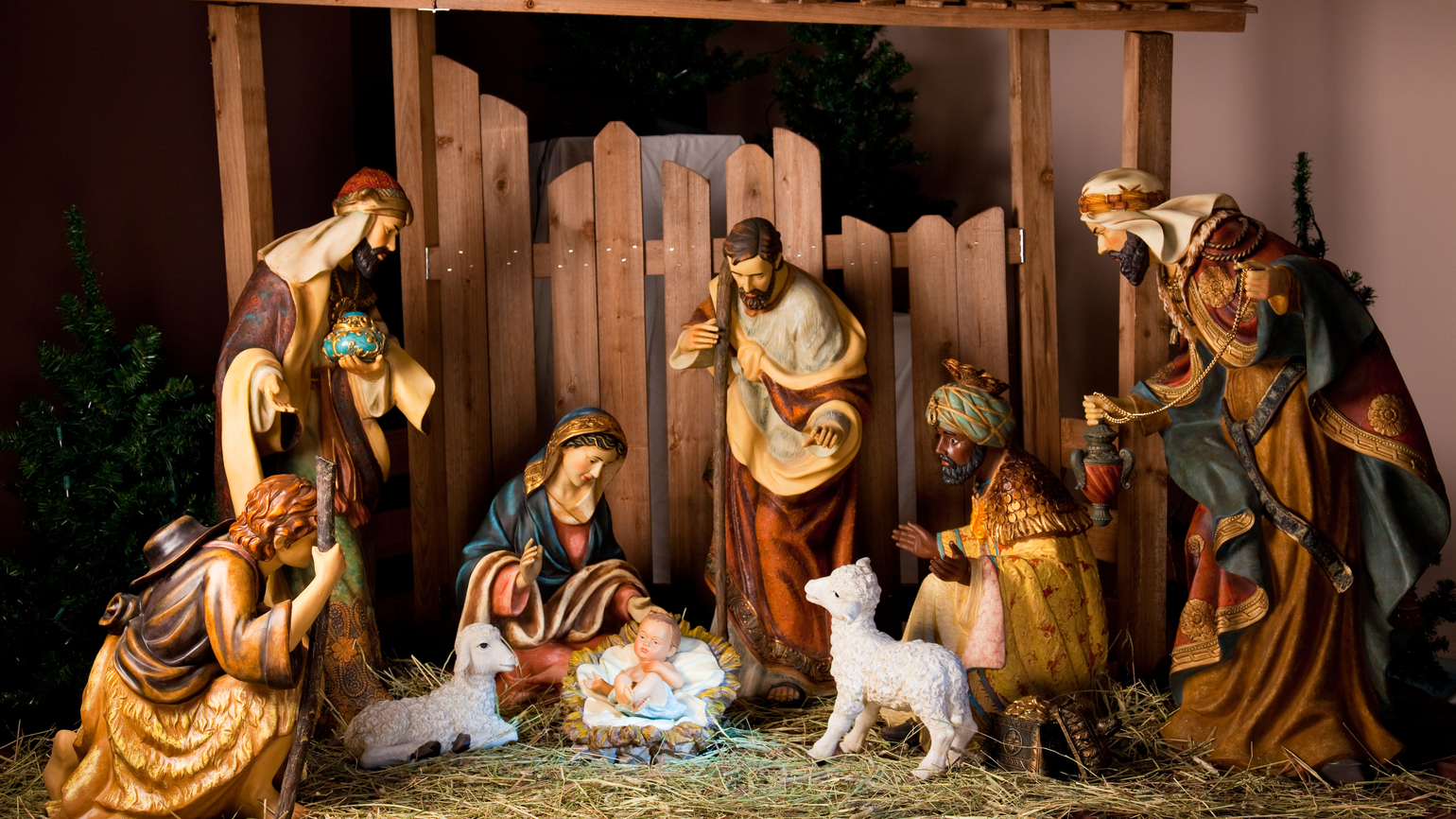
While the word “Christmas” is not in the Bible, we can find the story of Christmas, or the birth of Jesus, in various gospels within the New Testament:

Christmas in The Book of Luke

This gospel recounts the entirety of Jesus’ life, from when an angel told Mary she would conceive a child, to Jesus’ ascension to heaven. Luke 2:1-21 tells the story of the birth of Jesus, including how the shepherds “found Mary and Joseph, and the baby, who was lying in the manger.”

Christmas in The Book of John

This book is by the disciple John, beginning with those powerful words, “In the beginning was the Word, and the Word was with God, and the Word was God…” The gospel follows Jesus’ life through John’s perspective and John 1:1-14 explains the spiritual importance of Jesus’ birth.

Christmas in The Book of Matthew

The Book of Matthew traces Jesus’ lineage to Abraham and tells more of the story of His life. Matthew 1:18-25 specifically recounts Jesus’ birth, including how Joseph accepted Jesus as his son and giving Him the name Jesus.

READ MORE: A Christmas Story Told Through Bible Verses and Illustrations

Christmas Bible Verses

The spirit of Christmas lives in many other parts of Scripture. We can turn to them for inspiration on how to celebrate and give thanks during the holidays. Here are Bible verses that focus on Christmas themes, such as hope, peace, giving, community, and the glory of Jesus Christ.

  • May the God of hope fill you with all joy and peace as you trust in Him, so that you may overflow with hope by the power of the Holy Spirit. —Romans 15:13
  • And the peace of God, which transcends all understanding, will guard your hearts and your minds in Christ Jesus. —Philippians 4:7
  • Every good and perfect gift is from above, coming down from the Father of the heavenly lights, who does not change like shifting shadows. —James 1:17
  • Therefore encourage one another and build each other up, just as in fact you are doing. —1 Thessalonians 5:11
  • Let the peace of Christ rule in your hearts, since as members of one body you were called to peace. And be thankful. —Colossians 3:15

READ MORE: 6 More Christmas Bible Verses to Inspire Love and Peace

Family at a dinner table celebrating the meaning of Christmas

What is the True Meaning of Christmas?

To go deeper into what the Christmas season means, we can turn to the words of American clergyman and author, Norman Vincent Peale:

“The gifts you receive—modest or elaborate—are important only to the degree they help you experience something of what Christmas really is. Which is what? It is a spiritual observance of the birth of Jesus Christ into the stream of history and into the soul of man.”

READ MORE: Norman Vincent Peale on the Meaning of Christmas

Could it be that gifts aren’t an important part of the meaning of Christmas? If we look at the moral at the end of Dr. Suess’ How the Grinch Stole Christmas, that appears to be the case. Even after the Grinch stole all their presents, the Whos down in Whoville still gathered around to sing together and celebrate the season. “Maybe Christmas doesn’t come from a store,” the Grinch mused. “Maybe Christmas, perhaps, means a little bit more.”

However, Peale’s wife, Ruth Stafford Peale, has another take on the tradition of giving Christmas gifts and its place within this holy season. She tells the story of a young boy who gives his teacher a gift after walking far to get it. The boy clarified that not only was the gift a present, but the lengths he went to get it were a part of the gift as well. Stafford Peale writes:

“The more the last-minute chores, surprise guests, and just-one-more-gift excursions into town piled up, the more we remembered that what seemed like petty distractions from celebrating the season were really nothing of the sort. They were its very heart.”

READ MORE: Ruth Stafford Peale on the Deeper Meaning of Christmas Gifts

Woman at the dinner table in a santa hat prayer about the meaning of christmas

Christmas Prayers

  • Come, thou long expected Jesus, born to set your people free; from our fears and sins release us, let us find our rest in thee. —Charles Wesley (Methodist poet and hymnist)
  • Lord Jesus, the day of your nativity approaches, the day on which we commemorate your birth, your condescension, your humble incarnation. Please help me and mine to approach that day on tiptoe, with reverence and awe, mindful of your holiness and beauty, and grateful for the privilege of finding and approaching and kneeling at your manger, amen. —Bob Hostetler (Guideposts contributor)
  • Loving Father, help us remember the birth of Jesus, that we may share in the song of the angels, the gladness of the shepherds, and worship of the wise men. Close the door of hate and open the door of love all over the world. Let kindness come with every gift and good desires with every greeting. Deliver us from evil by the blessing which Christ brings, and teach us to be merry with clear hearts. May the Christmas morning make us happy to be Thy children, and Christmas evening bring us to our beds with grateful thoughts, forgiving and forgiven, for Jesus’ sake, amen. —Robert Louis Stevenson (novelist and poet)

READ MORE: 6 Short Prayers for Christmas Eve and Christmas Day

What Is an Ebenezer Stone?

The Books of Samuel are filled with battles, the anointing of a king, and the legendary story of the Ark of the Covenant. Yet one scene stands out as a powerful testament to the presence of God. After the Israelites defeated the Philistines in battle, Samuel sets up a kind of memorial. A reminder so they would never forget who aided them in their victory.

Then Samuel took a stone and set it up between Mizpah and Shen. He named it Ebenezer, saying, “Thus far the LORD has helped us.” — 1 Samuel 7:12

Ebenezer is a Hebrew word that means “stone of help.” It has become synonymous with the idea of God reaching down to lend a helping hand to those most in need.

Alexandra Hoover, an author and ministry leader, has always felt deeply connected to the story of Ebenezer. She’s written about the concept in her new book Eyes Up: How to Trust God’s Heart by Tracing His Hand.

“Samuel’s memorial becomes a sanctum for God’s help in the life of the Israelites in a time where death and rubble were all that they saw,” she says. “With this Ebenezer, the Lord invited the Israelites to look back at this place so that they could remember that God had met them.”

READ MORE: How to pray the word “Ebenezer”

We see the presence of a stone to mark God’s help in other parts of the Bible. In Genesis, Jacob set up a stone marker in the place where God spoke to him. Joshua placed a large stone under an oak tree that was near a sanctuary of the Lord.

Hoover says we can use this idea of an Ebenezer in our own lives. They are moments when God has helped us that we can look back on during times of difficulty or uncertainty. A kind of life buoy to hold onto when the waters of our life get stormy.

An Ebenezer can be anything – a family heirloom, a keepsake, a memory – anything that reminds you of a moment in your life when you felt God’s presence. Hoover recalls how her 2nd grade teacher, Mrs. Carpenter, was there for her during a time when she needed hope and encouragement. “For me, Ebenezers weren’t ever physical items,” said Hoover. “Oftentimes, they’re people.”

Finding our Ebenezers in life doesn’t have to be tricky. Hoover says that when we are looking for our own, what we are really looking for is places where God has met us. Sometimes, these are during particularly painful moments in our lives, but Hoover says this is exactly the point.

“Oftentimes we think that the presence of pain means the absence of God. It’s not true. Take a moment to look back on the ways God has met you in moments that seemed liked happenstance,” she said. “Noticing his hand, noticing his grace, is the greatest way that we can build these spiritual memorial stones to remember the work of Christ in us.”

What Is Advent?

The holiday season is filled with preparation. Shopping for presents, putting up decorations, getting ready for travel, preparing for guests, cooking a Christmas dinner… With so many things to do, the season can become a bit of a blur. Before we know it, it’s the day after Christmas. We haven’t had a moment to relax or reflect on this joyous time of year. Yet there is an aspect of the holiday season that allows us to do just that, in the weeks leading up to Christmas: Advent. You may know it from the dated calendars with treats behind them. But it has a lot more meaning than that. So, what is Advent?

What does Advent mean?

Advent comes from the Latin word adventus, which means “coming” or “arrival.”

Community Newsletter

Get More Inspiration Delivered to Your Inbox

Notice: JavaScript is required for this content.

/* FORM STYLES */

#nf-form-5-cont {
background-color:#ffffff;
border-radius:35px;
-webkit-border-radius:35px; }

/* FIELDS STYLES */

.nf-form-content .nf-field-container #nf-field-27-wrap {
margin:0;
border-radius: 25px;
-webkit-border-radius: 25px; }
.nf-form-content .nf-field-container #nf-field-27-wrap .nf-field-element .ninja-forms-field {
background-color:#ffffff;
border-color:#ffffff;
margin-bottom:0;
border-radius: 25px;
-webkit-border-radius: 25px; }
.nf-form-content .nf-field-container #nf-field-28-wrap {
width:120px;
}
.nf-form-content .nf-field-container #nf-field-28-wrap .nf-field-element .ninja-forms-field {
background-color:#00ab84;
width:120px;
}
.nf-form-content .nf-field-container #nf-field-28-wrap .nf-field-element .ninja-forms-field:hover {
background-color:#00ab84;
}


var formDisplay=1;var nfForms=nfForms||[];var form=[];form.id=’5′;form.settings={“objectType”:”Form Setting”,”editActive”:true,”title”:”Sign up for Newsletter”,”show_title”:0,”allow_public_link”:0,”embed_form”:””,”clear_complete”:0,”hide_complete”:0,”default_label_pos”:”above”,”wrapper_class”:”master-signup-form-wrap”,”element_class”:”master-signup-form”,”key”:””,”add_submit”:0,”currency”:””,”unique_field_error”:”A form with this value has already been submitted.”,”logged_in”:false,”not_logged_in_msg”:””,”sub_limit_msg”:”The form has reached its submission limit.”,”calculations”:[],”container_styles_show_advanced_css”:1,”title_styles_show_advanced_css”:0,”row_styles_show_advanced_css”:0,”row-odd_styles_show_advanced_css”:0,”success-msg_styles_show_advanced_css”:0,”error_msg_styles_show_advanced_css”:0,”formContentData”:[{“order”:1,”cells”:[{“order”:0,”fields”:[“master_signup_email”],”width”:66},{“order”:1,”fields”:[“subscribe_now_1660636976556″],”width”:34}]}],”changeEmailErrorMsg”:”Please enter a valid email address!”,”changeDateErrorMsg”:”Please enter a valid date!”,”confirmFieldErrorMsg”:”These fields must match!”,”fieldNumberNumMinError”:”Number Min Error”,”fieldNumberNumMaxError”:”Number Max Error”,”fieldNumberIncrementBy”:”Please increment by “,”formErrorsCorrectErrors”:”Please correct errors before submitting this form.”,”validateRequiredField”:”This is a required field.”,”honeypotHoneypotError”:”Honeypot Error”,”fieldsMarkedRequired”:”Fields marked with an * are required”,”container_styles_background-color”:”#ffffff”,”container_styles_border”:””,”container_styles_height”:””,”container_styles_margin”:””,”container_styles_padding”:””,”container_styles_float”:””,”container_styles_advanced”:”border-radius:35px;n-webkit-border-radius:35px;”,”title_styles_border”:””,”title_styles_height”:””,”title_styles_width”:””,”title_styles_font-size”:””,”title_styles_margin”:””,”title_styles_padding”:””,”title_styles_float”:””,”row_styles_border”:””,”row_styles_width”:””,”row_styles_font-size”:””,”row_styles_margin”:””,”row_styles_padding”:””,”row-odd_styles_border”:””,”row-odd_styles_height”:””,”row-odd_styles_width”:””,”row-odd_styles_font-size”:””,”row-odd_styles_margin”:””,”row-odd_styles_padding”:””,”success-msg_styles_border”:””,”success-msg_styles_height”:””,”success-msg_styles_width”:””,”success-msg_styles_font-size”:””,”success-msg_styles_margin”:””,”success-msg_styles_padding”:””,”error_msg_styles_border”:””,”error_msg_styles_width”:””,”error_msg_styles_font-size”:””,”error_msg_styles_margin”:””,”error_msg_styles_padding”:””,”drawerDisabled”:false,”export_settings”:[],”form_title_heading_level”:”3″,”ninjaForms”:”Ninja Forms”,”fieldTextareaRTEInsertLink”:”Insert Link”,”fieldTextareaRTEInsertMedia”:”Insert Media”,”fieldTextareaRTESelectAFile”:”Select a file”,”formHoneypot”:”If you are a human seeing this field, please leave it empty.”,”fileUploadOldCodeFileUploadInProgress”:”File Upload in Progress.”,”fileUploadOldCodeFileUpload”:”FILE UPLOAD”,”currencySymbol”:”$”,”thousands_sep”:”,”,”decimal_point”:”.”,”siteLocale”:”en_US”,”dateFormat”:”m/d/Y”,”startOfWeek”:”1″,”of”:”of”,”previousMonth”:”Previous Month”,”nextMonth”:”Next Month”,”months”:[“January”,”February”,”March”,”April”,”May”,”June”,”July”,”August”,”September”,”October”,”November”,”December”],”monthsShort”:[“Jan”,”Feb”,”Mar”,”Apr”,”May”,”Jun”,”Jul”,”Aug”,”Sep”,”Oct”,”Nov”,”Dec”],”weekdays”:[“Sunday”,”Monday”,”Tuesday”,”Wednesday”,”Thursday”,”Friday”,”Saturday”],”weekdaysShort”:[“Sun”,”Mon”,”Tue”,”Wed”,”Thu”,”Fri”,”Sat”],”weekdaysMin”:[“Su”,”Mo”,”Tu”,”We”,”Th”,”Fr”,”Sa”],”recaptchaConsentMissing”:”reCaptcha validation couldn't load.”,”recaptchaMissingCookie”:”reCaptcha v3 validation couldn't load the cookie needed to submit the form.”,”recaptchaConsentEvent”:”Accept reCaptcha cookies before sending the form.”,”currency_symbol”:””,”beforeForm”:””,”beforeFields”:””,”afterFields”:””,”afterForm”:””};form.fields=[{“objectType”:”Field”,”objectDomain”:”fields”,”editActive”:false,”order”:1,”idAttribute”:”id”,”label”:”Email”,”type”:”email”,”key”:”master_signup_email”,”label_pos”:”hidden”,”required”:1,”default”:””,”placeholder”:”@Your email”,”container_class”:”master-email-wrap”,”element_class”:””,”admin_label”:”master_signup_email”,”help_text”:””,”custom_name_attribute”:”email”,”personally_identifiable”:1,”wrap_styles_border”:””,”wrap_styles_width”:””,”wrap_styles_margin”:0,”wrap_styles_padding”:0,”wrap_styles_float”:””,”wrap_styles_show_advanced_css”:1,”label_styles_border”:””,”label_styles_width”:””,”label_styles_font-size”:””,”label_styles_margin”:0,”label_styles_padding”:0,”label_styles_float”:””,”label_styles_show_advanced_css”:0,”element_styles_border”:””,”element_styles_width”:””,”element_styles_font-size”:””,”element_styles_margin”:0,”element_styles_padding”:0,”element_styles_float”:””,”element_styles_show_advanced_css”:1,”cellcid”:”c4722″,”value”:””,”drawerDisabled”:false,”wrap_styles_advanced”:”margin:0;nborder-radius: 25px;n-webkit-border-radius: 25px;”,”element_styles_background-color”:”#ffffff”,”element_styles_border-color”:”#ffffff”,”element_styles_advanced”:”margin-bottom:0;nborder-radius: 25px;n-webkit-border-radius: 25px;”,”manual_key”:true,”id”:27,”beforeField”:””,”afterField”:””,”parentType”:”email”,”element_templates”:[“email”,”input”],”old_classname”:””,”wrap_template”:”wrap”},{“objectType”:”Field”,”objectDomain”:”fields”,”editActive”:false,”order”:2,”idAttribute”:”id”,”label”:”Subscribe Now”,”type”:”submit”,”cellcid”:”c4725″,”processing_label”:”Processing”,”container_class”:””,”element_class”:””,”key”:”subscribe_now_1660636976556″,”wrap_styles_border”:””,”wrap_styles_width”:120,”wrap_styles_margin”:0,”wrap_styles_padding”:0,”wrap_styles_float”:””,”wrap_styles_show_advanced_css”:1,”element_styles_border”:””,”element_styles_width”:120,”element_styles_font-size”:””,”element_styles_margin”:0,”element_styles_padding”:0,”element_styles_float”:””,”element_styles_show_advanced_css”:0,”submit_element_hover_styles_border”:””,”submit_element_hover_styles_width”:””,”submit_element_hover_styles_font-size”:””,”submit_element_hover_styles_margin”:””,”submit_element_hover_styles_padding”:””,”submit_element_hover_styles_float”:””,”submit_element_hover_styles_show_advanced_css”:0,”wrap_styles_advanced”:””,”element_styles_background-color”:”#00ab84″,”submit_element_hover_styles_background-color”:”#00ab84″,”drawerDisabled”:false,”id”:28,”beforeField”:””,”afterField”:””,”value”:””,”label_pos”:”above”,”parentType”:”textbox”,”element_templates”:[“submit”,”button”,”input”],”old_classname”:””,”wrap_template”:”wrap-no-label”}];nfForms.push(form);

It is a preparatory season before the celebration of Christ’s birth on Christmas. Some also see it as a preparation for the second coming of Christ.

READ MORE: Learn more about the meaning of Advent

When does Advent start?

The Advent season traditionally begins four Sundays before Christmas Day. So the start date changes every year. It always ends on Christmas Eve (December 24th).

The 2023 Advent season begins on Sunday, December 3rd.

READ MORE: Our Editors’ Favorite Advent Candles and Holders

What is the origin of Advent?

Pinpointing the true origins of Advent can be a little complicated. History has left us with some ideas.

Saint Perpetuus of Tours creating adventBishop Perpetuus of Tours (461–490) decreed a period of fasting before Christmas that started on November 11th, or St. Martin’s Day. And in 567, the Council of Tours, or the main seat of Christianity at the time, mentioned an Advent season. We can also find a clue in traditions surrounding the Feast of the Epiphany on January 6th. New Christians baptized on this date went through a time of preparedness in the days leading up to it.

Despite the many theories on when it originated, nothing is definitive. As J. Neil Alexander, a bishop and professor of liturgy and theology, puts it, “Each hypothesis is of continuing interest, but all contain serious flaws that make it impossible to claim with confidence a credible explanation of the origin of Advent.”

Perhaps it is comforting that Advent doesn’t have one source. People throughout history recognized this time of year to be holy and designated it so.

READ MORE: 10 Interesting Advent Facts to Get You in the Holiday Spirit

Is Advent in the Bible?

Some may be surprised to learn that the word “advent” is not in the Bible. However, various verses in Scripture focus on Christ’s arrival. While they may not mention it specifically, they get to the heart of what Advent means.

Here are some Advent Bible verses:

READ MORE: One-word Advent Prayers for a More Meaningful Season

How do you celebrate Advent?

Advent is celebrated by Roman Catholics, Anglicans, Episcopalians, Lutherans, and Protestants around the world. Each of these denominations has their own religious traditions. One of the more common practices includes the use of a wreath and candles.

The wreath is usually made of something evergreen, like fir or holy, and symbolizes eternal life. Four Advent candles of various colors go on the wreath and are lit each Sunday. Some people use white or red candles, though the more traditional colors are purple and rose-pink. The candles are multicolored because they adhere to the liturgical colors, or the colors associated with different themes by the Christian church.

READ MORE: What are the 4 Themes of Advent?

For example, purple candles are used for Advent and Lent because they represent humility, penance, and reflection— things that we focus on during the Advent season. Purple also represents royalty, a reference to Jesus as King. The single rose-pink candle symbolizes joy and stands as a reminder to rejoice in the coming of Jesus. The various colored candles truly get to the heart of the reason for the Advent season: prayerful reflection and joyful anticipation.

Will you and your family be celebrating Advent this season? How? What is Advent to you?

READ MORE: 10 Things You Might Not Know About Advent Calendars

Young girl holding advent calendar showing what is advent

What Does the Bible Say About ‘Welcome the Stranger’?

Thirty-six. This is the number of times we read in the Torah (the first five books of the Hebrew Bible) that we are commanded to “welcome the stranger” into our midst.

The most often-quoted of these is found in Leviticus 19:34. There we read, “The stranger who resides with you shall be to you as one of your citizens; you shall love him as yourself, for you were strangers in the land of Egypt.”

Volumes have been written about the precise meaning and definition of “stranger” in the biblical context. But we don’t need to be biblical scholars to learn from this verse. Or even from the multitude of verses commanding us toward welcome.

Open Ourselves Up

From these words, we learn to open ourselves up to others, to radically welcome those who are in search of safety, love, kindness, and to share our bounties with them as if we ourselves were in need of those things. For the scripture tells us, there has been a time in our life—and will likely be again—that we were, in fact, literal or figurative strangers ourselves.

The lesson of “welcome the stranger” is far-reaching. It shines an inspiring light on each and every day of the year. But it especially resonates during the holiday season.

A Time of Generosity

The holidays are a time of generosity. Whether we are offering gifts to loved ones or contributing our time or money to charitable causes, we are practicing the value of welcome. When we open our homes to family and friends for holiday meals, we embody this value. We welcome the stranger. And when Christians read the story of baby Jesus at Christmastime, you recall how the young family, having been warmed, sheltered, and gifted by the Magi in Bethlehem, fled for their safety. Ironically, given the biblical history, it was to Egypt. Reflecting on this story connects in the clearest possible terms the relationship between welcoming and spiritual and physical safety.

During his ministry, Jesus himself spoke the words, “I was hungry and you gave me food, I was thirsty and you gave me something to drink, I was a stranger and you welcomed me” in the Book of Matthew.

So this holiday season, as you reflect on the year that was and look ahead to a new chapter, what will you do to “welcome the stranger,” to treat those you don’t (yet) know or aren’t (yet) connected to, with the love and respect you would pray for if you were in need of some kindness, support, or welcoming?

What Can You Let Go of This Fall?

“Some of us think holding on makes us strong,” wrote the poet and novelist Hermann Hesse, “but sometimes it is letting go.”

At this time of year, I think a lot about letting go, never more than when I watch brilliant yellow, red and orange leaves release their hold on tree branches and float to the ground. It’s a wistful sight, a signal that the lush greenery of spring and summer has run its course. But it’s also a reassuring reminder that letting go at just the right moment is a healthy, freeing action.

Trees that rest, leafless, through the winter are ready to sprout new growth in the spring. Turning that idea inward, what in your life can you let go of to prepare for a positive future?

Your answer might range from something really practical to something profound and emotional. Here are three categories of things most people can benefit from evaluating, asking if they are still serving your life or if you can let them go like an autumn leaf.

1) Let Go of Stuff

Though the impulse might tend toward hibernating and nesting at this time of year, autumn is a great time to clear out summer clothes that did not bring you joy, fun and comfort this past season. As you pull old sweaters and jeans out of storage, ask yourself which can be passed along to a clothing drive or textile recycler. Same goes for books, kitchen gadgets, anything that you might be ready to release, in anticipation of the room you will have for more positive, useful possessions.

2) Let Go of Caring What Others Think

When you feel judged by others, it’s easy to slip into a place where you question yourself at every turn. But as the inspiring writer Brene Brown puts it, “What’s the greater risk? Letting go of what people think, or letting go of how I feel, what I believe and who I am?” Releasing the opinions of others—especially those who really aren’t entitled to an opinion about your life—will leave you feeling more confident and grounded in your core values, decisions and attitude.

3) Let Go of Unrealistic Goals

I’ve written before about doing a “resolution re-set” a few weeks into the new year. Looking back at priorities and intentions you set for yourself can reveal that they aren’t helpful, practical or accessible to you at this moment in your life. Being flexible to adjust course, say shifting from a daily workout to a three-times-a-week routine, gives you permission to release expectations you set for yourself that, it turns out, were unrealistic. Doing this isn’t giving up on self-improvement or personal growth—it’s pursuing those things in ways that set you up for success.

What would you like to let go of in your life?

What are the 4 Themes of Advent?

The Advent season is a time for reflection and anticipation—reflection on our spiritual lives, and anticipation for the arrival of Christmas. While Advent traditions vary based on religious denominations and cultures, one common practice includes focusing on four themes. These themes, or virtues, can be various things. The most common Advent themes are hope, peace, joy, and love.

Some traditions include lighting a different candle on a wreath each Sunday of Advent and reflecting a different theme. Here are the four themes of Advent, along with prayers, Bible verses, and practices to help you pray or meditate on their importance in your life.

READ MORE: Advent Candles and Holders Perfect for the Advent Season

Advent Themes #1: Hope

A woman with her eyes closed outside in nature thinking about the four advent themesWhat is Hope?

Hope is an active anticipation in the ability to reach desired goals,” says Dr. Steven Sandage, a theologian and psychologist. “It requires a willingness to put energy toward those goals.”

Perhaps the most fascinating thing about hope is when we need it in our lives. Hope may not be necessary when we are faced with an easy task. It comes when we are faced with something that feels impossible. Hope requires belief. As Dr. Sandage says, “because without some belief in the possibility of getting toward a desired end, it’s hard to make progress in life.”

A Prayer for Hope

“Lord, You love me and by Your grace have given me eternal comfort and a wonderful hope. Now, comfort and strengthen me in every good thing I do and say.” —Bob Hostetler

Bible Verses about Hope

The Candle of Hope

As you light the candle of hope, think about all the things you are hoping to accomplish now and in the future. Dr. Lea Waters, a positive psychology expert, suggests making a list of things you’ve always wanted to do. “Suspend your reality for the moment and allow yourself to feel happy about this imagined future,” she says. “Later, you can focus on mundane realities like budget, but for now just let your brain dream.”

READ MORE: Join us on November 27, 2022, as we observe the 28 days of Advent.

Advent Themes #2: Peace

A man outside looking up and praying for the advent theme of peaceWhat is Peace?

The Merriam-Webster dictionary defines peace as “a state of tranquility or quiet: such as freedom from disquieting or oppressive thoughts or emotions.” However, inner peace can be a little more complicated than that. Peace in your heart is a yearning for wholeness, connection, and calm. This does not mean being at peace means you will feel it all the time.

This was very much the case for Carolyne Aarsen, who learned an important lesson about peace after the loss of her foster son with cerebral palsy. “I learned that peace is not the absence of pain,” she said in her Guideposts story, “peace is the presence of God.”

A Prayer for Peace

God grant me the serenity to accept the things I cannot change; courage to change the things I can; and wisdom to know the difference. Living one day at a time; enjoying one moment at a time; accepting hardships as the pathway to peace; taking, as He did, this sinful world as it is, not as I would have it; trusting that He will make all things right if I surrender to His Will; that I may be reasonably happy in this life and supremely happy with Him forever in the next. Amen. —The Serenity Prayer by Reinhold Niebuhr

Bible Verses about Peace

The Candle of Peace

As you light the candle of peace, take a moment to pray for this important Advent theme. You can pray for peace in the world, peace in your community, peace in your family, or peace within yourself. These prayers can bring you comfort and ease your worries.

READ MORE: 5 Advent Prayers for Peace, Joy, Hope, and Love

Advent Themes #3: Joy

A smiling woman in a yellow shirt feeling joyful about the advent themesWhat is Joy?

Some may view joy and happiness as the same thing. A feeling of being content and filled with pleasure. However, we should remember that joy is something much more spiritual and intentional. So, what is the difference between happiness and joy?

“Whereas happiness is shaped by external circumstances, joy is found deep within,” says Guideposts contributor Pablo Diaz. “Unless we are intentional in discovering the gift of joy in ordinary things, it will not happen.”

A Prayer for Joy

Our Heavenly Father, help us to think the kind of thoughts that give us joy and that transmit joy. Help us to get in our hearts the love of Christ, that we may love people, so that they find joy. —Norman Vincent Peale

Bible Verses about Joy

The Candle of Joy

As you light the candle for this Advent theme, visualize the things that bring you joy. Whether that is an activity, a person, or a place, intentionally make whatever brings you joy a part of your day. Joy doesn’t just happen; it’s up to us to choose it daily.

READ MORE: 10 Interesting Advent Facts to Get You in the Holiday Spirit

Advent Themes #4: Love

Gloved hands making a heart symbol for the advent theme of loveWhat is Love?

Last, but certainly not least, the final Advent theme is love. It is one of the most powerful forces in the world. It can be uplifting, life-changing, and sometimes even devastating. But what exactly is love?

Love can be the love we feel for our families, or friends, or our significant others. It can be the love we feel for ourselves. But could love also be something deeper? Novelist Paulo Coelho said that loving others brings us closer to our spirituality. Understanding love better helps us understand God. “God and love are synonymous,” says minister Oswald Chambers. “Love is not an attribute of God, it is God; whatever God is, love is.”

Prayers for Love

Lord, help me feel Your love, that above all things I may know I am loved by You. —Pablo Diaz

Lord, thanks for the gift of love and for those who help us discover its meaning and power. —Pablo Diaz

Bible Verses about Love

The Candle of Love

As you light the candle for love, focus on the love God feels for you. Remember that relationships may come and go, but God’s love for you is unending. Pray or meditate on the ways that God loves you and how you see His love in your daily life.

How do you plan to pray or meditate on the 4 themes of Advent this year?

READ MORE: Favorite Advent Carols That Keep Christ in Christmas

READ MORE: 10 Things You Might Not Know About Advent Calendars