


Embrace God's truth with our new book, The Lies that Bind

The Origins of Old Saint Nick

When I was very young, a figure representing Santa Claus held sway at the top of our Christmas tree. Fitting over the tree’s top like a cone, this Santa had a flowing white beard, but his countenance was more dignified than merry. Instead of a cheerful red suit, he wore a robe of pinkish brown with a pointed hood.

“That is not Santa Claus,” I announced to my mother one year, pointing to the top of our tree.

“That Santa was on my tree when I was a little girl and on Gran’s childhood tree before that,” she said. “It’s traditional. We love it.” So much for my rebellion.

More than 70 years have passed since I was a boy. And tradition still holds its own. The solemn Santa continues to reign in his honored spot atop Varner family Christmas trees.

Yet even as I respect it as a treasured family keepsake, I secretly harbor my old suspicions: Who did this robed figure think he was, passing himself off as Santa Claus? I did, that is, until one spring day while on a cruise to the Middle East.

Our ship docked in southern Turkey and I took the opportunity, guidebook in hand, to wander the ancient land. Strolling in the garden of a beautiful 11th-century Byzantine church, I stopped in surprise.

Before me was a life-size statue of a dignified man with a flowing beard, garbed in a hooded robe with a peaked top. Statues of a little boy and girl stood beside him.

He reminded me immediately of our Varner family Santa. But what was this statue? My guidebook enlightened me. I was in St. Nicholas Church and the statue before me was of one Saint Nicholas, who “became the patron saint of children to whom he brings Christmas presents.”

Back home in Manhattan, I did a bit of historical digging. I learned that Saint Nicholas was a fourth-century bishop of Myra, which is now in Turkey, and although few verifiable facts exist about his life, legends abound.

Saint Nicholas was said to have performed miracles (including riding out a terrible storm at sea in his hat), shown great courage in the face of religious persecution, and done good deeds.

Over the ensuing centuries he became one of the most admired of all saints, with churches named for him in Asia, Europe and eventually America.

Nicholas was the patron saint of Russia and the subject of many a medieval play; artists loved to depict him too. His popularity grew even more when in 1087 Italian traders brought what they claimed were his bones to Bari, in southern Italy, and the city became crowded with pilgrims.

Was it a myth that he gave gifts to children? I can only say that some legends become greater than their source—but are nonetheless founded on genuine acts of generosity and good will.

As the decades rolled on, it was inevitable that Nicholas should come to America. He arrived with the Dutch settlers who founded a city they called New Amsterdam. They called him “Sinter-Klass”—Santa Claus—and honored him on his feast day, December 6.

By now he was wearing a bishop’s robe and riding on a donkey, just as he had in the Netherlands, bearing gifts for well-behaved children. When the English took over in 1664 and renamed the city New York, they went back to calling him Saint Nicholas.

In 1809, Washington Irving published Knickerbocker’s History of New York, in which Santa was described as an old man in dark robes on a flying horse. In an 1821 poem called “The Children’s Friend” the horse was supplanted by a reindeer.

But the changes that appealed to me most were wrought by a professor at General Theological Seminary, Clement Moore, who in 1823 dashed off a Christmas poem for his children. A houseguest sent it to a newspaper and when printed it became an overnight sensation.

A Visit From St. Nicholas—“’Twas the night before Christmas … ”—portrayed the Saint Nick I envisioned and was drawn to. Round of belly and full of merriment, his “twinkling eyes” and “cheeks like roses” looked anything but somber.

His sleigh was pulled not by a single reindeer but by eight, who waited patiently chimney-side while the “jolly old elf” made his remarkable descent.

Moore had switched Santa’s appearance from December 6th to the night of the 24th, but it was clear the gift-bearing interloper was still Saint Nicholas. In the 1870s political cartoonist Thomas Nast illustrated his idea of Santa Claus for the pages of the popular magazine Harper’s Weekly —Santa, lolling on a snow-capped chimney smoking a long-stemmed pipe. Nast established Santa’s home at the North Pole and gave him elves to do his manufacturing. As the turn of the century approached, young Virginia O’Hanlon wrote to the New York Sun to ask if there really was a Santa Claus, and the editors answered with a resounding “yes” in an editorial that is still reprinted in Christmas Eve newspapers around the country.

I’ll always be fond of the Santa who is round and red-suited, full of fun and plenty of ho-ho-ho. But now I’m aware of a new dimension to that rollicking holiday figure. At last I feel friendly toward the monk-like Santa at the top of our family tree, and this Christmas I’ll look at the old codger with new and appreciative eyes. What as a child I mistook for dourness was really the saintly piety of his Christian origins showing through. We may have given Saint Nicholas a secular makeover, dressed him up in a bright red suit and transformed his simple kindness into roistering jollity. Yet the gifts he brings down the chimney to good children still echo God’s gift to us of his only son.

Download your FREE ebook, True Inspirational Stories: 9 Real Life Stories of Hope & Faith

For more inspiring stories, subscribe to Guideposts magazine.

The Message of the Woodpecker

Tat a tat tat!

What could be making that racket? It sounded as if someone was banging on a drum outside my kitchen door.

Tat a tat tat!

I stepped outside into a brisk spring morning, my gaze following the sharp noise to a decaying 50-foot maple behind our yard. About half way up the tree perched a huge pileated woodpecker, black and white stripes down his scrawny neck, and a bright red crest on top. This was not a bird I saw hanging around every day. This bird stood out.

More than because of his (or her?) appearance, however, the bird stood out because he (let’s just say) was working so industriously. His beak hammered away at the tree trunk, dust and chips flying.

He had already carved a perfect round entrance hole and was diving inside, excavating a cavity for the nest in the dead wood. He worked diligently for hours, and then he was at it again the next day, and the next.

And, as I caught a glimpse of him out the kitchen window, I couldn’t help but feel a bit humbled by his determination, compared to the devotion I put into some of my efforts.

Sometimes I try to do something difficult, only to end up feeling like I’m hitting my head against a brick wall–​or an old dead tree.

How often, then, do I quit? If only I would keep pecking away, I would more likely find success. Anything worth doing is worth putting forth my best effort. Especially my relationship with God. It doesn’t honor him to whisk through my day, say a few rushed prayers, and thank Him for His loving care while I’m flitting off to do something else.

Today, I’m taking time to slow down, focus more intently and sit with the Lord, giving him my full attention.

Even though it’s difficult sometimes to understand His will for me, to keep making the right choices when facing things that are difficult, to keep praising when times are tough, I know that the only way through it all is through Him.

All it took was a hard-working woodpecker to show me.

The Mentors He’ll Never Forget

One of my favorite verses of the Bible says, “Train up a child in the way he should go, and when he is old he will not depart from it.” Powerful words, aren’t they? They remind me of how important it is to give children a firm foun­dation. Show me a successful individual and I’ll show you someone who had real positive influences in his or her life. I don’t care what you do for a living—if you do it well I’m sure there was someone cheering you on or showing the way. A mentor. I’ve had that push in my life, going back as far as I can remember. Here’s how mentors can make a difference. Here’s what they did for me.

Start dreaming.
The first push outside my own home came at the Boys Club in Mount Vernon, New York. I spent a lot of time there as a kid. My parents couldn’t always be home when I was done with school. They were too busy working. My mother worked in beauty salons. My father was a preacher. He had a couple of churches—one in Virginia, the other in New York. In addition to that, he always had at least two full-time jobs.

From the time I was six, the Boys Club was my whole world. I learned how to play ball there and how to focus and set my mind on a goal. I learned about consequences and the difference between right and wrong. At the heart of the place was a force of nature named Billy Thomas. He made each of us feel like we were something special.

I was so impressed with him that I start­ed to imitate him. I would walk like Billy and try to shoot a foul shot like Billy. I would try to sit like him and treat others with respect like he did. I even practiced signing my name like Billy. There was a real flourish to his handwriting and I used to copy it so much I can still see it in the way I sign my own name today.

One of Billy’s great innovations was to hang college pennants from the walls of the club’s main hall—one for each school his “kids” went on to attend. The deal was, when you graduated from high school and went away to college, you had to send Billy a pen­nant, and he’d put it up proudly on the wall for the rest of us to see. Boston University, Syracuse, Vanderbilt, Marquette. Schools I’d never even heard of. I used to look at these names and think, Man, anything is possible!

Gus Williams, a great ballplayer from my neighborhood, was a couple years ahead of me. He went out to USC on a basketball scholarship and I can still remember standing out in that hallway, looking up at his USC pennant, thinking, If Gus can make it, then I can make it too. I’d never been anywhere—didn’t even know where California was—but if a guy from Mount Vernon could get a scholarship to a great school, why couldn’t I?

Get to work.
On Third Street in Mount Vernon there was a barber shop called the Modernistic, run by a man named Jack Coleman. I started working there at the age of 11 or 12 because I wanted to make some money. Jack Coleman took me on as a kindness to my mother, I’m sure, but I thought it was the best job in the world. I was Mr. Coleman’s clean-up guy, but the real money came in tips from customers. They’d step out of Mr. Coleman’s chair and I’d be on them with a whisk broom, brushing off their collar, saying, “Man, you look good. Is there anything I can do for you?” There were rewards all day long, especially if you were respectful and solicitous.

I also got to see how hard Mr. Coleman worked to make his business run. He wasn’t just the head barber. He was like the Modernistic’s master of ceremonies, presiding over a wonderfully eccentric parade of souls. He was a strong individual and true to his word. The shop used to close at six-thirty so the barbers could get home to their families. I’ll never forget what he said once when someone walked in there at six-thirty-five. “Am I late?” he’d asked. “No, you’re early. You’re first,” Mr. Coleman said. “You’re the first one up tomorrow morning!”

See a whole new world.
For high school I got a modest scholarship to a prep school called Oakland Academy in upstate New York. There were only about six of us inner-city kids—kids who might be labeled “troubled youth.” Truth was, we weren’t troubled so much as we were caught between school and the streets. I never knew how my mother managed it, scraping by to meet the tuition balance. Years later I was shown the old accounts ledger from Oakland, and there next to her name were the oddest numbers: sixteen dollars, thirty-seven dollars, one hundred nine dollars. I looked at those figures and saw my mother, breaking her back to lift me up, one small payment at a time.

At Oakland I had an English teacher named Mr. Underwood. He always had us start the day by reading The New York Times. In the beginning I’d just thumb through the sports pages, but over time I started to read some of the other sections. That opened up a whole world to me. I started caring about what was going on out­side my own small protected environment. Vietnam was winding down, Water­gate was ramping up, people were struggling to make ends meet—and I was soaking it all in through the morning paper.

Look for guidance.
I ended up staying close to home when it came time for college. I went to Fordham University in the Bronx. At first I thought I wanted to be a doctor, then a lawyer…then maybe a journalist. Midway through my junior year I was asked to leave Fordham for a while until I figured out what I wanted to do—which is a nice way of saying I was on academic probation. But before I left I took this public-speaking class. I’d heard it would be an easy B.

I don’t even remember the name of the old guy who taught that class. I just remem­ber his legs were always wrapped in Ace bandages that would come unraveled. He might have looked scattered, but his mind wasn’t. What he really loved was Shakespeare. One day he asked me to do a scene from Hamlet. I was terrified. I didn’t think I could do it, but he must have seen something in me that I didn’t see in myself. At the end I was ready to race out of that classroom as fast as I could. I promised I’d never to do something like that again.

But that summer I was a counselor at camp and I performed on stage with my kids. We did skits, and I started to really like being onstage. Maybe this was something I could do. After a performance a man came up to me and said, “Have you ever thought about being an actor?”

“Well, you know,” I said, playing it cool, “took a class in college. Played Hamlet.”

Believe in yourself.
My second go-round at Fordham I switched to the school’s midtown campus where they had a real drama program, and I became passionate about acting. Bob Stone, my English teacher, was involved in the the­ater program and knew his stuff. He’d been on Broadway with stars like Paul Robeson and Jose Ferrer and had accom­plished a lot. I told him I was serious about becoming an actor and he encouraged me. More than that, he believed in me. After I appeared in a student production of Othello he wrote a letter of recommendation for me to grad school. What he basically said was, “If you don’t have the talent to nurture this young man, then don’t accept him.” I must’ve read that letter a hundred times. Each time I thought, Wow! If he thinks I’m that good then I’m going to have to live up to those words. He put a fire under me. For years I kept that letter in my pocket—still have it. Whenever things became tough, I read it. There were times I wondered if I’d ever catch my first break, but Bob’s words kept me going. I kept telling myself, It’ll all work out; something big is coming. Yes, I worked hard, I made some sacrifices until I finally made it. Yes, you could say I had some luck.

But I also had tremendous help along the way. That was a huge blessing from God. Behind every great success there’s someone and often more than one person. A parent, teacher, coach, role model. It starts somewhere. As the Bible says, “Train up a child in the way he should go, and when he is old he will not depart from it.” There’s no reason it can’t start with you.

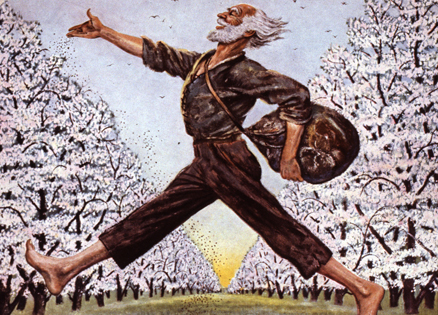
The Man They Called Johnny Appleseed

Having spent my business career in Cincinnati—and being a fifth-generation Buckeye—I have a natural interest in Ohio history. The other day I picked up an article entitled “The Real Johnny Appleseed” and got the surprise of my life.

Like most people, I had accepted the story purveyed by Walt Disney and poets such as Vachel Lindsay, picturing Johnny as a wandering frontiersman who scattered apple seeds from Ohio to California and did an occasional good deed for pioneers heading West. Johnny seemed mostly a romantic myth, like Paul Bunyan or Mike Fink.

Community Newsletter

Get More Inspiration Delivered to Your Inbox


Not so. The real Johnny Appleseed was a businessman—a good one. His life is rich in lessons for businesspeople who want to succeed by combining know-how with ideals. At times Johnny even mixed business with an earnest appeal to his customers to remember the importance of God in their lives.

I, John Chapman, (by occupation a gatherer and planter of apple seeds)—that is how he described himself in 1828, when he was selling a town lot in the center of Mount Vernon, Ohio.

He was born in Leominster, Massachusetts, on September 26, 1774, and left home in 1797 at the age of 23, heading west in search of land and opportunity. Eyewitnesses described him as standing about five feet nine inches tall, with a stocky, vigorous frame.

John Chapman adapted well to the lonely, dangerous life of the western wilderness along the Ohio border, exploring the rivers and creeks in dugout canoes.

He planted his first apple trees in western Pennsylvania, not because of some attachment to that particular fruit, but because it was the quickest and easiest way to prove that he was cultivating land on which he had staked a claim.

When the frontier moved into Ohio, he moved with it, and at first followed the same pattern, planting trees on land that he hoped to farm. But at some point in those early years, Chapman realized that apple trees could be made into a business that would serve a vital need and suit his own skills as a frontiersman.

Today we have forgotten the importance of the apple to pioneer farmers. It was one of the few year-round foods. Apples were buried in late autumn before the ground froze, and dug out every week or two during the winter and spring. They were sliced and dried to be used in pies and cakes, side dishes and sauces.

Apple butter could be kept for months without spoiling, and was a necessity in every pioneer kitchen. Even more important was cider, which was a money-maker, with guaranteed sales to the nation’s growing cities.

For the pioneer, the problem was where to find decent apple trees.

The apple is a strange plant. It is not native to North America. It does not reproduce true from seed. Instead, almost every seed produces a new variety of apple, often inferior to the one from which it came. Apple trees can be improved only by grafting and through other skilled forms of nursery care.

There was no room for apple trees in the crowded wagons in which most families moved west. But John Chapman saw that if he preceded the frontier by a year or two, planting seeds and starting nurseries at strategic points, the farmers would have trees ready for grafting and cultivating.

From the beginning, Chapman was a well-organized, extremely hardworking businessman. He sold his trees to arriving settlers for fippenny bit each, about six-and-a-half cents. This was not a bad price at a time when land was selling for two dollars an acre.

Working alone, he transported hundreds of thousands of apple seeds he had collected from cider presses in western Pennsylvania. Traveling along the rivers in a canoe, he usually ended his 200- or 300-mile journey lugging the seeds on his back through the forest that covered almost every foot of Ohio.

The woods swarmed with wolves, bears and wildcats. Often Chapman met Indians in the forest. He soon realized he had nothing to fear from them as long as they were not on the warpath. He won their respect, and they taught him how to survive in the woods when food ran short—the wilderness traveler’s biggest worry.

Although he never married, John Chapman had a strong sense of home and family. He persuaded his father and stepmother to move to Ohio with their 10 children and made their home his base of operations.

During the War of 1812 Ohio was invaded by English troops and Indians from Canada. John Chapman volunteered to serve as a scout, prowling the forest in search of war parties.

Once he was spotted and pursued for miles by 17 Indians. He escaped by plunging into Lake Erie and breathing through a reed. Again and again he played Paul Revere, warning settlements of oncoming raids in time for farm families to flee to the safety of nearby forts.

When peace was restored, John Chapman resumed expanding his chain of nurseries. Eventually he supplied seedlings to 100,000 square miles of farmland.

In 1819 a Frenchman who visited Ohio remarked that “under every tree were large apples, so thick that at every step you must tread upon them, while the boughs above are breaking down with their overladen weight.”

Chapman’s nurseries were a forerunner of the chain store. It was all the more remarkable in an era with no decent roads and only primitive communications—there were just a few scattered post offices. Chapman’s business depended on his reputation for honesty and a quality product.

Today, running a company with factories around the United States and Canada, I find myself emphasizing these basic ideas that Chapman pioneered so many years ago.

The war’s bloodshed made John Chapman a religious man. He became a follower of the Swedish Christian theologian Emanuel Swedenborg. Chapman began to carry Swedenborg’s books and would read from them to farm families he visited. He called it news from heaven.

Hospitality was a strong tradition on the frontier. Some people would send their youngsters to bed hungry rather than deny a visitor a meal. Yet Chapman refused to accept any food until he saw that the children had been fed first.

Sixteen-year-old David Hunter of Green Township, Ohio, never forgot an encounter with Chapman in the early 1820s. His parents had died, leaving him with the responsibility of raising eight brothers and sisters. The young man poured out his woes to Chapman. “Have you planted any apple trees yet?” he asked.

Hunter shook his head. “I don’t have the money.”

“Take your wagon tomorrow and go down to my nursery at the big bend of the Rocky Fork. Tell my brother-in-law Bill Broom you have an order from me for sixty trees.”

“I can’t pay—”

“You’ll pay me when you can. This year, next year.”

David Hunter went home filled with new hope. The Hunter orchards flourished, the family prospered.

Chapman operated his business on trust. A handshake and a promise to pay were good enough for him. He collected most of his debts in a reasonable length of time, enabling him to keep expanding his nurseries.

His method was an early version of the installment plan, made popular in Ohio about 100 years later for the sale of pianos from the company founded by a music teacher and devout Presbyterian, Dwight Hamilton Baldwin.

Recently I negotiated a contract with a huge Japanese company. As we signed the documents our lawyers had prepared, the CEO remarked: “I suppose these legal forms are necessary, but in business the fundamental thing is trust.” I thought of John Chapman and nodded in agreement.

As he grew older, Chapman gradually became indifferent to making money. He earned enough to support himself. The rest he was inclined to give away.

Once he gave $50 to a stranded family, which enabled them to buy 100 acres of land. Often he would “accidentally” allow five dollars to fall out of his pocket, letting his hosts find it like manna from heaven after he was gone.

John Chapman extended his sense of caring to animals. On the long trip west, horses often broke down. The pioneers usually had no alternative but to turn them into the woods, where they eventually starved to death.

Chapman regularly rounded up such horses and fed them through the winter months. In the spring he would find new homes for them, giving them away to anyone who would promise them decent care.

In his later years, Chapman often invited the sons of the pioneers to join him in a forest camp, where they learned to share his sense of harmony with nature. They lost their fear of howling wolves and screeching owls in the night.

The youngsters also got used to John Chapman’s simple diet, which was largely potatoes, cornmeal, forest nuts and berries. Like Henry Thoreau at Walden Pond and John Muir, the creator of Yosemite and other national parks, Chapman liked to stress how little we really need to stay healthy and happy.

As he neared his 71st birthday, Chapman heard that one of his nurseries on the St. Joseph River had been damaged by wandering cattle. He set out to repair the fences, ignoring cold, snowy March weather.

He reached the cabin of William Worth, near Fort Wayne, Indiana, exhausted and sick, and died of pneumonia two days later on March 18.

A few weeks after, apple blossoms whitened on the millions of trees born from John Chapman’s nurseries. It was almost inevitable that he became a legend. Even before his death, people called him Johnny Appleseed. But businessman John Chapman deserves to be remembered for more than his apple trees. His enterprising spirit, his devotion to God, his reverence for nature, and his generosity are spiritual seeds that a modern businessman can plant. Who knows what remarkable things may grow from them?

View our slideshow of historic Johnny Appleseed images.

The Joy of Being of Service to Others

Take a moment to absorb this quote by the Indian poet and philosopher Rabindranath Tagore, who lived in the late 19th and early 20th centuries.

Tagore said, “I slept and dreamt that life was joy. I awoke and saw that life was service. I acted and behold, service was joy.”

This idea is ripe to contemplate during the holiday season, when we think about brightening the world around us by giving and receiving gifts, gathering together with loved ones—and reflecting on how we can be of service to our communities.

If you’ve ever volunteered at a food pantry or shelter, you know that direct service impacts both the giver and the receiver. You might have even thought about it as a “feel-good” activity to donate money or collect items that are needed following a natural disaster or community challenge.

But if we read Tagore carefully, we discover an even deeper feeling around serving others.

We discover joy.

Identifying a need that you are able to meet, and then meeting it, is more than satisfying, more than helpful, more than fun. It’s the stuff that joy is made of.

And if life is both joy and service as Tagore outlines, we have opportunities to access this joyful wellspring every single day—especially during the winter holidays.

When we reach out to a friend who seems lonely during this time of family gatherings, we are serving them by showing we care. When we prepare a thoughtful gift for a neighbor or family member, we are serving them by showing we see them clearly. When we participate in a community service project, we serve by sharing from our time, energy, and inspiration.

So many ways to serve—and such joy to be found in each and every one.

How will you be of service this holiday season?

Their Friendship Overcame Obstacles with Faith and Honesty

Why is it so difficult to make friends these days? Busy lives, digital distractions, lingering pandemic isolation—so much gets in the way of lasting friendship. Yet friends matter more than ever. Last year, the U.S. Surgeon General Vivek Murthy issued an advisory about America’s epidemic of loneliness. Calling isolation a “profound threat to our health and well-being,” he urged Americans to reconnect with loved ones.

Jesus called his disciples friends. “The greatest love you can show is to give your life for your friends,” he said. Perhaps the book of Proverbs says it best: “A friend loves at all times.”

Amy Weatherly and Jess Johnston know what it takes to make friends against the odds. The two writers met online and bonded over shared interests (including a passion for queso), forging a friendship that has survived hectic schedules, two long-distance moves and a global pandemic.

In their new book, Here for It, Amy and Jess share their wisdom about making, keeping and deepening friendships. They draw on their own relationship and the experiences of 1.3 million followers in their popular Facebook community, “Sister, I Am With You,” a forum for all things friendship.

Guideposts asked Amy and Jess to recommend four ways our readers can overcome problems and strengthen friendships in their own lives. Here’s what they told us:

1. Be flexible, forgiving…and honest.

Jess: Not everyone has the same capacity for friendship. And people’s capacity changes throughout life. Kids make friends easily because they have tons of free time. Grown-ups busy with work, kids and errands? Not so much.

Forgive friends when life gets in the way. Be honest when your capacity gets squeezed. But also look for friends who share your emotional needs and abilities. If you’re a mom with small kids, it’s a good bet another mom will not only get you intuitively but have the same friendship expectations—and amount to give—as you.

Amy: Jess and I met in an online writing group. We had a lot in common in ways that made it obvious our capacity for friendship was the same. We both had small kids. We’d both just moved. We both needed to build our confidence as writers.

Most important, we’re both women of faith. And we’re open about that and pretty much everything else. There’s a lot of fake on the internet. That’s not us.

The first time we met in person, Jess ordered a big hamburger and fries and made no apologies about enjoying it. Sometimes women make a show of nibbling on a salad. Not Jess—or me. I love burgers too.

Somehow we got to talking about queso, the Tex-Mex melted cheese dip.

“You like queso?” I said.

“Love it,” said Jess.

“With American cheese?”

“Of course!”

Maybe being grounded in God let us not obsess over appearing perfect. We quickly shared details about our lives.

And that helped us know that we had the same capacity for friendship. We still do!

2. Be a good listener.

Jess: Do you feel nervous meeting new people? Ever wonder what to say to strangers?

Try listening. When you let someone else take the lead in a conversation, a burden lifts. Remember that the person you’re talking to was created by God and is loved by God. What a privilege to talk to someone like that and learn about their life!

When in doubt, ask questions. Expressing interest in the everyday details of another person’s life goes a long way. People love to be heard. Your interest signals that you believe someone matters.

Remember when Amy and I first met in person? During that dinner, Amy asked our waitress how she was doing and complimented her work. By the end of the meal, we were all talking and laughing. I was amazed at how Amy’s genuine interest in someone she’d just met turned a stranger into a friend.

Amy: Talking to someone new, I look for things in common. Not so I can jump in and share about myself, but so I can ask better questions. Let’s say I learn someone’s a teacher. I have kids in school. I’ll share a small detail about one of my kids’ classes, then say, “How are things in your class?”

Asking questions works especially well with a quieter person. If you’re one of those quiet people yourself, listening first gives you more material to respond to.

I want to go back to what Jess said about our waitress. I asked her questions, but I also paid her compliments. Jess did the same thing for me in our writing group. One of the first things she said was, “I really like the way you write.” That felt so good!

Nobody objects to a compliment. Everyone loves to be heard. Start with those two things, and you can’t go wrong.

3. Hang in there when things get hard.

Jess: A good friend says: “I’m here for you when you fall apart.” A really good friend means it.

When people fall apart, they say things they regret. They’re full of drama, and they focus way too much on themselves. A good friend is there for it all. Because remember: One day you’ll fall apart too.

When my kids were little—that all-consuming toddler phase when parents feel especially alone—a line in a sermon one Sunday gave me an idea. “If something in your life is lacking,” the pastor said, “plant seeds of generosity in that area.”

I was falling apart as a parent and way too busy. Who had time to be generous? I decided to try anyway.

My husband and I started inviting other young couples over for dinner. Our house got crazy with all those kids, but everyone had fun. And guess what? Those other parents were all falling apart and feeling lonely too!

A seed of generosity to people who need one can blossom into friendships that bless you too.

Amy: I’m the kind of person who makes friends easily but finds friendships hard to keep. I thought there was something wrong with me. Did I skip some essential life class on friendship?

Gradually, I realized that no one is born great at friendship. Each friendship is its own life class. You have to figure it out and do the work. Which means hanging in there when people fall apart or have less to give or seem less invested. Maybe what you interpret as lack of interest is just awkwardness—or lack of time.

Remember that God is your first and best friend. God loves you and never gives up on you. And let’s face it. None of us is as good a friend to God as he is to us. He loves us anyway.

With God as your foundation, you can handle it when friends fall apart. Or when they are too busy or drift away. Remain open. Stay generous. Be forgiving. Pray.

4. Remember that everyone sees things differently.

Jess: No one sees 20/20 when it comes to friendship. We all have our own quirks, tastes and stories. We all have our own brokenness. We have wounds that no one can see (maybe not even ourselves), and we take them into every relationship.

Amy and I met right before the pandemic. During the first months of our friendship, we were excited to meet a fellow writer. Everything seemed to be moving in the right direction.

Then, in early 2020, the world changed. There we were, both of us recent arrivals in the places we lived, trapped with small kids in the house, wondering if things would ever go back to normal.

The only way for our friendship to survive was to remember that, though our lives are similar, we are different people with different backgrounds who react to stress in different ways.

We fell back on the friendship skills we’ve already discussed. Lots of questions: “What’s happening where you are?” “How are you handling it?” “How much venting can you tolerate?”

Patient listening. Lower expectations during a crisis. Total honesty. No pretending we had things figured out. Our friendship survived intact, maybe even stronger.

Amy: The biblical word for what we’re talking about is grace. And maybe grace is the ultimate foundation of all successful friendships.

Grace is the foundation of God’s relationship with us. When it comes to God, I’m pretty sure any of us is a terrible friend. We ignore him much of the time. We disregard his good advice. We prioritize ourselves and give God the emotional leftovers.

God not only never gives up on us but also does everything in his power to rescue us from our worst selves. He puts up with our faithlessness and patiently brings out our best.

The key to finding and making friends turns out to be pretty simple. God shows us the way.

Listen. Ask questions. Express interest in everyone. Compliment people’s achievements. Be patient and understanding. Don’t walk away when things get hard. Be honest about your own struggles, and don’t pretend you’re perfect. Offer grace.

We hope that you find and sustain those treasured friendships that are one of God’s greatest gifts.

Their Christmas Family Road Trip Was a Gift That Kept on Giving

“God knows we deserve an exciting Christmas this year,” I said to my husband, Marcus, one night shortly after Thanksgiving 2021. “What if we surprise our families and just show up in Indiana unannounced? Wouldn’t that be perfect?”

We’d spent the previous Christmas camped out at the hospital, alone, frightened and cut off from family support by pandemic restrictions. Our three-year-old son, Reese, had been diagnosed with leukemia. Now, after a year of grueling treatment and nonstop prayers, he was in remission. His doctors had given him the okay to travel. A ton of family was only a day’s drive away. This Christmas called for a real celebration.

“Let’s rent an RV,” Marcus said, “like in National Lampoon’s Christmas Vacation.” Our favorite Christmas movie featured the hapless Griswold family, whose every holiday plan went awry in an entertaining romp. “I’ll even dress up like crazy Cousin Eddie!” It sounded like a real adventure.

I combed RV rental sites and found just the right 33-foot-long motor coach to comfortably sleep Marcus, me, Reese and his big brother. The boys and I would sit around playing games while Marcus drove. I followed a YouTube video on elaborate wrapping for our gifts. I loaded up on snacks. I even found that Cousin Eddie outfit: white bathrobe, black socks, goofy hat. We’d make quite an entrance.

Amanda and her family; Photo Courtesy Amanda Hayhurst

Days before departure, the RV rental place called. Our reserved RV had been in an accident and the others were taken. It seemed that every RV within 100 miles was spoken for. Except one, praise God.

We went to pick up our—Clunker! There was no way anyone except the Griswolds would rent this dented and dinged RV with an interior that had seen better days. But it would be a means to a perfect end. I could live with that.

In the wee hours of December 22, we were on our way! The kids had the games out before we turned off our street. Marcus picked up speed on the highway. The RV shook. Game pieces toppled. Bottles clinked in the refrigerator. An avalanche of chips and granola bars fell from a wonky cabinet. “We’ll have to go slow,” Marcus said. “Real slow.”

I’d let Marcus’s sister in on our secret. She had concocted an excuse to get as many relatives together as possible at their house that evening. I called to warn her that we’d miss the welcome party. “No one leaves this house till you get here,” she said. “Text me when you’re close.”

Four hours later than planned, I sent our location. Marcus’s brother-in-law, a police officer, waited on the outskirts of town to escort us with flashing lights. We pulled up to the house, and Marcus jumped out in his costume. Everyone rushed outside cracking up. “So this is why we’ve been held hostage!” my father-in-law said.

We slept in the RV that night and the next. Our days were so full, we slept like babies. A bunch of us filed into a beautiful Christmas Eve church service, so much different from the year before. On Christmas morning, we awoke eager to hand out the presents I had hidden in the under-storage area. I swung my feet out of bed and found the floor covered with dirty water. Toilet water. Lord, really? I took a deep breath. “We’ll deal with this later. Let’s get those presents.”

We tiptoed out and opened the under-storage. Flooded. I pulled out one of my YouTube masterpieces and hurled it. “I worked so hard to make this Christmas perfect!” I flung another gift. “Everything is ruined!”

Marcus smirked. “Well, we did say we wanted a National Lampoon Christmas….” Ugh.

I sulked while the others got breakfast ready. Eventually I realized I didn’t know where Reese was. I wandered through the house and followed the music coming from the guest room. I peeked in. Reese was sitting on the floor, staring up at his grandpa playing guitar. It looked like a pretty perfect moment. Why couldn’t it be that simple for me? I rallied for the family’s sake.

Later in the day, we unclogged the toilet in the RV, mopped out the floor and drove two hours—slowly—to spend time near my relatives. Parked at my grandma’s house, we had a joyful, if giftless, reunion with my side of the family.

We packed up the next morning. Not just us. Some of the gang wasn’t ready to say goodbye. We would head to Georgia in a caravan and keep the family fun going. Reese made sure Grandpa brought his guitar. I was glad we’d have reinforcements on the way home. Which turned out to be a blessing when a loose tire barreling down the highway collided with the RV, putting it off the road for good. A van stood in for the final stretch.

Safe and sound back in Georgia, we laughed ourselves silly telling stories from this crazy trip that wouldn’t end until it had delivered all its gifts. It was the family vacation that kept on giving. I wouldn’t have changed a thing. It definitely was not the Christmas I had envisioned, but it would be a hard one to top. Perfect, you might say, for us would-be Griswolds.

The Hobby Lobby Way to Success

Have you been to Hobby Lobby?

A lot of people come to our stores, especially around the holidays, for arts and crafts supplies, home accents and more.

Our shelves are filled with picture frames, fabric, glue, beads, glitter, clay, ribbon, baskets, candle rings, table runners, wreaths…everything you might need to decorate your house and make gifts for Christmas.

We have more than 430 stores in 35 states, and I’m often asked how the company got started. The quick answer? With a six-hundred-dollar loan and a 300-square-foot retail space.

For the real story, though, I’ve got to go back to the five-and-dime in Altus, Oklahoma, where I found a job–and something more–my junior year of high school.

Altus was a small town when my family moved there in my early teens. There was an Air Force base, a hospital, a post office, a dusty courthouse square with a few stores and churches–including the one my dad pastored.

We lived in a tiny two-bedroom house. My parents got one bedroom, my three sisters got the other and my brothers and I slept on rollaway beds in the kitchen.

To get to the bathroom, we had to walk through Mom and Dad’s room, and it was pretty common to see them kneeling by the bed praying–for an ailing church elder, for a neighbor family struggling to make ends meet. Maybe for our own family, because we were struggling too.

The congregation, all 35 members, did their best to help. They held “poundings,” bringing five-pound bags of flour or sugar or potatoes to worship, anything they could spare to feed our family. Still, there were plenty of times our cupboards were bare.

If company was coming, we would stock the fridge with “leftovers”–we’d put tinfoil over empty cans or plates on top of empty bowls, as if they were full. Folks had enough worries. No need to make them worry about the preacher’s family.

“We’re not poor,” Mom declared. “You’re never poor when you have something to give.” She crocheted doilies and made fried pies and sold them to raise money for missions.

We kids were expected to work too. In the summers we picked cotton. As soon as the girls were old enough, they waited tables or worked in the donut shop.

“Someday I’ll get a job and bring something home for you,” I promised Mom. A new dining room set, I thought, or a sofa that didn’t have stuffing coming out of it.

“Just look for what you can do for the Lord,” she said. The problem was, I didn’t know if there was anything I could do for the Lord.

I couldn’t be a preacher or a missionary or a teacher. Unlike my brother, who was a gifted speaker, I could barely say a word in front of people. I got tongue-tied just giving a book report in English class.

My siblings all got excellent grades and were destined for Bible college. Me, I tried hard, but I wasn’t much of a student. I had to repeat seventh grade. Things didn’t get any easier in high school.

By junior year, I was just looking to sign up for classes where I wouldn’t have to speak. Math was a safe choice; I was pretty good with numbers. Then I noticed something called Distributive Education. “What’s that?” I asked a teacher.

“D.E. is a program that allows students to work for one of the businesses in town. You earn class credit and get paid too.”

Our family could use the extra money. “What kind of job would I get?” I asked.

“Sweeping up or putting away boxes,” he said.

That sounded a lot better than picking cotton. “Sign me up,” I said.

Back then in 1960, the courthouse square was the center of town. My teacher sent me there to McLellan’s five-and-dime. The first thing I noticed when I walked in was the smell of fresh popcorn. It was inviting, almost like someone saying, “Come in and stay a while.”

The next thing I saw was how neat and clean everything was. Not a speck of dust on the counters and wood floors. Altus was in the middle of cotton fields and cattle ranches. In those pre-air-conditioning days it took a lot of dusting and sweeping to keep things spotless.

A short, wiry gray-haired man in a bow tie came up to me. “I understand you’re the young man who’s going to help us out here,” he said. “I’m T. Texas Tyler.” Then he handed me a yarn mop. “You can start with the floors.”

I went over every inch of those wood floors and got to see how well laid out the place was. Candy counter and toiletries in front, sheets and towels further back, pots and pans to the right, hardware supplies to the left.

I lingered in the toy department, admiring the board games and model airplanes on the shelves.

You could buy anything at McLellan’s, and Mr. Tyler made sure you could find just what you were looking for. It made me think of a Bible verse my dad liked to use in his sermons, “Whatever your hand finds to do, do it with all your might.”

Maybe I was no good at schoolwork, but I would give this job my all.

Mr. Tyler was an excellent teacher, and his subject was retailing. He was constantly finding something new for me to do. He sent me to the stockroom where I took boxes off the conveyor belt and put price stickers on the merchandise. Another time he had me reorganize the shelves.

“There’s a place for everything, son,” he said, “and your job is to make sure everything’s in its place.” I knew what he meant. At home I had only one drawer for all my things.

One day Mr. Tyler asked me to roast a huge supply of nuts. He had separate sacks of peanuts, hazelnuts, cashews and walnuts that needed to be salted and roasted together. “Why don’t we just sell them like they are?” I asked.

“Think of our customers,” he said. One of our biggest was the Officers Club at the Air Force base outside of town. “When the Officers Club has a party, they want the nuts roasted and mixed already, and they’re willing to pay for that convenience.”

Think of the customers. That sounded just like what my parents instilled in me about serving others, putting their needs first.

No task was too lowly for Mr. Tyler. One day, he asked me to clean the toilets. I dumped some cleanser in, swirled the brush around and called it a day. Mr. Tyler called me back, pointing out how much grime I’d missed. He got down on his knees and scrubbed the toilets till they sparkled.

It was a brilliant example of what my dad called servant leadership–no job, however humble, is beneath the boss. To lead well you need to serve.

I had my share of successes and blunders too. Like the Easter display of chocolate bunnies for our front windows. It looked great when I set it up in the evening, but the next day in the hot sun, the bunnies melted into a pool of chocolate.

“We all make mistakes,” Mr. Tyler said. “The important thing is to learn from them.”

By senior year I was putting in almost 40 hours a week at McLellan’s. I added to Mom’s fund for mission projects. I was able to buy her a dining room set, a new sofa and a refrigerator. More important, I discovered what I could do for the Lord–work at the calling he had given me with all my might.

Really, I founded Hobby Lobby on those principles I learned at McLellan’s five-and-dime: Always think of the customer. Put people first. Don’t get stuck behind a desk (Mr. Tyler didn’t). And find a way to do what you do for the Lord.

One way we do that at Hobby Lobby is by closing our stores on Sundays. Weekends are big in retailing, and I’m told we lose millions of dollars because of this, but I wouldn’t change it for the world.

Our employees are able to spend Sundays at home and at worship with their families, and that’s more important to me.

I know Mom and Dad would be pleased. So would Mr. Tyler. What they taught me has become the Hobby Lobby way.

Did you enjoy this story? Subscribe to Guideposts magazine.

The Healing That Forgiveness Brings

I’m a football coach and a business owner. I think about leadership a lot. I try to bring out the best in my employees and the young men I coach.

Maybe you’ve seen me at work. A movie about my team, Undefeated, won an Academy Award for best documentary in 2012. Let me tell you, that award wasn’t because of me. It was because of the Manassas High School Tigers. Those young men showed the world their true character.

I started my lumber business, Classic American Hardwoods, from scratch and now 120 people work for me.

You might think my story is all about Bill Courtney, business whiz, taking his can-do know-how to a struggling football team and leading a bunch of directionless boys to their first winning season in years. Well, you’d be wrong.

If there’s one thing my life in business and coaching has taught me, it’s that success is not about me. Leadership is not about giving orders. And character is not the same as self-reliance.

How do I know? Because the year before that documentary came out, I was going through my own crisis of character. I had no problem encouraging my employees and the boys on my team to do their best and pick themselves up when they fell.

But what would I do when an emotional wound from deep in my past literally showed up on my doorstep one day? I had to let go of a burden I’d been carrying since childhood. I had to follow God’s lead and do one of the hardest things I’ve ever done. I wasn’t sure I could do it.

I grew up in Memphis. I love this city, but I did not love my childhood. When I was four, my dad left us. My mom did her best to raise me right, juggling work and parenthood.

She drove me to sports practices and games, disciplined me when I needed it and always made sure I knew she loved me. She taught me lessons about relationships that still stick with me after 22 years of marriage to my beloved wife, Lisa.

Lisa and I have four kids. I guess I’ve worked so hard at being a good husband and father because I didn’t want to end up like my dad.

Every now and then he’d show up out of the blue and take me to watch a movie or shoot hoops. But then he’d disappear again. He never called. If I wanted to talk to him, I had to pick up the phone.

Dad remarried a woman with a son named Chip, and after that I almost never saw him.

It was bad enough not having a father to teach me how to shave, or tie a tie, or stick up for myself. When I realized Chip had basically replaced me in Dad’s heart, I felt so rejected. Chip had red hair like mine, and that made it even worse.

One late afternoon in ninth grade, our JV football team beat our rival in a hard-fought game. I scored the winning touchdown on a 40-yard run. I grabbed my equipment and headed for the field house, almost floating on air.

Then I saw my teammates walk off the field with their dads carrying their helmets, which gleamed under the lights. That brought me crashing down to earth. What was wrong with me that my dad wasn’t there? Why didn’t he love me?

I dealt with my hurt by overachieving. I won an academic scholarship to the University of Mississippi and worked three jobs to put myself through school. After graduating I married Lisa and worked my way up to vice president at a local lumber mill.

Then I took a big risk and started my own company with two others from the mill. Though the September 11 terrorist attacks happened days after we opened, we managed to make the company a success.

In 2003 one of my employees asked if I’d put in a few weeks as a volunteer football coach at Manassas High in inner-city North Memphis. He’d been volunteering there.

“The guys look like they can play,” he said. “They just need some guidance. Mentors.” There were sure to be boys on that team whose dads had walked out on them. I jumped at the chance to be a mentor, maybe even a surrogate father for them.

I thought I’d work with the kids just for spring practice. Two weeks turned into six and a half years. The Tigers went from winning only seven games in the decade before I arrived to winning half their regular season games and making the playoffs in 2003 for the first time in school history.

I believe players win football games. Coaches win players. I proved my commitment to those boys by getting to know each one of them personally. I visited them at home if they skipped practice. I helped them land college scholarships.

They played better football not because I’m such a genius at the X’s and O’s but because they trusted me. I helped them trust themselves.

I came to love those boys. I saw myself in them. The more they grew as young men, the more I found myself wishing I’d had that same kind of mentorship.

I kept thinking about my dad. And that made me angry. Every Father’s Day and Christmas I became withdrawn and irritable. Lisa bore the brunt of it. I tried to stuff my feelings down. They didn’t stay down.

The breaking point came when Lisa ended up becoming friends with none other than the wife of Chip, my dad’s stepson. Really? Of all the people to come back into my life, it had to be him? By then I hadn’t seen my dad in 22 years.

Every night I asked God for forgiveness for all the dumb things I’d done that day—cussing in front of my players, some petty argument at work or with Lisa. And I prayed about my dad, all the anger I felt.

God never seemed to answer those prayers directly. But each day I found myself thinking more about Lisa and the kids, how much I loved them. Was God telling me not to worry about my dad because I had a family of my own now? That wasn’t particularly helpful.

“It’s interesting about Chip’s wife,” Lisa said one day. “She had a rough relationship with her dad too.” She gave me a long look. It was fall, midway between Father’s Day and Christmas.

“She said she could help me set up a meeting with your dad,” Lisa continued.

“Really,” I said.

“Yes, Billy, really. We both know how much he weighs on you, even if you try not to show it. Maybe seeing him would help.”

I was about to reply that one awkward meeting could not possibly heal decades of pain. But all of a sudden I remembered my prayers. And in that instant I realized what God was trying to tell me.

My love for my family—that’s exactly how God loved me. He loved me so much he forgave me when I let him down. Just like I did with Lisa and the kids. Heck, just like I did with my employees or with the boys on my team.

God was telling me—when you get down to it, Jesus showed the whole world 2,000 years ago—that forgiveness is at the heart of his love. Which meant it had to be at the heart of my love too. Not just when it was easy, like at home. But when it was hard. Like with my dad.

If I wanted to free myself from anger and hurt, I had to meet my dad and tell him to his face I forgave him.

But did I forgive him? There was only one way to find out.

Lisa made the arrangements and a few weeks later I was standing in my living room nervously waiting for Dad to arrive.

The doorbell rang and there he was, on my porch. It was a shock to see him in his sixties, with white hair. We sat down in the living room. Right away he started up with some half-baked excuses. I cut him off.

“I want you to answer one question,” I said. “Why did you never call me?”

More excuses. Suddenly, he looked at me with an anguished expression. “Oh, Bill,” he said. “I’m so sorry. I’m so very sorry. I’ve missed out on so much.”

My reply seemed to come from someplace deep inside, someplace I hadn’t even known existed. “Dad,” I said, “that’s all I wanted to hear. I completely forgive you. I don’t want you in your twilight years to suffer guilt.

"I’m married with four kids and a business, and I’m in such good shape. You didn’t injure me permanently. We all make mistakes. I forgive you.”

The room fell silent. Then Dad started bawling. Maybe we both cried, but I think my feelings were too big for tears. After that there wasn’t much more to say. Dad got up to go.

I followed him to his car. He promised to come to my kids’ sports games when he could. “I’m so sorry,” he began again, but I stopped him.

“You don’t have to say that anymore,” I said.

He looked relieved. We said goodbye and he drove away.

I’ll be honest. Dad and I are still not buddy-buddy. He’s come to some of my kids’ games, like he promised. He sends birthday cards and e-mails, and calls now and then. I’m grateful he’s a part of our lives.

I’m even more grateful for something else. For years I was like a football player on a team with a history of defeat, mired deep in my hurt. I could have stayed down, like the Manassas Tigers during their long losing streak.

But God showed me a better way. He told me to forgive my father and I did. I’m so glad I followed his lead.

Download your FREE ebook, True Inspirational Stories: 9 Real Life Stories of Hope & Faith.

The Healing Power of Forgiveness

Forgiving oneself is hard to do, let alone forgiving others. But in order to move on, forgiveness is key. Dr. Karl Menninger, a well-known psychiatrist, once said that if he “could convince the patients in psychiatric hospitals that their sins were forgiven, 75 percent of them could walk out the next day.” This proves that achieving forgiveness can set people free from their troubles and hardship.

The book, Reflections on Forgiveness and Spiritual Growth, contains a chapter about the findings from a national survey on Americans’ thoughts about forgiveness:

While it may be difficult to find forgiveness, holding on to anger and resentment can be detrimental to our spiritual and physical well-being.

A great example of attaining relief through absolution is found in Joseph’s story in the Hebrew Scripture. Prior to becoming second in command of Egypt, Joseph endured many hardships. Sold into slavery by his own brothers because of their jealousy and greed, Joseph was left sad and alone.

Joseph’s brothers lived with this secret for many years, leaving their family in pain and Joseph suffering from rejection.  Though forgiveness may have seemed impossible after all he had endured, Joseph still found it within himself to do so.

When a food shortage took place throughout the land, he was forced to reconnect with his siblings, and ultimately forgave them for all they had done. In return, his brothers were given a new view on life, while he was made whole by his actions.

Sometimes people find it in their heart to forgive others without even being asked. This is an admirable asset–a power to see the good in others even if they have brought you harm. A child who was killed in a concentration camp wrote a prayer that was later discovered.

It read:

O Lord, remember not only the men and woman of good will, but also those of ill will. But do not remember all of the suffering they have inflicted upon us: Instead remember the fruits we have borne because of this suffering, our fellowship, our loyalty to one another, our humility, our courage, our generosity, the greatness of heart that has grown from this trouble. When our persecutors come to be judged by you, let all of these fruits that we have borne be their forgiveness.

This should be a lesson to all of us; a young child uprooted from his life because of his religion, was still able to forgive those who killed him and possibly his family, too. May we have the courage to forgive as this child did and experience the healing power of forgiveness.

The Goats That Made Her Feel Worthy of Being Loved

I drummed my fingers on the steering wheel. The 45-minute drive from my mom’s place in Maricopa, Arizona, to my apartment in Gilbert felt longer by the day. Miles of dry, dusty land dotted with scrub grass as far as I could see. Nothing stood out. Even the occasional house seemed to fade into the flat, featureless landscape. A landscape as desolate as my life.

I’d driven this lonely stretch of road hundreds of times in the months I’d lived in Arizona. I had moved with my teenage daughter from our home near Chicago to care for my mom. Her cancer diagnosis had come around the same time my stormy 23-year marriage ended. I’d thought I would help my mom recover her health. I’d wanted a fresh start, a chance to find joy again.

But things didn’t go as I’d hoped. My mother’s cancer spread. The doctors were saying she had only months to live. As usual, my best efforts hadn’t been enough. I wasn’t enough.

Truthfully, I’d felt like this since age five, when my parents divorced. I’d blamed myself—thinking that if I were prettier, smarter, better somehow, my parents would love me enough to get back together. That didn’t happen. My mother remarried and started a new family. My father moved on. I stayed stuck, believing I lacked something that made me worthy of love. Maybe that’s why I related more to animals than people—dogs and cats seemed to accept me as I was. And why I felt drawn to other folks who were hurting.

After high school, I tried different jobs. Certified nursing assistant. Makeup artist. I got a degree in psychology and managed a wellness center, where I learned about mindfulness, prayer and meditation. I started going to church, drawn to the community and the idea that God loves us unconditionally. I wanted to believe that but couldn’t. I was convinced I was the problem, in my parents’ breakup, in my own troubled marriage. Why would God see me any differently?

The wellness center closed. I found work at a psychiatric nursing home. By then, I was in my early forties and miserable. The one person I trusted with my problems was my mom, far away in Arizona. We talked on the phone every day.

Then, in the summer of 2013, doctors were following up on the breast cancer she’d beaten twice, years earlier, and discovered a different type of tumor. This time the diagnosis was pancreatic cancer.

Mom’s problems were a lot bigger than mine. “I’m coming out there to take care of you,” I said.

I left my job at the nursing home and flew to Arizona with my daughter. My son, who was older, stayed with my ex. I rented a place in Gilbert, closer to Phoenix and the urban conveniences I was used to. My stepbrother and his wife were also helping. I was hopeful Mom would pull through.

I drove her to chemo appointments and sat with her. I thought I was making a difference. But her condition worsened with each passing month. By the fall of 2014, the doctors said there was nothing more they could do. The sadness and the emptiness I felt were crushing. Especially on the lonely drives back to Gilbert.

This afternoon was no different. My gaze drifted across the sun-baked landscape. A few nondescript houses. Some fences. Then I saw movement. Behind a fence on the right. Goats! Running and jumping with total abandon. Maybe 20 of them. Seeing them was so completely unexpected, I laughed out loud. Where had these crazy critters come from? I’d made this drive hundreds of times and never seen them before. They looked so carefree. I had to check them out.

I pulled over. I walked to the fence and sat beside it. I didn’t call to the goats. I was content just to watch them do their thing. But a young white goat with floppy ears came running up to me. Close enough to touch. I couldn’t resist. I stroked its soft coat, and it edged closer, nuzzling against me.

The goat’s breathing fell into sync with mine, and for a moment it felt as if the universe consisted of just the two of us. Something radiated through me, pushing away the sadness, filling the emptiness. Love. Pure love. What I’d been searching for my entire life. It warmed my very soul. I’d done nothing to earn this goat’s affection. Yet it had been given to me. And that’s when I knew God had sent this little goat, an angel to comfort me and bring me joy. To show me how much he loved me.

The other goats came over to investigate. A larger brown one leaped up and set its hooves against the fence. I petted it. The white goat calmly looked on. Finally I left, practically floating to the car. “I’ll see you soon,” I told the goats.

A few days later, I brought Mom there. We sat along the fence, occasionally petting the goats but mostly just watching. Mom didn’t have the strength to do much more. They were accepting of us, curiously nosing about the fence, then prancing off. “I could watch them for hours,” Mom said. “They’re so joyful.”

I introduced myself to the owner. She was raising the goats for their meat, not as pets, but she didn’t object to our visiting. There was something centering about the goats. Naturally calming. Our visits with them were some of the most beautiful moments Mom and I spent together, time I cherished. A gift from above.

Mom passed away in March 2015. I wasn’t sure what I should do next, only that it needed to involve goats.

I came across an ad for a goat wrangler, working for a woman in California who provided trained goats for movies and commercials. I applied. Despite my having zero experience, she hired me. I learned how to train goats. Working on movie sets was fun, but I sensed God wanted me to do more with goats.

I met an incredible guy, an actor who believed in me and loved me for being me. We got married. There were no goats in the ceremony, and yet I couldn’t help but think that my life had changed because of those furry, flop-eared angels. They’d helped me see myself as someone who deserved to be loved.

“I want to get a goat of my own,” I told my husband one day. “One I can train to be a comfort animal.”

“Where are we going to keep a goat?” he asked. Our place in California didn’t exactly have room for livestock.

“I’ll get a farmer to keep him,” I said. “Back in Illinois.” My daughter had moved to the Chicago area after I remarried.

“Go for it!” he said. See what I mean about him believing in me?

That’s how I found myself visiting a goat farm on the outskirts of Chicago. Several goats came rushing up, butting against me, nibbling at my clothes. Not quite the pastoral experience I’d enjoyed in Arizona but typical goat behavior. I surveyed the herd. There were plenty of candidates. Then one goat caught my eye. Brown. Flop-eared. Only eight weeks old. He wanted nothing to do with me. When I stepped toward him, he backed away, determined. But I couldn’t take my eyes off him.

“He’s the one,” I told the farmer.

I named the goat Wally Bentley and stayed with my daughter in the Chicago suburbs while I was training him. I was sure we’d bond just like the little white goat and I had. But Wally had other ideas. Before I could consider taking him to schools or nursing homes, I needed to teach him to be calm around people, never to nip or be aggressive.

I tried to work with Wally the way I’d trained goats in California, rewarding good behavior with treats. Nothing doing. I put him on a leash. He refused to budge. I sat next to him and tried to pet him. He pulled back, his whole body tense. Not exactly a comfort animal.

Was I wrong about where God was leading me? I’d been so sure Wally was the one. Maybe the whole idea of using goats for therapy was crazy.

Finally, after weeks of trying to get through to Wally, I gave up. I plopped down in the grass. I didn’t reach out to him. Didn’t talk to him. Didn’t even make eye contact. Have it your way, I thought.

I don’t know how much time passed. I was aimlessly plucking at the grass, ready to call it a day, when I felt something soft and furry rub my arm. Not aggressively but gently. Soothingly. Then Wally nuzzled his head against mine. “Hey, buddy,” I said. I stroked his coat, and he leaned into me. A feeling of oneness, of pure love, enveloped me. Like that day in Arizona when I’d been at my lowest. There too I’d let myself be vulnerable. Let the goats come to me. Trusting them. And they’d responded.

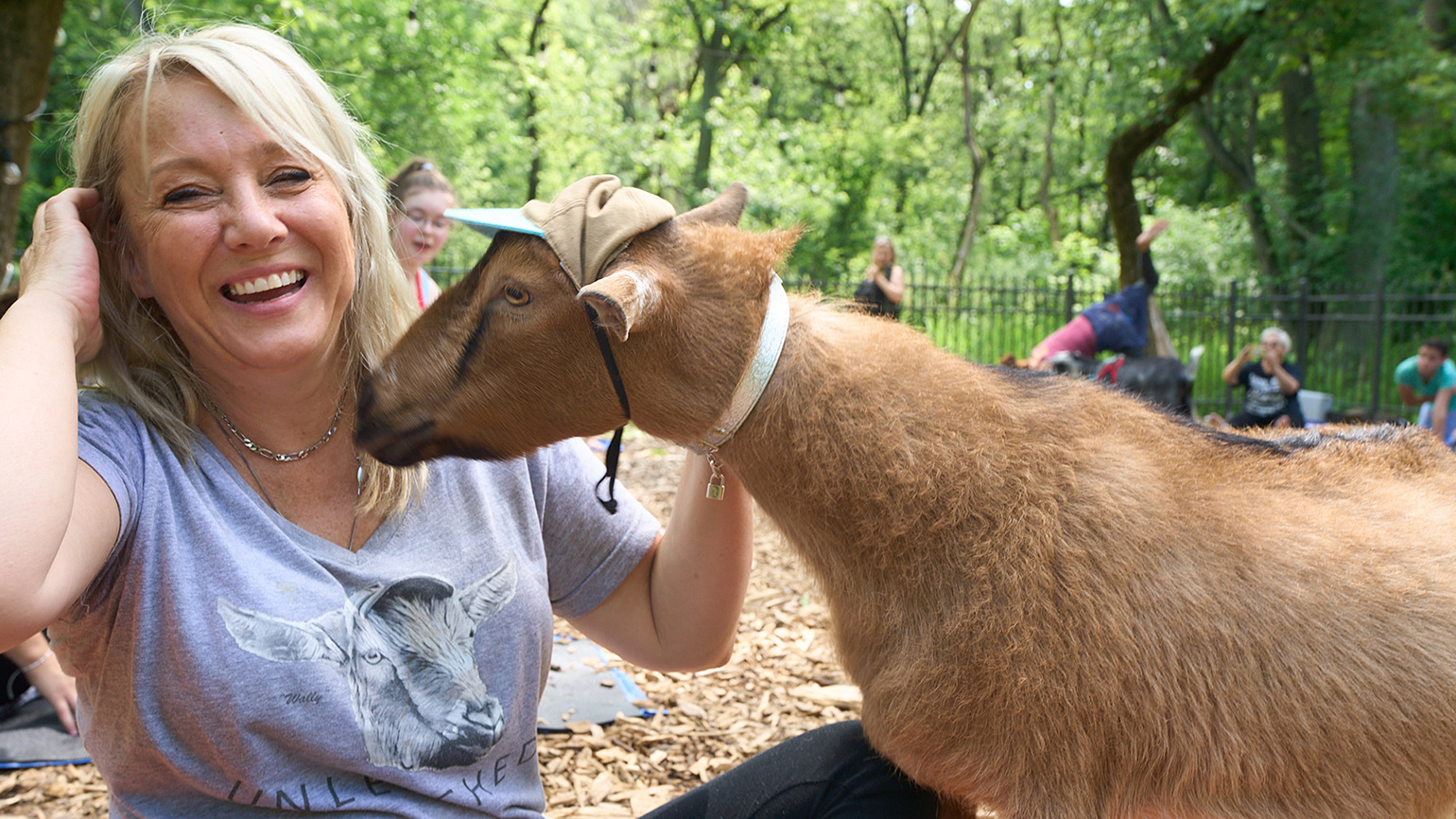
After that, Wally and I spent many more hours learning together. He grew completely relaxed around me. I trained him to walk on a leash, to shake hands and roll over. I bought a blue baseball hat for him to wear so that he would know when he was working. I took him to parks and playgrounds, exposing him to all kinds of people and situations. He was sensitive, caring, loving—God-given traits I’d only had to encourage.

Six years later, Wally has comforted scores of people in the Chicago area. I call my business The Mending Muse. I take him to schools and nursing homes. I hold goat yoga events with Wally and some of his friends from the farm. But my favorite moments are one-on-one sessions with Wally and someone who’s hurting. Like I was. There’s no agenda, no prescribed regimen. Just time spent connecting with a goat—and reconnecting with joy. I call it the goat effect.

Not long ago, we had a session with a young woman who’d called wanting help with her anxiety.

We met at a park. I let Wally, wearing his baseball hat, off leash. He nuzzled the young woman, and she reflexively jerked back.

“You have to trust him,” I said. “I’ve been there. My life was a mess. Until a goat saved me.”

Slowly she lowered herself to the grass and took a deep breath. Wally rubbed gently against her, focused entirely on comforting her. Her shoulders relaxed, and she let out a soft sigh, a smile dawning on her face. The goat effect.

For more inspiring stories, subscribe to Guideposts magazine.

The Gift of Spring

After a long and dreary winter, that first taste of spring is extra welcome. For the most part, we’ve had gorgeous weather here the past few weeks, and it’s made this girl happy, happy, happy!

Springtime in the mountains of North Carolina is special. One of the first signs is the robins, their chubby red bellies a vivid sight as they fill the yards in my neighborhood.

I always wait with great anticipation for the weeping willies (as my young son called weeping willow trees) to put on their fresh outfit of soft green. I feel like spring has officially arrived when I see those long branches waving like a grandmother’s shawl as the breeze hits them.

The angle of the sun has changed, and each morning when I look out the glass doors in my kitchen, I’m treated to the sight of sunlight creeping slowly across the meadow behind my house, as if it’s waking up for the day.

The grass is turning a bright green, so different from the drab brown blades that have been there for months. When I walk outside, the birds are singing their little hearts out as they visit the bird feeder, zooming in and out as steadily as the jets at a busy airport.

Farmers have returned to the fields on their tractors, working up the dirt, getting ready for their spring plantings.

Children are back in their yards, riding high into the air on their swing sets, tossing balls to each other and filling the air with the oh-so-priceless sound of their laughter.

The trees are budding out, lacy white blooms on the pear trees, weeping cherries in their soft pink attire, and other trees in a variety of green hues. The forsythia bushes are sporting bright yellow, and huge patches of daffodils decorate the sides of the roadways.

Oh my, it makes me feel good!

I don’t ever want to take God’s handiwork for granted. So today I want to thank Him for the gift of another spring, for days with warm sunshine and a soft breeze, for the eyesight to delight in the amazing beauty He’s created, and for the hearing to enjoy the melodies of the birds, the rumblings of the tractors and the sound of children playing.

Stop what you’re doing today. Look around and soak in the sights and sounds of spring. I think you’ll discover just what I did–​He’s an amazing God and His creation is beautiful beyond words.

For, lo, the winter is past, the rain is over and gone; The flowers appear on the earth; the time of the singing of birds is come… (Song of Solomon 2:11-12)