


Embrace God's truth with our new book, The Lies that Bind

Their Christmas Family Road Trip Was a Gift That Kept on Giving

“God knows we deserve an exciting Christmas this year,” I said to my husband, Marcus, one night shortly after Thanksgiving 2021. “What if we surprise our families and just show up in Indiana unannounced? Wouldn’t that be perfect?”

We’d spent the previous Christmas camped out at the hospital, alone, frightened and cut off from family support by pandemic restrictions. Our three-year-old son, Reese, had been diagnosed with leukemia. Now, after a year of grueling treatment and nonstop prayers, he was in remission. His doctors had given him the okay to travel. A ton of family was only a day’s drive away. This Christmas called for a real celebration.

“Let’s rent an RV,” Marcus said, “like in National Lampoon’s Christmas Vacation.” Our favorite Christmas movie featured the hapless Griswold family, whose every holiday plan went awry in an entertaining romp. “I’ll even dress up like crazy Cousin Eddie!” It sounded like a real adventure.

I combed RV rental sites and found just the right 33-foot-long motor coach to comfortably sleep Marcus, me, Reese and his big brother. The boys and I would sit around playing games while Marcus drove. I followed a YouTube video on elaborate wrapping for our gifts. I loaded up on snacks. I even found that Cousin Eddie outfit: white bathrobe, black socks, goofy hat. We’d make quite an entrance.

Amanda and her family; Photo Courtesy Amanda Hayhurst

Days before departure, the RV rental place called. Our reserved RV had been in an accident and the others were taken. It seemed that every RV within 100 miles was spoken for. Except one, praise God.

We went to pick up our—Clunker! There was no way anyone except the Griswolds would rent this dented and dinged RV with an interior that had seen better days. But it would be a means to a perfect end. I could live with that.

In the wee hours of December 22, we were on our way! The kids had the games out before we turned off our street. Marcus picked up speed on the highway. The RV shook. Game pieces toppled. Bottles clinked in the refrigerator. An avalanche of chips and granola bars fell from a wonky cabinet. “We’ll have to go slow,” Marcus said. “Real slow.”

I’d let Marcus’s sister in on our secret. She had concocted an excuse to get as many relatives together as possible at their house that evening. I called to warn her that we’d miss the welcome party. “No one leaves this house till you get here,” she said. “Text me when you’re close.”

Four hours later than planned, I sent our location. Marcus’s brother-in-law, a police officer, waited on the outskirts of town to escort us with flashing lights. We pulled up to the house, and Marcus jumped out in his costume. Everyone rushed outside cracking up. “So this is why we’ve been held hostage!” my father-in-law said.

We slept in the RV that night and the next. Our days were so full, we slept like babies. A bunch of us filed into a beautiful Christmas Eve church service, so much different from the year before. On Christmas morning, we awoke eager to hand out the presents I had hidden in the under-storage area. I swung my feet out of bed and found the floor covered with dirty water. Toilet water. Lord, really? I took a deep breath. “We’ll deal with this later. Let’s get those presents.”

We tiptoed out and opened the under-storage. Flooded. I pulled out one of my YouTube masterpieces and hurled it. “I worked so hard to make this Christmas perfect!” I flung another gift. “Everything is ruined!”

Marcus smirked. “Well, we did say we wanted a National Lampoon Christmas….” Ugh.

I sulked while the others got breakfast ready. Eventually I realized I didn’t know where Reese was. I wandered through the house and followed the music coming from the guest room. I peeked in. Reese was sitting on the floor, staring up at his grandpa playing guitar. It looked like a pretty perfect moment. Why couldn’t it be that simple for me? I rallied for the family’s sake.

Later in the day, we unclogged the toilet in the RV, mopped out the floor and drove two hours—slowly—to spend time near my relatives. Parked at my grandma’s house, we had a joyful, if giftless, reunion with my side of the family.

We packed up the next morning. Not just us. Some of the gang wasn’t ready to say goodbye. We would head to Georgia in a caravan and keep the family fun going. Reese made sure Grandpa brought his guitar. I was glad we’d have reinforcements on the way home. Which turned out to be a blessing when a loose tire barreling down the highway collided with the RV, putting it off the road for good. A van stood in for the final stretch.

Safe and sound back in Georgia, we laughed ourselves silly telling stories from this crazy trip that wouldn’t end until it had delivered all its gifts. It was the family vacation that kept on giving. I wouldn’t have changed a thing. It definitely was not the Christmas I had envisioned, but it would be a hard one to top. Perfect, you might say, for us would-be Griswolds.

The Hobby Lobby Way to Success

Have you been to Hobby Lobby?

A lot of people come to our stores, especially around the holidays, for arts and crafts supplies, home accents and more.

Our shelves are filled with picture frames, fabric, glue, beads, glitter, clay, ribbon, baskets, candle rings, table runners, wreaths…everything you might need to decorate your house and make gifts for Christmas.

We have more than 430 stores in 35 states, and I’m often asked how the company got started. The quick answer? With a six-hundred-dollar loan and a 300-square-foot retail space.

For the real story, though, I’ve got to go back to the five-and-dime in Altus, Oklahoma, where I found a job–and something more–my junior year of high school.

Altus was a small town when my family moved there in my early teens. There was an Air Force base, a hospital, a post office, a dusty courthouse square with a few stores and churches–including the one my dad pastored.

We lived in a tiny two-bedroom house. My parents got one bedroom, my three sisters got the other and my brothers and I slept on rollaway beds in the kitchen.

To get to the bathroom, we had to walk through Mom and Dad’s room, and it was pretty common to see them kneeling by the bed praying–for an ailing church elder, for a neighbor family struggling to make ends meet. Maybe for our own family, because we were struggling too.

The congregation, all 35 members, did their best to help. They held “poundings,” bringing five-pound bags of flour or sugar or potatoes to worship, anything they could spare to feed our family. Still, there were plenty of times our cupboards were bare.

If company was coming, we would stock the fridge with “leftovers”–we’d put tinfoil over empty cans or plates on top of empty bowls, as if they were full. Folks had enough worries. No need to make them worry about the preacher’s family.

“We’re not poor,” Mom declared. “You’re never poor when you have something to give.” She crocheted doilies and made fried pies and sold them to raise money for missions.

We kids were expected to work too. In the summers we picked cotton. As soon as the girls were old enough, they waited tables or worked in the donut shop.

“Someday I’ll get a job and bring something home for you,” I promised Mom. A new dining room set, I thought, or a sofa that didn’t have stuffing coming out of it.

“Just look for what you can do for the Lord,” she said. The problem was, I didn’t know if there was anything I could do for the Lord.

I couldn’t be a preacher or a missionary or a teacher. Unlike my brother, who was a gifted speaker, I could barely say a word in front of people. I got tongue-tied just giving a book report in English class.

My siblings all got excellent grades and were destined for Bible college. Me, I tried hard, but I wasn’t much of a student. I had to repeat seventh grade. Things didn’t get any easier in high school.

By junior year, I was just looking to sign up for classes where I wouldn’t have to speak. Math was a safe choice; I was pretty good with numbers. Then I noticed something called Distributive Education. “What’s that?” I asked a teacher.

“D.E. is a program that allows students to work for one of the businesses in town. You earn class credit and get paid too.”

Our family could use the extra money. “What kind of job would I get?” I asked.

“Sweeping up or putting away boxes,” he said.

That sounded a lot better than picking cotton. “Sign me up,” I said.

Back then in 1960, the courthouse square was the center of town. My teacher sent me there to McLellan’s five-and-dime. The first thing I noticed when I walked in was the smell of fresh popcorn. It was inviting, almost like someone saying, “Come in and stay a while.”

The next thing I saw was how neat and clean everything was. Not a speck of dust on the counters and wood floors. Altus was in the middle of cotton fields and cattle ranches. In those pre-air-conditioning days it took a lot of dusting and sweeping to keep things spotless.

A short, wiry gray-haired man in a bow tie came up to me. “I understand you’re the young man who’s going to help us out here,” he said. “I’m T. Texas Tyler.” Then he handed me a yarn mop. “You can start with the floors.”

I went over every inch of those wood floors and got to see how well laid out the place was. Candy counter and toiletries in front, sheets and towels further back, pots and pans to the right, hardware supplies to the left.

I lingered in the toy department, admiring the board games and model airplanes on the shelves.

You could buy anything at McLellan’s, and Mr. Tyler made sure you could find just what you were looking for. It made me think of a Bible verse my dad liked to use in his sermons, “Whatever your hand finds to do, do it with all your might.”

Maybe I was no good at schoolwork, but I would give this job my all.

Mr. Tyler was an excellent teacher, and his subject was retailing. He was constantly finding something new for me to do. He sent me to the stockroom where I took boxes off the conveyor belt and put price stickers on the merchandise. Another time he had me reorganize the shelves.

“There’s a place for everything, son,” he said, “and your job is to make sure everything’s in its place.” I knew what he meant. At home I had only one drawer for all my things.

One day Mr. Tyler asked me to roast a huge supply of nuts. He had separate sacks of peanuts, hazelnuts, cashews and walnuts that needed to be salted and roasted together. “Why don’t we just sell them like they are?” I asked.

“Think of our customers,” he said. One of our biggest was the Officers Club at the Air Force base outside of town. “When the Officers Club has a party, they want the nuts roasted and mixed already, and they’re willing to pay for that convenience.”

Think of the customers. That sounded just like what my parents instilled in me about serving others, putting their needs first.

No task was too lowly for Mr. Tyler. One day, he asked me to clean the toilets. I dumped some cleanser in, swirled the brush around and called it a day. Mr. Tyler called me back, pointing out how much grime I’d missed. He got down on his knees and scrubbed the toilets till they sparkled.

It was a brilliant example of what my dad called servant leadership–no job, however humble, is beneath the boss. To lead well you need to serve.

I had my share of successes and blunders too. Like the Easter display of chocolate bunnies for our front windows. It looked great when I set it up in the evening, but the next day in the hot sun, the bunnies melted into a pool of chocolate.

“We all make mistakes,” Mr. Tyler said. “The important thing is to learn from them.”

By senior year I was putting in almost 40 hours a week at McLellan’s. I added to Mom’s fund for mission projects. I was able to buy her a dining room set, a new sofa and a refrigerator. More important, I discovered what I could do for the Lord–work at the calling he had given me with all my might.

Really, I founded Hobby Lobby on those principles I learned at McLellan’s five-and-dime: Always think of the customer. Put people first. Don’t get stuck behind a desk (Mr. Tyler didn’t). And find a way to do what you do for the Lord.

One way we do that at Hobby Lobby is by closing our stores on Sundays. Weekends are big in retailing, and I’m told we lose millions of dollars because of this, but I wouldn’t change it for the world.

Our employees are able to spend Sundays at home and at worship with their families, and that’s more important to me.

I know Mom and Dad would be pleased. So would Mr. Tyler. What they taught me has become the Hobby Lobby way.

Did you enjoy this story? Subscribe to Guideposts magazine.

The Healing That Forgiveness Brings

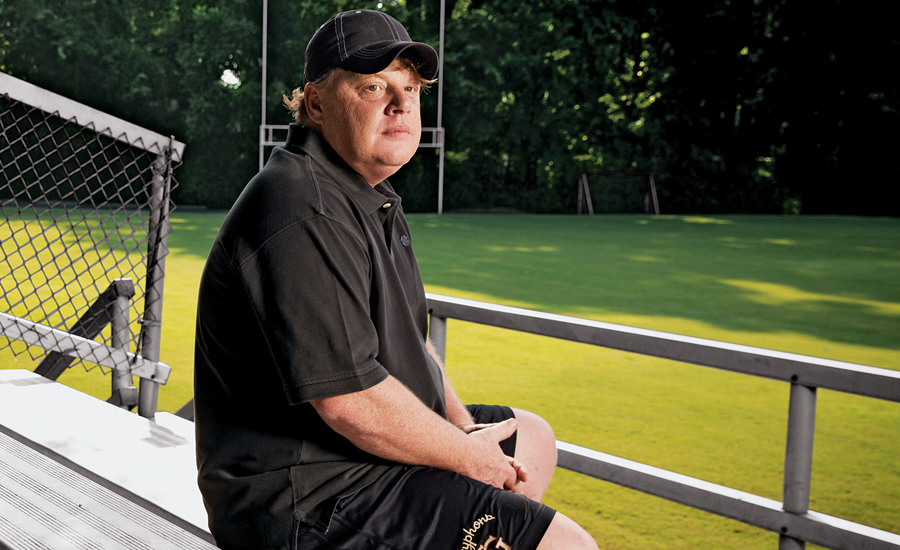
I’m a football coach and a business owner. I think about leadership a lot. I try to bring out the best in my employees and the young men I coach.

Maybe you’ve seen me at work. A movie about my team, Undefeated, won an Academy Award for best documentary in 2012. Let me tell you, that award wasn’t because of me. It was because of the Manassas High School Tigers. Those young men showed the world their true character.

I started my lumber business, Classic American Hardwoods, from scratch and now 120 people work for me.

You might think my story is all about Bill Courtney, business whiz, taking his can-do know-how to a struggling football team and leading a bunch of directionless boys to their first winning season in years. Well, you’d be wrong.

If there’s one thing my life in business and coaching has taught me, it’s that success is not about me. Leadership is not about giving orders. And character is not the same as self-reliance.

How do I know? Because the year before that documentary came out, I was going through my own crisis of character. I had no problem encouraging my employees and the boys on my team to do their best and pick themselves up when they fell.

But what would I do when an emotional wound from deep in my past literally showed up on my doorstep one day? I had to let go of a burden I’d been carrying since childhood. I had to follow God’s lead and do one of the hardest things I’ve ever done. I wasn’t sure I could do it.

I grew up in Memphis. I love this city, but I did not love my childhood. When I was four, my dad left us. My mom did her best to raise me right, juggling work and parenthood.

She drove me to sports practices and games, disciplined me when I needed it and always made sure I knew she loved me. She taught me lessons about relationships that still stick with me after 22 years of marriage to my beloved wife, Lisa.

Lisa and I have four kids. I guess I’ve worked so hard at being a good husband and father because I didn’t want to end up like my dad.

Every now and then he’d show up out of the blue and take me to watch a movie or shoot hoops. But then he’d disappear again. He never called. If I wanted to talk to him, I had to pick up the phone.

Dad remarried a woman with a son named Chip, and after that I almost never saw him.

It was bad enough not having a father to teach me how to shave, or tie a tie, or stick up for myself. When I realized Chip had basically replaced me in Dad’s heart, I felt so rejected. Chip had red hair like mine, and that made it even worse.

One late afternoon in ninth grade, our JV football team beat our rival in a hard-fought game. I scored the winning touchdown on a 40-yard run. I grabbed my equipment and headed for the field house, almost floating on air.

Then I saw my teammates walk off the field with their dads carrying their helmets, which gleamed under the lights. That brought me crashing down to earth. What was wrong with me that my dad wasn’t there? Why didn’t he love me?

I dealt with my hurt by overachieving. I won an academic scholarship to the University of Mississippi and worked three jobs to put myself through school. After graduating I married Lisa and worked my way up to vice president at a local lumber mill.

Then I took a big risk and started my own company with two others from the mill. Though the September 11 terrorist attacks happened days after we opened, we managed to make the company a success.

In 2003 one of my employees asked if I’d put in a few weeks as a volunteer football coach at Manassas High in inner-city North Memphis. He’d been volunteering there.

“The guys look like they can play,” he said. “They just need some guidance. Mentors.” There were sure to be boys on that team whose dads had walked out on them. I jumped at the chance to be a mentor, maybe even a surrogate father for them.

I thought I’d work with the kids just for spring practice. Two weeks turned into six and a half years. The Tigers went from winning only seven games in the decade before I arrived to winning half their regular season games and making the playoffs in 2003 for the first time in school history.

I believe players win football games. Coaches win players. I proved my commitment to those boys by getting to know each one of them personally. I visited them at home if they skipped practice. I helped them land college scholarships.

They played better football not because I’m such a genius at the X’s and O’s but because they trusted me. I helped them trust themselves.

I came to love those boys. I saw myself in them. The more they grew as young men, the more I found myself wishing I’d had that same kind of mentorship.

I kept thinking about my dad. And that made me angry. Every Father’s Day and Christmas I became withdrawn and irritable. Lisa bore the brunt of it. I tried to stuff my feelings down. They didn’t stay down.

The breaking point came when Lisa ended up becoming friends with none other than the wife of Chip, my dad’s stepson. Really? Of all the people to come back into my life, it had to be him? By then I hadn’t seen my dad in 22 years.

Every night I asked God for forgiveness for all the dumb things I’d done that day—cussing in front of my players, some petty argument at work or with Lisa. And I prayed about my dad, all the anger I felt.

God never seemed to answer those prayers directly. But each day I found myself thinking more about Lisa and the kids, how much I loved them. Was God telling me not to worry about my dad because I had a family of my own now? That wasn’t particularly helpful.

“It’s interesting about Chip’s wife,” Lisa said one day. “She had a rough relationship with her dad too.” She gave me a long look. It was fall, midway between Father’s Day and Christmas.

“She said she could help me set up a meeting with your dad,” Lisa continued.

“Really,” I said.

“Yes, Billy, really. We both know how much he weighs on you, even if you try not to show it. Maybe seeing him would help.”

I was about to reply that one awkward meeting could not possibly heal decades of pain. But all of a sudden I remembered my prayers. And in that instant I realized what God was trying to tell me.

My love for my family—that’s exactly how God loved me. He loved me so much he forgave me when I let him down. Just like I did with Lisa and the kids. Heck, just like I did with my employees or with the boys on my team.

God was telling me—when you get down to it, Jesus showed the whole world 2,000 years ago—that forgiveness is at the heart of his love. Which meant it had to be at the heart of my love too. Not just when it was easy, like at home. But when it was hard. Like with my dad.

If I wanted to free myself from anger and hurt, I had to meet my dad and tell him to his face I forgave him.

But did I forgive him? There was only one way to find out.

Lisa made the arrangements and a few weeks later I was standing in my living room nervously waiting for Dad to arrive.

The doorbell rang and there he was, on my porch. It was a shock to see him in his sixties, with white hair. We sat down in the living room. Right away he started up with some half-baked excuses. I cut him off.

“I want you to answer one question,” I said. “Why did you never call me?”

More excuses. Suddenly, he looked at me with an anguished expression. “Oh, Bill,” he said. “I’m so sorry. I’m so very sorry. I’ve missed out on so much.”

My reply seemed to come from someplace deep inside, someplace I hadn’t even known existed. “Dad,” I said, “that’s all I wanted to hear. I completely forgive you. I don’t want you in your twilight years to suffer guilt.

"I’m married with four kids and a business, and I’m in such good shape. You didn’t injure me permanently. We all make mistakes. I forgive you.”

The room fell silent. Then Dad started bawling. Maybe we both cried, but I think my feelings were too big for tears. After that there wasn’t much more to say. Dad got up to go.

I followed him to his car. He promised to come to my kids’ sports games when he could. “I’m so sorry,” he began again, but I stopped him.

“You don’t have to say that anymore,” I said.

He looked relieved. We said goodbye and he drove away.

I’ll be honest. Dad and I are still not buddy-buddy. He’s come to some of my kids’ games, like he promised. He sends birthday cards and e-mails, and calls now and then. I’m grateful he’s a part of our lives.

I’m even more grateful for something else. For years I was like a football player on a team with a history of defeat, mired deep in my hurt. I could have stayed down, like the Manassas Tigers during their long losing streak.

But God showed me a better way. He told me to forgive my father and I did. I’m so glad I followed his lead.

Download your FREE ebook, True Inspirational Stories: 9 Real Life Stories of Hope & Faith.

The Healing Power of Forgiveness

Forgiving oneself is hard to do, let alone forgiving others. But in order to move on, forgiveness is key. Dr. Karl Menninger, a well-known psychiatrist, once said that if he “could convince the patients in psychiatric hospitals that their sins were forgiven, 75 percent of them could walk out the next day.” This proves that achieving forgiveness can set people free from their troubles and hardship.

The book, Reflections on Forgiveness and Spiritual Growth, contains a chapter about the findings from a national survey on Americans’ thoughts about forgiveness:

  • More than 83% reported that they would need God’s help in order to forgive someone.
  • Only 15% indicated they could forgive someone on their own.
  • People who tend to be forgiving report more satisfaction in life.

While it may be difficult to find forgiveness, holding on to anger and resentment can be detrimental to our spiritual and physical well-being.

A great example of attaining relief through absolution is found in Joseph’s story in the Hebrew Scripture. Prior to becoming second in command of Egypt, Joseph endured many hardships. Sold into slavery by his own brothers because of their jealousy and greed, Joseph was left sad and alone.

Joseph’s brothers lived with this secret for many years, leaving their family in pain and Joseph suffering from rejection.  Though forgiveness may have seemed impossible after all he had endured, Joseph still found it within himself to do so.

When a food shortage took place throughout the land, he was forced to reconnect with his siblings, and ultimately forgave them for all they had done. In return, his brothers were given a new view on life, while he was made whole by his actions.

Sometimes people find it in their heart to forgive others without even being asked. This is an admirable asset–a power to see the good in others even if they have brought you harm. A child who was killed in a concentration camp wrote a prayer that was later discovered.

It read:

O Lord, remember not only the men and woman of good will, but also those of ill will. But do not remember all of the suffering they have inflicted upon us: Instead remember the fruits we have borne because of this suffering, our fellowship, our loyalty to one another, our humility, our courage, our generosity, the greatness of heart that has grown from this trouble. When our persecutors come to be judged by you, let all of these fruits that we have borne be their forgiveness.

This should be a lesson to all of us; a young child uprooted from his life because of his religion, was still able to forgive those who killed him and possibly his family, too. May we have the courage to forgive as this child did and experience the healing power of forgiveness.

The Goats That Made Her Feel Worthy of Being Loved

I drummed my fingers on the steering wheel. The 45-minute drive from my mom’s place in Maricopa, Arizona, to my apartment in Gilbert felt longer by the day. Miles of dry, dusty land dotted with scrub grass as far as I could see. Nothing stood out. Even the occasional house seemed to fade into the flat, featureless landscape. A landscape as desolate as my life.

I’d driven this lonely stretch of road hundreds of times in the months I’d lived in Arizona. I had moved with my teenage daughter from our home near Chicago to care for my mom. Her cancer diagnosis had come around the same time my stormy 23-year marriage ended. I’d thought I would help my mom recover her health. I’d wanted a fresh start, a chance to find joy again.

But things didn’t go as I’d hoped. My mother’s cancer spread. The doctors were saying she had only months to live. As usual, my best efforts hadn’t been enough. I wasn’t enough.

Truthfully, I’d felt like this since age five, when my parents divorced. I’d blamed myself—thinking that if I were prettier, smarter, better somehow, my parents would love me enough to get back together. That didn’t happen. My mother remarried and started a new family. My father moved on. I stayed stuck, believing I lacked something that made me worthy of love. Maybe that’s why I related more to animals than people—dogs and cats seemed to accept me as I was. And why I felt drawn to other folks who were hurting.

After high school, I tried different jobs. Certified nursing assistant. Makeup artist. I got a degree in psychology and managed a wellness center, where I learned about mindfulness, prayer and meditation. I started going to church, drawn to the community and the idea that God loves us unconditionally. I wanted to believe that but couldn’t. I was convinced I was the problem, in my parents’ breakup, in my own troubled marriage. Why would God see me any differently?

The wellness center closed. I found work at a psychiatric nursing home. By then, I was in my early forties and miserable. The one person I trusted with my problems was my mom, far away in Arizona. We talked on the phone every day.

Then, in the summer of 2013, doctors were following up on the breast cancer she’d beaten twice, years earlier, and discovered a different type of tumor. This time the diagnosis was pancreatic cancer.

Mom’s problems were a lot bigger than mine. “I’m coming out there to take care of you,” I said.

I left my job at the nursing home and flew to Arizona with my daughter. My son, who was older, stayed with my ex. I rented a place in Gilbert, closer to Phoenix and the urban conveniences I was used to. My stepbrother and his wife were also helping. I was hopeful Mom would pull through.

I drove her to chemo appointments and sat with her. I thought I was making a difference. But her condition worsened with each passing month. By the fall of 2014, the doctors said there was nothing more they could do. The sadness and the emptiness I felt were crushing. Especially on the lonely drives back to Gilbert.

This afternoon was no different. My gaze drifted across the sun-baked landscape. A few nondescript houses. Some fences. Then I saw movement. Behind a fence on the right. Goats! Running and jumping with total abandon. Maybe 20 of them. Seeing them was so completely unexpected, I laughed out loud. Where had these crazy critters come from? I’d made this drive hundreds of times and never seen them before. They looked so carefree. I had to check them out.

I pulled over. I walked to the fence and sat beside it. I didn’t call to the goats. I was content just to watch them do their thing. But a young white goat with floppy ears came running up to me. Close enough to touch. I couldn’t resist. I stroked its soft coat, and it edged closer, nuzzling against me.

The goat’s breathing fell into sync with mine, and for a moment it felt as if the universe consisted of just the two of us. Something radiated through me, pushing away the sadness, filling the emptiness. Love. Pure love. What I’d been searching for my entire life. It warmed my very soul. I’d done nothing to earn this goat’s affection. Yet it had been given to me. And that’s when I knew God had sent this little goat, an angel to comfort me and bring me joy. To show me how much he loved me.

The other goats came over to investigate. A larger brown one leaped up and set its hooves against the fence. I petted it. The white goat calmly looked on. Finally I left, practically floating to the car. “I’ll see you soon,” I told the goats.

A few days later, I brought Mom there. We sat along the fence, occasionally petting the goats but mostly just watching. Mom didn’t have the strength to do much more. They were accepting of us, curiously nosing about the fence, then prancing off. “I could watch them for hours,” Mom said. “They’re so joyful.”

I introduced myself to the owner. She was raising the goats for their meat, not as pets, but she didn’t object to our visiting. There was something centering about the goats. Naturally calming. Our visits with them were some of the most beautiful moments Mom and I spent together, time I cherished. A gift from above.

Mom passed away in March 2015. I wasn’t sure what I should do next, only that it needed to involve goats.

I came across an ad for a goat wrangler, working for a woman in California who provided trained goats for movies and commercials. I applied. Despite my having zero experience, she hired me. I learned how to train goats. Working on movie sets was fun, but I sensed God wanted me to do more with goats.

I met an incredible guy, an actor who believed in me and loved me for being me. We got married. There were no goats in the ceremony, and yet I couldn’t help but think that my life had changed because of those furry, flop-eared angels. They’d helped me see myself as someone who deserved to be loved.

“I want to get a goat of my own,” I told my husband one day. “One I can train to be a comfort animal.”

“Where are we going to keep a goat?” he asked. Our place in California didn’t exactly have room for livestock.

“I’ll get a farmer to keep him,” I said. “Back in Illinois.” My daughter had moved to the Chicago area after I remarried.

“Go for it!” he said. See what I mean about him believing in me?

That’s how I found myself visiting a goat farm on the outskirts of Chicago. Several goats came rushing up, butting against me, nibbling at my clothes. Not quite the pastoral experience I’d enjoyed in Arizona but typical goat behavior. I surveyed the herd. There were plenty of candidates. Then one goat caught my eye. Brown. Flop-eared. Only eight weeks old. He wanted nothing to do with me. When I stepped toward him, he backed away, determined. But I couldn’t take my eyes off him.

“He’s the one,” I told the farmer.

I named the goat Wally Bentley and stayed with my daughter in the Chicago suburbs while I was training him. I was sure we’d bond just like the little white goat and I had. But Wally had other ideas. Before I could consider taking him to schools or nursing homes, I needed to teach him to be calm around people, never to nip or be aggressive.

I tried to work with Wally the way I’d trained goats in California, rewarding good behavior with treats. Nothing doing. I put him on a leash. He refused to budge. I sat next to him and tried to pet him. He pulled back, his whole body tense. Not exactly a comfort animal.

Was I wrong about where God was leading me? I’d been so sure Wally was the one. Maybe the whole idea of using goats for therapy was crazy.

Finally, after weeks of trying to get through to Wally, I gave up. I plopped down in the grass. I didn’t reach out to him. Didn’t talk to him. Didn’t even make eye contact. Have it your way, I thought.

I don’t know how much time passed. I was aimlessly plucking at the grass, ready to call it a day, when I felt something soft and furry rub my arm. Not aggressively but gently. Soothingly. Then Wally nuzzled his head against mine. “Hey, buddy,” I said. I stroked his coat, and he leaned into me. A feeling of oneness, of pure love, enveloped me. Like that day in Arizona when I’d been at my lowest. There too I’d let myself be vulnerable. Let the goats come to me. Trusting them. And they’d responded.

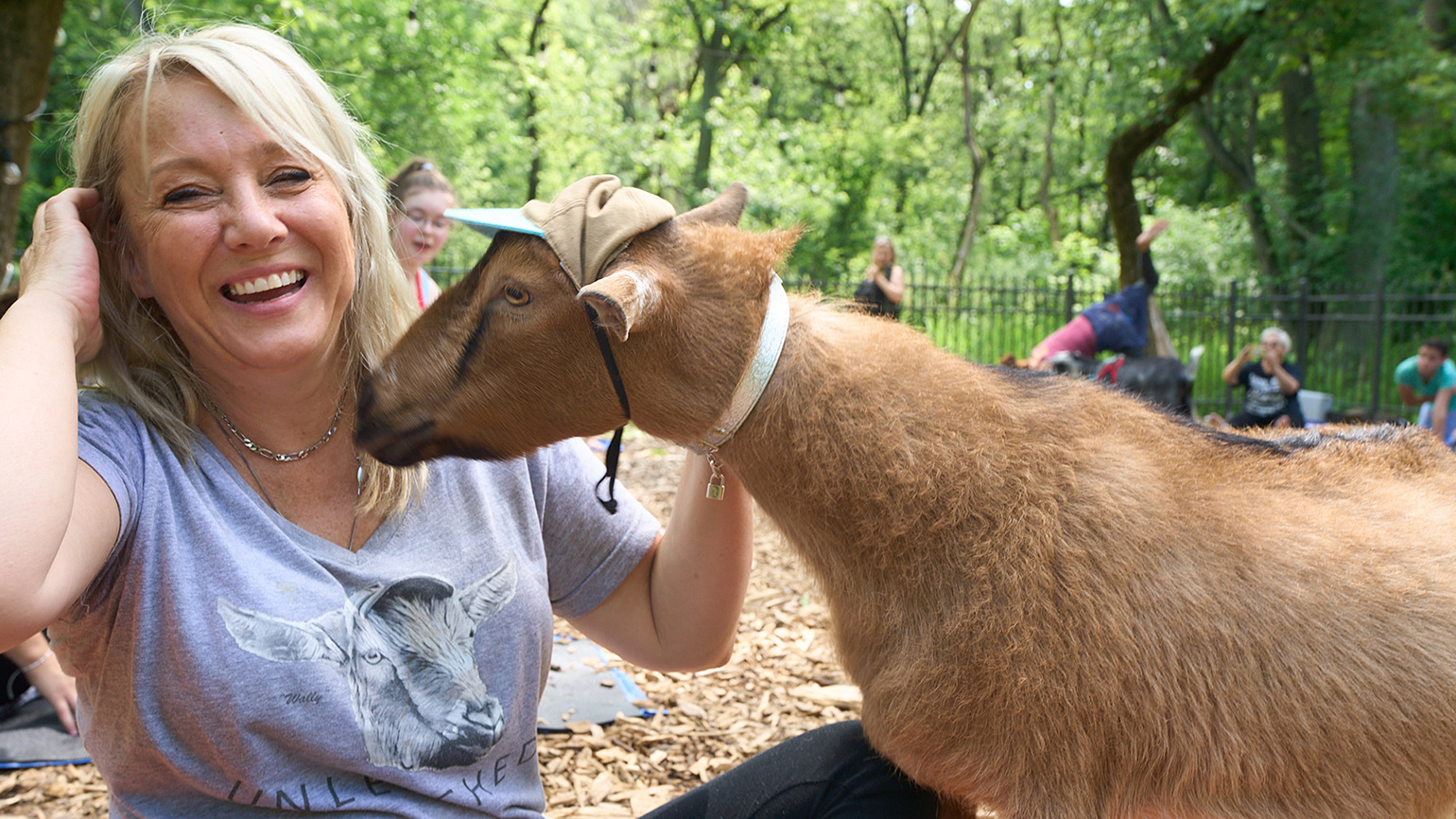
After that, Wally and I spent many more hours learning together. He grew completely relaxed around me. I trained him to walk on a leash, to shake hands and roll over. I bought a blue baseball hat for him to wear so that he would know when he was working. I took him to parks and playgrounds, exposing him to all kinds of people and situations. He was sensitive, caring, loving—God-given traits I’d only had to encourage.

Six years later, Wally has comforted scores of people in the Chicago area. I call my business The Mending Muse. I take him to schools and nursing homes. I hold goat yoga events with Wally and some of his friends from the farm. But my favorite moments are one-on-one sessions with Wally and someone who’s hurting. Like I was. There’s no agenda, no prescribed regimen. Just time spent connecting with a goat—and reconnecting with joy. I call it the goat effect.

Not long ago, we had a session with a young woman who’d called wanting help with her anxiety.

We met at a park. I let Wally, wearing his baseball hat, off leash. He nuzzled the young woman, and she reflexively jerked back.

“You have to trust him,” I said. “I’ve been there. My life was a mess. Until a goat saved me.”

Slowly she lowered herself to the grass and took a deep breath. Wally rubbed gently against her, focused entirely on comforting her. Her shoulders relaxed, and she let out a soft sigh, a smile dawning on her face. The goat effect.

For more inspiring stories, subscribe to Guideposts magazine.

The Gift of Spring

After a long and dreary winter, that first taste of spring is extra welcome. For the most part, we’ve had gorgeous weather here the past few weeks, and it’s made this girl happy, happy, happy!

Springtime in the mountains of North Carolina is special. One of the first signs is the robins, their chubby red bellies a vivid sight as they fill the yards in my neighborhood.

I always wait with great anticipation for the weeping willies (as my young son called weeping willow trees) to put on their fresh outfit of soft green. I feel like spring has officially arrived when I see those long branches waving like a grandmother’s shawl as the breeze hits them.

The angle of the sun has changed, and each morning when I look out the glass doors in my kitchen, I’m treated to the sight of sunlight creeping slowly across the meadow behind my house, as if it’s waking up for the day.

The grass is turning a bright green, so different from the drab brown blades that have been there for months. When I walk outside, the birds are singing their little hearts out as they visit the bird feeder, zooming in and out as steadily as the jets at a busy airport.

Farmers have returned to the fields on their tractors, working up the dirt, getting ready for their spring plantings.

Children are back in their yards, riding high into the air on their swing sets, tossing balls to each other and filling the air with the oh-so-priceless sound of their laughter.

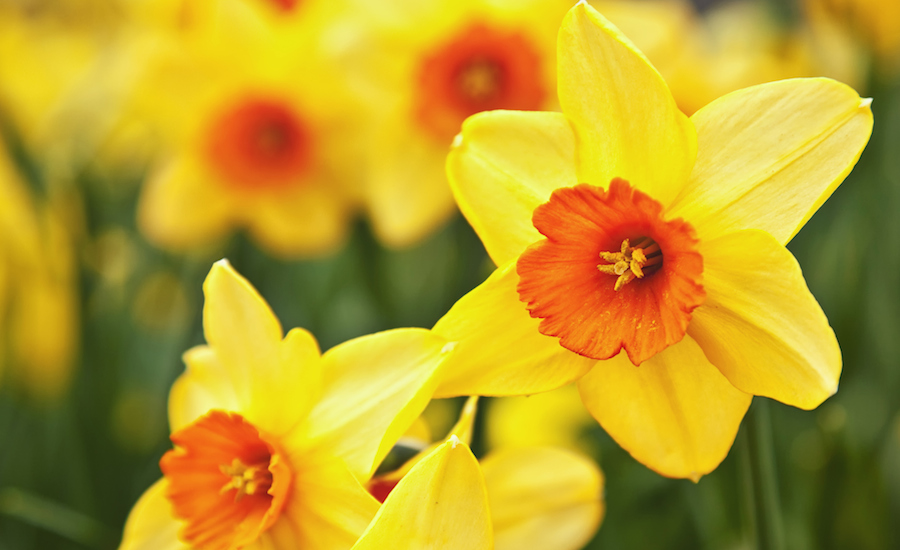
The trees are budding out, lacy white blooms on the pear trees, weeping cherries in their soft pink attire, and other trees in a variety of green hues. The forsythia bushes are sporting bright yellow, and huge patches of daffodils decorate the sides of the roadways.

Oh my, it makes me feel good!

I don’t ever want to take God’s handiwork for granted. So today I want to thank Him for the gift of another spring, for days with warm sunshine and a soft breeze, for the eyesight to delight in the amazing beauty He’s created, and for the hearing to enjoy the melodies of the birds, the rumblings of the tractors and the sound of children playing.

Stop what you’re doing today. Look around and soak in the sights and sounds of spring. I think you’ll discover just what I did–​He’s an amazing God and His creation is beautiful beyond words.

For, lo, the winter is past, the rain is over and gone; The flowers appear on the earth; the time of the singing of birds is come… (Song of Solomon 2:11-12)

The Gift of God’s Timing

“Oh yeah, I bet this must be my Carolina basketball wind suit!” My son Jason wore a confident smile as he picked up his Christmas present.

My mind whirled as I gave him a suspicious glance. I’d wrapped that gift the day I made the purchase–and I’d wrapped it before he came home from school. How could he know what was in the box? Had my Christmas snoop struck again?

Waiting for God's perfect timing. Photo by Dmitriy Shironosov, Thinkstock.Giving him the benefit of the doubt, I figured maybe he was just guessing since that idea had been on the Christmas wish list he’d given me weeks earlier.


We continued opening gifts, each family member taking a turn until it was time for Jason to open his next one. I paid close attention as he ripped off the paper. He didn’t seem surprised at the contents of the box.

Hmm… did I smell a Christmas rat? My mama radar was now shouting alarms but I decided to give him the benefit of the doubt one more time.

I observed carefully as he opened his next gift. “Oh, this has gotta be my new tennis shoes.”

“You are busted, young man.”

“Well, I might as well tell you how I knew what was in my presents.”

“Yeah, that would be a good thing to do,” my husband said while trying to hide a grin.

“Well, if you’ll remember, Mama got better at hiding things last Christmas, and this year she wrapped everything before I got home from school.

“I couldn’t take the suspense any longer. So I discovered that if I slit the tape on the present and squeezed the box, it popped open enough for me to see what was in there. Then I taped the paper shut again.”

Yes, my Christmas snoop had out-smarted me once again. But that’s not a problem because I love a challenge as much as Jason does–and Mama had a plan.

So the next year? All of Jason’s presents were beautifully sealed with duct tape.

That’s such a funny memory for our family, but it also provided Jason with a valuable lesson because he learned that by finding all his presents before it was time, it meant that Christmas Day wasn’t nearly as exciting.

Many of us do the same thing. We ask God for things and then we “help” Him move things along at the pace we consider appropriate. And then we’re disappointed when things don’t turn out in the manner we hoped.

I’ll be honest. Waiting isn’t one of my virtues. Most of the time I’m like one of those souped-up sports cars waiting impatiently at a red light. I’m ready to go!

But you know what I’ve discovered? Sometimes God is taking His time answering my prayers because He has something bigger in mind than what I’d intended.

With the beauty of hindsight, I’ve learned that often there were other pieces He had to put in place before everything could come together–and that if I’d wait until He was ready, there would be no ill-fitting pieces, no empty places that left gaping holes. You know, like when I try to put things together.

Are you in wait mode and you feel like you’ve waited forever for answers to your prayers? I’ve learned from experience that God’s timing is always perfect, and as my pastor, Rev. Ralph Sexton says, “Even when you can’t track Him, you can trust Him.”

I can’t help but wonder if God ever feels like using duct tape on me when I forget to wait for Him. I wouldn’t be a bit surprised if He did.

Wait on the Lord; Be of good courage, And He shall strengthen your heart; Wait, I say, on the Lord! (Psalm 27:14)

The Forgiving Quilt

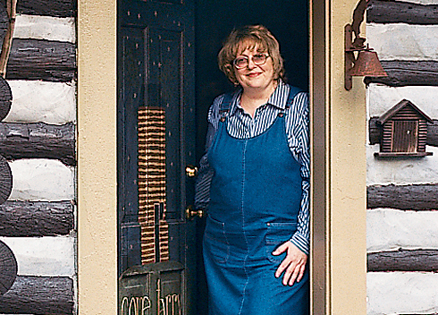
Bulging red rubber tubs of decorations were scattered around the living room of my log cabin as I prepared for the holidays: Christmas lights and ornaments for the tree, red and green candles for the windows, holly for the fireplace.

I’d wrestled the tree into its stand. Now I needed a quilt to spread around the bottom for a skirt.

I went to the linen cupboard. One quilt immediately caught my eye: a hand-stitched antique. Do I really want to put this on display? I thought as I pulled it out. The one she gave me?

“She” was Mrs. Messner, my ex-husband’s mother. In 25 years of marriage I never got comfortable enough with her to use her first name. Our relationship was always tense, but then she did something I could never forgive her for.

Just looking at the quilt—hand-stitched by Mrs. Messner’s mother—made me furious all over again.

Twenty years ago I was scheduled for a medical procedure that would take me away from home, and my husband was coming with me. That meant we needed a babysitter for our beloved dog, Muffin. “I’ve got a fenced-in yard where she can play,” Mrs. Messner offered.

“You’re sure you’ll keep a close eye on her?” I asked.

“I promise,” she said.

She promised, I thought angrily, shaking out the quilt. For all that was worth. Two days after we dropped Muffin off, Mrs. Messner called to report that our dog had gone missing. Apparently she hadn’t been at Mrs. Messner’s an hour before she slipped out of the yard and ran away.

She wasn’t even wearing her collar because I’d neglected to put it back on after giving her a bath. Of all the terrible times for Muffin to have been without her collar!

I searched the neighborhood, going door-to-door with pictures of Muffin. Mrs. Messner had put signs up: LOST DOG $5 REWARD. Five dollars! That was all Muffin was worth to her. It infuriated me all these years later.

Weeks went by with no sign of Muffin, and I had to accept the fact that she was never coming back. “Could you tell me what happened that day?” I asked Mrs. Messner. “What was she doing when you last saw her? Do you have any idea how she got out of the yard? Did you forget to latch the gate?”

“Quit upsetting everybody about that dog, Roberta,” she snapped. “You’ve got me so worked up I’m getting hives. Just go out and get yourself another dog.” I was stunned. Speechless. Another dog? That was her solution? How could that woman be so cruel?

Muffin didn’t mean anything to her, and she didn’t care what Muffin meant to me. I got down on my knees and yanked the quilt around the tree.

Mrs. Messner’s quilt was the perfect accent, but I couldn’t appreciate it anymore. All I could think about when I looked at it was my 20-year-old grudge. I didn’t need that at Christmas.

As I folded the quilt back up, a new thought popped into my head. More like a command, really: Give the quilt back to Mrs. Messner.

Where had such a crazy idea come from? I would have laughed if I wasn’t so angry. Why should I give Mrs. Messner anything? I stuck the quilt back in the linen cupboard and chose another for the tree skirt.

The quilt’s a family heirloom. Surely she’d like to have it back. I couldn’t quiet the voice in my head no matter what I did. Since Mrs. Messner’s mother had died, I supposed it made the quilt all the more special to those who loved her. But giving it back would mean having to speak to Mrs. Messner.

I tried to imagine calling her. What would I say? I stared at the phone.

Wish her a blessed Christmas. The voice was hard to abide. So now I was not only supposed to do something nice, but say something nice too? That was too much. I vacuumed stray needles around the bottom of the tree. I finished decorating and put away the empty tubs. Thoughts of Mrs. Messner nagged at me.

I went back to the cupboard and took her quilt out again. The Christmas lights illuminated the careful stitching, a perfect 12 to every inch. A lot of love went into this quilt, I thought.

When Muffin disappeared, what hurt the most was thinking Mrs. Messner didn’t care how much Muffin meant to me. Was I doing the same thing with this quilt? It was made with a love Mrs. Messner could appreciate far more than I could. And it was Christmas, after all.

I picked up the phone and dialed. “Mrs. Messner?” I said when she answered. “This is Roberta. I was just admiring that lovely quilt your mother made. The one you gave me.”

I paused hopefully, but was met with silence on the other end of the phone.

“What do you need?” Mrs. Messner said. Couldn’t a single conversation with this woman be easy?

I took a deep breath and forged ahead. “I was wondering,” I said, “since your mother has passed on, if you would like to have the quilt back? The beautiful one she made.”

Silence. What more could I say? I’d done what I had to do. I braced myself for another curt reply. “Mrs. Messner, are you still there?”

“You can’t know what this means to me, Roberta,” she said. “I don’t own a single thing Mom made. I would so love to have that quilt again.” Mrs. Messner’s voice had a sweetness in it that I had never heard before.

“I’ll send it to you right away,” I said. I heard my own voice softening too when I wished her a merry Christmas.

I hung up feeling lighter, as if a weight had been lifted from my chest. For the first time in 20 years I thought about Muffin without fuming over an unlatched gate, a paltry reward and the dog collar I’d neglected to put back on. Perhaps my bitterness at Mrs. Messner had been inflamed by my own guilty conscience.

I wrapped the quilt in tissue paper and wrote on a holiday card: “Dear Mrs. Messner, Wishing you and your dear ones a blessed Christmas filled with nothing but love, Roberta.”

I packaged up the quilt and tucked in the card. I’d chosen one with an angel on it. Because that was not just any voice in my head telling me to consider Mrs. Messner. That was a Christmas angel speaking to my heart. And I would never forget the gift she gave me. The gift of forgiveness.

Download your FREE ebook, True Inspirational Stories: 9 Real Life Stories of Hope & Faith

The Art of the Apology

I’m sorry. Two little words that play a big part in our daily vocabulary. You might apologize while squeezing through a crowd or using the last of the printer paper at work. We toss off these everyday “I’m sorry’s,” but true apologies are a different story.

Even if you feel guilty for having hurt someone, you might have trouble finding the right way to express your remorse. How do you give a meaningful apology? How do you ask for one? If both parties are at fault, who should say sorry first? With these tips, you’ll find that sorry doesn’t have to be the hardest word.

Keep it real
“For the person who needs an apology, it’s a validation of their feelings,” says Beverly Engel, author of The Power of Apology. “It’s very healing. If someone admits they did something wrong, it helps us not feel leery. We can let our guard down.”

But the relationship will remain strained if the apology seems perfunctory. You have to be truly willing to apologize. Are you afraid that saying sorry will make you look weak? Actually, a sincere apology helps repair not only the relationship but also your reputation—you’re showing that you can be trusted to do what’s right. Avoid the nonapology apology: “I’m sorry you were offended by what I said.” It’s doublespeak.

Sometimes it’s better to leave a hurt in the past. If apologizing means reaching out to someone who will cause you harm or be emotionally damaged by being reminded of your actions, forgive yourself and move on.

The three R’s
A meaningful apology comes down to what Engel calls the three R’s—regret, responsibility and remedy.

Communicate your regret. Show the other person you recognize your error and empathize with her pain. Try to see the situation from her point of view. A statement such as “I know I hurt your feelings, and I feel awful about it” can go a long way.

Take complete responsibility. Don’t make excuses or blame the victim. If you feel the need to explain your actions, keep it brief and follow it with a sincere mea culpa, such as “My behavior was unacceptable.”

Show that you’re working to remedy the situation. Offer to make up for the harm you caused. Or explain the steps you’re taking to make sure it doesn’t happen again.

Asking for it
If you’re the offended party, describe what’s changed in the relationship and how you feel about it. For example, you could say, “There’s this rift between you and me, and I want us to be friends again. But I’ve been hurt, and I’d like an apology. I need you to acknowledge what you did.’’ Don’t demand. Emphasize that the relationship is important to you.

Two-way street
Say a misunderstanding turned into a nasty exchange. You want to reconcile but feel the other person should apologize first. “If you recognize that you played a role, examine why you feel you need them to apologize first. It’s probably pride,” says Engel. Get over it.

Try: “We had this disagreement, and I feel we’re both to blame. I want to apologize for my part.” You’re acknowledging the blunder and asking the other person to take responsibility as well. Most people will appreciate the initiative and step up, but there are no guarantees.

That’s something to keep in mind anytime you offer an apology. Don’t expect immediate forgiveness. It might take the other person a while to process your words and their feelings first. Still, don’t you feel lighter now that you’ve let go of your burden of guilt?

For more inspiring stories, subscribe to Guideposts magazine.

Thanking God for the Gift of 5 Senses

Sometimes God reminds us to be grateful for things we take for granted. I had one of those moments this week. An ear disorder has caused me to lose most of the hearing in my left ear. For almost two years now, I’ve dealt with the repercussions of that.

I’ve had to say, “I’m sorry. Could you repeat that?” when someone told me something. When my grandchildren tried to whisper in my left ear, I’ve had to remind them, “You’ve got to come around to Grandmama’s good ear.”

Low tones have been the worst, and that meant I couldn’t hear my husband’s voice if he walked on my left side. And after a lifetime of holding the phone to my left ear, I had to relearn that habit. But I’ve been so blessed to have one ear that still hears relatively well.

But this morning was special. I had an appointment with the audiologist to fit my new hearing aid. I had to fight back tears as I heard sounds in that left ear–sounds that I haven’t heard for the past few years.

As the audiologist fiddled with the computer to adjust the levels, I sat there and thanked God for a privilege that I’d always been grateful for but hadn’t fully appreciated until I no longer had it.

Here are five profound gifts from God that we should appreciate on a daily basis and give thanks for:

1) Sound
For the joyous trill of the birds singing in the trees. For the oh-so-beautiful sound of our child’s laughter. For the moments when we hear the words “I love you.” For the ability to sit in church and hear the pastor’s message.

2) Sight
For the ability to see the beloved faces of our children and grandchildren. For the beauty of a sunset. For the independence that sight gives us to drive and walk without assistance, and that we can walk to our pantry and read the labels on the cans.

See More Beauty! A Photo Slideshow of Spring Flowers

3) Taste
For the first bite of a tomato fresh from the garden. For the delight of a comfort-food meal at our grandmother’s table. For the deliciousness of a still-warm cookie. Have you ever thought about how sad it would be if you couldn’t taste things anymore?

4) Touch
For the softness of a baby’s skin. For the tender shoots of those first blades of grass in the spring. For the feel of our sweetheart’s hand holding ours.

5) Smell
For the aroma of bread as it comes out of the oven. For the indescribable sweetness of little ones fresh from their baths. For the fragrant aroma of hyacinths and lilacs. Amazing gifts!

Take the time to appreciate what you can hear or see or taste or touch or smell today. Then thank Him for those everyday blessings. What have you noticed today that you are thankful for? Please share your observations below.

Surfer Bethany Hamilton’s Strong Faith After Shark Attack

The bedroom door opened at five the morning of October 31 last year. My 13-year-old daughter, Bethany, stuck her head in, her long blonde hair falling over her face. “Hey, you guys. I’m going out for dawn patrol.”

“Have a good time, Honey,” I said. “Remember, my surgery’s today. Keep me in your prayers.”

“Duh, Dad. You’re always in my prayers. Gotta go!” Dawn patrol—beach slang for an early morning run—is a big thing around our surfing household. Bethany went out most mornings, searching for waves, often with her best friend, Alana, and Alana’s dad, Holt. I joined them whenever I could.

There’s something totally pristine and magical about the water at that time of day. The beach is empty, the wet sand shimmers in the rising sun. It’s just you, your board and the waves. There’s a little more of a danger of sharks in the water too, but if you surf in Hawaii, sharks are always a threat—remote, but real. The sea is their home, and you just have to respect that.

My wife, Cheri, and I work hard to make a good home for our three kids—Noah, 22, Timmy, 17, and Bethany. We are a close, loving family with God at the center. But at heart, we’re basically, well, beach bums.

I’ve been surfing since I was 12. It was my first love. Cheri’s too. We’ve got saltwater in our veins, and so do our kids. There’s always sand on the floor of our house on Kauai’s North Shore, and a couple of towels drying on the porch out back. Are we rich? Not in dollars and cents. But we’re more than blessed when it comes to the things that really count.

I would have joined Bethany that morning, getting in a quick run before I had to be at work, if it weren’t for my appointment at Wilcox Memorial Hospital. All those decades of crouching down low to shoot the barrel of a big wave had taken their toll on my right knee.

“You’re due for some scoping on your cartilage,” my friend David Rovinsky, an orthopedic surgeon, said. “We’ll get you fixed up and you’ll be back on your board in no time. Who knows, you might even be able to keep up with Bethany.”

Yeah, right. No one could keep up with my daughter. I put Bethany on my board and took her out into the waves when she wasn’t even a year old. I bought her a surfboard when she was six. Right off the bat, there was something different about how she surfed. Bethany got a look in her eye when we were out there in the water—a kind of gleam that said: I want to be good at this. I want to be the best.

I’m a “soul surfer.” I do it for the pure joy I feel when I drop my board into a curl, the wave roaring in my ears like a jet engine. It’s a spiritual joy, to be so close to the beauty and power God has made. Bethany felt that joy too when she was out in the water. She loved the Lord, and she loved to surf. But she also set goals. Bigger waves. Faster times. She couldn’t wait to enter surfing competitions. I started to understand that glint in her eye. The flash and fire of a champion.

At a little after seven that morning I lay on an operating table. I’d opted for a spinal so I could be awake to watch the procedure on a monitor overhead.

“Okay, Tom,” David said. “Ready to star in your own reality TV show?”

David marked the spot on my knee where he would go in with the scope. Just then the door to the operating room flew open. A doctor stuck his head in.

“Dr. Rovinsky, we gotta have this O.R. right now! We’ve got a shark attack victim.”

My mouth went dry. “Who?” I asked.

“A thirteen-year-old girl from the North Shore.”

My gaze met David’s. “Stay cool, Tom,” he said. “I’ll be right back.”

I tried to jump off the table. No go. My legs were numb from the anesthetic.

David came back. His face was pale. “It’s Bethany. We’re going to get you out of this O.R. and she’s going to take your place. We’ll do everything we can.”

A nurse wheeled me down the hall into a small recovery room and left me there, alone. The room was dark and still. Outside people raced toward the O.R., shouting instructions. If only I could get up and go to Bethany, hold her hand and pray. In my mind, I pictured Bethany in the water catching a wave.

My love for the ocean meant so much to me. To see my daughter love it too, to know she wanted to be the best surfer in the world, filled me with joy. But now that joy vanished. Was it my fault that she’d been attacked by a shark?

Stop. Cool it. Whatever happened out in the waves this morning, I had to remember that God had been there. He was here in the hospital too. With Bethany. With me. You’ve always watched over us, Lord. We’ve never come up against anything we couldn’t handle. Help us now.

The door opened. Noah. He walked in and threw his arms around me.

“Where’s your mom?” I asked.

“She’s outside, Dad. Everyone’s here.”

“Stay with them. I’ll be there as soon as I can get up and walk.”

Noah hadn’t said a word about Bethany, and I hadn’t asked. Something inside told me to stay calm, be patient. To trust in God—whose power was greater than my fear, greater than the sea, greater even than my love for my daughter.

A nurse came by. “Mr. Hamilton, can you wiggle your toes?” I tried. They barely moved. I slapped my bed in frustration.

“Hang on. Ten more minutes and you should be able to walk.”

Ten minutes later she came back. I got up and the nurse helped me hobble down the hall to another recovery room.

Bethany was lying in bed, her hair matted from the water, an oxygen mask over her face. Monitors beeped and blinked. My gaze followed an I.V. line down to her right arm. Bethany’s a righty, I caught myself thinking. They should put that thing in her left arm. All at once I realized what I was looking at. Where my daughter’s left arm had been there was just a mass of bandages.

The image was like a hard punch in the gut. But then Bethany turned her head and gave me a groggy look. A flood of relief and pure gratitude poured over me. My daughter was safe. Thank you, God.

“Hi, Dad,” Bethany whispered. “What are you doing here?”

“I’ve been here the whole time, Honey,” I said. In fact, I had been right where I was meant to be all along.

Less than a month later, on one of those blindingly beautiful days that God saves for Hawaii, Bethany and I walked to the water. Under her right arm she carried her surfboard. She’d made a remarkable recovery, but I couldn’t help wondering if it wasn’t too soon to try surfing again.

Bethany waded in, hopped on her board and started for the distant breakers. I swam out behind, ready to lend a hand. Half of surfing is in the paddling. Bethany’s explosive stroke used to give her an edge in competition. Could she still do it? With only her right arm? Could she still surf like the old Bethany?

A wave broke. Bethany lost her board. She grabbed it just as another wave slammed into her.

“Do you need a push?” I shouted.

“No, Dad,” she yelled back. “I need to do this myself.”

I should have known better than to ask.

Finally, we got out past the breakers. A big wave came toward us. Bethany paddled and kicked like crazy, struggling to get positioned right. With one push of her arm, she leapt to her feet. Her board shot out from under her and she fell into the water.

Another wave. She paddled and jumped to her feet. Wham. Another spill.

Lord, what if Bethany can’t do this?

A third wave rolled toward us. Bethany looked over at me. For a moment, our eyes met. That’s when I saw it. That flash of fire. It was still there. The wave rose up behind us, ready to break. Bethany leapt to her feet. She caught it perfectly. I watched her ride the wave all the way to the distant shore.

I had been wrong to doubt even for a moment. Nothing was going to hold my daughter back, not from what she truly loved. There was no “old” and “new” Bethany. Just the daughter I had always known. The one with the God-given spirit of a champion. And nothing, not even a shark, could ever change that.

Browse a slide show of Bethany!

Supporting Our Spiritual Leaders

I have been blessed by the spiritual leadership of many men and women in my life. Earlier this year one of my childhood pastors, the Rev. Pedro Rosario, went home to be with the Lord. Although it has been more than three decades since he served at our church, his spiritual imprint remains on my heart.

Rev. Rosario’s passion and dedication to the church greatly shaped his work ethic and ministry. I recall when my late uncle Felix was very ill, my aunt called Rev. Rosario in the middle of the night. He told her not to worry, that he would drive to her home to pray for him. Thankfully the Lord healed my uncle from his sickness, and my aunt is still deeply appreciative for her pastor’s love and care. When I became a pastor at 21, Rev. Rosario set an example for my spiritual leadership in the church.

Read More: How to Support Military Chaplains

The call to be a pastor is filled with many blessings and challenges. Pastors work within the congregation and the community. They, just like us, have their own struggles, sins, limitations, faults and defects. They are not perfect, just human. It’s only through God’s grace they fulfill their calling.

Do you know that October is Clergy Appreciation month? This is a good time to remember our pastors and spiritual leaders in prayer and express our gratitude for their ministry. I encourage you to text or email thanks to your pastor. Or call or send a hand-written note or gift to express your appreciation for their service. It will lift their spirits and encourage them in more ways than you can imagine.

How has a pastor or spiritual leader blessed your life? Please share with us.

Lord, thank you for all those you have called to serve as pastors and spiritual leaders; help us to appreciate their service in small and big ways.