


Embrace God's truth with our new book, The Lies that Bind

Santa Claus Around the World

It is widely known that Santa Claus was inspired by Saint Nicholas of Myra, an early Christian bishop of Greek descent from a town in Turkey that is now called Demre. Similar characters inspired by St. Nicholas can be found in many other countries, along with some other holiday gift-givers who have different origins. Let’s pay a visit to a few of these Santas (by other names) from around the world.

Santa in the Netherlands: Sinterklaas

Associated with Christmas in the Netherlands, Belgium, Luxembourg and northern France, Sinterklaas is one of the key predecessors of Santa Claus. Like Santa, he was inspired by Saint Nicholas and is generally depicted with a full white beard.

Sinterklaas brings presents on December 6, St. Nick’s feast day, or in some regions, the night before. He is dressed in red bishop’s garb and rides a white horse, carrying a large red book that includes the names of children who have been good or naughty. He is assisted by Swarte Piet, a Moor from Spain.

The Dutch, who were the first Europeans to settle what would later be New York, brought Sinterklass with them, where he slowly morphed into the Santa Claus we know today.

Santa in the United Kingdom: Father Christmas

Father Christmas has long served as the Santa-esque figure in the United Kingdom.

When Father Christmas debuted in the 17th century, he was something of a political figure: England’s Puritan-led government at the time was trying to do away with Christmas, and in response to that effort sprang up Father Christmas, who represented holiday feasting and merry-making (but not the giving of gifts). Santa Claus began to make inroads in England in the mid-19th century, and thereafter Father Christmas took on the gift-giving role.

The two bearded gentlemen are almost interchangeable today, though in traditional depictions, Father Christmas tends to be a bit more lean than Santa and sports a long-hooded gown of red, trimmed with white fur.

Santa in Germany: Christkindl

Christmas markets have been popular in Germany since the 1500s, but gift-giving back then occurred on November 11 and December 6, the feast days of St. Martin and St. Nicholas, respectively. In an attempt to take the focus off Catholic saints, the religious reformer Martin Luther introduced a figure known as Christkindl (Christ Child), a child (later a young girl) usually depicted with blond hair and angel wings who brings presents to children. It’s thought that in English-speaking countries, the term Christkindl transformed into another name for Santa Claus: Kris Kringle.

For some Germans and German-speakers, it’s the Weihnachtsmann who brings presents; he is largely a German version of Santa Claus and Father Christmas.

Santa in France: Père Noël

Sometimes called Papa Noël, this gift-giving gentleman, like Father Christmas, wears a fur-lined cape and hood. Traditionally, French children left shoes by the fireplace with treats in them which were replaced with small gifts by Père Noël, though nowadays, the gifts are often larger and found under the Christmas tree. The gift-giving happens after Christmas Eve Mass rather than on Christmas morning.

In some parts of eastern France, it’s Tante Arie (Aunt Arie) who, accompanied by a donkey, brings gifts to well-behaved children.

Santa in Spain: The Three Kings

In a tradition dating back to the fourth century, the familiar trio of wise men—Caspar, Melchior, and Balthasar—are the ones who bring presents, and it happens on (or on the night before) the Epiphany on January 6—the day the wandering Wise Men came upon the Christ child. Children leave treats and drinks for the Kings’ camels.

The tradition began in the Roman province of Hispania (which is now the countries of Spain and Portugal) and later spread with the Spanish and Portuguese colonization of Mexico, Central America, and South America.

Santa in Russia: Ded Moroz

This distinctly Russian figure of legend predates Santa, but shares many of his characteristics. Originating in Slavic mythology, he was adopted and adapted by the Russian Orthodox church. He wears a long fur coat of red and blue, a long magic staff and travels in a sleigh pulled by three horses, bringing gifts to children.

Unlike other Santa-esque figures, Ded Moroz has a female helper: his granddaughter, Snegurochkal who wears silver and blue robes and a fur hat or snowflake crown.

Santa in Czech Republic: Jezisek

Though Santa has made inroads in recent decades, tradition in the Czech Republic has it that Jezisek (Baby Jesus) brings gifts on Christmas Eve. Children are kept in another room while adults prepare a festive meal, decorate the tree and arrange the presents beneath it before allowing the children back.

Gifts are also shared on December 5, the evening before St. Nicholas Day. These are smaller gifts, brought by Mikulas (St. Nicholas).

Santa in Poland: Swiety Mikolaj

Dressed in bishop’s robes, Swiety Mikolaj (St. Nicholas) visits Polish homes, bearing gifts for good children, on his feast day, December 6.

But there are other gift-bearing characters in certain parts of the country, including Gwiazdor (Starman), Dziadek Mróz (Grandfather Frost), Aniolek (Christmas Angel) and Dzieciątko (the Child).

Santa in Italy: La Befana

Santa is becoming more popular in Italy (where he is known as Babbo Natale), but the country’s traditional holiday gift-giver is La Befana, an old woman who resembles a Halloween-style witch but is kind and brings candy and presents to well-behaved children on January 5, Epiphany Eve. She’s even said to sweep the floor before departing the recipients’ home, signifying a sweeping away of that year’s problems with the arrival of a new year.
Running with a Giant

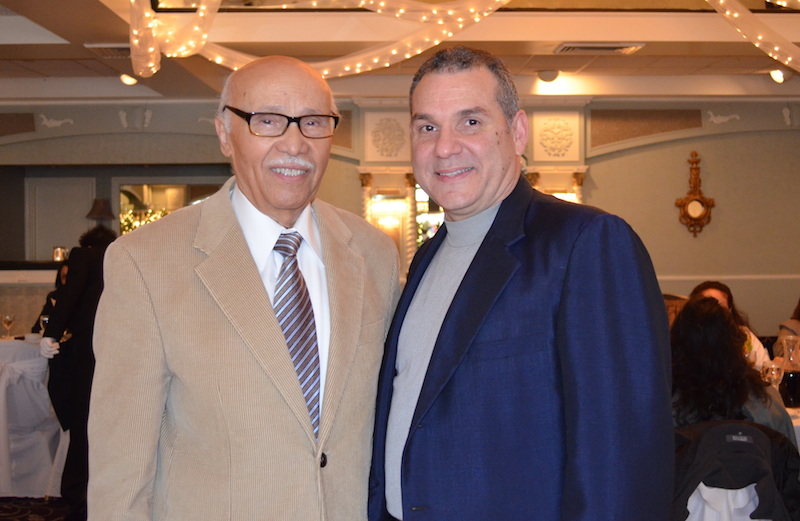
One of life’s most painful events is saying good-bye to a loved one or a dear friend. This summer I received a distressing call from my sister Sandy. Our beloved uncle and mentor, Rev. Dr. Adolfo Carrion, was taken to the emergency room with severe abdominal pain.

We would learn later that he was diagnosed with stage 4 pancreatic cancer.

Processing my feelings about this prognosis, I began to ponder his life, ministry and impact on me. I flashed back to a memory of a black-and-white photograph of my first birthday.

Pablo Diaz with his uncle, the Rev. Dr. Aldofo CarrionI was standing in front of a birthday cake with a single candle. There standing behind me was my uncle, with his hand placed on my shoulder. I know he was praying for me, asking the Lord for a blessing over my life.
Memories flooded in about my teenage years. I recalled all the times my uncle would take his son Adolfo, my cousin Felix, and myself out for breakfast just to chat.

Although we were adolescents, he treated us with great respect. His words of affirmation touched our lives.

He had the ability to help young leaders discover their calling, to realize their potential and believe in themselves. When I was 21 years old, he gave me my first pastor’s assignment.

It was a small congregation in Brooklyn, NY. Dr. Carrion said to me, “Pablo this church assignment will be good for you to gain vital ministerial experience.” He was right, I was ready.

Weeks following the diagnosis, family and friends gathered to visit. I remember my initial shock at his physically weakened demeanor. It was such a contrast to the robust man I knew from the pulpit and our family gatherings.

Yet his spirit remained comforting as he offered blessing and words of encouragement to all who came to see him. My uncle was vibrant and alive, his mind as sharp as ever. His smile unchanged.

The last time I was with him I didn’t want to leave his presence. I wanted to remain at the feet of this “giant.” Two months after the diagnosis, the Lord called him home.

Early on, Rev. Dr. Carrion surrendered his life to God, answering the call to be a minister and spending a lifetime expanding the Kingdom of God. In June 2014 at the Assemblies of God Centennial Celebration in Orlando, he was honored as one of the 100 inspirational stories featured from the last 100 years.

Dr. Carrion was a giant in his faith, as a man and a leader. I had the honor and privilege to run alongside him. Who is your giant in faith, in life? What words or lessons have they taught you? Tell me about how their life has inspired you to be a better person.

There is a proverb that states “Let another praise you, and not your mouth; someone else, and not your own lips.”

Running on Faith

In the spring of 1982 I was 25 years old, with a newly acquired master’s degree in social work, and sharing a New York City apartment with my twin sister, Laura. Times being what they were, I was out of work. And I was 25 pounds overweight. So, when I wasn’t out looking for a job, I busied myself doing sit-ups in an effort to lose weight. And, because I needed spiritual strength as well, I began reading the Bible.

And then the strangest thing happened. One day I was sitting on the living room floor doing sit-ups, huffing and puffing like a steam engine, when a singular thought drifted through my mind…a thought so unusual it couldn’t have been my own…a thought that grabbed my attention and held it like one of those messages being pulled across the sky by an old-time biplane: Run the New York City Marathon.

The thought at first excited me, but it was so ludicrous that I laughed out loud. You see, my sister and I were both born with cerebral palsy. We have what is called mild spastic partial paralysis of our legs, and to get around, we depend on our “Canadian canes,” aluminum crutches that attach to our forearms.

As the days passed, however, the thought wouldn’t leave me. I kept wondering: Was it possible?

When I told Laura about the thought, she didn’t seem to think the idea was so ridiculous. “I don’t know about any marathon,” she said in her quiet, matter-of-fact way, “but you do have a lot of time on your hands. And you do want to get in shape. Maybe you could try jogging.”

That did it. Running the marathon was an impossible goal, a goal that would take a miracle to accomplish, but that appealed to me. The New York City Marathon was six months away. I would do everything I could to run it.

Back then the only way to run in the New York City Marathon, if you weren’t a nationally recognized runner with a preexisting qualifying time, was to apply early or enter a lottery. I’d already missed the early filing deadline, so I had to go into the lottery. When I filled out the application form, there was no box to check for “disabled.” I simply completed the form like an able-bodied person and dropped it in the mailbox with a prayer.

I didn’t tell many people about my plans, just Laura, my mom and a few close friends. I was too shy—embarrassed, really—to talk about it. What if I failed? Could I finish even part of the 26-mile, 385-yard race?

When I started training, my pace was so slow, about 25 minutes per mile, that I found myself doing a lot of running at night. About three times a week, often after a long day of job hunting, I grabbed my crutches and set out from our apartment on East 39th Street. I headed north, up Fifth Avenue—past Trump Tower and Tiffany’s, past the Plaza Hotel, and up alongside Central Park, where uniformed doormen stood guard in front of the city’s most elegant apartment buildings. As weeks passed, I became a familiar sight, hurrying by on my crutches; doormen tipped their hats as I passed and some called out words of encouragement.

As I grew stronger, my runs grew longer, taking me farther up Fifth Avenue, past the Metropolitan Museum of Art, and all the way up to Mount Sinai Medical Center on 100th Street, where I turned around and headed back home the same way. Many times it was past midnight when I finally returned home, where Laura would be waiting up for me with my favorite dish, a big plate of spaghetti.

In the weeks that followed, I found there was something about running at night that invited a contemplative mood. The city around me faded away; I talked to God and listened for his response. As I planted both rubber tips of my crutches on the pavement ahead, leaned into the darkness and pulled my unwilling legs toward the seemingly impossible goal of 3 miles…9 miles…12 miles…16 miles…it occurred to me that running in the dark was a lot like faith. “Faith,” it says in the Bible, “is the assurance of things hoped for, the conviction of things not seen.”

Not that faith was darkness. The darkness was the myopia of my limited human vision, the shortsightedness of my dreams, my inability to see beyond difficult circumstances, whether unemployment, unwanted pounds or a physical disability. But faith was the running—running with conviction, full-steam ahead—into the darkness. Faith was running in the dark with the assurance that God, who held my destination in his hand, would see me through the journey safely. All he asked of me was to trust him. And to keep on running.

Incredibly, at the end of the summer I received a notice in the mail informing me that I had been selected in the lottery and was among the 16,000 who entered the marathon. I was going to run!

On Sunday morning, October 24, I stood at the base of the Verrazano-Narrows Bridge on Staten Island, the starting point of the race. I wore leather gloves to prevent my palms from getting blisters from the friction of the crutches, and I carried a small canteen of water and a pocketful of vanilla fudge caramels for extra energy. My family and some friends agreed to meet me at the marathon’s 15-mile mark—if I made it that far.

Grouped among the slower runners at the rear of the crowd, I didn’t even hear the starting gun. And suddenly I was caught in the throng of runners moving across the mile-long bridge leading to Brooklyn. No one had told me the bridge was uphill, and the early morning wind was cold and hard. When I came off the bridge, I was already tired. And totally alone. The other runners were out of sight.

Most of the crowd of spectators had gone too, and city workers were beginning to disassemble the police barricades. Ahead, down the middle of the street as far as I could see, stretched the thin blue line painted to mark the marathon route—a route that promised to take runners through all five of New York City’s boroughs, ending at the finish line in Central Park.

I’ve always loved the energy and vitality of Manhattan—but now, for the first time, I found myself running through New York neighborhoods I’d only read about. It’s often said that New Yorkers are a hard, tough breed who don’t care about other people. But the New Yorkers I encountered that day were a big-hearted lot whose support and encouragement brought tears to my eyes.

There was the pretty little blonde girl in Brooklyn who pulled away from her parents and ran out in the middle of the street to say, “You can do it!” And there was the group standing on the sidewalk outside a tavern in Queens who applauded and cheered and shouted, “Keep going!”

Because I was so slow, by the time I reached official water stations they had been dismantled. In the more dangerous neighborhoods, people offered to walk with me as I ran, taking my canteen and refilling it with water.

But as the afternoon wore on, I began to worry. The streets had all been reopened to traffic, and I was running alone on the sidewalk. What would I do when it got dark, and I could no longer see the blue line? I had a terrible sense of direction…who knows where I might wind up?

And then, at mile 10, a small miracle happened. An ABC camera crew showed up out of nowhere and asked if they could accompany me. Thanks to their presence I no longer had to worry about getting lost.

At mile 13, Laura, Mom and two friends came looking for me in a car. “I’m okay,” I reassured them.

At the 20-mile point, exhaustion began to set in. My hands ached, and my forearms, which I hadn’t thought to protect, were black and blue and swollen. I’d worn a hole in one of my sneakers. The pain and fatigue got so bad that I couldn’t talk, but I kept praying: I can do all things…I can do all things…

By the time we reached Central Park, I’d been running for more than 10 hours. Two more miles and it would all be over. The park was dark and empty. At regular intervals, old-fashioned streetlamps cast a ghostly glow on my path.

Suddenly, two Parks and Recreation trucks appeared—one behind me and one in front of me—sending their spotlights into the darkness to light my way.

Up ahead, the finish line was being dismantled. But the official time clock was still running: 11:00:57. Finished!

Someone was putting me in a wheelchair and wrapping a paper-thin, silvery Mylar sheet around me. People were crying—even the ABC camera crew—and I began to cry too. Thank you, Lord, was all I could think. Thank you. Without you, this never could have happened.

The next morning I was shocked to learn I’d been invited to join Alberto Salazar and Grete Waitz, the winners of that year’s marathon, at the White House to be congratulated by President Reagan. It turned out that I was the first woman ever to finish the marathon on crutches.

An unexpected crush of publicity followed; my picture was on the front page of the New York Times, and it seemed the phone would never stop ringing with requests for interviews. Over and over again, I heard myself described as “Linda Down, brave athlete.”

Brave? Athlete? Those terms seemed so outlandish to me. And yet, the fact of the matter was that, even with a disabled body, I was able to do something far beyond anything I had ever imagined because I trusted God and took him at his word.

Room to Grow

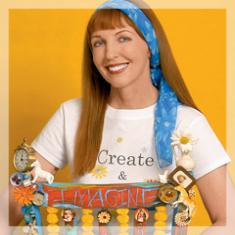
For years I’ve worked as an interior designer. My designs have appeared in magazines, newspaper articles, on TV. But here’s a secret I rarely tell. I got my start in a trailer on the wrong side of the tracks!

It all began with a chair. I saw it on my way home from the Quik Mart, where I’d replenished my stash of cupcakes, soda and chips. Someone had put it out with the trash, and something made me stop.

Community Newsletter

Get More Inspiration Delivered to Your Inbox


I couldn’t believe the stuff people had thrown away. Maybe it was because my husband and I were newlyweds and we didn’t have a thing. We could barely afford the trailer where I spent most of my time languishing on the couch, alone and depressed. Maybe it was because I felt a little discarded myself in those days.

There was a time when I had big plans. I loved to draw and paint and make collages that shimmered with glitter. The more I created the more I believed in myself. I was going to be someone special.

But af­ter one hard semester of college classes I lost all confidence. My teach­ers didn’t real­ly like what I did and my classmates ridi­culed me. I dropped out, got married. My husband got a job as a security guard and we moved into the trailer.

I had no self-esteem left or even a will to live. I’d sleep most of the day, watch TV and eat. The hardest thing was to get off of that sofa and walk to the Quik Mart. That effort alone was exhausting.

Then came that day when I saw the chair sitting next to a pile of junk. I walked over and picked it up. One leg was loose, the fabric seat tattered and dirty with scribbling on it. The paint was chipped and the back scratched. And yet, something made me want to sit down and try it. Still works, I thought. In fact, it was surprisingly comfortable for an old chair. What a waste to throw it away.

“Tell you what,” I said to the chair. “I’ll take you home and find something to do with you.” Maybe I felt sorry for it—it looked so much like how I felt. Or maybe it reminded me of the chairs I used to sit in for hours when I worked on art projects as a girl, cut­ting paper, gluing glitter, drawing horses. I put that chair under one arm, took it home and parked it on our little front porch. There it sat.

One day I was watching the rerun of a come­dy I couldn’t find funny. I don’t want to be like this anymore, I thought. I’ve got to do something. I couldn’t bear spending one more minute on that sofa.

Then I looked out the window. The sun had slipped out from behind a cloud and a few shafts of light found that old chair. Nothing had changed about it. It was still battered and chipped with a wobbly leg, but it looked different to me. Salvageable. No, even better than that. Why couldn’t I paint it or decorate it with fringe? And the fabric…well, I could put something new on the seat. The wobbly leg would be easy to fix with a bit of glue and maybe some wire.

I got up, turned off the TV and started to work. Newfound energy surged through me. I felt like I did when I drew pictures as a girl. It was fun. I hunted for glue and wire. Instead of making another dash to the Quik Mart, I went to the thrift store for fabric and paint.

For days I worked on that chair, redoing the seat, putting on several coats of paint. All the while the dreams and plans I’d abandoned for my life came tumbling back. You could go back to school, get a degree. You could learn about redoing chairs and sofas, even whole rooms.

Maybe I could be an interior designer and help people remake their homes. I looked around the trailer and started seeing all the projects I could do. New curtains. New pillows. New paint for the walls. It wouldn’t be hard or expensive. The thrift store had all the stuff I needed. It just took a little imagination and time.

The finished chair was only a beginning. I redecorated the trailer and invited my neighbors to see it. “How did you figure out how to do this?” one asked. “You must have paid someone a lot of money.”

“I did it myself,” I said. The ideas were just waiting for me to stumble over them, the way I almost tripped over that old chair.It might sound crazy to you, but I believe God used that old chair to help heal me and give me a new purpose in life.

I did indeed go back to school and get a degree. I started my own business and I’ve helped hun­dreds of people remake their rooms as they remake their lives. I especially love to give inspiration to kids. I tell them that creativity is something God gives all of us. Sometimes all it takes is a little encouragement—and an old chair. 

For Kelee’s tips on nurturing creativity in children, read 5 Ways to Inspire Your Kids.

Reflecting on Martin Luther King Jr.’s ‘Beloved Community’

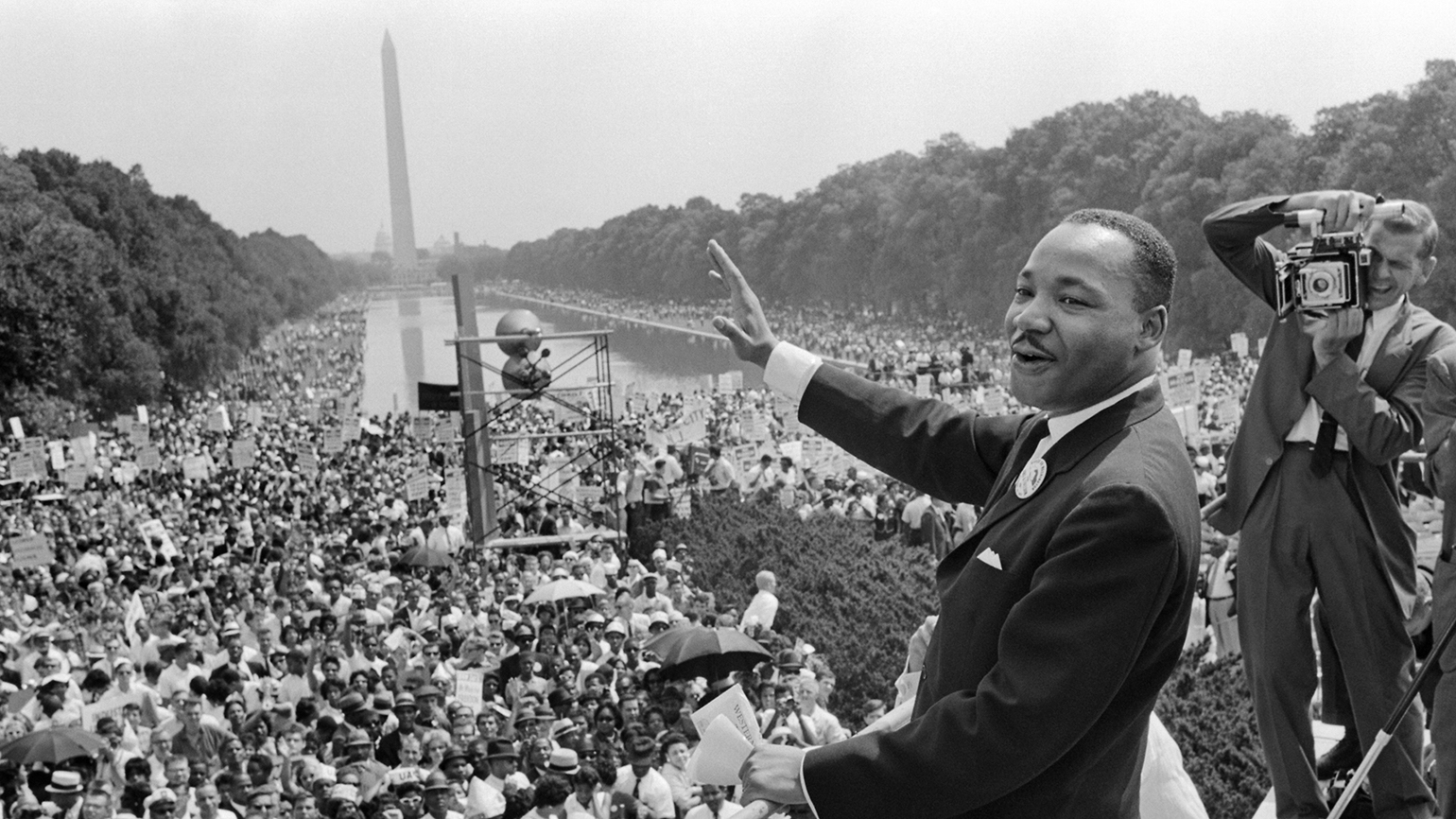
When the U.S. Supreme Court ruled in favor of ending segregation on Montgomery, Alabama’s buses in 1956, the Rev. Dr. Martin Luther King, Jr. described the goal of the boycotts he had led to advocate for desegregation. At a victory rally, he said, “The end is reconciliation; the end is redemption; the end is the creation of the Beloved Community. It is this type of spirit and this type of love that can transform opponents into friends. It is this type of understanding goodwill that will transform the deep gloom of the old age into the exuberant gladness of the new age. It is this love which will bring about miracles in the hearts of men.”

According to The King Center, King was not the first to use the term “Beloved Community” to describe the ideal to which we should aspire. The term was coined by the philosopher-theologian Josiah Royce, to whose interfaith peace organization the Fellowship of Reconciliation King later belonged.

Reflecting in these fraught times on the history of the visionary ideal of “Beloved Community,” I am struck by how King didn’t pretend conflict would be absent in a just society. Instead, he recognized that conflict is part of the human experience. In a Beloved Community, he said again and again, we respond to conflict with nonviolent action. Unafraid to disagree—particularly in the face of injustice—and with full acknowledgement of the dignity of all human beings, we can reconcile, evolve and come together without violence or explosive division.

“Justice,” said King, is indivisible. And honest, respectful love can bring about nothing short of “miracles” in our hearts.

What does “Beloved Community” mean to you? Where do you see opportunities to move toward King’s ideal in your life?

Pray for Self-Control

I sometimes pray my way through the list of “fruit of the Spirit” that Paul enumerates in his letter to the Galatians. I run through the words in my head, thanking God for “love, joy, peace, patience, kindness, goodness, faithfulness, gentleness and…”

That last one often trips me up. I can’t find it. I count them off on my fingers, my eyes closed, and know there’s one more. There should be nine. Which one did I forget? I scrounge around, prayerfully, mentally, and finally, yes, I find it. Self-control.

It just never seems to fit the list. Self-control, a fruit of the Spirit? Isn’t self-control something I do on my own? Isn’t it something I can get credit for achieving? Just the word “self” suggests it’s something I do by gritting my teeth, winning my own little victories.

Read More: How to Turn Your Goals Into Habits

On the contrary, Paul is telling me. Self-control comes from the Spirit. Sure you can congratulate yourself all you want for incredible self-discipline: for not taking that extra cupcake or for running a few miles every morning or working out at the gym.

But what if that daily discipline, like prayer, really comes as a gift not achievement? What if the self-control that enables you not to lash out at disappointments, not to harangue other drivers from behind the wheel, not to disrupt the world with angry outbursts, is God-given?

Jesus promised his followers that on His departure from this earth, His ascension, that He would not leave us comfortless. He would give us the Spirit. And Paul, who knew Jesus only after His death and Resurrection, often emphasizes the sublime power of the Spirit and its constant presence.

So try this. Next time you’re struggling overcome some bad habit or take on a new good habit, think of self-control as a gift, something that Spirit is longing to give you. Instead of gritting your teeth, fighting for some self-discipline, try closing your eyes.

When I think about the Spirit-filled people I admire, self-control is indeed one of their hallmarks. They don’t mouth off–the way I do–or blow up. They keep counsel with themselves as they keep counsel with God.

It’s just as Paul puts it. Self-control is a benefit, not something we necessarily have to aspire to or even work at, but something that comes as we seek the higher gifts like “faith, hope and love,” virtues Paul enumerates in another one of his letters.

Like I say, I like to pray through that list in my head. “Love, joy, peace, patience, kindness, goodness, faithfulness, gentleness and self-control.” I thank God for all those gifts, especially that last one, self-control.

Sure, I work at it. But at its best, it comes to me outside of my hard work. It’s a gift, fruit of the Spirit.

Positive Thinker: Chrissy Metz, Actress, Singer, Author

The best advice you’ve ever gotten
What someone says or thinks about you is not your business. Everyone’s perception is their own reality. The way someone looks at a tree, for example, is formed by their previous experiences. Only you know what makes you happy and fulfilled. There is no point in seeking the approval of others.

The hardest thing you’ve ever done
Learning to take care of myself mentally, emotionally, physically and spiritually. It is a daily practice, with life on life’s terms. Healing is not linear, and we are constantly faced with the lessons we need to learn most. We do this all while trying to maintain balance between what we need and what no longer serves us. We are learning in real time and making adjustments accordingly. Not easy, but worth it!

Your real-life hero
Everyone who fights for another day. We are all going through something. The courage to continue to rise above, learn from your tragedies and allow them to become your triumphs is awe-inspiring.

The occupation you’d pursue if not your current one
Psychologist/therapist. I have always wanted to help people understand the why and how in a healing environment. I believe everything starts in the mind and it can be used for good, once the soil is treated properly.

One thing you do for your spiritual well-being
Pray and meditate. Prayer is when you ask for what you want, and when you meditate you get the answers.

Go-to place to pray or meditate
Anywhere at any time. I maintain constant contact with my higher power, no matter what. I don’t think you have to wait until you’re sitting in the perfect seat or in total silence to focus on the connection, show gratitude or ask for help.

Favorite prayer or Bible verse
The St. Francis Prayer is such a blueprint for living. [“Lord, make me an instrument of your peace: where there is hatred, let me sow love; where there is injury, pardon; where there is doubt, faith; where there is despair, hope; where there is darkness, light; where there is sadness, joy.”] When we are grateful for what we have, we receive more. Whatever we give, we receive in return. Imagine if we all did that, we would all be taken care of. I truly believe this prayer is so healing.

Early riser or night owl?
Both! Depends on my work schedule.

Favorite comfort food
French fries. I can’t even explain the obsession. I have to try them, no matter where I go, and I am particular. They can’t be too crunchy, salty or skinny.

What’s at the top of your playlist
“Heart Like a Truck,” by Lainey Wilson. I really relate to this one, not that I don’t love all of her music, but I do feel like this line really sums me up: “A little bit of love is all that it’s needing. But it’s good as it is tough. I got a heart like a truck.”

One detail about you that people would find surprising
I am really just so normal. Not a fancy gal at all. I enjoy spending weekends at home. I don’t love dressing up and don’t like wearing shoes.

 What inspired you to write a book for children
I taught preschool and have nine nieces and nephews. I have always understood the value of being heard and loved. That starts early with fostering confidence and self-love. It creates the foundation in which children walk through this world. My partner, Bradley, and I wanted to connect the dots in our book between the foundation of self and a relationship with a higher power.

The children’s book, When I Talk to God, I Talk About You, by Chrissy Metz and Bradley Collins releases February 14, 2023, and is available wherever books are sold.

For more inspiring stories, subscribe to Guideposts magazine.

Positive Thinker: Carrie Ann Inaba, ‘Dancing with the Stars’ Judge, TV Host

The best advice you’ve ever gotten

I’ve been fortunate to have known and met wise and wonderful people on my journey who have given me great gems of advice. I’m so grateful for that. One that has always stood out to me, I received from an incredible woman who did bodywork, when I was in my twenties. I was a Fly Girl at the time, and there was a lot of pressure and focus on our looks and physical appearance.

I can’t remember the exact words, but this was what I took away from it: As we age, our beauty will have less and less to do with the quality of our physical appearance and everything to do with the quality of life we lead. The light in our eyes, which represents the light in our hearts, will become the true source of our beauty. So, at an early age, I took the pressure off myself to look beautiful but rather to become a beautiful person. This is always my quest, to be a good person.

The hardest thing you’ve ever done

Making the choice to leave The Talk after only three seasons. It was just last year. And we were in the middle of the pandemic. Like many people, I had to reevaluate my life and my priorities. I was dealing with a lot of health problems at the time: lupus, Sjögren’s Syndrome, fibromyalgia, Lyme disease, anxiety, depression.

On top of it all, I had quite a bad case of Covid and then long Covid, which exacerbated everything to a breaking point. I still haven’t regained my sense of smell completely, and it’s been a year and a half. It was a very difficult time for all of us, and my body shut down. I couldn’t feel my hands or my arms and couldn’t walk very well, and I was in constant and excruciating pain. But that was a gift.

I have always believed that when difficult things happen in our lives, that is God helping us. We are being offered opportunities to make our lives better, to learn, to grow and to evolve.

And so even though it was scary to leave the job security and the family I cared about at The Talk, not to mention the job I was proud to go to every day, I was being called to change my path and I knew it. These were not things I could ignore.

A year later, I’m healthier than I’ve been in years. I have had the blessings of meeting incredible doctors and healers and wise beings who have helped me. I have rediscovered myself and what works for me and keeps me healthy and happy. So, while it was difficult, I also don’t regret a moment of this journey. I trust that even the most difficult moments are because God is helping us toward a more fulfilling life.

Your real-life hero

This is an interesting question for me. I don’t really have any real-life heroes. For me, life is about finding the hero within ourselves. Even with my faith in God, I believe we have to show up in life and do the work to grow into our best self.

I love the process of life, trying to figure out what we are supposed to do at each turn, knowing every choice unveils a different path and wondering which choice is for the higher good. This is what makes life so interesting and exciting for me. Life is a magical series of choices and actions set under the guidance of a loving and benevolent Heavenly Father.

I also believe that I not only need to be the hero in my own story but am tasked with helping others discover their own hero within. When you muster up what it takes to be your own hero, you find your own courage and your unique gifts and you stand up for yourself and others in need, which in turn gives you the gift of self-love and self-respect. It’s good to find the hero within.

The occupation you’d pursue if not your current one

There are so many other things I want to do in life. I love building things and organizing things in space, so I would love to be an interior designer. I enjoy creating spaces and things that help people feel good.

My purpose in life is centered around creativity and helping people find what works for them, what makes them happy. That has been a challenge for me in my own life so I like to help others who may be struggling. That’s why I started Carrie Ann Conversations. It’s hard to describe what it is, because it’s just me doing what I love.

I did a season of my digital series on Instagram and on YouTube and interviewed all the experts and doctors (including Dr. Daniel Amen and The Medical Medium) who helped me heal, along with a few celebrities who have had experience in going from being unwell to wellness (like Cheryl Burke, Fran Drescher).

I know not everyone has access, so I wanted to share what I learned through my deep dive into healing. We also write articles to help people who might be struggling with life. We offer simple solutions that could help make life just a bit better. At carrieannconversations.com, we encourage conversations and for people to share their own personal stories. I believe that conversations ignite our lives with possibility.

I’ve been seeking wellness my whole life, so there’s a lot to share. In the fall and winter, I will be doing a new season of the digital series and will be turning it into a podcast: Carrie Ann Conversations: The Power of Dance.

 What you do for your spiritual well-being?

Spiritual well-being is a priority for me. I feel peace when I’m around God’s creations. Animals, plants and seeing the miracles in nature help me maintain peace in an ever-changing world.

I like to be in flow with my body as well. When my mind and my body are in flow, I feel more connected to God. Movement is my prayer. My body is able to express things that I sometimes can’t find words for. So when I dance or move or stretch, I feel connected to my spiritual truth.

Go-to place to pray

My favorite place to pray is in the pool at night. As I said, I love to move. Movement is my prayer. It’s even more incredible when I am in the water moving and surrounded by water and the night skies. I swim and I feel like I can speak freely with God. There are no distractions. Even thinking about that makes me feel peace in my heart.

Favorite Bible verse

“For we live by faith, not by sight” (2 Corinthians 5:7). I love this Bible verse because most of life is all about faith. We can’t always see the most important things, and this verse reminds us of that. I think this resonates with many artists because a lot of life as a creative being has to do with having an idea or a thought and then trusting and having faith that it is what you are meant to do. Knowing that there is so much more happening in the world beyond what we can see—that gives me peace and hope.

Early riser or night owl?

I’m both. I go through periods where I go to sleep quite late and wake up around 9 a.m. But I am mostly an early riser. I love the morning. When the orange light of dawn comes through my window is my favorite moment of the day. It’s incredibly magical and fills me with awe and hope for the day ahead.

What’s at the top of your playlist?

I love house music. I love that tempo. Tropical house music. I listen to any playlist I can get my hands on.

One detail about you that people would find surprising

I think there is so much about me that people don’t know. People think I’m a dance judge. But that’s not who I am. That’s the job I do to support my life. It’s an awesome job, but there’s much more to me than that.

I think people would be surprised at how often I move around furniture in my home. I’m always moving furniture. [laughs] It’s the choreographer’s creative spirit that will never leave me.

I also think people don’t know that I am naturally quite shy. I prefer to be in my head, and I love to learn and ponder things. So I am okay with solitude because I don’t feel alone. I like to play piano. I write music. I paint. I build furniture. And I am always writing. One day soon, I will finish the book I’ve been working on.

Why do you think viewers connect so much with Dancing With the Stars?

Dancing with the Stars is such a special show, and I’m honored I get to be a part of it even now, after 30 seasons. I believe that people connect with it because it represents and always will represent life and transformation. I think we can all respect someone who tries something new after having success in a particular area of life. It’s daring and inspiring.

Many people want to try something new and never do it. Watching the stars and contestants learn to dance is powerful. It is also fun and entertaining. Our show combines elements of the classic Hollywood musical (which the world needs right now), incredible soundtracks and stunning live event productions, not to mention some of our most beloved Disney tributes.

And that is all in addition to fantastically choreographed ballroom and Latin dances that can take your breath away…or not…which is also relatable. It’s a wonderful show that came on the scene and provided something for everyone. At its core, I believe it’s entertainment and inspiration. And this may be my own bias as a dancer, but I believe everyone loves the language of dance. Oh…and the glitter. [laughs]. Everyone loves the glitter.

Favorite moments from Dancing With the Stars

I have a few favorite moments. After 30 seasons, I can’t choose just one. I loved choreographing and creative directing the paso doble for Noah Galloway, who is a military hero and a double amputee. He hadn’t had a breakthrough yet with his partner Sharna Burgess. It was special to work with him and help create a piece that could allow him to feel the full power of performance, a dance that could showcase his real-life courage.

I also loved Derek Hough and Nicole Scherzinger’s quickstep back in 2010 to “Anything Goes.” It didn’t get great scores because they broke some of the rules of quickstep, but as a performance, I absolutely loved it. It stands out as one of my favorite performances of all time. They wore sailor suits and mops, and it was just pure entertainment.

I also loved Iman Shumpert’s Halloween performance with Daniella. It was unlike anything we’ve ever seen before on DWTS. It felt like it ushered in a new chapter of Dancing With the Stars. Daniella really created a masterpiece for Iman, who is our first basketball player to take home the Mirrorball trophy. Last season was so exciting on so many levels for so many reasons. From day one, when we met the cast, I loved the diversity we saw out there, and I am excited to see who they cast for Season 31, as we head to Disney Plus. I bet Disney Night will be extra special this year.

For more inspiring stories, subscribe to Guideposts magazine.

Positive Summer Reading: ‘Gift from the Sea’

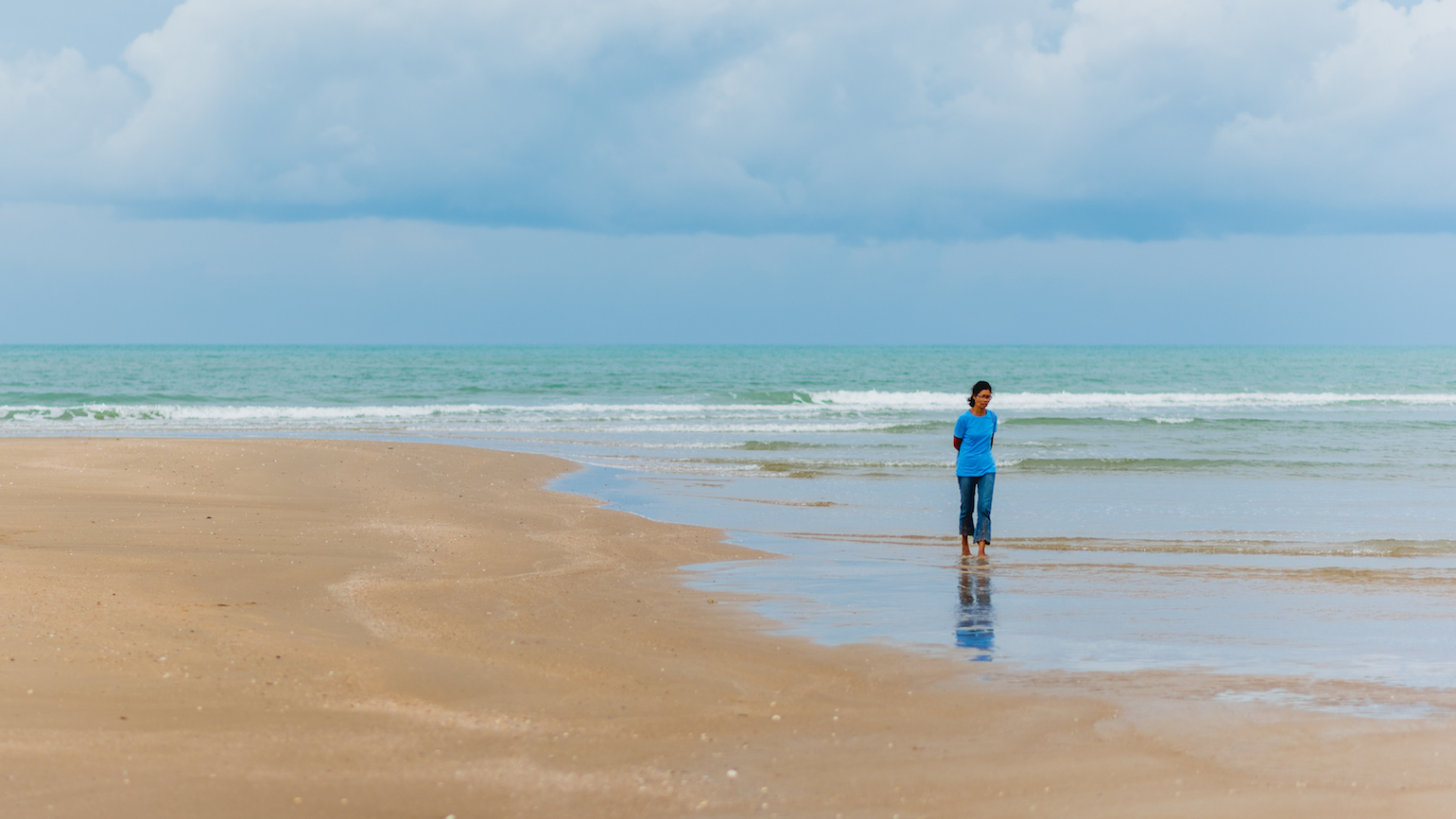
I was in my early 20s when I first read Anne Morrow Lindbergh’s Gift from the Sea, and I was smitten by the depth and care with which she considered and meditated on the details of the shorelines she walked in summertime.

To Lindbergh, the beach is a site of contemplation—not a place to relax with a good book or other activity. Being by the sea was itself the ultimate activity to her—and if done with an open heart and mind, she saw it as an opportunity to ask the right questions of one’s life and maybe even discover some answers.

As she writes in the opening chapter, “Patience, patience, patience, is what the sea teaches. Patience and faith. One should lie empty, open, choiceless as a beach—waiting for a gift from the sea.”

A couple of decades since I first read it, I still pick up Gift from the Sea each summer, and I discover something new, thought-provoking and inspiring within its pages each time I do.

This year, what stood out to me was her reflection on a type of octopus called “Argonauta,” or paper nautilus. These creatures are not attached to their shells, but the females create and then curl inside a shell while cradling their eggs, later releasing their young and moving on to create a new shell. The “dance” of these marvelous creatures, which float from home to home on the tides and ever-changing swirls of the open ocean, are the basis for Lindbergh to reflect on the journey we each take through our days and years. She writes:

“Perhaps this is the most important thing for me to take back from beach-living: simply the memory that each cycle of the tide is valid; each cycle of the wave is valid; each cycle of a relationship is valid. And my shells? I can sweep them all into my pocket. They are only there to remind me that the sea recedes and returns eternally.”

I’m not sure I quite understood—or felt—that passage in my younger years. But this summer, it felt like it was waiting for me when I plucked the book from my shelf. Like all positive books, this one is made to last a lifetime.

Positive Reading List: ‘The Art of the Wasted Day’

Twenty pages into The Art of the Wasted Day, Patricia Hampl makes a “reprimand to self.” She scolds, “You dare to complain about a life rich in tasks and duties and pleasures—rich with meaning?”

Her point is well taken. I can’t count the number of times I’ve complained to a friend, “I’m just so busy—it’s all good stuff, but I’m stressed!” Living a full, meaningful life is a priority and a privilege for me. But too much of a good thing can feel like…too much.

Hampl’s book is a lyrical history of leisure, making the case for why we should spend more time daydreaming, lost in thought, wandering the passageways of our memories, fantasies and imaginations.

Part memoir, part travelogue, the book follows Hampl as she visits the homes of what she calls “historic exemplars of ease,” such as two women who embraced a life of “retirement” in the 18th century, and Michel Montaigne, a medieval figure who is regarded as the inventor of the personal essay, but who Hampl refers to as “the first modern daydreamer.”

Hampl celebrates her full life—“Lucky you,” she says, simply. But she also laments the nagging feeling that the loving relationships, professional successes and travel that populate her days had come at a cost, specifically depriving her mind of opportunities to wander without purpose, expectation or obligation.

She describes this yearning as “the lovely, wasteful vagary of the mind,” and “nostalgia for the lost nothing-moment that turns out to be—well, everything.”

This book crossed my desk right on time, as summer warmly beckons with its backyard barbecues, beach days, lush gardens and…work deadlines, family schedules, grocery lists and a long list of tasks required to maintain said lush garden.

Hampl’s book tugs on my short sleeve to say, “don’t forget to stop doing.” It invites me to forgive myself an un-accomplished task, an ignored weed, a take-out dinner, and find ways to simply be. To stare out a window. At a tree. At the sea. In a hammock. On the sofa.

Wherever I can let go.

Wherever I can say to my mind, “Let’s go.”

Positive Lessons from Late Winter Buds

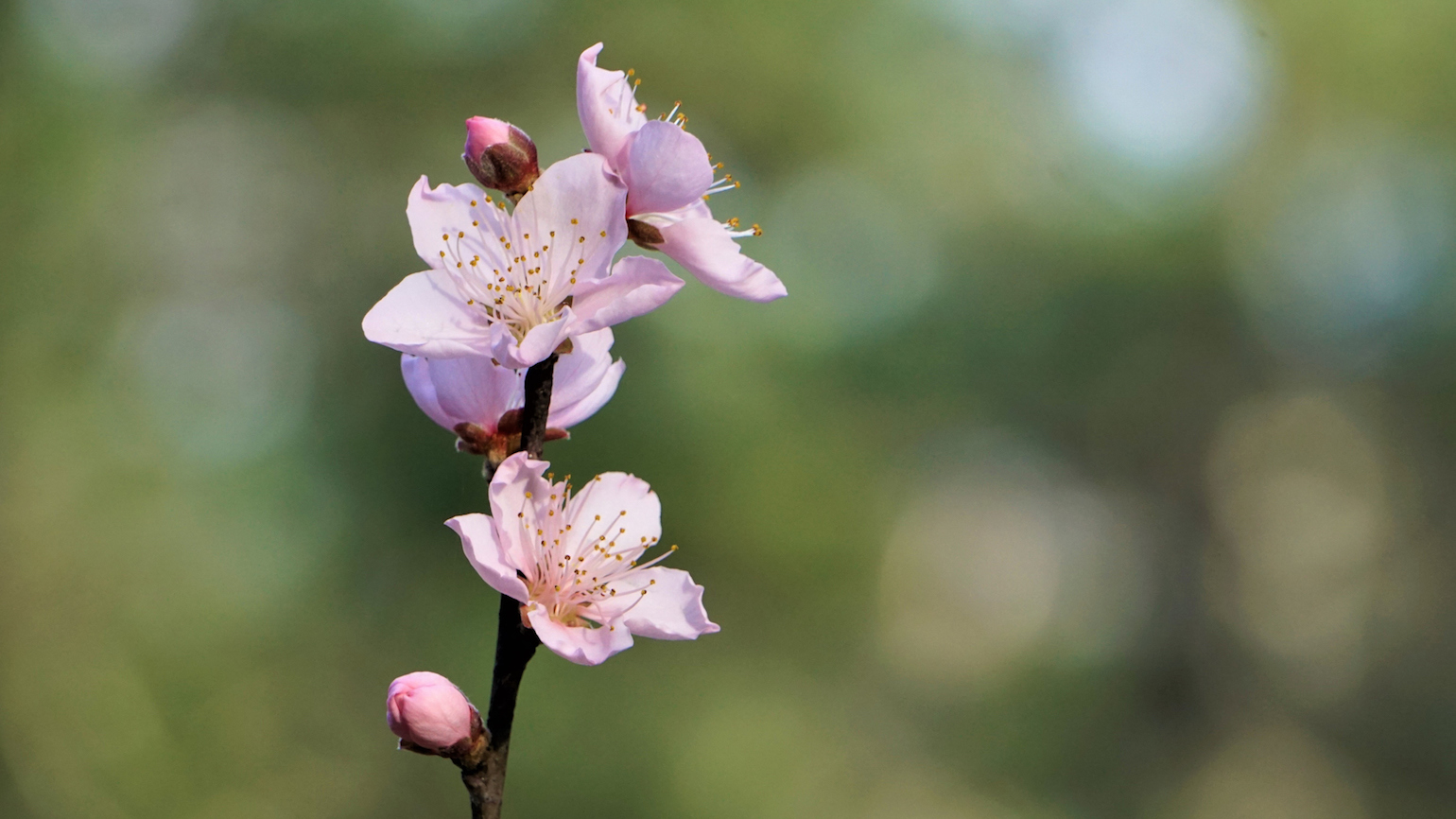
When I first planted a small group of dwarf fruit trees in my side yard, I learned all I could about their annual cycle of dormancy and growth. There is a remarkable intelligence to this pattern, and one of the most inspiring steps is when the trees start to set buds in late winter.

Explained backwards, the sequence goes like this: In order to have fruit, there must be flowers. In order to have flowers, there must be buds. And in order to have buds, there must be a period of deep, cold, restorative rest.

As March thaws out, the trees awaken to continue the work they began at the end of the previous growing season. Tiny bulges in the branches swell into promising buds, fueled by the nourishing flow that surges as the ground releases the roots from their frozen slumber.

Especially if the trees have been well-pruned, they will have ample energy to direct toward those hopeful, potential-rich buds.

I try to take as many positive cues as I can from my fruit trees. In late winter, I like to imagine myself warming, loosening, turning my attention toward new growth and fresh possibilities. It’s not a one-step process. Before a new idea, attitude or project can fruit, it must first flower. And in order to flower, it must first bud.

And before I can set any viable buds, I have to ask myself: what inspires me to emerge from my winter dormancy? What can I thaw in my thoughts, actions and words?

Watching the trees open and awaken as winter nears its end, I remember again that each step any living thing can take toward growth is a gift to be celebrated and embraced. Who knows what fruits will ripen from that slowly swelling bud?

What encourages you to open up to new growth in late winter?

Politics as Usual?

In the wake of the political conventions in Charlotte and Tampa, I got an inquiry today asking if Guideposts takes any political positions and if so, what are they? We take one very strong political position: no politics in Guideposts.

Why? Politics by its very nature is divisive and contentious. Guideposts has always strived to be upbeat and inclusive. It isn’t that our readers don’t have strong and varying political views. They certainly do. But they have let us know that they don’t turn to Guideposts to have those views supported or refuted. In fact, Guideposts is a respite from the vehemence and vitriol of contemporary public debate, which seems to have only gotten meaner in recent years.

We should remember, though, that politics has always been a bit of a blood sport. We tend to hold an idealized, perhaps even deluded view of our founding fathers as agreeable souls, whereas they were often at each others’ throats politically, occasionally trying to throw one another into prison and even resorting to dueling pistols. So I guess nasty political campaigns are nothing new.

Still, I think we expect better of our politicians on both sides. And deserve better. I watched the conventions. I thought Ann Romney and Michelle Obama kept their rhetoric fairly high-toned and dignified (is it time to have first husbands rather than first ladies?). And who wasn’t moved by Gabby Giffords reciting the Pledge of Allegiance? That was one of the moments that transcended partisanship.

Yet now that the campaign has begun in earnest I’m afraid so has the negativity. Which is exactly why Guideposts stays clear of politics. We have people of all political stripes in the magazine but never to discuss their views.

Maybe I’m being naive but I am going to say a prayer that this year’s election campaign is a little less negative and a lot more positive. If you want to join me, hit “like.”