Embrace God's truth with our new book, The Lies that Bind

The Season of Forgiveness

I was just reading over some inspiring quotes for our very popular Up Side feature in Guideposts magazine when I came across one from a reader: “Forgiveness is the greatest expression of love.”

Immediately I thought of an interview I saw this morning on the Web with the mother of one of the three high school students killed this week in Chardon, Ohio, in another senseless school shooting spree.

Phyllis Ferguson was asked by a reporter what she would say to the 17-year-old boy who shot her son, Demetrius, apparently at random in the Chardon High School cafeteria. She replied, “I would tell him I forgive him.” Everything else, she said, was in God’s hands.

video platform video management video solutions video player

Awe and shame. Those were the reactions I had to Phyllis’s response to the reporter’s question. Awe that she can even utter the word forgiveness when she must be feeling the deepest pain a person can know, and shame at what I realize would be an almost impossible thing for me to feel in that situation. I would be consumed with all sorts of feelings but forgiveness would not be one of them.

Yet forgiveness may be the greatest act required of us as spiritual people. And it’s the hardest, at least for me. It’s easy to say I forgive, but to really let go, to move past the anger and hurt, sometimes seems almost impossible.

It is so easy to remain prisoners of bitterness. It is the safe route in the short run. But over time, the failure to forgive can eat our souls alive. True forgiveness takes great courage, and the greater wrong, the more courage it takes to forgive it.

Lent is the season of forgiveness, the 40 days leading up to that greatest act of forgiveness, the redemption of all mankind through the suffering and death of Christ. If there is a central call to action for Christians, it is to forgive. That is the call Phyllis Ferguson is answering so courageously. I am lost in admiration for her.

The quote I started with is true. Only love makes forgiveness possible. Only love overcomes the fear and the hurt. To forgive is to love. Are you a forgiving person? Or do you struggle with it like I do? Share below. And please say a prayer for the people of Chardon, Ohio, especially the families involved in the shooting.

The Real Meaning of Christmas

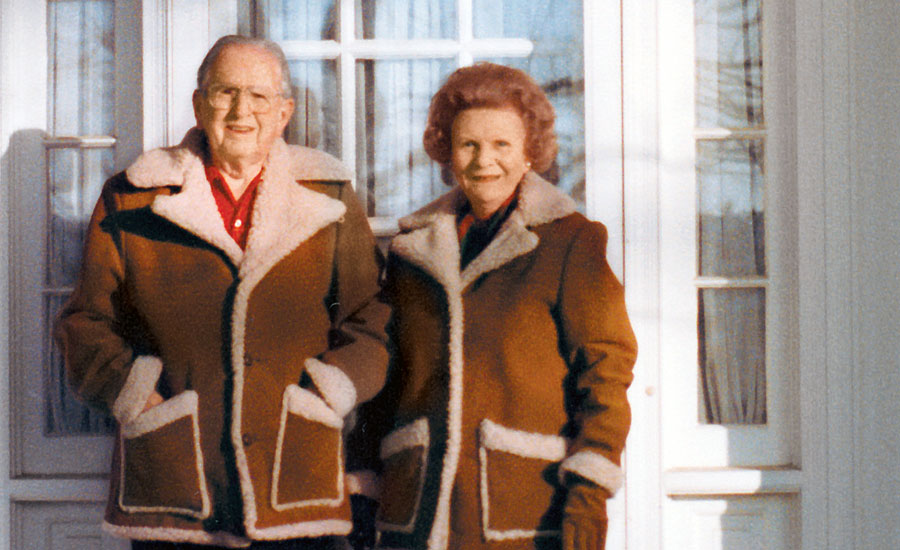
In the early years of my marriage, my husband, Norman, and I used to marvel at the frenetic atmosphere that inevitably took over our house as the holidays approached, no matter how I tried to keep organized and ahead of things.

Of course, with Norman working hard as a minister and the publisher of a fledgling magazine, and me with three children to look after while serving on nonprofit boards and juggling church activities, it wasn’t surprising that the holidays were hurried and chaotic. I imagined that when the two of us were older and the kids were grown, things would be different. Christmas would transform into a time of tranquillity and reflection.

But Norman’s preaching schedule and the little magazine he’d started grew beyond anything we could have imagined. In the weeks before Christmas, Norman would often speak all over the country. Sometimes I had to do my holiday shopping on the road. Meanwhile, the children grew into teenagers, then adults with children of their own.

One Christmas, Norman and I took our extended family—17 in all—on a Christmas trip to the Holy Land. We visited the places Jesus walked and taught 2,000 years before. We spent Christmas Eve in Bethlehem. Did it all run smoothly? Of course not. But it ended up being a trip that stayed with us as a high point of our lives.

Another year, we got the whole family together for a Christmas trip to Africa. We spent Christmas Eve watching elephants and zebras in their natural habitat, and exchanged gifts around a scraggly brown bush decorated with a few scraps of tinsel and red ribbon.

I turned 96 this year, and though I make a point of being at home on Christmas now, that transformation of the holiday into a quiet, unhurried time of peace and reflection still hasn’t happened. As the day approaches, it never fails that there’s one more gift to buy, a train to catch, or a trip to the grocery store to pick up the item everyone can’t believe someone else didn’t think to buy.

Norman loved to tell a story that originally appeared in Guideposts about a missionary-teacher in Africa who received a beautiful seashell from a student. The boy had gone on foot to a distant section of the African coast to get the shell. “You’ve traveled so far to bring me such a wonderful present,” the missionary told him.

“Oh, teacher,” the boy replied, “long walk part of gift.”

There always seemed to be a moment when holiday preparations would get so crazy and complicated that either Norman or I would feel like throwing up our hands. That’s when one of us would stop and say those words: “Long walk part of gift.” Then we’d get back to whatever we had been doing.

The more the last-minute chores, surprise guests, and just-one-more-gift excursions into town piled up, the more we remembered that what seemed like petty distractions from celebrating the season were really nothing of the sort. They were its very heart.

These days, whether it’s gift shopping on the Internet or having presents sent by overnight delivery, there are all kinds of conveniences around that claim to help make the holidays run more smoothly.

Of course, none of them really does that. No matter how careful the planning or how well mapped-out the schedule, Christmas still means last-minute surprises and complications. And unexpected joys. Getting the perfect shell still takes a long walk. Thank heaven.

Did you enjoy this story? Subscribe to Guideposts magazine.

The Quilt of Life

“I’m so sorry, Grandma,” the young man said. “My dog climbed on my bed, and chewed the quilt you made for me. Can you replace the damaged squares?” His grandmother took the quilt in her hands, studied it, and then said, “I’ll repair the damaged squares, but I won’t replace them. Part of what’s special about quilts is their history.”

Sure enough, 20 years later, long after the dog had passed on, the man said, “Grandma was right. When I see my quilt now, with the repaired squares, I remember my beloved dog.”

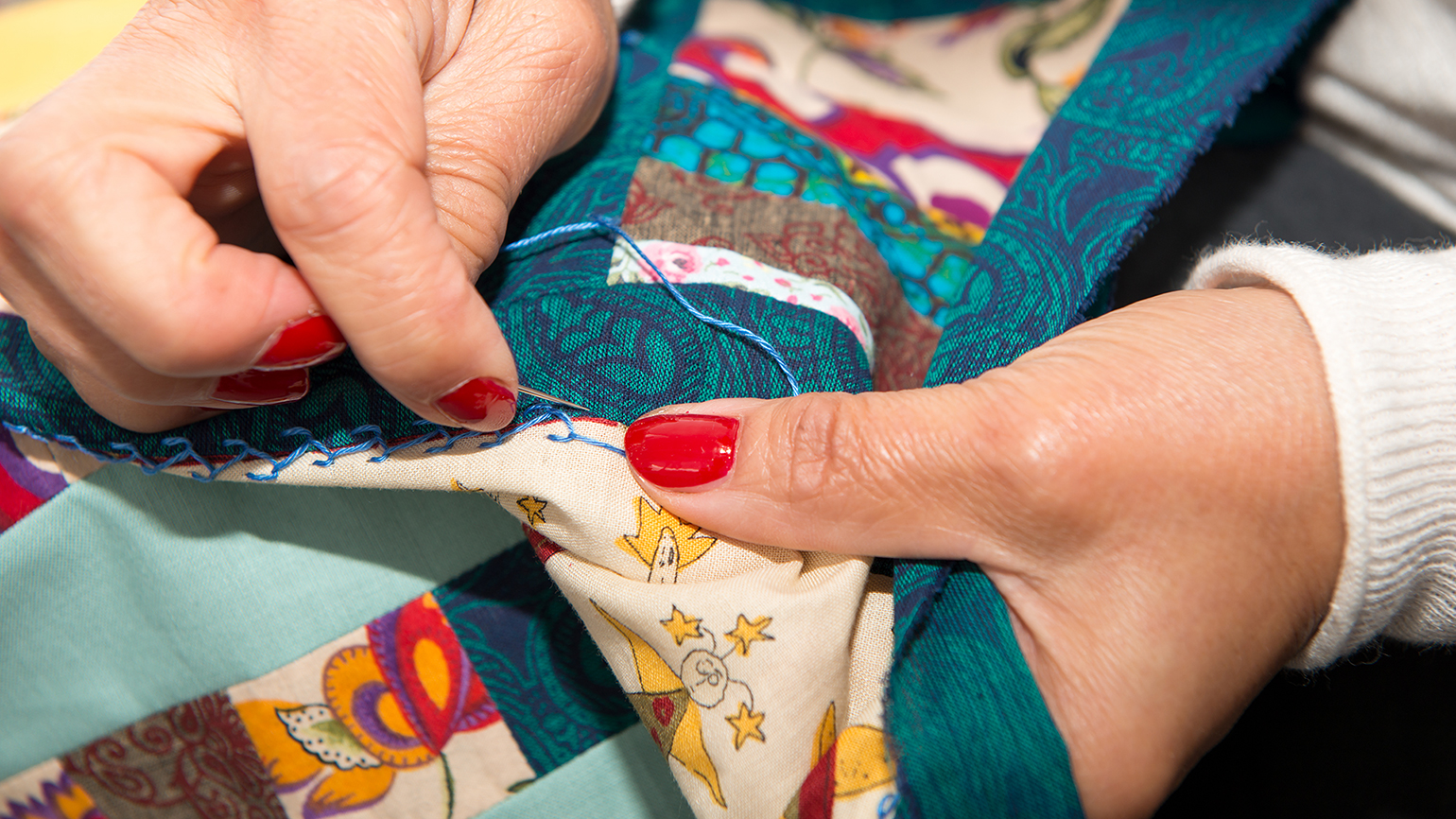
This delightful story was told by Linda Wentzler, Manager of Village Quilts, of the small Amish town of Intercourse, Pennsylvania where Larry and I recently visited with my brother David and sister-in-law Jane. We also met Lorraine Zimmerman, quilting by hand, a lovely, exquisitely-designed quilt.

Lorraine charmed us with her thoughts on the meaning of quilts…not just the art and history of them, but the philosophy of re-using vintage fabrics from clothing of our own and from that of the people we love.

The quilt Grandma Holey made for me brings back warm memories of my childhood. There are squares of checkered pink-and-blue cotton—from the only matching dresses my sister Twila and I ever had…sewed by our mother. There are squares from the flared, lavender, princess-style dress I wore for the graduation concert of my high school choir. And there is the blue dotted Swiss I wore on a date with Larry.

The photos show Larry’s heirloom quilt made by Great-grandmother Burns, and my quilt made by my Grandmother Thena Western Holey. On November 21, the Langhorne Council of the Arts, here in Bucks County, Pennsylvania, is sponsoring a “Gathering of Quilts,” not only to commemorate vintage quilts, like Larry’s and mine, but also exciting, creative, modern-day quilters or the area.

Our grandmothers probably never heard the phrase “Go Green!” but in many ways they were very “green.” In fact, their carbon footprints were so small, by today’s standards, they were microscopic. Our grandmothers bought items sparingly and re-used them whenever and as long as possible. They didn’t use hundreds of plastic bags a year, like most of us, and many probably never heard of Styrofoam.

And fabric? They designed, sewed, used, re-used, and handed-down their own clothing and that of their husbands and children. And when the clothing became ripped or out-dated, they didn’t throw the fabric away. They cut it up, stitched it together, and made quilts from it. Amazing quilts. Soft and comforting quilts. Warm. Practical. Quilts that were works of art (although most people didn’t realize this until decades later).

Hmmmm. I’ve never made a quilt…but I do have some fabric from clothes of my loved ones. Do I have the talent and patience to make a quilt? I’ll admit it. Probably not. But what about a pillow? Yes, I think I could make a pillow. Is there still time before Christmas?

Carol

Feel free to email me your environmental tips and questions!

The Quiet Beauty of Nature in Winter

In a sense, once we pass December 21, the shortest day of the year, each day of winter brings with it a little more light, a little more hope. Viewed another way, though, late December is only the beginning of the cold season, and as such it is a good moment to reflect on how we will sustain our inner warmth and positivity until the ground warms once again.

One way to keep our focus positive is to consider the quiet beauty of nature in winter. It might require some extra layering in our wardrobes and some extra time spent walking carefully without slipping on shiny sidewalks, but it is worth these extra efforts to notice the trees, hills, ponds and sky that keep us inspired the rest of the year, even as they may seem to be hibernating for winter.

The poet Mary Oliver who so vividly captured the awe-inspiring power of nature in her work, offers the image of a flock of starlings leaping from a telephone wire. In her poem “Starling in Winter,” she writes:

“Chunky and noisy,
but with stars in their black feathers,
they spring from the telephone wire
and instantly

they are acrobats
in the freezing wind.
And now, in the theater of air,
they swing over buildings.”

In her trademark way, Oliver captures the minutiae of the natural world, even in a city setting and at a time of year when we might not take the time to notice nature in the same way we seek it out in spring, summer and fall. From there, she reflects inward, doing the positive and powerful work of taking in what nature has to teach us:

“Ah, world, what lessons you prepare for us,
even in the leafless winter,
even in the ashy city.”

The poem ends with a stunning image of the wild beauty of a simple observation:

“I want
to think again of dangerous and noble things.
I want to be light and frolicsome.
I want to be improbable beautiful and afraid of nothing,
as though I had wings.”

What do you notice about how the natural world navigates the cold, quiet winter? What can you learn about how to do the same?

The Power of Thank You

In the spirit of Thanksgiving I’d love to share with you the benefits and power of two simple words. THANK YOU.

They are two words that have the power to transform our health, happiness, athletic performance and success. Research shows that grateful people are happier and more likely to maintain good friendships. A state of gratitude, according to research by the Institute of HeartMath, also improves the heart’s rhythmic functioning, which helps us to reduce stress, think more clearly under pressure and heal physically. It’s actually physiologically impossible to be stressed and thankful at the same time. When you are grateful you flood your body and brain with emotions and endorphins that uplift and energize you rather than the stress hormones that drain you.

Gratitude and appreciation are also essential for a healthy work environment. In fact, the number one reason why people leave their jobs is because they don’t feel appreciated. A simple thank you and a show of appreciation can make all the difference.

Gratitude is like muscle. The more we do with it the stronger it gets. In this spirit here are 4 ways to practice Thanksgiving every day of the year.

1. Daily Thank You Walk
I wrote about this in The Energy Bus. Take a simple 10-minute walk each day and say out loud what you are thankful for. This will set you up for a positive day.

2. Meal Time Thank You’s
On Thanksgiving, or just at dinner with your friends and family, go around the table and have each person, including the kids at the little table, say what they are thankful for.

3. Gratitude Visit
Martin Seligman, Ph.D., the father of positive psychology, suggests that we write a letter expressing our gratitude to someone. Then we visit this person and read them the letter. His research shows that people who do this are measurably happier and less depressed a month later.

4. Thank You at Work
Doug Conant, the CEO of Campbell Soup, has written over 16,000 thank you notes to his employees and energized the company in the process. Energize and engage your co-workers and team by letting them know you are grateful for them and their work. And don’t forget to say thank you to your clients and customers too.

I hope you have a wonderful Thanksgiving. I’m thankful for YOU.

Download your FREE positive thinking ebook!

The Power of Hugs

Did you know that January 21 is National Hug Day? I love hugs—both giving and receiving them.

What is any better than a hug from a child or grandchild? My husband and I went to a movie last week with all of our in-town family, and three-year-old Eden sat on my lap for most of the evening. Near the end of the movie, she put her head on my shoulder. And then I felt her arms slide around my neck in a big bear hug. I felt so loved.

Hugs can be used in a variety of ways. There have been many occasions when someone I love has received a scary health diagnosis or has lost a loved one, and I haven’t known what to say. I’ve found that sometimes a tight hug says it all.

I’ve given hugs during times of joy. I remember when a dear author friend won an unexpected award—one that isn’t usually given to authors of children’s books. At the end of the event, we flung our arms around each other in a giant celebration hug that was accompanied with squeals of excitement.

As a mom, I’ve given many hugs during times of fear, often during the middle of the night when one of my sons awoke from a nightmare. Hugs can provide security.

Hugs are often a way to say “thank you” to someone who has blessed you, when mere words don’t seem enough.

Hugs can say, “I’m sorry,” or “I’ve missed you.” They can reflect sadness when you know it will be awhile before you see a loved one again. Watching those hugs from military families as their loved ones leave for deployment always makes me cry.

Hugs can also say, “You’re welcome here.” Macie Bailey was the official hugger at my church. Nobody came through the doors of Trinity Baptist without receiving a hug from that precious elderly lady. It was sometimes comical to see the expressions when Mrs. Macie wrapped her arms around unsuspecting first-time visitors, but they always left with smiles.

And some of the best hugs ever are the ones from heaven when we’re going through difficult times, and then it seems like God just reaches down and wraps His arms of comfort around us.

I’ve been blessed to be the recipient of many hugs, and it makes me sad when I think about folks who don’t get hugs very often. Of course, you don’t ever want to make anyone uncomfortable when dispensing them, but they can provide love, emotional healing, compassion, and joy. And they’re free!

Stop and think about it: How long has it been since your elderly neighbor had a hug? Can you imagine how long it’s been since a homeless person or someone in prison received a hug?

National Hug Day would be a great time for us to be extensions of God’s hands (and His loving arms) to someone who needs to feel love or compassion today. And that’s my challenge for all of us: Who do you know who could use a hug today?

The Positive Power of Trying Something New

I’ve been a gardener for years. I grow vegetables, have a few fruit dwarf fruit trees and putter around with some flowers. It relaxes me, gives me pleasure and feeds both my belly and my spirit.

When I think of myself as a gardener, I don’t think myself an expert or even particularly experienced. Instead, I think of the Japanese term kaizen, which means continuous improvement.

The literal translation of kaizen is “change for the better,” and it is cited in business circles in Japan as well as being used a principle for personal growth. The implication that this type of growth and change is ongoing and perpetual is deeply appealing to me both in the garden and in the rest of my life.

Past a certain age, opportunities to learn new skills feel fewer and farther between. In my garden life, I seek out ways to experience a beginner’s mindset, learning a new skill and getting the opportunity to improve slowly, incrementally but continuously every day.

This year, I’ve stepped up my flower game. Morning glory seeds went into the soil at various points around the house. A climbing mandevilla is winding its way up a hand-painted trellis. And a parade of patio pots hold all my flowering experiments in an ever-shifting array of bloom, dead-heading, water management and—as they grow—relocation.

In my way, I feel I am continuously improving not just my garden but my positive outlook. Kaizen doesn’t mean that we need to be perfect—not to put too fine a point on it, but if we were perfect, then how could we possibly continue to improve? But what it does capture is the goal of positive living, the aim to continue to seek out and strive toward more peace, more love, more joy and more success—however you define that.

What can you approach in your life with this mindset? It could be an entirely new skill, like learning a foreign language or it could be something you’ve been doing for years but are ready to embrace with renewed commitment to continuous, steady, imperfect, satisfying improvement. Even old pastimes becomes new again when you infuse them with this uplifting, forward-looking view.

The Positive Power of Our Everyday Costumes

There are so many memories from childhood that slip away as the years pass. But some that have stuck with me are my Halloween costumes. The sassy power I felt in a bandana and boots when I dressed as a cowgirl. The imaginative pleasure of being Yoda, posing for a photo next to my sister, Oscar the Grouch. And possibly my favorite—the frilly dress I wore with a ghoulish mask the year I went as a Gremlin bride.

Actors and other theater folks often talk about how integral costumes are to the process of becoming a character, inhabiting a role. Halloween costumes, especially for children, are less laden, perhaps, but no less of an invitation to visit another world, another life, for awhile.

“I love costumes,” the actor Alessandro Nivolo is quoted as saying, “I love getting dressed up because it helps my imagination make the leap to believe that I am who I say I am.”

This quote makes me think of something I’ve heard at most Halloween parties I’ve attended as an adult. Someone always comes in regular clothing, saying, “I’m dressed as a grown-up/parent/professional/regular person.”

The comment is a joke meant to deflect their failure to come up with a clever costume idea. But isn’t it also accurate? Don’t we all dress up every day in a costume of sorts? Outside of Halloween season, our costumes typically reflect the identity we want to project into the world—the confidence we hope to imbue, how we hope others will perceive us. At this time of year, we might enjoy trying on a completely different identity—an animal, a fantastical creature, a scary beast—just because it’s fun to take a break from everyday life.

But regardless of what costumes we wear, Nivolo’s words can guide us toward a positive view of what people see when they look at us.

Who do you say you are? With the right costume, your imagination can help you make the leap to believe in that person.

The Positive Power of Celebrating the Sunset

I was lucky enough to be on a Florida beach earlier this year, and one evening, I managed to catch the sunset from the shoreline. It was beautiful—I watched the clouds take on pastel purples and creamy oranges. It was peaceful—the lapping waves and some quiet conversation were the only sounds. And at the moment the sun dipped below the watery horizon, it became inspiring, as the handful of people gathered on the beach broke into spontaneous applause.

It was such a simple gesture, clapping our hands together like that. But tears sprang to my eyes at the surge of happy gratitude I felt connecting the group, family members and strangers alike, all facing westward and celebrating the colorful end of another day of our lives.

The writer Sharon Rene calls the sunset “nature’s farewell kiss for the night.” There is sadness in farewells, of course, but part of the joy of experiencing a sunset is the faith we share in the idea that our parting is temporary. All we need to do is turn around to see sunrise approaching, just hours away.

I reflected that in applauding the sunset, we were praising an occurrence that had nothing whatsoever to do with any human being. The Earth turned. The sun stayed still. Nothing about the form of the day was in our control. Nor was it different from any other, scientifically speaking.

But of course, that day was utterly unique, as was every day before it and every day afterwards. Each day might last the same number of hours, but each day is filled by each of us in different ways. Some of that daily content is up to us—what we ate, what work we completed, what fun we had, how we made a difference to someone else—and some is not. But no day is like any other, and neither is any single sunset.

At the end of each day since that warm Florida sunset, I’ve tried to conjure some version of that feeling of applauding the sunset. After all, the sun sets every day, without fail. So why can’t I be as steadfast in my commitment to looking back over the past 24 hours with gratitude, celebration and positivity?

I can. And so can you.

The Positive Impact of a Thank-You Note

I grew up in a family that believed strongly in the power of the thank-you note. Not only was it considered a necessity of a well-mannered life, I was taught that thank-you notes are acts of completion. A gift is not fully received until the giver has been thanked. An experience is not fully shared until gratitude is expressed to those who made it possible.

It turns out, my family was really onto something. Recent research published in the journal Psychological Science, found that people who receive thank-you notes felt notably happy. In fact, the word “ecstatic” was often checked on the questionnaire study participants filled out after receiving a thank-you note.

This could not be less surprising to those of us who know that expressing gratitude has emotional and even physical health benefits.

But here’s what surprised me about this study—the senders of the thank-you notes predicted that the receivers would score a “3” on the questionnaire’s happiness index. In fact, those who received notes scored between 4 and 5.

The researchers dub their finding “undervaluing gratitude,” and it suggests people feel that thanking someone for a gift, a visit or a kindness is a meaningless chore rather than a profound way to impact someone’s feelings of worth and appreciation.

If thank-you notes intimidate you, don’t fret. A short note—hand-written or emailed—impact receivers deeply if it expresses warmth and genuine gratitude. In fact, the researchers suggested a different name for the task when they were instructing participants what to write. They said, “write a gratitude letter.” The participants did, taking an average of five minutes to finish the job.

If you rethought thank-you notes as “gratitude letters,” would you write more of them? If you knew they were likely to materially affect the happiness of the person on the receiving end of your note, would you sit down and get writing?

And perhaps most important of all, what do you suppose that experience, regularly practiced, might do to your own happiness?

I can’t end this post, dear reader, without thanking you for reading and for joining me on the positive path we are trying each day to walk together.

The Origins of Old Saint Nick

When I was very young, a figure representing Santa Claus held sway at the top of our Christmas tree. Fitting over the tree’s top like a cone, this Santa had a flowing white beard, but his countenance was more dignified than merry. Instead of a cheerful red suit, he wore a robe of pinkish brown with a pointed hood.

“That is not Santa Claus,” I announced to my mother one year, pointing to the top of our tree.

“That Santa was on my tree when I was a little girl and on Gran’s childhood tree before that,” she said. “It’s traditional. We love it.” So much for my rebellion.

More than 70 years have passed since I was a boy. And tradition still holds its own. The solemn Santa continues to reign in his honored spot atop Varner family Christmas trees.

Yet even as I respect it as a treasured family keepsake, I secretly harbor my old suspicions: Who did this robed figure think he was, passing himself off as Santa Claus? I did, that is, until one spring day while on a cruise to the Middle East.

Our ship docked in southern Turkey and I took the opportunity, guidebook in hand, to wander the ancient land. Strolling in the garden of a beautiful 11th-century Byzantine church, I stopped in surprise.

Before me was a life-size statue of a dignified man with a flowing beard, garbed in a hooded robe with a peaked top. Statues of a little boy and girl stood beside him.

He reminded me immediately of our Varner family Santa. But what was this statue? My guidebook enlightened me. I was in St. Nicholas Church and the statue before me was of one Saint Nicholas, who “became the patron saint of children to whom he brings Christmas presents.”

Back home in Manhattan, I did a bit of historical digging. I learned that Saint Nicholas was a fourth-century bishop of Myra, which is now in Turkey, and although few verifiable facts exist about his life, legends abound.

Saint Nicholas was said to have performed miracles (including riding out a terrible storm at sea in his hat), shown great courage in the face of religious persecution, and done good deeds.

Over the ensuing centuries he became one of the most admired of all saints, with churches named for him in Asia, Europe and eventually America.

Nicholas was the patron saint of Russia and the subject of many a medieval play; artists loved to depict him too. His popularity grew even more when in 1087 Italian traders brought what they claimed were his bones to Bari, in southern Italy, and the city became crowded with pilgrims.

Was it a myth that he gave gifts to children? I can only say that some legends become greater than their source—but are nonetheless founded on genuine acts of generosity and good will.

As the decades rolled on, it was inevitable that Nicholas should come to America. He arrived with the Dutch settlers who founded a city they called New Amsterdam. They called him “Sinter-Klass”—Santa Claus—and honored him on his feast day, December 6.

By now he was wearing a bishop’s robe and riding on a donkey, just as he had in the Netherlands, bearing gifts for well-behaved children. When the English took over in 1664 and renamed the city New York, they went back to calling him Saint Nicholas.

In 1809, Washington Irving published Knickerbocker’s History of New York, in which Santa was described as an old man in dark robes on a flying horse. In an 1821 poem called “The Children’s Friend” the horse was supplanted by a reindeer.

But the changes that appealed to me most were wrought by a professor at General Theological Seminary, Clement Moore, who in 1823 dashed off a Christmas poem for his children. A houseguest sent it to a newspaper and when printed it became an overnight sensation.

A Visit From St. Nicholas—“’Twas the night before Christmas … ”—portrayed the Saint Nick I envisioned and was drawn to. Round of belly and full of merriment, his “twinkling eyes” and “cheeks like roses” looked anything but somber.

His sleigh was pulled not by a single reindeer but by eight, who waited patiently chimney-side while the “jolly old elf” made his remarkable descent.

Moore had switched Santa’s appearance from December 6th to the night of the 24th, but it was clear the gift-bearing interloper was still Saint Nicholas. In the 1870s political cartoonist Thomas Nast illustrated his idea of Santa Claus for the pages of the popular magazine Harper’s Weekly —Santa, lolling on a snow-capped chimney smoking a long-stemmed pipe. Nast established Santa’s home at the North Pole and gave him elves to do his manufacturing. As the turn of the century approached, young Virginia O’Hanlon wrote to the New York Sun to ask if there really was a Santa Claus, and the editors answered with a resounding “yes” in an editorial that is still reprinted in Christmas Eve newspapers around the country.

I’ll always be fond of the Santa who is round and red-suited, full of fun and plenty of ho-ho-ho. But now I’m aware of a new dimension to that rollicking holiday figure. At last I feel friendly toward the monk-like Santa at the top of our family tree, and this Christmas I’ll look at the old codger with new and appreciative eyes. What as a child I mistook for dourness was really the saintly piety of his Christian origins showing through. We may have given Saint Nicholas a secular makeover, dressed him up in a bright red suit and transformed his simple kindness into roistering jollity. Yet the gifts he brings down the chimney to good children still echo God’s gift to us of his only son.

Download your FREE ebook, True Inspirational Stories: 9 Real Life Stories of Hope & Faith

For more inspiring stories, subscribe to Guideposts magazine.

The Message of the Woodpecker

Tat a tat tat!

What could be making that racket? It sounded as if someone was banging on a drum outside my kitchen door.

Tat a tat tat!

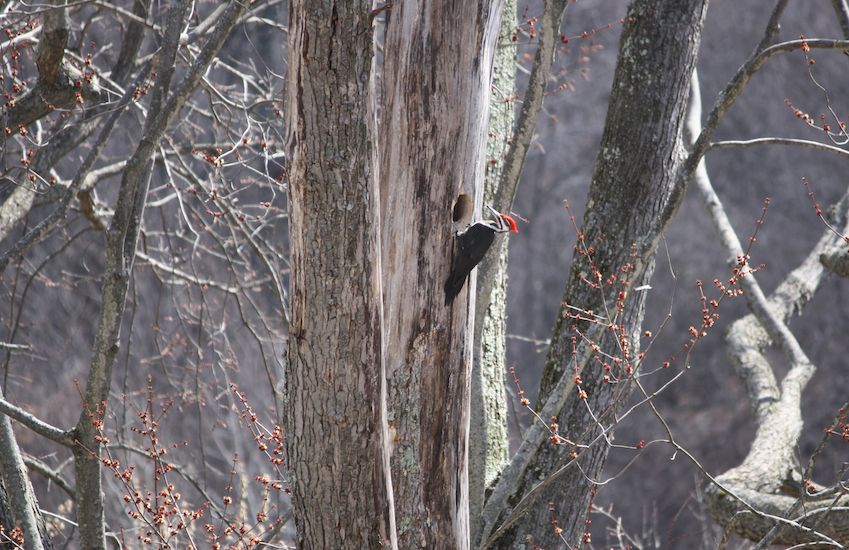
I stepped outside into a brisk spring morning, my gaze following the sharp noise to a decaying 50-foot maple behind our yard. About half way up the tree perched a huge pileated woodpecker, black and white stripes down his scrawny neck, and a bright red crest on top. This was not a bird I saw hanging around every day. This bird stood out.

More than because of his (or her?) appearance, however, the bird stood out because he (let’s just say) was working so industriously. His beak hammered away at the tree trunk, dust and chips flying.

He had already carved a perfect round entrance hole and was diving inside, excavating a cavity for the nest in the dead wood. He worked diligently for hours, and then he was at it again the next day, and the next.

And, as I caught a glimpse of him out the kitchen window, I couldn’t help but feel a bit humbled by his determination, compared to the devotion I put into some of my efforts.

Sometimes I try to do something difficult, only to end up feeling like I’m hitting my head against a brick wall–​or an old dead tree.

How often, then, do I quit? If only I would keep pecking away, I would more likely find success. Anything worth doing is worth putting forth my best effort. Especially my relationship with God. It doesn’t honor him to whisk through my day, say a few rushed prayers, and thank Him for His loving care while I’m flitting off to do something else.

Today, I’m taking time to slow down, focus more intently and sit with the Lord, giving him my full attention.

Even though it’s difficult sometimes to understand His will for me, to keep making the right choices when facing things that are difficult, to keep praising when times are tough, I know that the only way through it all is through Him.

All it took was a hard-working woodpecker to show me.