Embrace God's truth with our new book, The Lies that Bind

Love Through the Eyes of Children

I came across this sweet piece online about love and was moved by its simplicity. I’m not sure where it originated, but that doesn’t really matter. I needed the reminder to see the love all around us through the eyes of children, who are inherently filled with love, joy and kindness.

It goes like this:

A group of professional people posed this question to a group of 4- to 8-year-olds: “What does love mean?” The answers they got were broader and deeper and more profound than anyone could have imagined.

“When my grandmother got arthritis, she couldn’t bend over and paint her toenails anymore. So my grandfather does it for her all the time, even when his hands got arthritis too. That’s love.”
Rebecca, age 8

“When someone loves you, the way they say your name is different. You just know that your name is safe in their mouth.”
Billy, age 4

“Love is when a girl puts on perfume and a boy puts on shaving cologne and they go out and smell each other.”
Karl, age 5

“Love is when you go out to eat and give somebody most of your French fries without making them give you any of theirs.”
Chrissy, age 6

“Love is what makes you smile when you’re tired.”
Terri, age 4

“Love is when my mommy makes coffee for my daddy, and she takes a sip before giving it to him, to make sure the taste is OK.”
Danny, age 7

“Love is what’s in the room with you at Christmas if you stop opening presents and listen.”
Bobby, age 7

“If you want to learn to love better, you should start with a friend who you hate.”
Nikka, age 6

“Love is when you tell a guy you like his shirt, then he wears it every day.”
Noelle, age 7

“Love is like a little old woman and a little old man who are still friends even after they know each other so well.”
Tommy, age 6

“During my piano recital, I was on a stage, and I was scared. I looked at all the people watching me and saw my daddy waving and smiling. He was the only one doing that. I wasn’t scared anymore.”
Cindy, age 8

“My mommy loves me more than anybody. You don’t see anyone else kissing me to sleep at night.”
Clare, age 6

“Love is when Mommy gives Daddy the best piece of chicken.”
Elaine, age 5

“Love is when Mommy sees Daddy smelly and sweaty and still says he is handsomer than Robert Redford.”
Chris, age 7

“Love is when your puppy licks your face even after you left him alone all day.”
Mary Ann, age 4

“I know my older sister loves me because she gives me all her old clothes and has to go out and buy new ones.”
Lauren, age 4

“When you love somebody, your eyelashes go up and down and little stars come out of you.”
Karen, age 7

“You really shouldn’t say ‘I love you’ unless you mean it. But if you mean it, you should say it a lot. People forget.”
Jessica, age 8

And the final one…

A 4-year-old child saw his next-door neighbor, an elderly gentleman who had recently lost his wife, cry. The little boy went into the old gentleman’s yard, climbed onto his lap and just sat there. When his mother asked what he had said to the neighbor, the little boy said, “Nothing, I just helped him cry.”

Love’s Redeeming Power

In times of religious, cultural and political polarization, love redeems our relationships with people who have opposing views. We do not have to agree with others, but we must find a way to love them. It’s the message of the Gospel.

Love is humanity’s most potent weapon for personal and social transformation. It builds bridges instead of tearing them down and conquers all evil. When we love, we spread peace, compassion, acceptance and mercy to people from all walks of life.

Read More: Give Your Worries to God

The Gospel’s message is about a God who loved us all so much that He made a way to reach us when we were spiritually downcast. By His grace, he redeemed us with the ultimate, loving sacrifice. On the cross, Christ gave his life to free us from sin and reconnect us with our Heavenly Father so that we would have eternal security and experience abundant life in him.

Too often we label people based on their beliefs, gender and race. But no human is different than the rest. Love, the redeeming power, is for all of God’s children. And as people of faith, we can build bridges and extend our love across societal barriers through our actions, words and engagement.

How can we love others who are different from us? Please share.

Lord, show us the path to love, and teach us how to spread your redeeming love to every human being that we encounter in the journey of life.

Little Lent Miracles

This year, I gave up diet soda and Starbucks for Lent.

On the very first day of Lent, I arrived at work and found a bottle of diet soda on my desk, left over from a previous lunch. Temptation staring me straight in the eyes. This was gonna be hard.

Community Newsletter

Get More Inspiration Delivered to Your Inbox


I turned on my computer and settled in, wishing I at least had a Starbucks coffee in my hand. I have one of those quote-a-day calendars with an inspirational saying for every day of the year. Well, when I flipped the page on my calendar, I got a very important message: “Eat better.” An odd quote, but just what I needed to read. It was like God was telling me to ignore that diet soda and whatever other temptations might be thrown my way. He was rooting me on.

The miracles didn’t end there. I came home from a weekend at my parents’ house, only to discover I’d forgotten my handbag. I wasn’t worried about surviving a week without my wallet or keys. It was my work ID badge that would be hard to live without. When I emptied my overnight bag, though, I found the badge at the very bottom. I have no idea how that one item, out of all things, escaped from my handbag.

Deepen Your Faith with These Guideposts Books for Lent!

The next weekend, I walked into a dressing room and spotted a single bead with Jesus’ image waiting for me. After that, I went to the doctor and received some truly incredible news. And, last week, I randomly stumbled upon a reading from Charles Spurgeon that very specifically addressed a problem I’d been going through. All tiny wonders that God sprinkled throughout my Lenten journey.

I have a friend who always asks me what the point of Lent is–“Why would God want you to give something up if it makes you happy?” It’s a good question. I do miss caffeine. I really do. Especially my tall skinny mochas from Starbucks. But those sacrifices, small as they are, have woken me up to more miracles. They’ve given me “new eyes” so I can better make out all the little ways that God is working in my life.

And that’s a different kind of happiness, isn’t it? One that’s worth more than all the tall skinny mochas in the world.

Have you experienced a miracle–big or small–this Lent? Share your story below!

Linda Skeens’s Blue Ribbon Peanut Butter Fudge

Ingredients

1 stick butter
1 12 oz. can evaporated milk
4 c. white sugar
1 c. packed brown sugar
1 7 oz. jar marshmallow crème
1 tsp. vanilla extract
1 16 oz. jar peanut butter

Preparation

1. In large pot, melt butter. Add evaporated milk and sugars; stir until blended.

2. Cook over medium heat until mixture comes to a full boil; boil for 7 minutes, stirring all the time.

3. Remove from heat; add marshmallow crème, vanilla and peanut butter. Stir until mixed well.

4. Pour into buttered 13 x 9-inch pan. Refrigerate until firm. Cut into squares.

Makes approximately 55 squares.

Read Linda’s inspiring story from the February-March 2023 issue of Guideposts!

Letting the Squirrels Have Their Fill

Early in the summer, I had a tree full of sweet cherries. Just as they started to redden, the squirrels moved in for a feast. Fast forward into August, and 90 percent of my gorgeously branch-bending peaches suddenly either disappeared entirely or fell to the ground, pocked with squirrel-sized teeth marks.

Was I disappointed? Frustrated? Angry? You bet. I had lovingly pruned my fruit trees, eagerly monitored the appearance of their first leaves, and watched them flower and begin to swell with fruit. It was maddening to think that in a neighborhood filled with acorns and other squirrel-ready snacks, they would swipe the fruits of my labors.

But then I encountered this quote from the journalist and naturalist Hal Borland: “You can’t be suspicious of a tree, or accuse a bird or a squirrel of subversion, or challenge the ideology of a violet.” It was a helpful corrector to my aggravation. As much as gardeners love to joke and commiserate about the bunnies, birds, groundhogs and, of course, squirrels that ravage our gardens, these creatures aren’t trying to hurt us. They’re just being their natural selves.

And they’re not so different from us, in some ways. Like human beings, squirrels have a sweet tooth—that’s why they didn’t munch on my cherries or peaches until they were ripening and producing their sugary goodness. To think that they ate just to keep me from making a pie isn’t only an overestimation of squirrel intelligence, it’s a hubristic assumption that I am the center of the universe, and it’s up to the animals to live by my rules.

I decided to try to show the squirrels a little compassion. After all, we share a habitat—part of the reason I have trees and flowers is to give nature its due space.

As if to reinforce this point, I was able to harvest about a half dozen peaches that were beautifully un-chewed, and just juicy enough to finish ripening on the kitchen counter. It’s as if the squirrels said, “We’ve had enough. You help yourself.” That’s probably another overestimation of their intelligence too—but it certainly helped us end the summer on a sweet note.

Let Nature Inspire You

Have you ever wondered why God made the world so beautiful, so impressive, so awe-inspiring? Why did He fill the night sky with sparkling stars? Why did He invent the hush of dawn, the glory of the sunset? Why give us the superlative artistry of the autumn tree, the lacy beauty of a snow-covered landscape?

I think the reason is that He wanted to inspire His highest form of creation, humanity, to be big. We humans are peculiar beings. We have a capacity for greatness and an equal capacity for littleness. We can be very good and we can be very bad. But God longs to be among us. We are, after all, made in His image (Genesis 1:26).

And God gets at us in two ways. He gave us a message in two forms. One is in the words of the Gospel, a hopeful message about what we can be. “So then, if anyone is in Christ, that person is part of the new creation. The old things have gone away, and look, new things have arrived!" (2 Corinthians 5:17, The Daily Life Bible).

The other is in the environment in which God placed us, showing us the glory and the wonders of the world. “He has made everything beautiful” (Ecclesiastes 3:11).

Nature can teach us many lessons, but one of the most important is this: Things change. Nothing is permanent. Seasons come and go. Plants bloom and fall to seed. Storms crash across the horizon…and then the sun comes out. The circumstances of life in which you find yourself at the moment are not permanent. They only seem that way. “To everything there is a season, a time for every purpose under heaven” (Ecclesiastes 3:1).

So, don’t get the notion that, when you are blessed with everything good and pleasant, things will necessarily remain so. The Bible reminds us that “man is born for trouble” (Job 5:7). You must be ready and I must be ready, for we never know when a storm will come. And when it does come, we must not be discouraged, for always we can be assured that storms are limited in extent and there are better days ahead.

This is a necessary philosophy if you are to live in this world with courage and with skill. When we take the big, panoramic view we realize that. Jesus has promised us, “In this world you will have trouble. But take heart! I have overcome the world” (John 16:33).

Don’t let your thoughts deteriorate into little ones. You may have yielded yourself to that kind of thinking–mad about this, discouraged about that, low, defeated. Lift up your eyes unto the hills right this minute, and you will lift up your thoughts also.

Lift up your mind to the high, elevated panorama of Almighty God. And remember, you are to think big and act big. Live on a big scale. Look BIG at life.

How can nature inspire you today?

Let God Be Your Teammate

I’m not a risk-taker. That’s one of the reasons why I love watching TV’s The Amazing Race. It’s fascinating to watch the contestants travel the world, seeing different cities and cultures and facing demanding challenges that can build or tear apart friendships.

I’m always in awe as they swim with sharks, zip-line across oh-so-scary gorges and eat strange foods that most of us would never choose to ingest.

Community Newsletter

Get More Inspiration Delivered to Your Inbox


My husband and I pull for the underdogs, but we especially love watching the show when it features teams of family members who bond even more as they jet around the world and depend on each other to win challenges.

Read More: Stepping Out in Faith

One recent challenge involved racing camels…by pedaling bicycles. You could tell that it was hot that day. Miserably hot.

The teams pedaled hard, digging deep for strength and speed. One man yelled back, encouraging his exhausted partner–they were beating the camels. But when he looked ahead again, he said words to the effect of “But it’s such a long way to the finish line!”

Things have often been that way for me in my Christian walk. There have been times when I tried to do something for God–a little task or a big dream–where I’d stepped out in faith to do what God had placed on my heart.

I started enthusiastically, excited by what I was trying to accomplish, but then life—reality—stepped in, overwhelming me by how far it was to the finish line.

But dear friends, just as the competitors of The Amazing Race give it their all to win, we must continue the race God has set before us until we reach the finish line.

And the really cool part? We can count on God to be with us every step of the way, helping us and encouraging us until we’ve completed our course.

I can’t think of a better race partner, can you?

Lessons Learned from a Lemon Tree

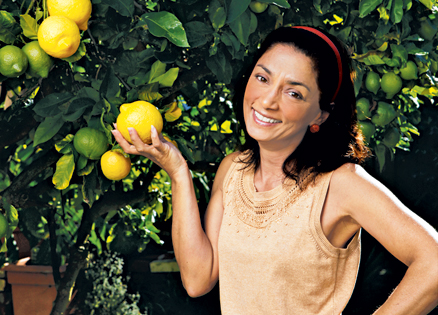
I grew up in Hawaii, where I canoed in the sparkling waters, hung my laundry in the sun and plucked ripe avocadoes. Being close to nature was like food for my soul. So I was thrilled to discover my new husband Werner’s house in California had a backyard full of birds, butterflies and trees—including our very own lemon tree! I imagined us picking and cooking with its juicy fruit, and taking shade under its leafy limbs.

Then I went to take a closer look at the tree. What a mess! The branches were twisted and tangled and sagged so low to the ground that no sunlight broke through. It sat surrounded by patches of dirt. Steel rods and cords had been used at some point to hold up the branches, but now the cords were embedded in the bark and strangling the tree. The leaves were bug-infested. Oh, and the lemons? Most of them were deformed or rotten.

“Honey, I’ve tried to help that tree, but I think it might be a lost cause,” said Werner. Yet somehow I felt called to save the lemon tree. Maybe that’s because there was a time when I was a lost cause too.

Seven years earlier my first marriage ended and I moved from Hawaii to southern California. I stayed with friends and started my own business—a Polynesian entertainment company. We performed Hawaiian hula dances at Hollywood events. I loved all the attention we got—especially from men. I longed to find love again, and I decided I didn’t need God’s help. I had my dat­ing life under control.

Only I didn’t. I dated all the wrong guys. Desperate to find true love, I signed up for an online matchmaking service. That’s where I found Werner and we set up a date…but I canceled on him because the night before I’d gone to dinner with a guy I was sure was Mr. Right. Turns out he was Mr. Not Even Close. One night I found myself praying, God, I was so wrong. I need you. I swore off dating. I decided it would be just God and me for a while.

A few weeks later a message popped up in my inbox. “Wishing you a Happy Thanksgiving. Fondly, Werner.” I felt my face flush. Werner had been so gracious when I canceled on him at the last minute. I wanted to see him, but I couldn’t bring myself to date again. No way. Still, that night I prayed about it.

I woke the next morning to a voice that was loud and clear. “Respond to him,” it said. Deep in my heart I knew that God had sent Werner to me. I replied to his e-mail. Soon we met in person and fell in love, and within six months we were married.

I felt healthy and whole—and incredibly blessed. God had given me a second chance. Couldn’t I do the same for one of his creations?

So I began to work on the lemon tree. A little at a time so it wouldn’t go into shock. One by one I trimmed the heavy-laden branches. As they fell to the ground, they reminded me of all the bad choices I’d made in the past falling away. Later I released some of the cords. I couldn’t help but think about how I’d been released from being so foolish and freed to reconnect with God.

One day I laid my hands on the tree and said a little prayer. Lord, this lemon tree is a lot like how I used to be—it’s damaged and hopeless and needs lots of love. Please help me bring it back to life.

A few months later I noticed something: New fruit had grown in and this time all of the lemons were whole and healthy. The branches had opened up, letting sunlight through.

Today, seven years after I first saw that sad, mangled lemon tree, it stands tall and magnificent. It grows juicy yellow lemons that Werner and I cook with and put in gift baskets for neighbors and friends (pickled lemons are the biggest hit). And its strong limbs are covered with shiny green leaves, perfect for taking shade under.

“I can’t believe how far that tree has come!” Werner marvels. “You did an amazing job.”

It wasn’t just me. The lemon tree and I are living proof that anything can grow and blossom in the hands of the One who nurtures us all.

Download your FREE ebook, Creativity and Personal Growth: 7 Inspiring Stories On How Crafts Can Change Your Life

Learning to Wait on God’s Perfect Timing

“I can’t believe you got another one!” I said, as I watched my husband skillfully reel in another largemouth bass. “What is that, 19 or 20 fish for you?”

“I don’t know,” he said, throwing the bass back into the lake. “I’m not keeping track.”

Maybe he wasn’t, but I certainly was. Jeff had caught 19 fish that day, and I’d caught nada, nothing, zilch, zippo, zero. (Unless you count the giant lily pad I had hooked earlier in the day.)

It was the worst day of fishing I’d ever had!

Now, Jeff is quite an accomplished angler. He could catch a fish in the worst conditions, so I’ve learned that if I observe him and do exactly as he does, I will catch fish. It ALWAYS works.

​Until last Saturday…

I was using the same bait as his, casting the same places he cast, wiggling my line when he wiggled his line, and yet the fish seemed to jump onto his hook and shun mine.

It just didn’t make any sense.

It had been a long, hot, sweaty, non-fish-catching kind of day for me, and I was tired.

The sun had already gone down by this point, and the night sky was quickly upon us. As Jeff put away his fishing pole and cleaned up the boat, I continued casting.

I so wanted to catch a fish.

Then, just as I was about to give up, I felt a tug on my line.

It was a big tug!

I had a fish!

I quickly set the hook and began bringing in that fish.

“That’s it!” Jeff encouraged. “He’s a nice one.”

Yes, he was.

He wasn’t a monster, but he was the biggest fish of the day, and I had caught him!

Reflecting on my catch as we drove home that night, I couldn’t help but think about the day’s events. I had fished my heart out, following Jeff’s example all day, and yet I hadn’t even had a nibble on my line until the very end.

That’s just how it goes sometimes—on and off the lake.

I learned several important truths that afternoon. First, you have to celebrate with others when they have victories in life while you wait for your breakthrough to manifest.

Second, you can be doing everything right and still not have the results you desire exactly when you desire them, because everything happens in God’s timing. And, when God brings it to pass, it’s so worth the wait.

READ MORE: WHERE’S YOUR FOCUS?

And, third, it’s important to enjoy the journey on the way to where you’re going. Though catching the fish was amazing, spending the day on the lake with my handsome hubby was equally wonderful. Oh, and fourth, Jeff is the most patient man in the world.

Pray this with me:

Lord, help me to keep a good attitude and celebrate with others when they triumph. And, Father help me to trust You even when it looks like nothing is working in my life. Help me to not give up before I see the victory.

And, lastly, Lord help me to live in the moment and enjoy the little things in life. Help me not to be so goal oriented or competitive that I miss out on the blessings all around me. I love You, Lord. In the Mighty Name of Your Son, Jesus, Amen.

Learning to Forgive Like a Rwandan

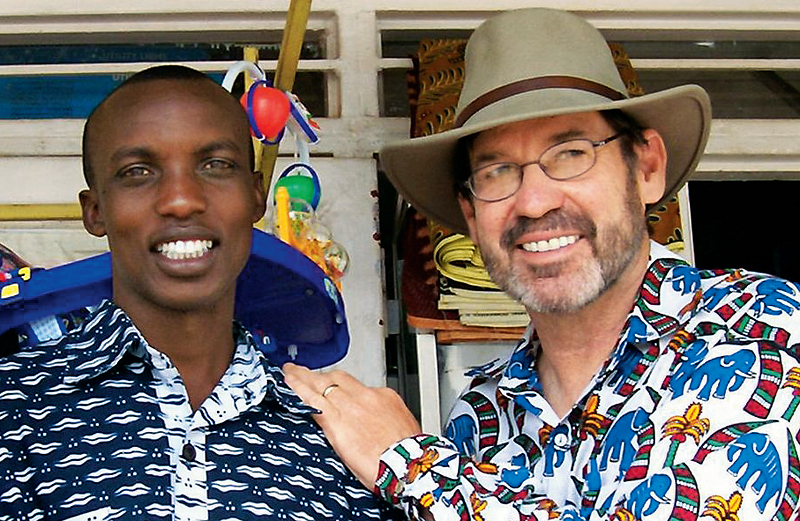
The airplane descended toward Kigali, the capital of Rwanda, in Central Africa. My heart sank with it. I’d never felt this way before when visiting the land I’d grown to love. All the other times I’d been to Africa–so many!–I’d been filled with anticipation.

My wife, Kim, and I had worked for years as missionaries, founding and supporting a ministry to college students in the university town of Butare. We’d made close friends. The ministry had grown. We’d felt as though we were doing God’s work, as though we were exactly where he wanted us.

This visit was different. In my luggage I carried a metal plaque, which I planned to place at a roadside about halfway along the 100-mile route from Kigali to Butare. The plaque read: “On this road, on July 31, 2010, Dr. Kim Hyun Deok Foreman suffered a fatal car accident. She died in Kigali at King Faisal Hospital on August 3, 2010.”

It was summer again now, exactly a year since the accident. One year since Kim, my beloved, faithful partner for 36 years, was suddenly, horrifyingly taken from me.

What was worse was that in my mind, the accident wasn’t some random tragedy. Franc Murenzi, the Rwandan director of our ministry, had been driving Kim and me from Butare to Kigali to catch an airplane. Franc had fallen asleep at the wheel. Our car drifted in front of an onrushing bus.

Franc awoke in time to jerk the steering wheel. The car flipped, throwing Kim from a window. She was bloody and unconscious by the time I was freed from my seat belt and managed to stumble to her side. She died of massive head trauma three days later.

I never forgave Franc. Through a mutual friend, a local pastor we both knew, named Paul, I fired Franc from the ministry and told him I didn’t want him at Kim’s funeral in Kigali.

Franc came anyway, his head wrapped in a huge bandage. He gave a rambling eulogy about how the accident was just an accident, and how he’d considered Kim a second mother and was devastated. He never apologized. I sat there fuming. I’d barely spoken to him since.

The plane was over Kigali now and I could see the airport. I thought back to my first time in Rwanda, almost a decade before. Coming here had been Kim’s idea. She’d already been once before, with a group of Korean missionaries.

She’d returned home to California full of excitement about the country and the wonderful people she’d met. That was Kim. Excited about life. Eager to learn new things.

She was a university professor in San Francisco. She’d encouraged me to go into the ministry after I’d spent most of my life in the Army. We’d met while I was serving in the Peace Corps in Korea.

She was a young schoolteacher then. She helped me with my Korean. I helped her with English. We spent hours drinking tea, talking. Falling in love. We always had something to talk about. Kim never lacked for words.

But what would I say now, back in Rwanda? The problem was Franc. Amazingly, no one seemed to understand why I’d fired him. Pastor Paul even warned me at the airport after the funeral that what I’d done was causing division in the ministry.

“Some people are on your side and some are on Franc’s side,” he said. “Chris, please listen to my words. If you want to return to Rwanda and continue your work here, you must learn to forgive like a Rwandan.”

For a moment his words took me aback. It’s impossible to be in Rwanda without being reminded everywhere of the nation’s brutal genocide, those years in the mid-1990s when tribes massacred one another in escalating waves of ethnic hatred.

In the years since, the country had somehow managed to come back together. But this was different. This was a car accident, not a civil war. It was personal. Kim was my wife. The accident was someone’s fault and he’d never apologized or acknowledged his responsibility.

“When your wife is killed through someone’s negligence and he won’t say sorry, then we can talk about this,” I said to Paul. “Franc deserves to be prosecuted. I’m letting him off easy.”

Paul shook his head sadly. “Chris, my wife was killed,” he said. “During the genocide. You know that. And I have forgiven. I had to. You must too.” I loved Paul. We’d grown close working together. But I could not bring myself to follow his advice.

Back home in California, I threw myself into work. Kim and I had been building a permanent home for our ministry in Butare. The Light House would be a gathering place for Christians at the university and also a small Bible college. We’d bought land and the foundation had been laid.

Now I needed to raise funds to complete the building. I knew that that’s what Kim would have wanted.

I raised the money, even using part of Kim’s life insurance and retirement savings. But construction was complicated by the situation with Franc. People we’d worked with before didn’t want to work with me anymore.

I heard about their complaints through Paul. “They are saying, ‘How can he claim to be a pastor and treat Franc this way?’” Paul told me.

The ache I felt in my heart seemed answer enough to that question. But I began to wonder. What if Paul was right? Certainly it would make everything easier if I could just forgive Franc.

But I missed Kim so much! I kept talking to her in our empty house. I listened for her voice every morning when I awoke. I couldn’t get past the pain of her loss. How could I forgive the man who’d taken her away?

At last my doubts, and the dissension in Butare, grew too big to ignore. At a monthly breakfast I held for local Baptist pastors, I bared my feelings to my friend John, a pastor who’d held a memorial service for Kim in California.

“I’m glad you brought this up,” said John. “I’ve been wanting to say something for a long time. Chris, you are being tested. I know you loved Kim. But forgiveness is love at the testing point.

"You have to ask yourself what kind of love you have in your heart. If it’s Christian love, you’ll forgive Franc. You’ll go back to Rwanda and forgive him.”

That’s not what I wanted to hear. John’s advice was exactly the same as Paul’s. But I just couldn’t feel forgiveness toward Franc. Not through all my pain. And isn’t that what forgiveness is, a change of heart?

Yet I had to do something to make peace in Butare. For Kim. The ministry had meant so much to her. Through Paul I sent word to Franc that I would hire him again to oversee the building project. I made plans to travel to Rwanda to smooth over any remaining disagreements.

There would be no way to avoid Franc. But I would deal with that then. Maybe by that point my feelings would have changed.

The plane shuddered as the wheels hit the runway. My stomach clenched. Franc was meeting me at the airport to drive me to Butare. He would be standing there as I got off the plane. What would happen when we saw each other again?

I spotted him in the throng. He saw me too. Drawing closer, I saw the terrible scar from the accident on Franc’s head. We shook hands. He asked about my flight. We walked to the car.

Conversation floated along, mostly about the project. It felt weird, as if someone was talking for me. No mention of the accident, like it never happened!

I had informed Franc about the plaque, and he’d made arrangements for us to hold a small ceremony at the site of the crash a few days later. Some people from the ministry would be there, as well as locals who’d helped at the accident scene.

We drove to Butare and checked on the building project. Franc had done a good job. The day of the ceremony we got back in the car and went to the accident site, that stretch of road I’d seen so many times in nightmares. How often had I replayed the moment in my mind?

Franc stopped the car. People were already there, gathered at the roadside. I got out. My legs felt weak. I could still see the gouges in the pavement from where the car had flipped.

I walked toward the crowd. There was the elderly man who’d used scissors to cut me free from my seat belt. There were the people who’d helped Kim into the ambulance. That’s the amazing thing about Africa, I thought. What makes it so different from America.

In Africa people don’t keep to themselves, so preoccupied with their own private goals. They live in community. They instinctively come together in crisis. They had for thousands of years.

These people had come together for Kim and me. And they’d come together in a far greater, almost unimaginable way after the genocide. Maybe some of them were from different tribes. Maybe they had relatives who’d slain one another.

I laid the plaque on the ground, then stood up to say a few words. All of a sudden the weird feeling that I’d had in the car, the feeling of someone else talking for me, evaporated. I was returned to myself, as if born again through all the pain of losing my beloved Kim.

Pastor Paul’s words seemed to ring in the air: Forgive like a Rwandan. Did I even know what those words meant?

Here I was, a Baptist pastor. A missionary. And yet these Rwandans, pierced by a national grief I could hardly fathom, were practicing Christian love just by gathering in this place today. They didn’t wait for a change of heart. They simply forgave. And the act of forgiveness changed them.

I said a few words about Kim. Then I turned to Franc. I looked in his eyes. “Brother Franc,” I said. “Forgive me for my hard heart. I know the crash was an accident and you didn’t mean to hurt Kim. I forgive you for everything.”

Franc threw his arms around me and we held each other tight. Then I hoisted his hand in the air. “This is my friend!” I cried to the crowd.

I let the words sink in as everyone around us erupted into applause. All those years ago, Kim and I had come to Rwanda as missionaries. But at that moment—no, from the very beginning—it was Rwanda ministering to me.

Download your FREE ebook, The Power of Hope: 7 Inspirational Stories of People Rediscovering Faith, Hope and Love

Learning from Life’s Detours

Trust in the Lord with all your heart, and do not rely on your own understanding; think about Him in all your ways, and He will guide you on the right paths. (Proverbs 3:5-6)

Did you even notice that life isn’t a straight line from point A to point B? Before our boys were grown, I had imagined their paths to manhood. I knew they wouldn’t face easy journeys, but I had no idea the twists and turns those journeys would take.

This was especially true when one son chose to enlist in the military rather than going to college. Of course we were proud of him, but with that pride came the fear of what that decision could mean.

Those fears were heightened as he served two tours in the Middle East. But I learned one thing. None of those challenges caught God off guard. He was the author of my son’s journey. He knew best how to bring our son into the fullness of his potential.

Click here to donate and bring hope and inspiration to our Armed Forces

As I look back on my own life, I see the same pattern. God used the scenic route—full of side-trips and detours to get me exactly where–and when–I was supposed to arrive.

God will drag us to places we think are miles out of the way, making our goals seem further from reach. Then boom, we round a corner and there stands what we were aiming for all along. Or He leads us down a path that leaves us bogged down for months. It’s only when we look back that we see the side-trip was the best way to get where we were going.

It’s often in the detours that our hardest lessons and greatest joys are realized.

Kerri Pomarolli and Her Faith-Filled Motivation to Pursue Comedy

In front of my daughters, I tried to act as if everything was okay. As if I was okay. But as soon as I saw them off to school, I did what I’d been doing every day lately. I holed up in my bedroom and hid under my covers, binge-watching all five seasons of Friday Night Lights, drinking Coke and eating a balanced diet of M&M’s and salt and vinegar potato chips.

I’d become a member of a club I never wanted to join—the Single Moms’ Club. It was hard to believe that just six months earlier, my husband and I had been on a Christian marriage tour, doing stand-up comedy together in stadiums and appearing on magazine covers and TV shows as “the funny couple of faith.”

But behind the scenes, we’d had some serious struggles. We’d fought and prayed and tried to make it work.

Now, with two young girls to provide for, I was sure that no one in any church circle would hire me. No one would want to hear from a divorced woman. They’d probably think I didn’t do enough or pray hard enough to save my marriage.

Lord, you called me to do clean comedy, I thought. To minister to people by making them laugh. Now I’m totally disqualified for that.

This wasn’t how I thought my life would turn out. My career was over, and I was turning (gulp)…40! My happy place was home with my family, my husband and kids. That was shattered, and I didn’t know how to pick up the pieces. And did I mention I had no other job skills?

I think I came out of the womb performing. I was a real theater kid growing up in Detroit, the daughter of an Italian-American father and a Southern mother from Alabama. My parents supported me all the way—dance classes, community theater, auditions for commercials. I got my B.F.A. in musical theater from the University of Michigan and spent summers studying at the British American Drama Academy in London and the Stella Adler Conservatory in New York City. I discovered that, at 5′2″, I was too much of a shorty to be a Broadway dancer. I would have a better shot at an acting career in Los Angeles because I looked so young.

My parents, who’d moved to Atlanta by then, helped me load my stuff into the family minivan and drove me cross-country to California. Right before they left, my dad drew me a map of L.A. with magic marker so I could get my bearings. I was so scared, I cried. Then I went out and got three jobs because I’m a Gen Xer; as extreme multitaskers, that’s what we do.

Everyone told me I had to lie about my age. Fortunately, even though I was 22, I could pass for 16. Maybe I could audition for Saved by the Bell. I found work on soap operas: General Hospital, Port Charles and The Young and the Restless. Sometimes the roles were so small, I didn’t have many lines, and I’d have to tell my mom my character was mute. I got a few parts in movies and sitcoms. I graduated from the improv program at Second City—that’s a big deal—and performed with a troupe on the main stage for a season.

I joined a great church in L.A. The more my childhood faith deepened, the bigger the gulf seemed to grow between the roles my agent wanted me to audition for and the person God wanted me to be. I said no to so many opportunities. I would imagine my parents sitting in a theater watching me onscreen. If they got up and ran out, the part wasn’t for me.

As my thirtieth birthday approached, I worried that I’d missed my chance. I’d come to Hollywood with dreams of fame and fortune and marrying Matt Damon. I was still looking for the one role that would make me amazingly famous.

One night, my agent emailed and told me I should reconsider doing a topless scene audition for a movie with a big star. “If you do this, Kerri, your career will really be going places!”

Except those weren’t places I wanted to go.

I plopped down on my bedroom floor and pulled out the Bible my parents had given me in first grade, the same one I had marked up with pink highlighting. I opened it to the book of Isaiah. It spoke of the rejection Jesus faced. Rejection—that’s something a struggling actor could really relate to.

“God, I don’t know where I fit in anymore,” I prayed. “I just want to use my gifts for you.”

The words stand-up comedy popped into my head. An idea that had to have come from God. I liked making people laugh, but I’d never considered doing stand-up, ever. Write my own material, stand in front of an audience all alone—with no one to play off of, as in improv—and hope my jokes landed? Terrifying!

“How can I reinvent myself now? I’m almost 30!” As if I needed to remind God of my age.

I could almost hear him laughing. Kerri, I parted the Red Sea. You think I can’t give you a career at 30? Buckle up, buttercup!

That’s how I came to say yes to God and yes to stand-up.

I took a stand-up comedy class and tried out my material at open mics. My jokes were all clean.

Yet somehow, three months later, I was at my first gig, standing in the narrow hallway of the world-famous Hollywood Improv, waiting to go on. The walls were lined with glossy photos of iconic comedians I’d grown up watching: Steve Martin, Richard Pryor, Martin Short and Adam Sandler. All of them had performed on this stage.

And here I was, number 23 in the lineup of 35 comics for the evening. I was petrified. Everyone who’d gone on before me had edgy material, dirty jokes. God, am I relatable? I wondered, pacing the hallway. Will this audience even like me?

“Up next, Kerri Pomarolli!”

The next thing I knew I was onstage, mic in hand. “Hi, I have an Italian Catholic dad. He raised me with good Italian Catholic values: guilt and intimidation!”

When the audience laughed, I knew I was hooked. Out of the whole lineup, I was the only one the manager asked to come back.

One night, I came back to the Hollywood Improv to showcase for some really big producers. There was a cute guy in the ticket booth who prayed for me. That was totally unexpected, but it really calmed my nerves.

Within a year of my first gig, I was making a living as a stand-up comedian. I toured with headliners like Bone Hampton and Sherri Shepherd.

Being as authentic onstage as I was offstage gave me opportunities to pray with and for other comics and for people I met at my shows. People who might never set foot in a church. The more I said yes to God, the more doors opened. I made 29 appearances on The Tonight Show doing sketch comedy. I wrote a book about my dating life and turned it into a feature film script.

Who knew my ex-boyfriends would be such great material?

Christian circles started inviting me to their churches to share my testimony. At that point, I didn’t even know what a testimony was. I had no idea if I was worthy of sharing anything about faith, but God kept reminding me—I can use you.

Remember that cute guy working at the Hollywood Improv who offered to pray for me? Turns out, he was an-other comedian who loved Jesus. We got married (sorry, Matt Damon) and had two adorable daughters, Lucy and Ruby. We schlepped our kids all over the world touring. It was a crazy life, and I loved it.

But things hadn’t worked out as we planned. Life threw some curveballs. Hiding under my covers, I was divorced and alone, feeling lost and broken. Hadn’t I said yes to the plans God had for me? After 10 successful years as a stand-up, why was he disqualifying me? Was I no longer worthy of serving him?

That’s when I heard an answer deep in my soul. I never disqualified you. You’re the one who bought that T-shirt. I love you.

Then God got tougher with me. Get back to work, Kerri. You think I can’t give you a career at 40? You have a whole new group of people you can reach now. Buckle up, buttercup!

I threw back the covers and got up. When my daughters came home from school that day, I didn’t have to try so hard to act as if I was okay. For the first time since joining the Single Moms’ Club, I felt as if I would be okay.

The first show where I talked about my divorce was a private event for women at a comedy club in Missouri. I paced backstage, as nervous as I’d been before my first gig at the Hollywood Improv.

I stepped to the mic, took a deep breath and opened with, “Well, I just went on an extreme diet. I lost 175 pounds—I got a divorce. I married for love the first time. Now I’m looking for a man with a pension who doesn’t snore.” The audience burst into laughter.

After the show, women came up and hugged me. Some even said, “The fact that you can laugh through your pain gives me hope that I can make it through what I’m struggling with.”

I should’ve known God would use my brokenness for good.

It’s been a decade since I became a single mom. I was afraid the life I loved was over, but actually, it’s just different—and better—than I could’ve dreamed. I haven’t had a date in 10 years, much to my mother’s chagrin. Still, my life and heart are full.

I travel a lot for gigs and bring my girls with me whenever I can. When they can’t come along, my ex-husband stays with them. He still takes out my garbage and is the best dad. We’re funny together at parent-teacher conferences and take great joy in embarrassing our daughters.

Ruby, 13, wants to be a comedian (and a baker in Paris). She walked on-stage with me in front of 400 people and said, “My mom is single. She’s looking for a man with a 401(k)! Having two comedians as parents means when I have a toothache, they say, ‘Chew on the other side.’” She killed it.

Lucy, 16, wants to study aerospace engineering and serve in the U.S. military as a test pilot. She really likes math and physics? Can’t she just tell jokes like the rest of her family? “Hey, Mom,” she said as we were visiting colleges recently, “will you send me care packages with homemade cookies?”

“No need,” I told her. “We’ll be roommates.”

Much as I love ministering to people at comedy shows, I love coming home to my happy place. You’ll still find me under my covers eating M&M’s and drinking Coke Zero, only these days I’m snuggled with my daughters watching British TV shows. I am truly content.

I just celebrated 20 years as a stand-up comedian and another birthday with a zero after it. I’ve appeared on Netflix, Amazon Prime, Hollywood red carpets, and I have a new Dry Bar Comedy Special. I’ve written film scripts for the Hallmark Channel and authored five more books. God is still opening doors that blow my mind. He is my agent. When he says go, I just pack a bag and say yes. I’m sure he’s having a good laugh about that.