

Embrace God's truth with our new book, The Lies that Bind

The Forgiving Quilt

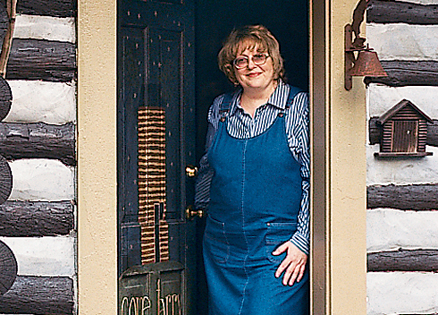
Bulging red rubber tubs of decorations were scattered around the living room of my log cabin as I prepared for the holidays: Christmas lights and ornaments for the tree, red and green candles for the windows, holly for the fireplace.

I’d wrestled the tree into its stand. Now I needed a quilt to spread around the bottom for a skirt.

I went to the linen cupboard. One quilt immediately caught my eye: a hand-stitched antique. Do I really want to put this on display? I thought as I pulled it out. The one she gave me?

“She” was Mrs. Messner, my ex-husband’s mother. In 25 years of marriage I never got comfortable enough with her to use her first name. Our relationship was always tense, but then she did something I could never forgive her for.

Just looking at the quilt—hand-stitched by Mrs. Messner’s mother—made me furious all over again.

Twenty years ago I was scheduled for a medical procedure that would take me away from home, and my husband was coming with me. That meant we needed a babysitter for our beloved dog, Muffin. “I’ve got a fenced-in yard where she can play,” Mrs. Messner offered.

“You’re sure you’ll keep a close eye on her?” I asked.

“I promise,” she said.

She promised, I thought angrily, shaking out the quilt. For all that was worth. Two days after we dropped Muffin off, Mrs. Messner called to report that our dog had gone missing. Apparently she hadn’t been at Mrs. Messner’s an hour before she slipped out of the yard and ran away.

She wasn’t even wearing her collar because I’d neglected to put it back on after giving her a bath. Of all the terrible times for Muffin to have been without her collar!

I searched the neighborhood, going door-to-door with pictures of Muffin. Mrs. Messner had put signs up: LOST DOG $5 REWARD. Five dollars! That was all Muffin was worth to her. It infuriated me all these years later.

Weeks went by with no sign of Muffin, and I had to accept the fact that she was never coming back. “Could you tell me what happened that day?” I asked Mrs. Messner. “What was she doing when you last saw her? Do you have any idea how she got out of the yard? Did you forget to latch the gate?”

“Quit upsetting everybody about that dog, Roberta,” she snapped. “You’ve got me so worked up I’m getting hives. Just go out and get yourself another dog.” I was stunned. Speechless. Another dog? That was her solution? How could that woman be so cruel?

Muffin didn’t mean anything to her, and she didn’t care what Muffin meant to me. I got down on my knees and yanked the quilt around the tree.

Mrs. Messner’s quilt was the perfect accent, but I couldn’t appreciate it anymore. All I could think about when I looked at it was my 20-year-old grudge. I didn’t need that at Christmas.

As I folded the quilt back up, a new thought popped into my head. More like a command, really: Give the quilt back to Mrs. Messner.

Where had such a crazy idea come from? I would have laughed if I wasn’t so angry. Why should I give Mrs. Messner anything? I stuck the quilt back in the linen cupboard and chose another for the tree skirt.

The quilt’s a family heirloom. Surely she’d like to have it back. I couldn’t quiet the voice in my head no matter what I did. Since Mrs. Messner’s mother had died, I supposed it made the quilt all the more special to those who loved her. But giving it back would mean having to speak to Mrs. Messner.

I tried to imagine calling her. What would I say? I stared at the phone.

Wish her a blessed Christmas. The voice was hard to abide. So now I was not only supposed to do something nice, but say something nice too? That was too much. I vacuumed stray needles around the bottom of the tree. I finished decorating and put away the empty tubs. Thoughts of Mrs. Messner nagged at me.

I went back to the cupboard and took her quilt out again. The Christmas lights illuminated the careful stitching, a perfect 12 to every inch. A lot of love went into this quilt, I thought.

When Muffin disappeared, what hurt the most was thinking Mrs. Messner didn’t care how much Muffin meant to me. Was I doing the same thing with this quilt? It was made with a love Mrs. Messner could appreciate far more than I could. And it was Christmas, after all.

I picked up the phone and dialed. “Mrs. Messner?” I said when she answered. “This is Roberta. I was just admiring that lovely quilt your mother made. The one you gave me.”

I paused hopefully, but was met with silence on the other end of the phone.

“What do you need?” Mrs. Messner said. Couldn’t a single conversation with this woman be easy?

I took a deep breath and forged ahead. “I was wondering,” I said, “since your mother has passed on, if you would like to have the quilt back? The beautiful one she made.”

Silence. What more could I say? I’d done what I had to do. I braced myself for another curt reply. “Mrs. Messner, are you still there?”

“You can’t know what this means to me, Roberta,” she said. “I don’t own a single thing Mom made. I would so love to have that quilt again.” Mrs. Messner’s voice had a sweetness in it that I had never heard before.

“I’ll send it to you right away,” I said. I heard my own voice softening too when I wished her a merry Christmas.

I hung up feeling lighter, as if a weight had been lifted from my chest. For the first time in 20 years I thought about Muffin without fuming over an unlatched gate, a paltry reward and the dog collar I’d neglected to put back on. Perhaps my bitterness at Mrs. Messner had been inflamed by my own guilty conscience.

I wrapped the quilt in tissue paper and wrote on a holiday card: “Dear Mrs. Messner, Wishing you and your dear ones a blessed Christmas filled with nothing but love, Roberta.”

I packaged up the quilt and tucked in the card. I’d chosen one with an angel on it. Because that was not just any voice in my head telling me to consider Mrs. Messner. That was a Christmas angel speaking to my heart. And I would never forget the gift she gave me. The gift of forgiveness.

Download your FREE ebook, True Inspirational Stories: 9 Real Life Stories of Hope & Faith
The Art of the Apology

I’m sorry. Two little words that play a big part in our daily vocabulary. You might apologize while squeezing through a crowd or using the last of the printer paper at work. We toss off these everyday “I’m sorry’s,” but true apologies are a different story.

Even if you feel guilty for having hurt someone, you might have trouble finding the right way to express your remorse. How do you give a meaningful apology? How do you ask for one? If both parties are at fault, who should say sorry first? With these tips, you’ll find that sorry doesn’t have to be the hardest word.

Keep it real
“For the person who needs an apology, it’s a validation of their feelings,” says Beverly Engel, author of The Power of Apology. “It’s very healing. If someone admits they did something wrong, it helps us not feel leery. We can let our guard down.”

But the relationship will remain strained if the apology seems perfunctory. You have to be truly willing to apologize. Are you afraid that saying sorry will make you look weak? Actually, a sincere apology helps repair not only the relationship but also your reputation—you’re showing that you can be trusted to do what’s right. Avoid the nonapology apology: “I’m sorry you were offended by what I said.” It’s doublespeak.

Sometimes it’s better to leave a hurt in the past. If apologizing means reaching out to someone who will cause you harm or be emotionally damaged by being reminded of your actions, forgive yourself and move on.

The three R’s
A meaningful apology comes down to what Engel calls the three R’s—regret, responsibility and remedy.

Communicate your regret. Show the other person you recognize your error and empathize with her pain. Try to see the situation from her point of view. A statement such as “I know I hurt your feelings, and I feel awful about it” can go a long way.

Take complete responsibility. Don’t make excuses or blame the victim. If you feel the need to explain your actions, keep it brief and follow it with a sincere mea culpa, such as “My behavior was unacceptable.”

Show that you’re working to remedy the situation. Offer to make up for the harm you caused. Or explain the steps you’re taking to make sure it doesn’t happen again.

Asking for it
If you’re the offended party, describe what’s changed in the relationship and how you feel about it. For example, you could say, “There’s this rift between you and me, and I want us to be friends again. But I’ve been hurt, and I’d like an apology. I need you to acknowledge what you did.’’ Don’t demand. Emphasize that the relationship is important to you.

Two-way street
Say a misunderstanding turned into a nasty exchange. You want to reconcile but feel the other person should apologize first. “If you recognize that you played a role, examine why you feel you need them to apologize first. It’s probably pride,” says Engel. Get over it.

Try: “We had this disagreement, and I feel we’re both to blame. I want to apologize for my part.” You’re acknowledging the blunder and asking the other person to take responsibility as well. Most people will appreciate the initiative and step up, but there are no guarantees.

That’s something to keep in mind anytime you offer an apology. Don’t expect immediate forgiveness. It might take the other person a while to process your words and their feelings first. Still, don’t you feel lighter now that you’ve let go of your burden of guilt?

For more inspiring stories, subscribe to Guideposts magazine.

Thanking God for the Gift of 5 Senses

Sometimes God reminds us to be grateful for things we take for granted. I had one of those moments this week. An ear disorder has caused me to lose most of the hearing in my left ear. For almost two years now, I’ve dealt with the repercussions of that.

I’ve had to say, “I’m sorry. Could you repeat that?” when someone told me something. When my grandchildren tried to whisper in my left ear, I’ve had to remind them, “You’ve got to come around to Grandmama’s good ear.”

Low tones have been the worst, and that meant I couldn’t hear my husband’s voice if he walked on my left side. And after a lifetime of holding the phone to my left ear, I had to relearn that habit. But I’ve been so blessed to have one ear that still hears relatively well.

But this morning was special. I had an appointment with the audiologist to fit my new hearing aid. I had to fight back tears as I heard sounds in that left ear–sounds that I haven’t heard for the past few years.

As the audiologist fiddled with the computer to adjust the levels, I sat there and thanked God for a privilege that I’d always been grateful for but hadn’t fully appreciated until I no longer had it.

Here are five profound gifts from God that we should appreciate on a daily basis and give thanks for:

1) Sound
For the joyous trill of the birds singing in the trees. For the oh-so-beautiful sound of our child’s laughter. For the moments when we hear the words “I love you.” For the ability to sit in church and hear the pastor’s message.

2) Sight
For the ability to see the beloved faces of our children and grandchildren. For the beauty of a sunset. For the independence that sight gives us to drive and walk without assistance, and that we can walk to our pantry and read the labels on the cans.

See More Beauty! A Photo Slideshow of Spring Flowers

3) Taste
For the first bite of a tomato fresh from the garden. For the delight of a comfort-food meal at our grandmother’s table. For the deliciousness of a still-warm cookie. Have you ever thought about how sad it would be if you couldn’t taste things anymore?

4) Touch
For the softness of a baby’s skin. For the tender shoots of those first blades of grass in the spring. For the feel of our sweetheart’s hand holding ours.

5) Smell
For the aroma of bread as it comes out of the oven. For the indescribable sweetness of little ones fresh from their baths. For the fragrant aroma of hyacinths and lilacs. Amazing gifts!

Take the time to appreciate what you can hear or see or taste or touch or smell today. Then thank Him for those everyday blessings. What have you noticed today that you are thankful for? Please share your observations below.

Surfer Bethany Hamilton’s Strong Faith After Shark Attack

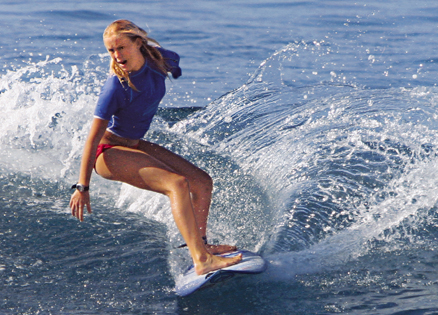
The bedroom door opened at five the morning of October 31 last year. My 13-year-old daughter, Bethany, stuck her head in, her long blonde hair falling over her face. “Hey, you guys. I’m going out for dawn patrol.”

“Have a good time, Honey,” I said. “Remember, my surgery’s today. Keep me in your prayers.”

“Duh, Dad. You’re always in my prayers. Gotta go!” Dawn patrol—beach slang for an early morning run—is a big thing around our surfing household. Bethany went out most mornings, searching for waves, often with her best friend, Alana, and Alana’s dad, Holt. I joined them whenever I could.

There’s something totally pristine and magical about the water at that time of day. The beach is empty, the wet sand shimmers in the rising sun. It’s just you, your board and the waves. There’s a little more of a danger of sharks in the water too, but if you surf in Hawaii, sharks are always a threat—remote, but real. The sea is their home, and you just have to respect that.

My wife, Cheri, and I work hard to make a good home for our three kids—Noah, 22, Timmy, 17, and Bethany. We are a close, loving family with God at the center. But at heart, we’re basically, well, beach bums.

I’ve been surfing since I was 12. It was my first love. Cheri’s too. We’ve got saltwater in our veins, and so do our kids. There’s always sand on the floor of our house on Kauai’s North Shore, and a couple of towels drying on the porch out back. Are we rich? Not in dollars and cents. But we’re more than blessed when it comes to the things that really count.

I would have joined Bethany that morning, getting in a quick run before I had to be at work, if it weren’t for my appointment at Wilcox Memorial Hospital. All those decades of crouching down low to shoot the barrel of a big wave had taken their toll on my right knee.

“You’re due for some scoping on your cartilage,” my friend David Rovinsky, an orthopedic surgeon, said. “We’ll get you fixed up and you’ll be back on your board in no time. Who knows, you might even be able to keep up with Bethany.”

Yeah, right. No one could keep up with my daughter. I put Bethany on my board and took her out into the waves when she wasn’t even a year old. I bought her a surfboard when she was six. Right off the bat, there was something different about how she surfed. Bethany got a look in her eye when we were out there in the water—a kind of gleam that said: I want to be good at this. I want to be the best.

I’m a “soul surfer.” I do it for the pure joy I feel when I drop my board into a curl, the wave roaring in my ears like a jet engine. It’s a spiritual joy, to be so close to the beauty and power God has made. Bethany felt that joy too when she was out in the water. She loved the Lord, and she loved to surf. But she also set goals. Bigger waves. Faster times. She couldn’t wait to enter surfing competitions. I started to understand that glint in her eye. The flash and fire of a champion.

At a little after seven that morning I lay on an operating table. I’d opted for a spinal so I could be awake to watch the procedure on a monitor overhead.

“Okay, Tom,” David said. “Ready to star in your own reality TV show?”

David marked the spot on my knee where he would go in with the scope. Just then the door to the operating room flew open. A doctor stuck his head in.

“Dr. Rovinsky, we gotta have this O.R. right now! We’ve got a shark attack victim.”

My mouth went dry. “Who?” I asked.

“A thirteen-year-old girl from the North Shore.”

My gaze met David’s. “Stay cool, Tom,” he said. “I’ll be right back.”

I tried to jump off the table. No go. My legs were numb from the anesthetic.

David came back. His face was pale. “It’s Bethany. We’re going to get you out of this O.R. and she’s going to take your place. We’ll do everything we can.”

A nurse wheeled me down the hall into a small recovery room and left me there, alone. The room was dark and still. Outside people raced toward the O.R., shouting instructions. If only I could get up and go to Bethany, hold her hand and pray. In my mind, I pictured Bethany in the water catching a wave.

My love for the ocean meant so much to me. To see my daughter love it too, to know she wanted to be the best surfer in the world, filled me with joy. But now that joy vanished. Was it my fault that she’d been attacked by a shark?

Stop. Cool it. Whatever happened out in the waves this morning, I had to remember that God had been there. He was here in the hospital too. With Bethany. With me. You’ve always watched over us, Lord. We’ve never come up against anything we couldn’t handle. Help us now.

The door opened. Noah. He walked in and threw his arms around me.

“Where’s your mom?” I asked.

“She’s outside, Dad. Everyone’s here.”

“Stay with them. I’ll be there as soon as I can get up and walk.”

Noah hadn’t said a word about Bethany, and I hadn’t asked. Something inside told me to stay calm, be patient. To trust in God—whose power was greater than my fear, greater than the sea, greater even than my love for my daughter.

A nurse came by. “Mr. Hamilton, can you wiggle your toes?” I tried. They barely moved. I slapped my bed in frustration.

“Hang on. Ten more minutes and you should be able to walk.”

Ten minutes later she came back. I got up and the nurse helped me hobble down the hall to another recovery room.

Bethany was lying in bed, her hair matted from the water, an oxygen mask over her face. Monitors beeped and blinked. My gaze followed an I.V. line down to her right arm. Bethany’s a righty, I caught myself thinking. They should put that thing in her left arm. All at once I realized what I was looking at. Where my daughter’s left arm had been there was just a mass of bandages.

The image was like a hard punch in the gut. But then Bethany turned her head and gave me a groggy look. A flood of relief and pure gratitude poured over me. My daughter was safe. Thank you, God.

“Hi, Dad,” Bethany whispered. “What are you doing here?”

“I’ve been here the whole time, Honey,” I said. In fact, I had been right where I was meant to be all along.

Less than a month later, on one of those blindingly beautiful days that God saves for Hawaii, Bethany and I walked to the water. Under her right arm she carried her surfboard. She’d made a remarkable recovery, but I couldn’t help wondering if it wasn’t too soon to try surfing again.

Bethany waded in, hopped on her board and started for the distant breakers. I swam out behind, ready to lend a hand. Half of surfing is in the paddling. Bethany’s explosive stroke used to give her an edge in competition. Could she still do it? With only her right arm? Could she still surf like the old Bethany?

A wave broke. Bethany lost her board. She grabbed it just as another wave slammed into her.

“Do you need a push?” I shouted.

“No, Dad,” she yelled back. “I need to do this myself.”

I should have known better than to ask.

Finally, we got out past the breakers. A big wave came toward us. Bethany paddled and kicked like crazy, struggling to get positioned right. With one push of her arm, she leapt to her feet. Her board shot out from under her and she fell into the water.

Another wave. She paddled and jumped to her feet. Wham. Another spill.

Lord, what if Bethany can’t do this?

A third wave rolled toward us. Bethany looked over at me. For a moment, our eyes met. That’s when I saw it. That flash of fire. It was still there. The wave rose up behind us, ready to break. Bethany leapt to her feet. She caught it perfectly. I watched her ride the wave all the way to the distant shore.

I had been wrong to doubt even for a moment. Nothing was going to hold my daughter back, not from what she truly loved. There was no “old” and “new” Bethany. Just the daughter I had always known. The one with the God-given spirit of a champion. And nothing, not even a shark, could ever change that.

Browse a slide show of Bethany!

Supporting Our Spiritual Leaders

I have been blessed by the spiritual leadership of many men and women in my life. Earlier this year one of my childhood pastors, the Rev. Pedro Rosario, went home to be with the Lord. Although it has been more than three decades since he served at our church, his spiritual imprint remains on my heart.

Rev. Rosario’s passion and dedication to the church greatly shaped his work ethic and ministry. I recall when my late uncle Felix was very ill, my aunt called Rev. Rosario in the middle of the night. He told her not to worry, that he would drive to her home to pray for him. Thankfully the Lord healed my uncle from his sickness, and my aunt is still deeply appreciative for her pastor’s love and care. When I became a pastor at 21, Rev. Rosario set an example for my spiritual leadership in the church.

Read More: How to Support Military Chaplains

The call to be a pastor is filled with many blessings and challenges. Pastors work within the congregation and the community. They, just like us, have their own struggles, sins, limitations, faults and defects. They are not perfect, just human. It’s only through God’s grace they fulfill their calling.

Do you know that October is Clergy Appreciation month? This is a good time to remember our pastors and spiritual leaders in prayer and express our gratitude for their ministry. I encourage you to text or email thanks to your pastor. Or call or send a hand-written note or gift to express your appreciation for their service. It will lift their spirits and encourage them in more ways than you can imagine.

How has a pastor or spiritual leader blessed your life? Please share with us.

Lord, thank you for all those you have called to serve as pastors and spiritual leaders; help us to appreciate their service in small and big ways.

Success She Could Never Have Dreamed Of

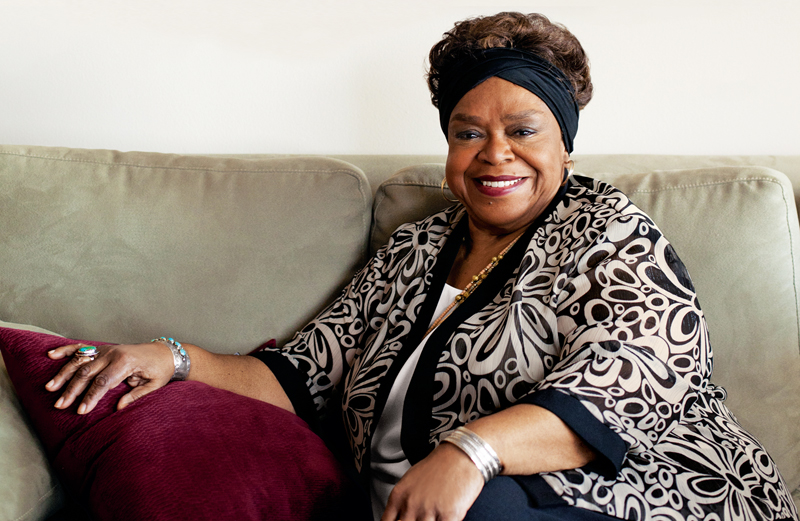
How is a dream born? For me, it happened the day I saw a member of the choir at my daddy’s church recite “The Creation” by the Harlem Renaissance poet James Weldon Johnson. She did more than speak the words; she brought them to life.

When she said God Almighty “flung the stars to the most far corner of the night,” it was as if it were happening right before my eyes. And I was struck with a longing to be onstage myself, transporting an audience to a world beyond the everyday.

I was only a girl of 10 then, but the dream stayed with me through my growing up in Kansas City, through college, then my years of teaching high school English. The value of a good, secure profession had been instilled in me.

I was the first in our family and our church to go to college. Mama had worked 12 hours a day, every day except Sunday, saving for me to go to the University of Kansas. I acted in church plays, school plays and community theater, but I figured it was something I would do on the side, not make a living at.

Then one night I got a call out of the blue. It was a producer I knew from doing local plays. He’d moved away and I hadn’t expected to hear from him again.

Yet here he was offering me a role in a major production by an up-and-coming director, a musical version of Truman Capote’s novel The Grass Harp. Rehearsals would start in two weeks in Providence, Rhode Island.

Even though every fiber of my being wanted to shout, “Yes!” I asked the producer to give me a day to think about it. I called Mama right away and told her. “The show runs October through May,” I said. “I’d get a union contract with Actor’s Equity and a weekly salary.”

Mama said, “I know you ain’t gonna quit your good job.” But that’s exactly what I did. I resigned my teaching position, gave up my apartment, sold my furniture, left my car with my sister and moved to Providence. This was my dream calling me and I wasn’t about to turn a deaf ear.

Mama thought I was having a nervous breakdown, but I knew this role was an answered prayer. It was everything I’d hoped for, working with and learning from seasoned actors, being steeped in theater morning, noon and night.

I knew I could never go back to just acting on the side. This was my new life.

The Grass Harp was a rousing success during previews at the Trinity Square Repertory Theater. There was talk that the show would move to Broadway. The morning of opening night the cast had an early call, which we all grumbled about.

Adrian Hall, the director, entered briskly and asked us to take out our scripts. “I have a few cuts to make before we open tonight. Then we’ll have a brief run-through to tighten up those scenes.” He scooted his stool closer to us.

“Okay, on page twenty-five, where Ginger enters, cut to her exit at the bottom of twenty-seven. Now skip to the top of page forty-one and cut to the middle of forty-eight.” Ginger was my character. He’s cutting a lot of my lines, I thought. “Last cut. All of scene two in the last act.”

That’s my big scene! I raised my hand. It was ignored.

“After the run-through, go home and get some rest,” the director continued. “We have to wow them tonight.” He left the stage. I got up to go after him.

The stage manager grabbed my arm. “Where are you going?”

“I have to speak to Adrian. I don’t think he realizes he cut all of my lines.” He said quietly, “The play was running too long, so Adrian decided to cut your part.”

“But we’re opening tonight!” I felt faint. I could hardly catch my breath.

The stage manager put his arm around my shoulders. “Honey, this happens all the time in the theater. It’s not personal. Now, if you’ll excuse me, I really do have to start the run-through.” I ran to Adrian’s office. He was gone.

I’m going to the theater tonight, I thought defiantly. I wore the new outfit I’d bought for the opening night party. I sat in the audience reading my bio and staring at my picture in the playbill.

I slipped out of the theater during the curtain call. I walked aimlessly, my head down so no one would see me crying. Is this how a dream dies? I asked. Oh, God, what am I to do?

A few days later, I went to the theater to pick up what I thought would be my last check. I found out that my contract would be honored. I would continue to be paid even though I was not performing.

I decided to stay in Providence until the contract ended, in May. I needed something to fill my days. I didn’t know anyone in town except the other actors, so I joined Ebenezer Baptist Church, a small church with a dynamic pastor and a beautiful first lady. I enjoyed many Sunday dinners at their home.

I got a job as a substitute teacher. After school, not wanting to spend evenings alone, I went to the Providence Public Library. I became friends with one of the librarians.

I told her my story and that I wanted to read as much as I could on black history and black literature, as so little of it was taught in school. She suggested some books. I fell in love with the poetry of Phillis Wheatley, Paul Laurence Dunbar, Langston Hughes and yes, James Weldon Johnson.

I read everything I could find. I asked my pastor if I could share at church what I had learned about our people. He was delighted. He suggested a Sunday evening in March and asked for a photo for the church bulletin.

A few days later I was walking to the school where I was substitute teaching when I saw in a bookstore window a beautifully designed, professionally printed poster with my face beaming from it.

“Joanna Featherstone, renowned actress with Trinity Square Repertory Theater, will premiere her one-woman show of African-American poetry and stories on Sunday, March 21, at 7 P.M., at Ebenezer Baptist Church.”

Oh my goodness! Apparently my pastor had decided to make this an event—without discussing it with me. The posters were up all around town. I couldn’t back out now.

I got a call from Trinity Rep, asking if reservations were necessary. The director and several of my former cast mates wanted to come. “We didn’t know you had a one-woman show,” they said. Neither did I!

I frantically shaped the material into some kind of show. I asked the choir to sing some numbers between the poems and stories I performed. At least I wouldn’t be up there alone. I rehearsed and rehearsed.

All too soon it was the night of the show. Before I walked out on the stage, I whispered, God, go before me and prepare the way. The church was packed. The congregation was dressed to the nines. The actors from Trinity Rep were standing in back.

I entered in a flowing black gown, high heels, pearl earrings and bracelet, with ruby-red lipstick and nails. The show was on!

I performed the poems and stories I’d chosen, bringing them to life and feeling more alive than ever myself. Afterward I took a bow to overwhelming applause and amens. The pastor’s wife presented me with a bouquet of red roses. I could not have imagined a more glorious opening night.

My one-woman show, “Not Without Laughter” (named for Langston Hughes’s first novel), served me well for the next 40 years. I performed all over the world. Acting not only gave me fulfillment, it also provided a living, paid for my mama’s house and my daughter’s college.

How does a dream thrive? When you hold fast to it and trust that God (and sometimes, an enterprising pastor) will find a purpose for it.

Download your FREE ebook, Paths to Happiness: 7 Real Life Stories of Personal Growth, Self-Improvement and Positive Change

Striking a Balance

You need to know your priorities in life.

As head coach of the San Francisco 49ers, that’s probably the most important message I deliver to my players, especially the younger ones. Focus on what’s truly meaningful, I urge them.

I’m a guy who wears his emotions on his sleeve, so when I say these things, my players know I speak from the heart. What they don’t know is that I learned that lesson the hard way.

They weren’t there in Chicago the night of the banquet in my honor—one of the greatest moments of my career as a player, and the lowest point of my personal life.

I’d played my entire NFL career with the Chicago Bears. In the 1985 season I’d helped lead the team to a victory in the Super Bowl. Chicago fans always appreciated me, and this night in 1989 would make it official.

All the goals I’d set at age 12 had come true. I was being honored in my adopted city as the best defensive player in the league.

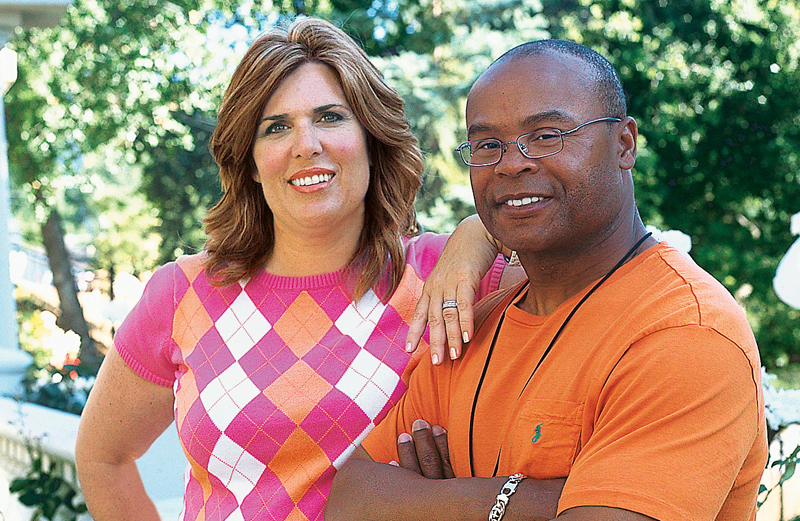
You can imagine what the night was like. People approached my table throughout the evening. “Congratulations, Mike,” they’d say, pushing between my wife, Kim, and me. They’d pay me a ton of compliments, and then turn to Kim and say, “Oh, you’re so lucky to be married to him.”

I figured, if ever I could make Kim proud, this would be the time. “This is our night, honey,” I said. Kim said nothing. We barely spoke through dinner. Driving home, Kim didn’t say a word. Her eyes said it all.

How did it ever get to this? I wondered.

Kim is the only woman I’ve ever loved. I thought back to the night we met—in the Baylor University library, when we were sophomores. I was already well known on campus as a football player.

But off the field I wasn’t nearly so confident. I’d seen Kim around, but couldn’t work up the nerve to approach her. I couldn’t believe it when she walked up to me. “Can you help me with my math?” she asked. I wasn’t very good at math, but I told her I was.

Afterward, I walked her back to her dorm. We talked about a million things—family, faith, our hopes, our dreams. Man, I thought, as I returned to my dorm, she doesn’t care that I’m a football player. Kim’s the first girl I’ve met where I can just be myself.

A few days later we went on our first date. I never did believe in beating around the bush. “I’m going to marry you someday,” I said.

The next few months were heaven. For me, at least. I felt lucky to be around Kim. I thought she felt the same. Turns out she didn’t. We were a couple, but we didn’t spend much time together. Not as much as she wanted. Most of my hours were spent on the field, or studying.

One day she cornered me. “Where do I stand with you?” she asked.

“I truly love you,” I said. But she wasn’t satisfied.

Where to begin? I took Kim to a campus coffee shop and found a quiet corner. I was 12 when my parents divorced. I took it hard. I lost all my desire, all my motivation. Even for football, which I loved. I just wanted to get by.

I told Kim I probably wouldn’t have cared about college, almost certainly wouldn’t have amounted to anything. Until my mother talked some sense into me.

“Nobody gets life handed to them,” Mom told me. “Life is getting beat up and getting back on your feet. It takes willpower and hard work and focus.”

I told Kim it was the greatest motivational speech I’d ever heard, better than any delivered by a football coach. It turned my attitude right around. I went straight to my room and wrote out a vision statement.

My goals, I decided, were to earn a college football scholarship, to become an All-American player, to earn my degree, to get drafted by an NFL team, to become an All-Pro player, to buy Mom a home, to play in the Super Bowl and to own my own business.

“I became a totally goal-oriented person,” I told Kim. Single-minded, you might say. A fitting description for a guy named Singletary.

“There’s something missing from your list, Mike,” she said, touching my hand. “Love.”

I told Kim the truth: Nothing was going to keep me from going for my goals, for getting where I wanted to go. That even included my relationships.

A lot of women would have said goodbye right then. But Kim knew the sincerity of my heart. Eventually, she believed, a wife and family would rate at the top of my list.

But it never did. There was always something else that demanded my attention.

In 1981 the Bears drafted me and I achieved one of my main goals. I thought things would get eas­ier. They didn’t. Most nights I fell asleep studying the team’s playbook. I was determined to be the best.

Kim moved back to Detroit, where her family lived. I can’t tell you how much I missed her. My heart ached. Did I ask her to move back and marry me? No. It was more important to establish myself in the league.

That took three years. I made All-Pro and felt things were falling into place for me. I called Kim. “I’m ready for you now,” I said. “I’m ready to give you the attention you deserve.” That summer we married. The next year we had the first of our seven children.

I loved being with Kim. But things kept cutting into my time with her and our children.

“Nothing has changed,” she complained one night. “You come home, and even at dinner your attention wanders. I know your mind is on football.”

I couldn’t argue. I was named team captain. I’d wolf down dinner then spend the rest of the night watching film of the next week’s opponent and phoning teammates to make sure they were doing the same.

I thought I was succeeding in life. The truth is, I wasn’t paying enough attention to the most important thing of all—Kim and the kids. But I didn’t realize how dissatisfied Kim was until that night at the banquet. Our marriage had reached a crisis.

Mike, you better figure this out, I thought. You better fix this.

Kim marched upstairs with barely a goodnight. I went into the den, grabbed a notebook and followed her into the bedroom. I felt like I did the night I met her: unsure of myself, deathly afraid I’d blow it. I love this woman. I can’t bear the idea of losing her.

I sat down on the edge of the bed with notebook in hand. I was going to make a list, just like I did when I was 12. “I need to know,” I said. “Am I the kind of husband that you need? How do I treat you? What am I doing that needs fixing?”

“Let me think about it for a while,” Kim said.

Every time I saw her over the next few days, I asked if she had an answer yet. I wanted to make my list, set my goals.

One morning at the kitchen table Kim laid it all out for me. My divided attention, leaving the hard work of parenting up to her, tending to my career first at the expense of all else. “You have to be here for us, with us. With me. This family has to come before football.”

It was pretty tough to hear—that a man so wrapped up in success could fail in his wife’s eyes. It humbled me. I promised to do better. But old habits die slow. Football is what defined me.

One night Kim and I got into a terrible argument. I can’t even remember what it was about. As usual, I didn’t quit until I had won. She marched upstairs, as frustrated as I’d ever seen her, and slammed the door. What have I actually won? I thought.

I sat down in the den. This time I reached for the Bible, thinking it would calm me. Flipping through the pages, I came across 1 Corinthians 13—the love chapter. Love is not boastful, not proud, not self-seeking. And it struck me—I was all of those things.

I kept reading. But love never fails. Love is patient, love is kind. It is not easily angered. I thought back again to my first date with Kim. She liked me for who I was, not because I was a football player. I didn’t have to prove anything to her except my love.

I snapped the Bible closed and took it upstairs with me. It was 2:00 a.m. Kim rolled over drowsily in bed.

“Kim, read this,” I said.

“You read it.”

I did. And when I finished I said to her, “You’re my number-one priority. You and the kids. From this day forward that’s how I’m going to love you.”

It took me five years of marriage, but I finally figured out what’s really important in life. Football is a big part of who I am. But not as big as my wife and kids, in terms of who I am off the field—a man of God and a family man.

By the way, it was Kim who suggested that I go into coaching 11 years after I retired as a player in 1992. I love being the head coach of the San Francisco 49ers. But if Kim told me to leave the 49ers tomorrow, that would be it. After all these years, I finally got my list straightened out.

Strength from My Faith

All my life, it seems, folks have been telling me what I can’t do. In school, my learning disability kept me from picking up things as quickly as the other students. On the playground, I was the biggest, slowest kid. No one thought I could ever be an athlete—except for my mom and dad, who were always telling me that with prayer and persistence I could find the strength to do anything.

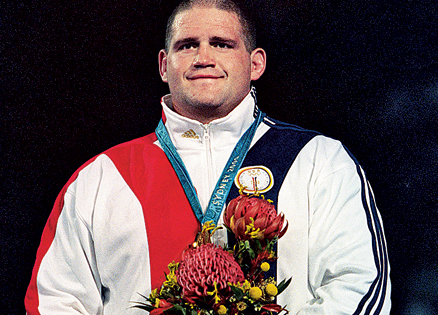
Maybe that’s why I was always pushing myself. I found a sport where my 286 pounds were an asset, wrestling, and I took it all the way to the Sydney Olympics in 2000. Naturally I was the underdog, but I made it to the final round and faced the best in the world, the legendary Russian Alexander Karelin, undefeated in 14 years of competition.

I had an older brother, Ronald, who died when I was eight. I’d win this medal for him. “Rulon doesn’t stand a chance,” the commentators said. “He might as well go home before he gets hurt.” I stood alone on the mat and looked Karelin in the eye. You can do it! I shouted at myself silently. And I did. I beat him. I came back to my parents farm in Afton, Wyoming, with a gold medal and the champion’s belt.

I’d reached the pinnacle, right? But no, I kept looking for new challenges, for other ways to show the world, “Look what I can do!” Afton, in Star Valley, where the Grand Tetons taper into the wooded peaks of the Salt River Range, was just the place for it. I gunned my Jeep around mountain curves, the closer to the edge the better. I raced my four-wheeler through the forests. I pulled stunts with my snowmobile on frozen lakes. I was always testing my limits—and maybe those of the people around me too.

Last February 14, I did my morning workout, then met up with my buddies Danny and Trent for a big lunch. It was about 25 degrees, and the winter sunlight sparkled on the deep snowdrifts that blanketed Afton. “Perfect day for snowmobiling,” I said, pushing my empty plate away. “We’ve got four more hours of sunlight. Who wants to have some fun?” We got our gear and by 1:30 we were roaring through the woods, taking deep gulps of cold air and letting civilization disappear behind us as we climbed into the mountains on our snowmobiles.

Around 3:30, Danny said he’d had enough. “Gotta go. Can’t miss my daughter’s basketball game. Call me later.” Trent mentioned heading in too. “Are you kidding, man?” I exploded. “We’ve still got to tackle Wagner Mountain!”

I revved my motor and shot uphill. The snowmobile slid and I braced with my feet. At the top, I looked over my shoulder for Trent. He was nowhere to be seen. I guess he gave up, I thought. I’ll just take a look around before I turn back. I’d never been up here before. I explored the ridge, loving the spectacular view of Star Valley spreading out below. I called Danny on my cell phone. “I’m on top of the world!” I shouted. “I’ll get Trent and head down in a few minutes. Let’s meet for dinner after the game.”

I swigged the last of my Gatorade and turned back. I found Trent’s tracks and followed them. It was 4:30 now. The sun had started to dip under the ridgeline, casting long shadows on the snow. Man, these are my tracks, I realized, not Trent’s! I took out my cell phone to call him, but now that I was off the peak, I couldn’t get a signal.

I wasn’t far from the Salt River, which winds down into Star Valley, carving a deep gully in the mountainside. I’ll bet he’s checking out the gully, I thought. Its slopes were awesome for snowmobiles. I drove down into the gully. No sign of Trent. The river flows back to Afton, I thought. Might as well follow it home. Trent’ll get back on his own.

I rode alongside the river. A couple places it had overflowed, making semi-frozen waterholes. I tried to cross one. The ice cracked and the rear end of the snowmobile sank underwater. I jumped out, feet soaked. No problem. I could get my snowmobile out. Those things weigh about 600 pounds, but I was strong. I pulled until the sweat was steaming off me. It didn’t budge. I broke off a big tree branch and levered the machine out, and started on my way again.

Another waterhole. Same thing happened, except I ended up soaked to my thighs. Better stick to the slope. It was pitch-dark by now, but I figured I was entering Star Valley. I was bound to see a road soon, then Afton would be a clear shot. I imagined a big steak dinner waiting with a tall glass of Mountain Dew. My stomach rumbled.

The river narrowed and the sides of the gully steepened to almost vertical. I can’t get up that—better just keep going. I inched forward, sending rocks and dirt tumbling under me. Suddenly my snowmobile skidded and slid straight down the slope into the river. I picked myself up, unhurt, but soaked, and stared at the snowmobile on its side in the water. This time I wouldn’t be hauling it out.

The wind cut straight through the fleece jacket I was wearing. Underneath, I had a sweatshirt, T-shirt and runner’s tights—fine for an afternoon ride, but no match for night in the wild. I shivered. I could hear the water sloshing in my boots, but I couldn’t feel my toes. I tried to take the boots off so I could wring out my socks. My fingers were so cold I couldn’t undo the laces. There was a grove of trees nearby. I struggled through waist-deep snow to take shelter.

Still no signal on my cell phone. The clock showed 7:30. Danny and Trent know I wouldn’t miss dinner. I’ll just wait here till they come back for me. I kicked the snow from under a tree and sat down. I felt sore and tired like I’d just wrestled 10 matches in a row. All I wanted to do was sleep. That’s your body shutting down, hypothermia taking over. “Stay awake, Rulon!” I shouted at myself.

I stood up, sat down, pinched myself. I checked my cell phone again: 8:30. What’s keeping those guys? I dozed off, then jerked awake. “Get up! Keep moving!” I yelled again, just like I did on the wrestling mat. But it was no use. One minute I’d be staring up at the bright stars overhead, the next I would wake up spread out on the snow.

My fleece and pants turned into solid ice, my hands froze in my gloves. The next time I checked my phone, it was after midnight. Still seven more hours of darkness! I tried to focus like I would with a tough opponent, like I had with the big Russian. You can do it, I thought. You can do anything, Rulon Gardner!

That’s what my mom and dad raised me to believe, that God hadn’t put me in this world to fail. That’s how I’d lived my life. When my teachers told me I wouldn’t graduate high school, I just worked harder. During my junior year, one teacher said, “Rulon, you may graduate from high school, but forget about college.” Oh, yeah? I thought. I’ll show you. It took me more than six years, but I got my degree from the University of Nebraska. Sports were the same way. I got to the Olympics on my own steam.

“I’m Rulon Gardner,” I shouted at the snowy treetops. “I can do anything!” But my voice was swallowed in the wind.

Around 2:00 a.m. I heard the faint sound of a motor. Trent and Danny! My voice was too weak to holler, so I whistled as loud as I could. The sound came closer, then faded.

They missed me, I thought. No one will find me now. For the first time that night, for the first time in my life maybe, I was scared. I’d worked so hard to get strong, gold-medal strong. I’d tested that strength time and again, often foolishly. Now my strength wasn’t enough. Not near enough. I laid my head against the rough trunk of the tree and closed my eyes. I can lick any opponent, I thought, but this? Lord, I am weak and you are strong. Infinitely strong. Help me.

I drifted off. I dreamed that I was standing in a warm room with Jesus. Beside him was my older brother, Ronald. They were both smiling. I took a step toward them. “Wait, I don’t want to be here,” I said, “not yet.” I woke with a start and struggled to my feet. Overhead the darkness was turning to gray. How much longer until morning? I shut my eyes to pray again. What came to me wasn’t words, but the face of Jesus, like in my dream. In his expression, there was such infinite strength that I felt warmed. My eyes flew open. “I can do this,” I said.

I stumbled back to the river and my sunken snowmobile. I was thirsty, so I bent down and put my lips to the rushing water. It was warmer than I expected, much warmer than the air, so I waded in. I let the water run through my frozen boots and lay back on a rock in the middle of the river, watching the stars melt into dawn. Was that the drone of an engine? I struggled up. An airplane was circling low overhead.

“Hey!” I croaked, waving my arms. The plane dropped something. A heavy coat landed on the snow. I got to my feet and started toward it. Then everything went black.

I awoke to a chopping sound. I was in a helicopter landing at a hospital in Idaho Falls. My core body temperature was 80 degrees, I heard the doctors say. They had to cut my boots off. I was shocked by the sight of my black, swollen feet. Eventually, I lost my middle toe. “You should have lost your feet,” my doctor told me. “In fact, you should have died. The windchill was forty below. Normally, a person can’t survive in those conditions. It’s a good thing you’re so strong.”

All my life I’ve worked hard to get smarter, faster, stronger. But it wasn’t bodily strength that got me through the long, freezing night in the mountains. It was strength from the One who showed me that night what he had been telling me in the classroom, on the wrestling mat…all my life, really: You can do it. The only strength that never fails.

Slow Down and Savor the Season of Fall

Autumn is officially here and I couldn’t be happier–it’s my favorite season. (Candy corn, pecan pie, Mallomars…what could be better?)

Usually, though, I’m so busy going from one thing to the next that I blink and autumn’s over, replaced by lots of snow and giant, puffy winter coats.

Luckily, one of my Guideposts colleagues shared this autumn prayer from Sr. Joyce Rupp. It’s the perfect reminder to take time to sit back and contemplate the transformative wonders of autumn:

A Prayer for Autumn Days
By Joyce Rupp

God of the seasons,
there is a time for everything;
there is a time for dying and a time for rising.
We need courage to enter into
the transformation process.

God of autumn,
the trees are saying goodbye to their green,
letting go of what has been.
We, too, have our moments of surrender,
with all their insecurity and risk.
Help us to let go when we need to do so.

God of fallen leaves
lying in colored patterns on the ground,
our lives have their own patterns.
As we see the patterns of our own growth,
may we learn from them.

God of misty days and harvest moon nights,
there is always the dimension of mystery
and wonder in our lives.
We always need to recognize your power-filled presence.
May we gain strength from this.

God of harvest wagons and fields of ripened grain,
many gifts of growth lie within the season of our surrender.
We must wait for harvest in faith and hope.
Grant us patience when we do not see the blessings.

God of geese going south
for another season, your wisdom enables us
to know what needs to be left behind
and what needs to be carried into the future.
We yearn for insight and vision.

God of flowers
touched with frost and windows wearing white designs,
may your love keep our hearts
from growing cold in the empty seasons.

God of life,
you believe in us, you enrich us,
you entrust us with the freedom to choose life.
For all this, we are grateful.

Amen.

Taken from May I Have This Dance? published by Ave Maria Press. Used with permission. All rights reserved.

What are you looking forward to most this autumn?

Singing from the Soul

Music was in my family’s blood: I was a piano player and Mom was a violinist. But no one in my family loved–or even seemed to know about–soul music. The Beatles were more popular in upstate New York, where I grew up.

I remember practicing “What a Friend We Have in Jesus” in the living room, and adding a bluesy riff. “You shouldn’t try to jazz it up,” Mom warned from the couch.

“It’s not jazz, Mom,” I said, rolling my eyes. “It’s soul music.”

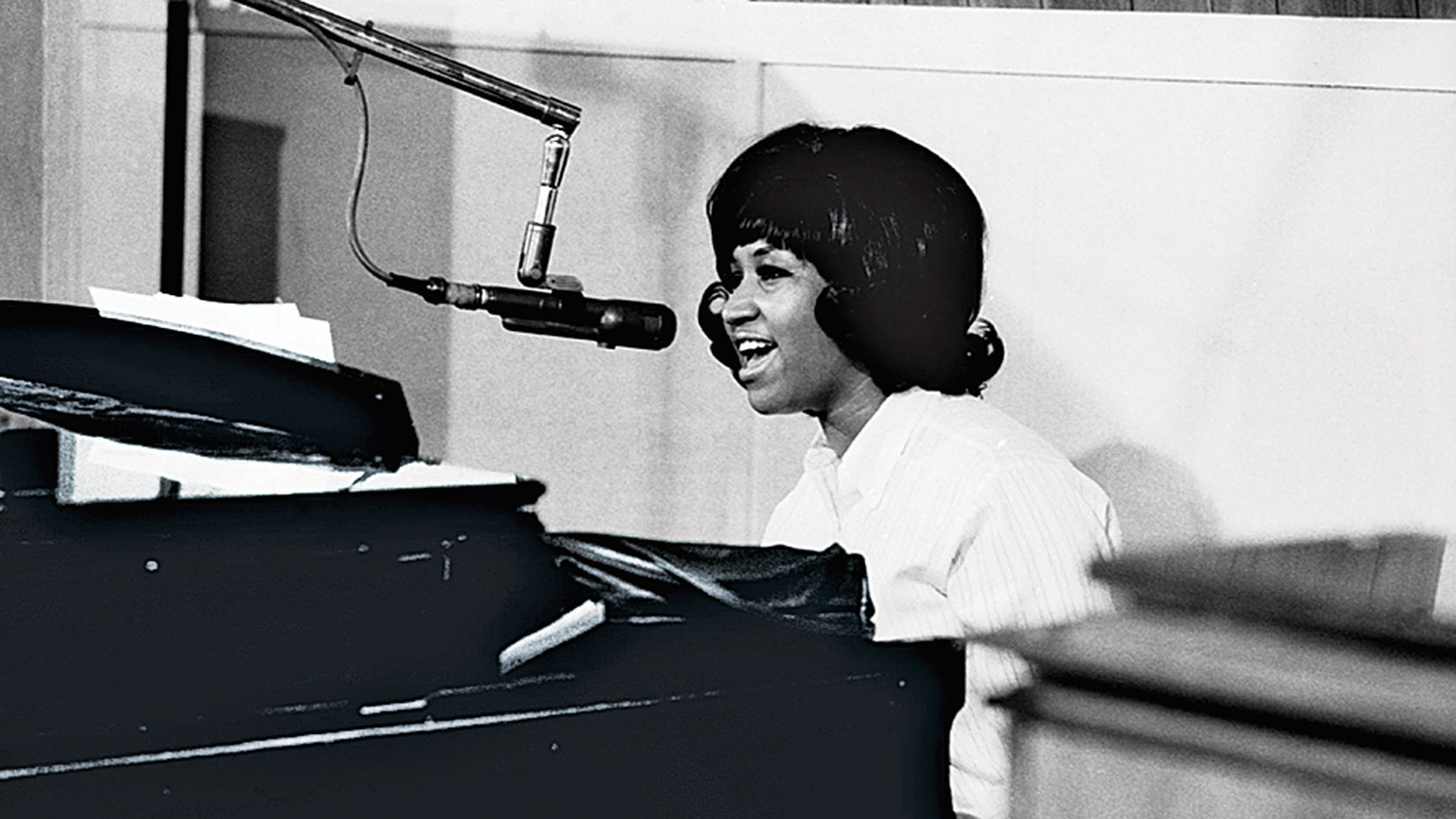
I was an adult when I first heard Aretha Franklin on the radio. I felt giddy, like when I discovered Motown as a teenager. Her Amazing Grace gospel album came out in 1972 and I spent every evening after work learning the piano parts.

“I’ve never been much on that kind of music,” my fiancé said as I practiced. How I wish someone in my life understood my love of soul music!

Years into our marriage we moved to Utah. Exploring my new neighborhood, I met an African-American couple. “We’re starting a church,” the woman said. “Would you like to join?”

Walking over that Sunday I heard music wafting all the way out into the street. Soul music! Soon after I joined the congregation, the piano player left. God had led me to just the right church. And he’d brought the church just the right piano player.

Listen to Aretha Franklin’s recording of “What a Friend We Have in Jesus“!

Download your FREE ebook, Angel Sightings: 7 Inspirational Stories About Heavenly Angels and Everyday Angels on Earth.

Simple Words of Encouragement

We often don’t realize the impact our words or actions have on others. I was reminded of that when I heard the news of the passing of Tim LaHaye, one of the authors of the bestselling Left Behind series.

Tim LaHaye was one of my encouragers at the beginning of my writing career, and now that I think about it, I realize that he probably had no idea how much his simple words meant to me.

I believe the International Christian Retail Show (still called CBA at that time) was in Denver that year. My first book had just been published, and I’d traveled to the retail show to do a book signing.

Read More: The Cross in the Water

As I walked down a hallway with a friend, a man stopped me and said, “Do you have a book out?” I replied that I did and told him a little bit about my new book. “Great!” he said. Come do a radio interview with me tomorrow at 4:00.”

I got there a little early, and realized that my interview would be after beloved author Karen Kingsbury and famed artist Ron DiCianni. (Yes, I felt like I was in one of those “Which one of these people doesn’t belong in this picture?” papers that we used to do in grade school.)

Read More: Writing with Faith

Right before time to start my interview, Jerry B. Jenkins and Tim LaHaye arrived to wait for the slot after mine. The irony of the moment wasn’t lost on me—a new author followed by two men whose books had sold millions of copies.

When I finished my interview with the host, Tim LaHaye walked up to me, clasped my hand and looked me in the eye, and then with great conviction he told me, “Don’t you quit writing.”

I can’t tell you what a jolt of encouragement that was for me as a new writer, and I’ve never forgotten his kindness that day.

What can you say to encourage someone today?