

Embrace God's truth with our new book, The Lies that Bind

She Gave Up Sarcasm for Lent

Dolphins. that’s how I got into trouble. It was the week before Lent. My husband, three teenage daughters and I were eating dinner at the kitchen table when I brought it up. Something I’d seen on Facebook that afternoon. An acquaintance from church had a penchant for posting overly inspirational quotes accompanied by photos of rainbows, sunsets, ice cream cone-shaped clouds, you name it.

“Now she’s moved on to dolphins,” I told my family. “I wonder if killer whales are next.”

I dropped the word cheesy. Everyone laughed. Everyone, that is, except my 17-year-old daughter, Maggie. She just stared at her plate and moved her peas from one side to the other.

After dinner, I went upstairs to check on her. Maggie was sitting on her bed, earbuds in. I tried to get her to open up about what was bothering her. But she gave me the teenage cold shoulder. I thought I was going to get frostbite.

“I don’t want to talk,” Maggie finally said, pulling out her earbuds. “You’ll just say I’m being cheesy.”

“What?” I said. I was sarcastic, sure, but I’d never call my kids cheesy!

“You’re snarky, Mom. You make fun of everything,” Maggie said. “And FYI, I like those dolphin photos!”

Dolphins? This was about dolphins? Seriously?

All night I tossed and turned, thinking about what Maggie had said. Was she right? Was I too snarky? I wasn’t a mean person. But around people I was comfortable with, I did tend to poke fun at things. It’s just how I’d been raised.

In my family growing up, humor was everything. When I was little, my dad and brother would spend the entire dinner hour outdoing each other’s jokes. I had to keep up if I wanted to be included. And I was the kind of person who noticed everything.

That’s one reason I studied journalism in college. I met Luke there, a nice southern gentleman from Georgia. We fell in love, got married and moved to a little white farmhouse outside of Atlanta. I came from Connecticut, and the South gave me culture shock. Everyone was so polite. Meanwhile, I was like a bull in a china shop.

Even so, I made a good group of friends—I was “the funny one” of the bunch. Whenever we got together for lunch, I couldn’t help but give a running commentary on everything from the design of the menu to the waiter’s serving style. My humor was what made me, well, me, wasn’t it?

The day after my conversation with Maggie, I called my friend Cristell and told her about it.

“Is that true?” I asked. “Am I too snarky?”

Cristell hesitated. “Well, I remember how you used to say everyone is doing the best they can with what they have.

“I must’ve been over-caffeinated that day,” I shot back. Hmm. Maybe I had been a little softer back in the day. My forties had turned me sarcastic. What could I do about it at this point, though? It’s not like there was a 12-step program for smart alecks.

Ah, but there was Lent! Usually I gave up chocolate or shoe shopping. This year, I decided I’d give up the snark. I’d abstain from wisecracks and sarcasm for 40 days. And I’d give up Facebook too—one more dolphin photo and I wouldn’t make it past the first hour of Lent snark-free.

READ MORE: What to Give Up for Lent: 15 Meaningful Suggestions

I wasn’t sure if the planet would continue to spin minus my running commentary, but I was interested to find out. Most of all, I wanted to know if I could change, if I could be the kind of person my daughter could trust not to make fun of her.

Day one went off without a hitch. I had many a snarky thought, but none were actually verbalized. The next day, though, temptation stared me right in the face when I met with my book club. We got together once a month for a nice sit-down lunch. I was on my best behavior.

Things were running smoothly until someone brought up a trigger topic—a book whose popularity I could never fathom. I squirmed in my chair like an antsy kid.

“What’s going on, Laura?” someone finally said. “You’re awfully…quiet.”

“I gave up snark for Lent,” I said. “I’m biting my tongue, which is just about bleeding right now.”

They erupted into laughter. “Good luck with that!” they said. All through lunch I just sat there trying to think of something cheesy to say. I felt like Tigger when he lost his bounce. Lord, I prayed on the drive home, help me find a way to stifle the snark but still be me!

Two weeks into Lent, things were no better. I kept noticing things I badly wanted to comment on, even at church. There was the woman filing her long nails during the service. The guy who’d punctuate the pastor’s sermon points with a soul-stirring “Aaaaahhh-MEN!” And the two kids driving their little toy trucks up and down the edges of the pew.

I wasn’t verbalizing the snark, but the running commentary kept on going in my head. Shouldn’t my heart have changed by now? Was I a lost cause?

One afternoon halfway to Easter, I sat at home and turned to a book by the writer Brené Brown for inspiration. The chapter I’d cracked open was about Brené’s struggle with perfectionism—she held herself and, as a result, others to impossible standards. Hence her occasional snarkiness.

I was the same way! I judged others over the things I silently judged myself about. Like my behavior at church or my posts to Facebook. Once upon a time, I’d believed everyone was doing the best they could with what they’d been given. But somewhere along the way, I’d stopped believing that for myself.

I was self-conscious about my own perceived faults and I covered it up with sharp humor. No wonder I was so hard on other people. I closed my eyes and prayed, this time not to stop the snark, but to be kinder to myself and, by extension, to others.

A week before Easter, I stopped at the supermarket. My cart was overflowing, so I skipped the self-checkout line. The clerk on duty was a sour woman I’d seen before. She rarely said anything apart from the bare minimum required to facilitate the transaction. At least the self-checkout computer always greeted me with “Welcome, Valued Guest!” This clerk could take a hint, I thought as I emptied my cart.

Yet the more I looked at the clerk—really looked at her—the more I noticed that she wasn’t surly at all. If anything, she seemed sad. I tried to put myself in her shoes. What was she going through? I caught her eye and did something I’d never done before. I smiled at her. She smiled back. A tired smile that said, “Thanks, sugar, for trying.” I had no snarky response, no criticism. I just felt for her.

I paid for my groceries, thanked the woman and left the store feeling lighter somehow. Humor isn’t a bad thing. In fact, it’s a great thing. But not when you hide behind it, afraid to really reveal yourself, flaws and all.

That night, I sat with Maggie in the den. She was telling me about a Christian song she adored. Her guard was down. I wasn’t a big fan of contemporary Christian music—I usually made fun of it. But Maggie was so passionate. I asked her to play the song for me.

“You won’t like it,” she said.

“Try me,” I said. I felt as if I could like just about anything—even cutesy dolphins.

For more inspiring stories, subscribe to Guideposts magazine.

READ MORE ABOUT LENT:
Set Free by Forgiveness

I sat on my bed with my Bible, trying to tear my eyes off the T-shirt crumpled on a chair beside me. The shirt was stained—with blood. A few weeks earlier, I’d survived one of the worst mass shootings in American history, at the Century movie theaters in Aurora, Colorado.

A gunman had burst into a theater and fired dozens of rounds from a shotgun, a semiautomatic rifle and a 40-caliber handgun, killing 12 people. I was shot in the shoulder, one of 58 injured. My friend Rebecca, who’d come with me that night to watch the new Batman movie, was one of the dead.

Now my shoulder was healing. My heart was slowly healing. Even my soul seemed to be healing. At least I knew it would heal if I could take some time to pray and collect myself.

That’s why I was in my bedroom, clutching my Bible and staring at my T-shirt. I’d kept the shirt as proof I’d survived that nightmare. Somehow, God had saved me.

Yes, but saved me for what? My Bible was open to II Corinthians: “For it is God who said, ‘Let light shine out of darkness.’” My bedroom was dark. It was daytime, but I’d pulled the blinds and closed the door. I wanted to be alone.

The days after the shooting had been a blur of media interviews, people rushing to help. Somewhere in there I’d said something about forgiving the killer. After that, all anyone wanted to ask was, “Do you forgive him, Marcus? How can you forgive something like that?”

I’d become known as the victim who forgave the killer. Inside, I was numb. For some reason, every time I read that passage about light and darkness, I heard something else: Who do you really need to forgive, Marcus?

That was the question, wasn’t it? I knew forgiveness was the path I should take as a Christian. But James Holmes, the suspect with the dyed orange hair and crazed eyes, wasn’t the only one I needed to forgive.

I’d carried my own darkness into that theater. A lifetime’s worth. Who did I need to forgive? I closed my eyes and remembered.

My parents weren’t married when I was born. In fact, my dad was engaged to another woman. He married her and walked out of my life. By the time I was old enough to know such things, my mom had married another man, Herbert Weaver.

He’d been in the military, then went to work for the finance division of General Motors. He earned a good salary and seemed stable and upright. But Herbert was a monster. After he and Mom had two kids of their own, he treated me like an outcast.

The abuse started with yelling. Then came vicious whippings with an extension cord. Then burns with an iron. I was just seven the first time I ran away from home.

Herbert always found me and dragged me back. He chained me to my bed. Once, he filled a trash can with concrete and chained me to that. He abused Mom too. We were all terrified of him.

The only way I knew to fight back was by acting out. I smoked, drank, got in fights, shoplifted. Once, I stole Herbert’s car and crashed it. He broke off a piece of fence and beat me with it. We were like opponents in the wrestling ring, unwilling to let each other go.

Finally, after graduating from high school, I fled Virginia Beach, where we lived. I got a good job in Washington, D.C. But, like I’d do with almost every other job, I soon sabotaged myself. Always the damage inside me won out and I’d do something stupid, walk away or get in trouble.

For years I wandered from place to place, job to job, running away from everything but myself.

I ended up in Colorado. Then one of my sisters, Herbert’s biological daughter, was diagnosed with liver failure. She came forward and said Herbert had sexually abused her when she was young. He was sent to prison. He could rot there for all I cared.

My sister passed away in 2001. Losing her prompted me to try to straighten out my life. I decided to become an X-ray tech and won a scholarship to earn an associate’s degree. I was baptized in 2005, while in school. But I didn’t read the Bible and I didn’t understand what it meant to submit to God’s will. Not then.

I was still doing my own thing after graduation. I fell in with a couple of guys involved in petty crime. Before I knew it, I was doing cocaine and dealing drugs to feed my habit.

I was caught, tried and jailed. The first thing I did in my cell was grab a Bible. Over the next 11 months, I went to jailhouse Bible studies, truly discovering how to become a follower of Christ.

I was released and moved into a homeless shelter. Before long, I was its manager. I went to church, studied the Bible and reached out to other ex-cons. I met a woman named Rebecca Wingo, a former Air Force linguist who was beautiful, smart, grounded, and really seemed to like me.

She had this uncanny ability to get to the heart of the matter, maybe because she was studying to be a social worker. When I confided in her about the abuse I’d suffered, she heard even what I didn’t say.

“I know your stepdad did terrible things to you,” she said. “But you’ve got to let the past go, or it’s going to keep holding you back.” Although we hadn’t known each other long, we were becoming close friends when we decided to go see The Dark Knight Rises at the Century theater in Aurora.

I opened my eyes. my room was dark. Dark like the theater. As often happened when I let my guard down, memories of the shooting swarmed my mind. I saw the gunman’s silhouette stride across the movie screen. I heard the pop of his gun—movie bullets sound nothing like the real thing.

It was all so surreal, a nightmare mingling of screams and twisting bodies blurred by smoke from the smoke bombs the killer had tossed into the theater. In a pause while he reloaded I tried to help Rebecca. She’d been shot.

I picked her up. I staggered toward the exit. I hardly felt the bullet go through my shoulder. I dropped Rebecca. I couldn’t pick her up again. By the time I was outside the theater—I don’t remember getting there—I couldn’t find her. She lay where I’d left her.

The blood on my shirt was brown now. Stiff. Did I keep that shirt because it reminded me of survival? Or of failure? I’d failed to save Rebecca. And every time I thought about that night, I got confused about the silhouette in front of the screen.

I knew it was the killer. But to me it looked like Herbert Weaver. It looked like a monster out to destroy every good thing I had, including this new life I was making for myself outside prison.

Forgiving the killer was one thing. Newscasters said he was a troubled loner. I could leave his fate in God’s hands. But what about my stepdad? Why should I forgive him? He’d tormented me my whole life. Why should getting shot in a movie theater mean I had to forgive the man I hated more than anything in the world?

I looked at my Bible again. “For it is God who said, ‘Let light shine out of darkness.’” Sunlight glowed through the slats of my blinds. Dimly I heard the world passing by outside.

Why, I wondered for the thousandth time, had I survived and Rebecca died? Another question, another memory, more torment—all of it balled up inside that dark silhouette surrounded by the light of the screen. My questions were surrounded by God’s own insistent question: Who do you need to forgive, Marcus?

For one terrifying moment I let the silhouette in front of the screen take the shape of Herbert Weaver. I let him stride right up to me, carrying not a gun but a piece of fence, an extension cord, a chain. And I realized he was nothing more than that—a silhouette. A shadow from my past. He hadn’t laid a hand on me in years.

The gunman had wounded my body. But all these years later, Herbert Weaver was still tearing away at my soul. He damaged me because I let him. Because, like a wrestler, I refused to let him go.

“Do you forgive him, Marcus?” The reporters’ words echoed in my mind. I looked at my shirt. At my Bible. At the light behind the blinds. The silhouette was gone. In its place I saw plain old Herbert Weaver, a man who lashed out at others because he couldn’t face his own torment.

His fate was in God’s hands too. I could let him go. I could let God’s light fill the shadow in my soul.

I took a breath. I closed my Bible, setting it beside my bloodstained shirt. I opened the blinds; sunlight streamed in. It was a beautiful summer day. I knew it wouldn’t be long before James Holmes had a court date. My phone would ring and the reporters would ask their question again.

I knew what my answer would be. And this time, I knew exactly what it meant.

Download your free eBook, Let These Bible Verses Help You: 12 Psalms and Bible Passages to Deepen Your Joy, Happiness, Hope and Faith.

Seeing Life Through a Lens of Joy

“Thank you for your note and gift of the money, but I just did what was morally right.” These were the words of the proprietor of a gas station off of I-84 in Connecticut.

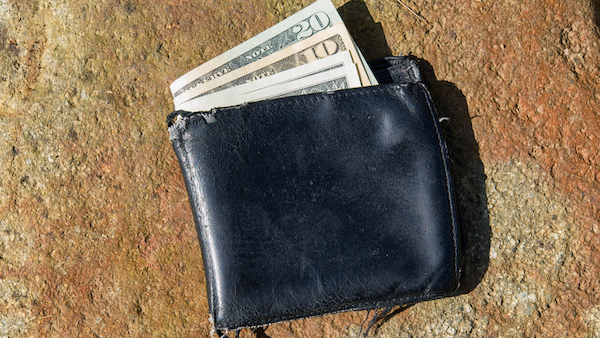
On a trip back from Boston, my two girls and I stopped at this gas station. It wasn’t until we got home an hour and a half later that I realized I’d left my wallet in the gas station restroom.

I tried to set aside my frustration and anxiety over this and focused on taking action. First, I had to find the phone number of the gas station. Just a quick Google search, right? Well, not exactly. The number had recently changed due to new ownership.

Read More: Simple Ways to Feel Better

So I called the diner across the street. The hostess generously took down my number and had a bus boy bring it to the gas station proprietor, who then called me. He informed me that a regular customer had found my wallet and turned it over to him for safekeeping.

The gas station proprietor found my AAA card in my wallet, called the number and left a message for me, hoping AAA would reach out to me. We arranged that I would drive back to the gas station the next day to pick up my wallet.

My relief that the situation was heading the right direction was palpable, as was my appreciation for the genuine kindness and thoughtfulness of others—from the customer who found my wallet to the diner hostess and bus boy to the proprietor, who was willing to mail me my wallet if that was easier for me.

Read More: Challenges as Occasions of Joy

At every step of the way, generosity of spirit was shown, which was heartening in a world where so often we witness self-focused, monocular thinking and self-serving behaviors.

I drove back to that gas station the next day with the goal of retrieving my wallet and giving an envelope, with a thank you note and money inside, to the proprietor.

I was not there when he opened the envelope but I heard from him later. That’s when he said, “I just did what was morally right.” He told me that he had given the money to the regular who found my wallet. “I am blessed. I wanted him to have the money for his good deed.”

Much good fortune followed me after I left my wallet behind on that trip back from Boston—including a powerful reminder of the goodness and generosity of others.

My world was righted and made more joyful, not just by being reunited with my wallet, but by the selfless acts of others.
As spiritual teacher and author Marianne Williamson wrote, “Joy is what happens when we allow ourselves to recognize how good things really are.

Savory Slow-Grilled Chicken

You're bound to enjoy this take on a traditional Southern recipe; it's one I've been playing with for years.

Ingredients

Spice Rub
2 t. onion powder 1 t. fresh ground pepper
2 t. garlic powder ¼ t. cayenne pepper
1 T. paprika ¼ t. ground thyme
1 t. seasoned salt 1 t. lemon pepper
2 T. kosher salt
1 whole chicken cut up in 12 pieces (no back) 8 T. melted butter
¼ c. olive oil 2 T. Italian parsley, chopped

Preparation

1. Combine dry rub ingredients in small bowl. Set aside.

2. Buy chicken pieces already cut up, or cut up a whole chicken if you’re handy with a knife. Separate the wing part from the wing drumette and remove the little bony wing piece at the end. Cut the half breasts in half again so there are 4 breast pieces.

3. Rinse and carefully dry chicken pieces with paper towels. (Starting with dry chicken ensures a crispy skin and better spice coverage.)

4. Toss chicken with olive oil in a large mixing bowl. Sprinkle dry rub over chicken and work into all pieces. Do this up to 1 hour ahead.

5. Set gas grill on low (or wait until charcoals are white and starting to cool). You don’t want the grill to be too hot. If you’re getting flare-ups, it’s too hot.

6. Place chicken pieces skin side up on grill and cover for 15 minutes. Watch grill carefully to make sure there are no flare-ups.

7. After 15 minutes, brush skin side with melted butter and turn skin side down. Cover and cook for 15 minutes. Brush meat side with butter and turn. Repeat every 10 minutes until butter is gone.

8. Total grill time should be about 60-75 minutes on low heat. Check for doneness with an instant thermometer reading 165°F in the thickest piece of chicken. Skin should be brown, savory and super crispy. Arrange on a serving platter and sprinkle with Italian parsley.

9. Arrange on a serving platter and sprinkle with Italian parsley.

Serves 5.

Nutritional Information: Calories: 300; Fat: 30g; Cholesterol: 65mg; Sodium: 1870mg; Total Carbohydrates: 3g; Dietary Fiber: 1g; Sugars: 0g; Protein: 6g.

Don't miss Michael's inspiring story about how a group of church friends who like to grill have supported each other through tough times.

Download your FREE ebook, The Power of Hope: 7 Inspirational Stories of People Rediscovering Faith, Hope and Love.

Savoring the Delectable Delights of Hanukkah

I sent a last-minute e-mail to a photographer, shut down my office computer and texted my brother Sam: C U @ Penn in 15.

I hurried to Penn Station on the west side of Manhattan, where we’d catch the 5:35 train to Mom and Dad’s out on Long Island.

It was the first night of Hanukkah and I couldn’t wait to get home. I’ve lived a crazy busy life in the city for seven years, but home will always be the house in the suburbs where I grew up with my older brothers, Sam and Ben.

There are bigger and more serious Jewish holidays like Yom Kippur, Passover and Rosh Hashanah that require fasting, long services at temple and solemn prayers. Hanukkah is different. Hanukkah is a family celebration. Hanukkah is fun.

The holiday has its origins in the second century BC, when the Jews defeated their oppressive rulers and rededicated the Holy Temple in Jerusalem. The occupiers had defiled the oil that was used to light the temple’s candelabra.

There was only enough pure olive oil to last a single day, yet the oil fueled the flame for eight days.

Today, Jews celebrate this miracle by placing and lighting one additional candle in the menorah every night for eight straight nights, which is why Hanukkah is called the Festival of Lights.

We also eat…a lot, at least in my family, especially on the first night. That’s why I was in a hurry to get home.

My mom is an amazing cook and baker, and the whole train ride to Long Island, all I could think about was the feast she’d prepared for us.

Latkes, potato and onion pancakes. Beef brisket that she’d seasoned with garlic, pepper and bay leaves and roasted for hours until the meat was juicy and tender.

And the desserts! Apple crisp. Sorbet with chocolate shavings. Biscochos, Sephardic shortbread cookies. And my favorite, jelly thumbprint cookies. We call them that because it looks like someone stuck their thumb in the center to make room for the jelly.

Really, though, my mom’s trick, which she learned from my grandma, is to use the end of a wooden spoon.

It was hard to restrain myself from grabbing a cookie as we gathered in my parents’ kitchen. We stood in a semicircle around the menorah and recited the three traditional Hebrew prayers, concluding with the Shehecheyanu, only said on the first night of Hanukkah.

“Blessed are you, Lord, our God,” we prayed, “Sovereign of the universe, who has kept us alive, sustained us and enabled us to reach this season. Amen.”

Mom lit the menorah. We sang Ma’oz Tzur, a Jewish liturgical poem, and found our places around the dining table.

Then the feast began. Naturally I had to have a taste of each dessert.

At the end of the night, Mom and Dad put us back on the train to Manhattan with hugs and Tupperware containers filled with goodies.

I curled up in my seat on the train, feeling incredibly content and grateful.

As much as I love my busy life in the city, I needed a night like this to remind me of the timeless blessings of food, family and faith that light my life.

Try Rebecca’s mom’s recipe for Jelly Thumbprint Cookies; they’re a treat suited to any holiday!

Download your FREE ebook, Paths to Happiness: 7 Real Life Stories of Personal Growth, Self-Improvement and Positive Change.

Santa Claus Around the World

It is widely known that Santa Claus was inspired by Saint Nicholas of Myra, an early Christian bishop of Greek descent from a town in Turkey that is now called Demre. Similar characters inspired by St. Nicholas can be found in many other countries, along with some other holiday gift-givers who have different origins. Let’s pay a visit to a few of these Santas (by other names) from around the world.

Santa in the Netherlands: Sinterklaas

Associated with Christmas in the Netherlands, Belgium, Luxembourg and northern France, Sinterklaas is one of the key predecessors of Santa Claus. Like Santa, he was inspired by Saint Nicholas and is generally depicted with a full white beard.

Sinterklaas brings presents on December 6, St. Nick’s feast day, or in some regions, the night before. He is dressed in red bishop’s garb and rides a white horse, carrying a large red book that includes the names of children who have been good or naughty. He is assisted by Swarte Piet, a Moor from Spain.

The Dutch, who were the first Europeans to settle what would later be New York, brought Sinterklass with them, where he slowly morphed into the Santa Claus we know today.

Santa in the United Kingdom: Father Christmas

Father Christmas has long served as the Santa-esque figure in the United Kingdom.

When Father Christmas debuted in the 17th century, he was something of a political figure: England’s Puritan-led government at the time was trying to do away with Christmas, and in response to that effort sprang up Father Christmas, who represented holiday feasting and merry-making (but not the giving of gifts). Santa Claus began to make inroads in England in the mid-19th century, and thereafter Father Christmas took on the gift-giving role.

The two bearded gentlemen are almost interchangeable today, though in traditional depictions, Father Christmas tends to be a bit more lean than Santa and sports a long-hooded gown of red, trimmed with white fur.

Santa in Germany: Christkindl

Christmas markets have been popular in Germany since the 1500s, but gift-giving back then occurred on November 11 and December 6, the feast days of St. Martin and St. Nicholas, respectively. In an attempt to take the focus off Catholic saints, the religious reformer Martin Luther introduced a figure known as Christkindl (Christ Child), a child (later a young girl) usually depicted with blond hair and angel wings who brings presents to children. It’s thought that in English-speaking countries, the term Christkindl transformed into another name for Santa Claus: Kris Kringle.

For some Germans and German-speakers, it’s the Weihnachtsmann who brings presents; he is largely a German version of Santa Claus and Father Christmas.

Santa in France: Père Noël

Sometimes called Papa Noël, this gift-giving gentleman, like Father Christmas, wears a fur-lined cape and hood. Traditionally, French children left shoes by the fireplace with treats in them which were replaced with small gifts by Père Noël, though nowadays, the gifts are often larger and found under the Christmas tree. The gift-giving happens after Christmas Eve Mass rather than on Christmas morning.

In some parts of eastern France, it’s Tante Arie (Aunt Arie) who, accompanied by a donkey, brings gifts to well-behaved children.

Santa in Spain: The Three Kings

In a tradition dating back to the fourth century, the familiar trio of wise men—Caspar, Melchior, and Balthasar—are the ones who bring presents, and it happens on (or on the night before) the Epiphany on January 6—the day the wandering Wise Men came upon the Christ child. Children leave treats and drinks for the Kings’ camels.

The tradition began in the Roman province of Hispania (which is now the countries of Spain and Portugal) and later spread with the Spanish and Portuguese colonization of Mexico, Central America, and South America.

Santa in Russia: Ded Moroz

This distinctly Russian figure of legend predates Santa, but shares many of his characteristics. Originating in Slavic mythology, he was adopted and adapted by the Russian Orthodox church. He wears a long fur coat of red and blue, a long magic staff and travels in a sleigh pulled by three horses, bringing gifts to children.

Unlike other Santa-esque figures, Ded Moroz has a female helper: his granddaughter, Snegurochkal who wears silver and blue robes and a fur hat or snowflake crown.

Santa in Czech Republic: Jezisek

Though Santa has made inroads in recent decades, tradition in the Czech Republic has it that Jezisek (Baby Jesus) brings gifts on Christmas Eve. Children are kept in another room while adults prepare a festive meal, decorate the tree and arrange the presents beneath it before allowing the children back.

Gifts are also shared on December 5, the evening before St. Nicholas Day. These are smaller gifts, brought by Mikulas (St. Nicholas).

Santa in Poland: Swiety Mikolaj

Dressed in bishop’s robes, Swiety Mikolaj (St. Nicholas) visits Polish homes, bearing gifts for good children, on his feast day, December 6.

But there are other gift-bearing characters in certain parts of the country, including Gwiazdor (Starman), Dziadek Mróz (Grandfather Frost), Aniolek (Christmas Angel) and Dzieciątko (the Child).

Santa in Italy: La Befana

Santa is becoming more popular in Italy (where he is known as Babbo Natale), but the country’s traditional holiday gift-giver is La Befana, an old woman who resembles a Halloween-style witch but is kind and brings candy and presents to well-behaved children on January 5, Epiphany Eve. She’s even said to sweep the floor before departing the recipients’ home, signifying a sweeping away of that year’s problems with the arrival of a new year.

Running with a Giant

One of life’s most painful events is saying good-bye to a loved one or a dear friend. This summer I received a distressing call from my sister Sandy. Our beloved uncle and mentor, Rev. Dr. Adolfo Carrion, was taken to the emergency room with severe abdominal pain.

We would learn later that he was diagnosed with stage 4 pancreatic cancer.

Processing my feelings about this prognosis, I began to ponder his life, ministry and impact on me. I flashed back to a memory of a black-and-white photograph of my first birthday.

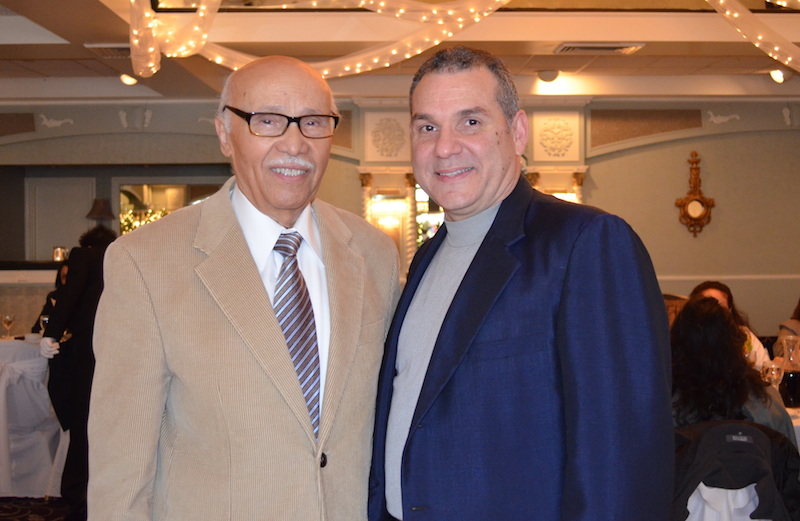
Pablo Diaz with his uncle, the Rev. Dr. Aldofo CarrionI was standing in front of a birthday cake with a single candle. There standing behind me was my uncle, with his hand placed on my shoulder. I know he was praying for me, asking the Lord for a blessing over my life.

Memories flooded in about my teenage years. I recalled all the times my uncle would take his son Adolfo, my cousin Felix, and myself out for breakfast just to chat.

Although we were adolescents, he treated us with great respect. His words of affirmation touched our lives.

He had the ability to help young leaders discover their calling, to realize their potential and believe in themselves. When I was 21 years old, he gave me my first pastor’s assignment.

It was a small congregation in Brooklyn, NY. Dr. Carrion said to me, “Pablo this church assignment will be good for you to gain vital ministerial experience.” He was right, I was ready.

Weeks following the diagnosis, family and friends gathered to visit. I remember my initial shock at his physically weakened demeanor. It was such a contrast to the robust man I knew from the pulpit and our family gatherings.

Yet his spirit remained comforting as he offered blessing and words of encouragement to all who came to see him. My uncle was vibrant and alive, his mind as sharp as ever. His smile unchanged.

The last time I was with him I didn’t want to leave his presence. I wanted to remain at the feet of this “giant.” Two months after the diagnosis, the Lord called him home.

Early on, Rev. Dr. Carrion surrendered his life to God, answering the call to be a minister and spending a lifetime expanding the Kingdom of God. In June 2014 at the Assemblies of God Centennial Celebration in Orlando, he was honored as one of the 100 inspirational stories featured from the last 100 years.

Dr. Carrion was a giant in his faith, as a man and a leader. I had the honor and privilege to run alongside him. Who is your giant in faith, in life? What words or lessons have they taught you? Tell me about how their life has inspired you to be a better person.

There is a proverb that states “Let another praise you, and not your mouth; someone else, and not your own lips.”

Running on Faith

In the spring of 1982 I was 25 years old, with a newly acquired master’s degree in social work, and sharing a New York City apartment with my twin sister, Laura. Times being what they were, I was out of work. And I was 25 pounds overweight. So, when I wasn’t out looking for a job, I busied myself doing sit-ups in an effort to lose weight. And, because I needed spiritual strength as well, I began reading the Bible.

And then the strangest thing happened. One day I was sitting on the living room floor doing sit-ups, huffing and puffing like a steam engine, when a singular thought drifted through my mind…a thought so unusual it couldn’t have been my own…a thought that grabbed my attention and held it like one of those messages being pulled across the sky by an old-time biplane: Run the New York City Marathon.

The thought at first excited me, but it was so ludicrous that I laughed out loud. You see, my sister and I were both born with cerebral palsy. We have what is called mild spastic partial paralysis of our legs, and to get around, we depend on our “Canadian canes,” aluminum crutches that attach to our forearms.

As the days passed, however, the thought wouldn’t leave me. I kept wondering: Was it possible?

When I told Laura about the thought, she didn’t seem to think the idea was so ridiculous. “I don’t know about any marathon,” she said in her quiet, matter-of-fact way, “but you do have a lot of time on your hands. And you do want to get in shape. Maybe you could try jogging.”

That did it. Running the marathon was an impossible goal, a goal that would take a miracle to accomplish, but that appealed to me. The New York City Marathon was six months away. I would do everything I could to run it.

Back then the only way to run in the New York City Marathon, if you weren’t a nationally recognized runner with a preexisting qualifying time, was to apply early or enter a lottery. I’d already missed the early filing deadline, so I had to go into the lottery. When I filled out the application form, there was no box to check for “disabled.” I simply completed the form like an able-bodied person and dropped it in the mailbox with a prayer.

I didn’t tell many people about my plans, just Laura, my mom and a few close friends. I was too shy—embarrassed, really—to talk about it. What if I failed? Could I finish even part of the 26-mile, 385-yard race?

When I started training, my pace was so slow, about 25 minutes per mile, that I found myself doing a lot of running at night. About three times a week, often after a long day of job hunting, I grabbed my crutches and set out from our apartment on East 39th Street. I headed north, up Fifth Avenue—past Trump Tower and Tiffany’s, past the Plaza Hotel, and up alongside Central Park, where uniformed doormen stood guard in front of the city’s most elegant apartment buildings. As weeks passed, I became a familiar sight, hurrying by on my crutches; doormen tipped their hats as I passed and some called out words of encouragement.

As I grew stronger, my runs grew longer, taking me farther up Fifth Avenue, past the Metropolitan Museum of Art, and all the way up to Mount Sinai Medical Center on 100th Street, where I turned around and headed back home the same way. Many times it was past midnight when I finally returned home, where Laura would be waiting up for me with my favorite dish, a big plate of spaghetti.

In the weeks that followed, I found there was something about running at night that invited a contemplative mood. The city around me faded away; I talked to God and listened for his response. As I planted both rubber tips of my crutches on the pavement ahead, leaned into the darkness and pulled my unwilling legs toward the seemingly impossible goal of 3 miles…9 miles…12 miles…16 miles…it occurred to me that running in the dark was a lot like faith. “Faith,” it says in the Bible, “is the assurance of things hoped for, the conviction of things not seen.”

Not that faith was darkness. The darkness was the myopia of my limited human vision, the shortsightedness of my dreams, my inability to see beyond difficult circumstances, whether unemployment, unwanted pounds or a physical disability. But faith was the running—running with conviction, full-steam ahead—into the darkness. Faith was running in the dark with the assurance that God, who held my destination in his hand, would see me through the journey safely. All he asked of me was to trust him. And to keep on running.

Incredibly, at the end of the summer I received a notice in the mail informing me that I had been selected in the lottery and was among the 16,000 who entered the marathon. I was going to run!

On Sunday morning, October 24, I stood at the base of the Verrazano-Narrows Bridge on Staten Island, the starting point of the race. I wore leather gloves to prevent my palms from getting blisters from the friction of the crutches, and I carried a small canteen of water and a pocketful of vanilla fudge caramels for extra energy. My family and some friends agreed to meet me at the marathon’s 15-mile mark—if I made it that far.

Grouped among the slower runners at the rear of the crowd, I didn’t even hear the starting gun. And suddenly I was caught in the throng of runners moving across the mile-long bridge leading to Brooklyn. No one had told me the bridge was uphill, and the early morning wind was cold and hard. When I came off the bridge, I was already tired. And totally alone. The other runners were out of sight.

Most of the crowd of spectators had gone too, and city workers were beginning to disassemble the police barricades. Ahead, down the middle of the street as far as I could see, stretched the thin blue line painted to mark the marathon route—a route that promised to take runners through all five of New York City’s boroughs, ending at the finish line in Central Park.

I’ve always loved the energy and vitality of Manhattan—but now, for the first time, I found myself running through New York neighborhoods I’d only read about. It’s often said that New Yorkers are a hard, tough breed who don’t care about other people. But the New Yorkers I encountered that day were a big-hearted lot whose support and encouragement brought tears to my eyes.

There was the pretty little blonde girl in Brooklyn who pulled away from her parents and ran out in the middle of the street to say, “You can do it!” And there was the group standing on the sidewalk outside a tavern in Queens who applauded and cheered and shouted, “Keep going!”

Because I was so slow, by the time I reached official water stations they had been dismantled. In the more dangerous neighborhoods, people offered to walk with me as I ran, taking my canteen and refilling it with water.

But as the afternoon wore on, I began to worry. The streets had all been reopened to traffic, and I was running alone on the sidewalk. What would I do when it got dark, and I could no longer see the blue line? I had a terrible sense of direction…who knows where I might wind up?

And then, at mile 10, a small miracle happened. An ABC camera crew showed up out of nowhere and asked if they could accompany me. Thanks to their presence I no longer had to worry about getting lost.

At mile 13, Laura, Mom and two friends came looking for me in a car. “I’m okay,” I reassured them.

At the 20-mile point, exhaustion began to set in. My hands ached, and my forearms, which I hadn’t thought to protect, were black and blue and swollen. I’d worn a hole in one of my sneakers. The pain and fatigue got so bad that I couldn’t talk, but I kept praying: I can do all things…I can do all things…

By the time we reached Central Park, I’d been running for more than 10 hours. Two more miles and it would all be over. The park was dark and empty. At regular intervals, old-fashioned streetlamps cast a ghostly glow on my path.

Suddenly, two Parks and Recreation trucks appeared—one behind me and one in front of me—sending their spotlights into the darkness to light my way.

Up ahead, the finish line was being dismantled. But the official time clock was still running: 11:00:57. Finished!

Someone was putting me in a wheelchair and wrapping a paper-thin, silvery Mylar sheet around me. People were crying—even the ABC camera crew—and I began to cry too. Thank you, Lord, was all I could think. Thank you. Without you, this never could have happened.

The next morning I was shocked to learn I’d been invited to join Alberto Salazar and Grete Waitz, the winners of that year’s marathon, at the White House to be congratulated by President Reagan. It turned out that I was the first woman ever to finish the marathon on crutches.

An unexpected crush of publicity followed; my picture was on the front page of the New York Times, and it seemed the phone would never stop ringing with requests for interviews. Over and over again, I heard myself described as “Linda Down, brave athlete.”

Brave? Athlete? Those terms seemed so outlandish to me. And yet, the fact of the matter was that, even with a disabled body, I was able to do something far beyond anything I had ever imagined because I trusted God and took him at his word.

Room to Grow

For years I’ve worked as an interior designer. My designs have appeared in magazines, newspaper articles, on TV. But here’s a secret I rarely tell. I got my start in a trailer on the wrong side of the tracks!

It all began with a chair. I saw it on my way home from the Quik Mart, where I’d replenished my stash of cupcakes, soda and chips. Someone had put it out with the trash, and something made me stop.

Community Newsletter

Get More Inspiration Delivered to Your Inbox


I couldn’t believe the stuff people had thrown away. Maybe it was because my husband and I were newlyweds and we didn’t have a thing. We could barely afford the trailer where I spent most of my time languishing on the couch, alone and depressed. Maybe it was because I felt a little discarded myself in those days.

There was a time when I had big plans. I loved to draw and paint and make collages that shimmered with glitter. The more I created the more I believed in myself. I was going to be someone special.

But af­ter one hard semester of college classes I lost all confidence. My teach­ers didn’t real­ly like what I did and my classmates ridi­culed me. I dropped out, got married. My husband got a job as a security guard and we moved into the trailer.

I had no self-esteem left or even a will to live. I’d sleep most of the day, watch TV and eat. The hardest thing was to get off of that sofa and walk to the Quik Mart. That effort alone was exhausting.

Then came that day when I saw the chair sitting next to a pile of junk. I walked over and picked it up. One leg was loose, the fabric seat tattered and dirty with scribbling on it. The paint was chipped and the back scratched. And yet, something made me want to sit down and try it. Still works, I thought. In fact, it was surprisingly comfortable for an old chair. What a waste to throw it away.

“Tell you what,” I said to the chair. “I’ll take you home and find something to do with you.” Maybe I felt sorry for it—it looked so much like how I felt. Or maybe it reminded me of the chairs I used to sit in for hours when I worked on art projects as a girl, cut­ting paper, gluing glitter, drawing horses. I put that chair under one arm, took it home and parked it on our little front porch. There it sat.

One day I was watching the rerun of a come­dy I couldn’t find funny. I don’t want to be like this anymore, I thought. I’ve got to do something. I couldn’t bear spending one more minute on that sofa.

Then I looked out the window. The sun had slipped out from behind a cloud and a few shafts of light found that old chair. Nothing had changed about it. It was still battered and chipped with a wobbly leg, but it looked different to me. Salvageable. No, even better than that. Why couldn’t I paint it or decorate it with fringe? And the fabric…well, I could put something new on the seat. The wobbly leg would be easy to fix with a bit of glue and maybe some wire.

I got up, turned off the TV and started to work. Newfound energy surged through me. I felt like I did when I drew pictures as a girl. It was fun. I hunted for glue and wire. Instead of making another dash to the Quik Mart, I went to the thrift store for fabric and paint.

For days I worked on that chair, redoing the seat, putting on several coats of paint. All the while the dreams and plans I’d abandoned for my life came tumbling back. You could go back to school, get a degree. You could learn about redoing chairs and sofas, even whole rooms.

Maybe I could be an interior designer and help people remake their homes. I looked around the trailer and started seeing all the projects I could do. New curtains. New pillows. New paint for the walls. It wouldn’t be hard or expensive. The thrift store had all the stuff I needed. It just took a little imagination and time.

The finished chair was only a beginning. I redecorated the trailer and invited my neighbors to see it. “How did you figure out how to do this?” one asked. “You must have paid someone a lot of money.”

“I did it myself,” I said. The ideas were just waiting for me to stumble over them, the way I almost tripped over that old chair.It might sound crazy to you, but I believe God used that old chair to help heal me and give me a new purpose in life.

I did indeed go back to school and get a degree. I started my own business and I’ve helped hun­dreds of people remake their rooms as they remake their lives. I especially love to give inspiration to kids. I tell them that creativity is something God gives all of us. Sometimes all it takes is a little encouragement—and an old chair. 

For Kelee’s tips on nurturing creativity in children, read 5 Ways to Inspire Your Kids.

Reflecting on Martin Luther King Jr.’s ‘Beloved Community’

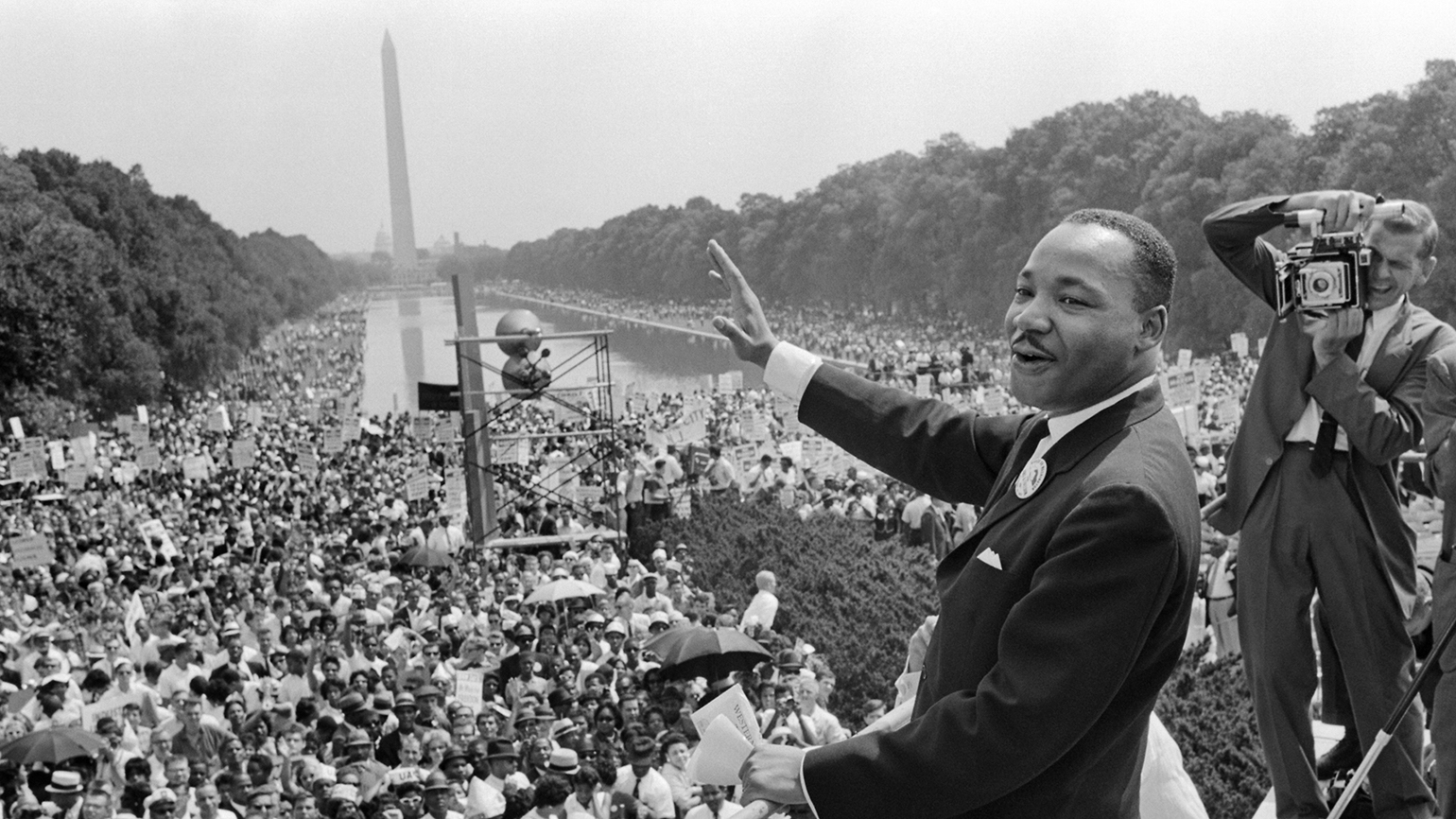
When the U.S. Supreme Court ruled in favor of ending segregation on Montgomery, Alabama’s buses in 1956, the Rev. Dr. Martin Luther King, Jr. described the goal of the boycotts he had led to advocate for desegregation. At a victory rally, he said, “The end is reconciliation; the end is redemption; the end is the creation of the Beloved Community. It is this type of spirit and this type of love that can transform opponents into friends. It is this type of understanding goodwill that will transform the deep gloom of the old age into the exuberant gladness of the new age. It is this love which will bring about miracles in the hearts of men.”

According to The King Center, King was not the first to use the term “Beloved Community” to describe the ideal to which we should aspire. The term was coined by the philosopher-theologian Josiah Royce, to whose interfaith peace organization the Fellowship of Reconciliation King later belonged.

Reflecting in these fraught times on the history of the visionary ideal of “Beloved Community,” I am struck by how King didn’t pretend conflict would be absent in a just society. Instead, he recognized that conflict is part of the human experience. In a Beloved Community, he said again and again, we respond to conflict with nonviolent action. Unafraid to disagree—particularly in the face of injustice—and with full acknowledgement of the dignity of all human beings, we can reconcile, evolve and come together without violence or explosive division.

“Justice,” said King, is indivisible. And honest, respectful love can bring about nothing short of “miracles” in our hearts.

What does “Beloved Community” mean to you? Where do you see opportunities to move toward King’s ideal in your life?

Pray for Self-Control

I sometimes pray my way through the list of “fruit of the Spirit” that Paul enumerates in his letter to the Galatians. I run through the words in my head, thanking God for “love, joy, peace, patience, kindness, goodness, faithfulness, gentleness and…”

That last one often trips me up. I can’t find it. I count them off on my fingers, my eyes closed, and know there’s one more. There should be nine. Which one did I forget? I scrounge around, prayerfully, mentally, and finally, yes, I find it. Self-control.

It just never seems to fit the list. Self-control, a fruit of the Spirit? Isn’t self-control something I do on my own? Isn’t it something I can get credit for achieving? Just the word “self” suggests it’s something I do by gritting my teeth, winning my own little victories.

Read More: How to Turn Your Goals Into Habits

On the contrary, Paul is telling me. Self-control comes from the Spirit. Sure you can congratulate yourself all you want for incredible self-discipline: for not taking that extra cupcake or for running a few miles every morning or working out at the gym.

But what if that daily discipline, like prayer, really comes as a gift not achievement? What if the self-control that enables you not to lash out at disappointments, not to harangue other drivers from behind the wheel, not to disrupt the world with angry outbursts, is God-given?

Jesus promised his followers that on His departure from this earth, His ascension, that He would not leave us comfortless. He would give us the Spirit. And Paul, who knew Jesus only after His death and Resurrection, often emphasizes the sublime power of the Spirit and its constant presence.

So try this. Next time you’re struggling overcome some bad habit or take on a new good habit, think of self-control as a gift, something that Spirit is longing to give you. Instead of gritting your teeth, fighting for some self-discipline, try closing your eyes.

When I think about the Spirit-filled people I admire, self-control is indeed one of their hallmarks. They don’t mouth off–the way I do–or blow up. They keep counsel with themselves as they keep counsel with God.

It’s just as Paul puts it. Self-control is a benefit, not something we necessarily have to aspire to or even work at, but something that comes as we seek the higher gifts like “faith, hope and love,” virtues Paul enumerates in another one of his letters.

Like I say, I like to pray through that list in my head. “Love, joy, peace, patience, kindness, goodness, faithfulness, gentleness and self-control.” I thank God for all those gifts, especially that last one, self-control.

Sure, I work at it. But at its best, it comes to me outside of my hard work. It’s a gift, fruit of the Spirit.

Positive Thinker: Chrissy Metz, Actress, Singer, Author

The best advice you’ve ever gotten
What someone says or thinks about you is not your business. Everyone’s perception is their own reality. The way someone looks at a tree, for example, is formed by their previous experiences. Only you know what makes you happy and fulfilled. There is no point in seeking the approval of others.

The hardest thing you’ve ever done
Learning to take care of myself mentally, emotionally, physically and spiritually. It is a daily practice, with life on life’s terms. Healing is not linear, and we are constantly faced with the lessons we need to learn most. We do this all while trying to maintain balance between what we need and what no longer serves us. We are learning in real time and making adjustments accordingly. Not easy, but worth it!

Your real-life hero
Everyone who fights for another day. We are all going through something. The courage to continue to rise above, learn from your tragedies and allow them to become your triumphs is awe-inspiring.

The occupation you’d pursue if not your current one
Psychologist/therapist. I have always wanted to help people understand the why and how in a healing environment. I believe everything starts in the mind and it can be used for good, once the soil is treated properly.

One thing you do for your spiritual well-being
Pray and meditate. Prayer is when you ask for what you want, and when you meditate you get the answers.

Go-to place to pray or meditate
Anywhere at any time. I maintain constant contact with my higher power, no matter what. I don’t think you have to wait until you’re sitting in the perfect seat or in total silence to focus on the connection, show gratitude or ask for help.

Favorite prayer or Bible verse
The St. Francis Prayer is such a blueprint for living. [“Lord, make me an instrument of your peace: where there is hatred, let me sow love; where there is injury, pardon; where there is doubt, faith; where there is despair, hope; where there is darkness, light; where there is sadness, joy.”] When we are grateful for what we have, we receive more. Whatever we give, we receive in return. Imagine if we all did that, we would all be taken care of. I truly believe this prayer is so healing.

Early riser or night owl?
Both! Depends on my work schedule.

Favorite comfort food
French fries. I can’t even explain the obsession. I have to try them, no matter where I go, and I am particular. They can’t be too crunchy, salty or skinny.

What’s at the top of your playlist
“Heart Like a Truck,” by Lainey Wilson. I really relate to this one, not that I don’t love all of her music, but I do feel like this line really sums me up: “A little bit of love is all that it’s needing. But it’s good as it is tough. I got a heart like a truck.”

One detail about you that people would find surprising
I am really just so normal. Not a fancy gal at all. I enjoy spending weekends at home. I don’t love dressing up and don’t like wearing shoes.

 What inspired you to write a book for children
I taught preschool and have nine nieces and nephews. I have always understood the value of being heard and loved. That starts early with fostering confidence and self-love. It creates the foundation in which children walk through this world. My partner, Bradley, and I wanted to connect the dots in our book between the foundation of self and a relationship with a higher power.

The children’s book, When I Talk to God, I Talk About You, by Chrissy Metz and Bradley Collins releases February 14, 2023, and is available wherever books are sold.

For more inspiring stories, subscribe to Guideposts magazine.