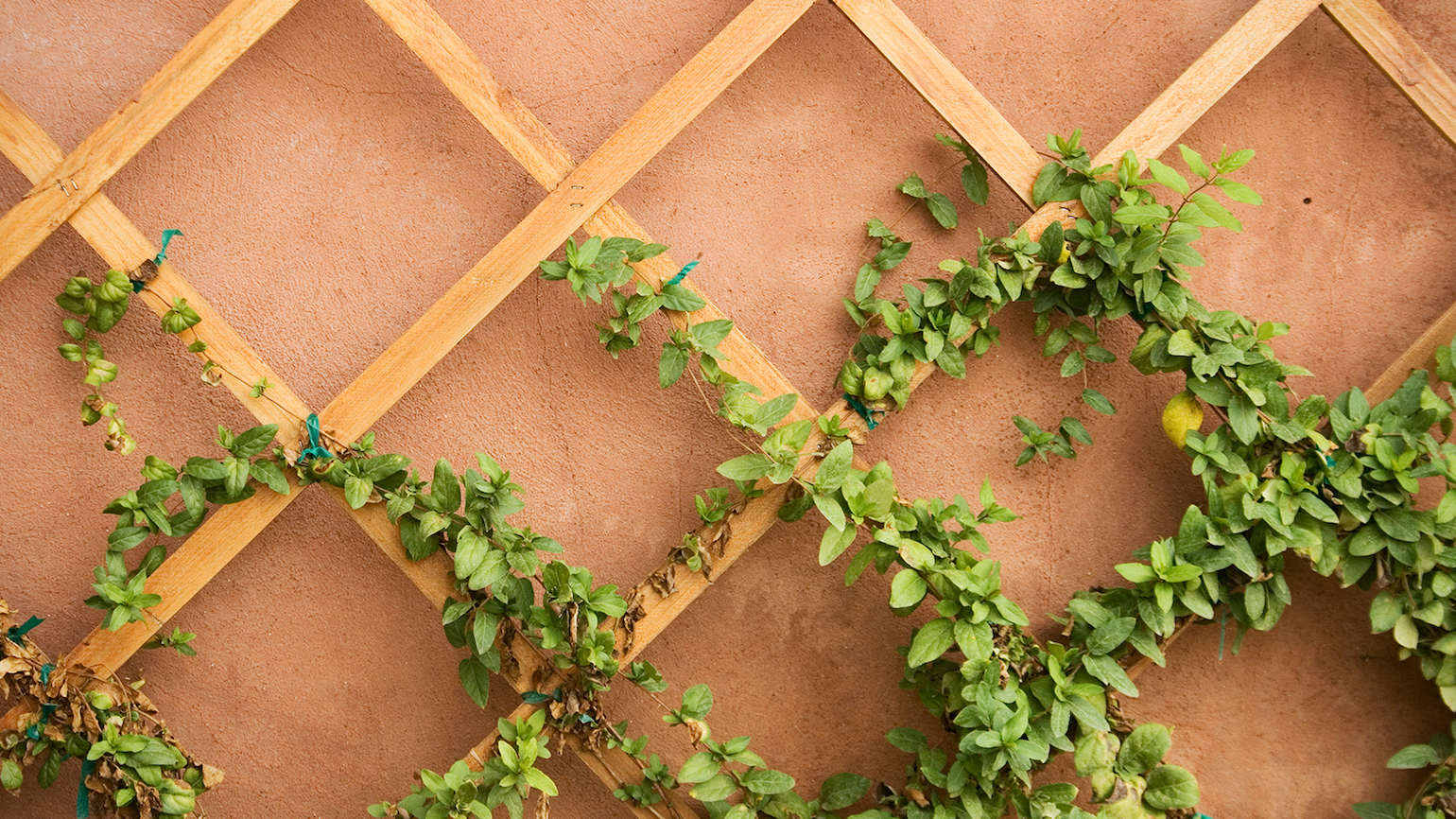
I’ve written before about my abiding love of growing peas in the garden. A few weeks after I tucked those tiny seeds into the soil, I’m happy to report my plants are now between three and four feet tall and are weaving themselves up a grid-like trellis I made using garden twine and two anchor poles.
A few feet away, in a big patio pot, I have another long and winding plant—a vibrant pink and white mandevilla I have up against a short wooden trellis I recently painted in cheerful blue and yellow.
I have long believed the garden is full of life lessons, and this year these two climbing plants have been the source of something I needed to re-learn. You see, I’ve set both plants up for success with my carefully placed trellises, ample water and sunny locations. But if I skip a day of checking in on them, instead of beautifully vertical, splayed tendrils, I am confronted with a tangled mess of stem, leaf and blossom.
It’s a reminder that these plants are wild. They will attach to anything they can hold onto—even if that turns out to be a section of their own vine. Doubled back on themselves, they’re still growing, but they’re not quite at their best.
So I’ve incorporated an activity into my daily garden routine—I trace each plant’s vine and gently wind its trailing end around the trellis or twine to ease it toward growing in the right direction. Encouraging it to hold onto its most dependable support will help it get maximum sunlight and rain. In these optimal conditions, the plants will grow to be their best selves.
In the course of this daily ritual, I’ve also found I must be very gentle with the plants, taking care not to accidentally snap off a tender end in pursuit of a solid attachment.
And so yet again, the garden guides me down my positive path. I am inspired to encourage myself—and others around me—to cleave to the strong, reliable places that will bring about the healthiest growth and progress. May we not cling too tightly to our supports, but may we be surrounded by those who can remind us to hold on to what matters.
I have a birthday coming up and given that we’re many weeks into the social distancing practices required by the coronavirus pandemic, I sort of know what to expect.
There will be wishes of “happy corona-birthday” on social media. Perhaps a video call with family members (I know by now that the singing of “Happy Birthday” will be hilariously out-of-sync!). My husband and son will make a cake. We’ll put on our masks and take a family walk in the fresh air. I will make the day extra meaningful by making a donation to a charity I care about.
I will feel celebrated and loved.
But I will also have some other, more challenging feelings. As much as I am aware of how fortunate I am in so many ways, it is still unsettling to go through normal experiences like birthdays in new ways, in still-not-normal times.
Part of living with authentic positivity means acknowledging and embracing that full range of emotions, the joy and security of knowing I am loved on my birthday, and also the sadness of not being able to celebrate with friends and family, like I normally would.
So as I approach this birthday, I’m reflecting on three ways I’m hoping to make this birthday an authentically positive one.
1) Show Gratitude
I’m always grateful to have completed another trip around the sun. But now, as so many lives have been lost to COVID-19, I am especially aware of how fragile and precious we all are. Now, perhaps more than ever, is the time to express our gratitude out loud—for each other, for ourselves.
2) Do Something Special
Just because my birthday is different this year doesn’t mean I’m skimping on the cake. The thing about birthday cakes is that they’re special. Even if your house features cake after meals on a regular basis (lucky you!), a birthday cake says, “this day is different, this day is important.” So I can’t take in a show or head to a favorite restaurant on my birthday. But I can do something I wouldn’t do on a regular day—and name that as my birthday treat.
3) Make Space
Having been at home or very close to home for so many weeks, I have been beginning to feel like every millimeter of my house is a “been there, done that” kind of space. My thoughts are similar—when I joke about not knowing what day it is, or it being day 4,375 of social distancing, I’m really saying, yikes it feels like I’m just doing the same thing in the same space, over and over again. I’m looking to my birthday as a reminder to make space for something new. A new year of my life, a new way to be in my home, a new way to deepen the relationships that matter most.
We often toss around the phrase, “life is short” at moments both profound, as in when a person has tragically died before their time, or light-hearted, as in when we are justifying a second scoop of ice cream. But I will never forget the time when, years ago, a friend was struggling with a crossroads-of-life decision. Another friend encouraged her not to hang her entire future on this one single choice.
“Life is long,” she said simply. She didn’t mean this literally (if only), but she meant it to be a comforting release from the high expectations many of us set for ourselves each moment of the day.
The memory of that conversation came up for me recently when I encountered a famous saying of the early 19th century Hasidic Jewish teacher Rabbi Nachman of Breslov: “The whole world is a very narrow bridge; the essential thing is not to be afraid.”
At first glance, the quotation sounds negative and daunting. One misstep, and any of us would surely fall to our doom from such a narrow bridge. Why shouldn’t be we afraid? And how can we be expected to cross a bridge that’s the length of “the whole world,” anyway?
But to me, the saying embodies the idea of authentic positivity, and it speaks to the power each of us has to keep moving forward through what we pray is a long life that bridges many chasms.
Living with authentic positivity means following Rabbi Nachman’s advice not to be afraid of the narrowness of the bridge, nor of its length, nor of the uncertainty that might loom beneath it. It means finding the strength to keep going, to move forward along the bridge without fear that life’s challenges will blow you over its edge.
It also means letting go of the illusion that we can control the bridge, the wind or “the whole world.” Releasing the self-imposed pressure to widen the bridge or force the breeze to quiet means acknowledging and accepting reality as it is, and courageously placing one foot in front of the other to keep going, moving thoughtfully forward but not being afraid of needing to regain your balance every now and then.
If you start to feel fear creeping up along the way, remember—no one decision, moment or step can define your entire journey. Especially if you live with the premise that “life is long,” you will find the courage you need to keep going.
The holiday season can stir up sad memories for some of us. Maybe we remember when there were no gifts under the tree or a meal on the kitchen table. Or maybe there were family feuds that spoiled holiday gatherings, or as a kid, we divided time between being with either Mom or Dad. Financial stress can come with the holidays or maybe family members live too far apart to gather.
Or, it could be the first holiday season after the passing of someone you love. In our family, it will be the first time my wife and I have been without our moms. It will be a different Christmas without them to celebrate with us.
It’s OK to recognize sad feelings. There is no need to feel shame or to minimize and deny them. Yet there are some things we can do to alleviate the sadness.
Share your feelings with someone who will understand and be there for you. Remember that you don’t have to go to every holiday event or any, if you are not in the spirit. Write down why you are sad this time of the year. It allows you to process your feelings on paper. Pray and share your sorrow with God. Praying brings comfort and strength.
Another thing that helps is to express feelings of hope. Yes, deep within us we can find them. Keeping hope in our lives will get us through the season even when we don’t want to celebrate.
The hope of Christmas is the promise that God is with us in our fear, sadness, loss and troubles. Take time to reflect on the things that bring you hope. Stay in the moment and look for the people, things and experiences that bring a little light into your life.
It’s OK to feel down during the holidays. It’s what we feel, but it doesn’t need to take away the beauty of the season. Let us be encouraged to work through our emotions and embrace all the good that comes with Christmas. Hope can be found in the middle of despair, light in times of darkness, joy in troubled times. May the hope of God be ours this season.
Social scientists have long noted that many older adults report greater happiness levels than their younger counterparts. Studies have explored keys to this phenomenon, such as a sense of purpose, financial stability, relationships and optimism.
Invest in Two Types of Intelligence In an interview with NPR, Brooks highlights two types of intelligence that both appear to be crucial to happiness later in life. Fluid intelligence is our problem-solving ability, our ability to think creatively and figure complex things out. Crystalized intelligence might be described as “wisdom,” the library of knowledge and experience that we’ve each compiled in our lives. Crystalized intelligence increases in the second half of life, and though we can and should keep our fluid intelligence skills as sharp as possible, we are more likely to be happy when we feel confident in the gifts of our accumulated wisdom.
Let Flexibility Be Your Watchword
We free ourselves to experience greater happiness, according to Brooks, when we let go of the idea that we will be the same, with the same strengths, interests and priorities, throughout our lives. “Your abilities are going to change,” he told NPR, “Your views are going to change. The things you care about [are] going to change, and that’s good and that’s healthy. And that kind of flexibility is key.” Embracing flexibility as a leading value gives us new opportunities to connect with passions, skills and relationships that are meaningful to us in the here and now—and let go of the rest.
Do the Work Now, Whenever “Now” Is in Your Life
Brooks emphasizes that it’s never too early or too late to invest in your future happiness. He reports this from his own experience—he spent the quiet days of the pandemic writing the book as well as creating a “strategic plan” for the rest of his life. He says, “The point of the work that I’m doing as a social scientist is to not leave your happiness up to chance but to remarkably increase the odds by doing the work at 25 and 45 and 65 so that by the time you’re 75 and 85 and beyond, you’re happier than you’ve ever been.” You might find that even by taking the time to think about what intention you want to set for the years ahead, you feel a surge of optimism that can begin to steer you in a happier direction.
Sarah sat with her husband in the historic stone church. It was their second time attending a Sunday service. It’s very pretty, she thought. But Sarah was having trouble connecting with the sermon. And nobody—not one person—had said hello to them. This was the second church the couple was trying out in their new Connecticut town; they had moved from Wisconsin with their young daughters a few months earlier.
Suddenly, a flood of memories came over Sarah: of her girls’ joyful baptisms, the women’s group she led, the bell choir. I miss our old church, she thought. Will we ever fit in here?
Finding a new church home can be challenging. Maybe your family has relocated. Perhaps your longtime church no longer feels comfortable due to leadership changes. Maybe you’ve gotten married or divorced or you’ve recently come to faith.
A Pew Research Center study found that Americans cite the quality of the sermon and a warm welcome as the two most important elements in a new church. But there are many points to consider. Here are some tips to help you find a church where you and your family will thrive.
Do your research.
“The internet has made finding a good church much easier,” says Donald Thomas, pastor of Redeeming Grace Church in Cody, Wyoming, and author of How to Find the Right Church: A Complete Guide. “You can quickly see the basics: where the church is, when services are held, special events.” He says the very first thing you should seek out on a church website is the statement of faith.
“This is what the church believes,” Pastor Thomas says. “This is so important that if a church doesn’t have one, you should move on.”
Look at the church leadership. “Check out their educational background and ministry experience,” Pastor Thomas says. Listen to online sermons. “They can be very telling. It’s not only the topics but also the way the sermons are delivered. Can you hear passion and a love for God’s word?”
Ask people you know to recommend a church. The Pew study found that while many younger folks (ages 18–29) do use the internet to research their options, 82 percent of them were also likely to reach out to a friend or coworker. Only 54 percent of people 65 and older would approach someone they know for a recommendation.
Music matters.
Music is integral to the church experience of many. Anne Marie Rodgers and her husband considered several churches when they moved to Georgia from Pennsylvania, where they’d attended a Church of Christ for decades. They ultimately opted for a United Methodist Church with a strong music and theater program.
“We’re a musical family. It’s important to us that there is a pipe organ and at least one type of choir,” she says. “To us, this is more important than the denomination.” Rodgers is not alone in making a switch. According to the Pew study, mainline Protestants and evangelicals are the Christians most likely to change denominations.
Kevin Harney, pastor of Shoreline Church in Monterey, California, and coauthor of Finding a Church You Can Love and Loving the Church You Found, believes that a true Christian should be able to worship at any church. “But some music may distract you…while other music may lead you into God’s presence. It is a serious consideration. No specific style of music is more spiritual than any other,” he writes. “Some people are stirred to worship when they hear a hymn played by a piano, flute and violin trio or on an organ.” Others, he points out, may get closer to God by “an electric guitar, bass and drums being played as loudly as possible.”
Consider style.
This goes beyond music. Do you prefer a large church, or are you more comfortable in a small one? Though a smaller church can offer an intimate “family feel,” it may not have the resources to provide the outreach and social programs that a bigger church can. What about the worship service? Are you happier with a formal liturgy or a more informal atmosphere?
Keep an open mind on worship style, advises Guideposts contributing editor Rick Hamlin. He grew up attending a Presbyterian church in California but switched denominations after he married. For the past 40 years, he has worshipped at St. Michael’s Episcopal Church on Manhattan’s Upper West Side.
“It took me almost 30 years to fully appreciate the high liturgy, and before I was willing to get ashes on Ash Wednesday,” he says.
Set your priorities.
“Figure out what is most important to you. For me, it’s the sermon and the music,” Hamlin says, adding that there is no such thing as the perfect church. He treasures St. Michael’s vibrant music program, including its Jazz Masses and the adult choir, which is a mix of volunteers and professional singers. He also appreciates the diverse congregation: “We’re so blessed—St. Michael’s has always been a multiethnic community. It’s probably about 20 percent Afro-Caribbean, and now I see a lot more Asians coming in.”
Think about how you or your family may evolve over the next few years, Hamlin says. Will the church offer opportunities to make meaningful connections? “Bring your kids; let them experience the children’s ministries for themselves.” If you are single, you might search out a church with a strong singles ministry.
Are there outreach programs you want to be involved in? “Serving people is a big part of what it means to be a Christian,” Hamlin says.
Make the most of your first visit.
Pastor Harney suggests praying before trying a new church. “Ask God to help you connect with the people in this congregation. Appreciate the differences of each church and celebrate the common expressions of worship and praise.” Allow ample time for your visit. “Don’t just pop in at the last minute and run off after the service. Show up 15 minutes early. Wander around. Pick up some literature.”
Linger after the service. “It’s fine to wait and see if people reach out to you, but it is also okay for you to greet people and introduce yourself,” Pastor Harney writes. “Feel free to ask questions, to ask for a little tour of the facility or just to chat. Have a positive attitude. Be ready for good things to happen.”
Pastor Harney suggests visiting a new church for at least a month before even beginning to contemplate whether it’s the right place for you. “If you are coming from a church you attended for many years, don’t expect the same level of intimacy right away. Be patient. It takes time to get to know people and find your place in the congregation.”
Pastor Thomas also stresses patience. “If you’ve checked out the church and it hits all the right points, but you go one time and the sermon bores you—give it another shot. Anyone can have an off day.”
Also, avoid running away from your church at the first sign of trouble. “If you’ve been involved in a church for a while, it’s like a family,” Hamlin says. “There will be times when something or someone really bugs you. Ask yourself why. Are you projecting a problem of yours onto the church? Staying at the same place and working through problems can be a great opportunity for spiritual growth.”
For more inspiring stories, subscribe to Guidepostsmagazine.
A number of years ago my family went on a mission trip to Costa Rica. As we walked through areas of abject poverty–tiny homes and shanties made of cast-off scraps of wood and metal–our simple home back in the U.S. suddenly seemed like a mansion. As we met precious folks who had so little and were still hopeful, we suddenly realized how truly rich we all were.
So even though it’s been a hard year for my family health-wise and in other ways, I’m still counting my blessings:
1) My Sweet Husband
After 42 years of marriage, Paul is still my sweetheart and best friend. He lives Jesus in front of our family, is available whenever anyone needs a helping hand and loves me more than I deserve. He prays for me and still holds my hand. I am beyond blessed that he is mine.
2) My Children, Servants of God
Two of my sons are preaching the Gospel and our other son is active in music ministry at his church. For this mama, there’s no greater joy than seeing them touch hearts and lives for God.
3) My Sweet Grandbabies
Each one is precious beyond words. They fill my life with so much sunshine, laughter and love. They are truly one of God’s best gifts and just hearing their voices or seeing their faces brings an instant smile.
4) God’s Word
He gives me guidance when I don’t know what to do, highlights areas of my life that need change and provides comfort and hope during difficult days. I can’t tell you how many times I’ve clung to His sweet and precious promises.
5) God’s Attention
It boggles my mind that the God who created the universe cares about what concerns me–but He does. I’m so blessed that I can go to Him with whatever is on my heart and know that He’s waiting to hear what I want to say.
He has blessed me way more than I deserve, and today I’d just like to thank Him for being such an amazing God. How would you like to praise Him today?
When he was a toddler, my son loved “Daniel Tiger’s Neighborhood,” an animated television show based on characters originally created by Mister Rogers. Each episode features a one- or two-line jingle meant to reinforce the social or emotional lesson it has to teach.
Our favorite—and the one I still use years later as a parent—goes like this: “It’s almost time to stop, so choose one more thing to do. That was fun, but now it’s done!”
I am finding myself humming that simple tune as the summer winds down. As summer ends, I’m contemplating how to let the sun set on the season from a place of authentic positivity rather than letting dread about getting “back to reality” steal the show and sabotage my bliss.
Daniel Tiger’s lesson is helping. Kids aren’t the only ones who have a hard time stopping a fun activity, and I am definitely on board with being bummed to say goodbye to local summer produce, the height of my garden’s color and productivity, the promise of vacation and late sunny evenings that were made to enjoy outdoors.
All of that is valid, and it’s also important to acknowledge as part of walking an authentically positive path. But having articulated my anticipatory wistfulness, I can now turn my attention to wrapping up summer on as upbeat a note as possible.
There are two ways I am doing this. One is by taking the time to focus on the positive things to look forward to in the seasons ahead (I promise, there are cases to be made that both fall and winter are the most positive seasons of the year). I’m also grateful for the back-to-school mindset that stays with me no matter how old I get, that feeling that some new opportunity to learn and grow is just around the corner.
The second way to end summer on a positive note is to follow my animated friend’s advice and choose “one more thing to do.” It might be an hour with a book in my backyard hammock, glass of lemonade in hand. It might be a walk in the woods while the leaves are still lush and thick. It might be making an impromptu plan for a barbeque with friends. Whatever I settle on, intentionally focusing on it as a celebration of the season I’ve just enjoyed is an invitation to bid it farewell with a smile on my face.
That was fun, but now it’s done. Until next summer, of course.
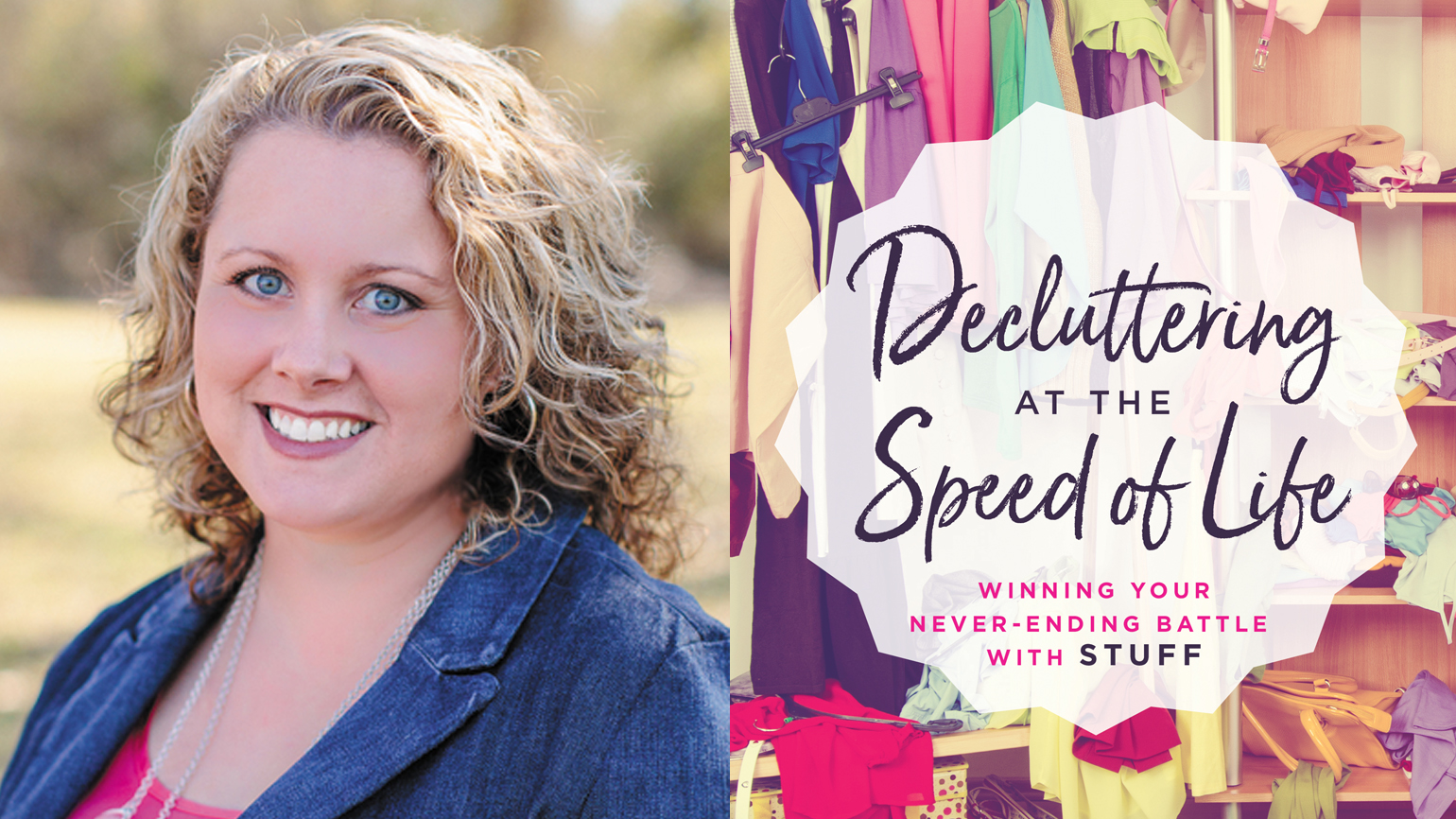
Dana K. White still finds it hard to believe she has earned the title “decluttering expert.” She used to be a self-described slob.
“I was completely overwhelmed by my home and the stuff in my home,” White told Guideposts.org.
White had always wanted to be a writer, but felt like the chaos in her home was holding her back from pursuing her dream. When she prayed about it, she felt God prompting her to write about the very thing she thought was holding her back—her messy house.
White listened to the prompting and started a blog called A Slob Comes Clean, where she connected with a community of readers who also struggled with managing their homes.
“I realized there were so many other women [struggling],” White said. “I had to come up with strategies to break through my irrational emotional attachments. I wear the title ‘Declutter Expert’ proudly, because I’ve had to do it.”
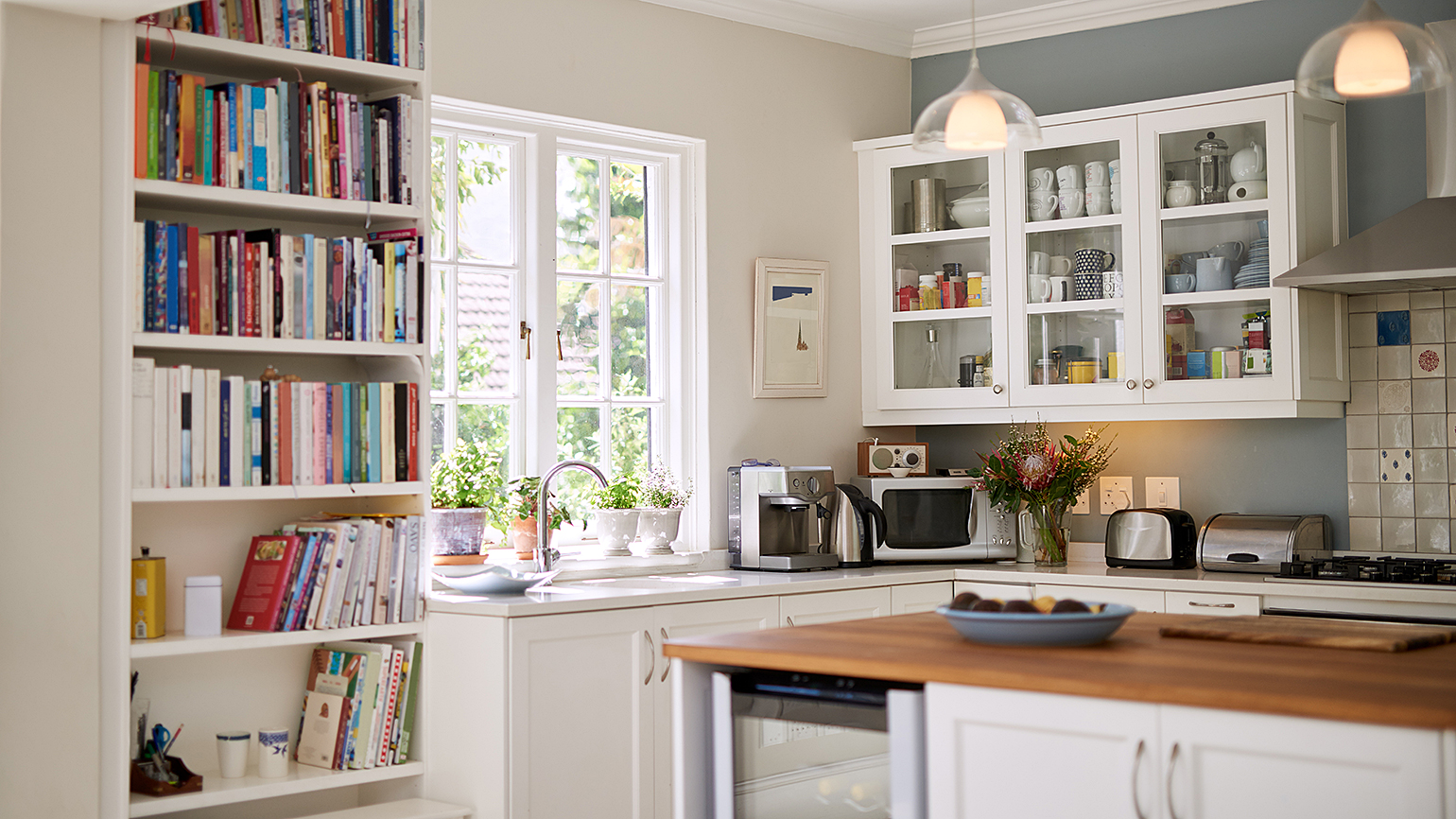
Her new book Decluttering at the Speed of Life offers practical decluttering advice for every space in the home. One of the most common areas White said readers struggle to manage is the kitchen. Here are some of her best ideas for decluttering and organizing your cooking space:
1. Identify and remove “Duh” Clutter
White recommends tossing items that obviously don’t belong.
“A lot of us who struggle with clutter really love to analyze things,” White said. “There are things that don’t need to be analyzed. I give myself permission to just stick stuff in the donate box.”
She says to view this tip as a “permission slip” to get rid of “duh” clutter before tackling the more difficult items.
2. Ask yourself “Where would I look for this first?”
White has found that asking yourself this question simplifies organizing a kitchen.
“When you come across something in your kitchen, what’s the first drawer you would open to look for [it]?” White asked. “That’s where it should go.”
If you’re struggling to imagine where you would look for something, White recommends a follow-up question: “Would it even occur to me that I have this?” Even if something is useful or valuable, if you don’t use it, you don’t need it. If it’s not an item you use or would remember to look for, it can go in the toss pile.
3. Eliminate unnecessary steps
White’s mother helped her organize her own kitchen and gave White some advice: a kitchen should be organized to maximize efficiency.
“So, if you’re at your stove, the things that you need consistently, again and again at your stove, need to be in the spaces around your stove,” White said.
4. Embrace the container concept
One of White’s main decluttering philosophies is an idea she calls the “container concept.” She uses this concept to shift focus from organizing mountains of belongings, to identifying your storage as the limit of how much you can own.
“Each space within your home—including drawers and cabinets and pantries—is a limit,” White said.
Once you’ve reached the limit of your container, you have to start getting rid of things.
“The key is to put your favorite things in there first, and then whatever doesn’t fit, goes,” White said. “That naturally sorts out what you need to keep and what you don’t.”
5. Consolidate
A common problem White has noticed in kitchens is an excess of duplicates. It’s a problem she faced in her own home—owning multiple skillets and other kitchen knick-knacks. The final step of the decluttering process is consolidating and getting rid of unneeded extras.
“Put ‘like’ things together,” White said. Doing this will allow you to see how many of each item you own. Then, using the container concept, figure out how many of that item will fit in your space and keep only that number.
White knows it can feel overwhelming to attempt to declutter and re-organize your kitchen, but she had one final tip for those longing to declutter, but feeling stuck.
“When you’re overwhelmed, the key is to get started,” White said. As you get started, you will see this space much more realistically, and you reduce the overall volume of stuff, which then reduces the feeling of being overwhelmed.”
Once a self-described slob, author Dana K. White’s life transformed when she committed to decluttering her own home.
One of the keys to her own decluttering success was when White identified the difference between getting rid of things and organizing her possessions. In her book Decluttering at the Speed of Life, she guides readers through decluttering each area of their home.
“I gave up on trying to get organized,” White told Guideposts.org. “When I gave myself permission to declutter, I started making so much more progress.”
One of the most difficult areas in the home to tackle is the closet and dresser. Here are White’s best tips for cleaning out your clothes:
1. Release your guilt
Many people struggle to get rid of clothes because they feel guilty for not wearing them or are worried it’s bad to donate damaged items.
White encourages people to let go of their shame over “wasting” clothes. Most donation places sell damaged clothing to rag makers and welcome all donations.
“It’s freeing to realize [your clothes] don’t have to be perfect,” White said.
2. Make a plan for donations
One problem many people face when clearing out their clothes is filling trash bags with items to get rid of and then letting those bags sit in their house for months.
To avoid donation bags piling up, White suggests making a drop-off plan before starting to declutter. Call local nonprofits or ask friends how they clear out their clothes. Then schedule a time to drop yours off so they won’t clutter up your house once you’ve finished cleaning out your space.
3. Be honest
Once you’ve made peace with letting go of your clothes, White says the next step is to identify “trash” clothes. Get honest about clothes with stains or rips that you can’t realistically wear.
“Go ahead and get rid of those things,” White said. “Every time you start to chip away the amount of stuff, you’ll feel less overwhelmed.”
4. Get the laundry under control
White experienced a breakthrough in decluttering her clothes by doing all of her household’s laundry on one day each week. This method allowed her to see which clothes her family wore when they had a choice.
“You’ll start to see which clothes are left in the bottom of the drawer again and again, and that makes it super easy to purge those,” White said. “Getting laundry under control really is key to decluttering clothing.”
5. Consolidate
Next, White recommends grouping your clothing by type or color so you can see how many like items you own.
“It’s very eye opening to put those like things together,” White said.
You might notice you have 10 black dresses and only need five. This can also be a helpful way to shape future shopping—when you know how many types of an item you own, you’re less likely to buy them in the future.
6. Purge
“Purge down to the limits of your closet,” White said.
White calls this the container concept. It’s the idea that the size of your storage spaces determines how many items you can keep.
“You can have as many socks as will fit in your sock drawer,” White said. “Let that be the deciding factor.”
7. Adopt the one in, one out policy
To maintain your newly clean closet, White advises people only bring a new item into the closet if they get rid of one item.
“If anything comes into your house, it has to have a space, which means something else is going to have to leave,” White said.
Using this rule can help prevent excess shopping.
“I look at something and I think, ‘I like it, but I don’t actually like it enough to get rid of something,’” White said. “So then I don’t bring it home.”
She has written twenty books, hosted a decluttering podcast and runs a dedicated Facebook group for people looking to live clutter-free—but for Kathi Lipp, creator of the Clutter Free Academy, the journey to an organized life started in a surprising place.
“My dad was actually a hoarder,” Lipp told Guideposts.org. “I didn’t want to live like that anymore, and I was definitely having those tendencies…I realized that I wasn’t doing the things that I wanted to do. I wasn’t having people over, I wasn’t really enjoying my life…because of the clutter.”
Lipp said that as she examined this part of her life, and her relationship with her possessions, it was her faith that motivated her to declutter.
“Jesus spoke more about our possessions and money than he did anything else in the New Testament,” Lipp said. “He knew the emotional attachment that we would have to our stuff. Clutter is not a surprise to God.”
In her latest book, The Clutter-Free Home: Making Room for Your Life, Lipp applies the four-step decluttering process she created to help you let go of the fear, guilt and shame you feel around your clutter. The step-by-step approach asks that you first dedicate the time to evaluate how you—and the people you live with—want to use a specific room, then decide how you want to feel in that space, from how you want it to smell and look. Finally, declutter using Lipps’ 60 percent tool, where you’re aiming to get rid of that amount of clutter. The final step calls on you to make the space your own, taking the time to ensure it has the function and feel you want.
Lipp shared with Guideposts.org how this process works through each room in the house, adding some of her best tips and tricks to help you make your home the space you want it to be.
1. The Kitchen
Lipp recommended spending extra time assessing the “dedicate” step in your kitchen, so that you really know how you use the space.
“Some people, they think [the kitchen] is for cooking, but maybe your kids do homework in there,” Lipp said.
Instead of trying to force your kitchen to be a space it’s not, Lipp suggested focusing on making it easily accessible for the things you actually use it for.
2. The Living Room
“The living room and bedroom should be the places where your mind can rest,” Lipp said. “Get rid of as much surface clutter as you can, and not just clutter, decorations.”
To do this, Lipp suggested investing in good storage bins and carefully sorting through decorations.
3. The Bedroom
In the bedroom, Lipp is all about focusing on what you want to keep instead of what you want to throw out.
“Make sure it’s [a space] you love!” Lipp said. “And if you’re part of a couple, then make sure that it reflects both of you.”
4. The Bathroom
Lipp’s tip for the bathroom is simple: use the declutter step. She suggests you throw out any products you don’t use.
“Any product you are not currently using gets banished to another room,” Lipp said. “This is not a drug store! You need to keep what really functions for you and to keep it as clean and minimal as possible.”
5. The Office
One of Lipp’s best tips for the office to “dedicate” or think carefully about what physical files you actually need.
“I think that we have forgotten that so much stuff can be stored on your computer,” Lipp said. “What do you actually need in your office that isn’t on your computer?”
6. The Other Space
Lipp dedicated a section of her book to the “other space” people may have in their homes, places like an attic, garage or basement that is used for storage.
Lipp described storage as “decisions that haven’t been made yet.”
Instead of putting aside the excess photos, clothes or decorations you’re not sure you want to keep, she recommends you go through them and decide once and for all if they deserve a place in your home.
Decluttering can seem like an intimidating task, but with a little time and effort it will get much easier and your peace of mind will improve.
In every moment you have one of two choices: you can choose either love or fear–your truth or your Mean Girl (ego). This simple choice underpins every decision you make throughout the day, from what you choose to put in your mouth, to how you respond to the person who cuts you off at a traffic light. From how you move your body, to the people you surround yourself with. From what you do with your time, to how you treat yourself. It all comes down to choice…your choice.
Before my giant wake-up call, I was making some pretty lousy choices about how I lived my life without being aware of them. I was choosing to suffer, to live in a constant state of fear, and I gave all my power away to other people. I thought the world was against me, and, as a result, every decision and action reflected that belief.
I took jobs I hated and held on with a tight grip to every dollar I had out of fear of not having enough money. I flogged my body at the gym out of fear of getting fat, and I ate (or didn’t eat) out of hatred for what I looked like in the mirror. I surrounded myself with unhealthy “friends” and put up with a series of unhealthy relationships out of fear of being rejected. I “people pleased” because I was scared of disappointing others.
If these sorts of thinking patterns sound painfully familiar to you, don’t worry. You’re not alone. There is an epidemic of fear: it’s the state in which we all live. But you’ll soon see that turning your back on the old paradigm and choosing love instead of fear is not only possible, it’s essential.
First you have to distinguish what love feels like, or it can actually be easier to identify the times when you’re not living from a space of love. Basically, anytime that you’re stressed over the past, you’re worrying about the future, or you feel anxious, angry, indecisive, or not present, it can mean you’re spending too much time hanging out in Fear Town and not in the here and now. And don’t get me wrong: feeling those feelings is going to happen (on a daily basis, I might add) and in some cases is totally warranted. However, it’s how you deal with them and how quickly you return to love that matters most.
The brilliant thing is that once you’re aware of the difference, it’s a simple choice to shift your internal GPS and return to love.
If you want to shift your state to one of love and really hardwire your GPS system to guide you toward that truth, there’s one simple question you need to go back to. You guessed it…
What would love do right now?
This question will guide you back to your truth, back to your natural state. Every. Single. Time.
If you’re serious about living from love, this isn’t a question you can ask just once or twice and you’re done with it; it’s an ongoing process. A continual recalibration and realignment to ensure that your inner compass is always angled at true north. And it can be applied to every situation and conundrum you can think of, from the spiritual to the mundane to the crazily chaotic.
When you go through difficult times in your life, it’s easy to believe that the light inside you has been snuffed out. We’ve all gone through periods of intense fear–maybe you’ve been hurt, someon you deeply love has died, you found out you have a serious illness, or you’ve lost the very roof over your head. But don’t let your darkness stop you from shining your light. It can absolutely be dispersed by love, if you let it.
Let it be said, though, this isn’t about glossing over what has happened to you. You need to fully and completely feel the pain, anger, frustration, and sadness–but you do not need to let it ruin or dictate your life. Feeling the emotions bubbling inside you is an important part of your healing process and not one to be skipped over. Embrace it and ride the wave.
The most powerful thing you can do, then, in any situation, even at your lowest depths and the darkest moments when you’re consumed by fear, is to recommit to the spark of love inside you. It’s always there, it’s always burning, and it will guide you back to your truth.