Embrace God's truth with our new book, The Lies that Bind

How to Bounce Back from a Setback

Around Thanksgiving, I boarded a plane to visit family. A woman across the aisle from me struggled to wedge her suitcase into the tight overhead bin, eventually triumphantly closing the door and taking her seat. When we landed, she was yanking and tugging, but the suitcase didn’t seem to want to budge. I asked if I could help, and she replied, “It’ll come. I got it in, there has to be a way to get it out.”

Her calmness and confidence inspired me, striking me as a recipe for cultivating resilience in life. Resilience is the ability to adapt to challenging, stressful or upsetting circumstances, recovering enough to regroup, refocus and find ways back into a positive life, even in the face of a “new normal.”

The woman’s reaction to her stuck luggage was a beautiful example of one of the American Psychological Association’s tips for cultivating resilience: “Avoid seeing crises as insurmountable problems.”

The luggage situation might not meet everyone’s definition of a “crisis,” but anyone who has traveled by air knows how crowded, stuffy and rushed a plane aisle can feel when everyone is trying to get off the plane at the same time. The woman kept her cool by recognizing that her problem had a solution. It had to—she had evidence right in front of her that the suitcase had fit into the bin in the first place.

The moment reminded me of something that happened to me this past fall, when I took a solitary hike along a rocky ocean path. I was enjoying the luxury of time to myself in the fresh air, feeling strong as I picked my way from rock to rock and congratulating myself when I reached the end of the jetty.

Then I turned around and saw how far my jaunt had actually taken me.

Yikes, that was a long way back. I felt myself slipping into nervous self-doubt. Weren’t there some rocks that had felt wobbly on the way out? What if I slipped and twisted my ankle?

I took a deep breath and, like the woman on the plane, realized with relief that I could certainly make it back—because I had made it out in the first place. I had the same strong legs, the same focused eyes and the same sunshine to guide me home as I’d had on the journey out. When I stepped off the rocks and back onto the shore, I felt relieved, but also confident and accomplished.

When challenges plant seeds of, “I can’t” in your mind, maybe you’ll remember the woman on the plane or me on the rocky path. Wherever life has brought you, consider that there is a way to come back to yourself. You have the power of resilience within you whenever you need it.

How to Be More Grateful: 5 Simple Ways

“Count your blessings.” You’ve heard it so many times it may not even register anymore. But when you actually take a moment to think about what you’re glad for in your life, it feels good, right? That’s sometimes easier said than done. With so many tasks, chores, and responsibilities, it can be hard to focus on the things in your life you feel gratitude for. Luckily, there are tips about how to be more grateful so you can remember and feel more optimistic in your daily life. Start the positive habit of feeling more grateful today!

Man near the ocean closing his eyes and thinking about how to be more thankful

Benefits of Being More Grateful

Turns out it’s not just a fleeting feeling; studies show that regularly naming the things you’re grateful for has huge benefits to your life and health. Among other positive effects, having more gratitude may:

  • Help boost your mood
  • Enhance your immune system
  • Lower blood pressure
  • Improve sleep

In addition, having more gratitude in our lives can make us feel more positive and hopeful about the world. What could you accomplish with a positive attitude today? How would you interact with your loved ones if it always came from a place of gratitude?

5 Simple Ways to Be More Grateful

But how do you do this, exactly? By using proven ways to invite more gratitude into your heart, health, life, and spirit. Here are 5 ways to be more grateful in your daily life.

Woman writing down how to be more grateful in her journal

1. Keep a Daily Gratitude Journal

Like anything else worthwhile, gratitude takes practice. And most experts recommend practicing by writing it down. A daily gratitude journal list in which you jot down five things each morning can be a great help. Start by opening up to a blank page and thinking about all the reasons to give thanks in your life. Or you can find a gratitude buddy you email or text every day. Some people keep a gratitude jar. If you’re a devout non-writer-downer, try numerating your gratefulness each night before dinner, or counting blessings instead of sheep at night, naming the best stuff as you drift off.

Woman looking up and smiling to learn how to be more grateful

2. Train Your Brain to Seek Good

Gratitude studies have revealed that details make it stronger. Instead of listing “my health” and “my wonderful family,” try something like: “being able to hike on Saturday without getting out of breath” and “eating my sister-in-law’s delicious veggie lasagna.” This will help train your brain to seek good—a helpful, neurology-altering talent, especially if you’re prone to seeing what needs fixing. Consider also paying attention to the characteristics of grateful people in your life. What do they focus on? How do they view the world around them?

Woman hugging her friends to be more grateful

3. Thank People Often

Sharing your gratitude can benefit both you and the person you’re thanking. On a regular basis, think of people to write little thank you notes to show them how much they mean to you. Be specific, thanking people for an action or simply for who they are to you. The recipient can be a friend or a relative, a public figure or an author—someone who has moved you. Make sure it’s simple and sweet—all about them, a small, potent word-gift from your heart to theirs.

Woman at a cafe giving herself a gratitude intervention by writing down what she is grateful for

4. Give Yourself a Gratitude Intervention

If you’re feeling down and your head is filled with negative thoughts, it’s time for a gratitude intervention. Even if it’s not your regularly scheduled gratitude time, grab a piece of paper (real or digital) and write down five things you’re thankful for in vivid, specific detail. Maybe it’s about finding the gem in a lousy situation: “I’m so glad for the nurse who cared for my mom with such tenderness.” Maybe it’s about noticing the one good thing that happened that day: “The sun was shining right in my window all morning.”

Mother and her young daughter laughing together to be more grateful and happy

5. Recall Happy Moments

If you are having a hard day and can’t focus on how to be more grateful, look to the past. Take the steps to turn those gripes into gratitude. Remembering joyful life events and savoring how they make you feel imprints them in your emotional brain. The next time something wonderful happens—a vacation, a fun day with a friend, a spectacular visit to nature—write it down soon after. Note exactly what made you so thrilled. You’ll get to re-live it while you write it and you’ll have specific memories preserved that you can look at when you need a boost.

Remember that you can always find a reason to be thankful. Learning the steps about how to be more grateful will help you focus on those things every day and improve your life more than you can imagine.

READ MORE ABOUT HOW TO BE MORE GRATEFUL:

How to Be Grateful in Hard Times

When I was diagnosed with cancer 11 years ago, I felt shocked, overwhelmed, terrified, sad, and a little bit angry. I certainly wasn’t appreciating much of anything, at least not consciously.

But slowly, even in my turmoil, I couldn’t help noticing blessings piling up: I had health insurance, a boyfriend who said, “We’ll get through this,” loving family members who called every day, co-workers who hired a cleaning lady and even cleaned my house themselves one time.

I finally found a wonderful doctor, friends sent thoughtful gifts of handmade things and candles, CDs, and books. One friend made me regular meals. Another from out of town visited for a week to go to a flurry appointments with me.

READ MORE: HOW TO MAKE GRATITUDE A LIFESTYLE

It got to the point where it was hard to NOT feel grateful, positive, and happy for all the love flooding my way. And it helped. It helped that for every excruciating test or result or treatment, were five acts of love—and my feelings of appreciation that followed. Studies back this up—gratitude heals. It staves off depression, it makes us happier and even healthier.

And then, after chemo, life began again. Those feelings of “I am loved!” and “I survived” began to give way to “I can’t stand that colleague!” and “I hate rush hour!” That’s how I knew I was well again! It’s also how I knew that I needed to keep a steady infusion of goodness in my life.

Science says that stress and unhappiness strain our immune system. I knew that from here on out, I needed to do what I could to keep my blood cells in top fighting shape. So, I started a gratitude blog, which I kept—and which kept me happier—for many years.

The days in which it felt hard to be grateful for even one thing were the richest days for my list. I had to dig deep and find the kind gesture, the smile, the beauty I hadn’t fully appreciated while it was happening. Noticing and writing them down illuminated them and allowed them to radiate deeper into my system and out of me into the world. The feeling of gratitude was healing.

READ MORE: GROWING AN ATTITUDE OF GRATITUDE

You can do this too. No matter your personal situation, which is likely riddled with all kinds of hard things (because you’re human), no matter the state of the world (hot mess), it’s possible to dig deep and start noticing the gems and holding them to the light. As a result, you may find you start noticing more things to be grateful for, which in itself can create a happier experience.

Here are some ways to get to the gratitude, even when things feel so hard:

1. Write It Down. You’ve heard it before, you’ll hear it again. Take specific note of the beauty you saw (or tasted, smelled or heard), the kindness you received, the opportunity that arose. Notice the small victories, the subtle pleasures, the glimpses of grace.

2. Share It with Others. Tell others about what you’re grateful for. Text a friend: “The moon looks amazing right now!” Call a family member: “Your card touched me.” Write a creator: “What you wrote/said/made resonated with me.”

3. Create It. If you’re even a little bit crafty (and even if you’re not!), track gratitude with creations. Paint rocks with a word that triggers appreciation. Draw a picture of something that inspires you. Sing a song of your appreciation—it counts even if it’s in the shower.

4. Trade It. You can have a gratitude buddy to get you in the habit. Every day or week you can trade three things you’re grateful for.

Did you enjoy this story? Subscribe to Guideposts magazine.

How to Be ‘Body Normative’

In this space, I write every week about authentic positivity, positive thinking and the evidence-based reasons why having a positive orientation is a powerful tool toward living your best life.

But today I’m here to share that in order to love yourself, your body specifically, you don’t need to be positive, you just need to think “normally.”

“Body-normativity” is replacing “body-positivity” in the public conversation about accepting and embracing yourself with love, compassion and strength.

The term was popularized when the singer Lizzo, who describes herself as “the first big Black woman” to be on the cover of Vogue earlier this year, told the magazine, “I would like to be body-normative. I want to normalize my body. And not just be like, ‘Ooh, look at this cool movement. Being fat is body positive.’ No, being fat is normal.”

Psychologist Sarah Nutter recently told the CBC/Radio-Canada that larger-bodied people experience pressures and judgments from society, and from their own thinking, which leads to challenges with depression and anxiety as well as to lesser medical care. “Experiencing fat phobia or weight bias continually in our day-to-day lives, absolutely has an impact on our health,” she said.

Body image activist Terri Hofford told the CBC she encourages everyone to accept their body as it is. Even if they don’t love their shape, everyone can benefit from letting go of size as a defining characteristic.

Seeing different types of bodies in media representations of normal life, from ads to social media feeds to articles about hiking, is a key to this process, she said. “If we can see more representation of bodies that are different than the norm, we’re going to realize that maybe our body fits into that garden of beauty as well.”

Lizzo emphasizes that body normativity can make people “uncomfortable,” and that’s a good thing, as it advances the conversation about how we can be more inclusive as a society.

It strikes me that the holiday season, when many of us routinely quip about over-indulgences or plan for significant New Year’s diets, is the perfect time to learn about body-normativity.

When we do, we meet and accept ourselves where we are. We also make plans to get stronger or eat more healthfully from a place of self-love rather than a self-defeating effort to make our bodies fit in with what we might think of as “normal.”

I hope this idea might empower you this season—I’m, um, positive, it is already helping me.

How to Balance Your Life: Keep the Sabbath

How many times a day do you catch yourself stumbling over the “B” word? (No, not that one.)

When someone asks, “How are you?” we often reply, “Busy!” In today’s always-on, multi-tasking 24/7 world, we wear our “busyness” almost like a badge of honor. A dozen years ago, I stumbled into the cure for busyness. It’s been the single best thing I’ve ever done for my marriage, my children, and my relationship with the Lord. The answer is as old as Moses and as relevant as today’s headlines: remember the Sabbath.

A recent poll of two thousand pastors in North Carolina revealed that less than ten percent are keeping a regular Sabbath.

For those of us who believe in the Creator, the Ten Commandments are gifts from the very hand of God. The first three commandments are about our relationship with the Lord. The last six are about our relationship with humanity. The fourth commandment is a bridge: it connects heaven and earth, God and people. Once a week, God walks out on the Sabbath bridge to meet us. But most of us are no-shows; we unapologetically stand up the Creator of the universe, week after week.

Our generation is the first in two thousand years of church history that is on the go 24/7. But this experiment in Sabbath-less living is taking a huge toll. It’s called time debt. We overcommit. We multi-task. We stay so busy we don’t have enough time for relationships with family and friends, let alone God.

Here are five ways that will help you give up busyness and adopt the Sabbath rhythms of work and rest:

1) Block off Sabbath time on your calendar.

Here’s a simple truth: It won’t happen unless you schedule it. For most people, Sabbath is celebrated on Sunday. For church leaders, hospital workers, and people who provide emergency services, Sabbath might have to be moved to another day of the week. Because our ministry requires frequent travel, I use Google calendar to schedule our Sabbaths at least four months in advance. This lets our staff know when we will be offline and allows them to plan accordingly.

2) Prepare joyfully.

In today’s 24/7 world, Sabbath-keeping doesn’t just happen by default. If you long to lay down your heavy burdens, you’ll need to be more intentional about your time the other six days of the week. On Sabbath eve, I clean out my email in-box, finish chores, and run errands with an almost giddy joy. I also plan ahead for holy fun, seeking out new places for a hike or picking out a book to read aloud with my husband.

3) Figure out what “work” is for you.

Scholars have argued for centuries about how to define rest. Here’s a simple definition: decide what work is for you and don’t do it on your Sabbath. For people engaged in sedentary work during the week, puttering around in the garden on the Sabbath might be restful. For people who do manual labor, holy rest might mean taking a nap.

4) Pray and play.

Eugene Peterson, one of my theological heroes and author of The Message, once said that there are only two rules for Sabbath: play and pray. My family and I have been keeping the Sabbath for the past dozen years, and all I can say is “Amen!” Now grown, our kids kept the Sabbath throughout high school, college, medical school, and now residency. The Sabbath gave them something almost none of their peers had, even while attending a Christian college: a day off. No homework, no chores, no shopping—just time with family, friends, and God.

5) Find a Sabbath buddy.

My husband I run a nonprofit together. We both have workaholic tendencies. We both love our work. This is a dangerous combination. Yet no matter what deadlines are looming, my husband and I do not work on the Sabbath. When one of us begins to “talk shop,” we gently remind each other to give it a rest. Sabbath is best practiced in community. So find a Sabbath buddy. Help each other to create a Sabbath plan: what you’ll need to do to get ready, how you’ll celebrate, and what you’ll avoid on your day of rest. Then check in and encourage each other.

How Sydney McLaughlin-Levrone Overcame Her Fear with Faith

See me poised in the starting blocks of the 400-meter hurdles, and you might think I have nerves of steel. After all, I’m the women’s world-record holder in the event and the 2021 Olympic gold medalist. But I’m far from unflappable. In fact, for most of my life, I was driven by fear. Fear of failure, of not living up to peo­ple’s expectations.

I defined myself by my athletic accomplishments. Nothing about me mattered if I wasn’t winning a race. It wasn’t until I suffered crushing defeats on and off the track that I turned to the only One greater than my problems, greater than my fear, and discovered my truest iden­tity, the title that means the most: daughter of God.

Do you ever feel as if you’re being chased by fear and anxiety? I’d like to share some lessons I’ve learned in my faith journey, lessons I’ve framed through verses from Proverbs. I hope they will help bring you the peace, freedom and joy they’ve brought me.

Lesson 1: “The fear of man lays a snare, but whoever trusts in the Lord is safe.” (Proverbs 29:25)

I grew up in Dunellen, New Jersey, a suburb 30 miles from New York City. Both of my parents ran track, but they never pressured me. From an early age, I loved to run.

Then I began competing, and some­thing else took hold of me. A need not just to run but to win. On the way to a race when I was seven, I told my dad I was terrified of losing.

“If that happens,” he said calmly, “we’ll get some food and go home.”

His message didn’t sink in. The more I raced, the more I won. And the more I won, the more fear took over. What if I didn’t win the next time?

Junior year of high school, I ran so well, I made it to the 2016 U.S. Olym­pic trials in Eugene, Oregon. Before my first heat, I looked at the runners warming up around me. They were confident women with well-designed race strategies. I was a timid 16-year-old girl. I’d never felt so undeserving.

I was so scared, I called my dad. “Can I please pull out?” I begged.

“You’re already there, Syd,” he said. “Just get the experience.”

At the starting line, my competi­tive instinct kicked in. I won that heat and the next. In the final, I finished third, grabbing the last spot on the Rio Olympic team. I felt relief that the race was over. Then panic.

I’d dreamed of running in the Olympics since watching the women of Team USA win gold in the 4-by-400-meter relay on TV when I was eight, but all I could think about now was the very real possibility of losing.

I made the semifinals of the 400-meter hurdles in Rio. So did the other two Americans, Dalilah Muhammad and Ashley Spencer. There was talk of an American sweep. The weight of those expectations was suffocating.

Partway through my semifinal, my will to win left me. Instead of my usual surge in the last seconds, I let up. My Olympics were over.

The fear I’d been giving in to was a trap. It stole one of the great seasons of my life. It told me, If you can’t be per­fect, why even try?

Blessings can become burdens if you let fear control you. Had I known then what I know now—that I should have looked to the Lord, not other people, for meaning and purpose—I would have run for the pleasure of running. Competed for the joy of competition. Honored God for the gift he had given me: the gift of speed.

Lesson 2: “Know that wisdom is such to your soul; if you find it, there will be a future, and your hope will not be cut off.” (Proverbs 24:14)

I moved to Los Angeles in the fall of 2018 to begin my professional ca­reer. The 400-meter hurdles are one of the most grueling events in track. No other event requires such a com­bination of technique, endurance and speed. My first year as a pro, I missed too many training days. My lack of discipline showed. I had trouble clear­ing the hurdles. Dalilah, the reigning Olympic champion, demolished me—and the world record—at Nationals.

My anxiety ratcheted up. At the 2019 World Championships in Doha, Qatar, I stuttered on the eighth hurdle. I still finished with the third-fastest time in the history of my event. But Dalilah ran the fastest time ever, breaking her own world record.

I found my dad in the tunnel under the stadium and sobbed, ashamed be­cause I knew things could have been different if I’d prepared right.

I thought I could find the happi­ness that had eluded me on the track by getting back together with an old boyfriend. Only he wasn’t interested. At all. I felt worthless.

My parents had raised my siblings and me in the church, but I didn’t really know God. I’d been avoiding him be­cause I had this idea of him as a harsh taskmaster who’d demand that I give up what I enjoyed, including running, to serve him. Even so, my soul must have been yearning for him, because I found myself thinking, The only way I’m going to heal from this is with God.

So I started going to church again. Later, when I studied the Bible, this verse from Proverbs made so much sense. The author likens wisdom to honey. Wisdom lets you take bitter ex­periences and find the sweetness, the good, in them. Setbacks don’t derail you because you know that God has a future for you.

Lesson 3: “Without counsel plans fail, but with many advisers they succeed.” (Proverbs 15:22)

For so long, I thought everything was up to me. What pressure to put on myself! No wonder fear had me in its grip. It wasn’t until the Covid pandemic that I opened up to two people who ended up changing my life.

The first is my coach, Bobby Kersee. I met him in May 2020, when stay-at-home orders loosened and the track at UCLA reopened. One day, I got so fed up with my lack of progress, I started to cry. I bent over on the side of the track, trying to hide my tears.

Bobby stepped away from the group he was training and asked me what was wrong.

I’m not sure why, but I blurted, “For the first time in my career, I feel like I’m going backward.”

Bobby pulled out a paper from his backpack and handed it to me. On it was a color wheel labeled with different emotions. Angry, happy, sad, mad were in the middle. The farther from the center, the more specific the words got.

“I have a hard time expressing my emotions too,” Bobby said. “I want you to have this. Hopefully it will help you identify what you’re feeling.”

That night, I studied the wheel. What was I feeling? Angry at how helpless I felt to solve my problems. Frustrated that I wasn’t improving. Resentful about all of the above.

Putting a name to my emotions gave me hope that something could change. One thing I knew: I wanted Bobby to be my coach. He said, “I’m going to need your full trust in my plan. You have to be all in.”

I didn’t hesitate. “I’m all in.”

My college coach was big on tech­nique, my first professional coach built my speed and power. Bobby does it all, especially getting me in the right mind­set. As he did that moment with the emotion wheel, he seems to sense the guidance I need right when I need it.

The second life changer is the man who is now my husband, Andre Lev­rone Jr. He showed up as a follower on my Instagram that August. He’d played in the NFL and was working in real estate in Maryland. His posts surprised me. Jesus was everywhere. No separation between his faith and the rest of his life. Intrigued, I followed him back.

Two weeks later, he sent me a DM. We messaged a bit, then set up a Face­Time date. We talked about our childhoods, our families. He invited me to a Bible study group made up of athletes. We talked almost every day after that and read the Bible together.

That fall, we finally met in person, in L.A. He told me about mistakes he’d made in past relationships. He put ev­erything out in the open. With Andre, my mistakes didn’t seem like some­thing I needed to hide anymore.

Before he went back to Maryland, Andre gave me a study Bible. “This one really helped me,” he said. On the inside cover was a dedication. He wrote that he was excited to see me blossom and have “glorious growth.”

I did go on to experience glorious growth in my career and, more impor­tant, in my faith. None of that would have happened if I hadn’t trusted the advisers God put in my life.

Lesson 4: “Commit your work to the Lord, and your plans will be established.” (Proverbs 16:3)

In January 2021, Andre came to visit me. One night he suggested we listen to a sermon on Colossians 3. Verses 8 through 10 jumped out at me, espe­cially the part about putting on the new self, “which is being renewed in knowledge in the image of its creator.”

That’s when it clicked for me. I’d been keeping faith, family, track and relationships on their own separate is­lands. But the Lord wanted every part of me. He wanted my hopes and ambi­tions and my insecurities and anxiet­ies. Everything.

At the end of the sermon, I knelt and asked the Lord to forgive me for trying to do things my own way. “Do your will in my life,” I prayed. “Trans­form me.”

An indescribable joy swept over me in that moment. Surrendering to God was not giving up my freedom; it was finding it.

All spring, Bobby entered me in 60- or 100-meter hurdle races. He knew the shorter distances would force me to confront my problems with the hurdles. I wouldn’t be able to rely on my foot speed. I dreaded those races. I didn’t perform well, even finishing dead last in one race.

One day, Bobby had had enough. “Attack the hurdles!” he told me. “Just go out there and get the job done.”

What are you afraid of? I asked my­self as I dug my feet into the blocks. What’s the worst that could happen? Why not attack every hurdle?

From the moment the gun went off, I ran without fear. I didn’t win, but it was the best time I’d ever run in the 100 hurdles. I realized something: The only one holding me back was me. I wasn’t going to let that happen anymore.

The 2021 U.S. Olympic trials were held in Eugene, Oregon, the same place where I’d raced as a frightened 16-year-old. Before we left for the stadium for my event final, Andre and I prayed. He had led the prayer the previous two rounds, but this time I took it. I asked that God be glorified and give me the strength to leave it all on the track, unafraid, unashamed.

The eight finalists were called to the starting blocks. I was in lane six. Dalilah, my greatest rival, was in lane seven. For the first time at the starting line, I felt free to trust in God’s plan. There was no room for fear.

We got off to a fast start, Dalilah in the lead. I was in rhythm. When I reached the eighth hurdle, I had that feeling, that indescribable joy. Dali­lah was one step ahead. By the time we cleared the last hurdle, I was in the lead. I summoned every ounce of energy I had and sprinted to the finish line. I saw the clock stop at 51.90. I’d just broken the 52-second barrier for the first time in history.

I couldn’t wait to tell people what God had done. He’d carried me around the track—for his glory, not my own.

At the Tokyo Olympics in August, Dalilah set a blistering pace. At the eighth hurdle, I was well behind. To speed up, I shortened my stride. I stuttered into the ninth hurdle. This is like Doha. Don’t let this moment slip away. I took the final hurdle with my nondominant leg. Cleared it. I dug deeper than I ever had before and crossed the finish line first. Another world record: 51.46.

As Proverbs 16:3 says, when you of­fer everything you do to the Lord, he will bring it to fruition. In his way and in his time.

Lesson 5: “Trust in the Lord with all your heart, and do not lean on your own understanding.” (Proverbs 3:5)

At the beginning of April 2022, I no­ticed a strange tightness in my ham­string. The diagnosis was sciatic nerve entrapment. We tried everything: massage, wraps, dry needling, shock wave therapy. Nothing worked. My only option was to rest.

Just as track season was ramping up, I had to ramp down. Maybe I wouldn’t race again in 2022. God used this time of uncertainty to teach me about trust. Sometimes when there are a lot of un­knowns and there’s nothing you can do to fix a problem, you need to be patient and wait on the Lord. I learned to take it a day at a time. After about a month, the tightness went away.

The 2022 World Championships were the most pressure I’d ever felt in my career. I was the favorite. I had the most to lose. But I wasn’t afraid. I ran aggressively, attacking each hurdle, not holding anything back. My legs al­most buckled when I landed after the final hurdle. I won with a new world record of 50.68. “Thank you, God,” I said. It was all I had the strength to say. And all I needed to say.

God had delivered me from fear, replacing it with faith. Faith that if I used the gift he’d given me to the best of my ability, win or lose, I would glorify him. In racing and in life, God gives you exactly what you need to run the race he has for you.

For more inspiring stories, subscribe to Guideposts magazine.

How She Learned to Stop People Pleasing

I was dropping off my three-year-old son at preschool. Another mom, Jessica, stopped to chat. “Tomorrow is the class Valentine’s Day party, and I haven’t even started working on the craft I volunteered to bring,” she said. “I’m so tired, and I don’t have time tonight to do it. Ugh, I’m stressed out!”

Without even thinking, I said, “Don’t worry, I can take care of it for you.”

At 10 o’clock that night, my husband, Eric, found me sitting on the living room floor, surrounded by red and pink construction paper hearts I’d spent the past three hours cutting out. “I thought you already prepared your activity for Nathan’s party,” he said.

“I did. This is for Jessica’s craft.”

“Why isn’t Jessica doing it?”

I gave a weary shrug. “She was stressed at drop-off this morning, so I offered to do it.”

“Well, you seem pretty stressed now,” Eric said. “You put yourself in these situations a lot, and you’re obviously not thrilled about it. Why keep doing it?”

Why was I always going out of my way to make someone’s life easier, even if it made my own life harder? It didn’t take long on Google to discover that I’m a people pleaser, eager to earn the approval of others. Too eager. I often did things I didn’t want to do because I was afraid of disappointing someone.

Eric was right. I couldn’t go on like this. So I spoke with three experts—even giving them some examples of my people-pleasing ways—to find out how to cultivate a healthier relationship with helping others.

I told psychotherapist Kate Crocco, author of Drawing the Line: How to Achieve More Peace and Less Burnout in Your Life, about offering to do Jessica’s craft. “We need to have faith that our friends and family can figure out things for themselves,” she says. “People pleasers sometimes think that if they don’t bend over backward for others, the other person won’t survive. Give others the opportunity to solve their own problems.”

Karen Ehman, author of When Making Others Happy Is Making You Miserable: How to Break the Pattern of People Pleasing and Confidently Live Your Life, says, “People pleasers are often passive about how they spend their time. They can be easily swayed to fill their time with someone else’s agenda and then become overwhelmed. As Christians, we should follow God’s plan for us.”

Their answers made me uncomfortable. If I didn’t offer to help people, would they still like me? Would they still see me as a nice person? A kind Christian woman?

Sharon Hodde Miller, author of Nice: Why We Love to Be Liked and How God Calls Us to More, points out that being nice and being kind aren’t the same thing. “Niceness is often motivated by our self-interest,” she says. “We help someone because we want their approval or validation. Kindness, on the other hand, is primarily about God and showing his love to others.”

How can we determine what our true motivation is in helping others? Think about your reaction when your help is not reciprocated, acknowledged or appreciated, Miller says. Do you feel resentful and sorry for yourself? Or do you feel peaceful because you followed God’s leading to be kind?

Based on those criteria, I was definitely being nice more than kind. I hadn’t realized how often I volunteered to take care of things because I wanted the approval of others, especially at church.

“With numerous opportunities to serve at church, we might think, ‘What’s just one more yes?’” Crocco says. “But we must evaluate our commitments and set healthy boundaries. When we begin to feel worn down, we should ask ourselves, ‘In this season, who needs me most?’ Then focus on that.”

Miller recommends observing the Sabbath, resting your body and your mind, to help create boundaries. “The Sabbath reminds us to honor our limits because God is in control, not us. When we observe a weekly Sabbath, it makes it easier to draw other boundaries in our lives because we understand that our limitations are a part of God’s design.”

“We get our identity from doing,” Ehman notes. “We get another hat to wear, thinking that it gives us worth. It’s how our culture measures significance. But it’s not how God measures it. He cares much more about who we are becoming than what we are doing.”

She has a good reminder for us people pleasers: God hasn’t put every volunteer opportunity on your to-do list. Pray before accepting a new responsibility. If you don’t feel that God wants you to take on the additional obligation, step back so someone else can have the opportunity to help.

I wondered if I could learn to say no without feeling guilty.

“We forget that we can simply say ‘No, thank you’ or ‘That isn’t going to work for me’ without explaining any further,” Crocco says. “When we overexplain, it’s usually because of guilt. We need to learn to be okay with the pause in the conversation. Decline the opportunity, then wait for a response. You don’t need to apologize or explain yourself.”

“We’ve got to get to the place where we care more about obeying God than pleasing people,” Ehman says. “If he has shown you that you are overcommitted and have no room to take on more, politely decline and don’t feel guilty. Remember that other people’s feelings are not your responsibility. Their happiness is not your assignment.”

What if I follow this advice and the person pressures me or tries to change my mind?

“People have been used to your saying yes for a long time, and if you begin to set limits, they may not like it,” Crocco says. “Your yes has served their needs. But if someone cares about you and the relationship, they will respect your decision.”

“We do not need the approval of others,” Ehman says. “We have already secured the greatest approval of all, that of being a child of God.”

Recently, it was our turn to host the family Easter celebration. My husband is one of eight children, so it’s no small task. Then the children’s minister at church asked me to teach the kindergarten class on Easter Sunday. “We added an extra service, so I really need you,” she said.

“I’m sorry, but I can’t,” I said. There was a brief pause. I started to explain, “Eric’s family is coming over, and it’s about 40 people…” I trailed off, remembering that not every volunteer opportunity was my responsibility.

“That’s okay,” the minister said. “I have a few other people I can ask.”

I sighed with relief. It may not have been a completely guilt-free no, but it was a long-awaited step in the right direction.

For more inspiring stories, subscribe to Guideposts magazine.

How Positive Emotions Can Change Your Life

I tend to shy away from describing emotions in “black or white,” “good or bad” language. Living an authentic emotional life means that all our feelings are important parts of our whole selves—and walking a positive path means keeping all our emotions in healthy proportion to one another.

But when I have a tough day, I often feel hyper-aware of the “negative” emotions that seem to be swirling through my bloodstream. Anger, fear, sadness, frustration—even though these are parts of me, they are uncomfortable.

Challenging as they may be, I know those feelings serve a purpose—through the fight-or-flight reaction, for example, human beings have been able to survive and evolve.

What about the “positive” emotions, though? Other than feeling good, what purpose do joy, excitement or amusement serve in our daily lives?

The University of North Carolina at Chapel Hill psychology professor Barbara Fredrickson, who specializes in positive psychology, has a theory she calls “broaden and build” to answer this question. Her research suggests that positive emotions don’t just make a given day feel better, they are integral parts of healthy emotional life.

Positive emotions broaden our outlook on the world, first and foremost. The more joy and contentment we experience on a regular basis, the freer we are to notice the positive aspects of our lives and seize opportunities to increase our happiness.

They also build new skills, which serve us when those more challenging emotions come calling. Fredrickson’s research found, for example, that people who were shown films that inspired feelings of amusement and happiness were more creative and inventive in a problem-solving challenge they were given.

In her 2009 book, Positivity, Fredrickson coined the term “upward spiral” to describe the impact positive emotions have on our overall well-being. Like their downward cousins, upward spirals propel our moods in a particular direction.

The lesson is this: The more positive emotions you can access in your daily life, the more your body and mind will grow accustomed to this upward spiral.

What can you do today to broaden and build your mood?

How One Act of Generosity Can Change the World

Where I live in New England, fall leaves are an eagerly-anticipated annual delight. The changes start up north in New Hampshire, Vermont and Maine, then make their way south in all their brilliant, colorful glory.

One spot in Maine—Acadia National Park—is a leaf peeping destination like no other. People drive hours to see the stunning vistas’ shining moment. They drive the park’s roads, bike and hike through its lush, brilliant forests, sigh at the beauty of autumn leaves reflected in still lakes and breathe the bracing air of the chilled ocean.

This national treasure stands out to me for more than its natural beauty. To me, it represents the lasting, positive impact that an act of generosity can have on the world.

In the early 1900s, John D. Rockefeller, Jr., purchased a summer home in Seal Harbor, Maine, and fell in love with the rugged natural beauty of Mount Desert Island. Rockefeller was a supremely wealthy man, the son of Standard Oil founder John D. Rockefeller, Sr. Only a decade into his own career, Rockefeller Jr. resigned from the business world and turned his attention to philanthropic efforts. In his lifetime, he donated nearly $540 million to causes he cared about.

One of these was preserving the area that was designated first a national monument and eventually, in 1929, Acadia National Park. Rockefeller purchased tracts of land on Mount Desert Island, and designed and built 57 miles of elegant “carriage roads” that he hoped would minimize automobile traffic in the park. He eventually donated 11,000 acres of his land to the park, and worked with other wealthy landowners, including former Harvard president Charles W. Eliot, to encourage them to do the same.

This story shows the enduring impact a generous mindset can have on the world. Instead of holding their pieces of this beautiful planet all for themselves, Rockefeller and others devoted their time, energy and resources toward preserving that land for leaf-peepers, awe-seekers and all who have faith that the best world is the one everyone can enjoy.

A century later, each of us can benefit from their generosity—and perhaps we can also become inspired to find new ways to be generous ourselves, with our time, our money or simply our kindness.

How Music Offers a Positive Surge of Inspiration and Creativity

“Life seems to go on without effort when I am filled with music,” wrote Mary Ann Evans, who wrote in nineteenth century England under the pen name George Eliot.

Many people turn to music to relax and calm down as a way of decreasing the “effort” of daily life. But music has just as much to offer when we need a boost of energy, a positive surge of creativity, focus and inspiration.

This isn’t just anecdotal information. Scientific research has connected music with an increase in brain chemicals associated with improved mood, including dopamine, and it may also decrease brain chemicals associated with stress responses, such as cortisol. By reducing anxiety, music can help us make more space for joy in our lives as well.

There’s more good news—music can bring us these benefits whether we are listening to it recorded, hearing it performed live, or making it ourselves.

Listening to music has become a mainstay of meeting my family’s energy-boosting needs during the pandemic.

With two adults and one 4th grader all working from home, having a headset connected to a classical music playlist has done more for me than blocking out the external sounds of classes and conference calls. It’s helped me feel noticeably more focused and productive, as if the music is awakening parts of my brain that would otherwise be searching for something else to pay attention to.

I’ve seen this benefit work for my 10-year-old as well. We recently tasked him with loading the dishwasher, which sometimes elicits grumbles and claims of being “too tired” for the job. One day, not delighting in this argument, I put on his favorite playlist of pop, dance-ready songs and watched with admiration as he sprung into action. Before long, the dishes were done, and his energy was restored. Music is now a daily accompaniment when it’s chore time.

Are you using music to improve your energy and boost your mood? Try adding these to your routine:

Sing in the shower or at the kitchen sink, or at the dinner table, or in the car, or….

–Have a family or solo dance party when you need a boost.

Pick up an instrument and learn a new tune.

–Pair music-listening with daily tasks or have lead-in music for tasks that require extra energy.

Watch live musical performances to benefit from the energy of the musicians.

How do you use music to keep yourself effortlessly energized?

How Martin Luther King, Jr., Found Redemptive Love Out of Anger

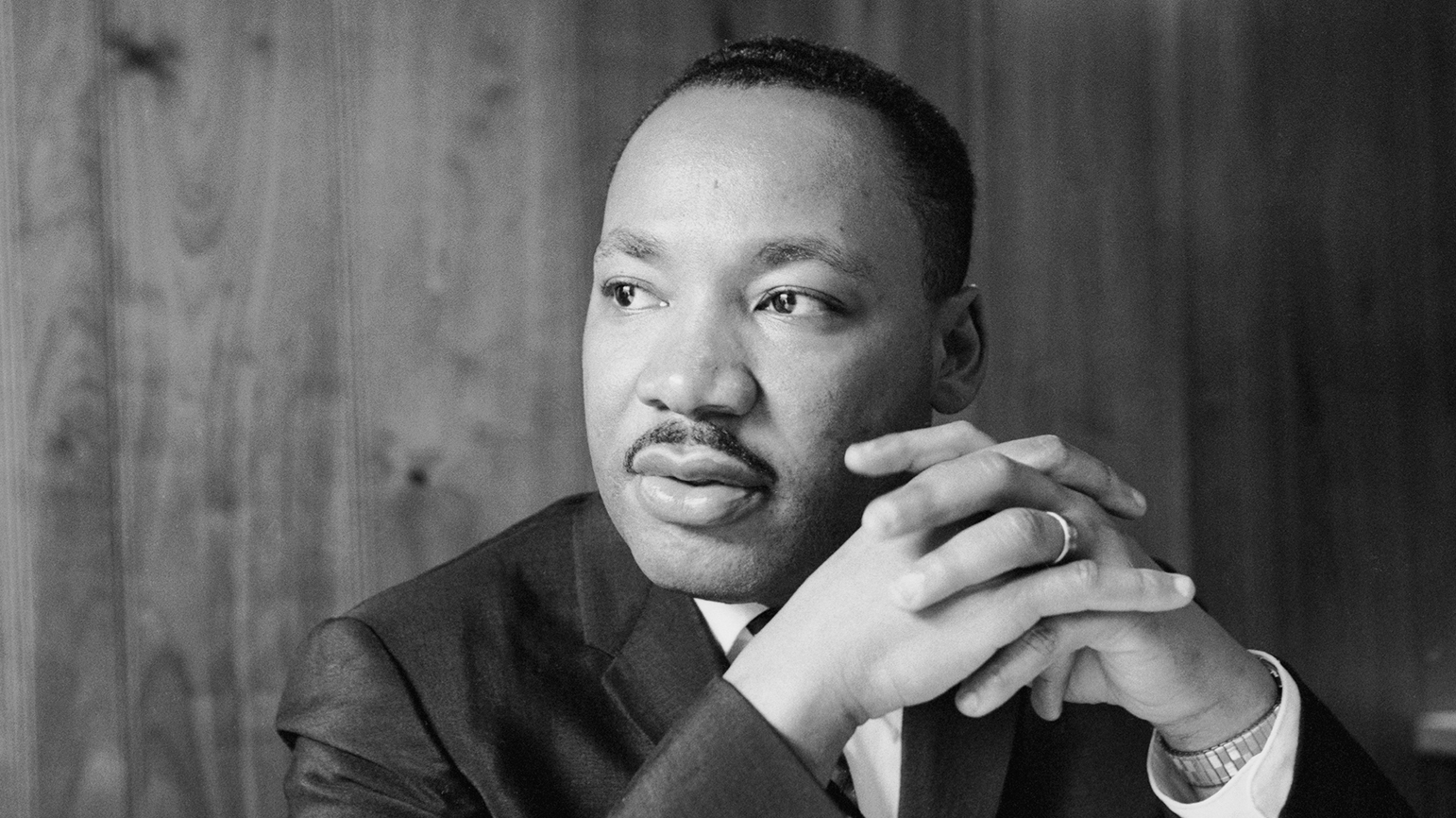
In 1957, the Rev. Dr. Martin Luther King, Jr. wrote a monthly advice column in Ebony magazine. One reader wrote in with the question, “When I’m angry, I say things to those I love that hurt them terribly. How can I overcome my bad temper?”

King’s response echoes across the decades as a description of a healthy relationship with anger.

“The first step toward eliminating any moral weakness is a recognition of a weakness to be eliminated,” he wrote, “You should also seek to concentrate on the higher virtue of calmness. You expel a lower vice by concentrating on a higher virtue…. A destructive passion is harnessed by directing that same passion into constructive channels.”

Recognizing and naming anger as an emotional reaction, holding anger in contrast with the virtue of inner calm, and redirecting passionate feelings into constructive actions—these lessons resonate with modern relationships, as well as right responses to injustice.

Containing and channeling anger in a positive direction is neither easy nor automatic for any human being. As we celebrate King’s life and achievements on a Martin Luther King, Jr. Day that falls during tumultuous times, I am focused in particular on what he had to say about anger.

King’s defining principle of nonviolent action to confront racial injustice reflects his view of anger. Like any example of authentic positivity, King’s legacy includes the full range of human emotions, including anger.

In a 1955 address to the first mass meeting of the Montgomery Improvement Association, King sought not to erase the collective anger of those who were being mistreated and discriminated against, but to channel it into what he called “positive action…devoid of hate and resentment.”

“If you internalize anger, and you don’t find a channel, it can destroy you,” Bernice King, CEO of The King Center, an organization founded by her mother Coretta Scott King, said in a 2019 interview with NPR. She continued, “That’s why when Daddy reiterated, ‘Hate is too great a burden to bear,’ he knew it was corrosive and erosive.”

King’s leadership style was to channel his anger into words and actions that could change the unjust systems he was confronting. His ability to stand and speak with calm power in the face of injustice and violence—including when his own house was bombed—is part of his belief in what Clarence Jones, an attorney and speechwriter who worked for King, described as “redemptive love.”

“From Dr. King’s standpoint,” Jones told NPR, “anger is part of a process that includes anger, forgiveness, redemption and love.”

Reflecting on his own overly angry moments, King returned to his foundational principles of nonviolent action. He wrote in his autobiography about an angry exchange he had with white officials in Montgomery during the bus boycott: “‘You must not harbor anger,’ I admonished myself. ‘You must be willing to suffer the anger of the opponent, and yet not return anger. You must not become bitter. No matter how emotional your opponents are, you must be calm.’”

How Keeping a Gratitude Journal Can Make a Difference in Your Life

Some Bible verses are so clear it’s hard to ignore them. Like Paul’s admonishment: “Give thanks in all circumstances for this is God’s will for you in Christ Jesus” (1Thessalonians 5:18).

“Okay, Paul,” I want to respond, “but you’re asking a lot.” How on earth do I give thanks in all circumstances? What if I don’t feel thankful? Why do it in the first place?

Maybe Paul suggests we do it because it’s good for us.

Years ago, someone talked me into keeping a gratitude journal. The goal: put down at least three things everyday that you’re grateful for. Dutifully I did. On some days I wasn’t even sure what I was thankful for, but because I’d promised to write three things down, I’d look for something.

Even things as mundane as, “Thank you, God, for the comb I used on my hair this morning,” adding almost as an afterthought, “Thank you, God, that I even have hair to comb.”  Gray and thinning…but there it is. “Thank you, God, for my bathroom mirror, too.”  “And the light above it.”

In time I began to see the usefulness of a regular practice of thanksgiving. When I looked for stuff, especially on days I didn’t think I could find anything, things came to mind, things you’d never even thought of. Like…

“Thanks, God, for the friend who texted me this morning…”

“Thanks, God, for all the books on our shelves.” Instead of complaining about running out of shelf space, couldn’t I be grateful for the gift of reading?

“Thanks, God, for my phone.” All those things I can do with it, the world at my fingertips, not to mention the weather, the time, the news, photos, family, friends, Bible verses.

“Thanks, God, for the water that comes out of my faucet.” Clean, clear, fresh. Hot and cold running water. Amazing.

“Thanks, God, for the cup I use every morning.”

“Thanks, God, for the reading light next to my bed.”

“Thanks, God, for the opportunity to thank You.”

Somehow writing things down made thankfulness more real. I had tangible examples. I could read them back and smile.

Then one day after a series of disappointments and setbacks and an overwhelming sense of failure, a gloomy depression came sinking over me. I knew I needed a big dose of thankfulness. This was the chance to test Paul’s dictum of “in all circumstances.”

I went outside, notebook in hand, sat on a bench and started writing. I’d put every little thing I could think of that I was thankful for. My church, the names of friends, my colleagues at work, a favorite teacher. By the time I was finished I’d filled a whole page.

Most importantly, my mood had changed. The gloom began to lift. I was more myself.

My thankful self. Because it is that self that knows God and feels God and loves God as God loves me. 

There, one more thing to be thankful for!