Embrace God's truth with our new book, The Lies that Bind

Slow Down and Savor the Season of Fall

Autumn is officially here and I couldn’t be happier–it’s my favorite season. (Candy corn, pecan pie, Mallomars…what could be better?)

Usually, though, I’m so busy going from one thing to the next that I blink and autumn’s over, replaced by lots of snow and giant, puffy winter coats.

Go For It In Article Ad

Luckily, one of my Guideposts colleagues shared this autumn prayer from Sr. Joyce Rupp. It’s the perfect reminder to take time to sit back and contemplate the transformative wonders of autumn:

A Prayer for Autumn Days
By Joyce Rupp

God of the seasons,
there is a time for everything;
there is a time for dying and a time for rising.
We need courage to enter into
the transformation process.

God of autumn,
the trees are saying goodbye to their green,
letting go of what has been.
We, too, have our moments of surrender,
with all their insecurity and risk.
Help us to let go when we need to do so.

God of fallen leaves
lying in colored patterns on the ground,
our lives have their own patterns.
As we see the patterns of our own growth,
may we learn from them.

God of misty days and harvest moon nights,
there is always the dimension of mystery
and wonder in our lives.
We always need to recognize your power-filled presence.
May we gain strength from this.

God of harvest wagons and fields of ripened grain,
many gifts of growth lie within the season of our surrender.
We must wait for harvest in faith and hope.
Grant us patience when we do not see the blessings.

God of geese going south
for another season, your wisdom enables us
to know what needs to be left behind
and what needs to be carried into the future.
We yearn for insight and vision.

God of flowers
touched with frost and windows wearing white designs,
may your love keep our hearts
from growing cold in the empty seasons.

God of life,
you believe in us, you enrich us,
you entrust us with the freedom to choose life.
For all this, we are grateful.

Amen.

Taken from May I Have This Dance? published by Ave Maria Press. Used with permission. All rights reserved.

What are you looking forward to most this autumn?

Singing from the Soul

Music was in my family’s blood: I was a piano player and Mom was a violinist. But no one in my family loved–or even seemed to know about–soul music. The Beatles were more popular in upstate New York, where I grew up.

I remember practicing “What a Friend We Have in Jesus” in the living room, and adding a bluesy riff. “You shouldn’t try to jazz it up,” Mom warned from the couch.

The Lies That Bind In Article Ad

“It’s not jazz, Mom,” I said, rolling my eyes. “It’s soul music.”

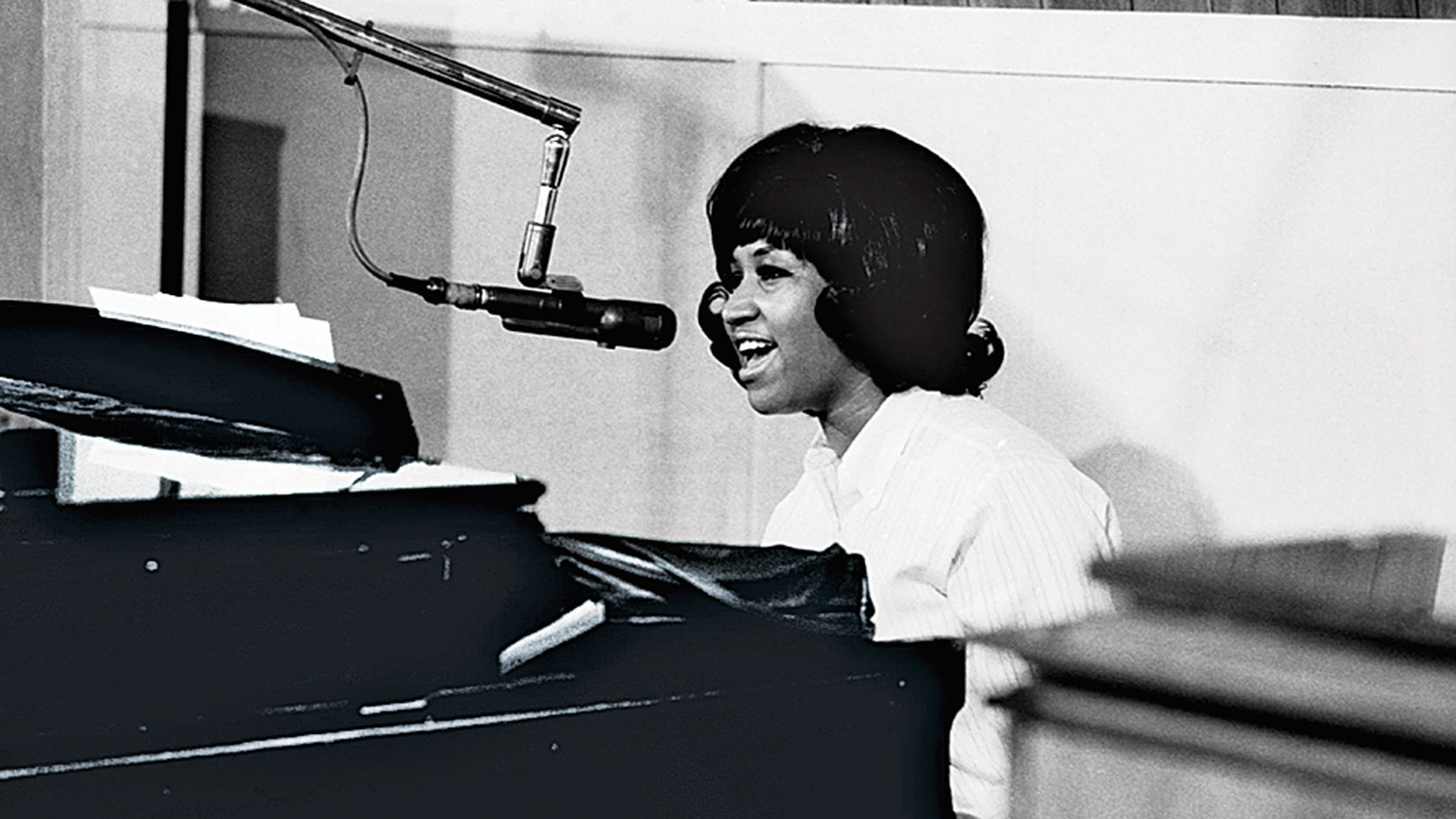
I was an adult when I first heard Aretha Franklin on the radio. I felt giddy, like when I discovered Motown as a teenager. Her Amazing Grace gospel album came out in 1972 and I spent every evening after work learning the piano parts.

“I’ve never been much on that kind of music,” my fiancé said as I practiced. How I wish someone in my life understood my love of soul music!

Years into our marriage we moved to Utah. Exploring my new neighborhood, I met an African-American couple. “We’re starting a church,” the woman said. “Would you like to join?”

Walking over that Sunday I heard music wafting all the way out into the street. Soul music! Soon after I joined the congregation, the piano player left. God had led me to just the right church. And he’d brought the church just the right piano player.

Listen to Aretha Franklin’s recording of “What a Friend We Have in Jesus“!

Download your FREE ebook, Angel Sightings: 7 Inspirational Stories About Heavenly Angels and Everyday Angels on Earth.

Simple Words of Encouragement

We often don’t realize the impact our words or actions have on others. I was reminded of that when I heard the news of the passing of Tim LaHaye, one of the authors of the bestselling Left Behind series.

Tim LaHaye was one of my encouragers at the beginning of my writing career, and now that I think about it, I realize that he probably had no idea how much his simple words meant to me. 

The Lies That Bind In Article Ad

I believe the International Christian Retail Show (still called CBA at that time) was in Denver that year. My first book had just been published, and I’d traveled to the retail show to do a book signing.

Read More: The Cross in the Water

As I walked down a hallway with a friend, a man stopped me and said, “Do you have a book out?” I replied that I did and told him a little bit about my new book. “Great!” he said. Come do a radio interview with me tomorrow at 4:00.”

I got there a little early, and realized that my interview would be after beloved author Karen Kingsbury and famed artist Ron DiCianni. (Yes, I felt like I was in one of those “Which one of these people doesn’t belong in this picture?” papers that we used to do in grade school.)

Read More: Writing with Faith

Right before time to start my interview, Jerry B. Jenkins and Tim LaHaye arrived to wait for the slot after mine. The irony of the moment wasn’t lost on me—a new author followed by two men whose books had sold millions of copies.

When I finished my interview with the host, Tim LaHaye walked up to me, clasped my hand and looked me in the eye, and then with great conviction he told me, “Don’t you quit writing.”

I can’t tell you what a jolt of encouragement that was for me as a new writer, and I’ve never forgotten his kindness that day.

What can you say to encourage someone today?

She Struggled to Accept Her Son’s New Wife

“Mom, I think I’ve met a girl I’d like to date.” This was what my son Ryyan called to tell me?

Ryyan was 28, a senior in college. He’d served in the Army, including a deployment to Iraq, before enrolling at Georgia Tech at age 23. He was about to graduate with a degree in computer science.

You Got This In Article Ad

He hadn’t been on a single date his entire time in college. “Too much homework, Mom!” he said. I didn’t want him becoming one of those permanent bachelor computer programmers, but Ryyan needed to focus on his studies. I helped out by doing his laundry, cooking and freezing healthy meals for him and running errands whenever I made it over to Atlanta from the Sparta farmhouse where my husband, Mark, and I lived.

Ryyan and I made a good team. Why would he want to distract himself so close to the finish line?

“A girl, huh?” I said. “Where’d you meet her?”

“A dating app.”“You mean online? Where you meet strangers?”

“Mom, they post their bios,” Ryyan said. “She’s a Christian. An Auburn grad who works at CNN. We’re going on our first date this weekend.”

How could I size up this young lady if all I knew about her was what Ryyan had read on some app? “I look forward to hearing about it,” I said.

Actually, I hoped the date would be a dud. After graduation, Ryyan could turn his attention to finding someone to marry. Preferably at church. Where I could meet her and make sure he was using good judgment.

Ryyan was our middle boy. Growing up, he needed a little extra parental support. He couldn’t tie his shoes and got his sleeves mixed up putting on a jacket. He carried around a beloved pillow until the stuffing came out and I had to sneak it away at night to wash it.

Mark and I both served in the military. Then Mark returned to civilian life, while I was a career officer assigned to combat arms units on bases around the world. Ryyan was born in Germany. My job was demanding, and I felt guilty going off to work while Mark took care of the boys.

I was proud when our oldest, David, enlisted right out of high school. Then the September 11 attacks happened, and I became terrified. Reading the Bible and praying got me through David’s two deployments in Iraq.

David made it home safely. A few years later, Ryyan announced he intended to follow in his brother’s footsteps. Even worse, Ryyan would serve on a logistics team, delivering supplies to remote units all over Iraq.

I was on my knees every day begging God to keep Ryyan safe from roadside bombs. It felt as if Mark and I prayed our boy home.

I guess the silver lining was I learned early on how to let my boys go and become men. I had to trust God to keep them safe. That kept me from becoming one of those helicopter parents who do everything for their kids and stand guard over their lives. Nope, that was not my issue.

“How was the date?” I asked Ryyan the next time we talked, trying to sound unconcerned.

“Avery and I had a great time!” he said. Pictures of them at a restaurant appeared on my phone. He went on about how she was everything he’d hoped for and more. “She even loves the outdoors!” he said.

Not the answer I was hoping for. I wondered about this Avery. Ryyan was a catch, no doubt. Military veteran, soon-to-be computer science graduate, man of faith. What if she was just telling him what he wanted to hear? Would she take care of Ryyan the way I did? I doubted it.

Ryyan didn’t seem to doubt a thing.

“Guess what, Mom?” he said about four months after that first date. “I’m bringing Avery home this weekend to fish in the pond.”

After I had completed 12 years of service in the Army, Mark and I moved back to Georgia and lived on a farmstead two hours from Atlanta. I heard myself say to Ryyan, “That’s nice.”

That weekend, I watched as Ryyan’s car made its way up our gravel driveway. His brothers were still bachelors. Even though I’d prayed for them to find loving wives, this was the first time any of my sons had brought a girl home to meet us.

I didn’t rush outside as usual. From the kitchen, I watched Avery emerge from the car. I had to admit, she was even prettier than in Ryyan’s photos. I stepped out onto the front porch.

Ryyan introduced her, and I gave them both a quick hug. They went inside, and I returned to the kitchen to finish making dinner. I heard Ryyan introduce Avery to his dad. Good, I thought, she won’t bug me in the kitchen.“Mrs. Smith, can I help with anything?” Avery stood in the doorway. I was so startled, I almost dropped a pan of hot bread.

“No, I’ve got it,” I said.

“I could set the table,” she said. “Where are the plates?”

“Don’t worry about it,” I said in my only-one-woman-needed-in-the-kitchen voice.

Thankfully, Ryyan walked in and took Avery to see the pond.

At dinner, Avery sat with everyone else while I bustled in and out bringing food to the table. The men in my family were so engrossed in talking to her that no one offered to help.

We sat down and said grace. Then they all picked up the conversation without even complimenting me on the meal, the way they usually did.

Afterward, everyone trooped off to the family room to watch a football game. I heard the guys laughing at Avery’s commentary. She even liked football! Later I looked out the window and saw Ryyan and Avery sitting on the porch, their faces lit by the peach-colored light of sunset. Ryyan’s arm was around Avery’s shoulders. He gazed into her eyes like a man in love. Oh boy, I thought.

Avery became a regular guest at our house. Once, I came into the family room during a football game to deliver a plate of hot wings, and everyone was high-fiving Avery. This woman was becoming the new queen bee of my house!

Now when Ryyan called, it was all about what he and Avery were up to. No more discussing finances or practicing for job interviews with me. I began to dread one phone call in particular. At last, the call came. “Mom, I’m going to ask Avery to marry me.”

“Don’t you think it’s too soon?” I asked. “You haven’t dated any other girls. How do you know that she’s the right one?”

Ryyan was silent a moment. “Mom, Avery and I have dated for more than a year. I have a good job now, and I want to settle down. I don’t want to date anyone else. I’ve prayed about this. I love Avery. I want her to be my wife.”

“Well, congratulations,” I said.“Thanks,” said Ryyan and hung up.

I had been complaining about Avery for quite some time to a group of women prayer partners at church. Now I unloaded about her.

To my surprise, my friends cut me off. “Jan, you need to back off,” they said. “Avery sounds like a wonderful young woman. Ryyan is old enough to make his own decisions. You’re going to have to let him go at some point.”

“I already did that!” I protested. “Didn’t I let him go to Iraq? College? He has his own apartment. Letting go is not my issue!”

Couldn’t my friends see the problem was Avery, not me? She had marched into Ryyan’s life and…what?

I cast around for some major fault. The more I searched, the more my anger changed into a different feeling. A feeling I sometimes got that God was standing off to one side, arms folded, eyebrows raised, waiting for me to realize I was being a fool.

Message received. I stayed out of the way while Avery and Ryyan planned their wedding.

A week before the wedding, Ryyan surprised me with a visit to the house. I hadn’t even seen him drive up. He asked me to come outside for a talk on the porch.

“Mom,” he said, “I have to get something off my chest. Avery doesn’t think you like her. Me neither. I don’t know what you have against her, but I want you to know how much it hurts me that the two women I love most in the world don’t get along. I want to resolve this.”

I opened my mouth to defend myself, then stopped. I pictured Ryyan as a baby in Germany, how guilty I’d felt leaving him behind, for days sometimes. I thought of all the nights I’d gone to bed terrified that I’d wake up to learn he had been killed in Iraq.

All my life, I had been giving him up. Now I was about to give him up to Avery—for good.

Letting a child go is one of the hardest parts of being a parent. I had to do it anyway.

“I am so sorry,” I said with tears in my eyes. “I’m proud of you, Ryyan. Avery is everything I’d prayed you’d find in a wife. I just didn’t want to admit that because I didn’t want to let you go. Will you tell her that for me?”

“You can tell her yourself, Mom,” Ryyan said. “She’s here with me.” Avery stood at the door. She must have come through the back. I enveloped them both in a big hug. I could feel God enveloping all of us in even bigger arms.

I admit, I would have planned the wedding differently. They held it at a wedding venue, not a church. But you know what? It was a beautiful Christian wedding, and everyone had a wonderful time. I got to dance with Ryyan at the reception.

I call Avery my daughter now. She has livened up our family, that’s for sure. I discovered she’s a great cook and we’ve traded favorite recipes.

No grandbaby yet, but I’m dropping hints. On second thought, maybe I better let that one go too.…

For more inspiring stories, subscribe to Guideposts magazine.

She Gave Up Sarcasm for Lent

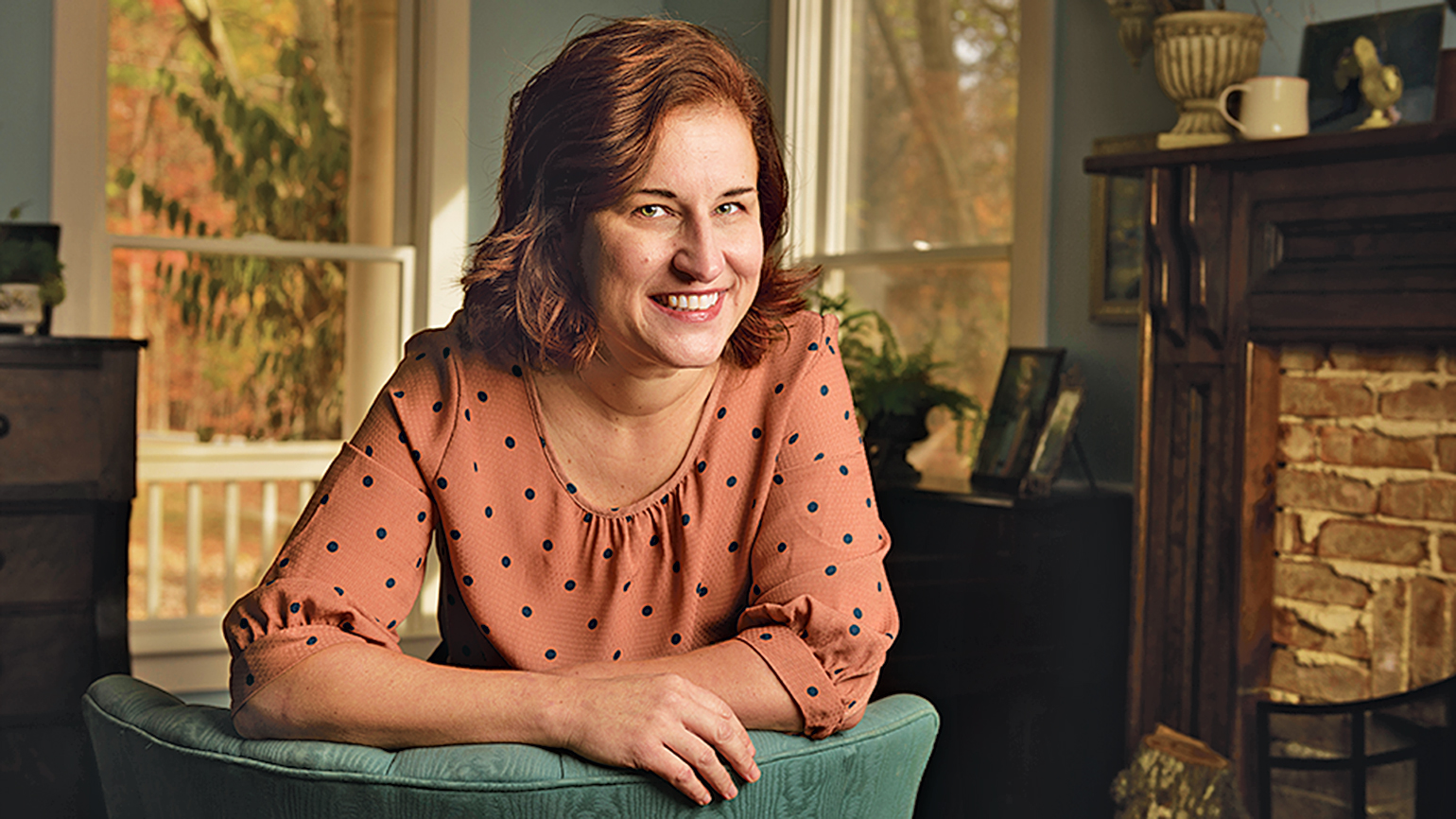
Dolphins. that’s how I got into trouble. It was the week before Lent. My husband, three teenage daughters and I were eating dinner at the kitchen table when I brought it up. Something I’d seen on Facebook that afternoon. An acquaintance from church had a penchant for posting overly inspirational quotes accompanied by photos of rainbows, sunsets, ice cream cone-shaped clouds, you name it.

“Now she’s moved on to dolphins,” I told my family. “I wonder if killer whales are next.”

NIVFLB Inarticle ad

I dropped the word cheesy. Everyone laughed. Everyone, that is, except my 17-year-old daughter, Maggie. She just stared at her plate and moved her peas from one side to the other.

After dinner, I went upstairs to check on her. Maggie was sitting on her bed, earbuds in. I tried to get her to open up about what was bothering her. But she gave me the teenage cold shoulder. I thought I was going to get frostbite.

“I don’t want to talk,” Maggie finally said, pulling out her earbuds. “You’ll just say I’m being cheesy.”

“What?” I said. I was sarcastic, sure, but I’d never call my kids cheesy!

“You’re snarky, Mom. You make fun of everything,” Maggie said. “And FYI, I like those dolphin photos!”

Dolphins? This was about dolphins? Seriously?

All night I tossed and turned, thinking about what Maggie had said. Was she right? Was I too snarky? I wasn’t a mean person. But around people I was comfortable with, I did tend to poke fun at things. It’s just how I’d been raised.

In my family growing up, humor was everything. When I was little, my dad and brother would spend the entire dinner hour outdoing each other’s jokes. I had to keep up if I wanted to be included. And I was the kind of person who noticed everything.

That’s one reason I studied journalism in college. I met Luke there, a nice southern gentleman from Georgia. We fell in love, got married and moved to a little white farmhouse outside of Atlanta. I came from Connecticut, and the South gave me culture shock. Everyone was so polite. Meanwhile, I was like a bull in a china shop.

Even so, I made a good group of friends—I was “the funny one” of the bunch. Whenever we got together for lunch, I couldn’t help but give a running commentary on everything from the design of the menu to the waiter’s serving style. My humor was what made me, well, me, wasn’t it?

The day after my conversation with Maggie, I called my friend Cristell and told her about it.

“Is that true?” I asked. “Am I too snarky?”

Cristell hesitated. “Well, I remember how you used to say everyone is doing the best they can with what they have.

“I must’ve been over-caffeinated that day,” I shot back. Hmm. Maybe I had been a little softer back in the day. My forties had turned me sarcastic. What could I do about it at this point, though? It’s not like there was a 12-step program for smart alecks.

Ah, but there was Lent! Usually I gave up chocolate or shoe shopping. This year, I decided I’d give up the snark. I’d abstain from wisecracks and sarcasm for 40 days. And I’d give up Facebook too—one more dolphin photo and I wouldn’t make it past the first hour of Lent snark-free.

READ MORE: What to Give Up for Lent: 15 Meaningful Suggestions

I wasn’t sure if the planet would continue to spin minus my running commentary, but I was interested to find out. Most of all, I wanted to know if I could change, if I could be the kind of person my daughter could trust not to make fun of her.

Day one went off without a hitch. I had many a snarky thought, but none were actually verbalized. The next day, though, temptation stared me right in the face when I met with my book club. We got together once a month for a nice sit-down lunch. I was on my best behavior.

Things were running smoothly until someone brought up a trigger topic—a book whose popularity I could never fathom. I squirmed in my chair like an antsy kid.

“What’s going on, Laura?” someone finally said. “You’re awfully…quiet.”

“I gave up snark for Lent,” I said. “I’m biting my tongue, which is just about bleeding right now.”

They erupted into laughter. “Good luck with that!” they said. All through lunch I just sat there trying to think of something cheesy to say. I felt like Tigger when he lost his bounce. Lord, I prayed on the drive home, help me find a way to stifle the snark but still be me!

Two weeks into Lent, things were no better. I kept noticing things I badly wanted to comment on, even at church. There was the woman filing her long nails during the service. The guy who’d punctuate the pastor’s sermon points with a soul-stirring “Aaaaahhh-MEN!” And the two kids driving their little toy trucks up and down the edges of the pew.

I wasn’t verbalizing the snark, but the running commentary kept on going in my head. Shouldn’t my heart have changed by now? Was I a lost cause?

One afternoon halfway to Easter, I sat at home and turned to a book by the writer Brené Brown for inspiration. The chapter I’d cracked open was about Brené’s struggle with perfectionism—she held herself and, as a result, others to impossible standards. Hence her occasional snarkiness.

I was the same way! I judged others over the things I silently judged myself about. Like my behavior at church or my posts to Facebook. Once upon a time, I’d believed everyone was doing the best they could with what they’d been given. But somewhere along the way, I’d stopped believing that for myself.

I was self-conscious about my own perceived faults and I covered it up with sharp humor. No wonder I was so hard on other people. I closed my eyes and prayed, this time not to stop the snark, but to be kinder to myself and, by extension, to others.

A week before Easter, I stopped at the supermarket. My cart was overflowing, so I skipped the self-checkout line. The clerk on duty was a sour woman I’d seen before. She rarely said anything apart from the bare minimum required to facilitate the transaction. At least the self-checkout computer always greeted me with “Welcome, Valued Guest!” This clerk could take a hint, I thought as I emptied my cart.

Yet the more I looked at the clerk—really looked at her—the more I noticed that she wasn’t surly at all. If anything, she seemed sad. I tried to put myself in her shoes. What was she going through? I caught her eye and did something I’d never done before. I smiled at her. She smiled back. A tired smile that said, “Thanks, sugar, for trying.” I had no snarky response, no criticism. I just felt for her.

I paid for my groceries, thanked the woman and left the store feeling lighter somehow. Humor isn’t a bad thing. In fact, it’s a great thing. But not when you hide behind it, afraid to really reveal yourself, flaws and all.

That night, I sat with Maggie in the den. She was telling me about a Christian song she adored. Her guard was down. I wasn’t a big fan of contemporary Christian music—I usually made fun of it. But Maggie was so passionate. I asked her to play the song for me.

“You won’t like it,” she said.

“Try me,” I said. I felt as if I could like just about anything—even cutesy dolphins.

For more inspiring stories, subscribe to Guideposts magazine.

READ MORE ABOUT LENT:

Set Free by Forgiveness

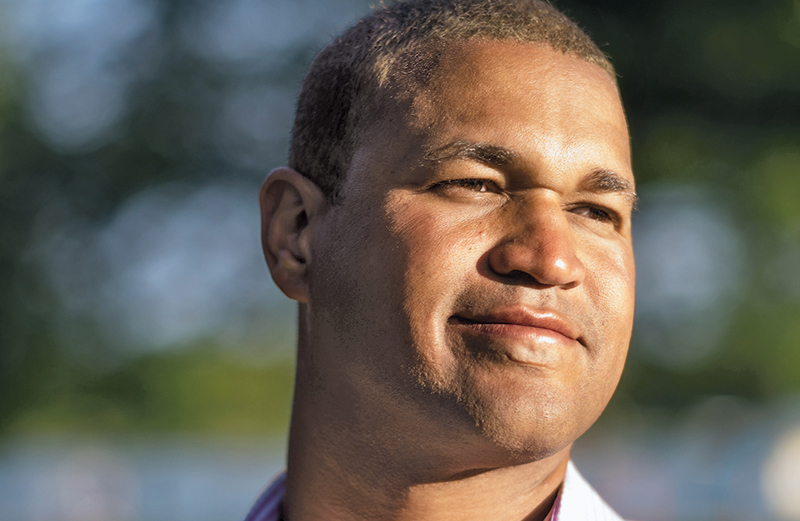
I sat on my bed with my Bible, trying to tear my eyes off the T-shirt crumpled on a chair beside me. The shirt was stained—with blood. A few weeks earlier, I’d survived one of the worst mass shootings in American history, at the Century movie theaters in Aurora, Colorado.

A gunman had burst into a theater and fired dozens of rounds from a shotgun, a semiautomatic rifle and a 40-caliber handgun, killing 12 people. I was shot in the shoulder, one of 58 injured. My friend Rebecca, who’d come with me that night to watch the new Batman movie, was one of the dead.

Sweet Carolina Mysteries In Article Ad

Now my shoulder was healing. My heart was slowly healing. Even my soul seemed to be healing. At least I knew it would heal if I could take some time to pray and collect myself.

That’s why I was in my bedroom, clutching my Bible and staring at my T-shirt. I’d kept the shirt as proof I’d survived that nightmare. Somehow, God had saved me.

Yes, but saved me for what? My Bible was open to II Corinthians: “For it is God who said, ‘Let light shine out of darkness.’” My bedroom was dark. It was daytime, but I’d pulled the blinds and closed the door. I wanted to be alone.

The days after the shooting had been a blur of media interviews, people rushing to help. Somewhere in there I’d said something about forgiving the killer. After that, all anyone wanted to ask was, “Do you forgive him, Marcus? How can you forgive something like that?”

I’d become known as the victim who forgave the killer. Inside, I was numb. For some reason, every time I read that passage about light and darkness, I heard something else: Who do you really need to forgive, Marcus?

That was the question, wasn’t it? I knew forgiveness was the path I should take as a Christian. But James Holmes, the suspect with the dyed orange hair and crazed eyes, wasn’t the only one I needed to forgive.

I’d carried my own darkness into that theater. A lifetime’s worth. Who did I need to forgive? I closed my eyes and remembered.

My parents weren’t married when I was born. In fact, my dad was engaged to another woman. He married her and walked out of my life. By the time I was old enough to know such things, my mom had married another man, Herbert Weaver.

He’d been in the military, then went to work for the finance division of General Motors. He earned a good salary and seemed stable and upright. But Herbert was a monster. After he and Mom had two kids of their own, he treated me like an outcast.

The abuse started with yelling. Then came vicious whippings with an extension cord. Then burns with an iron. I was just seven the first time I ran away from home.

Herbert always found me and dragged me back. He chained me to my bed. Once, he filled a trash can with concrete and chained me to that. He abused Mom too. We were all terrified of him.

The only way I knew to fight back was by acting out. I smoked, drank, got in fights, shoplifted. Once, I stole Herbert’s car and crashed it. He broke off a piece of fence and beat me with it. We were like opponents in the wrestling ring, unwilling to let each other go.

Finally, after graduating from high school, I fled Virginia Beach, where we lived. I got a good job in Washington, D.C. But, like I’d do with almost every other job, I soon sabotaged myself. Always the damage inside me won out and I’d do something stupid, walk away or get in trouble.

For years I wandered from place to place, job to job, running away from everything but myself.

I ended up in Colorado. Then one of my sisters, Herbert’s biological daughter, was diagnosed with liver failure. She came forward and said Herbert had sexually abused her when she was young. He was sent to prison. He could rot there for all I cared.

My sister passed away in 2001. Losing her prompted me to try to straighten out my life. I decided to become an X-ray tech and won a scholarship to earn an associate’s degree. I was baptized in 2005, while in school. But I didn’t read the Bible and I didn’t understand what it meant to submit to God’s will. Not then.

I was still doing my own thing after graduation. I fell in with a couple of guys involved in petty crime. Before I knew it, I was doing cocaine and dealing drugs to feed my habit.

I was caught, tried and jailed. The first thing I did in my cell was grab a Bible. Over the next 11 months, I went to jailhouse Bible studies, truly discovering how to become a follower of Christ.

I was released and moved into a homeless shelter. Before long, I was its manager. I went to church, studied the Bible and reached out to other ex-cons. I met a woman named Rebecca Wingo, a former Air Force linguist who was beautiful, smart, grounded, and really seemed to like me.

She had this uncanny ability to get to the heart of the matter, maybe because she was studying to be a social worker. When I confided in her about the abuse I’d suffered, she heard even what I didn’t say.

“I know your stepdad did terrible things to you,” she said. “But you’ve got to let the past go, or it’s going to keep holding you back.” Although we hadn’t known each other long, we were becoming close friends when we decided to go see The Dark Knight Rises at the Century theater in Aurora.

I opened my eyes. my room was dark. Dark like the theater. As often happened when I let my guard down, memories of the shooting swarmed my mind. I saw the gunman’s silhouette stride across the movie screen. I heard the pop of his gun—movie bullets sound nothing like the real thing.

It was all so surreal, a nightmare mingling of screams and twisting bodies blurred by smoke from the smoke bombs the killer had tossed into the theater. In a pause while he reloaded I tried to help Rebecca. She’d been shot.

I picked her up. I staggered toward the exit. I hardly felt the bullet go through my shoulder. I dropped Rebecca. I couldn’t pick her up again. By the time I was outside the theater—I don’t remember getting there—I couldn’t find her. She lay where I’d left her.

The blood on my shirt was brown now. Stiff. Did I keep that shirt because it reminded me of survival? Or of failure? I’d failed to save Rebecca. And every time I thought about that night, I got confused about the silhouette in front of the screen.

I knew it was the killer. But to me it looked like Herbert Weaver. It looked like a monster out to destroy every good thing I had, including this new life I was making for myself outside prison.

Forgiving the killer was one thing. Newscasters said he was a troubled loner. I could leave his fate in God’s hands. But what about my stepdad? Why should I forgive him? He’d tormented me my whole life. Why should getting shot in a movie theater mean I had to forgive the man I hated more than anything in the world?

I looked at my Bible again. “For it is God who said, ‘Let light shine out of darkness.’” Sunlight glowed through the slats of my blinds. Dimly I heard the world passing by outside.

Why, I wondered for the thousandth time, had I survived and Rebecca died? Another question, another memory, more torment—all of it balled up inside that dark silhouette surrounded by the light of the screen. My questions were surrounded by God’s own insistent question: Who do you need to forgive, Marcus?

For one terrifying moment I let the silhouette in front of the screen take the shape of Herbert Weaver. I let him stride right up to me, carrying not a gun but a piece of fence, an extension cord, a chain. And I realized he was nothing more than that—a silhouette. A shadow from my past. He hadn’t laid a hand on me in years.

The gunman had wounded my body. But all these years later, Herbert Weaver was still tearing away at my soul. He damaged me because I let him. Because, like a wrestler, I refused to let him go.

“Do you forgive him, Marcus?” The reporters’ words echoed in my mind. I looked at my shirt. At my Bible. At the light behind the blinds. The silhouette was gone. In its place I saw plain old Herbert Weaver, a man who lashed out at others because he couldn’t face his own torment.

His fate was in God’s hands too. I could let him go. I could let God’s light fill the shadow in my soul.

I took a breath. I closed my Bible, setting it beside my bloodstained shirt. I opened the blinds; sunlight streamed in. It was a beautiful summer day. I knew it wouldn’t be long before James Holmes had a court date. My phone would ring and the reporters would ask their question again.

I knew what my answer would be. And this time, I knew exactly what it meant.


Download your free eBook, Let These Bible Verses Help You: 12 Psalms and Bible Passages to Deepen Your Joy, Happiness, Hope and Faith.

Seeing Life Through a Lens of Joy

“Thank you for your note and gift of the money, but I just did what was morally right.” These were the words of the proprietor of a gas station off of I-84 in Connecticut.

On a trip back from Boston, my two girls and I stopped at this gas station. It wasn’t until we got home an hour and a half later that I realized I’d left my wallet in the gas station restroom.

Rejoice in All Things in article ad

I tried to set aside my frustration and anxiety over this and focused on taking action. First, I had to find the phone number of the gas station. Just a quick Google search, right? Well, not exactly. The number had recently changed due to new ownership.

Read More: Simple Ways to Feel Better

So I called the diner across the street. The hostess generously took down my number and had a bus boy bring it to the gas station proprietor, who then called me. He informed me that a regular customer had found my wallet and turned it over to him for safekeeping.

The gas station proprietor found my AAA card in my wallet, called the number and left a message for me, hoping AAA would reach out to me. We arranged that I would drive back to the gas station the next day to pick up my wallet.

My relief that the situation was heading the right direction was palpable, as was my appreciation for the genuine kindness and thoughtfulness of others—from the customer who found my wallet to the diner hostess and bus boy to the proprietor, who was willing to mail me my wallet if that was easier for me.

Read More: Challenges as Occasions of Joy

At every step of the way, generosity of spirit was shown, which was heartening in a world where so often we witness self-focused, monocular thinking and self-serving behaviors.

I drove back to that gas station the next day with the goal of retrieving my wallet and giving an envelope, with a thank you note and money inside, to the proprietor.

I was not there when he opened the envelope but I heard from him later. That’s when he said, “I just did what was morally right.” He told me that he had given the money to the regular who found my wallet. “I am blessed. I wanted him to have the money for his good deed.”

Much good fortune followed me after I left my wallet behind on that trip back from Boston—including a powerful reminder of the goodness and generosity of others.

My world was righted and made more joyful, not just by being reunited with my wallet, but by the selfless acts of others. 
As spiritual teacher and author Marianne Williamson wrote, “Joy is what happens when we allow ourselves to recognize how good things really are.

Savory Slow-Grilled Chicken

You're bound to enjoy this take on a traditional Southern recipe; it's one I've been playing with for years.

Ingredients

Spice Rub
2 t. onion powder 1 t. fresh ground pepper
2 t. garlic powder ¼ t. cayenne pepper
1 T. paprika ¼ t. ground thyme
1 t. seasoned salt 1 t. lemon pepper
2 T. kosher salt  
 
1 whole chicken cut up in 12 pieces (no back) 8 T. melted butter
¼ c. olive oil 2 T. Italian parsley, chopped

Preparation

1. Combine dry rub ingredients in small bowl. Set aside.

Faithful Paws and Purrs In Article Ad

2. Buy chicken pieces already cut up, or cut up a whole chicken if you’re handy with a knife. Separate the wing part from the wing drumette and remove the little bony wing piece at the end. Cut the half breasts in half again so there are 4 breast pieces.

3. Rinse and carefully dry chicken pieces with paper towels. (Starting with dry chicken ensures a crispy skin and better spice coverage.)

4. Toss chicken with olive oil in a large mixing bowl. Sprinkle dry rub over chicken and work into all pieces. Do this up to 1 hour ahead.

5. Set gas grill on low (or wait until charcoals are white and starting to cool). You don’t want the grill to be too hot. If you’re getting flare-ups, it’s too hot.

6. Place chicken pieces skin side up on grill and cover for 15 minutes. Watch grill carefully to make sure there are no flare-ups.

7. After 15 minutes, brush skin side with melted butter and turn skin side down. Cover and cook for 15 minutes. Brush meat side with butter and turn. Repeat every 10 minutes until butter is gone.

8. Total grill time should be about 60-75 minutes on low heat. Check for doneness with an instant thermometer reading 165°F in the thickest piece of chicken. Skin should be brown, savory and super crispy. Arrange on a serving platter and sprinkle with Italian parsley.

9. Arrange on a serving platter and sprinkle with Italian parsley.

Serves 5.

Nutritional Information:  Calories: 300; Fat: 30g; Cholesterol: 65mg; Sodium: 1870mg; Total Carbohydrates: 3g; Dietary Fiber: 1g; Sugars: 0g; Protein: 6g.

Don't miss Michael's inspiring story about how a group of church friends who like to grill have supported each other through tough times.


Download your FREE ebook, The Power of Hope: 7 Inspirational Stories of People Rediscovering Faith, Hope and Love.

Savoring the Delectable Delights of Hanukkah

I sent a last-minute e-mail to a photographer, shut down my office computer and texted my brother Sam: C U @ Penn in 15.

I hurried to Penn Station on the west side of Manhattan, where we’d catch the 5:35 train to Mom and Dad’s out on Long Island.

NIVFLB Inarticle ad

It was the first night of Hanukkah and I couldn’t wait to get home. I’ve lived a crazy busy life in the city for seven years, but home will always be the house in the suburbs where I grew up with my older brothers, Sam and Ben.

There are bigger and more serious Jewish holidays like Yom Kippur, Passover and Rosh Hashanah that require fasting, long services at temple and solemn prayers. Hanukkah is different. Hanukkah is a family celebration. Hanukkah is fun.

The holiday has its origins in the second century BC, when the Jews defeated their oppressive rulers and rededicated the Holy Temple in Jerusalem. The occupiers had defiled the oil that was used to light the temple’s candelabra.

There was only enough pure olive oil to last a single day, yet the oil fueled the flame for eight days.

Today, Jews celebrate this miracle by placing and lighting one additional candle in the menorah every night for eight straight nights, which is why Hanukkah is called the Festival of Lights.

We also eat…a lot, at least in my family, especially on the first night. That’s why I was in a hurry to get home.

My mom is an amazing cook and baker, and the whole train ride to Long Island, all I could think about was the feast she’d prepared for us.

Latkes, potato and onion pancakes. Beef brisket that she’d seasoned with garlic, pepper and bay leaves and roasted for hours until the meat was juicy and tender.

And the desserts! Apple crisp. Sorbet with chocolate shavings. Biscochos, Sephardic shortbread cookies. And my favorite, jelly thumbprint cookies. We call them that because it looks like someone stuck their thumb in the center to make room for the jelly.

Really, though, my mom’s trick, which she learned from my grandma, is to use the end of a wooden spoon.

It was hard to restrain myself from grabbing a cookie as we gathered in my parents’ kitchen. We stood in a semicircle around the menorah and recited the three traditional Hebrew prayers, concluding with the Shehecheyanu, only said on the first night of Hanukkah.

“Blessed are you, Lord, our God,” we prayed, “Sovereign of the universe, who has kept us alive, sustained us and enabled us to reach this season. Amen.”

Mom lit the menorah. We sang Ma’oz Tzur, a Jewish liturgical poem, and found our places around the dining table.

Then the feast began. Naturally I had to have a taste of each dessert.

At the end of the night, Mom and Dad put us back on the train to Manhattan with hugs and Tupperware containers filled with goodies.

I curled up in my seat on the train, feeling incredibly content and grateful.

As much as I love my busy life in the city, I needed a night like this to remind me of the timeless blessings of food, family and faith that light my life.

Try Rebecca’s mom’s recipe for Jelly Thumbprint Cookies; they’re a treat suited to any holiday!

Download your FREE ebook, Paths to Happiness: 7 Real Life Stories of Personal Growth, Self-Improvement and Positive Change.

Santa Claus Around the World

It is widely known that Santa Claus was inspired by Saint Nicholas of Myra, an early Christian bishop of Greek descent from a town in Turkey that is now called Demre. Similar characters inspired by St. Nicholas can be found in many other countries, along with some other holiday gift-givers who have different origins. Let’s pay a visit to a few of these Santas (by other names) from around the world.

Santa in the Netherlands: Sinterklaas

Associated with Christmas in the Netherlands, Belgium, Luxembourg and northern France, Sinterklaas is one of the key predecessors of Santa Claus. Like Santa, he was inspired by Saint Nicholas and is generally depicted with a full white beard.

Whistle Stop Cafe In Article Ad May 2023

Sinterklaas brings presents on December 6, St. Nick’s feast day, or in some regions, the night before. He is dressed in red bishop’s garb and rides a white horse, carrying a large red book that includes the names of children who have been good or naughty. He is assisted by Swarte Piet, a Moor from Spain.

The Dutch, who were the first Europeans to settle what would later be New York, brought Sinterklass with them, where he slowly morphed into the Santa Claus we know today.

Santa in the United Kingdom: Father Christmas

Father Christmas has long served as the Santa-esque figure in the United Kingdom.

When Father Christmas debuted in the 17th century, he was something of a political figure: England’s Puritan-led government at the time was trying to do away with Christmas, and in response to that effort sprang up Father Christmas, who represented holiday feasting and merry-making (but not the giving of gifts). Santa Claus began to make inroads in England in the mid-19th century, and thereafter Father Christmas took on the gift-giving role.

The two bearded gentlemen are almost interchangeable today, though in traditional depictions, Father Christmas tends to be a bit more lean than Santa and sports a long-hooded gown of red, trimmed with white fur.

Santa in Germany: Christkindl

Christmas markets have been popular in Germany since the 1500s, but gift-giving back then occurred on November 11 and December 6, the feast days of St. Martin and St. Nicholas, respectively. In an attempt to take the focus off Catholic saints, the religious reformer Martin Luther introduced a figure known as Christkindl (Christ Child), a child (later a young girl) usually depicted with blond hair and angel wings who brings presents to children. It’s thought that in English-speaking countries, the term Christkindl transformed into another name for Santa Claus: Kris Kringle.

For some Germans and German-speakers, it’s the Weihnachtsmann who brings presents; he is largely a German version of Santa Claus and Father Christmas.

Santa in France: Père Noël

Sometimes called Papa Noël, this gift-giving gentleman, like Father Christmas, wears a fur-lined cape and hood. Traditionally, French children left shoes by the fireplace with treats in them which were replaced with small gifts by Père Noël, though nowadays, the gifts are often larger and found under the Christmas tree. The gift-giving happens after Christmas Eve Mass rather than on Christmas morning.

In some parts of eastern France, it’s Tante Arie (Aunt Arie) who, accompanied by a donkey, brings gifts to well-behaved children.

Santa in Spain: The Three Kings

In a tradition dating back to the fourth century, the familiar trio of wise men—Caspar, Melchior, and Balthasar—are the ones who bring presents, and it happens on (or on the night before) the Epiphany on January 6—the day the wandering Wise Men came upon the Christ child. Children leave treats and drinks for the Kings’ camels.

The tradition began in the Roman province of Hispania (which is now the countries of Spain and Portugal) and later spread with the Spanish and Portuguese colonization of Mexico, Central America, and South America.

Santa in Russia: Ded Moroz

This distinctly Russian figure of legend predates Santa, but shares many of his characteristics. Originating in Slavic mythology, he was adopted and adapted by the Russian Orthodox church. He wears a long fur coat of red and blue, a long magic staff and travels in a sleigh pulled by three horses, bringing gifts to children.

Unlike other Santa-esque figures, Ded Moroz has a female helper: his granddaughter, Snegurochkal who wears silver and blue robes and a fur hat or snowflake crown.

Santa in Czech Republic: Jezisek

Though Santa has made inroads in recent decades, tradition in the Czech Republic has it that Jezisek (Baby Jesus) brings gifts on Christmas Eve. Children are kept in another room while adults prepare a festive meal, decorate the tree and arrange the presents beneath it before allowing the children back.

Gifts are also shared on December 5, the evening before St. Nicholas Day. These are smaller gifts, brought by Mikulas (St. Nicholas).

Santa in Poland: Swiety Mikolaj

Dressed in bishop’s robes, Swiety Mikolaj (St. Nicholas) visits Polish homes, bearing gifts for good children, on his feast day, December 6.

But there are other gift-bearing characters in certain parts of the country, including Gwiazdor (Starman), Dziadek Mróz (Grandfather Frost), Aniolek (Christmas Angel) and Dzieciątko (the Child).

Santa in Italy: La Befana

Santa is becoming more popular in Italy (where he is known as Babbo Natale), but the country’s traditional holiday gift-giver is La Befana, an old woman who resembles a Halloween-style witch but is kind and brings candy and presents to well-behaved children on January 5, Epiphany Eve. She’s even said to sweep the floor before departing the recipients’ home, signifying a sweeping away of that year’s problems with the arrival of a new year.

Running with a Giant

One of life’s most painful events is saying good-bye to a loved one or a dear friend. This summer I received a distressing call from my sister Sandy. Our beloved uncle and mentor, Rev. Dr. Adolfo Carrion, was taken to the emergency room with severe abdominal pain.

We would learn later that he was diagnosed with stage 4 pancreatic cancer.

Sugarcreek Amish Mysteries In-Article Ad 2023

Processing my feelings about this prognosis, I began to ponder his life, ministry and impact on me. I flashed back to a memory of a black-and-white photograph of my first birthday.  

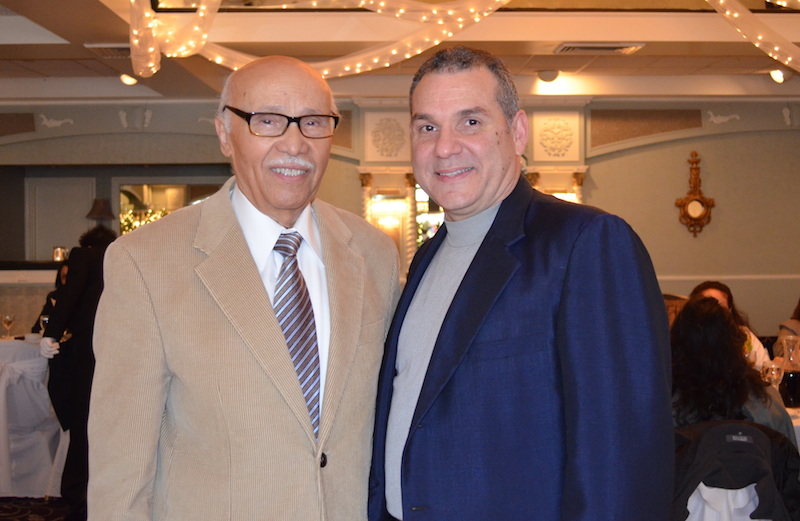
Pablo Diaz with his uncle, the Rev. Dr. Aldofo CarrionI was standing in front of a birthday cake with a single candle. There standing behind me was my uncle, with his hand placed on my shoulder. I know he was praying for me, asking the Lord for a blessing over my life.

Memories flooded in about my teenage years. I recalled all the times my uncle would take his son Adolfo, my cousin Felix, and myself out for breakfast just to chat.

Although we were adolescents, he treated us with great respect. His words of affirmation touched our lives. 

He had the ability to help young leaders discover their calling, to realize their potential and believe in themselves. When I was 21 years old, he gave me my first pastor’s assignment. 

It was a small congregation in Brooklyn, NY. Dr. Carrion said to me, “Pablo this church assignment will be good for you to gain vital ministerial experience.” He was right, I was ready.

Weeks following the diagnosis, family and friends gathered to visit. I remember my initial shock at his physically weakened demeanor. It was such a contrast to the robust man I knew from the pulpit and our family gatherings.  

Yet his spirit remained comforting as he offered blessing and words of encouragement to all who came to see him. My uncle was vibrant and alive, his mind as sharp as ever. His smile unchanged.  

The last time I was with him I didn’t want to leave his presence. I wanted to remain at the feet of this “giant.” Two months after the diagnosis, the Lord called him home.

Early on, Rev. Dr. Carrion surrendered his life to God, answering the call to be a minister and spending a lifetime expanding the Kingdom of God. In June 2014 at the Assemblies of God Centennial Celebration in Orlando, he was honored as one of the 100 inspirational stories featured from the last 100 years.

Dr. Carrion was a giant in his faith, as a man and a leader. I had the honor and privilege to run alongside him. Who is your giant in faith, in life? What words or lessons have they taught you? Tell me about how their life has inspired you to be a better person.

There is a proverb that states “Let another praise you, and not your mouth; someone else, and not your own lips.”