Embrace God's truth with our new book, The Lies that Bind

Why You Should Make New Friends as an Adult

While I had many friends growing up, one stood out. His name was Philip and his nickname was Junior. His family lived above our third floor apartment in Manhattan’s Lower East Side. Junior was the only boy of five children. On many occasions his parents took us boys to Coney Island beach where we enjoyed swimming and playing in the sand. When home, we loved wrestling on the living room floor and eating peanut butter and jelly sandwiches.

When I was having a bad day, he was always there. Although Junior and I don’t see each other as often as we used to, we remain friends. Our relationship reminds me of a quote from author Ally Condie, “Growing apart doesn’t change the fact that for a long time we grew side by side; our roots will always be tangled. I’m glad for that.”

Many of us have childhood friends who will be forever in our lives, but as we age we must continue to make new friends. As adults we may be more fearful of rejection or of a relationship turning bad, but we must seek out new friendships at work, church, the senior center or other places we spend time. Sometimes it means taking a risk and starting a conversation with a stranger, but we must make the most of opportunities to meet new people.

In life, we all face inevitable changes whether it’s in our health, career, housing or family. That’s when we tend to turn to our friends, family and God. These relationships play important roles in determining how we face obstacles. When life gets hard, we need others to lean on. Start building that support today.

Why Worry When You Can Pray?

Do you struggle with worry? Many people battle it on a daily basis. Worry means “to torment oneself with or suffer from disturbing thoughts.” By definition we bring worry upon ourselves.

Worrying takes its toll on both mind and body, cutting off natural energy and effectiveness. The physical and emotional impact varies from person to person. Worrying can lead to restlessness, mood swings and even illness. It has the potential to squeeze the life out of a person and rob them of joy, peace and happiness.

The other morning my daughter called to tell me how she responded to a late night text message from her boss. It became a long discussion with both being at different ends of how to resolve a business matter. The text message turned into a telephone conversation that ultimately led to a worry-filled, sleepless night.

Dr. Norman Vincent Peale offers this wisdom in dealing with worry, “Say to yourself, why worry when you can pray?” In Psalm 34:4, the psalmist writes, “I prayed to the Lord, and he answered me. He freed me from all my fears.”

READ MORE: THINK POSITIVELY THROUGH FAITH

When worry occupies our mind, it is best to seek the Lord in prayer. I find that the more I open up to God about my fears, and talk with Him about my worries and concerns, the more calm I become. His presence gives me peace, as He reassures me that things are going to be alright. Through prayer the burden of worry is lifted.

When we worry, we live with stress. Sleepless nights, eating disorders and physical illness, along with a host of other ailments, become the norm. However, praying to the Lord about our concerns leads to peace, calmness, a clear mind and sound health.

Why worry when we can pray? Instead of letting disturbing and worrisome thoughts occupy our minds, why not talk to God about them? Share how prayer has helped you get through difficult times without anxiety and worry.

Lord, teach us to release our worries to you through prayer. Move us from fearful thoughts to faith in You and Your sovereignty.

Why Water Is So Calming

As children, my sister and I always noticed our mom getting a contented, faraway look as she gazed at the ocean on vacation. We called it “the Enya Effect,” named for the dreamy music of the Irish singer she loved.

But the marine biologist Wallace J. Nichols would call what we’d noticed “Blue Mind,” a phenomenon where being close to water inspires positive emotional states including calm, relaxation, creative thought and more restful sleep.

Community Newsletter

Get More Inspiration Delivered to Your Inbox


In his 2015 book by that same name, Nichols presents the science behind Blue Mind, citing studies such as this one, which linked natural or constructed water features with mood improvement and a sense of inner restoration.

Brain chemistry changes around water as well. According to Nichols, water can impact neurotransmitters known to impact mood in a similar way to how they change during meditation. “The best way to handle stress,” he told Psychology Today, “may be to get to the closest beach.”

A river, lake, stream or pond will have the same effect. And if you can’t get away, a soak in the tub can tap into water’s calming properties—or a white noise machine featuring waves, rain or babbling brook. Even an internet search for aquatic photography can steer your mind toward peace and contentment.

And if you really want to enhance your aquatic joy, put on some Enya—I especially recommend “Caribbean Blue.”

Why Time Begins on Opening Day

That is the temporal title of one of my favorite books on baseball, by Thomas Boswell the distinguished sportswriter for the Washington Post. Or there’s always the goofy but irresistibly endearing movie It Happens Every Spring starring Ray Milland as a hapless professor who accidentally discovers a substance that makes a baseball repellent to wood and improbably becomes a major league pitching sensation.

“Put me in coach” belts John Fogarty, referring to centerfield and not an airline seat. Has a single sport ever engendered so many books, songs and movies?

Happy Opening Day, everyone! The first pitch is scheduled for 1:10 p.m. Monday in Cincinnati, long the traditional site of Opening Day, though Sunday is technically opening night. What fan’s heart doesn’t leap at the strains of the National Anthem, the thwack of the first pitch—usually a fastball—nailing the catcher’s mitt, the roar of the crowd for the first hometown hit.

Opening Day…it not only celebrates the start of the season, it is a celebration of hope itself. (Maybe it should be called National Hope Day.) Who is more hopeful than a baseball fan? Who has more reason to hope?

For that one magical day, everyone is in first place and anything is possible, even for the most lowly, underpayrolled small-market club in the league. The long season lies ahead, a road rising to the horizon and beyond, and no one knows what prize might lie at its end.

Which is why fans flock to the parks on Opening Day. I fell in love with major league ballparks a long time ago. Almost nothing compares to the first time you walk into one, especially if you’re a kid. It’s like entering another dimension, as if God scooped up a slice of pastoral America and set it down in the urban hearts of the great cities.

And then there is the food. I eat my first hot dog of the year on Opening Day, even if I’m not actually in the ballpark. When I first came to New York and could rarely afford a ticket to Opening Day, I used to take the subway up to Yankee Stadium in the Bronx, hit a hot dog vendor and stand outside the great stadium listening to the cheers of the crowd drifting out of the historic gray edifice.

So here we go again, our hopes and prayers poised at the starting line. Everyone take a deep breath….one, two, three: PLAY BALL!

P.S. I’m having a baseball fantasy come true on April 28 when I’ll be throwing out the first pitch and hosting GUIDEPOSTS readers at Inspirational Fan Day at beautiful Fluor Field, home of the minor league Greenville Drive baseball team in Greenville, South Carolina. Later in the summer we’ll be honoring the fan with the most inspirational story.

Edward Grinnan is Editor-in-Chief and Vice President at GUIDEPOSTS.

Why This Former Pathologist Is Going to Seminary

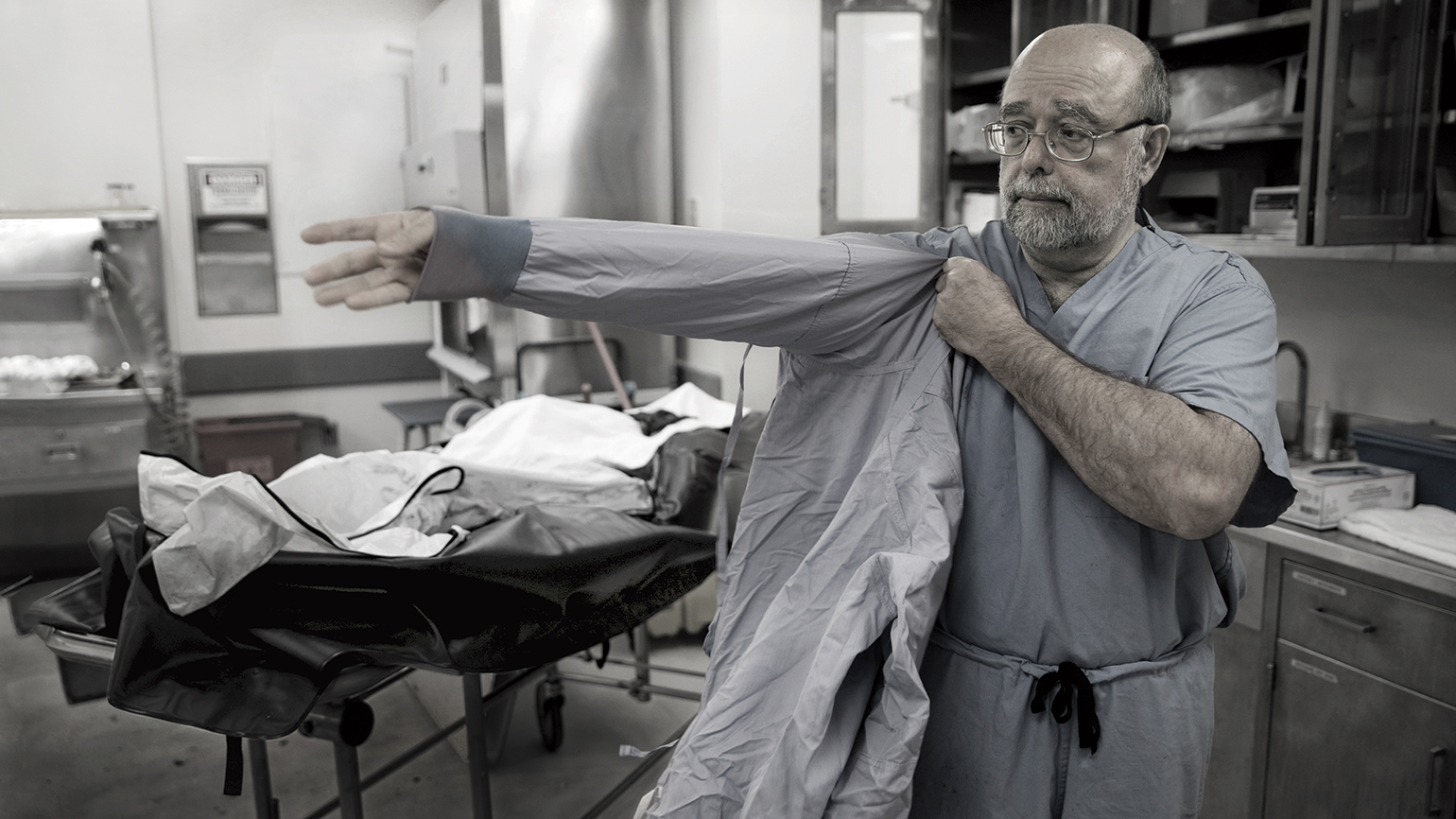
For two decades, I worked as what I call an accountant of America’s opioid crisis. From 1997 to 2017, I was the chief medical examiner for the state of New Hampshire. I oversaw autopsies. My department’s job was to determine and officially certify the cause of death.

New Hampshire is a small state. In 1997, the population was almost 1.2 million. (It’s a little more than 1.3 million now.) When I started as chief medical examiner, the department saw roughly 30 to 40 drug-related deaths per year. Then, suddenly, in the early 2000s, after pharmaceutical companies began heavily marketing opioid pain medicines, the number of drug deaths shot up to 200 per year. They kept climbing. By 2015, they were at 439 per year. Last year, 487 people in New Hampshire died from drug-related causes. That’s more than one drug-related death per day. A one thousand percent increase in two decades. One thousand percent!

I learned to recognize the telltale signs of opioid abuse. Needle marks. Bruising in areas associated with injection. Inflamed or damaged sinuses from snorting drugs. Signs of respiratory failure—most overdose victims die from lack of oxygen to the brain.

I did my job with professionalism and medical objectivity. But the work took its toll. I’m a Christian, strongly influenced by my upbringing and youth spent as a Boy Scout. I believe in serving others. Examining the bodies of overdose victims, I often felt helpless. I could determine how people died. I couldn’t stop the deaths from happening.

I told myself when I took over my department that I would stay in the job no more than 20 years. In my view, public servants shouldn’t consider their jobs lifetime appointments. Organizations need new leadership to change and grow. I knew I would retire in 2017.

What I didn’t know is what I’d do next. After much thinking and praying, I enrolled in seminary, intending to become a Methodist chaplain and work with young people. What explains such an unexpected turn? I’d spent my career investigating death. Turns out, the job was preparation for something else—steering people toward life. Growing up, I was blessed by several influential mentors.

My parents were examples of strong faith and devotion to family. The minister at our Presbyterian church—a tall, authoritative, deep-voiced Calvinist named Reverend Nicholson—taught me Scripture and the basics of Christian life. Reverend Baer, the minister at the Methodist church that hosted my Boy Scout troop, showed me that a pastor can be young and cool as well as spiritually grounded. He even let me give the sermon at his church on Scouting Sunday when I was 14.

There was my beloved Boy Scout troop leader, Alva Butt, whose example also guides me today. Alvie, as we called him, wasn’t the kind of youth leader who tries to impress kids with his hipness or his skills. He was sort of goofy, just like us boys. He never raised his voice. Never got angry—no mean feat when you’re shepherding a dozen or so teen and preteen boys through the wilderness. And yet we always knew who was in charge. And we always knew how Alvie wanted us to behave—with kindness, courtesy and trustworthiness, according to the Scout Law. Alvie inspired us to be our best selves.

I considered going into ministry or youth leadership myself as I left for college. But I was a science nerd at heart, and medical school captured my interest. I began my medical career as a pediatrician, working with kids. The job was rewarding—and frustrating. Time with patients was limited. There were endless hassles with insurance.

I’m a methodical person. I try to look at issues from all sides. I could not do that in the rush of primary care, so I went back to school, studied anatomical pathology and became a forensic pathologist under the wing of my most influential mentor, Dr. Charles Hirsch. I worked in three medical examiner branch offices in New York City before coming to New Hampshire.

I love pathology. It’s like detective work. Clues are everywhere: on the skin, in the organs, in the blood. A pathologist must be thorough, ruling out nothing. It can take a long time to determine a definitive cause of death.

Opioid drugs stimulate the release of naturally occurring mood-regulating chemicals in the brain. The drugs do this by attaching to neural receptors, flooding the brain and altering perceptions and responses. One receptor that opioids attach to is the mechanism regulating breathing. The opioids slow breathing, part of their overall depressive effect. Take too much and breathing will slow until the brain is starved of oxygen—hypoxia. Unless the drug user is revived by an opioid-reversing medication such as naloxone, he or she will die of asphyxiation. That’s why so many overdose victims turn blue.

I saw few such cases when I started work in 1997. After the turn of the century, the number began to increase. I didn’t understand why at first. Then I began reading news stories about OxyContin, a new long-acting opioid pain medication being marketed to primary care physicians. The medication was said to be nonaddictive. But I was seeing clear signs of addiction and abuse. The overdose victims I examined had large amounts of opioids in their blood, far more than would be expected if they’d taken the drug as directed.

As regulators began cracking down on prescribing procedures, I saw a growing number of heroin overdoses. Unable to get pills, users were switching to powerful street drugs in the opioid category.

“If we keep going like this, overdose deaths are going to outnumber traffic deaths in New Hampshire,” I told a reporter in 2004. The comment—a heartfelt expression of alarm—went viral. People were shocked, incredulous. A high-ranking federal drug official even traveled to New Hampshire to meet with me and learn more. No one could believe the situation was that bad.

The very next year, it happened: More people in my state died of overdoses than in traffic accidents. Was this just a New Hampshire phenomenon? No. The same became true for all of the United States in 2009. In 2016 alone, the last year for which statistics are available, the Centers for Disease Control and Prevention reported that 63,632 Americans died from drug overdoses. That’s 5,000 more than the number of soldiers killed throughout the entire Vietnam War.

Imagine if the number of traffic deaths skyrocketed by one thousand percent in 20 years. In fact, in 2014, 10,000 fewer people were killed in traffic accidents than in 1997. American car manufacturing is highly regulated by government safety standards, roads are heavily policed and drivers are subject to traffic laws. Our nation has not yet committed to a similar solution for the opioid crisis.

Watching overdose victims appear in my lab at an ever-rising rate, I grew increasingly frustrated. Yes, I could recognize the signs of an overdose, examine victims and arrive at a carefully determined cause of death. But by the time people came into my care, it was too late. They’d already paid the awful price of addiction. I was the cleanup crew.

I did my best, though not always successfully, to hide my stress from my kids. I unburdened myself to my wife. And to God in prayer. That faith I learned from my mentors growing up? I leaned heavily on it as my work grew more challenging. Approaching retirement, I became increasingly convinced I didn’t want to end my working life as an accountant of death. I wanted to prevent people from ending up in the forensic lab. I wanted to address the spiritual dimension of the crisis, reaching kids before drugs did.

How could I do that? I thought back to Alvie. How his gentle but unwavering leadership, his dedication to us boys and his selfless example of service had inspired me. Could I do the same for kids now? New Hampshire has one of the lowest churchgoing rates in the U.S. If I wanted to reach kids with a spiritual message I would have to go to seminary—then work in an organization outside the church. Like Scouts.

That became my plan.

I retired in 2017. That year, New Hampshire had the nation’s highest overdose rate after West Virginia and Ohio. My successor in the forensic pathology office has been confronted by so many overdose deaths, her staff is barely able to keep up with the workload. The arrival on the black market of fentanyl—a potent and deadly synthetic opioid marketed and sold like heroin—has deepened the crisis.

I enrolled in a seminary in Dayton, Ohio, where I grew up. I take some online classes and commute to Dayton to be on campus. I’ve completed nearly one year of studies. It feels strange to be writing exegesis essays on biblical prophets after all my years investigating death in a forensic lab.

I’m focused on life now. For so many years, I watched America’s drug crisis unfold before my eyes. For just as long, I have believed that this crisis does not have to get the better of us.

The Boy Scout Oath says, “On my honor, I will do my best to do my duty… to help other people at all times.” If we live by that, if we give this crisis the attention it deserves, reaching out with love and compassion for those caught in the web of substance abuse and their families, we can make progress. The number of deaths doesn’t have to rise inexorably. The tragedy of addiction doesn’t have to claim a generation.

I was an accountant of death. I’m ready now to help prevent it.

4 Tips to Help Protect Your Kids from Drugs and Alcohol

For more inspiring stories, subscribe to Guideposts magazine.

Why the Alcoholics Anonymous Co-Founder’s Wife Founded Al-Anon

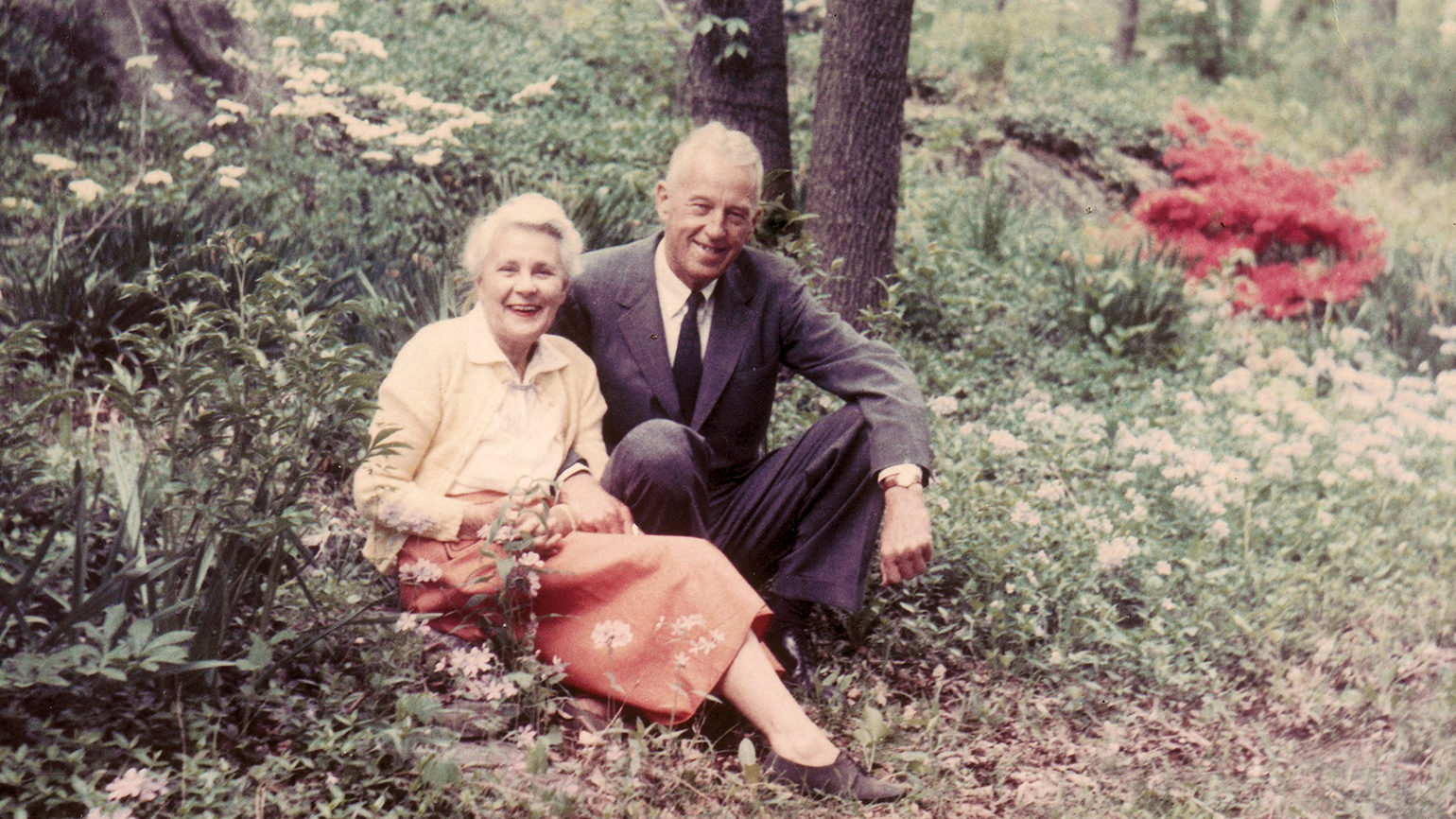
Bill & Lois Wilson, Copyright Stepping Stones Foundation. Property of the archive of Stepping Stones–Historic Home of Bill & Lois Wilson, Katonah, NY. Permission required for further use. http://www.steppingstones.org

I nudged my car up a narrow drive through trees. Sunlight on the leaves made a riot of shadows. It was beautiful, but I was impatient. I didn’t want to be there. I wanted to be at home, working on a new screenplay I was writing. Instead, my wife, Bernadette, had dragged me to a picnic at her friend Lois Wilson’s house. Lois was the widow of Bill Wilson, cofounder of Alcoholics Anonymous.

I knew about AA—I had started my career in newspapers and met plenty of hard-drinking reporters whose lives were saved by the organization and its 12-step program of recovery. And, ever since Bernadette had met Lois through some mutual friends, she had been telling me what a kind and fascinating woman she was. But not even learning that Lois had founded Al-Anon, the 12-step support group for loved ones of alcoholics, could make me glad to give up a precious weekend day. My business partners and I had recently produced the 1973 hit movie “Serpico,” starring Al Pacino. We were working feverishly on a follow-up, chasing screenplays, talent and money. There was little time for anything else. What am I doing here? We’ll just shake hands and leave early, I thought.

The picnic was at Stepping Stones, Bill and Lois’s cedar-shingle house on an eight-acre plot of woodland in New York’s Westchester County. Lois held the picnic every year, an open invitation for recovering alcoholics and their families to spend a day relaxing in the warm June sun. When Bernadette and I reached the top of Lois’s drive, we saw a wide lawn barely dotted with people spreading blankets. We were early. More time squandered.

We got out, and I breathed the rich, dusky smell of lilacs. A stream meandered past and disappeared into trees. Bernadette led me across the lawn to a screened porch at the back of the house. There, surrounded by a few friends, sat an elderly lady in slacks and a silk blouse. When she saw Bernadette, she rose and embraced her.

“Lois, this is my husband, Bill.”

Lois, who, at age 82, was no more than five feet tall, looked up at me with glistening, grayish-blue eyes and gripped my hand firmly. “It’s wonderful to meet you,” she said in a lively, crackling voice. I stammered out a reply, suddenly feeling very foolish. She was so open, so welcoming. She told me how pleased she was that I had come, then invited me to go with a friend of hers named Penny on a tour of the house. In moments I was mounting a creaky spiral staircase and entering a long, high-ceilinged room crammed with photographs, plaques, an old Moviola machine and a desk where, Penny told me, Lois had laid the groundwork for Al-Anon by sending letters to the wives of alcoholics in her husband’s support groups.

As I made my way through the room, poring over photographs of Bill and Lois, and reading letters from luminaries around the world thanking them for their work, my eyes widened in surprise. I clicked on the Moviola and felt my own movie gears whir. The founding of AA—what a film that would make! And all the material is right here at my fingertips. I wonder if Lois will give me permission?

When Penny and I returned to the porch, the lawn outside was packed with families eating, laughing and forming a line around the house to spend a few moments with Lois. I watched her greet each person as if he or she were her only guest. They kissed her cheeks, gave her gifts and told her stories of recovery and redemption. “I’m so glad you could come,” she replied. “And it’s wonderful to hear what AA did for you.”

Bernadette and I stayed most of the afternoon. When we left, I asked Lois if I could meet with her again to talk about my movie idea.

“Of course,” she said.

The following Thursday afternoon, Lois and I sat in her living room, drinking tea. I turned on a tape recorder, and she began to tell the story of herself and Bill. They had married just before he shipped off to fight in World War I. She still had a picture of him in his second lieutenant’s uniform, and I could see why she spoke of him so reverently. He was handsome, with a penetrating look, and she said that even at that young age, she believed he would do great things. When he returned from the war, he’d made a great deal of money working in finance on Wall Street, and he had rented an elegant apartment in Brooklyn Heights, just across the East River from Manhattan’s thrusting skyline.

He’d also, however, begun drinking. Not enough, at first, to affect his work. But enough to eventually snowball into a powerful addiction. Soon, he was arriving at the office hung over, insulting clients and cutting out early to drink. He would disappear for days into underground speakeasies, surfacing only when he ran out of money. Lois, frantic, would be left to nurse him back to health. After the stock market crash of 1929, he lost his job and the apartment, and he and Lois crammed their belongings into her father’s house on Brooklyn’s Clinton Street. Only when Bill’s drinking landed him in the hospital for the fourth time did he reach out to a God he had never believed in and realize that faith and fellowship were his only hope.

“He founded AA after meeting a fellow alcoholic named Dr. Bob Smith, on a trip to Akron,” Lois told me. “When he got back to New York, he began a support group at our house. Though, if you had seen it back then, you wouldn’t have called it that. It was mostly just Bill going to the Bowery and pulling drunks out of the gutter to pray with them and talk about their addiction. They weren’t exactly a welcome sight. But all I could think was, they were keeping Bill sober. So I didn’t complain that he wasn’t working, and that they weren’t paying him anything for his help. I got a job at Macy’s and did the cooking and cleaning at night.”

It was a precarious life, made more so when Lois’s dad died, leaving Lois and Bill to pay the mortgage on the house. Bill’s AA group was growing, but Lois’s job wasn’t enough to make payments. One day, a foreclosure-warning letter arrived from the bank. Lois showed it to Bill as he got dressed for a meeting downstairs.

“We need to talk about this,” she said.

“Not now, sweetheart,” Bill answered.

“But, Bill, we’re going to lose the house!” she said.

“Well, these men are waiting for me,” Bill said. And he dashed downstairs.

“At that moment, I realized something that sounds very strange,” Lois told me. “Bill’s AA groups were working wonders. But they were becoming like his drinking—consuming him. Not even sobriety could curb the effects of alcoholism! I felt so helpless, so trapped by this spiral of addiction, that I stomped out to the front porch to get some air. I was all set to yell at the trees when I happened to notice a long row of cars parked in front of the house. I peered through the car windows and saw that, sitting in each car, was the wife of one of the men at Bill’s meeting. They had driven their husbands there and parked outside to make sure they stayed. They were that desperate.”

That’s who I need to talk to, I thought. They’ll understand. And I ran to the street and asked the women into the kitchen for coffee. As soon as I told them how mad I was at Bill, even though he was sober, they all cried out that they were mad at their husbands! Well, I knew right then that we wives, and anyone else related to an alcoholic, were sick and needed our own support group. And soon after that, Al-Anon began.”

Lois and I had many more conversations like that—several years’ worth, in fact. She told me much about her and Bill’s life, but mostly I paid attention to the parts about Bill. That information was what I needed for the television movie My Name is Bill W., which premiered in 1989, starring James Woods as Bill and JoBeth Williams as Lois. The movie was a hit, garnering seven Emmy Award nominations.

But Lois didn’t live to see it. She died in 1988 at age 97. I moved onto other projects and stowed the tapes of our interviews deep in a box.

More than a decade later, Bernadette and I moved to South Carolina. I was unpacking my office when I came across a stack of tapes buried beneath some papers. I took one out. It was wrapped in a green band, which I had used to mark Lois’s interviews.

A strange feeling came over me. I inserted the tape into a stereo I keep in the office and pressed play. Lois’s vivid, crackling laughter filled the room.

Then her voice came in, in that no-nonsense New England twang. “If your husband or wife gets cancer or some other terrible illness, do you walk out on them? Of course not. Well, alcoholism is a disease, and I couldn’t walk out on it.”

Bernadette came in. “Is that Lois?” she asked me.

“Yes,” I said, putting a hand to my face.

“How wonderful that you still have those tapes,” Bernadette said. “We should listen to them again.”

Yes, I thought. Listen. Did I ever really listen to Lois? I remembered not even wanting to meet her, driving grudgingly to her house under a warm June sun. What if I had never pulled up that narrow drive? Never stepped onto that screened porch and seen her welcoming eyes? I would never have made my movie. But, more important, I would never have met the woman who changed the way we think about alcoholism.

Lois had made me promise to preserve her anonymity in Al-Anon. But now that she had died, I realized that the world needed to know just how profound her insight and contribution had been. That afternoon on her porch, seeing those wives lined up in their cars, Lois didn’t just find a support group. She learned the true, terrible reach of alcoholism. The way it affects whole families, anyone connected to an alcoholic. Without her support of Bill, there would have been no Alcoholics Anonymous. But without her recognition of her own need for healing, millions would still be battling a disease they didn’t even know had hurt them.

I looked at Bernadette. “I think I need to write a book about Lois,” I said.

Bernadette grew quiet. “I think that’s a wonderful idea,” she said. “When will you start?”

I looked at the tapes. “Right away,” I said. “I’ve got everything I need.”

In fact, I had been led here years before, not knowing that that day when I first visited Stepping Stones, a plan had already been set in motion.

This story first appeared in the January 2007 issue of Guideposts magazine.

UPDATE: William Borchert wrote the script for his film My Name is Bill W., based on the true story of Alcoholics Anonymous founder Bill Wilson. He also published the book about Bill Wilson’s wife, Lois, called The Lois Wilson Story: When Love is Not Enough.

Photo courtesy of Stepping Stones–Historic Home of Bill & Lois Wilson, Katonah, NY, http://www.steppingstones.org


Why Silence Is Good for Our Brains

The sounds of silence are more appealing to some than others. Silence can be a safety zone, a place where we process what’s happening around us and gather energy for wherever the day may take us. Or silence can feel like a void that needs to be filled immediately.

Science is on the side of silence, though, with research supporting it as a crucial ingredient in a healthy brain. This is especially relevant in our noisy world, where we are rarely outside of the noise-generating company of a mobile device, if not other people.

The hippocampus—the section of the brain that regulates memory, emotion and learning—is the beneficiary of silence, according to several research studies. In one 2013 study, mice who were given two hours of pure silence each day grew new cells—complete with functioning neurons—in their hippocampus regions.

Other research has shown that noise activates the stress-response functions in our brains, even while we are asleep. Exposure to noise activates the area of the brain called the amygdala to release stress hormones like cortisol into our bloodstream.

The good news is that the converse is also true—exposure to silence activates the opposite reaction, our nervous system’s “relaxation response.” One study even found a greater calming effect in silence than with relaxing music.

The benefits of silence can be hard to recognize if we are struggling with depression, loneliness and other feelings of isolation. But seeking out silence from a place and purpose of restoration, rejuvenation and renewal can help reframe quietude into a profound, even spiritual pursuit.

So perhaps in this noisy world today, you can find a moment to follow the advice of the medieval Persian poet Rumi: “Listen to silence. It has so much to say.” Your brain will thank you, as will your spirit.

Why Seeking Forgiveness Is So Important

Earnest Hemingway’s story “The Capital of the World,” is about a father and his teenage son, Paco, and is set in Spain. The son wants to become a matador to escape his father’s control so he runs away to the capital, Madrid. The father, desperate to reconcile with his son, follows him and puts an ad in the newspaper with the simple message: “Dear Paco, meet me in front of the Madrid newspaper office tomorrow at noon. All is forgiven. I love you.” Hemingway continues, “The next day at noon in front of the newspaper office there were 800 ‘Pacos’ all seeking forgiveness.”

Hemingway’s story captures the human need to be forgiven. While there is no assurance that those we hurt and offend will forgive us, we should still try. Forgiveness can be hard to obtain, but it’s not impossible.

One key thing in seeking forgiveness is to not make excuses for our actions. This will only make things worse. Instead, we should express our deepest regret for the pain we caused—sometimes that acknowledgement is all that’s needed.

If the person is unwilling or unable to forgive us, we must accept it as a consequence of our actions. It doesn’t mean that forgiveness will never happen. When we least expect it, there might be a change of mind and heart. But we can find peace knowing that we did the right thing in asking forgiveness even though the outcome wasn’t what we hoped and wanted.

Seeking forgiveness from God is a different and transforming experience. The grace and mercy of God is beyond our imagination and comprehension. We may wonder, Is my sin beyond God’s forgiveness? The answer is no. God’s grace is boundless and infinite. There is nothing we could do that is beyond His love and redemptive grace. One of the great truths of God’s character is when we confess our sins, we will be forgiven.

God’s forgiveness releases us from guilt and provides peace of mind, relief from distress and gratitude in our heart. In return, we forgive others as God has forgiven us because “all is forgiven” are words everyone wants and needs.

Why Resting Is an Act of Holiness

Not only has technology extended our workday into the late hours of the night and over weekends and vacations, these pandemic times have further eroded the lines between work and home. Although work is part of the rhythm of life, unchecked it can come at the expense of health, family, friends—and God.

I read about a pastor who was criticized by a member of his church for not being on call one day. The pastor said, “Sorry, but that’s my Sabbath, the day I take off to rest and re-focus on God.” The church member said, “The devil doesn’t take a day off.” And the pastor said, “You’re right. And if I didn’t, I’d be just like the devil.” Rest is essential for our spiritual and physical well-being; without it, we can become intolerable.

Author and pastor Rick Warren writes, “When we don’t rest, we don’t give God our best.” I would add that we don’t give others and, more importantly, ourselves our best either. The biblical principle of Sabbath, which means “rest,” was injected into the rhythm of life long before science and medicine confirmed its power and value. People need the Sabbath. It’s so important that it’s one of the Ten Commandments.

We remember “thou shalt not steal” or “thou shall not commit adultery.” But there’s also the fourth commandment, “Remember to observe the Sabbath day by keeping it holy. You have six days each week for your ordinary work, but the seventh day is a Sabbath day of rest dedicated to the Lord your God.”

If we don’t rest, our bodies may respond by getting sick or injured. A day of rest also helps us refocus our spirit, to turn our attention away from work toward solitude, prayer and reflection. A day of rest creates opportunities to reconnect with loved ones through recreation and quality time.

Each person must decide what day of the week works best for them. If you can’t take a full day, set aside a few hours. Remember, you have six other days of work to offer. On your day of rest, set aside time to be with God and others. The Sabbath was made for us to enjoy the goodness of His creation and His presence.

Why Random Acts of Kindness Are More Powerful Than We Realize

Holding the door open for the person behind you. Bringing a plate of cookies to a neighbor “just because.” Asking a service person, “How are you?” before diving into your question.

These are all examples of random acts of kindness, the seemingly simple actions that don’t take much of our time but leave us feeling good about what we can do in a complex world.

Psychologists have long noted the benefits of acting with kindness. But those on the receiving end feel even better than we realized, according to recent research from the University of Texas at Austin.

In one study, participants gave hot chocolate to strangers in a park—and underestimated the mood boost the recipients would have when they learned the treat was an anonymous gift.

In another, participants who were given cupcakes and then invited to give away their cupcakes to strangers failed to recognize that those who got cupcakes from strangers reported greater happiness than those who had knowingly received cupcakes as part of the study.

And a third study showed that people who received cash through a random act of kindness were more generous in giving some of the money away when they were offered the opportunity to do so (or not).

Amit Kumar, a lead researcher on the studies, says people understand the benefits of kindness for the giver far more than for the receiver. “They get that being kind to people makes them feel good,” he said, “What we don’t get is how good it really makes others feel.”

So next time you have some cookies to spare or time on your calendar to give a friend a ride to an appointment or a free moment to stand a neighbor’s tipped-over garbage bin back up, remember that your seemingly simple act of kindness will do more than give just yourself a warm fuzzy feeling inside.

The more we stop underestimating the powerful difference kindness makes in the lives of those who benefitted from our kindnesses, the more reasons we have to keep investing our time and energy in bringing goodness into the world, act by act, day by day.

Have you done a random act of kindness today?

Why No Loss Is Too Small to Grieve

Kenneth Doka, an author, professor and bereavement expert, coined the term “disenfranchised grief” in 1989 to describe grief that is neither acknowledged nor accepted by conventional social standards, but is mourning nonetheless.

By naming disenfranchised grief—and shining light on the legitimacy of mourning losses that might otherwise sound “less than” the death of a close loved one—Doka’s work highlights a pathway toward a life of authentic positivity. When we use the vocabulary of grief to describe a spectrum of painful experiences, we give ourselves permission to feel our full range of emotions—and the context we need to cope in a healthy way.

“Grief is a reaction to a loss, not just a reaction to a death,” Doka told NPR.

Here are just some examples of losses that are as real as any other, but might be brushed off, diminished or outright dismissed as outside the bounds of “normal” grief:

–The loss of privacy during a commute to work for now-remote workers

The death of a pet

–The loss of favorite foods—like those containing gluten, sugar or dairy—following a medical diagnosis

–Changes or losses in mobility or physical stamina

–The loss of a sense of purpose following retirement

–The loss of friends who snowbird or otherwise leave your daily orbit

Lost relationships due to estrangement

–The micro-losses of friendships and routines that follow being widowed

–The loss of a treasured possession

–The loss of the “post-pandemic” mindset you might have held before the Delta variant of COVID-19 emerged

When we use the terminology of grief and mourning to share our feelings about these types of losses, we give ourselves space to cope with them as we would with any loss. This includes expecting to have less energy at times, to feel irritable or angry, to feel numb or emotionally distant or weepy and hyper-sensitive.

It also includes expecting the acuteness of those feelings to soften with time as we incorporate the losses into the newly-normalized aftermath of loss. Acknowledging disenfranchised grief might also empower us to seek counsel from a therapist, support group or religious community over feelings we might otherwise have brushed off.

We can also cope with disenfranchised grief by creating a ritual, not fully akin to a funeral, but in service of the same purpose of making space to explicitly mourn the loss. Writing a letter (that you may or may not send) to a friend or loved one, boxing up and giving away items that no longer serve your life, planting a tree or garden that will remind you of something you have lost—these are only some of the myriad ways you can ritualize disenfranchised grief and gently help yourself through the hardest moments of loss.

Do you recognize disenfranchised grief in your life? How do you cope?

Why Kindness Always Wins

Whatever happened to humility? It seems as if it were something of the past. We often praise individuals who boast their personal success. But if given the choice, most of us would prefer to be in the presence of a person with a humble spirit. Too often humility is viewed as devaluing one’s self, but that is not the case. C.S. Lewis said it best, “True humility is not thinking less of yourself; it is thinking of yourself less.”

The following is a true story of an encounter between Abraham Lincoln and one of his army officers. During the Civil War, President Lincoln was visited by Col. Charles Scott, a commander of the troops guarding the Capitol. Col. Scott’s wife had drowned in a steamship collision. He appealed to the regimental command to leave and bury his wife and comfort his kids. This request was denied. Scott then decided to visit Lincoln to appeal his case. He was the last person to meet with him that day. Scott recalled the president getting upset as he listened to him due to the constant demands for his time and because his request needed to be addressed elsewhere.

Read More: 6 Ways to Pray Like Abraham Lincoln

Lincoln asked Col. Scott if he had gone to the War Office where they were in charge of these matters. Scott said that he did but was refused. The President replied that in a time of war, everyone had burdens to bear. He suggested that Scott go back and if they didn’t help him, he needed to bear his burden until the war was over. Scott returned to his barrack saddened. Early the next morning there was a knock on Scott’s door. It was the president. He told Scott, “…I had no right to treat a man with rudeness who has offered his life to his country, much more a man in great affliction. I have had a regretful night and now come to beg your forgiveness.” President Lincoln arranged for Scott to go to his wife’s funeral.

Lincoln didn’t let his pride, position or power get in the way. Humility leads to respect. We should always express our love, be kind and seek forgiveness when we are wrong. When we lead and live with humility, it reflects the likeness of Jesus in our lives. What do you think of President Lincoln’s action? Please share with us.

Lord, help me to live with a humble heart and mind.