Embrace God's truth with our new book, The Lies that Bind

Is the North Pole Real? Welcome to North Pole, Alaska

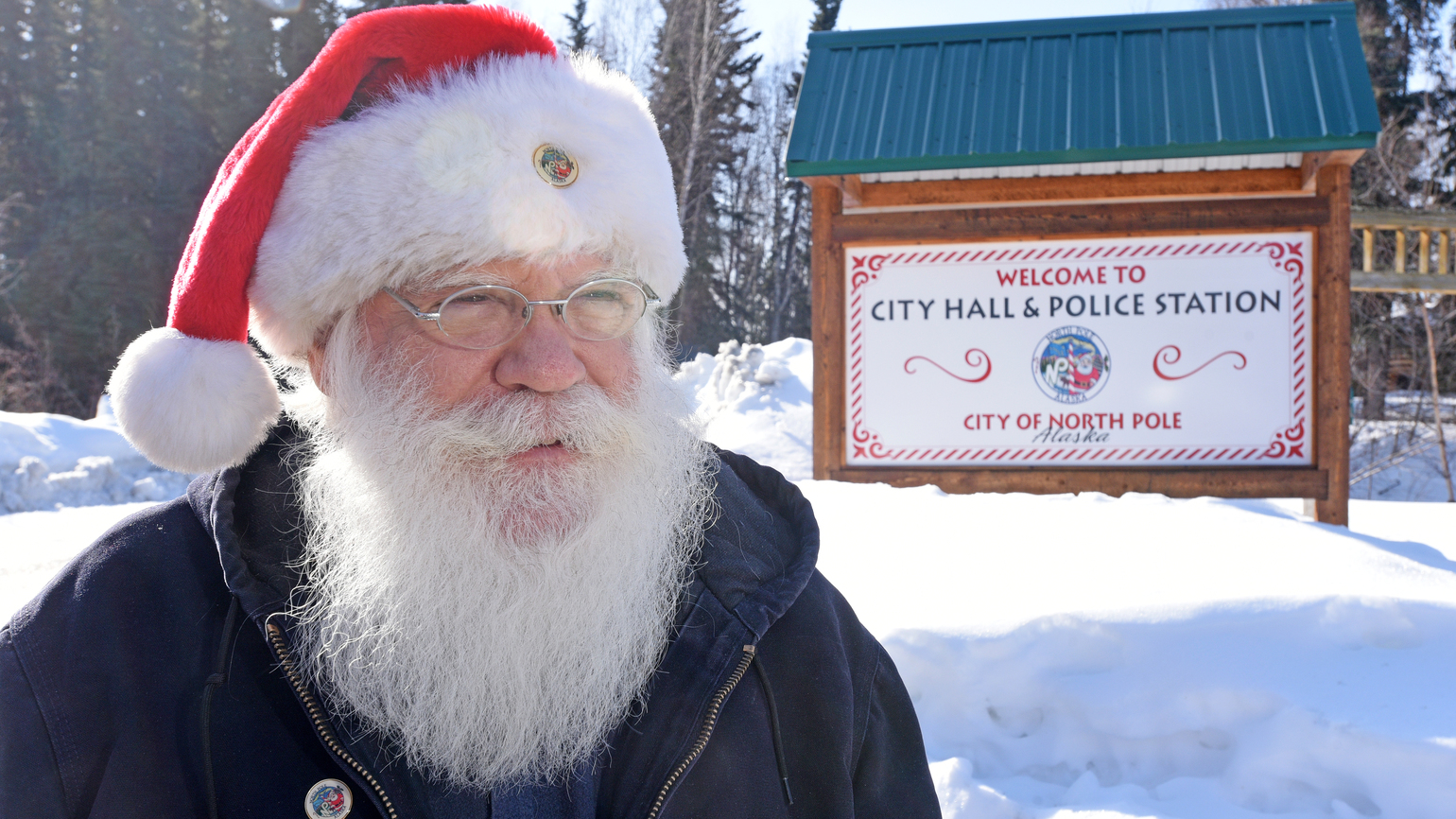
As Christmas approaches, a sense of childlike wonder and curiosity fills the air. Kids, and even adults, might be wondering… Is the North Pole real? Look no further than North Pole, Alaska!

The city of North Pole sits nestled in the Alaskan wilderness with a population of only 2,243. Not to be confused with Earth’s geographic north pole, some 1,700 miles to the north, this North Pole started out as homesteads before it became a city in 1953.

Pray a Day Vol 2 In Article Ad

Though the town’s holiday season gets busy, visitors can enjoy the sights—like Santa Claus’ house and the giant Santa statue—all year round. Take a tour of North Pole, Alaska, with our photos and meet some of its residents, including Mr. Claus himself!

Photos by Eric Engman

Inspiring Words from Winter Olympians

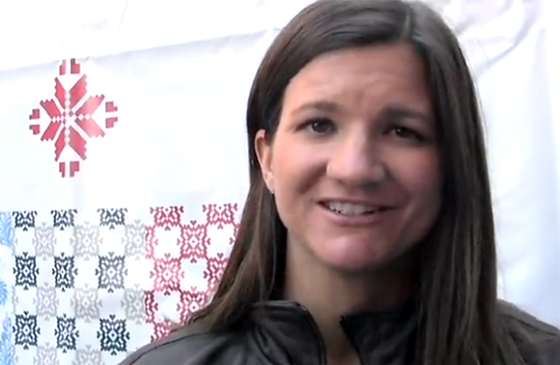
[MUSIC PLAYING] Hi, my name’s Kelly Clark. I compete snowboard halfpipe, and I’m from Mammoth Lakes, California. There’s a quote that I love from this guy named Kris Vallotton, and it says, Vision gives pain a purpose. And so it’s really good to have perspective of where you want to go, because it helps you make the day-to-day choices that help you get there. 

Hey, I’m Gus Kenworthy. I’m 22 years old, and I’m a freeskier, competing in slopestyle and halfpipe, from Telluride, Colorado. One quote that I kind of try and live by is by Steve Prefontaine. And it just says, To give anything less than your best is to sacrifice the gift. 

Sugarcreek Amish Mysteries In-Article Ad 2023

Hi, I’m Heather McPhie, freestyle mogul skier, Olympic hopeful for the Sochi 2014 games. Really excited about it. One of my favorite quotes right now is, Move your body, and your heart will follow. 

Hi, everybody. My name is Greta Eliasson. I’m a slopestyle freeskier. I’m from Salt Lake City, Utah. My mom and dad got me on the slopes, and they’re definitely my inspiration. And they always told me, Greta, if it’s not fun, you don’t have to do it, so I’m all about the fun. 

[MUSIC PLAYING] 

Inspiring Summer Quotes

For many, summer is the best time of the year. With the warm weather and the sunny days, we can find many reasons to smile. Some of our finest poets, authors and philosophers have praised the summer months, so we thought we’d share some of our favorite summer quotes with you.

Discover more inspirational books, devotionals and planners at ShopGuideposts.

GP In Article Desktop

Inspiring Stories on Getting to Church

Has the comfort of your recliner ever tempted you to stay home from church because you don’t feel great or you’re really tired? Yeah, I suspect I’m not the only one.  Sometimes we become so accustomed to our routines that we take things for granted and forget how blessed we are to go to church. God’s sent several visuals over the past few months to remind me of that . . .

On this particular Sunday morning, I noticed something at the start of the service that touched my heart. Supported by her husband’s hand under her arm, a sweet lady I’d never seen before walked slowly in the door and sat at the end of our row. Her turban made it obvious that she was undergoing a major health situation, punctuated by the oxygen tank that was her accessory that morning. I could tell that the walk into the building had exhausted her.  

It brought tears to my eyes to realize what an effort it had been for her to get there. I saw church through her eyes that morning—the comfort, the strength and the hope that she could cling to for the days ahead.

On another Sunday, I noticed a dear man who’s attended our church for many years. He’s in a wheelchair now, and it’s a slow process for him to get from his car into the building. I watched him one service as he laboriously moved from his chair to one of the seats. I was tired just from watching the effort that it took. I can’t even imagine how long it takes him to get ready to come to church, but he’s there every Sunday.

And then there’s the visual from several months ago that moves me to tears every time I think about it. A missionary had just returned from another country far around the world. It was one of those countries where expressing your faith meant that your family would disown you, and sometimes it even meant a death sentence.

As the missionary shared slides from his time there, there was one picture that is now etched in my mind and heart forever. It showed an older man with no legs sitting on the hot sand. The missionary said, “This is _________ on his way to church. It takes him many hours to get there as he sits on the sand and pushes with the stumps of his legs, making it a foot or so at a time, repeating the process over and over until he gets there.”

Scooting to church on the sand.

Oh my, sweet friends! When’s the last time that we were that inspired to get to church? When’s the last time we thanked God for the blessing of hearing the sermons, for the ability to see the words on the big screens and for the legs to walk into the building with ease?

Will you join me today in thanking Him for the priceless blessing of going to church?               

Inspired to Create a Grand New Flag

I’ve always been interested in the flag. I pledged allegiance to it as a schoolboy. I fought for it in Europe during World War II, and it was here to welcome us soldiers on our return home.

The Stars and Stripes had 48 stars for the 48 states back then. But in the late fifties, things changed. Two new states were joining the union. How would the new flag accommodate them?

Well, not too long ago while researching a book on the flag, I read about the man who came up with the 50-star design. In fact, he was not even an adult at the time. He was just a 17-year-old high school kid in Lancaster, Ohio. I gave him a call to hear his remarkable story.

On a Friday afternoon in the spring of 1958, Robert G. Heft was riding the bus home from school. He was thinking about the assignment his history teacher, Mr. Pratt, had given the class—a project that demonstrated their interest in history. Something visual. Something original. By Monday.

BROWSE OUR SELECTION OF BOOKS ABOUT POSITIVE THINKING

As Robert rode through downtown Lancaster, he saw the flag on top of city hall. “That’s what convinced me,” he told me. “I would design a new flag.”

Alaska was likely to soon become the 49th state. “But I knew that Alaska was heavily Democrat,” he says. “The Senate would have to approve the addition, and it was dominated by Republicans at the time. Everyone was saying that they would be adding another state to balance it out.”

He had a hunch that then-Republican Hawaii would soon become the 50th state.

At home that night he sketched out a grid for 50 stars. “I couldn’t just throw them in anywhere.” So he came up with a design. Five rows of six stars with four alternating rows of five stars.

That next morning he took the family’s three by five flag out of the closet, sat down with scissors on the living room floor and cut out the blue and white-starred corner.

“What did your parents do?” I couldn’t help asking.

“My mom was horrified. She hollered at me for desecrating the flag. I insisted it was for a school project, and I’d make sure it looked okay.”

He biked downtown to Wiseman’s Department Store and bought a new piece of blue cotton broadcloth. He also got some iron-on mending tape. “The kind my mom used for patches.”

With a cardboard pattern he traced 100 stars on the tape and cut them out. One hundred so he’d have a star for each side of the blue fabric.

“I wanted to get Mom to sew the new background to the old flag,” Robert says, “but she wouldn’t have anything to do with it. I got out her old foot-operated Singer. I was amazed I could actually work the thing.” He sewed on the blue background and ironed on the stars. Project done.

“You must have gotten an A,” I said.

 Robert chuckled on the phone. “Not on your life,” he said. “My teacher, Mr. Pratt, was a taskmaster. He looked at what I’d done and said it wasn’t the real flag. Not with 50 stars. I explained my reasoning, and he still just barely gave me a passing grade. I was peeved!”

“What did you do?”

“For the first time I really spoke out. I told him I deserved better. I had a friend who’d done a collage of leaves and got an A. What I’d done showed a lot more imagination. Mr. Pratt looked at me coolly and declared, ‘If you don’t like the grade, go get the flag accepted in Washington!’”

And that’s exactly what Robert Heft set out to do. He bicycled over to the home of his congressman, Walter Moeller, knocked on the door, gave him the flag and explained what it was for.

“I asked him if he would take my flag to Washington, and if there were ever a contest to determine the design for a 50-star flag, would he present mine. He was so bowled over that he agreed, probably just to get rid of me.”

For the next two years, Robert waited in anticipation. In January 1959 President Eisenhower signed a proclamation announcing the admission of Alaska as the 49th state. As with all new states, the star would be added on the following July 4.

That 49-star flag—seven rows of seven stars—was almost immediately obsolete. Because in August 1959, just as Robert had expected, Hawaii became the 50th state.

He’d already graduated from high school by then, the woeful grade still in Mr. Pratt’s book. Robert was working as a draftsman for an industrial firm and going to college at night. Whatever happened to my flag design? he wondered.

He’d heard that thousands of new designs had been submitted. A special commission of congressmen was screening them and choosing five for submission to President Eisenhower.

“In early June,” Robert says, “I was working at my drafting board when one of the secretaries at the firm rushed over to me. ‘There’s a congressman on the phone for you,’ she said. It was Congressman Moeller. I recognized his gravelly voice right away. ‘Son, I’m proud to tell you that President Eisenhower has selected your design for our nation’s new flag. Congratulations.’”

Robert flew to Washington to see his flag flown over the Capitol for the first time. Thousands of others had submitted the same design, but Robert Heft’s had been the first. Moreover it wasn’t just a sketch. It was an actual flag. That was a big plus.

Since then Heft’s original handmade version has traveled; it’s flown over every state capital building and 88 embassies, and it is the only flag in American history to have flown over the White House under five administrations. It even has a patch on it from a bullet hole it caught in Saigon in 1967.

At the end of our talk I had one last question. “What about your grade?”

“The day I returned from Washington, Mr. Pratt changed it. But you know,” Robert mused, “if I hadn’t gotten that bad grade in the first place I wouldn’t have given the flag to Congressman Moeller. And if I hadn’t done that, I never would have gone to Washington….”

For more than 40 years, longer than any other, his design has been the one we know. “But I’ve got a good design for fifty-one,” he said, “in case we add another.”

It’s good to be reminded that Old Glory is a work-in-progress. Always has been, I guess. From the 13 original Stars and Stripes to the star-spangled banner of today, long may it wave.

For more inspiring stories, subscribe to Guideposts magazine.

Inspiration to Go: Hope and Happiness at McDonald’s

A personal touch is the last thing you’d expect at a fast-food drive-through window, right? Well, it’s what you get at the McDonald’s on National Road in Columbus, Indiana, where I live. Something extra comes with your coffee and Egg McMuffin. You get a friendly “How are you today?” from a young man who takes time to really listen to your answer and offer a word of kindness, encouragement, even prayer, if that’s what you need. And you get a smile so genuine and full of joy that you drive off feeling lighter and happier yourself. I go there as much for the smile as for the food.

It’s all courtesy of 25-year-old Joseph Embry. In the five years he’s worked the window, he’s built quite a following in our town. To his regulars he’s our ambassador of blessings. But ask Joseph about his gift for lifting people’s spirits, and he’ll say he wasn’t always so positive. His childhood wasn’t exactly idyllic. His father abandoned him when he was a toddler. He had a loving mother and stepfather, but their life in Anderson, Indiana, was a struggle to make ends meet. Jobs were scarce, money was tight and the family moved often. Joseph fell behind at school, never settling in. He was angry, “always looking for a fight,” he says. He dropped out his junior year and drifted, picking up some factory work, but nothing lasted for long.

Mys of Blackberry Valley In Article Ad

One Sunday afternoon, his stepdad had it out with him. “My dad sat me down and said, ‘When are you going to get serious with God? He wants to get serious with you.’ Somehow that got through to me. What was God trying to say to me? Why didn’t I listen?”

About that time Joseph snagged the job at McDonald’s. It could have been just another minimum-wage dead end, but Joseph decided God had a personal mission for him. “I started asking people how they were,” Joseph says. “If they were grumpy, I’d say something funny and make them laugh. If they seemed down, I’d give them encouragement. Why not try to cheer them up?”

Joseph has an uncanny way of recognizing customers’ voices through the tinny drive-through speaker and remembering the little details that make each unique. There’s the woman who likes an extra granola packet with her yogurt parfait and the state trooper who takes extra milk and sugar with his coffee. Joseph’s interest in them goes deeper than their order. How’s work? How are their kids, the rest of their families? Last year one regular confided in him about making the tough decision to move her mother into a nursing home. To this day, he always asks how her mom is doing.

“I pray for people when I hear they’re going through something,” Joseph says. No need is too big or too small. He prays for the woman who lost her child in an accident. He asks for good weather for the landscaping crew in the pickup truck. He prays for the little blind dog who rides with one of his regulars and for a customer undergoing cancer treatment. “Don’t give up,” he says. “Have a blessed day.”

Sometimes customers are short-tempered. “I try to be understanding,” he says. “You never know what someone’s up against.” These days part of his job is helping new employees learn the ropes. But his secret to success—and happiness—goes way beyond the drive-through. As Joseph told me one morning when I stopped for coffee, “God wants us to love one another. That’s all you’ve gotta do.” You can supersize that!

Download your FREE positive thinking ebook!

In Memory of John Wooden

Anyone who knows me knows that I am a die-hard sports fan—especially basketball. I pretty much live for March Madness! I even spent part of my career as a sportswriter for a Southern Indiana newspaper. Loved it!

So, when I recently heard one of my esteemed colleagues, Steve Laube, sharing a story about his encounter with legendary basketball coach John Wooden, I hung on every detail.

God's Constant Presence In Article Ad

Steve, owner of The Steve Laube Agency, did not disappoint. What a tremendous story! The day after Coach Wooden’s death in 2010, Steve wrote about his encounter with Wooden. Steve is allowing me to share it with you as a guest blog today.

I hope it blesses you as much as it blessed me:

Steve Laube and Coach John Wooden in 1974.The great basketball coach John Wooden passed away at the age of 99. As you can see from the photo, I had the privilege of attending one of his basketball camps during the summer of 1974.


It was a John Wooden and Bill Sharman (then coach of the Los Angeles Lakers) camp in Honolulu. We lived and breathed basketball 24/7 during that week. We drilled during the day, sat in classes and scrimmaged in the afternoons and evenings.

It was heaven for an aspiring athlete. (For the rest of the world, that week was notable because President Nixon resigned that Thursday August 8, 1974.)

During one drill Coach Wooden pointed at me and said, “Come here young man and show me how you rebound the ball.” I sheepishly came out in front the other players and for a couple minutes Coach Wooden schooled me on how to box out.

No matter what I did, spinning, pushing, hip-checking and jumping, he always snagged the rebound. I couldn’t believe this gray haired “old man” who was at least five inches shorter than I could do that. (Coach Wooden would have been 63 at the time.)

It was only later that I found out that he was in the Hall of Fame…as a player (inducted in 1960)! No wonder he taught this skinny kid a lesson!

When that exercise was over he patted me on the back and said, “Good work, son.” He didn’t shame me; he didn’t show me up.

He taught me and everyone else on the court the power of good footwork, dogged determination, and that you didn’t have to jump high to get every rebound. The memory of that is so strong I can still feel his elbows, hips and other bones grinding into my thighs and ribs as I tried to get around him.

Later that week they had us practice free throws until we were sick of them. Little did I know that at one time in his playing days, Coach Wooden made 134 consecutive free throws in a 46-game period.

And the other instructor was Bill Sharman who led the NBA in free throw percentage seven times! (Bill Sharman still holds the record for consecutive free throws in the playoffs with 56.) Now that I look back I’m amazed at the privilege I had to receive instruction from these great coaches.

But even greater is the legacy of character and faith that he instilled in everyone. I’ve read his books and interviews and heard numerous comments about him from former players.

A couple of simple sentences illustrate some of his wisdom. In the Associated Press obit: “Asked in a 2008 interview the secret to his long life, Wooden replied: ‘Not being afraid of death and having peace within yourself. All of life is peaks and valleys. Don’t let the peaks get too high and the valleys too low.’

“Asked what he would like God to say when he arrived at the pearly gates, Wooden replied, ‘Well done.’”

I suspect that is exactly what he heard last night.

For more inspiration from Coach Wooden, here are some of my favorite quotes:

“Be more concerned with your character than your reputation, because your character is what you really are, while your reputation is merely what others think you are.”

“You can’t let praise or criticism get to you. It’s a weakness to get caught up in either one.”

“If you’re not making mistakes, then you’re not doing anything. I’m positive that a doer makes mistakes.”

“Failure is not fatal, but failure to change might be.”

“It’s what you learn after you know it all that counts.”

“It’s the little details that are vital. Little things make big things happen.”

“Talent is God given. Be humble. Fame is man-given. Be grateful. Conceit is self-given. Be careful.”

“Success comes from knowing that you did your best to become the best that you are capable of becoming.”

“Success is never final, failure is never fatal. It’s courage that counts.”

“Don’t measure yourself by what you have accomplished, but by what you should have accomplished with your ability.”

“Adversity is the state in which man mostly easily becomes acquainted with himself, being especially free of admirers then.”

“Consider the rights of others before your own feelings, and the feelings of others before your own rights.” 

How to Use Empty Toilet Paper Rolls as Compostable Seed-Starters

As spring unfurls its brightness, all sorts of things start to sprout—leaf buds on the tree branches, bulbs peeking up above the soil and birds singing their way home after their winter journeys. 

Spring is a time of seeding—figuratively, as we breathe in fresh, new air and literally, as we plan for the growing season ahead. 

Faithful Paws and Purrs In Article Ad

I have read that peat pots, which are often used as an alternative to plastic seed-starting flats, can negatively impact the bogs from which they’re harvested. So if we’re trying to be clean and natural in our gardens, how can we smartly start seeds without harming the planet?

One idea comes from a surprising place—the bathroom. Toilet paper typically come on cardboard tubes that are untreated and, like peat pots, ready to transfer from your indoor seed-starting area straight into your outdoor garden beds, where they’ll compost and feed your soil with the brown fiber it loves.

The home décor website The Spruce offers an easy, effective way to upcycle empty toilet paper tubes into seedling pods. 

  • Take a clean, dry toilet paper tube and, using a sharp pair of scissors, cut 1.5-inch length strips around one end. Space the cuts approximately half an inch apart.
  • Fold the cut sections toward the center of the tube, snugging them together to form a bottom for your “pot.”
  • Fill the pots with moistened seed-starting medium or other seed-friendly potting soil. 
  • Plant your seeds and maintain them with light and water as you would with any other type of pot. 
  • Once the seedlings have grown, “harden” the plants off before planting directly into your garden—cardboard tube and all. Be sure to tear off any cardboard that sits above the soil line, as it will wick moisture away from the plants’ roots.

One more helpful tip—if your cardboard pots don’t want to stand up straight while the seeds are germinating, use some garden twine to gently hold them together.

Have you ever thought to use toilet paper tubes to start seeds? What other recycle garden hacks do you love?

How To Trust God

Yesterday while I was talking one of my anxiety-prone kids through a seemingly endless set of worries and what-ifs, the weirdest thought came into my mind: All those years in the wilderness must have forced those Israelites to become really flexible!

The Exodus would have driven my young worrier nuts. Think about it: The Israelites were there in the desert without a plan, without a set destination, without a timetable, in a place they didn’t want to be, led by a guy they didn’t really know.

extraordinary women of the bible

They had none of the comforts of home. The neighbor’s kids were either bawling or else flinging scorpions at each other. Grandma was cranky, the sun was too hot, and nothing was going the way it was supposed to. No one knew what to expect, and the food stunk. Flexibility had to be one of the keys to sanity… and survival.

Thus it dawned on me that while I’d always thought those 40 years in the desert were just about trust, they were also about flexibility. For how can we imagine we trust God if we’re not open to unexpected detours and radically roundabout pathways?

God is with us at every pivot point, at every intersection. He will be with us no matter which sand dune we cross, however many times we cross it. And in that sense it doesn’t matter if life works the way we want it to or not. It doesn’t matter if the path is smooth or bumpy, clear or uncertain. For as long as we are willing to traverse every zig and zag with God, the path is a good one, and we will be satisfied.

How to Start a Positive Affirmation Practice

Saturday Night Live viewers of a certain age love to chuckle over Stuart Smalley, a character played by Al Franken whose schtick was to look at himself in the mirror and say earnestly, “I’m good enough, I’m smart enough, and gosh darn it—people like me.” The title of the ongoing sketch was “Daily Affirmations with Stuart Smalley,” and it was poking fun at the habit of speaking loving, inspiring words to oneself as a way to keep it together in a stressful world.

The joke’s on us, though, because psychologists say positive affirmations actually do help us stay calm, build confidence and cultivate a sustainably optimistic outlook on life—even in stressful times.

extraordinary women of the bible

“If we want to start to make less room for the negative thoughts, we have to intentionally practice positive thoughts,” psychologist Lauren Alexander told the Cleveland Clinic. How can we do this—particularly as the stressors of the newly-dawned 2022 press us from all sides? Try these three ways to get started:

1)  Affirm Aloud
You might feel kind of silly gazing deeply into your own eyes in the mirror like Stuart Smalley (though I find this technique to be calming and grounding—I practice it while I’m brushing my teeth in the morning). But whether you say your affirmations out loud to an empty room, whisper them under your breath, text them to a friend or post them on the bathroom mirror, being consistent and explicit about what you want to affirm for your life is important to fully inhabit those positive reminders.

2)  Don’t Just Say Your Affirmations—Do Them
“I always tell people that changing their thinking is super important but that what’s really convincing to us, as humans, is when we see a change in behavior,” Alexander said. This means articulating your positive affirmations and then attaching actions to those ideas. Get in the habit of believing yourself when you say, for example, that you can take one step outside your comfort zone today.

3)  Be Real
The wisdom in Smalley’s funny persona was the word “enough.” Even in his silly presentation, he never fell victim to toxically positive language like, “I’m the best,” or even “Today is going to be a fantastic day.” He’s simply good enough—and so are you. Make space in your affirmation practice to acknowledge hardships, Alexander advises, crafting “affirmations that acknowledge the difficulty you’re going through but also remind you of times when you’ve been successful.” Compassionate, kind statements like, “I can do hard things,” “I don’t like this feeling—but I can handle it,” or “I can find the next right step” remind us that things don’t have to be awesome to be positive. 

Do you practice positive affirmations? What helps you stick to the habit?

How to See the Best in Yourself

When I was a young boy, I remember reading a quote so powerful that it has stuck with me to this day: “Stand tall or not at all.” In school, a child faces pressure from other kids to act and dress a certain way. I know I did. Sadly, peer pressure doesn’t end once you graduate. Throughout life, people will try to make you feel as if you’re not good enough. But this quote urges us to be confident and to trust in who we are.

We may compare ourselves to others and wish we were different in certain ways. We may wish to be taller, skinnier, bigger, richer or funnier. But we must learn to accept, embrace and love who we are, or we will never truly be happy with ourselves. This doesn’t mean we shouldn’t set goals to better ourselves and our lives. But respecting one’s core self is key. We must be proud of our achievements and be proud of who we are. This may be challenging when other people try to derail us, but it is up to us not to let them. 

New Every Morning Journal In Article Ad A

Eleanor Roosevelt once said, “Nobody can make you feel inferior without your permission.” You have the power to release yourself from those who don’t appreciate and accept you for the person God made you to be. Allowing others to devalue your gifts, talents and personality is your choice. But how you see yourself will determine what kind of life you live as well as the depth of your self-confidence and ability to love. No one’s negative opinion should affect how you feel about yourself. Only you and God truly know who you are.  

In reading the Bible, we are reminded that God sees things in us that others cannot see. God looks beyond the surface, mistakes and flaws to see our potential. He sees what we can become through His love and grace. We can be confident in who we are because of God’s everlasting love. God lifts us up. So “stand tall” and feel confident!

Lord, help me to see myself through Your loving eyes.

How to Open Yourself Up to Hear God’s Voice

Sandra Farney from Reno, Nevada, was on her way to work when she heard a man’s voice in her head telling her she needed to go back home. Marta Kennedy of Springfield, Ohio, was packing for a trip with her daughter when a gentle voice instructed her to pack scissors. Jen Myers in Aurora, Colorado, was driving down the road when a familiar voice from the passenger seat gave her a warning. Each of these people was guided by a miraculous voice that helped in unexpected ways. (You can read their full stories here.

Whether it’s a whisper in our hearts or an audible voice, God reaches us in ways we cannot ignore. But what if we’ve never heard this divine voice? We talked with Laura Harris Smith, a pastor, naturopathic doctor, and author of the book Seeing the Voice of God. She states that not hearing God’s voice doesn’t mean we are doing something wrong. We just might need to make some adjustments to how we approach our faith.  

Sweet Carolina Mysteries In Article Ad

“It’s like getting on the wrong radio frequency,” Smith said. “We just need to take the time to get back to the right channel.” 

Here are some simple ways you can open yourself up to hearing God’s voice so His words may direct you through any circumstance.  

  1. Talk First 

It is important that we have a two-way conversation with God. Smith says that as a child, she often felt lonely. Something she did have were her prayers. “To this day, I still use this in my life daily,” she says. “I pray to talk with God and get closer to Him.” 

These talks with God were vital and made Smith more open to hearing Him talk back. “The reason I think some people are inclined to hear that voice is because there is an established relationship there,” she said. You can establish that relationship in many ways, such as writing down your thoughts to God, going on a walk to pray, or using a daily devotional to guide your prayers. 

Check out Guideposts’ collection of insightful and original daily devotionals.  

  1. Start Simple 

God’s voice may come to us in different situations. According to Smith, it is important to listen for His guidance, even in the simplest circumstances. She recalled a time she needed to make an international flight and could not find her passport. After frantically looking for a while, she stopped and asked God for help. She heard a voice telling her to go to look in her dresser’s second drawer. She’d never put her passport there before. Why would it be there? She opened the drawer and there it was!  

“God is going to start with little things,” she said. “You pray to hear Him, now exercise what you’re hearing.” These small moments help us get used to God’s voice so that we can recognize it when it comes into our lives.

5 Bible verses to help you hear God’s voice. 

  1. Get Rid of Distractions 

With so many things distracting us during our day to day – chores, errands, phone calls—it – can be hard to find time to sit with God. However, Smith says this time alone with God is necessary to opening ourselves up to hearing His voice. We can do this by going on a walk during a break in our day, turning off or stepping away from our cellphones, or simply setting aside time to be by ourselves.  

There are various moments in the Bible where solitude was an important part of communing with God. Elijah heard it when he went searching for the voice of God in nature. Moses was alone when he heard God’s voice from the burning bush. “If people just get still, get rid of the distractions, it will happen,” said Smith. “I believe that He is constantly trying to reach out to us.” It is sometimes just a matter of getting quiet enough to listen.  

Learn what Jesus said about the importance of solitude. 

  1. Let God Lead You  

Even if we don’t hear God’s voice, it’s important to still allow Him to lead us. In fact, Smith has found that many times when people hear His voice, it’s because God led them to that point. “He can guide your path into a very narrow spot,” she said, “when you have no other choice, but to ask Him for help.”  

Even if our hardships don’t improve right away, we can take comfort in the fact that God has a plan for us. In fact, our hardships can bring us to a point where we can hear God more easily. “The trouble we’re going through in our life is the thing that’s going to help with our intimacy with God,” she said. “It’s not the reason we need intimacy with God, it is the very catalyst for it.” 

See our 5 prayers for strength during difficult times.  

  1. Recognize It 

It’s also important that we recognize God’s voice when we hear it. Smith says to look at Scripture as a guide. “No matter what it is—there are times when the voice is going to tell you practical things, when it is going to tell you helpful things…it will align with God’s written word,” she says, “and it will never harm you or anyone else.” 

God’s voice may present itself to you in various ways; others may hear him differently. Some describe an audible voice right next to them, while others report hearing a voice in their soul that is not their own. Smith describes many of her experiences this way. “It was as if my heart had ears, my kidneys had ears, my eyes had ears,” she said. “It’s going to be different for everybody because everybody’s different.” 

Read the Bible like never before with The Daily Bible: Large Print Edition. 

  1. Trust in God 

Though there may be times in our lives where we receive a definitive sign from God, we must also remember that will not always be the case. Yet even our unanswered prayers are still building our relationship with Him and can remind us of His presence.  

“We must remember that God isn’t a slot machine,” Smith said. “You can’t just put in a quarter and expect Him to tell you the right direction. It’s a relationship.” A relationship that is always changing, but one that, through trust, will continue to grow.  

Learn more about how we can find comfort and reassurance in God’s voice.