Embrace God's truth with our new book, The Lies that Bind

Where to Turn When Your Adult Child Has Developmental Disabilities

Branka Primetica, MSW, is the BRI Care Consultation™ Program Manager. Lauri Scharf, LSW, MSHS, is a Care Consultant & Master Trainer at Benjamin Rose Institute on Aging

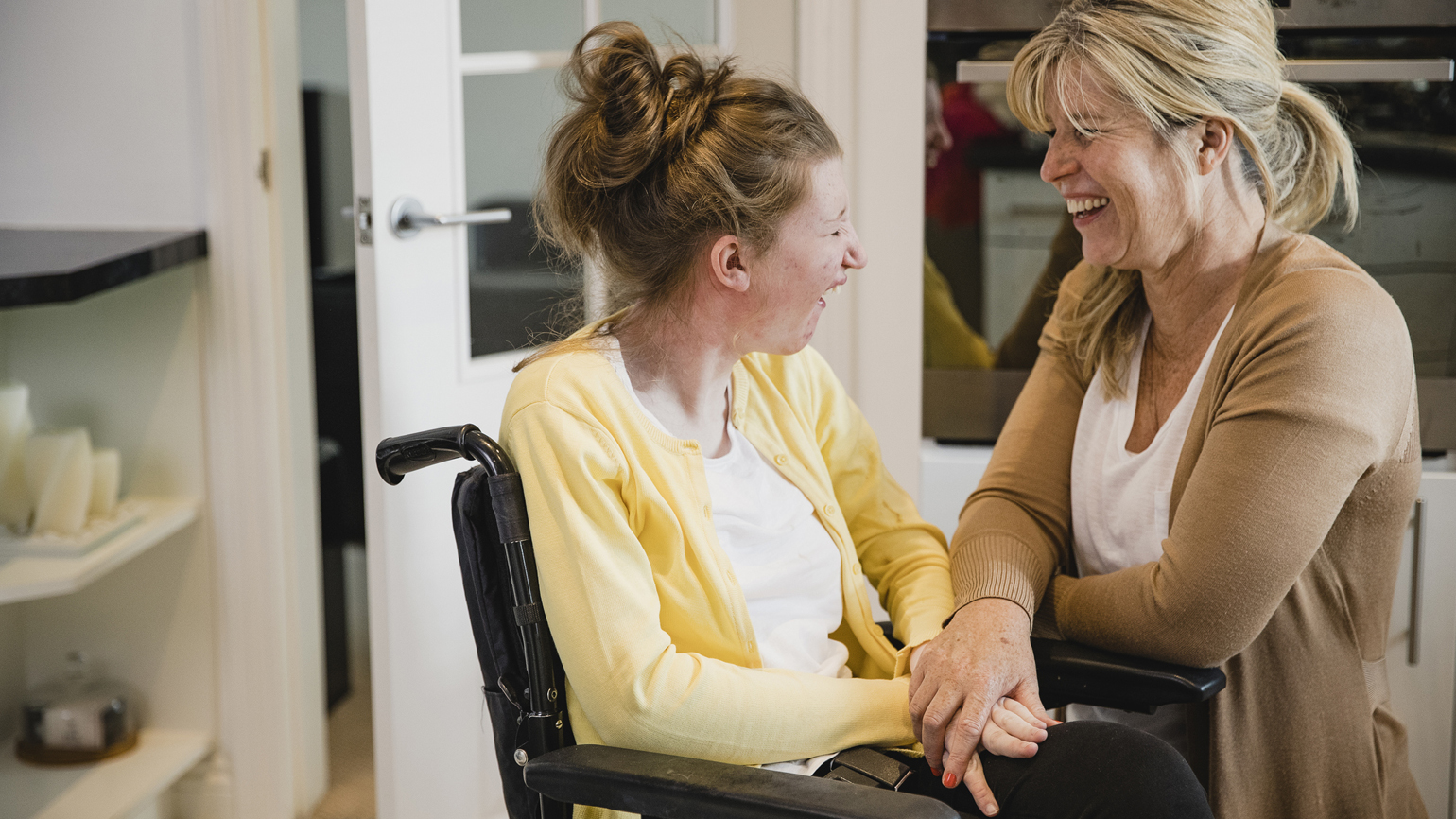
Parenthood can be one of the most fulfilling experiences in life. But regardless of circumstances, it is fraught with challenges. When a child has developmental disabilities, the particular challenges may extend far into his or her adult years. As the adult child ages, so do the parents, which brings a whole new set of concerns over how ongoing care will be handled. If you are an aging parent with these concerns, know that an abundance of resources are available to provide you with helpful options.

Community Newsletter

Get More Inspiration Delivered to Your Inbox


Your adult child’s disabilities may range from intellectual to cerebral palsy and autism to neurological impairments. These may delay or affect the normal physical, cognitive, learning, language or behavioral development process at an early age and may continue through adulthood (The Arc, 2011). Adult children who have any of these conditions may need help with:

• Day-to-day activities, such as bathing, dressing and eating

• More independent activities, including meal preparation and shopping

• Social interaction

• Safety issues that require general supervision

For parents, the constant planning necessary for giving this type of care can be mentally and physically stressful, leading to fatigue or exhaustion. This makes it all the more important to get the proper resources in place.

Concerns of Aging Parents As They Care for Adult Children

In nearly one million families, adults are being cared for by aging caregivers, and about two-thirds of these families have no future care plans in place (The Arc, 2011). Parents and their adult children may have aged together and supported one another, but each have their own growing health concerns and limitations. Aging parents face increasing concerns as to who will care for their child, where their child will live and what types of services will support their child.

Some are connected to the disability community, while others have been challenged by the lack of funding and long waiting lists for services. In fact, a survey conducted by The Arc, a national community-based organization which advocates for people with intellectual and developmental disabilities, found that the most common concerns for parents caring for adult children were related to:

• Lack of quality support

• Increased social isolation

• Having no one to help

• Institutional placement

• Health deterioration

• Abuse, neglect and financial exploitation

To compound the situation, as parents age along with their adult children, they face growing considerations of their own health, well-being and care situations. But there is hope.

Helpful Resources

If you are an aging parent caring for an adult child with developmental disabilities, the following options can help you to overcome the obstacles that you face:

• Reach out to your family and friends, no matter how small the task. Let them give you a break by preparing a meal, running an errand or driving to appointments or shopping destinations. Be open to accepting assistance when it’s offered, whether from your personal support network or professionals.

• Look into an adult day program if a change in living arrangements is not possible for now.

• Use assistive devices that give your loved one reminders, such as when to take prescriptions.

• Contact your local agencies to find support groups that will allow you to share stories, gather information together and bolster your emotional well-being.

• Be a vigilant advocate when seeking guidance from a variety of public and private agencies.

• Focus on building a network of connections and lifelines, bringing new contacts into your support team and establishing back-up plans, just in case a piece of the plan falls through. By moving forward one step at a time, a future care plan for both you and your loved one will be easier to put together.

County agencies focused on assisting adults and children with developmental disabilities, sometimes referred to as Boards, provide assessment, service planning and coordination services. In addition, they provide oversight and assistance to several providers in your area that may help with care for your adult children with developmental disabilities, such as by covering the cost of services to help them remain in your home, with a roommate or in another shared living residence.

The agencies assign a Service and Support Administrator to oversee services and help identify other community programs in which families may be eligible. To easily locate your state’s intellectual or developmental disabilities agency, visit the National Association of State Directors of Developmental Disabilities Services (NASDDDS) website. The listing provides names of state agencies to contact and seek further information for the county agency.

To find other local services and supports, you can visit The Arc. Programs vary by chapter and may include additional supportive services for homemaker and personal care, assistive technologies, advocacy and education. In addition, The Arc offers a Center for Future Planning that helps to support families with future care planning, decision-making, housing options and financial planning. The interactive website guides you through the process of learning about future planning, building a plan and finding resources, and it also allows you to see how others have developed their plans.

An additional resource is Easterseals, an organization that provides services for individuals with disabilities and special needs, including their families. The site has a locator to find your local agency. Programs vary by location and may include adult day services, home care, senior companion programs, therapy, vocational programming and community education.

For services that will help you as you age, visit the National Association for Area Agencies on Aging website. There are also local as well as national programs that can provide coaching to families and guidance in effectively managing current issues and future care planning. To explore the coaching services offered at Benjamin Rose Institute on Aging, visit BRI Care ConsultationTM.

When Your Loved One Needs a Patient Advocate

Navigating the labyrinthine world of healthcare when a loved one has a chronic condition or new diagnosis can be a huge challenge. Despite the best of intentions and effort, it’s easy to get in over your head as a caregiver. There is a great deal you can do to ease communications between your loved one and his or her medical team and to access the resources you both need. But if you feel you can’t do it all yourself, independent patient advocates are an option.

Debby Deutsch, a board certified patient advocate and Nancy Arnold, an RN patient advocate, spoke with Guideposts.org about what they do, as well as steps that caregivers can take to better assist family members when they need this sort of support. Both are with Patient Care Partners, a private patient advocacy firm which Deutsch founded.

Guideposts.org: Can a family caregiver be an effective patient advocate?

Debby Deutsch: The family member of course knows the patient very, very well. However, there are some pitfalls in that. Our medical systems are incredibly complicated. Federal and state benefits and insurance issues are very complicated. So, unless a family member has a medical background, they’re probably going to run into some hurdles at some point and that’s the point where people reach out to us. They say to us, “I tried to do this, I don’t have the time. It’s much more complicated than I thought.” There can also be an emotional factor.

Nancy Arnold: We have at our fingertips, for example, resources that other people would not know about, mainly because we’ve worked in the health industry for as long as we have. We know how to lay out options to people so that they can understand what their doctor is saying. It really can take a professional advocate, particularly for people with chronic or complicated diagnoses that just require so much knowledge about the illness, as well as the system—the specialists that are available, that kind of thing.

DD: We find that what we are really doing is translating. We are translating what the patient or the family is telling us in regards to maybe changing conditions or a new diagnosis. We’re translating that to the healthcare team. And then, even more importantly, we’re translating back what the healthcare providers are saying to the patient and family.

Guideposts.org: Depending on the condition of the loved one, family caregivers generally have to make huge decisions. But it’s also important for the loved one to be as involved as possible in his or her own medical decisions and treatment, correct? How do caregivers walk that fine line?

DD: It varies from state to state in regards to how healthcare powers of attorney are set up. But we can’t, nor should we, make decisions for family members if they are still able to make decisions for themselves. So, what family members can do is help patients understand what the various options are. Let’s say the patient has a cancer diagnosis and an oncologist is laying out two or three courses of treatment. Family members can help make sure that the patient understands what those courses of treatment are—the pluses and minuses—and what that might mean for them in terms of their own personal goals and feelings, and then help them make the best decisions for themselves, based on the information that they have received. The next step, of course, is being prepared to pivot as things change, because things will change.

Guideposts.org: What can family caregivers do to better handle communications during medical appointments?

NA: I would encourage family members to be respectful of the physician’s time. Generally, we get between eight and 15 minutes for a usual appointment with a physician. So, I would encourage any family member to be very, very organized and to keep a list of changing conditions and a list of questions that the patient might have. By all means, keep that list with you. You don’t want to have to say, “I left my list on the kitchen table.”

DD: And if you have that list in front of you, you’re keeping in mind that you have three questions, whereas if you don’t, the whole appointment can get derailed by that first question and you might not get to the subsequent concerns.

Guideposts.org: How can you be an effective advocate during an appointment or hospital stay when you are not allowed inside the room with your loved one?

NA: You can set up a phone for when the patient will get into the room and they can dial you and you can be on speakerphone with them for that appointment.

Guideposts.org: If a home care aide is part of your loved one’s care team, can the aide also help you to stay apprised of your loved one’s changing condition?

DD: The home health aide is a very valuable part of the team. They are seeing things and hearing things from the patient that sometimes no one else will, so they can be a great source of information and I would encourage regular communication with them. They do so much that is of great value that you really want to rely on them as the valued part of the medical team that they are.

Guideposts.org: What can the family caregiver do to ease communication when the loved one is stressed or upset during an appointment?

NA: I think that from a nursing perspective, you have to let those feelings be present and have those feelings addressed. If someone’s angry about their care or their diagnosis or whatever, that’s going to be an important piece for the healthcare provider to know. If you try to change the subject to something else, you’ll probably just intensify that emotion anyway. The other thing you can do prior to an appointment, though, is agree with your loved one that you will talk about those feelings. So, you can address these things ahead of time with the person you’re caring for, so that you’re both on the same page.

Guideposts.org: How can the caregiver delicately clear up miscommunications that may occur between the loved one and the medical team?

NA: That’s a tough situation because you don’t want to say something like, “No, you’re wrong about that.” Then the person feels diminished in front of the provider. But it happens all the time. You can gently ask your family member a question like, “Well, what about the other day when this happened?” That might elicit more information so that the physician is able to get an idea about the way they initially answered and that it wasn’t accurate. You don’t want to set up an adversarial relationship between you and the person that you’re caring for. You want them to feel supported. It’s a very fine line, but I think it can be done.

Guideposts.org: How can family caregivers learn more about what independent patient care advocates do?

DD: There are two websites that I would direct folks to. The first is the Alliance of Professional Health Advocates. There are great resources on that website and there is also a directory of patient advocates throughout the United States and Canada, and most of us are board certified patient advocates. The second website is Greater National Advocates. It has fantastic resources and it also has the national directory of professional advocates. These are great ways to learn about how you can loop an advocate in when it’s time—when you’ve gone as far as you can as a family caregiver and you recognize that you need some help.


When You’re Too Sick to Pray for Yourself

Three years ago in September I landed in the I.C.U. with a mysterious lung infection that threatened to take me out. Every breath was a struggle. The doctors hooked me up to some oxygen and tried to figure out what was wrong.

Word got out—through church, through the emails my wife sent out, through social media. And the prayers came back. Prayers for a complete healing.

I felt so rotten I couldn’t really pray for myself. I learned that when someone says “I’m praying for you,” that phrase has a double meaning. They’re not only praying for you they’re also praying for you because you can’t.

My spirits were pretty low for those first 24 hours. And then something happened.

The second day I was in the hospital, nothing really had changed about my physical shape but I knew—somehow knew—that I was going to get out of that hospital. I wasn’t sure what kind of shape I’d be in, whether I’d have to drag a can of oxygen around for the rest of my born days, but I would go home.

Two weeks later I did go home. On my own two feet. Without any can of oxygen. It was another three weeks before I was back at work and another two months before I was up and running around the park…slowly.

What I have learned and what I keep relearning is that healing is a gift. You can ask for it, but it comes unbidden. We do all we can to stay healthy but weird things can come out of left field without any warning.

So claim your good health. Claim those prayers. And return the favor. Pray for those who for so many reasons can’t pray for themselves. “I’m praying for you” has two meanings no matter how you put it.

When You Feel Helpless

I was feeling helpless, which is one of my least-favorite sensations. I felt an urge to flap my arms and run in circles gaining steam, but I caught it just in time.

Think small, I told myself. You feel helpless but you are not. You are helpless to do the big thing you wish you could do, but you are not helpless to do little things.

So I took a deep breath and refocused my attention on small things. I find that when I zero in on what I can do, my sense of helplessness diminishes.

Little things matter. Think, for example, about a time you were grieving and a friend saw you needed a tissue and got it and held you as you cried. That was a small thing. Think about when you were over-the-top stressed because of a family crisis and someone brought dinner without being asked. That made life easier. Think about how a text or email or phone call or card out of the blue helped you remember you weren’t alone.

When I want to wail, “But all I can do is…!” it helps to remember that the one thing I’m able to do may be huge in the eyes of the person for whom I do it. It may be the one gift she needs more than anything else in the world right then.

So I focus on small things. Things I can do. For it would be a crying shame to let despair over being unable to do big things prevent me from doing all the little ones that can make a huge difference.

When You Become a Caregiver: Taking on a New Role

Melissa Winberry, MSW, LSW is the Assistant Director of the Rose Centers for Aging Well at Benjamin Rose Institute on Aging

You are a daughter or a son, a spouse or partner, sibling or best friend. Your role is familiar and comfortable. Then your loved one has an accident or is diagnosed with an illness that requires your on-going care, and you’re left wondering, who am I now? Taking on the role of caregiver to a loved one shifts relationship dynamics in challenging and confusing ways. Your lifelong role can easily be turned on its head when the parent who cared for you in your childhood suddenly needs your care, or a spouse exhibits new behaviors due to dementia. Scenarios such as these occur on a daily basis, and the changes they bring about in a relationship paradigm can have a ripple effect of feelings, emotions and struggles.

It’s a good possibility that if you are part of a family system, you’ll find yourself shifting into a caregiving role sometime in your life. If you are female, your chances of being a caregiver are considerably higher. Upwards of 75 percent of all caregivers are female and may spend as much as 50 percent more time providing care than males.

Such a shift generally takes a good deal of getting used to on both sides. Your loved one is not likely to relinquish his or her life care over to you without some pushback. Receiving a diagnosis or having an accident will rock a person’s world. Losing the ability to do things on one’s own and having to depend on others, whether temporarily or indefinitely, goes against our innate desire to be independent. While we all tend to be good at helping, when we are the ones who require the help, a flood of emotions can be released.

When your loved one becomes reliant on you, he or she may react with anger, sadness, frustration and fear. At the same time, you as the caregiver may experience many of these same feelings, but from a very different perspective. Do I have what it takes? Will I have the stamina and patience to handle this? How long will I need to do it? How will I juggle my job, finances and childcare, on top of caring for my mother, brother or spouse?

Plus, the person you love may be undergoing changes and becoming someone unfamiliar to you. Although you may have glimpses of what was, there will be a degree of new and unknown added to the equation. For instance, if your spouse has dementia, you may have to face some challenging behaviors on his or her part. Or if you are caring for a sibling who is receiving cancer treatment, you may feel as if you need to put your life on hold for an extended period to provide support. At the outset of caregiving, we come to this role from a place of love and the familiar relationship we have with the person. As time goes on, however, the role changes, and as with many new things in life, it can be hard to accept.

If you are a spouse caring for a loved one with dementia, it is all right to be scared and frustrated and to simply want your comfortable relationship back, rather than continually managing doctor’s appointments and prescriptions. Honor those feelings, find a way to cope with them. Don’t deny yourself any feeling, as this may only make your situation more difficult. If you are a daughter or son caring for a parent at home after a recent fall or other health issue, you may feel overwhelmed with simultaneously handling childcare, work and now your parent’s care. If you feel overburdened, be honest with yourself about it, and then get support.

The good news is that a wealth of resources are available to help you. If your loved one has Alzheimer’s disease or another type of dementia, the Alzheimer’s Association can be an excellent source of support. The American Cancer Society also has a great deal of information for those managing a cancer diagnosis. Explore disease specific resources like these for useful guidance, and look into caregiver support groups in your area. You can gain strength in realizing you are not alone in coping with caregiver responsibilities.

As with all life challenges, beautiful moments can be found when you’re open to them. Whatever your relationship, you can still take walks in the park with your loved one, share special meals, laugh at funny memories, create art and listen to music together, or simply enjoy spending quiet time with one another.

Caregiving is a journey with ups and downs. Be kind to yourself, reach out for help and respite, share feelings with family and friends, understand that self-care is essential and not optional and remind yourself that your emotions are valid. To find help and respite, consider investigating resources through Family Caregiver Alliance or Benjamin Rose Institute on Aging’s BRI Care Consultation™ program. Caring for a loved one is one of the greatest gifts you can ever give. It is invaluable. Thanks to you, your loved one has the opportunity to continue to live the best life possible, for as long as possible.

When We Wander Away from God

The leash. What owner and his dog are unacquainted with this strange bond? So much is symbolized by the leash, not least of all—trust.

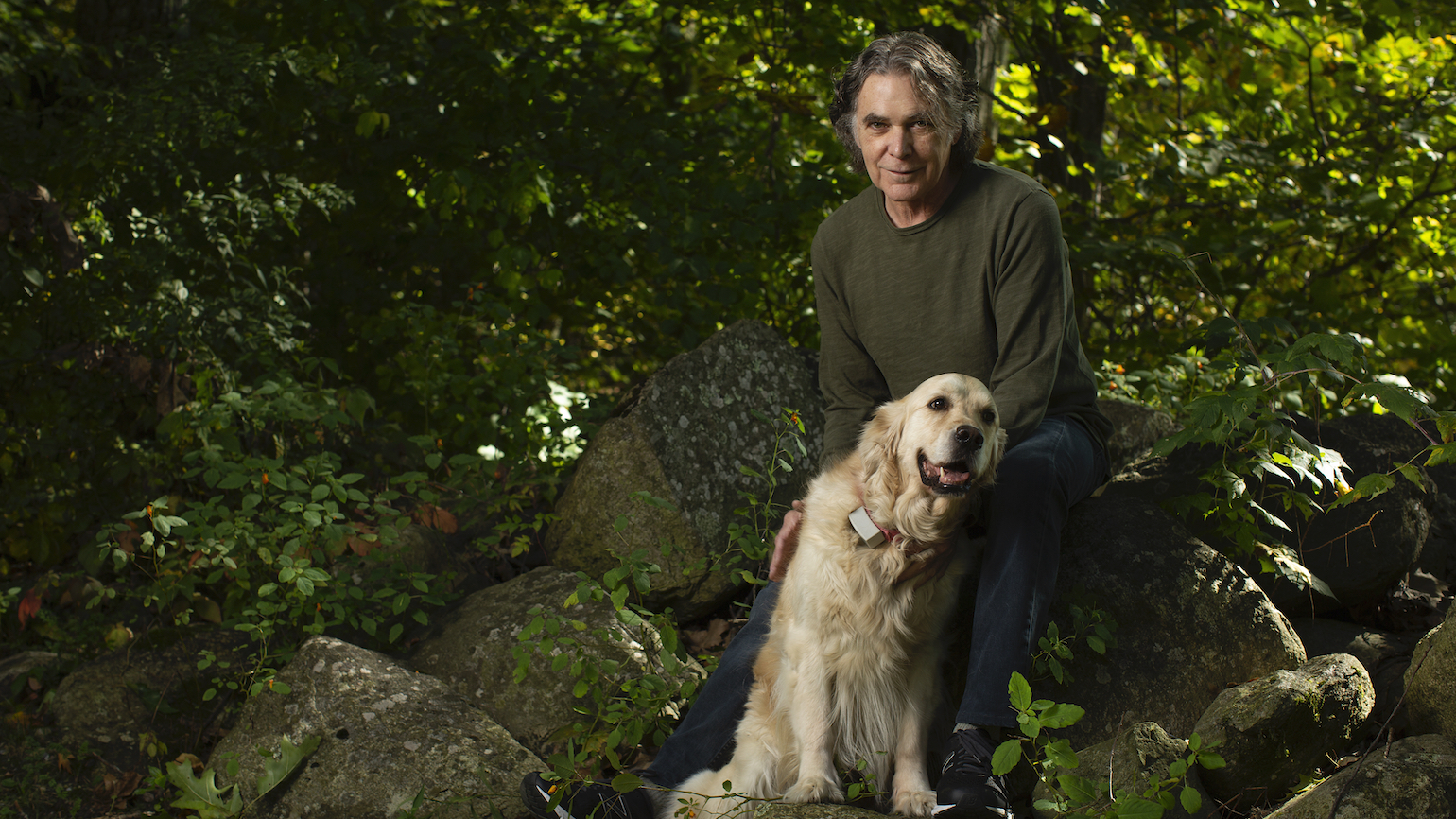
Gracie’s is red. Matches her collar. No pink for her. She’s outdoorsy, athletic, tomboyish to use an old term. More than anything she wants to run like the wind, kicking up her legs, ears flying. Which is why that moment when we are on a certain part of a hiking trail where I feel comfortable unleashing her is a moment of truth and an exercise in trust. It’s never totally easy for me and not just because my wife Julee would kill me if I ever lost Gracie.

I did lose her once for a few hours, at her favorite spot, Monument Mountain here in western Massachusetts. She ran off into the woods after some scent or another. I expected her back in five minutes or so. Five minutes passed. Then 10. I marched up the trail in the direction she disappeared, praying with every step and blowing a whistle I carry with me. No Gracie. I hiked to the summit then down the other side. I searched a loop trail then hiked all the way back to the spot I last saw her. I called her name until I was practically hoarse. More than two hours had passed. It dawned on me I might have lost her forever. I don’t think I’ve ever felt more bleak.

Fortunately, Monument is a popular spot and fellow hikers soon reported seeing a solo golden retriever on one part of the trail or another, including a beautiful female sitting at a juncture where Gracie and I often stopped for water. She was searching for me too! Finally, I got a call on my cell from a group near the summit who had encountered her and called the number on her tags. An hour later we were reunited in the parking lot, Gracie was relieved to see me as I was to see her. The look she gave me said, “Don’t you ever run off like that again!” To this day I believe she thought I was the one who got lost. And maybe I was. I should have just stayed where I was to begin with. She would have found me.

That was a couple of years ago. Gracie’s wiser now but she still loves her freedom even if she keeps an eye on me. She hears the click of her leash coming off her collar, and her whole body quivers even as my heart beats just a touch more rapidly. Then she’s off like a shot. But she stops and gives me a look. Again, it’s as if she is saying, “I trust you when I am on the leash. You can trust me when I’m off.”

And she’s right. A dog on a leash must trust that the human on the other end of the leash will let no harm come to her.

I’m not fond of human/dogs/God analogies, and that’s not what I’m doing here. Still, there is a lesson in the leash, for me at least. God does let me off leash. The Bible teaches me how to live, and I am given free will. When I stray, as I sometimes do, I find my way back to Him. Sometimes the way back is easy, sometimes I am so lost the way back is hard and painful. But God is never lost. He is always there to be returned to. No harm can come to me when I am with Him.

I’ve learned my lesson with Gracie, too. I wait patiently at the spot where I have released her. She always comes back. She gives me a look that says, “Good boy. I’m glad you didn’t wander off this time.”

When We Can’t Say Goodbye to Friends About to Go to Heaven

My friend Bob was accustomed to calling the hospice center and saying, “I am about to die, come quick.” He knew I cared about him very much and would do anything I could for him, so it was his practice to say that if I ever hoped to see him again, I had better come right away.

Bob had a wonderful sense of humor and often asked me out for dinner for the “early bird burned-chicken special.” He had more money than most, which made it all the funnier when I refused, telling him it was not good for my digestion. Bob had cared for a severely brain-damaged daughter for many, many years and with all his humor and silliness, he was a brilliant man and the most deeply committed and loving father I had ever seen.

He left a message for me late one afternoon saying, one more time, that if I ever wanted to see him again, I had better come now. I had worked a very long day and was really tired, so I decided to call the next morning and did not go to see him. He died that night and I was so sorry I had not stopped by to visit one last time.

I called Annie, my friend of 40 years, when I heard she was being moved into a long-term care facility. She was devastated at leaving her beloved home where she and her husband had raised their family. I had the feeling she no longer wanted to live but rather to go on to the God she knew and loved.

“When will you come to see me?” she asked pleadingly. “In the next few weeks,” I promised. “As soon as you are settled in, I will be there.” It was not soon enough, and my lovely friend died within a day or two without our final visit.

“Darlin’,” my sweet southern friend of 45 years said. “Are you coming to see me soon?” Marie had been sick on and off for many years and I talked about our wonderful friendship in my book More Glimpses of Heaven. I told her I would be up in the next week or so, as my daughter-in-law was having surgery and she lived nearby. Marie died less than a week later, before our promised visit.

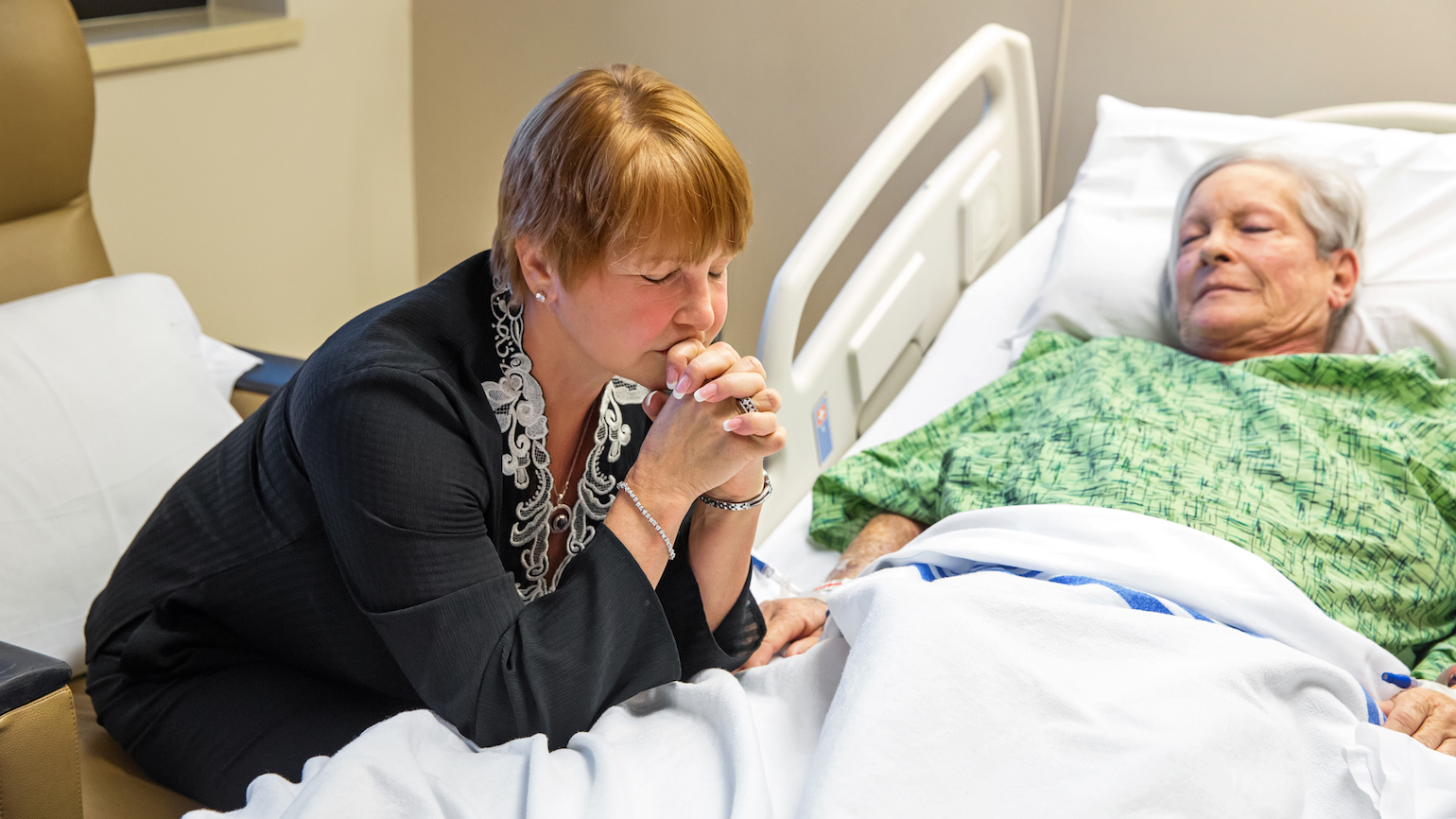
Something happens to our hearts when we do not get to see our loved ones in time, as promised. Somehow we feel guilty for having let them down and that can bring us great sorrow if we are not careful. After the deaths of each of these friends, I had to remind myself of what I had told the families of loved ones in my care when they too did not make it to the bedside “in time.”

Somehow, in a way that only God knows about, everyone you have ever loved and everyone who has ever loved you is with you when you die. An awareness of love is with that person as they die, even when we are not physically present for them. God is with them—and so is everyone he brings to their remembrance. After all, they are on their way to heaven, to their eternal and lasting reward, where love is eternal. Where love is, that’s where God abides.

When to Surrender to God

Let go and let God. Surrender is a precious thing.

Ten-year-old Gabriel, eight-year-old Isaiah and I rode our bicycles along the water. The river’s mood was gentle, and the air held summer’s warmth. Gabriel was in front of me, but he slowed down and rode for a moment near my side.

“Look, Mom, at our shadows!” he said. “They’re so big! Look! They’re huge!”

Gabe moved ahead of me. Our shadows untangled, and soon there was just mine. He was right. The sun, shining from the west, had cast our shadows on the close-cropped lawns. I could see the oversized wheels and fenders and the basket on the front of my bike. And then there was me. Tall and long and bigger than life.

The shadows reminded me of a conversation I’d had the day before with a friend.

I shared about circumstance that brought worry and fear.

“You’re trying to control the situation,” she said after listening patiently. “You’re assuming responsibility that isn’t yours. You need to pull back. Give the circumstance to the Lord.”

Surrender.

I tried to.

Then I grabbed and grasped and wanted to wrestle the situation back under my control. I made myself, my role, bigger than it should be.

Surrender yourself to the Lord, and wait patiently for him. (Psalm 37:7)

As I pedaled along, I thought about surrender. In essence, it’s letting go. Letting myself be smaller and recognizing that the Lord is bigger. It’s a trust issue. It’s putting my fear, my worry and my anxious desperation into His capable hands. Into His capable, merciful, powerful, gracious hands.

Surrendering to the Lord means relinquishing what is precious in order to trust in His purpose and plan.

It’s placing trust in His character. His nature. His sovereign activity in my life and His promise to never leave. It’s lifting the details and the outcome to One who is capable rather than scrambling to solve things on my own.

I began to pray as we moved along the bike path. After months of struggle, the prayer came easy as God’s strong and faithful glory colored the evening sky.

Forgive me, Lord, for trusting in my own strength rather than Yours. Help me to surrender to Your will and Your ways. I trust You and know You’re in control.

“You okay, Mom?” Gabe asked as he held back and pedaled by my side once again.

“I am now,” I said.

Surrender can be a powerful struggle, but when we do, there’s powerful peace.

When the Light of Christmas Goes Dark

Christmas is a time to celebrate the birth of a Savior—the best gift ever given. And in the weeks leading up to December 25, there are often also laughter-filled family get-togethers, festive parties at work and church, and fun events with friends.

But sometimes when we’ve been through difficult circumstances, are dealing with health situations, job losses, or the death of a loved one, it’s hard to find those moments of joy, to discover a heart filled with praise.

I’ll never forget how hard it was to find the joy of the season on that first Christmas after my dad committed suicide years ago. But with the passage of time and with the love and support of family and friends, I was able to heal and to find that joy again. I’ll always miss my dad, but now I can smile about the memories we made together.

I’ve realized something else as I’ve spent time in God’s Word: He put some great examples in the Bible to show me how to praise Him despite my circumstances.

Think about Shadrach, Meshach and Abednego, three men whose faith was put to the test as they were forced to take a stand for God. But instead of standing around worrying and whining, they stepped into the fiery furnace with confidence, praising Him for taking care of them during an unbelievable situation.

Read More: When Christmas Comes Early

And what about Daniel? He was a man of exceptional character, and he’d been so faithful in prayer and in serving God. Despite that, he was thrown into a den of lions. He could have been bitter at how he was treated, but instead he praised God through this trial—and had an opportunity to see God’s power first-hand as those ferocious lions turned into purring pillows.

Job praised God even though His life had just imploded. This wealthy man lost everything that he had: his sheep, his camels, his servants, his health and his beloved sons and daughters. The blows came so fast that he didn’t have time to even catch his breath before more horrible news arrived. If anyone had a right to be bitter, Job was the man, but he continued to praise God through every heartache.

Paul and Silas praised God while sitting in a dank prison cell. They’d been jailed for serving God, for preaching the Gospel. They were entitled to be angry or defeated, but instead, they sang. Can you imagine how the sound of their singing echoed through that depressing prison?

I want to be like those guys, finding joy in the midst of hard times. And I discovered something on that Christmas all those years ago when my praise and joy were dimmed: Jesus truly is the reason for the season. He’s the One who can fill a wounded heart with peace and comfort. And when I focused my eyes on Him instead of my circumstances, that’s when joy started shining into my soul and chased the heartache away.

Father, please bless those whose hearts are hurting this Christmas. Help them to discover an unexplainable joy as they feel Your sweet comfort. Amen.

When Plans Fail

Have you ever had a plan that didn’t pan out the way you expected? Over the holidays my wife and I helped my son move to Michigan for a new job. I planned to get a good night’s rest so that I could drive the first five hours, and he could drive the last.

I got to bed on time but woke up at three in the morning and couldn’t get back to sleep. I eventually decided to stay up and begin our drive. I had every intention of completing my shift. My plan was simple and feasible–at least I thought so.

Shortly into the trip my eyelids grew heavy, and I realized that my plan wouldn’t hold up. I gave the wheel to my son who took control and got us safely to our destination.

Read More: Join Us for the ‘Power to Overcome’ Day of Prayer

This reminds me how often my plans take a back seat to God’s purpose for my life. It is not to say that I don’t plan, but things don’t always pan out the way I expected.

For example, this week I celebrate 14 years at Guideposts. When I started here, my plan was to stay for two years and then proceed to be a pastor in New York City. God had other plans.

Two years ago my son Paul purchased an apartment in a very trendy neighborhood with the thought of staying there for several years. But God had a different plan for him too.

There is a proverb that says, “You can make many plans, but the Lord’s purpose will prevail.” Another translation states, “We humans keep brainstorming plans, but God’s purpose prevails.”

It’s only natural to make plans and set goals for the New Year. This is my practice as well. But my plans and God’s purpose for me don’t always align, and I’m glad they don’t. God’s purpose is always better.

As you make your plans for the New Year, keep an open heart to God’s purpose. We don’t always know how, why and when it will unfold, but God’s purpose always prevails. Why are God’s plans always better than our own? Please share with us.

Lord, in the New Year let Your purpose prevail in our lives.

When Life Gets Tough

Are there times when you are troubled on the inside, but appear fine on the outside? Recently, while attending an event, a US Army chaplain shared her story about returning home from her second deployment in Iraq. Shortly after returning to her military base in Germany, she realized that her family wasn’t there to greet her. She understood it was an expensive and long trip, but it still hurt.

When home, it hit hard, and she began to cry. This was the beginning of a dark time for her. She had never felt so alone. On the outside she looked perfectly normal, but inside she was faced with loneliness and sorrow.

Everyday people are faced with troubles but must continue to work, care for loved ones and fulfill their life obligations without showing external signs of their inner struggles. At such times, people ask them why can’t they get it together or why are they still holding onto their struggles?

When life seems to be working against us, how can we get through these difficult times? When asked to lead the funeral service for her uncle, a World War II veteran, one chaplain unexpectedly began her path to healing. As she brought comfort to others and lead a service for someone she had loved, she herself began to feel whole again.

We don’t know how and when we will get though our dark and troubled times, but there are things we must continue to do:

One of my favorite texts is from the book of Lamentations, “The thought of my pain, my homelessness, is bitter poison. I think of it constantly, and my spirit is depressed. Yet hope returns when I remember this one thing: The Lord’s unfailing love and mercy still continue, fresh as the morning, as sure as the sunrise.”

I also think of the Rev. Robert H. Schuler’s words, “Tough times never last, but tough people do.”

When life gets tough, let us remember God’s faithfulness, love and mercy.

How have you overcome life’s toughest problems? What keeps you going when life gets rough? Please share with us.

When It Pays to Wait

It had been a long business trip. I was tired and ready to get home. We’d already had multiple flight delays, so I was relieved when we finally boarded the plane. The flight attendants shut the door, settled the passengers, and soon after, I heard the beautiful sound of the engines firing.

As is typical in Atlanta, we waited a bit on the tarmac for our turn on the runway. And then finally, we started moving. Slowly. We did that for about 10-15 minutes, and then the plane stopped and an announcement came over the speakers with words to the effect that we’d had a delay, and we’d be in a holding pattern for a little while.

That “little while” turned into 90 minutes. Sitting on the tarmac in those extra tight seats on small planes and with almost no air conditioning on a day that had hit 105 degrees, it seemed like forever!

Just for the record, “holding patterns” are not my spiritual gift. Waiting is not something that comes easily to me. I’m more like the sports car with the engine rumbling at the traffic stop while it waits for the light to turn green.

But now with the benefit of lessons learned as I’ve reached my (ahem) advanced age, I’ve realized something: When God asks me to stay in a holding pattern, I’d be wise to accept that with grace and a good attitude.

Here are a few things He’s shown me:

His timing is perfect. Why would I want to move ahead with something before God says, “I’m ready”?

His plan is always what’s best for me—and far better than any of my plans.

Sometimes those holding patterns are for my benefit. To teach me something. To connect me with someone. Or to wait while He finishes putting pieces in place.

Sometimes that waiting seems like forever, just like it did on that hot airplane. But it’s always a wise decision for me to trust the One who pilots my life and to wait until He says, “It’s time to move now.”