Embrace God's truth with our new book, The Lies that Bind

What Prayer Can Do: Fuel for Thought

All morning I’d been stewing over a friend’s bad business move, one that affected me too. Should I confront him? At this point I never wanted to speak to him again. How could a smart guy do something so dumb? I thought. Finally I prayed, God, I need your guidance. Show me how to handle this.

“Don’t forget you promised to fix my car,” my wife called from the kitchen.

“I’ll do it today,” I said. Maybe the long, messy job of replacing her fuel pump would take my mind off this problem. I went to the garage and grabbed what I needed: red five-gallon gas can, plastic siphon, work light… I’d need to pick up a special wrench at the auto supply store.

I checked the fuel gauge and estimated the amount left in the tank. It would have to be drained. I guessed five gallons. This will take forever, I thought, as the siphon slowly dripped gas into the can.

I waited, angry thoughts about my friend filling my head. I’ll run to the auto supply store and be back long before it’s finished.

I found the wrench easily at the store. Standing in the checkout line I started thinking again. Only this time it was about my own decision.

The gas was flowing slowly when I left, but what if it sped up? What if there were more than five gallons of gas in the tank? It could be spilling onto the floor right now.

Suddenly I envisioned all the potential fire hazards in the garage: the furnace that could light at any time, the hot work light lying on the floor; even the garage-door opener could send out a spark if my wife turned it on. I’d made a terrible mistake!

I tossed the wrench onto the counter and rushed out to my car. Back home I found the can overflowing and a 10-foot puddle of gasoline spreading across the concrete. Luckily I was able to sweep it out of the garage. I didn’t rest until it was all cleaned up.

How could I have done something so stupid? I thought.

Now I knew how to deal with my friend: with understanding. Everyone makes dumb decisions sometimes. Even “smart guys” like me.

Download your FREE ebook, A Prayer for Every Need, by Dr. Norman Vincent Peale

What Makes Love Work

When we love others and are loved in return, we feel valued, wanted and respected. These benefits not only come from a romantic relationship but any type of relationship built on a solid foundation of mutual care. Love is indeed a feeling, but it entails action as well. When we love someone, we make time to be with them. We make sacrifices on their behalf (big or small) and so much more to show that we care. But that doesn’t mean a loving relationship cannot be shaken by adversity, setbacks and disappointments.

Many who have been deeply hurt by someone they loved avoid putting themselves in a vulnerable situation again. Love can leave us with deep scars that take a long time to heal. But on a positive note, the benefits of love outweigh the drawbacks. Where there is love, there is also grace, forgiveness, friendship, joy, peace and happiness.

Recently, I presided over a vow renewal ceremony for a couple celebrating their 35thwedding anniversary. Throughout the years this couple endured many challenges, including the husband’s military deployment. But through them all, they held onto their love for one another. Their love has evolved, but one thing is evident—they remain committed to each other now more than ever.

A loving relationship requires effort from both parties. It means keeping no record of wrongs and learning to forgive. Yes, some marriages and relationships do not make it. However, we should not avoid opening our hearts to others. We learn from past hurts and grow because of them. In return, we learn to love ourselves and others.

Lord, teach us to love and be loved.

What I Wish People Knew About Grief

Ella Wall Prichard is the author of Reclaiming Joy: A Primer for Widows

I am a widow, and many of the books and blogs I read advise new widows to avoid social situations while they are still emotionally fragile. Widows post: Please understand why I turn down all your invitations. Please keep asking me. Someday I will accept.

That is terrible advice. Isolation is a breeding ground for depression and has been shown to contribute to a decline in mental and physical health. Regrettably, new widows often withdraw from their friends, increasing their grief, anxiety, and depression.

When I could not find comfort and encouragement anywhere else, I turned to prayer and Scripture. Jesus’ public life was full of celebrations and quiet times with his closest friends. His first miracle was at a wedding feast. His last act before his arrest and crucifixion was a meal with his disciples.

Paul wrote unequivocally to the Romans, Practice hospitality (Rom 12:13b, NIV). Widows are not exempt. Instead of throwing pity parties for ourselves, we can fill our homes with friends. For whatever reason, we seem to forget how to entertain. We slip into neutral gear, waiting for others to invite us. And then, too often, we say “no.”

I took the advice of my twice-widowed mother-in-law, Helen Matthews. Shortly after her second husband died, when she was in her early sixties, she announced, “I am going to accept invitations to go out. At first you don’t feel like seeing people, and so you turn down invitations. People want to be kind; but if you keep saying ‘no,’ they will soon forget you and move on. Then when you’re ready to be with friends again, they’re not there for you.”

My husband Lev died of congestive heart failure in April 2009. After his service, friends gave me hugs and promised they would be back in touch after I had time to rest and recover. They did not know how desperately I needed people around me to fill the void left by his departure. Other suddenly singles—divorced as well as widowed—report the same experience. Friends disappear. Invitations to dinner and evening parties dry up.

Many friends want to be kind and extend the obligatory, one-time invitation to lunch or dinner. I emulated Helen and tried to say “yes” to everything, but I quickly realized that I not only needed to reciprocate but also to initiate occasions if I wanted to be invited a second time. I did not want to join the widows who sat home alone every night.

Most of my friends were still married. Lev and my social life had been a life of activities with other couples. Over the years I lost contact with one-time friends who were divorced or widowed. They surprised me when they reached out to me after Lev’s death. When I went out with them, I tended to forget my aching loneliness. They learned that if I was cooking my dinner when they called, I would put the half-cooked meal in the refrigerator or garbage can and go out. That sisterhood proved invaluable, for they understood what I was going through. I could be honest with them about my pain and fear because they had been there. Their example gave me hope.

Since they had more experience as a single than I, they taught me how to enjoy life without Lev. They introduced me to their friends and included me in their activities. We discovered mutual friends, and new friend groups formed. I learned more about art and classical music, I went to lots more movies, and I tried more new restaurants because of their friendship.

Women are easy to entertain, because food is simply an excuse to get together. Jesus’ time with Mary and Martha confirms that the quality of time with friends is what matters, not the perfect house or meal (Luke 10:38–42).

No one needs to feel like her home is too small or her budget too modest to entertain. We can invite a few friends over for wine and cheese before a movie, concert, or art exhibit or have them come by afterwards for coffee and dessert. Better yet—we can gather a few friends around our table for a simple, casual Sunday night supper—a casserole, a hearty soup in winter, or a big salad in summer.

My social life slows down on weekends, when my married friends spend time with their spouses and other couples. A Sunday night supper fills that hole: Friday, grocery shopping; Saturday, getting the house in order; Sunday, cooking. Friends with full social calendars are most likely to be free on Sunday, while most widows are glad to have a social event to anticipate, to end the weekend on a high note.

As widows, we can live on our memories of the past, or we can create opportunities to live with joyful anticipation—always one more thing on the calendar to look forward to. When we throw a party, we share that gift of anticipation with our friends. We can take those very events that are our sinkholes—holidays, anniversaries, long weekends—and turn them into keenly anticipated and enjoyed moments. And as we practice hospitality, we nurture strong relationships that enrich our lives and the lives of those around us.

Gratitude vs Thankfulness: The Big Difference

You’ve likely heard the aphorism to “have an attitude of gratitude.” I recently learned that within the field of positive psychology, that’s exactly what gratitude is—an attitude, an overall mentality and mindset that prioritizes appreciation for the gifts and opportunities life offers. Stepping into a season of thanksgiving (both with and without a capital “T”), when we want to be more grateful, makes this learning all the more helpful. Because there is a difference between gratitude and thankfulness.

Woman with her hands on her heart to show her gratitude vs thankfulness

What is the Difference Between Gratitude and Thankfulness?

The difference between these two important emotions comes down to how we use it in our lives. Gratitude is a general appreciation of life, while thankfulness is a response to a particular event or experience.

For example, you can be grateful for your family, but thankful that your cousin showed up early to help you set the holiday table. You can be grateful for the community where you live, but you are thankful that your neighbor brought your garbage cans up from the curb on a rainy day.

To cultivate a fully, authentically positive mindset, we must practice both gratitude and thankfulness.

You know as well as I do that life is not always easy. To cultivate a fully, authentically positive mindset, we must practice both gratitude and thankfulness. Practicing gratitude means accepting things as they are, while also holding onto our appreciation of things that we value and have access to. Thankfulness grows out of this mindset, positioning us to be able to notice and express thanks when things do go right, like saying “thank you” or even writing a thank you note.

Tennessee psychiatrists James and JR Greene explain the broad power of gratitude this way: “You do not need something good to happen to have gratitude, and when bad things happen, your gratitude does not falter. You know that sad things are just a part of life, and you are happy with the life you lead.”

So ask yourself whether your thankfulness lives under an umbrella of gratitude—and whether your gratitude gets spoken aloud through words of thankfulness. When you pair these two layers of appreciation, you will be building a spirit of authentic positivity that shines over everything you do.

Woman looking at herself in the mirror thanking about gratitude vs thankfulness

3 New Ways to Think About Gratitude

It might be a challenge to think of things you’re grateful for, but scientific research supports what grateful people know—that taking the time to look inward and express gratitude makes us happier and less stressed.

A gratitude practice is actually simple to start. It could be keeping a blank journal where you record a single item each day you are grateful for—something as big as a promotion at work, or as small as the sudden sunshine of a spring afternoon. If the written journal is too much, you can make gratitude the last “task” you do before you go to sleep at night, just a little passing thought that can rest for a moment on something that enriches your life.

Even during trying times, I’m eager to grow my gratitude habit, and that means coming at it from new angles. A consistent goal as I walk my positive path is to be more mindful of the joy and goodness that is all around me, if only I would notice it. Questions that prompt me to look in unexpected places for sources of gratitude are a helpful part of that process.

See if these three prompts might bring a new breadth and depth to your gratitude experience:

Husband kisses his wife to show his gratitude vs thankfulness

1. Change Your Gratitude Perspective

Choose someone in your life (a family member, friend, neighbor, colleague or the even the person who delivers your packages) and ask, “What would this person say they are grateful for in me?” Perhaps you are a support, or you made that person laugh recently, or you always return emails in a timely fashion or greet them in a friendly way. Cultivate gratitude by looking to others. See yourself through someone else’s grateful eyes.

Woman looking at herself in the mirror thanking about gratitude vs thankfulness

2. Feel Gratitude for Your Body

Think about your body, and find a part of yourself to be grateful for. It could be your legs that carry you through your day, your hands that create and communicate and soothe and love, or it could be the brain you use to learn and share. We all have reasons to be thankful and feel the positivity of gratitude for our bodies.

Woman smiling about gratitude vs thankfulness while she drinks coffee in the morning

3. Feel Gratitude for Small Things

Look around your home and think about the item in it that no one else would likely notice, but that brings you the most joy. Maybe the tiny grater you use to zest a lemon, a vase that you pull out when you bring home flowers, the taste of your favorite toothpaste, or the paper clips you keep in an orderly little corner of your desk. The smaller, the better—while you’re looking, I’m guessing you’ll come across a lot of items that are deserving of your gratitude.

READ MORE ABOUT GRATITUDE AND THANKFULNESS:

What If We Lived What We Say We Believe?

Today we are blessed with a blog from my friend Jean Wilund. She is a talented writer with a heart for God and passion for His Word. I know you’ll be inspired by her message about living your Christian beliefs.

Whoever claims to live in Him must live as Jesus did. (I John 2:6, NIV)

I love this world, but newscasters could sum up each day with, “The world’s gone crazy, and that’s the news for today. Have a good night.”

Of course history proves this madness isn’t new. Since the Garden of Eden, this wild, wonderful world has always been a bit cracked. It’s filled with people, so it never stood a chance. In our humanness, we’re all going to act a little crazy. Some of us act straight up senseless. It’s only in Christ that we have the power to live differently.

When we learn we have cancer, panic doesn’t kidnap our emotions. Stalwart trust in our sovereign God gives us strength to smile at the future.


When the news announces terrorism is making its way into our land, fear doesn’t paralyze us. The surpassing peace of Christ rules in our hearts and drops us to our knees in confident trust in our powerful God.

When an opposing fan screams hateful words at our child on the soccer field, sharp words designed to cut the hater down to size don’t spew from our mouths. Forgiveness calms us as we remember how much we’ve been forgiven.

We all face trials that threaten to disturb our peace and crush our hope. We encounter hatred and rudeness that can awaken the monster within us. We see other people’s success and are tempted to choke on jealousy and discontentment. But it doesn’t have to be that way.

We’ve been given the Spirit of the Living God to empower us to live what we say we believe. Even in the worst situations, if we thoughtfully respond rather than immediately react, we can mirror Christ. How we respond reveals what we truly believe no matter what we say. Each day presents us with new opportunities. Let’s choose to live what we claim to believe. With God’s Spirit in us and for us, I think we’d be crazy not to.

Pray this with me:

Father, I thank You that You’re working in me, giving me the desire and the power to do what pleases You so that I can live like I say I believe. I know I won’t get it right all the time, but by Your power–the same power that raised Jesus from the dead–I will seek to show the world who You are through my life and bring You praise and glory. Amen. (Prayer based on Philippians 2:13)

Jean Wilund is an author, Bible teacher and blogger. She’s passionate about sharing the life-giving truths in God’s Word. Connect with her on her blog, Join the Journey, at JeanWilund.com.

What Good Shall I Do Today?

I came across an entry in a website called “Daily Routines” about how writers, artists and other interesting people organize their days. (This was a link from another of my fave sites veryshortlist.com.) At 5 a.m. Benjamin Franklin would “rise, wash, and address powerful goodness.” The great thinker and inventor would also ask himself daily: “What good shall I do this day?” In the evening there was supper and music and examination of the day as well as asking himself another question: “What good have I done today?”

This simple, powerful guide to living is from The Autobiography of Benjamin Franklin . “What good shall I do this day?” stuck with me. It got me thinking about our popular feature called “Pass It On—People Helping People.” For years we’ve been publishing unique ways our millions of readers are helping others—from getting suitcases to foster kids who formerly carried their belongings in plastic garbage bags to putting a basket of breakfast goodies on the doorstep of a neighbor whose husband was in the hospital. So when I ask myself, “What good will I do today?” I know I can turn to our “Pass It On” feature to get some ideas. For starters I can pass this along. Hope you do too.

Celeste is a senior editor at GUIDEPOSTS.

What Good Can Come of Hardship?

We often hear people talk about big storms they’ve encountered—about the power of the wind, the jagged streaks of lightning, and the booms of thunder. But unless it’s been a hurricane or blizzard, we usually don’t hear much about what comes after the storms.

On the positive side, storms clear out the debris in the trees, tossing dead branches and leaves to the ground. They wash the dust and pollens from the leaves and make everything look clean and dewy fresh. Storms water the flowers, providing growth and beautiful flowers for us to enjoy. But they also show us frightful power when massive trees bend and break, and rivers overflow.

After the storm is when we regroup and pick up the pieces, and the same is true in our lives. The storms of hardships, emotional and physical woes, financial difficulties and heartaches are never fun while we’re going through them, but they can lead us down new and better paths.

The storms of life teach us to take cover in the One who controls them. Those moments that batter us, that bend us emotionally where we feel like we’re going to break, are actually the times that strengthen us. They teach us to trust Him in ways that we never have before. They require us to cling to Him and to trust Him—even while the storm is raging.

And if we’ll let Him, those moments can refresh our souls. They can cleanse our hearts and clear out the debris we’ve hidden there. And those storms can help us grow so that we can blossom for Him.

Nahum 1:7 tells us, “The Lord is good, a stronghold in the day of trouble; he knows those who take refuge in him.”

Isaiah 4:6 says, “There will be a booth for shade by day from the heat, and for a refuge and a shelter from the storm and rain.”

And Mark 4:39 shares, “And he arose, and rebuked the wind, and said unto the sea, Peace, be still. And the wind ceased, and there was a great calm.”

Storms don’t last forever—and you’ll discover many beautiful treasures after the storm if you’ll just look for them.

What Does Imagination Have to Do with Positive Thinking?

While my colleague Edward Grinnan is away on his book tour this month, I’ve been keeping up with him by email…and by reading his book, The Promise of Hope. Along with his own amazing story of transformation and the inspiring stories of others, Edward shares the nine keys to powerful personal—and I might add, positive—change: honesty, willingness, imagination, commitment, faith, forgiveness, acceptance, resilience and love.

The one that really jumps out at me is imagination. Some might say positive thinking is an act of faith—in yourself, in others, in a higher power. That’s true, but it is just as much an act of imagination. Why do I say that? Well, to think positive, you don’t have to be a creative genius. But you do have to make a mental leap from the present to the future, from limitations to possibilities. You have to move beyond what is and envision what might be.

Norman Vincent Peale might never have become minister to millions and the godfather of positive thinking if he hadn’t done this himself one dark day. As Edward relates in chapter three of his book, Dr. Peale was just Norman then, a student preacher crippled by self-doubt and fear (of public speaking, no less). No wonder he was struggling in seminary. One day a professor called him “a scared rabbit” and declared, “You better change the way you think about yourself before it’s too late.”

In despair, Norman prayed for help. What’s interesting is that he didn’t beg God to transform him into a compelling speaker who could effortlessly command a room. Instead, he prayed, “Let me see myself not as a scared rabbit but as someone strong and confident who can do great things.” He asked for imagination and at the same time he was already exercising it, picturing himself changed for the better.

Dr. Peale envisioned a major, life-altering change, but imagination also works with smaller, more mundane shifts. Let’s say you’re grumbling, I’m so busy there’s not enough time in the day to do everything. First, re-imagine that defeatist, negative thought and transform it into a more empowering one: I’m busy but there’s time to do what matters. Then zero in on those things that matter and visualize how you’ll do them. Maybe you’ll consolidate three trips to the grocery into one. Maybe you’ll carpool with another parent whose kids are at the same day camp. Maybe you’ll ask a coworker to help with that presentation. You’ll definitely have a more positive attitude. Imagine that!

What Can You Do to Keep Your Loved One at Home Longer?

It’s a good bet that, for your older loved one, home is where the heart is. As a family caregiver, it’s also likely that you want to do everything in your power to allow your loved one to remain at home, or “age in place” for as long as possible. When an illness, chronic condition, disability or injury comes into play, it becomes more difficult for an older adult to remain independent in his or her own living environment. Yet there are certain things you can do to make home life safer and more comfortable for your loved one in order to stave off a move to a care facility.

The benefits of remaining at home include privacy and independence, as well as access to friends, family and familiar places like stores, restaurants, medical offices and parks. Your loved one may have put years into paying for and keeping up a home and feels strongly about enjoying the fruits of that labor now. When older adults remain in their communities, other people can reap benefits, as well, from their elders’ vast experience and wisdom. Older adults can be wonderful friends and neighbors and may even act as volunteers, mentors or co-workers to those who are younger.

If you wish to enable your older family member to live at home for as long as possible, here are some important steps you can take to make it more possible:

  • Get a home safety assessment

Evaluate your loved one’s home safety issues with an in-person assessment from a geriatric care manager. This will look at how the present housing situation affects your loved one’s safety and quality of life. It should also include an evaluation of any possible impairments your loved one may have that could impact activities of daily living. Important topics to address range from his or her ability to prepare meals, manage medications, drive, pay bills, bathe and groom and keep the house clean and organized. Learn more information on this process.

  • Have a family conversation

If a safety assessment and doctor’s advice give you the green light, have a discussion with others in your support network. Get together with your loved one and other family members to put all your concerns on the table. Discuss whether you’ll be able to pull together to give your loved one the assistance he or she may need to remain at home. Can you and others arrange to visit frequently and pitch in on household chores and yard work? Who will be close by at any given time in case of emergency? Will you need to equip your loved one with technologies like personal navigational devices and home sensors that can make it safer to live independently? Can you help with transportation issues, as needed? Is it possible to hire an in-home care aide to handle daily tasks or cooking and to spend quality time with your loved one? How can you make the home safer? There are many ways to do this, including installing ramps, slip-proofing floors, and making modifications to the bathroom like safety rails and a walk-in shower or tub. You can even get pill boxes that are designed to set out your loved one’s medications for a whole week. Learn more ideas here.

  • Explore resources for support services

Gather as much information as possible on the many services that are available for older adults who live independently. You may tap into these via your local and state offices on aging or social services and senior centers, as a start. Depending on what your community offers, you may find help with housekeeping, transportation, yard services, meal deliveries, and even financial counseling. If your loved one has trouble walking, you may want to check into whether Medicare covers a walker or electric chair or scooter. Does a local senior center offer opportunities for your loved one to socialize and engage in fun activities? For more advice on support services to help your loved one grow older at home, as well as tips for caregivers in this situation, go to the National Institute on Aging’s website.

  • Get support for yourself

Your emotional well-being makes you a better caregiver and can have a big impact on how long your loved one is able to remain at home. In one study, nursing home placement for Alzheimer’s patients was delayed by 28 percent when their spouse caregivers received specialized counseling and support intervention. The caregivers underwent individual and family counseling, support group participation and on-going telephone counseling. The study concluded that “greater access to effective programs of counseling and support could yield considerable benefits for caregivers, patients with Alzheimer’s disease and society.”

The Administration for Community Living (ACL) is another excellent resource for services, research and education to help older adults and people with disabilities choose where to live. ACL also helps people who have unexpected needs, such as after a fall or an accident, to find services, and offers information on assistive technologies.

What Can I Do in a Desperate Situation?

Some events mark our lives forever. There are happy ones such as a wedding day, the birth of a child or the purchase of a first home. But too often we dwell on the unhappy ones—a death, a job loss, a broken marriage. These are the situations that call for desperate prayers.

There is one night that I will never forget; it still sends shivers down my spine when I think about it. It was November 2010. My wife and I received a call that our son had been in a terrible car accident. I remember who called us with the news, the ride to the hospital and the shock of seeing our son lying on the gurney in the emergency room.

He was distressed and physically shaken. Although he had some cuts on the back of his head, he appeared to be in better shape than we expected, and in much better shape than the driver who was badly injured. Unfortunately, one of the individuals in the other car died on impact.

It wasn’t long before we learned that my son had broken three neck vertebrae and needed a spinal fusion. My wife and I turned to God in the most desperate way for healing and a successful surgery. It was a long and tough journey, but God heard our prayers.

The words found in Scripture came to mind, “Call on me in the day of trouble.” And we did. We cried out to God with all our energy and strength hoping for an intervention, healing and comfort.

We prayed, “Help our son…help us, God!” There were times we felt powerless, but not alone. Our friends prayed with us; they too sought God on our behalf. On the days my son had no emotional or spiritual strength, we were his voice. And God heard our desperate prayers and the prayers of our friends as our son recovered.

What can you do in desperate situations? Pray! In our distress, pain and inconsolable moments, we can turn to a compassionate and merciful God of all circumstances. We can trust that our prayers will get us through the hopeless and despairing moments. All things are possible with God.

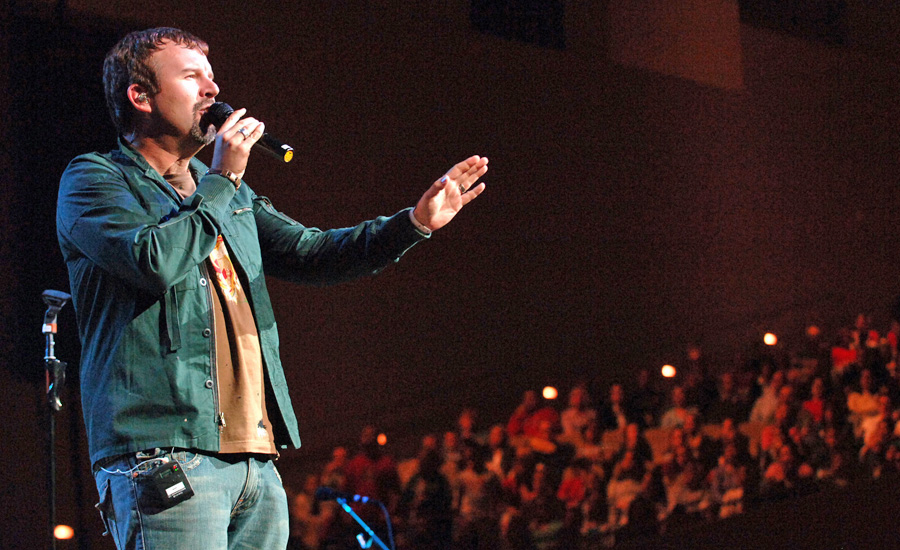
What Cancer Taught Casting Crowns’ Mark Hall

In early 2015, Casting Crowns front man Mark Hall had been having an incredible year. The group’s latest record, Thrive, had just become the best-selling album of 2014; they’d taken home the Artist of the Year Award at the K-LOVE Awards; they’d just won their third American Music Award; and they were busy touring with fellow Christian artists Laura Story and For King & Country.

Then, during a doctor’s visit to get relief for what he thought was acid reflux, Hall learned that he had a mass on his right kidney that could be cancerous.

“You don’t really hear the words, ‘You have cancer,’ Hall tells Guideposts.org. “You hear the words ‘You’re going to die.’”

Those four, unspoken words suddenly brought everything in the artists’ fast-moving world to a screeching halt.

“When I heard ‘cancer,’ it’s like the whole world shrunk,” the Atlanta youth pastor shares. “All I could think was, ‘Okay, how am I going to get my family through this? How am I going to make sure they know it’s going to be okay?’ Everything got simple and prioritized very quickly.”

Try These Self-Help Books to Reach Your God-Given Purpose

In the two weeks between discovering the mass and the surgery to remove his kidney, Hall broke the news to his children and began preparing himself for the worst.

It wasn’t until after his surgery, when doctors told him the mass was in fact an aggressive form of cancer that, miraculously, hadn’t been able to grow outside his kidney, that Hall realized how blessed he had been.

Still, the next four weeks saw the singer fighting a tough and often painful road to recovery. The band was forced to cancel a week of shows before Mark could join them in his fifth week post-op.

Hall – who ministers at Eagle’s Landing Church and was used to being the one visiting hospitals, sitting with the sick and offering words of encouragement and prayer— quickly found himself on the receiving end of those prayers. The change in roles didn’t sit well.

“I didn’t want to walk around being the hurting guy,” Hall admits. “I didn’t want people coming up to me saying, ‘It’s okay. Everything happens for a reason. Here’s all the little Twitter pick-me-ups, let me pat you on the back …’ I was jaded about it.”

But the singer quickly realized God was using this time of suffering to teach him a valuable lesson.

“God showed me that was just pride,” Hall says. “I realized I need to talk about this, so I told my church, I told a few friends at Christian radio and the next thing you know the whole world is praying for me.”

Billboards on Atlanta’s busiest highways started popping up, #prayformark began trending on Twitter and soon the singer started to see the ordeal as a way to practice what he preaches to his students every Wednesday night at Bible study.

Find Hope, Inspiration, and More in our Free eBooks

“You never speak louder to the world about your faith than when you’re in a storm,” Hall explains. “For me, I knew I’d taught a lot of lessons, I’ve written books, I’ve written songs, but I’m about to tell the world a whole lot through what happens [to me] in the next months.”

Eventually the singer was able to resume his duties at church and in Casting Crowns in time for the band’s summer recording of their new album Casting Crowns: A Live Worship Experience.

The 12-track record features a blend of the band’s biggest hits and a handful of worship songs the teens at Hall’s own church have been singing every Sunday.

Recorded at Eagle’s Landing, Hall says this live album has helped him reflect on the trial he’s been through and is offering him a chance to share what he’s learned with others.

“When we have a friend who’s suffering, we feel like we need to fix it,” Hall says. “We feel like we need to defend God, make sure they’re not mad at God and give them a bunch of reasons why God’s still good. That’s probably not what they need. They just need you to be there, listen to them, cry with them. You don’t have to have the answers to all of life’s questions.”

“I’ve always tried to give that advice to my own students but the other half of that that I learned is when you’re hurting, you need to let the church be the church. They’re not always going to say it right but the root of it is love. You have realize you can’t walk through it by yourself, you need people walking through it with you.”

What a Hospice Chaplain Learned About Life from Her Patients

Marsha seemed like a nice enough lady, 96 years old, surrounded by photos of her family members, wearing a faded pink nightgown. She had a weak heart and only months to live. That’s why I was visiting her at the nursing home. She was glad to hear me read from the Bible, but then all of a sudden, she burst out in inexplicable anger—and not for the first time. “When I get to heaven,” she said, “I’m going to tell God to kick my father out of there. I don’t ever want to see him again.”

I didn’t know how to respond to that. My training as a hospice volunteer hadn’t prepared me for this. I tried to distract her. I pointed to different photos, and Marsha rattled off her grandchildren’s and great-grandchildren’s names and ages. There was nothing wrong with her mind. Just this one topic that she returned to again and again. Her father and what a terrible man he had been.

“I tell you,” she continued, “God should know that my father does not belong in heaven. If he’s there, I will do all I can to get him out.”

Beneath that faded pink nightgown was a red-hot rage. It rattled me. Was it possible to reach the age of 96 and still hold on to such resentment?

I went home, wondering if I would be like Marsha at her age. I had so much to be grateful for. Not just my wife, Kathie, but my career as a manager in the oil business and the ability it gave me to retire early and do volunteering like this. I saw myself as a natural caregiver. I wanted to help. “It sounds as if you need to forgive your father,” I imagined telling Marsha the next time I visited. Yet a louder voice inside me was forcing an uncomfortable question: Isn’t there somebody you need to forgive?

Frankly that was something I didn’t want to think about.

I’d grown up outside Chicago, one of three kids. I adored my big sister Joan. And then there was my brother, John.

John was 12 years older than me. I looked up to him—naturally—and wanted to be like him. Except I’d sit down at the breakfast table and he’d say, “You smell. Didn’t you take a shower this morning?” Or at dinner, “Stop picking at yourself. Sit up straight.” Or I’d be poring over my homework and glance up for a moment. “You idiot, always staring into space. You’re going to flunk out of school.”

John himself had never been much of a student. He’d dropped out of high school, gone into the Army, served two years and then come back home, bouncing between jobs. Mom and Dad would try to stop him whenever he got on my case, but I think they were just as intimidated by him as I was. I wasn’t like John at all. I was bookish, the quiet youngest kid.

I finished high school, went straight to college—the first in my family to do so—and graduated. Like John, I served in the Army for two years. Afterward John invited me down to visit him in Miami, where he was working as a truck driver. Maybe this could be the beginning of something. Something brother to brother.

He’d bought a slick 24-foot, three-hull sailboat, his pride and joy. He was eager to take me out on Biscayne Bay. We motored out into the open water. John let me take the tiller while he unfurled the jib.

“Turn to port,” he yelled at me.

“How do you do that?” I asked, mystified. I’d never been on a sailboat before in my life.

“To the left. Port. Don’t you know anything?” Just like that, it was my childhood all over again. He kept yelling at me. Everything I did was wrong. Didn’t I learn anything at that college I went to? What an idiot I was. I clammed up, didn’t speak to him for the rest of the trip. No wonder he wanted to get me out on that boat.

I took a job in Baton Rouge in the oil business and was soon working 12- hour days, six days a week. Dad had died by then, but I managed to go back home to see Mom and Joan. They kept me up on what was going on with John. He’d turned into a health and exercise nut, working out at the gym every day, lifting weights. A serious bodybuilder. I was—I must confess—still a sleep-deprived, two-pack-a-day smoker.

The one time I saw John back at home—he’d driven up from Miami— the first thing he said to me was “Take that cigarette out of your mouth.” No “Hello,” no “How are you doing?” Just: “You trying to kill yourself? You always were dumb.” I drove home early rather than take it anymore.

I saw my brother again at Mom’s funeral. Then I cut him off. I couldn’t relate to him anyway. He didn’t have much of a family. Married twice, divorced twice. One son. Just his boat, his truck and the gym. There was something sad about that way of living, but I refused to feel sorry for him.

When I retired, Kathie and I might have considered moving to Florida like a lot of other retirees. Not a chance. I didn’t even want to be in the same state as John. We chose Tennessee to be closer to Joan. I was glad to see her more often, even as her health took a turn for the worse. Complications from COPD. Those last few days, I was able to spend a lot of time at her bedside, listening, talking about our family, reading the Bible and praying. The last thing she said to me was “I hope you’re not left to deal with John the rest of your life.”

It was those last precious days with Joan that made me want to become a hospice volunteer. So much healing can happen as we approach death. I believed the Lord was opening a door for me. I visited patients in their houses and at nursing homes. I really felt I was helping. Until I met Marsha. I could see how old wounds festered, how this could suffocate us even in the last days of life. As my sister had said, it was just John and me now. And my brother still had a hold on me, still infuriated me, the way Marsha’s dad still tormented her.

I read all I could about forgiveness, including everything I could find in the Bible. I told myself it was to help Marsha, but truth be told, I was desperate to help myself. Like they say, when you can’t forgive someone, the person you end up hurting the most is yourself. Holding on to that kind of deep resentment is indeed like drinking poison and expecting the other person to die.

I sat with Marsha and found out more. “My dad left us when I was six,” she said. “He never contacted us, was never in touch. Mom had to work her fingers to the bone just to keep food on the table for the two of us. I could never forgive him for that.”

“Forgiving someone doesn’t mean saying they were right,” I said, as much to myself as to Marsha. “It’s a way of putting the past in the past.” I turned to my Bible. “Jesus said, ‘If you forgive other people when they sin against you, your Heavenly Father will also forgive you.’” The more I talked with Marsha, the more I knew I needed to contact John, no matter how difficult that would be.

One day, I finally got up the courage to call him. “What do you want?” he said.

“John, I know we haven’t had the best relationship….”

“Well, Ken, if you would ever listen to me…”

It took all my power to resist slamming the phone down. To fight back against my anger, the anger that was poisoning me.

“I don’t want to be mad at you anymore,” I said. “We’re all that’s left of our family. I’m ready to start over. Whatever our problems have been are in the past.”

There was silence on the other end. “I agree,” John said at last. “I’ll try to do better.”

I didn’t say “I forgive you, John” aloud, but I said it in my heart. “I’ll call you next week,” I said.

John and I have stayed in touch. We call. We talk. Sometimes he still gets on my case. Sometimes I want to hang up. But we’re trying to work through it. “Mom and Dad always made me feel like a loser,” John admitted during one of our conversations. Maybe John had been trying to help me back then. Correcting me was the only way he could show he cared.

I was able to visit Marsha several more times. “I need help getting rid of these thoughts in my head,” she said. “I can’t do it on my own.”

“You don’t have to,” I said. “God will help you.” We prayed the Lord’s Prayer together. How God forgives us as we forgive each other.

The last time I saw Marsha, she was too weak to talk. I read the Bible and then held her hand. Her face was relaxed. She seemed at peace. Thanks to her, I knew what that felt like. I don’t know if she forgave her father or gave him hell when she got to heaven. Either way, I bet they worked it out.

For more inspiring stories, subscribe to Guideposts magazine.