Embrace God's truth with our new book, The Lies that Bind

Healthy Habits and the Power of Showing Up

I have learned, sometimes the hard way, that the most durable good habits I can bring into my life are the ones I’ve put into practice early in the day before the excuses have accumulated, before life gets in the way when it shouldn’t. Even an established healthy habit can be tough to keep without renewing our commitment to that good habit. It’s a daily challenge.

The Psychology of Setting the Alarm

Take this morning. I awoke early, three minutes before my alarm was to go off (Pro tip: if you set your alarm, you will always wake up earlier. At least I do. Don’t tell me my subconsciousness isn’t at the controls). An ashen winter light filtered through the bedroom curtains and a slight draft snuck through the window frame. The moment I stirred, Gracie was up on the bed standing over me in the event I’d forgotten she required breakfast. Immediately.

Pray a Day Vol 2 In Article Ad

I threw on my robe, flipped on the coffee maker, and gave my golden her breakfast, which she devoured before my coffee was even finished brewing. She looked at me expectantly.

“Give me a minute, Gracie. Please.”

Your Dog Knows What’s Good for You

Gracie is married to her healthy habits. Since the pandemic I’ve abandoned my daily morning gym routine in favor of a vigorous morning hike in the Berkshires hills with my dog. She loves it. Rain or shine she is fired up. She knows what’s good for us. But on this frigid January morning I was looking for a reason to skip or at least delay, maybe till after it warmed up a bit. I checked my calendar hoping it would grant me a reprieve. Nothing pressing, only deadlines that could be dealt with later in the day.

“You know it’s practically single digits out there,” I said.

She wasn’t budging. If she could have talked, she might have said, “Why did you buy that massive down coat if it wasn’t for mornings like this?”

I couldn’t bring myself to betray her expectations. I thew on some clothes and the massive down coat, jumped in the Jeep and headed to the East Mountain trail. In the utter silence of the woods, my feet crunched into the snow. At 1,700 feet above sea level, the air was crystalline. Our breath came in clouds, Gracie forging ahead, tail aloft, casting me an occasional glance as if to say, “Keep up.”

The Magical Moment Arrives

Then came that moment, that magical moment, a reversal, when suddenly I felt completely alive and present. This is why I do this. The healthy habit of hiking, of exercise, always does this to me yet on mornings like this and against my better angels, I resist. Yet it is on mornings like this that the habit takes deeper root. If I can practice my good habit when I wrestle with my reluctance, that habit becomes more durable.

I stopped to catch my breath and savor a silence so complete that time seemed to have paused. My soul woke up. I felt a closeness to a greater consciousness, a spiritual connectedness, a feeling that would carry me through the day, a feeling that God had met me. But I had to do my part.

All at once a bluebird trilled. Way out here. On this frozen morning when healthy habits are made strong. Gracie’s ears perked up. We forged ahead, joyously. The day could begin.

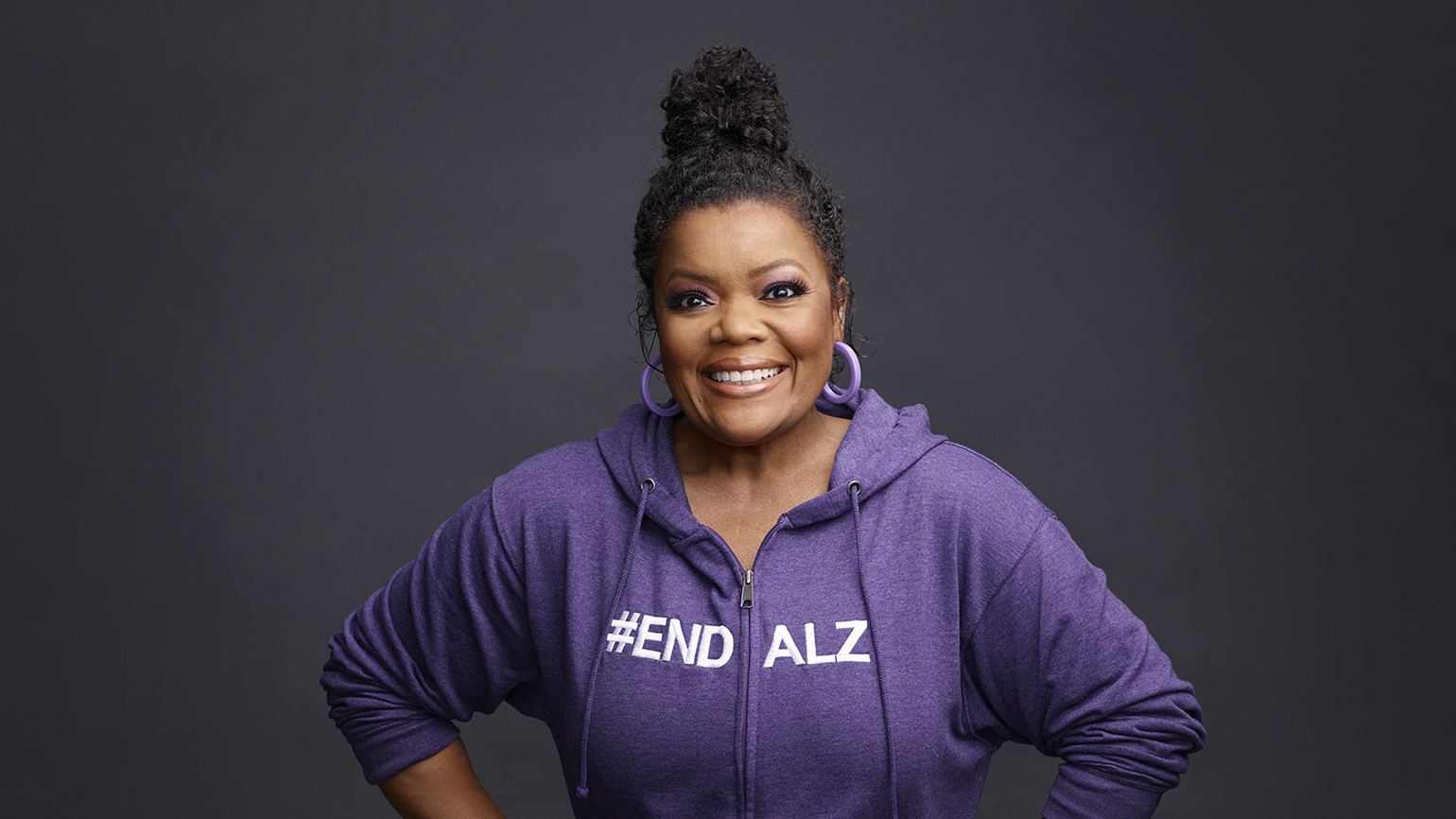
Yvette Nicole Brown on Caring for Her Father with Alzheimer’s

Q: Tell us about your dad.

A: My parents divorced when I was one. Even though we weren’t under the same roof, Dad and I were close. I’d go to his house every other weekend. When I got older, we’d go to lots of movies together. Maybe that’s how I got my love for acting. He cheered me on when I moved from East Cleveland, Ohio, to Los Angeles to pursue acting. We’d have long phone calls every Sunday. Between TV show rehearsals, I’d go home. It was on one of those visits, about nine years ago, that I first noticed a big memory decline.

The Lies That Bind In Article Ad
Yvette Nicole Brown with her father
      Yvette and her dad, closer than ever

Q: What happened?

A: I was at my aunt’s. Dad could drive to her house in his sleep. Yet he kept calling me. “Yvette, I’m on this street. I don’t know why.” And I’m like, “Dad, make a right on this street and then a left.…” He kept getting lost. I thought, This is weird. I sensed Dad knew something was wrong too.

Q: After that, what did you notice?

A: Because of my TV schedule, I couldn’t fly home to take him to doctors’ appointments. I couldn’t trust that he’d figure out how to get a doctor. My aunt and her kids would check on him. I saw Dad several months later. He’d always been tidy. When I walked in his home, stuff was stacked everywhere. He had let his hair and beard grow, almost like Father Time. He was kind of bent over. It just broke my heart. I had repeatedly asked him to come live with me, and he finally said yes. Whatever was going on with him was going to be going on with me. That was the start of my becoming his caregiver. I was on the sitcom Community at the time. It had just gotten canceled. So two days later, I was back in Ohio to bring my dad to L.A.

Q: How did you react to his diagnosis?

A: A neurologist diagnosed him with dementia. Dad is on medication. We’re fighting to keep him as close to what he used to be as possible. The diagnosis was hard because I think our family was in denial about what was happening even though his dad had Alzheimer’s, which is sometimes genetic.

Q: The unpredictability of this disease is a downer. How do you cope?

A: Alzheimer’s is an unwieldy disease. One day he’s up and alert, asking if the dogs need to be fed. And the next he’s in bed, almost catatonic. If I go out on an errand or I come back, the first thing I say is “Bye, Daddy” or “Hey, Daddy.” I always wait for a “Hey, Yvette.” One day, the “Hey, Yvette” will not come. I’m preparing myself. But every day that I get a “Hey, Yvette,” I celebrate it.

Q: How has your faith helped you?

A: I had a moment where I was like, This really sucks that this is happening to my dad. But I’ve never felt bad that I’m taking care of him. It’s such a gift from God that, at my dad’s toughest moment, I’m in a position to be there for him. The whole point of being a person of faith is to endure hardship with grace and decency. And to be able to provide that same level of decency and a sense of dignity to those who are going through it. That’s what my goal is with my dad—to give him an honorable life and a fun life and a dignified life as long as he’s with me. And I pray that it’s for 20 or 30 more years. I know that would make him 108, but that’s my dream.

Q: Do you and your dad pray together?

A: We have through the years. My dad was the first one to talk to me about God. He had relatives who were pastors. A lot of who I am as a person of faith comes from my father’s side of the family. Dad was always clear that hardship is not a sign of being out of line with God. God never promised that we wouldn’t have hard times. He promised that he would be with us through it all. Which to me is perfect. I can go through anything if God is with me.

Q: What gives your dad joy?

A: He loves music. His favorite is doo-wop. I’ve read that music unlocks a certain part of the mind for people with Alzheimer’s. So I play music all the time. I think my dad owns every biopic DVD of Ray Charles, James Brown and The Temptations. He’ll watch those. I’ve found that Alzheimer’s intensifies the person you are. My dad has always been a homebody, pensive, introverted. He never was one to cook a lot, so he never touches the stove. He never tries to leave the house. He just stays in his room, reads his books, watches TV. It’s intensified that pensive, calm, kind side of him. That has been a blessing.

Q: Are there other upsides to your dad’s condition?

A: My dad’s sweet spot in regards to memory is his teens to early twenties, which is when he met, dated and married my mother. My mom moved to be close to us. She’s my rock. She stays with my dad when I’m gone for long periods for work. There’s something about my mom being around that’s wonderful for Dad. If there’s ever a time where he comes alive, it’s when my mom is in the house. I think he sees her as that teenager he met. It’s so sweet to see him around her in his older age.

Q: The father/daughter relationship is a special one. You certainly have him on your heart.

A: My dad is so much more than his diagnosis. And I want to be respectful of that. He’s funny. He’s handsome. He’s smart. He’s principled. He’s an amazing father. He’s just the best of the best. And none of that has changed. His dementia has worsened in different ways, and we’ve worked through it in different ways, but he’s still all of those great things on any given day.

Q: How has the Alzheimer’s Association helped you?

A: When you have a loved one in this situation, you start searching for some answers—the Alzheimer’s Association is the gold standard. Anytime I’m at the grocery wearing my purple #ENDALZ shirt, I invariably have a great conversation about Alzheimer’s with someone. I’ll give somebody a hug in the produce section because they’re a caregiver and need someone who understands. It’s a very specific journey that we caregivers are on. It takes other people who have fought the fight and are fighting the fight to understand. I hope sharing my story helps others.

Yvette Nicole Brown is a celebrity champion for the Alzheimer’s Association.

For more inspiring stories, subscribe to Guideposts magazine.

Your Spiritual Eye Test

It’s impossible to overstate the importance of light. Scripture says, “…everything exposed by the light becomes visible, for it is light that makes everything visible” (Ephesians 5:13-14). When we see clouds in the sky, it’s because the sun is shining behind them. When we walk in shadow, it is because there’s light somewhere. We can’t always whisk away whatever’s obstructing the light, but we can choose to focus our attention on the light itself.

It’s all a matter of training our eyes…and our hearts. Jesus said, “I am the light of the world” (John 8:12); we are called to “live as children of light” (Ephesians 5:8). When our eyes are steadfastly fixed on Christ, we are supported as firmly as Peter was when he walked across the water. It’s when we focus on our problems instead of on Him that we begin to sink (Matthew 14:30).

Faithful Paws and Purrs In Article Ad

Ready to improve your ability to see the light? The first step is to recognize it doesn’t always shine in the way we expect. I’ve sometimes expected Christ’s light to be a bright neon sign blinking “This Way!” Other times I’ve thought the “lamp to my feet” (Psalm 119:105) ought to brighten up the darkness like stage lights. It doesn’t always work that way! We can overlook the light God has put in our path because we’re concentrating on something else.

Imagine trying to cross a pitch-black room that you know is strewn with obstacles. How much light would you need to get to the other side? The beam of a tiny penlight would be enough. Sometimes smaller is better; we focus on it more intently—and are thankful for its ability to guide us!

If you struggle to focus on the light when you’re faced with darkness, it’s good to get in the habit of asking yourself three simple questions:

1. How can I use this situation to draw closer to God?
In every difficulty, we can either move nearer to our Lord or pull away. Direct your heart “into God’s love and Christ’s perseverance” (2 Thessalonians 3:5), and you will begin to see past the clouds to the sun beyond.

2. How can I become a better person through this?
Every difficulty brings the possibility of personal growth. Look for the ways you may be strengthened, and appreciate them!

3. How else can I look at this?
Each cross we bear is part of the road to glory. Embrace your trials and use them to help you follow Christ. “If anyone would come after me, he must deny himself and take up his cross daily and follow me” (Luke 9:23).

Scripture tells us that our good deeds should not only glorify God—they should cause others to glorify Him as well! The gifts we have been given are like mirrors, to be used so that the light in us is reflected toward God. “Let your light shine before men, that they may see your good deeds and praise your Father in heaven” (Matthew 5:16).You and I can point people to God. We can illuminate their lives simply by keeping our own eyes keenly fixed on the Light of the World, and reflecting Him in all we do.

“The eye is the lamp of the body. If your eyes are good, your whole body will be full of light” (Matthew 6:22). Let’s all pray for 20/20 spiritual vision!

Your Road to Financial Wellness

Nice clothes, shiny Jaguar, platinum credit card. No one would have guessed I was in a hole. Deep!

I didn’t have cash to spare for a tank of gas. Instead, that day in 1988 I handed the filling station attendant my gas card and stood there at the pump asking–no, begging–God, I just need a few gallons. Please don’t let my card get turned down.

Journey With Jesus in article ad

I was so broke and debt-ridden I didn’t know if my wife, Sharon, and I could ever recover.

It was the go-go 1980s and, still in my twenties, I’d made a killing in real estate. I bought and sold property right and left. If one bank turned me down for a line of credit I just went to another. I was a millionaire. On paper.

In reality, I was up to my eyeballs in loans. It all came crashing down when my biggest lender got sold. The new bank wanted their money back. They gave me 90 days to come up with $1.2 million.

Over the next two years, Sharon and I lost everything but our home and the clothes on our backs. Even our furniture was hauled away.

So who am I to help you with your family finances? I’m the guy who hit bottom and lived to talk about it. It took years for me to fight my way back to financial peace, but I did it.

Along the way I discovered that my finances had less to do with money and more to do with values, self-esteem and, yes, even my relationship with God. Here are some of the most important things I learned.

1. Save for those rainy days.
When it rains, it pours. And it always rains sooner or later, no matter what our blessings. Seventy-five percent of Americans will go through a major negative life event in any given 10-year period.

Your job gets downsized or outsourced. Your basement floods. The transmission falls out of your car. You get sick. A spouse dies. Life happens, so be ready.

One survey I came across said that half of all Americans don’t have enough put away to cover even one month’s expenses. Those folks have virtually no buffer between them and life’s bumps. Remember, there will be rainy days. If you use a credit card as an umbrella, you’ll end up soaked all over again.

How do you get an emergency fund started? Save $1000 in cash, as fast as you can! Get intense! Do whatever it takes. Cut expenses, work extra shifts, have a garage sale, sell so much stuff the kids think they’re next. Just do it!

When you’ve got the money, earmark it for emergencies only. This is not a vacation fund or Christmas-gift savings. It’s the beginning of your financial safety net. Once you’re out of debt, you’ll need to build up six months’ living expenses, but start with that thousand dollars.

By the way, I’ve noticed that people in money messes try to get out of debt before anything else. Then they face an emergency. They stop paying their debt and instead add to it. As a result, they feel guilty, and their downward spiral continues.

You can break this cycle by having a small cushion in place before paying your creditors.

I learned the hard way the importance of having ready cash. That day at the gas station my credit card didn’t get rejected. But I vowed not to find myself in that situation again.

I built my own emergency fund. I sold my Jag. A friend of mine gave me a “new” car. It was an ancient Cadillac with about 400,000 miles on it. It wasn’t a pretty-looking ride, but it got me where I needed to go.

Today I am certain that Sharon and I dug ourselves out of our financial hole in part because we drove beat-up old cars, wore consignment-sale clothes, stuck to a budget and cut up the credit cards. Humility is a powerful force for personal change, especially financial humility.

2. Get cured of “stuffitis.”
We all suffer from it. “Stuffitis”–the desire for more stuff. The newest, the best, the biggest. It’s like a disease, and it can be fatal to your financial well-being. Credit cards are the enabler, making it easy for people to buy stuff they don’t need and can’t afford. When you pay cash, it hurts.

There is only one way to get over it: Stop spending. Use the envelope system. Split your paycheck into categories-entertainment, clothing, gas, groceries and so on-and set out an empty envelope for each one. Fill each envelope with cash to cover the amount you’ve allotted.

When you go shopping, take that envelope with you. Spend all you want, but when the envelope is empty, stop spending! The system is as simple as that, and it works. Sharon and I have been using it for more than 15 years.

To treat severe, chronic stuffitis you need a “plasectomy”–amputate the credit cards. Get the family together to cut the cards into tiny pieces. I can hear you already: “Dave, how are we supposed to rent a car? Check into a hotel? Buy things on the internet?”

Get a debit card. It works like a credit card, but you can only “charge” something that you can pay for immediately out of your bank account, so no carry-over balances, the interest on which does more to wreck family budgets–and dreams–than anything I know.

If you don’t have the cash, your debit card won’t work. I can do everything I can with a debit card that I can do with a credit card … except go broke!

3. Be delivered from debt.
The Book of Proverbs says, “The borrower is slave to the lender.” It also says something like, “If you have any debt, deliver yourself like the gazelle from the hand of the hunter.” Translation: The way out of debt is to run for your life!

God’s loving plan is for you to be free, not to be chained down by creditors and huge interest payments. Get out of bondage; pay off the debt! If you own something you can’t pay for in 18 to 20 months, sell it.

And work extra hours. My grandmother used to say, “There is a great place to go when you’re broke: to work!”

Use the Debt Snowball. List all of your debts in order, from the smallest to the largest. All your debts, even loans from Mom and Dad, whether there’s interest on them or not. Pay the minimum amount on all your debts, except for the smallest.

Scrounge together every extra dollar you can and put it toward paying off that smallest debt. Once it’s paid off, take the payment amount and any other “found” money and put it towards the next smallest debt.

When debt two is gone, pay the minimum on debt three plus what you had been paying on one and two. If you do this, you’ll be debt-free (except for your house) sooner than you would imagine. Then you can get back to building up your emergency fund.

4. Make money work for you.
Once you’ve taken care of your past–that mountain of debt–start taking care of your future. Put money away for retirement. Keep in mind, when I say “retirement” I mean “security.”

Security is the ability to make choices: Write a book; spend time with the grandkids; travel; or just swing in a hammock.

Yes, God demanded that Adam and his descendants work for a living, but he also wants us to be content in our old age. You want to reach the point where your money works harder than you do.

How do you do that? Invest 15 percent of your gross income. The best place is a good mutual fund (do some research to learn what these funds are about and how to invest in one).

That’s where I put my money. Mutual funds with long track records are great because they give you diversification and professional management.

You have to be serious about investing a set amount every month in the fund of your choice. And leaving it alone to collect interest. Start small and watch it grow. Systematic, consistent investing over time is the tortoise that beats the hare.

5. Share the wealth.
Back in my twenties I was what I like to call “enthusiastically stupid.” No one is born financially smart. And the majority of people in this country are never taught how to manage money wisely. If you are over the age of 12, you’ve made money mistakes. However, that’s nothing to be ashamed of.

Once you learn, teach your children, even your grandchildren. Start them young, but not with an allowance. Instead, teach them the value of work by giving them a “commission” for each task or chore completed. That way they learn that finishing a job can result in a financial reward.

Then teach them how to spend wisely. Tell them they can get that fancy video-game system if they stop buying candy every day and start saving. Have them set a goal for a big purchase. Divide the total cost by the amount that needs to be saved each week or month.

The satisfaction of buying something on their own, without borrowing money, is an invaluable lesson in building self-esteem.

The best thing you can do, and teach your kids, is to give. I’ve met thousands of millionaires, and what the healthy ones have in common is a love of giving. Building wealth enables you to give more financially.

A lot of times you won’t be able to help someone if you don’t have enough money. Scripture says that we are expected to tithe and to help the poor. Take the Good Samaritan. He reached into his own pocket to pay an innkeeper to take care of an injured stranger.

Would we ever have heard of the Good Samaritan if he hadn’t had those “extra” shekels clinking around in his cloak? Money gives power to good intentions.

It took Sharon and me about seven years to climb out of our financial pit. It wasn’t easy. But it was necessary, and the greatest blessing we’ve received–even greater than the blessing of security–is the chance to help people less fortunate than ourselves.

That is the one debt I will never retire: my gratitude to a generous God.


Download your FREE ebook, Paths to Happiness: 7 Real Life Stories of Personal Growth, Self-Improvement and Positive Change


You Are Wonderfully Made!

God made each one of us special. We are made in His image. Wow—what an awesome thought! So God created man in his own image, in the image of God he created him; male and female he created them. (Genesis 1:27, ESV)

But let’s say you feel self-concious about somethingyou walk with a limp or you struggle with your speech. You’re aware of standing apart from the crowd.

extraordinary women of the bible

Remember you are fearfully and wonderfully made! I praise you, for I am fearfully and wonderfully made. Wonderful are your works; my soul knows it very well. (Psalm 139:14, ESV)

The Lord does not see us as man see us. For the LORD sees not as man sees: man looks on the outward appearance, but the LORD looks on the heart. (1 Samuel 16:7, ESV)

Your beauty should not come from outward adornment, such as elaborate hairstyles and the wearing of gold jewelry or fine clothes. Rather, it should be that of your inner self, the unfading beauty of a gentle and quiet spirit, which is of great worth in God’s sight. (1 Peter 3:3, NIV)

Don’t focus on what you may perceive as negative. Focus on the positive!


Location: Wild Animal Safari, Pine Mountain, Georgia

Years of Chronic Pain Led Her to Trust in God’s Grace

The two chaplains who’d come to my hospital room meant well. There was no mistaking the concern in their eyes.

“God loves you,” one of the women said. “He’s always there for you.”

Light for Life NASB Study Bible in Article

I sat up in my bed, grimacing. It felt as if the left side of my face were exploding. For nearly eight years, I’d suffered from a rare neurological disorder. Medications I took three times a day helped mask the pain. There was little hope of a cure. But that wasn’t the reason for this latest hospitalization. Six screws and a titanium plate had been placed in my neck to stabilize a deteriorating spine—unrelated to my neurological disorder. I was so sick of hurting and feeling miserable. And now these two women of the cloth were reminding me about God’s goodness.

“Is there anything we can do for you?” the other chaplain asked.

“Tell me why God let this happen to me,” I said, my voice rising. “What does he want from me? Why won’t he help?”

The chaplains exchanged glances. For what seemed like the longest time, they said nothing. Finally one of them said, “Why don’t you ask God yourself?”

It was a sunny morning in August 2007 when, out of the blue, the left side of my face began burning, the beginning of a torturous pain condition called trigeminal neuralgia, or TN. It’s caused by the trigeminal nerve, one of 12 cranial nerves, misfiring, sending painful sensations to the head and face. “Some people say it’s the worst pain a human can experience,” my neurologist said.

With zero warning, I’d feel something akin to a bolt of lightning hitting me in the eye or ear or tongue. Other times it felt as if a bag of bricks were slamming against the side of my head. My lower lip was always on fire. If I was standing, my knees sometimes buckled because of the pain. Varied and unpredictable, it came in bursts every few minutes but sometimes not for hours.

I was in my fifties. I had a successful career as a newspaper and magazine journalist but had to give it up. My husband, Michael, commuted an hour each way to his job in finance and didn’t return home until late. Our two sons were away at college. I was alone. I couldn’t even drive.

I prayed and prayed. Angry, insistent prayers for God to heal me. I wasn’t looking for a conversation. Wasn’t listening for that still, small voice. I wanted action. Couldn’t God at least help me tolerate my condition? I spent most days on the couch, curled in a ball, the television on, more to fill the silence than to watch. I didn’t have the focus for that.

“God is going to heal you,” Michael said to me. His men’s group at church were praying for me at every meeting. Friends called and sent cards. Stay positive! Don’t lose hope! Everyone admired my faith, not knowing how much it was waning.

It took months before my neurologist found a mix of medications that lessened the pain, which was still awful. Would I ever get my life back?

Miss Dee, an older member of our church, appointed herself my spiritual adviser. She called every morning with Scriptures for me to repeat at least three times a day. She called again every evening and asked, “Did you pray the Scriptures today, Leah? How many times?”

Miss Dee sent me cards and letters. She sent me prayer journals and CDs with calming music and Scriptures narrated by soothing voices. I played the CDs but left the journals untouched.

“Good news,” Miss Dee said one day. “I found a gifted faith healer. He can come to your house tonight. He’ll pray over you, and I believe you will be healed! He just asks for a small donation.”

I called Michael. He’d want to know about this. “We don’t know who this person is,” he said. “Miss Dee is a nice church lady, but she’s not a spiritual leader. Tell her thanks but no thanks.”

I had to agree. If the prayers of his men’s group and those of my family and friends couldn’t get God to heal me, I couldn’t see how paying a stranger to try to get a prayer through would do any good. After I declined the offer, Miss Dee stopped calling.

At our church’s regular prayer meetings, I walked to the front to have the elders lay hands on me. I felt comforted in the moment, but the pain soon returned, like clouds blotting out the sun.

Two years after my diagnosis, my neurologist referred me to a renowned neurosurgeon. He recommended a cranial rhizotomy, a procedure during which he would thread an electrode through my face, then through a tiny hole in my skull and destroy the nerve fibers causing the pain. The operation would take less than two hours. The procedure was considered minimally invasive, if you can believe that.

“After the operation, your TN pain will be gone,” the neurosurgeon had said.

All went well until I woke up in the recovery room. “Face on fire! Face on fire!” I screamed, fanning my face with my hands. My face felt as if it were cracking into a million pieces. A nurse rushed over and gave me a sedative. When I woke again, my pain was worse, beyond excruciating.

I was hooked up to a machine that allowed me to dose myself with the strongest painkiller available. It left me doped up, but I felt relief. The neurosurgeon explained the procedure had been complicated by a structural anomaly in my skull. “It’s possible that over time the trigeminal pain will resolve on its own,” he said. Then he asked, “Can I pray for you?”

It was a question no doctor had ever asked me. I stared at him, then nodded. “God, we come asking for you in your grace and mercy to ease her suffering….”

Then he said, “Mrs. Latimer, I believe you will have the victory the Scriptures promise to those who love God.” Victory? When I couldn’t go more than an hour without my neuropathic painkillers?

A few days later, I was discharged. Over the next weeks, the pain induced by the cranial surgery receded to the level it had been before the procedure. I was no worse off but no better, either. I would go on living with TN for another eight years. Well, I wouldn’t call it living. I was really only existing. Understandably, fewer and fewer friends were checking on me.

Weeks went by without anyone calling to pray with me. My sisters and mother were always encouraging me, taking me on short outings, but I was emotionally exhausted. Tired of having pity parties. Tired of being angry at God. Tired of the whole thing. Why won’t he help me?

With newer meds, the frequency and severity of the pain lessened to an eight out of ten on the pain scale. I still spent most days on the couch in front of the TV, not bothering to get dressed for the day. I wasn’t going anywhere.

Then came the neck surgery and the chaplains who talked of God’s goodness.

Back at home again, fitted with a bulky cervical collar, I returned to the couch. Switched on the television and began going through the channels. Talking heads yammering on about politics. A game show. Some houseflippers thing. A religious channel.

There on TV was a woman in a wheelchair. “In addition to her quadriplegia,” the interviewer said, “she suffers from chronic pain.” I tossed a slipper at the screen. “How much does one person have to take, Lord?” I said. I was about to switch the channel, but something stopped me. I kept listening. The woman had been in a wheelchair for 40 years. And she had lived an amazingly full life! She had married and traveled the world as an inspirational speaker. “You have to go on living,” she said. “Trust that God’s grace is sufficient.”

Why don’t you ask God yourself?

The chaplains’ words came back to me. And for the first time, I realized that God had been answering my pleas. He’d surrounded me with caring friends and church members and a large, loving extended family. A husband who provided for me, who was patient and supportive. Sons who made me happy and proud. At every turn, God had showered me with his grace by putting people in place to help me physically and spiritually. Even a neurosurgeon who’d prayed for me! Miss Dee, bless her. And the chaplains.

The next morning, instead of flopping onto the couch in my pajamas, I got dressed. I took out my audio Bible and listened to the verses about the gift of God’s grace. I thanked God and asked him to help me focus less on myself and more on serving others. In the weeks that followed, I signed up for women’s discipleship training at my church and joined a group that prays for the sick.

It all made sense. God had used my long struggle with TN pain to let me deeply experience his grace. He wanted me to help others by sharing my story. I finally had the answers to all of the questions I’d asked the hospital chaplains.

In the summer of 2016, I slowly began reducing my medications to see if the trigeminal neuralgia had resolved on its own. The pain was gone! Just as my neurosurgeon had said was possible, years before. I walked around lip-synching gospel singer Kirk Franklin: “I know that I can make it. I know that I can stand. No matter what comes my way, Jesus, my life is in your hands.”

If my TN returns—and it could—I know how I’ll handle it. I’ll trust that God’s grace, doled out in caring and comforting ways, will be enough to get me through it.

For more inspiring stories, subscribe to Guideposts magazine.

Wounded Soldiers Learn to Rock On

I walked into the hospital with one thought continually racing through my mind: What would I say to them?

I’d gotten a call just a few weeks before from a representative for the USO (United Service Organizations). “We’ve heard about your inspiring story,” the man said. “We’d like you to come to Walter Reed Hospital and visit with some of the soldiers who’ve been injured in combat. Maybe you could help them get through it.”

You Got This In Article Ad

My “inspiring story” hadn’t felt so inspiring back in 1984 when I’d made headlines: DEF LEPPARD DRUMMER LOSES ARM IN AUTOMOBILE CRASH.

I hadn’t lost my arm in any act of bravery. I’d been driving too fast on a winding road, thinking—like most 21-year-olds—that I was invincible. I’d eventually learned to drum again with only one arm, and our band had gone on to even greater success than before the accident. 

And while a lot of fans and critics had thought my continuing to “rock on” in spite of missing an arm had been cool, I’d never met a war hero before. They were so out of my league—they’d risked their lives for their country. Maybe these guys who’d been injured in combat would resent my coming in and telling them everything would be OK. After all, who did I think I was?

My first few minutes at the hospital weren’t as tough as I’d expected. The soldiers seemed to get a kick out of meeting a rock star. I signed autographs and took pictures. Some of the guys in hospital beds told me about their favorite Def Leppard songs, mimed beating a drum while they imitated the sound of crashing cymbals. 

“I can’t wait to tell my buddies I met you.” one said; “Wait until I show this picture to my wife!” another shouted, shaking my hand. Then the hospital administrator said, “We’d like you to meet Harris*. He lost an arm in combat.” I took a deep breath, and my wife Lauren and I followed him to Harris’s room. 

Harris’s injury wasn’t the first thing I noticed about him. It was that big, black cloud that hung over him that got my attention. I looked at Lauren. She didn’t say a word but her eyes urged me forward. 

“Hi, I’m Rick Allen,” I said to Harris. He nodded, never looking up. Now what?

I sat down by his bed. A few minutes went by in complete silence. It was so awkward, it felt like hours. Eventually, Harris looked at me—and I realized that words weren’t necessary. There was a knowing, a camaraderie. A tear ran down Harris’s cheek.  “I know, man,” I said. “I know.” 

Harris and I talked for a long time about the loss, the fear, the helplessness. I told him how humiliated I’d felt when I first lost my arm, how my older brother Rob had become my babysitter—feeding me, bathing me, brushing my teeth, everything—until I could do simple everyday tasks. 

“You’ll learn new ways to do things,” I promised Harris. “And I’m going to help you.” 

I’d made a promise to Harris, and I intended to keep it. Only problem was, I didn’t know how. Lauren and I talked about it that night. “What brought you back was the drumming,” she reminded me. 

It was true. I had lain there helpless until I’d found myself drumming out rhythms with my feet. Rob had brought in a stereo, and I’d pounded out rhythms on a piece of foam at the foot of the hospital bed. Then an engineer friend designed a special drum kit for me that allowed me to play with one arm and my legs. Learning to drum that way had required intense focus and concentration and had taken me away from focusing on what I couldn’t do anymore. Maybe Harris and the other veterans could do the same thing.

The next day, I called the USO. They directed me to something called the Wounded Warrior Project, a group dedicated to helping injured veterans heal both physically and mentally.  Soon, Lauren and I started leading drum circles for the Project. 

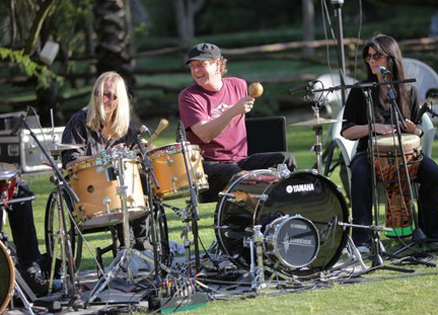
Drum circles are a rhythm-based group therapy using meditation and guided imagery. They’re not like what we rockers call “jamming.” In a drum circle, we introduce rhythms with the intention of releasing pain. With each rhythm, the vets are guided in how to breathe and how to experience their bodies in a certain way. Then we have both silent and sharing times. Therapists are on hand to help the soldiers talk through their frustrations. You’d be surprised how many of them are finally able to open up after experiencing the drum circles. It’s like they’re finally able to grab on to something that pulls them out of their isolation and grief. 

From my own experience, I’ve learned that the human spirit needs only a spark to be reignited after a loss. Helping to find that spark for these soldiers has been one of the greatest honors of my life.

Harris participated in a couple of our drum circles and introduced me to other Wounded Warriors that have since come to The Raven Drum Circles to experience healing. We’d talk about how we’d swear the elbow itched on our missing arm (the docs call that “phantom limb syndrome”). We’d even make jokes: With my left arm and Harris’s right arm missing, we’d stand side-by-side and tell the group we were bookends. That always got a laugh. Over time, the black cloud over his head became a little grayer until it eventually faded away.

I ran into Harris not too long ago at a get-together in Los Angeles. You wouldn’t recognize him from the guy he was in the hospital that day. He was the picture of health and about to participate in a 130 mile bike ride down the coast to San Diego. The only thing that hadn’t changed was that his missing arm still isn’t the first thing you’d notice about him. His broad smile and enthusiasm for life stand out far more. 

The USO had asked me to inspire the soldiers, but working with the Wounded Warrior Project inspired me beyond anything I could ever have imagined. It’s not some photo opp for me, some new ROCK STAR VISITS VETERANS headline. Instead, it’s this fantastic two-way street. I’ve learned so much about what the men and women of the armed forces do. I didn’t realize before that some of the amputees actually go back to active duty. That, to me, is off the chart! How can anyone not admire that level of dedication? The Wounded Warrior Project has given me a chance to do something to help the people who protect all of us, and I’ve gotten to meet all these heroes I wouldn’t otherwise have met.

And for me, meeting a soldier is like…well, I guess you might say it’s like meeting a rock star.

Download your FREE ebook, True Inspirational Stories: 9 Real Life Stories of Hope & Faith

Would Her Husband’s New Job Cause Him to Relapse?

Morning light filled the house. I wandered distractedly to the kitchen for more coffee. It was Sunday. My husband, Dave, had already left for church, taking the kids with him. For once, I only had to get myself out the door.

I took my time with the coffee. I read my book. I lingered in the shower. I brushed my teeth extra carefully. My reflection in the bathroom mirror stared back at me: You’re stalling.

Sweet Carolina Mysteries In Article Ad

I hated to admit it, but I didn’t want to go to church. Not because I didn’t love our congregation of about 100 in the heart of town. Everyone there was compassionate, generous and kind.

I didn’t want to go this morning because, three months earlier, Dave had become the associate pastor there. We’d been attending Restore Church for a long time before that, and Dave was an elder when the pastor, Jim Walter, asked him to come on staff. It was a dream position for Dave. You’d think I’d want to be there to support him. Certainly it would look terrible if the pastor’s wife didn’t show up.

The problem was, this wasn’t Dave’s first job in the clergy. Six years earlier, he’d been fired from his last ministry position—director at a nearby Christian camp—when camp leaders discovered he’d been using the company credit card to buy prescription pain pills. By that point, Dave had been addicted to opioids for 15 years.

Losing that job was Dave’s wake-up call. He confessed everything, quit using drugs and committed himself to recovery. He’d been sober ever since.

Gradually we rebuilt our life together. Dave found work outside the church. I stopped being a stay-at-home mom (my dream job) and found outside work. We went from being in debt and relying on food stamps to owning a house and saving money.

The job offer at Restore was an incredible act of grace. Jim had been our pastor when everything fell apart. He’d known Dave at his worst. In the years since then, he’d given Dave opportunities to lead recovery groups at Restore and invited him to become an elder. He saw the good in Dave, and the two of them shared a vision of the church as a beacon of hope for marginalized people.

I saw the good in Dave too. But was he ready for an opportunity like this? Was I?

I remembered the day Dave told me about the job offer. He’d come home from having coffee with Jim, bursting with excitement. Dave lives for ministry and for six years had thought that part of his life was over. This was a second chance to do what he loved most.

I couldn’t help feeling happy for my husband. But there was dread too. What if the stress of ministry had been a major factor in Dave’s addiction? What if he relapsed? His job at a debt counseling agency had been just a regular job. He might have to take a leave of absence to deal with a drug problem, but he probably wouldn’t get fired. Becoming a pastor again meant a whole different level of scrutiny.

In the past six years, I’d worked to attain a sense of security that was not dependent on Dave. The writing job at a Christian nonprofit marketing agency I’d taken to dig us out of debt had become a source of personal pride and professional satisfaction. The job was my shield against the panic I’d felt when we were broke.

I could keep my job if Dave started working at Restore. But not my life as a regular person. I’d be a pastor’s wife again. Church would become the dominant factor in our family’s life. Dave would bring the job home with him as all pastors do. A spotlight would be on us. I worried that the stress of ministery would become too much.

Both Dave and I had worked through 12-step programs as part of his recovery. The main lesson for spouses is: You can’t control the addiction, so it’s best to detach with love. I’d buffered myself against the worst effects of Dave’s illness by finding a job and building a financial cushion. So why was I consumed by fear? Every day, I searched Dave’s face for signs of stress when he came home from pastoring. My prayers were dominated by one request: Please don’t let Dave relapse.

At last I got dressed and drove to church. I was so distracted, I missed my freeway exit. The opening praise songs were over by the time I arrived, and there was no way to slip in unnoticed. “You’re just in time,” the usher said with a smile. It sure didn’t feel that way.

Months went by. My anxiety got worse, not better. Dave thrived at work, but I kept waiting for the bottom to drop out. I couldn’t stop dwelling on how our lives had changed.

I was more guarded at church, reluctant to share family problems for fear of what people might think. I stopped writing a blog I’d begun about our family’s recovery journey. The public vulnerability felt too risky.

Why couldn’t I snap out of this? I confided in my friend Kit, who is older and wiser. “Have you ever tried the Ignatian Exercises?” she asked.

She meant the Spiritual Exercises of Saint Ignatius, a program of prayer and contemplation developed by Saint Ignatius of Loyola. The program was designed to deepen a person’s relationship with Jesus through close spiritual self-examination and prayerful listening for God’s direction.

“That sounds like exactly what I need,” I said. Kit gave me the book she used in church. The program felt familiar, sort of like the 12 steps. I dove in and, weeks later, came to a section on acknowledging fears. The exercise involved listing all my fears, going back as far as I could remember and being as specific as possible.

My list started with pretty standard childhood stuff: fear of the dark, fear of drowning, fear of getting into trouble.

Then the fears turned more grownup: fear of being wrong, fear of not having enough, fear of being deceived, fear of my kids getting hurt, fear of losing my job, fear of being overlooked. Once I started, I couldn’t stop. It turned out, there was a whole world of fear inside me. All of it poured out.

I came to the last fears: Dave relapsing. Our family broke and adrift. Our lives devastated again.

I stared at the list. So long. So daunting. I noticed a pattern. Everything I feared was something I couldn’t control. Some of those things were comparatively small, such as my kids learning to drive. Others felt impossibly huge. Like Dave’s sobriety.

There was no way around it. To get over my fears, I had to give up control.

I looked back over the years since Dave had entered recovery. Working the 12 steps, I had wrestled with Step Three: “We made a decision to turn our will and our lives over to the care of God as we understood him.” I thought I’d done that.

In fact, I had been working to achieve more control in my life. Work gave me financial control. So did a savings account. I knew Dave felt burned out by his job at the debt counseling agency. But the work was steady and more predictable than ministry.

After years of chaos, I clung to security and control. But was that control an illusion?

I remembered a favorite Bible verse: “Perfect love casts out fear.” The opposite of fear wasn’t control. It was trusting a God who loves so perfectly, we have difficulty comprehending that love.

I wrote out a prayer: “Cast out my fears, God. Every one of them. Shine your light into the dark corners of my mind and heart. Encourage me. I give control to you.”

My fears did not vanish right away. But that prayer was a turning point. I asked friends to pray for me. I sought out a therapist. She was not a faith-based counselor, but when I told her I didn’t want to go to church, she encouraged me to attend anyway.

“Community will heal you,” she said.

I looked at our church with new eyes. The congregation had supported us through the dark days of Dave’s addiction. They knew our faults. Would they really abandon us at the first sign of trouble? Probably not.

Last of all, I began to let go of my fear that Dave would relapse. Loved ones of recovering addicts never stop worrying completely. But there’s worry— and then there’s fear that controls you. I (mostly) stopped searching Dave’s face for signs of stress. I celebrated his successes. I allowed myself to trust that God would be with us, no matter what happened.

Another one of my favorite quotes comes from C.S. Lewis’s book The Four Loves: “Love anything, and your heart will…be wrung and possibly be broken.”

Risk shadows every relationship. But the alternative is not to love at all. And of course, God takes just as big a risk in loving us.

It’s been six years since Dave started pastoring at Restore Church. I take our life together—and Dave’s sobriety— one day at a time. Like anyone in recovery, I walk a path of faith, step by trustful step.

For more inspiring stories, subscribe to Guideposts magazine.

Working with Passion Every Day

When we work with passion, it makes a huge difference. The dictionary defines passion as “strong or powerful emotion; boundless enthusiasm.” Having enthusiasm when taking on responsibilities is what separates us from others in our fields. Passion enhances the skills we bring to our workplace, ministry and community. It fuels our purpose in life.

The Italian Renaissance artist Michelangelo had a passion for sculpting. Before his 30th birthday he had completed two of his masterpieces: the Pietà and the David.

Faithful Paws and Purrs In Article Ad

In his early 30s he was summoned by Pope Julius II to sculpt a magnificent papal tomb but was then asked to work on a painting project. At first, Michelangelo wanted to refuse, having no desire to paint a dozen figures in a small chapel in the Vatican. When the Pope pressed him, he reluctantly agreed to do the work.

Once he accepted the assignment, Michelangelo was fully committed. He expanded the project from the depiction of the Twelve Apostles to more than 400 figures and nine scenes from the Book of Genesis.

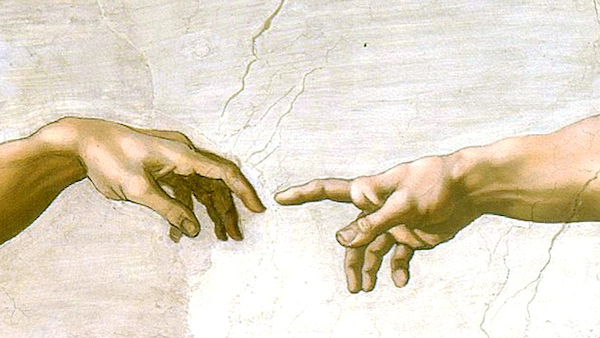
For four grueling years the artist laid on his back on a scaffolding, painting the ceiling of the Sistine Chapel. He paid a great price. His friends didn’t even recognize him from all the physical effects of the grueling work. When asked why he was working so diligently on a dark corner of the Sistine Chapel that no one would ever see, Michelangelo replied, “God will see.”

Everyone is called to do their part and use their gifts to make our world a better place. We need bridge builders, advocates for justice, messengers of love, artists and much more. It takes a multitude of people using their talents for the betterment of humanity.

And when we do our part in the world with passion, even when others may not recognize or see it, we know that God will see it. What are you passionate about? How are you doing your part? Please share with us.

Lord, help me to do my part in building a better world with great passion.

Words to Grow On

Let’s go back 70 years or so and I’ll show you what it was like being a “girl reporter.”

My father, a famous criminal lawyer, is far ahead of his time in believing girls must be able to earn a living. We are sitting in his study looking into my future and he asks me about my all too vivid imagination. “Is this the mark of a writer?”

A writer! Oh, yes, I say to myself.

GP In Article Desktop

“You know,” he continues, “Dickens started out as a reporter, and Kipling went to India for a newspaper.”

I interrupt sadly, “Oh, Papa, girls can’t work on newspapers.”

“A few do,” he says. “More will. Women are a gold mine of talent.”

His friend, publisher William Randolph Hearst, agrees, and there I am, barely 18, in the all-male city room of the Los Angeles Herald. Where city editor J. B. T. Campbell regards a newspaperwoman as a contradiction in terms.

The pace he sets for me—chasing fire engines, riding ambulances, viewing corpses, covering murders—makes me long for Grandma’s kitchen. The newspapermen are betting on how long I’ll last.

Nobody’s on my team and I’m scared all the time—of deadlines, of having to write so fast. I want to be a reporter, I believe I can grow into a writer, I pray to God that I can be both—but Campbell has almost won.

Then, I interview the sister of the Wright brothers who have invented the airplane. And Katherine tells of the heartbreaking years when they were ridiculed in their hometown of Dayton, Ohio.

Simple bicycle mechanics, these “boys” over 30 spent their days messing with kites, gliders, an engine all smoke and noise. College professors had proved positively that men would never fly, yet Wilbur and Orville kept revising and retesting this “flying machine” that couldn’t work. Their sister says to me simply, “And then, one day, it flew.”

Those words went back to the city room with me. They kept me from quitting then—or ever. Eventually came my first scoop, my first by-line, my first short story, my first book.

In each pioneer endeavor I met challenges. We all do, whether aiming at the moon, or building a better mousetrap, or attempting a difficult recipe or dress pattern. I’ve had disappointments. Stories rejected, souffles that fell flat.

But with each failure I’ve been able to chuckle a little, knowing that eventually, with patience and prayer, I could look back and say, “And then, one day, it flew!”

A Burden to Share

I grabbed the railing and hoisted myself up three steps to the community hall. Gasping for breath, I lumbered into a room where a dozen people sat in folding chairs. One was empty, but I figured it would collapse under my weight.

“Have a seat here,” said a large woman on the sofa along the wall. People moved over to make room for me. Plenty of room.

The Lies That Bind In Article Ad

I was 45 years old, five foot six—and weighed 396 pounds. The only clothes that fit me were size 60 blouses and voluminous elastic-waist pants. My shoes all had Velcro straps; I couldn’t reach my feet to tie laces.

I had recently bought a new full-size car because it was the only one whose steering wheel I could fit behind. I was miserable. Yet I couldn’t admit it to anyone. I couldn’t even talk about it.

The meeting started right on time. People introduced themselves and told why they were there, how many pounds they’d lost and what they’d eaten that week. Then it was my turn. I forced out the words.

“I’m Sylvia,” I said. “This is my first time at a support group. I don’t really have anything else to say.”

My name wasn’t Sylvia, but I was too ashamed to let anyone know who I really was. Besides, I was used to keeping secrets. I was always telling people that I was trying to lose weight.

“It’s not my fault that nothing works,” I declared. What I wouldn’t admit was that my life was devoted to eating on the sly.

As far back as I can remember I loved to sneak. Mom made big batches of chocolate-chip cookies for our family of six and stored them in bags in the freezer. I’d take a bunch and hide them in my room.

Whatever was bothering me, however happy or sad or bored I felt, gorging myself always helped, as if I could fill up a sense of emptiness inside. Even when I was a child my eating was dishonest.

Later in college, studying for exams, I’d devour my way through rolls of raw cookie dough. Or polish off a bag of chips and then start in on the candy bars I’d stashed in the back of my desk drawer. I hid food like an alcoholic hides booze.

Marriage didn’t help me cope any better with my problem. When I went through a painful divorce, my weight crept up … 200, 250, 300 pounds. Only food could fill the void.

I taught middle-school English and social studies, and I hated overhearing kids mutter “fatso” and “whale” behind my back. I slipped deeper into depression, which was worsened by failed diets and bouts of overeating. Finally, I started counseling sessions with a therapist in the spring of 1999.

“Do you watch what you eat?” my counselor asked in our first session. “Yes,” I said. Actually, I was watching it go into my mouth. I would stop in a restaurant for a meal, then drive to the other side of town and have another meal—then head home and have a third.

That way, I convinced myself, nobody would know just how much food I was really consuming. “You need to talk to some people who struggle with overeating,” my counselor suggested. “There’s a group that meets every Saturday downtown.”

“I’m not a joiner,” I said. “I can change by myself.”

But the truth was, I refused to imagine my life any other way. I left the counselor and headed for a drive-thru where I picked up several value meals plus extra orders of fries. “For my coworkers,” I lied to the boy who handed me the three bulging bags.

The next week my counselor laid it on the line. “I’m not going to see you anymore,” she said, “unless you attend a group. And you’ve got to go to at least twelve meetings.”

That’s why I was sitting on the sofa at the support group, feeling more uncomfortable by the minute. “I’ve had some bad moments this week,” the woman next to me announced, “but with God’s help I managed to keep track of my calories and eat three sensible meals a day.”

God’s help? I was sure God couldn’t help me. “I was feeling down,” a man said, “but I realized overeating wouldn’t change anything, not really. So I called a friend to go to a movie instead.” But food did change things for me. It was my friend.

I clapped along with everyone else, but deep down inside I had a terrible feeling. Not me. These other people might be helped by all this “sharing.” Maybe they were even losing weight. But me? I was a hopeless case.

As soon as people realized my secret, they would turn away. Even these folks. Especially these folks, who certainly didn’t need a loser like me dragging them down. And all this talk of God. What would God want with someone like me?

I left the meeting and drove straight to the grocery store. On the way home I wedged a pint of Ben & Jerry’s between my knees so I could eat as I drove.

“I went to the meeting,” I told my counselor.

“Did you talk?” she asked.

“Sure,” I said. I wasn’t exactly lying, but I wasn’t being honest either. All I’d promised was to attend 12 meetings. The weeks went by, and the most I ever said to the group on Saturday morning was “My name is Sylvia” and “I don’t feel like talking today.”

The eleventh Saturday approached. I was nearly home free. That Friday in school I had lunch with the other teachers and made a production of having only half a turkey hero.

“I’ll eat the rest for lunch tomorrow,” I announced, thrusting it back in its brown bag. Easier to finish it off between classes in my room when no one was looking.

I headed down the hall for class, moving slowly through the student throng. “Moooo …” came the taunt of some boys behind me. The sound seemed to echo in the hall. I pretended I hadn’t heard.

An image stormed through my mind of me sharing this ugly humiliation with my support group. I blotted it out. I could never talk about something like this, never bare my soul. I thought of the sandwich in my bag and how soon I could get to it.

Saturday morning the leader said, “Today we’ll talk about hope.” Hope? Vaguely I heard the others talking. Round the circle they went. Then it was my turn. Waves of despair I’d been suppressing for years surged up and nearly took my breath away. In a flash it all came pouring out.

“I don’t have any hope,” I began. “I can’t even remember what hope feels like.” I blinked frantically to keep back tears. Go on, a voice inside me said. Go on. Somehow I knew I needed to do this, to accept, acknowledge and feel the pain.

I grabbed a tissue and continued. “I have no hope of ever being a normal size again. I have no hope at all. …” I was shaking. I started to sob so hard I couldn’t say another word. I motioned for the next person to go ahead and take her turn.

The meeting ended. I dodged the hugs and headed to my car. I drove out in a spray of gravel. I’m never going back. I’ve made a fool of myself. There is no hope for me. God, even if you are listening, you’re wasting your time.

On the way to the grocery store I stopped at the post office to pick up my mail, a little surprised that anything would get between me and a meal. Among the bills and catalogs was a thick envelope from a friend I’d taught with but hadn’t heard from in months.

Inside was a pretty card on which my friend had written: “Here’s something for you to hold on to.”

I pulled the tape off the small package she’d enclosed. A flat polished rock of white-and-purple marble dropped into my hand. Engraved on it was a single word: HOPE. I gripped it tightly in my hand.

I drove home and put the rock in the center of my dining room table. I didn’t want to eat at all, as if that tiny stone were a great rock that stood between me and my compulsion. It was Day One of my recovery.

The following Saturday I went back to the meeting. Number 12. I wasn’t ashamed to speak. I couldn’t afford to be ashamed. “I’m determined to lose this weight,” I said. “With God’s help and your encouragement I know I can do it.”

I had already begun planning. I would set up what worked for me. Only three meals a day, no snacking in between, yogurt instead of ice cream, hold the cheese and mayo and consume half the portion, maybe less.

I couldn’t exercise yet—I could barely even move—but foresaw the day when I would get up every morning for a brisk walk. “I can do it,” I announced. “I’m not alone.”

I took a deep breath. What I’d said was scary, but I’d made my commitment out loud, and I wasn’t backing down. “I have something else to tell you,” I said. “My name’s not Sylvia. My name is Jan. And I’m really glad to be here.”

Download your FREE ebook, Paths to Happiness: 7 Real Life Stories of Personal Growth, Self-Improvement and Positive Change.

With Reason and Faith

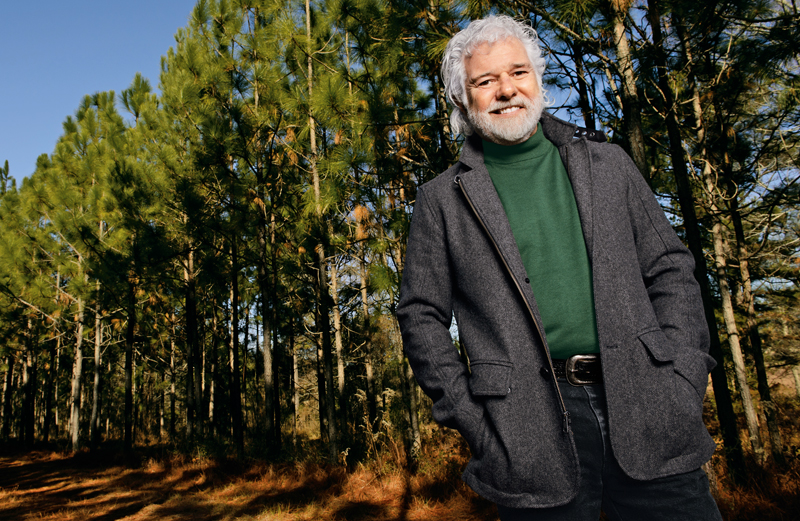
"If you don’t want to plant a crop on that field down the road, y’all might want to think about planting trees on it.” My brother-in-law, Alton, tossed that out casually and grabbed another of the buttermilk biscuits his sister–my wife, Rose Lane–had made.

Little did I know that his remark would change my life.

The three of us were sitting at their late grandmother’s old pine table having breakfast. Miss Julia had left the family homeplace, a nineteenth-century farmhouse and roughly 1,100 acres in middle Georgia, to Rose Lane.

We lived a few miles away, in Macon, but we’d been staying at the farm to look after things while we grieved for Miss Julia and took stock of our situation.

And really, to try to figure out what we were supposed to do with all this land. Mostly cattle and row crops had been raised on it since Rose Lane’s grandparents bought it. But I wasn’t a farmer. I was a rock musician.

For four years I was the keyboardist for the Allman Brothers Band, who maybe more than any other group shaped the southern rock sound (that’s me you hear on the piano on “Ramblin’ Man” and “Jessica”).

When the Brothers temporarily disbanded in 1976, a couple of the guys and I started our own group, Sea Level. We toured extensively and made five albums, but in 1981 we broke up too.

Now I was between jobs, wondering what my next gig would be. A musician’s life is an uncertain one, but the Good Lord had always provided for me. I fell in love with music at the age of six. I’d listen to my mom pick out a melody on our piano, then play it back for her by ear.

She taught me that more important than the notes being played are the feelings being expressed. “What would it sound like if you were upset?” she’d ask. And I’d rumble something on the low keys. It gave me the shivers in the best way, like hearing everyone sing at church.

I discovered another love around that same time. My family lived in the country outside Montgomery, Alabama, and I felt a close connection to the land. There were woods to explore, horses to ride, a creek to wade in.

I started my first band, the Misfitz, at 13 after my family moved to Tuscaloosa. We practiced in my parents’ living room and played the YMCA every Friday night. At 17, I took off for Macon, Georgia, the birthplace of southern rock.

Capricorn Records was then an up-and-coming label, so that’s where I went. Behind the desk was the most beautiful girl I’d ever seen, with an equally beautiful name, Rose Lane White. I couldn’t stop thinking about her and her sparkling hazel eyes.

But would you believe it took me two years to muster up the courage to ask her out? Lucky for me, she accepted. After dating a few months and getting serious, I asked her to tell me about her family.

“We’re country folk,” she said. “My granddaddy was in the timber business. He and my grandmother also farmed, and my parents, my brother and I–we’ve all worked the land.”

Six months after our first date, Rose Lane and I were married. Two years later, our first child, Amy, was born. When we weren’t on tour with the Allman Brothers–we carried Amy from gig to gig–we were making memories with Rose Lane’s family on their land.

Spending our free time there was one thing. But now Miss Julia’s 1,100 acres were our responsibility, and we wanted to do right by her and by the land. So here we were at breakfast, Alton, Rose Lane and I, shooting around ideas.

“Trees?” I asked Alton. “You mean peach trees, or pecans?”

“Orchards need a lot of attention,” he said. “And you’re on the road so much. I mean trees that you grow for long-term forestry–for pulp production, saw timber and other products. Something you wouldn’t have to tend day to day like corn or cotton or cows.”

He looked at Rose Lane. “It would be kind of like reviving some family history.”

That got me thinking. And studying. I read everything I could get my hands on about trees, forestry and land management. I went to seminars. I sought advice from conservation experts.

I studied how to plant, grow, manage and harvest timber in ways that are beneficial for people, wildlife and the environment. The more I learned, the more I saw that one big reason we are here on God’s green earth is to be good stewards of the land.

One day, maybe a month or so into my research, I was playing my grand piano when I looked–really looked–at the instrument that had given me so much joy, as well as a great career. Its unique shape. The contrast of the black and white keys.

I thought about the thousands of hours I’d logged sitting at it, learning all I could. Then it hit me: This wondrous instrument came from that precious, natural and renewable resource–wood.

Of course I knew that. I’d just never given it much thought. The maple case, the spruce in the soundboard, the wooden keys and levers…now I could imagine all the work and care that went into growing those trees, harvesting the timber and crafting the wood.

My beloved piano wouldn’t be here without trees. I wouldn’t be living this wonderful life of mine without trees.

Tree farming? I had to try to make a go of it. Rose Lane and I agreed to make her grandmother’s house our permanent home. And like Alton suggested, we would grow trees on the land.

They would purify the air, filter our streams and rivers, and provide shelter for wildlife. Our trees would be used to make everything from paper to telephone poles.

Rose Lane’s hazel eyes were shining. “I think Miss Julia and Granddaddy would be very proud.” That very day the Rolling Stones called. They were looking for a keyboardist. As I said, the Good Lord provides.

Before I knew it, I was back on tour… with the world’s greatest rock-and-roll band. On breaks, I came home to Rose Lane and our girls (by then we had a second daughter, Ashley) and our tree farm. We named our place Charlane Plantation, a combination of Charles and Rose Lane.

I loved learning about trees, and that love deepened as I nurtured them and watched them grow. In the 32 years since we started Charlane Plantation, we’ve planted more than a half million trees.

I cofounded Mother Nature Network, the most visited independent environmental website in the world. And I’m still touring with the Stones and releasing my own albums.

My friends say I am a tree farmer in my heart and a musician in my soul. They’re right. As passionate as I am about music, sometimes I need a respite from the craziness of rock and roll.

I’ll go for a long walk among my trees. I breathe the air they’ve freshened, listen to the play of the breeze in their leaves and give thanks. As Ralph Waldo Emerson wrote, “In the woods, we return to reason and faith.”


Download your FREE ebook, Paths to Happiness: 7 Real Life Stories of Personal Growth, Self-Improvement and Positive Change