

Embrace God's truth with our new book, The Lies that Bind

When You Become a Caregiver: Taking on a New Role

Melissa Winberry, MSW, LSW is the Assistant Director of the Rose Centers for Aging Well at Benjamin Rose Institute on Aging

You are a daughter or a son, a spouse or partner, sibling or best friend. Your role is familiar and comfortable. Then your loved one has an accident or is diagnosed with an illness that requires your on-going care, and you’re left wondering, who am I now? Taking on the role of caregiver to a loved one shifts relationship dynamics in challenging and confusing ways. Your lifelong role can easily be turned on its head when the parent who cared for you in your childhood suddenly needs your care, or a spouse exhibits new behaviors due to dementia. Scenarios such as these occur on a daily basis, and the changes they bring about in a relationship paradigm can have a ripple effect of feelings, emotions and struggles.

It’s a good possibility that if you are part of a family system, you’ll find yourself shifting into a caregiving role sometime in your life. If you are female, your chances of being a caregiver are considerably higher. Upwards of 75 percent of all caregivers are female and may spend as much as 50 percent more time providing care than males.

Such a shift generally takes a good deal of getting used to on both sides. Your loved one is not likely to relinquish his or her life care over to you without some pushback. Receiving a diagnosis or having an accident will rock a person’s world. Losing the ability to do things on one’s own and having to depend on others, whether temporarily or indefinitely, goes against our innate desire to be independent. While we all tend to be good at helping, when we are the ones who require the help, a flood of emotions can be released.

When your loved one becomes reliant on you, he or she may react with anger, sadness, frustration and fear. At the same time, you as the caregiver may experience many of these same feelings, but from a very different perspective. Do I have what it takes? Will I have the stamina and patience to handle this? How long will I need to do it? How will I juggle my job, finances and childcare, on top of caring for my mother, brother or spouse?

Plus, the person you love may be undergoing changes and becoming someone unfamiliar to you. Although you may have glimpses of what was, there will be a degree of new and unknown added to the equation. For instance, if your spouse has dementia, you may have to face some challenging behaviors on his or her part. Or if you are caring for a sibling who is receiving cancer treatment, you may feel as if you need to put your life on hold for an extended period to provide support. At the outset of caregiving, we come to this role from a place of love and the familiar relationship we have with the person. As time goes on, however, the role changes, and as with many new things in life, it can be hard to accept.

If you are a spouse caring for a loved one with dementia, it is all right to be scared and frustrated and to simply want your comfortable relationship back, rather than continually managing doctor’s appointments and prescriptions. Honor those feelings, find a way to cope with them. Don’t deny yourself any feeling, as this may only make your situation more difficult. If you are a daughter or son caring for a parent at home after a recent fall or other health issue, you may feel overwhelmed with simultaneously handling childcare, work and now your parent’s care. If you feel overburdened, be honest with yourself about it, and then get support.

The good news is that a wealth of resources are available to help you. If your loved one has Alzheimer’s disease or another type of dementia, the Alzheimer’s Association can be an excellent source of support. The American Cancer Society also has a great deal of information for those managing a cancer diagnosis. Explore disease specific resources like these for useful guidance, and look into caregiver support groups in your area. You can gain strength in realizing you are not alone in coping with caregiver responsibilities.

As with all life challenges, beautiful moments can be found when you’re open to them. Whatever your relationship, you can still take walks in the park with your loved one, share special meals, laugh at funny memories, create art and listen to music together, or simply enjoy spending quiet time with one another.

Caregiving is a journey with ups and downs. Be kind to yourself, reach out for help and respite, share feelings with family and friends, understand that self-care is essential and not optional and remind yourself that your emotions are valid. To find help and respite, consider investigating resources through Family Caregiver Alliance or Benjamin Rose Institute on Aging’s BRI Care Consultation™ program. Caring for a loved one is one of the greatest gifts you can ever give. It is invaluable. Thanks to you, your loved one has the opportunity to continue to live the best life possible, for as long as possible.
When We Wander Away from God

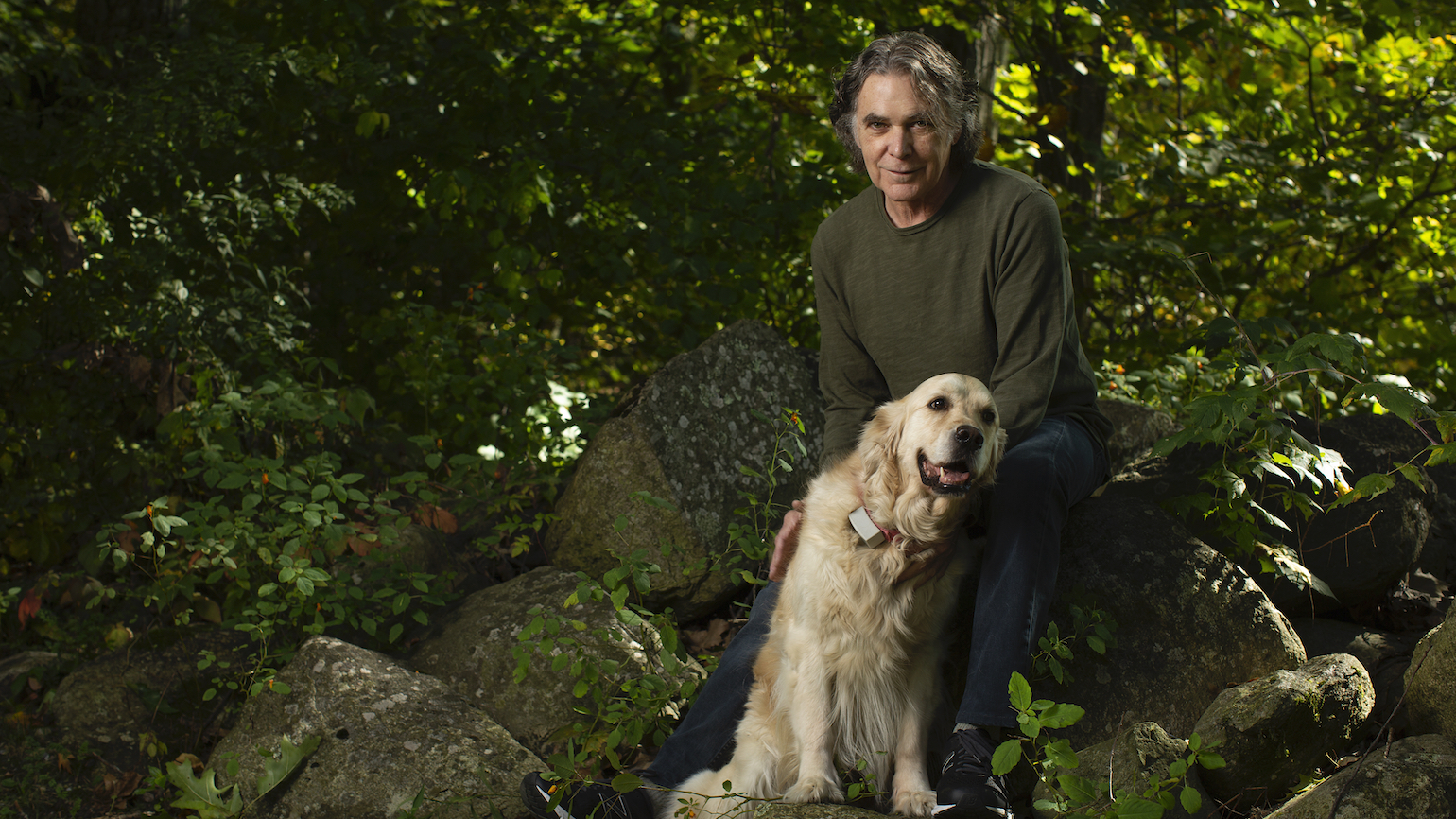
The leash. What owner and his dog are unacquainted with this strange bond? So much is symbolized by the leash, not least of all—trust.

Gracie’s is red. Matches her collar. No pink for her. She’s outdoorsy, athletic, tomboyish to use an old term. More than anything she wants to run like the wind, kicking up her legs, ears flying. Which is why that moment when we are on a certain part of a hiking trail where I feel comfortable unleashing her is a moment of truth and an exercise in trust. It’s never totally easy for me and not just because my wife Julee would kill me if I ever lost Gracie.

I did lose her once for a few hours, at her favorite spot, Monument Mountain here in western Massachusetts. She ran off into the woods after some scent or another. I expected her back in five minutes or so. Five minutes passed. Then 10. I marched up the trail in the direction she disappeared, praying with every step and blowing a whistle I carry with me. No Gracie. I hiked to the summit then down the other side. I searched a loop trail then hiked all the way back to the spot I last saw her. I called her name until I was practically hoarse. More than two hours had passed. It dawned on me I might have lost her forever. I don’t think I’ve ever felt more bleak.

Fortunately, Monument is a popular spot and fellow hikers soon reported seeing a solo golden retriever on one part of the trail or another, including a beautiful female sitting at a juncture where Gracie and I often stopped for water. She was searching for me too! Finally, I got a call on my cell from a group near the summit who had encountered her and called the number on her tags. An hour later we were reunited in the parking lot, Gracie was relieved to see me as I was to see her. The look she gave me said, “Don’t you ever run off like that again!” To this day I believe she thought I was the one who got lost. And maybe I was. I should have just stayed where I was to begin with. She would have found me.

That was a couple of years ago. Gracie’s wiser now but she still loves her freedom even if she keeps an eye on me. She hears the click of her leash coming off her collar, and her whole body quivers even as my heart beats just a touch more rapidly. Then she’s off like a shot. But she stops and gives me a look. Again, it’s as if she is saying, “I trust you when I am on the leash. You can trust me when I’m off.”

And she’s right. A dog on a leash must trust that the human on the other end of the leash will let no harm come to her.

I’m not fond of human/dogs/God analogies, and that’s not what I’m doing here. Still, there is a lesson in the leash, for me at least. God does let me off leash. The Bible teaches me how to live, and I am given free will. When I stray, as I sometimes do, I find my way back to Him. Sometimes the way back is easy, sometimes I am so lost the way back is hard and painful. But God is never lost. He is always there to be returned to. No harm can come to me when I am with Him.

I’ve learned my lesson with Gracie, too. I wait patiently at the spot where I have released her. She always comes back. She gives me a look that says, “Good boy. I’m glad you didn’t wander off this time.”

When We Can’t Say Goodbye to Friends About to Go to Heaven

My friend Bob was accustomed to calling the hospice center and saying, “I am about to die, come quick.” He knew I cared about him very much and would do anything I could for him, so it was his practice to say that if I ever hoped to see him again, I had better come right away.

Bob had a wonderful sense of humor and often asked me out for dinner for the “early bird burned-chicken special.” He had more money than most, which made it all the funnier when I refused, telling him it was not good for my digestion. Bob had cared for a severely brain-damaged daughter for many, many years and with all his humor and silliness, he was a brilliant man and the most deeply committed and loving father I had ever seen.

He left a message for me late one afternoon saying, one more time, that if I ever wanted to see him again, I had better come now. I had worked a very long day and was really tired, so I decided to call the next morning and did not go to see him. He died that night and I was so sorry I had not stopped by to visit one last time.

I called Annie, my friend of 40 years, when I heard she was being moved into a long-term care facility. She was devastated at leaving her beloved home where she and her husband had raised their family. I had the feeling she no longer wanted to live but rather to go on to the God she knew and loved.

“When will you come to see me?” she asked pleadingly. “In the next few weeks,” I promised. “As soon as you are settled in, I will be there.” It was not soon enough, and my lovely friend died within a day or two without our final visit.

“Darlin’,” my sweet southern friend of 45 years said. “Are you coming to see me soon?” Marie had been sick on and off for many years and I talked about our wonderful friendship in my book More Glimpses of Heaven. I told her I would be up in the next week or so, as my daughter-in-law was having surgery and she lived nearby. Marie died less than a week later, before our promised visit.

Something happens to our hearts when we do not get to see our loved ones in time, as promised. Somehow we feel guilty for having let them down and that can bring us great sorrow if we are not careful. After the deaths of each of these friends, I had to remind myself of what I had told the families of loved ones in my care when they too did not make it to the bedside “in time.”

Somehow, in a way that only God knows about, everyone you have ever loved and everyone who has ever loved you is with you when you die. An awareness of love is with that person as they die, even when we are not physically present for them. God is with them—and so is everyone he brings to their remembrance. After all, they are on their way to heaven, to their eternal and lasting reward, where love is eternal. Where love is, that’s where God abides.

When to Surrender to God

Let go and let God. Surrender is a precious thing.

Ten-year-old Gabriel, eight-year-old Isaiah and I rode our bicycles along the water. The river’s mood was gentle, and the air held summer’s warmth. Gabriel was in front of me, but he slowed down and rode for a moment near my side.

“Look, Mom, at our shadows!” he said. “They’re so big! Look! They’re huge!”

Gabe moved ahead of me. Our shadows untangled, and soon there was just mine. He was right. The sun, shining from the west, had cast our shadows on the close-cropped lawns. I could see the oversized wheels and fenders and the basket on the front of my bike. And then there was me. Tall and long and bigger than life.

The shadows reminded me of a conversation I’d had the day before with a friend.

I shared about circumstance that brought worry and fear.

“You’re trying to control the situation,” she said after listening patiently. “You’re assuming responsibility that isn’t yours. You need to pull back. Give the circumstance to the Lord.”

Surrender.

I tried to.

Then I grabbed and grasped and wanted to wrestle the situation back under my control. I made myself, my role, bigger than it should be.

Surrender yourself to the Lord, and wait patiently for him. (Psalm 37:7)

As I pedaled along, I thought about surrender. In essence, it’s letting go. Letting myself be smaller and recognizing that the Lord is bigger. It’s a trust issue. It’s putting my fear, my worry and my anxious desperation into His capable hands. Into His capable, merciful, powerful, gracious hands.

Surrendering to the Lord means relinquishing what is precious in order to trust in His purpose and plan.

It’s placing trust in His character. His nature. His sovereign activity in my life and His promise to never leave. It’s lifting the details and the outcome to One who is capable rather than scrambling to solve things on my own.

I began to pray as we moved along the bike path. After months of struggle, the prayer came easy as God’s strong and faithful glory colored the evening sky.

Forgive me, Lord, for trusting in my own strength rather than Yours. Help me to surrender to Your will and Your ways. I trust You and know You’re in control.

“You okay, Mom?” Gabe asked as he held back and pedaled by my side once again.

“I am now,” I said.

Surrender can be a powerful struggle, but when we do, there’s powerful peace.

When the Light of Christmas Goes Dark

Christmas is a time to celebrate the birth of a Savior—the best gift ever given. And in the weeks leading up to December 25, there are often also laughter-filled family get-togethers, festive parties at work and church, and fun events with friends.

But sometimes when we’ve been through difficult circumstances, are dealing with health situations, job losses, or the death of a loved one, it’s hard to find those moments of joy, to discover a heart filled with praise.

I’ll never forget how hard it was to find the joy of the season on that first Christmas after my dad committed suicide years ago. But with the passage of time and with the love and support of family and friends, I was able to heal and to find that joy again. I’ll always miss my dad, but now I can smile about the memories we made together.

I’ve realized something else as I’ve spent time in God’s Word: He put some great examples in the Bible to show me how to praise Him despite my circumstances.

Think about Shadrach, Meshach and Abednego, three men whose faith was put to the test as they were forced to take a stand for God. But instead of standing around worrying and whining, they stepped into the fiery furnace with confidence, praising Him for taking care of them during an unbelievable situation.

Read More: When Christmas Comes Early

And what about Daniel? He was a man of exceptional character, and he’d been so faithful in prayer and in serving God. Despite that, he was thrown into a den of lions. He could have been bitter at how he was treated, but instead he praised God through this trial—and had an opportunity to see God’s power first-hand as those ferocious lions turned into purring pillows.

Job praised God even though His life had just imploded. This wealthy man lost everything that he had: his sheep, his camels, his servants, his health and his beloved sons and daughters. The blows came so fast that he didn’t have time to even catch his breath before more horrible news arrived. If anyone had a right to be bitter, Job was the man, but he continued to praise God through every heartache.

Paul and Silas praised God while sitting in a dank prison cell. They’d been jailed for serving God, for preaching the Gospel. They were entitled to be angry or defeated, but instead, they sang. Can you imagine how the sound of their singing echoed through that depressing prison?

I want to be like those guys, finding joy in the midst of hard times. And I discovered something on that Christmas all those years ago when my praise and joy were dimmed: Jesus truly is the reason for the season. He’s the One who can fill a wounded heart with peace and comfort. And when I focused my eyes on Him instead of my circumstances, that’s when joy started shining into my soul and chased the heartache away.

Father, please bless those whose hearts are hurting this Christmas. Help them to discover an unexplainable joy as they feel Your sweet comfort. Amen.

When Plans Fail

Have you ever had a plan that didn’t pan out the way you expected? Over the holidays my wife and I helped my son move to Michigan for a new job. I planned to get a good night’s rest so that I could drive the first five hours, and he could drive the last.

I got to bed on time but woke up at three in the morning and couldn’t get back to sleep. I eventually decided to stay up and begin our drive. I had every intention of completing my shift. My plan was simple and feasible–at least I thought so.

Shortly into the trip my eyelids grew heavy, and I realized that my plan wouldn’t hold up. I gave the wheel to my son who took control and got us safely to our destination.

Read More: Join Us for the ‘Power to Overcome’ Day of Prayer

This reminds me how often my plans take a back seat to God’s purpose for my life. It is not to say that I don’t plan, but things don’t always pan out the way I expected.

For example, this week I celebrate 14 years at Guideposts. When I started here, my plan was to stay for two years and then proceed to be a pastor in New York City. God had other plans.

Two years ago my son Paul purchased an apartment in a very trendy neighborhood with the thought of staying there for several years. But God had a different plan for him too.

There is a proverb that says, “You can make many plans, but the Lord’s purpose will prevail.” Another translation states, “We humans keep brainstorming plans, but God’s purpose prevails.”

It’s only natural to make plans and set goals for the New Year. This is my practice as well. But my plans and God’s purpose for me don’t always align, and I’m glad they don’t. God’s purpose is always better.

As you make your plans for the New Year, keep an open heart to God’s purpose. We don’t always know how, why and when it will unfold, but God’s purpose always prevails. Why are God’s plans always better than our own? Please share with us.

Lord, in the New Year let Your purpose prevail in our lives.

When Life Gets Tough

Are there times when you are troubled on the inside, but appear fine on the outside? Recently, while attending an event, a US Army chaplain shared her story about returning home from her second deployment in Iraq. Shortly after returning to her military base in Germany, she realized that her family wasn’t there to greet her. She understood it was an expensive and long trip, but it still hurt.

When home, it hit hard, and she began to cry. This was the beginning of a dark time for her. She had never felt so alone. On the outside she looked perfectly normal, but inside she was faced with loneliness and sorrow.

Everyday people are faced with troubles but must continue to work, care for loved ones and fulfill their life obligations without showing external signs of their inner struggles. At such times, people ask them why can’t they get it together or why are they still holding onto their struggles?

When life seems to be working against us, how can we get through these difficult times? When asked to lead the funeral service for her uncle, a World War II veteran, one chaplain unexpectedly began her path to healing. As she brought comfort to others and lead a service for someone she had loved, she herself began to feel whole again.

We don’t know how and when we will get though our dark and troubled times, but there are things we must continue to do:

  • Maintain our trust in the source of hope…God.
  • Pray through our challenges.
  • Keep the Word of God close to our hearts. Remember His promise, “I will never forsake you.”
  • Express our feelings, especially to trusted friends.
  • Celebrate small moments and good days.

One of my favorite texts is from the book of Lamentations, “The thought of my pain, my homelessness, is bitter poison. I think of it constantly, and my spirit is depressed. Yet hope returns when I remember this one thing: The Lord’s unfailing love and mercy still continue, fresh as the morning, as sure as the sunrise.”

I also think of the Rev. Robert H. Schuler’s words, “Tough times never last, but tough people do.”

When life gets tough, let us remember God’s faithfulness, love and mercy.

How have you overcome life’s toughest problems? What keeps you going when life gets rough? Please share with us.

When It Pays to Wait

It had been a long business trip. I was tired and ready to get home. We’d already had multiple flight delays, so I was relieved when we finally boarded the plane. The flight attendants shut the door, settled the passengers, and soon after, I heard the beautiful sound of the engines firing.

As is typical in Atlanta, we waited a bit on the tarmac for our turn on the runway. And then finally, we started moving. Slowly. We did that for about 10-15 minutes, and then the plane stopped and an announcement came over the speakers with words to the effect that we’d had a delay, and we’d be in a holding pattern for a little while.

That “little while” turned into 90 minutes. Sitting on the tarmac in those extra tight seats on small planes and with almost no air conditioning on a day that had hit 105 degrees, it seemed like forever!

Just for the record, “holding patterns” are not my spiritual gift. Waiting is not something that comes easily to me. I’m more like the sports car with the engine rumbling at the traffic stop while it waits for the light to turn green.

But now with the benefit of lessons learned as I’ve reached my (ahem) advanced age, I’ve realized something: When God asks me to stay in a holding pattern, I’d be wise to accept that with grace and a good attitude.

Here are a few things He’s shown me:

His timing is perfect. Why would I want to move ahead with something before God says, “I’m ready”?

His plan is always what’s best for me—and far better than any of my plans.

Sometimes those holding patterns are for my benefit. To teach me something. To connect me with someone. Or to wait while He finishes putting pieces in place.

Sometimes that waiting seems like forever, just like it did on that hot airplane. But it’s always a wise decision for me to trust the One who pilots my life and to wait until He says, “It’s time to move now.”

When God Sends You in an Unexpected Direction

I walked along the sidewalk that borders the west side of Central Park this morning marveling at its geometry: hexagonal paving stones underneath my feet were bordered by parquet-like brickwork, with a tidy stone wall running alongside. Just past the wall lay the park itself, where delicate branches of leafless trees laced the blue sky, and an erratic chatter of house sparrows emerged from sprawling yews.

The contrast between the straight-lined, orderly, man-made sidewalk and the intricate, swirling exuberance of nature just beyond its border set me to thinking about the differences between God’s creation and man’s.

The world holds innumerable examples of circles made by God: the moon, belly buttons, grapes, drops of water and the center of flowers. Triangles are readily evident, too. There are kitty cat noses and ears, conifers, mountain peaks, agave leaves and river deltas.

But what about that most-common shape in the man-made world, the rectangle? I searched my brain for natural counterparts, and though I thought and thought I came up with only two: teeth and salt crystals. That surprised me. Do we prefer rectangles simply because it’s easier to plan and build with blocks and straight lines? Or does it have something to do with how humans tend to assume life is supposed to be linear? I don’t know.

There is a saying that God writes straight with crooked lines. As I look at the beauty of a tree in winter, with its boughs and branches and twigs reaching skyward in a seemingly jumbled but obviously planned pattern, I can grasp something of what that means.

God’s plan isn’t always tidy and predictable in the way that I want it to be. There are twists and turns in my life that I can’t foresee or predict. That doesn’t mean branching off in unexpected directions is bad or wrong. All it means is that in each new place I find myself, I need to continue growing, reaching upward, living for and with the Lord.

When God Makes Appointments for Us

Did you know that all of us have appointments from God? I was reminded of that recently when I took my granddaughters out for a special day.

Anna, Ava and Eden love to play dress-up. They often walk into the room with a regal air while wearing their princess dresses, tiaras and fancy heels that belong to their mothers. I had three sons so it’s a real treat for me to enjoy these moments and watch their vivid imaginations at play.

Last week, I took them out for a special princess day, and we went to get pedicures. Or as four-year-old Ava called them, “pedicurds.” The girls were so excited!

Since we went in the daytime and his daddy was at work and couldn’t keep him, three-year-old Ethan had to go with us. He wanted to know where the pets were. Yeah, he heard the word as “peticures.”

Michelle's grandchildren at their appointment.The girls were adorable as they picked out their polish—with sparkles of course. The salon has child-sized pedicure chairs with backs that look like pink bears. I don’t know who had more fun, the girls as they were pampered, or me as I watched their sweet faces and listened to their giggles. It was a day of making memories.
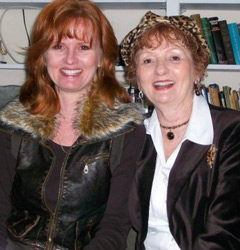
But something happened on the way to the salon that really stuck in my heart. Five-year-old Anna rode with me. She talked excitedly about the pedicures and then she wanted to know how long it would take to get to the salon. I told her it would be about ten minutes and then she said, “Grandmama, how do they know we’re coming?”

I said, “I called earlier this week and made an appointment for all of us.” And then God whispered, “I’ve made appointments for you as well.” I’ve thought a lot about the special appointments God’s made for us, and I wanted to share them with you:

1) We have an appointment to be born.
In Ecclesiastes 3:2 it says, “a time to be born.” Before time began, the God of the universe made an appointment for the day when we would take our first breath of air. And He had a purpose and a plan for each of us.

2) We have a divine appointment to meet Him.
In Acts 16:31 it says, “Believe on the Lord Jesus Christ, and you will be saved…” so make sure you don’t miss the most important appointment of your life.

3) We have an appointment to bear fruit.
In John 15:16 it says, “You did not choose me, but I chose you and appointed you that you should go and bear fruit.” God wants us to tell others about Him, to be extensions of His love.

4) We have an appointment to die.
Hebrews 9:27 says, “And as it is appointed unto men once to die.” Only God knows how many years are between our appointment to be born and our appointment to die. It’s important to have our hearts ready for whenever that final appointment occurs. I so want to make Him happy with how I live during the years in between. How about you?

Just like I made that pedicure appointment for my sweet girls because I love them, our loving Father has a plan and a purpose—appointments—for each of us. And you know what? Just like I enjoyed watching my little princesses, I suspect He also enjoys watching us as we live for Him.

When God Knows Your Fears

“Mother, ask them to let you come to the operating room with me and hold my hand. That’s all I need…just till I go to sleep.”

“I don’t think they’ll let me, Julie,” I said sadly. “Rules are rules.”

I knew, from the two previous minor surgeries Julie had experienced during the past several years, that she would put on a brave front, smile and go to surgery without any complaints. But down in the operating room, as she waited to be put to sleep (there was always the wait), she’d shake. Not tremble mildly, but shake so violently that she’d be sore from the shaking.

This operation to remove wisdom teeth was not serious, but Julie had a horror of this trembling that was beyond her control. “Mother, I dread the shaking more than the surgery or the pain. I’m eighteen years old, engaged to be married, and I shake so hard I rattle the bars on the bed. I’m shaking already!” And she was.

“I have an idea,” I told her. From my purse I pulled out a small card. The day before, when I’d been searching through my desk drawer for a stamp, the smiling face of a little girl on the card had seemed to look up right at me. She had red hair like Julie and was saying, “Hi, I just wanted to tell you that….” The rest of her message had been on the inside of the greeting card. I tore off the printed message and added my own so that the adorable little girl seemed to be whispering, “I need someone to hold my hand while I’m waiting to be put to sleep. I won’t shake if you’ll hold my hand. Thanks. Julie.”

I read the note to her and added, “If you’ll let me, I’ll tape this note to your sheet. Someone in the operating room will see it. I even remembered tape.”

“They’ll think I’m a baby,” Julie said softly.

Just then an attendant came to take Julie to surgery. I helped her tuck Julie’s long hair under the small green cap, and watched forlornly as she was placed on the wheeled cart. At the door I read Julie’s lips, “I love you.” I kissed her on the forehead and waved goodbye.

Twenty-five minutes later the doctor phoned me to say that Julie was in recovery and would be back in the room in a short while. He said surgery had gone beautifully. When they brought Julie back, her eyes were open and she was smiling as best she could with the gauze pads sticking out of her mouth and the ice pack tied around her head. She winked and made an “okay sign” by putting her thumb and forefinger together in a circle.

Then she began waving her hand around to get my attention. She couldn’t talk and wanted to write. I handed her a pad and a pen. Still groggy, she scribbled, “I have to see the nice black lady who came to get me. She read your note and stayed with me and held my hand. She never left me. She kept me from shaking. Even wrapped me in warm sheets. Please find her.”

When I promised I would, Julie went immediately to sleep.

Later in the day, I asked one of the aides if the woman from the operating room could stop by Julie’s room.

“Oh, that’s Ernestine. I’ll ask her to stop by.”

Ernestine came in flashing a warm smile. I showed her the note from Julie. Even with the gauze pads in her mouth, Julie managed to say, “Thank you.” Ernestine brushed off my attempts at gratitude and talked instead about Julie’s pretty red hair.

When the doctor came by that evening, he asked right away, “Did you put that note on Julie?”

Not sure of what be was going to say, I admitted that I had.

His stern face broke into an enormous grin. “Well, that was about the neatest thing we’ve seen in the operating room. We want to help people. Often we just don’t know what their fear is. Ernestine stayed right with Julie. I wish more people would tell us about their fear, so we’d know how to help them. Thanks for the note.”

After the doctor left I sat down and looked out the window. I could see people moving in the busy street below, some walking, going into shops, riding in cars. I wondered how many of those people harbored unspoken fears. And pondered how much better it would be for all of us to admit out weaknesses, ask for help, confess when we’re afraid.

Watching Julie sleep, my heart was filled with gratitude. She’d had the courage to admit to strangers her desperate need…please hold my hand…and the Lord had provided Ernestine.

Download your FREE positive thinking ebook!

When Distance Complicates Family Caregiving Roles

I went out to my car in my parents’ driveway early that morning last February and tossed my bag inside. Then I turned to my mother. Her freezer was filled with dinners I’d made. I’d picked up her prescriptions and run a few last errands. I’d warned her to watch out for scam artists calling after they saw the obituary. It was time for me to go home to Kansas City, go back to work. But it was hard to leave, knowing Mom would be living all alone now after almost 60 years of marriage.

We’d buried my dad just a few days earlier in a military service. He was a Korean War veteran, a hard-working man who’d driven an 18-wheeler for Caterpillar for four decades. I was worried about Mom. She had worn herself out taking care of Dad for the past two years, ever since he’d been diagnosed with Alzheimer’s.

I reached out to hug her goodbye. She felt small and frail in my arms. “Please take better care of yourself,” I said softly. “I don’t want to have to come back in two months and do this again.” I didn’t want to lose her too.

Get practical spiritual advice for everyday challenges in Spiritual Remedies​

I glanced past her, to the house. In the 35 years since I’d left our small Illinois town, I’d been back no more than a couple dozen times. My relationship with Mom was strained for many of those years. I wanted her to see me as my own person rather than an extension of her own desires. It didn’t help that we were both introverts who didn’t handle conflict well and got prickly when challenged.

Mom had hoped that I would marry, live nearby and start a family, as she had done in the 1950s. She’d married at 18. Marriage wasn’t a priority for me. A career as a writer—that was my goal. I left home at 21 and moved to Kansas City, Missouri, to pursue it.

Dad was 48 then, a familiar sight tending the yard on his riding lawn mower, wearing his Caterpillar hat. Mom had returned to school and was just starting a nursing career at 42.

I built a life as a writer in Kansas City. In her own way, Mom was as independent as I was. She taught herself to paint in her 50s and, on my annual Christmas visits, would show me her artwork and the ribbons she’d won in local competitions.

One time she handed me a photo of herself in purple leggings and white running shoes. “I’ve started running,” she said. Living 400 miles away, I didn’t know about new interests she’d taken up any more than she knew about mine, and the realization made me a little sad.

With each visit, I’d notice another change. Mom needed glasses. Dad got a knee replacement. His hair turned white.

Eventually I made peace with the fact that my mom would never be who I wanted her to be. She seemed to do the same with me. I took more interest in her art and sewing projects. When I bought a house, Mom weighed in on paint and fabric swatches and sprang for a new sink for my kitchen. We settled into an easier relationship. “I’m glad we get along better,” Mom told me. “I don’t have to walk on eggshells now.”

In 2014, at age 82, Dad was diagnosed with Alzheimer’s. He declined quickly. The stress of being his caregiver took a toll on Mom. She had chronic kidney disease, and her kidney function numbers slipped. She was depressed. I told her to get some in-home assistance, but she refused, independent as always. My brother Rick lived a mile from them, and my other brother, Steve, lived an hour away. They helped out and didn’t share all of my concerns.

“You worry too much, Deb,” Rick said, noting that I was welcome to move back to Illinois to lend a hand.

It weighed on me—the thought that one day I might not have a choice. I prayed often, asking God to be there for my parents when I couldn’t. I saw them more often, delivering bags of frozen chicken and veggies I’d prepared so Mom could throw them in her slow cooker. I made grocery and pharmacy runs and suggested ways she could simplify her life, like getting dinners delivered by Meals on Wheels. “We don’t need that,” Mom would say to nearly everything. She didn’t like the idea of having strangers in the house.

Then in July 2015, Mom and Dad both ended up in the hospital. Dad had a bleeding ulcer. Mom’s kidney numbers were at dialysis level. I stayed with them while they were recovering. Before I went back to Kansas City, I made Mom promise to hire a housecleaner.

She found someone on Craigslist. A woman named Amber. “She does a good job,” Mom reported after Amber’s first visit.

Just knowing Mom wouldn’t be doing everything herself, that there would be one more person checking in on my parents, was a huge relief.

When Rick’s name flashed on my phone one morning the following January, the usual list of fears ran through my head. Had Mom fallen? Had Dad wandered off in the cold? The news was worse: Dad had died in his sleep.

I stayed for a few days after the funeral, not wanting to leave Mom alone. But now I had to. I stood in the driveway and hugged her for a long time. Please comfort Mom and keep her safe, I prayed as I drove away. At least she had Amber.

Back in Kansas City, I called Mom several times a week, telling her she should volunteer at the hospital or take an aquatics class at the rec center. Something to stay active. She told me she was plenty busy writing thank-you cards and catching up with friends.

Every time we talked, she had something new to tell me about Amber. “She’s always interested in what I’m doing,” Mom said. Amber opened up to Mom, confiding that she’d been just a teen when her mother died. Amber’s life was still a struggle, raising two sons as a single mom.

Mom said she’d printed flyers for Amber’s business. “Amber helped me rearrange the living room,” Mom mentioned during another call. “And she stayed for dinner. I cooked one of those frozen dinners you made.”

Another time, Amber showed up in tears because she owed a large sum on her income taxes. “I helped her figure it out,” Mom said with an air of confidence.

She missed Dad, but without the stress and isolation of caring for him, Mom was actually thriving. She hadn’t felt like going to church. Now she went every Sunday. She was going out, renewing old friendships. And with Amber, she even seemed to have made a new friend. Maybe my brothers were right. I should relax. Trust that God was looking out for Mom.

One day on the phone, Mom mentioned that two of her rings were missing from her dresser drawer.

“Has anyone been in the house?” I asked her.

“No. Nobody but Amber.” “Don’t worry,” I said. “I’m sure they’ll turn up.” Still, it seemed odd. Mom wasn’t the type to mislay things.

Two weeks later, she still hadn’t found them. I tried to think what could have happened. “Do you think Amber could have taken them?”

“She’d never do that!” Mom said. “Just the other day, she was asking about my rings. She’s got enough to worry about, poor thing. I loaned her $200 so she could keep her electricity on.”

The hair on the back of my neck stood up. I pressed Mom a bit further, but that only upset her. I couldn’t get a hold of Rick.

Something wasn’t right. Part of me wanted to hop in my car, drive straight to Illinois and confront Amber. But what would that accomplish? I didn’t have any proof. I kicked myself for not having visited Mom since the funeral. Maybe I would have noticed something.

How could she have let this woman get so close to—

I stopped and thought of all the conversations I’d had with Mom. Most of them consisted of me giving her advice, pushing her, telling her how she needed to take care of herself…when what she’d needed most was someone to listen. Like Amber did.

A week later Amber called my mom and said she’d met a guy who had what she thought might be Mom’s rings and was trying to sell them.

“He wants $1,500,” Amber told Mom. “Can you get the money? I’ll come pick it up.” Mom played along.

When Amber arrived, Mom challenged her story until Amber finally turned over both rings.

“I was your friend,” Mom said. “Why would you steal from me?”

“I needed the money,” Amber replied.

Mom fired her then and there. “I told her I forgave her,” Mom said when she called to tell me what had happened. “I feel bad for her. She must have really been desperate.”

“You did the right thing,” I said. I didn’t admonish her to be more careful or criticize Amber. I just listened.

Mom refused to file a police report. I wasn’t as forgiving. Searching the Illinois courts database online, I discovered Amber’s felony for retail theft. I called Amber and left a message on her voice mail: “Don’t ever call my mother again. My brothers and I are involved in Mom’s life, and we’ll be paying attention.”

That was the last we heard of Amber. I’m grateful for the experience. It gave me a new understanding for Mom and for how God cares for us. I visit Mom every two months, and I don’t lecture her on estate planning, veterans benefits or exercise. I listen. I love hearing stories of her childhood or life with Dad. She’s taken up drawing and likes to share her latest pieces with me.

On my most recent visit, I didn’t hurry back to Kansas City as usual. Mom and I lingered over coffee.

Finally I hugged her goodbye. “I can’t wait to come back in two months,” I said, “and do this again.”

7 Ways to Protect Your Senior from Fraud

For more inspiring stories, subscribe to Guideposts magazine.