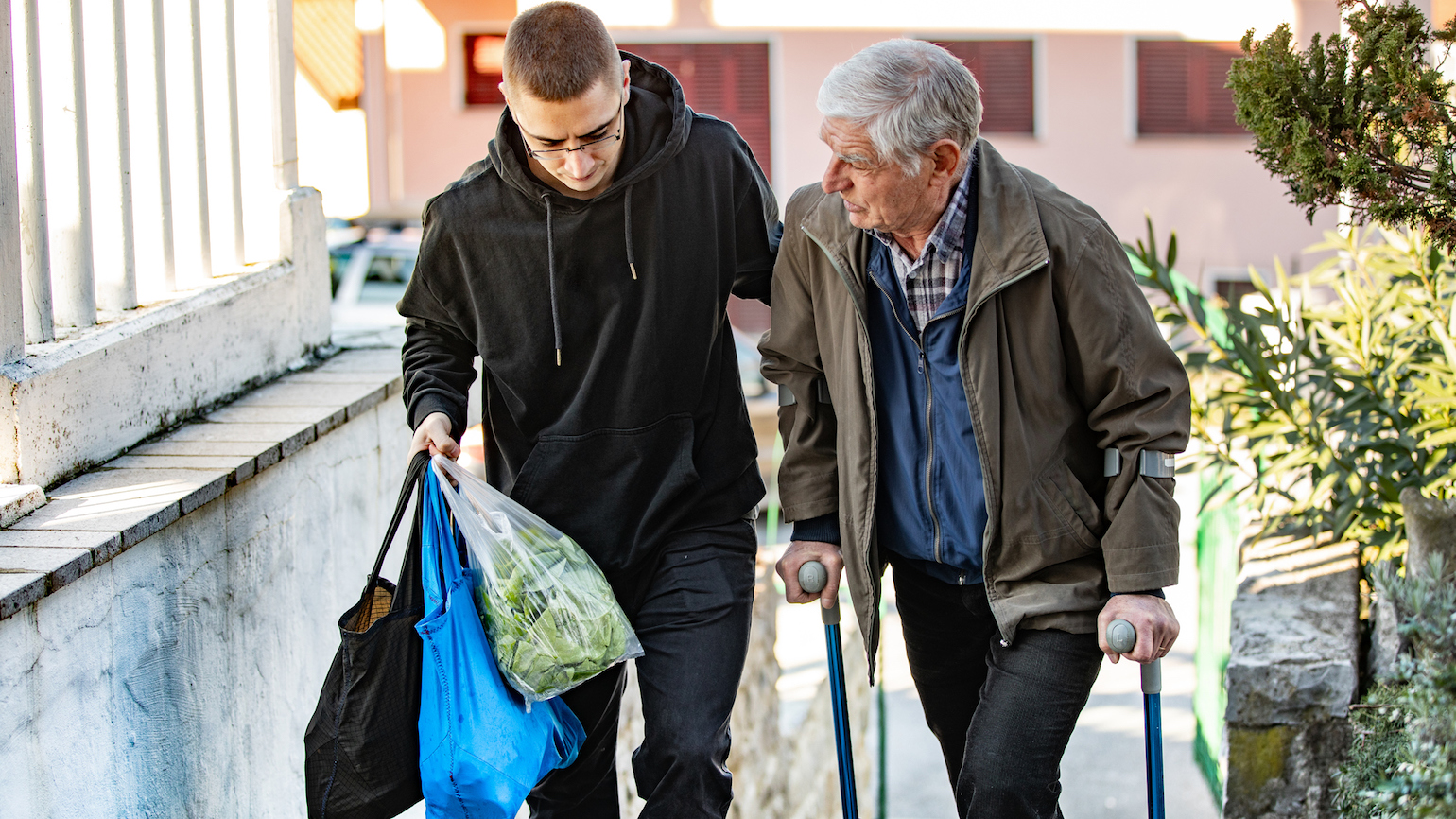
Holding the door open for the person behind you. Bringing a plate of cookies to a neighbor “just because.” Asking a service person, “How are you?” before diving into your question.
These are all examples of random acts of kindness, the seemingly simple actions that don’t take much of our time but leave us feeling good about what we can do in a complex world.
Psychologists have long noted the benefits of acting with kindness. But those on the receiving end feel even better than we realized, according to recent research from the University of Texas at Austin.
In one study, participants gave hot chocolate to strangers in a park—and underestimated the mood boost the recipients would have when they learned the treat was an anonymous gift.
In another, participants who were given cupcakes and then invited to give away their cupcakes to strangers failed to recognize that those who got cupcakes from strangers reported greater happiness than those who had knowingly received cupcakes as part of the study.
And a third study showed that people who received cash through a random act of kindness were more generous in giving some of the money away when they were offered the opportunity to do so (or not).
Amit Kumar, a lead researcher on the studies, says people understand the benefits of kindness for the giver far more than for the receiver. “They get that being kind to people makes them feel good,” he said, “What we don’t get is how good it really makes others feel.”
So next time you have some cookies to spare or time on your calendar to give a friend a ride to an appointment or a free moment to stand a neighbor’s tipped-over garbage bin back up, remember that your seemingly simple act of kindness will do more than give just yourself a warm fuzzy feeling inside.
The more we stop underestimating the powerful difference kindness makes in the lives of those who benefitted from our kindnesses, the more reasons we have to keep investing our time and energy in bringing goodness into the world, act by act, day by day.
Kenneth Doka, an author, professor and bereavement expert, coined the term “disenfranchised grief” in 1989 to describe grief that is neither acknowledged nor accepted by conventional social standards, but is mourning nonetheless.
By naming disenfranchised grief—and shining light on the legitimacy of mourning losses that might otherwise sound “less than” the death of a close loved one—Doka’s work highlights a pathway toward a life of authentic positivity. When we use the vocabulary of grief to describe a spectrum of painful experiences, we give ourselves permission to feel our full range of emotions—and the context we need to cope in a healthy way.
Here are just some examples of losses that are as real as any other, but might be brushed off, diminished or outright dismissed as outside the bounds of “normal” grief:
–The loss of privacy during a commute to work for now-remote workers
–The loss of the “post-pandemic” mindset you might have held before the Delta variant of COVID-19 emerged
When we use the terminology of grief and mourning to share our feelings about these types of losses, we give ourselves space to cope with them as we would with any loss. This includes expecting to have less energy at times, to feel irritable or angry, to feel numb or emotionally distant or weepy and hyper-sensitive.
It also includes expecting the acuteness of those feelings to soften with time as we incorporate the losses into the newly-normalized aftermath of loss. Acknowledging disenfranchised grief might also empower us to seek counsel from a therapist, support group or religious community over feelings we might otherwise have brushed off.
We can also cope with disenfranchised grief by creating a ritual, not fully akin to a funeral, but in service of the same purpose of making space to explicitly mourn the loss. Writing a letter (that you may or may not send) to a friend or loved one, boxing up and giving away items that no longer serve your life, planting a tree or garden that will remind you of something you have lost—these are only some of the myriad ways you can ritualize disenfranchised grief and gently help yourself through the hardest moments of loss.
Do you recognize disenfranchised grief in your life? How do you cope?
Whatever happened to humility? It seems as if it were something of the past. We often praise individuals who boast their personal success. But if given the choice, most of us would prefer to be in the presence of a person with a humble spirit. Too often humility is viewed as devaluing one’s self, but that is not the case. C.S. Lewis said it best, “True humility is not thinking less of yourself; it is thinking of yourself less.”
The following is a true story of an encounter between Abraham Lincoln and one of his army officers. During the Civil War, President Lincoln was visited by Col. Charles Scott, a commander of the troops guarding the Capitol. Col. Scott’s wife had drowned in a steamship collision. He appealed to the regimental command to leave and bury his wife and comfort his kids. This request was denied. Scott then decided to visit Lincoln to appeal his case. He was the last person to meet with him that day. Scott recalled the president getting upset as he listened to him due to the constant demands for his time and because his request needed to be addressed elsewhere.
Lincoln asked Col. Scott if he had gone to the War Office where they were in charge of these matters. Scott said that he did but was refused. The President replied that in a time of war, everyone had burdens to bear. He suggested that Scott go back and if they didn’t help him, he needed to bear his burden until the war was over. Scott returned to his barrack saddened. Early the next morning there was a knock on Scott’s door. It was the president. He told Scott, “…I had no right to treat a man with rudeness who has offered his life to his country, much more a man in great affliction. I have had a regretful night and now come to beg your forgiveness.” President Lincoln arranged for Scott to go to his wife’s funeral.
Lincoln didn’t let his pride, position or power get in the way. Humility leads to respect. We should always express our love, be kind and seek forgiveness when we are wrong. When we lead and live with humility, it reflects the likeness of Jesus in our lives. What do you think of President Lincoln’s action? Please share with us.
Lord, help me to live with a humble heart and mind.
Is a zero-distraction moment even available to most of us these days? After all, every technical innovation that makes our lives more convenient, like phones and apps and streaming entertainment, are built for a multi-tasking lifestyle.
Listen to a podcast. Add to your grocery list. Press “buy” on an online shopping cart. Reserve a table for this weekend. All of these are things many of us do at the same time—and all too often while we’re doing something else, like working.
Newport described the drawbacks of this lifestyle in an interview with The New York Times: “Every time you switch your attention from one target to another and then back again, there’s a cost. This switching creates an effect that psychologists call attention residue, which can reduce your cognitive capacity for a non-trivial amount of time before it clears. If you constantly make ‘quick checks’ of various devices and inboxes, you essentially keep yourself in a state of persistent attention residue, which is a terrible idea if you’re someone who uses your brain to make a living.”
Instead of flitting from activity to activity, Newport urges us to actively make time for “deep work” every day, time when we are focused on a cognitively challenging task without interruption from anything else. This could be knitting or reading or learning a language or meeting a professional goal. The important part is that it needs to be an activity you can commit to investing your energy in wholeheartedly.
Getting in the habit of working deeply will, says Newport, lead you to the inevitable conclusion that “concentration is a super power.”
What in your life would you like to approach with a “deep work” mentality?
It was 1998. Dana was a 34-year-old methamphetamine and prescription pain medication addict. She’d been a nurse in Statesboro, Georgia, until she was fired for stealing medication from the hospital where she worked. She was divorced with two children, ages 12 and 13.
Getting fired was a wake-up call. Dana checked herself into a residential treatment center near Statesboro called John’s Place, part of a state-funded network of drug treatment and mental health-care facilities in eastern Georgia. She emerged sober and determined to stay that way.
“My kids were the only good thing in my life, and I was trying hard to be a good mom to them,” she says. Dana kicked out the boyfriend who’d introduced her to drugs (“he was smoking crack in the bathroom”), got a job at Pizza Hut and attended outpatient support group meetings.
Five months after leaving John’s Place, Dana began spending time with a man she met at a support group meeting. The two began using drugs together, including intravenous heroin. Dana lost her job, ran out of grocery money and stopped paying her power bill.
For a while, she and the kids were homeless. Eventually the kids went to live with her ex-husband’s mother while Dana detoxed again.
A cycle began: sobriety, regaining custody, relapse, homelessness, kids landing at a relative’s house.
Finally Dana stopped trying to stay sober. The kids ended up with her ex-husband. Dana drifted to Florida, where she engaged in sex work to buy heroin.
Dana Smith loved her children. She hated being an addict. “It was horrible,” she says. “It ate me up inside.”
So why couldn’t she stay sober?
That question—about addiction’s seemingly intractable power—lies at the heart of America’s epidemic of substance abuse, which over the past two decades has claimed more than 700,000 lives.
Some 40 percent to 60 percent of people treated for substance abuse relapse within a year of treatment, notes a 2014 study published in the Journal of the American Medical Association. The reason, according to researchers: Drug dependence is a chronic illness, similar to Type 2 diabetes in its propensity for relapse and its need for careful lifelong management.
For the past two years, Guideposts has published stories from the front lines of this disease epidemic. Contributors to our Overcoming Addiction series have told of their own addictions, the struggles of loved ones and the damage done to families, communities, faith institutions and America’s economy and public health.
The series began in January 2018 and now concludes as a regular feature, though we will continue to run addiction-related stories on an occasional basis.
I was the lead editor for most of those stories. Our narrators universally expressed bafflement at the power of addiction. Not a single one told of an instance when they or a loved one recovered from substance abuse on the first try.
For this final story in our series, I wanted to give readers the best currently available answer to the questions raised by Dana Smith’s story and the stories of so many other people who have despaired in the face of addiction’s power.
Why is sobriety so hard to maintain? What gives people the best chance of recovery?
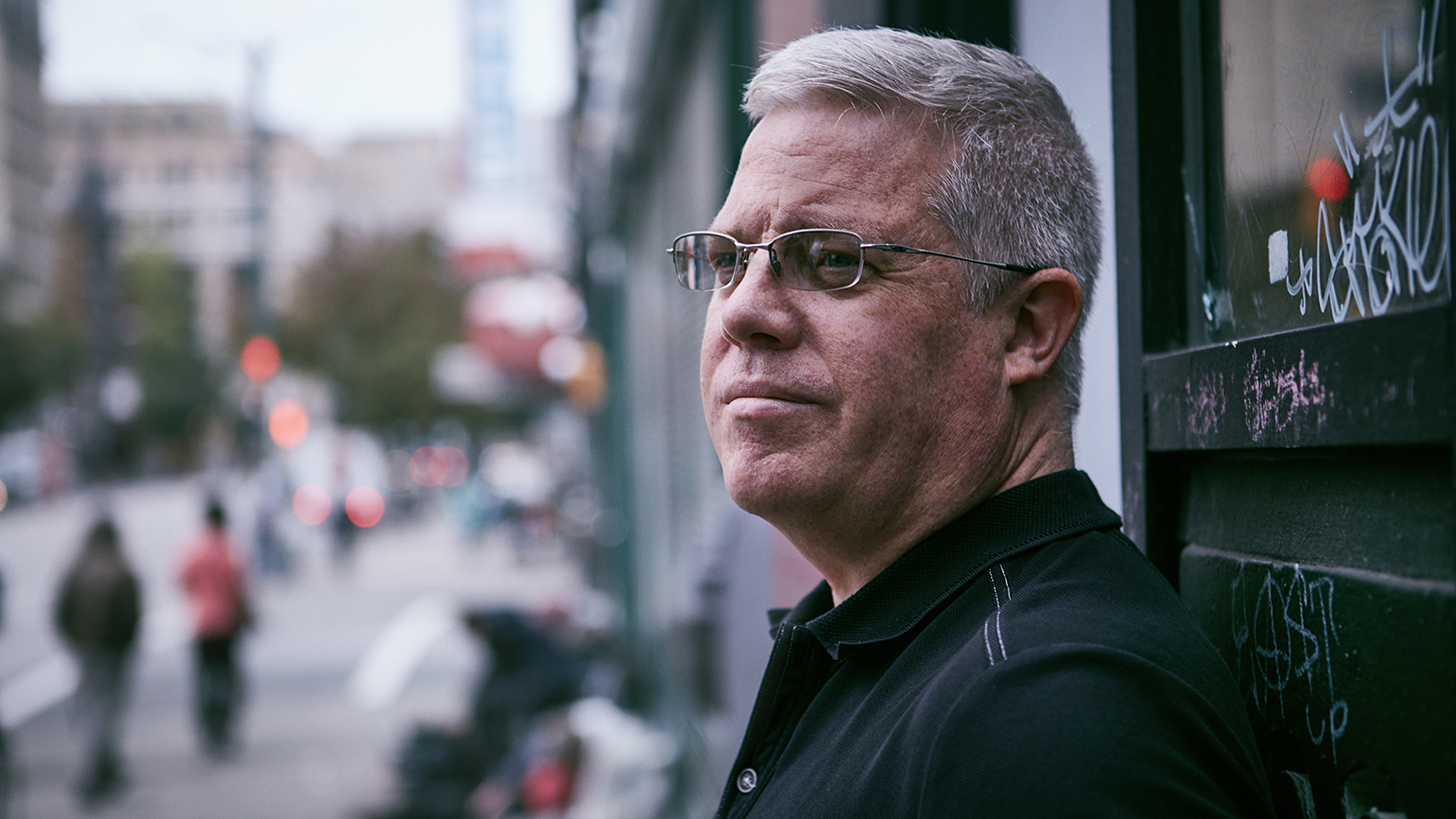
In the two years I talked to treatment professionals, researchers, advocates, public health leaders and addicts and their families, no one explained the issue to me more clearly than Tony Kennedy, an addiction counselor at the Harbour Light Salvation Army shelter and drug treatment center in the Downtown Eastside neighborhood of Vancouver, British Columbia, Canada. Vancouver is home to one of North America’s worst drug problems. The city is also a living laboratory for experimental approaches to treatment.
The addicts who end up in one of Harbour Light’s 60 beds are the “toughest of the toughest to treat,” Tony says. “Some people go through detox up to 50 times. They go through treatment eight to 10 times.”
Many of Downtown Eastside’s roughly 18,000 residents are homeless or live in single-room-occupancy hotels. Their challenges—long-term unemployment and poverty, childhood abuse, addiction to multiple substances—might seem too extreme to serve as examples of barriers to recovery.
But research shows that trauma, both extreme and everyday, is key to understanding how addiction works and why it is best thought of as a chronic disease.
Repeated exposure to stress, especially before birth and in childhood, can cause structural imbalances in the brain that prompt people to seek a chemical shortcut to emotional equilibrium.
If the shortcut is alcohol or other drugs, the chemicals in those substances cause further brain changes that erode judgment, long-term thinking and impulse control. Alcohol and drugs start out feeling like a remedy for internal distress. They end up undermining the parts of the brain that enable someone to stop using. The seeming cure becomes a self-perpetuating cause of disease as physical addiction takes hold.
Learning to cope with the everyday stresses of life without chemical support is one of the first goals of treatment. Counseling and 12-step programs teach people how to “be okay without having to avoid what’s going on inside and having to numb yourself out,” Tony says.
But maintaining emotional and spiritual equilibrium is not enough. People also need what Tony calls recovery capital: decent housing, job prospects, a community that supports recovery and practical life skills.
Without such capital, people can emerge from treatment with good intentions but relapse when confronted by all the problems they’d sought to escape with substances—now magnified by the destructive effects of addiction. “In a lot of ways, society doesn’t want you and you don’t know how to participate in that world,” Tony says.
Regaining emotional balance and amassing recovery capital take far longer than the standard 28 days of rehab depicted on television. Treatment at Harbour Light lasts as long as three years, with patients gradually progressing to greater independence.
Tony says the “miracles” (his word) he has seen at Harbour Light—hardcore addicts achieving recovery after years of relapse on the streets—are the product of time, diligent work and research-backed treatment standards.
Tony counts himself as one of the miracles. His father was an alcoholic who drove drunk, lost his job and walked out on his family when Tony was 10. Seeking relief, Tony started smoking marijuana at age 12 and had his first drink a few years later. For nearly a decade, he was an alcoholic and drug addict in Vancouver.
Desperate to change, he tried a 12-step support group and spent the next two years cycling between relapse and vows to sober up. At last he entered residential treatment.
Tony had managed to stay employed and in contact with his family during his years of addiction. He emerged from treatment with some recovery capital. But he needed ongoing help coping with stress without chemical support.
Graduating from residential treatment, he was told to attend daily 12-step meetings for 90 days.
A foundation of 12-step programs is committing oneself to a higher power. “I was an atheist,” Tony says. “I thought, This won’t work, but I’ll do what you say to show you it doesn’t work.”
It did work. “I started to get better and have a little bit of hope,” Tony says. “When I started making amends to family and friends, I felt the obsession with alcohol just lift.”
He trained as a counselor, worked for several years helping federal offenders reintegrate after they leave prison, then took a job at Harbour Light in 2010.
After 25 years of sobriety, Tony continues to attend 12-step meetings and practice the disciplines of prayer and service foundational to his recovery. He does not consider himself “cured.” Sobriety, he says, is a lifelong endeavor.
“The best evidence for the effectiveness of treatment is someone like me,” he says. “I was once in the darkness, and now I’m in the light.”
Comprehensive programs such as Harbour Light’s are far less common than they should be, especially in America, where a fragmented, privately run health-care system has not developed universal standards of treatment or ways to pay for vital care.
Advocates and public health professionals I spoke to say efforts are under way to strengthen treatment standards and broaden access to quality care. For now, a patchwork of state-by-state regulations and a lack of long-term federal initiatives have left addicts such as Dana Smith dependent on local resources that vary in quality and affordability.
Strung out and missing her kids, Dana made her way back to Georgia. Her good intentions were derailed by an abusive man she met in Statesboro, who supplied her with drugs in exchange for sex.
At last, in 2007, she was arrested while trying to buy drugs.
What broke her cycle of relapse? A comprehensive state-backed program, roughly equivalent to Tony Kennedy’s Harbour Light. Dana was routed into a court-ordered, two-year drug treatment program. She underwent mandatory detox and residential treatment, followed by supportive housing and long-term attendance at 12-step support group meetings.
Dana witnessed substance abuse in her family growing up, was bullied at school, then endured physical and emotional abuse in multiple relationships with men. Treatment helped her cope with that trauma and the further trauma caused by her years of addiction.
She gained more recovery capital through counseling and by living in a supportive housing facility for homeless women struggling with substance abuse.
After nearly a year of treatment, she gathered enough courage to apply for a waitressing job at a local café. The café’s lively crew of regulars welcomed her with open arms—more recovery capital. Several years later, Dana opened a café of her own, where she now hires people in recovery.
“Just wanted to say thank you again for doing my story in Guideposts,” Dana texted me after her story was published. “I’ve had several people contact me and say that it helped them.”
I suspect Dana’s story helped many more readers than just the ones who reached out to her. Recovering from addiction, as she and other contributors to our series showed, is a monumental challenge. A lifetime’s work.
Our series showed something else too. Despite the chronic nature of addiction, recovery is possible with the right treatment, support and resources.
“I wasn’t a bad person. I was just a sick person,” Dana told me. “I thought I was bad. I didn’t think I had my heart anymore. But it came back.”
The goal of our series, and our ongoing coverage, is to bring that message of hope everywhere it’s needed. It’s a lifetime’s work.
For more inspiring stories, subscribe to Guidepostsmagazine.
Have you ever been betrayed by someone close to you and sworn that you would never forgive them? No matter your religious traditions, family upbringing or profession, forgiving others can be one of the hardest things to do.
Why is that? When others hurt us, the pain can drive our decisions and actions. Our self-esteem is wounded, and our defensive walls rise to protect us from more pain. The last thing we want to do is forgive the person who caused our spiritual and emotional ache.
The memory of betrayal stirs up pain, shame and anger and often causes us to seek revenge or show indifference. But dwelling in the past stops us from living in the present and planning for the future. We keep looking at the rearview mirror, seeing the person hurting us.
We may feel as if forgiving others makes us look weak, that we are letting the person who hurt us off the hook, that they should also suffer and be humiliated. We tell ourselves that strong people don’t forgive those who hurt or offend them. “You got me once, but never again.” We may feel we let our guard down and as a result, we were taken advantage of. Or we may fear that if we do forgive, they will hurt us again or that others will think less of us for doing so.
But forgiving others is a courageous act; it’s for the strong. It means we take the higher moral road. When we allow ourselves to forgive others, we free ourselves from the pain, anger and bitterness that only make matters worse.
And though it is hard to achieve, we must remember that we are only human and so are those who have hurt us. When we are on other side of the equation and have hurt others, we will need their empathy and grace. Finally, we should forgive because God forgives us, no questions asked.
I’ve long believed that positive living isn’t about being upbeat every minute of every day. That kind of permanently happy state can’t be the goal, for the simple reason that it’s impossible to achieve. Who among us is so stalwart in our optimism that we never have a blip or a stumble?
It turns out, a growing body of psychological research is building around the idea that true happiness comes from authentic positivity—and authentic positivity comes from emotional flexibility.
Being flexible emotionally means being open to the full range of emotional experiences, including the challenging ones like frustration, anger, disappointment and sadness. As discussed in this scientific paper, and others, emotional flexibility means being able to shift behaviors and mindsets to meet different situational needs, adapting when circumstances change and appropriately prioritizing different aspects of life.
It’s important to note that emotionally flexible people are not chameleons whose outlook changes based on which way the wind is blowing. Instead, emotional flexibility is a skill that help people navigate the complexities of daily life, firmly anchored in their deeply-held values but available to the honest experience of unpredictable and ever-changing life.
Reading about this, I’ve learned a new word that I’d like to share with you: eudaimonia. Eudaimonia is the opposite of hedonism, the idea that happiness comes from the constant pursuit of pleasure and avoidance of pain. Eudamonia, by contrast, encourages us to pursue meaning and authenticity, growth and honest joy. Both are philosophical approaches to happiness, and recent psychological thought is leaning toward eudaimonia as a more sustainable, satisfying model.
Eudaimonia was first articulated by Aristotle, who derived the term from the Greek word “daimon,” which means “true nature.” To me, walking a positive path means accepting that we each have a positive true nature, inherent goodness and a capacity for happiness. What we learn from the concept of eudaimonia is that we are best equipped to realize this nature when we are emotionally honest and flexible.
As one review of literature on resilience puts it, “realistic optimism” is a key to a meaningful, genuinely happy life. After all, if we are resolute in our commitment to live realistically but positively, don’t we have more to offer others—especially those who are struggling?
My dear friend, filmmaker Kenny Saylors, does a Sunday post each week on Facebook. This one was awesome and I asked him if I could share it with you. Anger, hurt and bitterness are all things that can eat away at our lives and hearts—but we don’t have to allow them to do that. I think you’ll be inspired by Kenny’s wise words…
Have you been treated wrongly? Has someone done something to you that stirs up anger, hurt or emotional trauma in your life?
If you look around, it’s easy to see people who are trapped in their past, hanging on to the bitterness or anger toward someone or a situation that hurt them, which only causes the unchangeable past to dictate their changeable future. I don’t know about you, but I’ve been there far too many times myself. It’s not a pleasant place to reside.
Sometimes life is only understood when looking backwards, but it can only be lived looking forward. Yet I have to stand guard over my own heart to see that I don’t fall into bitterness or a vengeful spirit…
I tell you, friends, the past may have made us who we are, but it does not define us in the present unless we allow it. The Bible instructs us to forgive those who have sinned against us or despitefully used us. If we hold on to this unforgiveness, this anger, this bitterness, we have isolated ourselves from our Lord.
In Matthew 6:15, Jesus tells us that if we do not forgive others, our Father in Heaven will not forgive us. And we wonder why forgiveness is such a powerful thing…because it re-opens our connection to our Creator!! It doesn’t mean the hurt will stop or the memory will escape immediately, but the unbearable weight of unforgiveness will be lifted and true healing can begin.
So, have you been beating your head against a wall in confusion? Feeling like God is a million miles away? Soaking your pillow in tears at night or walking around with the weight of the world upon your shoulders?
Today is the day to let it all go. Forgive those who have wounded you, no matter how deeply or piercing it was, and accept the love and forgiveness of your Savior. Be still and listen for God’s direction daily. You can’t erase the past, but He can separate you from it and lead you into a new future—but you have to be willing to let it go, forgive those who have hurt you and forgive yourself. And then God will forgive you, and you will experience true freedom.
Well, Memorial Day has come and gone and June has officially begun. In my mind, that means summer is here—even if the calendar says it doesn’t arrive for another few weeks.
While reading how June changes his lifestyle—and mindset—I began to think about how I feel about this lovely month and felt inspired to share my five reasons with you.
5 Reasons I Love June
1. I can breathe easier when I run. There’s something about the June air here in the New York area that makes me happy. Yes, we get the occasional muggy summer day when all you can do is sit still and hope to feel cool, but for the most part, the sun and wind work together to give my lungs a healthy charge while I’m running along the river. It doesn’t have that winter bite that causes me to cough and I actually enjoy exercising as a result.
2. There are flowers everywhere. When June rolls around I seem to notice the colorful blooms around me a lot more. Maybe it’s because I’ve just started walking outside for longer periods of time as the weather allows it, or maybe it’s because I’ve started wearing brighter colors as I pull outfits from my summer wardrobe, but the fuschia, lavendar, yellow and red florals that blanket the parks and gardens I pass seem more vibrant than ever.
3. My toes feel perfect nestled in the sand. Anyone who knows me well knows I’m a beach lover. I’ve been sticking my toes in the grainy sands of beaches along the East coast since I was born, and it will always be a place that I associate with family, friends, happiness—and Grandma’s blueberry pie (a great way to end a long beach day). I usually kick off my beach weekends in late May, but June is when I embrace the salty smell and rolling waves as I close my eyes and let the sun pour down on my shoulders.
4. I eat healthier. Sure, Grandma’s pie is on my summer menu, but for the most part, I tend to mind my meals a bit more when summer rolls around. The fruits are juicier, watermelon is all that more appealing and I’m more apt to choose things like salad, veggies and smoothies at the grocery store.
5. I feel happier. It seems silly that the start of a certain month can change my mood, but when the sun is shining through my cracked office window and my sandals remind me that my winter boots are hiding in the back of my closet, I feel a sense of calm. I guess you could say the start of summer is like a mini new year for me. It sheds light on new possibilities, brings life to plans and ideas that I may have been avoiding for awhile and gets me out and about, breathing in the reality that seasons really can change more than just the weather.
On cold, dark days, are you tempted to curl up for a long winter’s nap? Some animals do, but for them, it’s critical. Here’s what you need to know about hibernation and the creatures that do it.
What Happens? Wild animals have developed a variety of strategies to help them survive adverse winter conditions such as frigid temperatures, snow and ice, and a scarcity of food. Some hide food stashes in preparation for the cold months. Some migrate to warmer climates. And others hibernate—a means of lowering their metabolism in order to conserve energy and store fat.
Hibernating is not the same as sleeping. These animals enter an extended state of torpor (decreased physiological activity). Their body temperature drops, and their breathing and heart rate slow, often dramatically. An Arctic ground squirrel’s temperature can fall to –2.9 degrees Celsius, and a bat’s heart rate can slow from hundreds of beats per minute to just 11. The heart of a hibernating wood frog actually stops beating.
Which Animals Do It and How?
Bears are probably the first animals you think of when it comes to hibernation. Because they are easily roused, though, some scientists don’t consider them true hibernators. Skunks fall into this category too.
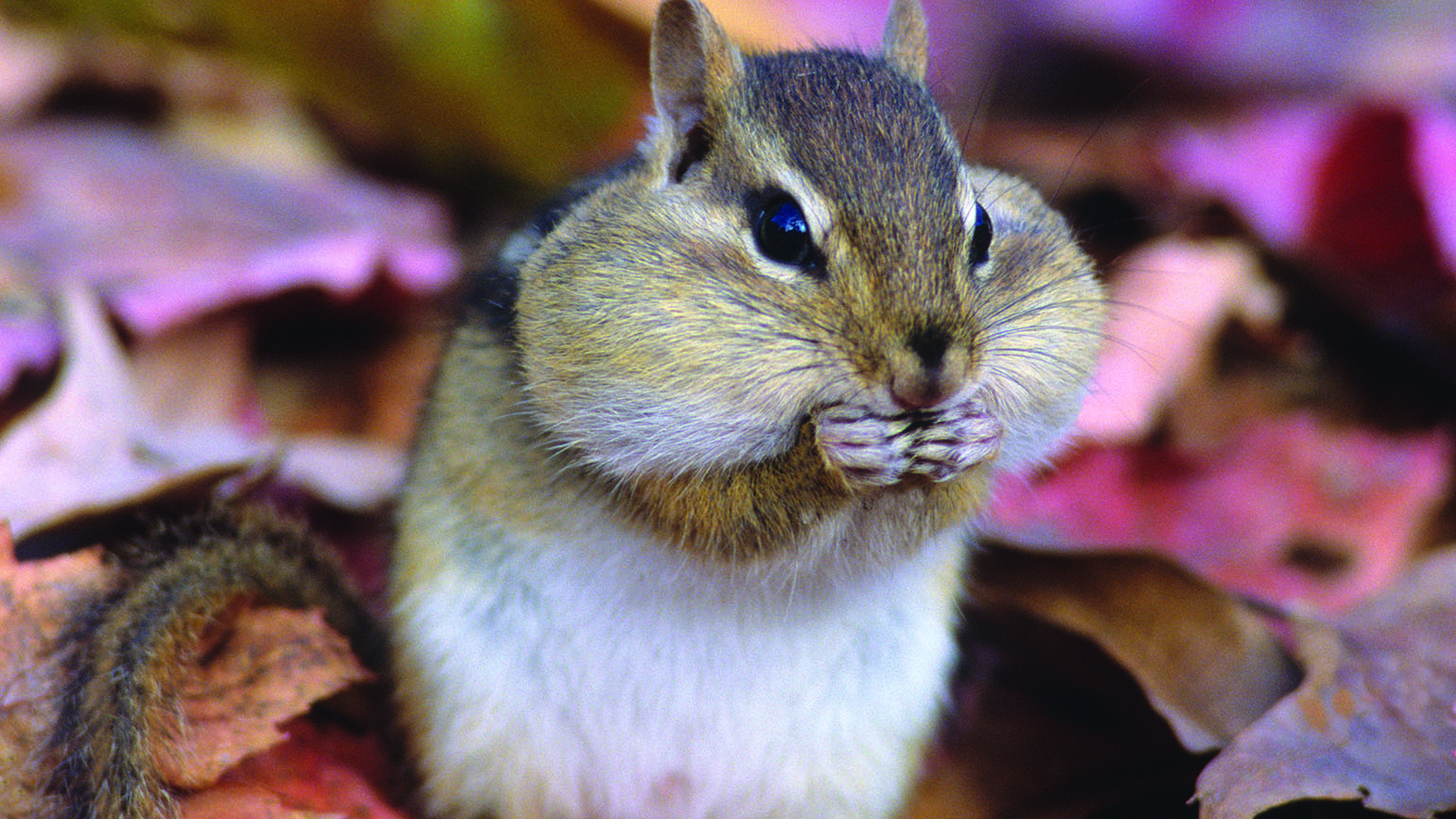
Small mammals, such as dormice, are the most typical hibernators. This is because their little bodies make it more difficult for them to stay warm in cold weather. Other mammals that lie dormant are chipmunks, hedgehogs and groundhogs.
Bumblebees hibernate—but only the queen bee, who digs a hole in the ground and stays there until spring arrives.
Some snakes sleep through the winter, with hundreds together to share body heat. Bats huddle together in caves. Box turtles hibernate in underground burrows, and wood frogs cozy up in hollow logs or leaf piles. Hibernating animals are usually well hidden. If you come upon one in your yard or while you’re hiking, it’s important not to disturb it. Waking up from hibernation requires a lot of energy. Don’t deplete hibernating animals of that energy, which is essential for their survival.
What Can We Learn?
Hibernation is an amazing adaptation, allowing animals to survive without damage to their body systems. Understanding how that’s possible can give scientists insight into human conditions. We can learn how cells survive very cold temperatures, enabling doctors to better preserve human tissues for transplants. We can get clues for treating muscle disorders and degenerative bone diseases since hibernators don’t experience muscle and bone deterioration.
Studying hibernation may also help us better understand neurodegenerative diseases. Research shows that a particular protein associated with Alzheimer’s disease is renewed in the brain cells of some hibernating animals, such as squirrels, during their deep sleep.
That leads to the question: Could people hibernate? Most scientists say no, but ever since lemurs were discovered to do so, some experts have wondered if a human hibernation-like state is possible, because lemurs are primates that are genetically similar to us. For now, though, if you need to conserve some energy this winter, a nap will do.
Did you enjoy this story? Subscribe to All Creatures magazine.
Many of us want to start the new year with a fresh energy to be focused, productive and successful. It’s reductive to say it so plainly, but it’s also accurate to consider a lot of New Year’s resolutions are about trying to get smarter.
Neuroscientists distinguish between types of intelligence. “Crystallized intelligence” is concrete, measurable learning, like a child who’s learned their times tables or the capital cities of every state in America. Crystallized intelligence is cumulative, and it builds as we deepen our learning and understanding of facts, figures and concepts.
For a productive, positive New Year, though, we might be—ahem—wise to focus on “fluid intelligence.” Like the name implies, fluid intelligence is the ability to apply information to a wide range of situations. When we use our fluid intelligence, we draw on our memories and use what we’ve learned in the past to help us solve a problem in the present. This is the type of intelligence that enables us to think flexibly, change our perspective in light of new understandings and apply our past experiences and knowledge to new challenges and situations.
So how can we “train” ourselves to improve fluid intelligence? Kuszewski outlines principles that, when practiced regularly, encourage our brains to remain lithe. Among these are to seek out novelty, challenging our brains to navigate new-to-us situations (as opposed to doing the same “brain training” activities every day) and thinking creatively, both by taking on explicitly creative projects like artwork and also by opening our minds to new ways to take on old tasks.
But my favorite suggestion of Kuszewski’s is to increase fluid intelligence by “doing things the hard way.” She writes, “Efficiency is not your friend if you are trying to increase your intelligence.” Tools like using a GPS to guide us on every driving trip are helpful and even sanity-saving when we’re in new places. But it’s also the kind of “efficiency” that lets our brains off the hook when we need to get ourselves from A to B.
On a regular basis, try switching off the GPS and navigate to a new destination using your memory or consultation of a map before you leave. Give yourself plenty of time and embrace the opportunity to course-correct when you make a wrong turn. And know that even if you feel frustrated, you are investing your energy in fluid intelligence—a strength you will be able to draw on throughout the year.
What other opportunities do you see to “do things the hard way” to keep your brain sharp?
Thanksgiving is a time to celebrate and give thanks for the many blessings in life. But what about being grateful for the difficult times? I don’t know one person who enjoys adversity. But what it can offer us is a chance for personal and spiritual growth.
If we’re honest about it, most of us become stronger from facing challenges. We discover just how resilient we are when dealing with emotional pain, illness, job loss, grief, divorce, financial setbacks and more. Our faith increases even in the midst of doubt and fear. We find that with God’s strength, we also gain strength.
Past troubles can teach us to develop a positive mindset for future battles. We are now better equipped to get through the rough and rocky roads of life because we’ve traveled them before. Even in the middle of a tough time, we know that God will not leave us there. When we change our perspective and become grateful for our difficult times, we can find the good even when sorrow overwhelms us.
Let us remember what Apostle Paul declared, “We are hard pressed on every side, but not crushed; perplexed, but not in despair; persecuted, but not abandoned; struck down, but not destroyed.”
Try to pause and give thanks for the lessons learned, spiritual growth gained and the people who stood by you during challenging times. Otherwise, you might miss an opportunity to recognize God’s presence. Tough times don’t last, but gratitude does.