

Embrace God's truth with our new book, The Lies that Bind

The Unlikely Caregiver That Changed Her Mind

I sat at the kitchen table in my bathrobe, bleary-eyed, looking down at the steaming cup of coffee in my hand early on a Saturday morning back in the spring of 2002. I had been up most of the night with my 18-year-old son Joel, who has autism. Life had been a roller-coaster ride since Joel hit puberty. There were many nights he slept only two hours, and days when he threw one tantrum after the other. My husband, Wally, and I never knew what might set off an explosion.

We can’t do this on our own, I thought again that morning. It’s too hard. Wally and I couldn’t even enjoy church. Carol and Bob, the couple who used to teach the special-needs class, had moved on. I’d hoped someone else might volunteer, but no one did. Now we couldn’t sit through a service together without one of us having to take Joel out of the sanctuary because of his agitation.

We prayed about moving Joel into a group home with staff that could better care for him. The county had even put him on an emergency housing list. But at the last minute we just couldn’t let Joel go. It didn’t feel like the right time.

Now I took a long sip of coffee and looked out the window, wondering if Wally and I had made the right decision. I was exhausted, exhausted from being a mother and caregiver 24/7. I had almost given up on my prayer that God would send us someone to care for Joel, someone who could understand my son, could understand his need for life to unroll at a predictable, well-ordered pace, who shared our faith and could even come to church with us on Sundays. I’d lost track of the number of county-provided support staff who didn’t work out, who just couldn’t handle Joel. A new person was coming over from the agency later today, but I was running short on hope. Help, Lord, I prayed again. We need someone for our son. Finally I got up from the table and trudged upstairs to get dressed.

A couple of hours later there was a knock at the door. Joel stood by my side while I opened it. “The agency sent me,” a handsome young man said. He was soft-spoken with an accent I didn’t recognize. There was a soothing quality to his voice.

“Come in,” I said, glancing at Joel and hoping he wouldn’t start acting out right away. But he didn’t. In fact, he seemed almost calm. We sat down in the living room. “My name is Mohamed,” the man said. “I’m from Mauritania, Africa. I cared for my mother in my country until she passed away, then I moved here because I have always wanted to live in the United States.”

Suddenly Joel got up. Oh, no… I thought. But he went over and sat beside Mohamed. “You have a new friend,” I said, a bit surprised. “Joel doesn’t normally sit next to strangers.” Mohamed turned to Joel and started asking him questions.

“Joel,” I said, “why don’t you get your photo album to show Mohamed?” For the next hour I watched the two of them together, paging through the book. Mohamed pointed to one picture after another. “Who’s that?” he’d ask Joel or “There you are with your dad at the zoo, right?” or “Is that your dog?” Joel responded happily with a simple shake of his head or a quiet yes or no.

I was relieved at how well they seemed to get on together. “When can you start?” I asked when Mohamed finally got up to leave. “I can start this week,” he said. Joel and I followed him to the door and watched him as he walked away.

Later that evening I told Wally about Mohamed. “I liked him immediately,” I said. “There was something so calming about him when he greeted Joel and me.” “Well, he certainly sounds terrific,” Wally said. “Maybe our prayers for a caregiver have finally been answered.”

“Of course, we’ll probably still have to find someone to help us out on Sundays,” I said. “I wonder if I could ask Mohamed.”

The transformation was so amazing that it sometimes took my breath away. Around Mohamed, Joel’s anxiety began to ebb and his tantrums became almost nonexistent. The peace I had felt from Mohamed the first time I met him was a completely calming influence on my son. Under Mohamed’s watchful care, Joel became that lovable boy he had been before the tantrums started. Now if only we could find someone to help us out on Sundays too.

“Why not ask Mohamed?” Wally said. “Joel really likes him. It might just be a great solution.” A couple of days later when Mohamed came over to take Joel to the zoo I asked him, “Do you go to church?”

“I’m a Muslim,” he said. “I worship at the local mosque.”

“Oh…” I said. “Wally and I need help with Joel in church on Sunday mornings,” I continued hesitantly. “Would that be a problem for you?”

“That would be fine,” Mohamed said, and smiled. “I can worship God in your sanctuary as well as in my mosque.” Of course, I thought, why would God send us someone who couldn’t help us on Sundays?

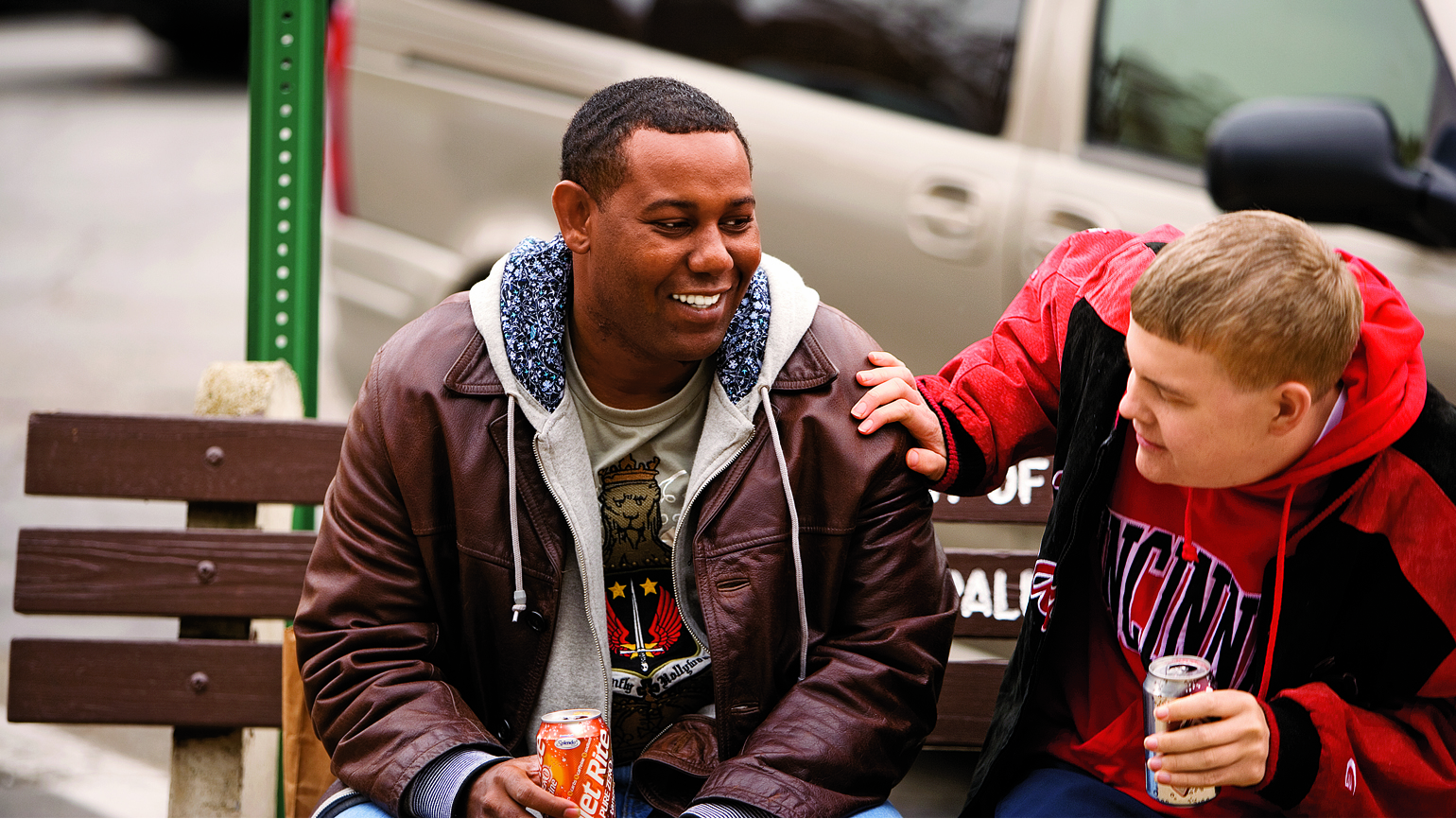
Five years down the road Mohamed is practically a member of our family. “He’s my brubber,” Joel says at least once a day, pointing to a picture of the two of them on the refrigerator door. And when Mohamed slips into the pew next to Joel at our church on Sunday mornings, Joel grabs his hand. I’m struck by the beautiful contrast in skin tones and by the mysterious ways of this God we love. Mohamed was not the answer to prayer that I’d expected. But he was the one that we needed.

This story first appeared in the April 2008 issue of Guideposts magazine.

The Unique Challenges of the Male Caregiver

Lisa Weitzman, LISW-S, is the BRI Care Consultation™ Manager of Business Development at Benjamin Rose Institute on Aging

Regardless of circumstances, caregiving presents a host of demands. For the male caregiver, however, longstanding stereotypes can make the experience even more challenging. The traditional idea of a caregiver is a woman, most often someone caring for a husband or father, and caregiver support programs tend to have a female focus.

Despite societal expectations, according to a recent AARP study, 44 percent of family caregivers for older adults—or six million caregivers—are actually men, and 28 percent of these men are millennials (Accius, J. (2017). Breaking Stereotypes: Spotlight on Male Family Caregivers, AARP Public Policy Institute).

As with female caregivers, men who take on the role handle a variety of household tasks. They pay bills and oversee financial accounts, make doctor’s appointments, cover transportation and prepare meals, along with numerous other responsibilities. On a daily basis, they provide their loved one with personal care, including bathing, toileting and dressing. While it may seem, then, that there are not many differences between the male and female caregiving experiences, in many cases gender differences clearly play out in approaches and responses to caregiving.

Research studies have pointed out several key differences between men and women as caregivers. Men, in general, tend to be “fixers.” They tend to like to create lists of chores and delegate tasks that need to be completed. They often prefer to manage rather than administer hands-on care and focus on practical solutions rather than on their feelings about caregiving. Traditionally, they are not likely to discuss their stress. They may contract for assistance in the home, but they do not tend to seek emotional support in any way. In fact, men often believe that they should “tough it out on their own” and thus wait until a crisis before turning for help, even disregarding their own health issues. (Assisting Hands Home Care. (2014). Men as Family Caregivers). In sum, for many men, caregiving is not intuitive; rather it is a role they have to learn how to play.

Adding to this, male caregivers often have to buck societal expectations of who should handle caregiving tasks and how. It is not unusual for them to encounter employers, medical professionals and social service providers who are not used to dealing with men in this role and thus may disregard their issues. Another potential stressor is that many men still define themselves as the family provider; in fact, 66 percent of male caregivers still work full-time outside of the home. At the same time, 37 percent of men—and 45 percent of millennial males—hide their caregiving responsibilities while at work, afraid of the workplace ramifications of sharing this information (Accius, 2017). On top of this, men are often not as prepared as women for the intimate aspects of caregiving. Many lack hands-on caregiving experience, having been at work full-time while their children were growing up. Even when men want to reach out for help, they may not know where to turn because they are not used to searching out community resources.

Whether male or female, caregiving is not necessarily a choice. However, men often view it as a situation that has been thrust upon them that they want to solve. They “don’t self-identify as caregivers; they just see themselves as the good husband, son, or grandson” (Seegert, L. (2019). The special challenges men face as caregivers, Association of Health Care Journalists). But, as Jean Accius reflects, “Then they realize it’s harder than they thought, they can’t fix it, and they think they’ve failed. But that’s not the case” (Accius, 2017). As one male caregiver states, “It wasn’t something I necessarily wanted to do…I just had to put my feelings in a corner and go for it.”

The good news is that men can take steps to find relief from the challenges of caregiving within “nonthreatening environments that allow for honesty without the pressure of rejection, ridicule, or criticism (Singleton, D. (2015) The Male Caregiver, caring.com). If you are a male caregiver navigating this role, you may want to:

· Get as much information as possible, and take advantage of services in your area.

· Look into professional and/or online resources, including the Well Spouse Foundation, your state’s National Caregiver Support Program, online or all-male support groups, or caregiver coaching services like BRI Care Consultation™. Keep in mind that it is all right to ask for assistance from family and friends. You are not alone on this path, so allow yourself to seek out their help.

· Accept mixed feelings about the experience: it is a difficult process that can stir up conflicting emotions.

· Honor your strengths and play to them.

· Give yourself the time you need to take care of you.

The Two-Minute Vacation

My times are in thy hand. —Psalm 31:15 (KJV)

I stopped at the foot of the stairs and set down the vacuum. I’d been running up and down, getting a bedroom ready for guests. The phone had rung nonstop, the breakfast dishes were still on the table, and none of this was getting that writing assignment done. It was time for a minute vacation. I stuck a CD into the player, dropped into a chair, put my head back, and for a moment let Gregorian chant transport me to an unhurried world.

I discovered the wisdom of these brief getaways when my husband and I were on an actual vacation. In the Florida panhandle, we had stopped for the night at a motel set in a grove of ancient live oaks. Printed on the breakfast menu of the adjoining restaurant we noticed “The Oaks Prayer for Today”:

“Slow me down, Lord. Ease the pounding of my heart by the quieting of my mind…. Teach me the art of taking minute vacations: of slowing down to look at seashells, to chat with a friend, to pet a dog…. Let me look up into the towering oaks and know they grew great and strong because they grew slowly and well.”

Minute vacations–could I really recapture, in the workaday world, the release of pressure we felt on that rambling, no-special-destination car trip? For a few days we really were stopping to look at seashells and make friends with playful dogs. I copied down the prayer and, back home, set out to experiment.

A two-minute stretching exercise turned out to be a quick way to relax. So did a stroll around the yard. Or a few minutes with a crossword puzzle. I developed a score of instant escapes, like preparing a cup of Lapsang Souchong tea with my best china, or opening a photo album and spending a moment in another time and place.

It isn’t only the minute vacation, I’m finding, that’s different. To stop, to step aside, to lay down–even for a moment–the pressures to achieve is to see all the other minutes in a new way, to receive time itself as a daily blessing.

Lord, teach me to walk today in Your unhurried steps.

The Turtles of Topsail Island

My brother, Richard, saw it first. “Jean!” he shouted, running up toward our little vacation beach house. “There’s something huge coming out of the ocean!” The moon wasn’t quite full that summer night on Topsail Island back in 1970. But it was pretty close.

My husband, Fred, and I had fallen in love with the beaches of Topsail back in 1970, on our honeymoon. We’d vacationed there ever since, and had recently bought this beach house. I squinted down toward the waves. An animal the size of a truck engine was making its way up the beach, right for our house.

It was past midnight, but I ran inside and woke up the kids. We all gathered on the deck.

“What is it, Mom?” Karen asked. Eight that summer, she was my youngest and every bit the nature lover I’d been at that age.

“It’s a turtle,” I said. “A sea turtle.” I’d seen the posters put up by the National Marine Fisheries Service. Sea turtles were a threatened species. The females lumbered ashore to lay their eggs.

She came to a halt right at our porch steps and began digging with her back flippers. Sand flew through the air, smacking against the porch. One by one the family got enough of the spectacle and headed back to bed.

Not Karen and me. Wrapped in blankets, we watched until 2 a.m., when the turtle finally finished her task and crawled back into the thundering waves.

Early the next morning Karen and I were down in the sand, examining the spot where we knew the eggs were buried. “How long do you think it’ll take them to hatch, Mom?”

“Let’s find out,” I said.

We called the North Carolina Wildlife Resources Commission, but they had no record of turtles nesting on Topsail Island. Finally, we found a government pamphlet that gave us some answers. What we’d seen was a loggerhead—one of seven species of sea turtles, all of which were either endangered or threatened.

Sea turtles live their entire lives in the ocean, except for when the females, traveling hundreds, or even thousands of miles, somehow return to the exact beaches where they hatched decades earlier to lay eggs of their own.

Female loggerheads laid several nests, coming back to shore repeatedly over the course of a few weeks. Karen and I walked up and down the beach, looking for trenches in the sand like the one our turtle had made (they’re so big that people sometimes mistake them for bulldozer tracks).

We found a bunch, but we’d learned that as little as one turtle in 10,000 makes it to adulthood.

Nests take about 60 days to hatch. Karen and I were back home in Ohio by the time the babies in “our” nest saw the light of day. The first thing we did when we returned the next year was check on it. There wasn’t much left to see—just the vaguest indentation in the sand where we knew it had been.

How many babies had made it down to the water?

“I wish we could have been here to help, Mom,” Karen said, a little sad. So did I.

Summer by summer we learned more about the turtles—and about how to help them. We swept over the trenches left by mothers so their nests would be undisturbed. When hatching time came we dug roads in the sand that the babies could follow down to the surf.

Sometimes we found stragglers from a nighttime hatching. We’d put them into the water and say a prayer for them as they winged their way toward deeper water. We kept track of the nests we found and reported them to wildlife officials.

Word spread about this strange mother-daughter turtle-finding team. We got calls about injured turtles that washed up on Topsail’s 26 miles of beach.

Fishing nets and speedboats can be a menace to them. Turtles hit by propellers were one of the most common victims on Topsail’s beaches. There was little that Karen and I could do for these animals.

Not that Karen didn’t have things in her life besides turtles. In 1990—the same year that Fred retired and we moved to Topsail permanently—she graduated from college and got a position with a Charlotte public relations firm.

We were incredibly proud of her—what mother wouldn’t be? And probably more excited about her new life than she was.

But then something terrible happened. Like so many terrible things it started out small…just a nagging cough. It wouldn’t stop nagging her. Karen saw our family doctor. She had leukemia.

“The more rest she gets,” the doctor said, “the better chance she has.” Karen gave up her dream job and moved back into the beach house with Fred and me.

Orders to rest or not, Karen stayed busy. It was the height of the nesting season. Mother turtles were laying eggs up and down the beach.

“That’s the third call we’ve got this morning about the same turtle nest,” Karen said one morning, exasperated. “Mom, we need to get this thing more organized.”

So the Topsail Island Turtle Project was officially born. Karen lectured at schools and libraries, explaining the vital role that sea turtles play in the ocean’s ecosystem. Turtles are a bellwether species. Their disappearance means more than just no more turtles. It means our oceans are dying.

How, Karen asked, could we sit back and let these animals slip into nonexistence before our eyes?

Extinction is a big word. Most of us don’t want to think about what it means. Extinction is a full stop. There’s no coming back. It’s permanent, irreversible. It takes courage to imagine something that large—that terrible. But Karen had that courage.

She knew what it meant to face up to endings, even if I was still struggling to accept her worsening illness.

“Mom,” she said to me one day as we were looking out the kitchen window at the late autumn light, “you know they signed me up for a life-insurance policy when I was working. I don’t want my illness to be the center of my life. I want the turtles to be the center of it. If I don’t make it, I want you to use that money for them.”

If I don’t make it… The words hung in the air. Karen and I didn’t talk about death. It was too painful for me. But she cared too much about the turtles to risk my not knowing her wishes.

“Okay, Karen,” I said. “I promise.”

Late one evening in 1991 Karen and I got a phone call that a big female had come ashore a few miles down the beach from us. Karen’s illness had been running her hard of late—harder than usual—but she refused to let her disease get in the way of helping those turtles.

So we got into the car and drove down to the spot where the caller had indicated.

The telltale furrow in the sand was easy to see in the moonlight. Karen and I found a spot close enough to the nesting turtle to keep an eye on it, but far enough away that we wouldn’t disturb it. Next to the moment when the newly hatched turtles make their mad dash to the waves, nesting can be the most dangerous moment in Mama turtle’s life.

But not with Karen around. “Do you want to go home and get some rest, Karen?” I realized how foolish the question was before it was out of my mouth.

“Don’t worry, Mom. I’ll get some rest later. As soon as she’s safe.” It was 2 a.m. before the turtle had laid the last of her eggs and slipped back into the sea. Karen went home and slept in. The next day, she felt too ill to go out. No, God, no, I prayed. I’m not ready to lose Karen.

Two days later, Karen slipped away peacefully, just a few months before her thirtieth birthday.

I plunged into helping the turtles with more energy than ever, channeling a grief that seemed too much for me to bear. Karen was gone—at least from the earth. But her work on behalf of the earthly creatures she cared for most went on.

In 1995, four years after Karen’s death, a 40-pound immature loggerhead turtle washed up on the beach at North Topsail Island with severe injuries, most likely caused by a boat propeller. Greg Lewbart, a doctor at North Carolina State University College of Veterinary Medicine, agreed to look at him.

“This turtle is lucky you found him when you did,” Dr. Lewbart told me. “He’s also lucky that his braincase wasn’t broken or his optic nerve severed by the propeller that hit him.”

I decided to call him Lucky.

We fixed Lucky up with a discarded fiberglass tank, and he ended up spending 18 months with us. When his wounds were finally healed, some Topsail Island Turtle Project volunteers and I carried him down to the sea. “So long, Lucky,” I said, as he slowly flapped out to sea. “May the Lord watch over you.”

I had seen plenty of turtles by then, but only in passing. Lucky was the first Topsail sea turtle I really got to know personally. There’s something uniquely painful and uniquely rewarding about taking in a wild creature, caring for it, coming to know it as an individual and setting it free again.

You put so much love and worry into the animal…and then you place it right back in harm’s way.

Of course, that’s what every parent does as well. No one knew that better than I did.

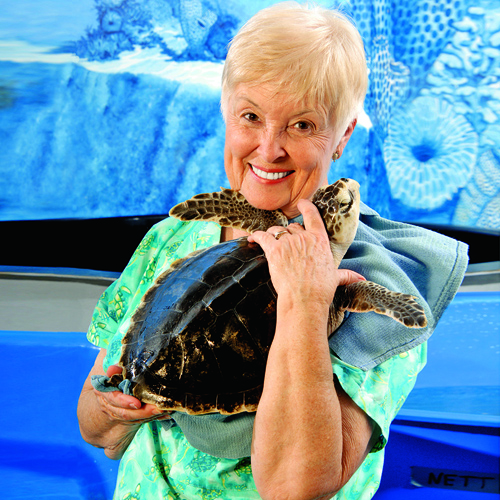
In the days after Lucky left us, I couldn’t get Karen’s words out of my mind. Help the turtles. To really help them I needed—the turtles needed—a turtle hospital. The Karen Beasley Sea Turtle Rescue and Rehabilitation Center opened its doors in the fall of 1997.

Since then we’ve rehabilitated and released more than 150 sick and injured sea turtles. Some stay with us for just a few days. Others spend months, even years here. But for all of these animals, there eventually comes a moment when I have to tell them goodbye. When I have to give them back to the ocean, and back to God.

It’s never easy. But there’s no time that I feel closer to God—or to Karen—than when I place one of these turtles in the waves and watch it swim off to make its ancient way in the world.

Sea turtles are just one of the world’s many endangered species. But they’re my species—the one I’ve dedicated my heart and my life to helping, just like Karen did.

By chance or, perhaps, by something more, a mother turtle picked my daughter and me out on that moonlit summer night so many years ago, when she crawled out of the sea, right up to our doorstep on Topsail Island. Yes, God does have a way of getting your attention.

The Truth About Christmas

“Oh Mom, you’re not going to stop, are you?” comes a voice from behind me.

I look to the rearview mirror and see the flushed face of a teenaged son.

Community Newsletter

Get More Inspiration Delivered to Your Inbox


“You are,” he says.

I do turn the corner. I have tremendous compassion for the tender spirit of a teen, and I know that on this busy street, most anyone we know could drive by. But I have to stop, and my son knows it. Sometimes the Lord speaks through the rush and hurry of my world and holds my attention soul-deep. Today He’s spoken to the quiet whispers of my mama-heart. To the place where worry is loud and fear is bold.

And He’s done it from a marquee sign.

The church is small and brick and the sign out front is simple. But I’ve driven around the block twice looking for a place to park. When I find one, I slip from behind the wheel and walk to the front of the church.

The sign reads: “Autumn leaves. Jesus doesn’t.”

Honest. Simple. True.

I stand on the sidewalk. Cars move fast but it seems like everything has stopped because I’m humbled, moved, by grace.

Jesus never leaves.

This year has brought worry, maybe more than any other year. I’ve wrestled and battled, and enemy attack has been strong. But in those times, when the night is still and fear moves within it, when the day has gone dark, and my heart has too, Jesus has met me.

He’s met me in my worry and He’s banished the darkness with His light-giving truth. He’s comforted my spirit and cared for my soul. He’s brought hope and peace and strength that overpower all because He is Lord.

He comes near.

As I stand there, I understand that although the sign says nothing of Christmas, it is the perfect message for the season. It’s the heartbeat of the believer, and it’s the pulse that brings life.

The babe in the manger brought salvation, and His Presence is a promise.

I will not leave you comfortless: I will come to you. (John 14:18, KJV)

The strong truth of Christmas is that Jesus–powerful and mighty, gentle and kind–will forever be by my side. Today. Tomorrow. For eternity.

I’m standing in December wind when someone comes down the walk. Her smile is warm and her eyes are kind. I don’t know if she’s the pastor, a member of this church, or someone taking a walk. But when she sees me standing there in front of this sign, snapping a picture, I know that she understands.

“It’s powerful,” I say.

“Yes,” she says.

My heart is full.

I return to the car and my teenager smiles now too. “Sorry, Mom. Sometimes I worry too much.”

“It’s okay,” I say. Oh, sweet son, I understand.

Worry has come close this year.

But Jesus has come closer.

And as the sign says, he’ll never, ever leave.

The Traffic Jam That Changed Our Lives

It was more than 60 years ago that I climbed into a yellow cab in New York to meet the publisher of a new little eight-page leaflet called Guideposts.

I’d already met the four-person staff in their small office, a windowless suite that had once been a telephone exchange. The previous issues they’d shown me were different from any “religious” publication I’d seen.

Guideposts just told stories about people whose faith—Protestant, Catholic or Jewish—had made a difference at a particular moment in their lives.

The man I’d come to meet was already in the taxicab. Norman Vincent Peale was on his way from a radio interview at CBS to another one at NBC. Dr. Peale was pastor of one of New York’s largest churches, a widely read author (his new book, The Power of Positive Thinking, would be released in a few months) and a very busy man.

This short trip between radio stations was his only free moment of the day, and my only chance to apply in person for a job at Guideposts.

I badly needed that job. I was 27, newly returned from freelance writing in Europe with my wife, Elizabeth, to find scores of veteran writers out of work. “Tib,” as I called her, had just given birth to our first child—how were we going to pay our bills?

Dr. Peale kept looking at his watch. Traffic was crawling. The cab would move a foot and stop. Another foot, another stop.

“Well,” Dr. Peale said at last, “I’m going to be late and there’s nothing I can do about it.” For the first time he looked directly at me. “Tell me about yourself. Your background, your goals.”

What could I say? I could use some of the religious language I’d learned as a boy, maybe get away with pretending to be a believer, but under the steady gaze of the man beside me, I couldn’t do it. In the end I told Dr. Peale I wasn’t much interested in religion; what I wanted to do was write.

The traffic inched forward, came to a standstill, inched again. Dr. Peale seemed to be really listening.

“That’s an interesting answer.” We talked some more.

“I’m glad we have these extra minutes together,” he said at last. “You’re exactly the kind of person I wanted to reach when I started Guideposts, people turned off by religious jargon. We want to provide glimpses of God in everyday life all around us. And I think I can promise you something. If you do come with us, Guideposts will happen to you.”

As it turned out, I did get the job, and a few months later Tib was hired as well. The Power of Positive Thinking became a bestseller. Guideposts became the most popular inspirational magazine ever, with millions upon millions of readers.

And Guideposts did in fact “happen” to Tib and me, our faith becoming the central focus around which our lives revolve.

Now, 60 years after that taxi ride, Guideposts.org has asked Tib and me to share a few short reminiscences, relating behind-the-scenes stories of some of the readers’ favorite articles. From its origins in that cramped windowless office, Guideposts now also resides in the limitless space of the Web.

The electronic media, though, remain true to Dr. Peale’s original vision: Find out what their faith means to real people in the real pressures of everyday life—and tell others.

The Thin Space Between Earth and Heaven

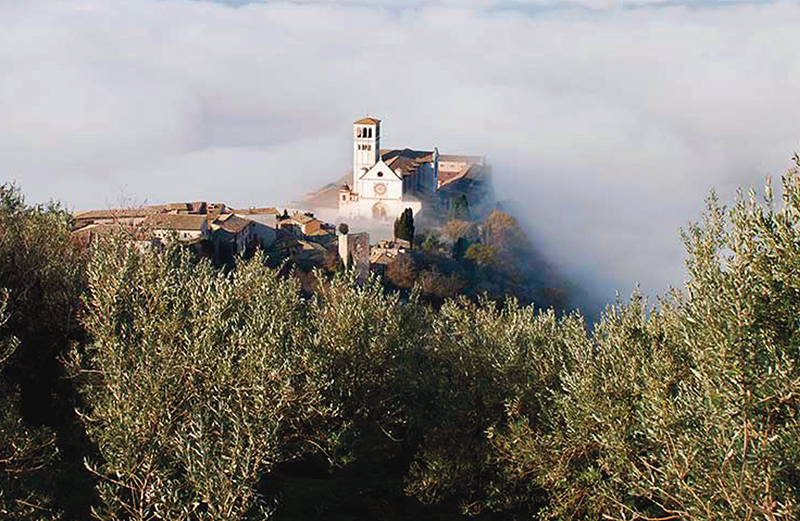
I’d vaguely heard of “thin places” that first time I visited Assisi: spots where the mysterious membrane between earth and heaven breaks and you can feel closer to the divine—so it was said.

But that winter day the sky was leaden, the damp cold cut through everything, and nothing about this medieval Italian hill town looked spiritually promising.

I was just out of college, teaching English in Florence, and not certain what I would do with the rest of my life. A friend suggested we take a trip to Assisi, famous as the birthplace of Saint Francis.

That weekend, we packed our backpacks and took a bus through the rolling Umbrian countryside. We got out at a dreary bus station.

There weren’t many pilgrims on the narrow streets. Nobody in the tacky souvenir shops with their Saint Francis tea towels, ashtrays, T-shirts and key chains. We made for the cheapest lodging we could find, a bed-and-breakfast where the wallpaper smelled of mold and a bare, dim lightbulb hung from the ceiling.

I knew so little about Saint Francis. I’d grown up in a Protestant church, and all I remembered of this twelfth-century saint was from a children’s book I’d once read.

He could talk to the animals—like Dr. Doolittle. He coaxed a wolf out of terrorizing a small town: as long as the villagers fed the animal regularly, it would promise not to eat them. He also created the first Christmas crèche with a live ox and donkey. Before that, I seemed to recall, he’d been something of a ne’er-do-well.

We wandered down to the basilica and sat in the pews, waiting for other, richer visitors to drop coins in the machines that illuminated the medieval frescoes. When the lights came on, you could see the life of Saint Francis in brilliant colors.

There he was, preaching to the birds. Walking through fire without being burned. And his transformative moment, when he gave up the life of a spoiled playboy and returned his fine clothes to his wealthy merchant father, standing half-naked in the town square, the blessing hand of God poking through the clouds above him.

From then on, Francis and his followers, dressed in rough robes, took nothing with them as they spread the Gospel from town to town, trusting in God’s providence and others’ generosity, the way Jesus had lived.

I was amazed by that, and a bit perplexed. Giving up all the benefits of wealth and power to live a life by faith?

I sat, meditating, learning more about Francis from the glimpses on the walls. He and his followers would wander the Umbrian hills, singing psalms like traveling street performers. I thought of how my college buddies and I would amble around campus, singing at the drop of a hat.

He wrote poems that came straight from the heart. I wrote too, although I wasn’t sure anyone would want to read my work. Francis had a powerful imagination. He created that first crèche. I put on plays in my backyard as a kid.

It was an eerie feeling. Here was a holy man who didn’t seem so far above me… he was starting to feel very close, like someone I could actually know.

The church was getting cold. I stuck my fists in the pockets of my Army-surplus peacoat and wiggled my toes in my battered desert boots. “Let’s go,” I said to my friend.

We hiked up the hill looking for a cheap place to eat. Pigeons cooed at us. Maybe their ancestors had attended Francis’ sermons, but these birds were more interested in pecking at trash. A man hawking souvenirs pestered us to buy a Saint Francis necktie. My feelings from the church began to fade.

Then we came to the town square of the fresco. There was no illuminated hand of God, only a few parked cars and scooters. Still, all at once, the grayness seemed to part. Maybe I’d been studying old pictures for too long. Maybe it was my empty stomach, but I caught a glimmer of the square as it had once been.

I could see Francis on one side and his father on the other, dressed in the finest cloth. “Why did you sell the clothes from my store?” I heard the father shout. “What did you do with the money?”

“I gave it to the poor,” Francis said.

“It wasn’t yours to give away.”

“It all comes from God,” Francis answered. “It can go back to God.” With that, he removed his fancy clothes, all that remained of his past, and left them on the pavement. His father could have them. Onlookers gawked and laughed. But Francis stood resolute, certain of his calling.

It was only a moment. In reality, the skies never lost their grayness, no ray of light pierced the clouds. But to my eyes the place was lit by holiness, as though God’s hand had reached through the gloom and touched me. Take my peacoat and desert boots, I wanted to say. Take whatever you want.

“Did you see that?” I said.

“What?” asked my friend.

“Never mind.” I shrugged.

I discovered that day what a thin place is. A spot in this world where God has shown himself to someone who loves him. The imprint of such an event doesn’t go away. It touched me that day, and has ever since.

I haven’t shed my clothes or preached throughout the countryside. I can’t talk to animals (my cat, Fred, wouldn’t listen to me anyway). I’ve never performed a miracle. But in one modest respect I am like Saint Francis: I have tried to lead my life by faith.

There is something more to this world than material things. And as I discovered one day at Assisi, in the thin places you can see that, even on a gray afternoon.

The Sweet with the Bitter

I was a bit off-kilter over the weekend, since I got word late last week that my uncle was in a coma, dying. We are not close, but he has always been kind to me, and unfortunately my father’s other brother died only a matter of months ago. Because of the suddenness of the crisis my dad was unable to fly out. It made me sad for him.

I suggested that my father could call one of my cousins and be put on speaker to talk to his brother. He did that, and it provided some comfort.

There was nothing else I could do, so I decided to busy myself Sunday afternoon baking bread. And then as the dough was rising, it occurred to me to turn it into sweet rolls. My father bakes sweet rolls for the family at Christmas, sending them out via overnight mail. It seemed a fine way to honor my dad.

Read More: A Fall into God’s Grace

My kids got up this morning, excited at the prospect of sweet rolls. As they munched happily, I thought of my dad and his brother, and prayed for them both. There is bitterness in life and there is sweetness. In this case, at least, the sweetness is being passed along to the next generation.

The Surprising Spiritual Benefit of a Social Media Vacation

Uninstall. Uninstall. Uninstall. With each click I removed a social media application from my phone. I had decided to take a short break from Facebook, Instagram, TikTok and a few other apps I used.

Taking a step back from anything you spend a lot of time doing can be a good idea—whether it’s work, doing a crossword or watching TV. This includes social media. According to Healthline, prolonged social media use can be linked to anxiety, depression and difficulty sleeping.

I decided to take a social media break because I was feeling less hopeful about the world. “Hope is an active anticipation in the ability to reach desired goals,” says psychologist and theologian Dr. Steven Sandage. “It requires a willingness to put energy toward those goals.” But after doomscrolling for hours and often hearing nothing but bad news, my energy to do anything—read a book, go for a walk, call my mom—was gone. I decided to take a break from social media, because I wanted to find hope again.

Here are some of my tips on how to take an effective social media break and feel more hopeful in your life:

1) Uninstall
Removing the social media apps on my phone was the most effective way to take a break. After all, I couldn’t scroll through Facebook or Instagram without a way to access them. Luckily, uninstalling them doesn’t remove my account or any of my photos, so I can always reinstall them and hop back on when I’m done with my break. If you use social media via your desktop, you can temporarily block those sites on your browser, so you aren’t tempted to hop on them.

2) Find new activities off the phone
Finding other things to do with my free time was the next step. When I finished work at the end of the day and wanted to unwind, I needed to train my brain not to absently reach for my phone. I created a list of things I enjoy doing on a sticky note on my desk. Then, whenever I had some down time, I chose something on the list.

You can include anything on your own list— go for a walk, take up a new hands-on craft like knitting or embroidery, start daily journaling, tackle a fun puzzle or tend to your houseplants—as long as it’s away from the screen. Keep the list handy so you always have something to fall back on if you feel the urge to scroll.

3) Find new activities on the phone
Even after I got used to my social media break, I still found myself reaching for the phone. After a while, I realized that it was okay! Our phones have become an important part of our lives and while setting them aside is important, they can be a great resource for information and fun. To avoid running to social media for entertainment, I downloaded a few activity apps that would keep me occupied in a more hopeful way.

Crossword puzzle apps let me exercise my brain and doing them with my boyfriend has been immensely fun. Online games like Words with Friends let me play Scrabble with my mom, even though we are states away from each other. Abide, the world’s largest Christian meditation and prayer app, is the perfect nightly ritual to help me relax my mind and fall asleep more easily.

4) Take pictures just for you
One of the most surprising things I did during my social media break was taking more pictures! Because I was taking photos for myself—and not as a means to get likes—I enjoyed the act of pulling out my phone and snapping a picture to remember the moment.

After hanging out with friends and family, I loved sending them the photos directly instead of posting them online and tagging them. This let us share the memories in a more personal way. And because all my photos are stored in my phone, I can easily look through them and reminisce about the good times. I was shocked at how much more hopeful I felt after scrolling through memories without being bombarded with negative news.

5) Reach out to people one-on-one
Psychologist and writer Ralph Smart once said, “There is no Wi-Fi in the forest, but I promise you’ll find a better connection.” Without social media to stay in touch with friends and family, I had to return to the good-old text message and phone call.

Perhaps not surprisingly, I realized I preferred this as a way to reach out to folks. Instead of liking a photo my sister posted, I gave her a call to tell her I loved it and caught up on how we were both doing. When it was my friend’s birthday, I didn’t post a generic “Happy Birthday” on his Facebook wall. I sent him a personalized text message wishing him the best day and telling him how much he meant to me. Having authentic connections with people is a vital part of feeling and staying hopeful. You’d be surprised how much going offline can bring you more online with the people in your life.

6) Be mindful
Of course, a return to social media is the last step. After my break, I was ready to hop back into social media with a few lessons learned.

The first thing I did was to set timers on my social media apps. This meant I could only use those apps for a certain number of minutes every day. So even as I hopped back on social media, I couldn’t go back to the hours of doomscrolling like before. According to Healthline, reducing our social media use even a little is helpful.

Next, I took a harder look at the pages I was following. I wanted to stay informed about what was going on with my friends, family and the world; but I also wanted to get some negativity off my timeline. I stuck with the pages that gave me good information and added on a few others that took a more actionable and positive look at the world. I sought out pages about things that brought me joy, like cooking, tending plants, art and travel. I also found pages that primarily focused on telling stories of hope—like Guideposts!—so my social media feed is sunnier than ever.

Taking a break from social media helped me return to a sense of hope, and now I’m using social media to stay hopeful in the future.

The Story of My Life

They left me in the dark little room and closed the door. I tried to keep clam, to stay focused, to not freak out. Then they told me, through the headphones strapped to my ears, to step up to the microphone.

What in the world was I doing here? I should never have said yes to this.

When I wrote an article for the April edition of GUIDEPOSTS magazine, I was excited to write a story about a personal change in my life. I could handle writing. I know how to do that. I feel secure with my fingers on a keyboard. But when the magazine’s audio team asked if I wanted to read my story for the audio version of the magazine, I didn’t exactly jump at the chance.

Why would anyone want to listen to me read? My voice is not trained in any way (when I was about eight, my mom told me I sing like a frog, and that was pretty much the end of my vocal aspirations), and I’ve always had a bit of a lisp. I always think I sound like a dork when I hear myself on tape. Plus, I’ve listened to some boring recordings in my life.

I did not want the story I’d worked so hard on to be turned into a snoozefest. I thought they should just hire a professional actor, someone who knows what they’re doing. And they would have—I didn’t have to accept.

But then I wondered: what was the worst that could happen? If I tried to read and completely mangled the story, they probably just wouldn’t use it. If I wasted a few hours of time in a studio, I’d just work late to make it up. Was my own insecurity really going to keep me from trying something new? I had no idea what to expect in a recording studio—but that was exactly the reason I should give it a shot.

“Sure,” I said. “I’ll try it. I’ll read my story.”

So this morning I found myself crammed into a little padded room, earphones strapped to my head, staring at a microphone, praying I wouldn’t sound like too much of an idiot. And you know what? I don’t think anyone is going to hire me for my vocal talent anytime soon, but it went okay.

I didn’t get laughed out of the room. I made it all the way through my story without breaking down in frustrated tears. I didn’t appear to waste too much of anyone’s time. And best of all, I tried something new. In my book, that counts as a successful day.

Beth Adams is the creator and editor of GUIDEPOSTS’ Home to Heather Creek fiction series.

The Statue That Restored My Faith

I was trying to pray when it happened. Desperately.

Dark feelings I’d been holding back for days like some terrible tide, feelings of worthlessness and exhaustion, overcame me.

I forced myself to keep reading the Psalm I had in front of me, but all I really wanted to do was give up. Just close my eyes and never open them again. Anything to make this unnameable despair, this sadness beyond sadness I couldn’t seem to shake, go away.

I was kneeling in our walk-in closet, my prayer space, the one spot in the house where my kids, Katherine and David, wouldn’t see me acting weird and wonder what was wrong.

The kids were downstairs watching TV. My husband, Eric, was at work. If only he’d come home! And yet I didn’t want him to see me like this. Not again. He’d know I wasn’t coping. He’d spend yet another evening worried sick about me. He’d tell me we should go see a doctor. That was the last thing I wanted.

I knew what my problem was: clinical depression. I was a stay-at-home suburban mom with two wonderful kids and a devoted husband, trying to maintain a freelance writing career. A perfectly normal person to anyone passing by.

Inside, though, I was a complete disaster. I’d battled symptoms of depression all my life. I had been a fussy baby, an anxious child, a teenager with an eating disorder.

I saw a counselor in college and learned to get by. Then in my thirties, after the kids were born two years apart, I went into a tailspin. Episodes of postpartum blues deepened into full-blown depression, a looming darkness that threatened to swallow me whole.

I’d seen a psychiatrist, but all the medications he had prescribed only seemed to make me worse. That convinced me. My problem wasn’t finding the right doctor. My problem was finding the right amount of faith.

I had been raised in church and I believed with all my heart that God answered prayer.

It’s me, I thought. I must not be praying hard enough. Kneeling there in that closet I tried to dig deeper into my soul, tried to find a deserving faith.

The front door opened and closed. Eric was home. “Where’s Mom?” he asked.

“Upstairs,” the kids said.

I heard him mount the steps. “Therese?” he called. I tried to pull myself together. I wiped my eyes. Why was I always crying? My hands tightened around my Bible. Eric’s tall, reassuring form appeared at the closet door. “Therese, what are you doing?”

I looked at him helplessly. “I—I didn’t want the kids to see me like this.”

His face softened. “Therese, why didn’t you call me?”

“Because I knew you’d come home,” I said. “You have to work. I didn’t want you to worry.”

“But I am worried.” He knelt and put his arms around me. I leaned into him and our bodies shook together with my sobs. He stroked my hair. “You can’t go on like this,” he said. “We can’t. Let me call a doctor, Therese. Please.”

For a long time I didn’t say anything. I thought about the psychiatrist I’d seen. He’d spoken so confidently, but nothing he’d tried had worked. I slept even less. The roller coaster of my moods got even wilder. My freelance writing career ground to a halt. I stopped scheduling playdates for the kids.

Every day was like a mountain. I hated my feelings and I hated myself for feeling them. What was wrong with me? I had so many blessings. Why couldn’t I just be grateful and get over my depression? What right did I have to be so sad? It was thoughts like those that had convinced me to go off medication. Didn’t God heal? Wouldn’t he heal me if I asked hard enough? If I had enough faith?

Eric took my silence as a tentative yes. “Let me call someone at Johns Hopkins,” he said. A friend of ours had recently seen a doctor at the renowned medical school in Baltimore and told me that the care was excellent.

“The doctor you saw wasn’t right for you,” Eric went on. “Maybe someone else could help you. Therese, I’m really scared. Please. For me.”

For an instant I had a vision of what life could be without depression. Life like the first years of our marriage, full of simple joy. I saw us taking the kids to a pumpkin patch in the fall, sledding in winter, on rainy spring walks. How could a doctor or a pill give that back to me? How could anything? But I heard the desperation in Eric’s voice. “Okay,” I said. “I’ll go.”

The first appointment I could get was six weeks away. Somehow I got through those weeks, though each and every day I thought about how the world would be better off without me—and I without it.

The appointment arrived. Eric’s mom came over to watch the kids, and Eric and I got into the car for the 45-minute drive to Hopkins. I tried to relax, but I couldn’t stop my obsessive, suicidal thoughts. What was wrong with me?

The feelings didn’t fix on any one thing. I couldn’t understand where they came from. Mostly I felt like a tremendous burden to Eric and the kids. I woke up every morning crushed by sadness. You’re worthless, a voice inside me said over and over. Why hadn’t prayer shut that voice up? If only my faith were stronger than that voice!

We neared the Hopkins campus and I felt panic stir. I pictured white-coated doctors wheeling me away. “I’m sorry, Mr. Borchard,” they would tell Eric, “but your wife is beyond hope.”

The doctors wouldn’t understand. What did they know about me? About my prayers? My faith? I was a diagnosis to them, not a person. The whole thing felt wrong. Eric circled the campus of historic brick buildings, looking for the parking garage. Should I tell him to go back home?

Finally we found a place to park. I took deep breaths. In one last instant of spiritual desperation, I screamed out a prayer in my mind: Dear Lord, be here. Help me. Please. We got out of the car and walked through the campus. I stared up at the buildings, all red brick and slate gray roofs against a cloudy Baltimore sky.

“Hmm,” said Eric. “I don’t think this is the building we want.” He looked at a map of the campus. “It looks like we just have to cut through that building there.” He pointed to an imposing Victorian structure topped by a dome and spire. “Billings Administration Building,” a sign read. We opened the doors and entered the lobby.

I stood stock-still. For a moment I thought I was seeing things. I thought I really had lost my mind. But, no. There, right in the center of the lobby, towering over everything, bathed in light from a skylight far above, was a ten-and-a-half-foot-tall statue of Jesus. He stood with arms outstretched, seeming to look straight into my eyes with an expression of infinite compassion and understanding.

What was a statue of Jesus doing here? I wondered. I knew that Johns Hopkins had been founded by a Quaker in the nineteenth century, but—this was the last thing I had expected to see today at the cutting-edge medical center. Jesus?

On the pedestal beneath Jesus’ feet was an inscription: “Come unto me all ye that are weary and heavy laden and I will give you rest.” Around the statue strode doctors in white coats talking in low voices. Patients walked past, nurses, orderlies, visitors.

I read the words again. I will give you rest. I looked around. Here? I wondered. Here, Lord?

Even as I asked, I knew the answer. Yes, it was exactly here that God would give me rest. Not through some sudden miraculous change in my emotional state. Not because my prayers were finally good enough. God would heal me as he had healed countless others, through the hands and talents of good doctors and nurses.

He could even work through medication if he chose. There were no barriers to Christ’s love. He was in charge of my healing. I could let go. I could let him work. Finally I could stop fighting. I could trust. Who more than Jesus understood the nature of suffering?

“Therese, are you okay?” Eric was right beside me. I turned to look at him.

“Yes,” I said. “I’m ready. Let’s go.”

We found our way to the psychiatric building, and there I was seen by a doctor named Milena who asked smart, gentle, caring questions. She then told me that the depression was not my fault, not a personal or spiritual shortcoming. Severe depression is a medical condition like many others, she said, biological in origin. It can and should be treated as an illness.

“You can get better, Ms. Borchard,” she said.

Eventually I was diagnosed with bipolar disorder, which explained why my moods varied so dramatically. It has been almost four years now since I returned home from Johns Hopkins. Taking the right medications and seeing a counselor, I’ve gotten my life back on track.

Eric and I took the kids to that pumpkin patch. We went sledding and took walks in the rain. I returned to my writing career. Most important, I learned how wrong I had been to believe that God had forsaken me because of some weakness in my faith. I know better now.

I came to the hospital that day weary and heavy laden, but not knowing what to do. And there, so unexpectedly, the Lord gave me rest, the rest my spirit yearned for, the healing he knew I needed.

Read about the history of the Christus Consolator statue at Johns Hopkins here.

Download your free ebook on happiness and personal growth.

The Spiritual Rewards of Caregiving

“There are only four kinds of people in the world,” former First Lady Rosalynn Carter has said. “Those who have been caregivers. Those who are currently caregivers. Those who will be caregivers and those who will need caregivers.” A sobering thought but a reality we’re all likely to confront at some point in our lives. As someone who once cared for a friend with cancer and also briefly needed a caregiver myself after an operation, I thought I had a decent handle on the subject.

Then I became the editor of Strength & Grace, our bimonthly devotional magazine focused on caregiving, and found I still had a lot to learn. What has struck me the most are all the ways in which our writers illuminate the journey of caregiving—the stresses and struggles as well as the opportunities for emotional and spiritual growth. I’d never thought of caregiving quite that way before: an opportunity not only to get to know our loved ones better but also to examine our relationships with God and with ourselves.

In the past, whenever I’d considered the possibility of one day becoming a caregiver for one or both of my parents, the truth is I started to panic. But after reading and editing our contributors’ devotions, which are equally pragmatic and inspiring, I’ve found my panic immeasurably lessened. Though our caregivers never sugarcoat the multitude of challenges they face, the moments of unsurpassed poignancy, deepening bonds and— yes—joy help balance the load. Here, three of our writers share their stories and hard-won advice with you.

Norm Stolpe; photo by Mike Roemer
Norm Stolpe

Norm Stolpe
Milwaukee, Wisconsin
Norm Stolpe’s life was upended when his wife, Candy, was diagnosed with Alzheimer’s disease five years ago, after wandering from their home in the middle of the night. A retired pastor, Norm shifted his calling from caring for congregations to caring for Candy. “We’re constantly adjusting to the daily changes in our new normal,” Norm says. “Clinging to the past is inevitably frustrating.”

Instead, he makes a point of finding joy in the moment, especially in celebrating Candy’s small victories, such as when she beats him at Scrabble. “Joyous moments are actually holy moments,” Norm says. He keeps a calendar and, in each day’s two-inch box, writes the specific moment of joy that day brought. He calls these his awareness-of-God boxes. “So much of life is paying attention,” Norm says. “If you cultivate and expect joy, you’ll see the little things you might otherwise take for granted.”

Such as Candy’s continued contributions in the kitchen. She can’t bake anymore because of the precision required, but she still prepares the couple’s soups and salads. “I’m glad I can still do something around here!” Candy often says with a laugh. She also makes the bed many days, although she now has difficulty with hand-eye coordination. “If it’s lumpy, I can deal with that,” Norm says. The couple do the dishes together; he washes and she dries and puts away the dishes. Most important, when they pray aloud together, Candy still takes her turn.

Sometimes Candy voices regret that she can’t do something she used to do. Norm will remind her of all she’s given in their half-century together. “We all want to feel as if we’re contributing,” Norm says, “so I take great pains to assure Candy of her continued worth—to me, to her family, to God. I’m still awakening to recognizing that this Alzheimer’s journey is a reciprocal partnership in which God prospers the work of the hands of both of us.”

Edwina and Danielle Perkins

Edwina Perkins
Cary, North Carolina
Two years ago, Edwina Perkins’s 29- year-old daughter, Danielle, was diagnosed with breast cancer. Edwina temporarily moved to New York City to take care of her during chemotherapy. A breast cancer survivor herself, Edwina knew firsthand how tough it was going to get for her daughter. What she didn’t anticipate, however, was how tough it was going to be for her. Edwina had high expectations for her role as caregiver. “I was going to be Wonder Woman,” she says.

Edwina tried to anticipate Danielle’s every want and need, from food cravings to trips to the bathroom. She was soon exhausted—but afraid of letting her daughter down. “Instead of looking at the good I was doing, I was constantly looking at the ways I’d fallen short,” she says.

One afternoon when Danielle asked for another piece of fruit, which would have meant a third trip to the store within a few hours, Edwina had to say no. At first, she felt guilty but then realized she was making a healthy decision for both of them. “I still needed to have certain boundaries so I could take care of myself. If not, I wouldn’t be able to take care of her.” And guess what? Danielle was fine with it.

Edwina prayed for the ability to give herself the same grace she so readily granted to others. “With God’s help, I gave myself the permission not to be perfect, even as a caregiver.”

Pamela Haskin and her mother, Lucille
Pamela Haskin (right) and
her mother, Lucille

Pamela Haskin
Sulphur Springs, Texas
Pamela Haskin’s mother, Lucille, was diagnosed with a form of Parkinson’s disease at age 71. Although her mom was a positive person, with a surprisingly good attitude about all she was enduring, she sometimes fell into self-pity as her struggles grew more painful and difficult. “It’s neither healthy nor helpful to allow her to remain in that state for long,” Lucille’s home health nurse told Pamela.

“My main goal became refocusing Mom’s attention when she was feeling down or sorry for herself,” Pamela says. “I brainstormed and prayed for creative ways to encourage her.” When her mother lamented not feeling pretty anymore, Pamela painted her mom’s nails bright red. When Lucille could no longer walk well enough to go on shopping trips, Pamela convinced the manager of her favorite boutique to let her take items out to the car so her mom could “shop” from there.

When her mom complained of feeling useless, Pamela asked her to think of things she could still do for others. With Pamela’s help, her mom made calls to friends and even sent flowers and cards.

“I looked for ways to turn every task into an adventure,” Pamela says. “Something that would distract her from her pain and frustration or, better yet, make her laugh. Mom had always been such an easy laugher, and I felt it was part of my job to bring her back to laughter.”

On days when even the shortest walks were tiring, Pamela would tell her mother to focus on the wall hanging across the living room, emblazoned with the word Jesus. “‘Walk to Jesus’ became our mantra,” Pamela says. “When either of us encountered an obstacle in our lives, we would remind the other to walk to Jesus.”

Read more: 5 Ways to Succeed as a Caregiver