Embrace God's truth with our new book, The Lies that Bind

Wandering 911: What To Do When a Person with Dementia Goes Missing

Content provided by Home Instead Senior Care.

Even the best prepared families can find themselves in a panic after a loved one has wandered from home. “Three times my husband has wandered away from the house and become lost,” said one family caregiver. “EMTs, state police, bloodhounds, family and neighbors have come to the rescue.”

Community Newsletter

Get More Inspiration Delivered to Your Inbox


What should you do if you are unable to locate an individual who has Alzheimer’s disease or another dementia? Time is of the essence. Those who wander are often found within a half mile of home or the starting location of the incident. Look in the house—especially in areas like closets—and the yard.

Try to think of clues to where that person may have gone. Did Mom say she wanted to go somewhere—like the store—before the incident occurred? Look in the radius of that area, but allow no more than 15 minutes. If your loved one is not found within 24 hours, he or she could be harmed.

Here are the steps to take if you can’t find someone after 15 minutes:

  1. Call 911 and fill out a missing person’s report. Make sure law officers know that the missing person has Alzheimer’s disease or another form of dementia, and is a vulnerable adult. In such cases, law enforcement typically does not require a 24-hour waiting period to look for a missing individual. Have handy an updated photo and current medications list. Be prepared to share information about where and when the individual was last seen, what he or she was wearing when last seen, and if the individual likes to be called by a preferred name or nickname.


  1. If you’re having trouble convincing law officers to take your concerns seriously, call the Alzheimer’s Association 24/7 Helpline at 1-800-272-3900. The Alzheimer’s Association will talk with law officers and confirm the need for immediate action.

The understanding of Alzheimer’s disease among law enforcement officers and emergency personnel has improved immensely in recent years. To that end, the Alzheimer’s Association has created an online training program for first responders here. Since the program was launched in 2014, more than 5,000 police and emergency personnel have taken the course. We’re really proud of this training and thrilled that first responders have embraced it.

For more information, visit the Alzheimer’s Association at www.alz.org and the Home Instead Senior Care® Prevent WanderingSM public education program at www.PreventWandering.com. In addition, check out the Home Instead Senior CareSM network’s free MissingSeniorNetwork.com to learn more about how to notify your network of family, friends and businesses should a loved one become lost. 

What to Do if Your Loved One Shows Signs of Self-Neglect

The authors are staff at the Benjamin Rose Institute on Aging. Sarah Nicolay, BAis a Research Assistant. Farida Ejaz, PhD., is a Senior Research Scientist II. Courtney Reynolds, MSSA, is a Research Analyst. Jessica Bibbo, PhD., is a Research Scientist.

Ensuring the proper care of a loved one who is aging or has a disability is challenging, regardless of circumstances. When the person lives alone or has physical or cognitive decline, such as dementia, and thus is unable to care for him or herself, the challenge is far greater. If your loved one has such a health condition or is socially isolated, he or she may be at risk to self-neglect.

extraordinary women of the bible

Understanding self-neglect

‘Self-neglect’ is a form of abuse that a person inflicts on oneself, either knowingly or unknowingly. The Administration for Community Living, defines it as the failure of an adult to provide him or herself with basic needs such as personal hygiene, food, shelter and medical care, which in turn threatens the person’s safety or health. The following signs indicate that your loved one may be self-neglecting:

  • A lack of basic hygiene
  • Failure to seek necessary medical care 
  • Malnourishment
  • Going without heat, water or electricity in the home
  • Living in an environment of extreme hoarding or clutter 

According to research studies, about nine percent of older adults are victims of self-neglect. Self-neglect is the most commonly reported type of abuse to Adult Protective Services, making up 64 percent of all cases (Acker, et. al., 2018). Self-neglect has also been proven to increase a person’s risk for nursing home placement, premature death, increased hospitalization and increased use of emergency services (Dyer, C.B., & Reyes-Ortiz, C.A. (2017). Epidemiology of elder self-neglect. In X. Dong (Ed.), Elder abuse: Research, practice and policy(pp. 125-139). Cham, Switzerland: Springer International Publishing).

What steps should I take if I suspect my loved one is self-neglecting? 

If you notice signs of self-neglect in your loved one, you can reach Adult Protective Services (APS) by phone to make a report. The National Adult Protective Services Association website will provide you with contact information for your state. After getting the report, an APS worker will investigate via a face-to-face interview with your loved one. The interview will include an assessment to determine whether self-neglect is actually taking place. The APS worker will offer referrals to community-based resources such as home care services, and may also seek the help of various professionals such as doctors, paramedics, firefighters and law enforcement officers to develop a care plan to keep your loved one in a safe environment. 

APS workers are trained to respect the wishes of every individual. In most cases, your loved one will have the right to decline services. This is the case unless a judge has decided, after taking into account evidence presented by a licensed health care practitioner, that your loved one cannot legally make his or her own decisions.

Generally, an APS worker will refer clients to other agencies that can meet your loved one’s needs by providing access to services or necessities including: 

  • Home Care or In-Home Support to help with daily tasks
  • Housing
  • Food
  • Clothing 

A team from the Benjamin Rose Institute on Aging, led by Dr. Farida Ejaz, developed a training on abuse, neglect and exploitation for service providers and volunteers who work with older and disabled adults. Although an initial version of the training program is still being modified, findings from this initial version showed that the training helped to improve knowledge on abuse, neglect and exploitation for service providers. The hope is that by better understanding the warning signs of self-neglect, service providers will be able to offer greater support in monitoring your loved one’s wellness and identifying when he or she may be at risk.   

If you have concerns that a loved one may be self-neglecting, the National Adult Protective Services Association has locations all across the United States with workers who are trained to help people who may be struggling. All calls are confidential, and you will be able to make a report anonymously, if you prefer. A number of states also offer a 24-hour hotline. For more information or to contact your local APS office, visit http://www.napsa-now.org/get-help/help-in-your-area/.

What’s the Secret to a Long and Happy Life?

Do you ever wonder whether positive thinking is all in your head and has no tangible effect on your life? I’m with Norman Vincent Peale, and not just because he founded the magazine I work for: I believe in the power of positive thinking. Still, I’m also a practical person—not to mention a bit of a science geek—and I like to know that whatever I’m doing works, meaning it has some real benefit to me or to others (preferably both). Why spend time and energy on it otherwise?

Well, it turns out a positive attitude might just be the secret to a long and happy life. In The New York Times this week, health columnist Jane Brody profiled Esther Tuttle, who at 99 is as physically and mentally fit as people half her age. She only recently gave up horseback riding and still does an hour-and-a-half of exercise each day. Her memory is as sharp as ever (a good thing because she’s got the birthdays of 11 grandchildren and 21 great-grandkids to remember). “You’ve got to work [on it], be cheerful and look for something fun to do,” Esther said when asked for the secret to her longevity. “It’s a whole attitude.”

Daily Strength for Women in Article ad

Esther’s approach, Brody points out, matches up with the results of a recent University of Pittsburgh Medical Center study that tracked 97,000 women for eight years. The participants completed questionnaires that assessed their attitude. Over the course of the study, the optimists (those who had “positive future expectations”) were less likely to die of heart disease, cancer and all other causes than the pessimists (those who had “cynical, hostile attitudes”). The positive thinkers also had a lower incidence of diabetes and high blood pressure and made healthier lifestyle choices than the negative thinkers, who had more of a tendency to smoke, be overweight and avoid exercise.

That reinforces the findings of an earlier study by a team at Yale University, who looked at 20 years of data on 660 residents, age 50-plus, of a small Ohio town. The Yale researchers discovered that those with a sunnier view of aging (people who agreed with statements like “I am as happy now as when I was younger”) lived longer than their neighbors with a negative attitude. Not just a little longer, but seven-and-a-half years longer! How’s that for proof of the power of positive thinking?

What Prayer Do You Say If You Lose Something?

I was driving into the city when I got a call from Julee. 

“Edward, I lost one of my new earrings!”

Mys of Blackberry Valley In Article Ad

“Do you remember where you lost it?”

I heard a sigh. Dumb husband question. If she knew, it wouldn’t be lost.

“I’m trying to think. Maybe out in the yard playing with Gracie.”

I winced. We have a relatively big yard. 

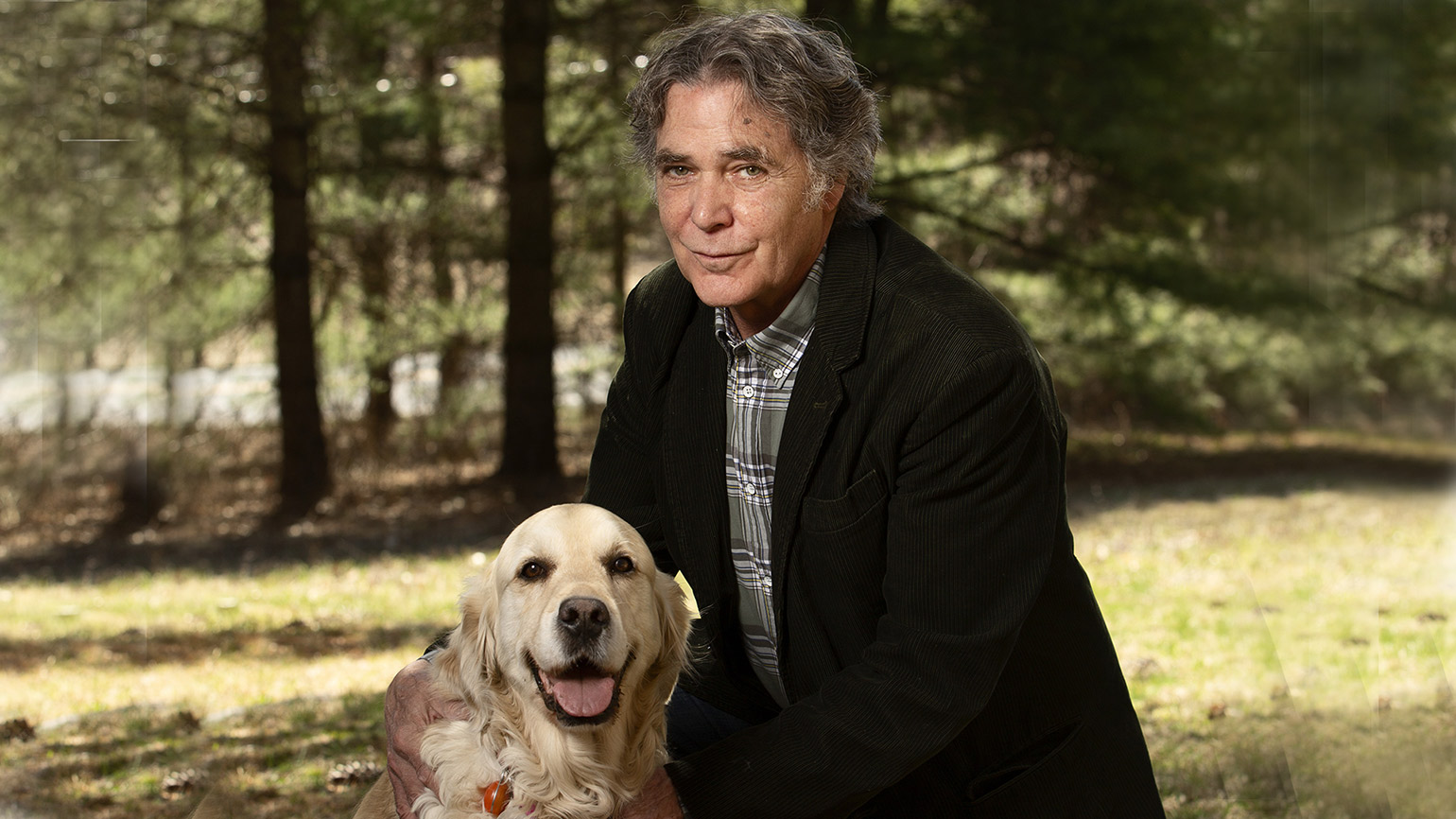
Gracie, our golden retriever, and I had given Julee a pair of earrings from her favorite catalogue for Mother’s Day, along with a card Gracie “picked out.” As it happens, they weren’t exactly the pair of earrings Julee wanted, and I said we could exchange them. I guess she’d decided to try them out anyway. 

“Have you called on Saint Anthony?” I said, only half-seriously.

Raised Catholic, Julee and I both learned the Saint Anthony prayer from our mothers when we were little: “Dear Saint Anthony, please come around, something is lost and cannot be found.” 

All these years later I am not totally convinced there is a guy hanging around heaven who helps you find lost stuff. If so, I’d be keeping him pretty busy these days. I hate losing things. Or more accurately I hate looking for things I can’t find. It drives me to distraction. No matter how futile the search, it always feels like the lost item is just beyond my grasp. If I just recheck one more place it could be….

Couple that with my fears I’ve shared with you that my memory is declining, and  losing things is a real trigger. What really concerns me is that I’m losing my mind, however huge a leap that is from where the heck I put Gracie’s leash. And I’m not sure any saint could help me with that. 

Except I did call on Saint Anthony when my mother was losing her memory. Once, when she was living her final days in a memory care facility in Michigan, I mentioned how beautiful her Waterford Crystal display was in her last house. She didn’t remember that house at all. She remembered the house she’d raised my brothers and sister and me in, and the house before that back in Philadelphia. But the house she lived in for several years before she could no longer manage it, the one with the beautiful rose garden she tended so lovingly, the one her grandchildren regularly visited and played in, it was as if it never existed. In what might have been a moment of panic and regression, I asked Saint Anthony to find that memory. Maybe I just wanted him to find my mother. But that was above even his pay grade.  

The day after Julee lost the earring—amazingly the catalogue company was happy to replace just that one earring—we noticed Gracie sniffing around her food station, as she often does in the event that there are any stray molecules of food she missed. She started scratching at something.

“Hey!” Julee shouted. “My earring!” 

It must have fallen off when Julee was feeding Gracie. So maybe Saint Anthony was on the case after all.  

“Do you still want me to exchange them?

“Are you crazy? Obviously, these were the earrings I was meant to have. Besides, I love them.” 

Do you hate to lose things? Do you have a prayer you say when you do? I’d love to know.

What Prayer Can Do: Fuel for Thought

All morning I’d been stewing over a friend’s bad business move, one that affected me too. Should I confront him? At this point I never wanted to speak to him again. How could a smart guy do something so dumb? I thought. Finally I prayed, God, I need your guidance. Show me how to handle this.

“Don’t forget you promised to fix my car,” my wife called from the kitchen.

extraordinary women of the bible

“I’ll do it today,” I said. Maybe the long, messy job of replacing her fuel pump would take my mind off this problem. I went to the garage and grabbed what I needed: red five-gallon gas can, plastic siphon, work light… I’d need to pick up a special wrench at the auto supply store.

I checked the fuel gauge and estimated the amount left in the tank. It would have to be drained. I guessed five gallons. This will take forever, I thought, as the siphon slowly dripped gas into the can.

I waited, angry thoughts about my friend filling my head. I’ll run to the auto supply store and be back long before it’s finished.

I found the wrench easily at the store. Standing in the checkout line I started thinking again. Only this time it was about my own decision.

The gas was flowing slowly when I left, but what if it sped up? What if there were more than five gallons of gas in the tank? It could be spilling onto the floor right now.

Suddenly I envisioned all the potential fire hazards in the garage: the furnace that could light at any time, the hot work light lying on the floor; even the garage-door opener could send out a spark if my wife turned it on. I’d made a terrible mistake!

I tossed the wrench onto the counter and rushed out to my car. Back home I found the can overflowing and a 10-foot puddle of gasoline spreading across the concrete. Luckily I was able to sweep it out of the garage. I didn’t rest until it was all cleaned up.

How could I have done something so stupid? I thought.

Now I knew how to deal with my friend: with understanding. Everyone makes dumb decisions sometimes. Even “smart guys” like me.


Download your FREE ebook, A Prayer for Every Need, by Dr. Norman Vincent Peale

What Makes Love Work

When we love others and are loved in return, we feel valued, wanted and respected. These benefits not only come from a romantic relationship but any type of relationship built on a solid foundation of mutual care.  Love is indeed a feeling, but it entails action as well. When we love someone, we make time to be with them. We make sacrifices on their behalf (big or small) and so much more to show that we care. But that doesn’t mean a loving relationship cannot be shaken by adversity, setbacks and disappointments. 

Many who have been deeply hurt by someone they loved avoid putting themselves in a vulnerable situation again. Love can leave us with deep scars that take a long time to heal. But on a positive note, the benefits of love outweigh the drawbacks. Where there is love, there is also grace, forgiveness, friendship, joy, peace and happiness. 

Inspiration from the Garden in article ad

Recently, I presided over a vow renewal ceremony for a couple celebrating their 35thwedding anniversary. Throughout the years this couple endured many challenges, including the husband’s military deployment. But through them all, they held onto their love for one another. Their love has evolved, but one thing is evident—they remain committed to each other now more than ever. 

A loving relationship requires effort from both parties. It means keeping no record of wrongs and learning to forgive. Yes, some marriages and relationships do not make it. However, we should not avoid opening our hearts to others. We learn from past hurts and grow because of them. In return, we learn to love ourselves and others.

Lord, teach us to love and be loved.

What I Wish People Knew About Grief

Ella Wall Prichard is the author of Reclaiming Joy: A Primer for Widows

I am a widow, and many of the books and blogs I read advise new widows to avoid social situations while they are still emotionally fragile. Widows post:  Please understand why I turn down all your invitations. Please keep asking me. Someday I will accept. 

You Got This In Article Ad

That is terrible advice. Isolation is a breeding ground for depression and has been shown to contribute to a decline in mental and physical health. Regrettably, new widows often withdraw from their friends, increasing their grief, anxiety, and depression. 

When I could not find comfort and encouragement anywhere else, I turned to prayer and Scripture. Jesus’ public life was full of celebrations and quiet times with his closest friends. His first miracle was at a wedding feast. His last act before his arrest and crucifixion was a meal with his disciples. 

Paul wrote unequivocally to the Romans, Practice hospitality (Rom 12:13b, NIV). Widows are not exempt. Instead of throwing pity parties for ourselves, we can fill our homes with friends. For whatever reason, we seem to forget how to entertain. We slip into neutral gear, waiting for others to invite us. And then, too often, we say “no.”

I took the advice of my twice-widowed mother-in-law, Helen Matthews. Shortly after her second husband died, when she was in her early sixties, she announced, “I am going to accept invitations to go out. At first you don’t feel like seeing people, and so you turn down invitations. People want to be kind; but if you keep saying ‘no,’ they will soon forget you and move on. Then when you’re ready to be with friends again, they’re not there for you.”

My husband Lev died of congestive heart failure in April 2009. After his service, friends gave me hugs and promised they would be back in touch after I had time to rest and recover. They did not know how desperately I needed people around me to fill the void left by his departure. Other suddenly singles—divorced as well as widowed—report the same experience. Friends disappear. Invitations to dinner and evening parties dry up. 

Many friends want to be kind and extend the obligatory, one-time invitation to lunch or dinner. I emulated Helen and tried to say “yes” to everything, but I quickly realized that I not only needed to reciprocate but also to initiate occasions if I wanted to be invited a second time. I did not want to join the widows who sat home alone every night. 

Most of my friends were still married. Lev and my social life had been a life of activities with other couples. Over the years I lost contact with one-time friends who were divorced or widowed. They surprised me when they reached out to me after Lev’s death. When I went out with them, I tended to forget my aching loneliness. They learned that if I was cooking my dinner when they called, I would put the half-cooked meal in the refrigerator or garbage can and go out. That sisterhood proved invaluable, for they understood what I was going through. I could be honest with them about my pain and fear because they had been there. Their example gave me hope. 

Since they had more experience as a single than I, they taught me how to enjoy life without Lev. They introduced me to their friends and included me in their activities. We discovered mutual friends, and new friend groups formed. I learned more about art and classical music, I went to lots more movies, and I tried more new restaurants because of their friendship.

Women are easy to entertain, because food is simply an excuse to get together. Jesus’ time with Mary and Martha confirms that the quality of time with friends is what matters, not the perfect house or meal (Luke 10:38–42). 

No one needs to feel like her home is too small or her budget too modest to entertain. We can invite a few friends over for wine and cheese before a movie, concert, or art exhibit or have them come by afterwards for coffee and dessert. Better yet—we can gather a few friends around our table for a simple, casual Sunday night supper—a casserole, a hearty soup in winter, or a big salad in summer.  

My social life slows down on weekends, when my married friends spend time with their spouses and other couples. A Sunday night supper fills that hole: Friday, grocery shopping; Saturday, getting the house in order; Sunday, cooking. Friends with full social calendars are most likely to be free on Sunday, while most widows are glad to have a social event to anticipate, to end the weekend on a high note.

As widows, we can live on our memories of the past, or we can create opportunities to live with joyful anticipation—always one more thing on the calendar to look forward to. When we throw a party, we share that gift of anticipation with our friends. We can take those very events that are our sinkholes—holidays, anniversaries, long weekends—and turn them into keenly anticipated and enjoyed moments. And as we practice hospitality, we nurture strong relationships that enrich our lives and the lives of those around us.


Gratitude vs Thankfulness: The Big Difference

You’ve likely heard the aphorism to “have an attitude of gratitude.” I recently learned that within the field of positive psychology, that’s exactly what gratitude is—an attitude, an overall mentality and mindset that prioritizes appreciation for the gifts and opportunities life offers. Stepping into a season of thanksgiving (both with and without a capital “T”), when we want to be more grateful, makes this learning all the more helpful. Because there is a difference between gratitude and thankfulness.

Woman with her hands on her heart to show her gratitude vs thankfulness

What is the Difference Between Gratitude and Thankfulness?

The difference between these two important emotions comes down to how we use it in our lives. Gratitude is a general appreciation of life, while thankfulness is a response to a particular event or experience.

Rejoice in All Things in article ad

For example, you can be grateful for your family, but thankful that your cousin showed up early to help you set the holiday table. You can be grateful for the community where you live, but you are thankful that your neighbor brought your garbage cans up from the curb on a rainy day.

To cultivate a fully, authentically positive mindset, we must practice both gratitude and thankfulness.

You know as well as I do that life is not always easy. To cultivate a fully, authentically positive mindset, we must practice both gratitude and thankfulness. Practicing gratitude means accepting things as they are, while also holding onto our appreciation of things that we value and have access to. Thankfulness grows out of this mindset, positioning us to be able to notice and express thanks when things do go right, like saying “thank you” or even writing a thank you note.

Tennessee psychiatrists James and JR Greene explain the broad power of gratitude this way: “You do not need something good to happen to have gratitude, and when bad things happen, your gratitude does not falter. You know that sad things are just a part of life, and you are happy with the life you lead.”

So ask yourself whether your thankfulness lives under an umbrella of gratitude—and whether your gratitude gets spoken aloud through words of thankfulness. When you pair these two layers of appreciation, you will be building a spirit of authentic positivity that shines over everything you do.

Woman looking at herself in the mirror thanking about gratitude vs thankfulness

3 New Ways to Think About Gratitude

It might be a challenge to think of things you’re grateful for, but scientific research supports what grateful people know—that taking the time to look inward and express gratitude makes us happier and less stressed.

A gratitude practice is actually simple to start. It could be keeping a blank journal where you record a single item each day you are grateful for—something as big as a promotion at work, or as small as the sudden sunshine of a spring afternoon. If the written journal is too much, you can make gratitude the last “task” you do before you go to sleep at night, just a little passing thought that can rest for a moment on something that enriches your life.

Even during trying times, I’m eager to grow my gratitude habit, and that means coming at it from new angles. A consistent goal as I walk my positive path is to be more mindful of the joy and goodness that is all around me, if only I would notice it. Questions that prompt me to look in unexpected places for sources of gratitude are a helpful part of that process.

See if these three prompts might bring a new breadth and depth to your gratitude experience:

Husband kisses his wife to show his gratitude vs thankfulness

1. Change Your Gratitude Perspective

Choose someone in your life (a family member, friend, neighbor, colleague or the even the person who delivers your packages) and ask, “What would this person say they are grateful for in me?” Perhaps you are a support, or you made that person laugh recently, or you always return emails in a timely fashion or greet them in a friendly way. Cultivate gratitude by looking to others. See yourself through someone else’s grateful eyes.

Woman looking at herself in the mirror thanking about gratitude vs thankfulness

2. Feel Gratitude for Your Body

Think about your body, and find a part of yourself to be grateful for. It could be your legs that carry you through your day, your hands that create and communicate and soothe and love, or it could be the brain you use to learn and share. We all have reasons to be thankful and feel the positivity of gratitude for our bodies.

Woman smiling about gratitude vs thankfulness while she drinks coffee in the morning

3. Feel Gratitude for Small Things

Look around your home and think about the item in it that no one else would likely notice, but that brings you the most joy. Maybe the tiny grater you use to zest a lemon, a vase that you pull out when you bring home flowers, the taste of your favorite toothpaste, or the paper clips you keep in an orderly little corner of your desk. The smaller, the better—while you’re looking, I’m guessing you’ll come across a lot of items that are deserving of your gratitude.

READ MORE ABOUT GRATITUDE AND THANKFULNESS:

What If We Lived What We Say We Believe?

Today we are blessed with a blog from my friend Jean Wilund. She is a talented writer with a heart for God and passion for His Word. I know you’ll be inspired by her message about living your Christian beliefs.

Whoever claims to live in Him must live as Jesus did. (I John 2:6, NIV)

Faithful Paws and Purrs In Article Ad

I love this world, but newscasters could sum up each day with, “The world’s gone crazy, and that’s the news for today. Have a good night.”

Of course history proves this madness isn’t new. Since the Garden of Eden, this wild, wonderful world has always been a bit cracked. It’s filled with people, so it never stood a chance. In our humanness, we’re all going to act a little crazy. Some of us act straight up senseless. It’s only in Christ that we have the power to live differently. 

When we learn we have cancer, panic doesn’t kidnap our emotions. Stalwart trust in our sovereign God gives us strength to smile at the future.

When the news announces terrorism is making its way into our land, fear doesn’t paralyze us. The surpassing peace of Christ rules in our hearts and drops us to our knees in confident trust in our powerful God.

When an opposing fan screams hateful words at our child on the soccer field, sharp words designed to cut the hater down to size don’t spew from our mouths. Forgiveness calms us as we remember how much we’ve been forgiven.

We all face trials that threaten to disturb our peace and crush our hope. We encounter hatred and rudeness that can awaken the monster within us. We see other people’s success and are tempted to choke on jealousy and discontentment. But it doesn’t have to be that way.

We’ve been given the Spirit of the Living God to empower us to live what we say we believe. Even in the worst situations, if we thoughtfully respond rather than immediately react, we can mirror Christ. How we respond reveals what we truly believe no matter what we say. Each day presents us with new opportunities. Let’s choose to live what we claim to believe. With God’s Spirit in us and for us, I think we’d be crazy not to.

Pray this with me:

Father, I thank You that You’re working in me, giving me the desire and the power to do what pleases You so that I can live like I say I believe. I know I won’t get it right all the time, but by Your power–the same power that raised Jesus from the dead–I will seek to show the world who You are through my life and bring You praise and glory. Amen. (Prayer based on Philippians 2:13)


Jean Wilund is an author, Bible teacher and blogger. She’s passionate about sharing the life-giving truths in God’s Word. Connect with her on her blog, Join the Journey, at JeanWilund.com.

What Good Shall I Do Today?

I came across an entry in a website called “Daily Routines” about how writers, artists and other interesting people organize their days. (This was a link from another of my fave sites veryshortlist.com.) At 5 a.m. Benjamin Franklin would “rise, wash, and address powerful goodness.” The great thinker and inventor would also ask himself daily: “What good shall I do this day?” In the evening there was supper and music and examination of the day as well as asking himself another question: “What good have I done today?”

This simple, powerful guide to living is from The Autobiography of Benjamin Franklin . “What good shall I do this day?” stuck with me. It got me thinking about our popular feature called “Pass It On—People Helping People.” For years we’ve been publishing unique ways our millions of readers are helping others—from getting suitcases to foster kids who formerly carried their belongings in plastic garbage bags to putting a basket of breakfast goodies on the doorstep of a neighbor whose husband was in the hospital. So when I ask myself, “What good will I do today?” I know I can turn to our “Pass It On” feature to get some ideas. For starters I can pass this along. Hope you do too.  

Journey With Jesus in article ad

Celeste is a senior editor at GUIDEPOSTS.

What Good Can Come of Hardship?

We often hear people talk about big storms they’ve encountered—about the power of the wind, the jagged streaks of lightning, and the booms of thunder. But unless it’s been a hurricane or blizzard, we usually don’t hear much about what comes after the storms.

On the positive side, storms clear out the debris in the trees, tossing dead branches and leaves to the ground. They wash the dust and pollens from the leaves and make everything look clean and dewy fresh. Storms water the flowers, providing growth and beautiful flowers for us to enjoy. But they also show us frightful power when massive trees bend and break, and rivers overflow.

Journey With Jesus in article ad

After the storm is when we regroup and pick up the pieces, and the same is true in our lives. The storms of hardships, emotional and physical woes, financial difficulties and heartaches are never fun while we’re going through them, but they can lead us down new and better paths. 

The storms of life teach us to take cover in the One who controls them. Those moments that batter us, that bend us emotionally where we feel like we’re going to break, are actually the times that strengthen us. They teach us to trust Him in ways that we never have before. They require us to cling to Him and to trust Him—even while the storm is raging.

And if we’ll let Him, those moments can refresh our souls. They can cleanse our hearts and clear out the debris we’ve hidden there. And those storms can help us grow so that we can blossom for Him. 

Nahum 1:7 tells us, “The Lord is good, a stronghold in the day of trouble; he knows those who take refuge in him.”

Isaiah 4:6 says, “There will be a booth for shade by day from the heat, and for a refuge and a shelter from the storm and rain.”

And Mark 4:39 shares, “And he arose, and rebuked the wind, and said unto the sea, Peace, be still. And the wind ceased, and there was a great calm.” 

Storms don’t last forever—and you’ll discover many beautiful treasures after the storm if you’ll just look for them.

What Does Imagination Have to Do with Positive Thinking?

While my colleague Edward Grinnan is away on his book tour this month, I’ve been keeping up with him by email…and by reading his book, The Promise of Hope. Along with his own amazing story of transformation and the inspiring stories of others, Edward shares the nine keys to powerful personal—and I might add, positive—change: honesty, willingness, imagination, commitment, faith, forgiveness, acceptance, resilience and love.

The one that really jumps out at me is imagination. Some might say positive thinking is an act of faith—in yourself, in others, in a higher power. That’s true, but it is just as much an act of imagination. Why do I say that? Well, to think positive, you don’t have to be a creative genius. But you do have to make a mental leap from the present to the future, from limitations to possibilities. You have to move beyond what is and envision what might be.

Light for Life NASB Study Bible in Article

Norman Vincent Peale might never have become minister to millions and the godfather of positive thinking if he hadn’t done this himself one dark day. As Edward relates in chapter three of his book, Dr. Peale was just Norman then, a student preacher crippled by self-doubt and fear (of public speaking, no less). No wonder he was struggling in seminary. One day a professor called him “a scared rabbit” and declared, “You better change the way you think about yourself before it’s too late.”

In despair, Norman prayed for help. What’s interesting is that he didn’t beg God to transform him into a compelling speaker who could effortlessly command a room. Instead, he prayed, “Let me see myself not as a scared rabbit but as someone strong and confident who can do great things.” He asked for imagination and at the same time he was already exercising it, picturing himself changed for the better.

Dr. Peale envisioned a major, life-altering change, but imagination also works with smaller, more mundane shifts. Let’s say you’re grumbling, I’m so busy there’s not enough time in the day to do everything. First, re-imagine that defeatist, negative thought and transform it into a more empowering one: I’m busy but there’s time to do what matters. Then zero in on those things that matter and visualize how you’ll do them. Maybe you’ll consolidate three trips to the grocery into one. Maybe you’ll carpool with another parent whose kids are at the same day camp. Maybe you’ll ask a coworker to help with that presentation. You’ll definitely have a more positive attitude. Imagine that!