Embrace God's truth with our new book, The Lies that Bind

What Can You Do to Keep Your Loved One at Home Longer?

It’s a good bet that, for your older loved one, home is where the heart is. As a family caregiver, it’s also likely that you want to do everything in your power to allow your loved one to remain at home, or “age in place” for as long as possible. When an illness, chronic condition, disability or injury comes into play, it becomes more difficult for an older adult to remain independent in his or her own living environment. Yet there are certain things you can do to make home life safer and more comfortable for your loved one in order to stave off a move to a care facility.

The benefits of remaining at home include privacy and independence, as well as access to friends, family and familiar places like stores, restaurants, medical offices and parks. Your loved one may have put years into paying for and keeping up a home and feels strongly about enjoying the fruits of that labor now. When older adults remain in their communities, other people can reap benefits, as well, from their elders’ vast experience and wisdom. Older adults can be wonderful friends and neighbors and may even act as volunteers, mentors or co-workers to those who are younger.

Journey With Jesus in article ad

If you wish to enable your older family member to live at home for as long as possible, here are some important steps you can take to make it more possible:

  • Get a home safety assessment

Evaluate your loved one’s home safety issues with an in-person assessment from a geriatric care manager. This will look at how the present housing situation affects your loved one’s safety and quality of life. It should also include an evaluation of any possible impairments your loved one may have that could impact activities of daily living. Important topics to address range from his or her ability to prepare meals, manage medications, drive, pay bills, bathe and groom and keep the house clean and organized. Learn more information on this process.

  • Have a family conversation

If a safety assessment and doctor’s advice give you the green light, have a discussion with others in your support network. Get together with your loved one and other family members to put all your concerns on the table. Discuss whether you’ll be able to pull together to give your loved one the assistance he or she may need to remain at home. Can you and others arrange to visit frequently and pitch in on household chores and yard work? Who will be close by at any given time in case of emergency? Will you need to equip your loved one with technologies like personal navigational devices and home sensors that can make it safer to live independently? Can you help with transportation issues, as needed? Is it possible to hire an in-home care aide to handle daily tasks or cooking and to spend quality time with your loved one? How can you make the home safer? There are many ways to do this, including installing ramps, slip-proofing floors, and making modifications to the bathroom like safety rails and a walk-in shower or tub. You can even get pill boxes that are designed to set out your loved one’s medications for a whole week. Learn more ideas here.

  • Explore resources for support services

Gather as much information as possible on the many services that are available for older adults who live independently. You may tap into these via your local and state offices on aging or social services and senior centers, as a start. Depending on what your community offers, you may find help with housekeeping, transportation, yard services, meal deliveries, and even financial counseling. If your loved one has trouble walking, you may want to check into whether Medicare covers a walker or electric chair or scooter. Does a local senior center offer opportunities for your loved one to socialize and engage in fun activities? For more advice on support services to help your loved one grow older at home, as well as tips for caregivers in this situation, go to the National Institute on Aging’s website.

  • Get support for yourself

Your emotional well-being makes you a better caregiver and can have a big impact on how long your loved one is able to remain at home. In one study, nursing home placement for Alzheimer’s patients was delayed by 28 percent when their spouse caregivers received specialized counseling and support intervention. The caregivers underwent individual and family counseling, support group participation and on-going telephone counseling. The study concluded that “greater access to effective programs of counseling and support could yield considerable benefits for caregivers, patients with Alzheimer’s disease and society.”

The Administration for Community Living (ACL) is another excellent resource for services, research and education to help older adults and people with disabilities choose where to live. ACL also helps people who have unexpected needs, such as after a fall or an accident, to find services, and offers information on assistive technologies.

What Can I Do in a Desperate Situation?

Some events mark our lives forever. There are happy ones such as a wedding day, the birth of a child or the purchase of a first home. But too often we dwell on the unhappy ones—a death, a job loss, a broken marriage. These are the situations that call for desperate prayers.

There is one night that I will never forget; it still sends shivers down my spine when I think about it. It was November 2010. My wife and I received a call that our son had been in a terrible car accident. I remember who called us with the news, the ride to the hospital and the shock of seeing our son lying on the gurney in the emergency room.

Whistle Stop Cafe In Article Ad May 2023

He was distressed and physically shaken. Although he had some cuts on the back of his head, he appeared to be in better shape than we expected, and in much better shape than the driver who was badly injured. Unfortunately, one of the individuals in the other car died on impact.

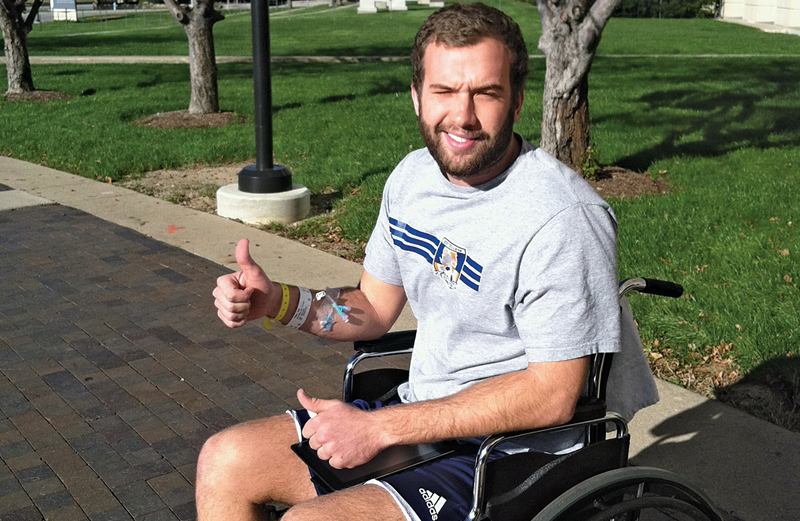
It wasn’t long before we learned that my son had broken three neck vertebrae and needed a spinal fusion. My wife and I turned to God in the most desperate way for healing and a successful surgery. It was a long and tough journey, but God heard our prayers.

The words found in Scripture came to mind, “Call on me in the day of trouble.” And we did. We cried out to God with all our energy and strength hoping for an intervention, healing and comfort.

We prayed, “Help our son…help us, God!” There were times we felt powerless, but not alone. Our friends prayed with us; they too sought God on our behalf. On the days my son had no emotional or spiritual strength, we were his voice. And God heard our desperate prayers and the prayers of our friends as our son recovered.

What can you do in desperate situations? Pray! In our distress, pain and inconsolable moments, we can turn to a compassionate and merciful God of all circumstances. We can trust that our prayers will get us through the hopeless and despairing moments. All things are possible with God.

What Cancer Taught Casting Crowns’ Mark Hall

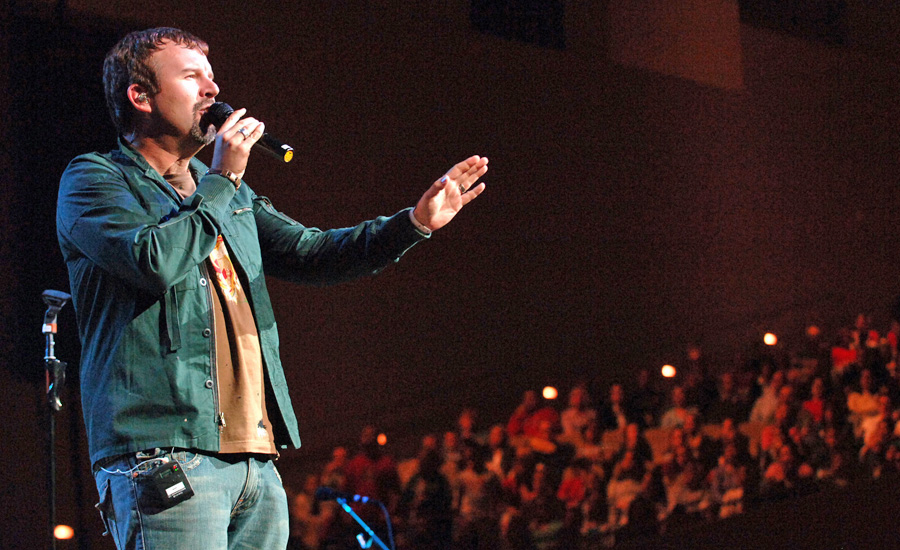
In early 2015, Casting Crowns front man Mark Hall had been having an incredible year. The group’s latest record, Thrive, had just become the best-selling album of 2014; they’d taken home the Artist of the Year Award at the K-LOVE Awards; they’d just won their third American Music Award; and they were busy touring with fellow Christian artists Laura Story and For King & Country.

Then, during a doctor’s visit to get relief for what he thought was acid reflux, Hall  learned that he had a mass on his right kidney that could be cancerous.

Mys of Blackberry Valley In Article Ad

“You don’t really hear the words, ‘You have cancer,’ Hall tells Guideposts.org. “You hear the words ‘You’re going to die.’”

 Those four, unspoken words suddenly brought everything in the artists’ fast-moving world to a screeching halt.

 “When I heard ‘cancer,’ it’s like the whole world shrunk,” the Atlanta youth pastor shares. “All I could think was, ‘Okay, how am I going to get my family through this? How am I going to make sure they know it’s going to be okay?’ Everything got simple and prioritized very quickly.”

Try These Self-Help Books to Reach Your God-Given Purpose

In the two weeks between discovering the mass and the surgery to remove his kidney, Hall broke the news to his children and began preparing himself for the worst.

It wasn’t until after his surgery, when doctors told him the mass was in fact an aggressive form of cancer that, miraculously, hadn’t been able to grow outside his kidney, that Hall realized how blessed he had been.

Still, the next four weeks saw the singer fighting a tough and often painful road to recovery. The band was forced to cancel a week of shows before Mark could join them in his fifth week post-op.

Hall – who ministers at Eagle’s Landing Church and was used to being the one visiting hospitals, sitting with the sick and offering words of encouragement and prayer— quickly found himself on the receiving end of those prayers. The change in roles didn’t sit well.

“I didn’t want to walk around being the hurting guy,” Hall admits. “I didn’t want people coming up to me saying, ‘It’s okay. Everything happens for a reason. Here’s all the little Twitter pick-me-ups, let me pat you on the back …’ I was jaded about it.”

But the singer quickly realized God was using this time of suffering to teach him a valuable lesson.

“God showed me that was just pride,” Hall says. “I realized I need to talk about this, so I told my church, I told a few friends at Christian radio and the next thing you know the whole world is praying for me.”

Billboards on Atlanta’s busiest highways started popping up, #prayformark began trending on Twitter and soon the singer started to see the ordeal as a way to practice what he preaches to his students every Wednesday night at Bible study.

Find Hope, Inspiration, and More in our Free eBooks

“You never speak louder to the world about your faith than when you’re in a storm,” Hall explains. “For me, I knew I’d taught a lot of lessons, I’ve written books, I’ve written songs, but I’m about to tell the world a whole lot through what happens [to me] in the next months.”

 Eventually the singer was able to resume his duties at church and in Casting Crowns  in time for the band’s summer recording of their new album Casting Crowns: A Live Worship Experience.

The 12-track record features a blend of the band’s biggest hits and a handful of worship songs the teens at Hall’s own church have been singing every Sunday.

Recorded at Eagle’s Landing, Hall says this live album has helped him reflect on the trial he’s been through and is offering him a chance to share what he’s learned with others.

“When we have a friend who’s suffering, we feel like we need to fix it,” Hall says. “We feel like we need to defend God, make sure they’re not mad at God and give them a bunch of reasons why God’s still good. That’s probably not what they need. They just need you to be there, listen to them, cry with them. You don’t have to have the answers to all of life’s questions.”

“I’ve always tried to give that advice to my own students but the other half of that that I learned is when you’re hurting, you need to let the church be the church. They’re not always going to say it right but the root of it is love. You have realize you can’t walk through it by yourself, you need people walking through it with you.”

What a Hospice Chaplain Learned About Life from Her Patients

Marsha seemed like a nice enough lady, 96 years old, surrounded by photos of her family members, wearing a faded pink nightgown. She had a weak heart and only months to live. That’s why I was visiting her at the nursing home. She was glad to hear me read from the Bible, but then all of a sudden, she burst out in inexplicable anger—and not for the first time. “When I get to heaven,” she said, “I’m going to tell God to kick my father out of there. I don’t ever want to see him again.”

I didn’t know how to respond to that. My training as a hospice volunteer hadn’t prepared me for this. I tried to distract her. I pointed to different photos, and Marsha rattled off her grandchildren’s and great-grandchildren’s names and ages. There was nothing wrong with her mind. Just this one topic that she returned to again and again. Her father and what a terrible man he had been.

Journey With Jesus in article ad

“I tell you,” she continued, “God should know that my father does not belong in heaven. If he’s there, I will do all I can to get him out.”

Beneath that faded pink nightgown was a red-hot rage. It rattled me. Was it possible to reach the age of 96 and still hold on to such resentment?

I went home, wondering if I would be like Marsha at her age. I had so much to be grateful for. Not just my wife, Kathie, but my career as a manager in the oil business and the ability it gave me to retire early and do volunteering like this. I saw myself as a natural caregiver. I wanted to help. “It sounds as if you need to forgive your father,” I imagined telling Marsha the next time I visited. Yet a louder voice inside me was forcing an uncomfortable question: Isn’t there somebody you need to forgive?

Frankly that was something I didn’t want to think about.

I’d grown up outside Chicago, one of three kids. I adored my big sister Joan. And then there was my brother, John.

John was 12 years older than me. I looked up to him—naturally—and wanted to be like him. Except I’d sit down at the breakfast table and he’d say, “You smell. Didn’t you take a shower this morning?” Or at dinner, “Stop picking at yourself. Sit up straight.” Or I’d be poring over my homework and glance up for a moment. “You idiot, always staring into space. You’re going to flunk out of school.”

John himself had never been much of a student. He’d dropped out of high school, gone into the Army, served two years and then come back home, bouncing between jobs. Mom and Dad would try to stop him whenever he got on my case, but I think they were just as intimidated by him as I was. I wasn’t like John at all. I was bookish, the quiet youngest kid.

I finished high school, went straight to college—the first in my family to do so—and graduated. Like John, I served in the Army for two years. Afterward John invited me down to visit him in Miami, where he was working as a truck driver. Maybe this could be the beginning of something. Something brother to brother.

He’d bought a slick 24-foot, three-hull sailboat, his pride and joy. He was eager to take me out on Biscayne Bay. We motored out into the open water. John let me take the tiller while he unfurled the jib.

“Turn to port,” he yelled at me.

“How do you do that?” I asked, mystified. I’d never been on a sailboat before in my life.

“To the left. Port. Don’t you know anything?” Just like that, it was my childhood all over again. He kept yelling at me. Everything I did was wrong. Didn’t I learn anything at that college I went to? What an idiot I was. I clammed up, didn’t speak to him for the rest of the trip. No wonder he wanted to get me out on that boat.

I took a job in Baton Rouge in the oil business and was soon working 12- hour days, six days a week. Dad had died by then, but I managed to go back home to see Mom and Joan. They kept me up on what was going on with John. He’d turned into a health and exercise nut, working out at the gym every day, lifting weights. A serious bodybuilder. I was—I must confess—still a sleep-deprived, two-pack-a-day smoker.

The one time I saw John back at home—he’d driven up from Miami— the first thing he said to me was “Take that cigarette out of your mouth.” No “Hello,” no “How are you doing?” Just: “You trying to kill yourself? You always were dumb.” I drove home early rather than take it anymore.

I saw my brother again at Mom’s funeral. Then I cut him off. I couldn’t relate to him anyway. He didn’t have much of a family. Married twice, divorced twice. One son. Just his boat, his truck and the gym. There was something sad about that way of living, but I refused to feel sorry for him.

When I retired, Kathie and I might have considered moving to Florida like a lot of other retirees. Not a chance. I didn’t even want to be in the same state as John. We chose Tennessee to be closer to Joan. I was glad to see her more often, even as her health took a turn for the worse. Complications from COPD. Those last few days, I was able to spend a lot of time at her bedside, listening, talking about our family, reading the Bible and praying. The last thing she said to me was “I hope you’re not left to deal with John the rest of your life.”

It was those last precious days with Joan that made me want to become a hospice volunteer. So much healing can happen as we approach death. I believed the Lord was opening a door for me. I visited patients in their houses and at nursing homes. I really felt I was helping. Until I met Marsha. I could see how old wounds festered, how this could suffocate us even in the last days of life. As my sister had said, it was just John and me now. And my brother still had a hold on me, still infuriated me, the way Marsha’s dad still tormented her.

I read all I could about forgiveness, including everything I could find in the Bible. I told myself it was to help Marsha, but truth be told, I was desperate to help myself. Like they say, when you can’t forgive someone, the person you end up hurting the most is yourself. Holding on to that kind of deep resentment is indeed like drinking poison and expecting the other person to die.

I sat with Marsha and found out more. “My dad left us when I was six,” she said. “He never contacted us, was never in touch. Mom had to work her fingers to the bone just to keep food on the table for the two of us. I could never forgive him for that.”

“Forgiving someone doesn’t mean saying they were right,” I said, as much to myself as to Marsha. “It’s a way of putting the past in the past.” I turned to my Bible. “Jesus said, ‘If you forgive other people when they sin against you, your Heavenly Father will also forgive you.’” The more I talked with Marsha, the more I knew I needed to contact John, no matter how difficult that would be.

One day, I finally got up the courage to call him. “What do you want?” he said.

“John, I know we haven’t had the best relationship….”

“Well, Ken, if you would ever listen to me…”

It took all my power to resist slamming the phone down. To fight back against my anger, the anger that was poisoning me.

“I don’t want to be mad at you anymore,” I said. “We’re all that’s left of our family. I’m ready to start over. Whatever our problems have been are in the past.”

There was silence on the other end. “I agree,” John said at last. “I’ll try to do better.”

I didn’t say “I forgive you, John” aloud, but I said it in my heart. “I’ll call you next week,” I said.

John and I have stayed in touch. We call. We talk. Sometimes he still gets on my case. Sometimes I want to hang up. But we’re trying to work through it. “Mom and Dad always made me feel like a loser,” John admitted during one of our conversations. Maybe John had been trying to help me back then. Correcting me was the only way he could show he cared.

I was able to visit Marsha several more times. “I need help getting rid of these thoughts in my head,” she said. “I can’t do it on my own.”

“You don’t have to,” I said. “God will help you.” We prayed the Lord’s Prayer together. How God forgives us as we forgive each other.

The last time I saw Marsha, she was too weak to talk. I read the Bible and then held her hand. Her face was relaxed. She seemed at peace. Thanks to her, I knew what that felt like. I don’t know if she forgave her father or gave him hell when she got to heaven. Either way, I bet they worked it out.

For more inspiring stories, subscribe to Guideposts magazine.

What a Dog Can Teach Us About Forgiveness

If looks could kill, I’d have been dead twice over. 

I’d taken Gracie to one of her favorite places—Tractor Supply Company (no, don’t own a tractor, though Julee wants me to get a small one to cut the lawn instead of paying a couple of kids to do it. I insist I’m only trying to stimulate the local economy). Gracie has trained the cashiers to give her treats, putting her big paws up on the counter. Smart girl. But I had a secret agenda and when Gracie perceived my nefarious plan, I got the look. 

God's Constant Presence In Article Ad

A bath. 

Gracie in the bathAt the rear of the store is a little doggie spa with tubs, shampoo, towels, blow dryers, combs, everything you need to bathe your dog. Preferable to using your own tub and towels. As soon as she understood her fate and was resigned to it, Gracie’s tail drooped. She went full hangdog (now I know how that expression originated).


I’ve never understood how a dog who loves to flop in the muck and splash though a muddy stream finds a simple bath so objectionable. Maybe it’s a control issue. At the time, I always talk softly to her and ply her with treats, and she still acts as if she’s being led to the gallows. When it’s all over she jumps back in the jeep and collapses with a dramatic sigh. 

But it’s at home where she exacts the greater price. She retires to one of her several beds and shows me her back. Turning their backs on you is a way dogs sometimes demonstrate that they are mad or upset. (When Gracie sees my suitcase come out for a trip into the city, for instance, she does the same thing. She is extraordinarily observant—you can’t get away with anything.) 

Today she was particularly adamant in her affect. Even when I brought her a peace offering—a bit of string cheese, her favorite (I’ve never met a dog who wouldn’t sell its soul for a piece of cheese)—she snatched it from me without making eye contact. 

So, I settled in to watch the Yankees drop another game to the Rays. I was nodding off when I felt a cold nudge on my hand. Gracie. She looked up at me as if to say, “All is forgiven. Let’s be friends again.”

Forgiveness is a remarkable thing and difficult, especially for humans. I’m not always as magnanimous as my dog, who often strives to make me a better person. I can turn my back and hang on to a grudge longer than strictly necessary, if required at all. Maybe I derive satisfaction in nursing a sense of injustice. Yet I know that forgiveness is a necessary ingredient in a strong faith. Jesus came to earth to forgive our sins. We are expected to forgive. 

I scratched behind Gracie’s ears, and she laid her head on my thigh. It was nice to be friends again.

Does your dog hold a grudge? Do you? Let me know.

Welcome to A Positive Path

What does a positive, healthy lifestyle look like? Does it consist of daily gourmet meals, perfectly thriving friendships and family relationships, a lush garden that produces baskets full of organic produce and cut flowers, hours at the gym and a clutter-free home that sparkles with cleanliness and magazine-worthy design?

Wow, I hope not—because if that is the standard of positivity and wellness, then I fall short every single day.

A Journey of Faith In Article Ad - Avail Now

If, however, those categories—food, relationships, gardening, fitness, and home—are all integral parts of a life lived with vitality, healthful intention and a positive outlook, well, then, I’m well on my way—and so, probably, are you.

Read More: A Prescription for Positive Thinking

The name of this blog—A Positive Path—was chosen very carefully. You will note that it isn’t called The Positive Path, as if there were a single, proven way to live in health and joy each day. I’ve been writing about health, wellness, and faith for 20 years—and if there’s anything I can tell you from all that experience, it’s that there is no such thing as one recipe for health and happiness.

Instead, joy is a journey, and this blog is an invitation to join me in mapping out our positive paths through life. Let’s face it—sometimes there are weeds in the garden, a missed workout (or three) and pasta and butter for dinner.

I strive to live my life in a way that acknowledges those “less than” moments, accepts them, then seeks to return to the pleasures of a pea shoot emerging from spring soil, a brisk, cheek-flushing walk with a friend or a colorful and satisfying supper. Even if you are struggling, something positive is available, and it is available today.

Read More: How to Make Good Days Last

With this blog, I hope we can be companions on the journey into healthy, positive living. A few words about me—I live outside of Boston with my husband and 6-year-old son. I love to read, cook, listen to music, grow things in my garden and mini orchard, and, of course, to write.

In this space, you will find my reflections on the quest for inspiration and positivism in my own life, and ideas for ways you can pursue positivity for yourself. I also want to hear from you. What habits help you live a positive, healthy life?

The Spanish poet Antonio Machado once wrote, “Travelers, there is no path. The path is made by walking.” Let’s try to walk A Positive Path together.

We All Can Be Holy: Celebrating All Saints Day

Driving to the Detroit airport a few weeks ago, I noticed a large billboard that read, “All saints have a past.” I immediately thought of St. Augustine’s life of debauchery and reputation as a partier, his stealing pears from the neighbor’s tree and fathering an illegitimate son. I remembered St. Angela of Foligno’s materialistic obsessions, Mary of Egypt’s prostitution, Mother Teresa’s spiritual drought and Therese of Lisieux’s irritability with another sister’s annoying habits.

We often think of the saints as perfect figures: clad in religious garb, with halos on top of their heads, and made of material different from the organs and flesh that define you and me. Rarely do legends highlight their intense struggles, weaknesses, and failures—the stuff of humanity that gets messy and makes us vulnerable. 

Community Newsletter

Get More Inspiration Delivered to Your Inbox


Saints Aren’t Superhumans

When I was in grade school, I used to dress up like Wonder Woman, using tinfoil for steel bracelets and a crown, tying a red sheet around my neck as a cape. I would jump off the couch pretending I could fly, pointing at inanimate objects, as if I could bring them to life. Then, I would switch into the nun outfit my grandmother made me for Halloween and pretend I was St. Therese, my patron saint. Both costumes temporarily endowed me with superpowers, by which I established a protective shield, between me and fellow mortals (my sisters).

But I had it wrong. Saints aren’t superheroes. 

They are humans.

In his book All Saints, Robert Ellsberg writes, “Despite the supernatural effects that may adorn their legends, what comes through again and again is their humanity. They experienced doubt, weakness, loneliness, and fear—just like the rest of us. But ultimately their lives were organized around higher principles—the human capacity for love, for sacrifice, and generosity.” 

Ellsberg goes on to explain how “saints are not perfect humans,” but instead, “became authentic human beings, endowed with the capacity to awaken that vocation in others.”

Saints Teach Us to Persevere

Because saints are human beings who have achieved holiness using the cards that they were dealt, they are excellent role models of perseverance. They have persisted against armies of enemies, unfair accusations and persecutions, and temptations of all kind. They continued to seek goodness, truth and beauty, even when their faith and vocation made zero sense.

Mary, the Mother of God, said yes to the angel Gabriel when an unexpected pregnancy erased the plans she had made for herself as an upright maiden of her time and, as Simeon’s prophecy foretold⁠ (Luke 2:25) continued to bear the price that often comes when we let God drive the car. Monica, Augustine’s mother, teaches parents how to pray constantly and often for our children. At the age of 31 not only did her son convert and join the priesthood, he became a Doctor of the Church and the patron saint of brewers and beer. The Carmelite mystic St. John of the Cross didn’t let his harsh imprisonment inside a Spanish prison keep him from experiencing the love of God and writing poignantly about pursuing holiness in the face of suffering from within his cell (“The Dark Night”).

A few minutes after I passed the billboard in Detroit, I looked in the rearview mirror. The other side read, “All sinners have a future.” 

All Saints Day is an opportunity to think about the significance of that message. Every one of us gets a chance to be holy… even a saint. Those with a past need only to begin again.

Ways to Approach Caregiving Decisions

Lauri Scharf, LSW, MSHS, is a Care Consultant & Master Trainer at Benjamin Rose Institute on Aging.

Each day is filled with decisions—from the very basic to the most serious. You weigh information and options on everything from what to have for breakfast to how to organize your finances. It can be tough enough to make decisions for yourself, but when you have to make them for another person, it can be an even greater challenge. There are ways, however, to approach decision-making that can ease the process.

Whistle Stop Cafe In Article Ad May 2023

Caregivers face the dual challenge of having to make a number of decisions for both themselves and their loved ones. Although it’s always good to bring both voices into the picture, it’s sometimes impossible. If you find yourself in the position of needing to make decisions for a loved one in your care, it helps to consider his or her values, preferences and beliefs. This can make it easier to arrive at a good decision. Collaborating with one another, if possible, and with other family members and health care professionals, can also help you to arrive at good results.

Factors to consider when making a decision

Approaching a decision rationally is a helpful start. You might first identify the issue and the choice that has to be made, and consider who is involved. For example, the decision may concern your loved one’s:

· Environment

· Abilities

· Overall health

· Existing condition

Arriving at a decision can be more difficult when other people are involved in the process, as they may have preferences that differ from your own, or they may not even believe that a decision is necessary.

Any decision-making carries some possibility of uncertainty and doubt based on the circumstances. If you have enough accurate information, it can limit the number of factors to consider, which can help you to more confidently arrive at a decision. Your level of risk is lower. On the flipside, the level of risk increases when you feel you don’t have enough accurate information.

Not having enough information can make healthcare decisions harder. Because circumstances are continually changing, you may have to make some of these decisions with very little or no information. For instance, if your loved one falls, he or she may need surgery that requires anesthesia, physical therapy and rehabilitation away from home. In such a situation, you may have to weigh the uncertainty of whether your loved one is able to complete therapy and recover adequate mobility. A sudden change to your own health or an unexpected accident could also impact your decision, as well as the amount of time you have to arrive at the decision.

Changing the way you approach decision-making can be tricky. You may tend to do things in one way because it’s the way you’ve always done them. You may sometimes allow emotions to cloud your judgement. This is natural, but changing your approach to making decisions on your loved one’s care can sometimes yield better results.

Suggestions to improve your decision-making skills

According to Plato, “A good decision is based on knowledge and not on numbers. A fast approaching deadline may contribute to the stress of making a decision, and may lead to an unfavorable outcome, so planning ahead can be essential. Give yourself time to gather information. Work with family and professionals to determine what outcomes you want and to come up with a workable timetable. Discuss what impact delaying the decision could have. Once you have identified the problem, identify what success and failure will look like to you, and use that to guide your decision.

Yes, the black and white, or favorable and unfavorable outcomes may be clear, but look for all the shades of gray that represent opportunities for change. Talking with others can give you much more information, and allow you to explore new and different options. Incorporate the advice of potential healthcare team partners, including therapists and home health agencies. Seek input from family members you may need to rely on for more help in the future. Above all, keep the personal values, preferences and beliefs of your loved one in mind.

As challenging as decision-making can be, it’s a necessary process that allows you to give the best possible care to your loved one. Although well-meaning relatives and friends may try to guide the process, it’s important to maintain your autonomy. Be aware that choosing not to decide is also a decision that can take the control out of your hands. For options and solutions to decision-making that are right for you, consider visiting community resources such as WeCare…Because You Do.

Was This Widow Ready to Love Again?

“Mom, just give it a try.”

My grown son Danny was on the phone from Colorado. “Fifty-five-year-olds don’t do online dating,” I said. “We meet people the old-fashioned way.”

God's Constant Presence In Article Ad

“Hah!” replied Danny. “And how’s that working out for you so far?”

“I don’t want to date,” I said. “I have Walter.” Walter was my rescued dog.

Danny laughed again, then turned serious. “It’s been 12 years since Dad died. You’re all alone there in New Mexico. It would be good for you to meet people. Alexa’s mom met someone on the internet, and now they’re engaged.”

Alexa was Danny’s wife. Her father had died of cancer a few years earlier—the same disease that took my Rick when he was just 44. Some days, I felt like I was finally coming out of my grief. Other days, it felt as if I’d just lost him.

Danny pressed on. “There’s a good dating site for people over 50. The one Alexa’s mom used. Why don’t you give it a try? There’s nothing to lose.”

I changed the subject, but I couldn’t help thinking about Danny’s suggestion after we got off the phone. Life had been hard for a long time after Rick died. We’d been high school sweethearts, and he was the love of my life. He was a park ranger—strong, outdoorsy, fun. My kind of guy. Danny and his brother, Ben, were teens when Rick died. Ben especially had struggled, and only recently had he found his footing.

Uplifting Quotes to Cope with Grief

I’d kept things together while the boys were at home. As soon as they moved out, I drifted—physically, emotionally and spiritually. I was too angry to pray. I’m a schoolteacher, and I did an exchange year at a school in Australia, hoping a faraway place would put an end to my grief. It didn’t.

At last, I decided to leave Estes Park, the Colorado mountain town I’d called home ever since Rick was posted at Rocky Mountain National Park. Everybody there knew me as Rick’s wife. Everything reminded me of my loss.

I found a job at a charter school in Taos, New Mexico. I loved the landscape and thought I might meet other people like me. I rented a condo, made friends and joined a book group. I saw Danny and Alexa and their beautiful twin girls every few months.

Eventually my anger at God cooled. I was praying again, though not quite the same as before. I was warier now. Less naïve. Everything I’d counted on in life had been taken from me once. I wasn’t going to let that happen again.

Not long after my conversation with Danny, my landlord announced she’d decided to sell the condo I’d been renting for the past three years. She asked if I wanted to buy it. Just as I was investigating whether I could afford the asking price, my principal told me my position at the charter school had been cut.

Suddenly I was out of a job and had 45 days to vacate the condo.

Searching frantically online for a job and a place to live, I kept seeing the same ad pop up on my computer. For the dating website Danny had mentioned.

“Is this some kind of joke?” I asked God. “Or a sign?”

Maybe if I signed up, the ads would go away. I filled out a profile, took a cursory look at some of the men—not my type—and forgot about it.

But I began getting notices that men had looked at my profile and sent me a “flirt”—a message. The site also suggested profiles I might want to look at. Curiosity got the better of me until I checked out the profiles and remembered why I didn’t like online dating.

One day, a notice popped up telling me someone had checked my profile. I clicked on the link, and the profile for a man named Steve appeared. He was better-looking than the other guys I’d seen. He was also exactly my age.

And he was a widower.

Steve was selling his house near Denver and moving to a mountain home he owned an hour from Taos. I bet I know why you’re moving, I thought, remembering my own journey here.

The vintage VW bus that brought
Steve and Lynne togetherBut one of his photos really caught my eye. It was of a vintage 1977 Volkswagen Bus. The kind with a pop-up camper top. Among Steve’s hobbies were hiking, bicycling, camping and rock climbing. I caught myself feeling disappointed he hadn’t sent me a flirt.

“That looks fun!” I commented beneath the photo. A couple of days later, I got an email from Steve. He liked that I’d commented on his VW bus photo. He asked me more about myself. I wrote back, feeling embarrassingly excited. Steve replied right away. Soon we were corresponding. His emails became a welcome respite from job- and apartment-hunting.

I hadn’t realized how much I needed to talk to someone who understood what it was like to lose a spouse. Steve and I didn’t dwell on our past marriages. But we recognized each other’s feelings. Maybe Danny had been right. Maybe I needed to meet more people. Maybe this was a start.

Steve and I were both huge Denver Broncos fans. He too loved the outdoors. He’d been a paramedic but retired to take care of his wife when she was ailing from liver disease—possibly a legacy of the Agent Orange she’d been exposed to as a nurse in the Vietnam War. He’d bought the VW bus recently as a way of reclaiming his outdoors life.

Soon after Steve moved from Colorado, we decided to meet in person. We picked a Mexican restaurant in Taos for lunch. I laughed at myself as I agonized over what to wear. At last I settled on a white ankle-length skirt, a casual top and sandals. Very New Mexico. I brought Walter and left him in the car.

I arrived first and sat at an outside table. I wanted to keep an eye on Walter. A yellow VW bus pulled into the parking lot. Steve got out and I caught my breath. It wasn’t just that he was even more handsome than in his photos. A shock of recognition passed through me, as if I’d known Steve for a long time and could trust him implicitly.

Steve confessed he’d been as nervous as a teenager to meet me. “Me too!” I said. Conversation flowed easily. We lingered long after we’d finished eating. At last Steve said with a grin, “Want to take a ride in the bus?”

“Sure!” I said. “Can Walter come?”

The three of us took a long afternoon drive. The bus chugged along steadily. I felt like we’d barely started talking when Steve dropped me off.

After that, things moved fast. Maybe too fast. Steve and I talked every day. We went to movies, dinner. Mostly we spent time in Taos, where I’d found a small rental condo. Just a few weeks after our first lunch, my condo flooded from ruptured pipes. I had to move out.

“Why don’t you stay at my house?” Steve said. “I’m going to visit my family in Ohio for two weeks. You’ll have the place to yourself.”

I reassured myself there was nothing wrong with staying in Steve’s house while he was gone. But I could see where this was headed. Even Danny cautioned me to take things slowly. And this had all been his idea in the first place!

I put my things in storage, packed a bag and drove to Steve’s house, feeling suddenly afraid. In just a few weeks, I’d gone from not wanting to date to… what? The first steps toward marriage?

I didn’t want to get married! I’d done that already. Rick and I had loved our life together. Then it fell apart, and I’d felt pain I’d never known possible. Why would I risk that again? Steve’s house was a mountain cabin surrounded by woods and a rushing stream. His taste in furniture matched mine. I told myself not to feel too comfortable. I barely knew this man. I was not committing to anything. We’d met online. I could break this off whenever I wanted to.

My first morning there, I was drawn by the sound of the stream. The water splashed down a hill, then rounded a bend beside a small meadow surrounded by old-growth aspen trees.

I sat beside the stream, closing my eyes to say morning prayers. Part of me wanted not to like this place so much. Not to be so taken with Steve.

Where is this going, Lord? I asked. Why am I so confused?

In an instant, all the years since Rick died passed though my mind. I felt the crushing weight of grief. The seeming impossibility of keeping things going for the boys. The loneliness. The spiritual drifting.

And I heard a voice. I was with you then. I am with you now.

As if washed away by the stream, my fears seemed to vanish. Yes, Steve and I were moving fast, but that was okay. It was even okay that I was already letting myself think about marriage. It was natural.

In my grief, even when I was spiritually distant, God had remained at my side. He had guided me through those hard years, and he was guiding me now. I had no idea what the future held for Steve and me. But I did know God would be in that future. And that was enough.

I sat for a long time listening to the wind in the aspen leaves. Then I got up and walked back toward the house.

Next summer, Steve and I will get married. We continue sharing the life we’ve made together. I decided to semiretire instead of teaching full-time. We spend half the year in New Mexico and half in Florida, where Steve has family. We kayak, camp, hike and spend lots of time just talking.

It’s an idyllic life. Still, having loved and lost before, Steve and I know our love is a risk. We also know it’s a risk worth taking and that second chances are a rare blessing.

And the yellow VW bus? We drove it back and forth across the country several times until age caught up with it. I was sad to see it go. But by that point, it had done its job. It had brought Steve and me together. We’ll let God lead us on the rest of the journey.

For more inspiring stories, subscribe to Guideposts magazine.

Was She Up to the Challenge of Caring for Her Difficult Mother?

“Mom, we need to take you to the emergency room.”

I’d rushed to my mother’s apartment at the assisted living facility with my husband, Kevin, after one of the nursing assistants had found Mom on the floor beside her bed, dazed.

Journey With Jesus in article ad

My 92-year-old mother pressed her lips together in a thin line—an expression of defiance I knew all too well. “I don’t need to go to the hospital,” she said. “I just lost my balance.”

I tamped down my frustration. I wanted so badly to be a good daughter. Patient. Kind. Full of grace. But oh my goodness! Could anything be easy with her? Mom behaved like a stubborn middle child even as an adult. Sandwiched between a favored older sister and an adorable baby brother, she’d learned to push back and act out to get attention. But couldn’t she see the huge bruises that were forming on her arms like watercolor splotches? How could I convince her she needed help?

“She keeps tapping on the side of the bed or the bathroom counter,” said the nursing assistant. “As if she’s typing words she can’t think of.”

Mom had worked as an accounting clerk for many years. Her mind must have wandered back to those days. Did she have a urinary tract infection? Sometimes infections caused delirium in the elderly, especially those with Alzheimer’s. Mom had been diagnosed six years earlier, in 2014, not long after she’d moved from the pine forests of northern California to the facility near us in the prairies of Illinois. She had lived on her own until she’d lost everything to a house fire. She was a widow, and my brother had died. I needed to step up and take care of her.

In the beginning, Kevin and I were relieved that she lived so close by. I’ll be the perfect daughter, I thought. I felt guilty that she couldn’t live with us. Our cats might trip her. Kevin and I worked long hours and traveled often. But I promised I would be her advocate and her supporter. I would take care of her the way an aging parent deserves to be taken care of.

Day by day, the reality of having Mom so near sank in. She would call us all the time with some small chore or errand that needed to be done.

“Jeanette, do you have any pink thread?”

“No, Mom. Do you need Kevin to go out and get some?”

“Oh, there’s no rush.”

When Kevin arrived at the facility with pink thread, Mom looked up at him. “Oh,” she said, holding up a needle, “I found some.”

Everything was a problem for Mom. The food at the assisted living facility—“The vegetables are overcooked.” The songs they sang at the socials in the dining room—“They’re too old.” The doctors who tried to help her—“They don’t listen.” I was soon overwhelmed. Mom seemed to need more of my time and patience every day. More than I could give. Friends wrote on Facebook, “It’s an honor and a privilege to care for my aging parent.” Was I doing something wrong?

No matter what I did for her, it never felt like enough. I wanted to be the most patient. The most kind. The best possible caregiver. I wanted to be more than Mom had been for me growing up. When my brother and I were little, she had been warm and doting, a mother right out of storybooks. Then she divorced my father—an alcoholic who cheated on her—when I was six, later marrying another alcoholic.

Unlike my father, who was charming and affable, my stepfather was abusive. He would berate my brother and me, stomping through the house, yelling and cursing. Mom let him. It felt as if she suddenly didn’t care enough to protect us. Had I done something to deserve this? I was too young to understand the complexities of marriage to an addict. All I knew was that I felt alone and abandoned.

That was decades ago, I reminded myself. I’d long since forgiven Mom for the wrongs of my childhood. I’d made her a part of the family I built with Kevin. Why didn’t I feel honored to care for her as the Bible taught? Why couldn’t I be a better daughter?

I looked at my mother, sitting up in her bed at the assisted living facility, her mouth still set in a stubborn line, and took a deep breath. “Mom,” I said, “I’m worried about you because you are confused and you’ve been typing with your hands all day.”

She blinked slowly. “Have I?”

I nodded. “I think you might have a UTI. If we don’t take you to the doctor, it could develop into a kidney infection. Would you put on your coat for us?”

By the grace of God, she relented. Kevin and I drove her to the hospital, and the three of us sat for more than an hour in the waiting room.

“Doris Kidgell?” a nurse finally called. For the next three hours, nurses, technicians and a doctor peppered Mom with questions and marshaled her through a slew of tests. Urine samples. X-rays. Blood work.

“You have to speak directly into her ear,” I had to say again and again. Mom was hearing impaired. Was anybody on staff capable of reading her chart? It was right there in black and white! “She’s lost her hearing aids,” I explained.

None of the staff members seemed to listen. I felt my blood pressure spike every time a nurse or a technician spoke too softly. I understood it took more time to explain things to Mom, but didn’t she deserve the same courtesy as other patients?

“Mom, the doctor wants to keep you overnight,” I said after the first few rounds of tests.

“No,” she whispered.

Her brown eyes seemed enormous behind her glasses; her face, so often fixed in opposition, seemed softer, vulnerable. She looked how I must have looked as a little girl. Scared. Alone. Afraid of being abandoned. I wanted to do everything in my power to protect her. To shield her from pain. It dawned on me that I’d never felt this way about Mom before. It was as if our roles were reversed, as if I were the mother and she were the child.

“They’ll take good care of you,” I said. “Kevin will be here first thing in the morning, and I’ll come to see you on my lunch break.”

As soon as I woke up the next morning, I knew a lunch break visit wouldn’t be enough. Mom needed me. All of me. I took the day off and drove to the hospital. The same feelings from the night before—the ones I’d experienced when my kids were tiny and helpless—welled up inside me. None of my usual guilt or shame. None of the questions that normally cycled through my mind: Am I doing as much as I can? Am I enough? It was pure protective energy.

A young technician came to take Mom for an MRI. “Where are you taking me?” Mom asked.

The technician stopped. “You don’t remember?”

I shot the tech a stern look. I wanted to scream, She’s 92 years old. She has Alzheimer’s. I’m worried she may have had a stroke. Of course she doesn’t remember! Instead, I said calmly, “No, she doesn’t remember.” Then I held Mom’s hand as the technician wheeled her gurney down the hall.

“This is as far as we can allow you to go,” the tech said at the end of the hallway. “You can sit here and relax. We’ll have your mom out in a jiffy.”

No way could I relax. I watched the tech wheel Mom away and felt my heart go after her. This wasn’t about guilt. This wasn’t about obligation. This was about love.

An hour later, the doctor came into Mom’s room and explained she needed surgery on one of her carotid arteries. It was 90 percent blocked. “You’ll need to discuss it with each other and her regular doctor,” he said. He released her to go home, and we scheduled an appointment with a surgeon for the following week.

That evening, Kevin and I hugged Mom goodbye in her apartment at the assisted living facility. It wasn’t until I flopped into my bed that night, exhausted, that I realized the enormity of my devotion to Mom over the past 30 hours. Had I really stood up to those doctors and nurses and technicians? Taken off work? I never do those things, I thought. Maybe I wasn’t such a terrible caregiver after all. Or such a terrible daughter.

A thought flashed through my mind, something my friend Dee had told me when she was taking care of her father-in-law at the end of his life. “There’s no place for guilt in caregiving. All the things you do for your loved one—that’s what really matters.”

If I could forgive Mom for not being a perfect parent when I was a kid, I could forgive myself for not being the perfect daughter and caregiver now. I’d been doing my best to support her, not just for the past 30 hours but for the past six years. Lord, however many more years you give me with Mom, I’ll be beside her. I let go of the idea that the only good caregiver is a perfect one. What I do for my mother is enough. So am I.

For more inspiring stories, subscribe to Guideposts magazine.

Walking Miracle

The answer must be in the Bible, Joel Haler’s father told him. Of course, the minister’s son was used to that response—he’d heard it often in his 20 years, though what he read didn’t always make sense to him.

Still, Joel rolled his wheelchair up to the kitchen table and flipped the pages of his Bible to the Book of Job. Chapter 23: “Then Job answered: ‘Today also my complaint is bitter, his hand is heavy in spite of my groaning….’”

God's Constant Presence In Article Ad

Joel read the chapter through twice, considering every word. A bitter complaint? He knew all about that. Yet it wasn’t the answer he was seeking.

His father urged him to keep looking, searching for the meaning of the message Joel believed he’d been sent. The mysterious code that seemed to offer Joel the promise of walking again: J23.

It was January 2014, three months since a freak accident in a college gym class left Joel paralyzed below the waist. For three months he’d hoped for a miracle. Every week at his father’s church, members of the congregation told Joel that they were praying for him.

Still, nothing had changed. He’d been to four different hospitals, seen specialists, had all kinds of tests: MRIs. Spinal taps. The doctors offered no hope that he would walk again.

Ever since he was a little boy, his father had told him that God had a plan. But was it God’s plan for him to spend his life in a wheelchair? Or was life just random?

Then came the dream. Joel was inside the Fieldhouse in New Castle, Indiana, the biggest high school basketball arena in the country, where he had once played for the New Castle Trojans.

That night the place was rocking, the fans—9,000 strong—stomping and clapping like this was the state championship game. Joel, surrounded by teammates, ran through the entrance tunnel to the court. A giant paper banner covered the opening.

Suddenly his perspective changed. He was inside the gym, staring directly at the banner. It was stark white, printed with a letter and number. J23. Joel saw it for only a second before the Trojans burst through it.

Joel’s eyes flew open. He was lying in bed, in the dark. He tried again to move his legs. Nothing. J23? What was that supposed to mean?

The answer wasn’t in the Book of Job. Joel turned to Jeremiah, but that was no help either. Neither was chapter 23 in Joshua. Those were the only J books with 23 chapters.

“This is pointless!” Joel closed the Bible with a thud and pushed away from the table.

In the days that followed, Joel looked elsewhere. The crossword puzzle. Google. License plates. Nothing. Maybe J23 had no meaning. Maybe it was just something random, like life.

That Sunday at the end of the church service, one of the children, a four-year-old boy, came up to Joel, who was sitting in his wheelchair at the back of the congregation.

“You’re going to walk on a Thursday,” the boy announced, his voice filled with youthful confidence.

The boy’s mother looked on uncertainly. Three months earlier, she explained, her son had told her that God had given him a message to share with Joel. She’d dismissed it, but he had insisted.

First J23, now this. Joel and his family puzzled over the boy’s prediction. Which Thursday? Were Joel’s dream and the boy’s message connected?

At home, Joel asked his dad to get the calendar. They opened it to June. The twenty-third was a Monday. July 23 was a Wednesday.

“What about January?” his dad asked.

Joel flipped back to the first page. January 23 was a Thursday—four days away. Impossible. After three months in a wheelchair, his legs were so atrophied he would need months of physical therapy.

He had only just begun sessions strapped into a robotic harness that moved his legs. He was nowhere near strong enough to stand, much less walk.

Wednesday night arrived. Joel couldn’t sleep. There was nothing he could do but wait.

Midnight came. January 23 began. Joel’s legs were still dead weight. An hour passed. Then two more. Joel stared down at his paralyzed limbs. It was hopeless. He dropped his head into his hands.

He barely felt it at first. Like a feather stroking his ankle. Ever so slowly the feeling spread up his legs, growing into an intense pain. He couldn’t take it. He wiggled his toes. Then pinched his arm to make sure…no, he was definitely awake.

He swung his legs off the bed. He could bend his knees! Cautiously, he lowered his feet to the floor and stood. He took a step. Then another. He didn’t stumble.

Outside his parents’ room he called out, “Mom! Dad! Look!”

A rocket ship couldn’t have propelled the Halers out of bed any faster. “You’re walking! You’re walking!” they said over and over. Joel didn’t need to worry about falling. His parents had never hugged him tighter.

There was no medical explanation. Perhaps swelling from his injury had subsided, and any damage to his spinal cord had been minor. But that wouldn’t explain him walking after three months in a wheelchair.

Nothing could account for it. Except J23.

Today, Joel visits churches around the country, sharing an experience he himself cannot completely explain. Not a verse in the Bible, but a glimpse of a plan. Not randomness, but goodness.


Download your FREE ebook, Mysterious Ways: 9 Inspiring Stories that Show Evidence of God’s Love and God’s Grace.

Vision of Hope

I lay on my side in bed, a week after the attack, waiting for the comfort of sleep, still trying to make sense of everything that had happened. Tomorrow, I was supposed to return to work at Euro Brokers’ new office space.

I was one of the company’s executives. People expected me to be there, but was I really ready to go back? After what I’d been through?

Faithful Paws and Purrs In Article Ad

It was still so surreal. I’d survived. Scrambled down 84 floors from my office in the South Tower of the World Trade Center. Some in the media were calling me a hero, because I’d stopped to pull a man from the rubble on the 81st floor. But surely anyone would have done the same.

The truth was, Stanley Praimnath had saved my life as much as I’d saved his. If not for him…I shuddered at what might have been. Just minutes after we got out, the building collapsed. I thought of the colleagues I’d lost, more than 60 in all. I’d never see them again.

I closed my eyes and I was back there in the South Tower with Stanley, holding onto each other, the stairwell lit only by my flashlight, pushing past huge pieces of drywall, water cascading down the steps.

The air was thick with dust. Hacking, coughing, we got to the seventy-fourth floor, and suddenly it was like we’d entered another world. The lights were on. I could breathe again. We hurried on.

On the 68th floor we met a man coming up. José Marrero. He’d worked in Euro Brokers’ security department for years, a friend to everyone he met. He was a handsome man, in his mid-thirties, with a 100-watt smile that told everyone that things were right with the world.

But that day he was drenched in sweat, breathing hard, holding a walkie-talkie to his ear.

“José,” I said, “where are you going?”

“I can hear Dave Vera’s voice up above,” he said. “I’m going to help him.”

“Dave’s a big boy,” I said. “He’ll get out on his own. Come on down with us.”

“No,” José said. “Dave needs help. I’ll be all right.”

It was the last I saw of him alive. I opened my eyes, staring into the empty darkness of my bedroom. My wife stirred and put her arm around me. Had José made it all the way up to Dave Vera? Where was he when the tower came crashing down?

He’d never again know his wife’s touch. He’d had his whole life ahead of him. Like so many of the others. Now, there was nothing.

My thoughts faded: tired…

I was awake again. I’ve gotta get some sleep. I was lying on my back looking at the foot of the bed. I never sleep like this. Why don’t I turn over?

And then, suddenly, there was the image of José, standing inches from my feet. He was wearing the most unusual shirt, blousy and brilliant white. I stared at him. José, you’re alive. How did you do it?

He just smiled that glorious ear-to-ear grin. He was okay, joyful even, like he was in on some kind of wonderful secret, and he seemed to be telling me, “You’ll figure it out.”

Then he was gone. As quickly as he had appeared. Still, there was something that lingered. A powerful, reassur­ing presence. José is with God, I thought. But more than that, I sensed God was with me.

There was the alarm: 5:30 a.m. I reached over and turned it off. I wanted to get to work and see my colleagues. I wanted to help in any way I could. Whatever awaited us, we’d get through it together. And with God.

Five years ago I retired from Euro Brokers. But never a day goes by that I don’t think of José. In fact, I wear a silver bracelet engraved with his name. It reminds me of his sacrifice and abiding optimism, a message that I feel called to share with others.

I give speeches around the country. I tell people how Stanley and I made our way out of the tower and how José came to me that morning one week later. I watch as their eyes grow wide with amazement. Life is precious, I tell them. It can be gone in an instant.

A couple of years ago I was speaking at a church in Connecticut as part of its annual September 11 remembrance. At the end of the service there was a video playing, a photo montage of all the victims.

The focus grew tighter and tighter until at last just one picture remained. It was José, smiling out at the congregation.

I felt his warmth all over again and it hit me, what José knew all along. Hope never dies. It is with us always.   

Download your FREE ebook, True Inspirational Stories: 9 Real Life Stories of Hope & Faith