Embrace God's truth with our new book, The Lies that Bind

The Weight of Fear

But when I am afraid, I will put my confidence in you. (Psalm 56:3, TLB)

“You’ve got to find a way to let go of this,” my husband Lonny said. He pulled me close in the darkness. “Let me pray for you.”

Rejoice in All Things in article ad

Lonny prayed for grace and mercy. For protection for the child we worry over. For me to be able to trust and find peace. But soon my husband’s breath fell even, and I was still awake.

Fear was my companion.

I don’t know what to do with this, Lord, I whispered. I tried to hand it over. To pass the burden from my heart to His hands. But then I retrieved it. Pulled it back and let it consume me. Cover me.

Fear is heavy. Fear is a burden. On my soul, it’s solid weight.

I’ve been working through the process of rejecting it. Of learning to place my focus on the Lord. But fear has a way of creeping in, and once it’s there, it grows.

The Lord is bigger. He is bigger than this fear. As soon as the words swept over my soul, a simple image came to mind.

Our schoolroom balance scale.

We’ve used it for years for mathematics. For measuring a small objects in grams. For comparing. Sometimes the boys load one side with action figures and the other with pennies or marbles, trying to balance it out, just for fun.

But that night the image was strong in my mind…

On one side was worry. And on the other side was the power of the Lord.

There was no comparison.

His might cannot be measured.

There really was no battle at all.

I held that image of a tipped scale. It brought comfort to my mama-heart. The Lord, in His grace, had given me peace. Eventually, I curled into my husband and drifted off to sleep.

God is greater. Greater than any circumstance. Greater than any fear.

In that truth, I could rest.

The Way to a Woman’s Heart

You might think a judge wouldn’t be scared of anything. I’ve sat on the criminal court bench for 37 years. I’ve had to restore order in my courtroom after people on opposing sides of a case went after each other.

I’ve had defendants so angry at me on hearing the sentence that they threatened me with bodily harm. I’ve had to put away violent criminals. And you’re right, none of that scared me. But the idea of dating at the age of 66? That made me tremble in my boots.

Go For It In Article Ad

When I got married I thought Ann and I would be together forever. We had two beautiful daughters and enjoyed more than 30 years as husband and wife. But then Ann died of brain cancer. I felt like the bottom had fallen out of my world.

It wasn’t that I couldn’t take care of myself. I could cook, mop a floor and do laundry–well enough to get by, anyway. What really got to me was the loneliness.

After I’d been on my own for a few years I couldn’t take it anymore. I considered dating. But who? And how? There were plenty of single women around my age here in town–some had even invited me to movies or concerts. I just didn’t feel that spark with any of them.

Then one evening I was in the produce aisle of the grocery store when I noticed Julie Lane picking through the apple bin. We went to the same church and our children were the same ages, so we’d crossed paths many times. I guess you could say we were friendly, but we weren’t really friends.

I knew that Julie’s husband, like Ann, had died of brain cancer a few years back.

“Hi, there,” I said, putting down a head of lettuce and pushing my cart over to her. “How have you been getting along?”

“Hey, Leon,” she said, flashing me a sweet smile. “I’m doing okay. But, well, you know…it’s pretty lonely on your own.”

Boy, did I. Julie and I talked for a long while–catching up on what was going on at church, with our kids and other parts of our lives. She was smart, interesting and pretty. Very pretty.

So I asked her out then and there, right? Wrong. I walked out of that store with my groceries, kicking my cowardly self all the way to the car.

About a month later, my mother passed away and Julie sent a sympathy note. I wrote her a thank-you. Then my birthday rolled around. Guess who sent me a funny card? “I remember you mentioning that you have a July birthday,” Julie wrote.

“I haven’t smiled like that in ages,” I replied, by regular mail. In this age of text messages and e-mail, we became old-timey pen pals. With every piece of correspondence our words grew a little bit bolder, a little more flirtatious.

Still, I couldn’t summon up the nerve to just come right out and ask her on a date.

Lord, help me out here, I prayed one lonely Friday night. How do I win Julie’s heart?

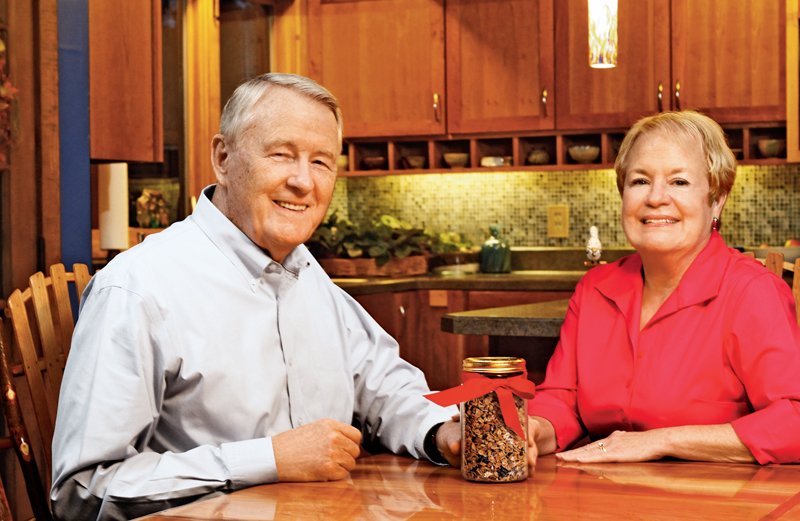
The next morning I woke up thinking about granola. My famous homemade granola. Everyone loved it. Maybe Julie would too.

I took out my largest mixing bowl and poured in oats and a bunch of sunflower kernels. Then I stirred in vegetable oil, molasses and vanilla (it adds just the right hint of sweetness). I spread the mixture out in a big roasting pan and slid it into the oven. I checked on it a few times, stirring while it baked.

I don’t know, Lord, could this really be the answer?

The timer dinged. I pulled the granola out of the oven and carefully mixed in some raisins and toasted almonds and let it all cool. Then I poured it in a plastic ziplock bag and attached a note: “From Your Secret Admirer.”

I left the bag in Julie’s mailbox. She knew what my handwriting looked like. I couldn’t wait to hear what she thought.

Julie’s next letter came. No mention of the granola.

So I left another bag, bearing the same note, on the bench beside her front door.

Nothing.

I had to quit acting like a nervous, silly teenager. Time to act decisively, like, well, a judge.

I made another batch of granola, filled a bag with it and drove to Julie’s. Only I didn’t put the bag in the mailbox or on the porch bench. Nope. This time I walked straight up to her front door and knocked.

Julie opened the door. I didn’t say a word. Just handed her the granola and kissed her. Exactly what she was waiting for.

The rest, as they say, is history. This spring will be our fifth anniversary. I think I’ll start our celebration by bringing Julie breakfast in bed, featuring my famous granola, of course.

Try Leon’s granola for yourself!


Download your FREE ebook, A Prayer for Every Need, by Dr. Norman Vincent Peale

The Warming Comfort of a Bowl of Oatmeal

Oatmeal is one of those “super foods” that is “super” both in flavor and in natural healthfulness. Containing heart-protecting antioxidants, digestion-stimulating insoluble fiber and blood sugar- and cholesterol-regulating soluble fiber, whole oats are a powerhouse of nutrition and health support. 

There’s more good news. Oats are easy to make, from an overnight pot of steel-cut oats in a slow-cooker, to a 10-minute bowl of quick-cooking oats on the stovetop. Flavored packets of oatmeal are readily available and delicious, but the satisfaction and ease of making your own whole oats is time well spent.

God's Constant Presence In Article Ad

Try these four ideas for elevating your morning oatmeal to new heights of comfort and flavor. Because the best news of all is that oatmeal is as delicious as it is healthy. 

1. Try Natural Sweeteners
I always thought there was nothing like a generous spoonful of brown sugar, stirred meltingly into a piping hot bowl of oatmeal, to bring a sweet zing to the morning. But I’ve experimented with natural sweeteners enough to know by now that they can also do the trick. Honey, maple syrup, agave nectar and date syrup are just a few of your sweet choices.

2. Get Fruity—Fresh, Dried or Frozen
Oatmeal is especially comforting during the cold winter months, both for its smooth, warm texture and also for its status as a canvas waiting to be painted with any fruit you can imagine. Dried fruits—cranberries, cherries, blueberries, bananas or raisins, for starters—plump up nicely when stirred into the almost-done pot of oats. Fresh fruits like pears, blueberries and raspberries can be cooked down to a pleasing, flavor-intense bite. And frozen fruits, from peaches to mangoes to strawberries, bring a reminder to your winter morning that summer isn’t far behind.

3. Make it Creamy
Adding something creamy to oatmeal makes your morning bowl even more comforting and nourishing. A splash of milk—dairy, soy or nut works well—or a decadent drizzle of cream will do the trick. Adding a dollop of yogurt to your almost-cooked pot of oatmeal is another way to boost both the flavor and nutritional profile of the dish.

4. Add Some Crunch
Contrasting textures make comfort foods all the more satisfying to eat. A handful of chopped nuts in your bowl of oatmeal will add protein, omega-3 oils and other nutrients to your breakfast, along with a pleasing crunch to sink your teeth into. Other options are toasted coconut, crisp raw fruits like apples or toasty granola.

Any more ideas for dressing up your morning oats?

The Upside of Letting Go of Goals

For as long as I can remember, I’ve pictured my life as a road map with my goals as red-dot destinations. On milestone birthdays, New Year’s and random times of introspection, I take stock and survey my progress from a bird’s eye view, overlaying where I am against where I believe I should be. So when I ran across a book, Living without a Goal in a used bookstore I picked it up—laughing at it almost—thinking it’d be a good gag gift for a friend.

As I waited to pay for it, I read the back. Freedom was in all caps and italics. The idea of consciously saying no to a goal seemed so foreign to me, so counter to everything I knew, to everything I’ve always known, I had to dig in and investigate. 

Pause & Pray In Article Ad

What if I let go of my goals? The very idea of abandoning objectives I set for myself gave me anxiety.

My heart-racing response gave me all the more reason to muddle through, face my fears, and give it a try.  For two full weeks I went on a goal diet. Whenever I felt the pull to work toward a self-imposed goal, I countered with a life-affirming thought of enjoying the moment. Let life lead me rather than the other way around.

READ NORMAN VINCENT PEALE’S 4 WAYS YOU CAN BE HAPPY NOW

The first day of trying to live without a goal was like learning to meditate. My mind kept wandering to my old familiar habit of thinking that I needed to be working and then the nagging guilty feeling that I should be doing something else—or in the very least scribbling down a list of what I should be doing.

Goals, I realized, are my go-to. Over the years I had trained myself to be so focused on progress that giving myself a pass, even a temporary one was difficult.

I persevered. It wasn’t easy, but for 14 days I stuck to it. I should explain, for obvious reasons, I kept my work commitments, but all other optional self-imposed goals, I let go.  Here’s how what I learned:

1. I felt better. Once I gave myself permission to truly let go I found myself enjoying the moment. Possibilities opened up. I took longer walks and spent more time with my sons.

2. Now is a beautiful place. It’s easy for me to let my goals and my progress define me. Releasing myself of the pressure to achieve, and the judgement of winning or losing, helped me peacefully discover the beauty of right now.

3. Crazy as it sounds, I was more productive. By focusing on the moment rather than the end result I got more done. It’s as if my structured have-to thinking was interfering with my creativity. Lifting my goal didn’t mean I didn’t work—it just meant I didn’t feel  I had to work and that detail, made all the difference.

4. Goals don’t have to be all or nothing. It’s great to have something to work toward but not at the expense of robbing me of the joy of right now.

Goalless living gave me new perspective. I realized contentment and success aren’t wrapped up in my achievements. I can live with intention, focus on the moment and  still follow my passions, appreciating where I am right here, right now.

The Unlikely Caregiver That Changed Her Mind

I sat at the kitchen table in my bathrobe, bleary-eyed, looking down at the steaming cup of coffee in my hand early on a Saturday morning back in the spring of 2002. I had been up most of the night with my 18-year-old son Joel, who has autism. Life had been a roller-coaster ride since Joel hit puberty. There were many nights he slept only two hours, and days when he threw one tantrum after the other. My husband, Wally, and I never knew what might set off an explosion.

We can’t do this on our own, I thought again that morning. It’s too hard. Wally and I couldn’t even enjoy church. Carol and Bob, the couple who used to teach the special-needs class, had moved on. I’d hoped someone else might volunteer, but no one did. Now we couldn’t sit through a service together without one of us having to take Joel out of the sanctuary because of his agitation.

We prayed about moving Joel into a group home with staff that could better care for him. The county had even put him on an emergency housing list. But at the last minute we just couldn’t let Joel go. It didn’t feel like the right time.

Now I took a long sip of coffee and looked out the window, wondering if Wally and I had made the right decision. I was exhausted, exhausted from being a mother and caregiver 24/7. I had almost given up on my prayer that God would send us someone to care for Joel, someone who could understand my son, could understand his need for life to unroll at a predictable, well-ordered pace, who shared our faith and could even come to church with us on Sundays. I’d lost track of the number of county-provided support staff who didn’t work out, who just couldn’t handle Joel. A new person was coming over from the agency later today, but I was running short on hope. Help, Lord, I prayed again. We need someone for our son. Finally I got up from the table and trudged upstairs to get dressed.

A couple of hours later there was a knock at the door. Joel stood by my side while I opened it. “The agency sent me,” a handsome young man said. He was soft-spoken with an accent I didn’t recognize. There was a soothing quality to his voice.

“Come in,” I said, glancing at Joel and hoping he wouldn’t start acting out right away. But he didn’t. In fact, he seemed almost calm. We sat down in the living room. “My name is Mohamed,” the man said. “I’m from Mauritania, Africa. I cared for my mother in my country until she passed away, then I moved here because I have always wanted to live in the United States.”

Suddenly Joel got up. Oh, no… I thought. But he went over and sat beside Mohamed. “You have a new friend,” I said, a bit surprised. “Joel doesn’t normally sit next to strangers.” Mohamed turned to Joel and started asking him questions.

“Joel,” I said, “why don’t you get your photo album to show Mohamed?” For the next hour I watched the two of them together, paging through the book. Mohamed pointed to one picture after another. “Who’s that?” he’d ask Joel or “There you are with your dad at the zoo, right?” or “Is that your dog?” Joel responded happily with a simple shake of his head or a quiet yes or no.

I was relieved at how well they seemed to get on together. “When can you start?” I asked when Mohamed finally got up to leave. “I can start this week,” he said. Joel and I followed him to the door and watched him as he walked away.

Later that evening I told Wally about Mohamed. “I liked him immediately,” I said. “There was something so calming about him when he greeted Joel and me.” “Well, he certainly sounds terrific,” Wally said. “Maybe our prayers for a caregiver have finally been answered.”

“Of course, we’ll probably still have to find someone to help us out on Sundays,” I said. “I wonder if I could ask Mohamed.”

The transformation was so amazing that it sometimes took my breath away. Around Mohamed, Joel’s anxiety began to ebb and his tantrums became almost nonexistent. The peace I had felt from Mohamed the first time I met him was a completely calming influence on my son. Under Mohamed’s watchful care, Joel became that lovable boy he had been before the tantrums started. Now if only we could find someone to help us out on Sundays too.

“Why not ask Mohamed?” Wally said. “Joel really likes him. It might just be a great solution.” A couple of days later when Mohamed came over to take Joel to the zoo I asked him, “Do you go to church?”

“I’m a Muslim,” he said. “I worship at the local mosque.”

“Oh…” I said. “Wally and I need help with Joel in church on Sunday mornings,” I continued hesitantly. “Would that be a problem for you?”

“That would be fine,” Mohamed said, and smiled. “I can worship God in your sanctuary as well as in my mosque.” Of course, I thought, why would God send us someone who couldn’t help us on Sundays?

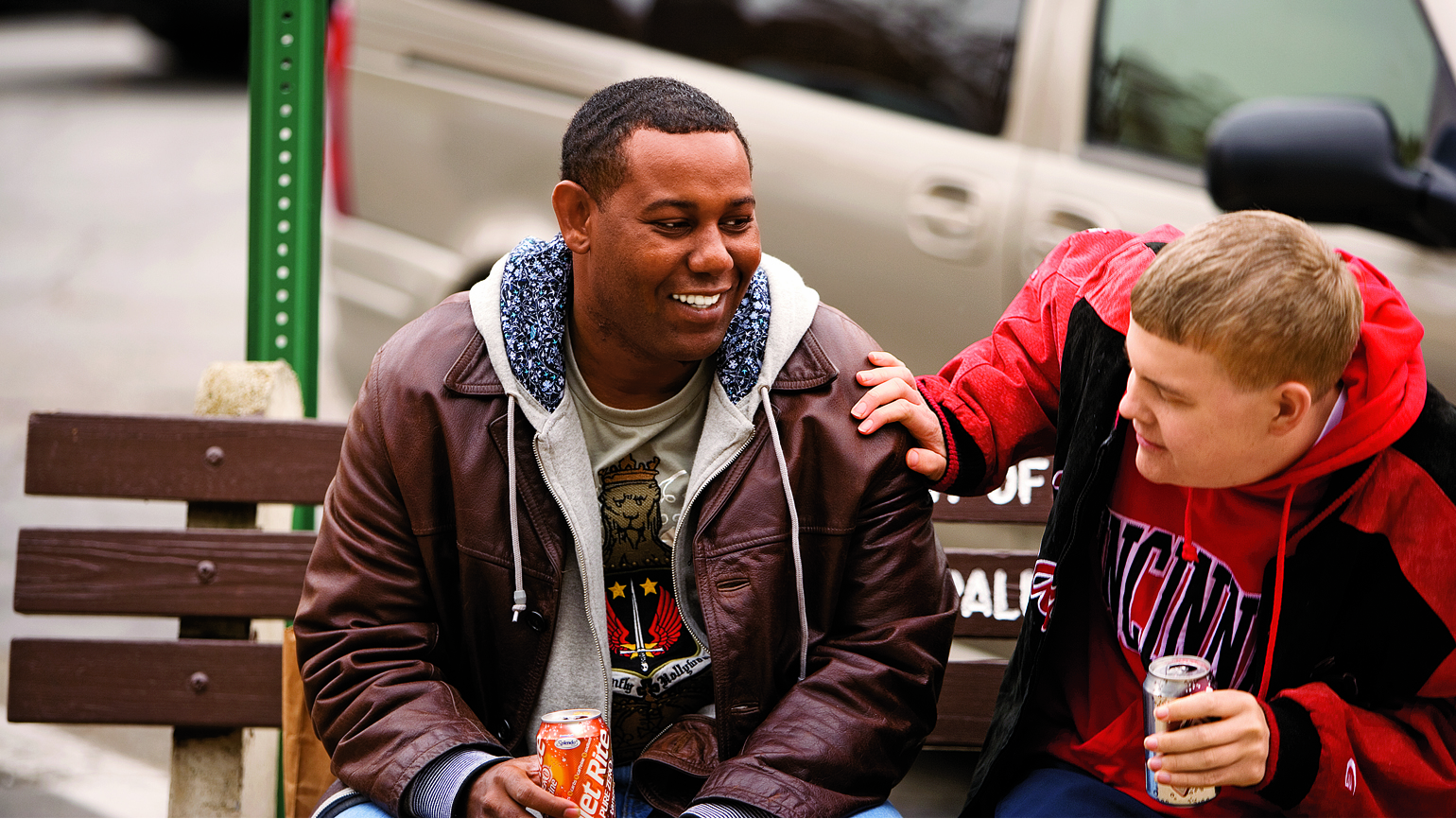
Five years down the road Mohamed is practically a member of our family. “He’s my brubber,” Joel says at least once a day, pointing to a picture of the two of them on the refrigerator door. And when Mohamed slips into the pew next to Joel at our church on Sunday mornings, Joel grabs his hand. I’m struck by the beautiful contrast in skin tones and by the mysterious ways of this God we love. Mohamed was not the answer to prayer that I’d expected. But he was the one that we needed.

This story first appeared in the April 2008 issue of Guideposts magazine.

The Unique Challenges of the Male Caregiver

Lisa Weitzman, LISW-S, is the BRI Care Consultation™ Manager of Business Development at Benjamin Rose Institute on Aging

Regardless of circumstances, caregiving presents a host of demands. For the male caregiver, however, longstanding stereotypes can make the experience even more challenging. The traditional idea of a caregiver is a woman, most often someone caring for a husband or father, and caregiver support programs tend to have a female focus. 

Pause & Pray In Article Ad

Despite societal expectations, according to a recent AARP study, 44 percent of family caregivers for older adults—or six million caregivers—are actually men, and 28 percent of these men are millennials (Accius, J. (2017). Breaking Stereotypes: Spotlight on Male Family Caregivers, AARP Public Policy Institute).

As with female caregivers, men who take on the role handle a variety of household tasks. They pay bills and oversee financial accounts, make doctor’s appointments, cover transportation and prepare meals, along with numerous other responsibilities. On a daily basis, they provide their loved one with personal care, including bathing, toileting and dressing. While it may seem, then, that there are not many differences between the male and female caregiving experiences, in many cases gender differences clearly play out in approaches and responses to caregiving.

Research studies have pointed out several key differences between men and women as caregivers. Men, in general, tend to be “fixers.” They tend to like to create lists of chores and delegate tasks that need to be completed. They often prefer to manage rather than administer hands-on care and focus on practical solutions rather than on their feelings about caregiving. Traditionally, they are not likely to discuss their stress. They may contract for assistance in the home, but they do not tend to seek emotional support in any way. In fact, men often believe that they should “tough it out on their own” and thus wait until a crisis before turning for help, even disregarding their own health issues. (Assisting Hands Home Care. (2014). Men as Family Caregivers). In sum, for many men, caregiving is not intuitive; rather it is a role they have to learn how to play.

Adding to this, male caregivers often have to buck societal expectations of who should handle caregiving tasks and how. It is not unusual for them to encounter employers, medical professionals and social service providers who are not used to dealing with men in this role and thus may disregard their issues. Another potential stressor is that many men still define themselves as the family provider; in fact, 66 percent of male caregivers still work full-time outside of the home. At the same time, 37 percent of men—and 45 percent of millennial males—hide their caregiving responsibilities while at work, afraid of the workplace ramifications of sharing this information (Accius, 2017). On top of this, men are often not as prepared as women for the intimate aspects of caregiving. Many lack hands-on caregiving experience, having been at work full-time while their children were growing up. Even when men want to reach out for help, they may not know where to turn because they are not used to searching out community resources.

Whether male or female, caregiving is not necessarily a choice. However, men often view it as a situation that has been thrust upon them that they want to solve. They “don’t self-identify as caregivers; they just see themselves as the good husband, son, or grandson” (Seegert, L. (2019). The special challenges men face as caregivers, Association of Health Care Journalists). But, as Jean Accius reflects, “Then they realize it’s harder than they thought, they can’t fix it, and they think they’ve failed. But that’s not the case” (Accius, 2017). As one male caregiver states, “It wasn’t something I necessarily wanted to do…I just had to put my feelings in a corner and go for it.” 

The good news is that men can take steps to find relief from the challenges of caregiving within “nonthreatening environments that allow for honesty without the pressure of rejection, ridicule, or criticism (Singleton, D. (2015) The Male Caregiver, caring.com). If you are a male caregiver navigating this role, you may want to:

· Get as much information as possible, and take advantage of services in your area.

· Look into professional and/or online resources, including the Well Spouse Foundation, your state’s National Caregiver Support Program, online or all-male support groups, or caregiver coaching services like BRI Care Consultation™. Keep in mind that it is all right to ask for assistance from family and friends. You are not alone on this path, so allow yourself to seek out their help.

· Accept mixed feelings about the experience: it is a difficult process that can stir up conflicting emotions.

· Honor your strengths and play to them.

· Give yourself the time you need to take care of you.

The Two-Minute Vacation

My times are in thy hand. —Psalm 31:15 (KJV)

I stopped at the foot of the stairs and set down the vacuum. I’d been running up and down, getting a bedroom ready for guests. The phone had rung nonstop, the breakfast dishes were still on the table, and none of this was getting that writing assignment done. It was time for a minute vacation. I stuck a CD into the player, dropped into a chair, put my head back, and for a moment let Gregorian chant transport me to an unhurried world.

Daily Strength for Women in Article ad

I discovered the wisdom of these brief getaways when my husband and I were on an actual vacation. In the Florida panhandle, we had stopped for the night at a motel set in a grove of ancient live oaks. Printed on the breakfast menu of the adjoining restaurant we noticed “The Oaks Prayer for Today”:

“Slow me down, Lord. Ease the pounding of my heart by the quieting of my mind…. Teach me the art of taking minute vacations: of slowing down to look at seashells, to chat with a friend, to pet a dog…. Let me look up into the towering oaks and know they grew great and strong because they grew slowly and well.”

Minute vacations–could I really recapture, in the workaday world, the release of pressure we felt on that rambling, no-special-destination car trip? For a few days we really were stopping to look at seashells and make friends with playful dogs. I copied down the prayer and, back home, set out to experiment.

A two-minute stretching exercise turned out to be a quick way to relax. So did a stroll around the yard. Or a few minutes with a crossword puzzle. I developed a score of instant escapes, like preparing a cup of Lapsang Souchong tea with my best china, or opening a photo album and spending a moment in another time and place.

It isn’t only the minute vacation, I’m finding, that’s different. To stop, to step aside, to lay down–even for a moment–the pressures to achieve is to see all the other minutes in a new way, to receive time itself as a daily blessing.

Lord, teach me to walk today in Your unhurried steps.

The Turtles of Topsail Island

My brother, Richard, saw it first. “Jean!” he shouted, running up toward our little vacation beach house. “There’s something huge coming out of the ocean!” The moon wasn’t quite full that summer night on Topsail Island back in 1970. But it was pretty close.

My husband, Fred, and I had fallen in love with the beaches of Topsail back in 1970, on our honeymoon. We’d vacationed there ever since, and had recently bought this beach house. I squinted down toward the waves. An animal the size of a truck engine was making its way up the beach, right for our house.

Inspiration from the Garden in article ad

It was past midnight, but I ran inside and woke up the kids. We all gathered on the deck.

“What is it, Mom?” Karen asked. Eight that summer, she was my youngest and every bit the nature lover I’d been at that age.

“It’s a turtle,” I said. “A sea turtle.” I’d seen the posters put up by the National Marine Fisheries Service. Sea turtles were a threatened species. The females lumbered ashore to lay their eggs.

She came to a halt right at our porch steps and began digging with her back flippers. Sand flew through the air, smacking against the porch. One by one the family got enough of the spectacle and headed back to bed.

Not Karen and me. Wrapped in blankets, we watched until 2 a.m., when the turtle finally finished her task and crawled back into the thundering waves.

Early the next morning Karen and I were down in the sand, examining the spot where we knew the eggs were buried. “How long do you think it’ll take them to hatch, Mom?”

“Let’s find out,” I said.

We called the North Carolina Wildlife Resources Commission, but they had no record of turtles nesting on Topsail Island. Finally, we found a government pamphlet that gave us some answers. What we’d seen was a loggerhead—one of seven species of sea turtles, all of which were either endangered or threatened.

Sea turtles live their entire lives in the ocean, except for when the females, traveling hundreds, or even thousands of miles, somehow return to the exact beaches where they hatched decades earlier to lay eggs of their own.

Female loggerheads laid several nests, coming back to shore repeatedly over the course of a few weeks. Karen and I walked up and down the beach, looking for trenches in the sand like the one our turtle had made (they’re so big that people sometimes mistake them for bulldozer tracks).

We found a bunch, but we’d learned that as little as one turtle in 10,000 makes it to adulthood.

Nests take about 60 days to hatch. Karen and I were back home in Ohio by the time the babies in “our” nest saw the light of day. The first thing we did when we returned the next year was check on it. There wasn’t much left to see—just the vaguest indentation in the sand where we knew it had been.

How many babies had made it down to the water?

“I wish we could have been here to help, Mom,” Karen said, a little sad. So did I.

Summer by summer we learned more about the turtles—and about how to help them. We swept over the trenches left by mothers so their nests would be undisturbed. When hatching time came we dug roads in the sand that the babies could follow down to the surf.

Sometimes we found stragglers from a nighttime hatching. We’d put them into the water and say a prayer for them as they winged their way toward deeper water. We kept track of the nests we found and reported them to wildlife officials.

Word spread about this strange mother-daughter turtle-finding team. We got calls about injured turtles that washed up on Topsail’s 26 miles of beach.

Fishing nets and speedboats can be a menace to them. Turtles hit by propellers were one of the most common victims on Topsail’s beaches. There was little that Karen and I could do for these animals.

Not that Karen didn’t have things in her life besides turtles. In 1990—the same year that Fred retired and we moved to Topsail permanently—she graduated from college and got a position with a Charlotte public relations firm.

We were incredibly proud of her—what mother wouldn’t be? And probably more excited about her new life than she was.

But then something terrible happened. Like so many terrible things it started out small…just a nagging cough. It wouldn’t stop nagging her. Karen saw our family doctor. She had leukemia.

“The more rest she gets,” the doctor said, “the better chance she has.” Karen gave up her dream job and moved back into the beach house with Fred and me.

Orders to rest or not, Karen stayed busy. It was the height of the nesting season. Mother turtles were laying eggs up and down the beach.

“That’s the third call we’ve got this morning about the same turtle nest,” Karen said one morning, exasperated. “Mom, we need to get this thing more organized.”

So the Topsail Island Turtle Project was officially born. Karen lectured at schools and libraries, explaining the vital role that sea turtles play in the ocean’s ecosystem. Turtles are a bellwether species. Their disappearance means more than just no more turtles. It means our oceans are dying.

How, Karen asked, could we sit back and let these animals slip into nonexistence before our eyes?

Extinction is a big word. Most of us don’t want to think about what it means. Extinction is a full stop. There’s no coming back. It’s permanent, irreversible. It takes courage to imagine something that large—that terrible. But Karen had that courage.

She knew what it meant to face up to endings, even if I was still struggling to accept her worsening illness.

“Mom,” she said to me one day as we were looking out the kitchen window at the late autumn light, “you know they signed me up for a life-insurance policy when I was working. I don’t want my illness to be the center of my life. I want the turtles to be the center of it. If I don’t make it, I want you to use that money for them.”

If I don’t make it… The words hung in the air. Karen and I didn’t talk about death. It was too painful for me. But she cared too much about the turtles to risk my not knowing her wishes.

“Okay, Karen,” I said. “I promise.”

Late one evening in 1991 Karen and I got a phone call that a big female had come ashore a few miles down the beach from us. Karen’s illness had been running her hard of late—harder than usual—but she refused to let her disease get in the way of helping those turtles.

So we got into the car and drove down to the spot where the caller had indicated.

The telltale furrow in the sand was easy to see in the moonlight. Karen and I found a spot close enough to the nesting turtle to keep an eye on it, but far enough away that we wouldn’t disturb it. Next to the moment when the newly hatched turtles make their mad dash to the waves, nesting can be the most dangerous moment in Mama turtle’s life.

But not with Karen around. “Do you want to go home and get some rest, Karen?” I realized how foolish the question was before it was out of my mouth.

“Don’t worry, Mom. I’ll get some rest later. As soon as she’s safe.” It was 2 a.m. before the turtle had laid the last of her eggs and slipped back into the sea. Karen went home and slept in. The next day, she felt too ill to go out. No, God, no, I prayed. I’m not ready to lose Karen.

Two days later, Karen slipped away peacefully, just a few months before her thirtieth birthday.

I plunged into helping the turtles with more energy than ever, channeling a grief that seemed too much for me to bear. Karen was gone—at least from the earth. But her work on behalf of the earthly creatures she cared for most went on.

In 1995, four years after Karen’s death, a 40-pound immature loggerhead turtle washed up on the beach at North Topsail Island with severe injuries, most likely caused by a boat propeller. Greg Lewbart, a doctor at North Carolina State University College of Veterinary Medicine, agreed to look at him.

“This turtle is lucky you found him when you did,” Dr. Lewbart told me. “He’s also lucky that his braincase wasn’t broken or his optic nerve severed by the propeller that hit him.”

I decided to call him Lucky.

We fixed Lucky up with a discarded fiberglass tank, and he ended up spending 18 months with us. When his wounds were finally healed, some Topsail Island Turtle Project volunteers and I carried him down to the sea. “So long, Lucky,” I said, as he slowly flapped out to sea. “May the Lord watch over you.”

I had seen plenty of turtles by then, but only in passing. Lucky was the first Topsail sea turtle I really got to know personally. There’s something uniquely painful and uniquely rewarding about taking in a wild creature, caring for it, coming to know it as an individual and setting it free again.

You put so much love and worry into the animal…and then you place it right back in harm’s way.

Of course, that’s what every parent does as well. No one knew that better than I did.

In the days after Lucky left us, I couldn’t get Karen’s words out of my mind. Help the turtles. To really help them I needed—the turtles needed—a turtle hospital. The Karen Beasley Sea Turtle Rescue and Rehabilitation Center opened its doors in the fall of 1997.

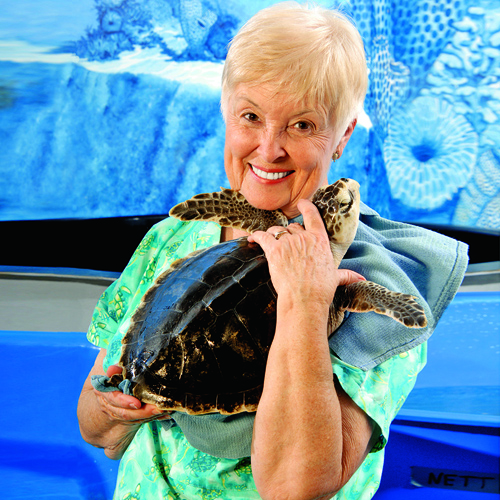
Since then we’ve rehabilitated and released more than 150 sick and injured sea turtles. Some stay with us for just a few days. Others spend months, even years here. But for all of these animals, there eventually comes a moment when I have to tell them goodbye. When I have to give them back to the ocean, and back to God.

It’s never easy. But there’s no time that I feel closer to God—or to Karen—than when I place one of these turtles in the waves and watch it swim off to make its ancient way in the world.

Sea turtles are just one of the world’s many endangered species. But they’re my species—the one I’ve dedicated my heart and my life to helping, just like Karen did.

By chance or, perhaps, by something more, a mother turtle picked my daughter and me out on that moonlit summer night so many years ago, when she crawled out of the sea, right up to our doorstep on Topsail Island. Yes, God does have a way of getting your attention.


The Truth About Christmas

“Oh Mom, you’re not going to stop, are you?” comes a voice from behind me.

I look to the rearview mirror and see the flushed face of a teenaged son.

Community Newsletter

Get More Inspiration Delivered to Your Inbox


“You are,” he says.

I do turn the corner. I have tremendous compassion for the tender spirit of a teen, and I know that on this busy street, most anyone we know could drive by. But I have to stop, and my son knows it. Sometimes the Lord speaks through the rush and hurry of my world and holds my attention soul-deep. Today He’s spoken to the quiet whispers of my mama-heart. To the place where worry is loud and fear is bold.

And He’s done it from a marquee sign.

The church is small and brick and the sign out front is simple. But I’ve driven around the block twice looking for a place to park. When I find one, I slip from behind the wheel and walk to the front of the church.

The sign reads: “Autumn leaves. Jesus doesn’t.”

Honest. Simple. True.

I stand on the sidewalk. Cars move fast but it seems like everything has stopped because I’m humbled, moved, by grace.

Jesus never leaves.

This year has brought worry, maybe more than any other year. I’ve wrestled and battled, and enemy attack has been strong. But in those times, when the night is still and fear moves within it, when the day has gone dark, and my heart has too, Jesus has met me.

He’s met me in my worry and He’s banished the darkness with His light-giving truth. He’s comforted my spirit and cared for my soul. He’s brought hope and peace and strength that overpower all because He is Lord.

He comes near.

As I stand there, I understand that although the sign says nothing of Christmas, it is the perfect message for the season. It’s the heartbeat of the believer, and it’s the pulse that brings life.

The babe in the manger brought salvation, and His Presence is a promise.

I will not leave you comfortless: I will come to you. (John 14:18, KJV)

The strong truth of Christmas is that Jesus–powerful and mighty, gentle and kind–will forever be by my side. Today. Tomorrow. For eternity.

I’m standing in December wind when someone comes down the walk. Her smile is warm and her eyes are kind. I don’t know if she’s the pastor, a member of this church, or someone taking a walk. But when she sees me standing there in front of this sign, snapping a picture, I know that she understands.

“It’s powerful,” I say.

“Yes,” she says.

My heart is full.

I return to the car and my teenager smiles now too. “Sorry, Mom. Sometimes I worry too much.”

“It’s okay,” I say. Oh, sweet son, I understand.

Worry has come close this year.

But Jesus has come closer.

And as the sign says, he’ll never, ever leave.

The Traffic Jam That Changed Our Lives

It was more than 60 years ago that I climbed into a yellow cab in New York to meet the publisher of a new little eight-page leaflet called Guideposts.

I’d already met the four-person staff in their small office, a windowless suite that had once been a telephone exchange. The previous issues they’d shown me were different from any “religious” publication I’d seen.

You Got This In Article Ad

Guideposts just told stories about people whose faith—Protestant, Catholic or Jewish—had made a difference at a particular moment in their lives.

The man I’d come to meet was already in the taxicab. Norman Vincent Peale was on his way from a radio interview at CBS to another one at NBC. Dr. Peale was pastor of one of New York’s largest churches, a widely read author (his new book, The Power of Positive Thinking, would be released in a few months) and a very busy man.

This short trip between radio stations was his only free moment of the day, and my only chance to apply in person for a job at Guideposts.

I badly needed that job. I was 27, newly returned from freelance writing in Europe with my wife, Elizabeth, to find scores of veteran writers out of work. “Tib,” as I called her, had just given birth to our first child—how were we going to pay our bills?

Dr. Peale kept looking at his watch. Traffic was crawling. The cab would move a foot and stop. Another foot, another stop.

“Well,” Dr. Peale said at last, “I’m going to be late and there’s nothing I can do about it.” For the first time he looked directly at me. “Tell me about yourself. Your background, your goals.”

What could I say? I could use some of the religious language I’d learned as a boy, maybe get away with pretending to be a believer, but under the steady gaze of the man beside me, I couldn’t do it. In the end I told Dr. Peale I wasn’t much interested in religion; what I wanted to do was write.

The traffic inched forward, came to a standstill, inched again. Dr. Peale seemed to be really listening.

“That’s an interesting answer.” We talked some more.

“I’m glad we have these extra minutes together,” he said at last. “You’re exactly the kind of person I wanted to reach when I started Guideposts, people turned off by religious jargon. We want to provide glimpses of God in everyday life all around us. And I think I can promise you something. If you do come with us, Guideposts will happen to you.”

As it turned out, I did get the job, and a few months later Tib was hired as well. The Power of Positive Thinking became a bestseller. Guideposts became the most popular inspirational magazine ever, with millions upon millions of readers.

And Guideposts did in fact “happen” to Tib and me, our faith becoming the central focus around which our lives revolve.

Now, 60 years after that taxi ride, Guideposts.org has asked Tib and me to share a few short reminiscences, relating behind-the-scenes stories of some of the readers’ favorite articles. From its origins in that cramped windowless office, Guideposts now also resides in the limitless space of the Web.

The electronic media, though, remain true to Dr. Peale’s original vision: Find out what their faith means to real people in the real pressures of everyday life—and tell others.

The Thin Space Between Earth and Heaven

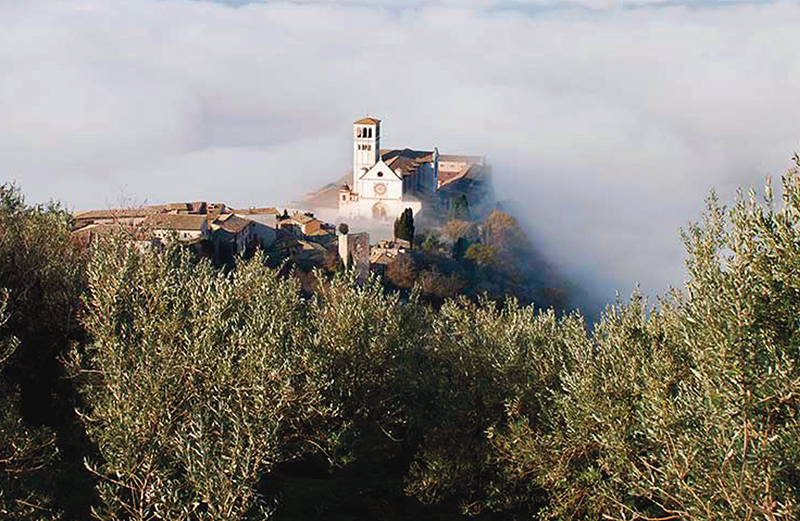
I’d vaguely heard of “thin places” that first time I visited Assisi: spots where the mysterious membrane between earth and heaven breaks and you can feel closer to the divine—so it was said.

But that winter day the sky was leaden, the damp cold cut through everything, and nothing about this medieval Italian hill town looked spiritually promising.

New Every Morning Journal In Article Ad A

I was just out of college, teaching English in Florence, and not certain what I would do with the rest of my life. A friend suggested we take a trip to Assisi, famous as the birthplace of Saint Francis.

That weekend, we packed our backpacks and took a bus through the rolling Umbrian countryside. We got out at a dreary bus station.

There weren’t many pilgrims on the narrow streets. Nobody in the tacky souvenir shops with their Saint Francis tea towels, ashtrays, T-shirts and key chains. We made for the cheapest lodging we could find, a bed-and-breakfast where the wallpaper smelled of mold and a bare, dim lightbulb hung from the ceiling.

I knew so little about Saint Francis. I’d grown up in a Protestant church, and all I remembered of this twelfth-century saint was from a children’s book I’d once read.

He could talk to the animals—like Dr. Doolittle. He coaxed a wolf out of terrorizing a small town: as long as the villagers fed the animal regularly, it would promise not to eat them. He also created the first Christmas crèche with a live ox and donkey. Before that, I seemed to recall, he’d been something of a ne’er-do-well.

We wandered down to the basilica and sat in the pews, waiting for other, richer visitors to drop coins in the machines that illuminated the medieval frescoes. When the lights came on, you could see the life of Saint Francis in brilliant colors.

There he was, preaching to the birds. Walking through fire without being burned. And his transformative moment, when he gave up the life of a spoiled playboy and returned his fine clothes to his wealthy merchant father, standing half-naked in the town square, the blessing hand of God poking through the clouds above him.

From then on, Francis and his followers, dressed in rough robes, took nothing with them as they spread the Gospel from town to town, trusting in God’s providence and others’ generosity, the way Jesus had lived.

I was amazed by that, and a bit perplexed. Giving up all the benefits of wealth and power to live a life by faith?

I sat, meditating, learning more about Francis from the glimpses on the walls. He and his followers would wander the Umbrian hills, singing psalms like traveling street performers. I thought of how my college buddies and I would amble around campus, singing at the drop of a hat.

He wrote poems that came straight from the heart. I wrote too, although I wasn’t sure anyone would want to read my work. Francis had a powerful imagination. He created that first crèche. I put on plays in my backyard as a kid.

It was an eerie feeling. Here was a holy man who didn’t seem so far above me… he was starting to feel very close, like someone I could actually know.

The church was getting cold. I stuck my fists in the pockets of my Army-surplus peacoat and wiggled my toes in my battered desert boots. “Let’s go,” I said to my friend.

We hiked up the hill looking for a cheap place to eat. Pigeons cooed at us. Maybe their ancestors had attended Francis’ sermons, but these birds were more interested in pecking at trash. A man hawking souvenirs pestered us to buy a Saint Francis necktie. My feelings from the church began to fade.

Then we came to the town square of the fresco. There was no illuminated hand of God, only a few parked cars and scooters. Still, all at once, the grayness seemed to part. Maybe I’d been studying old pictures for too long. Maybe it was my empty stomach, but I caught a glimmer of the square as it had once been.

I could see Francis on one side and his father on the other, dressed in the finest cloth. “Why did you sell the clothes from my store?” I heard the father shout. “What did you do with the money?”

“I gave it to the poor,” Francis said.

“It wasn’t yours to give away.”

“It all comes from God,” Francis answered. “It can go back to God.” With that, he removed his fancy clothes, all that remained of his past, and left them on the pavement. His father could have them. Onlookers gawked and laughed. But Francis stood resolute, certain of his calling.

It was only a moment. In reality, the skies never lost their grayness, no ray of light pierced the clouds. But to my eyes the place was lit by holiness, as though God’s hand had reached through the gloom and touched me. Take my peacoat and desert boots, I wanted to say. Take whatever you want.

“Did you see that?” I said.

“What?” asked my friend.

“Never mind.” I shrugged.

I discovered that day what a thin place is. A spot in this world where God has shown himself to someone who loves him. The imprint of such an event doesn’t go away. It touched me that day, and has ever since.

I haven’t shed my clothes or preached throughout the countryside. I can’t talk to animals (my cat, Fred, wouldn’t listen to me anyway). I’ve never performed a miracle. But in one modest respect I am like Saint Francis: I have tried to lead my life by faith.

There is something more to this world than material things. And as I discovered one day at Assisi, in the thin places you can see that, even on a gray afternoon.

The Sweet with the Bitter

I was a bit off-kilter over the weekend, since I got word late last week that my uncle was in a coma, dying. We are not close, but he has always been kind to me, and unfortunately my father’s other brother died only a matter of months ago. Because of the suddenness of the crisis my dad was unable to fly out. It made me sad for him.

I suggested that my father could call one of my cousins and be put on speaker to talk to his brother. He did that, and it provided some comfort.

Whistle Stop Cafe In Article Ad May 2023

There was nothing else I could do, so I decided to busy myself Sunday afternoon baking bread. And then as the dough was rising, it occurred to me to turn it into sweet rolls. My father bakes sweet rolls for the family at Christmas, sending them out via overnight mail. It seemed a fine way to honor my dad.

Read More: A Fall into God’s Grace

My kids got up this morning, excited at the prospect of sweet rolls. As they munched happily, I thought of my dad and his brother, and prayed for them both. There is bitterness in life and there is sweetness. In this case, at least, the sweetness is being passed along to the next generation.