Embrace God's truth with our new book, The Lies that Bind

The Good Things in Life’s Storms

I think I’m beginning to grow duck feathers it’s been so wet here! In the mountains of North Carolina, day after day is filled with a gloomy forecast of rain. So I was thrilled this morning when it wasn’t raining, and I could sit out on my deck and work on my writing deadlines. Other than being dive-bombed by a bird, making an up-close acquaintance of a squirrel who didn’t realize I was sitting there and having a bee come a little too near for comfort, I sure did enjoy those few hours working in God’s creation. 

But then, in just the span of a few minutes, a massive storm rolled in. The sky turned from bright sunshine to charcoal gray. The wind picked up in huge gusts that blew green and brown debris from the trees into the air. The dead leaves and bits of greenery hung suspended and then danced around in the wind. 

God's Constant Presence In Article Ad

Sudden storms are a lot like life. We’re going along fine, and then, all of a sudden, BAM! But storms don’t last forever. And we can even discover some lovely things about them. The winds get rid of debris that would have piled up in the trees. The rain waters the flowers, and leaves everything freshly-washed.

It’s the same with our souls. Instead of focusing on the hardships of life’s storms, what if we looked for the good things? Storms can strengthen us. They cleanse our souls. They can get rid of debris, the things that don’t need to be in our lives. 

Storms are great reminders that even when we’re being pounded, we always have the assurance that God will be with us for every difficult moment. The God who made the storm can certainly calm it, and He will stay with us until those storms are over.

Are you going through a difficult time today? Just tuck your hand into God’s hand and let Him worry about the storm. He’s got it all under control. 

The Good Thing About Change

I like putting down roots as evidenced in many areas of my life. I’m married to the same man I exchanged vows with almost 44 years ago. We’ve lived in the same house for 38 years. I’ve gone to the same church for 49 years. And I still have dear friends from my school days.

I obviously don’t like change, but life happens and changes come. I was thinking this morning about some of the changes I’ve seen. I remember when gas stations had attendants who would pump your gas, check your oil and wash your windshield. I remember when many of the buildings in my town had freight elevators with workers who would push the buttons for the floors and pull the gates shut for the doors. Businesses had real live people who would answer the phones. Life was often at a slower, simpler pace. As a kid, I loved going to drive-in movies and playing in the yard all day in the summer. And we never had to worry about locking our doors.

Faithful Paws and Purrs In Article Ad

But I’ve also learned that when God brings about change, that’s a good thing. Those changes have allowed me to write books, stories, articles and blog posts—something I’d never thought about doing before but loved. I didn’t like my children growing up so fast, but that brought me six perfect grandbabies—one of the best changes ever. 

And now I have another change. This will be the last post for my “Life with a Southern Grandmother” blog. It’s been my privilege and honor to write for Guideposts and for all of you. Your kind comments have touched my heart on so many occasions, and I thank you so much for taking the time to read my posts.

Yes, life changes, but I’m grateful that no matter what happens in our lives, we can always count on one important truth: Jesus’ love for us never changes. And because of that, we can face each new day and each new change with the confidence that He will always be with us.

Love and hugs to all of you. I will miss you!

The God of Before

I have a master’s degree in worry, and without a doubt, I graduated at the top of the class. Yes, I’m good at it! Can you relate?

It doesn’t help that I have a writer’s mind and can visualize each possibly threatening scenario in vivid detail. I’ve imagined axe murderers creeping into my house when something falls over in the basement while I’m home alone.

Journey With Jesus in article ad

When a friend posted a photo on Facebook of a snake she’d found inside her house, other people replied on her page sharing about the snakes they’d found in their pots and pans, coiled under their beds, between the couch cushions, and in the toilet. I twitched out of sympathy for her.

For days after that, I made it a point to look in my pots and pans, between my couch cushions, under my bed, and definitely in the toilet. Am I a good friend or what? (And just for the record, any snake that shows up inside my house will immediately become an endangered species. Please spread the word to all of your snake buddies.)

Shucks, there have even been times after receiving medical news that I’ve thought things all the way through to the funeral, with my family sitting in the pews and the spicy aroma of carnations and lilies filling the air.

I imagine that some of you are probably chuckling by now because you’re my worry twin, and others are shaking your heads in disdain because we’re not supposed to worry. I know thatand I’m working on trusting Him more and worrying lessbut I want to be real with you, and I suspect that I’m not the only one who worries about things.

So for all of you who have also mastered the art of worry, I want to share something that God showed me this week: He’s the God of “before.”

In Jeremiah 1:5, He says, “Before I formed you in the womb I knew you.” Did you get that? Before we were even born, the God who made the universe knew us. He had a plan for our lives.

Story after story in the Bible shares how He’s always there before we need Him. God put Noah and his family in the ark before the flood beganand He’d already given them a heads-up and the opportunity to prepare for the event.

Baby Moses didn’t drown before God sent Pharaoh’s daughter to rescue him.

God closed the mouths of the lions before Daniel was attacked in the pit. Instead of Daniel being torn apart by powerful teeth and jaws, I suspect he had purring lions for pillows. 

God prepared the heart of the king before Esther went to plead for the Jewish people.

The Widow of Zarephath and her son didn’t starve to death before God sent Elijah and a miracle for their provision.

Before Joseph rose to power, God put him in prisonbecause He knew that the days in the prison were what would lead to the days in the palace.

Goliath didn’t kill David before that young lad found the five smooth stones that God had placed in the brook for himand they were exactly what he needed to conquer the giant in his life.

God had an escape plan in place before Paul and Silas ended up in that dank prison cell.

The pages of the Bible are filled with numerous stories of how God was there with each person and provided exactly what was needed for each circumstance.

And you know what was most impressive as I thought about this? I can’t find one instance (not one!) where the Bible tells how God was late. Not one verse where it says, “And God showed up after _________.”

Fellow worrywart friends, the God who took care of those men and women back in Bible days is the same God who will take care of us today. We can count on Him to have a plan in place and to be there before we need Him.   

So before we drive ourselves crazy worrying about the circumstances and situations in our lives, let’s place our worries into the hands of the One who can handle them without any problem.

And it shall come to pass, that before they call, I will answer; and while they are yet speaking, I will hear. (Isaiah 65:24)

The Gift of Guideposts

I’ll have to keep this blog entry short because I’m busy in Florida spending the weekend with a terrific group of GUIDEPOSTS subscribers and supporters. I’ve met some great people. They’re longtime readers; most of them originally received GUIDEPOSTS as a gift and today they all give the magazine (and Daily Guideposts) as gifts. We’ve also had some great speakers, like Robert Schuller.

Every time I meet readers I’m always amazed at how enthusiastic you are about the magazine. You are the original recyclers—you never throw your GUIDEPOSTS out. You pass it on, giving it to neighbors and friends, or leaving your copy in places like health clubs, beauty salons and doctors’ offices.

Mys of Blackberry Valley In Article Ad

So maybe this is as good a time as any to remind you to start your gift subscriptions. Given the difficult times we’re going through, I can’t imagine a more meaningful gift. And it is through your subscriptions and gifts that we can distribute millions of GUIDEPOSTS for free, including 500,000 a year to the military, especially military hospitals.

GUIDEPOSTS—a great way to recycle your faith. 

P.S. I’d love to meet you in person too. I’ll be at Silver Dollar City in Branson, Missouri December 5 and 6 as part of a GUIDEPOSTS Christmas story-telling event. 

I’ll be sharing some of my favorite GUIDEPOSTS holiday stories as well as giving you readers a chance to ask questions and tell your own stories, have a picture taken and generally get to know one another better. And for you knitters and crocheters we’ll have some fun workshops as part of our Knit for Kids sweater projects. So come by. I’m looking forward to meeting you. For details go to guideposts.com/storyevent.

Edward Grinnan is Editor-in-Chief and Vice President of GUIDEPOSTS Publications.

The Gift of Forgetting

Do we come from somewhere else when we are born and arrive “still trailing clouds of glory,” as the poet Wordsworth wrote? 

Do we remember that place? Do we have certain things that we agree to do in the journey of our lives…and then at birth forget? 

Mys of Blackberry Valley In Article Ad

I have heard that just before we are born an angel puts her forefinger to our lips, and murmurs, “Shhh. Forget.” And that’s why every human has an indentation from the nostrils to the upper lip, where the angel whispered to us of what we agreed to be or do upon this earth. And with her finger to our lips made us then forget.

The Gift of Failure

Almost everyone knows that Michael Jordan was cut from his high school basketball team. But most don't know that Walt Disney was once fired from a newspaper for a lack of ideas and his first cartoon production company went bankrupt.

Everyone loves Lucy but Lucille Ball was told that she had no talent and should leave Murray Anderson’s drama school. With all of Dustin Hoffman’s success, it’s hard to believe he worked as a janitor and an attendant in a mental ward because he failed in his first attempt as an actor in New York.

Go For It In Article Ad

Can you imagine Bob Dylan getting booed off the stage at his high school talent show? What would have happened if Dr. Seuss’s actually burned the manuscript of his first book, which he wanted to do after it was rejected by 27 publishers.

It’s also hard to fathom Steven Spielberg not getting accepted to UCLA film school because of average grades. And it’s easy to forget that Steve Jobs was fired from Apple at 30 and Oprah Winfrey was told she wasn’t fit for television and was fired as a news anchor.*

The fact is everyone fails in life but it is a gift if you don’t give up and are willing to learn, improve and grow because of it.

Failure often serves as a defining moment, a crossroad on the journey of your life. It gives you a test designed to measure your courage, perseverance, commitment and dedication. Are you a pretender who gives up after a little adversity or a contender who keeps getting up after getting knocked down?

Failure provides you with a great opportunity to decide how much you really want something. Will you give up? Or will you dig deeper, commit more, work harder, learn and get better?

If you know that this is what you truly want, you will be willing to pay the price that greatness requires. You will be willing to fail again and again in order to succeed.

On the other hand, sometimes failure causes you take a different path that is better for you in the long run. When I lost my race for city council of Atlanta at the age of 26, I realized politics wasn’t for me. This set me on a new course and ultimately led me to move my family to Florida and find my purpose writing and speaking.

Sometimes we have to lose a goal to find our destiny. Sometimes failure helps us see that we want something else.

Whatever path failure guides you towards, it is always meant to give you a big serving of humble pie that builds your character, gives you perspective, grows your faith and makes you appreciate your success later on. If you didn’t fail, you wouldn’t become the kind of person who ultimately succeeds.

So the next time you fail don’t let it keep you from the life you were born to live and the future you were meant to create. See failure as a test, a teacher, a detour to a better outcome and an event that builds a better you.

Failure is not meant to be final and fatal. It is not meant to define you. It is meant to refine you to be all that you are meant to be.

When you see failure as a blessing instead of a curse you will turn the gift of failure into a stepping stone that leads to the gift of success.

*Thanks to Joe Green, author of The Road to Success Is Paved with Failure for these great examples.

The Gift of Caregiver Respite

Early mornings, I sit beside my living room window and say my prayers. The window faces southeast, toward the rising sun. I perch on a cushioned chest and watch the light gather over my small Wisconsin town. This is where I talk to God and feel the comfort of his presence.

One morning I sat on the chest, opened my Bible and read. It was one of my favorite verses, from Hebrews: “Never will I leave you; never will I forsake you.” The words passed in and out of my mind. I watched the sun rise but I didn’t feel God’s presence. I didn’t feel much of anything.

Light for Life NASB Study Bible in Article

A few months earlier, my husband, Wayne, had died after battling a rare degenerative disease called multiple system atrophy. The gentle, quiet, clearheaded man I had loved for four decades had become so incapacitated that he couldn’t get out of bed without a mechanical lift.

ENJOYING THIS STORY? SUBSCRIBE TO GUIDEPOSTS MAGAZINE

I’d been Wayne’s caregiver for four years, as he declined from a vigorous hiker to someone who needed a cane, then a walker, then a wheelchair, and finally the lift. I’d taken over all the household tasks—paying bills and planning as well as cooking and cleaning.

On top of it all, I was diagnosed with breast cancer a year into Wayne’s decline. I juggled taking care of him with surgery, chemo and radiation treatments. By the time I was pronounced cancer-free, Wayne needed me around the clock.

And now he was gone. He’d died suddenly and unexpectedly in his sleep the day after his sixty-fifth birthday. It was a merciful end. Part of me knew I should be grateful. Grateful that Wayne had passed peacefully, and that our son Troy had helped so much at the end. I was free from worry and responsibility.

Yet as I sat there by the window and stared out at the gray spring dawn, I didn’t feel grateful. Or free. I didn’t feel any of the feelings I’d expected to feel when Wayne died.

I missed him terribly, yes—especially Wayne as he was before the illness, my steady companion, an excellent father to our boys. But I felt guilty too. Purposeless. Empty.

Every day for four years I’d gotten out of bed knowing exactly what I needed to do for the day. Now I had no clue. All I could think about was ways I’d been a less-than-perfect caregiver. And I wasn’t even a caregiver anymore! What was I supposed to do with myself?

READ MORE: AN ALZHEIMER’S CAREGIVER LEARNS A NEW WAY TO LOVE

God, I asked, are you hearing these questions?

The morning was silent.

I thought back to the day when Wayne was diagnosed, in 2006. He’d gone in for a routine checkup and the doctor noticed subtle imperfections in his gait and his speech that prompted further tests. A few months later, after an MRI and trips to a specialty clinic, we got the horrifying news.

Multiple system atrophy is like Parkinson’s disease on fast-forward. Life expectancy is less than a decade after diagnosis. The disease causes total deterioration of the body.

For four years I watched the man I loved—a strong factory worker, an outdoorsman, a leader in our church—vanish into himself, unable to move, then unable to speak clearly.

I knew nothing about caregiving except whatever I’d learned by being a mom. I’d been an elementary school teacher when Wayne and I married. I left my job when Derrick, our oldest, was born. Then came Troy and Brian. We moved to a house in the country outside Oostburg and raised the boys on two acres surrounded by farms and dairy cows.

I loved that house and I mourned when Wayne and I had to move to an apartment in town, then to the condo where I live now. I just couldn’t keep up with the house and the yard and Wayne’s care. Troy and his wife and kids moved into the house, so it stayed in the family, and we spent holidays there. But my expanse of trees and sky was gone. I made do with my morning perch at the window.

Every day I got Wayne up, helped him dress, prepared his food, got him into and out of the car for doctors’ appointments and helped him back into bed at night. I loved him and I never resented caring for him. But I was exhausted. And frazzled.

I had to learn so many new skills. Balancing the checkbook. Dealing with insurance companies. Sometimes Wayne seemed to deteriorate by the week. I feared every new loss.

Faith was my rock through all of it. I would have collapsed without it.

READ MORE: WHEN YOU’RE LOST, GOD FINDS YOU

Then why did I feel so alone now? So rudderless? It had been four months since Wayne died. I’d made it through the funeral. Sorted out his affairs. Shouldn’t some of the anxiety have lifted by now? I no longer had to face each day as a mountain.

Maybe that was part of the problem. Sometimes I awoke and began running through my mental checklist of things I needed to do for Wayne—only to remember that he was gone. Then a grayness settled over me. I thought of all the things I hadn’t done—told him I loved him enough, concealed my worries and exhaustion from him.

The unvarnished truth was I was a 63-year-old widow who’d lost her main reason for living. My primary accomplishment since Wayne’s death had been writing in my journal and starting a blog about the ups and downs of being a caregiver.

I needed a new direction.

But all I could think about as I stared out the window was caregiving. Was it possible I missed it? Surely not. I missed Wayne with a deep ache. But taking care of someone? I was supposed to feel liberated from that.

I got up and turned on my computer. “Volunteer opportunities, Sheboygan County,” I typed into the search engine. What was I even looking for? A long list of organizations appeared, everything from the Salvation Army to the historical museum. My eyes glazed. Then an entry caught my attention.

“The mission of the Gathering Place is sharing Christ’s love by providing a safe place for people with dementia and offering caregivers respite, education and encouragement.”

READ MORE: BACK ON THE RANCH

Offering caregivers respite. Wayne hadn’t suffered from dementia. But his disease had robbed him of speech and the ability to take care of himself. Boy, I could have used a place like this! For the first time in months I felt a stirring of interest. How fitting it would be to offer someone a respite from the kind of caregiving I’d done.

I called and the director invited me to drop by. The Gathering Place was run by a Lutheran congregation in nearby Sheboygan Falls. A few days later, I pulled up to a modern beige brick church building. I turned off the engine and sat there in the parking lot feeling apprehensive. Would I be able to handle the emotions I was about to experience?

Well, I was here. I should at least go in. I walked through the doors into what felt like a bustling community center. People of all ages—old folks, young volunteers, employees—were talking, listening to music and working on arts and crafts. It was lively and joyful.

I met the director and before I knew it I was sitting in a classroom, helping a woman with an art project. It was obvious that every activity at the Gathering Place was carefully designed to stimulate the minds of participants, helping them to retain memories and thinking skills.

I was glad to help. But I also experienced something more basic, something I’d been missing these past months. A connection with other people. A feeling of being useful, of being needed. I didn’t want to leave when the afternoon ended.

“Did you enjoy your day?” the director asked as I gathered my things.

I nodded.

“So we’ll see you next week?”

“Definitely,” I said.

I returned the following week—and just about every week thereafter. It has been four years since that first afternoon I spent at the Gathering Place. Since then, I’ve met so many wonderful people and have grown in confidence as a caregiver.

Just recently I was helping a woman named Marge with an art project. Marge repeated herself and had trouble remembering what she had done a few minutes earlier. But as we picked colors for her picture, she began telling a wonderful story about how much she’d loved the days when all the neighborhood children would come to her yard to play. 

Her long-term memory was sharp and rich. Talking to me helped her to recognize that.

READ MORE: GENTLE ON HER MIND

These days I still say my prayers each morning sitting on my chest by the window. I love watching the street come alive with people and color. I no longer feel purposeless or adrift. I know for a certainty what an immense gift the time I spent caring for Wayne had been.

Of course, I’ve long known that we’re called to give thanks for our hardships because they strengthen our faith. But this is deeper. I now understand that caregiving wasn’t just a stage in my life, a temporary hardship. It’s part of who I am. I have a heart for it.

Now God has given me an opportunity to use my experience to help others. I wasn’t liberated from caregiving when Wayne died. Caregivingwas the liberation. Serving others, I became more deeply myself, more the person God made me.

“Never will I leave you; never will I forsake you.” Those words from Hebrews are still some of my favorites in Scripture. I feel their truth every time I read them. I also feel the boundless love of the Caregiver who spoke them.

Learn more about the rewards of being a caregiver.

Did you enjoy this story? Subscribe to Guideposts magazine.

The Funny Thing About Cancer

Is there anything funny about cancer? I certainly didn’t think so when I was diagnosed with uterine cancer in 2014. I was scared out of my mind! I leaned on my husband, Jim, and my friends, family and coworkers at the school where I’d taught social studies for the past 15 years. Everyone asked for updates, so I sent group e-mails recapping my days. A cancer diary of sorts.

Here it is. What did I learn about cancer in that tough year? Read on and find out.

Pause & Pray In Article Ad

September 26
What an eventful week! I went to the hospital and had a port inserted in my chest to administer chemotherapy. The doctor put me in “twilight” instead of knocking me out completely. Big mistake. It made me very chatty. (I know what you’re thinking: She’s already a talker!) Finally, the nice surgeon had to tell me to quit talking so he could insert the port. “It’s hard to hit a moving target!” he said.

READ MORE: FIGHTING CANCER WITH COMEDY

Next up: my first chemo session. I took 10 steroid pills the day before to prepare. They hyped me up so much that at midnight, I was still talking. Jim was not pleased. What is it about husbands and surgeons?

October 13
You know how it says in Proverbs that pride goeth before a fall? Well, folks, in my case, it should be pride goeth before your hair falls out. In its glory days, my hair was shoulder length, auburn and bouncy…like hair in a shampoo commercial.

The other night, though, after I washed my hair, it was so clumped and matted with loose hairs that I couldn’t get a comb through it. I sat down at the dining-room table, my head in my hands. Jim happened by. “What’s wrong?” he said. I lifted my head. “Oh my,” he said. That was putting it nicely!

I didn’t want Jim to see how scared I was. But it felt good, letting him help me. For an hour, he gently separated the strands that were still attached from the clumps of fallen hair. With each wad he handed me, I built a little tower of hair on the table. Art comes in many forms, you know. Unfortunately, I’m almost completely bald now. But, hey, at least I’ll be ready for Halloween in two weeks.

October 20
I almost skipped my second chemo session. The first round left me with leg cramps so bad I could barely walk. I called one of my best friends and told her I was ready to quit chemo. “Now, now,” she said, “let’s just think about what’s gone right so far and all those little rainbows you’ve had in the midst of all of this.” Leave it to her to swoop in and save me from my nerves!

READ MORE: 8 TIPS FOR BRINGING FOOD TO SOMEONE WITH CANCER

Still, there was the issue of my hair…or lack thereof. The first chemo session, I bounced in with my glorious mane, oozing confidence. This time, I slipped in with a turban, hoping no one would ask me to charm a snake. The nurse had a hard time getting a blood sample out of my port. She tried everything.

First, she told me to put one arm over my head, then the other. Next she had me sit up, sit down, turn my head, cough…and on it went. So much for sneaking in unnoticed! Finally the nurse said, “Let’s try this. Raise both arms over your head and shout, ‘Praise the Lord!’”

Before I knew it, everyone in the room had surrounded me, telling me about the churches they attended. By the end of the six hours, we were all friends. A roomful of rainbows!

October 25
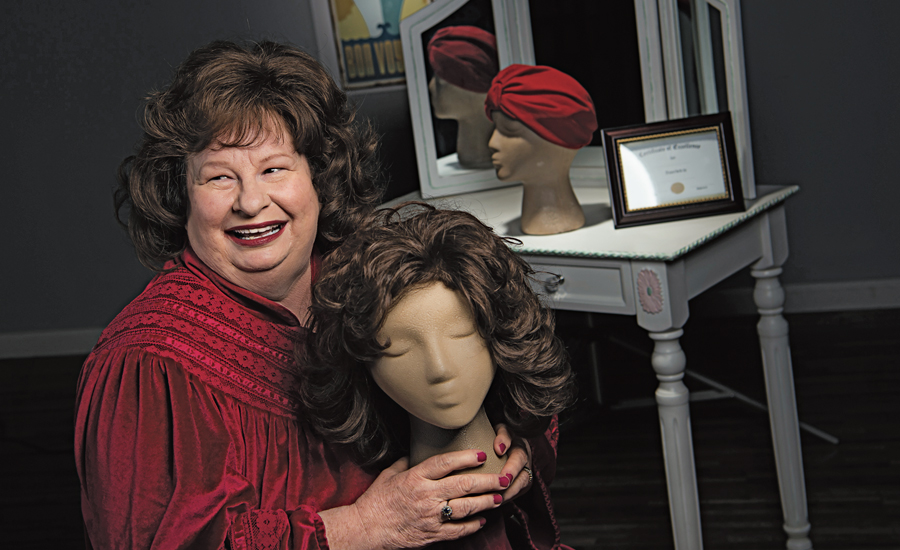
I hope to make it to church tomorrow sporting my new wig. Since we’ll be spending a lot of time together, I’ve named her Bertha. Here are some tips about wig shopping.

All wigs are sitting on mannequin heads that look twentysomething. This does not mean it’ll look the same on you, unless you too are twentysomething. Don’t try the long, flowing wigs that resemble the hair you used to have in college. It’ll only depress you.

The wig saleswoman will put you in a chair and immediately squeeze a stocking over your head—the kind of thing you might wear to rob a 7-Eleven. Next, she’ll bring out a wig made of human hair, which looks great but costs a king’s ransom. She will remind you that it’s genuine European human hair. (I can only assume the job market in Europe must be very bad.) You will inevitably end up selecting the wig that makes you look most like, well, you.

READ MORE: CANCER PATIENT LEARNS TO ACCEPT HELP

November 17
My veins are small and they roll, so blood tests have always been torture. It takes a very gentle hand to draw my blood. When my oncologist ordered me to set up weekly blood tests, all I could think was, Why me?

I found a lab near work and sat with the other victims in the waiting room. The first three technicians who appeared in the doorway and called out patients’ names were all petite, with sweet voices and small, delicate hands. Maybe this won’t be so bad, I thought.

Then came a bellow. “Debra!”

A young six-foot five-inch NFL-linebacker type filled the entire door frame. His face looked like someone had stolen his lunch. His hands were the size of hams. Those massive hands reached for my puny arm. I had a panic attack on behalf of my veins.

“Wait! Can you distract me?” I said. “Tell me about your last vacation.”

He launched into a tale about his last trip. Before I knew it, the whole thing was over. “How about we run off together to the islands when you finish all this chemo?” he said.

I stared at him and, with all my worldly and sophisticated ways, managed to say, “Huh?” He was half my age, young enough to be my son! He winked and said, “You told me to distract you!”

“Well, there’s only one problem,” I said when I’d regained my composure. “What’ll we do about my husband?”

Our little joke has continued since then. Many times I arrive at the lab exhausted and pale. On those days, he just gives me a huge hug. He doesn’t have to say anything. God bless him for making a hard time more bearable.

READ MORE: A DAY WITH A CANCER NURSE

November 22
I’ve had Bertha for about a month now and it was time to give her a bath. I went to the store and bought some special wig shampoo and conditioner. The wig shop had also given me printed instructions on the process.

Step 1: Soak the wig for 20 minutes in cold water with shampoo. Do not agitate the wig. How do you agitate a wig, and if you do, is she going to complain?

Step 2: Rinse the wig for 20 minutes in cold water, stroking it gently. I’m sorry, but I am not going to stand over the sink for 20 minutes to stroke Bertha. I gave her a pat or two and went back to watching TV.

Step 3: Remove wig gently from the water, shake only once, then squeeze the wig and pat dry. Okay, I can do that.

Step 4: Put wig on wig base and allow to air-dry overnight. Good grief, does it take that long? Well, I must have upset Bertha because my nice wavy wig is now as straight as straw. I plugged in the electric curlers to see what I could do to get those waves back. Jim pointed out that I am now talking to Bertha as if she’s human.

P.S. If I don’t show up for church tomorrow, it’s because I’m having a bad wig day.

February 2
My oncologist is very pleased with my progress, but the radiologist suggested radiation treatments for five weeks. My heart sank when I found out there’s a 20- to 30-percent chance of the cancer returning. After much prayer and research, I decided to buy that “insurance policy” and undergo radiation every afternoon after school to reduce the risk.

Life with cancer is a constant ebb and flow of victories and defeats. Sometimes when I’m curled up in bed just feeling awful, my mind goes to a lonely place. I feel like a bear is chasing me. If I run fast enough, I might outrun it. But…I might not. It’s those times that my little Chihuahua, Teddy, will hop into bed with me. Somehow he just knows. No wonder Jim got me a bumper sticker with a paw print on it that says, Who rescued who?

Everyone’s prayers and the Lord’s mercy have seen me through. Every place I turned I found love and compassion: my church, my neighbors, my family, my school, my doctors and nurses, my dog, my Bible. I am grateful for all of you.

READ MORE: CANCER SURVIVOR SHARES WORDS THAT INSPIRED HER

April 14
I’m a free woman! I just finished my last radiation treatment. At my “exit interview,” the nurse handed me a brownie to symbolize sweet endings. She also gave me a certificate with a very official-looking seal on it honoring my dedication and persistence. Mother’s been driving me to every appointment, even though she’s 88 and has to sit on a pillow to see over the steering wheel. Now that’s dedication.

The radiation oncologist chatted with Mother in the waiting room while I went over some last-minute things with the receptionist. Mother turned to me with great sincerity and said, “The doctor said you failed the process, but just remember, dear, you’re finished. So that’s good news.” Failed? I looked at my doctor in shock. His face was beet red. “No, no, no,” he said. “I didn’t say failed, I said sailed through the process.”

August 23
It’s been a year since my diagnosis. My CT scans and blood work look good, although my health will be monitored closely for the next five years.

The weirdest thing about being cancer-free? I have nowhere to go after school every day! No chemo. No radiation. No Caribbean vacation planning with my favorite technician. It almost makes me feel lost. You get accustomed to seeing the same people every day and I miss them. But as my doctor says, “We don’t want repeat business.” Amen to that!

My hair is growing back slowly but surely, so maybe Bertha will get a well-deserved vacation. Actually, come to think of it, she’s about ready to retire for good.

For more inspiring stories, subscribe to Guideposts magazine.

The Fierce Five: A Team of Positive Thinkers

I don’t know about you, but I’ve been glued to the coverage on TV and online of the Olympics and the U.S. women’s gymnastics team in particular. I love their amazing athleticism. Their grit (McKayla Maroney vaulting—and sticking her landings!—with a broken toe). Their grace under pressure. Their inspiring and moving personal stories (Gabby Douglas leaving everyone she loved to train with a top coach 1,200 miles away from home, Kyla Ross’s extraordinary bond with her late grandmother). And of course, their positive attitudes!

Here’s why I think the Fierce Five will inspire a generation (to use the London 2012 Olympic slogan) of positive thinkers:

Daily Strength for Women in Article ad

They understand what it means to be a team.
Gymnastics is unusual in that teammates are also rivals. In qualifications, at the same time gymnasts are competing along with their teammates to outscore other countries and make it to the team finals, they’re also competing against their teammates to make it to the individual all-around and apparatus finals. Sometimes you see girls from the same team go through a whole meet barely speaking, each focused on her own performance. Not the Americans. They were totally in this together. They cheered for each other from the sidelines, gave big heartfelt hugs at the end of routines, and huddled at tense moments to draw strength from one another. I kept seeing Aly Raisman, the oldest (!) and most experienced at 18, steadying the others with the right words at the right time. No wonder they voted her captain.

They don’t let anything get them down for long.
Heartbreak: Jordyn Wieber, reigning world champ in the all-around, dissolving into tears when she found out she hadn’t advanced to the finals even though she finished fourth in qualifications. Only the top two from each country advance, and Raisman and Douglas finished ahead of her. Redemption: Wieber delivering the rock-solid performances she’s known for in the team finals to help the US win the first team gold since 1996. Role model: Wieber tweeting…

They’re full of faith.
Gotta like how Aly Raisman honors her Jewish heritage by performing her floor exercise routine to the Hebrew folk song “Hava Nagila.” And how Gabby Douglas posts Scripture verses on Twitter, including Psalm 103:2 the morning of the biggest competition of her life—the individual all-around finals: “Let all that I am praise the Lord; may I never forget the good things he does for me.”

They take joy in the moment.
Who can forget McKayla Maroney dancing off the podium in sheer delight after her jaw-dropping vault in the team finals? Or Gabby Douglas’s irrepressible smile during her floor exercise, her final routine on the way to winning the all-around gold?

Don’t forget to cheer on our favorite team of positive thinkers as they compete in the individual apparatus finals August 5, 6 and 7!

The Faith of a Friend

Bad news travels fast. Especially in a hospital.

I should know; I’ve been a registered nurse working in hospitals for more than 35 years. And that morning, the bad news was mine.

Faithful Paws and Purrs In Article Ad

I’d just sat down in my office at the VA Medical Center and logged on to my computer when my friend Wanda walked in.

“I heard,” she said. “One of the other nurses told me. I drove here like greased lightning just to see you.”

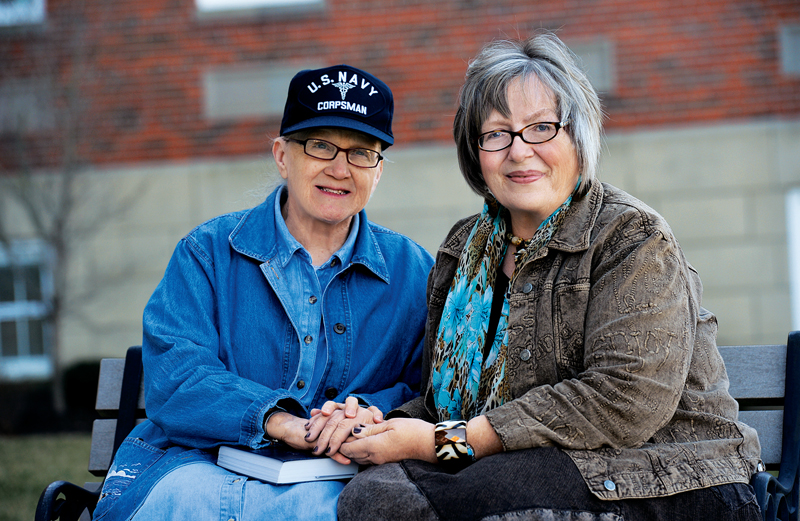
Wanda Fay Neaves is about the cutest thing you’ve ever seen: Blue-eyed and petite, with graying strawberry-blonde hair, she always wore a hat to match her outfit. I’d met her 15 years earlier when she had an appointment at our medical center.

We hit it off right away. She was a Vietnam-era vet–she’d been a hospital corpsman in the Navy, where she drove an ambulance and served as an X-ray technician. But at the VA Wanda was best known for one thing: her prayers.

Whenever she had an appointment here she stopped by my department. She’d lead us in a prayer of protection for the day, or ask if anyone had a special need. Or she’d bring us inspiring poems she’d written. I always felt closer to God when Wanda was around. That was something I needed more than ever right now.

The day before, I’d had my annual mammogram. The moment the radiologist walked into my room with the results, I knew something was wrong. Terribly wrong. He fiddled with his pen and stared at the floor, just like my mother’s doctor eight years before when he delivered her diagnosis.

Next to lung carcinoma, breast cancer is the leading cause of cancer deaths in women. It killed my mother. I’d known I was at risk because of my strong family history (Mom’s sister also had breast cancer). Still, the diagnosis was devastating. Especially considering what I’d already been through in life.

I’d endured 32 surgeries due to neurofibromatosis, a genetic disorder that causes benign tumors to grow on nerves, mostly in the head and neck. Thirty-two times, I’d pleaded to God for healing. And 32 times, the answer had been a resounding no.

Wasn’t it enough that my cranial and facial tumors had disfigured me and made me feel “less than” as a woman, like I wasn’t worthy of love? My husband had left me because he couldn’t handle my illness and now I was all alone. Did I have to suffer even more?

Wanda’s voice pulled me back to the present. “Tonight my church, Christ Temple, is having a healing service,” she said. “I really want you to come, Roberta. People have had their hearing restored, depression relieved…cancer healed.”

Healing service? Been there, done that. Several years earlier, when a tumor in my brain returned, I went to one. The minister asked for anyone who needed healing to gather at the altar. I couldn’t get there fast enough. That night, others around me proclaimed they’d been touched by God and healed.

Me? I didn’t feel a thing. Nothing. The pain, the tumor were still there. I couldn’t understand it. Why were they healed and not me? If God loved me, didn’t I deserve to be healed too?

Afterward, friends wanted to know what had happened at the service. “My tumor wasn’t healed,” I told them. “I’ll need several more surgeries. But I received a different kind of touch. I was healed of the need to be healed.” I must have sounded convincing because they believed me.

But deep in my heart, I didn’t believe it. I longed, desperately longed, to be healed. Still, if God hadn’t chosen to heal my body in the past, after all my pleas, why would he heal me now?

I couldn’t confess my doubts to Wanda. She was so excited about this service.

“Okay,” I said. “For you, I’ll go. I’ll meet you at your church at seven.”

After work, I stopped at my friend Sue’s. She played the piano at my church and we often talked about our faith. I told her about Wanda’s unwavering conviction that I would be healed.

“That reminds me of that story in the Bible,” Sue said. “The one where the friends of a paralyzed man took him to see Jesus. Remember? They carried him on a mat but they couldn’t get him to Jesus because of the crowd. So they made an opening in the roof, then lowered the man through.

“Jesus healed the man because of the faith of his friends. It was an active, humble faith–like your friend Wanda’s.”

I thought about that all the way to Christ Temple that evening. But that was in biblical times, I decided. Not today. T he parking lot at Christ Temple was overflowing. I spotted Wanda in a yellow top, a long blue skirt–and blue hat to match.

She led me to a seat on the left side of the spacious sanctuary. The choir burst out into song. Wanda held me and rocked me to the beat of the music, whispering, “Jesus cares, love. He wants to make you whole again.”

The minister’s message centered around healing Scriptures. Then he asked for anyone who had sickness of any kind to come forward. “This is your time, Roberta,” Wanda whispered.

When someone cares for you, really cares, even the way they say your name is different.

Wanda headed toward the front of the sanctuary. I trailed after her, walking slowly, as if I already knew the discouraging verdict. The crowd was huge! We didn’t even make it close to where the minister was standing.

“Let’s just leave,” I told Wanda. “There are so many people here, he’ll never get to me.” “That’s okay, love,” she said. “We don’t need to be where the minister can see us. God knows where you are.” She stroked my hair, then tucked a strand behind my ear with great tenderness, the way a mother does.

I leaned in to my friend’s touch–and even more, her words. I’d never felt more loved. God knows where I am, I thought. God knows who I am.

Wanda took my hand. “Oh, precious Jesus, heal my friend Roberta,” she said. Just at that moment, a strange warmth surged through my body, almost like an electrical current. At first I was confused, on the verge of being frightened. It was a feeling within my body that wasn’t actually me.

“Wanda!” I shouted. “Something’s happening…. I’m burning up!”

“I know, love,” she said. “I feel it too!”

Another burst of heat pulsed through my chest. Fiery but not painful, no longer frightening, but comforting, warm and reassuring in a way I had never known. For a moment, I felt light-headed and weak-kneed. “It’s happening again,” I said to Wanda.

She squeezed my hand tightly and nodded.

The minister addressed the congregation. “There’s a blonde woman here,” he said. “She’s in the back. When she came tonight, she had cancer. And she had doubts. But God just touched her body.” It’s me, I thought. He’s talking about me!

The next day I went back to the breast center and told the staff about the healing service. They exchanged skeptical glances. Still, I was determined. “Okay, let’s take a look,” the radiologist finally said. He did another mammogram.

I sat in the exam room, waiting for the results. The doctor walked in. This time he looked me straight in the eye. “It’s amazing,” he said. “I can’t explain it, at least not medically. The entire area of cancer is gone.” They ran a few more tests, and sure enough–there was no malignancy.

“You’ll want to have follow-up mammograms twice a year just to make sure,” he said, “but…” His voice trailed off.

Seven years later, with no medical or surgical intervention, the cancer has not returned.

God’s healing power will always be a mystery to me, a glorious mystery. But I know that he worked as great a miracle in my soul as he worked in my body. Through my faithful friend Wanda, he showed me that I am loved. Always.


Download your FREE ebook, A Prayer for Every Need, by Dr. Norman Vincent Peale.

The Difference Between Crisis and Inconvenience

I was bemoaning the fact that I could no longer afford something that made my life easier when a thought popped into my head: “Isn’t that a wandering-in-the-desert whine?” 

I stopped to ponder what exactly it was that I was grumbling about. Was it a life-threatening chariots-bearing-down-on-me type of thing… or more like the petulant complaint of the Israelites after God saved them from Pharaoh, “Why did you bring us up out of Eqypt to make us and our children and our livestock die of thirst?” (Exodus 17:3). I was chagrined to realize it was the latter.

Sugarcreek Amish Mysteries In-Article Ad 2023

To be honest, most of the problems I face are merely annoyances. It’s a blessing (though I don’t often think of it that way) that I’ve also had to deal with catastrophic news, because now I’ve learned the difference between a true crisis and inconvenience. Being aware of that difference gives me a choice: Do I opt to perceive an inconvenience as the thing that will drive me over the edge… or do I look at it as something is irritating but inconsequential? 

I think God probably prefers it when I view annoyances and inconveniences for what they are: neither life- nor soul-threatening. In truth, there is no danger inherent in inconveniences until I indulge myself in believing they are as big a deal as the Tempter wants me to believe they are.

It’s a question worth pondering when one is feeling grumpy and out of sorts: Is this a wandering-in-the-desert complaint? And if so, how else can I look at it?

The Diet That Changed Her…and Saved Her Nephew

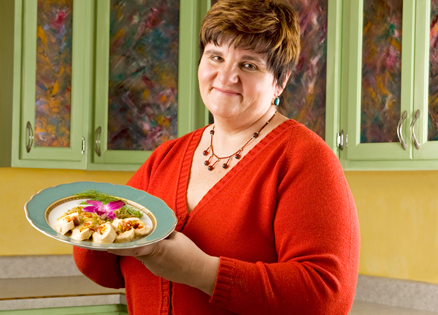
Homemade pasta, creamy sauces, rich meats and delicious cheeses…the region of northern Italy where I was born and raised is known for its robust and flavorful cuisine. This is the food I have loved my whole life. It’s the food I learned to cook in my mother’s kitchen back in our village of Bibbiano and brought here to il Bistro Italiano, the restaurant my husband, Ron, and I now run in Grand Junction, Colorado.

Our menu is full of the recipes Mama taught me. But there is also something that might surprise you: lighter fare, like baked chicken with fresh herbs or beet-flavored tagliatelle tossed with scallops, asparagus, roasted tomatoes, shallots and olive oil. It is food I have come to love because I learned it could help save a life—the life of my beloved nephew Rossano, back in Bibbiano.

We’re only 10 years apart. Growing up, he was like my little brother. I helped look after him whenever his mom, my older sister Luana, needed an extra set of hands. Our time together felt especially precious because Rossano was born with Alport syndrome, a disease that causes irreparable damage to the kidneys.

Three years ago, at age 32, he was healthy enough to work, but Luana was worried and finally confided in me, “If he doesn’t get a kidney transplant soon, he will have to go on dialysis…” She didn’t have to say more. I was the one relative who was a perfect match. I flew to Italy, ready to donate a kidney to Rossano. It was what I believed God meant for me to do.

The surgeon refused. “The operation would be too dangerous for you,” he informed me. “You are too heavy.” I knew I was overweight at 5-foot-5 and 258 pounds, but I never thought that would affect someone else’s health! “Lose weight and then we will talk about the transplant,” the surgeon said.

“Exactly how much?” I asked him.

“Seventy pounds,” he said.

“I’ll be back,” I said. That was a promise—to my nephew and to God.

I returned to Colorado determined to exercise those 70 pounds off. Friends told me about a trail nearby, an up-and-down trek through the magnificent red rock canyons of Colorado National Monument. Hot or cold, rain or shine, every day I walked that trail. For me, it was like running a marathon. So many muscles I’d never used! After one mile, my calves hurt. After two miles, my feet ached. After three miles, it was all I could do to pull air into my lungs.

My endurance improved. I added weight-lifting sessions twice a week. Slowly, the pounds dropped off. Spring turned to summer, then fall, then winter. I kept up my routine. My weight was down to 223. Halfway there. Then my sister called. “Rossano is very sick. He’s on dialysis now, seven days a week, nine hours a day.”

I hiked and lifted more, but no matter how hard I worked out, the needle on the scale barely budged. Exercise was not enough. I’d have to change my diet. But how? At the restaurant I was in charge of the kitchen. When I stirred cream into my garlic-tomato sauce, I had to taste it to make sure the flavor was just right. Same with the veal marsala, the chicken Bolognese, the lasagna…

One night one of our regulars came in, a woman who directs the weight-loss program at our local hospital. “I have to talk to you,” I said. The hospital program put me on a strict diet. Finally, the number on the scale got lower. I took a closer look at what I was cooking. What could I change in my recipes to make them healthier? Every time the aromas in our kitchen grew too tempting, I thought of my nephew. And I prayed for the resolve to do whatever it took to help him.

By September 2009 my weight had dropped to 187 pounds. I called Luana. “I’m ready for the surgery,” I told her.

At the airport neither she nor Mama recognized me. The surgeon didn’t either. “I don’t know how you did this,” he said. He scheduled the transplant immediately. Everything went smoothly for me and, best of all, for Rossano.

The first thing I did when I returned to Colorado was change the menu at our restaurant. There were ways I could remake traditional favorites so they were better for our customers. I experimented, removing some ingredients, adding others, until I had created new, lower-fat dishes with plenty of Old World flavor.

Maybe saving Rossano wasn’t all I was put on this earth to do. Maybe God wants me to use the food I love to help others eat healthier, just as he helped me.   

Try Brunella’s Rolled Baked Chicken.