Embrace God's truth with our new book, The Lies that Bind

The Diagnosis That Helped Kay Warren Live

The examining room was cold. I lay on a gurney, alone. The radiologist had stepped out so quietly, I didn’t realize he was gone.”Hmm,” I overheard him say to his assistant, “looks like breast cancer.” Then they had walked out.

My hands were at my sides, where they had been when the doctor peered at the ultrasound screen. Now they fidgeted, searching for someone, something to hold. But there was only the tile floor, the dimmed lights, the gurney and the glowing screen beside me.

You Got This In Article Ad

Minutes ticked past—silent, lonely minutes. And then the doctor’s words sank in, frighteningly real. I froze. I wanted to scream. I wanted to thrash my limbs and run from the room. All that kept me quiet was a fragment from Job that floated into my mind: “He knows the way I take.”

I swung my legs off the bed and stood, rubbing my arms. I cracked the door and peered into the hall. Nurses and orderlies walked briskly past. My assistant from church was waiting. She looked up. “Oh, Kay, what?” she asked, seeing my face.

“I—we—we have to cancel my trip. I have to go home. It’s—the doctor thinks I have cancer.” Then I leaned against the wall and sobbed. 

In the car, I called my parents. I had been planning to fly to Arizona to visit them that day. A routine mammogram a few days before had turned up what the doctor called a “calcification.”

“It’s probably nothing,” he had said. “But let’s check it out anyway, just to be safe.” His words were so confident, I had scheduled the radiologist appointment for just a few hours before my flight.

On the phone, I told my parents I had to delay my trip. “I’ll call you back tonight,” I said. I couldn’t bear to say the word cancer until it was confirmed and reconfirmed. Surely not now, God.

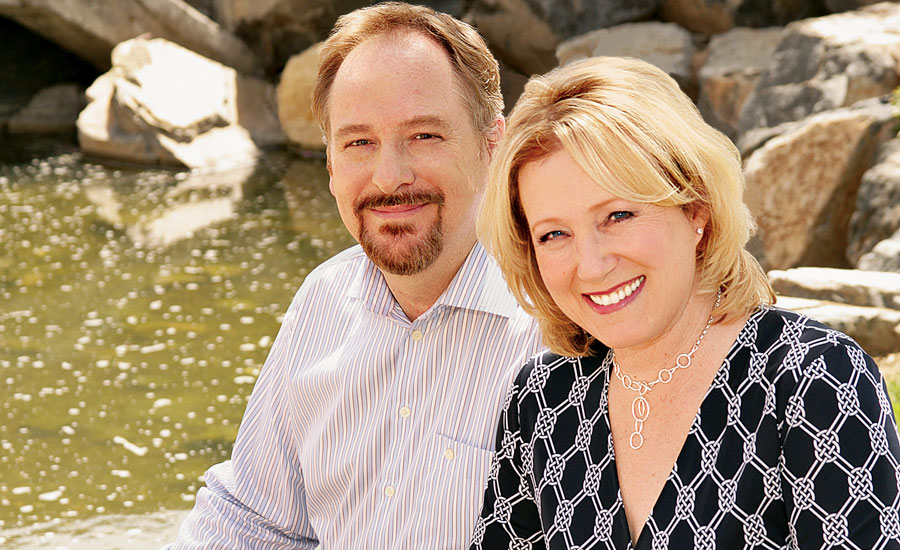
I thought of the plans my husband, Rick, and I had been laying for months. In six weeks I was scheduled to join him at the pulpit of Saddleback Church, which he has led for 26 years. We were announcing a new focus for the church—serving the dispossessed, including people with AIDS at home and abroad. I had been excited thinking about it: Now I, too, have a mission.

You see, that year, 2003, was supposed to be a great year for me. I was 49 years old. My three wonderful children were grown. Two of them were married. I was entering that stage of life when kids become adult companions and a mom asks, “What now?”

Rick had enjoyed great success with his books and ministry, and he had big plans to use Saddleback’s resources to train pastors around the world. And I had found a calling: AIDS. A few months before, I had come across a number in a magazine article, a simple, shocking number—12 million children orphaned by AIDS in Africa.

I had put the magazine aside, but the number wouldn’t go away. Rick encouraged me to use my new free time to do something about it. So I set up an office and, before I knew it, I—a pastor’s wife, a soccer mom—had full-time work and an assistant. I even persuaded Rick to make AIDS one of the church’s priorities.

Then, just days later, that visit to the radiologist. Driving home, I watched Orange County’s comfortable suburbs roll by. In the foothills, where Rick and I live, streets curve and branch around slopes. I saw my life sailing down one of those streets, and then, suddenly, as if an earthquake jolted the pavement, I was careening down another road, out of control.

Rick was waiting at the door. I’d called him from the car. He folded me in his arms. I could feel him crying and trying not to seem like it. I pulled away and reassured him.

Perhaps it was a mothering instinct, but I suddenly felt very calm and competent. “Sweetheart, it’s going to be fine. God has us in hand. Remember the verse from Job: ‘He knows the way I take, and when he has tried me I will come forth as gold.’ Really, don’t cry.”

Rick looked at me, surprised. But I was already thinking about what to tell my parents that night.

A few days later, an oncologist confirmed my cancer—stage one breast cancer. I needed surgery and chemotherapy. I asked what to expect.

“You’ll lose most of your breast, and there will be permanent scars.”

This time, I had no reassuring words. Instead, when we got home, I walked into our bedroom and stood in the closet. I looked at my clothes, hanging silently in a row. I wondered how they would fit. Then I saw that splitting road again. Despite all my confidence, it was not going toward AIDS work. My new office was empty. My assistant’s main job now was helping schedule medical appointments.

I tried reasoning with God. I don’t want this road, please. I want the life I had five days ago. It was all very clear, Lord: Help people with AIDS. Well, I was getting ready to do that. So why this? Why now?

But the clothes, the closet were silent.

Life became trips to the doctor. Surgery. Recovery. Chemotherapy. Nausea. Exhaustion. My kids stayed at the house. Rick cut back his schedule so he could go with me to every appointment. I was, I realized, surrounded by love. Just having someone near when you’re sick—what a blessing, I thought.

My hair began falling out and after waking up with clumps on my pillow, I decided to shave it off. My hairdresser kindly offered to come to the house. It was raining that day, and Rick, thinking my favorite food would help my appetite, was outside barbecuing chicken.

One of my sons, Josh, held my hand while the hairdresser set up a chair and spread a tarp in the living room. The clippers clicked on, and I felt them raking over my head. Chunks of blonde hair fell on the floor. Josh’s hand tightened. “You are so beautiful, Mom,” he said.

Finally, the hairdresser tied on a scarf. I was curious, though, so I went to a bathroom mirror and took the scarf off. A ghost stared back at me—gaunt, tired, wrapped in white skin. It was ugly, horrifying. I raced back to the living room just as Rick was coming in from the patio.

“Look at me!” I sobbed. He sat me beside him on the sofa. I curled into his lap, and he held me and stroked my head. “My beautiful Kay, my beautiful Kay,” he said over and over. And somehow, held in those arms, soothed by those words, I felt my fear and loathing ebb away.

I was very lucky. The doctors said my treatment was successful, and a few months after my last round of chemo I was attending an international AIDS conference in Thailand. On the same trip, I arranged to tour regions ravaged by the disease.

Accompanied by one of my best friends, Elizabeth, and an interpreter, I ended up in a village in Cambodia. There, we were taken to a small wood-and-cane shack. Inside, a woman lay on a low bed. She was weak—startlingly like the pale figure in my bathroom mirror.

Through the interpreter, she told me her story. Her husband was already dead of AIDS. All she had left were a few friends and relatives. It was they, she said, gesturing at the women surrounding her on the bare dirt floor, who kept her alive.

As she spoke, my arm curled around Elizabeth’s shoulders. I remembered Rick holding me in my despair. And in that moment I realized why the road had split and curved—why the cancer came when it did, and how I would use its lessons to fight against AIDS.

A week later, I was sitting in my office with a man named Bill, the director of an Orange County AIDS outreach organization. I was feeling frustrated. Hundreds had answered the call when Rick and I talked to Saddleback about local AIDS work. But pairing volunteers with sick people was proving difficult.

For one thing, many organizations that care for AIDS patients were suspicious of us and our motives. I had spent the better part of my meeting with Bill trying to convince him that Saddleback volunteers weren’t intending to pry into his clients’ personal lives or show up at their bedsides with a sermon.

He wasn’t buying it. “I’m sure you’re sincere, Mrs. Warren,” he said. “But I’m still not certain your church is a good fit with our organization.”

He gave me a look that seemed to suggest the meeting was over. I groped for something to keep the conversation going. To my surprise, a series of images ran through my mind. I saw myself on an examining-room gurney, terrified and alone.

Then I saw my shaved head, ghostly white in the mirror. I remembered calling Rick from the car after leaving the radiologist’s office—the flood of relief at the sound of his voice. Finally, I saw the row of clothes in my closet, the branching road. I knew exactly what to say.

“Okay,” I said, “I understand your concerns. But before you go, I want to explain the reason I invited you here. I don’t know what it’s like to have AIDS. But I do know what it’s like to have a life-threatening illness.

Last year, I had breast cancer. I underwent surgery and chemotherapy. It was awful. But during those months, what mattered most was having people around me. Just holding me. Just knowing they were there, I wasn’t afraid to die.”

Bill looked at me, startled. He reached out and laid a hand on mine. “I’m not afraid to die, either,” he said. “But there is something I am afraid of: dying alone.”

“Bill, I’ll make you a promise,” I said. “All we at Saddleback want is to bring the love of God to sick people—to make sure that no one has to die alone.”

The room grew still. “Maybe we can work with you,” Bill said at last.

That was a year ago. Today, five Saddleback small groups are working directly with AIDS patients, driving them to doctors appointments, inviting them for dinner—doing life together, as we call it. Dozens of church members have gone with me to Africa. But it’s the local work—attending an AIDS support group at church, participating in Orange County’s AIDS Walk—that sometimes seems the biggest step.

Five AIDS patients aren’t many in a county where more than 3,300 have died from the disease. But it’s a start. I don’t believe God wanted me to get cancer. But once I had it, I believe he used it to change me—to teach me, in a way I had never known, what Jesus meant when he told his disciples: “Love one another.” The meaning is really quite simple. Open your heart. Be present. Give care. That’s the kind of love I received. And it’s the kind of love I long to give.

Did you enjoy this story? Subscribe to Guideposts magazine.

The Daughter of the 9/11 Pilot

I quietly closed the door of my freshman dorm room behind me at Boston College, but not before I glanced back at the photo of Dad and me. The one of me as a girl sitting on his lap in the cockpit of a 767.

I wish you were here, Dad, I thought as I walked down the hall from my room. I wish you were here to help me figure all this out.

Community Newsletter

Get More Inspiration Delivered to Your Inbox


I was glad my new roommate was still asleep. “I’m going to be gone tomorrow, at a family event,” I’d told her the night before, and she’d thankfully been totally disinterested.

It was as if September 11 wasn’t even on her mind. I suppose I shouldn’t have been surprised. Even the front page of the newspaper was focused on Hurricane Katrina.

How quickly we forget, I thought. It seemed too soon. But I’d been glad to delay the inevitable talk with my roommate. I wasn’t ready to see the shock in her eyes, to hear how sorry she felt for me, to be the victim—again.

How do you tell someone that your dad was the pilot on Flight 11, the first plane that terrorists flew into the World Trade Center?

For four years now I’d prayed that I’d be able to figure out where 9/11 fit into my life. But as a freshman starting high school on that terrible day I never got a chance to introduce myself before everyone thought they knew who I was.

I watched as kids furtively glanced at me and then quickly looked away. The “9/11 girl.”

I didn’t want to be defined by a tragedy, yet I wanted to honor Dad. He too was more than just the person he was on that terrible day. I wanted to be my own person.

I hoped to find my identity starting college. Isn’t that what kids are meant to do in college? Find themselves? But once again the date loomed: September 11. Now, if I was going to make a clean start, I had to get to the memorial service without anyone on campus making a big deal about it.

Outside my dorm I spotted the car with my mother and two sisters. I jumped in so we could make the short drive to Boston’s Public Garden.

Slouched in the backseat, I thought about the memorial services I’d attended in the last four years. There had been so many that they were starting to fade into one another.

“We will always remember,” politicians often said. But each year there was more I couldn’t recall. The pain was less, but even that seemed sad, in a different kind of way. How am I supposed to feel? What would Dad want me to remember?

Two years ago on 9/11 we had come to BC to dedicate a labyrinth in memory of the 22 alumni killed. Mom graduated from BC, class of ’76, so a portion of the memorial honored Dad.

I too had picked BC by then. A speaker told how the labyrinth was a Christian symbol of the twists and turns of life’s journey. Somehow it was comforting to know it would be there for me.

God, I prayed, help me find the path to take in my life. Yet as Mom turned into the Public Garden I felt so lost.

We joined the hundreds of others already there. Sitting near the front I craned my neck. The crowd seemed a bit smaller each year.

“I’m glad we’re here,” I told Mom. “Already you can tell this is just another day for some people. They’ve stopped coming. I don’t want people to forget 9/11—or Dad.”

“I understand, honey,” she said. “But you can’t take that burden all on yourself. Besides, there are lots of ways to honor someone.”

At 8:40 a.m. the mayor solemnly laid a wreath of remembrance. Then five minutes later we paused for a moment of silence, just as the entire world had stopped that Tuesday morning. Closing my eyes I relived the day, like I had so many times before:

Dad leaving our 150-acre farm early, before I was awake, to pilot an 8 a.m. flight from Logan Airport to L.A….the announcement as school was starting…a counselor coming to take me out of class…a blur—people at the house crying and hugging, the memorial services, the media—that lasted for weeks…then going back to school, my identity sealed: The Pilot’s Daughter.

The service ended and we walked back to the car. I heard Mom’s words again, about finding other ways to honor Dad.

On the drive back to the campus I said, “It’s funny. Most of the time when I think of Dad it’s not about him as a pilot at all. What I see is him driving the tractor at home and playing with us kids. That’s who he really was, a farmer and a dad.”

“You’re right,” Mom said. “The farm is where he felt most at home. It’s really where he felt closest to God. He loved everything about farming. He loved the feeling that he was giving something back, but he got so much out of it.”

In front of my dorm building I gave everyone a hug, especially Mom. “I miss Dad so much,” I whispered to her.

“Me too,” Mom said. “He would be so proud of you.”

Back in my room I was relieved to see my roommate was out. I lay on my bed staring at the ceiling. I remembered how my father had mentored immigrant farmers, not only working with them and giving advice but sharing his land for them to grow their native crops.

Dad, a former transport pilot in Vietnam, chose to mentor farmers from Southeast Asia. He threw himself into a federal support program for immigrant farmers, so much so that when he was killed, it was named in his honor.

Mom was right. One of Dad’s jobs was flying jets, but his life was about helping others. He was an amazing guy. He was so much more than just one of the hijacked pilots on 9/11.

I was so lost in thought I barely noticed when my roommate walked in the door.

“How was the thing you went to?” my roommate said. Was she looking at me funny or was it just me?

“It was fine,” I said, scrambling to get my guard up. “How’s your day been?”

“It’s been good,” she said, but her mouth kind of twitched, like there was something else she wanted to say. “I was watching TV this morning and I saw you at the memorial service. Was your dad the pilot on Flight 11? I wish I had known.”

I’d tried so hard to avoid this conversation. With a sigh I said, “It’s just a hard thing to talk about. I was really hoping to get to know you better first. And I wanted you to get to know me.”

I could see she was trying to think of what to say. “I understand,” she said. “It was just kind of shocking to see my roommate on TV. Listen, the reason why I came back is I’ve been out with some other students collecting money for Hurricane Katrina victims. Want to help?”

Helping others. That’s what Dad was all about. What better way to honor him today! Would it help with these feelings?

“Sure,” I said. “You don’t know how great that sounds.” I headed out with her.

After some orientation we all spread across campus. I walked up to a student and introduced myself. “Hi, my name is Caroline. I’m a freshman here and I’m collecting money for people hurt by the hurricane. Would you be willing to help?”

“Sure,” he said, digging five dollars out of his jeans. “I’d love to do something. Maybe I’ll see you around campus.”

By evening I’d raised over a hundred dollars.

Heading across campus I thought about the afternoon. It left me with a kind of tingling feeling inside. For years it had been me on the receiving end of people’s sympathy. It was well-meant sympathy, but it was also a kind of wall, a 9/11 wall.

Now here I was doing something to help other people hurt by senseless tragedy. I had met dozens of new people, none of whom saw me as anything but a college student. It felt good. Actually, it felt incredible.

I was walking back to the dorm when I saw the labyrinth on my left. I walked over to it. At the entrance I again read the verse inscribed there, from Isaiah, one of Dad’s favorites. “They that hope in the Lord will renew their strength, they will soar as with eagles’ wings…”

Dad was always happiest when he was doing something for others, when he was working for a common good. It was as if I were looking down a long row of a freshly plowed field, my father’s tractor far in the distance.

I realized how I could best honor Dad’s memory, following a row already tilled for me. Could I find my identity within 9/11? Could it actually hold the seeds for who I wanted to be in life? It was hard to believe.

Pulling out my cell phone I called Mom. “I’ve been thinking about Dad a lot today, about 9/11 and who I want to be. I think I partially know the answer. I’d like to do work where I’m helping other people, people who have been in tragedies.”

Mom was silent for a moment. Then she said, “Caroline, I think that’s wonderful. It’s funny because even when you were a little girl that’s how your dad and I saw you.

"I remember when you were only two years old and I was pregnant with your sister you put a blanket around me when I wasn’t feeling well. You’ve always been such a caring person. Just like your father.”

When I hung up the phone there was that tingling feeling again.

I graduated last spring, and as another school year begins I’m preparing to earn a master’s in counseling psychology at Boston College, in hopes of working with children dealing with trauma.

For the last four years I’ve volunteered for the Red Cross, urging college students to give blood. I’m becoming my own person, the one my dad would have wanted me to be.

This year on September 11 our family will gather at the farm for a more private ceremony. Far from the roar of the city, it’s not a place that stirs memories of 9/11. But I’ve learned that’s okay.

It’s the perfect spot for me to honor a farmer, a pilot, my dad, a caring man, whose love guides me to this day.

The Cowboy Church

The ad in the paper jumped out at me: “Cowboy Church: Come as You Are! Boots and Hats Welcome!” My boyfriend would never go for wearing Sunday-go-to-meeting clothes, but “come as you are”? Maybe this Cowboy Church would be good for Jimmie and me.

He’d been back from Iraq for three months but it was like the real Jimmie hadn’t come home at all. Not the sweet man I’d fallen in love with, the one who had talked about marriage, about us growing old together.

Pray a Day Vol 2 In Article Ad

Now he was an angry, depressed shell of a man who refused to get help. A man I wasn’t sure I had a future with. Could a new church help us? Could anything?

We’d met two years earlier. I had recovered from my divorce and was enjoying life again, working as a flight attendant and living in Orange County, Texas, when one night an e-mail from a man named Jimmie popped up in my inbox.

He said he’d been in the Army for 20 years, served in Iraq and Afghanistan. Now he was retired from the Army but still in Iraq, working civilian support. “I’d love to know more about you. Write back when you can,” he wrote.

Who was this guy? It turned out that my friend’s husband was Jimmie’s boss. He’d given Jimmie my e-mail address so he’d have someone back in Texas to chat with. At first I was annoyed. Why didn’t anyone ask me first?

But I wrote back to Jimmie and the more we chatted, the more we started falling for each other. He was sweet and charming—a true Texas gentleman.

Four months later, Jimmie got a break from work and came to visit. He was even nicer in person. Handsome too. Real handsome. I’d found the love of my life. But did Jimmie feel the same about me? At the airport we held each other for a long time, neither of us wanting to let go. “I’ll be back,” he whispered.

We Skyped, sent pictures and dreamed of our future together post-Iraq. We talked about getting married, buying a house and settling down here in Orange County. “I can’t wait to spend my life with you,” he said.

I’d grown up going to a Baptist church with my grandmothers, and though I hadn’t been in years, I still talked to God every day. Thank you, Lord, for Jimmie, I’d pray first thing every morning. Please keep him safe. Let him know I love him.

Just over a year after we met, Jimmie came back to Texas for good. Finally the future we’d planned was here! Hallelujah! First, we’d find him a job, then work on our dream home—the fixer-upper I’d bought for us.

But week by week, Jimmie withdrew. He stopped talking about our future, our hopes and dreams. He stopped saying much at all. He blasted death-metal music and stared at the floor.

If he did talk, it was about fast-moving combat. He’d describe things in horrific detail. “Sometimes we’d imagine the tracer bullets were fireworks,” he’d say in a lifeless tone I’d never heard from him before.

“You’re not there anymore, honey,” I would remind him. But he’d just pull the hood of his sweatshirt over his head and turn away.

That was his uniform now that he was out of Army green: hooded sweatshirts, tank tops, jeans and combat boots. He didn’t want to listen to the gentlest suggestion that he dress up once in a while. He didn’t want to be told anything. By anyone. Especially not about the most obvious: that he needed to get help for his combat trauma.

I didn’t know what to do or where to turn. Except to God. Lord, I prayed, I miss my Jimmie. He won’t listen to me. Maybe he’ll listen to you. Please help him.

Jimmie had been home for just a few months when his cousin, who was like a brother to him, died. The funeral was the first time we’d ever been in church together. Sitting beside Jimmie in the pew, I could feel his anger and sadness.

It occurred to me that in all the time we’d been planning our future, not once did we talk about having God in it. Sure, I prayed and I knew Jimmie believed—he’d taken his Bible with him to Iraq—but we never really talked about our faith beyond that. Never really got into it.

I was afraid to ask Jimmie if we could start praying together. He might feel attacked and that would push him further away. I thought about asking him to come to my old church, but they were pretty conservative—he wouldn’t stand for anyone telling him how to dress or behave. There had to be a way to get God in our lives. But how?

That’s when I saw the ad for Cowboy Church. I e-mailed the pastor right away. “Dear Pastor Dale,” I wrote. “My boyfriend has just returned from Iraq. I feel strongly that we need a church home. He is bitter and angry, but he still believes. Can I talk or pray with you or someone from the church?”

Pastor Dale called me that very afternoon. “We have lots of former military men and women who come to Cowboy Church,” Pastor Dale said. “Our services are casual, and everyone’s welcome. Oh, and we don’t care how you’re dressed. We just want to reach people who, for some reason or another, have stopped going to church.”

“Want to come to church with me Sunday?” I asked Jimmie that night, trying to sound nonchalant. “The pastor’s real nice…he says we can wear whatever we want.” Jimmie nodded.

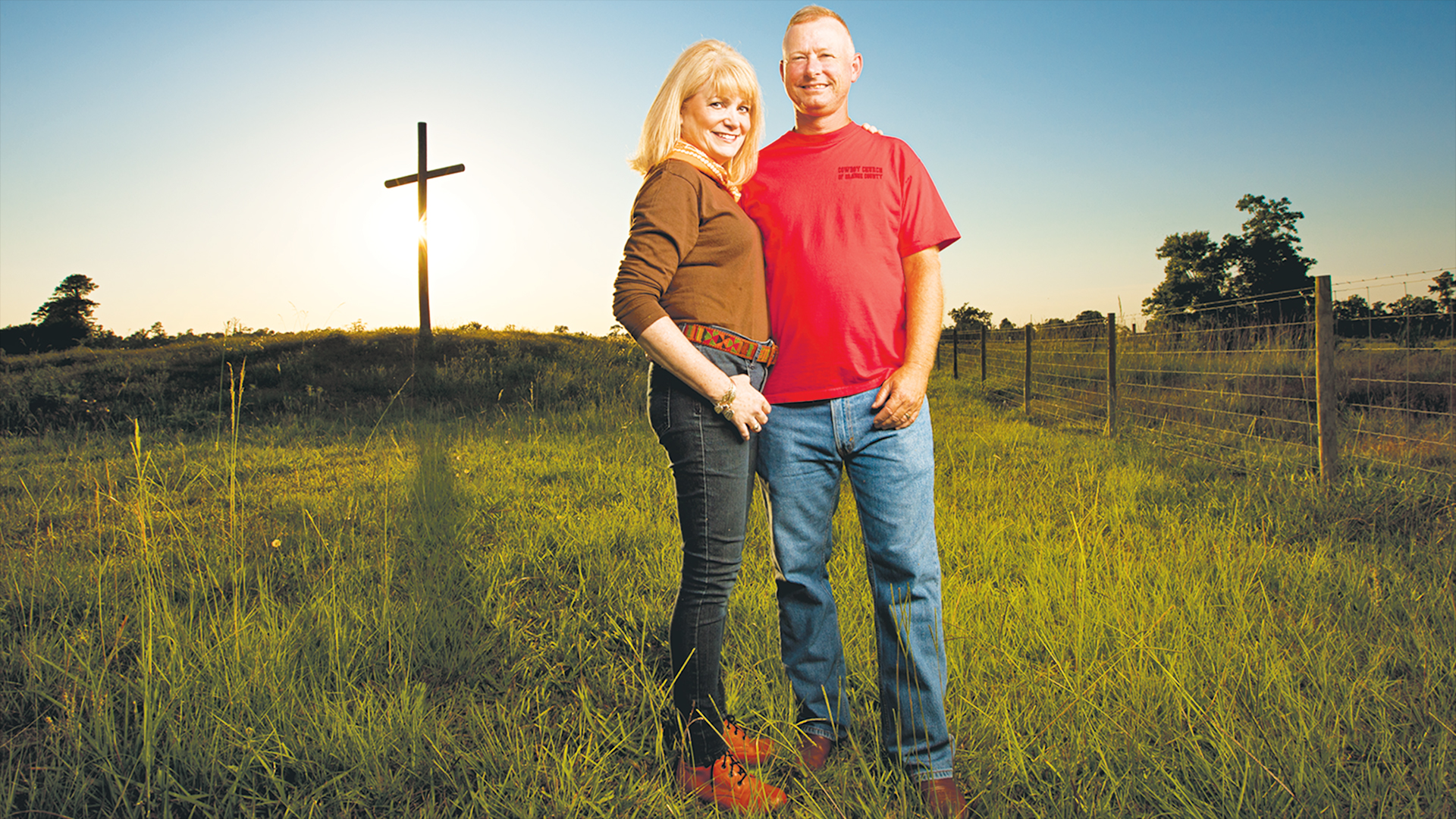
Cowboy Church was full of rustic charm, with a wood-frame main building and benches and hay bales out front. Out back there was the most picturesque little hill topped with a giant wooden cross.

The service was warm and welcoming, everything Pastor Dale said it would be. Jimmie sat as still as a stone and didn’t look at me, but I caught him tapping his foot to the Cowboy Cross Band.

“Nice service,” he said that night. “Wouldn’t mind going back.”

Yes! Thank you, Lord.

For a month of Sundays, Jimmie and I went to church together. I thought he was making progress—that we were making progress. Then, out of the blue, he said there was something he needed to tell me. Something that broke my heart: “I’m leaving.”

I asked him for an explanation, but it wasn’t up for discussion. Jimmie was done. With Cowboy Church. With Orange County. And with me.

I’d never felt so alone. I couldn’t even bring myself to talk to anyone at church about it. One Sunday the soloist sang “Temporary Home” by Carrie Underwood. The lyrics are about someone not belonging here, just passing through, and they got to me. I bolted out of church right in the middle of the song.

I almost crashed into Paul, one of the church elders. “Are you okay?” he asked. I broke down and told him everything— how Jimmie hadn’t been himself since he got back from Iraq, how he’d up and left me.

“Sherrill, I know it’s hard,” he said, “but you’ve got to let him go. Give him to God. If it’s God’s will, then he—not you—will bring Jimmie home.”

Let Jimmie go. Lord knows, I tried. I worked on the house we’d been fixing up together and hung a plaque in the kitchen with the words of Psalm 127:1: “Unless the Lord builds the house, the builders labor in vain.” A reminder that God was at the center of my home, that he would never leave me.

Still, I missed Jimmie something fierce. I prayed for his health, prayed for him to find peace, but I didn’t ask God to bring him back to me. Your will, Lord, not mine.

I wondered if Jimmie missed me too. One day, when I finished the siding of the house, I snapped a photo and texted it to Jimmie. No message. Just the photo.

He texted me right back. It was the first contact we’d had in five months. “Sherrill! I’ve been hoping to hear from you. I thought you’d ignore me if I tried to get in touch. Can I call you?” he asked.

“Okay,” I typed before I could think. You should’ve said no. Do you want to have your heart broken again?

Jimmie and I talked for a good long while. He’d been staying with family 10 hours away. “I’ve been doing a lot of thinking,” he said. “I miss you. I miss us. Can I see you again?”

There was something different in his voice. A quietness that told me he’d found a measure of peace. I agreed to see him.

Every weekend Jimmie drove 10 hours each way to visit me. He came to Cowboy Church with me on Sundays. No more death metal, no more silence, no more pulling away. He took my hand and opened up to me.

He said he’d been reading his Bible and he’d finally found answers to the painful questions that had plagued him after Iraq. Answers only a loving and all-knowing God could provide.

“I have something to show you,” Jimmie said one day, opening his Bible to Psalm 40. There in the margins next to “Blessed is the one who trusts in the Lord,” he’d written: “God gave me Sherrill, my blessing.” He sure had changed, and I knew who had done the changing.

Last December, there was a small, simple wedding at Cowboy Church, at the foot of the cross on that little hill out back. Just Pastor Dale, a handful of guests, and the bride and groom. The bride in a prairie dress and the groom in U.S. Army Class A’s, standing before the God who brought them home to build a future together.

Download your FREE ebook, A Prayer for Every Need, by Dr. Norman Vincent Peale

The Courage to Speak Out

I am a PWD–a person with diabetes. Please note that the word person comes first. Dealing with being a PWD hasn’t always been easy for me. And I know I’m not alone. That’s why I’m doing all I can these days to dispel myths and misconceptions about diabetes. That’s why I’m telling my story here.

My parents had six children and three of us had Type 1 diabetes. So did my dad. I was diagnosed in 1977 on–of all days–Halloween. My parents had brought me to the hospital because I’d been losing weight and incredibly thirsty for weeks.

The Daily Bible Large Print relaunch with digital free gift in article ad

Instead of being a normal eight-year-old out trick-or-treating, I spent the evening receiving an insulin IV drip from a nurse dressed up as a clown.

“You don’t know for sure that I even have diabetes,” I challenged her. I mean, she was dressed like a clown! “Just let me go trick-or-treating and I promise I’ll come back tomorrow.”

“Oh, honey, you do have diabetes,” she said, “and you’ll be taking shots for the rest of your life.” Right then, I knew two things for sure. This was the worst Halloween ever. And I hated clowns.

I put on a happy face for my parents even as I saw the sadness in their eyes. But alone at night in my hospital bed, I thought of giving up my beloved Reese’s Peanut Butter Cups and felt the tears slide down my cheeks.

Soon I was back home and bringing needles to the dinner table so I could inject myself with insulin. Type 1 diabetes is an autoimmune disease. Basically, my immune system attacked my pancreas so that it was no longer able to produce the hormone insulin.

Type 1’s like me had no choice but to inject themselves with insulin to stay alive.

At school, I became the class cutup. I was not going to be known as the Girl With Diabetes. I’d sneak a Reese’s Peanut Butter Cup, then ride my bike to the other side of Margate, our Jersey shore town, to bring my blood sugar down.

These little escapes didn’t change the truth. I never got a day off from diabetes. Every day was full of challenges, and too many times I felt like I was failing. I had a lot of diabetes guilt.

My sister Debbie understood. She was older than me by 14 years, but we’d both been diagnosed as kids. She’d battled more than diabetes; she was also a recovering alcoholic. Alcoholism and diabetes are a deadly combination. Her health had forced her to stop working and move back home.

Debbie was a beach girl, through and through. We’d swim and bodysurf, letting the powerful waves carry us away–if only for a while– from the cares of life. We’d walk the beach, Debbie picking up shells. “Look how God has made each one unique, so beautiful in its own way,” she’d say. “Isn’t it amazing?”

Sometimes, we’d see a rainbow arching across the sky. In those peaceful moments my heart overflowed with love for her. Debbie kept getting sicker. With the rest of my siblings out of the house, I helped my parents take care of her. Debbie suffered from brittle bones, heart attacks and strokes.

I don’t like to use the word hate, but I hated diabetes for what it was doing to my sister. Scared and angry, Debbie lashed out and I fought right back. I was angry too, angry at how diabetes was affecting my family, angry at what it might do to me.

Sometimes in fits of anger, Debbie put into words my deepest fear: “You’re going to end up just like me, Kelly, if you don’t watch out. You’ll be dead before you’re forty.”

I went to a local college, eager to be anything other than the Girl With Diabetes. I just wanted to be normal! So I’d binge on pizza with my friends or eat cookies while studying. I’d do the bare minimum to keep my diabetes from getting totally out of hand.

Debbie’s condition deteriorated my sophomore year. During my winter break, she was admitted to the hospital. I visited her before a risky procedure to drain fluid from her lungs. She looked so tired.

I sat beside her and squeezed her hand. She asked me to sing “Over the Rainbow” with her. Her voice was barely a whisper.

“You need to take care of yourself, Kelly,” she said, hugging me weakly. I clung to her. If only I could take her away from all this like the waves that used to carry us away toward that distant horizon, that rainbow. A few days later, my sister was gone, dead at 34.

Even though she’d been so sick for so long, it was hard to accept she’d actually died of diabetes. I didn’t know how to cope with her death, and I was suffering from a serious case of diabetes burnout.

I found myself not checking my blood sugar as often as I should have, which only made me feel more guilty. Deep down, I was terrified my sister’s warning might come true.

That’s why I made an appointment with a new endocrinologist, a doctor who specialized in diseases affecting glands, hormones and the endocrine system, including diabetes. Has the damage already been done? I wondered as I waited in the exam room.

I found myself praying it wasn’t too late. I didn’t want to die like Debbie.

There was a knock and a tall man with a kind face strode in. “I’ve looked at your labs, Kelly, and you have some work to do, but I’m going to help you get things under control. We still can’t cure Type 1 diabetes, but we’ve found better strategies for managing it.” He told me about new ways to figure out how much insulin I needed.

I followed his advice. I checked my blood sugar regularly and learned how to count carbs and cover my meals with the correct amount of insulin. I started looking at my blood-sugar numbers not in terms of success or failure but as tools to get me where I needed to be.

Suddenly I was the Model Patient. Still, for years I resisted getting an insulin pump–a small pager-like device that mimics your own pancreas by continually delivering insulin through an infusion site–even though my doctor insisted it was a total game-changer.

I was in great shape and loved wearing tailored clothes. And bathing suits at the beach. I figured the pump would cramp my style.

“Just try it for a year, Kelly,” my doctor implored.

All right. I’d give it a year.

All it took was a week. The pump used short-acting insulin, so I could eat when I wanted instead of at set times each day. I programmed it with my blood-sugar number and carb count and it delivered the amount of insulin I needed. A bit more work, yes, but it gave me a freedom I’d never known.

Finally, I could reach what I called blood-sugar nirvana–the ability to take the right insulin dose to cover a special treat like a cupcake. Even the occasional Reese’s.

I wanted every person living with diabetes to discover the freedom I had. I wanted to evangelize for the pump! I got involved with organizations serving the diabetes community. I became proud of owning my diabetes–instead of feeling it was owning me.

One night I saw a famous actress on TV talking about diabetes. She claimed that through lifestyle changes, she’d changed from having Type 1 diabetes to having Type 2 diabetes and didn’t have to take insulin anymore.

“That’s ridiculous, she was misdiagnosed in the first place!” I yelled at the screen. What she was saying didn’t make sense medically and was totally dangerous.

There was so much misinformation out there! The kind that made people ask me things like whether I got Type 1 diabetes because my parents gave me too much sugar as a kid. (The answer, in case you were wondering, is no.) Enough was enough.

On an impulse, I started a blog called Diabetesaliciousness on what living with diabetes is really all about. I talked about Debbie, which was liberating. People slowly began to comment on my posts and I drew a following. Blogging changed my life as much as the insulin pump did–which is saying something.

By reading other people’s blogs, I discovered the diabetes online community, an amazing group of friends I could learn from and joke with about stuff like getting my insulin pump tubing caught on a doorknob (yes, that happens).

People who “got it”–the guilt, the frustration, the anger. But also the joy and excitement of living really great lives with diabetes. Yes, I’m a PWD. I also happen to be a daughter, a sister, an aunt, a friend, an advocate and a lover of cupcakes.

On my fortieth birthday, I imagined Debbie smiling down on me as I blew out the candles. I imagined the pounding surf, a rainbow on the horizon. I imagined my big sister, proud of me.


Download your FREE ebook, Rediscover the Power of Positive Thinking, with Norman Vincent Peale.

The Courage to Save Her Own Life

The phone rang first thing in the morning. My children were just finishing their breakfast. “We’re ready whenever you are,” the caller said.

I checked my watch, looking at my four-year-old, Ryan, eating his Cheerios, and my six-year-old, Jennifer, sipping her juice, our babysitter putting the milk away as though it were a normal day and I’d be heading off to work any moment now.

Light for Life NASB Study Bible in Article

Today, nothing would be normal, and part of me feared that nothing would ever be normal again. “I’m ready,” I said to the caller. As ready as I’ll ever be, I thought.

I called our babysitter out into the foyer. “I need you to take the children to the park this morning,” I said, keeping my voice low. “Stay there for an hour, then bring them home. I have a few friends coming over to help me pack. We have to leave. We’ll be driving all day to get far enough away.”

I explained more, trying to keep the edge of fear out of my voice, telling myself that she must have known. She’d been with us a year. She would have sensed the tension in the house, heard the raised voices, the irrational outbursts.

But what a terrible way to have to say goodbye. Once we were gone, really gone, who knew if we’d even see her again?

We hugged and she went to the playroom to get a few things for the kids. Moments later, they bounded out the door with her, having no idea their world was about to be turned upside down. I watched them go. I was really going to do this. It was time.

The house was eerily quiet. I’d picked this date because I knew my husband, Joe, would be away on business. He wouldn’t be here to stop me.

I looked out the front window. A small U-Haul truck was pulling into the driveway. A car pulled up behind it.

A few friends descended on the house like a SWAT team, putting things in boxes, wrapping up crystal, stacking books, filling up suitcases, packing toys. No one spoke much. They knew how urgent this was. We had to act fast.

I went through rooms and gathered every picture I could find of Jennifer and Ryan. Family photo albums, two-for-one specials still in their boxes, school portraits, envelopes full of negatives. It was wrenching, but we couldn’t risk leaving behind an image that Joe could post somewhere and use to track us down.

The U-Haul was for the things we’d put in storage. What we’d need for the next few weeks—or months—went into our car. “That goes there…that there,” I told my team. “Thank you. I’m so grateful.” More than they could ever know. Then they vanished, the U-Haul disappearing down the street.

I stood in the kitchen, dreading telling the children. I hated uprooting them like this. I wished I could have warned them, but I had no choice. It was too big a secret for them to keep.

They bounced in from the park, their faces flushed. I had lunches made, and their favorite books were already in the backseat of the car. The babysitter and I exchanged glances, then she left me alone with them. She knew how hard this would be.

I knelt down, pulling Jennifer and Ryan close. “Things are going to be different today,” I said, “and for a long time. The car’s all packed. Mommy’s not going to work today. We’re going on a trip…”

I couldn’t believe we were actually doing this. But then, I couldn’t believe I had been trapped in an abusive marriage, a woman like me. I had a good job with a good company. Good education.

I’d come from a loving family, my parents happily married. I’d connected with a church and was no stranger to prayer, but lately all my prayers had been, God, give me strength to get through the day.

Joe had swept me off my feet with his flamboyant charm, flattering me, giving me presents, doting on me. It was only later, after we were married, that I discovered his other side. The drinking, the cruel verbal abuse, the threats, the affairs.

He had been abused as a child and I wanted to make excuses for him, but when he told me what he’d do to me if I left him, I was terrified. I couldn’t hide my tears from my children anymore.

My faith gave me the courage to seek a counselor and admit to her what was happening. I talked to an attorney and made an appointment with a private investigator.

On a lunch break I stayed in the office and found a website for domestic violence, looking over my shoulder as I read, as though Joe would be right behind me, staring at every word.

“Are you in an abusive relationship?” the site asked. “Does your spouse put you down?…Stop you from seeing your friends or family members?…Tell you that you’re a bad parent?…Act like the abuse is no big deal?…Threaten to kill you?”

I said yes to everything. With each answer, my denial crumbled. It was impossible to ignore what my life had become. I felt as though the site knew me, knew Joe, and knew the hell I was living. I clicked the header Get Help.

The site mapped out all the steps to take. How to escape. How to protect yourself. How to make a file with all the necessary documents: birth certificates, passports, tax returns.

I created a folder at work and drew a purple ribbon on the upper right-hand corner, purple because that was the color of domestic-violence awareness.

I went to the private investigator and confided what Joe had said he’d do to me and how he’d get away with it all. The investigator took notes and promised to look into the threats. Two weeks later I returned and sat across the desk from him. He didn’t mince words.

“You are in serious danger for your life,” he told me. “You need to get away and you need to take your children with you.”

How would I do it? Where would I go? I prayed for wisdom, prayed for guidance, prayed for strength, a strength stronger than my fear.

I consulted the website. I would have to share my story with others in order to build a team, but I had to be very careful. Anybody who helped me would be taking big risks themselves. And some would probably not even believe me.

I called an associate who lived 1,000 miles away. We worked closely together in the same department, only in different cities, and we were often in touch. I knew she was a woman of faith and I felt I could take her into my confidence.

She listened patiently, then said, “Bring the kids here and stay with me as long as you like, as long as you need to. You’ll be safe here.” I was stunned. I never expected a reaction like that.

I had my destination and I’d gathered my team, angels who had worked in secret. All the documents were ready. I’d done it. Now it was just the three of us, Jennifer, Ryan and me. Leaving. Leaving for good. I couldn’t know what the future would hold, but I knew too well what it could have been if we had stayed.

I pulled out a stapled set of papers that had been tucked in my purse, my legal request for a divorce, and put it on the kitchen table.

I said a prayer for protection and prayed too that my children would understand. Then we headed out to the car. Jennifer pulled herself up into her car seat. Ryan sank into his, looking up at me with his big, brown, searching eyes. I buckled the belt around him with trembling hands.

How much did they really know? How much would they ever understand?

“Mommy,” Ryan said, “now you don’t have to cry anymore.”

I got into the front seat and pulled out of the driveway. I turned the corner and our house quickly disappeared from view.

Download your FREE ebook, Paths to Happiness: 7 Real Life Stories of Personal Growth, Self-Improvement and Positive Change

The Cost of Not Forgiving Others

On Valentine’s Day, some enjoy the company of loved ones while others allow past hurts to torment them. Yes, some people may have mentally or physically wounded us and, humanly speaking, do not deserve our forgiveness. Forgiving those who have deeply hurt us can be one of the most difficult challenges a person can face. But when we are unable to forgive others, we too pay the price. 

The late priest and author Henri Nouwen once said, “By not forgiving I chain myself to a desire to get even, thereby losing my freedom.” When we are unable to forgive, we are consumed by resentment. We become a prisoner of destructive emotions that can lead to bitterness and decay of wellbeing.  In short, forgiveness is essential to emotional and spiritual health. 

extraordinary women of the bible

When we find it in ourselves to forgive others, it doesn’t mean that we weren’t deeply hurt. It means we don’t give them the power to continue hurting us. It’s about freeing ourselves from suffering. In some cases, the relationship can be restored after forgiveness is achieved, while in others it is too late. No matter the outcome, forgiveness empowers us to learn from the situation and move on. As author and Holocaust survivor, Dr. Edith Eva Eger, wrote, “To forgive is to grieve—for what happened, for what didn’t happen—and to give up the need for a different past.” 

When God asks us to forgive as we are forgiven, it’s more than a command—it’s the gift of healing and peace. Rise to the challenge of forgiving others. And if you are having a difficult time doing so, turn to God, friends and family who can help you overcome the pain, “give up the need for a different past” and ultimately forgive the individual who hurt you. Do not let old hurts destroy you; take the high road and forgive. 

Lord, give us the courage and strength needed to take the high road of forgiveness.

The Confidence to Trust in God

When troubles gang up on you, there are two possible attitudes to take. One is to become discouraged, even hopeless, and to give up. This attitude is, of course, disastrous.

For if you admit even to yourself that you do not have the ability to cope with things, your personal resources will not come into action. But what if you were confident that you could change things?

The Lies That Bind In Article Ad

Confidence is a word we all use but many of us barely think about. I will say that the surest way to live confidently is to have what I call “a big God.” Many of us at different times in our lives have a very little God. And make no mistake: It is we who have limited him.

Get Inspired with These Positive Thoughts from Norman Vincent Peale!

We believe in God, but as to applying his power, his might, his love and his greatness to our lives, we aren’t always confident the idea will work. We practically disconnect from God in our day-to-day lives. We try to take on our troubles alone.

But if you think of a big God, if you pray to a big God, if you act like there is a big God, you will grow big spiritually and in every other way and big results will accrue. You will be a partner of a big God.

Saint Paul, in his letter to the Philippians, writes, “My God shall supply all your need according to his riches in glory by Christ Jesus.” Now, what is meant by “all my need”? Surely, Lord, you mean by this that you will satisfy my spiritual needs.

But the statement doesn’t specify that. It has no parenthesis or limitation. It says “My God shall supply all your need.”

He will supply your mental needs. He will supply your emotional needs. He will supply your physical needs. He will supply your material needs.

You will receive, yes, confidence. It will allow you to do big things. So don’t sit around and wail and moan that you are weak, inadequate and inferior, for that is not true at all.

The fact is that through faith in a big God you possess the know-how, strength and persistence necessary to meet any situation. In a word, you have the power to change your life. Put all of your problems into heaven’s hands and believe, positively, that God and you together can solve them.

Here are some techniques for how you can become more confident and handle adversity:

Focus on the How.
You are stronger than all your troubles put together. But when many things are going wrong, the tendency is to feel confused and overwhelmed. Have faith in your ability to think.

Remember, the mind will not function well when it is nervous or panicky. Only when it is calm and quiet will it produce those insights that are necessary to improve your circumstances.

God understands your situation. He has all the answers to get you out of trouble.

Get your mind into a state of quietness. Then say something like this: Lord, you know my troubles. I believe that, with your help, I can think my way through them. Guide my thinking and give me right answers. Help me do things your way.

Let me tell you about a man named Fred Haas. After 30 years of hard work Fred lost his business because of a crooked partner. Within a year he had gotten another business started and was doing well.

But the statement he made that really stayed with me was this: “I decided I would not be an ‘if thinker,’ but a ‘how thinker.’ ” That’s quite a thought-provoking distinction.

The “if thinker” broods over a difficulty or a setback, saying bitterly to himself, “If only I had done thus and so…. If only this or that circumstance had been different…. If others had not treated me so unfairly….” So it goes from excuse to excuse, round and round, getting nowhere.

The world is full of defeated “if thinkers.” To these people an excuse is always closer than a solution.

The “how thinker,” on the other hand, wastes no energy on postmortems when trouble or even disaster hits, but immediately starts looking for the best solution, for he is confident there is a way. He asks himself, “How can I use this setback creatively? How can I make something good out of it?”

The “how thinker” gets problems solved effectively because he knows that difficulties bring out his strengths. He wastes no time with futile “ifs” but goes right to work on the creative “how.”

The next time trouble strikes you, avoid the word if. Instead, focus on the dynamic word how. Then ask God’s help in putting know-how into the how. You will be amazed at how quickly your problems will start to become opportunities.

“Prayerize” Your Adversity.
That curious word was suggested to me by a man who decided to put spiritual techniques into practice in a difficult work situation. In his prayers, he said he received guidance to follow three principles: “Prayerize, visualize, actualize.”

By this, he meant that through prayer he grew more confident that his situation could be improved. He then practiced visualizing his goal, sharpening a concept until he knew exactly where he wanted to go.

He held the image of successful achievement firmly in mind, visualizing a positive outcome. He worked and prayed hard toward such realization, and what he sought became an actual accomplishment.

I once visited a young man in the hospital. He had been a great all-around athlete. Then some friends invited him to go mountain climbing in Colorado. He had never climbed and shouldn’t have tried without instruction.

“I fell a hundred and fifty feet and broke my back,” he said. “When I came to at the hospital I had no feeling in my legs. After a few days the doctors let me have it straight. They told me that most likely I would never walk again. That was the blackest moment in my life.

“But then something you wrote came to my rescue. It got me up and around on these canes. I found that faith power really works wonders.

“You wrote,” he continued, “about three things to do when you’re up against it: Prayerize, visualize, actualize. So I began to prayerize.

“Lying there in bed, I looked down at those motionless legs of mine and prayed, Lord, these are good legs. I’ve only had them nineteen years, and they’re good for maybe ninety-nine. Please give me back the use of them. I believe you surely will.

“Then I started picturing my legs with life coming back into them. I visualized myself moving them again, standing on them, taking steps. Each day I felt more confident that God would help me if I kept holding that picture.

“Finally the day came when I was able to get out of bed onto my feet. So, you see, I’m on my way. The next time you see me you won’t see the canes.”

Well, I stood there with my eyes blinded by tears.

Think in Terms of Opportunity.
Adopt the philosophy of successful businessman and author W. Clement Stone: “To every disadvantage there is a corresponding advantage.” No longer think disadvantage. Think advantage. Persist in this process and your mind will begin to produce the advantage inherent in the disadvantage.

Adopt a positive mental attitude, believing that with God’s grace you will, out of your own intelligence, create a better state of affairs for yourself and others.

I received a telephone call from an out-of-work executive. I listened to his story of a lost job and his futile efforts to find a new position, thinking that if he talked out the problem, he might develop his own solution, as so often happens.

He was not negative or complaining or bitter, but seemed disturbed that he had been unable to make a business connection, particularly since his savings were practically exhausted. A sense of controlled anxiety came through in his conversation.

Finally I said, “Look, you don’t know the answer to your problem and neither do I. I suggest we bring in a consultant, one whose know-how is top-notch, and put the matter directly to him. Then let’s leave it to him to point the way.”

He at once grasped the meaning of this suggestion and said, “Okay, you talk to him for us both.”

So over the telephone I asked God for guidance. On the supposition that somewhere was a job for this man, I asked that the man and the job be brought together.

“Let me know what happens,” I told him. I was rather surprised at his reply: “I’ve got a strange, but strong, feeling that something is going to happen, and soon. Thanks.”

Three weeks later, I received another phone call from this man. He had secured a position with a restaurant, a totally different occupation from any he had contemplated. This job did not pay nearly as much as his former one, but did provide enough to fill his basic needs.

When I asked how the job opportunity had come about, he replied, “Funny thing. I was eating in this inexpensive restaurant and idly got to thinking that it seemed a well-managed place. It was neat and clean and obviously operated by someone with imagination.

“Suddenly, I had a strong feeling that I would like to work for these people.” He hesitated for a moment. “It was almost as if I was meant to be there. So I asked if I could speak with the owner.

“He was a friendly guy, and I became aware that he was sizing me up. Finally, the owner said, ‘Well, maybe you have happened along at the right time. You see, my right-hand man died ten days ago. I’m lost without him. Know anything about this business?’

“I leveled with him. ‘Not a thing except general business principles,’ I said. ‘But I suppose the way to run a restaurant is to give people good food in a pleasant atmosphere at reasonable prices, and make a reasonable profit on your investment.’

“The owner grinned at that. ‘Not bad, not bad at all.’ Then he continued, ‘I have been expecting the right man to come along.’” (Much later, when they had become friends, the owner confessed that he had prayed for the right man.)

“‘Well, give me some references. Are you willing to work the long hours this business requires?’”

My friend told me that he replied, “I’ll stick with you all the way,” and then added, “I feel that this job was meant to be.” Later my friend became a partner. Then, on the owner’s retirement, my friend bought him out and ultimately added a second restaurant.

His explanation of the entire experience was succinct. “Someone,” he said, “was on my side.”

Someone is always on your side too. A big God who is ready to help you overcome your biggest challenges. Have confidence!

Download your FREE ebook, Rediscover the Power of Positive Thinking, with Norman Vincent Peale

The Comfort of Being Held

“Don’t be afraid, for I am with you. Do not be dismayed, for I am your God. I will strengthen you. I will help you. I will uphold you with my victorious right hand.” (Isaiah 41:10, NLT)

The day shines of autumn glory, and I have an idea.

The Daily Bible Large Print relaunch with digital free gift in article ad

“Let’s gather the boys,” I say, “and take them to the alpine slide.”

My husband Lonny is on board. He’s a boy at heart, and it sounds like fun.

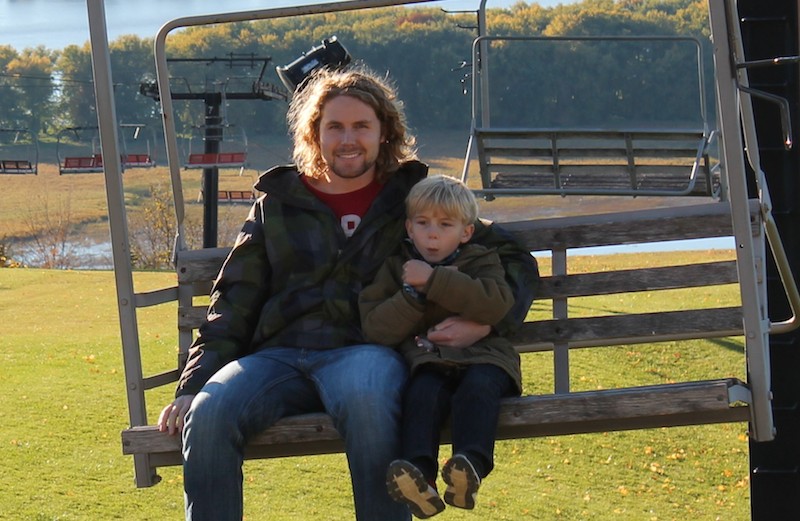
A big brother comforts a little brotherThe alpine slide is a run, a track, at a ski resort about an hour from home. The track winds and curves down the gentle side of a ski hill. Guests rent a coaster and glide down the slope.


If the timing is right, the view is breathtaking. The Mississippi river runs alongside the hill, and valley should be rich with color this time of the year.

The boys are in the van in a heartbeat. Logan’s still home for the weekend, and we feel complete.

“Once we’re at the bottom of the hill, how do we get back up?” Isaiah asks as we travel along.

“The ski lift,” Logan says.

“Is it high?” Isaiah asks. “Because if it is, I don’t want to ride on that.”

While flat farmland gives way to gentle hills, we talk about lift. This is all new to Isaiah. The last time we enjoyed the slide, he stayed with grandparents. He was too small.

Soon we’re at the resort the boys bolt from the van. The timing is perfect–autumn color has washed over the river valley. The sun is out and the afternoon is clear.

But Isaiah’s face clouds with worry.

He stands, hands on hips and squints into the sun. “I don’t like the lift,” he says as the chairs run against the deep blue sky.

But he looks to the slide, and he’s drawn. We purchase tickets for everyone, grab our coasters and wait in line. It’s not long before we’re moving down the hillside, two by two, the beauty of the day rolled out before us. I ride on the track across from Logan and Isaiah, though they go fast and quickly move ahead.

And at the bottom, we wait for the lift.

Lonny and a couple of boys go first. Then Samuel and I take a seat. As we glide along, I look behind, and I can see that Isaiah and Logan are now in a chair, too.

Isaiah’s face is twisted in fear.

But as I watch, Logan’s arm moves around his little brother. He holds him tight.

Logan has Isaiah covered.

He’d never let him go.

I think about this as Samuel and I are quiet, making our way back up the hill. There are often times in my life when fear comes fast. There are times when I feel out of my comfort zone. When I feel unsafe and suspended in circumstance, and I long for sure ground.

I need someone to hold me.

And the Lord is faithful. He holds me in His victorious right hand.

The hands that created the universe and carved the seas curve to cradle me.

The Lord doesn’t always remove the circumstance, but He holds me. He protects me. Speaks through His Word to encourage me. There is no situation, no path that I have to traverse alone.

I’m so thankful for this grace.

I look behind me one more time and I see, through the lens of my camera, that Isaiah is close to smiling. His little legs are swinging a bit. He’s safe.

The fear is gone.

Logan’s arms are still around him, and Isaiah is bound in love.

And I’m lost in the beauty of it.

What a precious thing.

The comfort of being held!

The Christian Dating Game: How to Wait

The word “wait” is one of the few words in the English language that can cause so much anxiety, fear, trepidation, and frustration. Because we want what we want when we want it, the word wait can easily begin to feel like the word “never”—especially when you are single and attempting to live a lifestyle compatible with your faith.

Yet, the word wait, in some context, appears over 100 times in the Bible, the book every Christian single should strive to live by.

New Every Morning Journal In Article Ad A

So what do you do while you wait on your soul mate? First, understand what waiting means in the context of Christian dating: “delaying action until a particular time”. That means “Guard your heart, for it is the well-spring of life.” Dating is not synonymous with depression, stagnation or desperation. Don’t go out falling in love with anyone who is paying you attention; delay action until the particular time comes when you know God is speaking to you about a certain person. “Do not awaken love” until He pleases.

Second, singles must remember that though they don’t have a “better half,” they have still been created to be completely whole people. Other people do not complete you—God does! You are a full person, full of purpose that the Church and the world needs!

According to scripture, singleness is the perfect time to identify your purpose and thrive in it. Many people question, “What is my purpose?” Your purpose is always connected to your passion, and process. What have you been through that can help someone else? For example, David’s wilderness process included him wrestling with lions and bears. But, it was that process that prepared him for a great purpose, defeating Goliath.

Like David slaying Goliath, many great accomplishments in ministry have been achieved by singles. In 1 Corinthians 7, the Apostle Paul says, “When you’re unmarried, you’re free to concentrate on simply pleasing the Master. Marriage involves you in all the nuts and bolts of domestic life and in wanting to please your spouse, leading to so many more demands on your attention. The time and energy that married people spend on caring for and nurturing each other, the unmarried can spend in becoming whole and holy instruments of God.” Paul admonishes singles to get busy in the matters concerning the Church and their own spiritual growth.

Each single has to define what this should look like to them. Does this mean volunteering in children’s church? Starting an international outreach ministry? Joining the usher board or choir?

While life for the Christian single should be ministry filled, it doesn’t have to stop there. In addition to ministry work, why not write the book you’ve always dreamed of, travel to foreign lands, start a business, join a civic organization? Get busy becoming who you are supposed to be!

Time is often a luxury many people wish for, yet as a single person, you have more of. Use that time to pursue your dreams, and develop yourself, and learn who you are and who you want to be. Often times, we keep choosing “the wrong one,” because we don’t know who the right one is because we don’t know who we are. Once you know yourself, among other things, you are able to properly identify what you need in a mate. While God can deliver your soul mate anywhere, your spouse-to-be may have an easier time identifying you if you are out living the life of your dreams.

Lastly, stop looking at every person as your potential spouse. They could be a potential business partner, great friend, career adviser, confidante, accountability partner, work out partner, business associate or more. But, you won’t be able to see that if your only filter is, “Is this my soul mate?” Maybe. Maybe not. Just value people for who they are, not who they could be to you.

Enjoying your life in your singleness is not the same as sinning; know your boundaries and thrive within them. This way, waiting won’t seem like some kind of punishment, but instead you’ll recognize it as an incredible gift to grow yourself and your faith in the Lord.

The Christian Dating Game: Attraction vs. Compatibility

When it comes to finding a romantic partner, we all have our dating preferences and attributes that we find attractive. I was instantly attracted to my husband because he was just my type: tall, dark, godly and handsome.

While attraction is important, it’s certainly not enough to sustain a relationship and what or whom you’re attracted to may even be causing you harm. One of the greatest lessons I teach as a life coach is you don’t have to spend time with everything you’re attracted to. Before you commit to someone you’re attracted to, examine yourself first. Ask yourself: Why am I attracted to this particular quality? Have my past dates exhibited the same patterns of behavior or qualities? Do these particular attributes I find myself attracted to propel me toward my ultimate end goal or do they take me away from my goals? 

You Got This In Article Ad

Whether you believe it or not, on a subconscious level, there is always a reason for your attraction to a certain person or thing. Doing the research on yourself will reveal that answer and possibly grant you the freedom, clarity and power you need to make healthy relationship decisions outside of what your eyes and the butterflies in your stomach recommend. If you were to be honest, both have been wrong before. Both have desired something that in the end was not compatible to your peace, health, or mental well-being. Attraction sparks your interest, but compatibility will keep it for the long haul.

Compatibility happens when two or more things are able to exist or perform together in combination without problems or conflict. That’s what you want for the future: a partner who will work in combination with you with as few conflicts as possible. 

If marriage is what you desire, it’s time to start making different decisions when it comes to dating. With vows that include, “for better or worse, in sickness and in health, for richer or poorer,” the stakes are too high to confuse attraction with compatibility. 

So before you get lost in someone’s eyes, smile or status, ask yourself honestly: What is this person all about? Are we equally yoked? Do we have many similarities? Is this person willing to commit to me long-term? Do we share the same values? Do our future goals align? Do we solve conflicts well together? Does this person respect me and my choices? Do I feel appreciated and uplifted in this relationship? 

The answers to these questions may very well help you move away from what’s temporary and hold fast to something that will last a lifetime.

The Caregiver’s Prayer

Chalk this one up as a caregiver’s answered prayer.

I just spent some time with parents and it was revealing in many ways. My dad, as I’ve mentioned, suffers from a heavy burden of ailments that leave him in tremendous pain—arthritis, spinal stenosis, neuropathy and all the indignities of a body that’s giving up on him. We talk on the phone regularly but it’s hard from long distance to know how he’s doing. Mom’s the primary caregiver and I worry as much about her as I do about him.

NIVFLB Inarticle ad

“I’m fine,” she’ll say with the sunny temperament that is God’s greatest gift to her and one that illuminates everyone in her orbit. “The hardest thing for me is just to be patient.”   

She’s always moved through life at a vigorous clip and still plays a mean tennis game at age…well, I won’t say what age. In between tennis and bridge and meetings with her book group, she takes good care of Dad. “I have to pray to be patient,” she says. 

“That’ll be quite an achievement,” I tell her jokingly.

I was glad to be on hand for 10 days. I thought I’d be able to help. I hardly had a chance. Mom makes sure Dad gets up, takes his shower, helps him get dressed. She gets him breakfast, guides him through some physical therapy, gets him the newspaper, reads to him, and waits patiently as he slowly, ever so slowly gets in the car. I never heard that voice I knew from my childhood, “Come on, honey, hurry up.” I never heard a complaint, never even a long sigh. 

“Mom,” I said, “you do very well.”

“I do?” she said with surprise.

“Yes, I think your prayer has been answered.” I’m not even sure she knew which one. In the meanwhile I pray for the both of them, that Dad gets some relief from the pain and that the primary caregiver knows she’s got four kids who are ready at any moment to lend a hand.   

The Capacity for Greatness

During this time of year focused on resolutions and new beginnings, we find ourselves evaluating who we are, where we put our energy and focus, what really matters. Such self-evaluation can be valuable, but also daunting.

I think every one of us has the capacity for greatness–an inner capacity to dig deeper, to find meaning and value in life and in others, to hold on tighter to those elements of belief and understanding that help us to move though this life as fulfilled and fulfilling contributors.

Community Newsletter

Get More Inspiration Delivered to Your Inbox


How do we do this? How do we recognize the greatness within ourselves and put it into practice? A good jumping off point is having faith that God sees our value and our capacities as part of a bigger picture. From there, surrounding ourselves with supportive, encouraging people can help bring clarity about our own greatness.

Next would be observing the greatness in others and using their inner strength, wisdom and insight to help us see our own gifts more clearly.

The others you observe might be your friends or family. Or those with wider exposure, like Olympic sprinter Derek Redmond, whose hamstring snapped mid-race in the 400 meters semifinal at the 1992 Barcelona games. He fell to the track in agonizing pain. 

Perhaps the greater agony was knowing his dream of an Olympic medal was gone. Still, he got up and hobbled down the track. His father climbed out of the stands to help him.

With his arm over his father’s shoulder, Redmond finished the race, not in the way he had planned, but finish it he did. Here's the video.

Redmond has become a motivational speaker, helping others to see the value and potential in themselves.

Speaking of the Olympics, during the 2012 Summer Games, Nike featured a commercial entitled, “Find your greatness.” The scene is a remote country road. In the distance we see a runner making his way toward us, his sneakers (Nike, presumably) slapping against the road.

As the runner comes closer and we realize he’s a young boy, rather overweight, pushing himself to jog, we hear this voiceover:

“Greatness. It is just something we made up. Somehow we have come to believe that greatness is a gift, reserved for a chosen few, the prodigies, the superstars, and the rest of us can only stand by watching. You can forget that.

Greatness is not some rare DNA strand. It’s not some precious thing. Greatness is no more unique to us than breathing. We are all capable of it. All of us.”

I looked up the commercial online and learned that boy is a 12-year-old from Ohio named Nathan who is working hard to get healthy. Clearly, greatness is not beyond his reach.

I know that each of you has allowed your greatness to be seen and shared. No matter what you believe about life after this one, it is this life with which we have to work.

We need to remember that we are all capable of greatness. Call upon ourselves to use what is deep within us to make our lives the most meaningful they can be and, at the same time, to enrich the greater world through the lives we touch.

Look to those who help to center us, support us, push us and guide us through their actions, words or both. Allow what we observe and recognize in others to strengthen our own sense of greatness.

Utilizing our own gifts, knowing what we believe and striving for greatness within ourselves and seeing the greatness and value in others is what God hopes for us.

We are all members of God’s family, each one of us responsible to put into practice our gifts of greatness to make this world just that much better of a place in which to live.

So this time of year or better yet, the whole year through, take hold of your greatness within. You and those in the world around you will be greater still.

Your continued support of Guideposts Outreach ministry programs gives millions around the world the opportunity to see their greatness within. Thank you.