Embrace God's truth with our new book, The Lies that Bind

The Canine Angel That Saved a Soldier

The eight of us slipped quietly as we could through the rolling German countryside. We were the Intelligence and Reconnaissance Unit, the eyes and ears of the Army Infantry, one of the storied divisions that battled Hitler’s army across northern Europe.

The fighting had grown ever more fierce in October 1944, as we crossed the Luxembourg border into Germany. On this night, our job was to scout the German lines and report back on how many troops they had, how many tanks, and the number and size of their big guns.

Whistle Stop Cafe In Article Ad May 2023

But something went wrong. The Germans spotted us as we approached a small village, and let loose a wall of fire with their deadly, 88 mm guns. All of us ran for cover. I headed for an old barn.

I found a dark corner, sat down and waited out the thunderous artillery assault, unable to stop shivering.

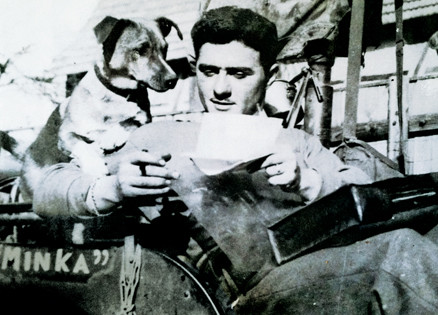
After a while, I realized I wasn’t alone. A small mutt, weighing maybe 30 pounds, stared at me with fear in his eyes, quivering just like me. Lord, please get me through this, I prayed. The dog looked like he was praying right along with me.

I cuddled up with him and we rode out the shelling together.

Donate to Help Guideposts Give Free Publications to Veterans

When the firing ended, I walked to my jeep and the dog followed me. I was amazed we were both still alive. I picked him up and put him in my jeep. He rode with me back to headquarters, where I introduced him to my buddies. My good luck charm, I thought.

I called him Minka, after a 1930s song that I loved. Minka stuck to me like my shadow. I guess we were meant to be together. Soon, nothing could separate us.

One day, our team was scouting the outskirts of a village when Minka started to murmur. He’s warning us, I thought. We took cover. Sure enough, German troops were camping nearby. “You stay quiet now,” I told him.

I spoke to him in German, because I figured he’d been trained in that language. He never made another peep. After that, the boys were sold on him. Minka accompanied us in my jeep on all our missions.

Only once did we become separated. Orders came down from command. We had five minutes to pull out. Minka had gone off, wandering. I couldn’t find him. When we broke camp, I was distraught. Soon we had advanced 30 miles.

I felt like I’d lost not just my little brother, but my protector. It was my lowest moment during the war.

I prayed for a miracle to bring us back together, and I guess the Lord heard me, because two days later someone from the division found him and drove him to our outfit. Oh, what a reunion we had!

After that, I tried never to let Minka out of my sight. Minka seemed to feel the same about me. We grew so close that throughout the snowy winter, as we fought the Battle of the Bulge, we even slept together. Minka would crawl into my sleeping bag and curl up at my feet.

In some ways, the worst part of the war for me was when I received orders to return home. You see, we were forbidden to take animals aboard our transport ship. I know it sounds silly now, but I actually considered staying in Europe rather than leave Minka behind.

I came up with a plan. But I needed Minka’s help. If I could pack him into my barracks bag and train him to keep still and silent, I could carry him onto the ship and none of the ship’s officers would know.

I practiced with him for days, to no avail. I just couldn’t get through to him. Not in German, not in English. The day we were to ship out from La Havre, France, I was in a panic. At the dock, out of view of the officers, I tried one more time.

“Okay,” I said to Minka in German, “this is it. You stay quiet or else you can’t come.”

He looked at me in that way that dogs do, to make it seem they understand. And then he crawled to the bottom of my barracks bag and never made a move, never uttered a sound.

Aboard the ship, the guys and I surreptitiously fed him from our rations. I cleaned up the steel deck after him. When we landed in New York, back he went into the barracks bag. I didn’t have to warn him.

Once we were on land again, all bets were off. Minka sprang out of the bag and ran back and forth, celebrating like it was New Year’s.

Minka and I lived another 11 years together, back at home in North Carolina with my wife and our three children. They were among the happiest years of my life. People who hear my story say it’s so touching that I saved Minka. “No,” I tell them. “Minka saved me.”

Bring faith and inspiration to our troops – donate Guideposts subscriptions now, click here.

The Boy I Could Never Forget

Enjoy this touching true story excerpted from Love Mercy and Grace: True Stories of God’s Amazing Care.

After 20 years as a full-time wife and mother, I decided now that my kids were grown, I needed a part-time job to keep me busy. The question was: What exactly could I do?

Pray a Day Vol 2 In Article Ad

Secretarial work was out—I couldn’t take shorthand, and I typed at a snail’s pace. I cooked for a husband and children, but that wasn’t enough to prepare me for a job in any of the restaurants near my home in Kansas City, Missouri. What was I qualified for?

The answer came one day as I drove past a lot full of school buses. I pulled over to the side of the road. That’s it! I thought. I loved kids, plus I’d put plenty of miles on our family Chevy.

First I had to pass a written test for my chauffeur’s license. Then I began driving practice. The bus was enormous. I could turn, shift, brake, accelerate, but I could not get the huge thing into reverse. When my husband asked how my training was going, I told him, “Fine, as long as no kid lives on a dead-end street.”

Please, Lord, I prayed, help me drive the bus.

By the time school started that year I’d gotten the hang of it. I was happy in my new work. I became a combination chauffeur, nurse and friend. And if the kids needed it, I’d put on my “Tough Big Sister” act. It was a lot like my previous job—being a mom.

When I think about my years of bus driving, I remember the snowstorms that seemed to start on Thanksgiving and last through March. I remember Christmases when I was presented with hundreds of “I love you, Polly” cards. I remember hearing “Itsy-Bitsy Spider” sung over and over until I heard it in my sleep. Mostly, though, I remember Charlie.

Charlie began riding my bus in September of my fourth year driving. Eight years old, with blond hair and crystalline gray eyes, he got on with a group of children. They all had stories to tell me about their summers. Charlie, though, ignored me. He didn’t even answer when I asked his name.

From that day on, Charlie was a trial. If a fight broke out I didn’t have to turn my head to know who had started it. If someone was throwing spitballs I could guess the culprit’s name. If a girl was crying, chances were Charlie had pulled her hair. No matter how I spoke to him, gently or firmly, he wouldn’t say a word. He’d just stare at me with those big gray eyes of his.

I asked around some, and found out Charlie’s father was dead and he didn’t live with his mother. He deserves my patience, I thought. So I practiced every bit of patience I could muster. To my cheery “Good morning,” he was silent. When I wished him a happy Halloween, he sneered. Many, many times I asked God how I could reach Charlie. “I’m at my wit’s end,” I’d say. Still I was sure that this child needed to feel some warmth from me. So, when he’d pass by, I’d ruffle his hair or pat him on the arm.

Toward the end of that year, the kids on my bus gave me a small trophy inscribed “To the Best Bus Driver Ever.” I propped it up on the dashboard. On top I hung a small tin heart that a little girl had given me. In red paint she had written, “I love Polly and Polly loves me.”

On the next-to-last day of school I was delayed a few minutes talking to the principal. When I got on the bus I realized that the tin heart was gone. “Does anyone know what happened to the little heart that was up here?” I asked. For once with 39 children, there was silence.

One boy piped up, “Charlie was the first one on the bus. I bet he took it.”

Other children joined the chorus, “Yeah! Charlie did it! Search him!”

I asked Charlie, “Have you seen the heart?”

“I don’t know what you’re talking about,” he protested. Standing up, he took a few pennies and a small ball out of his pockets. “See, I don’t have it.”

“I bet he does!” insisted the girl who had given me the heart. “Check his pockets.”

Charlie glowered when I asked him to come forward. His gaze burned into mine. I stuck my hand into one pocket. Nothing. I reached into the other pocket. Then I felt it—the familiar outline of the small tin heart. Charlie stared at me for a long time. There were no tears in those big gray eyes, no plea for mercy. He seemed to be waiting for what he’d come to expect from the world. I was about to pull the tin heart out of Charlie’s pocket when I stopped myself. Let him keep it, a voice seemed to whisper.

“It must have fallen off before I got here,” I said to the kids. “I’ll probably find it back at the bus depot.” Without a word, Charlie returned to his seat. When he got off at his stop, he didn’t so much as glance at me.

That summer Charlie moved away. The next school year, and every one thereafter, my bus was filled with new kids, some difficult, some delightful, all of them engaging. I remember the six-year-old girl who’d wet her pants with maddening regularity every Friday afternoon. I remember my horror when one of my riders was struck by a car whose driver had ignored the flashing bus lights. I knelt by the dazed child, holding him still so as to prevent further damage to his broken leg. And every spring there was a tornado warning, when I’d promise the kids I’d get them home safely.

Later, my husband and I bought our own small fleet of school buses, and I had more children under my care. Maybe because of my failure with Charlie, I worked extra hard to reach out to each one.

Eventually I retired. And there my story as a school bus driver ends, except for one more incident. A dozen years after retirement I was in a department store in Kansas City, when someone said tentatively, “Polly?”

I turned to see a balding man who was approaching middle age. “Yes?”

His face didn’t look familiar until I noticed his big gray eyes. There was no doubt. It was Charlie.

He told me he was living in Montana and doing well. Then, to my surprise, he hugged me. After he let go, he pulled something from his pocket and held it up for me to see. An old key chain … bent out of shape, the lettering faded. You can probably guess what it was—the little tin heart that said, “I love Polly and Polly loves me.”

“You were the only one who kept trying,” he explained. We hugged again, and went our separate ways. That night I thought over his words. You were the only one who kept trying. Of course, someone else kept trying too—and not just with Charlie. Before I fell asleep I thanked the Lord for the reassurance that I’d done a good job and for all the qualifications he’d given me to do it with.

The Blessing of Music

I’ve been around music all my life, for as long as I can remember. In fact, I don’t think there’s ever been a time when I didn’t have a tune in my head or a piece of music in my hands.

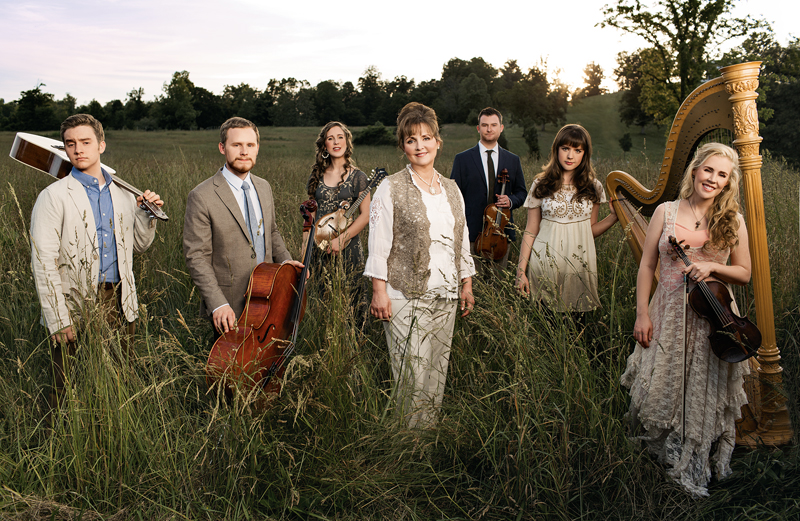
Music runs in our family. I was a voice major in college; my husband, Bill, is a composer; our six children have studied in the finest music schools and conservatories. All of us have performed together around the world with our own group, the Annie Moses Band, started when the kids were young.

Walking with Jesus L&E evergreen_in article ad

After a show, someone is sure to come up and say, “You’re all so talented. I wish our lives could be blessed by music like that.”

“No reason they can’t,” I’m quick to say.

Music is a gift from heaven, meant for everyone, not just the winners of American Idol or The Voice. It’s for anyone who has ever tapped a toe to a tune on the radio or hummed a movie theme.

It’s for people like my grandmother Annie Moses, namesake of our band, who survived the soul-dulling drudgery of picking cotton with one song after another. Music lifted her out of misery. That’s what music does. It moves us, inspires us, gives us courage, comforts us, connects us to God and to others.

It shone like the sun on Annie Moses’ hardscrabble life, which is why we honor her in song. I can’t count the ways music makes our lives better, but I’ll try.

Music helps us listen.
My daddy was a missionary in the rugged Kiamichi Mountains in Oklahoma. Our little church never had more than 60 or 70 people in the pews, but on the stage in front of the congregation everybody was welcome and everybody participated.

On Sunday nights, we sang the classics like “I’ll Fly Away,” “The Old Rugged Cross” and “In the Sweet By-and-By,” the harmonies filling the air. Anyone who wanted came up to perform: gospel quartets, banjo pickers, washboard virtuosos, singers who aspired to be the next Johnny Cash or Patsy Cline.

Were they perfect? Goodness, no. But we leaned forward, listened, clapped and hollered. If we didn’t get a melody or all the words, we got the performers’ intentions, which must be the way God hears us.

Listening to music is good for our hearts and our brains. Scientists have shown that babies are born favoring the songs and voices they heard in their mother’s womb! As they grow up, children gain nuances of accent, timbre, inflection and tone from exposure to music. It improves memory.

A good musical education isn’t about training prodigies for world-class performance; it’s to expand young minds for whatever profession they pursue. It opens them up to a universal language. Maybe we should add a fourth “R” to the three we already have: Readin’, ’Ritin’, ’Rithmetic and Rhythm.

Music puts us on a team.
Mama didn’t have much more than a year of piano and voice lessons from a teacher in junior high school, but she was determined that her three daughters get every opportunity that she lacked—no mean feat in our rural area.

First she insisted that Daddy buy a piano. For twelve dollars a month he financed a spinet that sat in the living room like a short, stout nanny, a doily on her head, surviving spills, wax buildup, termite swarms, mice and cats.

I was five when Mama gathered my two older sisters and me at the spinet and taught us to sing in three-part harmony. We sounded like some fusion of the Andrews Sisters and Alvin and the Chipmunks. No matter. We hit the road.

Daddy took us up in his Cessna, evangelizing by air, landing in cow pastures, beside cornfields and on empty back roads. In tiny cracker-box churches, Daddy preached and we sang, Mama at the keyboard of some old pump organ.

We learned to own a stage, to speak and perform in front of others, uplifted by their applause, delighted when folks sang with us. Our music made us an integral part of Daddy’s team. But you don’t have to be a performer to know that feeling.

Just sing with someone else, even if it’s only “Happy Birthday.” Every voice makes a difference, every part counts. The whole is always greater than the sum. Jesus said wherever two or more are gathered in his name he is there. Seems like that gets amplified when we make music in his name.

Music expands our horizons.
Mama insisted on looking for the best music teacher she could find for her children, which meant driving us in Daddy’s pickup 20 miles every Saturday morning on rutted dirt roads to Mena, Arkansas.

There we were taught by Mrs. Johnson, a large woman with royal-blue eye shadow and her hair in a French twist, who had a profound love of music. She would clinch her baton and click time infallibly on the edge of the piano. God help you if you couldn’t keep the tempo.

Mrs. Johnson gave me a whole new repertoire for the piano: tunes from Broadway musicals, movie themes, Hanon exercises, classics by the great composers, all performed at our semi-annual recitals.

I’d hear an older student, one more experienced than I, play a challenging étude or a two-part invention and think, Maybe I can do that someday. We’d go to local and state competitions, sweating through adjudications under the auspices of the National Guild of Piano Teachers.

For a country girl who lived in the hills where we could barely get TV reception, it was eye-opening. I’ll never forget going to a competition in Little Rock my sophomore year of high school. First I played—did all right— then wandered into another hall and sat down to hear a master class with a distinguished voice teacher.

A college-age girl with long, bushy hair and a loose-fitting dress stepped out onstage and began to sing in a foreign language. I couldn’t believe my ears. An enormous velvety voice took hold of a difficult melody and reached for the stratosphere. I was on the edge of my seat.

Then I listened to the teacher. With just a few comments she made what I thought was a perfect performance even better.

Oh, Robin, that kind of singing is for rich city people, I told myself, not you. But what if I could study with a voice teacher like that and become a singer too? “Inez Silberg, Guest Vocal Instructor,” the program said.

As fate would have it—or rather, as God would—that very teacher, Mrs. Silberg, became my instructor several years later at Oklahoma City University and she worked her wonders on me. But first a dream had had to be planted.

With music there is always something new to hear, something new to learn. Your world keeps getting bigger.

Music gives voice to our prayers.
When the Israelites were brought safely out of Egypt, they thanked God in their prayers, but how did they do it? With music, with song. “I will sing to the Lord, for he has triumphed gloriously,” goes the Song of Moses, “the horse and his rider he has thrown into the sea” (Exodus 15:1).

Or take the 150 prayers at the center of our Bible, the Psalms. We should never forget that they were written to be sung, sometimes with the musical instructions right in the text: “with timbrel and dance…with strings and pipe.”

Words were set to music for very practical reasons in a preliterate age. It was easier to remember them when you sang. But music also helps us give voice to our prayers. Through music we can express our deepest longings; we have access to what we might not be able to say otherwise to God.

Today I like to remind our oldest, Annie, who sings and plays the violin in the band, what a lot of noise she made as a newborn. She cried constantly.

Once I left her in the church nursery and when I returned to reclaim her, the nursery director gestured to Annie’s bawling face and told me, point-blank, “Don’t bring her back.”

The only thing that calmed her was George Gershwin’s “Summertime” sung high and loud. I didn’t care where I had to do it—singing top volume while putting her in the car seat or pushing the shopping cart through the supermarket— as long as it had its soothing effect.

It wasn’t long before I realized one of the verses was really a prayer, a prayer a mother sings to her child: “One of these mornings / You’re gonna rise up singing / Then you’ll spread your wings / And you’ll take to the sky….”

And that’s exactly what happened to Annie and to all of my children. They have spread their wings and taken to the sky, with their music, their lives and their careers.

My prayers have been answered beyond my wildest imaginings. Music has blessed them and they have spread the blessing, in the Annie Moses Band, in every piece we play and every song we sing. May our music bless you.

Read Robin's story, "Soothed by a Mysterious Stranger."

Read an excerpt from Robin's book, The Song of Annie Moses.

Listen as Robin shares how she was inspired by her grandmother, Annie Moses.

Download your FREE ebook, The Power of Hope: 7 Inspirational Stories of People Rediscovering Faith, Hope and Love

The Biggest Little Christmas Tree

We pulled up at the Christmas tree lot near our home. Four-year-old Lisa hopped out of the car. “Let’s get the best one!”

My wife, Shirley, and I looked at each other. Christmas had always been a time of giving around our house, but this particular Christmas, we didn’t have much to give. Money was tight. Big trees were expensive.

Light for Life NASB Study Bible in Article

How could we tell Lisa that we couldn’t afford to buy a big, beautiful tree? I was tired of our money problems ruining everything for our little girl.

The lot was filled to bursting with evergreens. There seemed to be as many trees here as there were angels in heaven. The rich scent of pine needles perfumed the air. Lisa hustled us onto the path.

“Look at them all!” Lisa said, spinning with her arms out wide. I looked, all right. I checked the price tag on one of the bigger ones, a seven-footer that would reach almost to our ceiling, and shook my head. We had to find something smaller. Lord, please don’t let Lisa be too disappointed.

And then I spotted it. So did Shirley. The tiniest, loveliest tree, perhaps five feet high, its branches arched upward, its color a deep forest green—as lovely as a child ballerina. I wonder why no one has snatched it up yet, I thought. Just as quickly, I answered my own question. Who wanted a small tree?

And then for a long moment, I traveled back in time. I was four—Lisa’s age—when for the first time, my parents took me Christmas-tree shopping. We arrived at the tree lot, and immediately my parents and older brother disappeared down the rows and rows of green, fragrant trees, exploring.

Me, I was mesmerized, just like Lisa. I stood near the entrance, staring. It was like entering a toy store featuring all my favorite toys, wondering how I would ever choose just one from among them.

My tennis shoes wiggled in the sawdust spread on the floor. Across the way, a crackling fire burned in a drum barrel filled with logs turned orange by the flames.

“Hey, Raymond, aren’t you going to help us look for a tree?” called my mother. She sidled up to me, reached down and took my hand. “Come on,” she urged.

We walked the rows of trees. Craning my neck toward their peaks, I felt as though I was making my way through a big green canyon. Then I spotted a tree standing in a corner, apparently shoved aside. To me, it was absolutely perfect, the most beautiful on the lot.

“I want this one,” I said, with all the authority a four-year-old can muster.

My parents eyed one another. My big brother scrunched up his nose. The tree was five feet tall, at most. Dad shrugged. “Well, I won’t have to saw the end off to fit it in the house,” he said.

Dad lifted it free, paid the proprietor and tied it to the roof of our car. At home, Mom made hot chocolate for my brothers and me, and we all decorated the tree, squeezing in every ornament we could possibly fit. It was the prettiest tree I had ever seen. And from where I stood, it sure looked big to me.

Now, all these years later, I admired another height-challenged tree. Bigger doesn’t mean better, I thought. And money can’t make or break Christmas.

Shirley and I would show Lisa that this was indeed the season of giving. Even if our bank account was low, the love in our hearts would never run out. We always had at least that to give.

Suddenly, I heard a familiar, excited voice. “I want that one!” Lisa said, pointing to the same little tree Shirley and I had our eyes on. “It’s perfect.” My thought exactly.

“We’ ll take that one,” I said, pointing to Lisa’s very affordable selection. I carried our find to the car. It couldn’t have been more perfect if it had been 10 feet tall.

Download your FREE ebook, Rediscover the Power of Positive Thinking, with Norman Vincent Peale

The Bible Study Cure

I stood in front of a panel for my interview for a Miss Mississippi preliminary pageant, trying not to let my nervousness show. The judges were taking a long time to look over my paperwork. What kinds of questions would they ask?

Most people think that pageants are about beauty, and they are—but not just outer beauty. Each contestant also picks a platform: a cause to bring awareness to and volunteer for, to help her community.

Community Newsletter

Get More Inspiration Delivered to Your Inbox


My platform was about the importance of giving blood. I truly believed that blood donors were everyday heroes. I donated every 56 days, as often as you’re allowed, and was eager for an opportunity to encourage others to give blood.

I went over my platform points in my head, thinking about my father. He’d talked a lot about beauty—inner beauty—when I was little. If I had a bad attitude, Daddy would say, “Asya, God doesn’t like ugly. Pretty is as pretty does.” He told me that the best way to turn an ugly attitude into a beautiful one was by doing good.

I learned a lot about charity, compassion and community from my father. He’d been in the Army, and he was committed to serving others. When I was 10, he took in a friend’s troubled son, as well as a family struggling financially. It was as if our farm in Booneville became a haven for the down and out. Growing up as one of eight children, I was used to living with a crowd. Even with so many folks around, Daddy still made me feel special. Every day as I left for school, he called to me from our wraparound porch, “Have a good day, Asya! Love you!” And he was always there waiting for me when I got home.

I liked making Daddy happy, but we were both a little headstrong. I signed up for my first pageant when I was seven, and he tried to talk me out of it. He worried that pageants would teach me to seek gratification from others rather than God. But I was outgoing and loved any chance to shine. I put my foot down, and Daddy gave in. He couldn’t help but pamper me.

Still, he made sure that all of us kids knew what was important. He took us to Burning Bush Church of God in Christ whenever the doors were open. Daddy was big on quoting Scripture. One of his favorite verses was Galatians 6:10: Therefore, whenever we have the opportunity, we should do good to everyone— especially to those in the family of faith. Little did I know that trying to do good would be Daddy’s downfall.

“Asya,” said one of the judges, looking up from my paperwork, “it says here that your father is incarcerated. Can you tell us more about that?”

I flashed back to the day I came home from school and Daddy wasn’t waiting on the porch. Instead, our house was surrounded by strange cars—government vehicles. I was not quite 11 years old, and I was so scared. Where was Daddy? Later I learned that the boy who lived with us had robbed a woman. No one was hurt, but there were drugs involved. Daddy had tried to help him undo the crime and paid a heavy price.

Life since Daddy’s arrest hadn’t been easy. We missed him so much. After he went to prison, Mama did everything in her power to keep things normal. My older brothers and sisters had grown up and moved out. But my younger sisters, who were only five and two, kept asking why Daddy was gone and when he would come back. Frankly, we didn’t have many details to give them.

I was used to having slumber parties almost every weekend. Then my friends’ parents began making excuses for why their daughters couldn’t spend time with me. I was so naive, I didn’t understand what was happening.

Until one day, Mama said, “Asya, these girls’ parents aren’t going to let them come over.”

“Why not?” I asked.

“Because of your dad.”

“He’s not a bad person!” I said. “Why don’t people see that?”

The difficulties weren’t just emotional. After Daddy was convicted, the government seized his property. They took our tractor and farm equipment, his truck and the old cars that he used to work on. Everything in his name—gone. Without Daddy contributing, Mama lost our farmhouse. We sold everything we could and moved into a smaller place.

I struggled with my self-worth and closed myself off, praying for answers about why this happened. Maybe God is teaching me to be independent and grateful, I thought. My parents had given me everything I wanted when I was little. After Daddy’s incarceration, we couldn’t afford those extras anymore.

The one extra I allowed myself was pageants. I picked them up again in high school. Sometimes it meant wearing a used dress, doing my own hair or borrowing the entrance fee from my grandmother. I loved competing as much as I had when I was seven. It helped me forget everything I’d lost— my friends, my home, my daddy. Onstage none of that mattered. I was Asya Branch—a strong, confident young woman. And it was my chance to shine.

In private, I was still Daddy’s girl. I sent him letters and pictures. He loved hearing about my pageant experiences, and I wanted to make him proud.

I was out of practice with pageants, but to my surprise I started winning. In twelfth grade, I competed in local pageants, collecting titles that would later open the door to compete for Miss Mississippi. I wore dresses bought on major markdown because stores were getting rid of the last season’s inventory, and I had to work multiple jobs to pay for everything. It was worth it. I was finding my confidence again.

But there was always one item in the paperwork that gave me pause. How has the world you come from shaped your dreams and aspirations?

That was where I’d written that my father was incarcerated and, in a way, our whole family was serving a sentence. Now the judge was asking the question I’d dreaded: “Can you tell us about your dad?”

I felt my whole body tense up. “Yes, he’s in prison, but he’s a good man,” I said. “He leads a prayer group and Bible study. My father is connecting people to God and the Word. That’s something that a lot of people in prison need.” I told the panel that more than 50,000 children in Mississippi struggle with the incarceration of a parent. “I’m not the only one.” The judge, rather than recoil, gave me a gentle smile.

Right after the pageant winners were announced—I was one of them—that judge took me aside. “Don’t you see?” she said. “Helping children of incarcerated parents—that’s your platform.”

I was shocked. Did a pageant organization, a program that looks for the best of the best, really want me to speak publicly about something that most people tried to hide?

Then I thought about the section on platforms in the pageant rules. A contestant’s platform is supposed to be something she feels passionate about. Aside from God, nothing meant more to me than my family, my father.

I remembered that verse from Galatians Daddy liked to quote. Whenever we have the opportunity, we should do good to everyone. Maybe if I spoke about my experience openly, it would help other children of incarcerated parents feel less alone.

I decided to move forward with my new platform, Empowering Children of Incarcerated Parents. In June 2018, I became Miss Mississippi. What I’d worried would be a liability turned out to be a strength. Next I would compete in Miss America and share my story with the country.

I was hesitant to tell Daddy. He had often told me, “Asya, I’m so sorry for what I’ve put you through.” I didn’t want to make him feel worse by talking about our family’s struggles in such a public way.

A few weeks before Miss America, I went to see Daddy. The warden helped arrange a private visit. Daddy didn’t even know. I didn’t want every media outlet in the state taking photos of Miss Mississippi visiting her incarcerated father, using Daddy as a spectacle.

After Daddy got over the surprise of seeing me, he asked, “Are you ready?”

“I think so,” I said.

“You go knock ’em dead!”

“Are you sure you’re okay with my platform?” I asked. It’s not every day that a Miss America contestant has a father in prison, and I’d heard that some reporters had already tried to interview Daddy.

“Asya, I’m happy that you’re using your influence to better the lives of others,” he said. “Don’t worry about the media. I can hold my own.”

On the night of the Miss America pageant, the warden let Daddy watch. The other inmates were excited to cheer me on. They were more upset than I was when I didn’t win. Daddy was so proud, I might as well have won.

As Miss Mississippi, I’ve kept my promise to empower children of incarcerated parents. I work with a prison ministry program called Day1. Their initiative, Love Letters, allows mothers in jail to send weekly letters to their children. We supply the stationery and stamps, and have funded more than 300 letters between mothers and their children. I also write to each inmate’s child to encourage them. I tell them that I personally know how hard their circumstances are but that they can do anything they put their minds to.

Daddy is scheduled to be released in 2022. He has been incarcerated for half my life, and I mourn the time we’ve lost. But I remind myself that God is the Great Redeemer. Only he could have transformed the hardest thing I’ve ever been through into an opportunity to do good and let my inner beauty shine.

For more inspiring stories, subscribe to Guideposts magazine.

The Best Solution to Stress

April is Stress Awareness Month, and it’s a good time to think about what stress can do to our bodies. Some days life reminds me of a merry-go-round that keeps speeding up faster and faster. I want to get off, but things are moving in such a whirl that I can’t.

I had a powerful reminder yesterday. I was still tired when I woke up, but with writing deadlines, I jumped out of bed and dashed into my day. I knew my productivity would be cut short because I had two doctor’s appointments that would eat up most of the afternoon.

New Every Morning Journal In Article Ad A

Read More: Remember that Stress Isn’t Forever

I zipped into the grocery store after I left the doctor’s office, and then rushed home and started dinner. I was weary, but I hadn’t met my word quota for the day—not a good thing when you’re on a tight book deadline—so I sat down at my computer to write for a few more hours.

Then I realized something important–I was genuinely exhausted. I’d pushed myself like I was Wonder Woman, as if I could do everything in superhero fashion without any consequences. That explained why I’d struggled so much with my writing the last few days. My batteries were drained, and the only thing that would help would be to recharge them.

So I shut my computer down and sacked out on the couch until bedtime. And then I enjoyed a wonderful long night of sleep. And you know what? When I sat down to write this morning, it was easy. It felt like the creativity floodgates had opened. All because I was less stressed and rested.

Read More: 4 Short Prayers for Anxiety

Do you feel stuck on a merry-go-round? Have you been zipping around like Wonder Woman on steroids? Are you stressed to the breaking point?

Then I encourage you to do something: Take stock of your life, make time for some rest, and then take control of the stress . . . before it takes control of you. You’ll be so glad you did!

The Benefits of Nostalgia

I admit, I’m a nostalgic guy. Whenever I need a break from my work, I go to YouTube and watch an old video like James Taylor’s “You’ve Got a Friend.”

Both the song and the singer, with his long hair and mustache, transport me back to 1975, to Ann Arbor and the University of Michigan, where I studied for my Ph.D. in psychology. But I never imagined my YouTube habit as anything more than a pleasurable distraction.

Inspiration from the Garden in article ad

Recently, though, I’ve been doing research on “peak experiences,” surveying people about their most joyful, life-changing events. One man zeroed in on a park where he and his friends hung out as kids.

They recently revisited it together, walking around the lake and the ball fields, observing how things had changed and sharing stories about the past.

“It made me feel grateful for my friendships,” the man wrote. “Ever since the trip down memory lane, I’ve felt happier about my life.”

Could it be possible, I wondered, that simply recalling happy memories can be almost as powerful as having a positive new experience? Was my YouTube habit benefiting me more than I first thought?

Certainly, nostalgia hasn’t always been viewed as a good thing. For years, the psychological establishment believed it was simply a form of escapism.

But as I discovered, and a growing body of psychological research confirms, waxing nostalgic from time to time doesn’t trap us in the past—it is healthy for our body, mind and spirit in the present.

Nostalgia Keeps Us Grounded
In his 1979 book, Yearning for Yesterday, sociologist Fred Davis noted that his research found nostalgia allowed people to “maintain their identity in the face of major transitions like childhood to pubescence, adolescence to adulthood, single to married life, and spouse to parent.” In other words, it helped people stay true to themselves despite huge life changes.

Today, technological and social change happens at a rapid pace, work and travel take us farther from home than ever before, and new information bombards us constantly. It’s easy to feel lost.

A high-powered Manhattan executive may get caught up in the rat race, only to catch a scent of horses in Central Park and be reminded of her idyllic beginnings growing up on a Midwestern farm.

Wherever we find ourselves, nostalgia helps bring us back to our roots, back to the things that are most important.

Give it a try. When you feel confused, adrift, out of place, turn off the computer and the TV for an hour or two and read a favorite book from your high school days, or look through a scrapbook or wedding album. Most likely, you’ll feel restored and refocused.

Nostalgia Gives Us Perspective
“Those who forget the past are doomed to repeat it,” said the philosopher George Santayana. Nostalgia provides a lens through which to view past mistakes and misfortunes.

Take the TV show Mad Men, famous for its edgy take on the 1960s. This isn’t the wholesome, innocent world of Leave It To Beaver. People smoke and drink in the office, rude treatment of women is the norm and an early episode even shows a child playing with a plastic bag over her head.

These things shock us now. By remembering our more reckless behavior and contrasting it with who we are today, we can more clearly appreciate how far we’ve come. It can also make us think twice about the things we do so casually today—revealing so much of our lives on Facebook, for example—reminding us to err on the side of caution.

A branch of psychology called narrative therapy prompts patients to tell stories about their lives in vivid detail—including their hardships, defeats, losses and disappointments—in order to bring focus to the silver lining, the lessons learned.

Research has shown that people who can see the positive aspects of the things that have caused them pain usually have better mental and physical health as they get older.

Nostalgia Helps Us Get in Touch With Ourselves
I once treated a man for loneliness and depression. He was in his late forties, lived alone and aside from phone calls to his elderly mother, he led an almost totally isolated existence.

I encouraged him to go to a singles dance or join a book club, but his shyness and self-defeating attitude always stopped him. I was stymied.

Then one evening he arrived for our session with a bounce in his step. “I had an amazing dream last night,” he told me.

He dreamt that he was sitting on a beautiful beach under blue skies, and “Desperado,” the 1970s hit by the Eagles, was playing.

“You know,” he said, “when I woke up, I felt happier than I have in years.” The song reminded him of a college summer when he shared a beach house with friends. “Everyone accepted me for exactly who I was,” he said.

He laughed and joked about his adventures that summer, and it was hard to believe this was the same lonely, depressed man.

Our conversation continued the following week. Eventually, the happy memory motivated him to join a volunteer organization, where he made new friends. Thinking back on the past helped him find a key to his future.

In a 2008 study, an international team of researchers found that focusing on happy memories from their childhood enabled people to feel more connected with family and friends.

A 2006 study discovered that a group of people who spent just a few minutes writing about a past event were more cheerful afterward than a group who wrote about a typical day in the present.

Both studies show that people with high resilience—the ability to bounce back quickly from stress and setbacks—are especially adept at using nostalgia to put themselves in an upbeat frame of mind.

Nostalgia Boosts Our Memory
My mother spent her last days in home hospice care. Once a music teacher and accomplished pianist, she was too frail to play piano, and seemed listless and distant. But she perked up when my brother and I put on music for her.

“Chopin!” she said, hearing a classical music CD. The song “I Could Have Danced All Night” brought back fond memories of our father. “My Fair Lady was his favorite musical,” Mom said, and she told me a wonderful story about meeting Dad at a teachers’ ball in the early fifties.

Family photos triggered other memories. There was one shot of us at a nondescript pool I couldn’t identify. But Mom knew. “Our trip to the Catskills!” she exclaimed. She held my brother’s hand and mine tenderly. These memories seemed to imbue her with strength, if only for a few minutes.

In 2009, researchers at the University of California-Davis mapped the brain activity of young adults while they listened to well-known songs.

It turns out that the region of the brain responsible for our long-term memory also serves as a hub that links familiar music and images with emotions. A seemingly forgotten memory embedded deep within our minds may rise to the surface, along with the feelings attached to it, when we hear an old tune or see a childhood photograph.

Many assisted-living centers use popular music and vintage movie posters, even artifacts like manual typewriters and rotary telephones, to jog memories of patients with dementia and Alzheimer’s.

Family members create “memory boxes,” filled with photos and objects related to work or hobbies, that awaken their loved one’s dormant memories.

Nostalgia Connects Us Spiritually
The Hebrew Scriptures remind us to honor the past. Take Deuteronomy 8:10-19: “Be careful that you do not forget the Lord your God, who brought you out of Egypt, out of the land of slavery.” Otherwise, the passage warns, “you will surely be destroyed.”

Every year on the Jewish holiday of Passover, I sit down with my family for the Seder, the festive meal at which we follow the biblical commandment to tell the story of our people’s deliverance.

It’s not only a way of glorifying God, it’s also a way of remembering that we must not take our freedom for granted. A plate at the center of our table holds six special foods, each of which represents a part of the story of Exodus and the Jewish people.

For instance, charoset—a spread of chopped nuts, apples and wine—symbolizes the mortar our ancestors used when they were forced to build Pharaoh’s cities. Horseradish—by its taste—recalls the bitterness of slavery. And a hardboiled egg reminds us of our people’s resilience, rebirth and renewal.

Why all of these rich, sensory symbols? Jewish tradition tells us that it’s not enough to simply recite the Passover story. Instead, we must relive it—through all of our senses—as though we had experienced enslavement and liberation for ourselves. Those ancient memories must become our very own for us to truly appreciate all of God’s miracles.

I think that our biblical ancestors were onto something. When I watch those old James Taylor videos on YouTube and rewind my life to my grad school days, I can’t help but replay the blessings that have come in the years since—a successful psychology practice, a happy marriage, many friends and the joy of becoming a father. And I feel a renewed appreciation for the One who bestowed them.

Did you enjoy this story? Subscribe to Guideposts magazine.

The Benefits of Being a Slow Decision-Maker

Have you ever decided to paint a room white and then been overwhelmed by how many paint colors exist in the “white” family? I went through this recently, and the process of narrowing down dozens of choices and selecting the best one for my project has me reflecting on how challenging decision-making can be.

A recent study has encouraging news for those of us who waffle back and forth before settling on a decision. Psychologists describe such thinkers as “maximizers” because we consider the ramifications of multiple options before making a choice. By the time we make a decision, we have several good reasons for doing so—and most of the time, we’re happy with the outcome.

Light for Life NASB Study Bible in Article

The study, which was published in the Journal of Individual Differences, found a significant correlation between maximizer-style decision-making and future-oriented thinking. Maximizers tend to engage in this type of thinking, imagining a tomorrow that’s better than today—and therefore subject to the benefits of making the best possible decision. The study joins other recent research that correlates future-thinking with a positive outlook on life. 

Maximizers have high standards for their lives, and their behaviors—like decision-making—often support their ability to meet those standards in areas of life like saving money, caring for the next generation and delaying gratification to reap better rewards down the line. 

Roy Disney once said, “When your values are clear to you, making decisions becomes easier.” The relatively small decisions in life—like which of the two dozen white paints is the best one for my kitchen—are opportunities to reinforce decision-making habits that foster a positive outlook, and create a more positive future.

Are you a maximizer? How do you navigate life decisions with ease?

The Beauty in Our Brokenness

With a weary sigh, I put the finishing touches on the dining room centerpiece, a wicker cornucopia overflowing with plump mini-pumpkins and lumpy gourds, resting on a bed of bittersweet branches with bright orange-yellow berries.

As I move around the table placing a foil-wrapped chocolate turkey at each place setting, a familiar sadness washes over me. It’s been years since my mom passed away, and now, with the approaching holidays I’m feeling blue once again. I shouldn’t be surprised. It happens every year at this time.

Daily Strength for Women in Article ad

In the living room, I glumly fill glass bowls with assorted nuts and candy corn. And that’s when I see my favorite bibelot, a winsome ceramic figure of a smiling, kimono-clad Asian boy. Broken.

His right sleeve hangs loose and empty, and his little fist rests on the coffee table, still clutching his slender bamboo pole and tiny lantern. Along with Mom’s love of “oriental décor” (Translation: knick-knacks), I had inherited the little fellow from her.

With his barefoot purposeful stride and cheery cherubic countenance, he had been her favorite, too. At Christmastime, she liked to tuck a sprig of holly in his lantern; in springtime, pink cherry blossoms.

Gently, I gather up his small broken body and carry it to the kitchen table to repair. Alas, I am no expert when it comes to repairing ceramics, but with my trusty tube of superglue, I try my best. I spread the pieces out on a clean dishtowel and examine them carefully.

Broken at the wrist, the figurine’s chubby fist is pierced with a hole designed to carry the weight of his pole and lantern. Thankfully, it’s a clean break.

I line up the tiny broken hand with the green-glazed kimono-sleeve, and apply a thin layer of glue to both surfaces. Then I press the two pieces together and hold, according to instructions, for five minutes.

As the kitchen timer ticks away the seconds, I close my eyes and my thoughts drift from the task at hand to the ancient Japanese art of Kintsugi.

Dating back to the 15th century, kintsugi or “golden joinery” is the art of repairing cracked or broken ceramics with pure gold with the purpose of showing how something broken and fixed can be more beautiful and stronger than the original.

In kintsugi, the shining golden cracks, unashamedly illuminating and exposing the damage, are the aesthetic focal point. Perfect in their imperfection, golden-veined kintsugi pieces are not only more beautiful and stronger than the original unbroken pieces, they are more valuable.

What a lovely idea, I think, that beauty and strength can be revealed in brokenness.

In the Bible, human beings are referred to as “earthen vessels,” and God as our “Master Potter.” Is it possible, I wonder, that beauty and strength might be hiding, waiting to be revealed in our brokenness, too?

For example, I’ve often wondered why, when Jesus appeared to his disciples after his resurrection, his new, heavenly body was not “perfect,” but still bore the marks of the wounds suffered on the cross.

Could it be that, it is through the marks of Christ’s brokenness that his strength, beauty and power are most fully revealed?

And what about our invisible brokenness? I wonder. Our everyday silent concerns and struggles? Is it possible that beauty and strength might be hiding, waiting to be revealed in them, too?

If we’re honest, we are all broken, we all struggle. When we unashamedly confess and shine the light on our brokenness, when we share our stories, we not only open ourselves to God’s healing touch, we also sometimes we help others.

I learned this first-hand through my mom, with whom–truth be told–I didn’t always enjoy the closest relationship. When at age 78, with failing eyesight, she unexpectedly came to live in the in-law apartment attached to our house, I wasn’t so sure it would work out.

We were different in so many ways. Over the years, there were so many unresolved hurts and misunderstandings. But God, the Master Potter, knew what he was doing.

Over the next twelve years, Mom and I had the opportunity to grow to understand, respect and love each other in a way I once would never have dreamed possible.

Maybe, I think, there’s something beautiful in my holiday blues. Maybe my missing Mom is a gift–God’s way of reminding me how he can take life’s most difficult circumstances and mistakes–whatever they may be–and transform them into something beautiful and good…

The timer rings. I open my eyes and look down at the ceramic figure held tightly between my hands. For a moment, I don’t want to let go. When I do, much to my relief the little fellow’s hand stays firmly attached. But is the bond strong enough to hold his pole and lantern?

Carefully, I slide the slender bamboo stick into his tiny fist…. Success!

I return him to his place of honor on the coffee table. If I look closely, a hairline crack encircles his wrist. Like a kintsugi bracelet, I think. His tiny lantern swings gently… invitingly.

Impulsively, with a suddenly hopeful heart, I race into the dining room and break off a tiny cluster of bittersweet berries—and gently tuck them into his lantern.


Download your FREE ebook, Rediscover the Power of Positive Thinking, with Norman Vincent Peale

The Art of Creative Silence

“Then, because so many people were coming and going that they did not even have a chance to eat, he said to them, “Come with me by yourselves to a quiet place and get some rest.” Mark 6:31

We can reduce the pressure in our lives by the practice of creative silence. Most of us today have no idea how to practice creative silence. But it’s a great art, which we all should learn. Rabindranath Tagore, the great Indian poet, said, “Every day wash your soul in silence.” What a good thought that is!

Whistle Stop Cafe In Article Ad May 2023

If you want to master pressure, I would urge you to yield yourself everyday to the silence of God. If we encouraged our young people in this practice, they would develop into more efficient men and women. So I offer the suggestion that in every schoolroom in the land, once, every day, there be a brief silent period. Just plain, non-sectarian silence. I would hope, of course, that some child in this silent period just might start thinking about God.

Every family should have a quiet time every day. Everyone in business—or in any place of work—could well have a quiet time each day in his office. Just shut the door, push the papers aside, and be silent. A person communing with the silence will hear right things in it and find new peace.

Excerpted from Positive Living Day by Day, copyright © 2011 by Guideposts. All rights reserved.

The Anointing That Healed

“I have good news and bad news. Which do you want first?” There was a note of alarm in Dr. Hammond’s kind voice. A note I’d never heard in all the years I’d gone to his urgent-care clinic. Sitting on the exam table, I gripped my husband Pete’s hand.

“Whichever you think best,” I said. I could hear the apprehension in my voice too.

Inspiration from the Garden in article ad

Dr. Hammond nodded. “The bad news is you have ovarian cancer. Very advanced. The good news is I’ve already found you a good surgeon. You need to see him right away.”

I heard Dr. Hammond’s words. I saw his mouth move. But for a moment all I could feel was Pete’s hand tighten around mine. The air seemed to have been sucked from the room. Then Dr. Hammond was motioning Pete out into the hall, to give details about contacting the surgeon, I figured.

I sat in the room alone, stunned. I could not possibly have advanced ovarian cancer. Yes, I’d been having troubling abdominal symptoms. That’s what brought me to this clinic. But I wasn’t the type to get sick. I’d raised seven kids, all of them grown now and married.

Lynda’s Café, the neighborhood kids called my house, where there were always tamales to spare and little noses pressed against the screen sniffing the smell of freshly made tortillas. Ours was the bustling house on the block and I was the bustling mom.

I worked in a grocery store bakery, then kept right on cooking and baking after I retired. I never got tired. I loved life. I knew God didn’t make mistakes and everything happened for a reason. But this felt like a mistake.

Pete and the doctor returned. That’s when I knew it was no mistake. Pete’s face was drawn. Whatever Dr. Hammond had told him, it was more than the surgeon’s contact info. The news must be very bad.

“Lynda,” said Dr. Hammond, “I told Pete you need to make your appointment with the surgeon right away. Your chances…” He paused. “Well, just call the surgeon.” Pete drove us home. I looked out at the familiar roads, feeling disoriented.

I’m a deeply faithful person. I totally trust God. But I couldn’t help being afraid. It was like a huge truck had suddenly appeared ahead, gunning straight toward us.

“All we can do is pray,” I murmured to Pete. It was our prayers versus the truck.

Everyone gathered around–family, church, friends. Life became trips to Phoenix for doctor’s appointments. After a procedure to remove fluid from my abdomen, Dr. Hammond even told me I should think about signing up for hospice care.

“But hospice is for dying people!” I protested. Still, I did as Dr. Hammond suggested. When the hospice coordinator learned I wanted to try chemotherapy after surgery, though, she said they wouldn’t be able to offer their services.

“Hospice is for end-of-life care only,” she told me.

I didn’t want this to be the end. I was only 59! I thought back over my life–my first marriage, then marrying Pete, raising our two sets of kids, Lynda’s Café.

Suddenly I remembered something from my church growing up. How our pastor would anoint the sick with oil and pray for them. Our church had believed strongly in the healing power of God’s Spirit. Was that what I needed? A kind of spiritual chemo?

It was as if my sister Mary Margaret read my mind. She was my big sister. She’d always looked out for me. Out of the blue she called and announced, “Lynda, I found a pastor who will anoint you with oil. Remember how they did that when we were kids? He’s coming the day before your surgery.”

Pastor Kenneth Kelly arrived the evening before I went to the hospital. The instant I saw him I felt at ease. He was the pastor of a small church in downtown Phoenix. His eyes were kind and filled with God’s mercy, almost as if a light shone in them.

The anointing was very simple. Pastor Kenneth took a small vial from his pocket, poured a drop on my forehead, then laid his hands on my head. His wife and brother, who’d accompanied him, laid their hands on too.

“Dear Lord, protect Lynda and heal her body,” Pastor Kenneth prayed. “Send your angels to carry her through this surgery and guide the hands of the doctors. We ask this in the name of your blessed son, Jesus.”

That was all. I felt no different when the prayer ended. But I was glad he’d come. I asked if he would come again during chemo. “Of course,” he said.

I made it through surgery. Dr. Bhoola, my surgeon, was straightforward about the remaining challenges. The surgical team had removed as much of the cancer as they could. But the disease was just short of the most advanced stage.

Dr. Bhoola prescribed six rounds of chemo, starting in December. After that, they’d run tests to gauge how my body responded.

Pastor Kenneth came the night before my first round of chemo. Once again, I felt no physical change after the anointing. But my fears were eased. And I needed that, since the effects of chemo were awful. I was flat on my back afterward, so weak I was hardly able to move.

I endured a second round of chemo, then a third. Dr. Bhoola did his best to keep my spirits up, always giving me hope. But the treatment was destroying my white blood cells. If that kept up, I wouldn’t be able to continue.

The night before the third round, Pastor Kenneth had gently asked whether I was prepared for the possibility that God would not heal my body. “Sometimes there’s physical healing,” he said. “Sometimes the healing takes a different form. Are you open to that?”

All I could think to reply was, “Well, if the Lord chooses not to heal me, then I’ll see my mom and dad and everyone else in heaven.” I meant that. But I didn’t want it to happen yet.

The night before the fourth round of chemo, Pastor Kenneth came to our house once again. I sat in a chair in the living room, trying to feel that same sense of comfort I’d felt the first time he came.

He got out the oil and poured a drop on my forehead. Then he laid his hands on me and prayed. He finished and stepped back to talk to Pete.

Suddenly I sat bolt upright. A wave of intense heat passed through my body. “Whoa!” I cried. Everyone turned. “Someone, put on a fan,” I said. “I’m hot! Don’t you all feel it?”

It was the dead of winter, but Pete dug out a fan and turned it on. Everyone crowded around. I’d had hot flashes before. This was like a hot flash on steroids.

“I…I think I was just healed,” I said. Eyes widened.

“Praise the Lord,” said Pastor Kenneth.

“But we’re still doing the chemo tomorrow,” said Pete.

“Okay,” I said. “But I think I was just healed.”

I went through with the treatment. It was the worst yet. I was lying in bed recovering when Mary Margaret called.

“You’re done,” she said.

“What?” I asked.

“With treatment,” she said. “That was your last round. You won’t have to do it again.”

“You talked to Dr. Bhoola?”

“No. I was praying and I got a very strong sense you were right when you said you were healed.”

“Mary Margaret,” I said, “it doesn’t work that way. They won’t stop just because I say so. They’ll think I’m nuts!”

A few days later, I went to see Dr. Bhoola. “Lynda,” he said, “your blood counts are simply too low to continue treatment. We’ll have to stop chemo and I’ll order tests to see how well it has worked so far.”

I underwent tests just before Memorial Day. All through the long weekend Pete and I prayed and agonized, waiting for the results. At last, on Tuesday, the phone rang. It was Dr. Bhoola’s assistant.

“You are one strong woman, Lynda,” she marveled. “The tests show you are one hundred percent cancer-free. We call that NED–no evidence of disease.”

Pete could tell from my expression what the news was. His hand tightened around mine–just like on the day Dr. Hammond had pronounced his diagnosis. Except this time Pete was clutching me with relief. The great danger that had barreled toward us that day was vanquished.

How slight our weapons against it seemed in comparison–a few words and drops of oil. But by then I knew it’s not just oil that heals, or prayers. It’s faith. Pastor Kenneth was right when he said healing takes many forms.

In the end, faith itself is the healing. Even when our bodies feel the weakest, by faith we are filled with God’s strength. With that strength we can make it through anything.


Download your FREE ebook, A Prayer for Every Need, by Dr. Norman Vincent Peale

The Angel Who Brightened His Mother’s Final Years

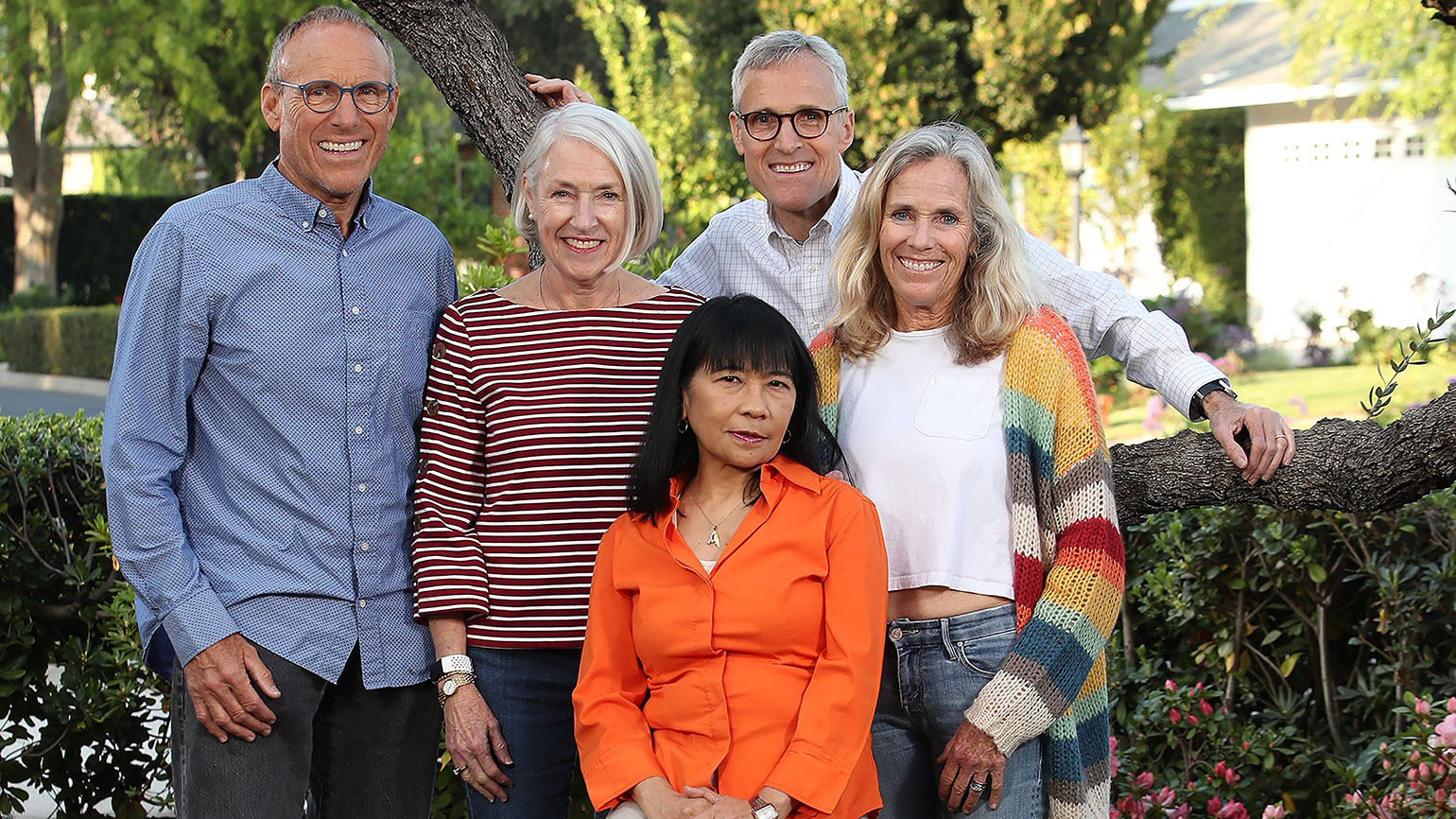
“Bye, Mom. Talk to you next week.” I hung up the phone, unable to ignore the drumbeat of worry that had been building during our conversation. It was our Sunday call, when we touched base every week.

What was it that had me so concerned about Mom? Her hip? The pain was pretty intense, bone grinding on bone. She’d had a procedure a couple years back, to no avail. But she was her usual uncomplaining self. “The doctor gave me something that I can take before I go to bed,” she’d said. “It seems to help.” No more strolls up and down the block in her walker, though.

Sugarcreek Amish Mysteries In-Article Ad 2023

Maybe it was how much sleep she seemed to need lately. Up in the morning to do the L.A. Times crossword puzzle, then back down for a nap. Up for lunch and an attack on the crossword in the Pasadena Star-News, then another nap. Dinner and the book that she was reading for her book group. Then bed. “I sleep fine,” she insisted.

The worst thing was being 3,000 miles away. Mom still lived in the Pasadena area, where she’d been born and raised and where my siblings and I had grown up. I envied their proximity to Mom. My older sister, Gioia, lived two miles away and always had Mom over for Sunday dinner. My other sibs, Howard and Diane, lived 45 minutes away, but they drove up frequently. Diane took Mom to doctors’ appointments, as did Howard’s wife, Julie; Howard helped out with her taxes. I felt guilty I couldn’t do more.

My siblings could see through her “I’m doing fine” disclaimers. They could see how thin Mom had grown. “How much did the doctor say you weighed?” I’d asked. “Ninety…ninety-one…” she said. Ninety-one. The same as her age. Gioia bought her groceries every week, all those bottles of Ensure. But Mom needed to put on some weight. She could usually be lured into a scoop or two of ice cream, not to mention some See’s Candies… What else was she eating?

“Don’t you have eggs for breakfast anymore? And bacon?” I asked.

“Sometimes,” she said.

Sometimes. How often was that?

It wasn’t just the distance that made it challenging for me to get a full picture of Mom’s condition but her very nature. Fiercely independent, determined to take care of herself, relentlessly positive. In her mid-eighties, after Dad died, she sold the house they had built together and bought a smaller one “all on one story.” I didn’t see the sense of it. She could still climb stairs with ease. Played tennis several days a week. But she was looking ahead, to where she was now. The walker, the cane, the tennis racquet now retired.

I told myself that I should be grateful that her mind was still sharp, even if she couldn’t recall what she ate for breakfast. She had her daily crosswords, her book group. She didn’t go to church anymore—it conflicted with her morning nap time—but there was her Daily Guideposts next to her bed. Still, this recent conversation unnerved me. “We need to go visit Mom,” I told my wife, Carol. We’d just been there at Christmas, but Christmastime was so busy, so many of us coming and going—kids, grandkids, great-grandkids. What if we caught her on a quieter weekend?

“Mom,” I said, calling her back, “I get MLK Day off. Carol and I thought we’d come out and stay with you for the long weekend. I’ll book a flight that gets in Thursday night.”

I could hear the smile in her voice. “That would be nice.” And then that practical nature coming through. “I’ll leave the door unlocked.”

The Lyft driver dropped us off from the airport. The porch light was on and the front door, indeed, unlocked. Mom called to us from her bedroom as she heard us tiptoe in. We wished her good night. Then we went to sleep—we were still on New York time. In the middle of the night, I heard her get up with her walker and go to the bathroom. At least she can do that on her own. First thing in the morning, I went for a run and Carol went for a walk. By the time we got back, Mom was sitting at the breakfast table, a crossword puzzle at the ready.

Carol looked down at Mom’s plate. “Peggy, is that all you’re eating? Half a piece of toast?”

“I’ll have something to drink later,” she said sheepishly. What? Some tea? A few sips of Ensure?

At once we put it together. Frying an egg, microwaving bacon. It was too much for her. Mom winced as she shifted in her chair. That hip. She had her pills sorted on the counter, but she hesitated to get up for them. We could cook for her all weekend, bring her her pills, but what would happen after Monday?

“Mom,” I said, “you need someone to come in and help you during the day.”

“Hmmm,” she said. “I don’t know.” She went back to her crossword, clearly hoping to end the conversation. Was this stubbornness just the flip side of her strong will and independent nature?

I talked to Gioia. As the eldest, she had the strongest powers of persuasion. And Diane. Mom trusted Diane on medical matters from all those doctors’ visits. Howard too—she relied on him to handle the financial details.

It was Gioia, though, who sat Mom down after our visit. She reminded Mom of the caregiver she’d had before—for a week—after her hip procedure. We would go to the same agency and see if there was someone available to assist Mom a couple days a week.

Mom frowned. “Only for an hour,” she said.

“Mom,” Gioia said, appealing to her sense of fair play. “The person needs to get paid for more than just an hour.” A sigh. “I suppose so.”

Enter Nora. Discreet, kind, good-humored, faithful. Three days a week, she’d arrive at 8 a.m., fix breakfast, help with the morning shower, settle Mom with a heating pad for her hip, do laundry, count out the pills, wash the dishes, get lunch ready, leave some dinner in the fridge and do it all in such a way that her presence was never an intrusion. I was amazed at how quickly Mom warmed to her. “How’s Nora?” I would ask when I called on Sundays. “She’s such a dear,” Mom said.

Texts flew back and forth between my sibs and me. What if Nora came more often? Diane suggested it first. Mom’s response? A categorical no. Then, only a couple weeks later, Mom called Diane out of the blue. “I think Nora should come for the whole week if that works for her,” she said. Done.

For the next two years, Nora made Mom’s home a sanctuary. The book group could drop by; kids and grandkids came and went; we’d fly out and stay for a bit. Nora was such an intimate part of Mom’s life, she felt like family.

Nora was there that Monday when Mom just didn’t feel well enough to get out of bed. Nora was worried. Howard and Gioia took Mom to the doctor’s, then to the hospital. The diagnosis: pneumonia. At age 93, Mom was quick to proclaim to anyone who would listen, “You know, the last time I was a patient here was when I had my last child”—63 years earlier.

I flew out on Tuesday. Spent most of Wednesday with her, Nora texting us prayers. On Thursday a minister from church visited and we gathered around Mom’s bed. The pastor read Mom’s favorite Bible passage, from Isaiah, “about eagles’ wings,” as Mom put it. We sang “On Eagle’s Wings.” Then she turned to me and said quietly, “I’m going to the Lord’s house soon.”

Nora came by that afternoon. Mom’s daily companion for the past two years, a comforting presence and now, miraculously, a beloved friend. Mom looked up and exclaimed, “There’s my angel.”

Nora was the angel Mom didn’t know she needed. She was also my angel, easing my mind, letting me rest assured that the mom who had cared so well for my siblings and me was being so well cared for in her later years. That evening, after all of us had left, Mom died. I’m still coming to terms with her enormous absence in my life. Yet even in my grief, I give thanks for Nora and the Providence who sent her to us.

Share the Care: 7 Tips for Sibling Family Caregivers

For more inspiring stories, subscribe to Guideposts magazine.