Embrace God's truth with our new book, The Lies that Bind

Tapping into Our God-Given Potential

Human beings have more power, more strength and more capacity than they will ever use in their lifetimes. We have inner resources, enormous possibilities and natural gifts to achieve greatness within our lives.

Best selling author Brian Tracy writes, “The potential of the average person is like a huge ocean un-sailed, a new continent unexplored, a world of possibilities waiting to be released and channeled toward some great good.”

Daily Strength for Women in Article ad

One of the most important factors in reaching our potential in life is our self-esteem–the value judgment of you. Nathaniel Branden, a psychiatrist and expert on the subject of self-esteem says, “No factor is more important in people’s psychological development and motivation than the value judgments they make about themselves.”

Do you believe in your potential?

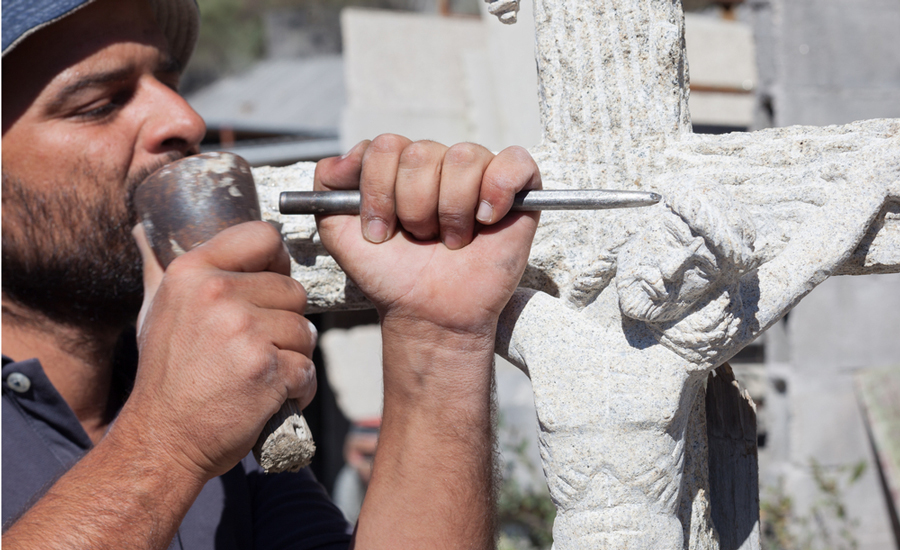
Christensen and Rebecca J. Laird in their book, Spiritual Direction: Wisdom for the Long Walk of Faith, tell a story about a sculptor and a young boy:

“There was once a sculptor who worked hard with hammer and chisel on a large block of marble. A little child who was watching him saw nothing more than large and small pieces of stone falling away left and right. He had no idea what was happening. But when the boy returned to the studio a few weeks later, he saw, to his surprise, a large, powerful lion sitting in the place where the marble had stood.

With great excitement, the boy ran to the sculptor and said, ‘Sir, tell me, how did you know there was a lion in the marble?’ ‘I knew there was a lion in the marble because before I saw the lion in the marble, I saw him in my own heart. The secret is that it was the lion in my heart that recognized the lion in the marble.’”

Until we change the way see ourselves, our potential remains buried underneath layers of self-doubt.

When we have a humble but healthy confidence in the gifts that God has placed within us, the person God created comes alive. When God gets hold of us, we begin to see our potential in a different way…we understand our gifts are to be used to honor God.

What gifts and talents has God given you? What holds you back from maximizing your potential? Share your story with us.

Lord, help us to discover the depth of our potential that is waiting to be released for a greater good. Give us greater confidence in our God-given talents and gifts, that we may honor You with them.

Talking with Love and Understanding About Suicide

NOTE: We are saddened to announce that Edward Grinnan’s wife, singer and actress Julee Cruise, passed away on June 9. 

The morning after my wife, Julee, died, I awoke past 11 am. I’d slept through two alarms and several phone calls. I felt panicky. I hadn’t slept that late since my freshman year of college, and there was so much to be done. How could I? Then I let myself smile a little bit. Julee always admonished me that I didn’t get enough sleep. I think she was making a point. 

Daily Strength for Women in Article ad
Photo by M. Sharkey
 Edward and Julee with Gracie

I noticed on my phone there were already several news alerts about her death from Rolling Stone, the New York Post and The Guardian. All attributed her death to a long battle with lupus. She’d recently announced on her website that lupus would bring an end to her performing career. There was also a message from the obituary editor at The New York Times asking me to contact him. I fed poor hungry Gracie then called, taking a deep breath and telling myself not to cry. Keep it together. Julee hated it when I cried. 

We talked about a few basic details—hometown, date of birth, etc.—then he said, “She died of lupus, I understand.”

I paused. “Yes, she had lupus since college.”

“You don’t have to list a cause of death, if you’d rather not.” 

“Lupus had made her life very hard, especially lately.” 

“I can understand that. It’s up to you, of course.” 

“Julee took her own life.”

Pause. 

“The cause of death was suicide then. I’m so sorry.” 

“She’d struggled with depression, like so many people. Lupus made it worse. But I want to be honest. She took her own life. It happens in so many families. It comes with so much shame.” 

We left it at that. Immediately I second-guessed myself. Is this what Julee would have wanted? Painfully, I decided it was. She always urged me to write honestly about my own life and struggles no matter where it took me. She would want me to bring that same openness about her life. Her brother committed suicide almost 11 years ago to the day, and I remember her saying how sad it was that people didn’t talk about it, didn’t celebrate his life the way they might have if he’d died of a heart attack or old age. There is so much shame attached to dying by suicide. It’s the only form of death that is a decision. Yet so many families have had to deal with it, often in silence, in anger, without help to understand it, without closure and acceptance and proper mourning. There were more than 45,000 suicides in 2021, the twelfth leading cause of death in the U.S.

It was Julee’s decision how she wanted to die, that she did not want to go on living with the pain she was carrying. I know she was at peace with God. She would not have done it otherwise. How she died will become a matter of public record, and I felt ashamed not being honest about that. It seemed disrespectful to all those families who have struggled with the suicide of a loved one to cover up how my wife’s life ended. Those deaths often leave so many questions, questions we are not always allowed to ask and are sometimes afraid to ask. 

It breaks my heart more than I can say that she is gone. We were married for 38 years. I still find myself talking to her. I probably always will. But I will never tell her what she did was wrong. I will never question her decision. She talked so much lately about wanting to be with her family in heaven, including the dogs she loved so deeply, whom she believed were waiting for her. She told me to take good care of Gracie, and she could love us just as much from heaven as from earth. I believe that. And yes, Jules, I’ll try to get more sleep. See you in my dreams. 

Here are some resources for suicide loss survivors:

American Foundation for Suicide Prevention

Alliance of Hope for Suicide Loss Survivors

National Suicide Prevention Lifeline

Talking About His Depression Helped His Family and Others

Note: This story contains descriptions of attempted suicide.

That Sunday my wife, Trish, had gone to Mass without me as usual. As much as I wanted our marriage, our family, to be close again, I still couldn’t bring myself to go back to church regularly. Not after everything that had happened.

The Daily Bible Large Print relaunch with digital free gift in article ad

On her way home, Trish had picked up The Philadelphia Inquirer. I sat at the kitchen table with her and glanced at the front page. January 20, 2008. The presidential primaries were in full swing; the country was in a recession.

My concerns were closer to home. A year earlier, I’d moved back in, after being separated from Trish for five years. I was grateful to be home again, but there still seemed to be a barrier between me and my wife and our children. After all we’d been through—all I’d put them through—I wanted to put the past behind us. How else would we be able to move on with our lives?

BROWSE OUR SELECTION OF BOOKS ON CHRISTIAN LIVING

A headline caught my eye: “After leap breaks body, a miracle renews spirit.” The story was about Jordan Burnham, an 18-year-old in the next town over. He’d had everything going for him—athletic, popular, elected to the homecoming court. But he had struggled with depression and, that past September, jumped from the ninth floor of an apartment building. And survived.

It was as if I were reading my own story, only I was nowhere near as brave as this young man.

The trouble for me had started in the waning months of 1998. I was a senior financial analyst at Bristol-Myers Squibb, the pharmaceutical giant. My boss called me into her office and told me, “You’re probably going to be let go. The whole department may shut down.” I knew how bleak the financials were. That was my job—projecting sales trends, doing cost analyses. Information to be shared only with company VPs. I was a good employee. I kept those secrets.

But the weight of what I knew hung over me. I was the provider. Trish was a stay-at-home mom. Our four kids, ages nine to 16, were in Catholic school. If I lost my job, we wouldn’t be able to pay their tuition, the mortgage, car payments, our other bills. What kind of man couldn’t take care of his family? I worked even harder, nights, weekends. There had been times I felt down, not good enough, in the past. I’d always managed to push through them. But I couldn’t push through this. The stress ate at me. I couldn’t sleep. I had no appetite and lost 60 pounds. My blood pressure was off the charts. I had debilitating headaches.

My family doctor prescribed anti-anxiety medication. I didn’t like the side effects and stopped taking it. I saw a neurologist and a cardiologist. They couldn’t figure out what was wrong. I went to church with Trish and the kids every Sunday, prayed for healing every night. No answers from God either.

By early 1999, the pressure was overwhelming. One April morning, I was driving to work, my head throbbing, dreading another long day at my desk. This needs to end, I thought. I’d stopped praying by then. Obviously, my life meant nothing to God. I’d been a fool to think it ever had.

Bible Verses for Depression

I pulled over, the engine still running. I got out and put my mouth to the tailpipe, trying to inhale carbon monoxide. Minutes passed. Nothing happened. Loser. Can’t do anything right.

I went home and told Trish. She took me straight to the hospital. They kept me overnight and discharged me the next morning with a referral to outpatient therapy. I didn’t understand why. My problems were physical, not mental.

That night I couldn’t stay still. I paced the house, my heart racing. Trish found me passed out.

I was admitted to the hospital again, to the cardiology unit on the third floor. Trying to cheer me up, Trish brought me photos of our family in happier times. The pictures only reminded me those days were long gone. Trish can’t help me. The doctors can’t help me. Nobody can help me.

Trish stepped out to call her mom. My eyes went to the open window. There was only one release from my suffering. This time I’d do it right.

I went to the window, opened it all the way. I stood on the sill for a moment, leaned toward the opening. Then I flung myself out. Headfirst.

The ground flew up to meet me. A thunderous crash. Screaming pain. Everything went black.

I woke up in the psychiatric ward, my wrists in restraints. Trish sat at my bedside. “Your legs were shattered,” she said. “It’s a miracle you’re alive.”

I looked down at my legs—held in place by metal frames and screws— then back at Trish. Her eyes were shadowed. How was this a miracle? I’d wanted to escape pain, not inflict it on my wife. Shame filled me.

“I didn’t mean to hurt you,” I said. “Please don’t tell anyone I tried to…” I couldn’t even say the word suicide.

Trish nodded. “I wouldn’t want people talking about our family, judging us,” she said.

A psychiatrist met with me that afternoon. “You are clinically depressed,” he said. “It’s different from being sad. There’s a chemical imbalance in your brain. The medication I’ve prescribed will help, but there are things you’ll need to work through. How you perceive yourself. How you deal with stress.”

After five weeks, I went home. I wasn’t able to walk, so Trish had set up a bed for me in our living room. The antidepressant made a difference. I was sleeping and eating. But I was far from healed. I got frustrated by my slow progress in physical therapy and psychotherapy, and I grew irritable with my family.

Trish had to take care of everything—the kids, the house, the bills. And me. I wish I could say I saw the toll it was taking on her, but I was too caught up in my own issues. One of which was keeping my suicide attempt under wraps.

Only our two oldest kids and a few close relatives and friends knew the truth, and they were sworn to secrecy. If anyone asked, we told them I’d been in a car accident. Or that I’d fallen down the stairs. I didn’t want people labeling me as mentally ill, so I didn’t say more, not even to my wife and children.

Trish urged that we go to counseling as a family. Absolutely not, I told her. I had no interest in reliving my depression, my pain. I just wanted to pretend I’d never attempted suicide.

Trish joined a support group. She went to church every day and saw a therapist. One night she told me, “My therapist thinks we should live apart. I’ve thought and prayed about it, and I agree. I need time and space to heal and be a healthy parent to our kids.”

I hated to leave, but part of me knew it was for the best. I moved into my late father’s apartment. I’d gone on disability, and I knew I couldn’t go back to corporate life. When I was able to walk and drive again, I got a job at Jos. A. Bank, selling men’s clothing.

What Trish had said about being a healthy parent struck a chord. I continued with therapy and came to realize I’d had depressive tendencies all my life; fear of losing my job had amplified them. I’d always been prone to seizing on the worst possible outcome. So I began reading books about managing negative thoughts and emotions. I practiced mindfulness meditation. I didn’t pray or return to church. I was still angry at God for letting me suffer. I saw the kids on weekends; we had fun together. I thought I was doing well.

One day in 2006, Trish wanted to talk about our youngest, our son, who’d just turned 16. “He misses you so much,” she said. “He needs a dad at home.”

I moved back in two days later. In my mind, I thought Trish was telling me she was ready for us to be husband and wife again. Not quite. One day not long after I’d returned home, we walked to a riverbank where she liked to sit and pray. It was a peaceful, beautiful setting. I put my arm around Trish, but she pulled away.

“John, we’ve never talked about what happened. And we need to.”

I sighed. “I can’t.”

I really couldn’t. As if some force were keeping me from opening up.

Until I saw that newspaper article about Jordan Burnham. He was so honest about his depression and about wanting to kill himself. Jordan’s parents and sister were equally honest about their pain and lack of understanding.

I understood exactly what Jordan had gone through. My story could have helped him. If only I’d been willing to share it. If only I hadn’t let fear and shame close me off from the people I love, from the God who loves me so much he saved my life, even when I didn’t believe it was worth living.

“I don’t want one more family to go through this!” I said.

Trish looked over at me. “Go through what?” she asked.

I showed her the article. “Can we have dinner together tonight, the six of us?” I said. “There’s something I need to talk about.”

Trish squeezed my hand. “Not just you,” she said. “It’s what we all need.”

That night, for the first time, I talked to Trish and our kids about my depression, how ending my life had seemed like my only option, what I’d learned through therapy. They talked about how my suicide attempt had affected them. There would be many more conversations, but it was a start. Already the barrier between us was crumbling.

“I’d like us to write a book,” I said. “With all of our perspectives. And I want to speak out. I want people to know the truth about depression and suicide. That there’s nothing to be ashamed of.”

The next week, Trish arranged for our family to speak at a synagogue. It was difficult for all of us; much of what we said, we’d never expressed before. Yet it was also freeing and invigorating.

Afterward, people crowded around to tell us their stories. Since then I’ve given speeches at churches, synagogues, schools, civic groups. I even met Jordan Burnham at a talk and told him what a difference he’d made in my life. He showed me that when we open up and share our pain, we open ourselves to God’s healing love.

For more inspiring stories, subscribe to Guideposts magazine.

Take Time to Look Heavenward

That evening it rained buckets. So much that my basement started leaking.

“When it rains it pours,” I muttered, running around with rags and a mop. “What more can go wrong?” A sick friend, an upsetting e-mail and now this.

Sugarcreek Amish Mysteries In-Article Ad 2023

We could afford to repair the water damage, but who needs an unplanned expense, especially in this economy? And where would I find the time?

All night I tossed and turned, going over my list of woes. In the morning I had one more to add to it: lack of sleep.

I run my own interior design business and had a meeting with a client across town. I headed out early. I didn’t want to get stuck in traffic. I was stressed enough already.

I was just about to pass our midtown park when something made me pull in. I had a little time before my meeting. Maybe a walk would settle me down.

I took the path to the rose garden and sank onto a bench. Why wasn’t I feeling any better? Just then I heard a still small voice urge, Look up.

I lifted my head and saw the hills in the distance perfectly framed by a big stone arch. Fluffy clouds scudded across a brilliant blue sky. It was a glorious day, and I hadn’t even noticed.

I looked around some more. The roses were even lovelier than usual, glistening with raindrops from the night before, and the grass was a lush carpet of green rolling out to the trees.

What else had I missed because I’d been so focused on the negative? I thought of the good things in my life, a list that went on far longer than my woes.

Time to leave for my meeting, but before I did, I said a prayer of thanks to the One from whom all blessings flow.

Was there some way I could keep the wonder of this sunlit morning with me? If I could just paint it…

Which is exactly what I did, on the ceiling in my workroom. I felt a bit like a modern-day Michelangelo doing the Sistine Chapel.

Of course, it was way easier than that (you can do it yourself!). Now on the grayest mornings, all I have to do to find blue skies is look up.

Check out Kelee’s step-by-step instructions for bringing a little blue sky into your own home.

Did you enjoy this story? Subscribe to Guideposts magazine.

Take Control of Your Health

Pastor and personal trainer Kahlil Carmichael states, “Health is our wealth.” The Scripture reads, “Do you not know that your bodies are temples of the Holy Spirit, who is in you, whom you have received from God? You are not your own.”

This text challenges us to reflect upon our role in caring for our bodies. And there isn’t a better time of the year than now to take control of our health.

Pray a Day Vol 2 In Article Ad

One’s health is extremely important, especially as we age. I confess there are some days when I’m better about caring for my health than others.

Today, I couldn’t stay away from the fried fish in the cafeteria. It wasn’t good for me, but boy was it tasty. And after savoring every bite, I was then on the search for something sweet, like a squirrel looking for food. Afterward, I didn’t feel good about my choices.

READ MORE LIVING LONGER, LIVING BETTER STORIES

When I went back to my office, I referred to an e-booklet titled Living Longer, Living Better: Body, Mind and Spirit written by Carmichael. It’s a resource provided by Guideposts that reminds us of the importance of taking care of our bodies, renewing our minds and staying connected to the Spirit living inside of us.

Kahlil writes, “Our bodies are actually the dwelling place of our spirit. Just as we take great care of our beautiful homes, and houses of worship, we must aspire to take care of our bodies, this blessing we have been entrusted with.”

And if we have neglected our bodies, he reminds us “each daily healthy choice puts a deposit in our wellness bank.” I highly recommend this booklet, and if you are interested, you can download it here.

Making healthy choices daily is important and often easier said than done. But our health can’t be taken for granted.

Yes, even when we do our best to care for ourselves, health issues may arise for reasons beyond our control. No one lives forever, but we can find ways to live healthier. In doing so, we enhance our quality of life and honor the gift entrusted to us by God. How do you care for your health?

Lord, give us the wisdom and discipline to make healthy choices daily; help us be good stewards of our body, mind and spirit.

SXSW Doc ‘Take Your Pills’ Explores a Different Drug Crisis

Take Your Pills, a new documentary on the ongoing drug epidemic, premiered at the South by Southwest Film Festival last week and is currently streaming on Netflix. Directed by Alison Klayman and produced by Maria Shriver and her daughter Christina Schwarzenegger, this documentary sheds light on one of the most commonly used and abused drugs in the United States: Adderall.

Adderall is an amphetamine that’s been around for decades. It was once used as a nasal decongestant, a weight loss pill, an energy enhancer, and, most recently, as a way to help children and adults living with Attention Deficit Disorder or ADD.

NIVFLB Inarticle ad

When a person uses a stimulant like Adderall, the effects can be almost euphoric. They’re able to retain information, feel energized and inspired, and concentrate on one thing for hours at a time – all reasons why college students, in particular, are drawn to use and abuse the drug.

Schwarzenegger was one of those students. She was diagnosed with ADD as a child and briefly took Adderall in high school before stopping because of the side effects she experienced. When she headed off to Georgetown University, she struggled to keep up with the rigorous academic course load and began using the drug again. After graduating from college in 2013, she found herself reeling from her transition off of Adderall. Her personal experience led her to help produce this documentary. She went to her mom with the idea, hoping to get her help with the project. After a bit of researching, Shriver was so surprised by how prevalent use of the drug was in not only on college campuses but in the workplace that she and Schwarzenegger approached Netflix with the idea for a film that would hopefully draw this problem out of the shadows.

“I had an identity crisis,” Schwarzenegger says of quitting Adderall. “You go from being your best self while taking it, you become addicted to it and then going off it, you have to confront a different reality and try to figure out who you are as a person. These are common experiences that I’ve heard from my friends who have taken the same drug.”

But students aren’t the only ones abusing the drug. The documentary interviews professional athletes, music executives, artists, and a coder from Google who all admit to using amphetamines to get ahead in their respective fields. What drives people to this addiction may be a reflection of American culture.

“This story isn’t new,” Shriver says. “It’s an epidemic in our country but it’s also quite particular to our country and to this time.”

“Everybody’s taking it to get ahead and to stay ahead,” Shriver says. “The startup culture, Wall Street, the military, colleges, you name it. People are being asked to work, really, 24/7. They’re being asked to perform 24/7 and they are taking this highly addictive drug in order to keep up. So something that was originally started to help kids with learning disabilities has now ballooned into almost the drug of choice for Americans.”

“This is a drug that promotes something that we all want, right? To succeed, to get an edge,” Klayman says. “I think that’s something that we all strive for, but at what cost?”

The physical effects of using Adderall long term can be debilitating. Mood swings, suicidal thoughts, heart disease, liver problems, they can all pop up with little warning in someone who abuses the drug.

These consequences can be exacerbated by the reality that Adderall abuse can lead to abuse of even more drugs.

“One thing that I learned from making the film is that this is a cycle of abuse,” Klayman explains. “When you take uppers, you need downers, right? I think whether it’s happening within the same person or in society at large, if you’re taking something that’s bringing you down, you also might be taking something to keep up function. I think it would just be naïve, it would be wrong to say these are exactly the same issue but also, it would be wrong to say that they’re totally separate issues.”

Take Your Pills also tackles the stigma and the inequality that’s still prevalent in the addiction space. Why, for instance, do people look down on meth users but seem to shrug off the abuse of amphetamines when the main difference between the two drugs is how they’re processed by the body? Both are stimulants, both act on the central nervous system, and both produce euphoric highs, but meth acts quicker and can become more addicting as a result.

Still, as the film proves, when we think of meth users and people who abuse a drug like Adderall, we picture very different groups of people. Just like how the crack epidemic was met with criminalization, whereas today’s opioid epidemic is being treated as a health care concern, the race and class of the addicts are just two factors that explain the difference in treatment addicts receive.

“We live in an incredibly unfair and unequal society,” Klayman says. “Drugs are just another part of that.”

Shriver, Schwarzenegger, and Klayman hope that their documentary can become a resource for those suffering with addiction and draw attention to a problem that still largely lives in the shadow of America’s arguably more well-known opioid epidemic.

“We live in a judgmental society,” Shriver says. “And we judge people by their weight, by their skin color, by their gender, and by the drugs they take. So this is an informative documentary. It’s inspiring, I think. It’s sparking a needed conversation.”

Balancing Act

I raced through the kitchen, practically tripping over my briefcase. “Karen! You forgot to take your lunch!” I shouted after my eight-year-old daughter who was already halfway to the school bus.

Kelly, 11, came tearing behind both of us, books spilling out of her unzipped backpack, and snatched Karen’s lunch out of my hand. “Don’t forget about my basketball game tonight, Mom,” she called over her shoulder as she adjusted her pack on the run. Oh, my gosh, I had forgotten!

Pause & Pray In Article Ad

My husband, Mike, was in a new job and wouldn’t be home till late, so I’d have to leave work early, rush to Karen’s talent show dress rehearsal—then somehow fit in Kelly’s game, dinner and my own homework.

My goal had always been to get a doctorate, and since my company paid most of the tuition, Mike and I had agreed I should go for it.

But at the moment all I felt like going for were two aspirin and another six hours of sleep. “Bye, girls, have a good day,” I called to them.

How long had it been since I’d had a good day? I was rushing around from early morning until late at night. I felt I was snapping under the stress.

I’d been raised to be achievement oriented. My dad worked in the retail business, my mom for the school system. My parents always exhorted the five of us kids to take risks. Try new things. Be the best you can be, and trust God to give you guidance.

I had worked hard, and was proud of my accomplishments.

I was a director in a Fortune 500 company, handling external affairs for a prominent regional telecommunications firm. I’d married Mike a few years after college, and from the beginning we’d agreed to be a two-career family.

Now we had two wonderful, high-energy daughters and lived in a nice neighborhood. Our lifestyle was anything but lavish. Like many families, it was dependent on two incomes.

That’s why I was uneasy as I arrived at my office that day. The company was in the middle of another downsizing, and over the past few months nearly a third of the director positions in my department had been transferred or eliminated, with more cuts to come.

In fact, I had been reading the classified ads for weeks to see what else was out there.

I spent the rest of the workday at maximum efficiency, barely talking to anybody unless it was necessary for a project I was trying to get done. At 5 p.m. I hurried off to Karen’s talent show, then whisked her to Kelly’s basketball game.

When we arrived home, Mike made us all macaroni and cheese, then the girls and I hit the books.

After I finally fell into bed, I told my husband the latest goings-on in the office. “Mike, more people are being transferred or let go,” I said. “I want to hang on, but I hate to think of being moved to another department. I love the work I’m doing.”

“Kerry, we really need your job.” Mike said quietly. An engineer, Mike had been laid off just before Christmas. He’d found a job in January, but it was now April and his position was still precarious due to the economy.

“You are our safety net for income and benefits. If your job is eliminated, you have to find another one.”

I sighed and quickly changed the topic: “I’m still concerned about Karen.” For a month now, our younger daughter had started following me around the house asking me to stay home. I’d discussed my concerns with a friend who felt that Karen needed Mike and me to spend more time with her.

“I’m worried too,” Mike admitted. “But I’m in a brand-new job. It requires travel. Is there any way for you to work something out with your schedule?”

How could I find more time in my schedule? I scrunched my head down in my pillow, trying to quiet the thoughts racing in my mind.

The next morning I was back at work, staring at the piles of paper on my desk. The inbox was full—again. My e-mail was filled with messages, many marked urgent, and I had five meetings scheduled.

As I was wondering where to begin, I was called to my boss’s office. Now it’s my turn to get the bad news…

“Kerry,” he announced, “You’re not being laid off, even though we have to eliminate your position. I’ve canvassed our other departments, and found out there’s an opening for you to be the regional vice president of our service clubs.” He stopped to let the words sink in.

“Of course,” he continued, “you will be helping them with their service projects all over the 13-state area. It’s a lot of night and weekend work. But it is a two-level promotion.” He beamed. “So…you can start in a few weeks.”

My mind reeled. “This offer is kind of a shock,” I replied. “I need to discuss it with my husband and get back to you.”

My boss looked startled. “You know I don’t have anything else in the wings for you, don’t you?” he said. “You shouldn’t pass up an opportunity like this…” his voice trailed off. “I’ll need an answer fast—first thing in the morning.”

I went back to my office, shut the door, and cried. Who would have thought the offer of a double promotion could reduce a person to tears?

That night, Mike and I lay in bed discussing all the options. We agreed the promotion for me was out. Both of us couldn’t travel and raise our children the way we wanted.

However, if the promotion was out, what was in? When I delivered the no to my boss the next day, what else could I suggest? If I didn’t nail something down, I’d probably be laid off. I’d lose my salary, our family’s benefits, my tuition.

I’d have to find a completely new job—but that would mean long hours climbing a steep learning curve just when I needed to be home more for Karen.

Our questions circled like a hamster on a wheel, spinning around and around, but never going anywhere. We just didn’t have answers.

Mike finally fell asleep around 3 a.m. I stayed awake, praying. God, I know you have a plan for me. But how do I make time for my daughters and keep the family afloat? God, what can I do? I have so many commitments. I feel like I’m being torn apart!

I tossed. I turned. I prayed. And then in my mind the words came to me. Stop rushing madly. There are different ways to do things, new ways. I remembered the Bible story in which Jesus talked about how you can’t put new wine into old wineskins.

Was that what I was trying to do? To fit all the parts of my life into the same frenzied pattern instead of being open to new possibilities?

The next morning, I stepped onto the elevator going up to my office and nodded at the woman who entered after me. Ordinarily I was so preoccupied that I wouldn’t have gotten into a conversation. But that day I was reminded: Be open to new possibilities.

I looked at her and smiled. “How are things going in your department?” I asked.

“Lots of changes,” she said. She was in the small-business department and told me about several people who had left. “And Donna Skubis-Pearce is looking for someone to share her job,” she said. We chatted until I reached my floor.

I walked toward my office. I thought, Share a job? Do people do that? Usually I would have tossed away that tidbit of information like a piece of scrap paper into the waste basket. But for some reason the idea remained and glowed like an ember.

Job sharing? I’d heard it mentioned before in the company. But what did it entail?

I dropped my briefcase beside my desk and before even taking off my jacket I dialed a friend in Human Resources. “Actually, a lot of companies are allowing job sharing now,” she told me.

She explained that meant my partner would work half a week, and I’d work the other half—for half the salary, of course, and with pro-rated benefits and tuition.

“A lot depends on the partners’ compatibility and how flexible they are in working out the details,” my friend explained. I remembered one time when Donna and I had teamed up on a project, it had worked out well. “It’s an option worth considering.”

I called Mike and although he didn’t relish the loss of half my income, he did agree job sharing had a lot of positives. After all, when I was off from work and the girls were in school, I could take classes and go to the library. When Karen was home, I could spend most of my free time with her.

After Mike and I hung up, I dialed Donna. It turned out she and I were at the same job level. After a few minutes of conversation about our career and personal goals, I sensed we’d be compatible. “I think we’d make a good team,” Donna agreed. “Let me see what my boss says.”

I held the line—and my breath—until she returned. “She says it’s okay to give it a try,” Donna declared, elated. “Let’s have lunch to map out how we would handle our responsibilities and then go talk to Human Resources.”

I went back to my boss, thanked him for the promotion, and explained why I’d decided I couldn’t take it. Donna and I started job sharing.

Later that month, once we learned how to share our work with each other and established a productive and comfortable routine, I was able to gear down and spend more time with the kids. Karen felt more secure. And I came up with an idea for my doctoral dissertation—job sharing!

The job share guide I put together in that process has since helped many others find a way to balance their work and home lives.

Five years have passed, Donna’s moved on to her own consulting business and I’m now job sharing with Susan Rhode. Job sharing turned out to be a realistic and satisfying way of rearranging my life.

The solution I’d searched for finally came about when I stopped rushing around and picked up my messages from God: There are always new ways to do old things. Be open to them.

Download your FREE ebook, A Prayer for Every Need, by Dr. Norman Vincent Peale.

Surprised by a God-Given Miracle of Memory

“Hi, Mom, how are you doing?” I said, dropping my bags.

My mother glanced at the aide that was straightening her pillows and said, hesitantly, “My youngest.”

The Daily Bible Large Print relaunch with digital free gift in article ad

“Yes, I know,” the aide said. “He came all the way from New York.” She nodded at me and moved on to the next room at the memory care unit back in Michigan where Mom had lived for the last couple of years as her Alzheimer’s inevitably worsened, her once-sharp mind and memory dimming.  

I had a feeling she was searching for my name but remembered even now that I was her youngest, a surprise late-in-life baby. Years before memory issues set in, she had the technique of calling out all the names of my siblings (and sometimes the dog) before getting to mine: “Joe, Mary Lou, Bobby, Pete (the dog), ED!”  

Mom pointed to a chair by a window that looked out on the birdfeeder we brought from her yard—along with the companion St. Francis Statue—when we moved her to Claussen Manor. I rose to help her out of bed. She loved to watch the birds, especially on such a pristine spring day as this. I moved her to the floral-patterned wingback back chair and sat in the matching love seat across from it. She had a lovely little suite here at Claussen, after a couple of less than satisfactory stops at other facilities I don’t care to describe. 

Suddenly mom turned and asked, “Do you still play trombone?”   

What a question! I almost laughed. I picked up the trombone in grade school. I went to a big meeting one evening with my parents held by Mr. Okin, the band director. “You look like a trombonist to me,” he said. I have no idea how he reached that conclusion apart from the fact that he probably needed some poor kid to play trombone and who looked capable of lugging one around. 

My doctor later opined that it would be good for my asthma, though I don’t think Mr. Okin realized he was enlisting an asthmatic trombone player. I liked the slide. You could make some really weird sounds using it. So, my parents rented me a trombone—rented because no one thought I was destined to be the next Glenn Miller. I hung with it till high school when I took up the bass guitar and joined a basement blues band. 

But Mom’s strange question caused a memory to fall open. I was nine. It was Mom’s first birthday without my brother Bobby, who’d died tragically that year. (Bobby, who had Downe’s syndrome, loved all birthdays.) Both Mary Lou and Joe were off at college, and my father was away on business. It was just the two of us celebrating with one candle that wouldn’t stay lit on a homely little cake from Awrey’s bakery. Mom only ate half her piece. She cleared the table then sat down to a cup of tea. Her hair had turned white in the last year. I still wasn’t used to it. I went upstairs to practice. 

But not for long. A few minutes later I came marching down the stairs, my trombone blaring out Happy Birthday, slurred notes and all. It’s a good thing the windows were closed, or the neighbors might have called the police. 

Mom nearly knocked her tea over getting up and wrapping me in her arms with a strength I never knew she had, that any woman had. We stayed that way for a long time, me thinking what it must be like to feel what she was feeling. And it scared me a bit. It still does, the sadness she must have tried to bury with my brother. Even today, if I close my eyes, I can still feel that fierce embrace, the amazing strength of that long-ago hug. 

Now, in Claussen Manor, I took her hand. “Yes, Mom,” I said, because I couldn’t say no. “I still play the trombone.”

“Good,” she said. “You were a good player.” 

Her eyes drifted back to the bird feeder and the squabbling birds until she drifted off to sleep. For a long while I sat watching her, wondering what her mind could still process. Our memories are a maze we often wander. In Alzheimer’s that maze grows smaller and more confusing and ultimately leads nowhere. Yet sometimes there is a little, God-given miracle of memory, an image with meaning and emotion that breaks lose. A trombone, a birthday, a hug. It happened for both mom and me that day. 

She would have turned 109 on September 20. I don’t like to refer to it as a birthday in heaven, as so many do. I think of heaven as eternity which, by definition, negates time and birthdays. If anything, she has her coppery natural hair color back and is still the quick-witted game show champion she was in the 1960s, the girl who went to college at a time when few girls did, when she was only 16.   

Have there been dementia sufferers in your life who have surprised you with a moving memory or question? Tell me about it by emailing me here, please.

Success with a Rubber Band

The day I started working out with my personal trainer, Teresa, she asked me, “What do you want to accomplish in our sessions together?”

That was easy. I told her that overall, I wanted to get in shape and get stronger. More specifically, I wanted to lose 10 pounds by swimsuit season.

The Daily Bible Large Print relaunch with digital free gift in article ad

“Good, you have both long-term and short-term goals,” Teresa said. “That will help keep you motivated.”

Then she warned, “I’m going to push you pretty hard, Sue. And you’re going to have to push yourself.”

She had. And so had I. Yet here I was at the gym, months later, the same old Sue with the same old flab. I wasn’t feeling very motivated.

“Let’s start with something different today,” Teresa said.

I thought she was going to show me a new exercise. Instead, she took something small and green out of her pocket. A rubber band.

Not one of those big, wide elastic bands I’d seen people at the gym using for resistance training. But an ordinary rubber band, like the ones the mailman puts around my magazines to keep them together in the mailbox.

Teresa took my right arm and tugged the band onto my wrist, a determined look on her face. “This will solve your problem,” she assured me.

Excuse me? I didn’t mean to be rude, but I had to ask. “How is this rubber band going to help me get in shape? I really need to lose those 10 pounds.”

“Your weight is not your biggest problem,” Teresa said. “What’s really holding you back is you’re always putting yourself down. I can’t understand why. You have so much going for you!”

Me? Who was she kidding? I knew better. I had grown up constantly comparing myself to others, and I fell short every time. The other kids at my high school were brighter, more interesting and definitely better looking. My girlfriends were thin and pretty. I was the pudgy, funny kid who always needed to peel off at least 10 pounds. They got As, I got Bs. They got the leads in the school play; I was cast in a supporting role. 

I explained all that to Teresa while I warmed up on the treadmill. “I know I don’t have a lot of confidence,” I admitted. “But put myself down? Nah! I’m just being honest with myself.”

Teresa didn’t see it that way. She said she was sick and tired of hearing all the barbs I directed at myself. “Your negative thinking is a bad habit, and it’s time to break it,” she declared.

The plan was simple. Every time I thought or said something that put myself down, I was supposed to snap the rubber band—hard!—and snap myself out of that mindset.

Read More: Positive Thoughts from Norman Vincent Peale

“Pay attention to how many times you have a negative thought about yourself,” Teresa said as we moved on to the leg press machine. “I think you’ll be surprised at how often you do it.”

Could she be right? I knew Teresa really wanted to help me, so even though I thought her plan was kind of silly, I agreed to try Operation Rubber Band. I left the gym and drove home with the green elastic around my wrist, feeling like Dr. Phil’s next messed up guest.

A stack of mail was waiting. I shuffled through it. There was an official looking letter from my bank. This can’t be good, I thought. I tore open the envelope, my stomach knotting up.

It was an overdraft notice. One of my checks had bounced because I’d been late transferring money to the account. My cheeks burned when I saw it was the birthday check I had sent to my niece. You really messed up now! How could you be so stupid?

That was when I remembered what Teresa said I needed to do. I reached for that rubber band dangling from my wrist, pulled it back and let it fly. Fwwwaaappp!

“Owwww!” I yelped. 

It stung. Hmm, kind of like the negative words I’d dealt myself.

My wrist was still smarting when my husband walked in. He gave me a kiss on the cheek. “Wow, what a day at work,” Bruce said, then added as he headed upstairs to change, “I’m starving. What’s for dinner, hon?”

Dinner? Uh oh. I’d forgotten to pull something out of the freezer before I went to the gym. First a bounced check and now this, I thought. Can’t you do anything right?

Then I stopped, stunned at how I was berating myself. And this was only day one of Operation Rubber Band.

I tugged the elastic back and let it snap against my wrist again. Yeoowww!

That hurt. But didn’t my negative self-talk hurt even more? I wondered just how much damage it had done over the years. Were all my demeaning messages at the root of my insecurity? Was my attitude toward myself the reason I walked around with this vague feeling of unhappiness, this sense that something was wrong with me?

And why did I persist in doing this to myself, anyway? Maybe I cut myself down just to beat everyone else to the punch. After all, if I pointed out my mistakes and shortcomings, no one else could.

An uncomfortable awareness settled over me. Teresa was right. I was really hard on myself. Whapping myself with a rubber band didn’t seem like the complete solution, though. 

For sure, the snapping made me stop in my tracks when I put myself down. But didn’t I need to do something to build myself up, to point my attitude in a more affirmative direction? I decided to replace each negative thought with a positive one before I wound up with a permanent welt on my wrist.

Okay, start now. Replace a negative—telling myself I couldn’t do anything right because I forgot to thaw out some meat for dinner—with a positive. Well, I am creative. Time to use my imagination.

I rooted around in the cabinets and refrigerator and came up with onions, mushrooms, garlic, tomato sauce and some leftover pepperoni. I could make a sauce, toss it with pasta. Soon a delicious aroma filled the kitchen.

I congratulated myself. Good job, Sue. How many other people do you know who could whip up a gourmet pasta dish out of seemingly thin air? That felt so much better than putting myself down.

While the sauce simmered, I forgave myself for my accounting blunder and wrote out a new check for my niece. She’ll be happy you remembered her birthday. You are a thoughtful person.

But over the next couple of days I discovered that old habits die hard. Like a worn-out recording on repeat, negative thoughts kept playing in my head. I criticized myself over every little thing, it seemed. Teresa had said I would be surprised by how often I did it. I was more than surprised. I was shocked. I reached for that green rubber band around my wrist so many times I lost count.

You’re fat. Snap.

You didn’t handle that situation right. Snap.

How could you forget such an important appointment? What will they think of you? Snap, snap. 

But now each time, as I massaged my increasingly tender wrist, I made sure to replace the negative statement with a positive one. 

You’re not fat; you’re a little overweight. But you’re working on it. Now you’re eating right, and exercising every day. Give yourself some credit.

You handled the situation just fine. Maybe you didn’t react as quickly as you could have, but everything turned out okay in the end.

So you forgot an appointment. Everyone makes mistakes. Just call them up, apologize, and make a new appointment.

Yes! I felt like I was making progress. At the same time I couldn’t help thinking how sad it was that I had spent a lifetime treating myself in a way I wouldn’t even treat my worst enemy. That was going to change. Permanently.

From now on I was going to be kind to myself, be as considerate and forgiving as I was toward others. I would carry myself a bit taller and straighter, and walk with confidence in my step. 

I knew I was going to have to make a conscious effort to do all these things because I wasn’t used to it, but that was okay. I deserved it.

Monday afternoon, seven days after Operation Rubber Band began, I got ready to go to the gym for my appointment with my trainer. I looked in the mirror to put on my lipstick, and for the first time in ages, I was happy with the woman I saw looking back at me—she was holding her head high, and there was a sparkle in her eyes. She looked confident and strong. I smiled at my reflection. Way to go, Sue!

I grabbed my gym bag and opened the closet to get a jacket. Hmm, green, I think, to match my rubber band.

I couldn’t wait to see Teresa and tell her the good news—I’d lost three pounds this week, but more importantly, I’d gained a whole new outlook.

Download your FREE positive thinking ebook!

Success on a Skateboard!?

I was too sick to go to her office that day in June 1997, so my neurologist made a house call. I knew the prognosis was grim and asked for no sugarcoating. She was kind and straightforward: My body, worn down by multiple sclerosis, would grow even weaker, become more susceptible to infections and ultimately succumb to one. “I think it’s time to get your house in order,” she said gently, then paused and touched my hand as I let her words sink in.

I was disappointed that after more than 10 years of battling MS, I would die without accomplishing many things I wanted to do. Yet I wanted to be free of pain and free of a body that had become so debilitated by MS that I could do nothing anymore but lie on a hospital bed in my apartment while life carried on without me.

Community Newsletter

Get More Inspiration Delivered to Your Inbox


Some people with MS experience long remissions. Some have brief remissions followed by relapses, each worse than the previous. My body relinquished control of my left extremities early. I remained mobile and somewhat independent for years with my wheelchair and Alex, my golden retriever service dog. Over time, my condition deteriorated. A machine helped me breathe. Muscle spasms forced my hands into fists, my nails digging into my palms so hard they drew blood. I had intermittent episodes that made swallowing impossible, so meals morphed into protein shakes through feeding tubes.

Assistants provided daily care. They put my right arm in a sling connected to an over-bed trapeze so I could feed myself, comb my hair or brush my teeth. The slightest effort exhausted me, especially when my good days dwindled to almost none. At times death seemed preferable, in view of the nerve pain, mounting loss of function and sense of futility. But it helped when God showed me through family and friends that I was both loved and valued, even if I had to spend my days in a body that refused to respond. Still I was surprised by my neurologist’s parting words, which seemed to be further proof of potential within me: “Phyllis, you and I both know that God is in control, and he may have other plans.”

Was there really a door open to hope? I could almost hear a rusty hinge squeaking as I swung back and forth between hope and despair. While one part of my mind repeated “with God all things are possible” another recalled that every day since my diagnosis, life had grown more difficult. Spontaneous remissions occur in MS, but they are rare—and almost unheard of in people at my level of decline.

For months, I remained immobile on the bed, unable to read or listen to books on tape. I lay thinking, watching life outside my window. I watched people cross the apartment complex parking lot. They walked to and from their cars, each person distinct in gait and carriage. The way they walked revealed whether they were happy or sad, buoyed or burdened by their experiences.

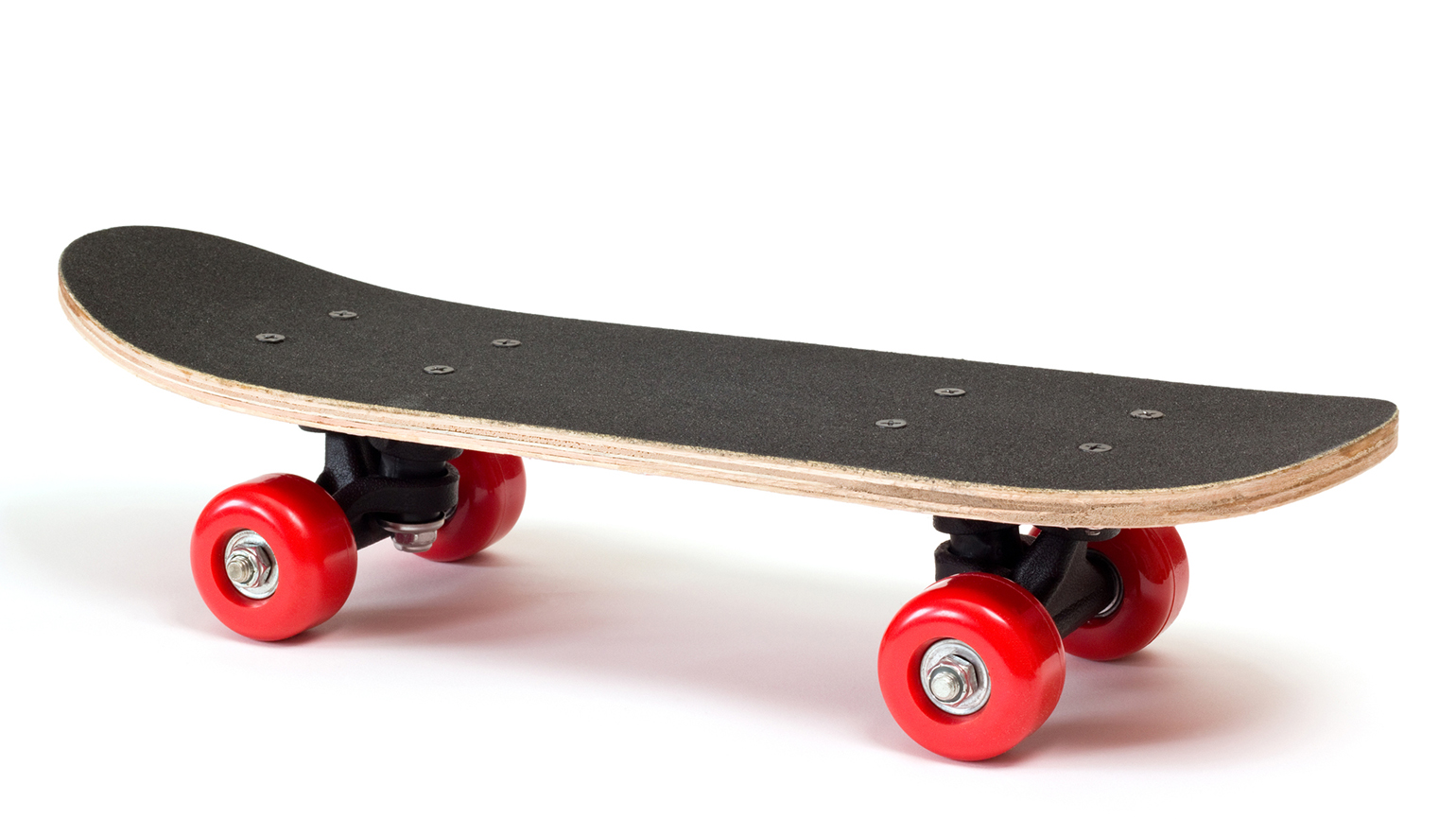
After school, kids gathered in the parking lot with skateboards and a homemade wooden ramp. I watched them speed up the ramp, jump, twirl, change direction and slide down again. Well into evening they bent and curled, squeezing the most out of every minute until parents called them home. One evening, a thought crossed my mind. What will I do if I actually regain mobility? Something wild and crazy…like skateboard across the country!

Another idea percolated: I can’t sit up under my own power much less skateboard, but I can squeeze life out of every moment I live.

It was an epiphany. It didn’t change the loneliness or the dull sameness of my existence, but it changed me day by day as I watched the morning sun filter through my window, intensify into afternoon and fade into night. Alex settled onto the bed with a contented sigh. I grew more content myself as despairing thoughts yielded to positive ones. One afternoon, the feelings of uselessness and questions of Why am I still alive? gave way, once and for all, to a passionate conviction that my life—every life—has value and also purpose. I felt a wave of peace and the curious sensation of being cradled in God’s arms, protected and comforted by his unwavering presence. I have you, his embrace said. Let go.

I did let go, completely. It occurred to me that while other people rushed around trying to cope with the tasks and stresses of daily life, I was blessed to lie quietly in communion with God, in the peace that truly passes human understanding. My own form of monastic retreat.

One spring day, there was a hint of loosening in my fingers. Day after day my clenched hands relaxed in tiny increments. I said nothing, want-ing to spare friends and family the roller-coaster ride of remissions and exacerbations that are boon and bane to MS. But the changes continued over a week, then two. I combed my hair with four stops to rest instead of six. I could no longer keep the secret and told my assistants. I called my family and invited them for Easter (they’d bring the food). “I want you to see something,” I said, my voice weak yet laced with joy.

Easter Sunday I too saw something I hadn’t seen in a long time: my family’s eyes reflecting hope. “You look good,” people said again and again. A few months later, assistants drove me 180 miles to my nephew’s graduation in a wheelchair-lift-equipped van. I was still weak, but I was off the bed, out of the apartment, and a long way from the hospital!

My assistants had kept my “muscle memory” alive with regular exercise. Now physical therapists started me on a strengthening program. Occupational therapists opened my fists completely and used splints to straighten my fingers.

On November 20, 1998—17 months after the neurologist’s prognosis—I stood in the physical therapy gym, holding tightly to parallel bars. I worked to lift my right foot off the floor. One step forward. By the time I took a second step forward, then, surprisingly, a third, I was drenched with perspiration. The steps were few, and unsteady. But they were mine! My first steps in more than 12 years!

I knew what had happened (the medical term is spontaneous remission) but not why or how long it might last. MS is unpredictable. Regardless what the future held, I was determined to embrace my life every moment of every day, as I’d done since the afternoon I relinquished everything to God and began to be at peace—really at peace—with his will.

The minute I could, I left my apartment on my own with my service dog. I volunteered in campus ministry at a local college. That led me to a master’s program in theology and diaconal ministry at Valparaiso University in Indiana, where I lived in a dorm with students half my age. My classmates accepted me and loved my service dog. I set goals to maintain my physical progress. During my second year at Valpo I walked in my dorm room and down the hall to the laundry.

One summer I visited my sister in Oklahoma. I saw my niece noodling along the sidewalk on her skateboard. I remembered the promise I made while I was immobilized in bed and living vicariously through the skateboarders outside my window. “Hey, Kristy,” I asked, “how about teaching me?” She gave me a doubtful look, but she agreed. “Promise to wear pads and a helmet?”

“Of course!” Helmet and pads in place, I put one foot on the board and scooted tentatively with the other. Kristy instructed until the skateboard click-clacked a few feet down the sidewalk with me still on it.

“Aunt Phyl, you’re skateboarding!” Who would’ve dreamed?

I vowed to do something wild and crazy, but I’m not skateboarding across America. I’m walking, to help people recognize potential exists despite disability, chronic illness, age or other factors. I’m talking to groups at schools, nursing homes, churches and more, to encourage to people live their lives to the fullest. Occasionally people say, “God has a special purpose for you!” But I’ve learned God had a special purpose for me even when I was so ill, just as he does for every person in every situation. It’s not easy to celebrate life if we’re struggling, but there can be such rewards when we open ourselves to the plans God has for us. My hope is that everyone can celebrate life every moment of every day!

Success at the Summit of Mt. Everest

Mt. Everest’s summit, the highest on earth, looms 3,000 feet above me, its outline barely discernible in the darkness.

I’ve climbed for most of April and all of May to get here, Camp Four—26,000 feet above sea level.

Sweet Carolina Mysteries In Article Ad

In a few hours, our team will begin the final all-night push to the top, a grueling effort in nearly oxygen-less air with temperatures at double digits  below zero.

Will I make it all the way up and down again? A 52-year-old woman? Or will I collapse and turn back, or worse? I’ve always heard Everest is as much a mental test as physical. Now I know what they mean. Especially for someone like me.

I go over my mental checklist—extra oxygen canisters, hydrating fluid, energy bars, gloves and, of course, the banner I brought.

This is a moment I never dreamed possible 10 years ago, at the beginning of my quest to scale the Seven Summits—the highest peaks on each continent. So much has changed since then!

When I climbed Argentina’s 22,841-foot Mt. Aconcagua, only my parents and husband knew the challenge I faced. I kept it secret even from fellow climbers. I thought people would see me as a lesser person if they knew. Yet it was on that climb with Dad—the second of my Seven—I had to face something more frightening than my secret. I had to face myself.

My dad, Neal, is my closest friend and an avid outdoorsman. We set our sights on Aconcagua a few years after our first Seven Summits climb, Mt. Kilimanjaro, in 1993. That one had been to celebrate Dad’s sixty-first birthday.

Aconcagua was for Y2K. What better place to greet the dawn of a new millennium than the highest mountain in the world outside Asia? On top of Kilimanjaro, I’d never felt closer to Dad. His incredible faith, forged in running the family funeral home in Wisconsin, never failed to fortify mine. I couldn’t wait to make another climb with him.

Then came that terrible morning in January 1999, less than a year before we were to attempt Aconcagua. I awoke to a nightmare: One half of my body was numb, as if someone had drawn a line down the center of me. Soon the numbness spread. What’s happening?

Many tests later the doctor said the fateful words: multiple sclerosis. The doctor told me the disease could go into remission, but my mind froze on a line I’d heard as a child: MS—crippler of young adults. This can’t be happening to me.

My identity was centered around the idyllic Rocky Mountain High lifestyle I lived in Steamboat Springs, Colorado. I was a first-grade teacher, married, living in a beautiful house. I skied, hiked, worked out. I’d never be able to do any of those things in a wheelchair.

My friends were outdoorsy types. None of them had a serious illness like MS. How could I tell them? What would they think of me? A week later, alone, I tried to ski. I would defy MS, deny I had it. I wouldn’t give it my respect! I nearly killed myself.

When I was with friends I lived in fear that the slightest hand tremor would betray my secret. I began steroid treatments and slowly the symptoms decreased. But my fear that MS would one day leave me crippled wouldn’t loosen its grip.

By summer the stress of keeping my secret was overwhelming. I had to talk to someone. I flew home to Wisconsin to tell Mom and Dad. “Lori, no matter what, we’ll always be here for you,” Dad said. “You’re going to be all right.” Mom hugged me as hard as she could. I didn’t think she’d ever let go.

Back home in Colorado I couldn’t bring myself to talk about my MS. The months passed in a haze of apprehension. But the treatments were helping.

As fall faded into winter I was hiking miles without getting winded. I’d never stopped dreaming of climbing Aconcagua and as the date grew closer, it seemed more and more possible. Knowing Dad would be with me provided extra reassurance. He was 68. I knew this would likely be his last climb. I needed him by me, needed to feel his faith.

I told Dad I still wanted to try the mountain, but I didn’t want to tell anyone about my MS. Dad agreed to keep my secret. In December, we traveled to Argentina and began the three-day hike to the foot of the South American giant.

At base camp, 14,000 feet up in the Andes, our tent pitched on a sea of rocks, fear gripped me. What if the altitude triggered my MS symptoms? Was this just more denial, like my skiing disaster? Except that one false step here could kill me.

Five days later, at 18,000 feet, the danger hit home. I lay awake listening to a vibrant 35-year-old woman in the tent next to mine, battling high altitude pulmonary edema. I heard her deep hacking cough through the night, then moaning, then silence. She died.

The next morning we broke camp and had hiked for about an hour when Dad stopped. “This is my summit,” he said. “I can’t breathe. My head is pounding. I have to get back to base camp.”

“I’m going with you,” I said.

Dad shook his head. “This is your climb. It’s something you have to do for yourself. You can’t turn back now.” If I didn’t at least try to reach the summit, I’d always be plagued by doubt. About my illness. About myself. Dad kissed me. He started down the mountain. I watched until he faded from view.

I struggled higher with the team, but my mind was far away. Would Dad be okay? I thought about the times we’d spent together, how he’d always been there for me. Now I was on my own. Just me and my MS.

I thought about how Dad had devoted his life at the funeral home to helping people deal with loss and pain. Suddenly I understood why he wanted me to continue alone. I needed to prove to myself I was stronger than my fears. He wanted me to test my limits.

After another freezing night in our tents, we climbed to Camp Four at 19,700 feet. A day of rest and then we began the push to the summit. It was New Year’s Eve, on the cusp of a new millennium.

I slogged through snow, stumbled over rocks and dirt. Bitterly cold wind buffeted us. Every step, no matter how small, was agony. The summit felt as far away as the moon.

The guides urged us on: “Take thirty steps!” Then we were allowed a brief pause before taking 30 more. Anything less and the temptation would be too great to sit down and not get up.

A final steep, 600-foot pathway of loose, slippery rock. Visibility was awful. I felt isolated. I pushed on, rocks cascading down the trail. Then I looked up and saw a hand in front of my face.

“Grab on,” a voice said. I reached out and a guide hoisted me up. I’d made it, almost 23,000 feet above sea level. I’m sure the view would’ve been spectacular had the summit not been enveloped in clouds. But another view lay before me in the swirling mist, a view of my life.

One day I might not be able to walk. For now I’d continue my Seven Summits quest. And I’d tell the world about my MS.

Now, as I finish my dinner on Mt. Everest, I think about my tearful reunion with Dad back at base camp on Aconcagua. He’d been so proud of me.

My life changed dramatically after that. And it was anything but idyllic. My marriage dissolved. I left my job. For a time I moved home with my parents.

Then in 2002 Mom died. She taught me that every day is a gift. I wanted to spend the time I had pursuing the Seven Summits and bringing attention to MS.

In the next six years I climbed Europe’s Mt. Elbrus, Denali (Mt. McKinley) in Alaska, Australia’s Mt. Kosciuszko and Antarctica’s Mt. Vinson.

Sharing my story allowed me to meet thousands of others with MS. For many of them, just getting out of bed was a major achievement. Their struggles made Everest seem almost insignificant. “You carry all of us in your backpack,” one person wrote me.

We start climbing. Only a thin ray from my headlamp breaks the darkness. Aconcagua’s 30 steps between breaks seem a lark. Here, on Everest, our bodies scream after five. About 4:30 a.m.—after we’d climbed more than six hours in the dark—the sky begins to lighten and a breathtaking sunrise breaks across the mountain peaks.

I feel as if I’m absorbing its energy. But soon snow and clouds grow thick around us. Dear God, don’t let us turn around now. Not this close.

Three more hours of climbing, and we reach the Hillary Step, a 40-foot rock wall that can only be negotiated one person at a time using fixed ropes. I climb across boulders the size of cars, the drop thousands of feet down on either side. Don’t let fear in, I chant to myself.

The summit is ahead, but the snow is blinding. “How much farther?” I finally ask my Sherpa guide. “You see those people over there,” he says, pointing to a group a few feet ahead of us. “That’s the top.”

I’m there. There’s not a single step on earth that would take me any higher. I pull the banner from my pack in honor of the first World MS Day and unfurl it.

I think about all the people it represents. This is for you. Thanks for lending me your courage. Then I grab a satellite phone. There is one more person I need to thank. In Wisconsin a phone rings. “Dad,” I pant, “I made it. I’m on the summit.”

“Congratulations,” he says. “I’ve been praying for you. I knew you could do it. Now we’ve got to get you down.” The storm’s growing. No time to linger. But I’m not worried. Fear can be conquered, one step at a time.

Even now, in the blinding wind, the view is beautiful.

Staying Positive While Dealing with the Challenges of Caregiving

My name is B’ette Schalk. I’m a retired psychiatric nurse living in Moose Jaw, Saskatchewan, Canada. My husband’s name is Herb. He was diagnosed with severe depression and anxiety. Over the years, he has been away off and on, but the longest time he spent away from me in one chunk was 20 months when he was in North Battleford. And it was kind of a relief for me because I knew he was being taken care of 24/7.

For me, emotionally, it was a great relief. Because with him being at home, I had to be with him day and night. I was breaking down myself. I couldn’t do it. I think the hardest thing was to see how the children and the grandchildren were taking it. They were taking it very, very hard. But I just think that it was a blessing for me to have him taken care of and for me to know that he’s safe.

God's Constant Presence In Article Ad

When I was taken into the grief group, I didn’t realize that I had feelingsI was very resentful. I was very angry. I was resentful because Herb couldn’t be with me, resentful of the fact that he left me. That’s what I felt like. I felt like he left me. And I had to take care of everything that was left.

And in the grief group, although I didn’t lose my husband permanently, I learned that we all had the same feelings with dealing with grief, the anger, the resentment, and that we had to not depend on ourselves. We prayed to a higher power. And then it was coming to terms in the end with accepting my situation and accepting maybe this is the way it’s going to be. Maybe this is what God wants.

And I came to terms with that, came to terms with the emotions I had. I didn’t think that as a psychiatric nurse, maybe I shouldn’t be feeling this, you know. Maybe I should be controlling myself more when it came to resentment and anger but it just seemed like everybody in the group had the same feelings going on. And I didn’t feel so alone. And that was a real blessing.

I really had to cling to hope the whole time. And sometimes, there wasn’t much of it. I was near giving up. But I knew that God has helped me in the past. And I knew that if I just cling to that lifeline that somehow, I would come through the dark cloud that was hanging over my head and see the sunshine again.

So my faith, it really did help me and also the faith of my grandson. I’d go babysit that little boy, and he’d get down on his knees and he’d pray to God to send Grandpa home. And when I realized that this little, innocent boy has so much faith, I thought maybe I’d better think about my own faith more.

Thinking about the future with Herb, it’s exciting for me because he’s really a different person. And he’s not even the person that I married, you know. That was then and this is now. But he’s not depressed. He hasn’t had one day of severe depression since he’s come home.

I just think about the future, and everything I’ve ever dreamed of is spending our lives together in the golden years, you know. I like our golden years. We don’t have to work. We don’t have to get up on time. We could travel if he decides he wants to jump in the car and travel and visit the grandchildren. That’s great. I just love that.

So I had to learn to get to know this new person. And he had to get to know me too because I was very co-dependent and expected a lot of things, you know, for him to do for me. And after I learned to do them myself, I was a different person. I didn’t lean on him as hard. And he was a different person, you know. He didn’t suffer from depression. He gained a faith while he was gone too.

There was a little church on the grounds that he would go to every Sunday. Before going, he depended on himself. He was a very independent, strong man. But coming home, he was very faithful and a different person, somebody that I didn’t know. So maybe our future holds, you know, more enjoying life and maybe helping other people who have had mental illness in their families. Our futureit’s together now, as a couple doing things.