Embrace God's truth with our new book, The Lies that Bind

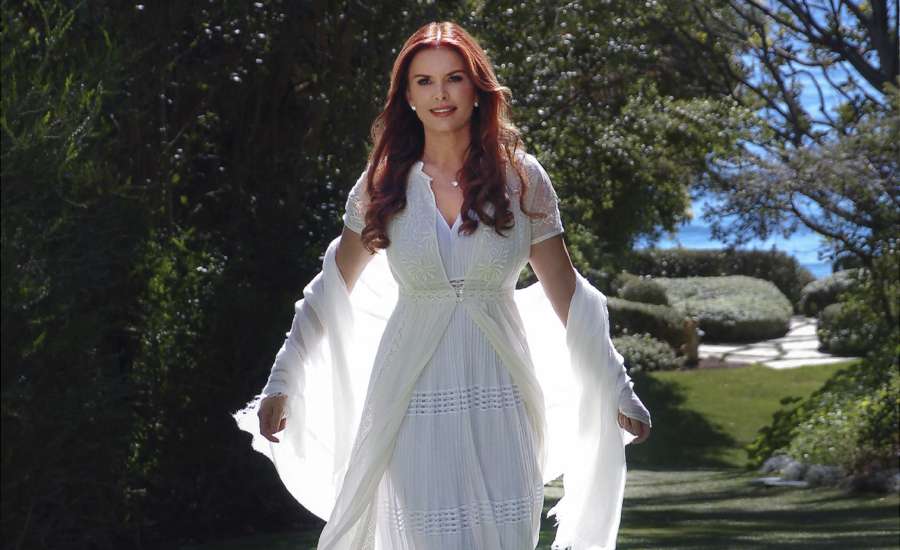
Roma Downey: An Angel in Her Father’s Eyes

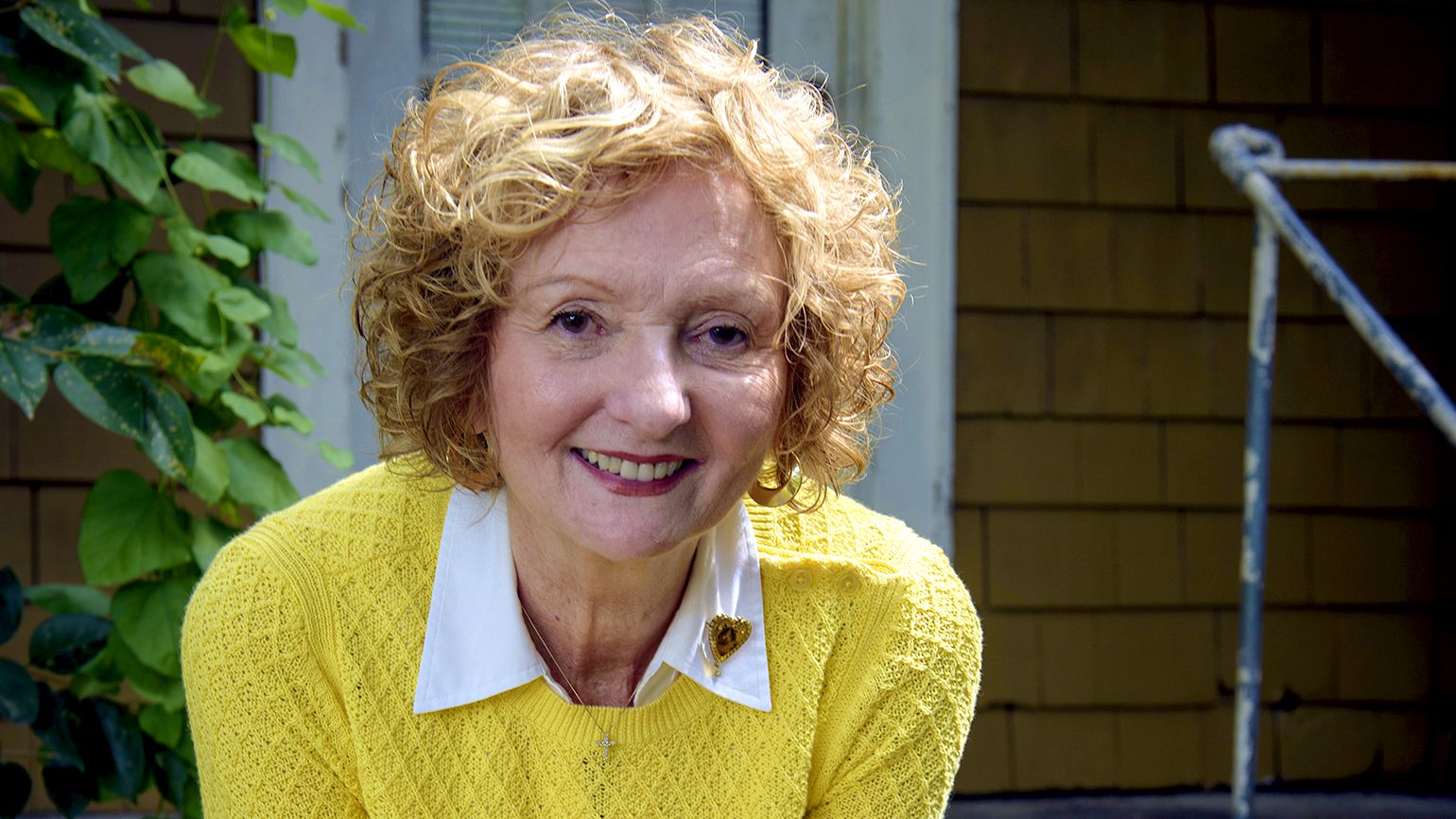
When you play an angel on television you’re often mistaken for one. I should know. For nine years and some 212 episodes, I was Monica on Touched by an Angel. Again and again people would stop me on the street and say, “You’re that angel!”

“No,” I wanted to correct them, “I’m an actress who plays an angel.” I loved the role of Monica, but I didn’t want anyone to be confused about who I really was, an Irish girl from Derry.

Walking with Jesus L&E evergreen_in article ad

A girl who dreamed of being an artist. But what kind of artist? I loved to paint and draw and there was inspiration all around in the ever-changing sky and sea of Northern Ireland, turbulent gray, deep blue, turquoise, celadon…I wanted to capture all the drama with my brush.

READ MORE: TV IS ‘TOUCHED BY AN ANGEL’

I was the youngest of six. My mother died when I was only 10 and our father raised us. He was a schoolmaster, a reader and lover of poetry. Small and white-haired, he looked older than he was.

One day he came to pick me up at school and a classmate asked if that old man was my grandfather. “I don’t know who he is,” I said, embarrassed. Later I found my father and confessed what I’d said. I burst into tears, I was so deeply ashamed.

“Did you say that because of my white hair?” Dad asked. I nodded sheepishly. “Don’t worry darlin’.” Then he hugged me. “It’s only hair. At least I’ve got some left!”

Dad led us in prayers every night around the dinner table. He always stressed that it was how we showed our faith that mattered. “Kindness is everything,” he said.

We were expected to reach out to others, whether it was reading to someone with failing eyesight, helping an elderly friend with errands or bringing soup to an ailing neighbor.

We didn’t own a car and certainly didn’t have luxuries like a dryer. Yet we were rich—and certainly richly blessed—as long as we could give.

Those were the times of “the troubles” in the North. Gun battles and bomb scares were all too common. Sirens wailed. Soldiers patrolled the streets.

Several times we had to evacuate my school. Once we had to duck behind cars to avoid flying bullets. (It was years before I could hear a loud noise like a slamming door without diving for cover.) Dad made our home a refuge, a place of peace and protection.

He knew I aspired to be an artist. “If this is your dream, Roma, then you should go to the very best college of art.” The very best would take me far away. Sure enough I was accepted to an excellent school in England.

I dreaded leaving home. I wouldn’t see my father for months at a time. I didn’t know if I could accept that. Dad was all I had.

READ MORE: ROMA DOWNEY ON THE MOST DANGEROUS PRAYER

One night I came to him teary-eyed. “Dad, I’m going to miss you so much,” I sobbed.

He took my hand and led me outside to our garden. A full moon bathed the grass and bushes in silver.

“Look to the moon,” he said. “Wherever you go, this same moon will be shining on you and on me. I will leave a message for you there. When you miss me, just look at the moon and you will see how much I love you.”

Sure enough I was dreadfully homesick in England. One night I was carrying groceries back to my boarding house and a passing car backfired. I immediately hit the ground, apples and cans rolling out of my bag.

People stared at me as though I had lost my mind. You’re far from the troubles, I told myself, but my spirit was unsettled. I longed for the sea and the sky of Ireland and the reassuring sound of Dad’s prayers.

I wasn’t even sure anymore that art school was the right choice. Lately I’d been thinking of other ways to express myself.

Then I looked up. The moon had slipped out from behind a cloud, its brightness three dimensional. My father’s message was etched in the heavens: “I love you, Roma. I love you.” I could always find comfort there.

One day I read a line by Van Gogh that spoke to me. “I no longer wanted to be the painter,” he’d said. “I wanted to be the paint.” A light came on inside me. Acting seemed closer to being the paint for me.

READ MORE: SIGNED, SEALED AND DELIVERED

With my father’s blessing I transferred to acting school. I hoped to use my skills to tell moving stories, appearing in roles that would make my father proud. The training was thrilling, but did I have the will or stamina for the challenges of an acting career?

I’ll talk to Dad about this, I thought. Soon we’d have a break and I’d see him.

The night before I left I called him from the pay phone in the hallway of my boarding house. “I’ll be home tomorrow,” I said.

“I’m getting your room ready, darlin’,” he said. “I’ve put out your favorite sheets. The yellow flannel.” Everything holds the dampness in Northern Ireland and I knew he’d hung them on the kitchen clothesline to air.

Early the next morning the ringing of the pay phone woke me up. I put on my robe and dashed to it. It was my brother and he had terrible news. My father had a massive heart attack during the night. He was dead.

It seemed so cruel and impossible. Lord, how could this happen? I demanded. I flew home in a daze. I trudged up our front steps. One of my sisters greeted me at the door. My father was laid out in the sitting room, as was our Irish custom, but I wasn’t ready to go in there.

“Come into the kitchen for a cup of tea,” my sister said. I followed her to the back of the house. There, next to the stove, were my yellow flannel sheets, hung out to air, just as Dad had left them.

“We should take these down,” my sister said.

“No, please don’t.” I held the flannel to my cheek. So soft and warm, my father’s last message of love. “Lord, help me accept this,” I whispered.

My father would not have wanted me to give up on my dreams, and certainly not because of him. I returned to London, finished my studies and then threw myself into acting.

READ MORE: MARK BURNETT ON BRINGING THE BIBLE TO LIFE

My work took me from England to the Abbey Theatre in Dublin, to New York’s Broadway and eventually Los Angeles. Far-flung places where I could still look to the moon and feel my father’s love with me, and hear him say that we must always be kind.

One day in Hollywood I was asked to audition for an unusual TV pilot about two angels. I liked the script and assumed I needed to do the part in an American accent.

“Wait,” someone said at the audition, “aren’t you from overseas?”

“Yes,” I said. “I’m Irish.” I was worried my accent was too exotic.

“Do it Irish,” they said.

And so I did. It worked. I was cast as the angel Monica.

My father would have loved Touched by an Angel. All those acts of kindness, all those answered prayers. The people on the show were wonderful, especially my costar and fellow angel Della Reese, whose wisdom I came to rely on.

We were flooded with letters from viewers and I got invitations to visit hospitals, nursing homes, schools. I got to put my faith in action, just as Dad had taught. More and more it felt like he was still with me.

Still, I was shocked when people wanted to believe I really was an angel.

One day I visited the children’s ward at a hospital. A woman came out of her daughter’s room, obviously grief-stricken. She looked at me in tearful amazement. “Monica!” she said. “I prayed for an angel and you’re here.” She threw her arms around me. “At last you’re here.”

“Yes,” I murmured, not sure how to handle this. I prayed with her, of course, and tried to comfort her as best I could.

But I was unsettled by it all. I called Della and told her the story. “Don’t be upset, baby,” she said. “You were there for her.”

“I feel bad. This woman asked God for an angel and she thought he sent me.”

Della paused and then said, “And who says he didn’t?”

Indeed. God could do anything. God could send me places and give me roles I never expected. I had to step aside and let his grace flow through me.

I’m not an angel. I’m just a human being. But if the moon can hold a message of love for a homesick daughter, then anybody can be an angel delivering comfort in a time of need. Kindness is everything, just as my father had said all along.

Did you enjoy this story? Subscribe to Guideposts magazine.
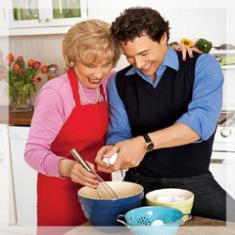
Rocco DiSpirito’s Tasty Success

It’s a question I’m asked often: “Why did you become a chef?” People who’ve seen me on TV figure I do it to be famous. Or they hear about my new cookbook and think I’m in it for the money.

For me, cooking has never been about those things. My desire to be a chef goes back to something I learned from a great cook many years ago, in the small kitchen of a two-story red-and-white house on 90th Avenue in Jamaica, Queens, a rough, working-class neighborhood of New York City.

Whistle Stop Cafe In Article Ad May 2023

Mama’s kitchen. It was a long ways from where she grew up, the small Italian village of San Nicola Baronia. There, her family prepared their meals in a pot hung over a fire pit. Mama’s mother, my nonna, worked with what she had, which wasn’t much. Yet Nonna would always make something delicious and nourishing. When Mama came here to the States at 24, she brought those culinary skills with her.

My earliest memory of watching her in the kitchen is from when I was about six. My brother and sister were much older and out hanging with their friends; my father worked all day as a carpenter, so Mama was home alone with me.

She was making her frittata, a kind of dense Italian omelet. I reached up to the counter to grab a piece, still warm from the stove. I couldn’t help myself; the delicious aromas of gooey parmesan cheese, sautéed onions and peppers and eggs wafted through the air. “No, no, Rocco,” Mama scolded me. “Don’t you touch; this is for the Rosary Society.”

That was another thing Mama brought with her from the old country—her faith. For her, cooking wasn’t only about filling stomachs. “Food is love,” she always told me, and Mama shared her food, and love, with others in our neighborhood. The Rosary Society wasn’t exactly the place a restless kid like me wanted to be, but where Mama and her food went, I went.

The smell of the frittata kept escaping the covered pan as Mama carried it to church. By the time we arrived, I was ravenous. And I wasn’t the only one. “Nicolina, did you bring your frittata?” one of the ladies asked.

“Of course,” Mama responded. But before we could eat, we had to pray. Everyone stood together and bowed their heads, reciting the prayer. It seemed to last forever. But Mama’s food was worth the wait.

“This is just like the frittata my mother used to make,” one woman exclaimed. “I need the recipe,” said another. Seeing the women smile and thank my mother showed me for the first time the power of food to bring people together. Prayer nourished the soul, food nourished your body and, when prepared with a lot of love, both could make strangers into family.

I began to spend more time in Mama’s kitchen. My first “dish” was a simple one. Mama handed me a little rolled-out piece of dough and showed me how to fry it up in a skillet. When it was golden brown, we’d drizzle some honey on it and top it off with a sprinkle of sugar. Pizza fritta, she called it. She’d make them into shapes like her mama used to do.

Those little pieces of crispy dough seemed so easy to make. Until I tried to make them by myself one day and set the hot pan down on the wooden counter. My heart sank when I picked the pan back up to find a large black circle burned into the surface beneath it.

“What have you done?” Mama yelled when she saw the damage. But she forgave me. She was grateful I’d found something that held my interest, because, in our neighborhood, there were a lot of distractions.

Few kids in our neighborhood went to college or got good jobs. A lot of them sought out cheap thrills and easy scores. More than once, I got shaken down for money by drug addicts and dealers on my walk back from school. Mama wouldn’t let me fall into the quicksand that claimed so many kids.

When I was 11, there was a record I really wanted to buy, so I asked for a raise in my allowance. Mama looked at me like I was crazy. “You need to get a job,” she told me. “You must work for what you want.”

Mama knew a thing or two about that. The very day she came off the boat from Italy, she went straight to work at an uncle’s tailor shop and worked for the next nine hours. For three years she was a seamstress. After marrying my father, she took a part-time job knitting sweaters—getting seventy-five cents for every dozen she made. Yet she saved enough money to help bring our whole extended family to America.

So I got work at a pizzeria—thirty dollars a week sweating in front of a hot oven, covered in sauce and grease. I loved it. Here was my chance to do what Mama did, make people happy with my food—even if it was just pizza.

We moved to Long Island a few years later, and Mama got a job as a school lunch lady—appropriate, I thought, for a woman who loved cooking for her kids.

I moved on from making pizza. At 15, I went to work for the New Hyde Park Inn, an award-winning restaurant, and I started to think seriously about culinary school. Mama had never gone to college, and still couldn’t speak English that well, but she encouraged me.

At 19, after graduating culinary school, I traveled to Paris. I struggled for a while, working at a burger joint and sleeping at a friend’s place, but eventually I landed my dream job working under a Michelin-starred chef. Success there led me back to New York, where I became head chef at a restaurant called Union Pacific and started getting great reviews. Then NBC offered me a reality show that would chronicle the creation of my own restaurant, Rocco’s.

I knew my restaurant had to be a place that served my family’s food. Who better to help me than my own family? I hired my uncle to make the wine and the sausages, my aunt to make the fresh pasta. There was never any doubt that Mama would be involved. She was retired when I made her the offer to be Rocco’s meatball maker. I worried it might be too much for her, at 77.

Mama became the star of The Restaurant, both in the kitchen and on TV. Fans stopped her in the street and asked her for autographs. It was like that scene I’d witnessed as a little kid at the Rosary Society—people finding joy in Mama’s cooking. It may have been my name on the sign, but Mama was the place’s heart and soul.

When the restaurant closed, I think Mama was more disappointed than I was. “Aren’t you happy to be able to retire?” I asked her.

She just shook her head. “At my age, I’m happy to be able to get up in the morning and do something for people.”

This year, Mama turned 83, and she’s still my greatest teacher. She was given a great talent, one that she passed along to me. She also passed along the important duty that comes with any of God’s gifts to us—to share them. It’s why she cooked that frittata for her Rosary group. Why she worked as a lunch lady. Why she even gave away her secret meatball recipe in one of my cookbooks. It’s why I became a chef. I’m just following her lead. 

Check out one of Rocco’s pasta recipes!

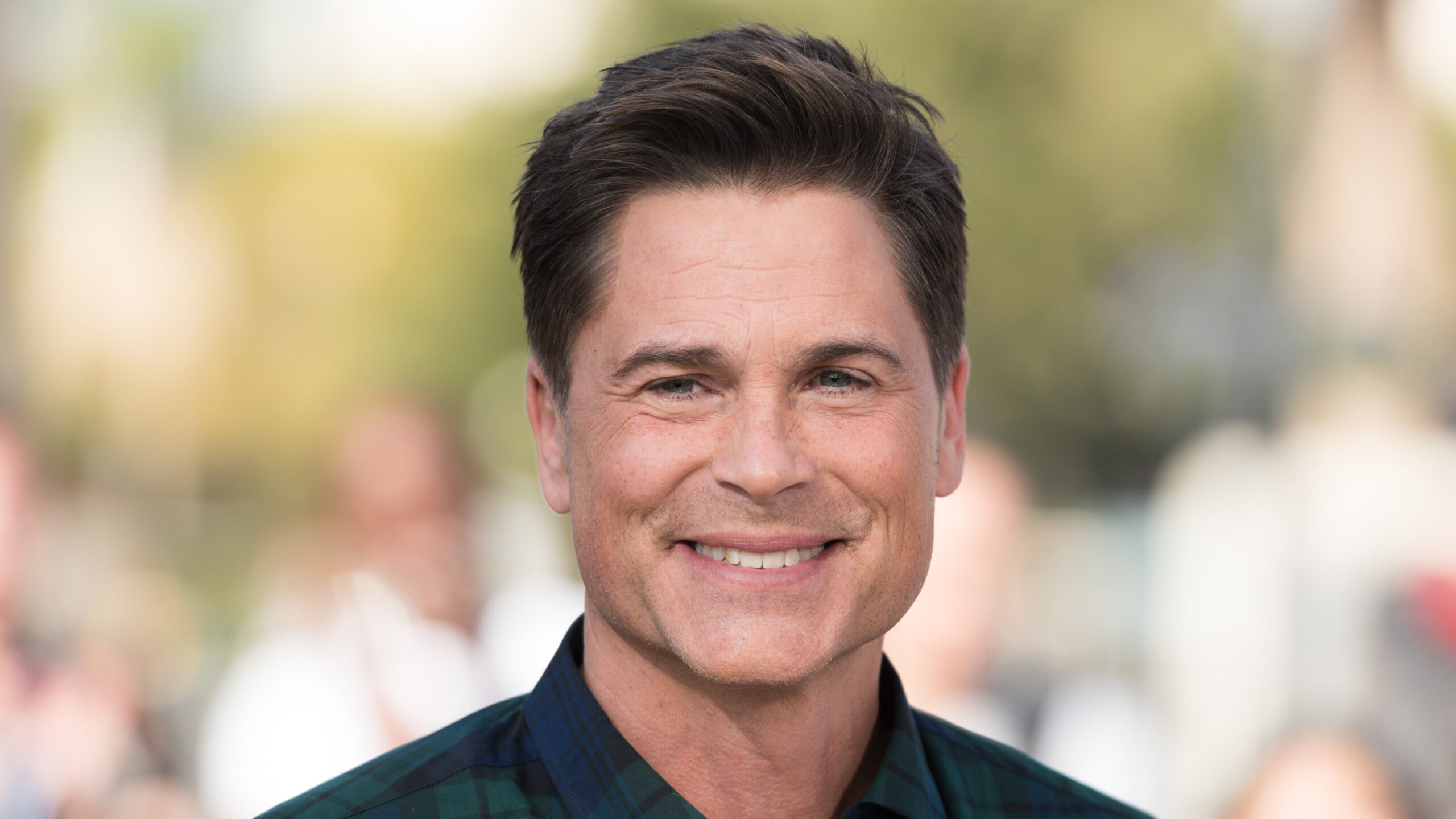
Rob Lowe’s Tips for Beating Caregiver Burnout

Rob Lowe made a name for himself as a heartthrob actor in the 1980s, starring in movies like The Outsiders and St. Elmo’s Fire. More recently he’s been known for his roles on West Wing and the hit sitcom Parks & Recreation.

But in his 30s, Lowe took on an unexpected role: caregiver.

Daily Strength for Women in Article ad

When his mother was diagnosed with breast cancer, Lowe and his brothers became her primary caregivers. Life became a blur of medical paperwork, doctor’s appointments and starring on a television show. Lowe found himself stressed, overwhelmed and on the verge of burning out.

“What I’ve learned along the way is that many caregivers don’t feel supported,” Lowe wrote for USA Today. “They don’t know where to turn for help, and they often suffer stress-related health problems of their own, yet the last thing on their minds is their own well-being. The irony is that to effectively care for someone else, we caregivers must first remember to take care of ourselves.”

Lowe knew that he was in a particularly lucky situation—he wasn’t in it alone and had the financial resources to care for his mother and afford assistance. He realized if caregiving was a stressful situation for him, it must be much worse for those without his resources.

Statistics back up Lowe’s hunch. According to the Family Caregiving Alliance, approximately 43.5 million Americans provided unpaid care in a one year time period. On average, family caregivers spent about 24 hours providing care each week.

Lowe’s mother passed away in 2003. He continues to work as an advocate for breast cancer research and tries to help caregivers however he can. He partnered with EMD Serono and EmbracingCarers.com to provide support for caretakers, and shared his story in hopes of raising awareness of the challenges caregivers face.

His best pieces of advice? Don’t be afraid to ask for help and be open about caregiving difficulties.

Talk about the challenges of caregiving with your family, friends and co-workers. The more aware we are of the realities of caregiving, the more actions we can take to improve the experience for everyone,” Lowe said.

Looking back, Lowe says caring for his mother was one of the most difficult, but ultimately rewarding, experiences of his life.

“Taking care of my mother was scary, unbelievably stressful and painful. It was also a time to be with her in a way that might never have happened under other circumstances,” Lowe wrote in Newsweek. “One of the hidden gifts of being a caregiver is that you’re with them. You’re able to do and say all of those things in its proper time.”

Robin Carlo: The Blessings of Listening

“But the simple act of really listening to the people I encountered had a striking effect: God had filled my day with warm and caring people.”—Keith Miller, Daily Guideposts, February 17, 2010

Keith’s words echo my experience with “really listening.” Although I have far to go on my quest to be and stay attentive in conversation and interaction, the blessings of doing so have been consistently apparent.

Listening well appears to be infectious; I find when I’m listening well I also feel listened to. Conversations have become richer and more productive. Instead of interrupting my work,  rich conversations have provided ideas and motivation leaving me energized and optimistic. Even when the conversations turn to topics of despair or sadness, the simple act of listening well has left me with the feeling of having provided at least an ear to the person in need.

—Robin Carlo

Roberta Messner on the End of Her Chronic Pain

Hi Guideposts, I’m Roberta Messner, and I’m from Huntingdon, West Virginia. And I’m here to tell you about probably the most personal story I’ve ever written. It involves the journey that my mother and I took through genetic illness.

It was Mother’s Day and I was a very young teen, and I had planned a wonderful celebration for my mother, and then news at my doctor’s office spoiled everything. I had already had brain surgery for the genetic disorder neurofibromatosis, and I knew that I had some kind of a genetic illness. And he discovered the little genetic mystery, and that was that my mother was the cause of my genetic illness.

Sweet Carolina Mysteries In Article Ad

That changed everything. All of a sudden, I didn’t have that gratitude for having the best mother in the world. Instead, I was furious. This went on through so many stages of my life. Every time I experienced horrible, agonizing pain, I blamed her.

But then an amazing thing happened. I took care of her during her final days of cancer, and during her last conversation with me, she gave me a promise that when she got to heaven and could take God aside, she was going to talk to him about my agonizing pain, my years of pain.

Well, time went on and nothing happened, and I thought, boy, they sure are taking their time up in heaven. And then one night, I had a dream. Mother appeared to me in that dream and she was on a swing and in her hands were a Bible. She only looked at me and said, “Roberta, read Joel 2:25, and believe!” It was in the Old Testament, and the verse was so perplexing. It said something really off the wall, like I will restore to you the years that the locusts have eaten.

And I thought, that can’t be possible. It’s talking about time, the most important of human commodities, and time, the clock, it can’t be rewound. How could that ever be possible? Was she talking about pain, my pain disappearing?
It wasn’t very long after that that what my mother had promised before she died actually happened. Through a remarkable series of events, I did have my pain relieved. Just total, total absence of physical pain.

That’s been two years now. That was my mothers promise. My mother’s love that reached me from beyond, from heaven, and it gave me a lifeline of hope, the hope that comes that no matter how you’ve suffered, no matter what your genetic illness is, or that of someone you love, that there is always, always the promise of hope.

Rick Warren and “The Purpose-Driven Life”

Bestselling author Rick Warren seems the inveterate people pleaser when you meet him. He came by the office the other day and wanted to talk to everyone he passed in the halls, full of questions: “Where are you from?” “How long have you worked at Guideposts?” “What’s your role here?”

The conversations were often punctuated by a hug. It was all we could do to sit him down and ask him a few questions! (Watch the video here.) One of the things we did want to ask him was about people pleasing. Because, as he was quick to remind us, it’s one thing to like people and reach out to them, looking for common links; it’s another to feel you must please everyone else but God. That’s a topic he takes so seriously he’s added it to the new revised, tenth-anniversary edition of The Purpose-Driven Life.

Pray a Day Vol 2 In Article Ad

As he puts it, people pleasing is a way of saying, “I must be liked by you to be happy.” Think how dangerous that can be.

“The dark side of the desire for approval is the fear of disapproval,” he writes. “After talking with people living in over a hundred different countries, I have come to believe that fear of being criticized or rejected by others is the most common reason people get detoured from the path God planned for them.”

I had to wonder if Rick Warren ever had his own struggle with people pleasing. Indeed he did, the first year he started Saddleback Church, trying to be everything to everyone, and it nearly did him in. This is back when Saddleback had only 150 members. Today it has more than 30,000. Can you imagine being a people pleaser for all of them?

“No person has the ability to give you all the security, approval, acceptance and love you need, regardless of what they may promise you,” he says. “If you expect them to meet needs that only God can meet, you are being unfair to them, you are setting them up for failure and you are setting yourself up to become bitter.”

Paul put it this way in his letter to the Galatians: “I’m not trying to win the approval of people but of God. If pleasing people were my goal I would not be Christ’s servant.” Or in his letter to the Thessalonians: “Our purpose is to please God, not people. He alone examines the motives of our hearts.”

Those are verses that made a huge difference to Warren and have molded his own purpose-driven life. Not surprising that he would want to share them.

Rheu­matoid Arthritis: Letting Go of Her Denial Was the First Step

I was driving home and think­ing over and over, There’s nothing wrong with me. This, despite the doctor saying there was, and then the bombshell he dropped: I would prob­ably have to start giving myself shots.

A little while earlier I had sat across the desk from a pencil-thin rheuma­tologist wearing a blue button-down shirt. He had already advised me that the first appointment would take an hour and a half. I liked his messy desk; it resembled mine at home. I glanced down at the chart where he pointed. “Your X-rays and blood work indicate that you are in the early stages of rheu­matoid arthritis,” he said. “I’m going to prescribe some pills for you, but I expect you’ll decide to give yourself regular injections.”

Light for Life NASB Study Bible in Article

“I don’t think so,” I said, smiling po­litely. My thinking was: So I’ve been diagnosed with RA. That doesn’t mean that I actually have it. I took the pre­scription for pills and made another ap­pointment for three months later. Well, whatever.

I pulled into our driveway at home and felt an increasingly familiar twinge in my hand when I turned off the igni­tion. Ow! Inside the house, I dropped my keys and purse onto the kitchen counter. My husband, Gene, was full of questions. I put him off. “Here, let me see the pills you’ve got,” he insisted. He sat down and began reading all the detailed paperwork the pharmacy had given me. I hate directions of any kind.

Early the next morning, during my quiet time, I wrote in my prayer journal, “Lord, I am sure this isn’t a big deal. Just don’t let the pain get worse—in fact, take it all away. I trust you to do that. I feel pretty good—most of the time.”

The very next day, Gene nagged, “Marion, I’m sure you should be exer­cising more now that you’ve been diag­nosed. Not long ago, you walked four miles, then two. Now it’s…”

“I’ll start back in the spring. I like early mornings.”

“Come on. I’ll walk with you now. It’s nice outside.”

“Not now,” I snapped, walking away.

Toward the end of the first year, the pain became worse, so intense it ex­hausted me. My hands and thumbs hurt most of the time. Turning the ignition in the car one day, I yelped in pain. I had to rest both hands in my lap. Finally, blinking back tears, I started the car.

My feet hurt, as did my back. Gene and I curtailed many activities. My en­ergy level drained to zero. So did my creativity, enthusiasm—and joy. Many mornings I crawled to the bathroom in the dark for my medications. I kept them under the sink so I didn’t have to bend down or put weight on my hurting feet.

At a regular three-month checkup, my doctor asked right off, “How’s your pain?” It sounded more like an ambush than a question.

“So-so,” I mumbled.

Making sudden eye contact, he asked, “And are you still crawling to the bathroom?”

I could’ve kicked myself for having admitted that to him in a previous con­versation. “Sometimes,” I said.

“Are you walking and getting regu­lar exercise?” he persisted.

“No.”

“Did you read the brochure I gave you about the injections?”

“Not all of it.”

Actually, I hadn’t even opened it. There was some energetic, outdoorsy-looking gal on the cover. She was trudging up Pike’s Peak or some such mountain, making it look like super fun. The picture of health. Obviously, she gave herself the wondrous regular injections. “Don’t these shots cost a lot of money?” I asked, hoping for an out. In fact, I couldn’t imagine injecting my­self even if someone paid me to do it.

“I’ve got hundreds of patients who use these shots to treat RA.”

I mentioned the injections to Gene. He beamed. Looked relieved. “Then you must try them,” he said. “You’re spending almost all of your time on the sofa or in bed. I want my walking buddy back, honey.”

Over and over, I prayed and wrote in my prayer journal, “Lord, please take this pain away. I want my life back. I don’t know what to do.” I sat there in my prayer chair, hurting and no longer even trying to fight off depression.

I’m trying to tell you what to do, Marion. Two hot tears plopped down onto my journal. I don’t know if that’s you, Lord, but in case it is, I’ll do what I think you’re saying.

That week, I had another appoint­ment with my rheumatologist. I sat in the small light-green familiar ex­amining room, staring out the win­dow. I’d brought along a book to read because my doctor kept only arthritis magazines in the room. I refused to read them. Maybe I don’t even have.… Maybe I do.

Turning a page in my book, I felt a sharp sneaky pain rip through my thumb. Sometimes I experienced the same pain when I squeezed out toothpaste. Would the shots really be as scary as what was obviously hap­pening to me? Was it the medicine I really feared?

My doctor came in, brisk and effi­cient. After a routine exam, a few questions, he wrote out a prescription and laid it down on the table. “You need to consider this seriously. And you must start back walking.” Then he handed me another brochure with the excited mountain girl on the cover. “You are about to begin your second year of RA. This medicine can help you and stop further bone damage. But it’s not about the shots. It’s about you. You have to participate in your treatment. You can’t retreat into denial.” He turned and walked out.

The decision was still mine. So was the constant pain. I decided to swing by our pharmacy and see what the prescription would cost. To my amaze­ment, with the help of insurance and Medicare, not too much.

I was weary of thinking about me. My pain. My disability. The condition I’d tried to deny was now defining me. The more I tried to hide from it, the more it was taking. Yet I’d thought de­nial was the best medicine—that to ad­mit I was sick was to give up. It wasn’t good that I had this disease. But God would help me by sending helpers—Gene, my doctor, even that pesky pic­ture of health on the brochure.

I longed to forget about myself; to laugh, wake up anticipating plans for the day. Start my car. Even vacuum. Oh, I didn’t want to let go of my stubbornness! I wanted God to heal me—without injections.

On a Wednesday at high noon, I sat alone in the kitchen slowly reading for the fifth time the instructions (remem­ber, I hate instructions) and studying the simple diagrams. The actual in­jection was more like flipping a light switch than giving myself a shot. No needle was ever visible. The discom­fort resembled a brief muscle cramp. The brochure said that results could come as soon as the second week or take as long as three months.

But my relief was immediate. At last I’d surrendered. Not to a disease, though. I’d surrendered the stubborn­ness of my denial that was undermin­ing my health more than the RA itself. Until I could admit I had the disease, I could never get better.

I’m back to walking with Gene. I have a newfound gratitude for pain-free days and for my determined rheu­matologist. I’m reminded of people in pain 24/7, and I pray for them.

Today I wrote in my prayer jour­nal, “Father, thank you for speaking through my husband, my doctor and others. I know I’m not always the easi­est person to deal with. But isn’t that the way you made me? All I’ve ever known is to be myself, Lord. I ask you now to help me be myself with RA.”

For more inspiring stories, subscribe to Guideposts magazine.

Restoring a Marriage After Years of Caregiving

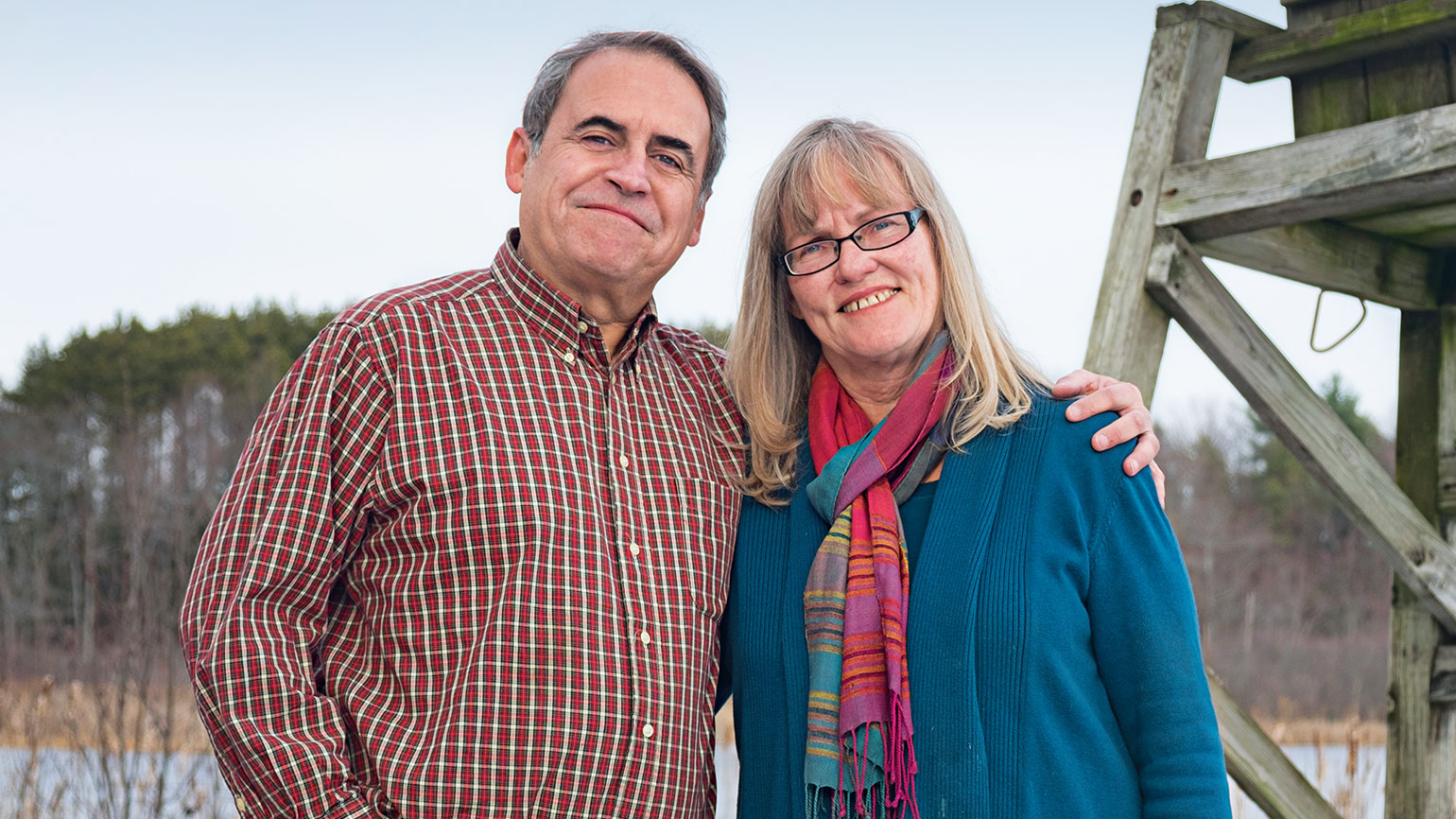
I awoke in a bed that was not mine. I was in my brothers’ childhood bedroom. My husband, Carlos, stirred in the twin bed a few feet away. The room, at my mom and dad’s house, still looked like a boys’ room. The shelves were stacked with board games and Hardy Boys books. Toy cars and soldiers cluttered the desk.

Carlos yawned and looked over at me. A few days earlier, my father had died, after being sick for several months. My mom had died a few months before that. Carlos and I had moved in with Dad after Mom’s death. Dad couldn’t take care of himself without Mom. By that point, Carlos and I had been caring for my parents long enough that living at their house didn’t seem like such a big step.

You Got This In Article Ad

Looking around the room, I felt like a stranger in my own life. Up till now, Carlos and I had been so overwhelmed by work and caregiving, we’d barely had time to talk to each other. We’d communicated mainly through text messages.

BROWSE OUR SELECTION OF BOOKS ABOUT POSITIVE THINKING

Today there were no pills to sort. No appointments to arrange. And our older son, Martin, who’d struggled for years with a drug addiction—as we struggled to help him—was finally in a residential treatment program and making progress.

I didn’t know what to do with myself. I didn’t even know who I was anymore. The look in Carlos’s eyes told me he was thinking the same thing. We’d become caregiving machines that were no longer needed.

Our own house, a few miles away, was a mess. Our younger son had moved out on his own, and we’d hardly been there since moving in with Dad. I shuddered to think what Martin—and the strangers I sometimes found hanging out there when I came by to pick up the mail—had left behind.

Dad’s funeral was over. Family members had returned home. The house was quiet, our to-do list blank. I thought about a morning before Dad died, when Carlos and I had a rare moment to sit down and have coffee together. “How do you take yours?” Carlos had asked, pouring me a cup. With one spoonful of sugar, I reminded him.

That’s how far away from normal life we were. After 30 years together, what husband has to ask his wife how she takes her coffee? The thought of rebuilding our lives felt more daunting than caregiving ever had.

Caregiving has a way of sneaking up on you. We’d started with Martin. He was a great kid who fell in with a bad crowd and eventually spiraled into heroin use. We went through every nightmare you’ve ever heard about addiction. The anxious late nights. The dashed hopes for recovery. The run-ins with police.

Then Mom and Dad needed us. They were in their nineties and mentally sound, but their bodies began to fail. Mom fell one Thanksgiving and went to the hospital. She came home after months of rehab but began to have lapses in lucidity and became almost totally blind from macular degeneration. Dad’s own health issues made it hard for him to get out of bed.

Little by little, Carlos and I took on more responsibilities. We prepared meals. Ran errands. Managed their medications. Shuttled them to and from appointments.

We did all this while holding down full-time jobs, me as a supervisor of a special-education program, Carlos working for a software company. Our leisure time—my writing, Carlos’s artwork, our walks around the lake near my parents’ house—were cast aside. Vacations were out of the question. Our social life dwindled to the occasional phone call to friends.

READ MORE: 7 WAYS FOR CAREGIVERS TO KEEP THEIR MARRIAGE STRONG

When Mom died suddenly of a stroke, it seemed logical to move in with Dad. Mom had been the love of his life. He was sad and lonely. We were grateful we could be with him.

At first we barely noticed how all of these changes—which we took on gladly—consumed our lives. Every morning I awoke in my brothers’ old room, made coffee, set out Dad’s pills for the day, threw in a load of laundry and embarked on my grueling commute to work. Carlos made breakfast for Dad and helped him get dressed before heading to work himself.

We anguished over Martin, trying our best to check on him and steer him toward sobriety. But at some point, Dad’s needs became too great and we had to resign ourselves to the bleak reality that our son’s deliverance was beyond our control.

And then all of a sudden it was over. Martin, sick of living as an addict, entered a long-term residential treatment center. A month later, my father died. It was October, the days growing shorter. Thanksgiving loomed, the first we would spend without my parents. Life itself loomed. Who were we now? What next? So much of our identity had been wrapped up in being caregivers.

Not knowing what else to do that morning, we got up out of those twin beds and sat together at the kitchen table, marveling at the quiet and missing my dad’s presence.

The magnitude of the task before us seemed insurmountable. It wasn’t just Mom and Dad’s affairs to put in order. It was our lives we had to rebuild. Our marriage. Even our house! We gazed at each other, wondering where to begin.

In our bewilderment we turned to God. Somehow we’d managed to keep up a daily prayer routine throughout even the most challenging times of caregiving, often praying with each other by phone. This morning, we asked God to show us what to do now.

There was no miraculous answer, but we got up from the table feeling as if we should at least get started on something. We set to work on Mom and Dad’s house. We spent a few days cleaning, sorting and putting away unneeded medical equipment. The job was comforting. It felt like we were doing one last thing for Mom and Dad.

But I knew we were putting off the inevitable return to our own house—and the hard decisions about our future. At last we closed and locked Mom and Dad’s door and drove home.

We pulled into the driveway and our spirits sank. The lawn was overgrown, the entryway cluttered with empty soda bottles and bags. A bird had built a nest in last year’s Christmas wreath, still hanging by the front door. Every room was filled with clutter and dust.

“Maybe we’ve finally met our Waterloo,” Carlos said, laughing in disbelief.

READ MORE: 10 CAREGIVING HACKS TO MAKE LIFE EASIER

We went room to room, discovering missing slats in our lovely louvered closet doors, countertops piled with dirty dishes, cobwebs hanging from the ceiling, and broken lamps and furniture.

Eventually we overcame our shock and got to work. We threw out old stuff, sorted through boxes and closets, dusted, vacuumed and scrubbed. It was days before the house felt habitable.

One afternoon, opening a trunk at the back of a closet, we found a box with the love letters we’d written to each other 30 years earlier. Work stopped and we sat on the floor, reading the letters out loud, remembering what it felt like to be newly married, with kids far in the future and parents healthy and capable.

“You know, it’s almost like we’re back in that time,” Carlos said. “It’s just us now.” His words stirred something inside me, though I wasn’t sure what.

Carlos’s family is from Buenos Aires. Through a work connection, a South American company contacted us, asking if we’d be able to help translate its website for a planned expansion into the United States.

A freelance job. We didn’t have time for such things, even though the website sounded like a perfect blend of our professional skills. But then I remembered that time was exactly what we did have now. We took the job and discovered we loved working together. Days fell into a routine of work, the house and the website.

Thanksgiving got closer. We’d always spent holidays at my parents’, where Mom presided over the kitchen and Carlos made everyone his signature café con leche. This year it would be only a painful reminder of loss.

“What if we went to Argentina and spent the long weekend with my family?” Carlos asked. An inspiration! We’d still be with family. And it would be a vacation.

The trip was wonderful, a bit like a second honeymoon. We luxuriated in the long flight—time to read! We took walks around Buenos Aires, visiting places we’d known when we lived there early in our marriage. Immersed ourselves in the warmth of Carlos’s family.

READ MORE: 7 TIPS FOR COPING WITH CAREGIVING EMOTIONS

We returned home energized. We finished the website and turned our full attention to our house. We fixed what was broken, bought new furniture and hung new pictures on the walls. I even found an affordable set of louvered closet doors at Habitat for Humanity that matched the broken ones.

On a roll now, I realized there were other things in our lives that needed changing. I left my special-education job—the commute wore on me even when I didn’t have to worry about taking care of Mom and Dad and Martin— and picked up a few more classes at the community college where I’d taught occasionally. Suddenly I had even more time on my hands.

I began calling friends I hadn’t talked to in ages. Writing. Cooking. Spending time with my younger son and with Martin, who graduated from the rehab program, found work and stayed sober. What an answer to our prayers! God is good. Carlos resumed his artwork, and we spent more time at the lake near my parents’ house.

One Saturday we went to a rhubarb festival in a neighboring town. Even though, as Carlos reminded me, “we don’t eat rhubarb.”

“I know. But let’s go anyway. It’ll be a pretty drive.”

The festival turned out to be fun. There was live music, antiques for sale, a stand where I bought some perennials for the garden. We tried some pancakes with rhubarb syrup…delicious.

On our way back to the car, I stopped at a table with antique silverware. An old sugar spoon caught my eye. “Look at this one,” I said to Carlos.

“Pretty,” he said. “But we already have sugar spoons. One spoonful in your coffee, remember?”

We were almost to the car when I stopped. “Wait,” I said. I hurried back to the silverware table. The spoon was still there. I picked it up, turned it over. Engraved on the back were what looked like two letters, L and H. My initials! I looked a little closer. The second letter wasn’t an H. The engraving was in Spanish: L y C.

L and C. Lynda and Carlos.

I bought the spoon and ran back to the car to show Carlos. We laughed at how clearly God was showing us he knew who we were, even when we were so busy taking care of others that we forgot ourselves. He would be with us as we moved forward, rediscovering ourselves, our marriage.

One evening not long ago, I sat in the living room doing some writing on my computer. Carlos sat by a window, sketching. A fire burned in the hearth. I looked around the room, now a blend of our old and new lives.

There was the cane rocking chair where we’d rocked the kids to sleep and the South American poncho we’d received as a wedding gift. But there was also the comfortable new furniture we’d bought. Carlos’s painting of the lake where we took our walks. A cuckoo clock we’d gotten on a whim just because we could do things like that now.

I thought back to the time we’d spent sleeping in my brothers’ old bedroom—a symbol both of how much we loved my parents but also how much caregiving had taken over our lives.

We’d thought then that we might never reclaim ourselves. But all along, we’d been shepherded by the greatest Caregiver of all. He’d prepared this time for us. This very moment here in our peaceful living room. Slowly, patiently, with infinite care, he’d guided us home.

Did you enjoy this story? Subscribe to Guideposts magazine.

For more inspiring stories, subscribe to our free Your Weekly Inspiration email newsletter!

Remembering His Mom, Years After Losing Her to Alzheimer’s

One grandparent was still alive when I was born: my mother’s father, Poppop Rossiter, who lived with my aunt Cass. My memories of him are vague, though even at a young age I knew there was something wrong with the old man. He would forget my name and who I belonged to. One benefit: He always gave us grandkids a quarter when we came to visit, and toward the end I sometimes got two, even three quarters. It seemingly slipped his mind that he’d already bestowed his largesse. “Did I give you your quarter yet?” he’d say. I wasn’t about to remind him that he had. Poppop died when he fell one morning in the bathroom. There was no mention of Alzheimer’s in the autopsy. There should have been.

Years later Cass began forgetting things. My notoriously voluble and opinionated aunt’s speech deteriorated to gibberish. Then the same symptoms hit her younger sister, Marion. Finally my mother, Estelle, the youngest, began to lose her mind. Eventually all three Rossiter sisters died from Alzheimer’s, my mother last. People say I am just like her. Now I am wondering how much alike—and hoping not that much because some of my older cousins are already showing signs.

Go For It In Article Ad

Alzheimer’s is a worry that more and more of us share, both for ourselves and for our parents and older relatives. How will we take care of them, and who will take care of us if it comes to it? Will there be a cure? Nearly six million Americans today are living with the disease, and that number will inexorably rise as the population ages. There are 16 million unpaid Alzheimer’s caregivers in our country already.

We are sharing several stories from a special Alzheimer’s care section in the April 2019 issue of Guideposts that will both inform and inspire you. You’ll meet two caregivers of family members, Kristy Dewberry and newsman Richard Lui, and share in their strength and grace. You’ll find out how you and your family can help find a cure through the Alzheimer’s Prevention Registry, hosted by Banner Alzheimer’s Institute. You’ll also hear from our friends at the Alzheimer’s Association. I invite you to visit a new section on our website devoted to Alzheimer’s caregiving. Go to guideposts.org/caregiving.

It is fitting that this special section appears in our April issue. Twenty years ago this month, my mother died after battling the disease for several long years. The early signs went back even longer, really, when I think about it—the odd memory lapse, the strange misunderstanding of something obvious, the unfinished daily crossword that she always used to finish in pen.

I was not there when she died, but my brother and sister were. In fact they were there for her far more than I was, with me in New York and all of them living near Detroit. My brother and his wife moved Mom into a sweet little house right next door to them. My sister made the drive down from East Lansing several times a week. They were the ones whom the wonderful folks at the care facility Mom eventually went to called. So it didn’t seem fair that whenever I showed up, Mom’s eyes would dance and her smile would bloom like a sunburst, even at the end. It made me a little sad.

I spent more than a week with her, though, near the end, so my brother and his wife and kids could take a long delayed vacation and my sister could have a break. Mostly I sat on the love seat in Mom’s room, watching her sleep in a little four-poster bed, framed pictures arrayed on her dresser. In the afternoon, the spring sun would stream in and settle on her like a blanket. Mom waited until I left, my brother and his family returned and my sister came down. Then she died.

I sometimes dream of that little bed. Sometimes I am in it, which is both upsetting and in a strange way reassuring. Mostly though it is about Mom, sleeping peacefully in the light.

For more inspiring stories, subscribe to Guideposts magazine.
Rediscovering a Passion for Music Changed This Mom’s Life

I took a bite of watermelon and wiped away the juice dribbling down my chin. The stirring strains of a Sousa march drifted over from Ester Park’s open stage. I scanned the crowd at this quintessential Fourth of July celebration, looking for my husband, Jim, and four-year-old-daughter, Aurora. People chatted in line waiting on their barbecue. Families lounged on picnic blankets spread on the lawn. In theory, it was a perfect day. Not that I was feeling anything close to perfect.

We were spending the summer in Fairbanks, Alaska. Jim owned a microscope sales and service company, and he’d developed a large social network. He’d always been good at that—fitting in, making friends, finding his niche. Not me. I missed my routines and friends in Montana, where we lived the rest of the year. Even then, I’d been struggling.

Rejoice in All Things in article ad

I helped Jim with his business, but it wasn’t my passion. And as a newish parent, I’d been feeling disconnected from who I’d been before. Now in Alaska, I felt that sense of disconnection even more. I took care of Aurora. I volunteered at the farm next door to our rented cabin. Life was full of blessings. Yet something was missing.

BROWSE OUR SELECTION OF BOOKS ON POSITIVE THINKING

I finally spotted Aurora and Jim over on the swings, but as I started to make my way toward them a conversation caught my attention. “I can’t stay,” a woman told her friend as they filled their plates. “I’m in the community band, and we have a concert this afternoon.” My ears perked up. Community band? What was that?

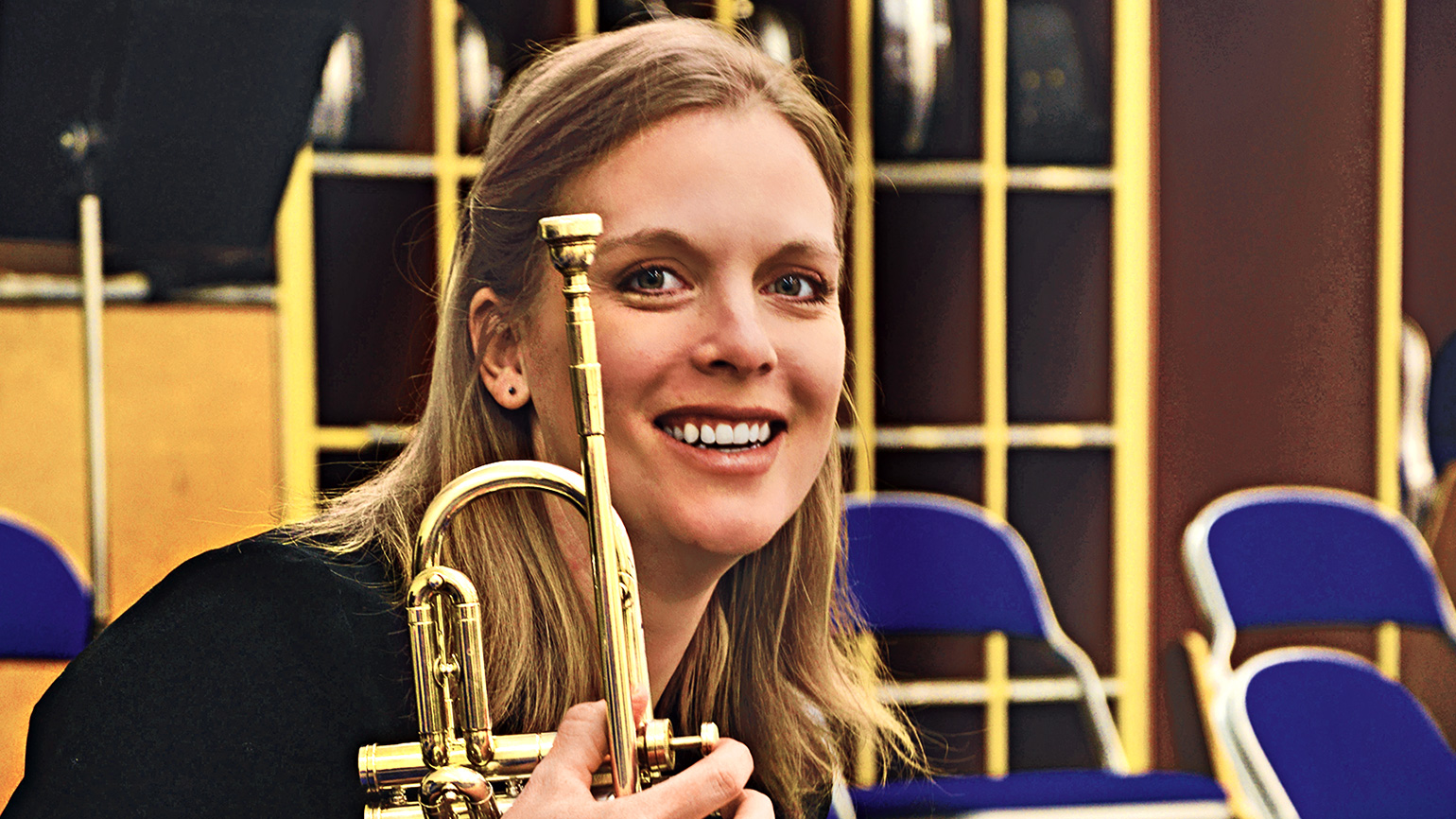
In high school, band had been one of my passions. There’s no clearer sense of purpose than being part of a group that is working together to make music. I could still remember the thrill of every instrument sounding together in perfect harmony. I wasn’t the greatest musician, but my insecurities melted away with a trumpet in my hands.

At college there weren’t as many opportunities for me to play. I wasn’t a music major. I put playing in a soundtrack orchestra on my bucket list, though just for my own pleasure.

On my daily run, I would listen to movie scores. A favorite was the Jurassic Park theme, by John Williams. Its soaring trumpets practically lifted me off the ground. In my mind, I became one of the musicians. I stood on stage hitting every note. But the years ticked by, and my trumpet remained in its case. It hadn’t even occurred to me to bring it to Alaska for the summer.

As soon as we got home from the picnic, I looked up the Fairbanks Community Band. The website explained that it existed to give people of any skill level the opportunity to make music. No auditions. Anyone was welcome. How had I never heard of this before?

I clicked on the band’s calendar. They had an open-air concert coming up. I have to go, I decided, entering the time and date into my calendar.

We were so late on the day of the concert, it had already started by the time we arrived. We settled into our seats while the band prepped for the next number. The first haunting notes of a familiar melody echoed through the pavilion. I gasped. The Jurassic Park theme! Goosebumps prickled my arms. Was God speaking to me?

It seemed the show was over before it started. I wanted to talk to the conductor, but doubt glued me to my seat. It had been so long since I’d last played. Would I even remember how? What if I was terrible? This was a bad idea.

“If you don’t go up there, I will,” Jim said. He had always encouraged my passion for music. “If you don’t take this opportunity to do something just for yourself, Erin, you’ll regret it.” He was right. I gathered my courage and walked to the front. One of the band members smiled. I asked how I could join. “We rehearse once a week,” she told me. “Just come!”

“My trumpet is in Montana,” I said.

“I think we have one you can borrow,” the band manager chimed in.

Twenty years is a long time, and I felt every minute of it when I brought the trumpet to my lips. I couldn’t remember basic note fingerings. My embouchure was weak. And my breath control was nonexistent. The first time I rehearsed the Jurassic Park theme with the band, I couldn’t even keep up on the page, let alone manage any of the high notes I’d played so skillfully in all of my daydreams.

Once I finally found my place, almost every note I played was wrong. Practicing at home was no easier. Just a few notes were enough to send Aurora running from the room. “Too loud, Mama, too loud!” she’d cry.

I struggled on but couldn’t help asking myself if it was pointless. Shouldn’t I be spending more time with Aurora and Jim? Practice was frustrating. I sounded terrible and felt like an impostor in the band. Maybe I was kidding myself, thinking I’d ever be good at this again.

The other band members kept me going. They laughed off my mistakes and helped me improve. Everyone made me feel as if I was part of something, a valued member of the group. Practicing each day still felt scary. But it started to feel brave too.

It’s impossible to disguise mistakes when playing the trumpet. It’s a loud instrument that often carries the melody line in songs. When you can’t hide, you’ve got no choice but to play as confidently as you can. The more I let go of my insecurities, the more things started coming back, like the passion I had in high school. Then one day, Aurora marched into our practice room blasting her own plastic trumpet. We weren’t just making music—we were making memories.

Summer ended, and we returned to Montana. I found a community band in Billings, not too far from where we lived, and signed up.

Everything was going fine until I learned the other third trumpet player would be away for the next performance and I would play his solo in my first concert. “You can do it,” bandmates told me, but I wasn’t so sure. I practiced the part endlessly. Usually it came out right in rehearsal. But not always. What if I messed up during our big show?

We took the stage, the lights dimmed and the audience stilled. The butterflies in my stomach started doing somersaults. I lifted my horn, felt the cold press of the mouthpiece against my lips. The slight tension in my embouchure. The weight of the horn gripped in my hands. Taking in a breath, feeling the air filling my lungs, I said a prayer.

Our conductor lifted his baton. The musicians around me raised their instruments, waiting for the cue.

I kept praying until the conductor gave the downbeat for my entry. Here we go. There was the buzz of air as it passed my lips, blossoming into sound as it vibrated through the horn, becoming music as it exited the bell. One correct note followed another, the tones blending with the lingering melody of the first and second trumpets’ parts. I thought my heart would burst with joy.

Jim and Aurora beamed at me from the audience. I was still light years away from my daydream performance. But I’d learned I didn’t have to be perfect to love playing. After 20 years, I’d rediscovered this simple pleasure and there was nowhere else in the world I wanted to be. No matter what sound came out of my trumpet, by picking it up, I’d hit the right note, one I knew I could hold for the rest of my life.

For more inspiring stories, subscribe to Guideposts magazine.

Redeemed on the Vegas Strip

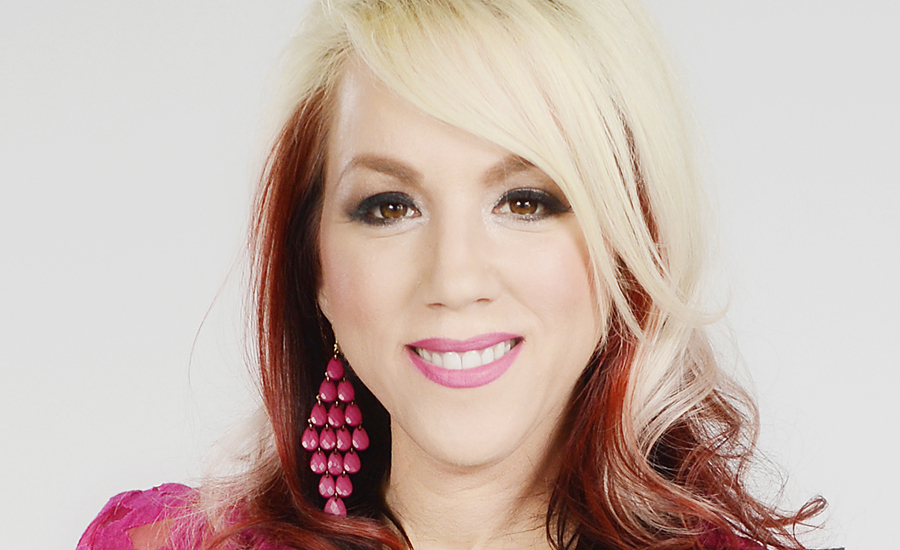
There are between one and two million sex workers in the United States and Annie Lobert used to be one of them.  As she details in her In her new memoir, Fallen, Lobert was a heartbroken teen who suffered under an abusive father and survived molestation and rape before turning to sex work to make fast money and get out of her home state of Minnesota. 

From Hawaii to Las Vegas, Lobert experienced natural highs from all of the money she was earning on her own as an independent call girl. “The sex industry is a slippery industry,” she tells Guideposts.org. “It’s very hard to get out of it even if you do feel like you have a choice (which many don’t).  The money is so good. The favor is so good. The attention is addictive. The nice jewelry, the presents, the cars, the houses– it’s all so addictive.”

Witnessing Heaven In Article Ad 827x123

READ MORE: ONE MAN’S JOURNEY TO HELP END HUMAN TRAFFICKING

But this “honeymoon experience,” as she calls it, didn’t last for very long.  Her boyfriend whom she trusted and loved beat her one night when she returned home from the strip.  He  declared that he would be her pimp and she would have to give him all of her money. For the next five years, Lobert was a victim of sex trafficking, doing whatever her trafficker boyfriend demanded that she do, under threat of pain and death.

But it wasn’t just her trafficker that she had to fear; the clients, or ‘johns’ abused her too; one even raped and robbed her at gunpoint, something Lobert says is extremely common.

“You cannot regulate the sex trafficking industry,” she says. “You’re going to be abused. There is no panic button. You can’t avoid that.”

Years of verbal, physical, sexual and emotional abuse led Lobert to believe she was worthless and irredeemable, a strategy sex traffickers often use to keep their workers isolated from their families so they have no one to run to and no way to escape.

Though Lobert managed to get away from one trafficker, she wound up under the control of another who was just as abusive as the first. One day, Lobert found lumps on her neck, and was diagnosed with Hodgkins Lymphoma. She went through chemotherapy and lost all of her hair, but she was still forced to work. She continued going on calls sick, wearing wigs, and continued feeling unloved and unlovable.

Soon Lobert turned to drugs to numb the pain.  It was only when she overdosed that she realized she could change. She had a vision of herself dead in her casket with her family all around her saying, “She was just a prostitute.” Lobert cried out to God and begged Him to save her. Miraculously, He did. She felt His love all around her in that moment and she was forever changed.

“The love of God changed me completely. That’s what healed me, a program didn’t heal me; a book didn’t heal me; it was the love of God. It cleaned me. It made me feel worthy. It made me feel like I have a purpose in my life and I have to do the same for other people.”

Lobert’s cancer went into remission and she received counseling for drug abuse and post traumatic stress disorder, which she had developed during the decade she was a sex worker. After treatment, Lobert answered God’s call to return to the Las Vegas strip and minister to other sex workers who are being trafficked. Through her ministry, Hookers for Jesus , she meets sex workers where they are and offers them help to get out of the industry and start new lives in Christ.

At Destiny House, Lobert houses former sex workers and offers them professional counseling, job training, mentorship and Christian teaching to help them become self-sufficient workers free of their past.

“We bring the grace element to these girls. Where everyone else would judge them, we bring the love of God to them that is needed desperately.”

It’s that atmosphere of grace and love, whether in her street ministry or at Destiny House, that Lobert says is the key to getting sex workers out of the industry for good. “If we have people around us who encourage us every time we fall into that sin, it’s easier for us to get back up when we know we’re still loved.”

READ MORE: MIRA SORVINO IN PURSUIT OF JUSTICE FOR TRAFFICKING SURVIVORS

Lobert can’t count the number of people her ministry has actually helped because “each woman is either a mother or a daughter, a sister, an aunt, a friend. They are a part of a community, so when we help them, we help so many other people that we’ll never know about.”

That ripple effect of showing God’s grace and mercy and empowering other people to do the same is exactly why Lobert feels God spared her life. Through her memoir and her ministry, she hopes others in the church will understand the horrific world of sex trafficking and open their eyes, hearts and arms to the survivors of the industry and welcome them into the church without judgment.

“The church worships virginity far too much,” she says. “It’s not our sexuality that makes us pure, it is the love of Christ. Even Jesus said, “The pure in heart will see God.’ So we need to look at each other through the lens of God’s purity.

“If we think well of each other, no matter what we’ve been through, and we don’t judge each other’s pasts, we don’t judge someone that’s been promiscuous, we don’t judge a thief, we don’t judge homosexual people, we don’t judge people–then we’re looking at people with  purity. We give them a chance to feel the love of God, which is complete grace and acceptance.”

Annie Lobert’s memoir, Fallen, is available here.

Recovering From Addiction, His Path Leads Him to Help Others

I love my job. I’m the advocacy and education outreach coordinator for the Missouri Recovery Network, a state-funded nonprofit that aims to increase awareness of the realities of drug and alcohol addiction and advocates for quality treatment programs. I travel all over the state, helping communities establish recovery programs and provide other services that addicts need. I train people to revive overdose victims, and I spread the word about what it takes to get people into recovery and committed to sobriety.

I bring a special experience to my work with addicts.

Daily Strength for Women in Article ad

I used to be one.

A decade ago, I was the last guy you’d hire for my job. I was in my thirties. I’d been using drugs and alcohol since I was a teenager. I smoked dope, shot up meth and ground-up pain pills, sold drugs, drove drunk and served a 16-month prison sentence for burglary.

I hated myself, hated God and hated the world.

Today I’m happily married with two kids. My relationship with God is the foundation of my sobriety. I’m blessed to have a job that enables me to heal the kind of harm I caused all those years that I misused drugs and alcohol.

How did it happen?


I tell my story everywhere I go in Missouri for two reasons. One, I’m living proof that even the most incorrigible addict can get sober and stay sober. More important, I’ve learned some essential lessons about addiction and recovery—the hard way. I know what works and what doesn’t. I’d like to share three of those lessons with you. I hope they’ll help you, your loved ones and anyone else you may know whose life has been harmed by the destructive disease of addiction.

1. Nobody wants to be an addict. Compassion can kick-start recovery.
My own journey to sobriety began with an unexpected offer of friendship. All my life, I believed the worst about people, especially myself. I was sexually abused as a child, my father was an alcoholic and my mom had to work so much to support her family she wasn’t able to take care of my two siblings and me—she sent us to live with her parents until she earned enough to afford a house.

My grandfather beat me severely and sometimes kept me out of school until my bruises healed. My main memories of church were of my parents shouting and cursing at each other in the car on the way there, then smiling and acting all holy when we walked into the sanctuary.

I trusted no one and assumed the world—especially churches—was full of judgmental hypocrites.

Imagine my surprise when a guy named Nate at the Ruby Tuesdays restaurant where I worked in Springfield, Missouri, kept talking to me as if he was actually interested in getting to know me. And Nate was a Christian!

I was in my mid-thirties by that point and trying to straighten out my life—sort of. After failing to graduate high school, serving that prison sentence and working a series of dead-end jobs, I went back to school and set my sights on becoming a social worker to help people like me. I swore off hard drugs (mostly), but I still got blackout drunk every night. I cursed a blue streak and made sure Nate knew I thought Christians were full of it.

He befriended me anyway. Nate’s wife, Becca, would come by the restaurant at closing time, and the three of us would talk. I kept trying to bait them by making fun of Christianity. They responded by inviting me to their church. I laughed off that invitation for months until Becca mentioned an upcoming church barbecue. I’m a sucker for good barbecue.

“I’m not drinking any of that Christian Kool-Aid,” I said.

“You don’t have to,” she said. “Just eat the barbecue.”

To my amazement, everyone at church was as nice as Nate and Becca. No judgment. No hard sell. Just good conversation—and barbecue.

For the first time in my life I felt as if someone liked me just for me. I didn’t know it then, but that was the start of my recovery.

2. Addicts need spiritual grounding.
There’s a reason 12-step programs begin with turning to a higher power. Addicts misuse drugs and alcohol for one reason—to fill a hole that, in the end, only God can fill.

That was my story. By the time I met Nate and Becca, I’d been feeling like a giant black hole for decades. Drinking and using drugs numbed my pain and gave me at least the illusion of belonging. If you can call hanging out with other addicts belonging.

I thought I was too broken even for God. That’s why I lashed out at other people’s faith.

Then one night, after I started attending Nate and Becca’s church occasionally (“Just to hang out, not because I believe any of this baloney,” I told them), I pulled out of the parking lot of a bar where I’d been drinking. I was drunk. In my rearview mirror, I saw a police car pull out behind me.

I panicked. I had been volunteering at a drug treatment center as part of my social work degree. I was so good at rationalizing my addiction, I didn’t even recognize how crazy that was. All I knew at the moment was my future was about to collapse. That cop would pull me over. I’d get busted, lose my volunteer work and flunk my degree.

I was startled to hear myself praying: “God, if you get me home without getting pulled over, I’ll go to Nate and Becca’s church every Sunday.”

I turned a corner. The cop turned the corner too.

I promised to give up drugs, then turned another corner. The cop stayed right behind me.

One by one, I swore off every bad behavior I could think of. Drinking. Driving drunk. Cussing. The cop followed me all the way home. I pulled into my garage—and the police car disappeared into the night.

I promptly passed out. When I woke up the next morning, I told myself all those promises were stupid. I got ready to go to a Super Bowl party. I was driving to the party, looking forward to getting wasted, when a song came on the radio I didn’t like. I looked for another station and landed on a patch of dead air. For some reason, I waited to see what would come on.

Out of nowhere, a song started up. The lyrics were loud and clear: “I wish you could see me now. I wish I could show you how I’m not who I was.” It was Brandon Heath, a Christian singer. The words kept repeating. I found myself pulling to the side of the road. I heard a voice: Go home, David. You can do this. I burst into tears. Then I turned around and drove home.

Next Sunday, I went to Nate and Becca’s church and joined the Celebrate Recovery group, a 12-step program rooted in Christian principles. I’ve been sober ever since.

Not every addict needs a dramatic spiritual awakening like that. But only an authentic relationship with a higher power can occupy the void that drugs and alcohol fail to fill.

3. People in recovery need to help others.
Addicts face a long list of things not to do. Don’t drink. Don’t use. Avoid triggers. What should they do instead?

Maybe this sounds counterintuitive, but I think people in recovery, even the ones who suffer most, need to reach out to others. They need to form new, mutually supportive friendships. They need to volunteer and become useful in their communities. They need to practice being a positive influence on other people, especially other suffering addicts seeking relief.

That’s what I realized as soon as I entered recovery. Except for Nate and Becca, almost all my friends were drinkers, drug users and partiers. I had no hope of staying sober if I hung out with people like them. I would have to find new friends.

And I had to find new things to do. For decades, I’d spent my free time looking for a fix, getting high or getting drunk. Just because I’d heard God’s voice in my car, and just because I’d committed to going to church and attending Celebrate Recovery, didn’t mean I suddenly felt great about myself and was ready to live a new life.

What was I going to do with all those hours I used to blot out with drugs and alcohol? I knew I needed more God in my life, so I started with church. How could I spend more time around church people? I joined a Christian softball team. I volunteered. I didn’t think I had much to offer, but I knew church was a better place to hang out than a bar.

Right away I found out that it felt good to do things for other people. I felt useful. Needed. I’d never felt like that before. Never.

I wanted more. Outside church, I found there were few organizations that give addicts productive things to do. So a few friends and I started an organization of our own. We called it Better Life in Recovery.

We hosted some gatherings and volunteered at a local school cleanup day. We expanded to bowling nights, movies, 5K races, river cleanups, speaking in schools—anything we could find that was positive, helpful and would keep us surrounded by good people. The organization grew and caught the attention of the Missouri Recovery Network. That’s how I got the job I have now.

My main message as I travel around Missouri is that people with substance use disorders are not evil, hopeless or lost souls. In fact, they are closer to recovery than they think. They have what it takes to get sober and become positive members of their families and communities. Turning to God starts them on the road. Not all people in recovery find church. But they all find something greater than drugs and alcohol to believe in. If they surround themselves with people committed to sobriety and if they get out of the house and make themselves useful, they stand a high chance of success.

Family members and communities can make all of that possible by doing what worked for me. Look for what’s good in addicts and help them see what you see. Introduce them to positive people and find ways for them to help serve others.

Above all, never give up. That night I got followed by the cop car, anyone would have thought I was a hopeless drunk. I was a drunk. And a drug addict. But not hopeless. Less than 24 hours later, I was hearing the voice of God and deciding, once and for all, to get sober.

We do not know when that moment will come for someone. But there are ways to make the moment come faster—and make it last. That’s what recovery is all about. Addicts hear the call of God and respond. The rest of us become voices amplifying that call. Together we are louder and brighter than the dark song of addiction.

For more inspiring stories, subscribe to Guideposts magazine.